Employee-focused initiatives unlock value for a company.
Imagine over 20% of your manufacturing workforce were formerly incarcerated or had struggled with homelessness, you grow consistently year over year, and your goodwill adds to the value of your intellectual property — your brand. If you knew that this would work, would you still take the risk? Frontier Co-op’s inspiring journey shows how alternative hiring practices and other employee-focused initiativescan unlock value for a company.
Frontier Co-op is a cooperatively owned wholesale company based in Iowa that has grown to 50,000 member-owners since its founding in 1976. The co-op sells sustainably sourced herbs, spices, seasonings, aromatherapy, and other botanical products under its Frontier Co-op, Simply Organic, and Aura Cacia family of brands. Cooperatives operate similarly to other businesses as for-profit entities, where member-owners earn dividends from profits, have bylaws, and are governed by a board of directors. However, co-ops are unique in that they are owned and controlled by members who directly participate in the business. This cooperative structure has driven Frontier Co-op’s success by fostering responsible business practices, allowing it to reinvest in its sourcing partners, support causes globally, and break down employment barriers.
In 2018 Frontier Co-op formally established its Breaking Down Barriers to Employment initiative to address systemic barriers to employee success and economic mobility; it provides important support services including second-chance hiring practices, access to subsidized childcare options, transportation, and apprenticeship and skills training programs to ensure employees are successful not only within its co-op, but also in the wider community. “We have to look for our own solutions to these problems,” CEO Tony Bedard tells Real Leaders. “It’s not somebody else’s problem to solve.”
Frontier Co-op partnered with the U.S. Agency for International Development in 2018 to empower smallholder farmers to bring ready-to-eat spices and teas into U.S. markets. As Bedard puts it, “The difference is that it works, that you can tie a straight line tangible benefit to the work that you do along with the intangible.” At the heart of this philosophy is the belief that real impact comes from action, not just words. He emphasizes, “The difference between what people say and what we say is that we actually do it, and we can show you that straight line.”
This sentiment aligns with Frontier Co-op’s approach to business growth. For example, it developed a strong internal talent pipeline. “I want to bring people in,” he notes. “I want them to see a career. I want them to end up being the plant manager … the CEO of the future.” In addition to breaking down barriers to employment with second-chance hiring practices, Frontier offers subsidized onsite childcare. This vision is underpinned by a focus on community locally and globally where it has dug wells, opened schools, and contributed over $1 million annually to causes around the world.
Bedard believes effective leadership involves cultivating an environment where people are empowered to thrive. “A real leader is a person who breaks down the obstacles so that other people who workin the company can be successful,” he says. It’s this combination of action, vision, and empowerment that drives sustainable growth and meaningful change.
When I joined BL Companies as CFO in 1999, no one expected I would become CEO. I was hired as CFO for a fairly well-established architecture and engineering firm. I came from the telecommunications industry with degrees in economics and business. In a field where technical credentials traditionally define leadership, I assumed I’d spend my career managing finances, not leading the company.
When I arrived the company appeared successful, but beneath the surface rapid expansion had outpaced internal systems. Financial reporting was inconsistent, decisions were made in silos, and accountability was weak. I spent my first months building structure by introducing financial controls, regular leadership meetings, and clear accountability. Progress was slow but steady.
Then in 2005 our founder and CEO announced his intent to retire. While his chosen successor had strong technical credentials, he had limited leadership experience. The remaining partners, including me, bought out his shares and believed the crisis was behind us.
It wasn’t. The founder accelerated his exit, leaving us months to complete the purchase or risk being sold. We had already been exploring an employee stock ownership plan to reward all employees — a structure that aligned with our values — so I led the effort to become employee owned in just three months.
Employee ownership gave us stability, but new challenges followed. When the Great Recession hit, another new CEO struggled to act decisively and ultimately resigned. The board appointed an interim three-person team — two technical leaders and me — to steady the firm, but as the impacts of the financial crisis grew, it became clear that crisis leadership required singular accountability.
I coordinated communications, developed our recession strategy, and with a heavy heart led a 17% workforce reduction that prevented a $1-million loss. The next day we met with all employees to outline our recovery plan.
By year’s end the board asked me to serve as CEO. I accepted and we finished that year with a $250,000 profit, which we shared with our employee-owners as bonuses.
Crisis taught me that effective leadership transcends technical expertise. Success comes from collaboration, clear communication, and the ability to make tough decisions. I learned that financial discipline and operational rigor are as vital to firm health as design and engineering excellence.
The architecture and engineering industry often assumes that great leaders must also be licensed professionals. My experience proves otherwise. Strong leadership grounded in empathy, transparency, and shared purpose can emerge from any background. What matters most is not what you studied but how you lead when it counts.
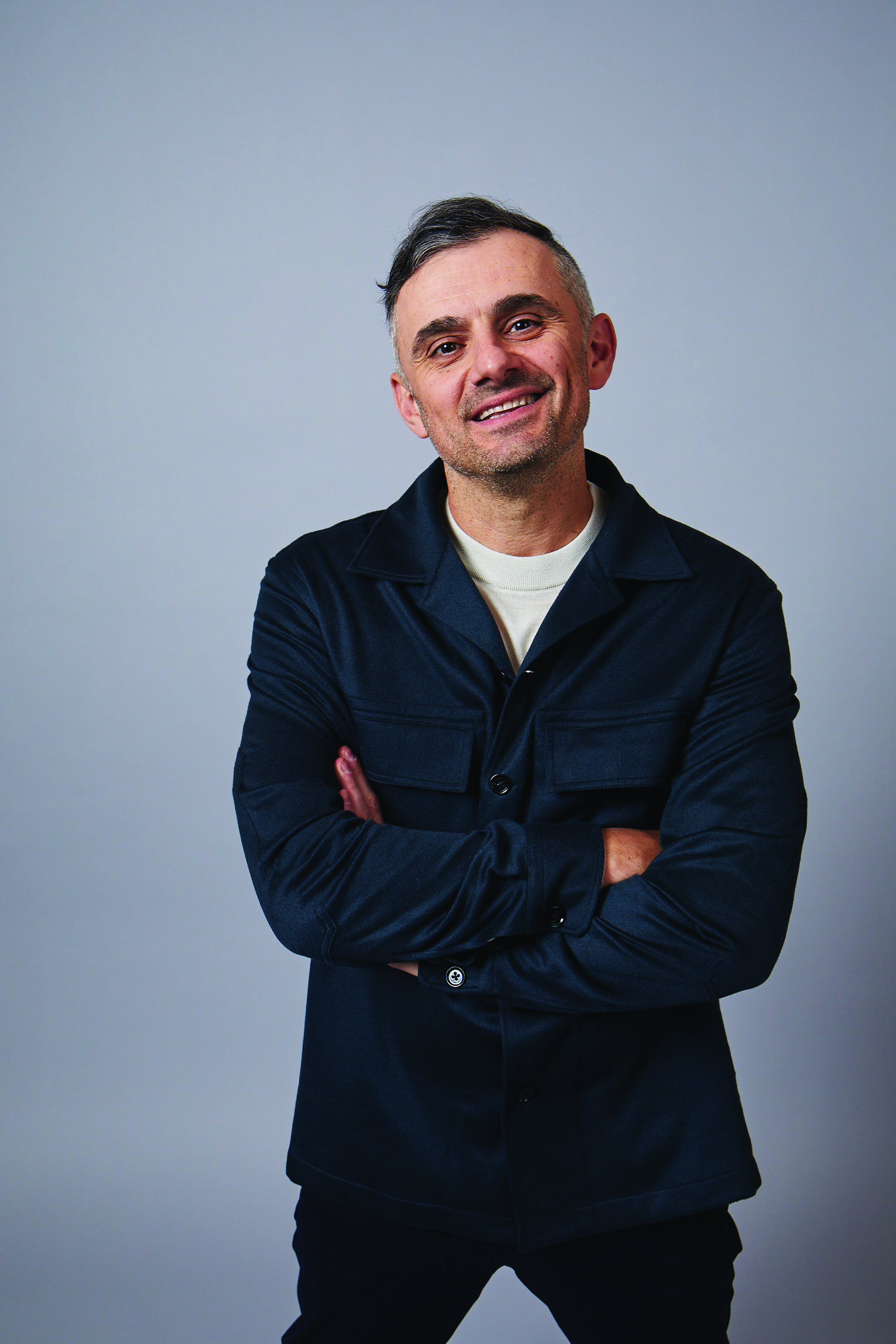
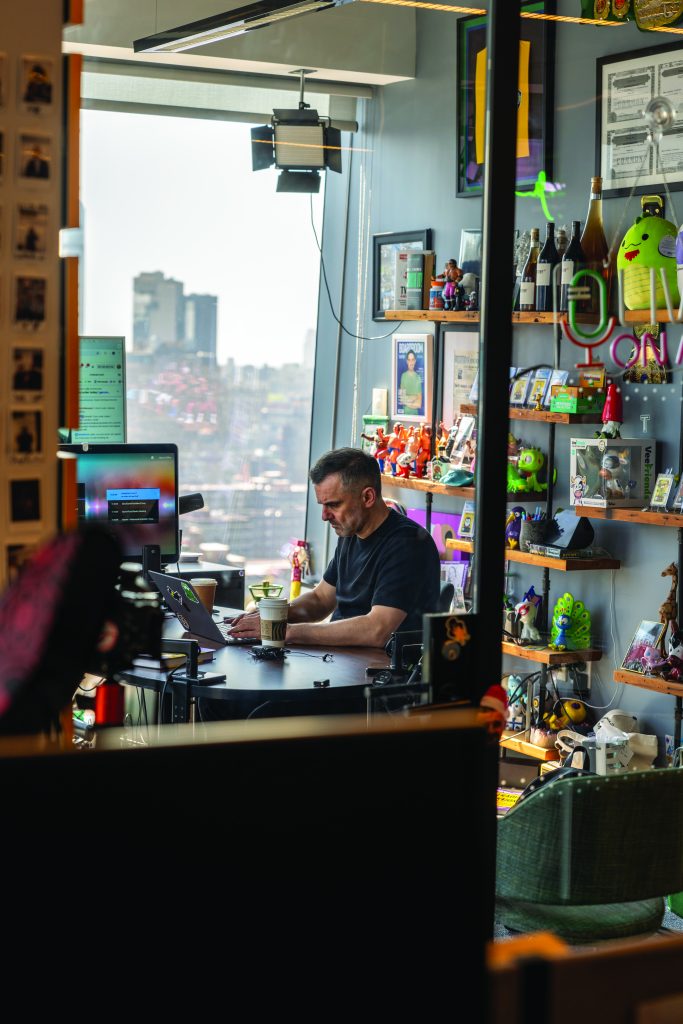
The master of knowing what’s next, Gary Vaynerchuk tells real leaders where their brands need to be — right now — if they want to stay competitive.
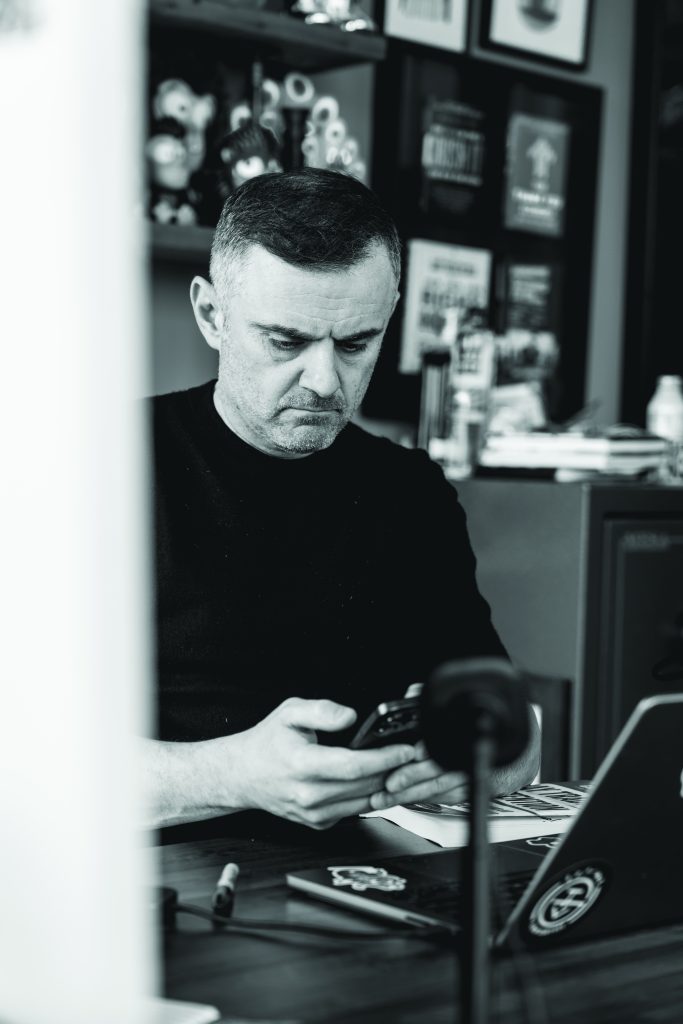
All photos courtesy of Gary Vaynerchuk
Gary Vaynerchuk — or GaryVee as many know him — has more than 44 million combined followers across social media. Vaynerchuk has built his personal and business brands by producing consistently compelling content across all the major platforms, hosts a top 100 business podcast with daily episodes, and is a bestselling author. Plus, he ranked in the top three on the Real Leaders 2025 Top Keynote Speakers list. He’s a storyteller on steroids, a no-holds-barred kind of guy who will tell you where and why you’re going to fail — and how to get ahead of it.
Real Leaders:You’re a master of personal branding, but how can leaders build their brands online when there’s so much noise? What important lessons have you learned about branding and brand equity?
Gary Vaynerchuk: One of the coolest things about business is it’s kind of like sports in that it’s very merit based. I often hear, “But there are so many other people trying to do it,” or to your point, noise. And I always remind them there’s really no option. If you’re crippled by competition, you probably shouldn’t be in business in the first place. That’s a really important mindset going into this.
I take the other side of the pillow and see the absolute insanity of it in a positive way. Many of us remember a world when social media wasn’t the dominant force. What’s amazing about LinkedIn is I can post a video right now with great thoughts, and it can get 4 million views — if it wins on the merit of the creative. It’s not the social media that I grew up in when I invested in Facebook, Twitter, and Tumblr. Back in 2007 you had to build a community for a long period of time to get millions of followers so that a lot of people could see something you said.
So I think the answer to your question is tough shit. Of course everyone is going to compete with you. But we are no longer in the era of social media but interest media — and this is the most substantial thing that has happened in communication in a very long time. With interest media, even if you haven’t started a personal brand for the last 15 years and it’s your fourth day posting on LinkedIn, Instagram, or TikTok and you have six followers — I have news for you. Don’t think you’ve missed the boat and envy GaryVee because he’s been doing it for 15 years. Because of the way the algorithms work, we are on an equal playing ground now. If your stuff is good — but today I just kind of mailed it in and did a mundane C-minus execution compared to typical GaryVee content — your video is going to get more views than mine. That’s a level of merit of thought and creative that has never existed.
RL: You’ve said that how you make money is more important than how much you make. Is that a nod to impact businesses, and what are your thoughts about the impact space in general?
Vaynerchuk: I believe in the brands that pioneered the impact space like Patagonia and Tom’s shoes. What really happens in your life between age 40 and 90 is that the dollars in your bank account don’t drive the level of happiness you thought they would, and a lot of people are confused by that. How you make money matters because you’ll have a happier life as a human being if you believe in what you’re doing. You’ll have more joy in your life, in your family and friendships, and how you feel about yourself as you round out your journey.
When I think back to 2005 through 2010 when the early seeds of the impact movement got going, it was remarkable. But when I think about 2015, I felt like every startup I looked at would walk in and be like, “Gary, you’re gonna love my startup. We sell umbrellas, but every time we sell an umbrella, we give an umbrella to somebody in a rainforest.” And then I would look under the hood and be like, “Yeah, but you’re selling an umbrella for twice the price.” That’s not being altruistic — that’s just using good as a facade for your selfishness.
Now in 2025 we’re in a beautiful place. We’re in this place where humans are thoughtful about this, and we’ve got a little bit of the muckery and snake-oil salesmen using it as a weapon out of the system. We’re almost in this mature space where it is a subconscious or conscious thought of every entrepreneur when they start a company that social responsibility is an option, and that’s a remarkable place for us to be.
RL: What do you look for in a business before you put money or resources into it? Have your criteria changed since your days as an angel investor in Facebook, X (formerly Twitter), Uber, Snapchat, and Venmo?
Vaynerchuk: You know that I love to talk publicly about my big wins. There are many more losses that I don’t talk about. The beauty of being 49 now instead of my early 30s is that the last 15–20 years of investing have taught me that I’m looking for the jockey and the horse. In the earliest parts of my career, I would only invest if I thought the person behind the business could do it — so it was pure jockey. Then I got high on my own supply because I was so on fire that I lost my way a little bit and became only about the horse — if I liked the idea, I imagined myself in the role of helping it get big — so I almost overlooked the jockey. I am now firmly in a place where I have to adore the idea and the intuition, I have to believe that the human being in front of me is capable of seeing it through. So I look for that now, and because I do such early-stage investing, I don’t have the company’s results to rely on to prove that the person can do it. I have to go on my intuition. Can they do that? But I’m looking for what I call the jockey and the horse.
RL:You’re one of the leading global minds on what’s next — and you’ve been talking about live shopping recently and how it will revolutionize business. Can you expand on that and how it will affect founders and leaders?
Vaynerchuk: This is the quote, and you can put it in a dark black box: Literally anyone reading this article, if you sell something, you must stop reading this article immediately. Go spend 25 hours researching the current state of life, social shopping, TikTok Shop, obviously, notwithstanding what happens here with a U.S. ban or not. Obviously this is global. A startup called Whatnot is the leader, but we’ve already seen Walmart, Amazon, and eBay have their own live platforms. It’s inconceivable to me that Facebook, X, and YouTube do not have aggressive announcements. M&A perhaps — I don’t know what they’re up to. I have no inside information, but it’s inconceivable to me that we won’t see things from Instagram, Facebook, X, YouTube, and YouTube Shorts this year.
If you’re a businessman or woman who has lived in or executed in or paid attention to China, you’re completely bored by what I’m saying because this has been a decade of reality in China, but it’s finally hit the Western world. It’s significant. It could be incredibly detrimental to consumer packaged goods apparel or retailers if they dismiss it the way many dismissed Amazon and social media. This is big girl, big boy stuff. QVC and Home Shopping Network still do crazy amounts of revenue, and half of the people under 40 don’t even know they exist. Anybody over 40 is flabbergasted when they look under the hood. There is something inherently human that humans love to buy stuff when it’s in a live environment. It’s why live auctions do well. It’s why QVC does well. And when you take the conglomerate of the seven platforms that lead social media, the sheer attention, the hours spent by human beings in social media is profound and misunderstood in its dominance. And now you’re layering in shopping. This is a very big deal. I would argue, in a 15-year window, if Amazon stumbled and misplayed it, this could be the thing that knocks them off their perch.
Even if you’re a B2B company reading this right now, and you’re like, “Well, I sell SaaS. That doesn’t mean anything to me,” I implore you to figure out how to go do a collaboration with a fashion brand and make a cool hoodie for your B2B company and then sell it on live shopping just for the awareness and brand building — not the revenue, which I know would seem far-fetched to a B2B person reading this — but I’m not saying it for my health. It’s a big media.
In 2009, 2010, 2011, I begged traditional media companies to understand how big social media is. It’s similar to what I’m doing right now with retailers and package goods companies regarding live shopping.
RL: How does a traditional media platform like a magazine — an American pastime — stay relevant?
Vaynerchuk: By conforming to the new distribution model through an awareness of what it does. If you fall in love with your form factor instead of your brand, you become vulnerable. Sports Illustrated is a great example. Sports Illustrated could have been House of Highlights and Overtime, but it became obsessed with its medium, not its brand.
My dad’s wine store in New Jersey is in an affluent area — Millburn, New Jersey — a nice green town, good money, upper-middle class to wealthy. There are plenty of small stores on Main Street in Millburn that are just dying. Of course, we know why — online shopping, right? However, if one of those store owners woke up this morning and decided to turn their store, even a piece of it, into a studio that did live shopping all day long, they would explode over time if they were good. That’s another way of answering your question. It’s about not becoming delusional or ideological about your medium. It’s about becoming obsessed with your brand and finding ways to convert it into new attention parallels.
RL: Your new book, Day Trading Attention — what does that term mean?
Vaynerchuk: It was a big moment for me when I came up with the term — one of those eureka moments. It captures everything I’ve been trying to say for 15 years.
Attention is the ultimate asset in the world. Nothing can happen unless someone’s listening to it.
You can’t become president of the United States if you’re in a cave talking to yourself with no people around. As a parent, your child won’t become the human you want them to become if you don’t talk to them. Every single thing on earth is based on attention, what people give attention to. The quality of the content — the written word, the audio, the video, etc. — is the variable that determines if it lands or not. But without the attention, it’s that whole thing about if a tree falls in the forest, does it make a sound if no one is there to hear it? So attention is my obsession.
I grew up building my dad’s business and then my personal brand — first on direct mail, print magazine ads, newspaper ads, radio, and local television. Then I did it on Google AdWords and email marketing, then I did it on YouTube, then I did it on social media. And I promise you, based on the history of my career, I will be at the forefront of when VR matters. I promise you when and if VR gets three hours of your day the way a phone does, you’ll go into your VR device, and you will be like, there he is — there’s Gary — because I don’t have any romance. And this is actually very important for every real leader to hear: I am not romantic about how I got here or how I currently make my money because if I do, I can get caught back to antiquated. I’ve got to always understand where it’s going, and I’ve got to get that timing right.
Day trading is a term on Wall Street, and it is very different than the way people used to invest in stocks. Our grandparents and our parents, they would buy a stock and they would go to sleep, or a mutual fund and they would be like see you later, I’ll look at it in a couple of years. Then when the internet came along, we had these kids buying stocks and selling them every second — day trading. If I buy an ad in a magazine, I’ve got to make the ad, buy it, and then there’s a long period of time before it shows up in an issue. Magazines are great and important, but the way social works now, the sheer tension, the speed in which you have to make content and be on top of this, is more like day trading than buying mutual funds — so day trading attention captured the essence of what I want to say about marketing. From Nike to Real Leaders, to GaryVee the personal brand, to a store on Madison Avenue, to a law firm — if you are doing marketing, if you are trying to get attention, if you want to succeed and build anything, a personal brand or a business, the more you understand that you’re day trading attention now, the better you will succeed.
Once you understand that, you start to realize how much science and art and strategy and complexity there is to be good at it. If I told every kid who was an athletic freak 20 years ago when they were 6 years old, “Hey, you should all become basketball players — not football players — because I see the future, and basketball is going to grow, and because there are only 15 players on a basketball team and not 53 like there are on a football team, you make a lot more money if you’re a good basketball player,” that would have been the right strategy that wasn’t obvious 20 years ago. And yes, being great is hard, and that’s what this is: I’m telling you that basketball is coming, but the reason I wrote the book is to show you how to train and actually be great at it.
RL: If I’m a direct-to-consumer, socially conscious, or certified B Corp company, where should I be playing online today?
Vaynerchuk: I mean required — not even optional — Facebook, Instagram, TikTok, and YouTube Shorts. I couldn’t comprehend if you’re trying to sell something direct to consumer not being on those channels. The next tier would be X, LinkedIn, and Snapchat Spotlight, which is the TikTok/Instagram part of Snapchat. But the first four are utterly required to have any prayer of success.
RL: If I’m a small B2B service provider looking to target socially conscious business owners, what kind of strategy would cater to them best?
Vaynerchuk: This is going to blow people’s minds. The AI algorithms that run the For You Pages and the feeds of the social networks are getting better and better by the hour in understanding content and then putting that content in front of the people they’re trying to reach. Can you imagine what’s going to be in place in a year or two? It’s already happening — but I’ll go with a year or two — where this individual who’s saying words like “socially conscious” or “for good,” literally algos are picking that up, and then the feed will send it to people who’ve shown a propensity for being interested in that subject matter.
So my answer for that B2B service provider you describe would be very heavy in YouTube Shorts and LinkedIn to reach that socially conscious business person — LinkedIn because it just finds the B2B environment and YouTube Shorts because YouTube is the second-biggest search engine in the world, and so when you put a social piece in there, a YouTube Short will show up for the people looking for that kind of content, and that would be stronger than you doing it on Facebook and Instagram right now.
RL: If you are a founder growing a business on social media, should you grow it on your personal platform profile or on the company’s?
Vaynerchuk: Great question. The answer is both. Every business brand I have has its own pages, and then I have my pages. Humans tend to over index brands and companies. It’s just the nature of the medium, but by doing both you’re able to take the human audience and push them to your business, and you can work with them back and forth. Collab posts are now a thing, and so I genuinely believe it’s both. But if somebody’s crippled by that and thinks that’s so hard, or they can’t, the reality is either will work.
RL: Should a company have brand guidelines, or is that giving away the ultimate creativity?
Vaynerchuk: Should brands have guidelines? Sure. It’s good to know what you’re up to for new employees. But for the leaders reading this, this is a marketing terminology issue more than a business and operations one. In Marketing Land, how to build a brand, brand guidelines — a lot of this stuff is hurting people in the new world. It was good for television — it’s not good for social media. I would rather brands focus on being relevant to as many different consumer segmentations as possible versus coming up with a tagline or color scheme that restricts their creativity in this new world.
RL:Real Leaders is all about the holistic leader — developing not just the professional side, but the personal side. We have a lot of family businesses in the Real Leaders community. Are you thinking about bringing your kids into your business?
Vaynerchuk: I have no ambition for my children to be businessmen or women. If my daughter and son end up not being an entrepreneur or not even interested in business — let’s say they want to go nonprofit, or they want to be a politician, or they want to be an artist — I’m great with that because I’m obsessed with my children being as passionate about what they do as I am about what I do. If they decide they want to be in the game, the first thing that comes to mind is the fear of nepotism. I’m incredibly scared to create a fake environment that will ultimately be financially lucrative for my children but will be emotionally detrimental. I wouldn’t even do it to my own employees because I view them as family. I wouldn’t put my children in a position that lets them leapfrog over someone who’s earned it.
My kids are 15 and 12 right now, so I’m still a few minutes away from the red zone, but I’m at the point where it’s worth thinking about. I’m very fortunate that I’m growing up in an era where we’ve got 100 years of data and anecdotal examples of what can go wrong when you don’t play this right. The good news is, I don’t have my own self-esteem wrapped up in my children’s financial and professional success. What really hurts parents is when their self-esteem is wrapped up in their kid’s school, in their sports, and how much money they make. I don’t have that. I’m obsessed with being their father — not their friend or cheerleader — and as a father, I need to be a counterpuncher to the truth of who they are in their soul and try to help them into a place of joy and fulfillment and passion, and hopefully that will be how it plays out.
I was 9 when the doctor told me I had bone cancer. I didn’t understand everything, but I understood one sentence: “You have a 50% chance to live.” My early years began with a question: If I survive, what will I do with it? My survival — that fragile miracle — became my compass. I realized early that life is not measured by its length but by its impact. My body healed, but my purpose had only begun.
At 14 I founded my first nongovernmental organization: Bee The Change — a small, direct-aid organization that supported children in African communities. We packed boxes, raised funds, and connected directly with kids who needed food, medicine, and education. That was my first taste of leadership with purpose. I discovered that real leadership doesn’t start when people follow you; it starts when you decide to move, even if you’re the only one walking.
Then came a phone call that broke me. A young boy in Africa, whom I had come to see as my godchild, died. The cause? Cholera — from contaminated water. I was devastated. We had helped him with school supplies and food, but not with the one thing he needed most: clean water. That moment tore through my soul. I realized charity wasn’t enough. If we wanted real change, we needed to fix — not just treat — the systems.
From that pain was born the Umuntu Movement — inspired by the African philosophy “Umuntu ngumuntu ngabantu,” meaning, “I am because we are.” Today the movement has provided clean, safe water to over 50,000 people, cultivated several hectares of regenerative farmland, planted 40,000 to 50,000 trees every year, and supported education centers and schools that empower new generations of changemakers.
Driven by this conviction, I earned my bachelor’s and master’s in engineering, followed by an honorary doctorate (PhD h.c.) recognizing my work in sustainable technology and water innovation. To me, science is not separate from empathy — it’s a tool to serve it.
That journey led to the creation of Evodrop, a Swiss-based multinational water innovation company to redefine what clean water means. We developed patented purification technologies that remove nearly all harmful contaminants while preserving the natural vitality of water. Evodrop has grown into a global impact company with over a dozen international awards. I’ve learned that business, at its best, is a form of service. When companies anchor themselves in purpose, profit becomes a natural outcome — not the destination. At Evodrop part of our revenues flow directly back into Umuntu’s social and environmental projects, creating a self-sustaining cycle of change.
We don’t see our success as isolated. Every drop of clean water we deliver, every tree we plant, every child we educate — it’s all part of a shared ecosystem of impact. I’ve realized leadership isn’t about building empires; it’s about building legacies that outlive you.
When I was 9, I had a 50% chance of survival. Today I wake up every day knowing that I have a 100% chance to make a difference. That’s what drives me — not fear, not ambition, but gratitude that I got to turn pain into purpose, and purpose into progress.
Defining moments don’t always come from victory; sometimes they’re born from your deepest wounds. When the odds are stacked against you, your true mission reveals itself — because survival is not the goal; significance is.
Ten years ago I made an ethical lapse that still makes me wince. I was under pressure, and I made the wrong call.
At the time, ClimeCo was growing fast. I was working on a large environmental commodity transaction and had been collaborating with a friend at a major trading company. When his firm passed on the deal, I confirmed with another counterparty that they had won it. Not long after, my friend came back to say he had changed his mind. He told me the deal was very important to him and his company, and he asked me to undo the other agreement.
He was a big part of our growth, and I felt immense pressure to keep him happy — so I caved. I went back to the counterparty I’d already committed to and told them I had to reverse my decision. They later found out why, and they were furious, rightfully so. They called me out for being deceitful and accused me of collusion. The accusation stung because it was true. I had put relationships and fear of loss above integrity.
When the dust settled, the weight of it hit me hard. I was ashamed. I spoke to mentors and friends, trying to process what I’d done. I couldn’t believe I had allowed myself to cross that line. Eventually I did what I knew I had to do: I called the counterparty, admitted I was wrong, and apologized. I told him exactly what had happened and that I took full responsibility. I didn’t try to justify it. I just owned it.
Then I went back to my friend and told him something equally important: that I would never do that again, and he should never ask me to. I told him it was unfair of him to put me in that position, but ultimately it was my mistake. I made the choice, and I had to live with it.
Finally I stood in front of my team at ClimeCo and told them the truth. I admitted my lapse in judgment, explained the pressure I felt, and shared how I was working to make it right. I wanted them to see that even leaders make mistakes, but what defines us is what we do after.
I learned more from that failure than from any success I’ve had since. It reminded me that leadership is not about being liked or even about winning. It’s about doing the next right thing no matter how hard it is.
From that day forward I’ve lived by what I call the 60 Minutes Test: if my actions were aired on the CBS show 60 Minutes, would I be proud to watch it? If not, I need to change course immediately.
That moment rocked me. I thought I had damaged the company I’d worked so hard to build. But in hindsight, it became one of the most important lessons of my career. It taught me that integrity isn’t situational — it’s a muscle you strengthen through every hard choice you make.
Now I make sure every decision comes from a place of integrity and clarity — not pressure or fear.
Learn how to master attention regulation to improve the future of your organization.
Here’s a hard truth most leaders overlook: If you can’t control your focus, you can’t control your organization.
Attention is the currency of leadership today, and how you manage it determines your ability to inspire, strategize, and lead effectively. The most successful leaders don’t just manage time — they manage focus. They understand that their ability to cut through distractions enables their teams to drive meaningful outcomes. But this isn’t just about personal productivity. It’s about having the discipline to ensure that your entire organization is aligned, locked in on priorities, and moving the needle in ways that matter.
We aren’t talking about tactics for getting through your inbox faster. This is about how leaders can strategically regulate attention to steer their organizations toward long-term success. So the question is: Are you in control of your focus — or is everything else controlling you?
The Connection to Leadership Success
Attention regulation is the ability to manage where and how you direct your focus. In leadership, this ability goes beyond merely multitasking or time management; it’s about intentional focus on what truly matters.
A leader who masters attention regulation has a laser-sharp focus on what matters, focusing on high-impact initiatives and long-term vision, rather than getting tangled in the weeds of every small task. They don’t let the noise of daily distractions pull them off course.
If a leader is scattered, overwhelmed, and constantly switching focus, their teams will mirror that energy. Conversely, when a leader is focused, intentional, and clear in their direction, the organization naturally aligns in the same way. Team members feel empowered to follow through on key initiatives, knowing that their efforts are contributing to a unified, strategic vision.
Prioritizing Key Initiatives Amid Distractions
Distractions are everywhere, and they don’t discriminate. From the constant ping of emails to the impromptu meeting requests, it can feel like you’re at the mercy of everything except what matters most. But here’s the difference between average leaders and those who truly excel: They manage the chaos rather than getting swept up in it.
Effective leaders can focus like a laser, zoning in on what drives the business forward. They understand that every yes to a distraction is a no to something that matters. The same is true for their teams. When a leader shows up with clarity and purpose, it shifts the entire organization toward high-impact initiatives.
It’s not enough to stay busy. We’ve all seen organizations that run full-speed ahead in 20 directions, accomplishing little. That’s where leaders who master attention regulation come in. They recognize that their focus and their team’s focus is a finite resource. They don’t let distractions steal valuable bandwidth. Instead, they become the gatekeepers of focus, spending energy on what will move the needle. This means having the courage to say no to unnecessary meetings and the distractions that pull you off course. It also means empowering your team to do the same. Prioritizing is about doing what matters.
When you can lead with that clarity, distractions fade into the background, and real progress begins.
Cultivating a Culture of Focus
If you want a team that’s laser-focused and delivers high-value work, it begins with communication. When leaders are clear about which goals matter, teams direct their energy where it counts. This allows them to focus on impactful work instead of running themselves ragged on low-priority tasks. When focus is a cultural value, productivity skyrockets, and people feel a sense of purpose in their work.
It’s not just about cranking out more work — it’s about ensuring your team has the mental space to deliver quality results. Don’t glorify hustle culture; instead, encourage downtime and deep work. Understand that sustained performance comes from balance — rhythm, intention, and knowing when to pause.
By leading with this mindset, you create an environment where deep, meaningful work can happen and teams are engaged, aligned, and pushing the organization toward its goals. While the benefits of mastering are clear, developing this skill requires intentional effort. The ability to direct attention is the ability to direct the future of an organization. Leaders who recognize this and invest in cultivating their attention regulation skills will be well-positioned to steer their teams toward lasting success. Remember the impact that your focus — or lack thereof — has on your entire organization.
Practical Strategies for Improving Attention Regulation
Train Yourself to Refocus: Mindfulness practices, such as meditation or deep-breathing exercises, help leaders develop greater control over their attention so they can train themselves to refocus on important tasks more quickly.
Use Time-Blocking Techniques: Many successful leaders use time-blocking techniques where specific chunks of time are dedicated to focused work on key tasks. This prevents distractions and ensures that priority initiatives receive the attention they deserve.
Limit Digital Distractions: In the digital age, constant notifications are one of the biggest threats to attention regulation. Leaders who turn off non-essential notifications, or even implement company-wide digital detox periods, can greatly enhance their own and their teams’ ability to focus.
Delegate What Doesn’t Need Your Personal Attention: Effective leaders know how to delegate tasks that do not require their direct attention. By delegating appropriately, leaders free up mental bandwidth to focus on strategic decisions and higher-impact work.
Take Time to Reflect: Leaders who regularly take time to reflect on their attention habits are better able to identify areas for improvement. This might include weekly reviews of how time was spent and whether it aligned with key organizational goals.
Beyond sustainability, this company is working toward regeneration with its recycled glasses.
Cigarette butts. Used fishing nets. Old carpets. Their next stop is typically the landfill, but one company sees these items as ready for their next life and in an unexpected place — on your face. Karun makes fashionable eyewear from recycled materials.
Founded by Thomas Kimber in 2012 in Patagonia, Chile, and present in over 20 countries, this certified B Corporation is also certified CarbonNeutral. Its product carbon footprint is less than half that of conventional eyewear. Karun aims to inspire the world to reflect on the question, “What would the world look like if we were all nature?” The company created a regeneration model that goes a step further than sustainability; instead of just replenishing what is used, it works to restore contaminated ecosystems.
A 2025 Real Leaders Top Impact Companies winner, Karun’s production process is conscientious every step of the way. It buys waste such as fishing nets, ropes, metals, wood, pigments, and organic materials from collectors in southern Chile and Patagonia. Then it recycles the items into eyeglasses, sunglasses, and straps, ensuring the factories have good working conditions. They are packaged in recycled cases and shipped on the most responsible route possible. When customers are ready to dispose of their glasses, they can return them to Karun to be recycled or donated for a discount on their next pair.
Karun’s latest innovation makes it perhaps the first company to produce glasses from cigarette butts. About 1.3 million tons of cigarette butts are discarded every year, and one cigarette butt can contaminate a dozen gallons of water. Karun repurposes acetate, the main component in cigarette ends, through a process recently developed by the CleanTech IMEKO, which removes toxicity from filters and recovers cellulose acetate as a sustainable raw material.
“Thanks to this collab with IMEKO, we can transform what was once considered waste into beautiful, high-quality products that generate a positive impact on our planet,” Karun says.
“The challenge with cigarette butts was to implement logistics capable of addressing such small and widely dispersed waste,” head of impact Carlos Aubert tells Real Leaders. “Here, the collaboration with IMEKO, alongside the motivation of businesses and the local government, enabled the establishment of city-wide collection networks while also raising public awareness about the environmental impact of cigarette butts.”
Karun is building small-scale, flexible distributed manufacturing networks with a more local dimension by sourcing the discarded materials in the same region where they are recycled, made into final products, and distributed.
In the spirit of transparency, it releases an annual impact report; measures and labels the product footprint of each product; and manages and traces its supply chain through blockchain technology displayed on its website. Karun aims to allow shoppers to make more informed purchasing decisions while encouraging the eyewear industry to follow suit in reducing their carbon emissions.
Celebrity Collaboration
Karun recently stepped into a different space when it partnered with Join the Planet to create a limited-edition collectible replica of world-renowned soccer player Lionel Messi’s left boot. Entirely made of recycled materials including discarded fishing nets, ropes, and bottle caps, the sports memorabilia comes with a digital certificate of authenticity and is traceable through blockchain technology.
One spring night in 2005, I was walking back to my New York apartment still energized from a major professional win. As CEO of Deutsche Bank’s U.S. Private Wealth Management division, I had just led a transformation: turning an annual $130-million loss into a division with a 25% profit margin. I was managing more than $50 billion in assets and had carved out a place for myself as one of few women in Wall Street’s top echelons.
By every traditional metric, I “made it,” but as I walked home that night, a question hit me like a freight train: Is this all there is? I didn’t feel triumphant; I felt hollow. A quiet dissatisfaction had begun whispering inside me, and now it was screaming. That uneasy feeling would be the catalyst for the most defining transformation of my leadership — and my life.
A few months later I shocked everyone by retiring at 44. On the surface it looked like the ultimate career move — leaving at the peak — but inside I was beginning what I now call my wilderness journey. I stepped away from Wall Street not to rest but to search.
For the next three years, I chased purpose. I volunteered with at-risk youth, embarked upon philanthropic missions in developing countries, and threw myself into Bible study and prayer. I assumed I’d find a new calling in giving back. I focused on orphan care, community development, and children’s health services.
But wherever I went, I kept seeing something others missed — investment opportunities. I realized the world’s biggest problems were too vast for philanthropy alone; private capital had to be part of the solution. It wasn’t just about giving — it was about building. I started questioning everything I thought I knew.
Then in 2007 I joined a think tank exploring a radical question: How do you use capitalism to solve social problems? That question unlocked something deep inside me. It reframed my faith, my leadership, and my understanding of business.
I had always believed that businesses rooted in integrity, strong governance, and care for their communities would ultimately outperform those without those values. But now I saw with clarity that business itself could be a force for good.
In 2008 I founded TriLinc Global with a simple, defiant belief: Investors don’t have to sacrifice returns to do good. It wasn’t a popular idea: Wall Street saw me as too idealistic; the impact world thought I was too commercial. I was called a wolf in sheep’s clothing — and a sheep in wolf’s clothing. But I kept going, fueled by something deeper than strategy: conviction.
Today TriLinc has invested more than $1.5 billion in responsible small and mid-sized businesses across 35 countries — businesses that create jobs, build local economies, and tackle community needs. We’ve done it while delivering competitive, market-rate returns to investors.
Capitalism, when rooted in values and guided by purpose, can be a powerful agent of change. Looking back, that quiet moment of unease in 2005 wasn’t a breakdown — it was a breakthrough. That was when I began to ask a different kind of question, not just, “What am I building?” but, “Why?” That question changed everything.
I never thought I’d become food insecure at 44 years old. For 23 years I built a career I was proud of: 16 years in finance managing $4.5-billion commercial portfolios, fundraising $250,000 for a nonprofit organization in four years, and on the flipside, I spent weekends for 20 years in event production. From the outside it looked like success; on the inside I was restless. I wanted to go out on my own and build something with my own two hands.
After more than two decades of working for others, I took the leap — but it didn’t work! The business failed, and everything I thought I’d built crumbled. Suddenly I wasn’t a “professional” anymore, I was just a man staring at a $278 bank balance. Thankfully I had no debt, but also no job, no income, no safety net, and most importantly, no food.
There’s a kind of shame that comes with that realization. I’d spent my career projecting competence, expertise, and control; yet here I was, skipping meals, counting pennies, and pretending I was fine. The truth was I was hungry, and I was terrified.
Failure strips you bare. It humbles you in ways that no motivational speech or leadership book can capture. I had to face the facts that I wasn’t invincible and nothing in life was guaranteed. But here’s what failure also did: It forced me to pay attention.
When you’re hungry, you start seeing food everywhere, and you also start noticing how much edible food is wasted — perfectly good meals tossed in the garbage while people suffering like me quietly go hungry. That disconnect lit a fire in me, and I realized my lowest moment might just be the seed of something bigger.
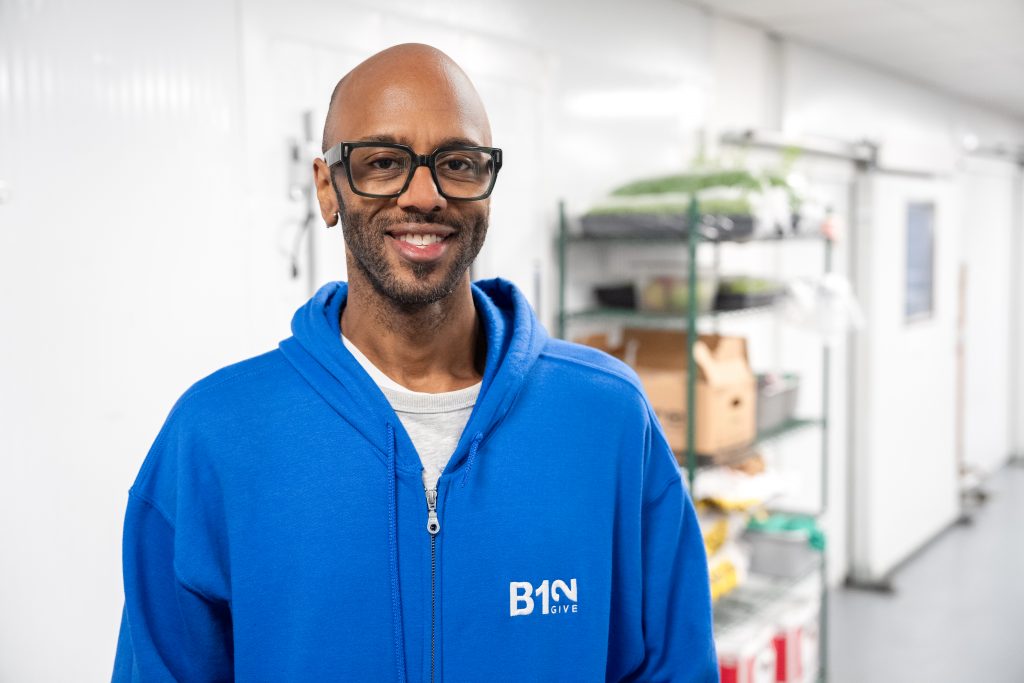
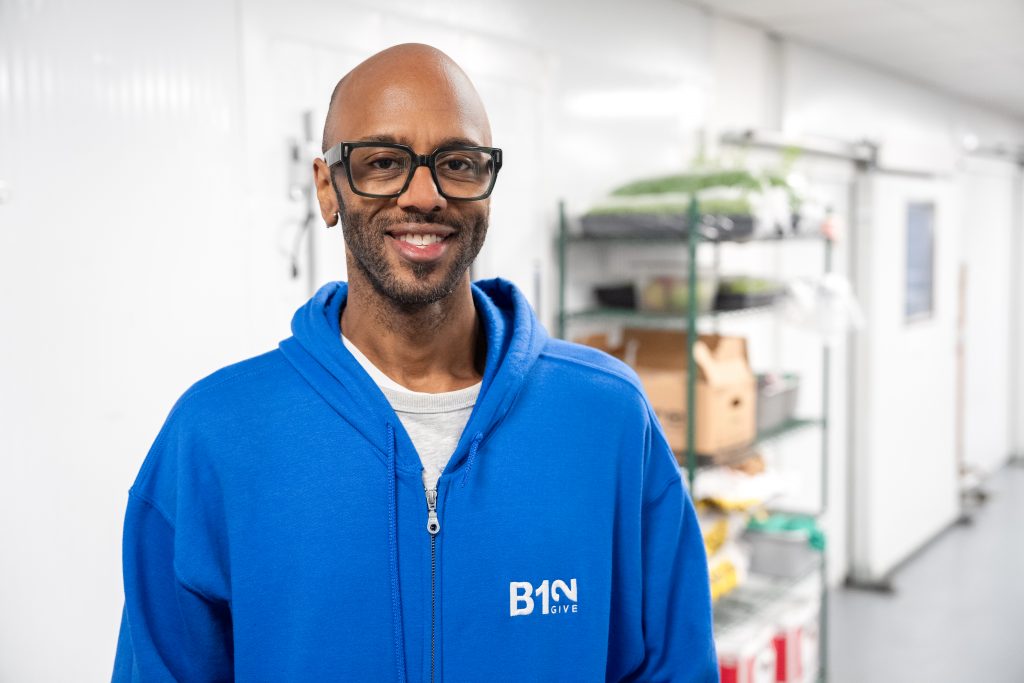
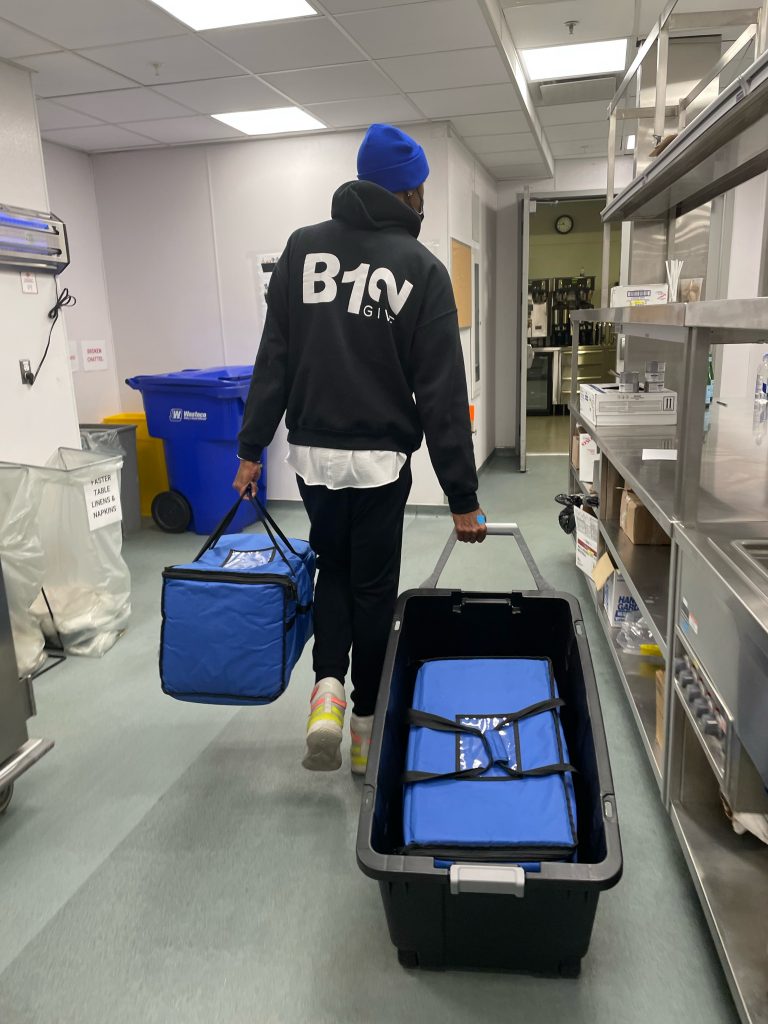
I didn’t want anyone else to feel the same quiet desperation I’d felt, so while working in catering and watching all of this surplus food being tossed away, I started asking: What if there was a way I could take surplus food and redirect it to people who actually need it? That’s where the idea for my startup B12Give came from — out of failure, hunger, and humiliation.
It wasn’t glamorous at all; it was scrappy, messy, and uncertain, but this time the work felt different. I wasn’t just chasing success; I was building something that mattered. Looking back now I can say that losing everything was the best thing that ever happened to me.
Would I wish it on anyone else? Absolutely not. It was brutal, but it forced me to stop coasting. It pushed me to confront what I really wanted my life’s work to stand for, and it gave me the courage to do it.
To anyone else who faced the same setbacks, understand that failure isn’t the end of your story, it’s the raw material you build the next chapter with. Don’t bury it, don’t spin it, don’t PR-polish it, just own it because somewhere in that wreckage might be the thing that changes everything.
I had $278 and no food in my fridge. Today I lead a company tackling food insecurity and food waste simultaneously. That journey didn’t start with a vision deck or a business plan; it started with me being hungry, wondering how the hell I was going to feed myself.
How often does unplanned or unnecessary work hijack your time or push back your goals? This is a common reality for many leaders today, leaving them wondering if they need to get organized or multitask.
But what if the issue isn’t you? What if the problem lies in how we’ve structured work? Instead of trying to fix people to do more, we need to fix work to better leverage them.
If employees are our greatest asset, we must stop wasting their time on insignificant task. By simplifying work processes, we empower our people to thrive and contribute meaningfully.
Imagine a workplace where you wake up excited to tackle meaningful work, where interactions are efficient, and your efforts leave you energized, not drained. Simplicity can bring this vision to life.
Rethink How You Work
Organizations thrive when work is clear, meaningful, and manageable. Unfortunately, today’s workplaces are often chaotic, burdened by unproductive meetings, outdated rules, and irrelevant reports. When unnecessary tasks obstruct important work, the employees don’t need fixing; the work needs an overhaul.
Achieving business success hinges on simplifying work processes rather than continually adding to them. Streamlining tasks can energize employees and boost productivity, creating space for creativity and innovation to happen. As burnout levels drop, employee retention tends to rise, with individuals feeling a stronger connection to their contributions.
Energize Your Team
Simplification is not just a productivity hack; it’s a transformative strategy that has immediate impact. Simplifying processes saves time, boosts morale, and significantly enhances business outcomes. According to 2017 simplification research from consultancy Siegel+Gale, companies that embrace simplification report:
27% more focused and engaged employees
20% higher employee retention
32% improvement in customer satisfaction
214% stock price growth
A culture of simplicity enables employees to focus on meaningful tasks, enhancing motivation, reducing overwhelm, and increasing innovation.
Take Back Your Time and Energy
Let’s move beyond merely managing chaos and start questioning its necessity. If your organization feels overwhelmed, it may be time to embrace simplification. It can unlock innovation, enhance morale, and pave the way for lasting success. The power to transform lies within our hands, beginning with the commitment to make work serve us, not hinder us.