What Reagan and The Queen Learned About Podium Speeches

SPEAKING WITH IMPACT
Each week, speech coach and leadership mentor James Rosebush will answer a question on how to improve your public speaking.

Ben Press, a Television and Film Producer from Los Angeles, asks: “When speaking at a podium, is it an effective tool to move aside and speak more face-to-face with the audience or even in front of the podium?” 


Dear Ben,

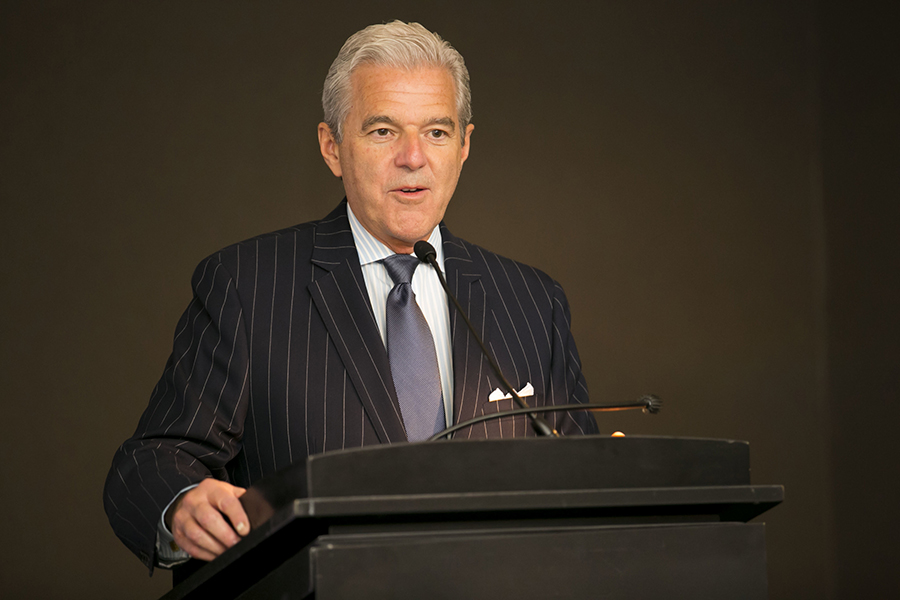
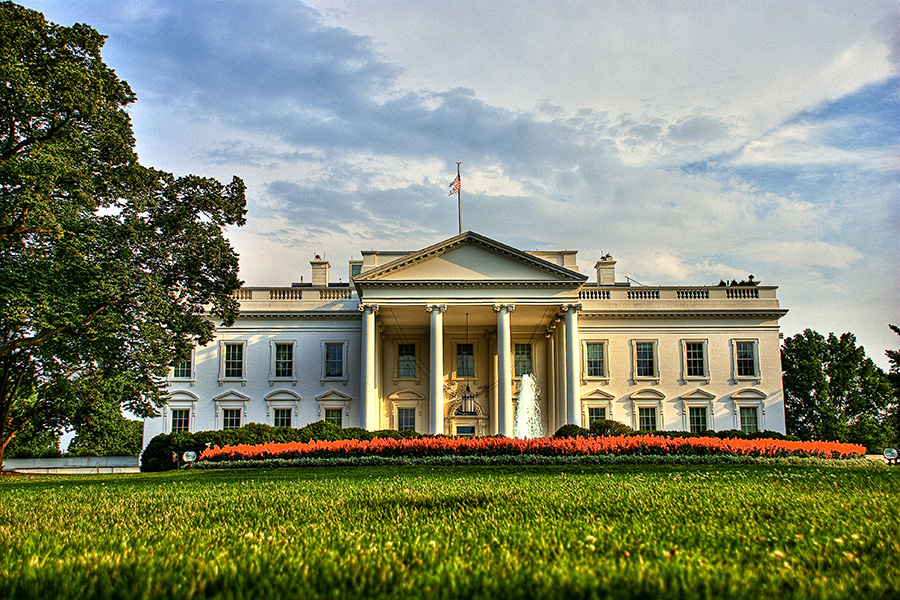
When I worked in the White House for President Reagan, I learned that the big podium presidents typically speak from what is called “The Blue Goose.” That’s because it’s wrapped in blue cloth to which the presidential seal is affixed. It travels wherever the president goes and is a clearly identifiable symbol of power. Presidents rarely deviate from speaking behind the podium because they often read tele-prompters which are positioned with close proximity of the podium. Occasionally the president uses what is called a “toast lectern’ which is a music stand sort of column with a small desktop affixed. These are for more causal remarks.

Now, most of us are mere mortals and not presidents of countries so being positioned behind a huge podium might seem to distance you from the audience and seem pretentious. The first rule, however, is to make sure you can be seen well above the podium. It should not come higher than mid-chest.  If it does you will want to find a riser to stand on. The military officer who plans south lawn ceremonials at the White House almost lost his job when he positioned a podium so high that visiting Queen Elizbeth could not even be seen when she spoke from behind it! That speech was dubbed the “talking hat speech” and was an embarrassment to her which she did not soon forget!

Podiums can be good places for your notes or if you will refer to a written script or if you are reading from a book, which I often do. It can also feel like a nice protection. You do not want it to be a barrier to and from your audience, however. To stand and deliver behind a podium will require you to make an extra effort at energy and imagination. If a boring and dull speaker presents behind a big podium after dinner you may have a recipe for nap-taking. If you are behind one you may have to show your arms and shoulders moving a bit more to give confidence and energy as you build your bridge to those in the room.  There is one more plus to being behind the podium and that is the likelihood that the microphone will work without much fuss, as it is typically solidly affixed. When in doubt remain behind the podium.

If at a certain point in your presentation you would like to move out to the side of the podium, make sure you do not appear to favor one side over the other! I have seen this happen and you would need to compensate for that. If you want to step out in front to appear more friendly and if you have a hand held or lavier mic to enable you to do this, then do it at a point when you want to say something more personal or to help draw your audience up close — as if you want to tell them a secret —which is a smart tool.

It can be fun to do that but be careful you do not lose your place in your remarks and fumble. That would make you lose the value of moving around in the first place. TED talks require that the speaker uses no podium, and this is ideal when telling stories, which TED talks always do. By being completely out in the open you make yourself more vulnerable to the audience and that typically gains more acceptance and connection. It put you in the same plane as the audience. It also fits with the more causal style of public speaking today. One caveat is: it must be done well. Otherwise get a podium.

Have some fun with it and be warm and approachable but always maintain your position as the authority on your topic. Podiums can help with that.

Have a question you’ve always wanted to ask about public speaking? Email James at JSRosebush@impactspeakercoach.com and your answer may feature here.

How to Convey Complex Ideas to Your Audience During a Speech

SPEAKING WITH IMPACT
Each week, speech coach and leadership mentor James Rosebush will answer a question on how to improve your public speaking.

Justin McKinney, CEO of Ivani, LLC asks: When talking about sophisticated technologies, is there a rule of thumb on how to best to strike a balance between being too high-level vs. too in the weeds? 

Dear Justin,

Great question. The first rule is to know your audience. You could be easily embarrassed or discredited if you do not. If you were invited, for example, to speak for my friend, David Edelman’s, Advanced Technology Security Policy class at MIT, you want to be sure your talk is rigorous and carefully vetted. When you present technology solutions you want to make sure they are tested and that you can back them up through quotations from experts brighter and more generally acknowledged than you are.

So, in the case of David’s course you want to clear your message with the person who has invited you to lecture and try out your presentation on a critical friend or two. This is high-stakes communication.

You get one chance to make it right. Any intellectual laziness will be picked up right away, and you may even find people walking out. In between presenting technical data, pause, and check in with your audience and ask “Is any of this making sense with you?” That will make you human and approachable.

On the other hand, with a more generally educated audience, you could risk losing their interest if you are too technical. Let’s say you want to convey the same data but in a less academic way. Then tell a story about how the application works, when it will be available in the marketplace, and how it will improve people’s lives. Then tell a story about how its use could affect the people present in the audience.

Make sure they know the impact on them and make sure you do not use a vocabulary containing words generally unknown to them. If you do, you will be thought haughty and will quickly torpedo that bridge to the audience we always talk about. I would love to hear your next talk!  Good luck.

Have a question you’ve always wanted to ask about public speaking? Email James at JSRosebush@impactspeakercoach.com and your answer may feature here.

Giving a Speech? Here’s How to Make Your Entire Audience Pay Attention

SPEAKING WITH IMPACT
Each week, speech coach and leadership mentor James Rosebush will answer a question on how to improve your public speaking.


James Wolf, CEO of CurioCapital asks: “Are there any techniques you prefer to make the entire audience pay attention?”

Dear James,

The most important thing you must do is to make sure people can hear you! Almost 100% of all speakers I coach are not innately aware that they must take charge of the amplification system.  There may be a team of sound technicians assigned to your speech, but you alone are responsible for the audience hearing you. There is no excuse for a lack of responsibility in this area of work. I often host panel discussions. There has never been a panel where I have not had to go over to them and place the mic up closer to the mouth of the one speaking — and much to my frustration they often move it away! 

If you have something important to say, for heaven’s sake make sure your audience can hear it!  You will have a sense if you can be heard by listening yourself!  Speak up — loudly enough to reach the audience even without amplification. Rarely is there ever a speaker who speaks too loudly as to draw complaints. Sound technicians can lower your voice, but they cannot always raise it. 

Few people know this but the more your voice has to rely on artificial amplification, the more inauthentic and thin your voice sounds. In the extreme you get that irritating feedback because the amplification has reached its limits or is in conflict with its own system.  Before you go on stage go to your car or a secluded space and sing your favorite song (even you think you cannot sing) to warm the vocal chords. Never ever drink ice water before you speak. That will tighten the vocal cords.  Open and breathe deeply to warm up the chest area and then have an expansive thought about your message and be glad to have this opportunity to share a message. 

Next time we will talk more about this subject of getting the audience to pay attention and I will tell you a story about how I got a teenage audience to get off their phones and listen! Good luck!

Have a question you’ve always wanted to ask about public speaking? Email James at JSRosebush@impactspeakercoach.com and your answer may feature here.


Giving a Speech? Here’s How to Make Your Entire Audience Pay Attention

SPEAKING WITH IMPACT
Each week, speech coach and leadership mentor James Rosebush will answer a question on how to improve your public speaking.


James Wolf, CEO of CurioCapital asks: “Are there any techniques you prefer to make the entire audience pay attention?”

Dear James,

The most important thing you must do is to make sure people can hear you! Almost 100% of all speakers I coach are not innately aware that they must take charge of the amplification system.  There may be a team of sound technicians assigned to your speech, but you alone are responsible for the audience hearing you. There is no excuse for a lack of responsibility in this area of work. I often host panel discussions. There has never been a panel where I have not had to go over to them and place the mic up closer to the mouth of the one speaking — and much to my frustration they often move it away! 

If you have something important to say, for heaven’s sake make sure your audience can hear it!  You will have a sense if you can be heard by listening yourself!  Speak up — loudly enough to reach the audience even without amplification. Rarely is there ever a speaker who speaks too loudly as to draw complaints. Sound technicians can lower your voice, but they cannot always raise it. 

Few people know this but the more your voice has to rely on artificial amplification, the more inauthentic and thin your voice sounds. In the extreme you get that irritating feedback because the amplification has reached its limits or is in conflict with its own system.  Before you go on stage go to your car or a secluded space and sing your favorite song (even you think you cannot sing) to warm the vocal chords. Never ever drink ice water before you speak. That will tighten the vocal cords.  Open and breathe deeply to warm up the chest area and then have an expansive thought about your message and be glad to have this opportunity to share a message. 

Next time we will talk more about this subject of getting the audience to pay attention and I will tell you a story about how I got a teenage audience to get off their phones and listen! Good luck!

Have a question you’ve always wanted to ask about public speaking? Email James at JSRosebush@impactspeakercoach.com and your answer may feature here.


How a Kidnapping Attempt Led to the First Social Impact Office in The White House

On a hot and muggy July afternoon, just as I was just settling into work at my first job in the foundation world, I was shaken by the sound of machine gun fire blasting through the front door of our office.

Like the rest of my startled colleagues, I grabbed my phone and dove under a desk. It was the only thing I could think to do. Although Detroit, Washington DC, and LA were burning, and race riots were dominating the news, no one expected our quiet Midwestern city to be the subject of extreme violence.

The target that day was not any of us on the staff. It was a kidnapping attempt for ransom, and the target was our CEO, the eldest son of the founder of General Motors. As a preventative measure, he escaped into a room-sized safe, and, after several hours, a swat team led the staff down the fire escape and released us unharmed. Although the terrorists were arrested and did not get their target, it was a day that changed everything for the office, the targeted official, and for me. It ushered me into the age of impact in its earliest stages, and ultimately led to me being asked, years later, to start and manage the first White House office on social impact investing and philanthropy.

Our CEO, the target of the kidnappers, approached me a few weeks after the incident with a request. I had noticed a change in his demeanor. His calm personality had become more lively, enthusiastic, and I sensed he had even gained a higher purpose. He asked me to begin a strategic planning process for the organization that focused on measuring the impact we were having. This was the beginning. We started to assess the social and community impact of our investments using detailed demographic assessment data. It super-charged the organization and gave me a focus for my professional life.

Today, we are driving at light speed toward human progress. Impact has become the standard bearer and rallying cry of the future, and within a decade, will be commonplace rather than the exception. This phenomenon I call the New Age of Enlightenment because of its potential for significant human progress – surpassing the first, the 18th century period of progress.

Although we don’t know how much money is being allocated to impact investing today, we do know that it’s rising quickly and will appear as an avalanche of capital-seeking products and strategies within this decade. New investment structures like Green Bonds, Enterprise Zones, Cryptocurrency economic aid to developing nations, side-by-side philanthropic and investment co-ventures, and more are all underway. There are hundreds of social-impact incubators at work, turning out new solutions to virtually every problem we know. The main shared feature of all these new strategies is urgency. Patience with failing education, healthcare solutions, and environmental degradation is at an end. There is a drive of human capital, AI, and tech pouncing on virtually every problem we face.

Investors are actively pursuing solutions to clean fuels and water, saving the oceans, advancing nutrition and health, and many other worthy causes. This is the private sector at work and at its best. Letting market forces drive improvements in health care, personal safety, and the reduction in carbon footprints may be one way that sustainability could have the most lasting and significant effect. Some restless investors have also spawned the rise of impatient capital being put to use in these directions through political and corporate activism.

The creative genius Peter Diamandis, along with co-author Steven Kotler, wrote in their 2012 groundbreaking book Abundance, “Humanity is now entering a period of radical transformation in which technology has the potential to significantly raise the basic standards of living for every man, woman, and child on the planet. Abundance for all is actually within our grasp.”

What this means is that if abundance is within our grasp, then by strategically working backward we can know the obstacles to reaching it. We can begin to create the solutions to surmount them. As the development of policy shifts to the private sector, we must integrate industry, innovation, philanthropy, and the social sciences to work as partners, or we will never reach what Diamandis, the X-Prize Founder, has laid out as our goal. We are talking fetterless opportunity and solutions beyond our present imagination. Only fear, political constraint, or lack of dreaming can eclipse this New Age of Enlightenment.

 

0