

Stop Eating Our Wildlife And Trading Them as Pets

The International NGO founded by Dr. Jane Goodall has launched a campaign to raise awareness around the urgency to protect species from trafficking. 

With the imminent publication of Horizon Scan, a ground-breaking report that, for the first time, identifies and prioritizes the most urgent issues fueling wildlife trafficking, and as delegates gather for the Illegal Wildlife Trade Conference in London, UK, the Jane Goodall Institute (JGI) has announced the launch of the ForeverWild campaign to help end trafficking of endangered species, many on the brink of extinction.

If you like this, subscribe here for more stories that Inspire The Future.

“Without a concerted global effort to stop trafficking, primates and other wildlife will be gone for good,” says Dr. Goodall, a world-renowned primatologist and ethologist. “My hope is that we can work together and end one of the most dangerous threats to the survival of chimpanzees, elephants, rhinos, and many other animals for whom, like us, this planet is their only home.”

JGI’s Zara Bending, a legal expert in wildlife trafficking, is a contributor to both Horizon Scan and JGI Australia’s campaign to end the domestic trade in ivory and rhino horn. “Wildlife trafficking is a global problem that demands a global response,” she says. “There are actions everyone can take to turn the tide and put an end to the illegal wildlife trade. It starts with becoming informed and advocating for better law enforcement while eliminating demand for trafficked animals and animal parts.”

According to the most up-to-date analysis, as reported in Horizon Scan, emerging issues to watch closely range from rapid growth in urbanization in many African countries to increasingly active trading in endangered species through online platforms.

The ongoing migration of rural populations to urban centers has caused demand for bushmeat (wild animals including endangered chimpanzees sold as meat) to spike. At the same time, monitoring the global online sales of exotic pets and animal parts poses new challenges which must be addressed.

JGI is pushing back against wildlife crime on several fronts and has contributed to the development of new facial recognition software to counter online marketing of great apes. The institute also operates one of Africa’s largest chimpanzee sanctuaries where 138 rescued chimpanzees are protected and cared for under conditions that most closely mimic a natural life in the wild.

Providing sanctuary for chimpanzees that have been victims of trafficking is pivotal to ending the practice. Enforcement agencies can only be effective if there is a safe place to bring confiscated animals. Simultaneously, JGI is actively collaborating with local communities to educate people on how and why to protect great apes from the threat of illegal trade.

Through the ForeverWild (#4EverWild) campaign, the Jane Goodall Institute aims to raise awareness of the urgency with which we must end wildlife crime. In addition to JGI’s multiple approaches to stopping trafficking of chimpanzees, local JGI chapters around the world are engaged in efforts to save region-specific wildlife by reducing demand for exotic pets and animal parts, changing government policies, and public engagement activities.

Patrick van Veen, Chair of JGI Global, says: “The Jane Goodall Institute is in a unique position in that we can use our world-wide network to fight illegal trade of great apes and other wildlife in many places and in many ways whether it’s reducing demand or supporting sustainable alternatives for income generation. If we come together we can still secure a future where wild animals can live safely in the wild.”

If you like this, subscribe here for more stories that Inspire The Future.
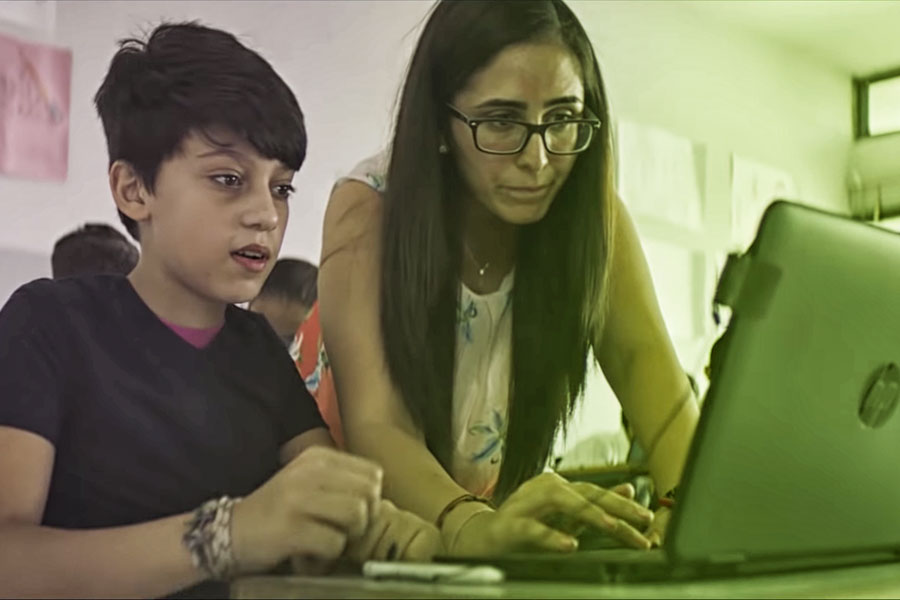
 

George Clooney and HP Partner on Syrian Film

A new film narrated by George Clooney, in conjunction with HP, tells the story of Syrian refugee girls rediscovering their dreams.

If you like this, subscribe here for more stories that Inspire The Future.
The new film brought together HP, the Clooney Foundation for Justice, UNICEF and Google.org in a creative partnership to improve the lives of thousands of students.

Launched on the International Day of the Girl, the powerful film titled, A Generation Found, tells the story of two young Syrian girls living in refugee settlements in Lebanon who regain access to quality education following years of uncertainty. 

More than 65 million people around the world have been forcibly displaced, a record high since World War II, according to the U.N. Refugee Agency. Five million of those have been displaced from Syria since 2011, and more than a million are now living in Lebanon. An estimated 200,000 of these refugees are children. Only a small number of refugees – less than one percent of 17.5 million in 2016 – will ever be resettled.

Four years ago, Marah, a 12-year-old fourth grader, and her family were uprooted by the violence in Syria. And Rawaa, a 12-year-old second grader, was living with her family in the countryside near the southern Syrian city of Aleppo when the fighting broke out and forced their displacement. Marah and Rawaa were at risk of becoming part of the “lost generation” of Syrian refugees who might grow up without the basic human right of education.

But now, as the film reveals, thousands of young Syrians living in Lebanon are getting back to school. Education plays a critically important role in creating opportunities and enabling a more just, equitable and inclusive society. HP and its partners are supporting the broader goal to enable better learning outcomes for 100 million people by 2025.

Through this unique partnership, new technology is being used in nine public schools across Lebanon, from Beruit to the Beqaa Valley, and will reach nearly 3,500 Syrian refugee students, as well as thousands of Lebanese students and teachers as the program is now deployed for its first full school year. The nine schools often serve Lebanese learners in the morning, and then operate a “second shift” to serve Syrian students.

HP is also providing teacher training, curriculum planning support and – a first for these students – laptops, which will be used daily in every classroom. By equipping classrooms with the latest educational technology and giving teachers the proper training and tools, HP and its partners are providing new ways of learning for not just the students who attend second shifts in the afternoon, but for all of the students in each of the nine schools.

With the culmination of more than a year’s work between the organizations in Lebanon, HP is celebrating and amplifying the voices and stories of strong girls and refugees around the world. They also seek to shift mindsets and reinvent the way people think about refugees. 

If you like this, subscribe here for more stories that Inspire The Future.

Case Study: Thailand Promotes Partnerships for a Sustainable World

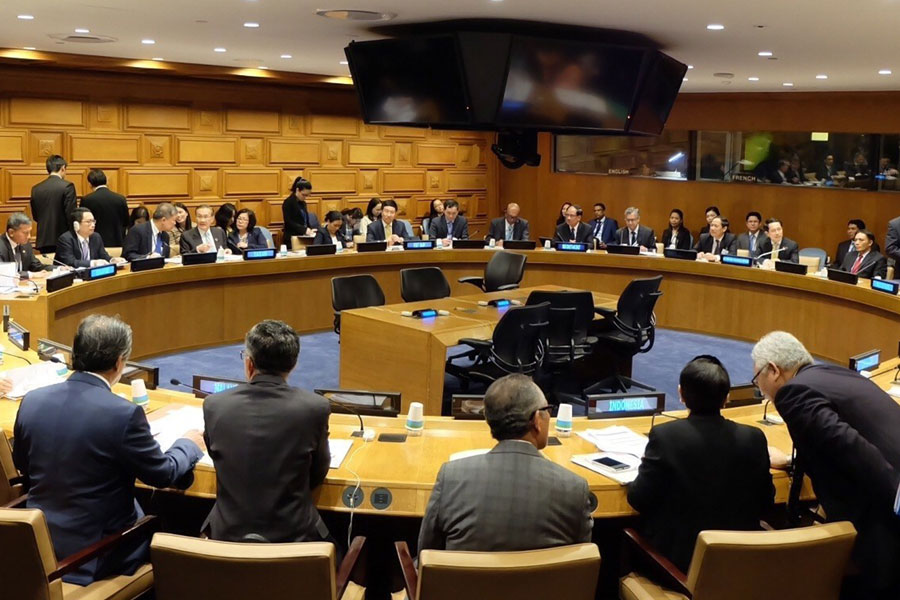
By sharing its Sufficiency Economy Philosophy as a model, Thailand is helping other developing nations achieve the Sustainable Development Goals.

Of the 17 Sustainable Development Goals of the United Nations, the final goal – revitalize the global partnership for sustainable development – may be the most compelling of all. Because the only way we can build a better world is by working together. So many of the challenges we face, from climate change to eradicating diseases, are borderless. Although we measure results on a nation-by-nation basis, unless nations can find ways to work together for the good of our planet and its peoples, our future will ultimately be unsustainable.

The Kingdom of Thailand has made its primary mission to enhance cooperation between North and South and also to strengthen South-South Cooperation. This exchange of resources, technology and knowledge between developing countries, often referred to as the Global South, can be complementary to achieving the Sustainable Development Goals. Thailand has worked to transform this vision into action. Even before its chairmanship, Thailand had been sharing its own model of development among countries grappling with the challenges of a changing world. That model is known as the Sufficiency Economy Philosophy.

Initiated by the late monarch King Bhumibol Adulyadej through decades of working to uplift the nation’s poor people, the Sufficiency Economy Philosophy is an approach to development and to life that is based on moderation, reasonableness and prudent decision-making. It prescribes living in harmony with the environment and making wise use of resources in order to build resilience and wellbeing. Its principles can be applied to farmers, communities, businesses and nations. In the context of the philosophy, sufficiency does not mean living in isolation. It calls for communities to work together for the common good – the essence of partnerships.

Thailand understands the value of working together. Once a country in need of development assistance, Thailand is now a donor nation, providing fund and sharing its resources of knowledge, technical assistance, scholarships and capacity building with less developed nations. In 2015, the Kingdom provided $78 million in Official Development Assistance to other countries through the Thailand International Cooperation Agency, while foreign direct investment surpassed $58 billion, with much of it going to the developing world.

While generous funding is important, even more value lies in Thailand’s willingness to share its knowledge and experience with the Sufficiency Economy Philosophy. To date, representatives from 105 countries have participated in workshops, seminars and training courses hosted by Thailand on the philosophy and its applications.

Thailand has been partnering with several countries to help them implement their own development projects based on Sufficiency Economy Philosophy principles and methods. Timor-Leste is employing decision-making processes based on the philosophy’s framework for sustainable agriculture projects and to support the launch of small businesses. Cambodia has established a Sufficiency Economy village as a pilot for more communities. Indonesia is using sufficiency principles shared by Thai advisors for ecological farming projects that raise incomes and quality of life for villagers. And neighboring Myanmar is working with Thai partners to establish sustainable development centers and rural development projects on sufficiency principles.

Far beyond Asia, the Sufficiency Economy Philosophy is being adopted for the benefits of local peoples. In the southern African nation of Lesotho, Thailand has supported the establishment of a center to introduce integrated farming and agro-forestry farming that is protecting that nation’s environment while providing greater food security and livelihoods for participants. Several nations in South America have also been applying approaches based on the philosophy.

“Development approaches like the Sufficiency Economy Philosophy of Thailand, that promotes development with values, which not only complement the [SDG] agenda, but our own national development framework, will certainly help us in implementing the SDGs,” Guillame Long, Ecuador’sMinister of Foreign Affairs, told the UN General Assembly last year.

Achieving the Sustainable Development Goals by 2030 will require commitment and perseverance. For some countries in the Global South with limited resources and capacities, the tasks at hand may appear enormous. Despite its own limitations, Thailand achieved the Millennium Development Goals ahead of schedule, owing a significant degree of that success to the Sufficiency Economy Philosophy. Thailand is willing to partner with any country seeking knowledge, expertise and a proven path to sustainable development. Because there is only one way to build a better world – and that way is together.

70 Years Later, a Classified Ad Still Changing Lives

Ann Greenberg could never have imagined the impact of the two-line classified ad she placed on July 9, 1948, in the New York Post. It literally changed lives.

Greenberg, whose son Jerry had developmental delays, placed the ad which read: “To mothers of retarded children, ages, 4-8: Are you interested in helping to start a day nursery for your children?” She received 10 responses. Within a year, through word of mouth and a few newspaper articles, hundreds of families united.

If you like this, subscribe here for more stories that Inspire The Future.

The New York Post ad was just a beginning for Greenberg, who was determined to help children with disabilities and their families. It was the foundation for one of New York City’s largest organizations supporting children and adults with disabilities – AHRC New York City (AHRC NYC). The agency was founded in 1949 as the Association for the Help of Retarded Children.

Seventy years after placing the ad, Greenberg’s legacy continues. AHRC NYC empowers the people it supports and their family members. Today the agency offers an array of services, including preschools, school age, high school and college programs for young adults.

In 1970, the agency opened the first group residence in New York State in Manhattan. It started the first sibling network in 1985 to support brothers and sisters of people with disabilities.

Greenberg, who died in 2006, recalled in a 1998 interview, taking Jerry to the doctor who delivered him. “‘His brain has been injured. He’s retarded,'” the doctor said. ‘”Go home and have another baby.'” She told the doctor that was impossible, as her husband was serving in World War II. She was only interested in helping her baby. The doctor told her, ‘”We can’t help him.'”

With no services available for her son, she launched a letter writing campaign that blossomed into the parents movement in New York City – eventually becoming AHRC NYC. Their children were considered ineducable, and treated as outcasts. The parents supported one another, and worked to provide their children with opportunities to grow.

Gilda Lindenblatt, 80, recalls being the only woman to live in AHRC NYC’s Fineson Residence in Manhattan. She became a staunch self-advocate, making trips to Albany to speak about key issues in the field with legislators. Today she enjoys discussing current events at her day program

Lindenblatt remembers Greenberg visiting the residence on its one-year-anniversary. “She was very nice,” she said, adding that Greenberg asked her to help her in the mailroom at the agency’s central office. Lindenblatt speaks confidently, though she says she wasn’t always that way. “If anything comes to me now, I’ll speak up and say what I have to say,” she said. Greenberg would be proud.

If you like this, subscribe here for more stories that Inspire The Future.

Meet The Virtual Vigilantes Busting Human Traffickers From Their Laptops

When not detecting intelligence threats to oil rigs and dams, Sergio Caltagirone spends his spare time hunting a different kind of predator – traffickers trading in human beings, from war-torn Syria to sleepy U.S. suburbs.

The Seattle-based computer scientist, who previously worked for the U.S. Department of Defense, Microsoft and NASA, is one of a new breed of digital hacker sleuths who are saving lives by tracking down traffickers and rescuing victims on the internet.

“It’s just like any other business in the world,” said Caltagirone, who set up the Global Emancipation Network (GEN) with his wife, Sherrie, two years ago, to analyse data to help law enforcers counter human trafficking.

If you like this, subscribe here for more stories that Inspire The Future.

“If you know how to find it, you will see it almost everywhere – almost every major site has some component of trafficking in it,” said Caltagirone, whose day job is with the industrial cybersecurity firm Dragos.

Opinion is divided over the rise of hacker sleuths who deploy their cutting-edge knowledge, skills and experience to support governments that often lack the time, motivation and innovative tools to tap into criminal slavery networks.

Human trafficking is among the world’s largest international crime industries, with about 25 million people trapped in forced labour generating illicit profits of $150 billion a year – and one which is moving increasingly online.

The U.S.-based National Center for Missing and Exploited Children said in 2017 that almost three-quarters of suspected child trafficking reports it received from the public involved the sex advertising website Backpage.com.

Backpage – described by campaigners as the country’s largest online marketplace for child sex trafficking – was shut down in April and its founders were charged in a 93-count indictment, including knowingly facilitating prostitution.

But the years of lobbying that preceded the crackdown showed how authorities with limited digital expertise struggle to stop criminals who use technology at every stage of their business, from recruiting via social media to tracking victims via webcam.

“You have to know exactly where to go,” said Sharon Nimirovski, head of White Hat, an Israeli cyber security firm staffed by former military intelligence agents.

“You have to go undercover and live the hacker cyber scene, know its structure and pretend to be someone you are not in order to retrieve the data that you are looking for.”

While the precise methods used by hacker activists are veiled in secrecy, Nimirovski said his team has used false digital identities to infiltrate hidden cybercrime sites to gather information on paedophiles.

“Just like the police work in the physical world, White Hackers act in the digital dimension,” he said, adding that his White Hat Hackers – or hackers working for good – share the criminal evidence they unearth with authorities.

DARK WEB

GEN, which is run by volunteers, collects text and images from the open and dark web – a part of the internet invisible to search engines and only reachable using specialised software – to look for patterns that could indicate trafficking.

It shares this suspicious online activity for free, via its Minerva platform, with law enforcement, researchers and anti-trafficking charities that often do not have the capabilities to trawl the online black market and message boards.

The software allows investigators to search through data from millions of – often hidden – internet pages using keywords, usernames and phone numbers to find out what other sites their suspects visit and who else they communicate with, GEN said.

Digital evidence gleaned from visa blacklists, bitcoin transactions and sex ads can help to bust traffickers by predicting where victims might go, via which routes and who is likely to buy or sell them, experts say.

“The earlier you move into the kill chain, the more effective your disruption becomes, and the more people you ultimately save,” said Caltagirone, GEN’s technical director.

One of the routes GEN is tracking closely is that of people moving to Eastern Europe from Syrian refugee camps, often in the hope of finding lucrative jobs advertised on fake websites.

“Of course these victims are going to be very willing,” said Caltagirone, highlighting how technology has not only made it easier for migrants to reach Europe, but also enabled criminals to trick people into trafficking themselves and their families.

“This is where you’ll get parents who sold their children.”

ONLINE VIGILANTISM

Yet caution is required as hackers may not have the training needed to collect evidence that is admissible in court, said Nazir Afzal, a lawyer and former British chief prosecutor who fought major cases involving sexual slavery and child abuse.

“If, in some (human trafficking) cases, hacking leads to the early detection of a big vulnerability – that’s fine, I suppose,” said Rob Wainwright, a cyber security expert and ex-head of Europe’s policing agency Europol.

“But we have to be very careful about encouraging online vigilantism,” he added. “We have to do things in the right way.”

But others say that private digital sleuths can play a vital role, particularly when working together with the police.

“Law enforcement, in many countries, either lack the financial resources or human resources or both needed to perform cybercrime investigations efficiently and swiftly,” said Joyce Hakmeh, a cybercrime expert with the think tank Chatham House.

“Most, if not all, cybercrime investigations require public-private partnerships and getting the right experts on board,” she said in emailed comments, adding that ethical hackers working with the police can have a big impact in cracking cases.

GEN is confident that cyber hackers have a key role to play in combating trafficking – and boosting prosecutions, which numbered about 9,000 in 2016, according to the U.S. government.

“We’re not here to save the world,” said Caltagirone. “But GEN is here to make people who are saving the world even better at doing it.”

By Inna Lazareva, Additional Reporting by Kieran Guilbert, Editing by Katy Migiro.

If you like this, subscribe here for more stories that Inspire The Future.
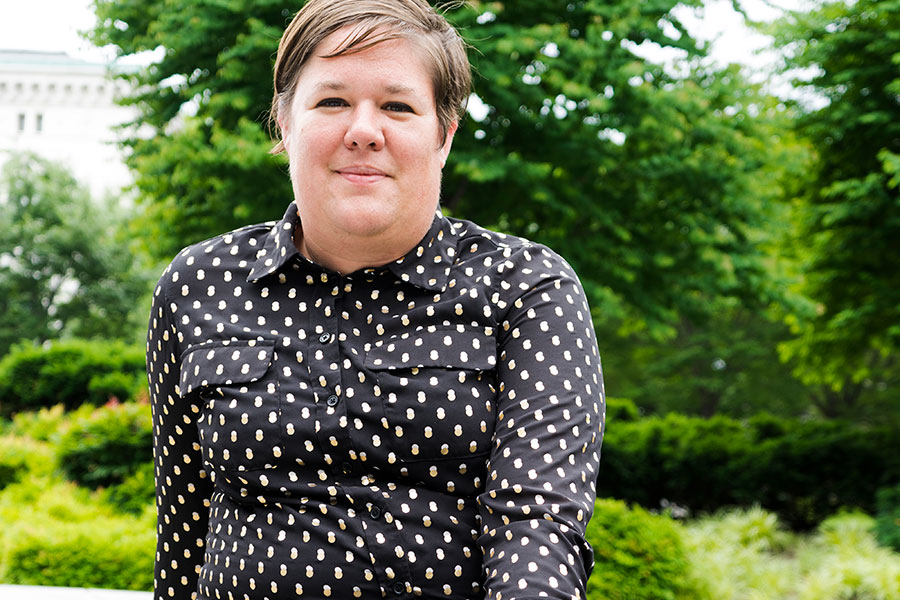
Blind Skateboarder Dan Mancina on His New Vision For The World

Dan Mancina cannot visually make out a ledge or ramp but that doesn’t stop him from tackling them on a skateboard.

The American has just 5% vision but, with the use of a cane, he has continued to perform some of the tricks he revelled in before losing his sight. Mancina was just 13 when a routine eye check-up saw him diagnosed with a degenerative eye disease, Retinitis Pigmentosa, which has robbed him of 95% of his vision.

If you like this, subscribe here for more stories that Inspire The Future.
“Losing my sight and my skating on top of that was like ripping your heart out,” he recalls. “It changed my whole attitude… towards life.First, I couldn’t leave my house or my block because I would get lost. And ever since I was seven that’s who I was… a skateboarder. I just lost it for a while.”

So, he hung up his skateboard and moved on to other avenues in his life, like becoming a massage therapist.

But a one-off return to the board for a video stunt helped retransform his life. Recording clips of him doing things blind people shouldn’t be able to – a darts bullseye, a mini golf hole in one and some skateboarding – went viral and he’s never looked back.

By his own admission, it has not been plain sailing. “Now, skating is more scary and more demanding. Trying to get hyped up to skate something is harder. But I do it because once you get in that flow state where I’m only concerned about getting that trick. There’s nothing else that will get in the way of landing what you’re trying.


“Then I’m not thinking about being blind but how am I going to do this and make it happen. Everything else fades away and it’s the best feeling you can have.”

The Michigan native can now effectively only see perception, shadows and contrast but, having gone from trying to work out “what does a blind person do?”, he now has his heart set on building a skatepark for blind people. His remarkable skating prowess is now done on feel alone, using his cane to figure out the right place for take-off.

As he puts it, “I may have lost my sight but through skateboarding I’ve gained a vision and I want to share that with the world.”

If you like this, subscribe here for more stories that Inspire The Future.

 

20 Things We Wish We Had Known 20 Years Ago

These words of wisdom – based on our successes, failures, experiences, yearnings and hopes – come from women alumnae of Brown University. With hope that they inspire you to take action as you build your life and career, we share them with you today…

  1. Show, don’t tell
  2. Know what you can control, and what you can’t
  3. Put more stuff on your calendar than you can possibly do… then show up!
  4. Use your skills and interest for good… volunteer
  5. The more you say it, you become it
  6. You can have it all, do it all, be it all – but not all three at once
  7. Being good with people does not mean you are necessarily a good manager
  8. It’s good to feel a little out of your depth; that means you are learning something
  9. Talk to anyone; ask people to talk to you
  10. Say thank-you
  11. Don’t be afraid of men (it helps you understand and learn from them)
  12. Take a 6 month “independent study” time off from your career
  13. Be gentle with yourself
  14. Ask for help (men do)
  15. Don’t ever say you can’t do that (men don’t)
  16. Say “yes” to more hard things you like and “no” to those things that you don’t
  17. Do something that motivates you… or you’ll go crazy
  18. If you believe it can be that awesome, it can be that awesome
  19. Don’t be surprised by your successes
  20. There’s never a good time to have children… just do it!

I’m indebted to Barbara Laskey Weinreich for regularly hosting this gathering of women and to Karen Berlin Ishii for compiling this wisdom.

How Soup Is Uniting and Transforming Communities

When last did you fund a new venture over a bowl of soup? Well now you can.

Detroit Soup invites community members to pay $5 at the door and then listen to presenters vying for votes on a project that will make a positive difference in their communities. Projects range from art, urban agriculture, social justice, education and technology. Budding entrepreneurs have four minutes each to pitch an idea to diners and then take questions. Your $5 buys you a bowl of soup, salad, bread and a vote, and once the votes are counted, the winning presenter receives all the money collected at the door.

If you like this, subscribe here for more stories that Inspire The Future.

“It’s like Shark Tank, but minus the a-holes,” says Amy Kaherl, the founder of the Soup fundraising idea, that has already spread to more than 100 cities around the world. “We’re not a slick TV show and don’t use presentation material,” she adds. “My view is that a big screen highlights disparity, and furthermore I couldn’t be bothered with what version of Windows you have or why your specific model laptop won’t link to a projector. I want to create a personal experience, eye to eye, that focuses more on the individual and the idea.”

151 Soup dinners later, and after raising more than $160,000 for various projects, Kaherl can pull together a dinner for 300 people in under 90 minutes. Beyond the distinct sense of community ownership (and the cheap entry ticket), much of the success of Soup can be attributed to mainstream media outlets that have highlighted Kaherl’s simple idea and fired the imagination of communities that can see how simple change can be. They may even get to hear a neighbor pitch they’ve never met, or become aware of an issue they didn’t know existed.

The term “social innovation” or “social enterprise” is sometimes tagged onto the project, but Kaherl is unfazed by terminology and would rather focus on the mysterious energy that exists when people come together for a ritualistic meal – which somehow opens minds and pockets to new ideas. Millennials wearing T-shirts emblazoned with “Detroit Hustles Harder,” rub shoulders with pensioners. Black and white, rich and poor, and ages 8 to 88 all eat the same meal with a common purpose of doing good.

“People get their power back. Diners – ordinary suburban folk – assume the role of investors and presenters have easy access to an audience that knows they’ll ultimately be the beneficiaries of the winning idea.” Diners who’ve brought food to share, get 60 seconds to announce what they’re working on, or ask advice. “Our events are like human bulletin boards,” Kaherl laughs.

Kaherl has done away with the institutional gatekeepers of traditional fundraising and has helped fund 57 projects, 48 nonprofits and 27 for-profit enterprises. Thirty-three projects would not have existed if it weren’t for the Soup initiative. It’s amazing how far $5 can go. “Some people will spend $1,000 on bags and clothing without even thinking. I’ve shown how a fraction of that can change lives. There is so much in society trying to push us apart right now, Soup proves that we all have more in common,” explains Kaherl.

Since 2010, more than 1,000 ideas have been presented over a bowl of soup to 25,000 diners and two marriages have even come about. It’s a simple idea with complex outcomes. You’ll find plenty of other good restaurants in a Soup host city, but nothing quite as profound. 

www.detroitsoup.com

If you like this, subscribe here for more stories that Inspire The Future.

T-shirts To Make You Eat Your Words

The next time you say something offensive in public, beware – Amanda Brinkman may put it on a T-shirt. German-born Brinkman moved with her family to Los Angeles as a child and has always looked for attention.

During the 2016 presidential debates, she found it. After hearing Donald Trump call Hillary Clinton a “nasty woman,” she bristled, and on a whim mocked up a T-shirt with the phrase emblazoned on the front and put it up on her new website.

If you like this, subscribe here for more stories that Inspire The Future.

She woke up the next morning to 10,000 orders and called the online payments company to report an error. It wasn’t, and Brinkman found herself thrown into the midst of a new business venture that started by appropriating someone else’s words. Can attitude alone make you money? Well, yes, it seems so. Since October 2016, Brinkman’s online shop, Google Ghost, has donated a percentage of sales to Planned Parenthood – more than $130,000. Celebrities such as Will Ferrell and Katie Perry have been seen sporting her playful T-shirts, with messages such as, “The Future is Female” and “Gender is a Drag.”

“I want my movement, Shrill Society, to make people, especially women, laugh, think, and hopefully become more socially active through product design and collaborations,” she explains. “Shrill Society is a play on the word ‘shrill,’ which has been historically used to rob women of power. We intend to give it back.”

Brinkman’s fun and irreverent style has rubbed off on other women since she was young. She bounced into her classroom on the first day of school, a newly arrived immigrant wearing lace gloves, bright colors and mismatched, patterned clothing and was met with a sea of beige outfits from stunned classmates. Her teacher made her wipe the bright red lipstick off that day, but she noticed how girls in her class became braver over the next few months and more experimental in what they wore. Some of them formed a girls-only bicycle gang and roamed the streets looking for adventure. The crazy forest girl from Germany had turned school into a lesson on empowerment.

Brinkman’s T-shirt may have started off viral, but it’s more than just sloganeering. Their products are created in ethical working conditions that reinforce their politics – to make the world a safer place for women and girls. That means no sweatshops, domestic production, and recyclable shipping materials.

“Because our individual stories matter,” she explains. “We connect you with our artists and makers and to women making a difference all over the world. We use humor to provide context, enable conversation and build relationships. We don’t believe in shaming one another for where we are on our respective political journeys. Instead, we offer tools to empower each other to find our voices, make our choices, and follow our passions.” Brinkman’s goal is to create ongoing products that expand upon women’s significant contributions to a shared history and to shape how young women tell their stories. She also wants you to stay nasty. 

www.googleghost.com

If you like this, subscribe here for more stories that Inspire The Future.

12 Cultural Practices You’ve Probably Never Heard About

Each year a special UNESCO committee meets to evaluate cultural norms from around the world that are put forward for consideration for a list like no other – The Representative List of the Intangible Cultural Heritage of Humanity.

The list is made up of intangible heritage elements that demonstrate the diversity of that particular heritage raises awareness about its importance. Many of these cultural element are in urgent need of safeguarding because they’re at risk of disappearing forever, despite the efforts of the community, group, individual or State to preserve them. In December 2017, 12 more heritage elements where added:

If you like this, subscribe here for more stories that Inspire The Future.

Kazakhstan  – Kazakh traditional Assyk games

Kazakh Traditional Assyk Games are an ancient tradition in Kazakhstan; each player has their own set of Assyks, traditionally made out of a sheep bone, and a ‘Saka’ dyed in bright colours. The community of practitioners mainly comprises children aged between 4 and 18, but young people and adults are also involved. The game is a good model for positive collaboration, social inclusiveness and a sense of friendship, and is primarily transmitted through observation from older boys to younger ones.

Portugal  – Craftmanship of Estremoz clay figures

The Craftmanship of Estremoz Clay Figures dates back to the 17th century and involves a process lasting several days. The clay figures are dressed in regional attires of Alentejo or religious clothing and follow specific themes; the very characteristic aesthetic features of the figures make them immediately identifiable, and the craft is strongly attached to the region. Artisans ensure the viability and recognition of their craft through non-formal workshops and pedagogical initiatives, as well as through local, national and international fairs.

Germany  – Organ craftsmanship and music

Organ craftsmanship and music has shaped Germany’s musical and instrument-making landscape for centuries, and there are a diverse number of traditions around constructing and playing the organ. The highly specialized knowledge and skills of organ makers are significant markers of group identity and organ music constitutes a universal language that fosters interreligious understanding. Knowledge and skills related to the element are transmitted through a direct teacher-pupil experience as well as in vocational schools, universities, and organ construction workshops.

Greece  – Rebetiko

Rebetiko is a musical and cultural expression directly linked to song and dance that initially spread among urban working-class populations. Rebetiko songs are now a standardized repertoire in social occasions, containing invaluable references to the customs and traditions of a particular way of life. Rebetiko is transmitted orally, as well as by the media and in music schools, conservatories and universities, and musicians and enthusiasts continue to play a key role in keeping the practice alive.

India – Kumbh Mela

Kumbh Mela, the festival of the sacred Pitcher, is a peaceful congregation of pilgrims during which participants bathe or take a dip in a sacred river. The congregation includes ascetics, saints, sadhus, aspirants-kalpavasis and visitors. The tradition plays a central spiritual role in the country, encapsulating a diverse range of cultural customs. Knowledge and skills relating to Kumbh Mela are mainly imparted through the teacher-student relationship, but transmission and safeguarding are also ensured through oral traditions and religious and historical texts.

Indonesia  – Pinisi, art of boatbuilding in South Sulawesi

Pinisi, or the Art of Boatbuilding in South Sulawesi, refers to the famed ‘Sulawesi schooner’ and represents the epitome of the Archipelago’s indigenous sailing craft. Today, boatbuilding centres are located at Tana Beru, Bira and Batu Licin, where shipbuilding and sailing are central to the community’s social, economic and cultural fabric. Knowledge and skills are transmitted from generation to generation both within and outside of the family circle, and local shipwrights are engaged in active marketing initiatives to safeguard the practice.

Iran (Islamic Republic of)  – Chogān, a horse-riding game accompanied by music and storytelling

Chogān is a horse-riding game traditionally played in royal courts and urban fields and accompanied by music and storytelling. In Chogān, two rider teams compete and the aim is to pass the ball through the opposing team’s goal post using a wooden stick. Chogān has a strong connection to the identity and history of its bearers and practitioners. It is transmitted informally within the family sphere, as well as by dedicated associations through training and support for local masters.

Iran (Islamic Republic of); Azerbaijan  – Kamantcheh, The art of crafting and playing with a bowed string musical instrument

The art of crafting and playing Kamantcheh/Kamancha (‘little bow’), a bowed string instrument, has existed for over 1,000 years. In the Islamic Republic of Iran and Azerbaijan, it is a major element of classical and folkloric music, and performances occupy a central place in many gatherings. Kamantcheh is both a key source of earning a living and a strong part of the communities’ living heritage. Knowledge relating to the art of crafting and playing Kamantcheh is transmitted both within families and in musical institutions.

Ireland  – Uilleann piping

Uilleann Piping is a musical practice in which a particular type of bagpipe (known as ‘uilleann’, ‘Irish’ or ‘union’ pipes) is used to play traditional music. Bearers and practitioners include participants of all ages, dispersed throughout the world. Uilleann Piping offers an important way of socializing, providing a sense of rootedness and connection to the past. Knowledge and skills are transmitted using both long-established and modern practices, and the practice is primarily safeguarded through the efforts of the group Na Piorabairi Uilleann.

Italy – Art of Neapolitan ‘Pizzaiuolo’

The art of the Neapolitan ‘Pizzaiuolo’ is a culinary practice consisting of four different phases relating to the preparation of the dough and its baking in a wood-fired oven. The practice originates in Naples, where around 3,000 Pizzaiuoli now live and perform, and plays a key role in fostering social gatherings and intergenerational exchange. Knowledge and skills related to the element are primarily transmitted in the ‘bottega’ of the Pizzaiuolo, where young apprentices can observe their master at work.

Kyrgyzstan  – Kok boru, traditional horse game

Kok boru, a horse game, is a synthesis of traditional practices, performances and the game. The game is played by two teams on horseback, who compete by trying to score as many ‘ulaks’ (a mould in modern-day games) into their opponents’ goal as possible. The element is an expression of the cultural and historic tradition of its practitioners and unites communities regardless of social status. Related knowledge and skills are primarily transmitted through demonstration, as well as during festive and social events.

Malawi  – Nsima, culinary tradition of Malawi

Nsima, the Culinary Tradition of Malawi, is a compound name for the culinary and dietary tradition of Malawians as well as a single component of this tradition, a form of thick porridge prepared with maize flour. Nsima is prepared through an elaborate process requiring specific knowledge, and eating it is a communal tradition in families. Communities safeguard the element through continued practice, publications, festivals and revitalization activities, and knowledge is transmitted both informally and through on-the-job training and education.

If you like this, subscribe here for more stories that Inspire The Future.

0