George and Amal Clooney on Justice Mission For Women and Gay People

The Clooney Foundation for Justice plans to this year launch TrialWatch, a project to monitor trials and create an index to track which countries use courtrooms to oppress minorities and government critics.

Celebrity couple George and Amal Clooney said on Thursday they wanted to use their star power to push for justice globally for women, children, LGBT+ people, religious minorities and journalists.

The 57-year-old Hollywood actor said some countries were using courts to do “really rotten things” and it was important to “shine a light” on where this was happening.

The couple’s Clooney Foundation for Justice, set up in 2016, plans to this year launch, TrialWatch, a project to monitor trials and create an index to track which countries are using courtrooms to oppress minorities and government critics.

Amal Clooney, an international human rights lawyer, said it was important to expose injustices and the countries using courts to target vulnerable people, human rights defenders and press freedom.

“We now have the highest number of journalists in jail in the world since records began,” she told a charity gala organized by the People’s Postcode Lottery in Edinburgh.

The Clooneys, who married in 2014, said they were both committed to using their fame to raise awareness about human rights abuses and corruption.

Amal Clooney, 41, said her job was less glamorous than it might seem as it mainly involved piling through vast amounts of paperwork but their fame could be used to their advantage.

“It helps when we want to engage governments to act or business leaders,” said the British-Lebanese lawyer.

Her actor husband also played down the glamour of fame, joking about being the father of one-year-old twins, but acknowledged that he had always been determined to use the public spotlight to do good.

“I didn’t grow up wealthy,” he said. “If you end up getting lucky, you should share that luck.”

The Clooneys were in Scotland to collect an award from the People’s Postcode Lottery for their humanitarian work. Britain’s People’s Postcode Lottery is one of several charity lotteries set up in Europe since 1989 by the Netherlands-based social enterprise Novamedia.

The lottery awards cash prizes and also donates about 32 percent of sales to charity, which has totalled more than 400 million pounds ($530 million) since 2005. The organisation has given money to some of George Clooney’s other charities and has also made a grant to the Thomson Reuters Foundation, the charitable arm of Thomson Reuters.

By Belinda Goldsmith @BeeGoldsmith; Editing by Katy Migiro. 


Movies With a Message Make Impact Beyond Oscars Glitz

Three Academy Awards nominations were produced and financed by Participant Media, a pioneer among a group of companies aiming to advance social missions through movies.

The movie “Green Book” explores racial inequality, “Roma” reveals the emotional toll placed on domestic workers, and “RBG” chronicles the fight for women’s rights.

The messages in these three Academy Awards movies are no accident. All were produced and financed by Participant Media, a pioneer among a group of companies aiming to advance social missions through movies.

Participant was founded in 2004 by billionaire and former eBay President Jeff Skoll. The company’s credits range from Al Gore’s climate-change documentary “An Inconvenient Truth” and Steven Spielberg’s historical drama “Lincoln” to “Spotlight”, a best picture winner about journalists who exposed a cover-up of abuse by Catholic priests.

“We often gravitate toward stories of ordinary people doing extraordinary things, becoming leaders for change in their own and others’ lives,” Participant Media Chief Executive David Linde said by email.

“Roma” is a prime example, Linde said. The black-and-white drama, which was distributed by Netflix Inc, revolves around Cleo, an indigenous Mexican housekeeper who displays courage in the face of serious challenges.

It competed at the 2019 Oscars for best picture against “Green Book” (the winner), a Participant movie released by Comcast Corp’s Universal Pictures about a black pianist on a 1962 concert tour of the segregated U.S. South.

“RBG,” about U.S. Supreme Court Justice Ruth Bader Ginsburg, was a nominee for best documentary – feature.

Participant’s movies are paired with off-screen activism. For “Roma,” the company joined the National Domestic Workers Alliance to push for labor protections and supported the launch of an app that provides benefits to house cleaners such as paid time off.

COMPELLING, SUCCESSFUL

Scott Budnick, who quit his career producing comedies such as “The Hangover” to advocate for prison reform, is also working to spark change through compelling and commercially successful entertainment.

His new company, One Community, is aiming to raise $10 million to mount a year-long campaign around the January 2020 release of the film “Just Mercy,” a biographical drama starring Michael B. Jordan as a lawyer fighting to free a man wrongly convicted of murder.

The campaign is expected to kick off within the next two months and will be designed to prompt changes on issues such as the death penalty and juvenile sentencing, Budnick said in an interview.

One Community, which is co-financing “Just Mercy” with AT&T Inc’s Warner Bros., “is the branch between philanthropy and politics to the entertainment community,” he said.

While many philanthropists and politicians want to tackle problems such as poverty or homelessness, “they are never aligned with a major studio that may be spending $20, $40 or $60 million to sell that issue to the public,” Budnick said.

“We’re here to be that aligner,” he said.

A co-producer of “Just Mercy” is Macro, a company committed to developing TV shows and movies that represent a broad range of stories featuring people of color. Past films include the critically acclaimed dramas “Fences” and “Mudbound.”

Macro was founded by former talent agent Charles King and is funded by organizations that support the company’s mission, including the Ford Foundation that invested $5 million.

“Affecting which stories are told, by whom, and from what perspective, is an extremely powerful way to change the discourse in this country,” said Cara Mertes, director of a Ford Foundation initiative called JustFilms. “For us, this is social justice impact.”

Budnick’s One Community is funded by a variety of investors, including Endeavor Content and Philadelphia 76ers co-owner Michael Rubin.

It is set up as a “double bottom line” company to generate profits and social change, Budnick said. Executives are working with social scientists to develop metrics to gauge success.

That framework is not for every investor, Budnick said.

If someone is looking for a return of 10 times their investment, “they could go to Twitter, Uber, Instagram,” Budnick said. “This is not that. This is a company modeled to make money, and it’s modeled to make impact.”

By Lisa Richwine. Editing by Paul Tait.

Do You Have The Courage, Honesty And Fun to be a Real Leader?

To borrow both from well-known thought leader John Kotter and the Intergovernmental Panel on Climate Change, we surely have all the evidence we need that ‘our iceberg is melting.’ While the necessary behavioral changes to adapt are underway, progress is slow. Why? The answers are many and varied.

One key strategy we possess that can influence the speed of change is our role as leaders. Many of us remain leaders in waiting. We are either not yet clear in ourselves about the difference we’d like to create in the transformation of our societies and the economy, or we feel held back on stepping up. Yet the need to answer the critical question “What should our impact be” has never been more relevant or important. Not only for own sense of contribution to society and feeling of fulfillment but for the health of our planet – both now and in the future.

To be clear, by “leaders,” I mean all and any who have influence – not only those in traditional or formal leadership roles. From teachers, non-profits, civil institutions, for-profit corporations, governments and those in positions of caring; we all have power and influence should we choose to use it. 

So much more can be achieved through an enhanced conviction. A conviction derived by connecting to who we really are, understanding what matters most and re-connecting to our personal sources of pride, inspiration and energy. This allows us to bring our wisest self to everything we do.

So far, leaders have been struggling to make progress and meaningful impact as they try and transition to a more sustainable society. I like to call this broader sustainability the big ‘S’ of sustainability, with the small ‘s’ representing our personal ability to sustain ourselves as individuals.

With the help of colleagues, friends, clients and our own coaches and supervisors, I set out with the leadership team of my company to learn what key elements needed changing; to create a meaningful difference in the world and to free us to act more courageously.

We found that we needed greater clarity in approaching leaders who grapple with aligning themselves with the transitions I mention above. The question we needed to ask was: “What is it that you want to achieve, and why do you want to do this?” 

Investing time in answering this question is crucial. When coaching clients, we often hear senior leaders speak of the legacy they want to leave behind and how best they can ‘give back.’ To create the change needed to realize both the big and small ‘s’ transition, we need to be proactive in identifying a clear goal and the desired impact – now.  Not continue with business as usual and hope it will magically appear. Formulating this clarity for ourselves has given us energy, greater confidence and a determination from which we now act more boldly.

I would argue that you instinctively know when you see and hear a person speaking genuinely around something they care about. They talk with a belief and a congruence, and they mean every word. Remember the impact this has on you the next time you hear it. When we replicate this authenticity in our work, the effect we achieve is directly proportional to the level of belief and congruence. You will feel the words resonate inside with strength when you have no doubts that something will change for the better.

Paradoxically, we have also seen that it’s essential to be honest when you don’t have an answer. For many leaders, the realization that they are not expected to know the answer comes as a relief. It frees them to be more humble, curious, to ask searching and demanding questions and get the best out of their colleagues. This strengthens you as a leader; viewed as someone who can get things done.

Recently, while coaching a leader, he realized that he didn’t need to be an expert on everything because he was the team leader. It allowed him to mentally relinquish his old way of thinking and led him to question the purpose of his team’s core activity. The result? Thirty people were re-deployed into more meaningful work. How you show up matters, your mood, approach and style all impact your ability to achieve what you have set out to do.

We can’t expect others to change unless we lead by example. Having clarity around our desired impact will bring greater personal fulfillment. It’s worth the investment of time and will accelerate your transition to the big ‘S.’ The process asks us to fully connect to who we really are as human beings and then challenges us to bring our wisest selves to all we do.


The Two-wheel Trend in Africa Turning Youth From Crime

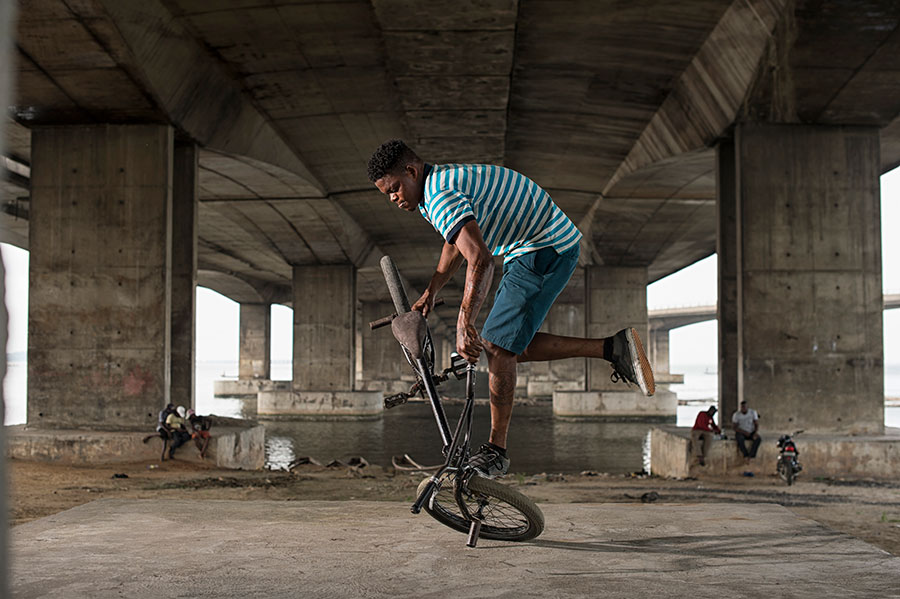
It started with a chance encounter – stumbling across some second-hand BMX bikes from the U.S. in a shop in Nigeria. After throngs of young Nigerians watched some internet videos of their American counterparts performing tricks, a 1980s fad has spawned a burgeoning bike scene in the city’s capital, Lagos, that is helping to transcend socio-economic backgrounds.

Six years Star Boy, aka Matthew Temitope, a mechanic in Lagos, stumbled across some vintage 1980s freestyle BMXs in a market in Lagos. After watching videos online with his friends on mobile phones and in internet cafes, they began to try some of the tricks for themselves. An American craze, with its heyday back in the 1980s, was back – changing lives in Africa.

“We were all inspired by watching the professionals in their videos,” says Star Boy. We were all amazed, like ‘wow!’ If it wasn’t for this we’d be out doing sh*t,  going to clubs, getting drunk and causing trouble. Now we have our bikes to express our feelings. When I feel upset, I just get my bike, hit the streets and do some tricks.”

There are no skateparks or bike tracks at which to practice, instead Star Boy and his friends simply use what they have at their disposal on the streets. The riders come from a variety of backgrounds. KK Money, aka Ibrahim, works as a teacher and sees parallels between his career and a passion for sport. “I love imparting knowledge. If I could teach a student one lesson that BMX has taught me, it would be: If you fall off a horse, climb back on. Once you get that right, it’s forever. It’s taught me commitment, that yes, I can do it.”

SKing, whose real name is Segun Adosu, says that BMX saved him from a life of gangsterism and is grateful for stumbling across his new obsession almost by chance. “My new bike had BMX written on it and I wanted to know what it meant, so I searched Google. I saw a ton of videos and I’ve been in love ever since.”

Bikes and parts are not available except from international mail order which makes it too expensive, but that hasn’t dampened the enthusiasm. BMX has become life to these guys and they’re not afraid to let it show. They are riding for the purest of reasons and the scene has brought people together from the heaviest of slums to the upper middle class.

Former UN President’s Commit to Multilateralism

A group of former Presidents of the General Assembly have met for an interactive dialogue at the invitation of the current PGA, María Fernanda Espinosa. The theme for the meeting is “Revitalisation of the United Nations in favor of a strengthened multilateral rules-based system”.

This is the first event of this kind. President Espinosa said; “At a time of growing populism, xenophobia and unilateralism, I am delighted that so many former Presidents of the General Assembly have come together to make the case for a revitalized United Nations and for the measures needed to strengthen multilateralism at a time when it is coming under great pressure.”

The previous leaders of the General Assembly that took part in the event where: Their Excellencies Miroslav Lajčák,72nd session; Peter Thomson, 71stsession; Mogens Lykketoft, 70th session; Vuk Jeremić, 67th session; Joseph Deiss, 65th session; Jan Eliasson, 60th session H.E. Sheikha Haya Rashed Al Khalifa, 61st session.

The former PGAs and the current President of the General Assembly spoke with UN Correspondents on “Strengthening Multilateralism at the UN” in a session moderated by the president of UNCA, Ms. Valeria Robecco and to which members of the UN Correspondents Association were also been invited.

Former UN President’s Commit to Multilateralism

A group of former Presidents of the General Assembly have met for an interactive dialogue at the invitation of the current PGA, María Fernanda Espinosa. The theme for the meeting is “Revitalisation of the United Nations in favor of a strengthened multilateral rules-based system”.

This is the first event of this kind. President Espinosa said; “At a time of growing populism, xenophobia and unilateralism, I am delighted that so many former Presidents of the General Assembly have come together to make the case for a revitalized United Nations and for the measures needed to strengthen multilateralism at a time when it is coming under great pressure.”

The previous leaders of the General Assembly that took part in the event where: Their Excellencies Miroslav Lajčák,72nd session; Peter Thomson, 71stsession; Mogens Lykketoft, 70th session; Vuk Jeremić, 67th session; Joseph Deiss, 65th session; Jan Eliasson, 60th session H.E. Sheikha Haya Rashed Al Khalifa, 61st session.

The former PGAs and the current President of the General Assembly spoke with UN Correspondents on “Strengthening Multilateralism at the UN” in a session moderated by the president of UNCA, Ms. Valeria Robecco and to which members of the UN Correspondents Association were also been invited.

Migrants: Economic Meltdown or Boon For Your Business?

Demographics is the quantifiable study of populations based on factors such as age, race, sex, economic status, level of education, income level and employment, among others. It’s typically one of the slower moving forces of change, but as we look to the near future, demographics will become the most potent force of disruption.

Demographic changes are impacting all level of talent acquisition, succession planning, age and gender management and availability of labor. Many near-term demographic changes will challenge business leaders and HR professionals to the full and require them to think carefully through the strategies and policies they develop and support. The big five demographic issues facing today’s business professionals include the impact of globalization, an aging workforce, growing gender and cultural diversity, the impact of migrant workers and managing multi-generation teams (in particular the integration of Gen Y). An aging workforce and migrant workers will have the most significant effect although it is the integration of Gen Y that usually gets the most attention. This focus needs to shift especially in Europe and the US where a tsunami of demographic changes is starting to crash on the shores of the largest economies.

Between 2025-2030 the global workforce will decrease by 12 million workers per year. Much of this impact will be felt in an aging Europe, in particular, Germany, Italy, Greece, Spain, France and Belgium. A seismic demographic shift of retiring workers has the potential to collapse each of these economies. Over the next 15 years, Germany alone will lose almost 30 percent of her workforce as 8 million workers retire. Italy will lose over 20 percent, Greece, Spain and Austria will each lose between 15-20 percent; and France, Belgium, Netherlands Switzerland’s workforces will all shrink too. Of the large EU economy’s only the UK’s workforce will grow due to more liberal migrant policies.

But as the growing sentiment against migrant workers increases the UK may find its borders closing too. The impact of this across Europe will then be catastrophic. Migrant workers provide a genuine and necessary source of low and high skilled workers. Business leaders and in particular HR professionals need to be lobbying for greater access to migrant workers, here is why.

Today as millions of desperate people flee the ravages of civil war, drought and regional unemployment a “migration crisis” has become headline news and a political hot potato. US-presidential wannabe Donald Trump talks about building a wall and the World Economic Forum ranked large-scale refugee flows amongst its top-5 global risks for 2016. Concerns about economic migrants and civil-war refugees are an ax to grind for the leave-EU movement.

Migration is as normal for humans as the air we breathe. Humans are obsessed with seeking better pastures. It is hardwired within the survival of our species. Extra-terrestrial migration to Mars will happen this century, and while we may look in wonderment at the technology that gets astronauts to Mars, humans will be fulfilling the very same need our ancient ancestors felt when they trekked north branching out from the cradle of humankind in Sub-Saharan Africa. Looking back over the ages, it’s clear that homo sapiens have not only survived but thrived because of their ability to migrate and more importantly take the knowledge they have and use it to adapt fit in and shape the new surrounding environment rapidly.

One trend we can be sure of is that migration will increase as the world’s economy becomes more connected, and environmental and demographic demands bite. Mass migration, from rural-urban areas and from dearth economies to those with more relative abundance will be a central theme played out during the first half of the 21st century.
Migration is a hugely emotive subject, but it need not be. Scientific studies are beginning to supply very factual answers and they reveal that many fears and wide-spread apprehensions do not hold up to examination. “Concern about immigrants falls sharply when people are given even the most basic facts,” says Peter Sutherland, the UN Special Representative for migration.

So, what are the facts?

The media spotlight is on the millions of Syrians fleeing the now ravaged landscape that they love. In 2015 over a million desperate people from Syria fled to Europe, and nearly 4,000 died trying to escape their war-torn country for a better life. This statistic includes the young Alyan Kurdi who drowned wearing his favorite “mystery space riders” t-shirt. Alyan’s who’s likeness to my own son is so striking that it leaves a sickening pit in my stomach and rips through my heart. For had my wife and I not hit the citizenship jackpot we too could have found our dreams washed up on a Turkish beach. Images of a gentle policeman carrying the sleeping angel of Alyan were flashed around the globe. But his tragedy is just a small part of a bigger picture. 240 million people worldwide are international migrants. Refugees account for less than 10% of that total.

Although the Industrial Revolution and globalization has lifted billions of people out of poverty, it has not been able to create enough jobs where there are people in need of work. This forces people to leave their families, cultures and countries they love to find work elsewhere. I have first-hand experience of this. For I too am an economic migrant who left South Africa to take advantage of the globalized world we live in albeit I was fortunate to arrive in the UK on a jetliner and not a waterlogged sinking dingy.

Migration is a profoundly human characteristic, one that has strengthened our species, ensured our survival and allowed humankind to prosper. However, today people who need to migrate are hindered by artificial boundaries of national borders and the castrating fears that an influx of refugees and migrant workers will mean less work for those already here. More crime and social strife is a growing perception.

Reality reveals a very different picture. Immigrants contribute massively to growing an economy’s GDP. Germany’s premier Angela Merkel is no saint, she knows the positive impact migrants will offer her aging and shrinking population. This is why Merkel agreed to allow a million migrants into Germany. Falling fertility rates and a retiring workforce mean that by 2050 Germany will drop from being the most populous European country to third. France too is shrinking, and Italy is already classified as “old” demographically with more people over the age of 60 than under the age of 20.

It is difficult to assess the practical impact of a migrant workforce in the EU due to the freedom of movement allowed within member country borders. However, Giovanni Peri a professor at the University of California, conducted a study of non-EU member Switzerland as at times different parts of the country have allowed free access to EU workers. While the workforce grew by 4 percent, he discovered that wages for natives did not drop and that educated Swiss people enjoyed wage increases for jobs that involved supervising the newcomers.

Besides, Peri’s studies of US-migrant workers concluded: “Immigrants expand the US economy’s productive capacity, stimulate investment and promote specialization, which in the long run boosts productivity.” The big concern of anti-migrant movement is that migrants crowd out the native workforce pushing up unemployment. Peri found no evidence, in the short or long term to support this position. In fact, he calculated that native workers in the US were better off as a result of migration with average wages boosted by $5100 between 1990-2007, a quarter of the wage increase over this period.

A study by the UK Migration Advisory Committee undertaken in 2012 concluded that migrants from within and outside the EU “who have been in the UK for over five years are not associated with the displacement of British-born workers low-skilled migrants also do dirty, dangerous and difficult jobs” which natives do not want. Economic and social added value is not restricted to low-end workers, highly skilled migrants reduce chronic labor shortages in essential sectors such as healthcare, education and IT.

Immigration is also good for the Treasury. According to recent trends, the UK should conservatively expect 140,000 net immigrants a year for the next 50 years. Doubling this number would, according to the Office for Budget Responsibility, cut government debt by almost a third, allowing for the reduction of taxes or improvement and extension of existing services. On the contrary, stopping immigration would up the debt by nearly 50 percent. The current UK government speaks of reducing immigration and balancing the books at the same time, but they can not do both.

Benefiting from benefits is often seen as a reason to limit migrants. But because most migrant workers are younger on average, research shows they bring in education and skills paid for by their native countries and return home before they become a drain on social security. “On purely economic grounds, immigration is good for everyone,” says Douglas Nelson of Tulane University in New Orleans, “The overwhelming majority of research finds small to no effects of migration on employment and wages.”

Professor Ian Goldin, director of Oxford University’s Martin School, a world” leading center of pioneering research for a sustainable and inclusive future, confers. “More people expand the economy,” he says. “A study by the International Labour Office for the UN found that because people are moving from where they cannot work productively to where they can, for every 1 percent increase in a country’s population caused by immigration, its GDP grew between 1.25 and 1.5 percent.”

The World Bank estimates that if immigrants increased the workforces of wealthy countries by 3 percent, that would boost world GDP by $356 billion by 2025.
And if global leaders were bold enough to remove the artificial barriers of their national boundaries, migration could have a massive effect. The combined analysis of several independent mathematical models suggests removing border boundaries would increase world GDP by between 50 and 150 percent.

The problems and challenges with migration are therefore not economic, but instead, they are exacerbated by ill-informed perception, untruths spread by fear-mongering politicians wilfully riding a wave of growing nationalist sentiments and the social realities of integrating people from different cultures, with different languages and different ways of doing things. Immigrants can put pressure on local communities and this is often where the pressure points and unpopular feelings are found rising. Sudden and high arrivals of migrants can strain schools, housing and other services in the short-term. “That is what people tend to see,” says Goldin.

To counteract this, governments need to use their immigration induced tax windfalls “to manage the costs and reduce pressures on local communities.” It’s not an insignificant challenge, but it can be done. Since the 1990s, 155 million Chinese have migrated from the countryside to cities for work. “This shows it’s entirely possible to build new homes for hundreds of millions of migrants given a couple of decades,” says Goldin.

Business leaders and HR professionals particularly those in Europe need to get behind the migration movement. Nomad living is inherently part of who we humans are. Millions migrated to the Americas in the 19th Century and built one of the world’s greatest superpowers. The economic benefits are clear. There is a deep-rooted irony in Donald Trump’s wall to keep out migrants. Canadian prime minister Justin Trudeau told the World Economic Forum in Davos, Switzerland, that “diversity is the engine of investment. It generates creativity that enriches the world.”

More diversity and creativity is precisely what businesses of the future need to be more competitive and successful. As we venture into this new world and the realities of the Fourth Industrial Revolution emerge before us, countries and companies that embrace diversity will indeed emerge stronger than those that close themselves off. Migration is here to stay, we should welcome it and the travelers who make long journeys with open arms. Companies should do everything possible within their charitable, CSR initiatives and strategies to make the transformation from migrants to active economic workers as smooth and harmonious as possible. The future of many western economies depends on this.

 

Getting Beyond “Us Versus Them” in The Workplace

Our communities have increasingly become political enclaves. Places of worship, social organizations and exposure to media and social media all tend, more than not, to put us with people like ourselves. And, while it may be natural to gravitate toward people like ourselves, we’re increasingly falling into an “us versus them” mindset. We no longer merely disagree with others; instead we’re disavowing each other’s right to an opposing opinion. 
 
Businesses are finding it more and more difficult to avoid the tension that society’s polarity is bringing into the workplace. Studies show that this workplace tension causes not only generalized stress, but an increased reticence to talk about controversial issues, even when they impact the work.
 
It’s important to find ways to bridge the divide so that we can create greater harmony and cooperation in our workplaces. We tend to work next to people who are of a different race, ethnicity, sexual orientation or gender, of different ages, and have different family situations and different politics, but we have to find a way to successfully pursue our goals and objectives. Because the workplace is often the most diverse community in which we interact, it may be our greatest hope for reestablishing connection between our different “tribes.”
 
Organizations are discovering that, apart from providing training in skills alone, it’s just as important to provide training in more interpersonal areas. A number of workplaces around the country are beginning to offer training and programs in areas such as communication, diversity, inclusion and unconscious bias. Target, for example, sponsors a workshop to encourage dialogue between white women and women of color. General Mills conducts regular critical conversations in which employees come together to talk about their concerns and find common ground.
 
To begin working on interpersonal skills in your organization, start by addressing these issues:
 

1. Begin with understanding our personal biases. 

If we’re going to make conscious choices to create a more inclusive workplace, we have to develop a deeper understanding of our own biases. Being aware of our biases is the first step in helping us manage them. That requires slowing down our thinking and avoiding knee-jerk reactions. We have to develop constructive uncertainty and consider the possibility that there may be other points of view or information that we’re not aware of. 
 

2. Get to know the other point of view. 

We’re deeply influenced by the informational echo chambers we live in, but it’s important to take the time to really understand where others are coming from on the other side of an issue. Rather than focusing only on whatpeople on the other side believe, focus on why they believe it — and apply the same inquiry to ourselves. Are we being true to our own beliefs, or are we just stuck in the desire to be right? If we can get to know others’ point of view, from their framework, we may have ways to find common ground that we can’t see when we’re more committed to being right. 
 

3. Try to disagree without being disagreeable. 

There’s no denying how difficult this is, particularly in the light of our current cultural dissonance. Agree on a set of ground rules. For example, decide: “We’re not here to persuade, defend or interrupt. We’re here to be curious, to be authentic and to listen.” The more we can keep the conversation in a civil tone, the greater the chance we have of understanding each other and finding common ground. 
 

4. Be willing to forgive and apologize. 

Be willing to admit when you’re wrong. This may be the greatest flaw in our current situation. People have gotten so attached to being right that they refuse to even consider admitting when they’ve made mistakes. If you messed up by becoming overly aggressive, getting caught up in the emotions of the moment, or whatever, apologize. And also be willing to forgive. As Nelson Mandela said, “Courageous people do not fear forgiving, for the sake of peace.” 
 

5. Leave room for change. 

Perhaps the only certainty of life is that things will change, both within each of us and in the world around us. As John F. Kennedy said, “Change is the law of life. And those who look only to the past or present are certain to miss the future.” It’s so important to keep an open mind, keep reevaluating the current realities and not let your politics and opinions define you. Instead of looking for ways to justify your beliefs, look for ways to learn. 
 
While workplaces have the potential to orient people to working across differences, it’s important to remember that this is not a “problem” of any one group — it’s a challenge to the whole of our society that we all need to address.
 

SDG Impact Hero: Joby Weeks

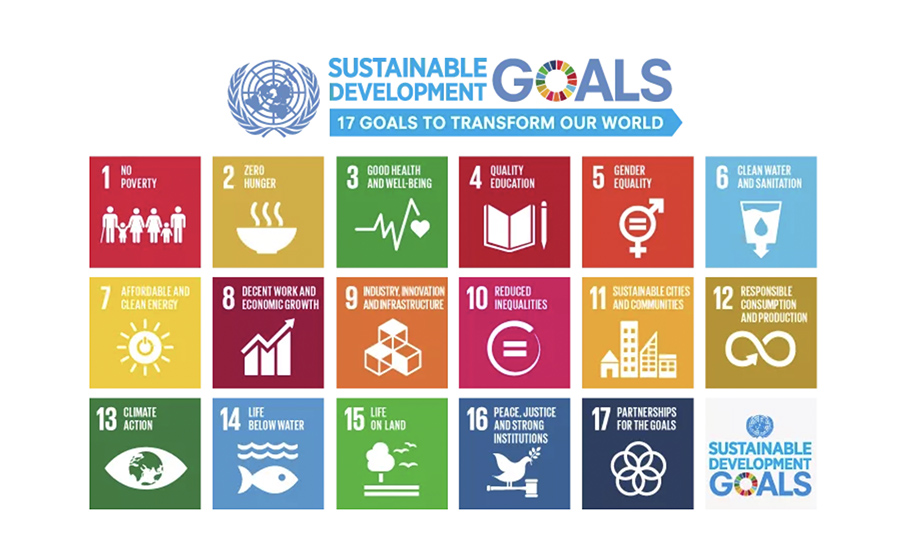
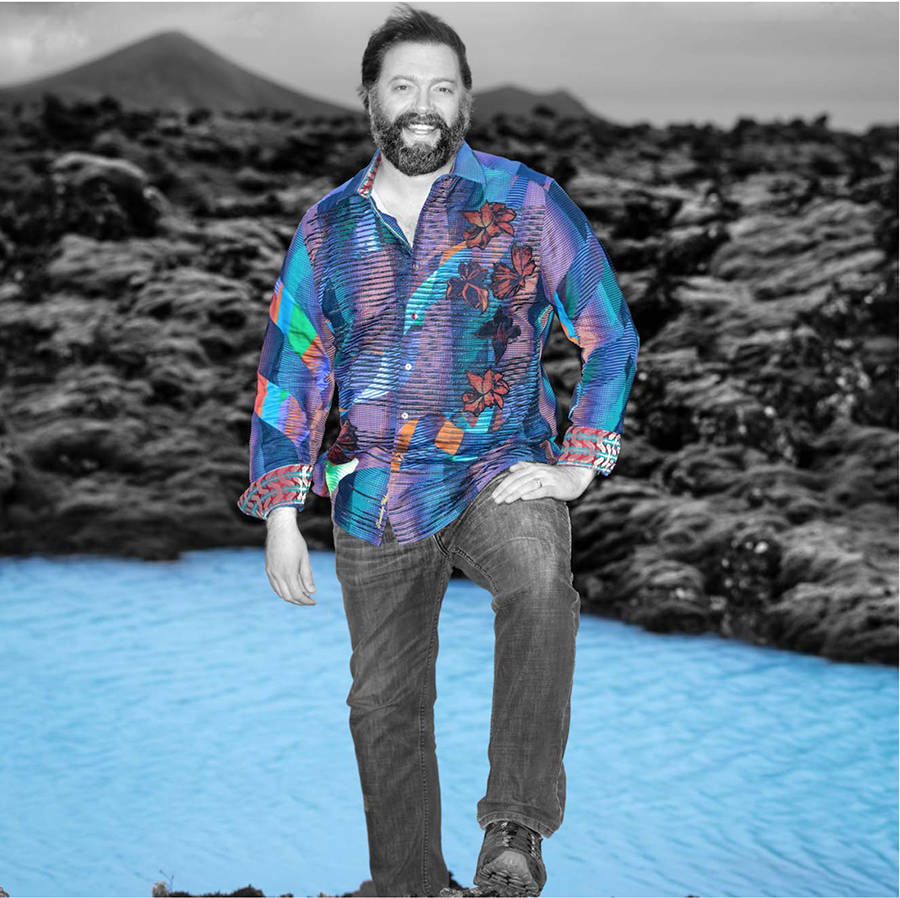
Motivated by love and filled with passion. “SDG Impact Heroes” is a unique photographic series by Ralph Reutimann celebrating local and global leaders from all walks of life at the forefront meeting the 17 UN Sustainable Development Goals. Each of the SDG Heroes holds a personal object symbolizing the single Goal they feel is most vital for them.

Name: Joby Weeks better known as Joby-Wan Kenobi (May the force be with you)

SDG Object: Shirt of Many Colors

SDG of Choice: All of them!

Having only learned about the Sustainable Development Goals (SDGs) recently, I decided to look them up and see if my work over the last couple of decades matched any of the goals. I was surprised to see that I’ve been working on every single one of them!

The SDGs are represented by different colors, which is why I have chosen this shirt to be my SDG Object of choice. Joby and the shirt of many colors!

I LIV them everyday!

For instance:

I have a Clean Water project (#6) that uses a compostable water bottle made out of plants. (#12) And of course for every case of water that we sell we donate a percentage to CharityWater.org which drills wells all over the world. (#11)

We use clean green geo-thermal energy (#7) to run our Bitcoin miners (#9), which secure the blockchain, (#9) which is helping to lift people out of poverty, because they can now move money all around the world without having to ask for permission from a bank or government. (#1) This is a HUGE deal!

People need education, not medication! (#4) I have spent close to 20 years teaching people how to stay healthy (#3) so they don’t need to take deadly, debilitating, destructive, addictive, toxic, pharmaceutical drugs!

Every time we sell our wellness tech, we donate the same amount of product to a malnourished orphan. (#2) We are currently feeding 250,000 children around the world every day with the best nutrition known to science.

We created an opportunity where men and women can make a full time income sharing the gift of wellness and blockchain technology with their friends and loved ones. (#8) We pay both men and women the same. (#5) In fact, over 80% of Women who make $100k a year or more, did it through Network Marketing and Direct Sales. I love empowering people to become business owners instead of wage slaves!

I have invested in many frontier technology companies that all tackle the SDGs. Too many to list. Here are some of them that I am most excited about.

I helped start a University that trains people how to code for blockchain projects. (#4)

I bought a Hemp Farm to suck carbon dioxide out of the atmosphere (#13) and create CBD products at the same time. (#3) I have funded several documentaries that expose geo engineering, aerosol spraying and population control…(#4)

I funded a company that is crowdfunding solar farms in Africa called the Sun Exchange. Our latest project was an elephant orphanage. They now have power and the investors now have an income stream. (#11)

I’ve spent millions developing tech that can convert heat into electricity. (#9) and (#7) There is heat everywhere! When energy is “free” then your food and water become free, your heating and air conditioning becomes free… transportation becomes free (if you drive a tesla) basically everything becomes free because we can convert energy into almost anything! Talk about eliminating inequality! (#10) Don’t even get me started on my 3D printing business. (#9)

I’ve invested and helped found a real estate company called Social Equity which helps get the average person into their first home as an OWNER 15 years earlier than the current global credit system will allow. Turning the millions of renters into homeowners will really help eliminate poverty and inequality because now people will be participating in capitalism! (property ownership being one of the pillars of capitalism) (#15) I’ve also been working on a crowdfunding app for large real estate development projects. (#1) and (#11) I invested in a submarine company called Aquatica too. We recently took Sir Richard Branson and Fabian Cousteau to the bottom of the Blue Hole in Belize. It was aired on Discovery Channel! We mapped it all out with sophisticated sonar equipment for science as well! What a blast! (#14)

What drives me to tackle ALL of the SDGs? My daughter… baby Liberty. She will one day be Lady Liberty. As a Libertarian father I believe all human interactions should be voluntary. I believe it’s morally wrong and illegitimate to use force, fraud and coercion to get one’s way. The Non Aggression principle is one of the pillars of peace, prosperity and freedom! (#16) There can be no justice without it. So as you can imagine, its all I talk about!

I’ve traveled to 150+ countries of the world looking for like minded people to partner with to achieve these goals! (#17)

My wife runs an awesome travel company called www.WeeksAbroad.com where we bring our friends on EPIC trips all over the world with us. We would love for you to join us as we check things off the bucket list or as I like to say, the LIV LIST. It is not one of the SDGs, but we are going to do it anyways! Join us and LIV a GREAT story!  

Tech Startup Gives Workers The Tools to Report Supply Chain Slavery

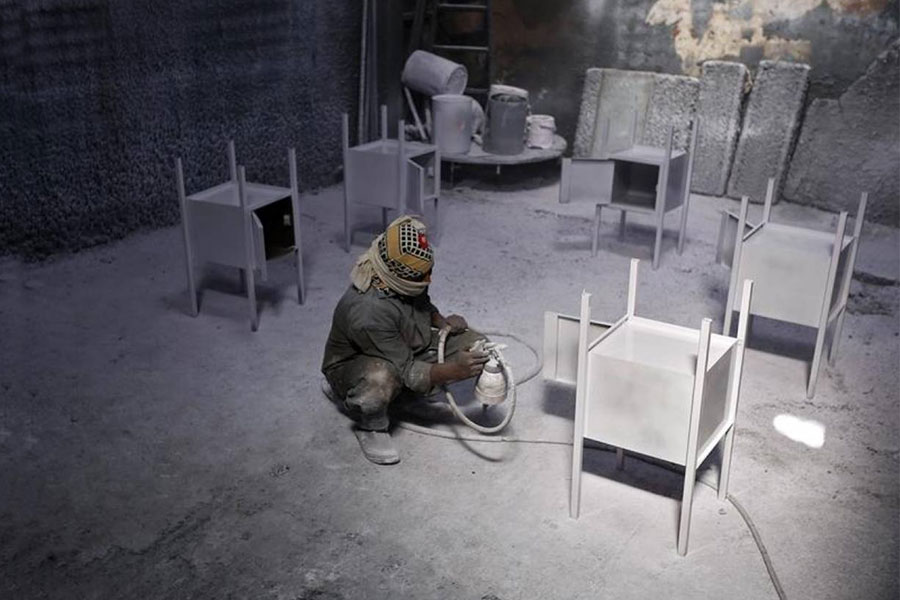
Giving staff the tools to report workplace abuses, including forced labour, should improve data for brands that are striving to ensure their products are slavery-free, a tech startup said.

From texts and calls to messaging apps and social media, technology could encourage workers to share issues anonymously.

That would give companies a better understanding of the risk of slavery in their global supply chains, said Antoine Heuty, chief executive of Ulula, a software and analytics platform.

“Our platform can help build trust and enable workers to connect with companies in real-time, anywhere, any time and in any language,” Heuty told the Thomson Reuters Foundation.

With modern slavery increasingly making global headlines, companies are under growing pressure from governments and consumers to disclose what actions they are taking to ensure their operations and products are not tainted by forced labour.

“By combining workers’ responses with other data, we can help companies in the fight against slavery, by understanding their employees,” said Heuty, whose social enterprise is one of a rising number of businesses seeking to tackle societal issues.

While major companies from sportswear giant Adidas to budget fashion chain Primark have set up whistleblower hotlines for workers in recent years, Ulula aims to go further, Heuty said.

The platform will merge feedback from workers with other data, such as satellite imagery of palm oil plantations and building regulations for garment factories, to give companies real-time insight into risks in their supply chains, he said.

Ulula also hopes its software could in the future be used to build industry benchmarks, allowing companies and suppliers to compare working conditions and regulations against their peers.

“We want to motivate a race to the top,” Heuty said.

While technology can play an important role in protecting vulnerable workers and preventing abuses, it should not be seen as a “silver bullet”, said the Ethical Trading Initiative (ETI).

“Some software platforms may well improve traceability and transparency, and be a useful mechanism to flag risk,” said Cindy Berman, head of modern slavery strategy at ETI, a group of trade unions, firms and charities promoting workers’ rights.

“But resolving workplace grievances or rights violations cannot lie with technology.”

About 25 million people globally were estimated to be trapped in forced labour in 2016, according to the International Labour Organization (ILO) and rights group Walk Free Foundation.

By Kieran Guilbert, Editing by Robert Carmichael


0