Get Unstuck: 3 Easy Ways to Shake Off Setbacks

“It’s history. Why bother thinking about it?” 

That’s the phrase a college wrestler named Sam turned into a mantra. Alongside strength training and perfecting his techniques in duck-unders and takedowns, Sam rehearses this phrase in the days and hours leading up to an important match. During a match, he doesn’t want any setbacks to linger in his mind, not even for a second. He has to endure a grueling seven minutes of intense physical and mental battle against a strong opponent, and he can’t afford to let negative thoughts intrude. If he did, it would be like letting a psychological gremlin into his system. 

Instead, Sam cultivates a state of mind athletes call being in the zone. Sam is squarely in the present moment, automatic and fluid in his motions, and in a non-thinking mental space. He’s in the sports version of mindfulness

How to Cultivate Mindfulness

Mindfulness helps you to stop judging and appraising every action you take. It allows you to experience life as a constant flow of experiences. There’s not always a need to stop, to consciously evaluate, and to fix; that can come later if necessary. Setbacks are simply acknowledged and let go of.

How do people bring this kind of mindfulness into their day-to-day lives? How do they cultivate it and practice it? They turn to these three simple strategies:

Attach a Positive Emotion to Failures or Mistakes 

Many top athletes bring a positive emotion into their mind immediately after a failure or mistake. They wedge it in there, fast. You can do this yourself: Think back to your last misstep and imagine that instead of berating yourself, as you probably did, you told yourself, “You’re doing great!” 

It sounds strange to congratulate yourself after a setback, but we’ve all seen sports players bumping fists after their teammates miss a free throw or penalty shot. They know the power of inserting a positive emotion into a negative moment. It neutralizes the negative, unhelpful emotion that a bad play or missed shot brings about. 

Shake it Off With Confidence

Here’s another strategy in a different setting. Susan is an experienced executive in her fifties who has learned to practice letting go of bad moments in her high-stress job. Self-possessed and self-assured in her role as a chief financial officer for a large business, it’s hard to believe she wasn’t always so poised and confident. “I used to be the kid who never raised her hand in class,” she told us. Her biggest fear was making a mistake in front of her teacher and the other students and feeling like a failure. 

Fast forward to today. Susan regularly gives important presentations; her quarterly meetings typically have over fifty people in attendance. “Mistakes? Errors?” She laughed. “Are you kidding? They happen all the time.” Susan told us about a problem she experienced during one of her most important meetings for the company’s senior executive team and a group of outside investors, many of whom had flown in for the day for the offsite meeting. 

“I was one slide into my crucial presentation when my computer crashed,” she explained. “I was standing there flooded in blinding light. The room went dead quiet. Some of my senior colleagues got nervous, looking like deer caught in the headlights.”

“I decided to just keep moving,” Susan continued. “I walked over to the projector, turned it off, and without missing a beat said, ‘Well, fortunately, I’m a better CFO and strategist than I am a slide projector operator.’ Everyone laughed. The tension in the room disappeared. We had one of the best back-and-forth exchanges we’d ever had at one of these presentations. The slides weren’t why they were there.”

Susan isn’t any different than many of us who have felt shy, experienced awkward moments, and have worried about making mistakes in front of others. She’s learned how not to beat herself up and obsess when the mistakes come. She accepts that mistakes are normal, part of life, part of what makes us grow. Let her confidence find its way into you.  

Don’t Catastrophize

If this kind of confidence seems challenging, try to understand why you have a hard time letting go of errors or missteps. In psychology, we often warn people not to catastrophize—imagining worst-case scenarios and worrying that you will never be able to fix a mistake you’ve just made. Catastrophizing is particularly risky immediately after a setback. If you catch yourself falling prey to this way of thinking, don’t buy into it. Practice your mindfulness instead.

As part of your personal training to cultivate mindfulness, try out meditation, focused breathing, or positive imagery. You’ll experience the power of being more present in the moment and able to focus on pleasant thoughts, feelings, and body sensations. 

Then, the next time you experience the negative emotions of a setback, you can draw from that mindfulness reservoir. Immediately remind yourself of your worth. Remind yourself that the moment was just a moment. Tell yourself, “That wasn’t a big deal; the next opportunity to show my stuff is on its way.”A deeper, richer, and more fulfilling experience can be had when you allow yourself to let go of a mistake. It’s history. Move on. Get ready to take another swing.

PAUL NAPPER, Psy.D., leads a management psychology practice. His client list includes Fortune 500 companies, non-profits, universities, and start-ups, and he has held an advanced fellowship during a three-year academic appointment at Harvard Medical School.

ANTHONY RAO, Ph.D., is a cognitive-behavioral therapist. For over 20 years, he was a pediatric psychologist at Boston Children’s Hospital and an instructor at Harvard Medical School. In 1998, he opened a specialized private practice. He appears regularly as an expert commentator.

Their new book is “The Power of Agency: The 7 Principles to Conquer Obstacles, Make Effective Decisions, and Create a Life on Your Own Terms.” PowerOfAgency.com.
5 Key Learnings From An Impact Investing Master

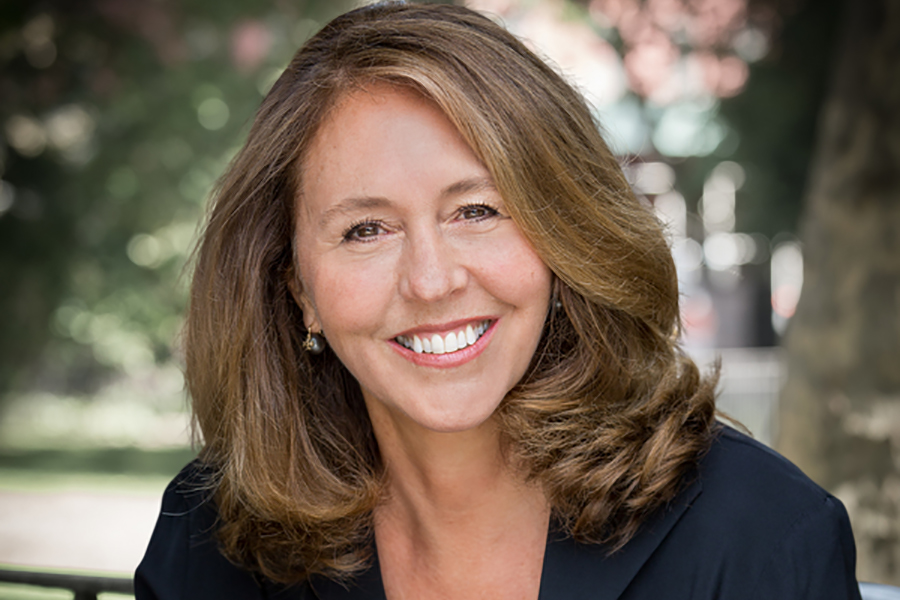
Career paths take people on fascinating life journeys. For Kim Wright-Violich (above), the crossroads along her career path have provided opportunities for exciting and meaningful work.

Wright-Violich is a Managing Partner at Tideline, an impact investing consulting firm, and a member of the ImpactAssets Board of Directors. Through a mosaic of a career spent in financial services, philanthropy and academia, she has developed a unique and informed perspective on the rapidly growing world of impact investing. 
“When you can connect the pace and rapid iteration of private-sector with the solutions-focused, mission-driven orientation of the social sector, work becomes intensely gratifying and meaningful,” said Wright-Violich. “That alignment of purpose and profit is what impact investing is all about, and it’s much more powerful than business or philanthropy or even government efforts in isolation.”

Here are five key learnings Kim has discovered on her impact investing journey.

1. Investors’ perceptions are changing rapidly

Since co-founding Tideline in 2014, Wright-Violich has seen a sea-change in interest and demand for impact investing. Individuals, family offices, foundations, and other early adopters of impact investing were joined in in the last couple years by mainstream and institutional investors exploring impact investing. Wright-Violich says, “the market reached a tipping point when expectations shifted from an assumption that investors would need to compromise on returns to achieve positive social and environmental impact to an openness and even belief that impact investing could achieve market rate returns, would often mitigate risks, and even occasionally provide higher return opportunities.” Growth is accelerating in the $500 billion global impact investing market driven by both individual and institutional investors demand. Leading organizations in impact investing such as ImpactAssets, Tideline, and others are setting precedents, defining best practices, and influencing how this burgeoning sector is developing. 

2. Impact Investing Knows No Political Bounds 

Some investors associate impact investing with liberal political views, partially due to roots in the student-driven divestiture movements but Wright-Violich sees a big tent when it comes to impact. “This should appeal to conservatives who believe in small government and believe we should not rely on the government to exclusively solve social problems,” she says. “The private sector has a significant role to play. Additionally, the faith-based investors are becoming increasingly interested in aligning their values with their investing.” Of the three sectors of the economy, she says, the social sector is not big enough and struggles from not having a market feedback mechanism, which prevents it from moving as quickly as it could.

Government is big and cumbersome, and political winds change, making a sustained effort challenging, particularly when it involves some political risk. “The private sector is uniquely positioned to experiment and to make things happen at scale without abandoning its primary purpose of driving the economy.” Wright-Violich is also encouraged by the recent decision by the Business Roundtable announcement to expand the organization’s Principles of Corporate Governance, noting that the purpose of a corporation should no longer be exclusively maximizing shareholder value. The group of 200 CEOs also said companies must also invest in their employees, protect the environment and deal fairly and ethically with their suppliers, according to the New York Times.

3. Learn by teaching

Although her work as founding CEO of Schwab Charitable, a donor-advised fund, had given Wright-Violich a leg up when it came to understanding impact investing, teaching the subject at the Haas School of Business deepened her knowledge. “I took to heart the quote that says, ‘If you want to learn something, read about it. If you want to understand something, write about it. If you want to master something, teach it.’” She joked she had to race to keep ahead of her students—and sometimes learned from them. Having that opportunity to learn through teaching was pivotal to making the deliberate shift in focus to impact investing. “Consistently, over the last twenty years, my goal has been to align what was meaningful to me and my career.”

She first pursued that by helping to democratize philanthropy in a financial service firm donor-advised fund, and now she is promoting impact investing in a rapidly growing donor-advised fund ImpactAssets as a board member and contributing to the development of the impact investing market as a Managing Partner at Tideline. “Expanding my expertise kept me on the steep part of the learning curve, which is exciting. I believe that you should invest in your expertise, rather than assuming passion alone will carry you. Knowledge does not necessarily translate from one related specialty to another without putting in the work to rigorously educate yourself.” 

4. It’s a long game

Impact investing is not yet ready, though it may be soon, for the risk-averse or the impatient investors, particularly because impact investors are cutting new ground and often the underlying investment and enterprises are young. “There are a few unicorns in the impact investing space,” says Wright-Violich. “However, more often and more likely they are just good, healthy and ethical businesses that will grow over time, so it is usually best for those with a longer investment horizons” The dividends social, environmental, and financial can be surprisingly positive and meaningful for those with patience. 

5. Not a cure-all

While the rapid growth in interest in impact investing, development of more sophisticated practices are positive signs, Wright-Violich cautions against raising unreasonable expectations. “The promise and hope generated by the growth is exciting, but impact investing is not the panacea. It’s not going to solve all social problems, nor will it grow without hiccups,” she says. Some of those missteps will be a natural outcome of learning and iterating, and unintended consequences, but some will result from short cuts and abuses such as “impact washing.” Tideline was founded on the premise it could help avoid some of those risks and fulfill the promise. Issues like climate change and social inequality will require a multitude of approaches and a full array of solutions—from government attention and policy, philanthropic and non-profit initiatives including acting as catalytic capital, and the private sector. “And where you can authentically and thoughtfully align mission and investment money, you can drive substantial financial and impact results. That won’t happen every time, but it is powerful when it works.”

13 Powerful Images That Show the Refugee Crisis and Offer Solutions

Since it’s inauguration in Geneva in 2010, the Making Peace photo exhibition – considered one of the largest photo exhibits of its kind ever produced – has been shown in 12 major cities, including in a Rio de Janeiro subway station during the 2016 Summer Olympic Games.

What impact can an exhibition such as Making Peace have on the public? The number of visitors to the exhibition since its inception has been more than 1.2 million people. But an audience drawn to the intriguing narratives in the photographs and to photography as a discipline, isn’t enough. Understanding how and why the project has an impact on our target audience of young people from age 12 to 24, is key to its success.  

The Making Peace exhibition tries to portray the key elements that are necessary to create sustainable peace, while paying tribute to the people across the planet who devote their time, energy and resources to its cause. Many of these people and organizations have influenced the course of the 20th century.

Here are 13 powerful images for World Refugee Day 2019, that give some insight into the issues, and the people, who are dealing with this crisis.

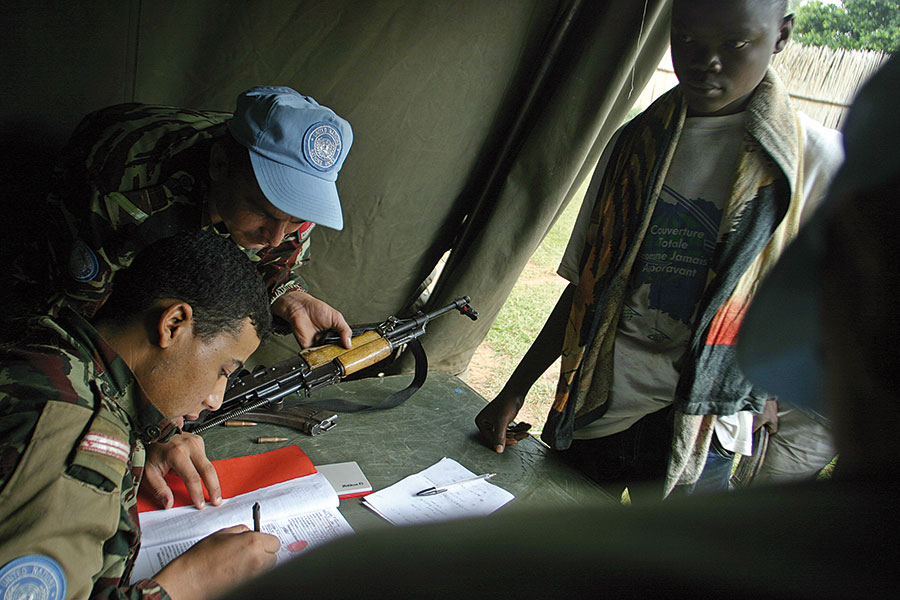
A child soldier hands in his weapon to Moroccan United Nations soldiers and registers as part of the Demobilization program organized by MONUC (United Nations Peace Keeping Mission to the Congo). Children participating in conflict deny them an education and perpetuate the cycle of poverty. This (and the violence) can result in the movement of people across the world — in search of a better life. Photograph: Roger Lemoyne.
Children in school uniform pose in front of a poster promoting peace and disarmament. Social stability needs to be actively promoted by authorities. An unhappy community will start to roam, adding to migration and refugee numbers. Sierra Leone. Photograph: Teun Voeten. 
Young North African boys gaze across the narrow stretch of water separating them from Spain, a well-known route for “illegal aliens” hoping to better their prospects in Europe. Morocco. Establishing strong, local economies in countries with social problems will stop people looking for decent work elsewhere. Photograph: Olivier Jobard.
A sign warning motorists to beware of humans crossing the road is seen on Interstate 5, just north of the U.S.-Mexico border, considered one of the busiest points of entry into the United States. San Ysidro, California. Photograph: Hector Mata. 
Chinese workers have lunch at a construction site in Shanghai. According to the World Bank China’s rapid economic and social development has lifted more than 500 million people out of poverty. It’s also drawing increasing numbers to cities, which creates its own set of problems. Photograph: Philippe Lopez.
Activists of ATTAC (Association for Taxation of financial Transactions and for Action by Citizens) with a model of the earth. Attached on a chain are the logos of banks which were involved in the worldwide banking crisis in 2009. Berlin, Germany. Corruption, money laundering and illicit transactions by those in developed countries also contribute to the overall health of world economies. Illegal or unethical transactions by developed countries may perpetuate the poverty of others, leading to the flight of citizens. Photograph: Stefan Boness.
Thanks to the “One Laptop per Child” (OLPC) project, children at a school in Rwanda were able to learn to use a computer for the first time. Founded in In 2002 by Professor Nicholas Negroponte from MIT (Massachusetts Institute of Technology), OLPC aims to provide each child in a developing country with a computer. Creating entrepreneurs and an educated workforce in poverty-stricken countries is one way of stimulating local economies and building longterm wealth. Photograph: Sven Torfinn.
Backyard swimming pools, Will County, Chicago vicinity, USA. Wealthy countries consume far more natural resources than poor countries. This consumption results in more CO2 being released into the atmosphere, that contributes to global warming and the creation of more extreme weather around the world. When people living in areas of extreme heat, drought or flooding face even more extreme weather, they become environmental refugees. Photograph: Terry Evans. 
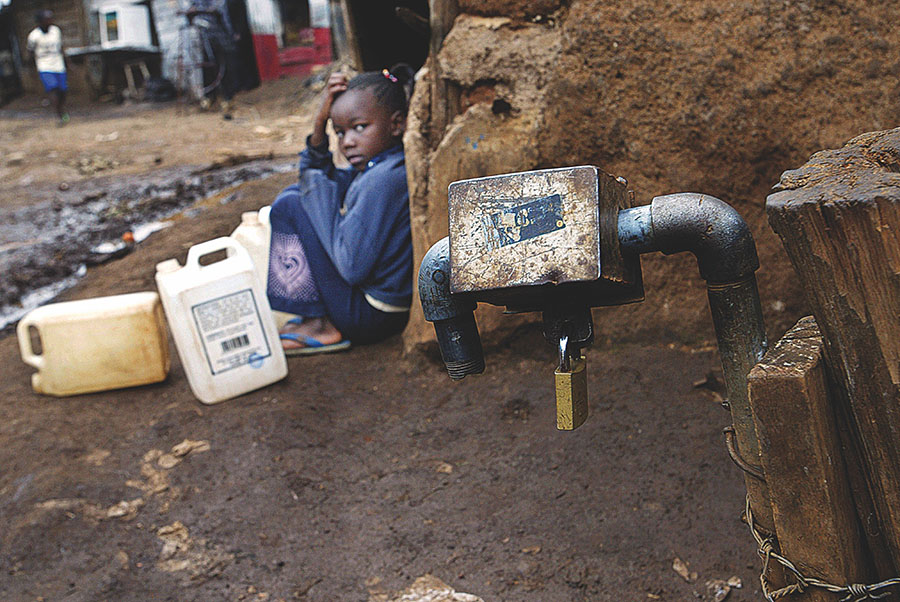
A young girl waits for private water vendors to open the tap in the Kibera slum in Nairobi, Kenya. Managing local resources successfully and fairly can prevent communities seeking basic necessities elsewhere. Photograph: Amit Dave. 
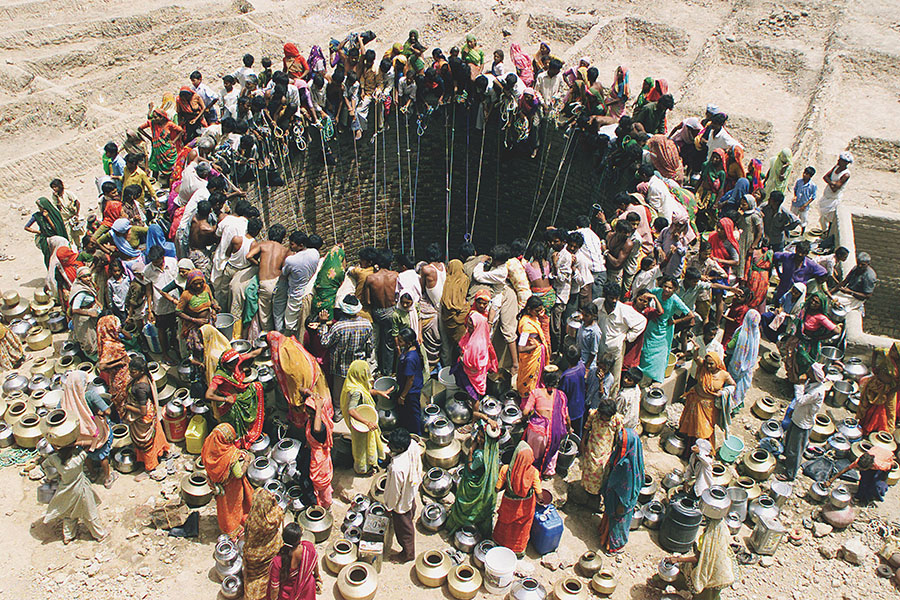
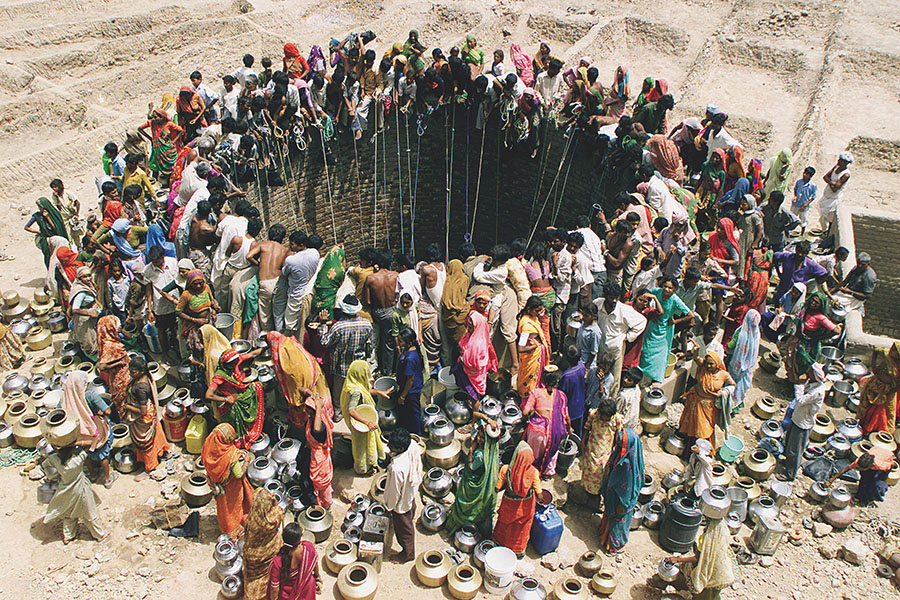
People gather to get water during a drought from a huge well in the village of Natwarghad in the western Indian state of Gujarat. Shrinking natural resources are a key cause of much migration and refugee movement. Photograph: Marco Longari.
Vandana Shiva is an Indian scientist, philosopher and environmental activist. Shiva participated in the Chipko movement against deforestation during the 1970s, and is now a leader in the “alter-globalization” movement. Shiva argues for a sustainable agriculture system, based on an eco-feminist approach. She has also assisted grassroots campaigns against genetic engineering. Recognizing the economic importance of women can create stability in regions of poverty and help prevent conflicts that result in refugees. Photograph: Manan Vatsyayana.
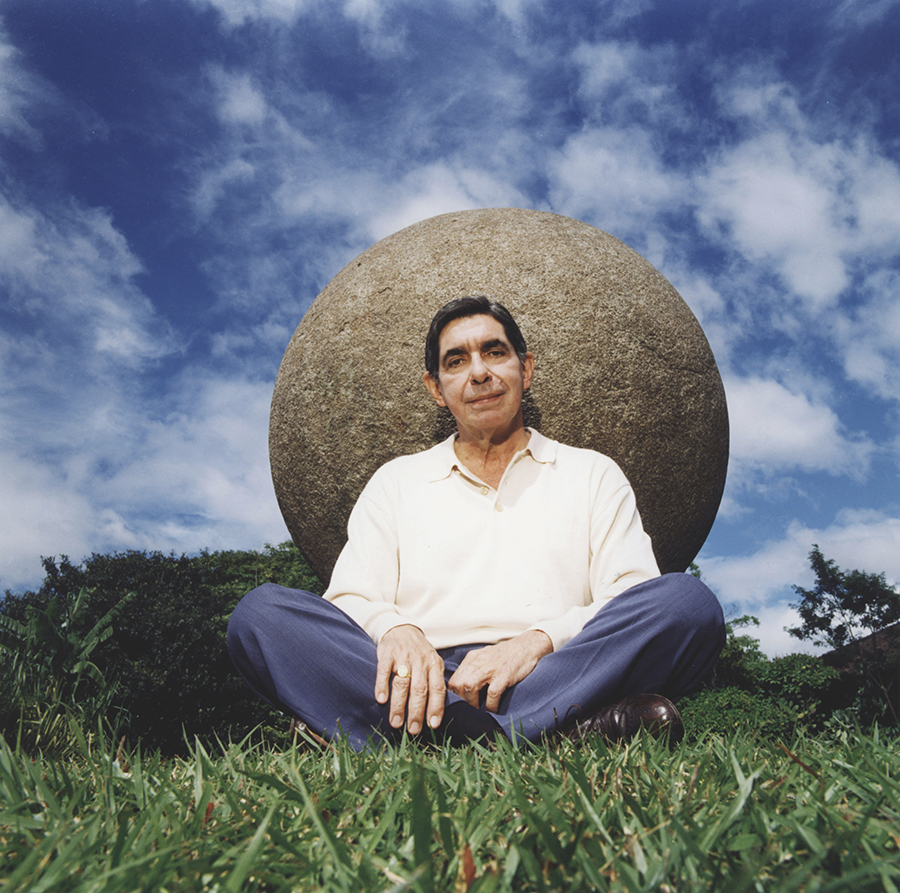
Dr. Oscar Arias Sanchez is a Costa Rican politician who has twice been President of his country. He received the Nobel Peace Prize in 1987 for his efforts to end civil wars. He is known for his active role in the Esquipulas Accords: A plan to promote democracy and peace in Central America. Arias has been outstanding among government leaders in his critique of excessive levels of military spending and the evils of the arms trade. War and violence is the biggest cause of refugees. Photograph: Micheline Pelletier.
Professor Muhammad Yunus (1940 – ) Bangladeshi banker and economist. He previously was a professor of economics where he developed the concept of microcredit. These loans are given to entrepreneurs too poor to qualify for traditional bank loans. Yunus is also the founder of Grameen (village) Bank. Creative ways of stimulating community wealth, however small, can have a big effect on the happiness and wellbeing of communities in impoverished countries. Photograph: Micheline Pelletier.

4 Lessons From an Impact Investor

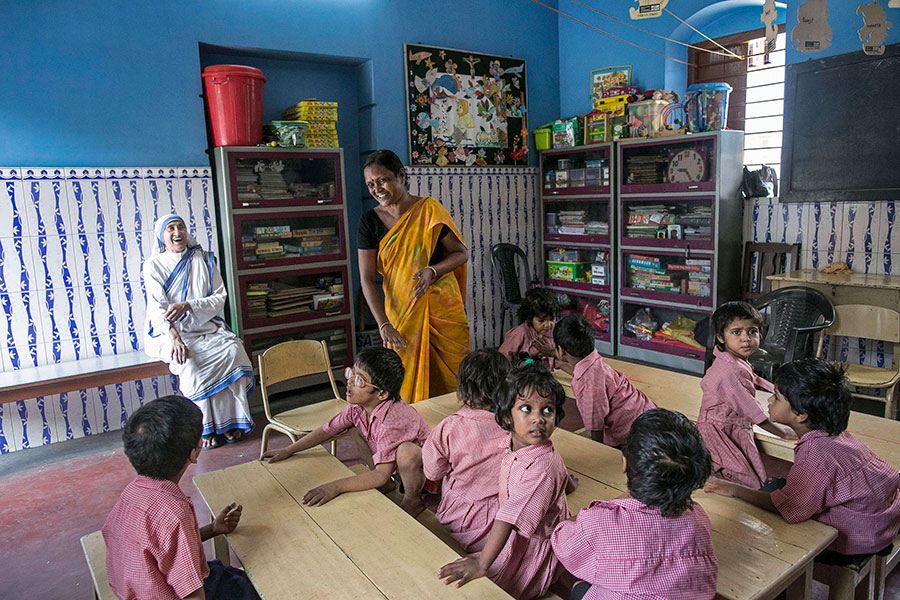
Wall Street is often the source of inspiration for investment professionals. But Gerhard Pries took a different path. It was on the streets of Calcutta working with Mother Teresa’s Missionaries of Charity that he found a deeper motivation that has led him to the pinnacle of impact investing.
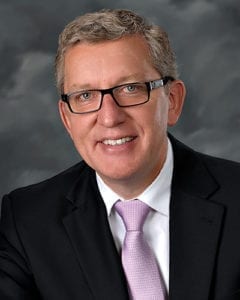
Gerhard Pries of Sarona Asset Management

Pries is the Managing Partner of Sarona Asset Management, a Toronto-based impact investing firm that taps growing investment opportunities in frontier and emerging markets. With an eye to investments that offer strong financial returns and significant positive social and environmental impact, Sarona plays a unique role in frontier markets—delivering capital to entrepreneurs in under-served markets and helping develop companies and communities profitably and sustainably.

His career and life have taken him from corporate board rooms and the United Nations to rural African villages and West Bengal orphanages. These experiences have shaped a compassionate capitalist who embraces market solutions and sees increasing opportunity amid “our unique time in history” to shape a positive future. 

Here are four lessons from Pries’ work:

1. Find Your Place

Pries’ career at Sarona is a long way from his first line of work at PricewaterhouseCoopers, where he was an advisor to mid-market enterprises. While the pay was good, “something was missing” and he eventually left the firm.

“I explored the writings of Mother Teresa, Jim Wallis and Ron Snyder, went to study theology in Europe and eventually stumbled into Mother Teresa’s Missionaries of Charity in Calcutta. What struck me when I first landed in Calcutta was that this whole debate that I was a part of, and still am a part of—the debate between capitalism and socialism—was a moot point in Calcutta. The poor were not looking for socialism or a handout. They simply wanted a way to access the market, to be participants in the market. Because all of them put food on the table through production, through trade and commerce, not through handouts or social programs.”

2. Renew What is Old

Sarona is a young company with a rich history. The firm traces its roots to 1953 when a group of business people formed a private company to invest in the Sarona Dairy in Paraguay. While impact investing is often thought of as a 21st century phenomena, that dairy investment 66 years ago was certainly impactful, combining sound investment principles with strong social values.

Over time the original private investment company became MEDA, an international development organization. Pries spun out Sarona Asset Management from MEDA in 2010, reflecting a desire to build a more scalable business.

Sarona still makes private equity investments, but the firm has shifted its deal sourcing. “When I started in frontier and emerging markets, there were no private equity firms in those markets, at all. The only way we could invest in emerging markets then was to fly out, invest directly in a company, fly back home and begin to pray that it goes well. Whatever you think about prayer, it’s not a great way to invest.”  Today, Sarona invests in local private equity funds and private debt funds, run by people on the ground who know the industries and markets. The objective, however, remains the same: to deliver capital to entrepreneurs in under-served markets and help them develop their companies and their communities profitably and sustainably.

3. Ride Waves of Change

Riding the waves of change that are sweeping across the global economy will be crucial for the long-term success of business and society. Two significant shifts that Pries sees right now:

Development of a global framework to address climate change and inequality: “When the United Nations agreed on the 17 Sustainable Development Goals, we were believers,” said Pries. “The SDGs have become a galvanizing force for the corporate and investment sectors—particularly the impact investment sector.” Through its private equity funds program, supported by public government agencies, Sarona seeks to make a scalable and significant contribution towards the SDGs, embedding them in its monitoring and evaluation of their investments.

A new era of public/private partnerships: At a 2015 to the United Nations Assembly in Addis Ababa, Pries saw one nation after another declare, ‘If we’re going to put our shoulders into the Sustainable Development Goals, we have to work with the private sector.’ Across the street, a World Economic Forum had gathered and CEO after CEO echoed those sentiments. “We now have an opportunity that is unique in history to create real long-lasting partnerships to build a new economy based on collaboration between public and private sectors.”

4. Layer Your Impact

Tapping into his experience working with the Sisters in Calcutta, Pries says that in life and business, actions reverberate, creating meaning and impact across layers of society.

For Sarona, that means delivering thought leadership and financial impact across three levels.

The basic level is at the company investment level, where Sarona helps companies create better jobs, women’s empowerment, reduction of environmental footprint and other tangible and measurable impact.

A bigger impact, says Pries, is the partnership and influence Sarona has with private equity firms across frontier and emerging markets, helping them implement policies and strategies to improve social and environmental impact through their portfolio of companies.

At the apex level, Sarona is participating in the global discourse on public-private collaboration to build this new economy. “At this level, the impact is far-reaching. It’s not about the jobs we create this year; it’s about how the world structures itself for the next 100 years.”

Ever the optimist, Pries concludes, saying, “The world is a scary place, but I see hope in the way investors care about how their assets are deployed, and in the MBA students I speak to, who show far more interest in marrying heart and head than when I was in school. Yes, I think we’re living in a challenging time, but a very opportune time to be engaging globally.”

Teachers Who Lead Find Ways to Make it Happen

It’s time to appreciate the complexity of equity, access, and innovation at the heart of education.

There is no topic in American culture that is so mainstream yet so overlooked as the challenges of teachers to bring high-quality education to their students across America.

Mainstream, because it is a critical, impassioned issue arguably more important than any other — just ask any parent. Overlooked, because it is so easy for anybody who is one step removed from that world to ignore or forget its challenges. That includes most of the general population without children who do not work directly in education or public policy.

In conversations of leadership, too, it is easy to overlook teachers. There is focus on change-makers and titans of industry; politicians and celebrities; entrepreneurs and savants. But we seldom stop to appreciate the leadership of teachers in the midst of great challenge and adversity. Beyond fractions and long division, beyond earth science and poetry, our schools shape the way children develop, problem-solve, and fundamentally think.

And it’s all thanks to teachers.

For Teacher Appreciation Week this year, we stop to consider two core challenges facing teachers, and we celebrate their spirited determination and ingenuity in overcoming them. They are equity & access, and the increasingly complex evolution of the modern classroom.

Equity & Access

Equity — or equality — is a fundamental issue at the heart of public education reform. In simple terms, it asks the question: how do we ensure every child receives the best education with fair opportunity to share equal success as their peers?

This challenge goes deeper than an educator’s pedagogy, curriculum, and the debates surrounding standardized testing. It ripples into the social fabric of a child’s life, including their well-being at home, socioeconomic realities, and individual aspirations. Reduced to a single sentence, each of these mammoth issues is a sound bite, but each of them alone in the day-to-day life of a child has monumental impact.

As these issues play out on the public stage — and as we continue to build data sets that inform the relationship between each factor and the success of students — teachers are increasingly forced to step into larger roles beyond classroom instructor: social worker, coach, mentor, and in some cases surrogate parent. When you bundle these roles across classrooms of 30+ students, we distill a single overarching title: Leader.

And in exemplary models of leadership, teachers are taking on equity and access issues in innovative ways. One solution is finding continual ways to involve parents or guardians in the education process — in ways far more integrated than traditional, semi-annual parent teacher conferences. Studies show that increased support from parents, just by keeping them in the loop, has a dramatic, holistic lift on students’ experiences and success, with 20% increase in participation, decrease in absences, higher grades and test scores, and more. It also eases the burden on teachers.


Evolving Classroom Complexities

Rapid innovation in the private sector has cast light on the origins of public education, with specific emphasis on the classroom environment. Neat, orderly rows of desks with a singular instructor at the front of the room lecturing — this iconic classroom stereotype has been lambasted as a relic of an assembly-line, production-driven era. Classrooms have rapidly evolved to break the molds and rows. More teachers work to create collaborative environments for students to work together in small groups, and creatively expand curricula in cross-disciplinary ways.

Within the evolving landscape of the modern classroom, the conversation is at once accelerated and derailed through transformative technologies. On the one hand, cell phones and other devices have become a distraction and an obstacle for teachers to overcome. But when technology is integrated effectively, it is transformative.

First, it empowers a shift in learning models, allowing lessons to come to life in multimedia. Gone is the era of the bulky textbooks, now digitized and supplemented with videos, interactive modules, and more. Hands-on learning with robotics, 3D printers, and emerging technologies expose children at young ages to skills like coding and higher-level cognitive problem solving that becomes intuitive.

Why it Matters

These evolving technologies create boundless opportunities for education to come to life, even as the classroom becomes more complex. And while the long-standing issues of equity & access become more prominent than ever with this added layer, many teachers are turning to technological solutions to bridge that gap as well.

“I want every child in my classroom to succeed and that means meeting parents where they are at,” says Danielle Fugazzi, elementary school teacher in Chicago. “The reality however, is that it is virtually impossible to do because of the conflicting expectations and preferences parents have unless you find a solution to help. Everything changed for me and my class since I started using ClassTag app to help me involve parents.”

ClassTag is an innovative, leading example of how technology can support teachers’ classroom leadership by facilitating smooth communications between a single teacher and a community of parents and caregivers. From a single message input by the teacher, the app can translate into multiple languages and disseminate across multiple channels — SMS, email, and social media — per a parent’s preferred method of receiving information. Furthermore, the app has a unique rewards program with partners like Nat Geo, Under Armour, and HP to give back to teachers, who often reach into their own pockets for basic classroom supplies and the materials they need to lead effectively.

How you can show your appreciation right now

Just in time for Teacher’s Appreciation Week, ClassTag is launching a giveaway to celebrate and recognize 1,000 teachers across America who face these types of challenges in education but continually “Make it Happen.” Like good leaders do, the best teachers continually innovate and overcome obstacles; you can follow the campaign online via their hashtag #MakeItHappenMoments and even nominate outstanding teachers in your schools and community who truly showing us what it means to be Real Leaders, every day.


Measures Matter, but Make Sure Your Success is Real, not Fake

Many organizations embrace the idea of setting objectives and key results (or OKRs). Where we see a performance measure in an organization, we usually see a target. That’s the reality of modern organizations. But, leaders often spend a lot of time debating whether this year’s target should be something really specific, such as the possibly insignificant difference between 34.17 and 34.634.

I’ve seen too many cases where an organization didn’t hit their target one year, only to then set the same target the next. Or, they’ve optimistically set an even-higher target. The implication in most organizations seems to be, “If we choose the right metrics and set challenging targets, then improvement will happen.” If it were only so easy, everybody would be hitting their targets, whether that’s increasing sales in a startup or reducing falls in a hospital. This is why the late quality guru W. Edwards Deming would always ask an important and challenging question: “By what method?”

It’s not enough to set targets and demand better results. Too many people believe that empowerment means setting aggressive targets and then leaving people alone to figure out how to meet them. Collaborating with staff doesn’t mean a leader is micromanaging. Working together to improve our systems and processes will lead to better results.

In the wrong kind of organizational culture, setting arbitrary targets can become very dysfunctional. One of the “14 points for management” from Deming reads:

“Eliminate slogans, exhortations, and targets for the workforce asking for zero defects and new levels of productivity. Such exhortations only create adversarial relationships, as the bulk of the causes of low quality and low productivity belong to the system and thus lie beyond the power of the workforce.”

I’ve worked in the type of culture that Deming warned about. So, I understand how an “us versus them” environment creates unbearable stress when leaders demand performance that’s unrealistic and then blame employees for not meeting that impossible standard.

An example of an arbitrary target might be “We need to increase sales by 25% this year.” A target is still arbitrary if it’s based on a competitive benchmark, last year’s performance, or an organizational target that has been passed down from senior leaders.

As Brian Joiner wrote in his book Fourth Generation Management, there are three things that can happen when people are pressured to hit a target without having the proper support and an effective improvement methodology. The first two are dysfunctional and are too often easier than the third, and preferred, alternative:

  1. Distort the numbers
  2. Distort the system
  3. Improve the system

We see many examples of this in the news, and we might see them in our own workplaces. In recent years, we’ve seen the CEO of Wells Fargo set an arbitrary target of “eight is great,” meaning each customer should have eight different accounts. Since the target was unreasonable, thousands of tellers signed customers up for accounts they didn’t need or didn’t know about — and then got fired for being “unethical.” Eventually, the CEO was forced out into retirement.

I recently heard a funny story about a fitness center that asked departing customers to push one of four buttons that rated their visit as one of the following:

  • a very smiley face
  • a somewhat smiley face
  • a somewhat frowny face
  • a very frowny face

The gym’s manager and staff were promised an incentive if a certain number of customers hit the “very smiley” button each month. They might have feared being punished for not hitting that target. What did the employees figure out? They learned that they could hit the “very smiley face” button a few times each time they walked nearby, which boosted that metric. Problem solved?

However, it’s possible to have a culture where a meaningful goal or target is shared by all. An organization like that tends to have supportive leaders and a spirit of “we’re all in it together.” Effective managers don’t just set targets; they work together with people to hit those targets.

For example, Paul O’Neill, former CEO of Alcoa, set an audacious goal for an important measure: zero employee harm in their workplaces around the world. Such a goal could have been demoralizing if it seemed impossible, and people feared punishment. However, his leadership style made it clear that accountability started with him and that the company would work together toward that ideal, without blaming or punishing anyone for not reaching that ideal target.

During his tenure as CEO, Alcoa reduced “lost workdays per injury per 100 workers” from 1.86 to 0.2 (a reduction of 89%). After O’Neill’s retirement, thanks to the culture and methodologies that he left in place, the rate fell to 0.125 by 2012.

As you think about your organization, ask how your important goals or objectives might get gamed or distorted. Ask yourself, “What can I do be a coach and facilitator who helps people improve?” instead of just judging their performance at the end of the year.


The $7 Trillion Business Opportunity That Nobody is Talking About

“Well, we ran the numbers, and our bottom line is great: we’ve got a steady stream of sales. However, there’s an untapped market segment worth $7 trillion that we’ve decided to ignore, and will continue to ignore because it seems a little too challenging,” said no business leader ever.

But then again, don’t we unconsciously say this every time we design a product or service that’s not accessible to the one billion people living with a disability? Consider the fact that these individuals, and their immediate families and communities, represent a total spending power of almost $7 trillion.

Seems kind of crazy, doesn’t it?

I hate to argue for disability inclusion in economic terms because the idea that we should not exclude an entire group of people from accessing what most people enjoy (boarding a bus, applying for a job, eating out) is argument enough.

But, let’s look at the numbers, shall we?

There are an estimated one billion people on the planet with a disability. A more sobering fact is that 1 in 3 adults globally live with multiple chronic illnesses. Yet, we exist in spaces that require us to overcome physiological limitations that are outside our control magically.

I live with what can be called a debilitating mental illness. My husband has Chronic Myeloid Leukemia. In the prime of our careers, we had to leave the formal workplace behind to manage our chronic conditions. Between us, we have more than 30 years of experience in international development; an array of skills — from engineering to marketing; degrees from Carnegie Mellon and MIT — and experience in over 50 countries. This isn’t about bragging; I mention this to raise some important questions:

  1. How many brilliant minds are being left out of our workforce because of accessibility issues — be they physical, mental, or learning-oriented?
  2. How many customers have you lost simply because you didn’t design a product that meets their needs, or create a buying experience that made it possible to access your products?
  3. How many amazing contributions to society have we missed because we judged a disabled body as incapable?

We started a social enterprise, Uncomfortable Revolution, to address these questions. We run a lifestyle magazine for people living with chronic illness and disability because we see a future where these obstacles aren’t an issue. By this, I mean that we envision societies and workplaces based on inclusive design, which would help render these issues obsolete.

It’s as if we keep throwing money, in inefficient ways, at the problems we create. We make livelihoods, goods, and entertainment inaccessible, then we use tax dollars to try and remedy the situation and throw fundraisers around inspirational campaigns that celebrate those affected by the very barriers we’ve created. How does this make any sense? Disability isn’t a problem to solve through philanthropy or public sector funding, it’s a market access and representation issue. And the business community has a huge rule to play.

And they have. Sort of. Aerie has made headlines with its disability-inclusive marketing campaign, and Tommy Hilfiger launched an adaptive clothing line. Just last December, global business leaders including Virgin’s Sir Richard Branson and Unilever’s Paul Polman committed to disability inclusion across their businesses and supply chains, and have thrown their support behind #valuable — a campaign to put disability inclusion on the global business agenda.

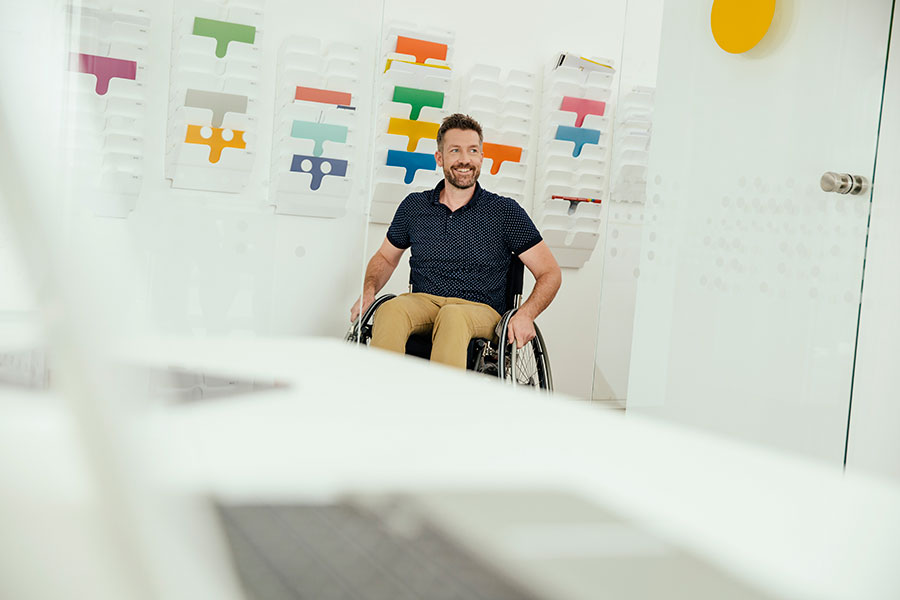
This is a welcome step forward, but as business leaders, we have to go beyond trendy marketing and make serious commitments (even when inconvenient) to accessibility. Are disabled people in your boardroom or just your billboards? Do you subtitle your video campaigns? Can someone in a wheelchair reach your checkout counter? Is your website accessible?

If not, then you just might be one of those crazy business leaders ignoring a $7 trillion market opportunity. And the chance to do what’s right.


5 Ways to Move From Employee to Entrepreneur

How many times have you had drinks with colleagues after a long week and the following situation happens. You sit around a table of Buffalo wings and beer to discuss the latest celebrity debacle, who won the big game, and inevitably, complain about your job. Despite the normal topics of conversation, easily and expectedly, work becomes an anchor in the dialogue.

The commonalities of being unappreciated, overlooked and flat tired of office politics are all brewed over. Sound familiar? Then, as the third round of beer arrives, the conversation, a bit slurred, turns to all of the other things you really want to do with your life and career.  

Maybe someone at your table wants to open an online business of sorts, maybe another wants to open her own firm. Almost everyone has a dream of kicking the 9-5. Wouldn’t it be great to give yourself freedom, creativity, money, and yes, have the life you want? Yet the more you dive into these thoughts, it’s the doing it part that can be the hurdle. You may think to yourself, “If I just had time,” or “If I just knew where to start?” and of course, “How do I start my own thing while I’m still employed by someone else?” So many of us get caught up in these thoughts because leaving the stability of a full-time job can be uncomfortable. Anything outside of what is familiar can feel overwhelming, and so, we stay with “miserable” and “comfortable.”  But it doesn’t have to be that way. You can prepare and take steps toward leaving the daily grind — going off on your own. 

Here are five steps for starting your transition from employee to self-employed:

1. Get Mad!

You have to get mad at your current situation. Getting mad is your defining moment. Getting mad lets you know that you have absolutely reached your threshold, and there’s no looking back, only forward. I had this exact moment one July day, and didn’t even see it coming. I had just finished a difficult sales call with a customer, walked out of his office into the Dallas 101 degree summer heat, got into my car, and read an undermining text from my boss. I thought, “I’m out. I’m done.” I was pissed, and it was the final straw that propelled me into entrepreneurship. Suddenly everything else was in the rear view mirror.

2. Fire Your Employer

The best way to start planning your own business is to fire your employer. Set your timeframe by deciding your date of departure from your organization. Maybe it is 120 days, or a year from now, but either way, you’ve now empowered yourself and set the wheels into motion. This will give you a feeling of excitement and peace, because you now know the exact day you will sign off from your company computer forever. You will see your future and this will push you to get your business going. You are your own boss now, so act like it.

3. Create a 30-Minute Plan

Now that you plan to work for yourself, but are still committed to the 9-5, do something each day for your new business — even if it’s just for 30 minutes. In the evenings, you may take 30 minutes to work on your business plan, or start to create a website. Over weekends you might attend a networking event or apply for your LLC. This way you’ll feel that your daily tasks will result in entrepreneurship — despite still having a full-time job. To be honest, some days will be better than others. Personal and professional commitments may get in the way of your daily 30-minute plan, but try and keep the momentum going, despite these challenges, and you will cross your finish line.

4. Set Your Start Date

Reinforce the entrepreneurial commitment to yourself by setting your start date. This will increase accountability to yourself and rev up your new mindset. You will begin to think on your terms, and not on someone else’s timesheet or bank account. Think about the time from your start date to your first day as an entrepreneur as your practice period. For instance, know that before you open your doors that you want to have 5-10 clients. Take that time to work out the kinks, troubleshoot and do any extra research and learning.

5. Plug and Play

You created a roadmap over the past few months; so now get ready to plug and play on your first day.  Depending on what your business is, have your website ready, your social media pages created, your online calendar set up, and a 90-day business plan ready to go. You’re ready to tackle your new world and have all the tools in place — be ready to go!

Making the transition from employee to entrepreneur is possible. It will feel exciting and uncomfortable at the same time. After all, by kicking 9-5 to the curb, you are pushing yourself into doing something different. But different is good. Just work your plan, embrace the change and be proud that you’re making a difference.


Indigenous Heroes: Ancient Wisdom From Guardians of The Earth

Every two years, the UN Development Program (UNDP) Equator Initiative awards the prestigious and highly competitive Equator Prize. The prize recognizes outstanding community initiatives from across the planet advancing innovative models for tackling poverty, environment, and climate challenges. Solutions are as diverse as the development challenges they face. What unites them is that each shows the power of people to bring about change while protecting the planet.

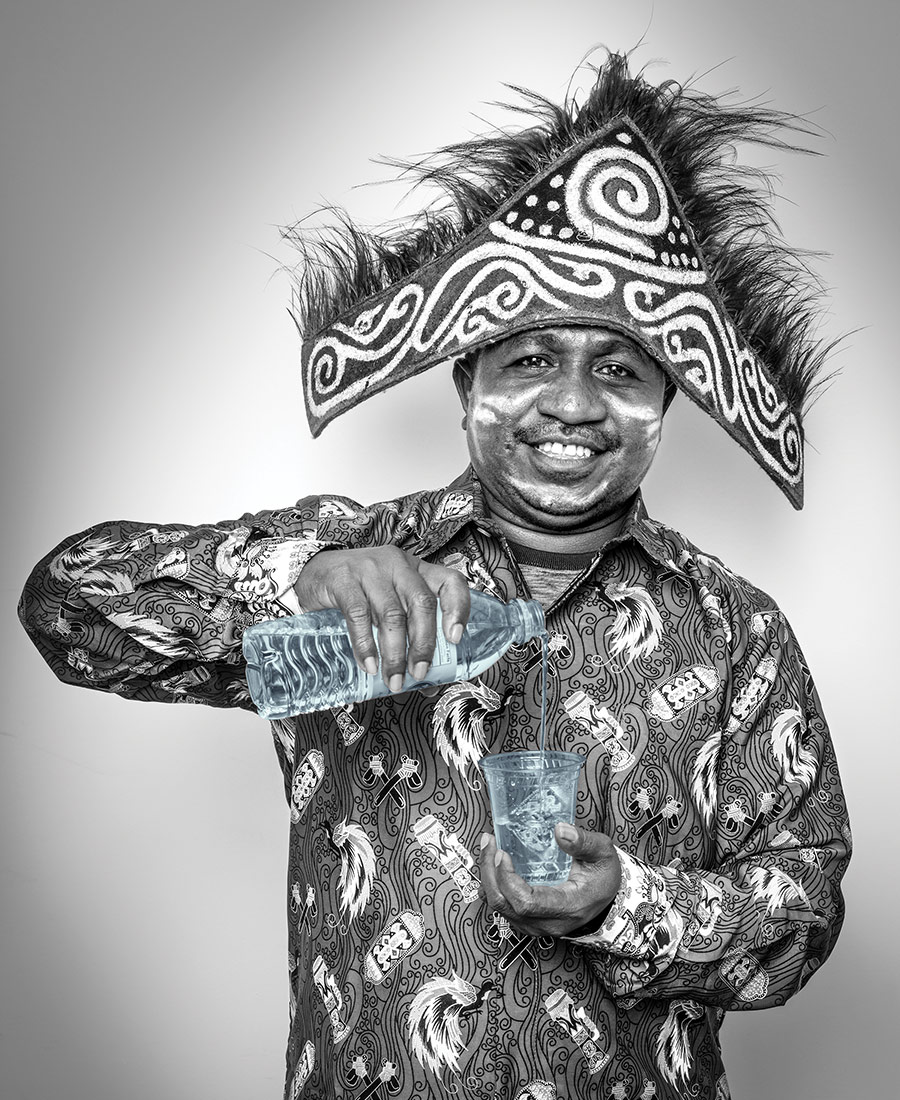
The Sustainable Development Goals (SDG) Indigenous Heroes, “SDG Heroes,” is a unique photographic series produced in collaboration with The United Nations Development Programme (UNDP) and Ralph Reutimann Photography. It celebrates local and global leaders at the forefront of meeting the 17 United Nations Sustainable Development Goals. Each of the SDG Heroes holds a personal object symbolizing the single SDG Goal they feel is most vital for them. The series celebrates indigenous SDG Heroes as guardians of ancient wisdom for people and the Earth.

If you like this, subscribe here for more stories that Inspire The Future.

“One of the intense pleasures of travel is the opportunity to live amongst peoples who have not forgotten the old ways, who still feel their past in the wind, touch it in the stones polished by the rain, taste it in the bitter leaves of plants.

Just to know that, in the Amazon, Jaguar shamans still journey beyond the Milky Way, that the myths of the Inuit elders still resonate with meaning, that the Buddhists in Tibet still pursue the breath of the Dharma is to remember the central revelation of anthropology: the idea that the social world in which we live does not exist in some absolute sense, but rather is simply one model of reality, the consequence of one set of intellectual and spiritual choices that our particular cultural lineage made, however successfully, many generations ago.

All these people teach us that there are other options, other possibilities, other ways of thinking and interacting with the Earth. This is an idea that can only fill us with hope.

We share with these peoples a sacred endowment, a common history written in our bones. The myriad cultures of the world are not failed attempts at modernity, let alone failed attempts to be us. They are unique expressions of the human imagination and heart, unique answers to a fundamental question: What does it mean to be human and alive?”

Wade Davis – Explorer In Residence, National Geographic Society

^ 1. Yakagi Kuikuro Mehinaku

(Pictured above) Xingu Indigenous Land Association, Brazil

Global Goal #15 is important to me: Life on Land. Although, I prefer to see it as “Life on Earth.” The planet was the work of a creator and was made for life of many species. Today, it’s being disrespected by humans. Natural resources are being destroyed, water and air polluted. I see a future without life. It’s disheartening when I see big machines destroying the forest. I can imagine the despair of animals – whose house is being destroyed. Capitalists must learn to value this world, not just think about money for their pockets. The object I’m holding is a Hãda (comb) that is important to my people. With it we are combing our hair when we dance to celebrate life on Earth.

Photograph: Ralph Reutimann

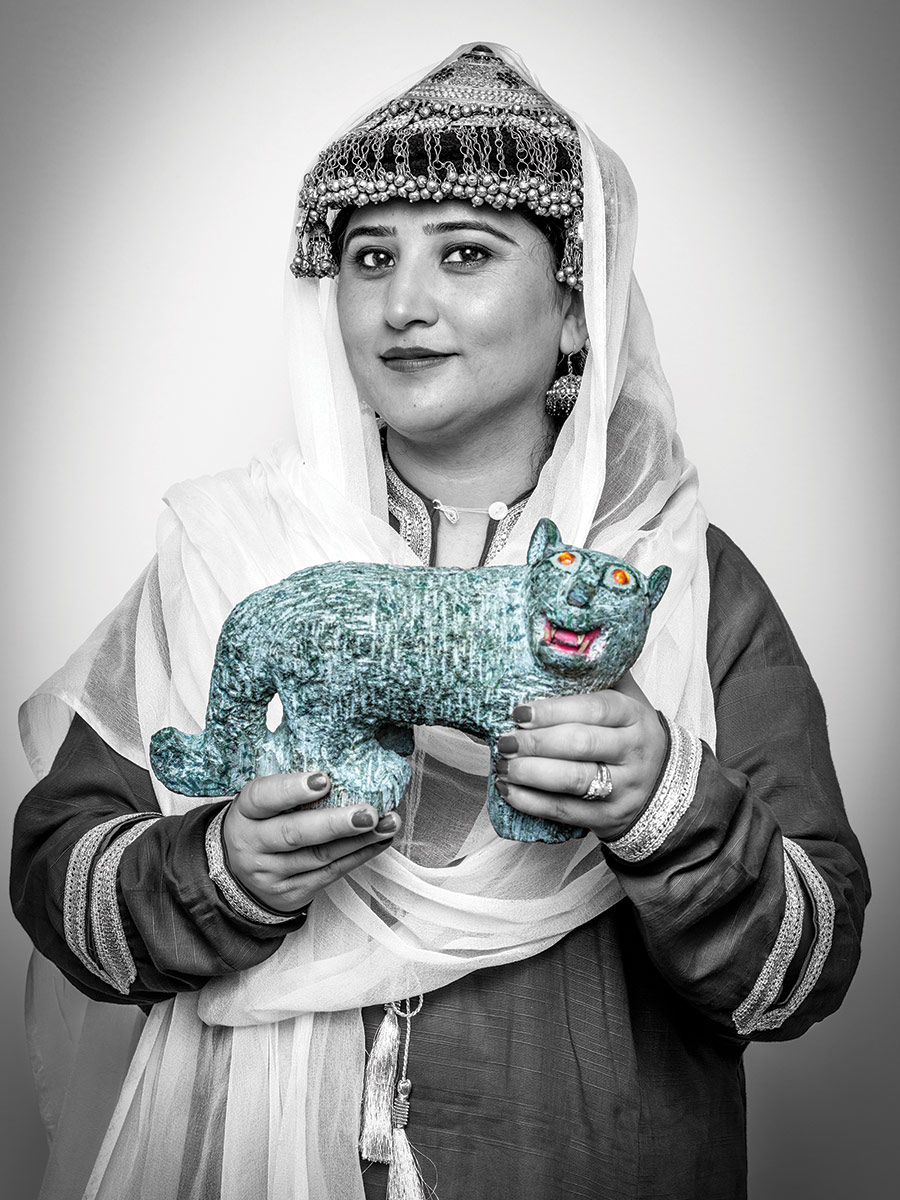
^ 2. Naila Rizvi

Balistan Wildlife Conservation Development Organization, Pakistan

The object I’m holding is a snow leopard, now an endangered species. We want to resolve the conflict between snow leopards and communities, and provide incentives to farmers who kill them because they kill livestock. Our area is famous for snow leopards and our organization focuses on providing incentives such as livestock compensation, predator-proof corrals, awareness, and girls’ education to poor farmers. If people get education there is a better chance they will protect wildlife. We need to maintain our ecosystem and balance nature with our needs, because nature is the basis for all life. My chosen SDG goal is #15: Life on Land.

Photograph: Ralph Reutimann

^ 3. Maldete (Benki) da Silva Pianco

Association of Ashaninka People of the Amônia River, Brazil

Nature today offers us everything. These necklaces are part of our living culture because we use all the fruits in the forest for adornment. They are our riches and beauty. It’s also a way of showing that we are always with something alive on our body. It’s a spiritual embodiment of value with nature. We depend on the land, and the land depends on people at the same time. We have a diversity of species too, that must be cared for permanently, because from that we get our survival. The world today is falling into a bankruptcy, that is being matched in our spiritual realm. We not only seek the defense of indigenous people, but of all humanity – the planet that generates the survival of us all. Every human should assume their role, don’t wait for something to become an issue first.

Photograph: Ralph Reutimann

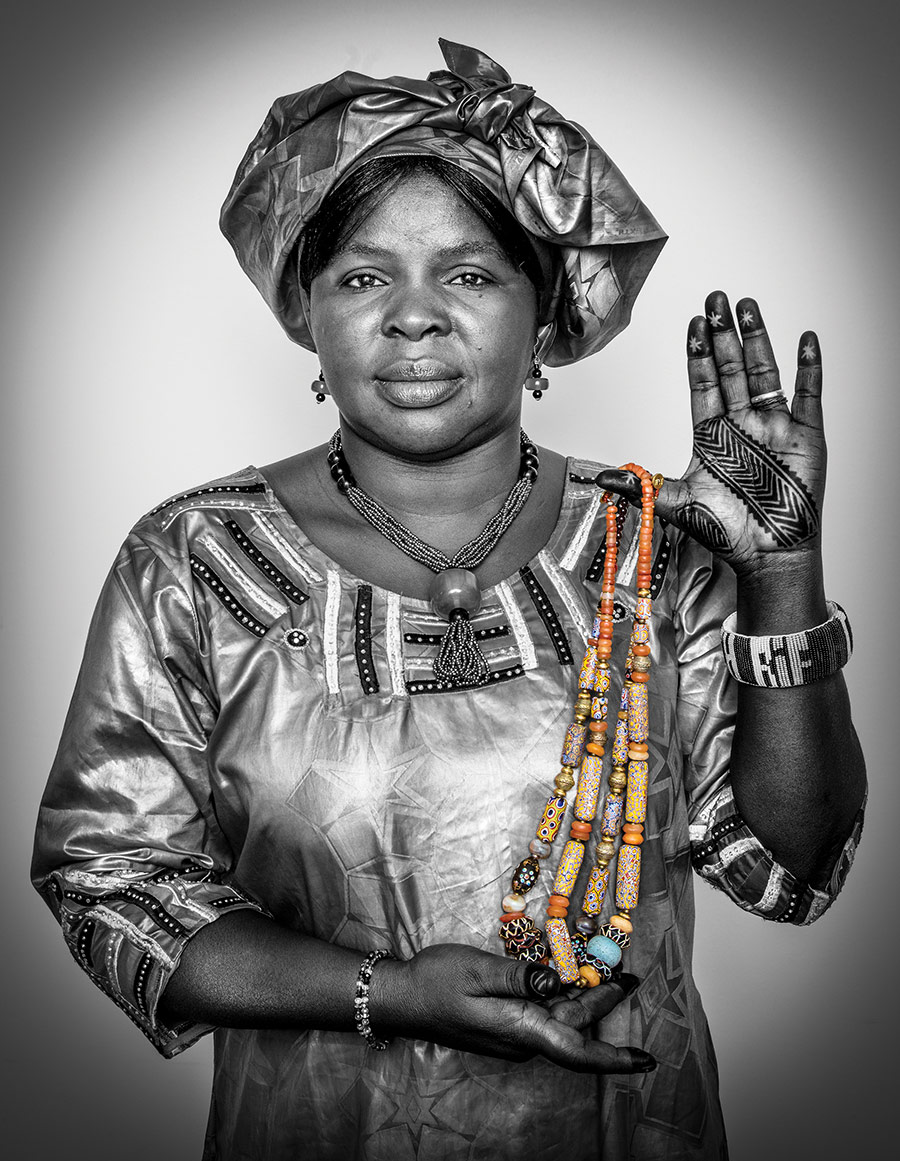
^ 4. Aoua Cherif Doumbia  

The Mali Elephant Project, Mali

My focus is on protecting, restoring and promoting sustainable use of terrestrial ecosystems. Sustainably managed forests can combat desertification, halt and reverse land degradation and biodiversity loss. My chosen SDG goal is #15: Life on Land. The Gourma people exist on agro-pastoral activities and are very dependent on natural resources. The necklace I hold symbolizes the alliance between all ethnic groups that use the same resources in the same areas. It’s an object of adornment worn by a woman that represents the source of all life on earth. Our project has sensitized 7,968 households around environmental protection, which includes elephant poaching, the occupation by humans of elephant habitats and the harmful effects of bush fires and tree cutting.

Photograph: Ralph Reutimann

^ 5. Kristian Sauyai  

Local Homestay Business Association of the Raja Ampat District, Indonesia

Life at sea is important. I’m the son of a fisherman and this life is inherited from our parents. The sea is the source of our life and the tourism associated with it has made a difference to our family. We must keep it beautiful and sustainable because we feel the changes that occur in our oceans, as does the environment and society at large. My chosen SDG goal is #14: Life Below Water. Water is important for both humans and animals. It’s important for water to be kept clean so that it doesn’t threaten life at sea. If it does, it threatens our incomes too. If the sea becomes broken our life will become hard. We are just like the seals – who also eat from the ocean.

To learn more about the Equator Initiative and all 31 2017 Equator Prize Winners, please visit: www.equatorinitiative.orgTo learn about the SDG Indigenous Heroes photo series, please visit: RalphReutimann.com/sdg

If you like this, subscribe here for more stories that Inspire The Future.

How India Will Lead the Way to the Global Goals

According to a recently released report by the World Economic Forum and Bain & Company, India will become the world’s youngest major economy, with 77 percent of Indians falling under the age of 44 by 2030.

India will overtake China as the most populous country in the world, the report forecasts, and 80 percent of Indian households will become middle class by 2030. Consumer spending will increase from $1.4 trillion to $5.7 trillion by 2030.

All indications suggest that India will continue on this path as one of the world’s most dynamic consumption environments. This is being propelled by five major drivers: income growth, steady and dispersed urbanization, favorable demographics, technology access and innovation, and evolving consumer attitudes. Mobile phone use is accelerating each of these growth factors.

The question in the minds of many is whether India will pursue, with suitable urgency, the U.N. Sustainable Development Goals (“SDGs”) as a framework to guide this growth. 

Indeed, these trends place a disproportionate amount of opportunity – and pressure – on India to rise to the challenge presented by the 2030 global goals. For India to make material gains against SDG targets, businesses will need to help. 

“Omniwin” production and marketing models connect brand “KPIs” (Key Performance Indicators) with SDG-aligned social impact. New entrants to the Indian market, like US-based 5th Element Group PBC, have opened country offices in India to help brands wanting to align more with customers and unlock funding for causes that matter.

“Omniwin solutions will create great opportunities for both brands and consumers and help expedite India’s progress towards the U.N. Sustainable Development Goals,” says Sankalp Potbhare, Managing Director for Kraft Heinz. 

How will this happen? In India, the government has enacted legislation requiring that businesses put 2 percent of their profits towards charitable work.  Too often, however, these funds are not reaching the non-profit organizations doing the work.Business is also disconnected from the charitable work being funded. Many are now exploring “Good Exchanges,” a marketing framework launched in the U.S. in 2015 to support global activations for brands such as Unilever, Mars and Mattel. 

Good Exchange solutions tap brand marketing budgets with a new kind of consumer engagement model: brands fund NGOs when consumers take digital action (like sharing content). “Good Exchange models seem innovative and pertinent to India, where consumers are digitally accessible,” says Vinay Shrivastava, Head of New Business and Digital Strategy for Marico.

The implications of accessing marketing budgets – rather than CSR or foundation budgets that are much smaller – represents a significant shift in corporate thinking. Operating performance and grant-making have historically resided in very separate silos in most corporate cultures. 

“I’m excited to see Good Exchange-style solutions that help SDG-aligned Indian brands reach consumers they have never reached before, while lifting millions of Indians out of poverty,” says Udit Jain, Head of Branding and Communication at Airtel Mobility. 

Will business redefine SDG-aligned philanthropy in India? Only time will tell. It seems unlikely that India can play its part in the global community if it doesn’t happen, and the sooner the better. 

“We think India is the most remarkable opportunity for business-led SDG impact in the world,” says 5th Element President Jim Van Eerden.  “Indian companies that engage its growing, young population can lead the way in moving the needle for good. That time is now.”   

0