African nations such as Somalia may be perceived as conflict-ridden and risky for business but “fragile states” can be an untapped opportunity for social enterprises that are flexible and think out-of-the-box, said industry experts.
The Organisation for Economic Cooperation and Development (OECD) lists 58 countries as “fragile states” – most of which are in Africa – based on indicators such as insecurity, social inequality, weak governance and high population vulnerability.
But social entrepreneurs and investors said these countries can still be win-win destinations for those seeking to run profitable businesses that also improve the lives of the needy.
“Of course you have to do things differently in fragile states compared to other countries, but it is possible to see your businesses grow,” said Fiona Lukwago from the Africa Enterprise Challenge Fund (AECF), an impact investment fund.
“You have to think out-of the-box when unexpected problems arise, and of course you have be more risk tolerant,” she told the Thomson Reuters Foundation.
The AECF has invested $11 million in agri-businesses in Somalia, Sierra Leone, the Democratic Republic of Congo and Liberia, said Lukwago, adding they have attracted three times that amount of capital from other sources since 2011.
She said investing in fragile states was high risk, due to challenges ranging from conflict and poor infrastructure to weak legal frameworks and risk of disease outbreaks, but the benefits were there if businesses were willing to adapt.
For example, an AECF-supported firm in Sierra Leone was starting up when Ebola struck, so the company changed its business model from supplying food to local communities to becoming a key supplier to aid agencies in the quarantine zone.
SOMALIA – HIVE OF OPPORTUNITY?
Industry players said one of the best ways to boost economic growth and improve livelihoods in these markets was to invest in small and medium enterprises which would not only provide jobs, but also offer essential goods and services to local people.
Countries like Somalia – listed by the OECD as the world’s most fragile state with decades of conflict hampering development – is “a hive of opportunity” with the market wide-open to private sector, said industry experts.
“Somalia is often perceived as lawless and volatile. While there are pockets in insecurity, there are many areas which are peaceful and the country is teeming with opportunity,” said Andy Narracott from Finding Impact, a blog for social entrepreneurs.
“There are huge opportunities with mobile money, for example. More than 70 percent of Somalis use mobile money compared to 15 percent with people who have a bank account.”
This helps a heavily nomadic population facilitate trade, connects a large diaspora population through international remittances, and reduces security threats for businessmen by avoiding dealing in cash, he added.
Even “simple businesses” offer a wealth of opportunity in Somalia, such as dairy farming, where zero to limited competition means unlimited potential for growth, said experts.
“It takes time to build trust and relationships in order to do business in fragile states like Somalia,” said Mahad Awale, country director of One Earth Future which has raised $11 million from investors to fund 130 social start-ups in Somalia.
“This is not a normal place so you have throw the rule book out the window and be prepared to do things differently.”
By Nita Bhalla @nitabhalla, Editing by Belinda Goldsmith
African nations such as Somalia may be perceived as conflict-ridden and risky for business but “fragile states” can be an untapped opportunity for social enterprises that are flexible and think out-of-the-box, said industry experts.
The Organisation for Economic Cooperation and Development (OECD) lists 58 countries as “fragile states” – most of which are in Africa – based on indicators such as insecurity, social inequality, weak governance and high population vulnerability.
But social entrepreneurs and investors said these countries can still be win-win destinations for those seeking to run profitable businesses that also improve the lives of the needy.
“Of course you have to do things differently in fragile states compared to other countries, but it is possible to see your businesses grow,” said Fiona Lukwago from the Africa Enterprise Challenge Fund (AECF), an impact investment fund.
“You have to think out-of the-box when unexpected problems arise, and of course you have be more risk tolerant,” she told the Thomson Reuters Foundation.
The AECF has invested $11 million in agri-businesses in Somalia, Sierra Leone, the Democratic Republic of Congo and Liberia, said Lukwago, adding they have attracted three times that amount of capital from other sources since 2011.
She said investing in fragile states was high risk, due to challenges ranging from conflict and poor infrastructure to weak legal frameworks and risk of disease outbreaks, but the benefits were there if businesses were willing to adapt.
For example, an AECF-supported firm in Sierra Leone was starting up when Ebola struck, so the company changed its business model from supplying food to local communities to becoming a key supplier to aid agencies in the quarantine zone.
SOMALIA – HIVE OF OPPORTUNITY?
Industry players said one of the best ways to boost economic growth and improve livelihoods in these markets was to invest in small and medium enterprises which would not only provide jobs, but also offer essential goods and services to local people.
Countries like Somalia – listed by the OECD as the world’s most fragile state with decades of conflict hampering development – is “a hive of opportunity” with the market wide-open to private sector, said industry experts.
“Somalia is often perceived as lawless and volatile. While there are pockets in insecurity, there are many areas which are peaceful and the country is teeming with opportunity,” said Andy Narracott from Finding Impact, a blog for social entrepreneurs.
“There are huge opportunities with mobile money, for example. More than 70 percent of Somalis use mobile money compared to 15 percent with people who have a bank account.”
This helps a heavily nomadic population facilitate trade, connects a large diaspora population through international remittances, and reduces security threats for businessmen by avoiding dealing in cash, he added.
Even “simple businesses” offer a wealth of opportunity in Somalia, such as dairy farming, where zero to limited competition means unlimited potential for growth, said experts.
“It takes time to build trust and relationships in order to do business in fragile states like Somalia,” said Mahad Awale, country director of One Earth Future which has raised $11 million from investors to fund 130 social start-ups in Somalia.
“This is not a normal place so you have throw the rule book out the window and be prepared to do things differently.”
By Nita Bhalla @nitabhalla, Editing by Belinda Goldsmith
It only took 18 characters and a social media firestorm to blow up Baha Nabulsi’s career.
Nabulsi, a real estate professional with eXp Realty, didn’t see the disaster coming. She didn’t even think that much about the three-word post that would ultimately lead to the loss of her job and prompt a storm of online outrage; it took her little thought to draft her joke and even less time to post it.
“Who’s his realtor?” she quipped in a real estate Facebook group shortly after news that basketball icon Kobe Bryant, his teenage daughter, and several other passengers had died in a tragic helicopter crash.
Her callous post sparked an uproar. Within hours, a managing broker from Nabulsi’s office had intervened in the conversation to offer an apology for her employee’s behavior and assure the group that Nabulsi’s actions would be “dealt with.” She was fired shortly after that.
Nabulsi isn’t the first to be fired over a social media faux pas, and she almost certainly won’t be the last. As a reader, her mistake is apparent. Who would make an insensitive joke so soon after a tragedy, let alone in a professional forum, and not think that they would face any consequences?
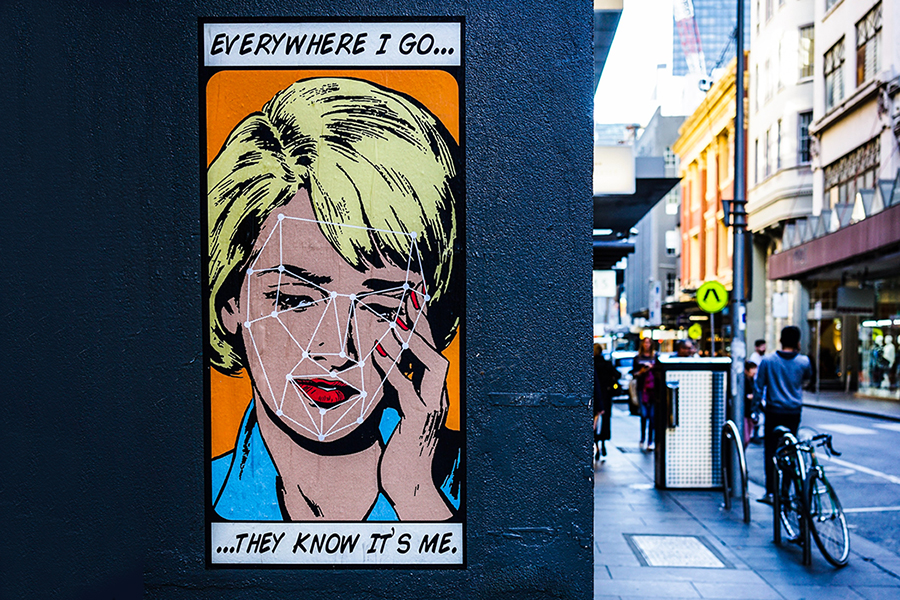
But even as we brush off her mistake as one that most reasonable people would never make, Nabulsi’s story pushes us to wonder — in a time when 18 characters and an off-color joke can ruin our job prospects, would we be better off avoiding social media entirely?
After all, professional risk is well-established. While most people view their social media and professional lives as being separate, technology has blurred the lines between the two. According to a recent survey conducted by CareerBuilder, roughly 70 percent of employers regularly use social media to assess prospective hires, and 43 percent have used social media to check in on current employees. Perhaps most troublingly, more than half of surveyed employers had opted to not hire a candidate after finding questionable content on their social media feeds — and 18 percent have fired an employee for their social media posts.
These statistics are startling enough to make the idea of becoming a digital ghost appealing. After all, your employer can’t discipline you for a poorly-thought-out comment or questionable content if that content doesn’t exist on the web. Shouldn’t shutting down your online profiles be the best way to protect your offline livelihood?
Unfortunately, no. In reality, stepping away from social media might leave you even more vulnerable to employer judgment and online ire. In the ubiquity of the internet, not maintaining a social media presence can come off as odd — or even as a red flag.
I’ll use a fictional example. In the popular Netflix thriller series YOU, the antihero protagonist applies for an apartment and faces suspicion from his prospective landlord when she realizes that he has next to no social media presence.
“I looked you up, you’re not on the socials,” she says, pointedly. “I thought you might be some freak.”
The line is meant as a half-serious joke — both by the landlord, whose tone is curious but mostly ridiculous, and the show’s writers, who frame the line as being darkly ironic given that the protagonist is, in fact, a murderer.
The exchange is fictional, but it represents a genuine modern apprehension for social media ghosts. According to recent research, the majority (57 percent) of employers are less likely to interview a candidate if they cannot find them online. In this way, having a healthy and positive social media presence is a means to reassure others that you are a real person with a strong personal character.
That said, being a social media ghost offers another significant risk. If your online reputation is slim to nonexistent, you could run the risk of being mistaken for someone who shares your name — and none of your values or professionalism.
Take the case of Kendall Jones, lion killer, as an example.
At the peak of her infamy, Kendall Jones was a Texas Tech cheerleader whose love of posting pictures of her African safari hunting trophies sparked widespread controversy and flame wars on the internet. Outrage flooded Jones’ social media channels when she posted a photo of herself grinning beside a dead lion. The Washington Post even gave her the unfortunate superlative of being “the most eminently hateable person on the Internet right now.”
The safari hunter shrugged off the firestorm that her actions sparked, seeming to take the controversy in stride. However, the experience was decidedly less favorable for a student at Texas State University who shared Kendall Jones’ name — and, unfortunately, some of the misdirected hate. The latter Jones faced near-constant harassment and smears on her character; out of frustration, she once tried to respond by tweeting: “For the love of God can you realize that there is more than one Kendall Jones in the world & the one you’re speaking [sic] ISN’T ME?!”
As journalist Libby Copeland writes in an article profiling the non-controversial Kendall Jones, “When online shaming campaigns target real or perceived wrong-doers when activists or controversial figures get trolled or harassed on social media, there is sometimes an additional, unintended target: a person with the same name, who discovers his or her online persona has, in a sense, been hijacked.”
The harassment, in and of itself, is a significant problem. But the longer-term issue that these name-doppelgangers face pertains to their online reputation. To this day, nearly five years after the #LionKiller controversy reached its peak, the first three pages of search results for Kendall Jones centers on stories about Kendall Jones, the lion killer. The misidentified Texas State University student has a few Google entries to her name — but you certainly have to look for them.
Of course, one could argue that the odds of a mistaken identity crisis reaching the scale of Jones’ Twitter-wide #LionKiller controversy are slim. But what about the smaller stakes? What of the doppelgangers who earn DUI court documents, embezzlement accusations, and business malpractice headlines that, through no fault of your own, pull your character into question and place your career into jeopardy?
Yes, it might seem tempting to delete your accounts and remove the risk of employer judgment outright — but the absence will leave you vulnerable to an identity hijacking that you can neither control nor avoid.
The second Kendall Jones might still live out-shouted by her infamous online twin, but by maintaining her accounts and voice online, she still has a chance to point to her online image and say, this is me. This is the person that I’ve worked hard to become, and this is the self that I want those in my personal and professional lives to take seriously. An online ghost has no such means to protect themselves from unfavorable assumptions and misidentifications.
So, reboot your Facebook and resuscitate your Twitter, launch a personal blog, and update your Linkedin resume. Hone in on your social media brand, and set aside some time to ensure that all of your profiles are active and up to date. And, most of all, try not to get into any Twitter wars or affiliate yourself with anything too controversial. The only way to protect yourself from online judgment is to craft an identity that you can be proud of, both on- and offline.
It only took 18 characters and a social media firestorm to blow up Baha Nabulsi’s career.
Nabulsi, a real estate professional with eXp Realty, didn’t see the disaster coming. She didn’t even think that much about the three-word post that would ultimately lead to the loss of her job and prompt a storm of online outrage; it took her little thought to draft her joke and even less time to post it.
“Who’s his realtor?” she quipped in a real estate Facebook group shortly after news that basketball icon Kobe Bryant, his teenage daughter, and several other passengers had died in a tragic helicopter crash.
Her callous post sparked an uproar. Within hours, a managing broker from Nabulsi’s office had intervened in the conversation to offer an apology for her employee’s behavior and assure the group that Nabulsi’s actions would be “dealt with.” She was fired shortly after that.
Nabulsi isn’t the first to be fired over a social media faux pas, and she almost certainly won’t be the last. As a reader, her mistake is apparent. Who would make an insensitive joke so soon after a tragedy, let alone in a professional forum, and not think that they would face any consequences?
But even as we brush off her mistake as one that most reasonable people would never make, Nabulsi’s story pushes us to wonder — in a time when 18 characters and an off-color joke can ruin our job prospects, would we be better off avoiding social media entirely?
After all, professional risk is well-established. While most people view their social media and professional lives as being separate, technology has blurred the lines between the two. According to a recent survey conducted by CareerBuilder, roughly 70 percent of employers regularly use social media to assess prospective hires, and 43 percent have used social media to check in on current employees. Perhaps most troublingly, more than half of surveyed employers had opted to not hire a candidate after finding questionable content on their social media feeds — and 18 percent have fired an employee for their social media posts.
These statistics are startling enough to make the idea of becoming a digital ghost appealing. After all, your employer can’t discipline you for a poorly-thought-out comment or questionable content if that content doesn’t exist on the web. Shouldn’t shutting down your online profiles be the best way to protect your offline livelihood?
Unfortunately, no. In reality, stepping away from social media might leave you even more vulnerable to employer judgment and online ire. In the ubiquity of the internet, not maintaining a social media presence can come off as odd — or even as a red flag.
I’ll use a fictional example. In the popular Netflix thriller series YOU, the antihero protagonist applies for an apartment and faces suspicion from his prospective landlord when she realizes that he has next to no social media presence.
“I looked you up, you’re not on the socials,” she says, pointedly. “I thought you might be some freak.”
The line is meant as a half-serious joke — both by the landlord, whose tone is curious but mostly ridiculous, and the show’s writers, who frame the line as being darkly ironic given that the protagonist is, in fact, a murderer.
The exchange is fictional, but it represents a genuine modern apprehension for social media ghosts. According to recent research, the majority (57 percent) of employers are less likely to interview a candidate if they cannot find them online. In this way, having a healthy and positive social media presence is a means to reassure others that you are a real person with a strong personal character.
That said, being a social media ghost offers another significant risk. If your online reputation is slim to nonexistent, you could run the risk of being mistaken for someone who shares your name — and none of your values or professionalism.
Take the case of Kendall Jones, lion killer, as an example.
At the peak of her infamy, Kendall Jones was a Texas Tech cheerleader whose love of posting pictures of her African safari hunting trophies sparked widespread controversy and flame wars on the internet. Outrage flooded Jones’ social media channels when she posted a photo of herself grinning beside a dead lion. The Washington Post even gave her the unfortunate superlative of being “the most eminently hateable person on the Internet right now.”
The safari hunter shrugged off the firestorm that her actions sparked, seeming to take the controversy in stride. However, the experience was decidedly less favorable for a student at Texas State University who shared Kendall Jones’ name — and, unfortunately, some of the misdirected hate. The latter Jones faced near-constant harassment and smears on her character; out of frustration, she once tried to respond by tweeting: “For the love of God can you realize that there is more than one Kendall Jones in the world & the one you’re speaking [sic] ISN’T ME?!”
As journalist Libby Copeland writes in an article profiling the non-controversial Kendall Jones, “When online shaming campaigns target real or perceived wrong-doers when activists or controversial figures get trolled or harassed on social media, there is sometimes an additional, unintended target: a person with the same name, who discovers his or her online persona has, in a sense, been hijacked.”
The harassment, in and of itself, is a significant problem. But the longer-term issue that these name-doppelgangers face pertains to their online reputation. To this day, nearly five years after the #LionKiller controversy reached its peak, the first three pages of search results for Kendall Jones centers on stories about Kendall Jones, the lion killer. The misidentified Texas State University student has a few Google entries to her name — but you certainly have to look for them.
Of course, one could argue that the odds of a mistaken identity crisis reaching the scale of Jones’ Twitter-wide #LionKiller controversy are slim. But what about the smaller stakes? What of the doppelgangers who earn DUI court documents, embezzlement accusations, and business malpractice headlines that, through no fault of your own, pull your character into question and place your career into jeopardy?
Yes, it might seem tempting to delete your accounts and remove the risk of employer judgment outright — but the absence will leave you vulnerable to an identity hijacking that you can neither control nor avoid.
The second Kendall Jones might still live out-shouted by her infamous online twin, but by maintaining her accounts and voice online, she still has a chance to point to her online image and say, this is me. This is the person that I’ve worked hard to become, and this is the self that I want those in my personal and professional lives to take seriously. An online ghost has no such means to protect themselves from unfavorable assumptions and misidentifications.
So, reboot your Facebook and resuscitate your Twitter, launch a personal blog, and update your Linkedin resume. Hone in on your social media brand, and set aside some time to ensure that all of your profiles are active and up to date. And, most of all, try not to get into any Twitter wars or affiliate yourself with anything too controversial. The only way to protect yourself from online judgment is to craft an identity that you can be proud of, both on- and offline.
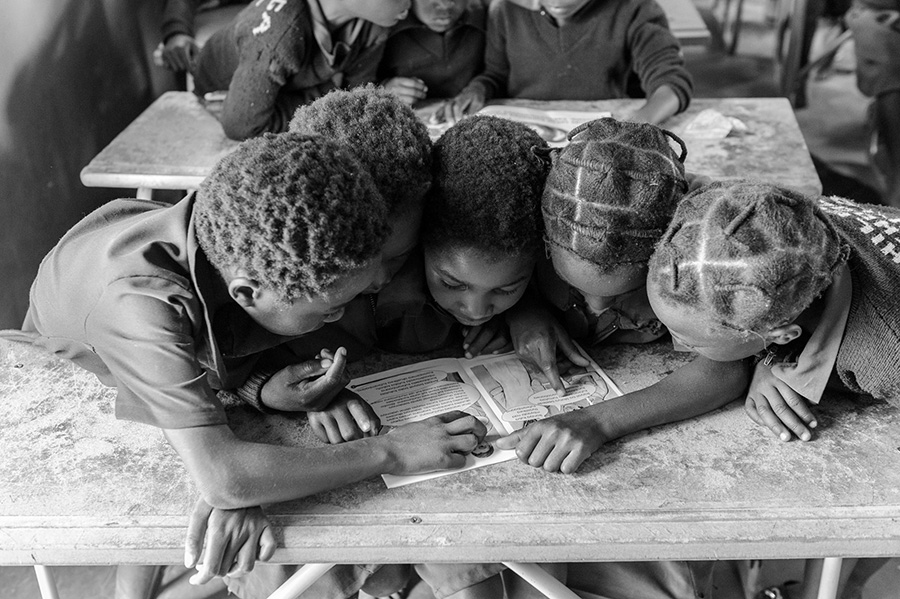
Room to Read has supported 95,000 girls through its girls’ education program, resulting in life-changing results and nearly 80 percent going on to tertiary education or employment.
“In my personal life, I’m keenly aware that a family’s circumstances can change drastically over the course of a single generation, through the power of education,” says Geetha Murali, Ph.D., a YPO member based in California and the CEO of Room to Read, a nonprofit organization focused on improving literacy and gender equality. “Decisions that my mother made in terms of when she wanted to get married and how educated she wanted to be directly resulted in all of the choices and opportunities I have had.”
Child marriage, a barrier to education, was common in Murali’s family just a generation ago. Her mother, the eldest of seven, broke the cycle for herself, her siblings, and Murali’s generation. All are educated and pursuing their destinies.
“The ripple effect has given me the ability to lead an organization that has reached almost 17 million children, and that wouldn’t be possible without some of the challenges that my mother dealt with head-on,” says Murali. Every child deserves access to quality education, and every girl deserves gender equality and to have control over her life and decisions. The effects of illiteracy — including limited employment and income opportunities, poor health, crime, dependence, and more — impact everyone. The World Literacy Foundation estimates illiteracy costs the global economy over $1 trillion each year and creates cycles of poverty for families around the world. The World Bank lists girls’ education as a strategic development priority.
“Not having an equally educated population means it’s difficult to have a gender-equal world and a world in which poverty is eliminated,” says Murali. “The global challenges we face — climate change, political chaos, warfare — are a function of individuals not able to function at their highest capacity to make informed choices.” The results are life-changing. To date, Room to Read has reached 16.8 million children in 16 countries and published more than 1,500 books across 35 languages through its literacy program. In addition, the organization has supported 95,000 girls through its girls’ education program, resulting in a 95 percent advancement rate, with nearly 80 percent going on to tertiary education or employment.
For Murali, whose commitment to helping children reach their potential also led her to adopt her daughter from South India, there is still so much more she and other business leaders can do to make an impact. “When you think you’ve reached your limit, you probably have further to go,” she says. “Challenging yourself to be better than you were the day before can sometimes bring you incredible surprises in terms of what you can accomplish.”
The year was 1943 and Joseph Carpenter had just received orders to report to Camp Montford Point in Jacksonville, North Carolina, from his home in Washington.
“I was proud to be a Marine because they had so much history,” said Carpenter, now 95. But in 1943, Carpenter was about to make history as one of America’s first Black recruits for the U.S. Marine Corps.
More than 20,000 Blacks trained at Montford Point (and thus were called Montford Pointers) because the military then, like much of America, was racially segregated.
The military would change in 1948, when President Harry S. Truman signed an executive order ending segregation in its ranks. But during World War II, Carpenter would train in a Black unit.
Joseph Carpenter at Montford Point in 1944. (Courtesy photo)
Whether fighting in segregated or integrated units, Black soldiers have participated in every major American war since before the country’s founding.
Montford Pointers aren’t as well known as the Tuskegee Airmen, the African-American squadron of the U.S. Army Air Corps that flew and maintained combat aircraft in Alabama before becoming known as a respected fighting unit during World War II.
But Montford Pointers also served with distinction. About 13,000 of them decamped abroad during World War II. Nearly 2,000 of them helped Allied forces seize the island of Okinawa in the largest amphibious landing in the Pacific theater of the war.
Breaking barriers
Montford Pointers faced segregation when they ventured off of their base and into Jacksonville. A set of laws known as Jim Crow in the South required schools and businesses to keep Whites and Blacks separate.
Former Sergeant Edwin Fizer, 94, who enlisted in the Marines in 1942, remembers that some of the original White officers and drill instructors doubted the Black recruits’ abilities, which only strengthened his resolve to succeed.
“We had to get past that to be sure that we were able to stay in the Corps and do well at it,” Fizer said from Illinois in a telephone interview.
While Fizer saw combat in the battle to retake Guam from the Japanese, Carpenter remained at Montford Point as chief clerk and helped unload European prisoners of war from ships. He retired as a lieutenant colonel in the 1980s. Many of the Montford Pointers extended their service into the Korean and Vietnam wars.
A legacy continues
Retired Lieutenant Colonel Joseph Carpenter, 95, cradles the Congressional Gold Medal he received in 2012 that honored his service as a Montford Point Marine. (State Dept./D.A. Peterson)
In recognition of their service and sacrifices during World War II, Montford Point Marines received the Congressional Gold Medal in 2012, the highest civilian honor the U.S. Congress gives.
In 1974, Camp Montford Point was renamed Camp Gilbert H. Johnson in honor of the African American sergeant major who served as a drill instructor there. It’s the only Marine installation named after an African American, said John Lyles, an archivist at the Library of the Marine Corps. (A U.S. Navy ship bears the camp’s name.)
About 400 of America’s first black Marines are still alive, according to the National Montford Point Marine Association.
For a new generation
Fizer wants the next generation to know Montford Pointers’ struggles and to recognize times have changed for the better. “I want them to be able to appreciate how we overcame adversity,” Fizer said. “This is a foundation that we have built, and they stand on the shoulders of us. And go from there.”
Lenore T. Adkins is a public diplomacy writer for the US Department of State.
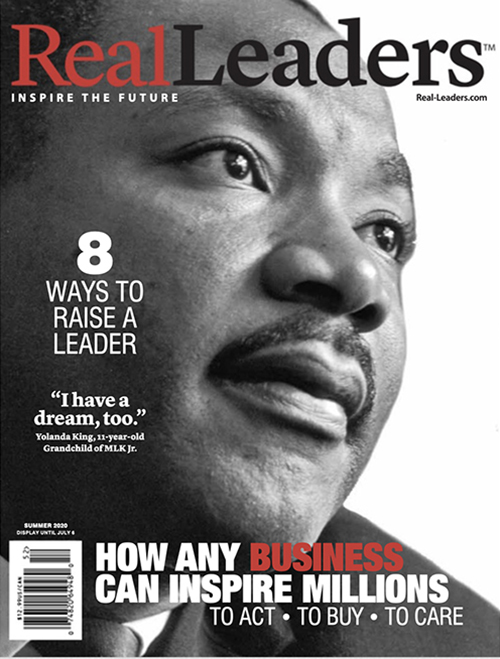
It’s been almost 52 years since Dr. Martin Luther King Jr. was assassinated. As people once again take to the streets to highlight social injustice and atrocities across the country and the world, we ask: is his dream still relevant today?
Dr. Martin Luther King Jr. was assassinated in Memphis, Tennessee (U.S.), almost 52 years ago, on April 4, 1968, an event that sent shock waves reverberating around the world. It was, as described at that year’s Nobel Ceremony in Oslo, a “bitter year for human rights” and “one of the most grievous losses ever suffered by the world’s champions of peace and goodwill.”
Dr. King, had been awarded the Nobel Peace Prize in 1964 for his nonviolent campaign for equal rights. The 1968 Nobel Peace Prize was presented to René Cassin for his work on drafting the Universal Declaration of Human Rights adopted by the United Nations General Assembly on December 10, 1948. Eleanor Roosevelt, who oversaw the writing of this milestone document had died a few years earlier and therefore could not share in the prize. The declaration presents 30 articles, each of which explains what rights we have as human beings regardless of “race, color, sex, language, religion, political or other opinion, national or social origin, property, birth or other status.” Importantly, Article 1 states that “all human beings are born free and equal in dignity and rights”.
On April 16, 1963, 100 years after the Emancipation Act, as violence unfolded on the streets of Birmingham, Martin Luther King, Jr. composed a letter from his jail cell.
It was Dr. King’s dream that his children would one day “live in a nation where they will not be judged by the color of their skin but by the content of their character.” That dream was rooted in his own experiences as a child growing up under “Jim Crow Laws”: a system of racial apartheid that dominated the American South for three quarters of a century, beginning in the 1890s. The laws affected almost every aspect of daily life, mandating segregation of schools, parks, libraries, drinking fountains, restrooms, buses, trains, and restaurants. “Whites Only” and “Colored” signs were constant reminders of the enforced racial order. Those who refused to abide by these laws were arrested, or worse, ‘lynched’ by white extremist groups such as the Ku Klux Klan.
Martin Luther King, Jr., was born Michael King,Jr. on January 29, 1929, in Atlanta, Georgia (U.S.) and grew up in an area of the city reserved for people of color. His father, Michael King, Sr. (later Martin Luther King, Sr.) was a respected Baptist minister and community leader. His mother Alberta Williams King made it a point, early on in Martin’s life, to explain how young, healthy Africans were brought to the United States as slaves, and the ongoing realities of discrimination and segregation.
Dr. Martin Luther King, Jr. hugs his wife Coretta during a news conference following the announcement that he had been awarded the Nobel Peace Prize.
“You are as good as anyone,” his mother Alberta said, but Martin didn’t really understand until the day he went to school at age six. His best friend, a white boy that he had known and played with since age three, was told by his father to no longer play with him. “How could I love a race of people who hated me and who had been responsible for breaking me up with one of my best childhood friends?” Martin asked himself for a long time.
At fourteen years old Martin participated in, and won, an oratorical contest with an essay entitled The Negro and the Constitution in which he said, “If freedom is good for any it is good for all.” After receiving the prize, Martin took a bus home and unconsciously sat at the front, which was normally reserved for white people. The bus driver quickly reprimanded him. Martin recalls this incident as the angriest moment of his life!
King giving his “I Have a Dream” speech to a huge crowd gathered in Washington D.C. during the ‘March on Washington for Jobs & Freedom’ (aka the Freedom March). Photo by Francis Miller.
At age 15 Martin entered Morehouse College, a historically all-male African American college established in 1867. It was during his time as a student at Morehouse that Martin would have his “first frank discussion on race” and where he would discover Henry David Thoreau’s essay on Civil Disobedience published in 1849, which tells the story of the author’s willingness to go to jail, rather than pay taxes to a government that supported slavery.
“I became convinced that non-cooperation with evil is as much a moral obligation as is cooperation with good,” said Dr. King.
King plays with his son Dexter. Photo by Flip Schulke.
Someone else who had an indelible impact on Dr. King’s beliefs and actions was the Indian activist Mahatma Gandhi, who, using nonviolent civil disobedience led India to independence from British rule in 1947. He was particularly moved by Gandhi’s 240 mile march from his ashram (religious retreat) to the coastal town of Dandi on the Arabian Sea. There, Gandhi and his supporters made salt from seawater, thereby breaking the British law that had established a monopoly on salt manufacturing.
“There is no way to peace, peace is the only way,” said Mohandas K. Gandhi (1869-1948).
King giving his “I Have a Dream” speech to a huge crowd gathered in Washington D.C. during the ‘March on Washington for Jobs & Freedom’ (aka the Freedom March). Photo by Francis Miller.
Dr. King would put Gandhi’s technique of non-violence to good use in America’s own civil rights struggle. Starting in 1955 in Montgomery, Alabama he successfully led a massive bus boycott after civil rights activist Rosa Parks had refused to give up her bus seat reserved for whites. Later on in Birmingham, a place he described as “where human rights had been trampled on for so long and fear and oppression were as thick in its atmosphere as the smog from its factories,” Dr. King was arrested and put into solitary confinement for leading a protest. From his cell he wrote a letter outlining that: “Injustice anywhere is a threat to justice everywhere.”
While many nations in Africa, including Ghana (1957), had achieved independence from their former European colonial masters, the time had come for African Americans to be given full and equal rights – not only to sit at the front of a bus and attend integrated schools – but also the right to voice their opinions politically.
“As children we didn’t know we were “Negroes,” or if we did, we didn’t know exactly what that meant. We didn’t realize that we lived in “segregation”…We were children, and children are more than human; we were blessed, but sooner than later we grow up and have to face this prison of segregation, unless Daddy won his struggle.” Excerpt from Dexter King’s book Growing Up King. Photo by Flip Schulke.
“Something within has reminded the Negro of his birthright of freedom, and something without has reminded him that it can be gained. Consciously or unconsciously, he has been caught up by the Zeitgeist, and his black brothers of Africa and his brown and yellow brother of Asia, South America and the Caribbean. The United States Negro is moving with a sense of urgency toward the promised land of racial justice,” he said.
An officer accosts an unconscious woman as mounted police officers attack civil rights marchers in Selma, Alabama who were attempting to begin a 50-mile march to Montgomery to protest race discrimination in voter registration. The mounted policeman in the background are part of Sheriff Jim Clark’s Dallas County posse. Police used tear gas, clubs, whips and ropes to turn back the demonstrators as they crossed a bridge over the Alabama River at the city limits. Photo by Bettmann.
And so the moment had come; a century after the abolition of slavery, marches were organized throughout the South, in Selma and Mississippi, and notably to Washington D.C., whereupon hundreds of thousands of men and women, black and white, rich and poor, marched on the United States capital demanding economic justice. Youth from all over America traveled South to join the ranks as Freedom Riders and to participate in more provoked, but still nonviolent, actions of civil disobedience.
A black protester at an anti-Vietnam War rally holds up a pro-Vietnamese sign against American racism. “No Vietnamese ever called me a Nigger” came from Mohammad Ali, who said that “No Viet Cong ever called me a Nigger.” Photo by Leif Skoogfors.
Thanks to mass mobilization, enough pressure was brought on the United States government to bring about significant changes to federal law, notably the 1964 Civil Rights Act that ended segregation in public places and banned employment discrimination on the basis of race, color, religion, sex or national origin. The 1965 Voting Rights Act was described as, “one of the most monumental laws in the history of American freedom”.
It was at this time, that Dr. King would travel to Oslo, Norway, to receive the Nobel Peace Prize on December 10, 1964. During his Nobel lecture on December 11, he said:
“The Nobel Prize is the second greatest honor given to me in my lifetime. The honor of the first importance was the response of the millions of Negroes to the doctrine of nonviolence, and their heroic employment of it to achieve equality and freedom. In a sense they earned the Nobel Prize when they stood against guns, dynamite, snarling dogs and prison without flinching, until their steadfastness muzzled the weapons of their oppressors.”
A protester holds a young boy on his shoulders during the Memphis March demonstration, backing the demands of striking garbage workers, Memphis Tennessee, April 8, 1968. The march which was to be led by Dr. King was instead led by his widow Coretta Scott King. Photo by Santi Visalli.
Following the Nobel Prize, Dr. King turned his attention to fighting other injustices: poverty and war. At the time, the United States was, in his opinion, wasting enormous economic resources fighting a war in Vietnam that he felt would be better spent on helping the poor.
“If we assume that life is worth living and man has a right to survive, then we must find an alternative to war,” he said. Dr. King was 39 years old at the time of his death, which occurred as he was planning a massive ‘Poor People’s Campaign,’ involving the wider participation of American Indians, Mexican Americans and other racial and ethnic minority groups.
Given the present global challenges to Human Rights, Dr. King’s message of nonviolent social and economic justice is as important today as ever before.
Students Playing Outside Martin Luther King Elementary School, Los Angeles. Young Hispanic American schoolchildren, who make up over 70% of the students, play and jump rope near a large mural of Dr. King at an elementary school named in his honor. Photo by David Butow
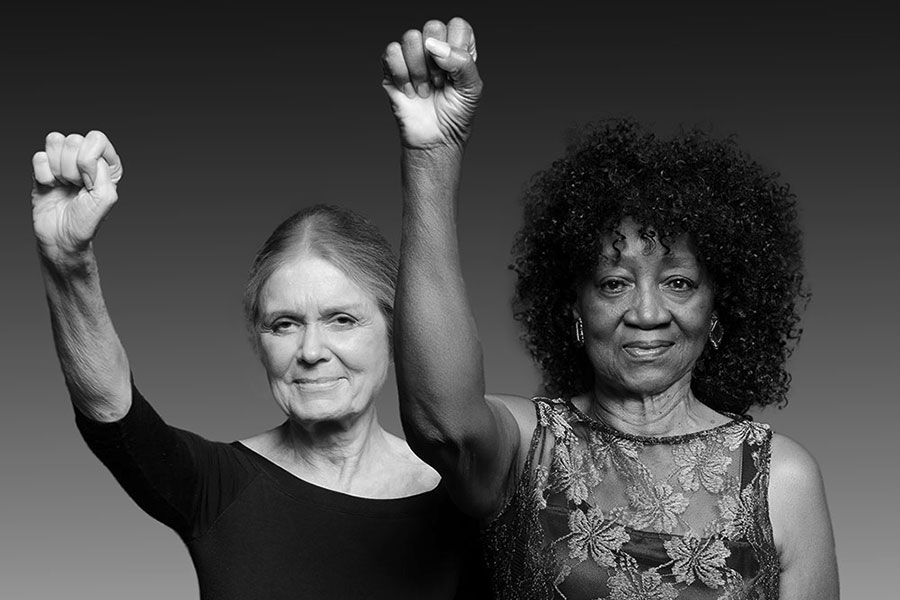
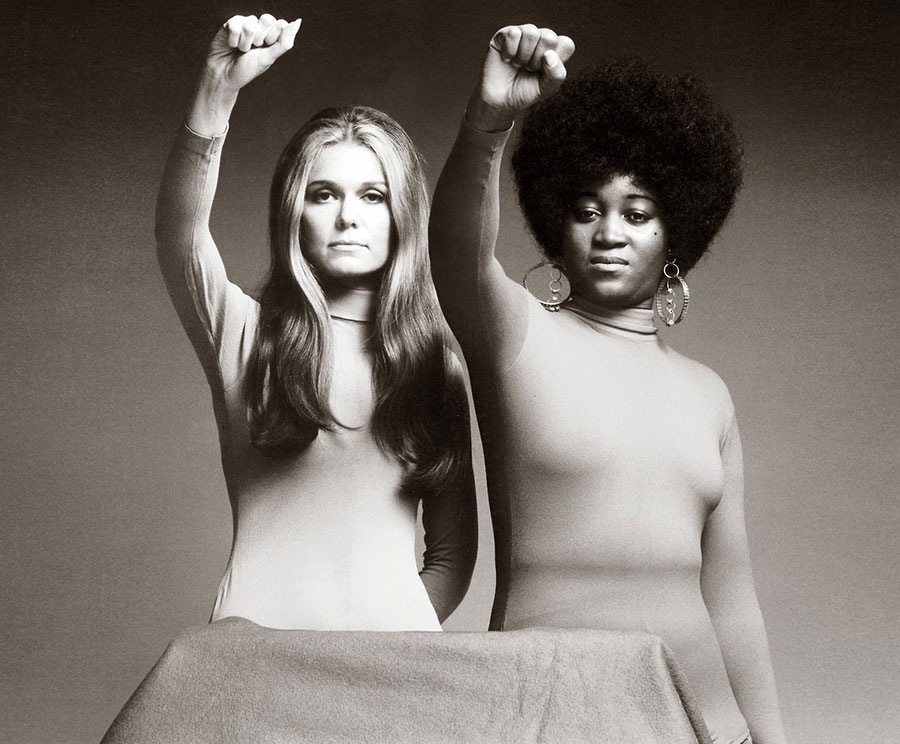
A re-enacted photographic portrait of Gloria Steinem and Dorothy Pitman Hughes in their iconic 1971 “raised fists” stance taken by St. Augustine photographer Daniel Bagan, has been added to the Smithsonian National Portrait Gallery collection. It gives new life to the significance and power of their historic statement of equal rights for women and blacks.
More than 48 years since the original Dan Wynn image appeared in Esquire magazine, their message has not dimmed with age. The image of women, now in their 70s, side-by-side with fists raised in message of equal rights, resonates with power for a new generation.
For Pitman Hughes and Steinem, the new portrait featuring the defiant black power salute again helps open up a dialogue on sexism and racism that is still vitally needed today, while demonstrating their continued hope for positive change.
The original 1971 portrait of Gloria Steinem and Dorothy Pitman taken by photographer Daniel Bagan.
“We must have difficult conversations, and it’s also important to talk about the learning, growing, friendship and joy that come from having them,” said Steinem. “So it’s important to say that in real life, neither Dorothy nor I would give up — or be the same without — our near half-century of shared hopes, differences, laughter, and friendship.”
The partnership between Steinem and Pitman Hughes began in the early 1970s as the pair took to the podium to discuss the importance of intersectional feminism. Together they founded Ms. Magazine and the Women’s Action Alliance. Decades later, the impact of their partnership has not waned. Steinem and Pitman Hughes remain an inspiration to activists across the country as they continue to push for racial and gender equality.
“The symbolism of a black and white woman standing together, demonstrating the black power salute is as important now as it was in the 70s,” said Pitman Hughes. “A hundred years of the suffrage movement has not eliminated racism, classism and sexism. Black women and white women can make this change together, but not until we acknowledge and resolve the racism problem that stands between us.”
They have struck their side-by-side, raised fists pose many times over the years. But this new portrait’s photographer, Daniel Bagan said the moment was right to re-capture their symbolism.
“The women were dynamically engaged in their iconic stance, and the result was inspiring,” said Bagan. “Even decades later, their power and beauty show no sign of age, just wisdom reflected in their soft smiles.”
Bagan, based in St. Augustine, Florida, has also launched the “Age of Beauty Project” creating portraits of women between the ages of 50-100. The Steinem-Pitman Hughes portrait inspired the project, and he shares the proceeds from the sale of their image in support of Pitman Hughes’ continued activism. The project resulted in a book titled “Age Of Beauty,” a social commentary on beauty and age. Bagan speaks with women over 50 almost every day, and many say they feel invisible, that they no longer see themselves as beautiful. Bagan hopes that his portraits shows that real beauty transcends Madison Avenue’s definition of thin, smooth and young.
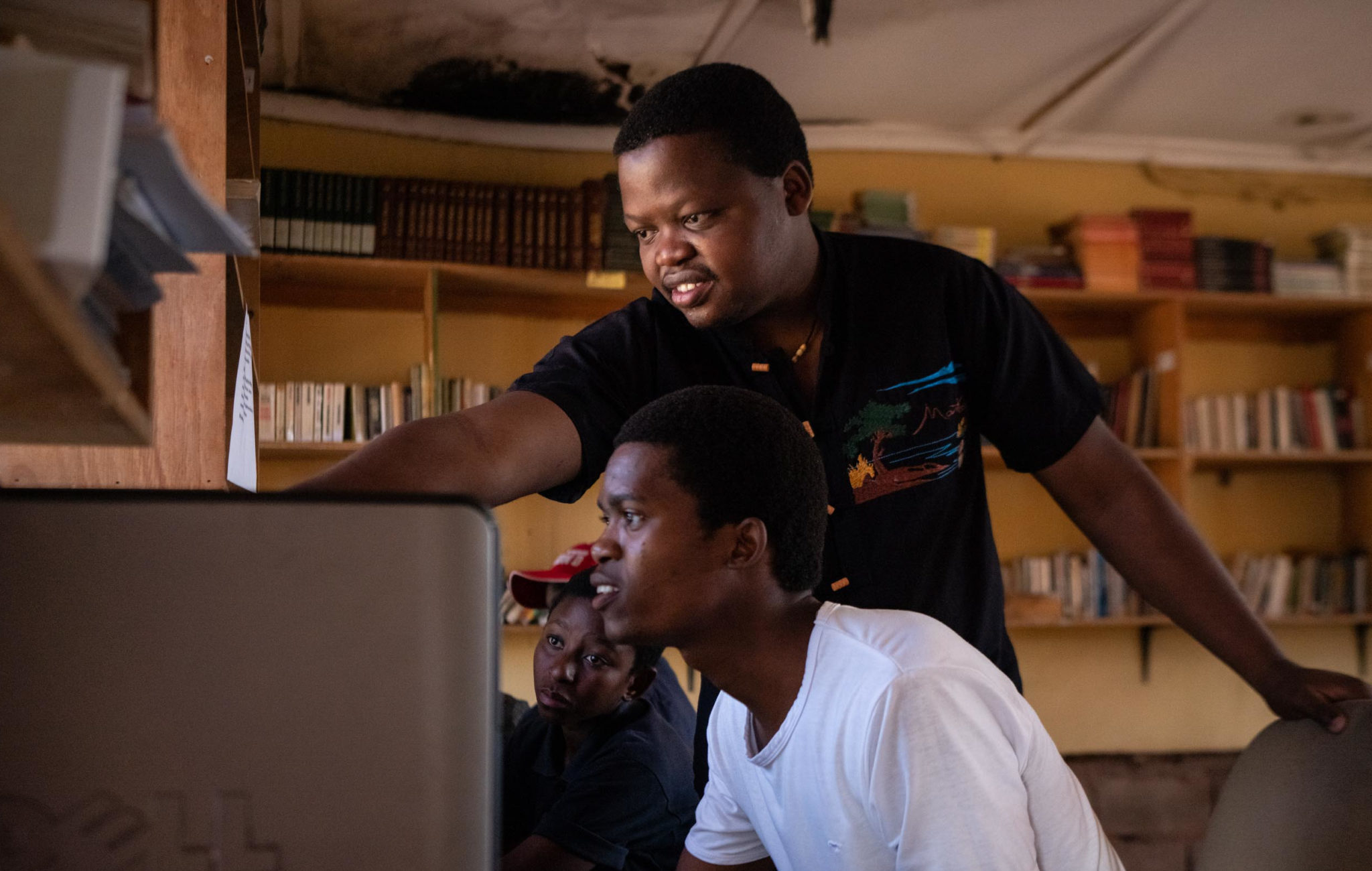
Growing up, Msizi Phewa’s future was clouded in uncertainty. What direction should he take? Who could he turn to for help? “For many years I lived without a father,” Phewa says. “I felt so lost without that figure in my life.” Little did he know that being adrift would one day steer his path. Today, Phewa is a role model in the township of KwaNyuswa, KwaZulu-Natal. “I’m here for young people,” Phewa says.
Unemployment and lack of opportunity can lead many down the wrong track. Not Phewa. “Where some see hopelessness, I see potential,” he says. As the director of the Light Providers Youth Club, Phewa is opening doors for others to grow. The NPO has a library filled with resources, as well as a space for people to work on their strengths, whether it’s netball, singing, or dancing. Phewa also offers valuable lessons in computer literacy. “Everyone has a talent,” he says. “I hope that by coming here, the youth will find theirs.”
Along the way, Phewa himself has discovered his purpose. He identifies as a leader, there to encourage people on their journeys. “We underestimate how important it is to have a deep understanding of ourself,” Phewa says. It could be the key to unlocking life’s possibilities.
Growing up, Msizi Phewa’s future was clouded in uncertainty. What direction should he take? Who could he turn to for help? “For many years I lived without a father,” Phewa says. “I felt so lost without that figure in my life.” Little did he know that being adrift would one day steer his path. Today, Phewa is a role model in the township of KwaNyuswa, KwaZulu-Natal. “I’m here for young people,” Phewa says.
Unemployment and lack of opportunity can lead many down the wrong track. Not Phewa. “Where some see hopelessness, I see potential,” he says. As the director of the Light Providers Youth Club, Phewa is opening doors for others to grow. The NPO has a library filled with resources, as well as a space for people to work on their strengths, whether it’s netball, singing, or dancing. Phewa also offers valuable lessons in computer literacy. “Everyone has a talent,” he says. “I hope that by coming here, the youth will find theirs.”
Along the way, Phewa himself has discovered his purpose. He identifies as a leader, there to encourage people on their journeys. “We underestimate how important it is to have a deep understanding of ourself,” Phewa says. It could be the key to unlocking life’s possibilities.