Spanish Art Show Spotlights ‘Hidden’ Digital Divide in Pandemic

A painting of a woman using an iPad, a vase depicting children dreaming of computers – both historical objects with a contemporary twist highlighting the world’s growing digital divide during the coronavirus pandemic.

The exhibition at Barcelona’s Analog Museum of Digital Inequality aims to show how this gap – laid bare by COVID-19 -disproportionately affects women and low-income and ethnic minority groups.

The so-called “digital divide” refers to the gap between those who have access to computers and the internet, and those with limited or no access.

About 54% of the global population used the internet last year, but less than a fifth of people in the least-developed countries were online, according to the International Telecommunication Union (ITU), a United Nations agency.

“Technological inequality is a hidden problem, (but) it has become especially obvious throughout this unprecedented year,” said Isabella Longo, project director at BIT Habitat, the nonprofit behind the exhibition, which opened last month.

With the pandemic forcing people everywhere to move online for work, school and socialising, citizens and governments have had to take a technological leap, which risks leaving some behind, she said.

“Technology has been a barrier for those people without (computer) skills and who are often part of groups at risk of social exclusion,” Longo told the Thomson Reuters Foundation in a phone interview.

The pandemic has not only revealed the extent of digital inequality, but has also widened it drastically, say tech experts.

“The digital divide has always been there, but what the COVID-19 pandemic has done is turn it into a canyon,” said Lourdes Montenegro, digital inclusion lead at the nonprofit World Benchmarking Alliance, which earlier this month launched a corporate digital inclusion benchmark.

“As more businesses embrace digitalisation as an adaptation to the pandemic, we run the risk of leaving more people behind,” he said.

DIGITAL GENDER GAP

The exhibition, which is planned to run until late next year, includes a painting created this year by Spanish artist Yaiza Ares called “From an iPad” which highlights the gender gap.

The artwork, a reinterpretation of American realist painter Edward Hopper’s “Hotel Room,” depicts a woman sitting on a bed and looking at text on an iPad that reads: “Only 17% of technology specialists in Europe are women.”

The digital gender gap remains a persistent issue, one that needs radical cultural, structural and systemic change, said Longo.

A 2018 report by the European Parliament found that women tend to avoid studies in information and communication technology (ICT) and are under-represented in digital careers.

In the European Union, nearly four times as many men as women graduated from ICT courses in 2020, according to the EU’s statistics office Eurostat.

Inadequate economic resources also make women less likely to have access to technology, resulting in a lack of digital skills that are transferable to the workplace, policy experts say.

In some regions, the gender divide is significantly more pronounced, with South Asian women about 70% less likely than men to have a smartphone and African women more than 30% less likely, according to the Organisation for Economic Cooperation and Development.

The pandemic has exacerbated existing gender inequalities due to increased telecommuting, said Konstantina Davaki, a social policy fellow at the London School of Economics.

Women are over-represented in casual, part-time and temporary jobs that offer little flexibility to work from home, she explained.

And as job markets continue to deteriorate due to the pandemic, further reducing women’s digital access, “the digital gender gap is likely to deepen,” Davaki said in emailed comments.

‘WHOLESALE LEARNING LOSS’

While some children sit studiously doing maths and art classes at their home computers, other less fortunate ones look on wistfully, wishing they had their own screens.

The scene decorates a ceramic pot by Spanish artist Maria Melero – her modern-day version of an ancient Greek pot – which is included in the exhibition to illustrate how the digital divide has impacted children.

Children’s charities say school closures have spotlighted the digital divide among children from different socio-economic groups.

Two-thirds of the world’s school-aged children do not have internet at home, according to a report published last month by UNICEF, the United Nations children’s agency, and the ITU.

Nearly 250 million students worldwide are still out of school due to COVID-19-related closures, it said.

“Closing the digital divide is a fundamental equity issue, critical to breaking the cycle of poverty,” said Lane McBride, a partner at Boston Consulting Group.

Only then can students develop crucial digital literacy, as well as professional and technical skills that they will need in their future careers, he wrote in an email.

“With the onset of the pandemic, this divide has threatened wholesale learning loss,” said McBride.

Davaki, the social policy expert, said that permanently closing the digital divide requires state institutions, policymakers, civil society and the private sector to cooperate to ensure that everyone, everywhere can get online for free.

“Access to technological infrastructure and the internet must be guaranteed to all communities and be free of charge,” she said.

Spanish Art Show Spotlights ‘Hidden’ Digital Divide in Pandemic

A painting of a woman using an iPad, a vase depicting children dreaming of computers – both historical objects with a contemporary twist highlighting the world’s growing digital divide during the coronavirus pandemic.

The exhibition at Barcelona’s Analog Museum of Digital Inequality aims to show how this gap – laid bare by COVID-19 -disproportionately affects women and low-income and ethnic minority groups.

The so-called “digital divide” refers to the gap between those who have access to computers and the internet, and those with limited or no access.

About 54% of the global population used the internet last year, but less than a fifth of people in the least-developed countries were online, according to the International Telecommunication Union (ITU), a United Nations agency.

“Technological inequality is a hidden problem, (but) it has become especially obvious throughout this unprecedented year,” said Isabella Longo, project director at BIT Habitat, the nonprofit behind the exhibition, which opened last month.

With the pandemic forcing people everywhere to move online for work, school and socialising, citizens and governments have had to take a technological leap, which risks leaving some behind, she said.

“Technology has been a barrier for those people without (computer) skills and who are often part of groups at risk of social exclusion,” Longo told the Thomson Reuters Foundation in a phone interview.

The pandemic has not only revealed the extent of digital inequality, but has also widened it drastically, say tech experts.

“The digital divide has always been there, but what the COVID-19 pandemic has done is turn it into a canyon,” said Lourdes Montenegro, digital inclusion lead at the nonprofit World Benchmarking Alliance, which earlier this month launched a corporate digital inclusion benchmark.

“As more businesses embrace digitalisation as an adaptation to the pandemic, we run the risk of leaving more people behind,” he said.

DIGITAL GENDER GAP

The exhibition, which is planned to run until late next year, includes a painting created this year by Spanish artist Yaiza Ares called “From an iPad” which highlights the gender gap.

The artwork, a reinterpretation of American realist painter Edward Hopper’s “Hotel Room,” depicts a woman sitting on a bed and looking at text on an iPad that reads: “Only 17% of technology specialists in Europe are women.”

The digital gender gap remains a persistent issue, one that needs radical cultural, structural and systemic change, said Longo.

A 2018 report by the European Parliament found that women tend to avoid studies in information and communication technology (ICT) and are under-represented in digital careers.

In the European Union, nearly four times as many men as women graduated from ICT courses in 2020, according to the EU’s statistics office Eurostat.

Inadequate economic resources also make women less likely to have access to technology, resulting in a lack of digital skills that are transferable to the workplace, policy experts say.

In some regions, the gender divide is significantly more pronounced, with South Asian women about 70% less likely than men to have a smartphone and African women more than 30% less likely, according to the Organisation for Economic Cooperation and Development.

The pandemic has exacerbated existing gender inequalities due to increased telecommuting, said Konstantina Davaki, a social policy fellow at the London School of Economics.

Women are over-represented in casual, part-time and temporary jobs that offer little flexibility to work from home, she explained.

And as job markets continue to deteriorate due to the pandemic, further reducing women’s digital access, “the digital gender gap is likely to deepen,” Davaki said in emailed comments.

‘WHOLESALE LEARNING LOSS’

While some children sit studiously doing maths and art classes at their home computers, other less fortunate ones look on wistfully, wishing they had their own screens.

The scene decorates a ceramic pot by Spanish artist Maria Melero – her modern-day version of an ancient Greek pot – which is included in the exhibition to illustrate how the digital divide has impacted children.

Children’s charities say school closures have spotlighted the digital divide among children from different socio-economic groups.

Two-thirds of the world’s school-aged children do not have internet at home, according to a report published last month by UNICEF, the United Nations children’s agency, and the ITU.

Nearly 250 million students worldwide are still out of school due to COVID-19-related closures, it said.

“Closing the digital divide is a fundamental equity issue, critical to breaking the cycle of poverty,” said Lane McBride, a partner at Boston Consulting Group.

Only then can students develop crucial digital literacy, as well as professional and technical skills that they will need in their future careers, he wrote in an email.

“With the onset of the pandemic, this divide has threatened wholesale learning loss,” said McBride.

Davaki, the social policy expert, said that permanently closing the digital divide requires state institutions, policymakers, civil society and the private sector to cooperate to ensure that everyone, everywhere can get online for free.

“Access to technological infrastructure and the internet must be guaranteed to all communities and be free of charge,” she said.

Cambodia Adds Human Trafficking Lessons to Schools

School students in Cambodia will learn about the dangers and laws around human trafficking from an updated syllabus starting in 2021, officials said.

The Southeast Asian country – which faces U.S. sanctions if it does not improve its record on human trafficking by next year – will add lessons for primary and high school students, a spokesman for the education ministry said.

“Hopefully, students learn about the ways to stop human trafficking in school and among youths,” Ros Soveacha told the Thomson Reuters Foundation.

Sex trafficking will be a specific focus of the new lessons, which will also cover drug offences and other crimes, he said.

More than 260,000 of Cambodia’s 16 million people are trapped in modern slavery, according to the Global Slavery Index by the Australia-based Walk Free Foundation, many of them children.

Thousands more are thought to be trafficked internationally, including women forced to marry in China – a trend that has doubled during the coronavirus pandemic, according to campaigners.

The pandemic has also given rise to a new wave of trafficking to Thailand, where more than one million Cambodians work illegally, including thousands trapped by debt bondage in the fishing, farming and manufacturing sectors.

The new lessons will help students understand the different forms of human trafficking, the roles of schools and communities in prevention, and the relevant laws and rights, the deputy head of the Cambodian government’s counter-trafficking agency said.

“Education is part of prevention,” said Chou Bun Eng, whose office developed the lessons with the education ministry and will train teachers to deliver them.

“If people still hesitate … to protect vulnerable people, then there is no way to stop the damage.”

Campaigners praised the initiative but said it would only be effective if lessons delved into the mechanics of trafficking.

Particular attention should be paid to border provinces, where children are increasingly targeted by “brokers” for labour exploitation and forced marriage, said Chan Saron, a program manager at anti-trafficking charity Chab Dai.

“Children need to know specifics: What are the tricks of the brokers? What is forced marriage? What is the reality of the situation in China, Thailand or Vietnam?” he said.

“There are always new strains of trafficking, but if we can teach children these things, they will be much safer.”

By Matt Blomberg, Editing by Belinda Goldsmith.

Cambodia Adds Human Trafficking Lessons to Schools

School students in Cambodia will learn about the dangers and laws around human trafficking from an updated syllabus starting in 2021, officials said.

The Southeast Asian country – which faces U.S. sanctions if it does not improve its record on human trafficking by next year – will add lessons for primary and high school students, a spokesman for the education ministry said.

“Hopefully, students learn about the ways to stop human trafficking in school and among youths,” Ros Soveacha told the Thomson Reuters Foundation.

Sex trafficking will be a specific focus of the new lessons, which will also cover drug offences and other crimes, he said.

More than 260,000 of Cambodia’s 16 million people are trapped in modern slavery, according to the Global Slavery Index by the Australia-based Walk Free Foundation, many of them children.

Thousands more are thought to be trafficked internationally, including women forced to marry in China – a trend that has doubled during the coronavirus pandemic, according to campaigners.

The pandemic has also given rise to a new wave of trafficking to Thailand, where more than one million Cambodians work illegally, including thousands trapped by debt bondage in the fishing, farming and manufacturing sectors.

The new lessons will help students understand the different forms of human trafficking, the roles of schools and communities in prevention, and the relevant laws and rights, the deputy head of the Cambodian government’s counter-trafficking agency said.

“Education is part of prevention,” said Chou Bun Eng, whose office developed the lessons with the education ministry and will train teachers to deliver them.

“If people still hesitate … to protect vulnerable people, then there is no way to stop the damage.”

Campaigners praised the initiative but said it would only be effective if lessons delved into the mechanics of trafficking.

Particular attention should be paid to border provinces, where children are increasingly targeted by “brokers” for labour exploitation and forced marriage, said Chan Saron, a program manager at anti-trafficking charity Chab Dai.

“Children need to know specifics: What are the tricks of the brokers? What is forced marriage? What is the reality of the situation in China, Thailand or Vietnam?” he said.

“There are always new strains of trafficking, but if we can teach children these things, they will be much safer.”

By Matt Blomberg, Editing by Belinda Goldsmith.

To Honor Slave Trade Victims, a Memorial in the Depths of the Atlantic

Tributes to victims of the transatlantic slave trade can be found in museums and through statues, but a new proposal is calling for a memorial that can neither be visited nor even seen.

A virtual memorial of ribbons on maps of the Atlantic deep seabed could honor the estimated 1.8 million Africans who died at sea during the trans-oceanic slave trade, said a proposal published this month in the Journal of Marine Policy.

“It would be on a map … they can’t visit it,” said Phillip Turner, a science policy consultant who worked on the paper as a doctoral student at Duke University in North Carolina.

“It’s more about education about the history of the trans-Atlantic slave trade,” he told the Thomson Reuters Foundation.

The slave trade pathways would be marked on maps and charts drawn by the International Seabed Authority (ISA), the United Nations body that oversees mineral activity on seabeds outside of national jurisdictions.

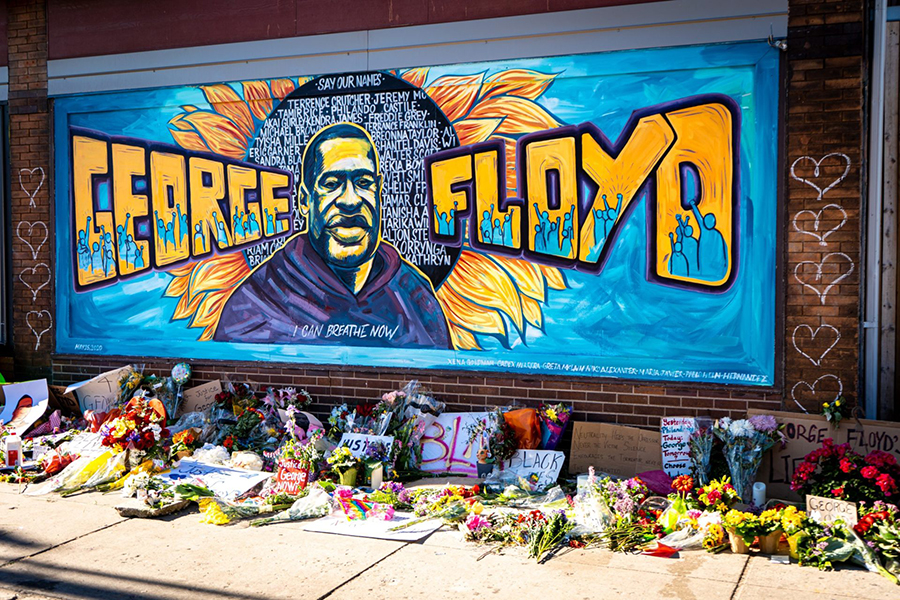
The proposal comes as the world grapples with race after George Floyd, an unarmed Black American, died in police custody in May. His death sparked worldwide protests and triggered a re-evaluation of the legacy of slavery and racism.

As protesters worldwide fell monuments honoring slave owners, Confederates and disgraced white leaders of decades past, their downfall opens a debate over who should rise up to take their place.

“What the tragedy of what happened to George Floyd has done is to really amplify the discussion,” said Ambassador Michael Kanu, Deputy Permanent Representative of Sierra Leone to the United Nations, who co-authored the paper.

“It’s all part of the quest for justice,” he said in an interview, adding he hoped West African nations could put the proposal before the ISA some time next year.

The memorial would add a cultural aspect to the economic and environmental considerations before the ISA about deep-sea mining exploration, particularly of copper and cobalt, said Turner.

About 40,000 slave voyages crossed the Atlantic, carrying more than 12.5 million captive Africans from the early 1500s to the late 1800s, according to the authors. The routes of the slave ships became the burial sites of those who were thrown overboard, killed themselves or drowned when ships sank, the paper said.

The memorial would be the first of its kind to honor slave trade victims. The undersea wreck of the Titanic, which sank in the Atlantic Ocean in 1912, was declared a memorial by the U.S. Congress in 1986.

On land, well-known slavery memorial sites include a wharf in Rio de Janeiro, where an estimated 900,000 African slaves were shipped, and a 15th-century slave trading house in Calabar, Nigeria.

By Ellen Wulfhorst; Editing by Zoe Tabary.

To Honor Slave Trade Victims, a Memorial in the Depths of the Atlantic

Tributes to victims of the transatlantic slave trade can be found in museums and through statues, but a new proposal is calling for a memorial that can neither be visited nor even seen.

A virtual memorial of ribbons on maps of the Atlantic deep seabed could honor the estimated 1.8 million Africans who died at sea during the trans-oceanic slave trade, said a proposal published this month in the Journal of Marine Policy.

“It would be on a map … they can’t visit it,” said Phillip Turner, a science policy consultant who worked on the paper as a doctoral student at Duke University in North Carolina.

“It’s more about education about the history of the trans-Atlantic slave trade,” he told the Thomson Reuters Foundation.

The slave trade pathways would be marked on maps and charts drawn by the International Seabed Authority (ISA), the United Nations body that oversees mineral activity on seabeds outside of national jurisdictions.

The proposal comes as the world grapples with race after George Floyd, an unarmed Black American, died in police custody in May. His death sparked worldwide protests and triggered a re-evaluation of the legacy of slavery and racism.

As protesters worldwide fell monuments honoring slave owners, Confederates and disgraced white leaders of decades past, their downfall opens a debate over who should rise up to take their place.

“What the tragedy of what happened to George Floyd has done is to really amplify the discussion,” said Ambassador Michael Kanu, Deputy Permanent Representative of Sierra Leone to the United Nations, who co-authored the paper.

“It’s all part of the quest for justice,” he said in an interview, adding he hoped West African nations could put the proposal before the ISA some time next year.

The memorial would add a cultural aspect to the economic and environmental considerations before the ISA about deep-sea mining exploration, particularly of copper and cobalt, said Turner.

About 40,000 slave voyages crossed the Atlantic, carrying more than 12.5 million captive Africans from the early 1500s to the late 1800s, according to the authors. The routes of the slave ships became the burial sites of those who were thrown overboard, killed themselves or drowned when ships sank, the paper said.

The memorial would be the first of its kind to honor slave trade victims. The undersea wreck of the Titanic, which sank in the Atlantic Ocean in 1912, was declared a memorial by the U.S. Congress in 1986.

On land, well-known slavery memorial sites include a wharf in Rio de Janeiro, where an estimated 900,000 African slaves were shipped, and a 15th-century slave trading house in Calabar, Nigeria.

By Ellen Wulfhorst; Editing by Zoe Tabary.

Widow of murdered LGBT+ Politician Vows to Combat Hate With Election Win

Franco, a Black openly gay Rio de Janeiro politician, and her driver Anderson Gomes were gunned down in 2018 in what investigators said appeared to be a political assassination.

In a symbolic victory, her widow Benicio won a Rio city council seat this month, in local elections which saw candidates backed by the far-right President Jair Bolsonaro knocked out of the running in several key races.

“The people gave us back on the ballot what they tried to take away with bullets,” said Benicio, 34, who had been planning to marry Franco at the time of her death.

“We are approaching 1,000 days without justice for Marielle and Anderson and we will continue to demand answers from authorities,” she told the Thomson Reuters Foundation.

Franco, a rising star in the Socialism and Liberty Party (PSOL), was an outspoken critic of police killings of poor Rio residents and her death sparked nationwide protests by Brazilians fed up with endemic violence.

Shaken by the world’s second deadliest coronavirus outbreak and economic crisis, Brazilians voted for traditional parties in the Nov. 15 polls, in a move that may damage Bolsonaro’s 2022 re-election hopes.

ORGANISED CRIME

Benicio, an architect, feminist and human rights defender, said she was keen to see an end to the era of Bolsonaro, a former army captain who also began his political career at Rio city council and is well-known for making homophobic comments.

“The city that was the birthplace of Bolsonaro’s ‘politics’ is the city that sent a clear message at the polls: go back to the sewer where you came from,” said Benicio, who often wears a T-shirt inscribed “Fight like Marielle Franco”.

“This whole process is very symbolic. I know how much my entry into the Chamber represents an affront to the politics of hatred that legitimates what happened to Marielle.”

Investigators arrested two former police officers in 2019 and charged them with killing Franco in return for about $50,000. Their lawyers said they did not commit the crime.

Questions still swirl around the slaying, which is widely assumed to have been ordered and orchestrated by a criminal network. Franco often spoke out against Rio’s so-called “militias”, organised crime groups often run by off-duty police.

GAY RIGHTS

Looking ahead, Benicio said her priorities were to improve conditions in Rio’s slums, with better public transport, housing and hospitals, and to push for women’s and LGBT+ rights.

“We want to address the theme of promoting and defending women’s rights very strongly, given that we live in a sexist society that is absolutely violent towards us,” she said.

“We will also focus on promoting and defending the rights of the LGBTQI population – who currently do not even have official data on them – which makes it impossible to promote efficient public policies,” she said in emailed comments.

Brazil is a deeply religious country where the Catholic Church and evangelical Christians often criticise LGBT+ rights.

The country is one of the world’s most dangerous for gay, bisexual and trans people, with 297 LGBT+ murders last year, according to the watchdog group Grupo Gay da Bahia.

Benicio said life had been difficult for LGBT+ Brazilians prior to Bolsonaro’s election in 2018, but it had become worse under his administration because of the example he set.

“With his prejudiced speeches and attitudes, he encourages violent acts against the entire LGBT population,” she said.

“On the other hand, the result of the polls this year indicates that the people are beginning to show signs that they will no longer tolerate this type of policy. From now on, we will not go backwards.”

By Sydney Bauer @femme_thoughts; Editing by Katy Migiro and Hugo Greenhalgh.

Widow of murdered LGBT+ Politician Vows to Combat Hate With Election Win

Franco, a Black openly gay Rio de Janeiro politician, and her driver Anderson Gomes were gunned down in 2018 in what investigators said appeared to be a political assassination.

In a symbolic victory, her widow Benicio won a Rio city council seat this month, in local elections which saw candidates backed by the far-right President Jair Bolsonaro knocked out of the running in several key races.

“The people gave us back on the ballot what they tried to take away with bullets,” said Benicio, 34, who had been planning to marry Franco at the time of her death.

“We are approaching 1,000 days without justice for Marielle and Anderson and we will continue to demand answers from authorities,” she told the Thomson Reuters Foundation.

Franco, a rising star in the Socialism and Liberty Party (PSOL), was an outspoken critic of police killings of poor Rio residents and her death sparked nationwide protests by Brazilians fed up with endemic violence.

Shaken by the world’s second deadliest coronavirus outbreak and economic crisis, Brazilians voted for traditional parties in the Nov. 15 polls, in a move that may damage Bolsonaro’s 2022 re-election hopes.

ORGANISED CRIME

Benicio, an architect, feminist and human rights defender, said she was keen to see an end to the era of Bolsonaro, a former army captain who also began his political career at Rio city council and is well-known for making homophobic comments.

“The city that was the birthplace of Bolsonaro’s ‘politics’ is the city that sent a clear message at the polls: go back to the sewer where you came from,” said Benicio, who often wears a T-shirt inscribed “Fight like Marielle Franco”.

“This whole process is very symbolic. I know how much my entry into the Chamber represents an affront to the politics of hatred that legitimates what happened to Marielle.”

Investigators arrested two former police officers in 2019 and charged them with killing Franco in return for about $50,000. Their lawyers said they did not commit the crime.

Questions still swirl around the slaying, which is widely assumed to have been ordered and orchestrated by a criminal network. Franco often spoke out against Rio’s so-called “militias”, organised crime groups often run by off-duty police.

GAY RIGHTS

Looking ahead, Benicio said her priorities were to improve conditions in Rio’s slums, with better public transport, housing and hospitals, and to push for women’s and LGBT+ rights.

“We want to address the theme of promoting and defending women’s rights very strongly, given that we live in a sexist society that is absolutely violent towards us,” she said.

“We will also focus on promoting and defending the rights of the LGBTQI population – who currently do not even have official data on them – which makes it impossible to promote efficient public policies,” she said in emailed comments.

Brazil is a deeply religious country where the Catholic Church and evangelical Christians often criticise LGBT+ rights.

The country is one of the world’s most dangerous for gay, bisexual and trans people, with 297 LGBT+ murders last year, according to the watchdog group Grupo Gay da Bahia.

Benicio said life had been difficult for LGBT+ Brazilians prior to Bolsonaro’s election in 2018, but it had become worse under his administration because of the example he set.

“With his prejudiced speeches and attitudes, he encourages violent acts against the entire LGBT population,” she said.

“On the other hand, the result of the polls this year indicates that the people are beginning to show signs that they will no longer tolerate this type of policy. From now on, we will not go backwards.”

By Sydney Bauer @femme_thoughts; Editing by Katy Migiro and Hugo Greenhalgh.

“Something to be Proud of”: UK Graphic Novel Highlights Homeless

Passersby ignore a beggar, homophobic insults crowd a wall, a woman burns a note penned to a “victim” – not the usual stuff of comics but all vignettes from a new graphic novel by homeless people that aims to kill the stigma surrounding street life.

The Book of Homelessness, launched this week by a youth homelessness charity, compiles drawings, texts and poems by people living in shelters, hostels and temporary accommodation.

“You don’t often hear about who homeless people are and why they’re out there, you think it’s just their fault,” said Mitchell Ceney, who was homeless for about three years and now has a short-term home in West London.

“Getting it down on paper is a way of turning my negative past into something positive for the future,” said the 36-year-old, who drew a man fleeing a supermarket, a flashback to his own shoplifting days.

With protections ending for hard-pressed renters and the newly jobless rising in the pandemic, about 230,000 people are at risk of becoming homeless, according to the charity Shelter. Health experts say the homeless are in greater danger from COVID-19 due to a weakened immune system caused by poor food and lack of sleep, along with over-crowding and bad sanitation.

“People are much closer to the edge than they were before the pandemic,” said Marice Cumber, founder of Accumulate, the homeless charity behind the graphic novel. “It really could be anyone,” she told the Thomson Reuters Foundation.

The government has pledged 15 million pounds to a handful of areas with the highest number of rough sleepers, including London, Bristol and Cornwall, to help get them through to March. Cumber is no stranger to mixing art with action – past projects include a radio station run by homeless people – and

she encouraged the 18 contributors to “tell their own stories that don’t have to be about why they’re homeless”. Profits will be shared by the authors and Accumulate, said Cumber, whose charity funds scholarships for creative courses. For Ceney, who used to be a chef and hopes to earn an illustration degree next year – the book is just a start.

“It’s given me something to be proud of,” he said. “And maybe my experience can help someone else.”

By Zoe Tabary @zoetabary, Editing by Lyndsay Griffiths.

“Something to be Proud of”: UK Graphic Novel Highlights Homeless

Passersby ignore a beggar, homophobic insults crowd a wall, a woman burns a note penned to a “victim” – not the usual stuff of comics but all vignettes from a new graphic novel by homeless people that aims to kill the stigma surrounding street life.

The Book of Homelessness, launched this week by a youth homelessness charity, compiles drawings, texts and poems by people living in shelters, hostels and temporary accommodation.

“You don’t often hear about who homeless people are and why they’re out there, you think it’s just their fault,” said Mitchell Ceney, who was homeless for about three years and now has a short-term home in West London.

“Getting it down on paper is a way of turning my negative past into something positive for the future,” said the 36-year-old, who drew a man fleeing a supermarket, a flashback to his own shoplifting days.

With protections ending for hard-pressed renters and the newly jobless rising in the pandemic, about 230,000 people are at risk of becoming homeless, according to the charity Shelter. Health experts say the homeless are in greater danger from COVID-19 due to a weakened immune system caused by poor food and lack of sleep, along with over-crowding and bad sanitation.

“People are much closer to the edge than they were before the pandemic,” said Marice Cumber, founder of Accumulate, the homeless charity behind the graphic novel. “It really could be anyone,” she told the Thomson Reuters Foundation.

The government has pledged 15 million pounds to a handful of areas with the highest number of rough sleepers, including London, Bristol and Cornwall, to help get them through to March. Cumber is no stranger to mixing art with action – past projects include a radio station run by homeless people – and

she encouraged the 18 contributors to “tell their own stories that don’t have to be about why they’re homeless”. Profits will be shared by the authors and Accumulate, said Cumber, whose charity funds scholarships for creative courses. For Ceney, who used to be a chef and hopes to earn an illustration degree next year – the book is just a start.

“It’s given me something to be proud of,” he said. “And maybe my experience can help someone else.”

By Zoe Tabary @zoetabary, Editing by Lyndsay Griffiths.

0