When employers and investors speak up, lawmakers pay attention. The Responsible Business Initiative for Justice (RBIJ) was founded in 2017, and the award-winning nonprofit has partnered with hundreds of companies across the world to advance fairness and quality in systems of punishment and incarceration.
By engaging businesses to use their voices, resources, and working practices, the organization has worked to change criminal justice narratives, support legislation, and create real opportunities for deserving individuals.
Founder and CEO Celia Ouellette (pictured above with Richard Branson) spent a decade practicing as a defense attorney, primarily on capital cases across the United States. As a lawyer, she found herself constantly fighting a criminal justice system that was cruel, expensive, racist, and broken. Despite working to save people from execution, she could only help individuals one at a time. “It’s not enough to pull people from the river one by one,” she often reminds conference audiences. “We have to go upstream and change the system — so they don’t fall in the river in the first place.”
When it came to delivering systemic change, Ouellette recognized that businesses could make a difference. No constituency is as important to lawmakers, and it was clear that business support would be decisive in driving policy campaigns over the line. So RBIJ was set up to rally and strategically deploy that support.
Across the United States, there is an established and growing need for companies to speak out. Six in ten Americans feel that it’s no longer acceptable for companies to remain silent on social issues. The same number says they will reward businesses that actively address these issues. The past two years have been a reckoning for the American justice system, and its flaws are now recognized as some of the most glaring social problems facing the United States today.
An excellent example is Business Leaders Against the Death Penalty, which RBIJ launched at the South by Southwest Festival in 2021. Spearheaded by Virgin Group founder Sir Richard Branson, the campaign brought together more than 250 international business leaders to back an end to capital punishment around the globe. Supporters include Meta COO Sheryl Sandberg, Salesforce CEO Marc Benioff, Unilever CEO Alan Jope, and author and entrepreneur Arianna Huffington. Their support has already been deployed in campaigns from Utah to Singapore through op-eds, interviews, joint statements, and private advocacy. In addition, the campaign has been covered by over 250 media outlets in more than 10 countries. By amplifying business support for change, we have helped shift narratives around criminal justice issues and given campaigners invaluable ammunition for advancing reform.
We’ve also convinced businesses that criminal justice reform isn’t just a moral or a reputational imperative for companies – it’s an economic one. Take The Clean Slate Initiative as another example; it closes certain types of criminal records after a specific time. The group’s motto is: A criminal record shouldn’t be a life sentence to poverty. The United States loses more than $80 billion each year from the underemployment of people with criminal records. One in three American adults now has a record and faces substantial and often wholly unnecessary work, education, and housing barriers. Removing these restrictions for deserving individuals who have done their time will automatically allow employers access to a vast, diverse, underutilized talent pool. With over 11 million vacant jobs to fill in the Great Resignation, it’s a strategy that could benefit businesses greatly.
This demonstrates another critical aspect of criminal justice reform — marshaling key business voices to support specific local policy campaigns. Last year, for example, RBIJ brought together companies to help end juvenile life-without-parole sentencing in Ohio. It was an essential step forward; no other country sentences children to die in prison. We worked closely with state campaign partners on the ground to end this cruel practice.
We also work with employers to create change within their operations, most notably through hiring. In March 2022, again at South by Southwest, we launched Unlock Potential with the support of the Walmart.org Center for Racial Equity. The program is a groundbreaking intentional employment initiative to keep young people away from encounters with the justice system. By providing meaningful, long-term career opportunities for individuals aged 16 to 24 (who are most at risk), Unlock Potential aims to break cycles of poverty and incarceration while at the same time advancing economic mobility and racial equity.
Our work at RBIJ has never been more critical. While the United States makes up just 4% of the global population, it accounts for 21% of its prisoners. The country’s justice system is rightly decried as inefficient, wasteful, cruel, and racist. Internationally, lack of access to stable and accountable justice systems remains “a great threat to sustainable development,” according to the United Nations. There is an existential need for corporations to “walk their talk” on issues like systemic racism and embrace their responsibility as a force for good. We work with them to do precisely that.
When employers and investors speak up, lawmakers pay attention. The Responsible Business Initiative for Justice (RBIJ) was founded in 2017, and the award-winning nonprofit has partnered with hundreds of companies across the world to advance fairness and quality in systems of punishment and incarceration.
By engaging businesses to use their voices, resources, and working practices, the organization has worked to change criminal justice narratives, support legislation, and create real opportunities for deserving individuals.
Founder and CEO Celia Ouellette (pictured above with Richard Branson) spent a decade practicing as a defense attorney, primarily on capital cases across the United States. As a lawyer, she found herself constantly fighting a criminal justice system that was cruel, expensive, racist, and broken. Despite working to save people from execution, she could only help individuals one at a time. “It’s not enough to pull people from the river one by one,” she often reminds conference audiences. “We have to go upstream and change the system — so they don’t fall in the river in the first place.”
When it came to delivering systemic change, Ouellette recognized that businesses could make a difference. No constituency is as important to lawmakers, and it was clear that business support would be decisive in driving policy campaigns over the line. So RBIJ was set up to rally and strategically deploy that support.
Across the United States, there is an established and growing need for companies to speak out. Six in ten Americans feel that it’s no longer acceptable for companies to remain silent on social issues. The same number says they will reward businesses that actively address these issues. The past two years have been a reckoning for the American justice system, and its flaws are now recognized as some of the most glaring social problems facing the United States today.
An excellent example is Business Leaders Against the Death Penalty, which RBIJ launched at the South by Southwest Festival in 2021. Spearheaded by Virgin Group founder Sir Richard Branson, the campaign brought together more than 250 international business leaders to back an end to capital punishment around the globe. Supporters include Meta COO Sheryl Sandberg, Salesforce CEO Marc Benioff, Unilever CEO Alan Jope, and author and entrepreneur Arianna Huffington. Their support has already been deployed in campaigns from Utah to Singapore through op-eds, interviews, joint statements, and private advocacy. In addition, the campaign has been covered by over 250 media outlets in more than 10 countries. By amplifying business support for change, we have helped shift narratives around criminal justice issues and given campaigners invaluable ammunition for advancing reform.
We’ve also convinced businesses that criminal justice reform isn’t just a moral or a reputational imperative for companies – it’s an economic one. Take The Clean Slate Initiative as another example; it closes certain types of criminal records after a specific time. The group’s motto is: A criminal record shouldn’t be a life sentence to poverty. The United States loses more than $80 billion each year from the underemployment of people with criminal records. One in three American adults now has a record and faces substantial and often wholly unnecessary work, education, and housing barriers. Removing these restrictions for deserving individuals who have done their time will automatically allow employers access to a vast, diverse, underutilized talent pool. With over 11 million vacant jobs to fill in the Great Resignation, it’s a strategy that could benefit businesses greatly.
This demonstrates another critical aspect of criminal justice reform — marshaling key business voices to support specific local policy campaigns. Last year, for example, RBIJ brought together companies to help end juvenile life-without-parole sentencing in Ohio. It was an essential step forward; no other country sentences children to die in prison. We worked closely with state campaign partners on the ground to end this cruel practice.
We also work with employers to create change within their operations, most notably through hiring. In March 2022, again at South by Southwest, we launched Unlock Potential with the support of the Walmart.org Center for Racial Equity. The program is a groundbreaking intentional employment initiative to keep young people away from encounters with the justice system. By providing meaningful, long-term career opportunities for individuals aged 16 to 24 (who are most at risk), Unlock Potential aims to break cycles of poverty and incarceration while at the same time advancing economic mobility and racial equity.
Our work at RBIJ has never been more critical. While the United States makes up just 4% of the global population, it accounts for 21% of its prisoners. The country’s justice system is rightly decried as inefficient, wasteful, cruel, and racist. Internationally, lack of access to stable and accountable justice systems remains “a great threat to sustainable development,” according to the United Nations. There is an existential need for corporations to “walk their talk” on issues like systemic racism and embrace their responsibility as a force for good. We work with them to do precisely that.
I am asked all the time, “what do you do?” to which my most authentic response is, “I buy dirty businesses and clean them up.”
This all started in the early 2000s when I bought a local same-day courier company, which forever changed how I do business.
When I acquired Novex Delivery Solutions, the local same-day industry was full of contractors using old “beater” cars. The annual turnover of drivers averaged 40%. This was when the first hybrid vehicles were being produced, reducing pollution by 50%, and harmful particulate matter by 99%. With these vehicles becoming available, I had to find a way for our drivers to afford to upgrade their vehicles while continuing to make a profit for themselves and the company. And so began the quest to operate as a triple-bottom-line business.
“How” was the big question, and it demanded that we and our customers change how we do business. We even asked ourselves if we would be a green company that delivered packages or a courier company that didn’t pollute the air and lungs of the people in our community.
Fortunately, I was joined by an incredible team who, after learning about the effects of climate change, was enthusiastic about making a difference and having an impact — from sustainability strategies to culture, to define the purpose behind why our staff came to work.
This work is both practical and aspirational. Of course, we had to help offset costs for our drivers so they could upgrade to hybrid vehicles. We solved this by selling full wrap advertising on the cars to like-minded and forward-thinking companies such as Vancity and passed the advertising revenue to the drivers. This achieved one known benefit, another hoped-for benefit, and one unanticipated benefit:
Less pollution. This was known and led to benefits number two and three below. We were (and still are) the change.
Increased business! Doing good work and doing the right thing gave us the hoped-for advantage over our competition. More companies started deliberately choosing to work with Novex because we were focused on sustainability and positively impacting our shared community and environment.
Increased morale of our drivers. They were proud to be using hybrids and minimizing pollution. This resulted in significantly less turnover, and fewer costs in hiring and training, resulting in increased profit. Today we have less than 15% driver turnover, and the increased profit goes toward our environmental and social work.
Of course, we had milestones to achieve, but we also discovered many unanticipated benefits of making these changes. Due to the combination of setting targets plus having a passionate team with the same vision and values of people, planet, and profit, we managed to keep hitting (if not surpassing) our milestones.
I’ll take a moment to brag about the team and their achievements:
2004: Introduced 20 hybrids to our fleet of 100 vehicles
2007: Novex became the first carbon-neutral courier company in North America and set a goal to reduce GHG emissions by 33% by 2020
2009: Introduced the first 2 Smith electric trucks in Canada for delivery
2013: Became B Corp Certified
2017: First fully electric cars added to the fleet
2018: Novex joins the United Way Social Purpose Innovators program
2020: Achieved 59% emission reduction, surpassing the goal of 33%
2022: Announced the plan to become a zero-emission company by 2030
2022: Launched a podcast called “CEOs & Self Driving Cars,” adding visibility and fun into the green space
The lesson and my takeaway from this experience are that as a triple-bottom-line company—this is just a proxy for better management. If you are ready to make the change, willing to get creative and buy-in from your team, then business can be the solution.
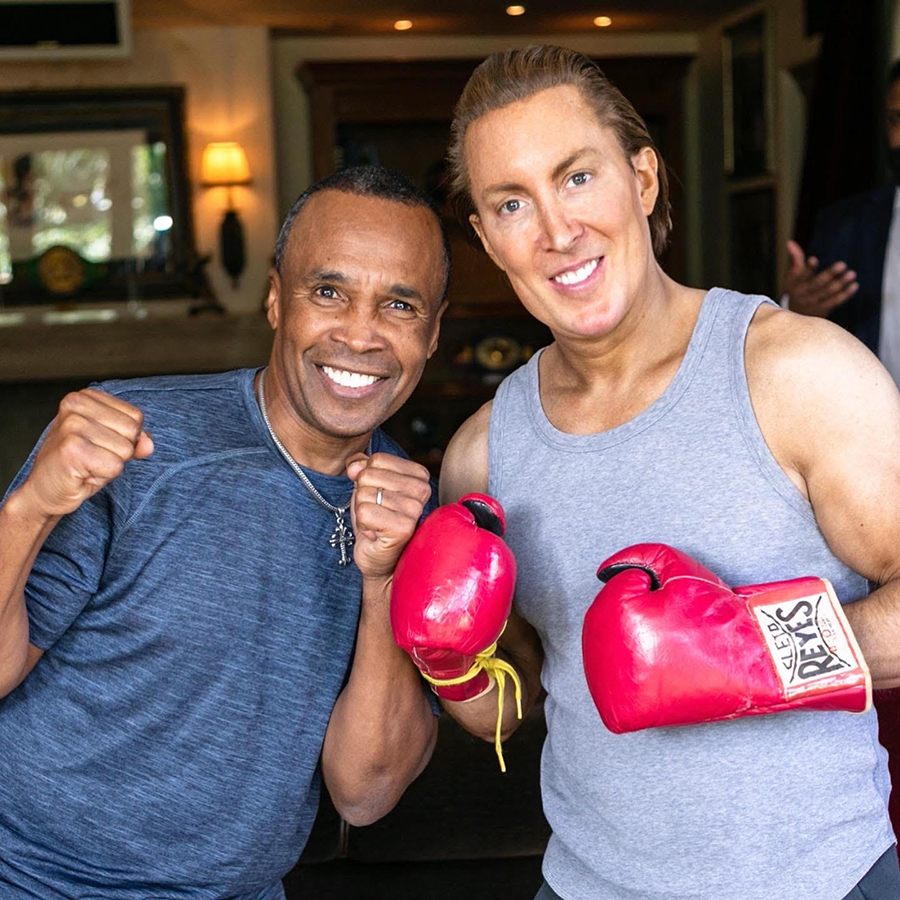
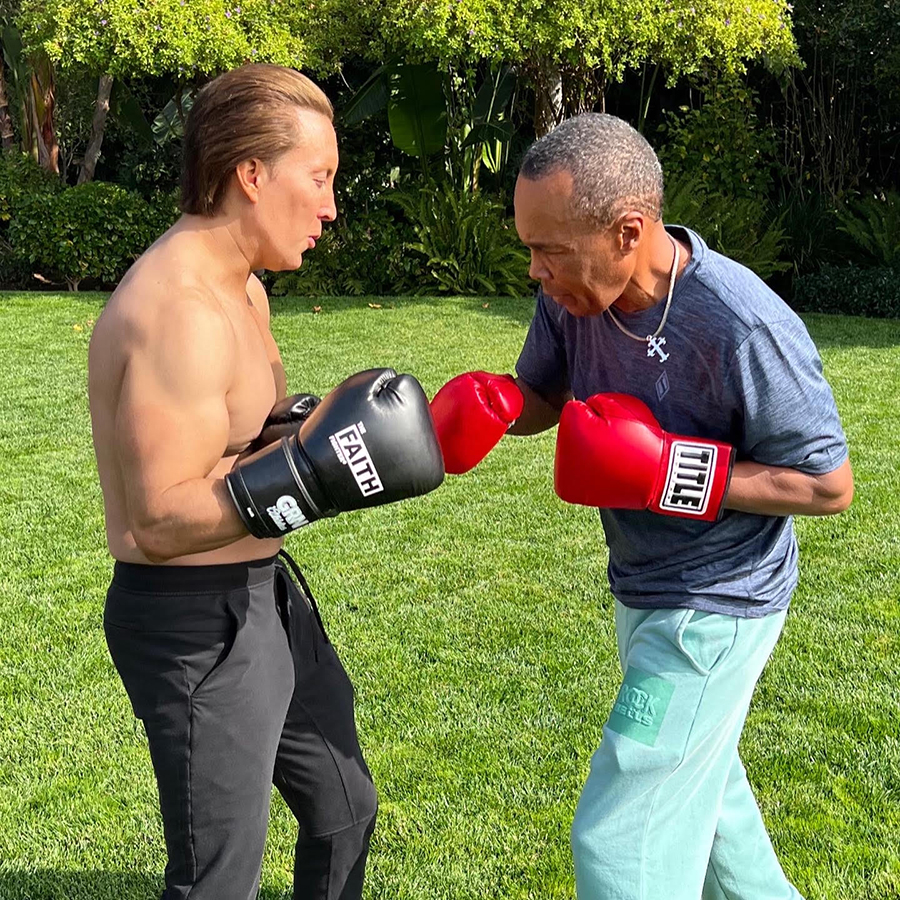
Sugar Ray Leonard is back in the fight, but this time, he’s not swinging his lightning-fast fists to knock out a lightweight competitor. The champion boxer recently teamed up with New York City entrepreneur and philanthropist Daniel Neiditch – a heavy hitter in his own field – to face off in a friendly boxing match in support of the Sugar Ray Leonard Foundation, which supports childhood diabetes.
The fundraiser took place at Sugar Ray Leonard’s Pacific Palisades residence, where donors and supporters of the Foundation gathered to watch the match. Leonard and myself clocked in for the super middleweight standoff, both weighing in at 165 pounds. After throwing a few well-calculated punches and swift hooks, the match ended in good humor, with both contestants sharing the victory.
Once the gloves came off, the six-time world champion, 1976 gold medal winner, and three-time golden glove champion showed off his gold medal and championship belts. The event successfully raised donations from generous benefactors and boxing enthusiasts to fund research and care for pediatric diabetic patients.
Leonard, whose father struggled with diabetes, established the Sugar Ray Leonard Foundation with his wife, Bernadette, in 2009 to benefit and create awareness for childhood type one and two diabetes. The former boxer was inspired to jumpstart his charity after witnessing his father’s uphill battle with the disease and the complications that affected every aspect of his life. His foundation strives to help children with diabetes live healthier, longer lives through diet and exercise while supporting research efforts to fight back against the childhood condition that affects more than 20,000 children in America alone.
This boxing match my first fight either. In October of 2019, I entered the ring with heavyweight champ Evander Holyfield, that time in support of Global Autism awareness. He may have been punching above his weight class in that match but still came out on top as a champion for his cause.
Leonard and Holyfield are just two of the famous faces I have worked with to support various charitable causes. My philanthropic work, is aimed primarily at empowering disadvantaged children and harnessing celebrity influence’s potential for a good cause. In the past, I’ve teamed up with other famous faces to benefit charity. I have bowled a few frames with Paul Rudd on behalf of the Stuttering Association for the Young and joined Steven Colbert and Julia Louis-Dreyfus for Montclair Film’s annual fundraiser in Newark, benefitting children in underprivileged communities.
In 2019, I took to the mound at Target Field to throw out the first pitch at a Twins game on behalf of the Cal Ripken Sr. Foundation, and also tossed one across the plate at Fenway Park in front of Red Sox fans. I once led a live auction that offered donors the chance of an enlightening lunch and ride in a Lamborghini to benefit the Max Alexander Foundation.
Through my philanthropic work, I aim to show that the combination of creative fundraising efforts with the power of the celebrity can be an effective strategy in creating awareness around a cause for good. While celebrities themselves are more than capable of giving to charitable foundations on their own, the influence they evoke when they publicly support a specific cause creates a much larger ripple.
Bringing a well-known name or face to a movement enhances the awareness around the cause and even lends credibility to it. While marketing and advertising agencies use this “celebrity effect” to boost profit, I see it as an opportunity to make a positive difference where it counts. Celebrities, socialites, and business moguls worldwide have a tremendous power that, yielded in the right way, can make a monumental impact on philanthropy and charitable efforts. Their superstar status amplifies their voice and gives them a stage from which they can encourage a giving spirit and draw attention to important issues that desperately need resolution.
So, while the match with Leonard may have ended in a draw, it marks a victory in the endeavor to use celebrity influence for good, and a win for the kids of the Sugar Ray Leonard Foundation.
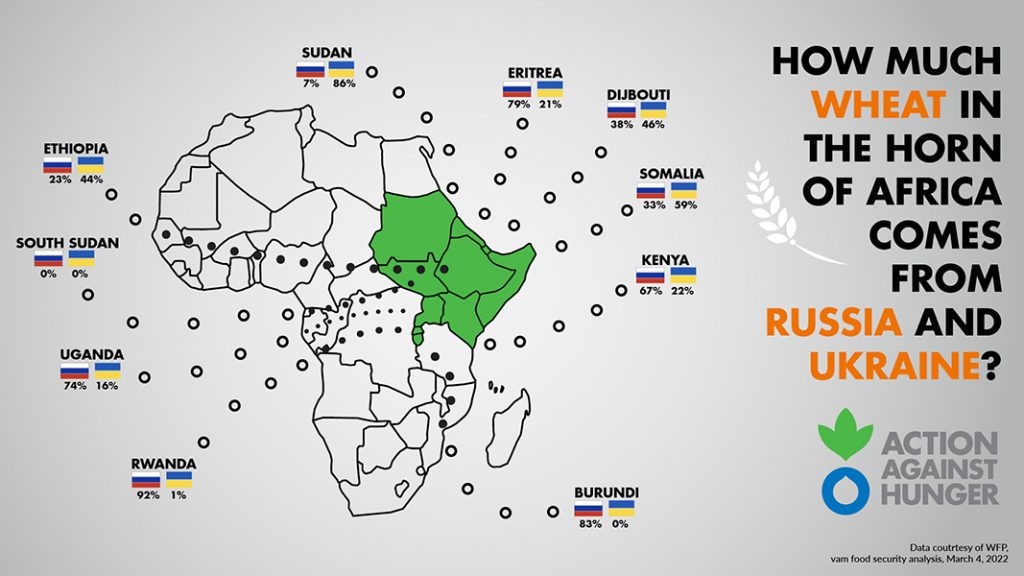
The war in Ukraine is exacerbating an already dire food crisis in the Horn of Africa. Just a few weeks ago, in Somalia, Kenya and Ethiopia, roughly 13 million people were waking up severely hungry every day.
Now, given their reliance on Ukrainian and Russian imports such as wheat and cooking oil, food prices are skyrocketing, putting access to basic nutrition even further out of reach.
In 2020, African countries imported $4 billion in agricultural products from Russia and $2.9 billion from Ukraine, with the Horn as the top destination. My organization’s market assessment in Mogadishu, Somalia, found a 50% increase in the price of flour in just the last few weeks. African economies also relied on about $5 billion in product exports to Russia, including coffee, fruits and tobacco, which have all halted recently, crippling already fragile financial systems.
Just this week the UN Conference on Trade and Development issued a report predicting food shortages and civil unrest. The governments of Kenya and Somalia have declared national emergencies.
Sadly, the conflict in Ukraine is only the latest in a bombardment of shocks to the Horn of Africa. The region is experiencing the worst drought in recent history, forcing hundreds of thousands of people to leave their homes in search of water. Many are living in refugee camps where they are unable to grow food on the dry lands. Pastoralists, who make up about half of Somalia’s population, are not able to feed the livestock that they depend on for survival. Our best estimates are that at least one million heads of livestock have already died or migrated.
6 Ways You Can Help
There are many ways to help people suffering in these forgotten crises, and we hope that leading companies and individuals will consider the following:
Donating to trusted organizations like Action Against Hunger
Using their platforms – social media, websites, newsletters – to inform and inspire others
Exploring Board and Advisory positions with nonprofits
Offering to match donations made by their employees
Calculating and mitigating your personal and corporate carbon footprint
Reaching out to charities to explore new and creative ways to partner over the long-term
Afifa Ali Abd is one of the 2.6 million Somalis forced to leave home. She is now living in a refugee camp in another area of the country. A mother of seven children, Abd says more people are arriving at the camp, but there is no shelter, food or water to be found. “My family went to sleep hungry last night, we will go to sleep hungry tonight,” she said. Neither she nor her husband can find work and food in the market is unaffordable without any income.
In addition to rising food prices, ongoing armed conflicts in parts of the region also are forcing people to search for food, water and safety elsewhere. In recent years, floods and cyclones have destroyed homes, displacing even more families. Locusts have destroyed crops.
And of course there are the economic impacts of COVID-19 lockdowns and ongoing supply chain disruptions. Africa had no safety nets in place before the pandemic, and our economies have not recovered. According to the World Bank, the pandemic pushed 40 million more people in Africa into extreme poverty. I am not sure how much more the people in this region can take.
Prior to the conflict in Ukraine, we had a massive deficit in food supplies. Now, it’s becoming increasingly hard to find solutions. In Kenya, upwards of four million people will need assistance because of drought, including and 600,000 children younger than age five who are already suffering from acute malnutrition. We are trying to treat as many children as we can for malnutrition and make sure they have nutritious food so that they can grow normally, but we can’t reach everyone.
We’re trying to help people become more self-sufficient. In Uganda, for example, where the government has given millions of refugees small parcels of land, we are teaching people to grow drought-resistant crops, and sell any leftovers at the market. We’re also providing cash to help families buy food. But it’s not enough. People are barely surviving.
I’ve been a humanitarian aid worker in Africa for 18 years. We are accustomed to crises. There have been food shortages, droughts and conflicts that have impacted people’s livelihoods and food security. But in the last couple of years, the shocks are coming from all directions and compounding each other, creating a dire situation for the world’s most vulnerable. It’s hard not to feel overwhelmed.
It’s difficult even for donors to focus on more than one issue at a time, but the people we serve don’t have that luxury. Right now, the global community’s attention is on helping the people of Ukraine, and rightly so. But we can’t lose sight of the daily, life-threatening crises elsewhere around the world.
Climate collapse, conflict, and the economic impacts of COVID-19 stretched the already-fragile system in the Horn of Africa. The situation in Ukraine is putting even more strain on our dwindling energy and resources. My hope is that this horrible conflict will bring more visibility to the ways we are all interconnected and to the need to address the multiplicity of challenges humanity faces together.
One of the ways we can all work towards a more sustainable future is to make a conscious choice to replace some of our meat-based consumption with more products made with plant-based ingredients. This is because meat and dairy products are a major contributor to greenhouse gas (GHG) emissions, water use, deforestation, and pollution.
Unfortunately, we seem to be heading in the opposite direction. According to the UN Food and Agriculture Organization, global demand for meat is projected to double by 2050. And with the worldwide population expected to cross 9 billion by 2050, demand for daily protein servings is expected to increase by 74%. Think of the impact we can have if just a fraction of those servings came from plant-based sources like soy, quinoa, or pea protein.
Take soy, for example. It contains all nine essential amino acids that our bodies cannot produce on their own, making it one of the only complete plant-based proteins available. Soy is also comparatively efficient to grow, using less water, emitting less carbon, and producing more protein per acre than beef, eggs, or milk. Therefore, replacing even a tiny portion of animal proteins with plant-based proteins grown efficiently can have a long-term positive impact on our environment.
Positive Impacts of Plant Fuel
In addition to the positive environmental impacts, incorporating plant-based ingredients in one’s diet positively impacts the world’s food supply because it makes better use of our land resources. According to a research study published by the National Academy of Sciences, replacing all animal-based items with plant-based diets could add enough food to our supply chain to feed 350 million additional people, which would go a long way in supporting the UN’s Sustainable Goal of zero hunger.
While changing diets and forming new habits is not always easy due to inequities of access. There’s certainly more to uncover around the impacts of plant protein on exercise performance — we do know eating less meat can reduce the risk of obesity, heart disease, stroke, high blood pressure, high cholesterol, and some cancers. Eating more vegetables also provides a good amount of carbohydrates that the body can burn during exercise — all great reasons to make the change.
Fueling Sustainable Businesses
Having a positive impact on society is more than just making the world a better place; it also makes good business sense. People are increasingly affected by critical societal issues, and investors and other stakeholders are watching closely as consumers demand that companies take a stand. From improving the environment to diversity and inclusion, investors are increasingly considering how companies support communities, society, and the planet, as part of their investment thesis.
In fact, between 2018 and 2020, total U.S.-domiciled sustainably invested assets under management, both institutional and retail, grew 42%, to $17.1 trillion, up from $12 trillion. This growth is driven by multiple factors, including the global spotlight on sustainability and waste reduction and corporate responsibility to lead that change.We must prioritize creating a better world – both now and for future generations.
The United Nations Secretary-General put it best in his 2020 State of the Planet speech. He said, “Making peace with nature is the defining task of the 21st century. It must be the top, top priority for everyone, everywhere.” To read his entire speech, click here. But be warned – it’s not for the faint of heart, but it may just convince all of us to take one small step toward improving our world and creating a more sustainable future.
Why do people take to the streets for what they believe in, but they find it tough to get out of bed and onto the same road that leads them to work?
Out in the community, where people are already giving their time and energy freely, there are clues about what we need to do to foster this same enthusiasm and emotional commitment in our workforces. For example, any recent peaceful national protests, such as the 2017 Women’s Marchor Brexit, show people’s strong desire to have a voice and rise for a cause. At protests, participants have one thing in common: passion.
Where engagement goes, excitement flows. Consider the ways that volunteerism drives passion:
There’s a story that gets people talking about a cause worth rising for. Usually, there will be a point of view that gets people interested and talking to each other. People learn about the cause when it stirs their spirit.
There’s a feeling you need to do something. The story inspires people to consider how they can help; it’s a call to action. There’s a sense of urgency that something must happen.
There’s a champion who inspires you to get involved. Champions share information that gives others a deeper understanding of the cause. They help people connect with the right sources to take action. They help clear the way to make things happen.
Those moved to act mobilize one another. Volunteers spur one another on by adding to the story. They develop an affiliation, collaborate, and share a “together we’ll get there faster” attitude.
Progress inspires people to take action and go further. A well-worn path to success sparks more action. You can see that what you’re doing is being heard or having an impact.
You build your abilities as you experience new things. You learn from others and from everyone’s combined experience. As you develop new skills and add new experiences to your story, you build up your knowledge.
There’s a sense that your efforts have helped someone. Pretty soon, what you’re doing feels like a movement, which instills a sense of accomplishment. Friends, family, and your network recognize this, too. People think and say, “Wow, what a difference you’ve made!”
These seven facts underscore why volunteer-based charities and organizations have members with higher motivation. It’s not about the money; people believe in the work and want to make a difference. These three components—motivation, belief, and making a difference—are the key to engaging people’s hearts, and minds in a way that paid work has typically struggled to match.
When the same people who took to the streets clock into their salaried jobs the next day, the challenge for employers is to engender this same passion and purpose during work hours.
Turn vision into verbs
As the world spins ever more precariously forward and as our work world changes ever more rapidly, it’s worth revisiting your organization’s vision, purpose, and plans. Are you translating your vision into the verbs needed for today’s world? Are you articulating the company macro vision into your team’s micro vision? Does your company’s purpose need to change? Is it easily understood? Do you have a plan to stay true to your vision? Do people know how what they do each day contributes to these plans?
We must lead by example. We must regenerate our enthusiasm and a sense of purpose. Remember, as a leader, you’re the one who moves people to do remarkable things. You’re the “passion prophet,” not the passion police. You’re the person who must find ways to create enthusiasm in others, so they want to do remarkable things. Be the leader your people want you to be and watch your business results grow.
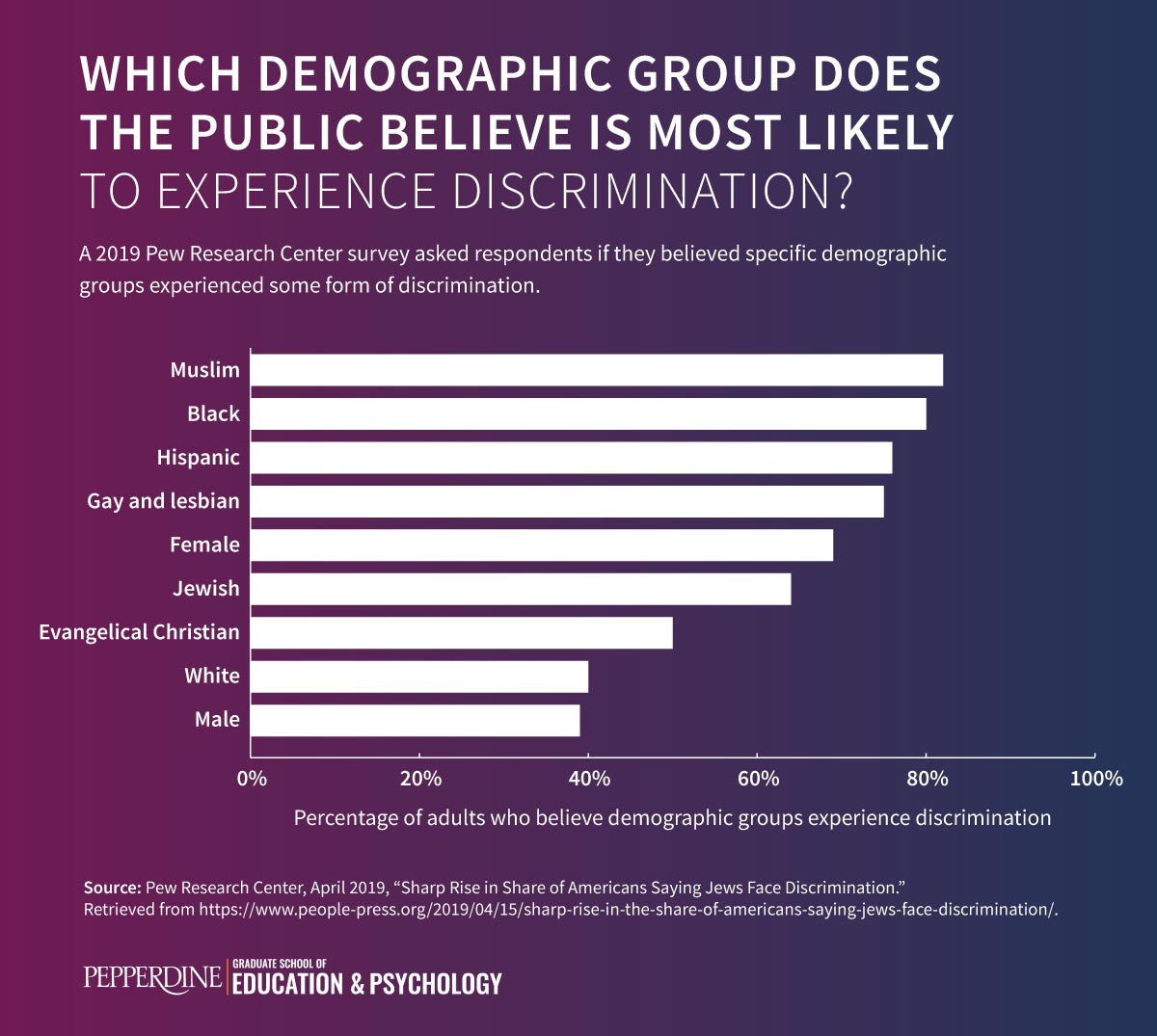
Dealing with prejudice—whether it’s microaggressions, bias, or discrimination—is physically and psychologically demanding. But avoiding it is not always an option.
“Not everyone has the luxury of leaving a prejudicial workplace or neighborhood,” said Natasha Thapar-Olmos, PhD, Program Director at OnlinePsychology@Pepperdine, the online Master of Arts in Psychology at Pepperdine University’s Graduate School of Education and Psychology. External link “But there might be things we can do and some tools to cope.”
What are those tools? Use this guide to understand where prejudice comes from, what it looks like, and how you can help others experiencing it.
What Is Prejudice?
Word choice matters. We often use words like prejudice, bias, and bigotry interchangeably, and there are aspects to each of these concepts that overlap. But when addressing prejudice, it’s important to understand some of the subtle distinctions.
To understand prejudice, we also need to understand stereotypes. A stereotype is an oversimplified and widely held standardized idea used to describe a person or group. A form of social categorization, stereotypes are a shortcut for the brain when grouping information. Categories of stereotypes include:
Positive Stereotypes: Beliefs perceived as favorable qualities for a group.
Helpful Stereotypes: Beliefs that assist people in rapidly responding to situations that are similar to past experiences.
Negative Stereotypes: Beliefs perceived as unfavorable qualities for a group.
Harmful Stereotypes: Beliefs that spur people to respond unfairly or incorrectly to situations because of their perceived similarity to past experiences.
Stereotypes can help lay the foundation for prejudice—a preconceived, unfair judgement toward a person, group, or identity. Prejudice is formed without sufficient evidence or reason and can be based on qualities such as these:
Race
Ethnicity
Nationality
Gender
Sexuality
Religion
Disability
Class
Age
Prejudice can dictate how people treat each other, resulting in any of the following:
Bias: an inclination, tendency, or particular perspective toward something; can be favorable or unfavorable. When bias occurs outside of the perceiver’s awareness, it is classified as implicit bias.
Microaggressions: an indirect, subtle, or unintentional comment or action that is prejudicial toward a marginalized group.
Bigotry: the intolerance of different opinions, beliefs, or ways of life.
Hate: disgust or contempt for another group that facilitates a desire for separation, strong emotions of fear or anger, and dehumanizing beliefs. Hate can take the form of:
Hate Speech: form of expression intended to attack or incite hatred of a class of persons.
Hate Crime: criminal offense motivated by a bias.
Hate Group: organization that attacks or condemns a class of people.
Discrimination: unfair and negative treatment different categories of people or things, especially on the grounds of race, age, or sex.
Oppression: a cruel and unjust abuse of power that prevents people from having opportunities and freedom.
Although acts of hate can be a result of prejudice, prejudice does not require hate. Engaging in sexist behavior, for example, does not require an individual to be a misogynist. Prejudiced behavior can’t simply be viewed through the lens of interpersonal interactions; it must also be understood at an institutional and societal level. For example, anyone can be prejudiced against a person of another race. But understanding racism necessitates acknowledging who has historically been marginalized, who is privileged, and what power dynamics exist.
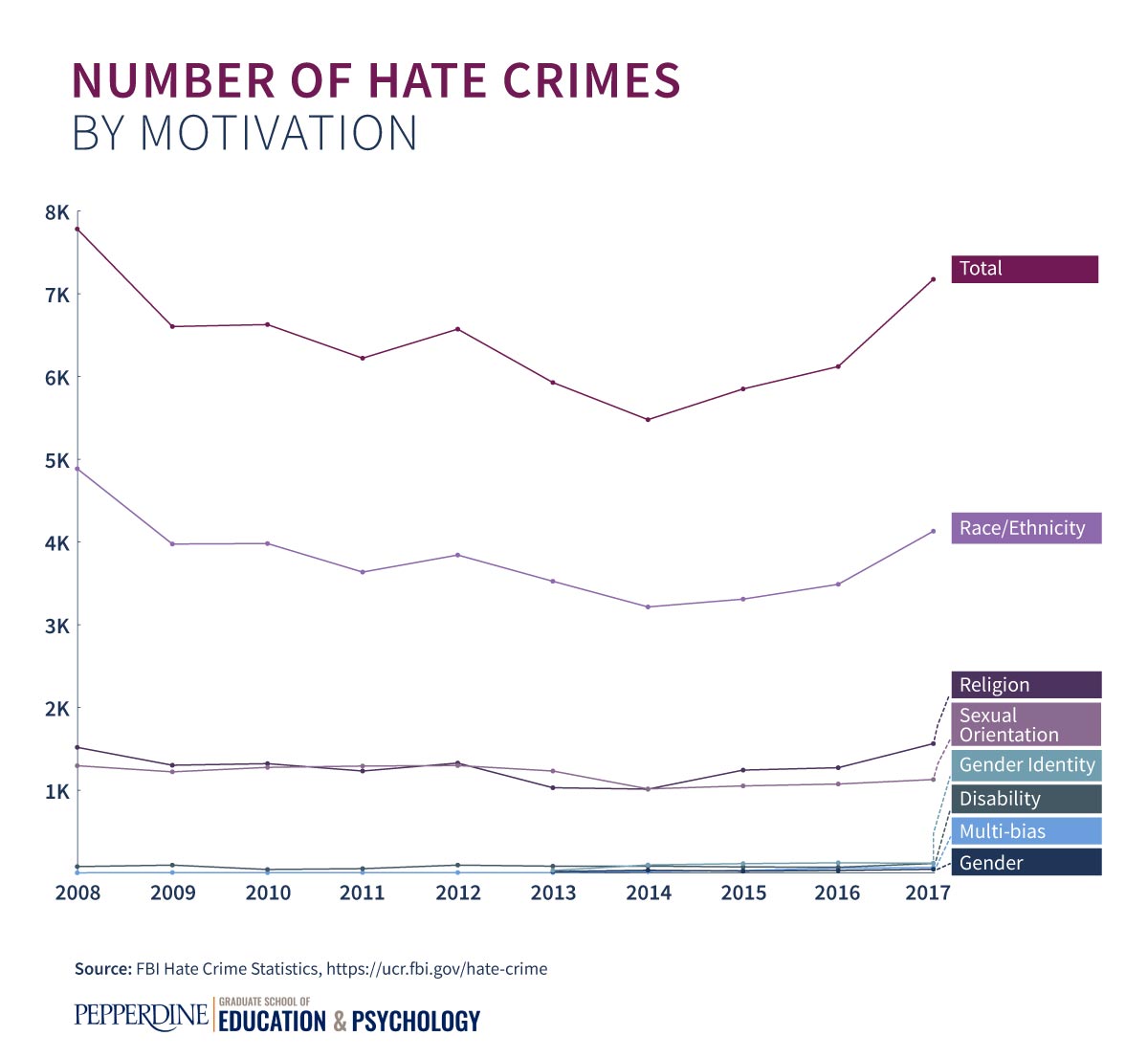
Elissa Buxbaum, director of campus affairs for the Anti-Defamation League, said they’ve noticed the trend, too. However, she points out that increases can be attributed to a few different things.
“It doesn’t necessarily mean that more incidents were happening,” she said. “But it does mean that more people were reporting it and that more people were feeling comfortable to report.”
What Are the Health Effects of Prejudice?
Social determinants of health (SDOH) External link are the environmental factors that contribute to the well-being of communities and individuals. Some examples of such influences include access to educational opportunities, exposure to crime, and transportation options.
African American men living in poverty are almost three times as likely to die early than those living above the poverty line, according to a JAMA study on race and poverty as a risk. External link There is no difference for white men in and out of poverty.
On the individual level, prejudice can have direct health consequences. Just the anticipation of prejudice or discrimination can lead to cardiovascular and psychological stress responses, according to a 2011 AJPA study on discrimination and stress. External link Over time this can contribute to depression, anxiety and feelings of isolation or loneliness.
It can also lead to self-stigmatization.
“People of marginalized or discriminated groups can develop negative beliefs towards themselves,” Thapar-Olmos said. “That gets in the way of all kinds of things—relationships, functioning, recovery.”
How Can You Build Resilience Against Prejudice?
It is never your responsibility to educate someone who is hateful or discriminatory toward you.
Combating prejudice is the oxygen mask on an airplane, Thapar-Olmos explained. If you’re traveling with someone who requires assistance, place your own mask on first before helping the person next to you.
“If we’re not healthy and we’re not monitoring our own emotional reserves, then we’re not doing anyone else any favors,” she said. Thapar-Olmos recommends the framework below to start building internal resilience against prejudice and discrimination.
Face reality head-on. Denial can be powerful. Name and acknowledge your experiences, whether it is to a family member, friend, or counselor.
Make meaning out of experiences. How can we learn from these experiences? How can they inform us? “I think a lot of people find meaning in growing from pain by enriching others,” Thapar-Olmos said.
Control what you can. You may not be able to change other people, but what do you have control over? How can you structure your interactions? What are some healthy outlets you can use? Exercise agency whenever possible.
How Can You Help Others Who Experience Prejudice?
While it’s important to put your own mask on first, there are instances where you will be called to step in when others are the victims of prejudice.
Listen and Validate
If a friend comes to you with a story about their experience with prejudice or discrimination, it’s natural to want to help or fix the situation. But there are some things you should do before trying to spring into action.
Listen to their story. Stop everything else and take time to let them talk. Interrupting or jumping to conclusions, even with the best of intentions, isn’t helpful. Practice active listening and ask questions, paraphrase back, and watch for non-verbal cues.
Validate their experience. In situations of prejudice, there can be a lot of unknowns: What was the intent? Do they realize what they said? Uncertainty can make it easy for people to feel like it’s all in their head or they’re making it up. Validation is not blind agreement; it helps you understand someone’s response through their lens. It is saying, “I understand why you feel this way, based on who you are, what your history is, and what your experiences have been.”
Intervene in the Moment
If you witness an act of prejudice happening, there are ways you can act in the moment. The 4 Ds of bystander intervention External link are often used to address instances of sexual harassment or assault but can be applied for all kinds of scenarios.
Direct: Step in and address what’s happening directly. The direct method can be simple and effective, but it can also be uncomfortable or seem confrontational. Sometimes, this works better if you have a relationship with one or all of the people involved. Only intervene directly if you feel safe. Try saying:
Hey, what you’re saying isn’t okay. Please stop.
Leave them alone.
This isn’t appropriate. You should walk away.
Distract: Sidetrack either person with a new conversation, question, or activity. This is a more casual method than Direct, but can still be effective. Try saying:
Excuse me, will you show me where the bathroom is?
Did you see the game today? I can’t believe we lost.
We’re going to grab lunch. Come join us!
Delegate: Find someone who can help. Whether it’s a friend of yours, or a friend of theirs, having some backup can make you feel more comfortable to address the situation. Try saying:
That woman looks uncomfortable. Can you distract the guy she’s talking to so I can check with her?
Do you know him? I think he needs some help.
I think something is going on, but I don’t know what to do. Will you help me?
Delay: Check in with the person later. Sometimes, you may not feel comfortable or safe intervening in the moment. When that happens, reach out when you can and see how you can help. Try saying:
Are you okay? I saw what happened back there.
Can I help you out of this situation?
Do you know her? I heard what she said to you and wanted to check in.
Be an Ally, Advocate, and Activist
Thapar-Olmos recommends finding agency and voice where you feel comfortable. Identify ways you can support, speak, and act on behalf of causes and people you care about. Allyship, advocacy, and activism are not mutually exclusive for any person or act
Allyship is support for a particular group, especially a marginalized group that you are not a member of.
Advocacy is public support for a cause or movement
Activism is action for social or political change in the form of campaigning, protesting, and the like.
Everyone can still be surprised by their own biases, and that can make people feel vulnerable or defensive. But people need to push through that reaction.
“There’s no end point. It’s not like you ever fully eliminate bias,” Thapar-Olmos said. “But I think we have to be willing to engage in the discomfort if we’re going to talk about it and try to help other people.”
An open letter from geoscientists supports a bill to remove racist slurs from federally recognized lakes, creeks, canyons, and other small landforms.
Content warning: This article contains examples of racist slurs used in federally recognized place-names. This language has been used to harass and discriminate against people of color.
More than a thousand geographic features in the United States have racial slurs in their name. The slurs include derogatory terms for people who are Black, Indigenous, and of Asian descent and are used in names for small features across the landscape, like valleys, creeks, and lakes. Phoenix’s Piestewa Peak (pictured above) was renamed in 2008 to honor Lori Piestewa, the first Native American woman to die serving in the U.S. military. Previously, the mountain’s name contained an offensive slur for Indigenous women.
Now an open letter from four graduate students at the Massachusetts Institute of Technology is calling on geoscientists to support a recent bill in Congress to help remove the names. The Reconciliation in Place Names Act would give a federal board more power to change offensive place-names. The letter authors say that geoscientists must make the outdoors safe for people of color by removing harmful language that makes the profession less welcoming.
“There hasn’t been a push within the geosciences to figure out how we handle the fact that these are historical names,” said coauthor Meghana Ranganathan, who studies Antarctic ice sheets. The group became aware of the issue after one encountered a racial slur on a geologic map.
“These place-names serve a silent, yet visibly obtrusive and constant reminder of the deeply rooted white supremacist ideologies that continue to haunt many of these landscapes,” said Tamara Pico, one of the more than 400 scientists who have signed the letter.
A Legacy of Oppression Written on the Land
An investigation in 2015 by the data-mining company Vocativ found 1,441 federally recognized place-names that contained slurs. Every state contains at least one, and Western and Southern states had the most instances.
Vocativ found at least 558 places across the United States that have offensive words for Black people, including the words “Negro,” “Uncle Tom,” and “Jim Crow.” They also found derogatory names for Asian Americans. By far the most common term was the slur “Squaw,” considered an offensive term for Indigenous women, which appears on the map 828 times.
“A lot of [the offensive names] are in places where a lot of science is being done, which is why this became something that we thought would be a great way for the geoscience community to get behind the bill because it is relevant to all of us,” Ranganathan said.
A Racist Slur in a New Mexican Canyon
The letter came about from the experience of letter writer Julia Wilcots, who was surprised to see a racist name used in a place-name for a canyon in New Mexico at one of her potential field sites. The canyon was identified as “(N-word) Ed Canyon.”
Although the U.S. Board on Geographic Names removed all instances of this particular word in 1963 (as well as a slur for Japanese people in 1974), the predominant geologic map of the area was published before the name change. Wilcots found at least 11 instances of the slur in the scientific report. The feature’s formal name today is Negro Ed Canyon.
With help from a lab partner, Wilcots redacted all instances of the slur in the document, changing it to “Ed Canyon,” and shared it with her adviser, who passed it along to colleagues.
Wilcots urges others to redact racist slurs from their research materials as an act of anti-racism.
“You could say, ‘I’m not going to be racist myself. When I write my paper about this area, I’m not going to use the N-word. I’m going to use the formal name on the map,’” she said. But that doesn’t go far enough to protect researchers of color, she explained.
“I’m pretty fully committed to geology, and this hasn’t deterred me from continuing in the field. It’s emboldened me to be more outspoken in the field,” Wilcots said. “But I think people should recognize that…if you hand this map to a Black student who is considering geosciences and it’s full of the N-word, you know that has an impact.”
The U.S. Board on Geographic Names handles alterations to names, but the board can’t actively seek out names to change: They merely review proposals and are not a rubber stamp for submitted changes. The board blocked the state of Texas from removing the word “Negro” from nearly two dozen place-names, for instance, because of the lack of both local support and a historical connection to the new names.
Instead of relying on proposals to the board, the new bill creates an advisory committee that will seek out offensive names to change. People appointed to the committee will have backgrounds in civil rights and race relations, as well as come from tribes or tribal organizations. The committee will be required to make recommendations to the board, thus speeding up the process.
“It’s past time to change the offensive names of public lands, especially with input from groups who have been discriminated against,” said Haaland, a member of New Mexico’s Laguna Pueblo. The bill targets names with racial slurs as well as places named in honor of individuals who “held racially repugnant views, committed atrocities against Native Americans, or supported or effectuated discriminatory policies,” stated the bill.
Name changes can be simple, said Ranganathan. In Utah, the board approved changing the name of Negro Bill Canyon to Grandstaff Canyon in 2017. William Grandstaff was a mixed-race rancher in the area for whom the canyon was named.
“It still honors the person that the canyon was originally named after,” Ranganathan said, “but it does so in a way that is not offensive.”
By Jenessa Duncombe (@jrdscience). This story originally appeared in EOS.org and is republished here as part of Covering Climate Now, a global journalism collaboration strengthening coverage of the climate story.
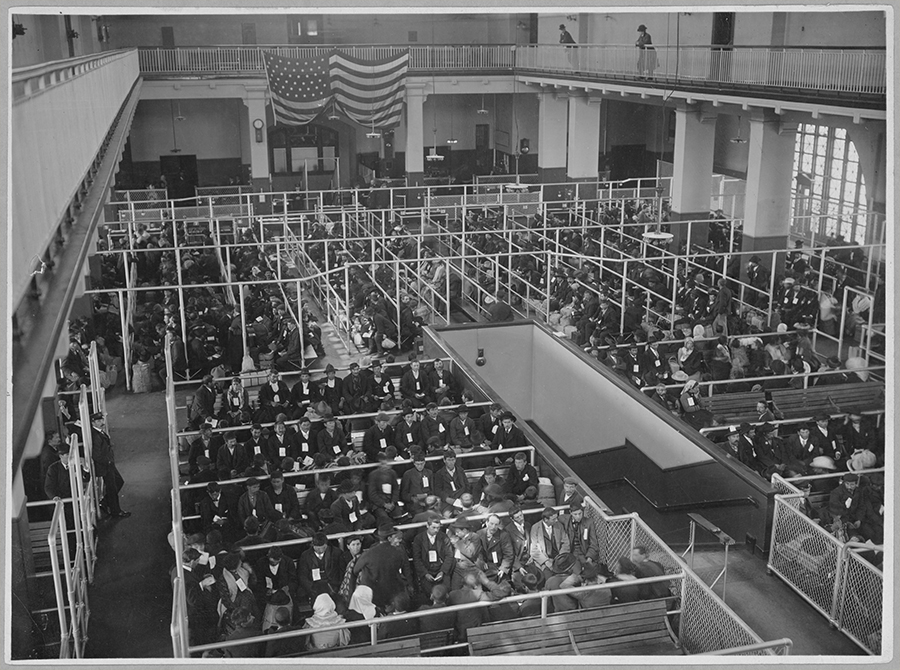
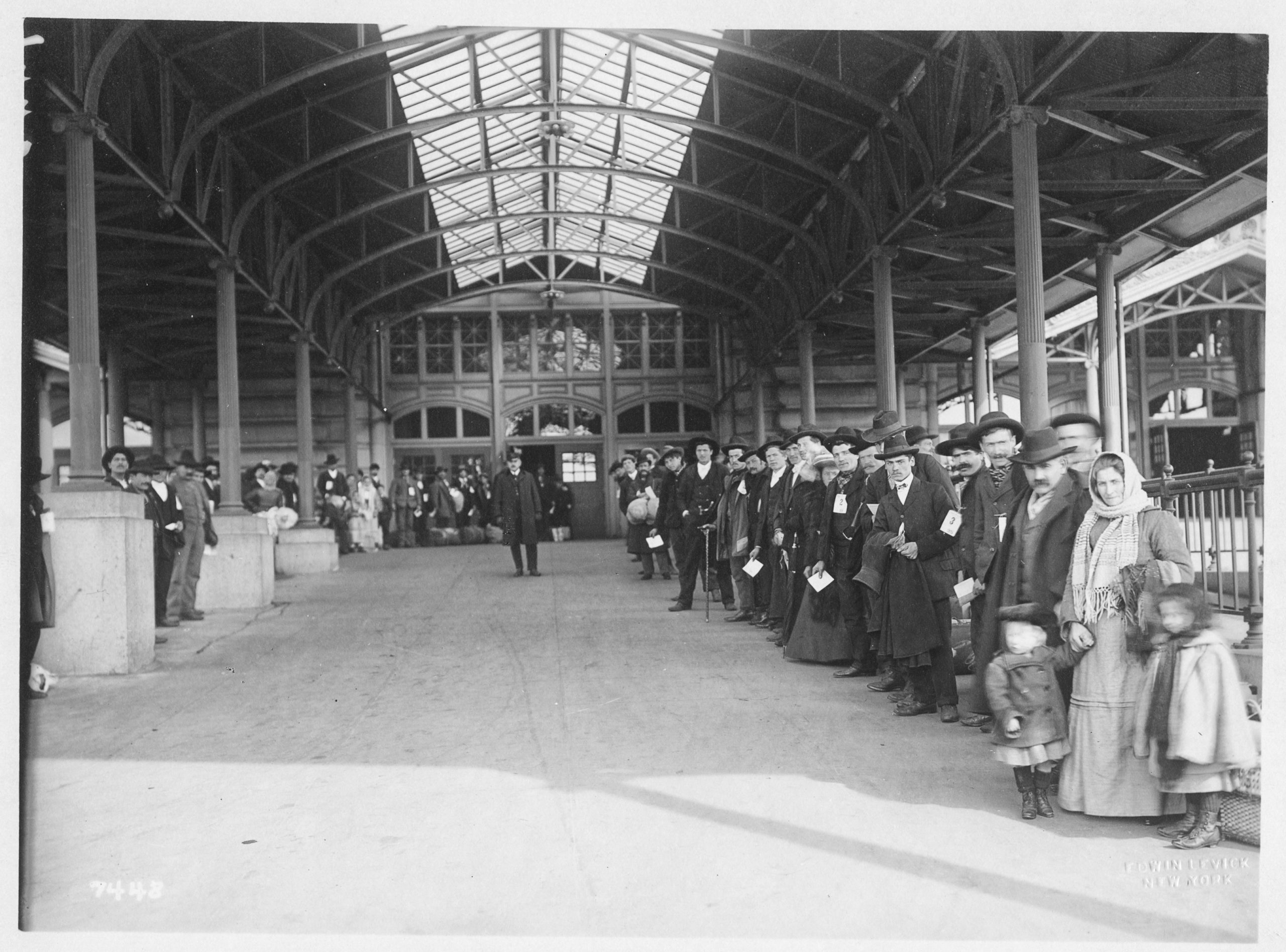
The Ellis Island immigration station opened in New York harbor in 1900, just in time for the huge upswing in immigration to the United States that took place in the years leading up to World War I.
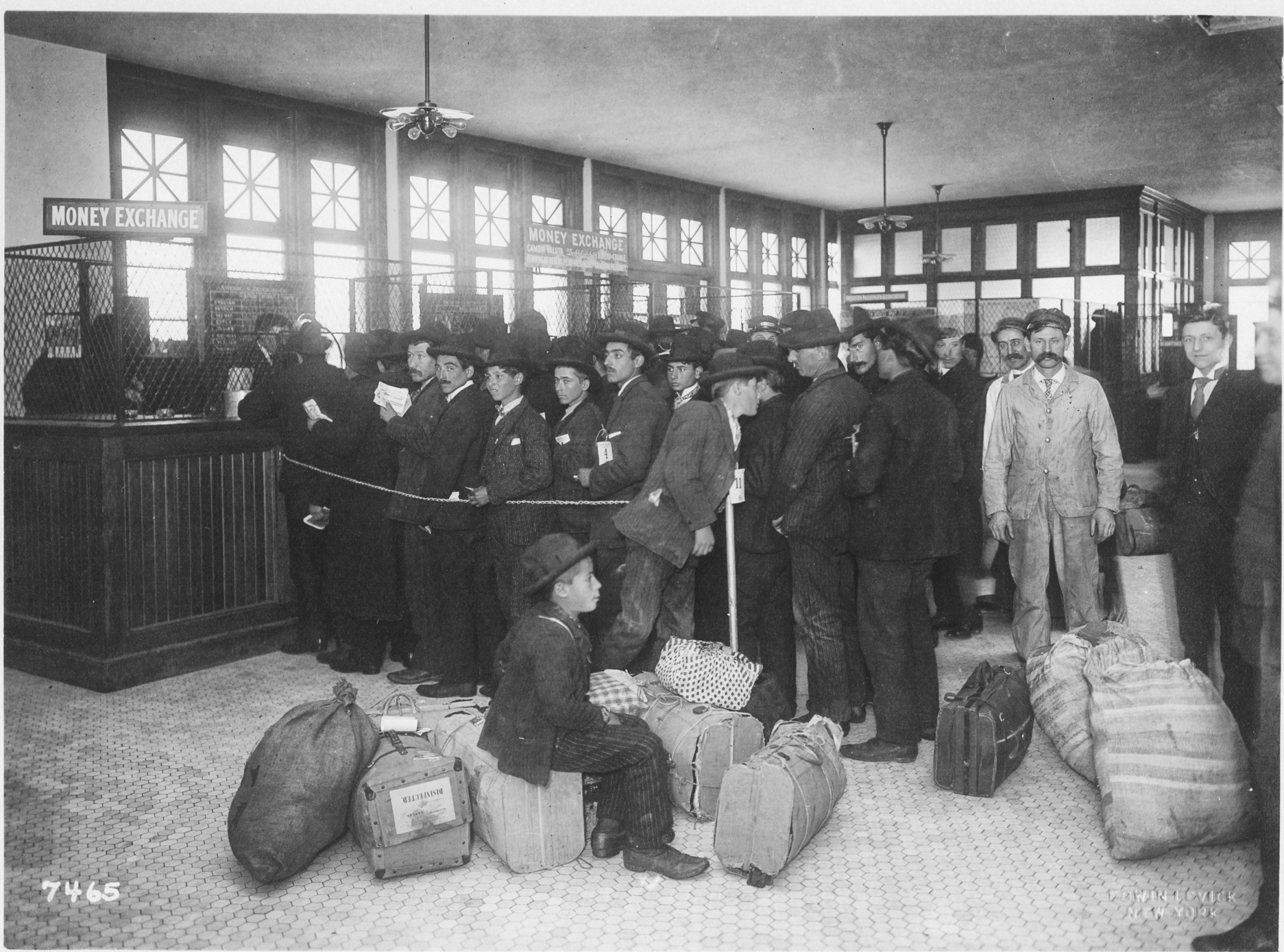
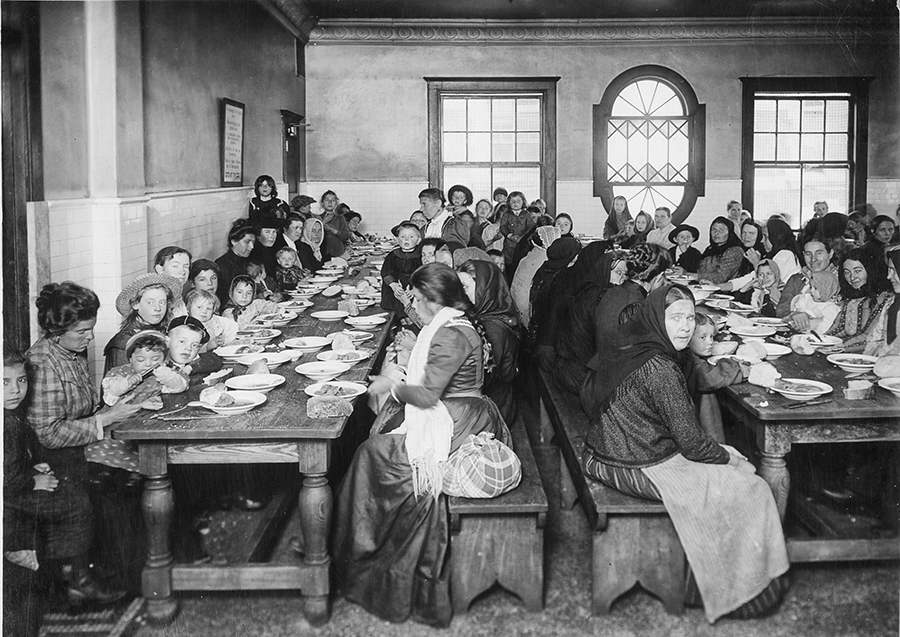
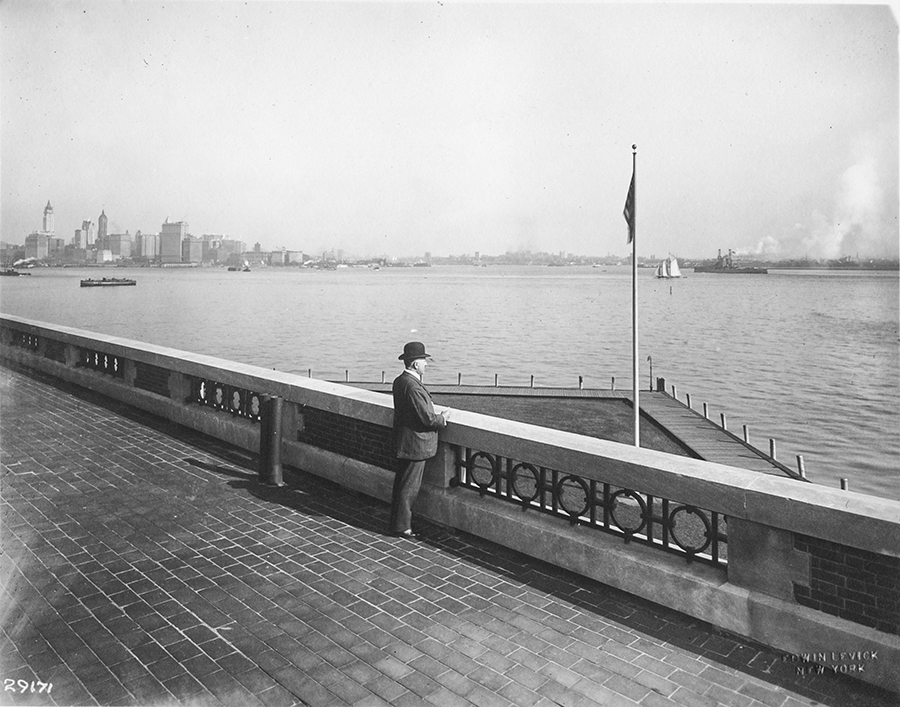
In 1907, the peak year of immigration, 3,000 to 5,000 newcomers a day were examined at Ellis Island as they sought permanent entry to the country. Many photographers, who specialized in maritime subjects, were drawn to Ellis Island by the general human interest and newsworthiness of the scene. These photographs from The New York Public Library depict scenes from 1902-1913 that would not look out of place today at certain immigration processing centers.
The pens at Ellis Island, Registry Room (or Great Hall). These people have passed the first mental inspection.Passed and waiting to be taken off Ellis Island.Ready for travel and going North, South and West. Immigrants with baggage lined up at a teller’s window to exchange money.Immigrants being served a free meal at Ellis Island.William Williams, Commissioner of Immigration at Ellis Island form 1902-5 and 1909-13, from whose estate these photographs came. The New York skyline, showing the nearly-completed Woolworth Building tower, is at the left.