The Biggest Communication Mistakes I’ve Ever Seen. And How You Can Solve Them

When you send someone an email, call them on the phone, or shoot them a Slack message, do you think that you’ve just engaged in communication? If so, you’re not alone: most people consider each of those actions to be forms of communication. But in fact, they aren’t—and thinking that they are is a big mistake.

As a communication coach, I’ve been fortunate enough to work with a wide range of business leaders and teams. They bring me in because they want to learn to be more adaptable, impactful and connected. And the key to all of that is to learn how to engage in excellent communication consistently.

After working with so many different people, I’ve seen every mistake you can make. Mistaking emails and slack messages for communication is one of the biggest, but it doesn’t end there. Many people also don’t show up prepared for conversations, and sometimes they avoid engaging with other people altogether.

Most of us make at least one of these communication errors at one point or another, and when we do, it can result in miscommunication, which can lead to massive problems. Don’t despair, though: I’ve come up with some methods (which I’ll share with you here) to help you avoid making these big mistakes. By implementing these strategies, you can eliminate (or at least significantly reduce) miscommunication within your organization and instead enjoy the benefits that come with engaging in authentic, powerful, real communication.

#1: Mistaking the Exchange of Information for Communication

To start us off, let’s go back to my original question about whether sending an email or a Slack message is communicating. Because let’s be honest: most people send emails, then pat themselves on the back, convinced they’ve just engaged in some good communication. 

Again, there’s no need to get down on yourself if that describes your process…but you also must realize that if you do that, you haven’t actually communicated with the person or people on the other side. All you’ve done is exchange information. The difference? True communication is a back-and-forth dialogue. It takes two sides.

To put it another way, the act of you saying or writing something isn’t enough. It has to be understood by the other side before it becomes communication. So, just sending the email isn’t communicating. Making sure they received it, understood it, have what they need, and so on…that’s where the communication happens.

The first step to fixing this is becoming aware of it. Realize that your job isn’t finished when you push send. Make it a habit to take the time to follow up, clarify if necessary, and make sure the other person has what they need to execute. Eventually, that will become second nature, and your information exchanges will become productive and effective communications.

#2: Being Unprepared for Conversations

Another major mistake I frequently see my clients make is not showing up prepared for conversations. Look, I get it: we’re all swamped, and it can sometimes feel like we don’t even have five minutes to take the time to prepare for the next thing.

This is especially true in what I call “pants on fire” organizations. In those companies, there are constant back-to-back meetings. Everybody’s always running five minutes late, and nobody ever seems to take the time to check-in and think, “What am I trying to achieve here?” As a result, they blow through things, and that can lead to massive miscommunication.

There isn’t an easy solution for this one. However, that doesn’t mean it can’t be fixed, and it’s well worth the time and effort to do so. Start getting in the habit of taking a few minutes before you get on the call or go into the meeting to close your eyes and think about what you want to accomplish. Take the time to come into the moment, so you can stay authentically present and engaged for whatever communication you’re about to engage in.

At first, taking the time to do this can feel challenging. But by taking five minutes to prepare, make sure you’re in the right frame of mind, and think about who is going to be on the call or in the meeting and what they need to know, you make things astronomically easier for you and the people you’re engaging with. Plus, you no longer have to waste time cleaning up messes and misunderstandings. So, for your five-minute investment, you end up saving potentially hours of cleanup on the other end.

#3: Refusing to Engage in Communications

The other massive communication mistake to watch out for is avoiding conversations and refusing to engage with people. Sometimes, people do this because they think the conversation isn’t essential to the other person. Sometimes, they’re intimidated by the other person or don’t want to have a tough conversation. And sometimes, they’re just too overwhelmed and busy to take the time needed for that conversation or email reply.

No matter the reason, ghosting someone is a major problem. Creating a positive work dynamic with another person goes out the window the moment you start avoiding them. Instead, avoidance leads to low morale, lack of trust, and anger in general—and it also reduces your chances to get buy-in or help someone understand your point of view about a specific problem or project.

If you find yourself doing this, start with eye contact. Practice making eye contact with the person you’re avoiding, whether that’s because you don’t like them, or they intimidate you, or for some other reason. 

By making eye contact (which is a powerful nonverbal communication), you open the doorway to engaging with that person. Then, you can move from there to engage with them on a deeper level, as long as you can stay present and prepared when you do.

#4: Move From Turbulent Chaos to Calm Efficiency

Conversations in the workplace are happening a thousand times a week. That means, if you make the mistakes I’ve discussed here, you have a thousand chances every single week to create turbulence. A thousand chances to make things harder, to make people on your team feel like things aren’t right.

But—and here’s what I want you to focus on—if you implement the strategies to avoid making these mistakes, you also have a thousand chances every week to make things great. To boost your team’s morale and productivity. To save time you might otherwise have spent cleaning up the messes miscommunication can cause. And, ultimately, to foster deeper connections and engagement with all your stakeholders, from your employees to other leaders to your board and your customers.

Turbulence can be found on Amazon.

Where Budding Entrepreneurs Get Stuck — and How to Become Free and Amplified

Most professionals have at least one concrete idea about how their industry could work better. The world is full of imperfect systems — the American healthcare system is clearly one of them — and the people who work in them day in and day out for years begin to see opportunities for improvement.

The trouble is, by the time these insights appear people are pretty far along their career paths. It’s daunting to leave the stability you’ve become accustomed to for the risky life of the entrepreneur. But without someone like you with deep industry knowledge and an eye for change, your field will never move forward.

One of my passions is to free and amplify talent locked in bureaucratic systems because I felt trapped for so much of my corporate career. Here are some of the common places people transitioning from the workforce to entrepreneurship tend to get stuck — and some tips for finding freedom.

Step 0.1

Professionals may hold on to a great business idea for years without acting on it because they can’t identify the first step. There’s no way for them to implement their idea in their current position and they would need something concrete to transition to if they were going to leave their job.

Often, the first step is smaller than you think. It can be as simple as informal conversations. I have a long list of people in the healthcare field who I think are very smart and who I like to check in with regularly. These chats have led to several successful businesses.

Discussing your idea with your former colleagues, customers, mentors and friends can help you fine-tune it and start to visualize putting it into action. It may also lead to partners or relationships critical to getting the idea off the ground.

If you’re worried about sharing the full extent of your idea too early, you can focus on the problem you’re solving. If others experience the same problem you do, you’re probably on to something. Listening to how others articulate the problem will get you to an even better solution.

Infrastructure insecurity

When you come from the corporate world, it’s hard to imagine life without HR, IT and other acronyms of supporting cast helping you focus on your job. New entrepreneurs often assume they’d have to build all of this infrastructure themselves; calculating the cost stops them in their tracks.

The business world is more flexible than it used to be. Starting out with freelance or fractional members of your team can give you some runway.

Another route is to find a partner who will provide the infrastructure you need. Your company could launch as a division or subsidiary of another company. Or an investor or co-founder could share resources with you from another project.

I really wouldn’t advise taking on the nuts and bolts of running a business unless you have to or really want to. Part of my free-and-amplify philosophy is making sure the entrepreneur isn’t bogged down with minutia and can focus on the big picture in order to get the company on the right trajectory from the jump.

Be down to scale up

This is the hardest part. Many entrepreneurs can imagine the first steps of a new business and land a few clients. They may even put together a small team. But getting from 5 people to 50, that’s where you really start to reap rewards, and for most people, it’s not obvious how to do it.

Once your business is up and running, I recommend joining groups of other entrepreneurs and talking to them specifically about scale. Did they hire a sales team? Form strategic partnerships? What got them to the next level? Hearing others’ stories will help you see your own unfold.

Part of achieving scale is overcoming a mental block as well. When you own a business, you live with a certain undercurrent of anxiety. Don’t let that keep you from dreaming big. Write down where you want to go and the steps it would take to get there even if it seems too bold and daring as you’re doing it. Run the plan by others in your circle to pull yourself out of your emotions and get perspective on the opportunity that exists for you.

Goliath got you down

Starting a business in a field like healthcare that’s dominated by giants can be particularly intimidating. Assuming you’ve already worked at one of those giants, think about how inflexible and unresponsive they are to market forces. You can cover a lot of ground before they take notice.

Also remember that you have something incredibly rare and valuable: years of experience that has led you to imagine a better system. Since 99.9 percent of people don’t understand your industry in the detailed way you do, they have no way of seeing the opportunity you see. That’s a competitive advantage.

It’s also a calling. If you don’t implement that idea, no one will. Can you live with that?

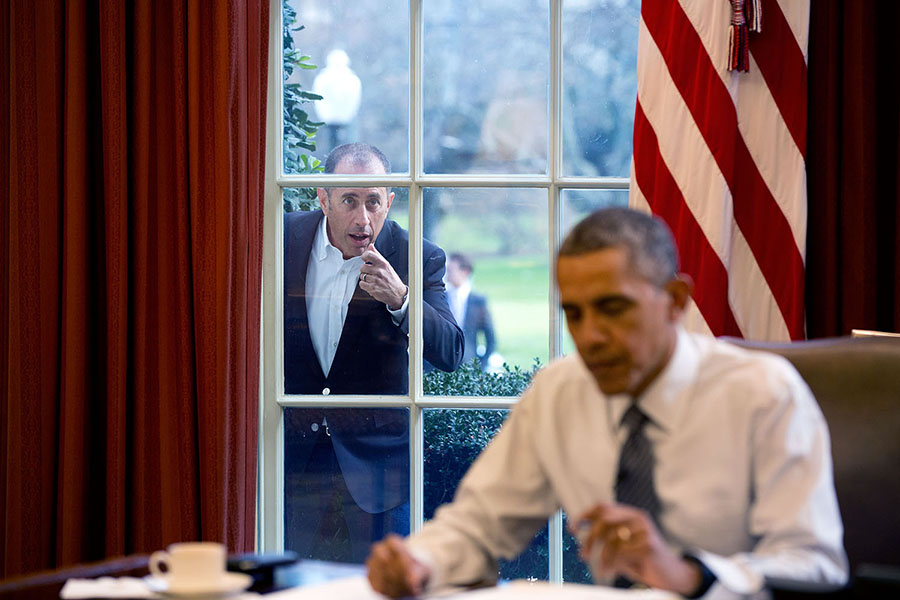
What Jerry Seinfeld Taught Me About Employee Engagement

From a success perspective, it’s pretty hard not to admire Jerry Seinfeld. And just in case your alarm clock hasn’t gone off since, oh, 1998, here’s why.

In 1998, his highly successful situation comedy “Seinfeld” aired its last episode after nine seasons and 180 episodes. It has consistently been referred to as one of the greatest sitcoms ever. So there’s that. Seinfeld also has 20 Primetime Emmy Award and four Grammy Award nominations. His show “Comedians in Cars Getting Coffee” has aired since 2012. 

Seinfeld, along with other comedians such as Trevor Noah, Ellen DeGeneres, and Jim Gaffigan, tickles our funny bone through a form of humor referred to as “observational humor.” Observational humor is an approach to comedy wherein the comedian takes everyday occurrences and makes them relatable, then funny. Topics are those from ordinary life, such as taking the bus, grocery shopping, or going to the dentist. Frequently stand-up comedians will begin their observational monologue with the famous phrase “Have you ever noticed?” 

Observational humor makes us laugh, to be sure, but there’s another dynamic occurring that is far more subtle, more impactful than one might think, and serves as a powerful lesson for leaders in all professions. When comedians draw events from real life, they build a bridge to those that they’re entertaining. They let go of their celebrity persona and connect in a familiar way with their audience. They become real, not bigger-than-life images. So when we hear the delivery from a comedian practicing observational humor, we laugh not so much because they told a joke — the fact is they typically don’t — but because we can relate. We feel as one with the performer. 

This reaction emerges from a physiological and neurochemical dance in the human body that impacts our minds. We feel an emotional connection with the comedian, and we develop a sense of trust. Despite the likelihood that the comedian (including all three noted above) may be a multi-millionaire, we’re not likely to know them, and we’re equally as unlikely ever to have a conversation with them. We feel engaged. 

This type of engagement isn’t limited to a professional comedic performance. When it happens in the workplace, engagement can yield multiple organizational benefits. Teams become more cohesive and collaborative. People feel good about themselves and their work. They feel appreciated—organizational performance increases. Trust, the lubricant for any organization, is nurtured. Relationships are strengthened through a fabric of connection at the heart and soul level.  

If you’re a business leader and want to make this work for your company, ask yourself the following questions to let go, get real, and kickstart engagement for those you lead: 

1. How are you feeling? Do the big issues and problems feel a bit less daunting and life-consuming? Are you able to recover from a let-down or failure a bit more quickly? 

2. How is your team interacting? For example, when you walk by a team meeting or a few of your staff in the hall, or when people are waiting for everyone else to enter the videoconference call, are they sharing laughable moments that they’ve experienced either at home or with the work task? Are people laughing with each other? Countering one funny story with another? 

3. How is your team interacting with you? Are they coming to you with smiles on their faces and sharing close-call mishaps? Are you receiving way-off-the-wall and creative and sometimes quite funny solutions to problems? Are you coming up with the same? 

It isn’t easy. Engagement is often at the top of the “what leaders fail to do” list while they spend time focusing on strategic planning, metrics, and data. Concentrating on these traditional organizational challenges is the norm. The pace of work and the hyper-competitive environment in which we lead forces these issues to take priority.  

The simple fact is that it takes much more work to build connections with others, but it doesn’t have to be that hard. A little humility and vulnerability, talking about the everyday things that matter in all of our lives — whether mass transit or mass emails — while throwing in observational humor can open the door to trusting bonds that serve our organizations well.  

Observational humor can work magic. “Have you ever noticed…?” Just watch Seinfeld in action, and you’ll sense that connection. After all, we weren’t born as professionals; we were born as humans to laugh and love. The most impactful steps a leader can take are creating a relaxing and inclusive environment, letting go, and getting real. The benefits are sure to follow. 

This is What Your Employees Want When They Return to the Office

What do employees want when returning to the office?  It’s easy to assume we know what they want due to a dangerous judgment error termed the false consensus effect.

This problematic mental blindspot causes us to perceive others who we feel to be in our team as sharing our beliefs. Unfortunately, that’s often not the case.

The false consensus effect is one of over 100 misleading mental patterns that researchers in behavioral economics and cognitive neuroscience call cognitive biases

These mental blindspots impact all areas of our life, from health to politics and even shopping. Fortunately, by learning about how to defeat the harmful impact of these dangerous judgment errors, we can make the wisest and most profitable decisions.

Survey Says… 

To address the false consensus effect, we need to turn to objective data that doesn’t rely on our gut feelings and assumptions. An excellent way to do so is to examine the insights gleaned from several in-depth surveys of employees on post-pandemic remote work published recently (12345678). Here are the key conclusions of a meta-analysis comparing all of these studies:

  1. Over two-thirds of all employees who worked remotely in the pandemic want and expect to work from home half the time or more permanently, while over a fifth want to work remotely full-time
  2. Over two-fifths would leave their current job if they didn’t have the option of remote work of two to three days per week.
  3. Over a quarter plan to leave their job after the pandemic, especially those who rate their company cultures as “C” or lower
  4. Over two-fifths of all employees, especially younger ones, would feel concerned over career progress if they worked from home while other employees like them did not.
  5. Most employees see telework and the flexibility it provides as a key benefit and are willing to sacrifice substantial earnings for it.
  6. Employees are significantly more productive on average when working from home.
  7. Over three-quarters of all employees will feel happier and more engaged, be willing to go the extra mile, feel less stressed, and have more work-life balance with permanent opportunity for two to three days of telework 
  8. Over half of all employees feel overworked and burned out, and over three-quarters experience “Zoom fatigue” and want fewer meetings.
  9. Employees need funding for home offices and equipment, but no more than 25% of companies have provided such funding so far.
  10. Over three-fifths of all employees report poor virtual communication and collaboration as their biggest challenge with remote work, and many want more training in these areas.

What Does Other Research Say?

Other research backs up this information. Consider a survey comparing productivity of in-person vs. remote workers during the first six months of stay-at-home orders, March through August 2020, to the same March through August period in 2019. Employees showed a more than 5% increase in productivity over this period. Another study surveying 800 employers reported that 94% found that remote workers showed higher or equal productivity than before the pandemic. Non-survey research similarly shows significant productivity gains for remote workers during the pandemic.  

Some might feel worried that these productivity gains are limited to the context of the pandemic. Fortunately, research shows that after a forced period of work from home, if workers are given the option to keep working from home, those who choose to do so experience even greater productivity gains than in the initial forced period.

An important academic paper from the University of Chicago provides further evidence of why working at home will stick. First, the researchers found that working at home proved a much more positive experience for employers and employees than anticipated. That led employers to report a willingness to continue work-from-home after the pandemic. 

Second, an average worker spent over 14 hours and $600 to support their work-from-home. In turn, companies made large-scale investments in back-end IT facilitating remote work—some paid-for home office/equipment for employees. Furthermore, remote work technology has improved over this time. Therefore, both workers and companies will be more invested in telework after the pandemic. 

Third, the stigma around telework has dramatically decreased. Such normalization of work from home makes it a much more viable choice for employees.

The paper shows that employees perceive telework as an essential perk. On average, they value it as 8% of their salary. The authors also find that most employers plan to move to a hybrid model after the pandemic, having employees come in about half the time. Given the higher productivity that the paper’s authors find results from remote work, they conclude that the post-pandemic economy will see about a six percent productivity boost.

Conclusion

Don’t assume that you know what your employees want when they return to the office. Cognitive biases such as the false consensus effect mislead us into thinking others in our group share our beliefs when it is often not the case. Surveys and research have shown that new habits, norms, and values picked up during the pandemic will continue to impact the post-COVID workplace significantly. A combination of mainly hybrid and some remote work is our future. Defend yourself from mental blindspots so you can make the best strategic decisions after the pandemic.  

0