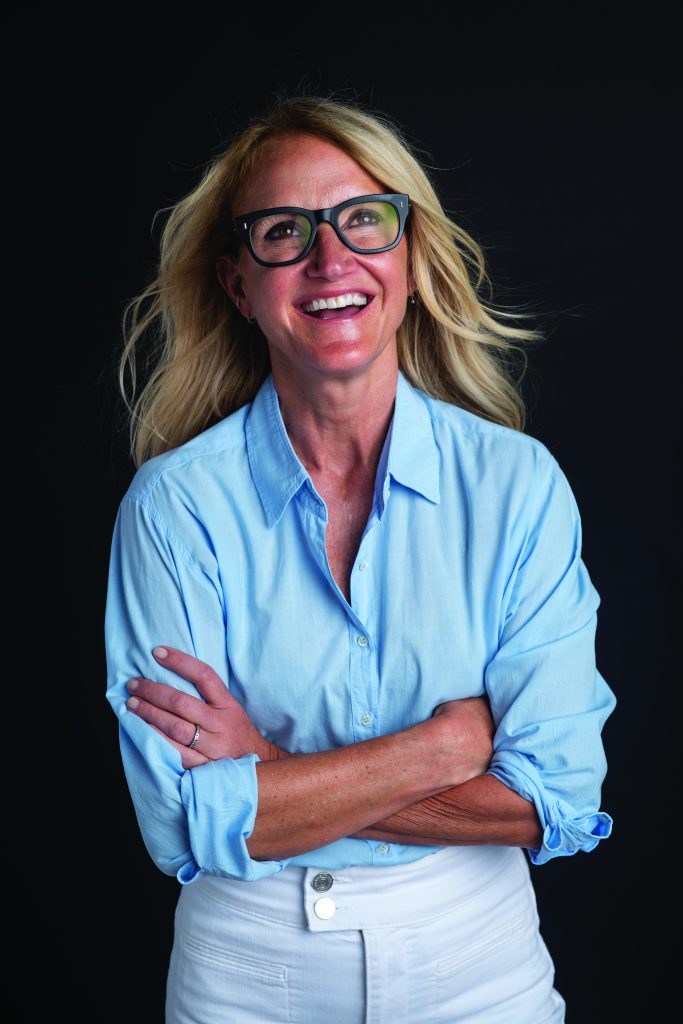
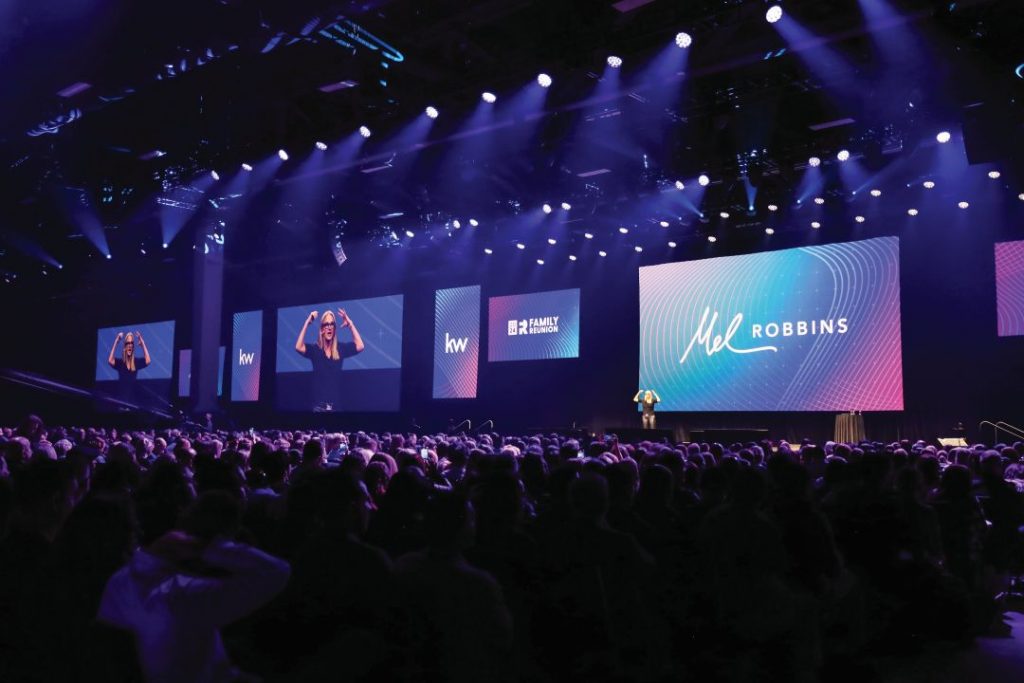
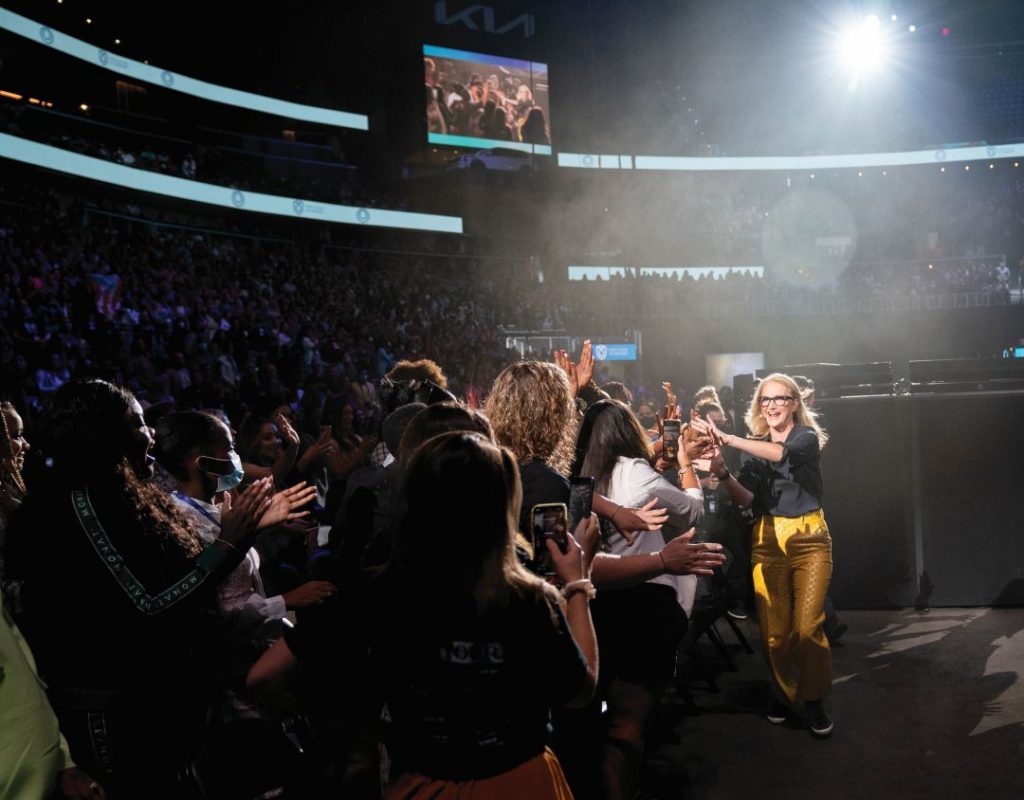
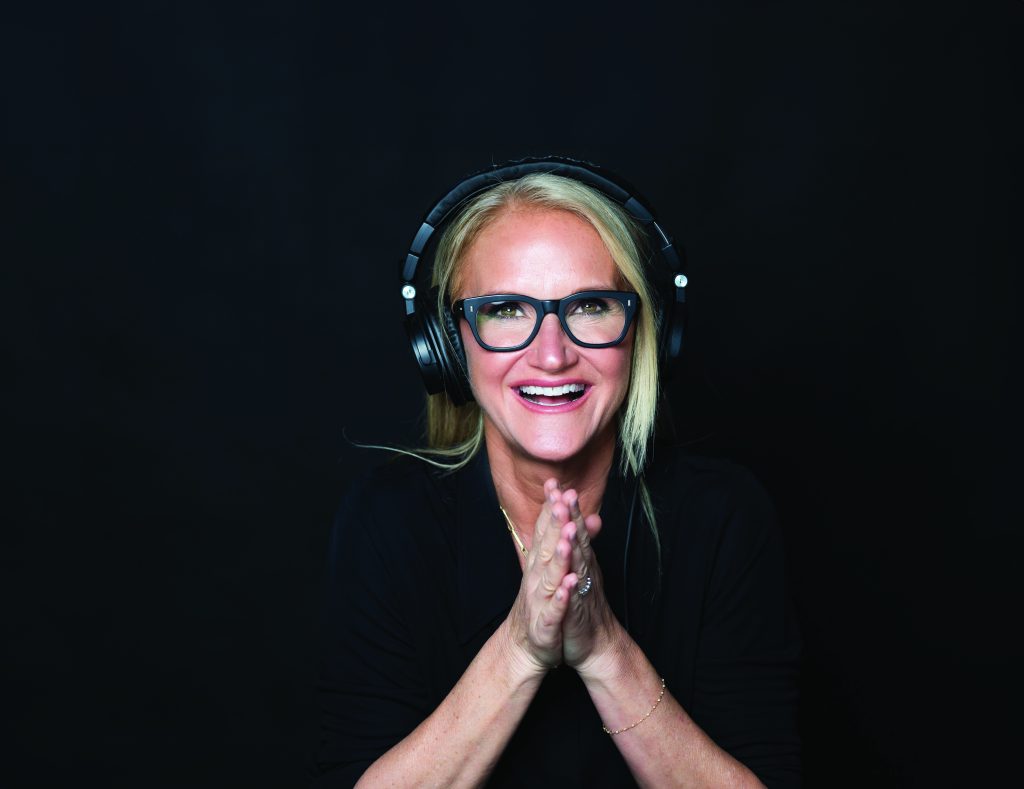
After 15 years of Army-crawling in the dirt, as she puts it, she recently erupted on the scene as one of the more followed and sought-after experts in mindset, behavior change, and life improvement; and her media company, 143 Studios, has worked with some of the biggest companies on earth.
Photo Credit: Mel Robbin’s Team
In this exclusive interview with Real Leaders, Robbins unpacks insights from her new book and its wildly popular, research-backed The Let Them Theory. Plus, she gives a crash course on ChatGPT for business, explains why you need to get on TikTok Shop now, and gets real about her gravest mistakes as CEO.
Real Leaders: How do the ideas in The Let Them Theory apply to business founders and CEOs?
Mel Robbins: The Let Them Theory is a simple mindset tool that shows you in any moment in your business and your life what’s in your control and what’s not — and lets you take the power back and lead. It is particularly important in business because when you get yourself obsessed with the things about your business or your team that you can’t control, it’s going to stress you out. The more you’re stressed, the more you bring that tight, micromanaging, narrow-focused energy to your team and business, the worse your team is going to do, and the worse your business is going to do.
Let them is a recognition that this issue that’s bothering me is not where my power is. Therefore I’m going to recognize that and say, “Let them.” The thing that your team did, the nasty review that the customer left online, the deal that you didn’t win, the interest rates that you can’t control — already happened. The power is not in getting upset about what’s going on in the markets or about how hard it is to hire talented people. Your power is in your response, and that’s the second part of the theory.
After you say, “Let them,” you’re going to say, “Let me — let me remind myself at all times that I have three things I can control: what I think about this, what I do, and what I don’t do.” One of the major mistakes that I’ve made as a CEO is I often feel the need to do something and react out of panic, fear, or anger. All that does — because leaders bring the weather — is it spreads more panic, fear, and anger through your organization and team.
The third thing you can control — and this is where it changes you as a leader and trickles down into your organization — is the let me part. It’s also about let me manage my response to my feelings about this thing. Let me show up as a CEO instead of showing up like an 8-year-old inside a big body who’s constantly reacting to things and sending shock waves through an organization that needs something different from me.
Listen to the full interview with Mel Robbins only on the Real Leaders Podcast.
RL: What inspired you to create a bonus chapter on leadership?
Robbins: There are two big topics that require and deserve more attention and detail: One of them is parenting, and the other is how to use The Let Them Theory at work. As a CEO I can’t just let my team do whatever the hell they want. I can’t just let things play out. I have to lead. So I wanted to lean more into those two specific applications of The Let Them Theory.
“Leading With Let Them” is a guide to remind you what you know to be true and give you some principles to use The Let Them Theory to be more effective. It’s about using the science of influence instead of trying to manage top-down. It’s about activating the motivation, skills, and interest of people who work for you to rise up. You’re doing it through people rather than feeling like you have to be the one directing everything. It’s a very different management approach.
Let’s talk about operations. Operations are people. A company is nothing without its people. I know everybody is extraordinarily nervous and excited about AI, but people are also concerned about AI and how we’re going to use it. At the end of the day, it’s still all about the people. Are the people who work for you excited to work for you? There’s a simple way you can tell. Ask yourself when you pull into work in the morning, do you think the people who work for you are excited to walk into the building? Are they excited when your name shows up on an email? Do you think people are generally open to what you have to say, or they roll their eyes at you because you’re a nightmare?
The Let Them Theory forces you to understand that you will get better results when you empower and influence people, not when you micromanage them. One of the hardest aspects of using The Let Them Theory, at least for me, is making sure I’m the one: Let me be focused on outcomes, and let me be clear about my expectations and what it means to deliver these outcomes for success. Nine times out of 10 if something is not going well in a business, if you use The Let Them Theory and let them know what the outcomes are, let them know what success looks like, let them have the resources they need to get what you have asked done, and then let me get out of the way and focus on how to nudge people along and lift them up inside a very clear container — that’s the winning formula.
The biggest mistake I’ve made is not being clear in my communication. If there’s a breakdown, it’s almost always about a lack of process, clarity, or skill set in a particular seat. It’s almost never about somebody’s desire to succeed.
If you take time to make this shift and you’re willing to go, “It’s on me. Let me lead the way, define the way, and then get out of the way and go into a supporting role,” it’s pretty incredible how things change.
PhotoCredit: Jenny Sherman
RL: Where have you landed on leadership for yourself?
Robbins: It would be way easier if I were just the CEO. It is very challenging to be the person creating the content and the face of the brand and the company behind the microphone and in front of the camera — and do a good job as CEO.
I think about my business like we’re on a bus, and I’m driving the bus, and we’re going in a certain direction, and I’m the person as the CEO and the face of the business who defines the direction we head in, but I have to understand what seat in the bus I’m actually sitting in because I shouldn’t be driving it — that’s the COO. I should look at the GPS because I’m defining strategy. One of the most important things about leadership is understanding what is the best seat on the bus for you to sit in. (Jim Collins’ book Good to Great lays out the metaphor about having the right people in the right seats on the bus, aka the correct employees in the correct roles.)
As a leader, I have to recognize the things I do well, and if I’m not the best person to do some other job in this company, I need to get out of that seat and get somebody in it who can.
A major, major breakthrough for me was to understand that being a great leader requires self-awareness. The first step of self-awareness is that you manage your emotions and you are not bringing rain clouds and storms and dysregulation to your team because you’re stressed and fearful. The second step is self-awareness of your unique genius. It takes founders too long to replace themselves. The reason why is you don’t actually think about what is your unique genius — that only you can do in this company — and that’s the seat you should be in. Once you define the vision, what the outcomes should be, and what success looks like — and you have an organization where everybody knows the one thing that matters most today for their seat — things run very smoothly. The hardest person to get out of the way when it comes to an organization is yourself.
You’ve Reached the End of the Free Article.
To access the full article, tips from today’s most inspiring leaders, and practical leadership lessons, please consider subscribing Real Leaders magazine below.
After 15 years of Army-crawling in the dirt, as she puts it, she recently erupted on the scene as one of the more followed and sought-after experts in mindset, behavior change, and life improvement; and her media company, 143 Studios, has worked with some of the biggest companies on earth.
In this exclusive interview with Real Leaders, Robbins unpacks insights from her new book and its wildly popular, research-backed The Let Them Theory. Plus, she gives a crash course on ChatGPT for business, explains why you need to get on TikTok Shop now, and gets real about her gravest mistakes as CEO.
Real Leaders: How do the ideas in The Let Them Theory apply to business founders and CEOs?
Mel Robbins: The Let Them Theory is a simple mindset tool that shows you in any moment in your business and your life what’s in your control and what’s not — and lets you take the power back and lead. It is particularly important in business because when you get yourself obsessed with the things about your business or your team that you can’t control, it’s going to stress you out. The more you’re stressed, the more you bring that tight, micromanaging, narrow-focused energy to your team and business, the worse your team is going to do, and the worse your business is going to do.
Let them is a recognition that this issue that’s bothering me is not where my power is. Therefore I’m going to recognize that and say, “Let them.” The thing that your team did, the nasty review that the customer left online, the deal that you didn’t win, the interest rates that you can’t control — already happened. The power is not in getting upset about what’s going on in the markets or about how hard it is to hire talented people. Your power is in your response, and that’s the second part of the theory.
After you say, “Let them,” you’re going to say, “Let me — let me remind myself at all times that I have three things I can control: what I think about this, what I do, and what I don’t do.” One of the major mistakes that I’ve made as a CEO is I often feel the need to do something and react out of panic, fear, or anger. All that does — because leaders bring the weather — is it spreads more panic, fear, and anger through your organization and team.
The third thing you can control — and this is where it changes you as a leader and trickles down into your organization — is the let me part. It’s also about let me manage my response to my feelings about this thing. Let me show up as a CEO instead of showing up like an 8-year-old inside a big body who’s constantly reacting to things and sending shock waves through an organization that needs something different from me.
RL: What inspired you to create a bonus chapter on leadership?
Robbins: There are two big topics that require and deserve more attention and detail: One of them is parenting, and the other is how to use The Let Them Theory at work. As a CEO I can’t just let my team do whatever the hell they want. I can’t just let things play out. I have to lead. So I wanted to lean more into those two specific applications of The Let Them Theory.
“Leading With Let Them” is a guide to remind you what you know to be true and give you some principles to use The Let Them Theory to be more effective. It’s about using the science of influence instead of trying to manage top-down. It’s about activating the motivation, skills, and interest of people who work for you to rise up. You’re doing it through people rather than feeling like you have to be the one directing everything. It’s a very different management approach.
Let’s talk about operations. Operations are people. A company is nothing without its people. I know everybody is extraordinarily nervous and excited about AI, but people are also concerned about AI and how we’re going to use it. At the end of the day, it’s still all about the people. Are the people who work for you excited to work for you? There’s a simple way you can tell. Ask yourself when you pull into work in the morning, do you think the people who work for you are excited to walk into the building? Are they excited when your name shows up on an email? Do you think people are generally open to what you have to say, or they roll their eyes at you because you’re a nightmare?
The Let Them Theory forces you to understand that you will get better results when you empower and influence people, not when you micromanage them. One of the hardest aspects of using The Let Them Theory, at least for me, is making sure I’m the one: Let me be focused on outcomes, and let me be clear about my expectations and what it means to deliver these outcomes for success. Nine times out of 10 if something is not going well in a business, if you use The Let Them Theory and let them know what the outcomes are, let them know what success looks like, let them have the resources they need to get what you have asked done, and then let me get out of the way and focus on how to nudge people along and lift them up inside a very clear container — that’s the winning formula.
The biggest mistake I’ve made is not being clear in my communication. If there’s a breakdown, it’s almost always about a lack of process, clarity, or skill set in a particular seat. It’s almost never about somebody’s desire to succeed.
If you take time to make this shift and you’re willing to go, “It’s on me. Let me lead the way, define the way, and then get out of the way and go into a supporting role,” it’s pretty incredible how things change.
PhotoCredit: Jenny Sherman
RL: Where have you landed on leadership for yourself?
Robbins: It would be way easier if I were just the CEO. It is very challenging to be the person creating the content and the face of the brand and the company behind the microphone and in front of the camera — and do a good job as CEO.
I think about my business like we’re on a bus, and I’m driving the bus, and we’re going in a certain direction, and I’m the person as the CEO and the face of the business who defines the direction we head in, but I have to understand what seat in the bus I’m actually sitting in because I shouldn’t be driving it — that’s the COO. I should look at the GPS because I’m defining strategy. One of the most important things about leadership is understanding what is the best seat on the bus for you to sit in. (Jim Collins’ book Good to Great lays out the metaphor about having the right people in the right seats on the bus, aka the correct employees in the correct roles.)
As a leader, I have to recognize the things I do well, and if I’m not the best person to do some other job in this company, I need to get out of that seat and get somebody in it who can.
A major, major breakthrough for me was to understand that being a great leader requires self-awareness. The first step of self-awareness is that you manage your emotions and you are not bringing rain clouds and storms and dysregulation to your team because you’re stressed and fearful. The second step is self-awareness of your unique genius. It takes founders too long to replace themselves. The reason why is you don’t actually think about what is your unique genius — that only you can do in this company — and that’s the seat you should be in. Once you define the vision, what the outcomes should be, and what success looks like — and you have an organization where everybody knows the one thing that matters most today for their seat — things run very smoothly. The hardest person to get out of the way when it comes to an organization is yourself.
Photo Credit: Jenny Sherman
RL: You launched The Mel Robbins Podcast just three years ago, and this year it reached the No. 1 spot in the world. How did you do it?
Robbins: The first thing I ever did in media was host this little Saturday morning radio show in Boston, and I loved that job. When podcasting started to take off, I was like, “I need to get in the game,” but then I started saying, “I’m too late. There are too many podcasts.” Every time I saw somebody launch a podcast, whether it was my buddy Jay Shetty or anybody else, I’d be like, “Oh now I can’t do it.” It’s not true. There are 8 billion people on the planet. There is room for you. If you start putting it out there, the people who want to listen to you will find you.
We did the first episode from the floor of my closet. We were complete idiots. We had no idea how much work or how complicated this was going to be, but we jumped in with both feet. Even though I knew the formula, I didn’t understand the complexity of how to do it. This thing hit like lightning in a bottle — because name the other female podcast host my age (now 56) with a level of trust from corporations and people globally whose podcast is not celebrity-obsessed or slightly political that’s entertaining and you can relate to. There’s nobody.
It’s taken me 15 years of Army-crawling my way through the dirt to get to a point where people are like, “Wow, she’s everywhere.” I’m still the same person I was 15 years ago when my husband’s restaurant business was going under, and we were under crushing debt, and I was just trying to wake up and do a little better each day and solve the problems we were facing. The core of my business is sharing all this learning with everybody else. My business is about helping people see a bigger possibility for themselves and giving them the tools, expert resources, and encouragement they need.
Having a business model that is ad-supported so that 99% of what I do is free to everybody matters to me because I have been in periods of my life where I felt like I was the only one with this struggle, I couldn’t afford to talk to a therapist, or I was so stressed and lonely, and I didn’t know there were simple solutions to the issues I was dealing with. I’ve been really focused on how to create an audio or video experience or book that’s worth somebody’s time. I start with the end user in mind.
The second thing is I’ve never changed my focus, and this is super important. I am a one-to-one brand. You will never hear me name my audience. You will never hear me talk about everybody. I have always thought about what I do as a walk with a friend, and I have put that intention at the forefront of everything.
The final thing that has really changed the game over the long-term is I play the long game. I’m very aware of the lever points of what I want to control and what I don’t care about controlling. I have always cared about controlling my content and owning it. Eight years ago when I first self-published The 5 Second Rule book and audiobook rights, everyone thought I was crazy. No it didn’t make The New York Times Best Sellers list. It did something way better. As it’s gone on to sell millions and millions and millions of copies, it’s been translated into 50-some languages, and as it went on to become the most successful audiobook ever launched in history by a self-published author — I own it all, and I set a precedent. As you look at The Let Them Theory explode around the world, guess what? I own it all too because I’m smart enough to understand the longtail of any business deal. As a business owner, I will never do a deal for money now that in success I would be pissed off that I didn’t make a smarter deal, which means I play the long game because I bet on myself.
Photo Credit: Jenny Sherman
RL: You’ve said that better leaders create a better world. What is your vision for a better world, and how do we get there?
Robbins: I’m very discouraged that we’ve gotten to a point where people seem incapable of having conversations with opposing or different points of view, because everything is not a zero-sum game in life or in business. Not every win has to mean somebody else loses. To be for somebody, you don’t have to be against something else. And I am deeply concerned that politics, business, everything has become entertainment. Everything is reduced to a sound bite. Everything is about the profit and not the people.
One of the things I fundamentally believe is that 95% of people have a good heart. They’re a kind person. They want to do well. Start from that truth — that most people believe the same things and are just looking to show up at work and feel like they know what to do in order to do a good job, and they have the tools and the resources to actually get it done, and when they do a good job, they’re acknowledged for it, and there’s not this constant beat down of everything that’s wrong.
The way that I see a better world happening is it starts with each one of us, and this is also part of the principle of The Let Them Theory. It’s easy in today’s world to look at the headlines, the economy, or the constant drumbeat of change and feel overwhelmed and powerless. My message is simple: You’re not powerless — because the power is not out there; the power is in how you respond to these things.
The world will become a better place if we can learn how to sit in a room and be with people who have different ways of seeing things. Be the mature adult who’s able to let them have their opposing point of view, and then step forward and try to understand why they might have that point of view.
RL: What’s next for you?
Robbins: What’s next for me — and I think this is also a very hard thing in business — is not taking on more. I would like to get better at what I’m already doing, and that is a very new skill for me because as an entrepreneur and a CEO, I have always chased the next thing.
Breaking it Down: 5 Ways to Lead Better
Robbins co-wrote a free companion guide to The Let Them Theory for leaders with her business coach, David Gerbitz. The bonus chapter, “Leading with Let Them,” identifies five behaviors to amplify a leader’s ability to influence others.
Let Me – Focus on What I Can Control
Let Me – Reframe Mistakes as Growth Opportunities
Let Me – Manage by Outcomes
Let Me – Be Personable and Present
Let Me – Be Consistent
She tells Real Leaders why No. 3 is most critical for leaders:
“I have been such a micromanaging freak before The Let Them Theory because I was constantly stressed out. The problem with micromanaging is that what you’re communicating to your team is, ‘I don’t trust you. You can’t do this.’
“Micromanaging happens because you never even bothered to truly communicate what you wanted done, how you wanted it done, by when, and how you’re going to measure it. How am I going to know that this is actually done, and are there steps along the way that are important to me that you follow so I can understand how this got done? That’s on you, it’s not on your team.
“Managing by outcomes forces you to actually stop the Zoom parades and define very clearly, what does this job look like in terms of this person’s roles and responsibilities, and what does success look like in that job?
“Most of us are so busy running our business and doing things the way we’ve already done it that quarterly or annual goals or revenue targets are the only things we’ve defined — but do you know what a successful week looks like? What are those outcomes? Because that’s actually what your team needs. Your team needs a level of clarity about the outcomes for this week because just as the business world is in a constant state of change, so too are the priorities and requests on the desks of the people who work for you.
“This is a simple way to apply this: From the CEO chair down, does everybody who works for you know the one thing that matters most that they get done today? If people in your organization cannot answer that question, what the hell are they doing? They’re guessing, and that’s not their fault. It’s yours.”
Crash Course: How to Use ChatGPT to Create Your Winning Business Formula
Robbins believes that every leader can achieve business success by following an existing formula.
“In today’s world you don’t have to guess because even if you’re innovating, somebody has figured out a problem, a goal, or something you’re trying to do somewhere else,” Robbins says. “They’ve probably given a speech or written a book or a blog article. It’s all out there, so stop guessing and start looking for formulas.”
How do you find the right formula for your business and see it through? It’s simple. “One of the best tools that you have is ChatGPT,” Robbins says. Here’s how to use it — and you won’t find this in the pages of her new book either:
“Write down the problem you’re trying to solve or the innovation you’re trying to create or the growth that you’re trying to have.
“Challenge ChatGPT to think like the world’s best business coach analyzing the top business growth in the world and come back to you with a 60- to 90-day plan of exactly what you need to do.
“You’re going to get a formula in a nanosecond. Keep iterating that until you get a formula that feels good.
“Put it back in, and ask, “What is the team I would need, and what are their roles to get this done?”
“I’m constantly doing this,” Robbins says. “I’m constantly saying to my team things like, ‘Well, I understand that it takes us this long to go from taping a podcast to actually creating the 73 assets that go with the podcast, from the episode to the social media assets to communicating with the guests to the blog articles to the description to the thumbnails online to the titles of the podcast — it’s unbelievably complicated what we do — but I would like to know has anyone else out there, whether it’s in television or movies or processing engineering code, figured out how to actually find the roadblocks that keep slowing us down?’ We can hire a consultant. We can search online. So we are constantly looking for ways to improve the way that we do things in industries outside of our own. That’s the way you use a formula.”
The challenge lies in the resistance. “Here’s the big pushback that most CEOs and entrepreneurs have around formulas,” Robbins explains. “They say, ‘Well then I’m copying everybody.’ The fact is the second you have the formula, that’s the easy part. You have to use it, and that’s the hard part. Once you start applying it to your business, you’re going to make it your own.”
Hot Tip: Why You Should Sell on TikTok Shop
Robbins suggests that you own the rights to your books and other products so you can sell those items on TikTok Shop. She explains, “TikTok Shop is a wholesale play, which means it doesn’t actually get reported as a book scan, and most authors are so focused on making The New York Times Best Sellers list and having sales reported. I’m not. I’m focused on the impact. What’s incredible about TikTok Shop, the formula I figured out, is because it’s a wholesale sale, I get to set the price and turn our entire audience into an affiliate, and anybody who recommends the book can make a percentage of the sale of the book. That means I’m an affiliate on my book too, so now I make money on the back and front ends. How cool is that?”
So, what should we know about the consumers of tomorrow, and what messages will resonate with them? One of the biggest cultural transformations happening around the world is that consumers aren’t expecting brands to sell them stuff anymore.
Instead, customers now expect brands to create societal good. They want companies to be honest, transparent, operate with integrity, and not take them for a ride. In addition, a new generation of young people from around the globe are more socially conscious and demanding change like never before. These people are willing to pay a premium to companies that behave responsibly, and marketers can no longer focus solely on product message and market share. Like a double-edged sword, technology can disrupt people’s lives for better or worse.
The next big part of the industrial revolution is artificial intelligence. If applied to the medical sciences, it’s a brilliant tool; on the other hand, it can be terrible if intrinsic biases from the past creep into AI and unleash a Frankenstein scenario into the marketplace. We’re faced with a long list of new technologies today: virtual reality, blockchains, 3D printing, 5G, drones, autonomous driving vehicles, the Internet of Things, Bluetooth speakers, and wearables. All these things have the potential to disrupt people’s lives in good and bad ways in the very near future.
As a business leader or brand marketer, you need to ask yourself how these millions of small innovations will affect your business and how you might adjust your strategies accordingly. The future will be so radically different that the current strategies, concepts, and frameworks of selling our brands will no longer work.
We’re currently on the cusp of the fourth and fifth paradigm of the technology revolution. Each one was ushered in by disruptive technologies. For example, the third paradigm was ushered in by social media platforms and connected mobile devices that have changed our lives. The fourth paradigm has built on the third by adding location-based marketing, social media marketing, and influencer marketing to our devices. Unfortunately, this has been at the expense of user privacy, and many consumers now feel digitally harassed and are turning away from these marketing techniques.
The solution? Quantum marketing. Business leaders must now completely reimagine marketing and reinvent it for the immediate future. Leaders need to become true general managers with a command of data, finance, PR, and other disciplines to transform marketing’s ecosystem. Quantum marketing will demand that business leaders adopt a new mindset and leave behind dated models, such as loyalty. Today’s consumers are fundamentally disloyal, so brands need to end the habit of spending hundreds of millions of dollars on customer loyalty programs. Loyalty must instead evolve from an era of winning and keeping consumers by winning each interaction. The brands that leaders build now must embrace consumers rather than the converse, turning old marketing methods upside down.
Last year, a study in the U.K. asked participants who were married or in a relationship if they would ever consider cheating on their partner. Seventy percent said they already had, and a large percentage of the remainder said they would if they knew they wouldn’t be caught. So, as marketers, are we foolish to believe that customers will be loyal to our brands and loyalty programs when their personal relationships — with serious levels of explicit commitment — are not solidly based on loyalty? Harping on customers from an elevated platform about how they should be loyal to your brand is not a good strategy.
I travel extensively as a senior executive of Mastercard and belong to loyalty and reward programs of almost every major airline. Is that real loyalty? No, it is simply a great way to get some cheap or free rewards. Real brand loyalty is something else.
We’ve seen the rise of chief experience officers in many companies who create seamless and unforgettable experiences for customers. This is a relatively new skill that will become critical to retaining customers. Dumping marketing messages onto consumers without pausing to consider how they will take it is a grave mistake.
To get people to love your brand, you need to adopt a social purpose. This is not something you can easily fake, and consumers will recognize the authenticity. It’s not about grabbing a short-term politically correct issue to get consumer attention for a few weeks either. Consumers are not stupid and will quickly see through your act. So instead of pursuing profits as your purpose, pursue social purpose. This should become your North Star, and the profits will follow.
Raja Rajamannar is the chief marketing officer and president of the healthcare division of Mastercard. He is responsible for successfully leading the company’s marketing transformation, including the integration of the marketing and communication functions.
So, what should we know about the consumers of tomorrow, and what messages will resonate with them? One of the biggest cultural transformations happening around the world is that consumers aren’t expecting brands to sell them stuff anymore.
Instead, customers now expect brands to create societal good. They want companies to be honest, transparent, operate with integrity, and not take them for a ride. In addition, a new generation of young people from around the globe are more socially conscious and demanding change like never before. These people are willing to pay a premium to companies that behave responsibly, and marketers can no longer focus solely on product message and market share. Like a double-edged sword, technology can disrupt people’s lives for better or worse.
The next big part of the industrial revolution is artificial intelligence. If applied to the medical sciences, it’s a brilliant tool; on the other hand, it can be terrible if intrinsic biases from the past creep into AI and unleash a Frankenstein scenario into the marketplace. We’re faced with a long list of new technologies today: virtual reality, blockchains, 3D printing, 5G, drones, autonomous driving vehicles, the Internet of Things, Bluetooth speakers, and wearables. All these things have the potential to disrupt people’s lives in good and bad ways in the very near future.
As a business leader or brand marketer, you need to ask yourself how these millions of small innovations will affect your business and how you might adjust your strategies accordingly. The future will be so radically different that the current strategies, concepts, and frameworks of selling our brands will no longer work.
We’re currently on the cusp of the fourth and fifth paradigm of the technology revolution. Each one was ushered in by disruptive technologies. For example, the third paradigm was ushered in by social media platforms and connected mobile devices that have changed our lives. The fourth paradigm has built on the third by adding location-based marketing, social media marketing, and influencer marketing to our devices. Unfortunately, this has been at the expense of user privacy, and many consumers now feel digitally harassed and are turning away from these marketing techniques.
The solution? Quantum marketing. Business leaders must now completely reimagine marketing and reinvent it for the immediate future. Leaders need to become true general managers with a command of data, finance, PR, and other disciplines to transform marketing’s ecosystem. Quantum marketing will demand that business leaders adopt a new mindset and leave behind dated models, such as loyalty. Today’s consumers are fundamentally disloyal, so brands need to end the habit of spending hundreds of millions of dollars on customer loyalty programs. Loyalty must instead evolve from an era of winning and keeping consumers by winning each interaction. The brands that leaders build now must embrace consumers rather than the converse, turning old marketing methods upside down.
Last year, a study in the U.K. asked participants who were married or in a relationship if they would ever consider cheating on their partner. Seventy percent said they already had, and a large percentage of the remainder said they would if they knew they wouldn’t be caught. So, as marketers, are we foolish to believe that customers will be loyal to our brands and loyalty programs when their personal relationships — with serious levels of explicit commitment — are not solidly based on loyalty? Harping on customers from an elevated platform about how they should be loyal to your brand is not a good strategy.
I travel extensively as a senior executive of Mastercard and belong to loyalty and reward programs of almost every major airline. Is that real loyalty? No, it is simply a great way to get some cheap or free rewards. Real brand loyalty is something else.
We’ve seen the rise of chief experience officers in many companies who create seamless and unforgettable experiences for customers. This is a relatively new skill that will become critical to retaining customers. Dumping marketing messages onto consumers without pausing to consider how they will take it is a grave mistake.
To get people to love your brand, you need to adopt a social purpose. This is not something you can easily fake, and consumers will recognize the authenticity. It’s not about grabbing a short-term politically correct issue to get consumer attention for a few weeks either. Consumers are not stupid and will quickly see through your act. So instead of pursuing profits as your purpose, pursue social purpose. This should become your North Star, and the profits will follow.
Raja Rajamannar is the chief marketing officer and president of the healthcare division of Mastercard. He is responsible for successfully leading the company’s marketing transformation, including the integration of the marketing and communication functions.
An amazing change has taken place over the course of the last decade. Business has woken up to the reality of climate change, that we’ve all been talking about, but are now experiencing firsthand.
Many business leaders have realized that our abuse of plastics, poorly managed waste and overconsumption has become a threat, and that business has the power to create solutions. Governments can provide frameworks and regulation and set boundaries, but it will be business that provides the energy, vehicles, systems and innovations that provide sustainable solutions. Business has woken up that being pro-planet is not only about being good, but effectively about being profitable. It’s about building for the next future yet to come.
KPMG in London was one of the first companies to adopt a living wage, which then spread to other financial institutions and corporates around the world. Lead through example. Walmart in the USA was the first company to adopt a living wage in that part of the world. How you remunerate people, take care of them and consider their human rights and dignity are important factors in the new world of business. One example would be to give staff time off to vote, and stress the importance of voting (without being partisan). Matching climate awareness with a responsibility for people has shifted business into a new era. Profit with purpose is how we will shape a meaningful future.
The starting point for engaging with this agenda is not to ask how you will maximize profits because you’re being responsible, sustainable and more caring of your people. The reality is that this approach is already profitable. Financial directors and shareholders can be hard to win over, but change is already happening at the highest level.
The Business Council of America made a firm commitment two years ago toward social impact, under the leadership of Jamie Dimon of JP Morgan. He suggested it was time to reshape our obligations toward society and that company agendas should align with people, profit and planet.
When I took on the responsibility at KPMG in 2008 to persuade businesses in 126 countries to adopt an energy program that reduced consumption by 25% we saved hundreds of millions of dollars. Our offices around the world realized that if they took control of their office lighting, servers and energy consumption they were saving a fortune — which in turn drove profit. When you approach sustainability in this way, the finance director, CEO and investors will all sit up and say, “this stuff delivers.”
Many companies lose good people year-after-year from a lack of treating them properly or motivating them. Keeping and retaining talent is also a driver of profit. We discovered that the loss on an annual basis from staff churn and recruitment was the equivalent to the value of the 6 largest audit accounts at KPMG. It’s common knowledge that many employees leave a company because of the managers that look over them, rather than look after them; they generally don’t leave because they are drawn someplace else. The culture in your organization can become a cash advantage.
Three big areas for building profit are: Energy savings, human resources and public engagement through socially responsible programs, which helps with reputation building. When Paul Polman was CEO of Unilever he explained this very simple piece of math. The business of Unilever as a whole, in 130 countries and one of the biggest corporations on the planet, had a market value that was 40% greater than it’s operational value. So what is this gap between the things the company owns, makes and sells and Unilever’s market value? It’s all about reputation. It’s one of the greatest intangibles you could ever have in a business, yet on the back of reputation you have the important option to raise capital, to borrow on the markets and negotiate low interest rates. Profitability comes from responsibility, reputation, quality of people and purposeful behaviors.
When I moved from the BBC to KPMG in 2006 there was no job description for my role, despite being head hunted by the chairman of KPMG — just an idea. As a global company that moved between private and public capital, with a presence in varied cultural markets, they had identified the need to galvanize all 130,000 employees at the time around doing what was right and appropriate, in a way that made our clients more effective.
The Rana Plaza collapse in Bangladesh in 2013 is one such example. Many famous luxury brands were being manufactured in the building when it collapsed, killing 1,134 workers, mainly women, with thousands more losing limbs. Each of the companies needed to decide how to respond. It was my duty to speak with the leadership of Primark in the UK about what they intended to do. To their credit, they were the first organization to fully compensate the families of all those affected — massive multi-million dollar payouts. It showed up the other companies that were dragging their feet on the issue and led to a massive increase in reputation for Primark. It attracted great talent and subsequently better sales. It’s a practical example of how profitability was enhanced by social responsibility. Perhaps the best leadership advice I’ve recently heard is from Hubert Joly, former CEO of Best Buy: “The corporations that will thrive coming out of this pandemic are those that treat customers as human beings with needs, and not walking wallets.”
Words of Wisdom
As a business leader, don’t hand the company vision to others to fulfill — It’s yours to own.
No serious leader today can sit back and say, “I don’t understand the climate crisis.” Spend time to understand one of the biggest issues of our time.
Look at the operational cost values that sustainability brings and understand the value of intangibles, such as good reputation.
Become the enthusiast in your business. Actively advocate for people to see that it’s not only about a social good, but a fundamental business operation.