My Journey Toward 100% Impact Investing

Eric Jacobsen, the serial entrepreneur and co-founder of private equity firm Dolphin Capital and impact investment platform Gratitude Railroad, spends his workdays at what he calls “the intersection of compassion and capitalism.”

“We work to create financial returns by solving the world’s problems,” Jacobsen says of his two companies. “Capitalism is an organism that changes and grows over time. Entities are realizing that caring about environmental, social and governance (ESG) criteria is better for the bottom line. We work to be ahead of that trend.” This viewpoint has worked well for Jacobsen. Dolphin Capital and Gratitude Road are thriving by investing in innovative businesses that Jacobsen and his partners can believe in.

But as great as Jacobsen feels about the impact of his work, his own personal and charitable investments weren’t always aligned with his beliefs. “I was spending my work time thinking about impact investing,” Jacobsen says, “but I wasn’t doing it personally. I never thought about how the assets in my portfolio could be doing something more meaningful.”

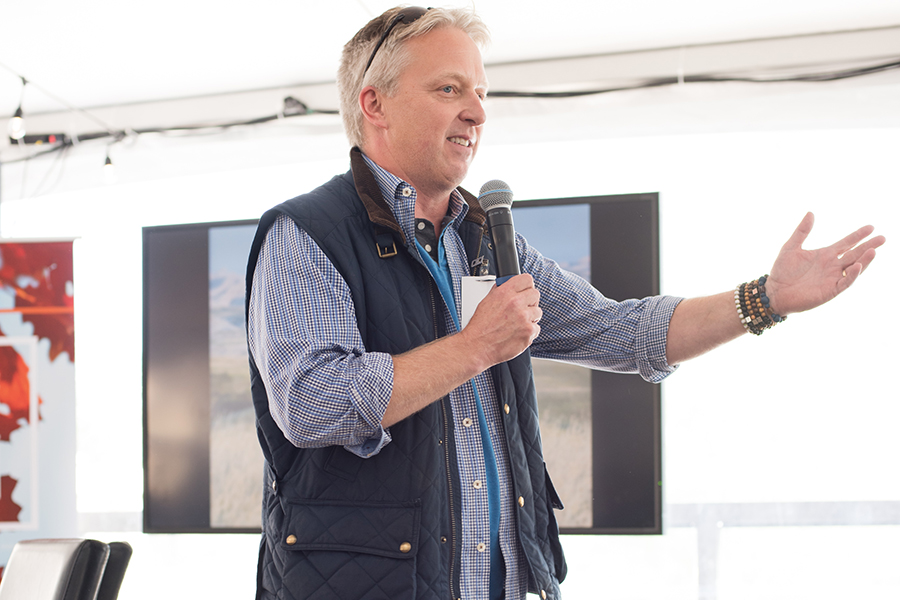
His discomfort with that misalignment kick-started his journey to 100% impact in his personal investments. “If I was going to do this, I needed to go all in,” he explains. This realization led Jacobsen to Toniic’s 100% Impact Network, where he met Brent Kessel of Abacus Wealth Partners (pictured above) at a gathering.

“I was there to share my own portfolio deep dive,” Kessel explains. “I described the progress I’d made towards having 100% of my assets dedicated to social and environmental impact as well as commercial financial returns. Eric was at the time interviewing firms to potentially take over the management of his personal and charitable assets. He was impressed by what I had been able to do personally, and hired Abacus to help him reach his 100% impact goal.”

Abacus has a long history of seeking both positive impact and profitability, and it has proved to be a great fit for Jacobsen. As far back as the early 1990s, the firm offered two to three socially responsible funds that also met Abacus’ standard for financial returns. Over the years, Abacus added more socially responsible funds that clients could opt into. But in 2008, the firm changed its strategy. “At that point, impact investing stopped being an opt-in and became the only thing we offered,” Kessel says. “Our clients have learned that they can have impact and financial returns at the same time, because doing well and doing good isn’t a cliché – it’s extremely doable, as proven by our tripling in size to over $2 billion under management in the past decade.”

Positive impact and positive returns are not the only benefits that Jacobsen has enjoyed in his partnership with Abacus. Going to 100% impact has also changed his relationship with his investments. “I never used to care much about the quarterly rebalancing of my portfolio,” he says. “Now I’m very active in my asset allocation because I’m thinking about how I can use my portfolio to empower women and girls, provide clean air and water, or stem global warming.”

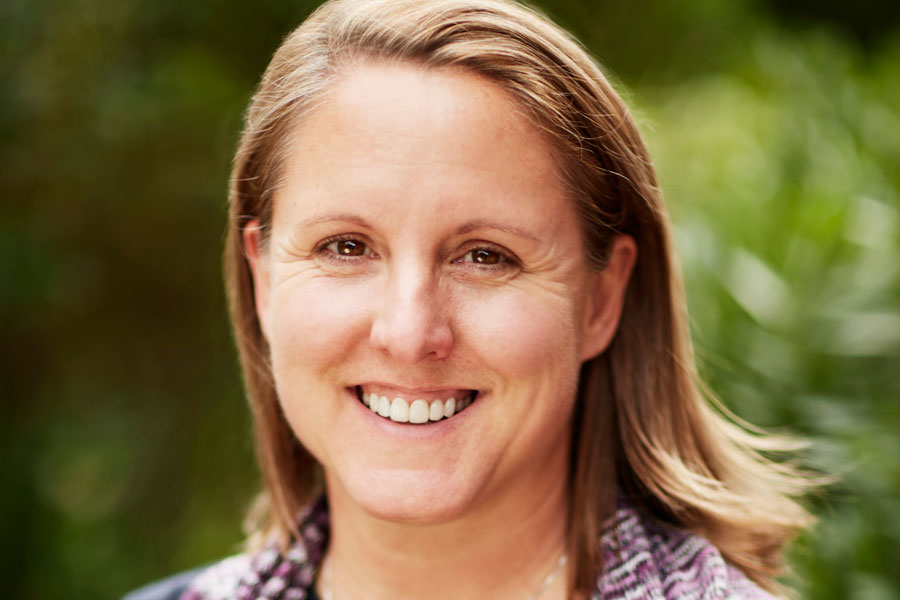
Brent Kessel, Eric Jacobsen’s impact wealth advisor.


While these kinds of decisions may be harder than simply looking for the best returns, Jacobsen also finds them much more interesting. “The more we look at the world, the better off our investments are,” he says. That’s because investors can feel good that their money is creating both meaning and financial growth.

How much financial growth? As Kessel explains, impact investing may not always earn higher returns than traditional investing, but he advises clients not to expect lower returns either. Jacobsen believes that this is an important equilibrium to keep: both too much attention to values at the expense of profit and too much attention to profit at the expense of values are detrimental ways to do business.

“Heart and profit should have an equal balance, like yin and yang,” Jacobsen says. “Both are necessary for an institution’s success – and for humanity’s success.”

Jacobsen also makes it clear that shifting to 100% impact does not have to be an overnight change. “We all matter in the impact space. It’s like standing on the ground floor of a skyscraper looking up,” he explains. “Just take the first step. Choose to dine at the minority-owned local restaurant. Sell your tobacco stock. Invest in a company whose mission you believe in. The journey to 100% impact begins by understanding that every dollar you touch has an impact. Does it have the impact you want?”


What Does Sustainable Growth Really Mean?

People are often confused by the term sustainable growth. While most believe it a worthy objective, its definition is less clear. Does it mean “green growth?” Is it part of the “triple bottom line”?

Does it have to do with the corporate social responsibility (CSR) framework, which suggests that an entity has an obligation to act for the benefit of society at large? And what about the 17 Sustainable Development Goals set by the United Nations? What does sustainable growth really mean?

If you like this, subscribe here for more stories that Inspire The Future.

When I attended Bentley University as an undergraduate in 1976, I learned how to grow a business and understood that true success was reached when you could sustain that growth. At the time, sustainable simply meant repeatable. During my freshman year, Bentley opened its Center for Business Ethics and taught students that sustainable meant repeatable and ethical. More recently, customers and employees are speaking up, expecting companies to be more socially and environmentally aware, accountable and responsible for the impact they have, and can have, in society.

Today, sustainable growth means growth that is repeatable, ethical and responsible to, and for, current and future communities. And it’s key to the long-term success of any business.

To achieve this worthy objective, it has been my experience that diverse groups of leaders at all levels in companies need to regularly come together and hold themselves accountable to this higher bar. Success starts by asking the right questions.

Repeatable Growth

When I was growing up in Massachusetts my Dad taught me to be a sports fan. We followed the Red Sox, the Bruins and the Patriots. But Dad’s favorite team (and mine) was the Celtics. Dad taught me that real success was building a team that could win repeat championships. By the time I was 11, the Celtics had won 10 of them. Building businesses that could perform like the Celtics did isn’t easy. But there is a formula.

My formula for repeatable growth integrates focused excellence across six areas including customers, competitors, costs, capital, communities and culture. There are lots of questions across these areas, including:

What will my current customers’ needs be tomorrow, and where might a competitor today be an ally tomorrow to face a new competitor? How can I build strategies to reduce both expenses and improve margins as I ensure adequate capital and offer better-than-average returns for my investors? How can I build a reputation as a great corporate citizen and create a change-adaptive culture at the same time?

Ethical Growth

When I took over as President of Global Services at AT&T, I knew one of our strengths at AT&T was our strong set of five company values known as the Common Bond. Our entire organization was steeped in teamwork, innovation, respect, customer focus and integrity. I also knew our team had a tough task. According to our main competitor, MCI/Worldcom, the market was growing at greater than 10% annually, yet our unit was only growing at 4%. We set our growth targets based on that information, and while we doubled our growth rate, we fell short of our goals. But they were lying. On March 15, 2005 it was confirmed they were falsely reporting revenue growth numbers, when CEO Bernie Ebbers was convicted of securities fraud, conspiracy and filing false documents with regulators.

Thankfully, unethical practices are by far the exception in the broader marketplace. But a key question remains. Specifically, are we doing all we can to reinforce our stated values in the day-to-day decision making in our company?

Responsible Growth

Twelve years ago, Andrew Savitz added his perspective on the term sustainable growth when he published The Triple Bottom Line, which advocates for a balanced focus on profit, people and the planet. Around the same time, I heard former competitor and IBM CEO Sam Palmisano promoting his focus on sustainable growth. I loved that Sam made his points with four questions:

Why would someone work for you? Why would someone invest his or her money with you? Why would someone spend their money with you—what is unique about you? And why would society allow you to operate in their region? The first three questions were in line with what I had learned about sustainable as repeatable. But the fourth question was new to me. There was now a higher bar.

Today, there are many views on the expanding scope of corporate social responsibility. In 2015, the United Nations offered a view that sustainability includes a focus on areas as diverse as poverty, hunger, health, education, gender equality, environment and social justice. And as CSR expands and moves beyond the marketplace and the workplace to the environment and into the community, there are lots of new questions.

How can we move quickly at first to determine our impact on the environment? How much water are we using? What’s our carbon footprint? How can we get to a position of “do no harm” and then beyond to opportunities that allow us to actually enhance the environment? What is our obligation to extend our company values to those in the greater community? Should we use our corporate voice to advocate for public policy change? How should we serve?

Progress toward any worthy objective is enhanced when diverse groups of people work together to create solutions. Sustainable growth that is repeatable, ethical and responsible is one such worthy objective. And it all starts with asking the right questions.

If you like this, subscribe here for more stories that Inspire The Future.

Oxford University Boosts Businesses That Put People Before Profit

The world-leading British university is seeking to maximize the impact of its academic research on the world.

After decades of incubating science and engineering companies, Oxford University announced on Tuesday it is branching out to support businesses that put people before profit, seeking to maximise the impact of its academic research on the world.

If you like this, subscribe here for more stories that Inspire The Future.

The world-leading British university is launching a program to support social enterprises, which aim to benefit society or the environment as well as turning a profit, through its Oxford University Innovation (OUI) arm.

“The university wants to make sure the research it produces has the biggest impact possible that it can make on the world at large,” said Mark Mann, innovation lead for humanities and social sciences at the OUI.

Britain is seen as a world leader in the social enterprise sector, with 100,000 companies employing 2 million workers – as many people as its creative industries – according to membership body Social Enterprise UK (SEUK).

The university said there were 25 new businesses in the pipeline. One runs an online game that teaches healthcare workers how to reduce child mortality rates in Africa and will launch before Christmas.

Many leading global universities play a key role in incubating businesses that emerge from their research, usually in the fields of science, engineering and medicine.

Previous companies incubated at OUI include Natural Motion, which evolved from computer simulations developed in Oxford’s zoology department. It worked on the best-selling video game Grand Theft Auto, and was sold for $527 million in 2014.

OUI has already supported Greater Change, which raises money for homeless people in the English city by scanning QR codes on smartphones, allowing them to raise deposits for secure accommodation.

Founder Alex McCallion said OUI helped organize media coverage, produced the business plan and provided the university’s crowdfunding platform, which enabled them to raise 35,000 pounds in funding.

“OUI is able to put it out to all the Oxford networks, the Oxford Angels (investors) network, the alumni network, which brought in a whole lot of funding we wouldn’t have been able to get through a traditional platform,” said McCallion.

By Lee Mannion @leemannion, Editing by Claire Cozens.

If you like this, subscribe here for more stories that Inspire The Future.

Pope Francis Ditches Charity in Favor of Impact Investing

Catholic investment funds are increasingly investing in projects in emerging economies and earning a return while also doing good.

After decades of giving to charity, a growing number of Catholics are starting to put their philanthropic billions into profitable investments instead – a new aid model, backed by Pope Francis, that experts say could help end poverty.

If you like this, subscribe here for more stories that Inspire The Future.

Catholic investment funds, which manage capital from hundreds of faith-based organisations, are increasingly investing in projects in emerging economies and earning a return while also doing good, experts say.

“Although it’s easy to raise money for humanitarian emergencies, it’s getting more difficult to raise money in long-term development, particularly in countries that now have middle income status,” said Nicholas Colloff of Argidius Foundation.

“There’s definitely an increased level of interest for Catholic based organisations … in impact investing,” said the head of the Swiss foundation, which is directed by Catholic teachings about social justice and giving dignity to the poor.

Impact investing – which seeks to make a profit while also generating social and environmental benefits – is growing in popularity among investors who want to support development goals such as clean energy, education and healthcare.

Some $228 billion was managed in impact investments worldwide in 2017, double that of 2016, amid growing interest from millennials and pension funds, according to the Global Impact Investing Network (GIIN), which promotes the sector.

COMMON GOOD

Charismatic Argentine Pope Francis, who has championed the poor since he took the helm of the 1.3 billion-strong church in 2013, is a key driver of the new investment trend.

At the first of three conferences hosted by the Vatican on impact investing in 2014, he said it was important that ethics play its part in finance, and that markets should serve the interests of people and the common good of humanity.

“This call from the top to encourage us as institutions to look at new ways (to use finance) was really helpful,” said Matthew Zieger, the first national director of impact investing with Catholic Charities USA.

“The Pope has said it quite well – the economy needs to be centred around the human person and there’s a lot of ways to do that better, both as institutions and as individuals.”

Zieger said impact investing to fund affordable housing and job creation was growing at his network, which represents more than 160 Catholic agencies worth about $50 million.

Another organisation spearheading the new mission is Catholic Relief Services (CRS), the church’s U.S.-based humanitarian agency and joint host of the Vatican conferences to explore how the faithful can harness capital to help the poor.

CRS has lent $1 million to banks in El Salvador that lend on to city authorities and cooperatives to spend improving and expanding their erratic, poorly maintained water services.

It aims to give 300,000 people reliable water access in the next three years while also earning “single digit returns” from the loans, said John Simon of Total Impact Capital, which is managing the investment on behalf of CRS.

“There hasn’t been a late payment yet,” he said.

Other big Catholic institutions, such as Ascension Health, the largest non profit health system in the United States, and Georgetown University are also impact investing, according to Amit Bouri, chief executive of GIIN.

Bouri said he had noticed a shift at the Vatican conferences he attended from educating the faithful about the potential of impact investing towards allocating capital to projects.

“There were many more institutional investors present and a much more finance driven discussion, which I think will set the stage for much more impact investment activity amongst Catholic institutions,” he said.

By Lee Mannion @leemannion; Editing by Katy Migiro

If you like this, subscribe here for more stories that Inspire The Future.

Advice to Jeff Bezos: Want Your Philanthropy to Make a Difference? Do This First

Jeff Bezos, the world’s richest man, will announce his plans this summer to give away some of his vast fortune. What he’ll fund has become a popular guessing game in the media and philanthropic circles. There’s no shortage of people willing to tell him what to do with his wealth. I’m not here to do that. How he uses his money philanthropically is his choice and he should support his passions – not ours. 

But as someone who has spent many years working with foundation trustees (and as one myself), I’ve learned some lessons about how philanthropists can succeed and how they can miss the mark. If Mr. Bezos wants to embody the true ideals of philanthropy – to make a real difference in people’s lives – here are six things he (and every person thinking about giving) should consider.

If you like this, subscribe here for more stories that Inspire The Future.

1. Focus your efforts. 

Take the time to understand the issues you want to address and your intended impact. Otherwise, you’re setting yourself up for failure. Let’s say you want to improve education in Seattle. Is that too broad? Maybe you winnow it down to improving graduation rates. But what does that mean? Will your giving increase graduation rates and the learning that allows a student to have truly earned that diploma? Or, is it about young people being positioned for success in life – whether it’s heading to college, further vocational training or serving in the armed forces. 

Be granular and specific. Difficult decisions will need to be made, but the more focused your efforts are, the greater your chances of success. 


2. Use multiple tools.

Imagine you’re remodeling a kitchen. You’ll need a saw for cutting – in fact you’ll need a few. There’s a reciprocating saw for demo. A rotary saw for cutting lumber for framing. And you’ll need a miter saw to make angles align correctly on the trim. Just as there are different saws for specific jobs, there are many philanthropic vehicles, each with different applications, benefits and potential dangers if misused. 

There are different types of foundations, which typically make grants and run programs. Other options include donor advised funds, supporting organizations, and planned giving trusts. Of course, a non-traditional approach might better suit your aspirations – such as Mark Zuckerberg and Dr. Pricilla Chan choosing to organize the Chan Zuckerberg Initiative as an LLC, providing more flexibility for investments in for-profit social enterprises as well as to support political causes and advocacy. 

To choose the right giving vehicle(s), you need to start with your vision for your philanthropy and let the structure follow. Begin by identifying your goals, the activities you want to engage in, and your tax priorities. Most importantly, your choices are not limited. You can use many giving vehicles to achieve your goals.

3. Fund overhead. 

Be aware of the real costs for whatever philanthropic undertaking you pursue. Some call it overhead, others, full funding. Regardless of name, it’s real. One can buy books for a reading program, but if the school can’t afford to heat the building, it isn’t hard to recognize that students who sit wearing winter coats in cold classrooms will likely learn less. 

Failing to understand that nonprofits can’t be successful unless they are adequately resourced is a mistake that far too many funders make. I’m not suggesting funding of overhead in lieu of programs or specific projects – they are not mutually exclusive. Acknowledge that programs have real and genuine operational costs associated with them that are critical to successful endeavors. No matter what you call it, overhead is not a luxury, nor is it glamourous. It is a necessity. Fund it!


4. Own your blind spots. 

We all have them. Recognize those blind spots and work through them so they don’t inadvertently lead to bad decisions. Trust me on this, I learned the hard way as part of a team that once decided not to fund a project. In retrospect, my opposition to the project was based on my view of the world through the lens of my own white, straight, male privileged suburban upbringing. It’s one of the most embarrassing decisions I’ve ever been a part of and I’m ashamed of it. Yet I learned a valuable lesson: Equity for all communities will only come from working toward diversity and inclusiveness. I learned that it is not about me, nor you Mr. Bezos. It is about the beneficiaries of the services and programs we choose to fund.

Actively get to know and listen to the people you are trying to help. Just as in business, success as a funder requires knowing your market, your audience, your “customers.” Be humble enough to listen to experts in the community – I’ve come to appreciate that they almost always know more than I do about the issue at hand. Be aware enough to recognize their experience and smart enough to adjust accordingly.


5. Expect failure. 

Philanthropy is one of the only sectors – apart from dealing with one’s personal physician – where we expect perfection every time. We do so to our own detriment. In philanthropy, as in life, things won’t always go right. Much like learning to walk, when a toddler stumbles, we don’t tell the child to give up walking. Few things in philanthropy, as in business, are absolute successes or total failures. You will scrape your knees along the way. That’s healthy. Just be ready to embrace what you learn from the inevitable stumbles. 

6. Recognize the interrelated nature of philanthropic activity. 

Whatever you choose to fund is one piece of a greater ecosystem. Assume for the moment you’ve determined the best way to improve education is to address early childhood literacy, so you fund reading support programs for youngsters. Recognize that every night some of those children return to a house or apartment without heat, very little to eat, or any number of things that directly impact their immediate and future success.  Without addressing these confounding variables in the child’s life, attending a reading program may not matter as much as we all might hope.

Social problems do not exist in a vacuum. You likely will set out to address one problem and then find other systemic or root causes that also need to be addressed. Programming and advocacy for systems change, working in tandem, is needed to move the proverbial needle. Early on, you may have had a vision for what Amazon has become today, but you started with books. Just as you have grown Amazon, expect your philanthropy to evolve along the way. 

A nun who ran a teaching program once gave me a great piece of advice – never confuse the expression of your mission with its essence. The expression may be that a school you support receives 1,000 books. The essence is the impact – helping children to succeed in life by learning to read.

Never lose sight that the point of philanthropy is to support those who benefit from the generosity of others. It’s about the person who emerges out of homelessness; the river that again is clean and the child who has a healthful future. Remember this with humility, and may you enjoy the same success in philanthropy as you have in business. 

If you like this, subscribe here for more stories that Inspire The Future.

4 Critical Steps to an Effective Impact Investing Strategy

I was in the prime of my wealth management career. About to turn 30, I managed investments for 20-plus multigenerational high-net-worth families. I’d spent several years climbing the corporate ladder, and finding “success.” And then the epiphany struck—success wasn’t about titles and more money; there had to be something deeper.

I started to see a clear separation between people of wealth and people of scarcity; the poor and struggling individuals with whom I came in contact from volunteering. I realized I could bridge the gap, and that I had the empathy, passion and skill set to help.

It took me until age 33 to fulfill one particular goal, to travel in Africa. It marked an entry into impact investing, a process by which people define their values—what they care about, the change they want to see—and link them to both their financial goals.

How is an effective impact strategy built? It involves the following four elements:

1. Uncover values and goals

Impact investing is similar to traditional investing, just a step or two deeper. Traditional investing fundamentals are carried through to an impact investing strategy. The process is designed to identify the issues investors care about it, and the methods they’ll employ to effect change.

It begins by asking two questions:

  • If you could only “move the needle” on one or two issue areas, what would they be and why?
  • How would each and every investment you make have an impact, whether it’s in their 401(k) or investment portfolio, their consumption decisions and even where to send their kids to school?

This helps to solidify why, exactly, an investor would want to engage in impact investing.

2. Develop a mission statement

These answers form the basis for an impact investing mission statement, which is both similar and different from a traditional business mission statement. It’s similar in that there is a stated intention, something like “I wish to eradicate poverty for one million people.”

It’s different in that it also contains a statement about how it will be accomplished, as well as a metric for measurement.   

The why is in any mission statement. The how and what are added to an impact investing mission statement.

3. Identify areas of interest

How are investor resources then allocated among different issue areas about which they’re passionate? It’s done through something called the “values game,” a practical method for sharpening focus.

Here’s how it works:

One hundred coins are distributed with instructions to allocate among nine high-level issue areas, with the coins naturally representing investable areas both in the traditional sense and from a charitable perspective. No concern is given to guilt and/or worry; it’s a free and open exercise. Your blank canavas.

The investor might have 40 percent allocated to poverty alleviation and economic development, 22 percent to education, 33 percent to women’s empowerment, and the remainder in energy and the environment. The game consists of multiple rounds, each with accompanying questions meant to educate and illuminate investors as to what they really feel and why.

It’s about identifying how deeply, or passionately, someone feels about a particular issue area. Ultimately, it’s a dialogue. It’s coaching investors, rather than simply presenting important issue areas and attempting to determine their interest and capital allocation commitment.

4. Match goals with specific impact investment opportunities

The top three issue areas are the focus of the investment opportunity, and where to concentrate assets to match values. Because impact is subjective to the individual investor, there is no right or wrong answer. It seeks a financial return equal or better, in most cases, to a traditional investment, but it’s also looking to measure its impact

It’s also a journey, over the course of which the investor, and their definition of impact investing, will change. Ask any impact investing veteran and they’ll tell you they’re far from where they started. They’ll also argue that good philanthropists are good investors, and good investors are good philanthropists; they need not be separate.

I entered this business because I truly believe there is enough money to change the world, it simply needs to be allocated effectively. With the rise of impact investing, we have the power to utilize our money to not only garner a financial return, but change a life in the process. I challenge each of you reading to close your eyes and imagine the one issue that means the most to you. Whether it be with time, money or personal resources, I invite you to invest in that issue in whatever way you can at this moment to welcome you into the world of impact investing.


Coca-Cola Gives $106 Million to 230 Global Organizations

The Coca-Cola Foundation and The Coca-Cola Company together donated more than US$106 million to more than 230 organizations in 2016.

These contributions will directly benefit communities across more than 200 countries and territories, with approximately 97 percent of the grants focused on The Coca-Cola Company’s core sustainability priorities of women, water and community well-being.

The amount donated in 2016 equates to 1.2 percent of the company’s 2016 operating income, surpassing its public commitment to donate at least 1 percent of operating income annually. Since 1984, The Coca-Cola Foundation has given back approximately $909 million to organizations and communities across the world.

“It’s an honor to support the missions of so many deserving and impactful organizations,” said Helen Smith Price, President of The Coca-Cola Foundation and Vice President of Global Community Affairs for The Coca-Cola Company. “It’s only when we work together that we have the opportunity to change lives and create meaningful change in communities.”

The breakdown of 2016 contributions is as follows:

  • The Coca-Cola Foundation awarded and paid $72 million in the following areas: $7 million to support women’s empowerment initiatives;
  • $27 million to support water and environmental initiatives; and
  • $38 million to support community strengthening initiatives including education, youth development, HIV/AIDS, arts and culture, and humanitarian/disaster relief.

Additionally, The Coca-Cola Company donated $34 million in funding and in-kind product donations to community events and programs around the world.


Invest in Cities Now or Face 2.5 Billion Unhappy Urbanites by 2050

In fast-growing cities across the developing world more than 70 percent of residents lack access to basic services like clean water, affordable transportation or decent housing, a research group said on Friday ahead of a U.N. conference on urbanization.

By 2050, 2.5 billion people, a bigger population than China and India combined, will move into the world’s cities, said the World Resources Institute (WRI), a Washington, D.C.-based group.

Governments, especially in Africa and Asia where 90 percent of the urban growth will take place, need to better prepare for the influx, the WRI said.

Despite budget constraints, officials should work to upgrade essential services in informal settlements or slums in order to save money in the long-term and improve quality of life for newly arrived city dwellers, the report said.

“For many rapidly urbanizing cities, the challenge is to deliver quality core services that are affordable, reach more people and are less resource intensive than traditional solutions,” said Victoria Beard, the report’s lead author.

The call for targeted investments to reduce inequality comes days before government leaders, city planners and U.N. officials gather in Ecuador on Oct. 17 for the Habitat III conference to make a plan for managing mass migration into urban areas.

The United Nations conference on urbanization is held every 20 years with up to 35,000 delegates expected to discuss the challenges of coping with world’s fast growing cities and slums.

Despite the challenges, some fast-growing cities in poor countries are on the right track, the WRI report said.

“Medellin (Colombia) made a commitment to redistribute revenue to make the city more equal,” Beard told the Thomson Reuters Foundation.

“As a result they were able to reduce crime and poverty during a period of sustained growth over 20 years.”

Once notorious for violence as the home of drug kingpin Pablo Escobar, Medellin used public money to build a cable car linking hillside slums with the city centre so residents could find work.

It’s an example that other cities could follow, Beard said, as it’s often cheaper in the long-run to improve informal settlements rather than building roads and other infrastructure to expand suburbs to accommodate new arrivals.

By Chris Arsenault. c The Thomson Reuters Foundation, the charitable arm of Thomson Reuters, that covers humanitarian news, women’s rights, trafficking and climate change.


New Thinking, Not New Technology, is the Path to Greater Social Impact

The 2014 Ice Bucket Challenge raised more than $115 million for the Amyotrophic Lateral Sclerosis Association  – or ALS – up from donations of $2.8 million for the same period the previous year. And according to ALS, as a result of that funding, their scientists discovered a new gene – NEK1 – known to be among the most common genetic contributors of the disease. It’s a big deal.

And it was technology – specifically, the technology behind social media – that allowed the Ice Bucket Challenge to go viral and produce that result. Is technology the future of philanthropy?

In the Ice Bucket Challenge we are glimpsing the potential of momentary collective engagement, but at the same time, we are seeing the confining rules by which nonprofits must play, collectively imprisoned in an ancient way of thinking. On the heels of its fundraising success, ALS was immediately being scrutinized to make sure it didn’t spend a penny of the Ice Bucket money on anything but research. So when the enthusiasm fades, there will be nothing there to replace it, because investment in the replacement was forbidden. And there was no “Ice Bucket Challenge 2.”

And, as CNN reported, “while $115 million may sound like a lot of money, it may in fact not be. ‘By some estimates it takes about a billion dollars to make a new therapy,” said Dr. Steven Finkbeiner of the Neurocollaborative.

We are inherently averse to seeing humanitarian organizations spend money on anything other than “the cause,” as we define it, and we define it very narrowly.

I love the Ice Bucket Challenge as a thing unto itself. But for the sake of the ALS Association and everyone afflicted with ALS, we must dedicate ourselves to something far greater – yes, far greater than $100 million. We must aspire to a statistically significant increase in charitable giving as a percentage of GDP. And for that to happen we need much more than new technology. We need new thinking. Thinking that will give charities far more freedom to invest in a much greater result.

Charitable giving in the U.S. was $372 billion in 2015, but only about 15 percent of that, or $50 billion, went to health and human services causes – 85 percent went to religion, higher education and hospitals. $50 billion isn’t near enough to cure cancer, ALS, AIDS, Alzheimer’s, and other threatening diseases. It’s not enough to end poverty, homelessness, bullying, and all of the other problems charities address. Charitable giving as a dollar figure has increased dramatically over time. But then again, so has the price of a candy bar.

As a percentage of GDP, charitable giving has remained stuck at two percent in the United States – ever since we started measuring it in the 1970s. In 40 years, the nonprofit sector has not taken any market share away from the for-profit sector. What keeps us from increasing charitable giving? We are inherently averse to seeing humanitarian organizations spend money on anything other than “the cause,” as we define it, and we define it very narrowly. We condemn them for using donated resources on building market awareness or on fundraising, even though without those things, they can never reach the scale we need to fully address these massive social problems.

Without a systemic way to raise money and also build market awareness of its causes, charities have to pray that a fluke like the Ice Bucket Challenge – a zero-cost, once-in-a-lifetime, spontaneously combusting viral idea – will come their way. This is no way to change the world. Imagine if Tim Cook had to get people to dump ice on their heads in order to bring revenue into Apple – and had to figure out a new idea like that every six months.  The humanitarian sector has been taught to settle for scraps.

The $115 million-in-two-months Ice Bucket Challenge is our highest-profile success in years. Compare this to what some companies can make in a day: Apple sells $465 million worth of iStuff every single day. And Anheuser Bush sells $40 million worth of beer daily. Zero-cost fundraising ideas that spring up from out of nowhere and require virtually no investment are not sustainable because they rarely happen, and relying on them won’t result in the world we truly seek.

Ice melts. The big play here is a wholesale re-education of how the American public thinks about charity. We did it with pork (“the other white meat”), we did it with gay marriage, and we can do it with charity. We need an Apollo-like goal that challenges America to increase charitable giving from 2 percent to 3 percent of  GDP within the next ten years – and this, in large part, means allowing charities to make the investments in growth that they need (and not withholding donations because we disagree about what those mean). If you really want to challenge yourself for ALS and for charity at large, challenge the long-held belief that charities should not be able to invest a healthy part of your donation in growth, the same way that beer and cosmetics companies do every day.


0