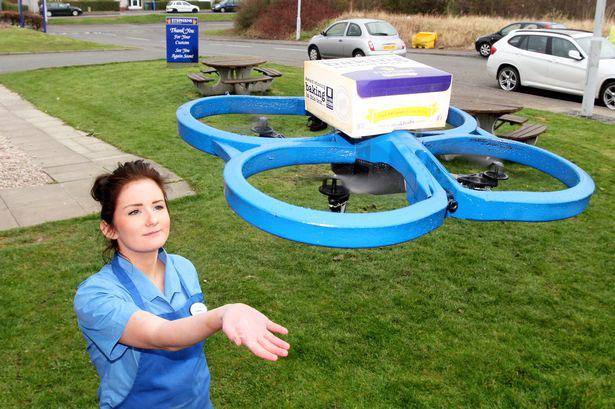
Having A Heart Attack? There’s A Drone For That

Globalegrow, a global, cross-border online clothing retailer, has invested in research that will build a safe, fast and cost effective drone delivery system, in a move they hope will  improve the customer shopping experience.

In a recent report, drone delivery is likely to disrupt traditional package delivery, and expected to bring major change to the world of e-commerce within the next five years. To answer this future challenge, Chinese retailer Globalegrow intends to invest $150,000 in the coming year in a drone delivery research project. Their major motivation is to help with faster, safer and more economical logistics.

Many companies are presently looking at how drones can deliver their products – from pizza, electronic goods, clothing and even heart defibrillators to those who’ve just had a heart attack on a golf course.

It’s expected that the price consumers will pay for drone delivery will be much lower than traditional road deliveries. By how much, we don’t know, but as we’ve seen in the past, when technology is introduced to a service or product, prices usually start to fall steeply.

Drones typically use electric motors, so they will also be more environmentally friendly, resulting in fewer trucks on the road.

Globalegrow reckons that delivery times for their clothing will drop by 25% if their research project works out. A major challenge they face is around international logistics. Drone delivery, in combination with international warehouse management, will require a customized approach that will re-write rules on how things are delivered. Customs, flight paths and security are all things to be taken seriously.

For a start, Globalegrow has focused on safety, testing in different environments, tracking, flight range, battery life and regulatory support for the first phase of their research. Once the project “takes off” the company will also need to look at their ability to handle large volumes.

Delivery companies have never needed roboticists and aeronautical engineers before, but Globalegrow intends hiring these experts to ensure a great end-product and user experience. The aim of the research is to create a self-flying drone that is loaded with sensors that would help track the package, guide touchdown and enable a tether cable to retract and detach the goods. Added safety measures include a way to alert nearby pedestrians that something might be landing on your head.


Surprise, Surprise: Mercedes to Replace Robots With… Humans

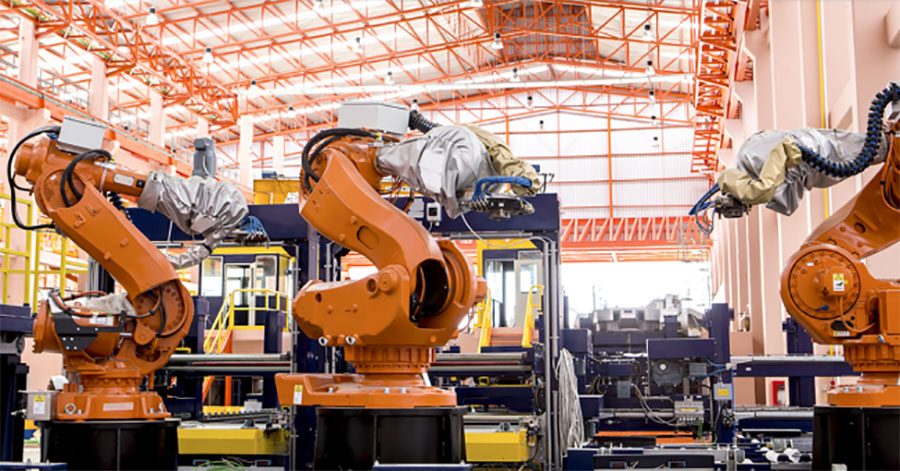
According to the head of production at Mercedes-Benz, the robots cannot cope with the high degree of customization and the many variants the carmaker has today.

Mercedes-Benz plans to abolish a number of assembly-line robot in its largest plant in Sindelfingen, Germany and compensate it by getting more work done by people.

Even more surprising, or perhaps not, is the justification given: to cope with the extensive customization options of the vehicles.

According to the head of production at Mercedes-Benz, the robots cannot cope with the high degree of customization and the many variants the carmaker has today, which conveyed the new very timely and smart message “We save money and secure our future while employing more people.”

So what about the tsunami warning from the World Economic Forum in Davos, where specialists from around the globe predicted that the 4th industrial revolution robots would cost five million jobs by 2020?

Well, maybe predicting the future is not that simple after all… but still, I would like to add two predictions of my own:

1. ROBOTS AND HUMANS WILL WORK SIDE-BY-SIDE FOR A VERY LONG TIME

In the same article, the head of productions mentions that are areas which would not work without robots, mainly painting and welding. He also says the vision is that humans will work side-by-side with small robots that can continually perform repetitive tasks. This implies the creation of mixing zones, where the robots no longer work in separately enclosed areas, requiring completely new security measures.

Well, it doesn’t take a genius to predict that. The degree of customization, heading steadily towards product uniqueness, will require, in many cases, a flexibility that only a special type of factory resources has: humans.

Yes, all the repetitive work will be performed by robots. And with time, the scope of these activities will be enlarged. Still, the most value-added activities, the ones where completely new and unforeseen situations happen, will only be dealt with by humans. With the advent of artificial intelligence these will be fewer than before, but will be critically important.

2. THIS DECISION IS DEFINITELY… TEMPORARY

I hold out that this decision is temporary. Although temporary in this context could mean several years, or even decades.

The different customization options will continue to evolve towards unique products. The same article refers that Daimler is planning to bring in ten new models to the market over the next four years, which can be ordered in several variations and with many extras.

The days of mass customization, where only small variations could please consumers, seem to be over. So manufacturing companies need to be prepared for this reality.

What is clear is that the automation and robotics necessary to cope with this paradigm shift will be very different from the ones used today.

The industry 4.0 working group actually predicted this: the shop-floor will be composed by intelligent products or materials (cyber-physical systems) and intelligent manufacturing equipment (cyber-physical production systems). These will have their own communication, sensors and actuators, computing power and intelligence and will become autonomous decision entities.

The consequence is that the shop-floor operations will no longer be centrally controlled, but will rather become a decentralized marketplace with demand and supply. Until this happens, the best is to use the most flexible resources available today: humans.

 by Francisco Almada Lobo, CEO of Critical Manufacturing


Who’s the Banker of the Future?

Digital disruption will make tomorrow’s banking workforce unrecognizable from today’s. Banks must build a culture that nurtures diversity of thought and ensure bankers have the new skills they need to succeed.

The brain drain is a very real outcome of the low Canadian dollar. US companies can now offer more for high-demand talent in compliance and risk. It’s a worrying development for banks, but also an opportunity for them to re-think their long-term strategy and ask, who’s the banker of the future?

“Since the financial crisis of 2008, banks have been focusing on their core businesses, redesigning their structures and reshaping themselves through the use of technology,” says Andre de Haan, EY’s Financial Services Leader. “But to take their financial performance further, they also need to focus on their people, who will help them win in the future.”

de Haan says in the face of continuously declining ROE, increasing regulation and pressure to reduce workforce, Canadian banks need to identify which employees really create value and what they need to do to attract and retain those individuals.

Understanding the expectations of a new generation of bankers 

Millennials (those born between 1981 and 2000) will constitute 72% of the global workforce by 2025. Yet banks have little brand appeal to young employees. Globally, among IT and engineering graduates, banks are absent from the top 25 most-attractive companies to work for. Banks will need these graduates in the future as they will require highly educated talent. They need to make sure they understand this generation and their expectations of:

  • Greater labour mobility
  • Greater technological capabilities
  • More entrepreneurial mindset
  • Greater sense of entitlement

In addition, millennials are more likely to value flexibility, learning opportunities and mentorship more than monetary compensation. In choosing a place to work, they also consider whether a company’s values align with theirs. Purpose matters to millennials and banks must emphasize it.

Assessing technology’s impact on the workforce

“In the coming decade, all things digital will revolutionize the banking workforce,” says de Haan. “There will be fewer bankers in traditional roles, and the roles of those who remain will be fundamentally different.”

As the role of technology transforms from adding value in efficiency, cost, speed and accuracy and towards managing more complex tasks, banks will have to determine appropriate controls. In addition they’ll have to ensure that employees with the right skills monitor the correct and safe use of technology.

Equally important is understanding, even if automation is possible, where it may not be desirable. This will help reallocate investment across the business and develop plans to retrain and redeploy staff to other parts of the business.

Changing culture to encourage diversity of thought

The key to creating a culture of innovation is encouraging diversity of thought. An adaptable, ‘intrapreneurial’, diverse workforce promotes innovation and there’s evidence that it leads to improved financial performance. To overcome traditional homogeneity, banks must draw talent from a broader pool and build a culture that supports and retains people from different backgrounds, with different views and experiences. For example, EY research across a number of industries shows that the highest-performing companies invest more in the advancement of women than their peers.

“If banks want to attract and retain valuable, innovative talent, they need to transform their HR approach,” says de Haan. “Starting from recruitment all the way to performance reviews, banks should reconsider their employee propositions. Especially for millennials, who are set to become a significant portion of the workforce very soon, the salary alone isn’t an enticing enough offer. They’re looking for much more than that, and more often than not, they’re finding it somewhere else.”

EY are committed to building a better working world.


3 New Skills You’ll Need in the Future to Thrive

As most of you know I am not a fan of the current state of high-level leaders of our major businesses or government.

I recently saw the movie The Big Short. It’s award-winning author Michael Lewis’ journalistic account of how Wall Street bankers wrecked the world economy in 2008. Their hard power, one-dimensional thinking caused average everyday people to lose $5 trillion of their assets. The movie had funny moments and eccentric good guys who were needed to tamp down my anger. But there is nothing funny about the work lives of people who work for most big public companies. And there is nothing funny about the future damage we continue to do to our environment, our health, and our children’s future in the name of making money…dammit!

You may not be aware of this but real business results over the last two decades have been terrible.  Most large businesses are floundering.  True organic growth driven by streams of positive innovation is extremely rare.  Today most CEOs of publicly traded companies are simply expert at financial engineering.  That’s a fancy term for managing a company’s profit and loss statements, balance sheets and stock price to impress Wall Street analysts rather than to make inspiring business decisions. I know this first hand.  I have been in many meetings to hear discussions about how to cut budgets and talented people only to get a target number.

Global business has spent the last two decades focused on efficiency. Total Quality, Re-engineering, Six Sigma, Lean. It’s all good for creating efficiency that produces acceptable product quality at a low-cost. Except everyone has done the same thing. They’ve even used the same consultants. So businesses have benchmarked themselves into mediocrity. Finding efficiency in large organizations does not take imagination so it enables mediocre minds to rise to the top of institutions that in many ways rule the world.

Meanwhile all the fun, creativity and courage is taking place in startups where good ideas and being different actually create value. The problem is that the corporate dinosaurs whose stomach acids attack even the smallest amount of true inspiration soon gobble start-ups up.  Of course, there are exceptions to this picture.  But they are way too few to make a big difference.

So last year I founded the SMART Power Institute to do continuous research on what leadership mindset and practices create and maintain organizations that can continually deliver products and services that actually enhance our lives and heal our world.

I am fortunate.  I get to teach new science-based leadership practices, new innovation processes and new ways of elevating teamwork in complex webs of teams that are the new structure of business. I also get to teach people how to “work like a genius” which is a synthesis of everything we know about how to be highly creative, productive and happy at the same time.  What excites me about the intersection between leadership and positive well-being is that both are vitally needed to create organizations that thrive and make a difference.

I feel very lucky to live at the perfect time when women are flowing into leadership roles at an unprecedented rate.  The reason I am such a fan of women’s leadership development is that their social intelligence, empathetic awareness and short-term / long-term balance make them exceptionally easy to teach and coach SMART Power thinking and processes to. My job is to make sure that super-competent women don’t get stuck eighty percent up the organization chart only to waste their time trying to help hard power leaders accomplish meaningless goals.

What I focus on are the three core game changing skills of SMART Power:

  1. Increase your strategic impact.  The perceived lack of strategic vision is the most cited reason for not advancing women into senior leadership. (It holds soft power men back as well.) Yet people with creative imaginations and moral ambition need to develop and present a SMART Business Vision that becomes the leadership agenda of organizations. I get to teach high potential leaders a science-based, 6-step method to open closed minds, get buy-in, command resources and change things for the better. (I have helped women who lack formal position power use this method to change product roadmaps, recruit a more diverse workforce, acquire R&D investments etc.)
  2. Social intelligence.  The highest use for empathy is something I call CVI – Customer Valued Innovations. CVI is a process that focuses teams on creating product/service breakthroughs that customers really value. I call it disciplined empathy. I often layer a sustainability matrix so that the value can be created in a way that honors the environment rather than exploiting it.
  3. Gender Synergy.  I believe the biggest chance we have to create an enduring civilization is to equip men and women to work together in a new way.  This requires a mutual mind shift and five new powerful behaviors that unleash the strengths of our socialized and genetic differences.  This is not as hard as it sounds. I’ve been able to do this in scores of projects over the past few years.  Now it’s down to a science.

Well, I hope you can see why I am so committed to SMART Power. For 2016 my goal is to continue to use these principles and processes to transform organizations with a practical method to sharpen the SMART Power tools.  I will also be expanding the Leadership SPA in partnership with a major university and a network of professional women’s groups.  We are putting special focus on technology, biotech and entertainment companies for two reasons.  These are the industries which are on the leading edge of our future.  Second, all the research confirms that they are also the most sexist industries. That simply won’t do. We need SMART leaders to get to the next level. And we must get to the next level if we are to have an enduring civilization.


What’s Love Got To Do With Biz?

Love isn’t a word that you often hear in business conversations, yet studies show it plays a significant role in determining the performance and wellbeing of employees and customers. So it shouldn’t be such a surprise that DreamChange has a Love Summit business conference, which debuted this past Saturday, June 13th.

Research tells us that the more love people feel at work, the more engaged and productive they are. The longitudinal study by Harvard, the University of Pennsylvania and George Mason University, “What’s Love Got to Do With It?: The Influence of a Culture of Companionate Love in the Long-term Care Setting”, exhibits the importance of emotional culture in the workplace.

“Employees who felt they worked in a loving, caring culture reported higher levels of satisfaction and teamwork. They showed up to work more often. Our research also demonstrated that this type of culture related directly to client outcomes, including improved patient mood, quality of life, satisfaction, and fewer trips to the ER,” states Harvard Business Review in the 2014 article, Employees Who Feel Love Perform Better

If you’re wondering what a loving business looks like, imagine a workplace where employees genuinely care for one another and show it. This can be demonstrated in a variety of circumstances, whether it is a boss who makes sure their employees receive good benefits, the way employees communicate with one another and their customers, or a workplace where every person is made to feel like they really matter.

While the practicality of love as a positive force in business may initially sound taboo, consider successful companies such as Whole Foods Market, PepsiCo and Zappos, all of which have implemented loving philosophies into their business management. “We are more than a team though…we are a family. We watch out for each other, care for each other and go above and beyond for each other”, says Zappos.

It makes sense that Zappos would link family and business since family relationships are generally the most loving, but also because family businesses account for at least 2/3 of enterprises in the world. While we might typically think of family companies as mom and pop businesses, statistics show that they make up a large range of enterprises in all different industries. In fact, many of the largest corporations in the world are family owned.

Imagine what the world would look like if family companies such as WalMart and the Koch Industries exhibited the meant-to-be qualities of family – loving, caring and compassionate – in all of their operations. Evidence shows that creating a culture of companionate love in the workplace leads to happier employees, greater customer satisfaction and higher profits, and that the investment of love in business is a rewarding undertaking. By supporting this venture, corporations like WalMart and the Koch Industries could serve as the very antidote to many of the problems we face today, such as a suffering global economy, climate change and social inequality.

Family businesses aren’t just the backbone of the American economy; they also govern the majority of market economies around the world. Given that families run most businesses and family relationships are supposed to be the most compassionate relationships, the concept of love in the workplace, once again, should not be so surprising. The time has come to embrace love and business – together – as one of the most viable forces for creating thriving enterprises while cultivating a more sustainable, just and peaceful world.

One Of India’s First Sugar Companies: Blessed By Ghandi

In the early 1900s Shishir Bajaj’s grandfather Jamnalal was involved in the Freedom Movement in India alongside Mahatma Ghandi, even spending time in jail as a freedom fighter in his fight against the British. Driven by strong ethics and a will for Indians to govern themselves he added philanthropy to his arsenal of weapons, alongside his strong political ideologies. So strong, in fact, that he refused the title of honorary magistrate bestowed on him by the British Raj. Instead, he opened the first temple to the downtrodden, now 100 years old.

While Jamnalal never saw his cherished dream of an independent India, dying five years before independence day celebrations in 1947, his principles and convictions have been passed down through generations of Bajaj children. His legacy is presently in the care of Shishir Bajaj, Chairman and Managing Director of Bajaj Hindusthan sugar company, the largest in Asia and fifth largest in the world.

The principles that his grandfather learnt under Gandhi have been applied to this large industrial business, one that almost qualifies as a regional government in scale and impact. Jamnalal, with Gandhi’s blessing, saw at an early stage that there was a need for new companies to feed the economic challenges of building a new nation and formed the sugar company in 1931.

“Because my grandfather was too busy with the Freedom Movement, he set up the business and let my father run it,” says Shishir. And in a move that predates Bill Gates and Warren Buffett’s Giving Pledge campaign by 80 years, Jamnalal formed a trust for the wealth because he didn’t want to own more than he needed; a very unusual move at the time.

Two foundations, the Bajaj Foundation and Jamnalal Bajaj Trust now support more than 100,000 families in 501 villages, positively affecting the lives of more than 615,000 individuals within the company’s 12 sugar production areas. In keeping with the family tradition of social change, Shishir’s son Kushagra suggested the formation of an action plan five years ago that scaled the company’s social good onto a much larger platform.

“The number of villages we’d like to cover in the next five years is 1,000,” says Shishir. “There are about 700 districts in India and if we can capture just two I think it will be a seriously good achievement.” As the most populous country on earth with just over 1.2 billion people, two districts is not the small number some would imagine. Some of the projects Shishir is involved in include sustainable agricultural practices, and women’s self help groups.

A water resource project has seen 82 rivers deepened, 120km of riverbeds rejuvenated and schools built at seven of the ten sugar factories. Other projects include an energy company that produces 450 megawatts of power, with plans for a 2,000-megawatt power plant underway that will cost $2 billion.

One wonders what Jamnalal would say today if he saw how his sugar factory, one of the first in India, had transcended profit to become a builder of infrastructure to a nation in need. As Gandhi would have said at the time, “You must be the change you wish to see in the world.”

The Richest Man In American Medicine Seeks To Forge A ‘Cognitive Revolution’

Dr. Patrick Soon-Shiong is a surgeon, drug developer, entrepreneur and the richest man in American medicine. Since selling the company that makes his breakthrough cancer drug Abraxane in 2010, he has been developing and expanding NantWorks, an LA-based medical technology company with implications far beyond medicine. Kathleen Miles spoke to him about his groundbreaking work.  We’re on the NantWorks campus in Culver City. Can you explain what you are developing here?

I started this concept in 2005. It dawned on me that the world has not prepared itself for the convergence of supercomputing, cloud computing, machine vision and artificial intelligence. What we’re doing here is converging what I think is the next revolution of mankind. We’ve had the industrial revolution, and we’ve had mechanical and energy improvements. I think we’ve now reached a stage of enlightenment where technology will allow mankind to evolve to this era of cognitive power. A cognitive revolution will bring the wisdom of the Internet and what we know as mankind to somebody as they’re interacting with the real world. NantWorks is a company to figure out how we’re going to transform using the convergence of huge technology in how we work, live and play. Imagine if da Vinci – an engineer, an artist – had the supercomputer in his hands, instead of a quill. That’s what NantWorks is about.

Break down the elements of what you call the “ecosystem” of companies under the umbrella of NantWorks.

I needed to enable machines to talk to machines. So we built this operating system that ties to 25,000 medical devices, puts the data in the cloud and self-populates the electronic medical record. I call that the ability to capture the human signal engine – very much like when we send our astronauts up to space and capture their vital signs. If we can capture vital signs and medical records and give that to the doctor for decision support, that’s NantHealth. As we were building that, I realized that the fiber infrastructure doesn’t exist. The data centers don’t exist to address yottabytes of data. Ten thousand patients alone is equivalent to eight times the download of the entire Netflix library. So we needed to build a fiber infrastructure that runs across the country.

soon-shiong2

We now have 12,000 miles of fiber running across the country, in which we have seven data centers that are completely HIPAA-compliant, and that is NantCloud. I then realized that we need to have this information that is completely mobile. I needed to take the mobile device and give it machine vision, let it recognize physical objects and transport information. Then we could have a supercomputer in the hands of a physician. That’s NantMobile, which will also address the consumer and bring sports, entertainment, health and FitBit, all on your mobile device.

But the ability to transmit data fast on this mobile device required a chip that hadn’t been built yet. We needed a chip that can move data not at kilobits but at gigabits — without wiping out the battery life. Nobody could build that chip. So we created a company called NanTronics and created a chip that can move data 2.5 gigabits per second and go in a smartphone.

We just launched it in Barcelona. We’ve also built chips that can make a hearing aid that’s tunable by a smartphone and costs $300 (as opposed to $4,000 now). One phone can treat an entire village. Finally, we realized that it’s not only the genes that are important. There’s a whole world of proteomics and genomics, and the two had never been put together. So we created this company called NantOmics and built a supercomputer that measures the genes and the proteins in 47 seconds so that we can go from gene to protein to drug.

If artificial intelligence is part of this technological revolution that you would like to integrate into our health care system, do you anticipate it will ever fill in for human doctors?

I look upon the human-patient relationship like a priest-parish relationship. I don’t think there will ever or should there ever be the absence of human-human interaction. I don’t call it artificial intelligence – I call it amplified intelligence. We’re coining this term AI3, meaning amplified, actionable and adaptive intelligence. We’re going to enhance the cognitive capabilities of a human being who can’t recall information at the speed and depth that we need to make the right decision.

But this information is in the cloud and can give the doctor actionable information in real time. With actionable, adaptive intelligence, everybody learns from everybody else. Amplified intelligence makes sure we give the right care at the right time, especially when it comes to making life-threatening decisions.

How will the technology you are developing be used to treat cancer and other diseases?

According to a recent World Health Organization report, in 20 years, there will be about 24 million diagnoses of cancer per year. It’s an epidemic. There’s no question that we’re losing the war against cancer. The disease is so complex. It’s like whack-a-mole — you hit something and another thing pops up. And many cancer patients are getting inappropriate care.

How do we change that? The doctor is inundated with a deluge of information, or big data, and cannot address it in real time. So we’ve built a tool that is now adopted by most of the oncologists in the United States that takes thousands of protocols, the patient’s diagnosis, their biomarkers and their history and maps it in real time. As you treat the cancer patient with chemotherapy poisons, you’re affecting the genomic and proteomic profile of the cancer cell itself. We need to find the cell that’s now floating in the blood and do the genomic and proteomic analysis so we can predict early on what drug to give before it gets even worse.

It’s the only chance we have to put ourselves on the path to the cure. So we built a supercomputer that can do the genomic analysis rapidly. Think about the math. There are 10,000 new analyses that we need to do a day. It takes 11 weeks to do one patient’s analysis of the entire human genome. So we built a supercomputer that can do the entire analysis in 47 seconds.

In June, at the American Society of Clinical Oncology, for the first time, we will be presenting the results of the first 5,000 patients’ genome sequencing. We were able to do all theses analyses in less than 69 hours and provide the information of what drug to give to the patient based on their genetic fingerprint. We’ve built this clinical operating system to be completely inter-operable across the entire country as well as England, Canada and China.

Then we can present this complete information exchange to the pharmaceutical company and say, ‘Don’t treat lung cancer as one conglomerate disease, but as a multitude of rare diseases.’ The pharmaceutical industry used to always think that it needed to develop a blockbuster, billion-dollar drug. The problem is the blockbuster model before would help 20 percent of the people – say, with lung cancer. On the other hand, if you took lung cancer and you broke it down into 700 fingerprints of personalized medicine, you could have 90 percent response rate.

You have developed technology that helps the blind see. How does it work?

The technology is to have a camera recognize any physical object in the real world and then impart the knowledge of what the object is so the blind can hear from the camera what it’s looking at. In essence, we’re creating a seeing-eye dog with your mobile device. It’s very difficult to read money. Now you can take a $5 or $10 bill, no matter how it’s wrapped, and the camera will tell you what it is. That was released as LookTel Money Reader. We then released another app called LookTel Recognizer. It will let you recognize physical objects in the real world.

Are there other applications for machine vision?

In a sense, what we’ve done is created the actual browser of the physical world. Now the physical world can be brought to life by recognizing objects and curating information from the Internet. This also enables mobile commerce, including collecting coupons and closing a transaction. That’s in the context of NantMobile, which we’re about to launch in the retail space.

How will your information technology help the poor, particularly in LA’s inner city?

I grew up in South Africa. When I came here, I began to see that there is a medical apartheid in this country. The rich are well cared for, the middle class are sort of well cared for and the poor are just out of luck. A woman in Martin Luther King hospital in South LA called 911 from the hospital floor because no one was taking care of her. She died on that floor, and four hours later, nobody even knew she was dead. So I walked the floors where she was and went to see the doctor. I said, ‘How could this happen?’ They felt there was this inequality of information and care. She was Hispanic-speaking, so maybe it was a language barrier, but there was absence of care and skill sets down there. So they closed the hospital. But that wasn’t the answer.

The answer was to bring care down there. I’m glad to say [LA County Supervisor] Mark Ridley Thomas and myself fought very hard, and the hospital is about to reopen next year. The University of California system is bringing care there. And information technology will make it possible to have information transferred –whether you’re in South Central LA or Beverly Hills – in a patient’s time of need.

Kathleen Miles is Senior Editor of The WorldPost, a partnership of The Huffington Post and Berggruen Institute on Governance. This piece first appeared in Worldpost. logo

World Cup Soccer & Social Enterprise: A Hybrid Financing Model

The potential of hybrid financing strategies to accelerate the growth of the social business sector was one of the topics at the fourth edition of the Impact Economy Symposium & Retreat in Switzerland on June 13-15, 2014. A group of key influencers, thought leaders, and practitioners from the worlds of investment, business, government, and philanthropy once again convened to explore the most effective solutions, innovations, and opportunities that have surfaced in the promotion of impact. Real Leaders is one of the seven global official media partners of the symposium and, in this exclusive series, Impact Economy’s Dr Maximilian Martin discusses content covered at the conference.

On June 28, the Round of 16 kicks off at the 2014 FIFA World Cup. Football (or soccer, as it is known in the United States) has the amazing ability to engage people around the world. The 2010 World Cup in South Africa was televised across 245 television stations in 204 countries. The forthcoming World Cup in Brazil will reach even more people.

At a time when the military advances of ISIS in Iraq and Syria are bringing to the forefront the issues that divide different parts of national and global populations, fresh ideas on everything ranging from alternative energy to sanitation are needed to drive real progress around the world. Mega events such as the World Cup remind us of our shared humanity and intertwined destinies.

By taking place in an emerging market and including teams from the developing world, the World Cup also draws attention to the realities there, emphasizing that transformational progress is needed on a number of social and environmental issues; the street protests in Brazil against the cost of this year’s World Cup being just one of many reminders.

Achieving a step change in impact requires fresh ideas

Social entrepreneurs are increasingly viewed as a source of the solutions now needed. Less clear has been the kinds of businesses that need to be built in order to live up to the huge expectations; this is to say nothing of the most effective ways to actually finance them. Globalization, long-term demographic trends, changing consumer preferences, and the state of public finances are collectively driving the emergence of an integrated social capital market for the first time in human history.

This so-called impact investing market is targeting both financial return and social impact and contains a fast-growing stock of assets currently valued at USD 46 billion—and social enterprises are uniquely positioned to become the primary recipient of the resulting attention, knowledge, and resources. To make the most of the potentially vast amount of capital that stands to be allocated, however, social entrepreneurs will need to deliver a step change in impact on a number of protracted challenges that conventional approaches have not been able to solve.

Money and talent will be key to making this happen. Amidst increasing chatter about whether impact investing is indeed a golden opportunity to capitalize smart solutions to protracted challenges or just more hype, “Building Impact Businesses through Hybrid Financing: Special Impact Starter Edition,” a new Impact Economy report, looks at the first principles that determine the most compatible forms of financing given the problems to solve, and considers the structures of corresponding business models. Leveraging football for development is among the cases considered.

Social enterprises can use hybrid financing to drive greater impact

A key finding is that successful social enterprises can use hybrid financing to drive greater impact. Grants remain the best way to seed a social enterprise, but they tend to become insufficient in providing the capital required for the venture to scale if it achieves initial success. Moreover, they are expensive to raise, with the combined cost of fundraising often ranging from 22 to 43 percent of the grant, all costs considered.

Hybrid financing models therefore also use non-grant capital to fund social business activities, namely some combination of up to four forms of capital (e.g., grants, debt, equity, and mezzanine or convertible capital), as well as a variety of possible financial instruments such as internal credit enhancement through subordination or reserves, or external credit enhancement via letters of credit.

Time also plays a hugely important role in these structures: hybrid financing can be synchronic (or tiered),combining for example grant and non-grant sources of capital simultaneously to fund the joint expansion of profitable, and the optimization of unprofitable, elements of a social enterprise’s value chain and reduce risk. Or they can be diachronic, with hybrid funding unfolding over time, typically beginning with grant funding and then “graduating”—as the venture achieves critical mass—to equity, debt and mezzanine funding.

Some social entrepreneurs use football as a means for social change

Hybrid financing solutions can also be used to fund solutions delivery when sport is harnessed for achieving positive social impact, and when social entrepreneurs engage in what is called “football-for-development.” Building on the popular passion for football, social entrepreneurs have been reaching young people with an offering of education and training services to reduce socio-economic disparities and overcome gender discrimination.

For example, streetfootballworld, which is the leading global social enterprise in football for development and is covered in the report, focuses on advocacy to legitimize football in general as an instrument for social change; capacity development to help local grassroots organizations to achieve greater impact in their work with young people; network development to strengthen the football-for-development movement as a whole; and partnership development to match funding organizations with actors on the ground who can deliver football-for-development programs.

Jürgen Griesbeck, the organization’s Founder and CEO, is optimistic that hybrid financing strategies offer “important components to transform entire industries. Like subsidies or public research grants in the private sector, donations are highly important to the social sector to fund for the purposes of innovation and to support hard-to-monetize thematic areas.” Hybrid financing strategies “can help to bridge the gap: from the current reach of clients in the social sector to all of those that are not yet served,” said Griesbeck.

Via its partnerships with industry players, streetfootballworld is working on creating leading models that could be scaled, for example by applying the legacy requirements of bid books for FIFA World Cups to social issues. With an estimated latent demand of at least 45 million children and youth who would benefit from the approach, streetfootballworld would have to serve 60 times more clients to meet demand. Unsurprisingly, the organization is actively considering all types of capital, beyond grants, to overcome this scale gap.

It is time to innovate so football’s positive impact can match its footprint

The scale gap is especially interesting when put in relation to the status of the global football industry. There are an estimated 3.5 billion fans around the world (i.e., ahead of cricket with 2.5 billion fans, field hockey with 2 billion fans, and tennis with one billion). FIFA has 209 member associations with over 327,000 clubs and more than 270 million players—roughly 3.75 percent of the global population are actively involved in soccer, whereby 265 million play, and 5 million serve as judges and functionaries. The soccer business is booming. Over recent years, the primary driver of the strong revenue growth of many football clubs has been derived from television broadcasting. Salaries of top end players are exploding.

Leading Spanish football clubs FC Barcelona and Real Madrid pay average salaries of EUR 6 million to their players. In 2014, stars such as FC Barcelona’s Lionel Messi had a market value of EUR 120 million, and Real Madrid’s Cristiano Ronaldo was worth EUR 100 million. The top 30 football clubs each now generate over EUR 100 million annually. Leading club FC Barcelona had 44 million fans, Real Madrid 41 million, and Manchester United 37 million.

Even so, the football industry is at a relatively early stage in terms of high-impact corporate social responsibility (CSR) strategies, lacking the sophistication present in its core business and comparable industries. The good news is that some associations, such as FIFA, are relatively ambitious, and some clubs, such as FC Chelsea, engage in corporate responsibility as part of their brand development. Additional pathways and innovative financing could enhance impact.

As the report illustrates, the example of streetfootballworld shows that cooperation and orchestration are essential to closing the gap between supply and demand. As concepts of branding, merchandising and large-scale commitments expand into a professionalizing social sector, hybrid financing strategies will play a more important role going forward: funders may provide up-front risk capital in return for a share of future expected revenues, and financial engineering will help to monetize future grant commitments from reputable counterparts ahead of actual payment.

Many will start looking forward to the 2018 FIFA World Cup in Russia following the 2014 finals. A step change in impact is possible in a couple of years, provided the combined use of philanthropic and commercial capital is used to build and finance the social enterprises of the future, and help football to develop a positive social impact that is commensurable with its global footprint. Used properly, hybrid financing can provide a head start to build a future that football fans around can look forward to.

Maximilian Martin, Ph.D. is the founder and global managing director of Impact Economy, an impact investment and strategy firm based in Lausanne, Switzerland, and the author of the report “Building Impact Businesses through Hybrid Financing: Special Impact Starter Edition.”

The CEO of Coca-Cola On Using The Company’s Scale For Good

Recent research shows spending money on corporate social responsibility is no longer seen as a detriment to a company’s profitability. Stock analysts now view such expenditures as essential to a company’s long-term brand and value. Coca-Cola is one of the many companies that are making efforts to tackle the world’s greatest societal challenges — water scarcity, climate change, and even the rights of women and girls in the developing world. Muhtar Kent, (pictured above) the Chairman of the Board and CEO of Coca-Cola since 2009, talks about how the beverage company is imbedding sustainability into its business.

Over the past several years, corporate social responsibility (CSR) has evolved from simply being an isolated “do good” arm of a company to something more profound that’s changing the way organizations do business every day. How has Coca-Cola integrated these CSR principles into your operations?

Kent: Sustainability isn’t new to us but we’ve been intensifying our focus on it. We’re prioritizing programs centered on water, women and well-being—all three of which are essential to our business. For example, we’re working to achieve water neutrality by 2020. So far, we’ve replaced 52% of the water we use in making our beverages and reducing water usage across our 800-plus bottling plants helps reduce the overall cost of production. We have also committed to economically empowering 5 million women by 2020. This is the largest such program ever undertaken by a commercial organization. Our micro distribution centers (MDCs) in Africa, many of which are run by women, help our beverages reach small shops and kiosks that can’t be served by more trucks and vans and create value for our business, our retail and restaurant customers, and the broader communities.

Restructuring a company to focus on sustainability doesn’t happen overnight, so how long did it take to get everyone on board and how did you deal with any resistance to change?

Sustainability can no longer be a compliance measure or a “nice-to-do”; it’s now a business planning imperative with measures, goals, and explicit value connected to our programs. Because of this importance, we didn’t really experience any resistance. There were certainly people who challenged our approach and provided candid feedback on how we could improve but overall there was collective agreement that this was necessary.

If the ultimate goal is to create both economic value and social value, how do you strike that balance?

There may be an initial financial investment that doesn’t create an immediate and direct financial return—that’s OK. We know that by investing today, we will ultimately be a stronger, more sustainable business down the line. For example, developing our PlantBottle innovation — a fully recyclable packaging made of up to 30% renewable plant material — took significant upfront investment but we felt it made good sense, especially with oil prices fluctuating. And it’s helping contribute to our goal of reducing the carbon footprint of the drink in a consumer’s hand by 25% by 2020. It has also been a tremendous boost to our Dasani water brand, helping us win new customers and consumers.

Have you faced any specific challenges in measuring the social value you’re creating?

Coca-Cola operates in more than 200 countries and the needs of each market depend on a variety of factors. While some markets face economic issues, others may face resource scarcity and gender inequality, and some face all of these issues and more. It can be difficult to measure and compare. Thus, we operate a value creation model that is globally driven but locally focused.

Can you explain what you mean by a “value creation model”?

I mean one that creates value for all the stakeholders touched by our business. Consider PlantBottle. We’re able to put a package in consumers’ hands that reduces demand for oil. If consumers love our beverage more, that benefits our customers. And when the packaging is less expensive and we’re less dependent on petroleum-based plastic, this creates value for our shareowners and our bottling partners.

What is Coca-Cola doing that’s different from what other companies are doing?

There are a lot of companies and organizations out there doing great work but our scale allows us to think big and execute. It’s not just our size as a company or a brand, but the fact that we have operations in more than 200 countries. This footprint enables us to set up partnerships with organizations large and small to make the greatest local or global impact. We can fund projects at levels that make a real difference. And often times, we can use the size and nature of our operating model to address a need in a significant way.

We also have our distribution network, which connects us directly to the 24 million retail customers we visit every week. As the world strives to bridge the gap of the last mile between the virtual world and the real world, we have an opportunity to help make this connection. We’re continuously working to make the most of our distribution network as well as our virtual and physical assets.

How much of your company’s move in this direction is customer-driven vs. conscience-driven?

Today’s consumers expect companies to be socially responsible — not just on the surface either. Our brand is in our consumers’ hands but that’s not the primary reason for our sustainability efforts. Our efforts are primarily fueled by our business needs — we can only be as sustainable as the communities we serve so we’ve initiated a host of programs and partnerships to help strengthen those communities while continuing to build our business.

We also have ethical drivers for our sustainability work. Across Coca-Cola, we are parents, partners, siblings, friends, concerned citizens — and we live in the communities where we operate. We have a responsibility to help others.

How has your organization gone about partnering both at the local level and at the national level to ensure that the social value you’re creating on the ground is recognized and supported with policies and governance?

We work with governments, civil society organizations, and other companies. It’s essential to invite the groups that influence policy and governance to be part of the initial conversations so they share ownership from the start. Plus these organizations often have valuable local intelligence and experience

Consider our work in Tanzania with the Bill & Melinda Gates Foundation and The Global Fund to Fight AIDS, Tuberculosis and Malaria. In 2010 we joined forces to improve access to critical medicines. Working with the Tanzania’s Medical Stores Department and others, we were able to share our supply chain expertise, reduce medicine bottlenecks, and improve distribution as a whole.  We try to use our expertise and know-how to make a positive difference in the communities we serve.

Looking at businesses and consumers of the future—10, 20, 30 years from now—what will happen to organizations that fail to integrate social and environmental concerns into the core of their daily operations?

In my opinion, the importance of balancing social and economic value will only grow over time and organizations that don’t do this will fail. They’ll lack the resiliency to address ever-changing consumer attitudes and shifts in geopolitics, economics, and demographics.

For Coca-Cola, many of the most exciting opportunities are likely to come from the intersection of sustainability and our supply chain, giving us new ways to reduce our packaging, energy, and water footprints and improve the well-being of the communities we serve. While we’ve gained some good momentum with initiatives like 5by20EKOCENTER and PlantBottle, we know we’re just getting started. Sustainability is an ongoing journey, one that we hope and trust will build forward momentum as we remain “constructively discontent.”

What do you mean by “constructively discontent”?

It’s my way of recognizing achievement but also understanding that we can never be satisfied with it. We must refuse to accept the status quo and continue to challenge ourselves. We have to keep setting higher goals and expectations and then meet or exceed them. And at the end of the day, we need to operate with a lens of optimism, but temper it with a lens of reality.

This is part of an ongoing series from Harvard Business Review and the Skoll World Forum on how mega-corporations are integrating innovative ways to solve social and environmental problems into their core operations.

5 Powerful Phenomena Shaping The Philanthropic Journey of the World’s Wealthiest

Are we in the midst of a turning point for philanthropy? Are these the boom years of ‘philanthrocapitalism’? Though the practice is not entirely new, the term was coined in 2006 by Matthew Bishop, US business editor of the Economist to describe a philanthropic culture that draws heavily on business talent and entrepreneurship. Isabelle de Grave explores the powerful phenomena guiding the world’s wealthiest towards an increasingly entrepreneurial style of philanthropy. As it turns out, these may well be the boom years.
 
Carnegie’s gospel.
 
Andrew Carnegie, a Scottish-American industrialist and 19th century steel giant had a way with words that has captured the imagination of the super rich.
 
“The problem of our age is the proper administration of wealth, that the ties of brotherhood may still bind together the rich and poor in harmonious relationship,” he wrote in his essay “Wealth” first published in the North American Review in 1886.
 
Carnegie believed that the rich had a responsibility to use their acquired wealth and business skills to administer wealth for the common good and solve society’s biggest challenges.
 
The rich “have it in their power during their lives to busy themselves organising benefactions from which the masses of their fellows will derive lasting advantage – and thus diginify their own lives,” he argued.
 
Carnegie had disposed of 90% of his vast fortune by the end of his life, and built thousands of public libraries across the US. His philanthropic legacy has sparked something of a chain reaction among successive business tycoons. Warren Buffet, long before he gave $31 billion of his fortune to the Gates foundation in 2006, gave Carnegie’s book “The Gospel of Wealth” to Bill Gates. This guided Gates’s approach and“ helped him to become a philanthropist,” write Matthew Bishop US business editor of the Economist and economist Michael Green in their book, Philanthrocapitalism: how giving can save the world.
 
Whilst philanthrocapitalism involves more than simply setting up a foundation, it is significant that the past few decades have seen an explosion of foundations set up by wealthy entrepreneurs. Numbers of new private foundations are up from about 22,000 in the early 1980s to 65,000 today. Many were founded in the mid-1990s with dotcom money by individuals with careers forged on entrepreneurial zeal, and many of the founders are younger than in the past according to a detailed report by The Economist tracking the latest trends in philanthropy.

The ‘tech effect’ on philanthropy. The dotcom boom injected a huge dose of entrepreneurship into the world of philanthropy, and gave rise to the term ‘venture philanthropy’ based on the idea that Silicon Valley’s entrepreneurs would transfer their creative skills to the foundations they were setting up. An increasingly business like vocabulary has grown around the sector, reflecting the goal to maximise the impact of wealth. Today, the best foundations are increasingly businesslike. They are “strategic” and “market conscious”, “impact oriented”, “knowledge based”, “high engagement” and always looking to maximise “leverage” of donor money explain Bishop and Green. 

Their task as they see it is not about handing out money, but of forging alliances and building networks: with government and industry, or among groups of charities. The Gates Foundation’s partnership with ‘Big Pharma’ is one example of the strategising behind today’s philanthropic ventures. Since 2000 The Gates Foundation has worked with GlaxoSmithKline (GSK) on preventing the spread of HIV and AIDS and Malaria – a partnership, which has produced a promising malaria drug for infants by switching the focus of GSK’s top scientists from research objectives with short-term commercial gain to global health issues. The birth of social entrepreneurship and giving the Ebay way.

Bishop and Green describe the philanthropic statement that Pierre Omidyar founder of Ebay and his first employee Jeff Skoll made in 1998. It was on trend mirroring the risky business of tech, and it was edgy. They strolled into Silicon Valley Community Foundation and made an offer of a $1 million block of shares. Their one condition was that the foundation keep the shares for a year, a term that many others rejected. A year later the foundation sold its shares and banked $40 million. They were either very sure of themselves, or habitual risk-takers. 

Bishop and Green call giving the Ebay way a feat of generosity as they had not yet banked anything themselves. Soon after, Skoll was drawn swiftly and sharply into the world of social entrepreneurship, where people were building businesses to tackle social problems. The blend of ambition to create change powered by entrepreneurial skills held Skoll’s attention and mobilised his resources. He created the Skoll Foundation, endowed the Oxford Said Business school to set up the Skoll Centre for Entrepreneurship and began hosting the annual Skoll World Forum. Each year the Skoll Foundation awards $1.25 million over three years to social enterprises on the verge of growth significant enough to create better futures for millions.

Social enterprise also emerged as the perfect match for the money of the business-minded philanthropist, Pierre Omidyar who went on to found the Omidyar Network, and began investing in micro-finance and for profit social businesses including IGNIA a Mexican venture capital firm and Meetup.com, a platform bringing together communities based on shared interests. Today social enterprise is increasingly gaining support from venture philanthropists like Skoll and Omidyar, and engaging with investors with both social and financial goals.

Social investment and tax reliefs.  

Social investment is investment with a philanthropic twist. It is a phenomenum gradually funnelling capital towards social causes as social investors look for opportunities to use their investments for the broader benefits of society. Simply put the social investor looks for both social and financial returns on their investments. Most often this comes from investing in social ventures. There are increasing numbers of firms with this mandate, including Bridges Ventures, the Social Investment Business and Big Issue Invest who all back social ventures.

There are also organisations like ClearlySo, which connects social businesses and enterprises with investors. And, with a new social investment tax relief in the UK social investment is increasingly visible to mainstream investors. For Sir Ronald Cohen this is the tech effect continued, a natural progression from venture capitalism. Sir Ronald made his own private fortune investing in tech enterprises, and is widely credited as the father of social investment.

After co-founding social finance firms Bridges Ventures, and Social Finance UK he recently became chair of the G8 Social Investment Taskforce, which is looking to integrate social investment into the mainstream economy. Cohen is a strong advocate for linking social and financial return, and sees social enterprise as the wave that will follow the tech explosion. The age of the ‘social good network’. A century on from Carnegie’s essay, and hot on the heels of the tech effect and the birth of social investment a growing number of social good networks and conferences have emerged. There is already a lengthy conference circuit where individuals can connect their finance and business skills to social causes.

There’s the Global Philanthropy Forum in the US, a network of high-net-worth individuals committed to advancing international causes through their giving, investing, and policy voice. And, just a few of the popular conferences on the global circuit include the Skoll World Forum, the UK’s annual social investment conference Good Deals, the GIIN investor forum and Social Capital Markets (SOCAP) a gathering of individuals and organisations dedicated to directing market systems to social impact.

And now for the first time in the UK a six month leadership programme is being launched inviting international wealth holders and inheritors, entrepreneurs, investors and pioneering individuals to learn, connect and act with like-minded others. The Pioneers for Change Leadership Programme is designed to inspire, equip, connect and support leaders who want to explore and elevate their potential for positive impact. Continuing the Carnegie legacy and in keeping with the Sillicon Valley brand of philanthropy, the programme aims to ignite a revolution, and foster international leadership in philanthropy, social investment and entrepreneurship.

These different influences are shaping today’s approaches to philanthropy in the midst of a wealth transfer of gargantuan proportions. Years of accumulated wealth—in Europe and America—are about to change hands, as the post-war generation dies off. One estimate from a study in America, by Paul Schervish and John Havens of Boston College puts the size of the transfer likely to occur in the US between 1998 and 2052 as somewhere between $41 trillion and $136 trillion. There is an enormous amount of money available, and as an entrepreneurial culture takes root in the world of philanthropy, these may well be the boom years of philanthrocapitalism. 

The original article appeared on Pioneerspost.com. Pioneers Post is the media partner for the Pioneers for Change Leadership Programme delivered by Adessy Associates. This article is from a series of monthly articles exploring the changing world of philanthropy. 


0