“Sustainability” is so last year. Here’s What’s New

This week, Real Leaders is at the Sustainable Brands New Metrics ’19 event in Philadelphia. We explored the growing range of tools and tricks needed to keep up with demand for next-level goals such as plastic-neutrality, 100% circularity and properly quantified social and product impacts. Here are the main trends you need to know.

How are companies chipping away at the next generation of big, hairy, audacious goals. Read on:

A comprehensive look at IKEA’s new holistic impact measurement system

With the approach of the “4P” program — which focuses on people, planet, profit, and perception — IKEA is moving towards meeting its sustainable goals for 2030. During his Tuesday morning keynote, Peter Jones, Head of Sustainability Analytics and Impacts at IKEA, gave an overview of the program that the company is spearheading, regarding the impact and their journey to becoming a sustainable brand by 2030.

IKEA has been imagining a future for value creation and as Peter pointed out, the first task is to measure what the company is promising. Jones pointed out that some impacts are easier to measure than others, but the company has defined 9 KPIs under its People and Planet Positive initiative that are centered around three areas:

In a subsequent session on Wednesday morning, Jones was joined by his colleagues — Annamaria Malegh, Global Sustainability Analytics Leader Social & Behavior at IKEA; and Jorge Castro, Sustainable Impact Leader — for a candid discussion. One of the questions from the audience was about the increase in sales IKEA had when it began its sustainability campaigns. Malegh mentioned that one of the main components of IKEA products is always the design, so that is what the company led with; but also that half of IKEA’s product range has some sustainable features — whether in terms of material, quality, source or social/entrepreneurial innovation.

Selling based on sustainability depends on the maturity of the consumers understanding of sustainability; for some, the bar is just on whether the product is non-toxic or sourced fairly. Giving more information on sustainability to their customers has helped sales globally by approximately 15-20 percent.

Defining, setting and achieving plastic-neutrality targets

Although a wonder material, the enduring nature of plastic has become one of the biggest environmental concerns crippling our planet. In this engaging panel, leading industry experts shared insights on how they are defining and/or dealing with plastic neutrality for their companies and industries. The panelists represented different stakeholders in plastic innovation, and how it varies for companies in terms of product, manufacturing, packaging and use amongst employees. The panel, moderated by Salterbaxter’s Philip Clawson, had several key highlights:

Innovative software consultancy

As pointed out by James Sullivan, Head of Global Sustainability Innovation at SAP, the software giant is helping other businesses recognize the value in plastic neutrality, while providing them resources required for action. Last year, it launched the Plastics Cloud to push the 2030 Agenda for Sustainable Development through materials and better data collection and management. Sullivan said SAP is involved in plastic waste because it believes that resource productivity is at the heart of the connected intelligent enterprise — a critical part of a zero-waste world. So, with a goal of creating value on many fronts for and with their customer companies, SAP set out to find answers for this humongous problem. The company has done research on understanding consumer behavior with respect of plastic consumption and has worked on design thinking with their customers.

Sustainability strategy firm

While highlighting the gaps businesses are facing in terms of taking the total action for plastics, Valutus founder Daniel Aronson pointed out that there is a problem in how we define and compare different types of plastics, as they have a different effect. He said it is important to quantify not just by weight but by the impact of the type of plastic, so that we have a clear picture of what data we have and what is missing. Aronson and his team developed an enormous data table help companies quantify plastic’s true impact. He said that with our conflicting approaches to plastic usage, the fact that we look at how much but not how bad makes it hard to get from where we are to where we need to go. He stressed the need for standardization in this regard.

Product-based company

John Pflueger, Principal Environmental Strategist at Dell, described how Dell replaced its 2020 sustainability targets with a 2030 strategy, which has more extensive metrics — including a moonshot goal of going completely circular. He said that Dell has been looking into the problem of plastics for almost a decade; and in 2013, committed to use 50 million pounds of recycled plastics in its products by 2020 — a target that was doubled to 100 million in 2017. They are piloting session to close the loop for their take-back systems. The company is exploring alternative materials, including ocean plastics, in its bid to achieve circularity.

Flueger mentioned that Dell is committed to one-to-one material recovery by 2030, amplifying its current take-back program 10-12 times. He said its goal for all of its packaging to be made entirely of renewable and all recyclable materials is proving one of the most difficult tasks.

Pioneering plastic offsets

Svanika Balasubramanian, co-founder of RePurpose, introduced her startup — which is creating the world’s first offset mechanism for plastics, and offering companies solutions and certification for plastic neutrality. While her team was looking for solutions, they found many people across Southeast Asia are working on solutions around informal recycling — for example, through waste pickers. RePurpose started with the idea that while companies are taking actions for the future and transiting to a circular economy, they could offset their plastic impacts by investing in companies and initiatives that are working on solutions on the ground to support and strengthen them. As customers are demanding solutions today, RePurpose is working with businesses that have defined their plastic-neutrality goals by creating a pool of money in the form of a “plastic-neutral fund,” which is being used to fund solutions and innovation, and is feeding back data to companies, hence closing some loops.

Certified TBL Orgs: The world’s first triple-bottom line certification credential

On Tuesday afternoon, Mark McElroy, CEO of SustainAccounting LLC; and Jane Hwang,President & CEO of Social Accountability International (SAI), used their keynote to announce their partnership and launch the world’s first triple-bottom-line (TBL) certification credential. While prior guidance has encouraged context-based sustainability reporting for a number of years, there has been no specific accounting guidance or standard to achieve this goal. The new TBL certification credential will fill the existing gap, offering a context-based accounting tool to assist rigorous and actionable sustainability performance measurement and reporting.

What is the TBL accounting framework?

The term “triple-bottom line accounting” was coined by John Elkington in the 1990s as a way to interpret the performance of corporations in more than just economic or financial terms. While this concept was not new, Elkington capitalized on it by looking at the carrying capacity of all types of capital — natural, economic, and social capital.

Why now? The history of context-based sustainability reporting

The expansion to context-based TBL (CTBL) thinking began in 2002, when the Sustainability Context Principle was introduced in GRI’s G2 Standard. This principle has persisted over the years and survived many revisions of the GRI reporting standard; it remains a central core sustainability accounting principle today. But, no guidance on how to actually do context-based TBL accounting was ever developed. 

How standardized social outcomes demonstrate corporate impact

Wrapping up the final day of New Metrics, Sustainability Communicator & Media Architect Nick Aster facilitated a conversation between Jason Saul, CEO of Mission Measurementand founder of the Impact Genome Project®; and Arlene Isaacs-Lowe, Global Head of CSR atMoody’s. Saul walked us through the research and development of The Impact Genome® — a platform that standardizes the way social programs measure, evaluate and report outcomes; and Isaacs-Lowe explained how this valuable tool is being used by companies to inform and target their sustainability and philanthropy program initiatives.

The problem: Previous efforts standardizes metrics, not outcomes 

“Effectively measuring social impact is challenging, because no standards exist — no one can compare apples to apples,“ Saul said. He explained that previous attempts to quantify social impact fell short because:

  1. They tried to standardize at the wrong level — forcing standardization at the level of the metric, not the level of outcome. For example, if we’re trying to reduce poverty, measuring the number of people trained or getting a subsidy does not tell us if people actually become financial stable due to those efforts. 
  2. There is no standard-setting body in this field to say what outcomes should be measured.
  3. There are no benchmarks, making it hard to incentivize measurement when we don’t know the cost per unit of outcome. We don’t know “good” means.

The solution: The Impact Genome measures outcomes, sets benchmarks

Saul explained how The Impact Genome provides the missing metrics, stating that, “through the Impact Genome, we’ve developed evidence-based standards and now have benchmarks for common outcomes across the most critical social impact areas. Organizations find value in the common language of the standard outcomes, benchmarks to understand their cost per outcome; data to build grantee capacity, demonstrate ROI and drive ultimately more impact.” 

www.sustainablebrands.com

Richa Agarwal is pursing graduate studies in environmental sustainability at the University of Pennsylvania. Prior to Penn, Richa worked with an environmental think tank in India, on topics of waste management and circular economy for India and Tanzania. She is interested in topics of global supply chain for post consumer used goods, finding partnerships between private organizations and NGOs/think tanks, and going zero waste.

Leila Goldmark is a sustainable business entrepreneur; founder & President of Green Rainbow Revolution (GRR) — an e-commerce retail business that specializes in sourcing modern, eco-friendly, ethically produced arts and school supplies, educational toys, and lifestyle goods for kids of all ages.

A Better Way to Lead: Paul Polman’s Lessons For Our Future

When Paul Polman resigned as CEO of British-Dutch consumer goods company Unilever last year, he left behind a decade of innovation and a global company with more than 400 brands, housed in a $140 billion company. He also left behind inspiration for our future, a visionary roadmap for consumers and CEOs alike.

His long-term strategy and courage in the face of early shareholder pressure — combined with a genuinely global worldview — has inspired Unilever’s 170,000 employees to seek authentic purpose in their work. If you’ve ever washed with Dove soap, enjoyed a cup of Lipton tea, eaten a tub of Ben & Jerry’s ice cream, or styled your hair with Toni&Guy, you can be confident that Polman’s foresight  was behind it. It’s tough being a visionary — especially when your ideas are so far ahead that no one recognizes what you’re building.

“It’s the best of times, it’s the worst of times,” says Polman, quoting Charles Dickens. “When Dickens wrote The Tale of Two Cities, ‘it was the spring of hope and the winter of despair,’ and I think this is where we find ourselves today.”

 On one side, people are living longer and healthier lives, more have access to formal education, and more individuals than ever before have been lifted from poverty. And while some leaders scoffed at the United Nations Millennium Development Goals set in 2000 under Kofi Annan, which had a goal of cutting global poverty in half, miraculously, this was achieved by the target date of 2015.

 And yet, while progress is being made, it’s not all roses, says Polman, who thinks the system is still flawed and these victories may be short-lived. “We’ve seen enormous levels of over-consumption and private and government debt across world markets,” he says. “Frankly, we’re leaving too many people behind. When you do this, the system starts to rebel against itself.” He cites the yellow vest protests on the streets of France as a manifestation of what many people are feeling across the world right now.

 There’s something appealing about a business leader who adopts the attitude of a world leader, someone who has the wisdom to see the interconnectivity between a bottle of shampoo and rioting on the street (waterless hair products ultimately result in less stress on an economic system). Under Polman, Unilever is one such company, recognizing early on that the challenges of running a business in a chaotic world are precisely where the economic growth is found. 

Polman will be staying on at Unilever until early July to support the handover to his successor Alan Jope. With the spotlight now off Polman as one of the world’s most powerful CEOs, he’s adamant there is still much to do. “I have no intention of retiring, nor would I recommend it,” he explains. “I will certainly keep working to help solve pressing world challenges. Indeed, now that I am no longer running a company, I can dedicate even more time to this agenda. We cannot stop until we truly leave no one behind.” For example, he serves as chair of the International Chamber of Commerce (ICC), chair of the B Team, and vice chair of the United Nations Global Compact.  

“CEOs are increasingly focused on the next quarter, driven by the pressures of the financial markets,” he continues. “Or in the case of governments, the next election cycle. This is an opportunity for all of us in the private sector to step up.”

With more than 45 million companies associated with the ICC, Polman made a smart move by recognizing the tremendous opportunity for Unilever to become a thought leader among the world’s corporations, while helping to develop a new social contract that would focus on climate change and inequality. Luckily, when he arrived at Unilever, he already found a company with the right value system in place and a desire to be a force for good. 

 He recalls that most of our current global governance dates back to Bretton Woods in 1944. The issues we face today are vastly different from 74 years ago, when 90 percent of the world was found in Western Europe and the United States. Topics such as climate change, cybersecurity, and financial market regulations are now global issues, but without the modern mechanisms to deal with them.

 “Let’s face it, it’s not easy being a CEO today. The average life of a publicly traded company in the U.S. has dropped from 67 years to 17 during my lifetime,” says the 62-year-old Polman. “The average tenure of a CEO has dropped to just four and a half years. It’s the result of companies not knowing how to deal with the new world order they see around them. However, business is here to serve society, and if businesses can’t explain what benefits they bring, then why should society keep us around?”

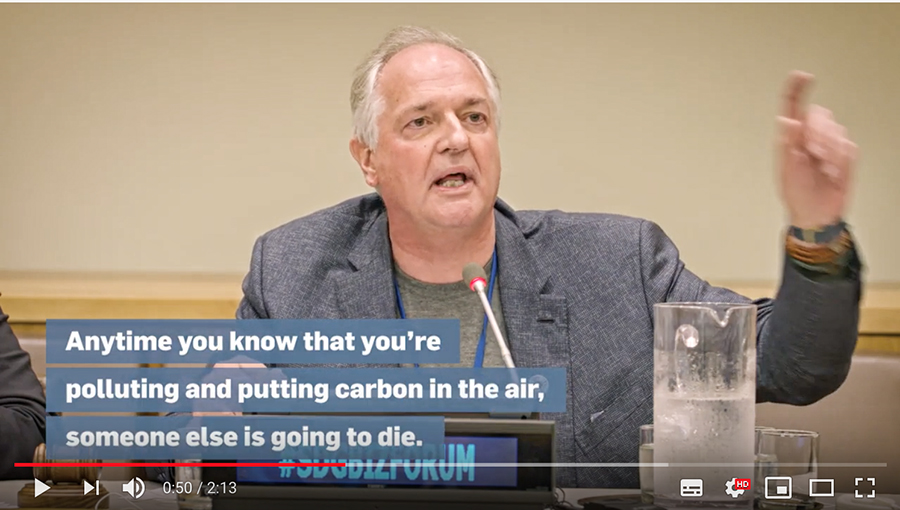
 At first, skeptical analysts were doubtful about Polman’s outlook — that business was first and foremost about developing solutions for the world’s citizens. Unilever’s stock fell by 27 percent in 2008 when he stepped into the role of CEO, partly due to the financial crisis; but he was vindicated by the time he left — delivering a 290 percent total shareholder return and 19 percent return on invested capital over the last ten years. Polman points out that consumers today have deep insight into the products they purchase and will reward companies that behave responsibly. Increasingly, they will punish companies that don’t. “The SDG agenda is actually one of the best and most attractive business plans around,” says Polman. 

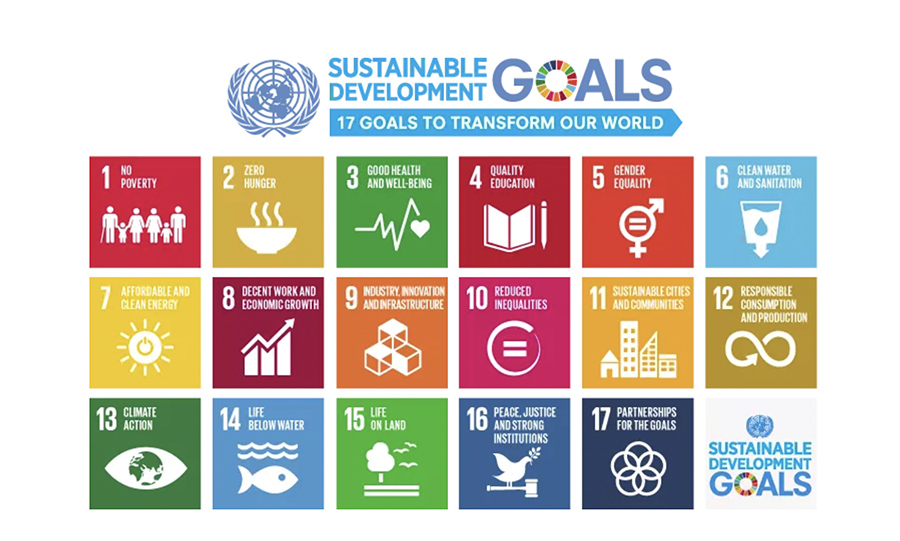
A passionate supporter of the Sustainable Development Goals (SDGs), Polman helped create The Commission of Business and Sustainable Development, which launched at the 2016 World Economic Forum in Davos. Its first report, that same year, convincingly illustrated the benefits to business of pursuing the Global Goals. It found that sustainable business models could open up at least $12 trillion of economic opportunities and create up to 380 million jobs by 2030 globally.

Balance this against the fact that the cost of not acting is becoming higher than the price of acting. For example, according to Polman, climate change is costing the planet more than $5.3 trillion a year and rising at a staggering rate. “This is probably the biggest intergenerational crime we’ve ever committed,” he says. “The visible results are the drowning of little island-states and 8 million people per year being sent to a premature death from air pollution. Consider that creating action around the SDGs will cost less than $5.3 trillion.”

 “The world is also spending 10 to 12 percent of its global GDP (roughly $12 trillion) on conflict prevention and war,” says Polman. “Governments are willing to spend up to three times more on dealing with the consequences of our war-like nature, rather than looking at what it might cost to avoid these conflicts in the first place.” What gives Polman hope is that while governments act according to ideology, financial markets understand the risks related to climate change and will probably act accordingly. There’s nothing like the threat of lost income to inspire action.

Unilever’s goal of reaching 1 billion people and improving their health and well-being is underway, with much of the success attributed to a baked-in sense of purpose within its brands.  “The better these brands are connected to real needs or issues in society, the better they perform,” Polman points out. An example is Dove, which has a goal of reaching 60 million adolescent girls and addressing women’s self-esteem. LifeBuoy wants to reach 1 billion people and teach them the importance of handwashing to prevent 4 million child deaths from infectious diseases. Domestos has a goal to build 25 million toilets globally.

 “There is no business strategy in runaway climate change, growing inequality, and extreme poverty,” says Polman. “We’ve already shown that we can address basic issues, yet collectively, we’re not doing it. At the end of the day, it boils down to willpower. It boils down to leadership.”

 Part of his leadership team is his wife Kim, who runs a foundation called Reboot the Future. Dedicated to nurturing a new breed of leader, she is helping people put purpose and responsibility at the heart of their actions. In the coaching of leaders and the raising of their three sons, she abides by her Golden Rule: “Treat others and the planet as you would wish to be treated.” The couple have become guiding lights on how a compassionate approach to business, politics, and the environment can transform our planet.

 “We’re short of leaders and trees in the world right now,” says Polman with a laugh. “We need to create more heroic leaders, ones who are more purpose-driven with a high level of awareness of what’s going on in the world and an ability to engage. We need leaders who understand the true meaning of what a partnership is, and put others’ interests ahead of their own. In doing so, they will become financially better-off, too. All the changes we’ve ever seen in society have come about through the initiatives of courageous individuals.”

 Opportunity naturally gravitates toward those who have the courage to act, and Polman’s parting words were reserved for the audience of Real Leaders, where he stressed a duty to future generations. “I want to remind many of you that you belong to 2 percent of the world population when it comes to income, education and lifestyle. Therefore, it’s your duty to put yourself in the service of the other 98 percent.”   


Why Leaders Need to “Go Organic” in Their Communications

In many organizations, the amount of attention given to anything new coming from the CEOs office is inversely proportional to how much employees hear the same old acronyms, jargon, esoteric terms and cliched aspirational language.

For example, consider the verb “strive,” which practically no one uses in day-to-day conversation. In reality, low-hype, high-substance communication using organic language competes for attention best.  

Here’s an example of one such reboot: At one client organization, the company president wrote a column each week on an important topic, which was posted to the intranet. The columns averaged 8-10 paragraphs. As you’d expect, while the president chose the theme each week, a (very good) executive speechwriter wrote the actual content. So it was always well-written and even reflected the leader’s voice. But it’s unlikely that many of the organization’s 20,000 employees believed that their senior leader was sitting at his laptop banging out polished paragraphs every week. Which might help to explain the disappointing readership: Metrics showed that only 10 percent of employees clicked on the column each week. 

We suggested the leader switch to a blog, with shorter posts (one, maybe two, breezy, conversational paragraphs), a few times per week. Additionally, the leader created and posted short videos, most of them shot on his iPad, where he answered questions that employees sent in. Nothing slick. Nothing polished. Readership quickly quadrupled.

Leaders can’t expect employees to pick out and pay attention to their genuinely essential messages if they’ve flooded the information marketplace with cheap imitations. But lots of organizations push out communications to their employees like a Soviet factory — uncoordinated, undisciplined, and without regard to the actual demands or needs of production. This misguided activity often flows from good intentions: “We just did something, and it’s important to communicate. So, let’s communicate this to everyone.” 

In other cases, leaders make supply-side communication choices for narcissistic reasons, because it makes them feel good; for example, to show off all the essential stuff they’re doing: “I just got asked to lead an important initiative that will have a meaningful enterprise-wide impact two years from now. Everyone must understand that NOW!” Never mind the absence of any business case for producing that awareness. 

In other cases, excess communication supply follows excess production capacity: “We have an expensive editing suite, so for goodness sake, let’s make some videos.”

Uncoordinated, undisciplined, supply-side communication choices — instead of producing “fully informed employees” — create an environment where employees ignore most of the information delivered through formal channels while wondering what is happening… and what messages they really ought to align with and pay attention to. This undermines a leaders ability to get employees engaged around efforts to promote the organization’s long-term business interests. 

What’s the alternative? Coordinated, disciplined, demand-driven communication practices. Tight message discipline. Embracing “less is more.” Recognizing that every message of secondary importance has the potential to diminish a message of primary concern. Sometimes, deciding to keep these messages out of the organization’s information marketplace can be the best decision.

Jeff Grimshaw Tanya Mann, Lynne Viscio, and Jennifer Landis are principals at MGStrategy. For two decades they’ve helped leaders measure and manage culture as a source of competitive advantage. Their book is Five Frequencies: Leadership Signals That Turn Culture Into Competitive Advantage

6 Internal Communication Challenges That Kill Your Company’s Productivity

The way we communicate with each other has changed. In some ways, it’s more convenient. In other ways, it’s holding us back. Communication is vital to your company’s productivity, and effective internal communication can make or break your business.

If done well, it will bring great results. If done poorly, it will leave your employees unable to perform at their best. What are the worst internal communication challenges to overcome? Read on to find out!

1. Is the communication lacking culture?

The recent emphasis on company culture isn’t much ado about nothing – it’s the way things will be from now on. As social consciousness and value awareness is raised among consumers, it’s also raised among employees. People are more interested in working for companies that share their perspectives on important issues, such as environmental impact and striving for positive change.

If this is part of your company culture, you need to express it regularly. Opening up communications about what your accomplishments mean for your culture and the ways you strive to be better will remind your employees why they’re working for you. They’ll see themselves beyond a mere cog in a machine – they will be part of a team on a mission.

Be sure to outline and define your workplace culture. Let it guide your communication in the right direction and talk about it on a daily basis. Keep everyone invigorated, celebrate major successes. Encourage friendliness and strong work relationships. That’s the greatest motivator your employees could possibly get, and it doesn’t cost a thing to implement.

2. Getting teams to come together

One of the worst communication breakdowns occurs between team members. Each member of the team is talented, and an expert in what they do, but they sometimes work independently. One hand needs to know what the other is doing. There can’t be any real synergy if everyone is assuming they know what everyone else is up to. There are things team members can do for other team members to streamline the completion of a project, and successful teamwork revolves around that communication.

Even if your team members work independently, make sure they meet regularly to discuss progress and ideas. Those check-ins can prevent obstacles and misunderstandings that might otherwise cause a project to last much longer than anticipated. Sometimes, you might need to re-delegate tasks. Other times, you might need to bring in some additional help to finish a project in a timely manner. A 20-minute talk could save an entire day of lost productivity.

3. Absent leaders can’t have a say

The invisible boss is no longer an acceptable concept. People want a direct relationship with their leaders, and they expect to see that their leader is holding up their end of the deal. If leaders only come to check the work after it’s been done, it can be a nightmare when revisions need to be made. All the time a team member spends doing things the wrong way gets swirled away down the drain. What’s worse, they’ll now have to spend twice as much time doing it the right way — pushing back your deadlines.

Leaders should be available as often as possible, especially to ask the team if they need anything. They need to be willing to help pick up the slack and coach team members through the things they struggle with. Team members don’t always understand that leaders are doing something important behind the scenes. They need to see the efforts made right in front of their eyes for them to fully conceptualize what the leader’s role entails.

Leaders need to have empathy for the people they are leading. An important part of that is leading by example. Show that you are willing to sit at the table with everyone else and take requests as often as you make them. This way you’ll bring the communication and unity needed to enhance productivity by reinforcing shared goals an efforts.

4. Using screens appropriately

Internal emails and messaging apps are one of the biggest conveniences you can get. Your employees want to be informed about what’s going on with the day-to-day business. This is especially true about Millennials and Gen Z, who expect to get information instantaneously.

Make sure you’re crafting amazing internal emails to get the word out. By making all of the information relevant, choosing a format that’s easy for your employees to navigate, and keeping the tone engaging, people are more likely to care about reading things they would have brushed past.

5. Mastering emergency communications

If the situation is an emergency or involves a major change, it’s better to call an impromptu or abruptly scheduled meeting to convey your message and let people get back to work.

Even though that meeting might cut into regular productivity by disrupting the workday, you can ensure that everyone received the exact same message at the exact same time. You’ve also established a two-way street where people can take turns asking questions and getting answers all at once, rather than leaving an email open to redundant and disruptive replies. Everyone will be able to get back to work much sooner and with certainty about what they’re doing.

6. Different generations communicate differently

Millennials and Gen Z don’t communicate the same way previous generations do. These generations have had social media and ease of communication their whole lives. They’ve always had quick access to information and answers at their fingertips, and it’s made them more efficient communicators. They absorb information quickly, and you’d be surprised at just how much information they seek.

They’re slightly less patient than previous generations. They want to be able to work quickly and find the most direct route to completing a task.

That’s why communication to these generations should involve the necessary resources and a bit of empowerment. They don’t respond well to micromanaging styles of communication because it’s their inclination to be more independent. Give them what they need, answer all of their questions, and empower them to do the things they do well.

Lastly, but certainly not least, ask the employees of your company what they need from their higher-ups in terms of communication. Keeping an open door is one of the best operating practices any company can have. Talk all the time — about anything and everything. It’s the best way to make everything a little better.

Have you come across internal communication challenges in your office? How did you manage to overcome them? Share your stories, comments, and ideas below!

The World’s Top 50 Keynote Speakers Who Inspire us to Become Better Leaders

Whether you lead a Fortune 500 company or simply want to motivate yourself to rise to the next level, you can learn many lessons from the world’s top keynote speakers.

These key messages from highly accomplished men and women across a broad spectrum of business, athletic and entertainment sectors will give you and your colleagues the inspiration to craft personal and corporate strategies that deliver a competitive advantage.

Draw your inspiration from these top 50 keynote speakers and learn to become a better leader.

#50 – Jason Dorsey

Jason Dorsey is the Co-Founder and President of The Center for Generational Kinetics. He has led Millennial and Gen Z research on four continents in multiple languages.

He advises CEOs, corporate boards, VC and PE firms around the world and is a highly sought-after Millennial and Gen Z keynote speaker and researcher. He is known for delivering specific, practical solutions grounded in original research that drive measurable results. He has 180 clients on his roster represent every major industry, from global banks and software companies to automakers, consumer brands, healthcare, retailers, manufacturing, and private equity firms.

Dorsey has been featured on more than 200 television shows, including 60 Minutes, 20/20, The Today Show, CNN, CNBC, and The Early Show.

Jason Dorsey wrote his first bestselling book at age 18. His latest bestselling book is Y-Size Your Business: How Gen Y Employees Can Save You Money and Grow Your Business.

#49 – Molly Fletcher

Molly Fletcher is a polished keynote speaker who delivers more than 70 customized addresses annually for a diverse roster than includes AT&T, Bank of America, Carter’s, CVS, Dell EMC, The Home Depot, Johnson & Johnson, Leadercast, Society for Human Resource Management, Taco Bell, and TED Talks, among others.

Fletcher shares stories with her audiences from her experiences as a successful sports agent and lessons from top athletes and coaches on how to unleash potential and achieve peak performance.

She has been hailed as the “female Jerry Maguire” by CNN and will share her proven approaches that allowed her to complete more than $500 million worth of deals throughout her career.

Fletcher also empowers women to carve out their own path for success through her tenure in a male-dominated industry. 

#48 – Drew Hanlen

Drew Hanlen is the top NBA skills trainer in the world. But what many people don’t know is that he has been working behind the scenes influencing business owners and speaking for many years. 

Hanlen runs Pure Sweat Basketball, a training firm with an impressive client list of young NBA players such as Zach LaVine, Andrew Wiggins, Bradley Beal, Anthony Bennett, David Lee, Jameer Nelson, Jordan Clarkson and many others. 

Hanlen’s basketball hero growing up was Michael Jordan. He would record Bulls games, study every move Jordan made and then hit the court and practice all the same moves. That helped Hanlen develop his basketball IQ. 

Although his dream was to play in the NBA and that didn’t happen, he’s still having an impact on the league. He carries that same tenacity and work ethic to the stage as a much-in-demand keynote speaker

#47 – Gretchen Rubin

Gretchen Rubin is an influential and thought-provoking observer of happiness and human nature. She started her career in law and was clerking for Supreme Court Justice Sandra Day O’Connor when I realized I wanted to be a writer.

Since that time, she has authored many books including New York Times bestsellers, The Four Tendencies and Better Than Before. Her book The Happiness Project has sold more than one million copies, been published in more than thirty languages, and spent more than two years on the New York Times bestseller list, including at #1.  Overall, her books have sold more than 3.5 million copies worldwide.

As a keynote speaker and an author, she draws from cutting-edge science, the wisdom of the ages, lessons from popular culture, and her own experiences to explore how people can make their lives happier, healthier, more productive, and more creative.

#46 – Darren Hardy

Darren Hardy is an author, keynote speaker, advisor, and former publisher of SUCCESS Magazine.  The New York Times best-selling author wrote The Entrepreneur Roller Coaster, Living Your Best Year Ever and The Compound Effect.

Hardy has been a central business leader in the personal growth and success industry for more than 20 years. He led three success television networks producing over 1,000 TV shows featuring most every influential thought leader of our times.

Hardy has been awarded the ‘Master of Influence’ designation by the National Speakers Association in honor of his professionalism in public speaking.

Darren is also a highly sought-after keynote speaker, media contributor with the mission to Positively Influence Influencers… and to be a guide for those who choose to be the exception.

#45 – Shawn Achor

Shawn Achor is a leading researcher on happiness. His efforts earned him accolades on the cover of Harvard Business Review, and his research and work on stress in partnership with Yale University was published in The Journal of Personality and Social Psychology.

Achor and The Oprah Winfrey Network have created an in-depth two-part Happiness Course to help individuals impact their own lives and the lives of those around them with the Happiness Advantage.

Shawn’s, and his PBS special has been seen by millions. He has worked with over a third of the Fortune 100 companies, as well as the NFL, the NBA, the Pentagon, and the White House and has traveled to more than 50 countries to deliver his message.

Arianna Huffington has also dubbed Achor as “One of the world’s leading experts on human potential.”

#44 – Diana Nyad

Diana Nyad became known as the world’s greatest long-distance swimmer in the 1970s with her open-water achievements, including a record-breaking swim around Manhattan.

For 30 years, Nyad was a prominent sports broadcaster and journalist, filing stories for National Public Radio, ABC’S Wide World of Sports and many other outlets.

In 2013, 64 years old, Nyad became the first person to swim from Cuba to Florida without the aid of a shark cage; she covered 111 miles in 53 hours from Havana to Key West.

She has also authored three books and will soon release her upcoming memoir, Find a Way.

#43 – Tom Bilyeu

Tom Bilyeu is best known as a co-founder of Quest Nutrition. It was the second-fastest-growing private company in North America on the Inc 500 for 2014. The company grew by 57,000% in its first 3 years and became a billion-dollar business within 5 years of its launch.

He is known as a serial entrepreneur and thought leader who can deliver impactful keynote speeches or lead breakout sessions on business strategy, brand building, mindset, and leadership.

Tom regularly inspires audiences of entrepreneurs, change makers, and thought leaders at some of the most prestigious conferences and seminars around the world, including Abundance 360, A-fest, and Freedom Fast Lane. His deep passion for storytelling combined with his insights from building a billion-dollar business allows him to deliver powerful speeches that routinely garner top praise.

#42 – Steve Wozniak

Steve Wozniak is the co-founder, Apple Computer. A Silicon Valley icon and philanthropist for the past three decades, Steve Wozniak helped shape the computing industry with his design of Apple’s first line of products the Apple I and II and influenced the popular Macintosh.

For his achievements at Apple Computer, Wozniak was awarded the National Medal of Technology by the President of the United States in 1985, the highest honor bestowed on America’s leading innovators.

After leaving Apple, Wozniak was involved in various business and philanthropic ventures, focusing primarily on computer capabilities in schools and stressing hands-on learning and encouraging creativity for students.

In 2000, he was inducted into the Inventors Hall of Fame and was awarded the prestigious Heinz Award for Technology, The Economy and Employment. He also subsequently founded the Electronic Frontier Foundation and was the founding sponsor of the Tech Museum, Silicon Valley Ballet and Children’s Discovery Museum of San Jose.

In 2006, Wozniak published his New York Times Best Selling autobiography, iWoz: From Computer Geek to Cult Icon and is a sought after keynote speaker.

#41 – Malcolm Gladwell

Malcolm Gladwell is an author and keynote speaker who has written numerous books, including The Tipping Point, Blink, Outliers, and David and Goliath. He is also the host of the podcast Revisionist History. His sixth book, Talking to Strangers: What We Should Know about the People We Don’t Know, is scheduled to be released in September 2019

Gladwell has been a staff writer at The New Yorker since 1996. Prior to that, he was a reporter at the Washington Post.

Gladwell’s books and articles often deal with unexpected implications of research in the social sciences and make frequent and extended use of academic work, particularly in the areas of sociology, psychology, and social psychology.

He is a frequent lecturer and keynote speaker at locations throughout the United States.

#40 – Dr. Ken Blanchard

Dr. Ken Blanchard is an author, keynote speaker, and business consultant known for his groundbreaking research in leadership. Through The Ken Blanchard Companies, he has helped to transform the daily management of companies throughout the world.  The leadership training and development company has trained millions of the world’s best managers for more than 35 years.

Blanchard has authored or coauthored 60 books and sold more than 21 million copies worldwide. His iconic 1982 classic, The One Minute Manager, coauthored with Spencer Johnson, has sold more than 13 million copies and remains on bestseller lists today.  Other notable works include Raving Fans, The Secret, andLeading at a Higher Leveland have been translated into 42 different languages.

A prominent, sought-after author, speaker, Blanchard is a trustee emeritus of the Board of Trustees at his alma mater, Cornell University, and he also teaches students in the Master of Science in Executive Leadership Program at the University of San Diego.

#39 – Rachel Hollis

Rachel Hollis was the owner of Chic Events –a high-end event planning company in LA– for over a decade. She started a blog as a way of promoting that business and eventually she sold the company when clients wanted to hire her to talk about marketing their own products and services.

After years of building Chic Media, she has morphed that into The Hollis Company, that gives people the tools to make positive and lasting change by promoting a personal growth mindset.

Hollis is also a #1 New York Times Best-Selling author and top keynote speaker.

#38 – Seth Godin

Seth Godin is the author of 19 best-selling books, including The Dip, Linchpin, Purple Cow, Tribes, and What To Do When It’s Your Turn (And It’s Always Your Turn). He writes about the post-industrial revolution, the way ideas spread, marketing, change and leadership.

He is renowned for his writing and speaking, and also founded Squidoo and Yoyodyne.

Seth recently broke new ground in the publishing industry by releasing a series of four books through Kickstarter. The campaign reached its goal after three hours and ended up becoming the most successful book project ever done this way.

In 2015, he created the altMBA, a life-changing 30 day workshop which was part of a portfolio of seminars and educational offerings that have been taken by more than 60,000. He also has five TED talks to his credit.

Godin is in the Guerrilla Marketing Hall of Fame, the Direct Marketing Hall of Fame and the Marketing Hall of Fame.

#37 – Robert O’Neill

Robert O’Neill was part of over 400 combat missions as a Navy SEAL, including being part of the team that ultimately brought Osama bin Laden to justice.

During his remarkable career, O’Neill has been decorated more than 52 times with honors. Some of those most notable military decorations include: two Silver Stars, four Bronze Stars with Valor, a Joint Service Commendation Medal with Valor, three Presidential Unit Citations and two Navy/Marine Corps Commendations with Valor.

Today, he is a keynote speaker, security consultant, philanthropist, and FOX News contributor offering expert analysis on terrorism and military strategy O’Neill is involved in a range of missions.

Through his charity, Your Grateful Nation, he works to raise awareness and financial support for special operations military personnel making the difficult transition from the battlefield to the boardroom.

His speaking engagements are highlighted by gripping stories, effective strategies and a highly motivational message that won’t soon be forgotten.

#36 – Ben Newman

Ben Newman is known as a powerhouse storyteller. He can be found with Top Fortune 500 companies in boardrooms and stages around the world as well as with some of the world’s elite sports teams.

He was featured in 2018 on ESPN’s Rolling with the Tide for his work with the Alabama Football team and is a speaker and performance coach for Microsoft, AB InBev, MTX Inc, Northwestern Mutual, Mass Mutual and other elite companies around the globe.

Newman has published several books on mental toughness, professional success, and how to drive positive changes in your life. Newman is also considered one of the top mental toughness experts.

You can also find Ben speaking and giving back to the military. If you are looking to connect to purpose and drive accountability in your organization Ben will deliver. 

#35 – Stephen Covey

Stephen Covey is the co-founder of FranklinCovey, a world leader in helping companies big and small achieve results based on changes in human behavior that lead to a durable competitive advantage. FranklinCovey now extends to more than 150 countries, with over 2,000 associates working toward a common mission.

Covey may be best known for his book, The 7 Habits of Highly Effective People, which continues to be a best seller 25 years after it was written because it ignores trends and pop psychology and focuses on timeless principles of fairness, integrity, honesty, and human dignity.

#34 – Ed Mylett

Ed Mylett was a standout Division I baseball player and had hoped to play Major League Baseball but a major injury dealt a final blow to his athletic aspirations.

He turned his drive and determination to the business world where he quickly climbed the ladder at WFG. Forbes has listed him as a Top 50 Under 50 with a net worth of more than $400 million.

A highly sought after speaker, Mylett spreads his messages of living an epic life through his podcast #MaxOut With Ed Mylett and he has recently published his first book, #MaxOut Your Life: Strategies for Becoming an Elite Performer.

Mylett also proudly supports charitable and community initiatives such as the Make-A-Wish Foundation of America, the All for One Foundation, and the National Leadership Foundation

#33 – Brian Tracy

Brian Tracy has been a mainstay in the field of motivational speaking for decades. 

Prior to founding Brian Tracy International, he was the COO of a $265 million dollar development company and enjoyed widespread success in sales and marketing, investments, real estate development and syndication, importation, distribution, and management consulting.

He has consulted for more than 1,000 companies and addressed more than 5 million people in 5,000 talks and seminars throughout the US, Canada, and 70 other countries worldwide. As a keynote speaker and seminar leader, he addresses more than 250,000 people each year.

He is the author of over seventy books that have been translated into dozens of languages. He has written and produced more than 300 audio and video learning programs, including the worldwide, best-selling Psychology of Achievement that has been translated into more than two dozen languages.

#32 – Robert Kiyosaki

Robert Kiyosaki is best known as the author of Rich Dad, Poor Dad, considered by many to be the #1 personal finance book of all time. His series of books has been translated into 51 languages and sold over 27 million copies worldwide.

He is also the creator of the Cashflow board and software games that help educate adults and children about business and financial concepts.

As the founder of The Rich Dad Company and Rich Global LLC, Kiyosaki believes business needs both a spiritual and a business mission to be successful, especially at the beginning.

He is an entrepreneur, educator, and investor who believes that each of us has the power to makes changes in our lives, take control of our financial future, and live the rich life we deserve.

#31 – Ariana Huffington

Ariana Huffington is the founder and CEO of Thrive Global and the founder of The Huffington Post. She has authored 15 books, including international bestsellers Thrive and The Sleep Revolution. Serves on numerous boards, including Uber.

Originally from Greece, Huffington moved to England when she was 16 and graduated from Cambridge University with an MA in Economics. At 21, she became the first foreign-born student to be president of the famed debating society, The Cambridge Union. 

After graduation, she made her mark as a conservative syndicated columnist before launching The Huffington Post in 2005.

In 2009, she was named by Forbes as one of ‘The most influential women in media’; gaining 12th position in the list and in the same year Guardian included her in the top 100 media list.

#30 – Sir Richard Branson

Sir Richard Branson owes his fortune of approximately $4 billion to a conglomerate of businesses bearing the “Virgin” brand name, including Virgin Atlantic and Virgin Galactic.

He struggled in school and dropped out at age 16, a decision that ultimately led to the creation of mail-order record company Virgin Records. He expanded it into a record label first signing Mike Oldfield who recorded Tubular Bells in 1973. Branson then signed other groups to the label, including the Sex Pistols, Culture Club, the Rolling Stones, and Genesis, helping to make Virgin Music one of the top six record companies in the world.  He later sold the label for $1 billion in 1992.

His entrepreneurial projects started in the music industry and expanded into other sectors, including Virgin Atlantic airlines and the space-tourism venture Virgin Galactic.

In 2010, he moved forward with his upstart Virgin Hotels. In 2018, Virgin announced its presence in Las Vegas by taking over ownership of the Hard Rock Hotel.

Branson is also known for his adventurous spirit and sporting achievements, including crossing oceans in a hot air balloon.

#29 – Tim Grover

Tim S. Grover is the CEO of ATTACK Athletics, Inc. He is well known for his work with elite champions and Hall of Famers, including Michael Jordan, Kobe Bryant, Dwyane Wade, and hundreds other NFL, MLB, NBA, and Olympic athletes

Grover is recognized as the preeminent authority on the science and art of physical and mental dominance and achieving excellence.

He is the author of the national bestseller RELENTLESS: From Good to Great to Unstoppable and creator of digital training platform The Relentless System. A featured columnist at SI.com and Yahoo.com, he also appears on ESPN, Fox Sports, and other media outlets.

Tim delivers keynote speaker addresses and is a consultant to business leaders, athletes, and elite achievers in any area who want to know how the best can get better in anything they do. He teaches the principles of relentless drive, results-driven performance, and mental toughness.

#28 – Sheryl Sandberg

Sheryl Sandberg is the COO of Facebook and the founder of Leanin.org.  In 2012, she became the first woman to serve on Facebook’s board of directors. Before she joined Facebook, Sandberg was vice president of global online sales and operations at Google.

She was named to the Time 100 in 2012.  She has also been ranked several times as one of the most 50 Powerful Women in Business by Fortune Magazine.

In 2015, she reported a net worth of more than $1 billion due to stock holdings in Facebook and other companies. 

She has authored two books, Lean In: Women, Work, and the Will to Lead and Option B.

Lean In is for professional women to help them achieve their career goals and for men who want to contribute to a more equitable society.

#27 – Andy Frisella

Andy Frisella is the CEO of one of the world’s leading nutritional supplement companies, 1st Phorm International based in St. Louis, MO. He also founded and runs five other businesses that collectively generate $200 million in annual revenues.

He hosts The MFCEO Project, a business/success oriented podcast that been ranked as #1 ranked Business/Entrepreneurship/Personal Development podcast on the planet for nearly four years straight.

He is one of the highest paid keynote speakers in the world and has been recognized as one of the world’s leading authorities on customer retention and loyalty, company culture, and the marketing techniques it takes to build both brick-and-mortar and online direct-to-consumer retail businesses from the ground up.

He has also written a best-selling series of children’s books that promote entrepreneurial values and the success mindset.

Frisella was also named Entrepreneur of the Year in 2016 and has been featured in Forbes, INC, and Entrepreneur Magazine and many other publications.

#26 – Jocko Willink

Jocko Willink is a retired US Navy Seal co-author of the #1 New York Times bestseller Extreme Ownership: How U.S. Navy SEALs Lead and Win, host of the top-rated Jocko Podcast.

He is also the co-founder of Echelon Front, where he serves as Chief Executive Officer, leadership instructor, speaker and strategic advisor.

Jocko served for 20 years in SEAL teams. After he returned from tours in Iraq he was named as Officer-in-Charge of training for all West Coast SEAL Teams. In this role, he spearheaded the development of leadership training and personally instructed and mentored the next generation of SEAL leaders who have continued to perform with great success on the battlefield. Jocko is the recipient of the Silver Star, the Bronze Star, and numerous other personal and unit awards.

Jocko has also authored the Discipline Equals Freedom Field Manual, a New York Times Bestseller, and the best-selling children’s books: The Way of the Warrior Kid, and The Way of the Warrior Kid: Marc’s Mission.

#25 – Ray Lewis

Ray Lewis is recognized as one of the most dominant defensive players in the history of the National Football League. 

Lewis led the Baltimore Ravens to victory in Super Bowl XXXV where he was named Super Bowl MVP, and again in Super Bowl XLVII.

In 2000, he became only the second player in NFL history to win both the NFL Defensive Player of the Year and Super Bowl MVP awards in the same year.  He was inducted into the NFL Hall of Fame in 2018.

He has drawn from those experiences in his 17-year career plus valuable lessons learned from his personal life to bring a unique brand of motivation and inspiration to some of the biggest companies in the world.

#24 – Barbara Corcoran

Barbara Corcoran is the Founder of The Corcoran Group and widely known as a Shark on ABC’s “Shark Tank.” Over the past nine seasons she has been on the show, Corcoran has invested in more than 80 businesses to date.

After holding 20 jobs by the time she turned 23, Corcoran borrowed $1,000 and quit her job as a waitress to start a tiny real estate company in New York City, The Corcoran Group. 

She is the author of the bestseller Shark Tales: How I Turned $1,000 into a Billion Dollar Business! and also hosts a top business podcast “Business Unusual with Barbara Corcoran.”

As a motivational and inspirational speaker, she is a frequent small business and real estate contributor on several network outlets.  

#23 – Chris Gardner

Chris Gardner is the CEO of Happyness. His first book, The Pursuit of Happyness became a New York Times and Washington Post #1 Bestseller that has been translated into more than 40 languages.

That book also was the basis for a film starring Will Smith who earned a Golden Globe, Screen Actors Guild and Academy Award nomination for his performance.

As a motivational speaker, Gardner shares some of the steps that he had to take and obstacles he overcame to get from where he was to create the life that he wanted to live right now.

He introduces audiences to the concept of Spiritual Genetics, the part of each human being that is beyond the scope, reach or understanding of science, medicine or technology.

Chris also details the importance of the “Ps” in our lives–Promises, Passion and having a Plan and the C-5 Complex (Clear, Concise, Compelling, Consistent and Committed to the plan). 

#22 – Earvin “Magic” Johnson

Earvin “Magic” Johnson is the Chairman and Chief Executive Officer of Magic Johnson Enterprises, an investment conglomerate valued at an estimated $1 billion dollars.

Since retiring from the NBA over 20 years ago, the legendary basketball star has morphed into a business powerhouse who is dedicated to leaving a positive impact in underserved urban communities.

In his early years as an entrepreneur, he forged an alliance with Sony Pictures to develop Magic Johnson Theatres. In 1998, he teamed with Starbucks to become the only franchise in the history of the company, acquiring and eventually selling 125 stores that further solidified his position in the business world.

Johnson made history in 2012 when he became co-owner of the Los Angeles Dodgers, purchased for $2 billion dollars. He also co-owns the Los Angeles Sparks of the WNBA and Major League Soccer’s Los Angeles Football Club.

He also has controlling interests in EquiTrust, a $14 billion financial services company, ASPiRE, an African-American television network, and SodexoMAGIC, a food service and facilities management company and serves as Chairman and Founder of the non-profit Magic Johnson Foundation.  

#21 – Grant Cardone

Grant Cardone is an American author, sales trainer, real estate investor, and motivational speaker. He currently holds a real estate portfolio valued at around $350 million.

He is a New York Times best-selling author, and has written seven books:  Sell To Survive, The Closer’s Survival Guide, If You’re Not First, You’re Last, The 10X Rule, Sell or Be Sold, The Millionaire Booklet and Be Obsessed or Be Average.

Cardone is also the radio show host of The Cardone Zone and is known for television series Turnaround King (2011).

He was also named 1 of 25 Marketing Influencers to Watch in 2017 by Forbes.  He also has 10,000,000 followers, fans and connections through his various ventures and social media outlets.

In addition to working with companies like Google, Sprint, Aflac, Toyota, GM, Ford, and others, he owns and operates four companies that do almost $100 million in annual sales.

#20 – Marcus Luttrell

Marcus Luttrell is a former Navy SEAL who first came into the public’s spotlight in 2014 after the movie Lone Survivor was released. Starring Mark Wahlberg as Luttrell, the movie details how SEAL Team 10 was assigned to a mission to kill or capture Ahmad Shah, a high-ranking Taliban leader responsible for killings in eastern Afghanistan and the Hindu-Kush mountains. He was the only survivor of that mission and was awarded the Navy Cross by President George W. Bush in 2007.

In 2010, Luttrell established the Lone Survivor Foundation. The mission of the foundation is to “restore, empower, and renew hope for our wounded warriors and their families through health, wellness, and therapeutic support.”

The Lone Survivor Foundation has partnered with The Boot Campaign to show appreciation of America’s active-duty military and raise awareness of the challenges they face upon returning home.   

#19 – Oprah Winfrey

Oprah Winfrey has enjoyed unparalleled success in most every venture she undertakes.

She is a billionaire media mogul who is best known for hosting her own talk show from 1986 to 2011.  That same year, she launched her own TV network, the Oprah Winfrey Network, or OWN.

Winfrey made her acting debut in 1985 as “Sofia” in Steven Spielberg’s The Color Purple, for which she received both Academy Award and Golden Globe nominations.

Through her company’s film division, Harpo Films, Oprah has produced projects based on classic and contemporary literature.

In 2002, Oprah Winfrey was named the first recipient of the Academy of Television Arts & Sciences’ Bob Hope Humanitarian Award.

Through her private charity, The Oprah Winfrey Foundation, she has awarded hundreds of grants to organizations that support the education and empowerment of women, children and families in the United States and around the world.

Her commitment to children also led her to initiate the National Child Protection Act in 1991, when she testified before the U.S. Senate Judiciary Committee to establish a national database of convicted child abusers. As a result of her efforts, President Clinton signed the national “Oprah Bill” into law in 1993

#18 – Deepak Chopra

Deepak Chopra is a prolific book author who founded the Chopra Center for Well Being in Carlsbad, California in 1995.  He remains a prominent figure in the New Age Movement.

He began his career as a doctor, but after becoming disenchanted with Western medicine, Chopra turned to alternative medicine.  Chopra’s 1993 release Ageless Body, Timeless Mind, turned him into a full-fledged celebrity, selling more than a million hardcover copies.

In June 1999, Time magazine dubbed Chopra “the poet-prophet of alternative medicine” and called him one of the top 100 heroes of the century.

He regularly brought his message to the Oprah Winfrey Show and was a confidante of pop superstar Michael Jackson.

#17 – John Maxwell

John Maxwell has written more than 100 books on motivation, leadership and personal development over the past 40 years. He helps others tap into their unseen potential by teaching and refining the understanding of what everyone needs to master growth to become the people we truly want to be.

The John Maxwell Company compels corporate leaders and consumers to inspire, challenge, and equip organizations to live out leadership and reach their potential. 

He is also the leader of The John Maxwell Team, an organization of over 13,000 trained and certified John Maxwell Coaches who empowers coaches, trainers, speakers and professionals seeking to add value to others and become top leaders as owners of their respective businesses and in their communities

EQUIP is Maxwell’s non-profit organization that trains and mobilizes Christian leaders to impact families, organizations, communities, and nations around the world. The team’s work has established six million leaders in 196 countries and changed hundreds of thousands of lives through the gospel of Jesus Christ.

#16 – Daymond John

Daymond John is a pioneer in the fashion industry but perhaps just as well known as a Shark on ABC’s Shark Tank. He is also a multiple New York Times best-selling author, branding guru and highly sought after motivational speaker.

As a businessman, he first broke through by turning an original $40 budget into FUBU, a $6 billion fashion game-changer.

In 2013, President Barack Obama appointed John a Presidential Ambassador for Global Entrepreneurship to focus on promoting the power and importance of entrepreneurship on a global scale

He created his brand consulting company, The Shark Group, to reveal the secrets that made FUBU a multi-billion-dollar global brand and reinvigorated the once defunct Coogi brand into the biggest fashion line in its space.

He is a charismatic speaker who brings his quintessential rags-to-riches success story of sacrifice, hard work, and perseverance to audiences worldwide.

#15 – Jim Rohn

Jim Rohn has been one of the top speakers on life strategies for more than 40 years. He is widely regarded as one of the most influential thinkers in the world. He has shared his message with 6,000 audiences and 5 million people over that time, bringing his messages of empowerment and positivity to every part of the globe. 

He authored a number of books, audio, and video programs, and helped motivate and shape an entire generation of personal-development trainers and hundreds of executives from America’s top corporations.

He has been honored with several industry awards including the coveted National Speakers Association CPAE Award and the Master of Influence Award.

#14 – Les Brown

Les Brown has been a mainstay in the world of renowned motivational speakers for many years. He is a highly-sought-after resource in business and professional circles for Fortune 500 CEOs, small business owners, non-profit and community leaders from all sectors of society looking to expand opportunity.

He is a leading speaker on achievement delivered his messages to audiences as large as 80,000 people, energizing them to meet the challenges of the world around them.

Brown received the National Speakers Association coveted Council of Peers Award of Excellence (CPAE), and its most prestigious Golden Gavel Award for achievement and leadership in communication. Toastmasters International also voted him one of the Top Five Outstanding Speakers Worldwide.

#13 – Simon Sinek

Simon Sinek is a much-in-demand thought leader best known for popularizing the concept of WHY in his first TED Talk in 2009. It became the third most watched talk on TED.com, with over 40 million views and subtitled in 47 languages. 

His 2016 interview on Millennials in the workplace garnered over 200 million views in the first month. This led to Simon being YouTube’s fifth most searched term in 2017.

Sinek is the author of several bestselling books including Start With Why (global best seller), Leaders Eat Last (New York Times and Wall Street Journal bestseller), Together is Better (New York Times and Wall Street Journal bestseller) and Find Your Why and his latest book, The Infinite Game.

In addition to working with several Fortune 500 companies, he has also shared his ideas at the United Nations, the United States Congress and with the senior-most leaders of the United States Air Force, Marine Corps, Navy, Army, and Coast Guard.

Sinek is also an adjunct staff member of the RAND Corporation, one of the most highly regarded think tanks in the world.

#12 – Joe Rogan

Joe Rogan has been a stand-up comedian for more than 20 years and is the host of The Joe Rogan Experience, a long form conversation podcast with guests that is one of the most popular on iTunes. 

Rogan is also known for his color commentary for the Ultimate Fighting Championships on Pay Per View, Spike TV, and Fox. 

As a teenager, he earned his black belt and at one point held the Massachusetts full contact Tae Kwon Do championship for four consecutive years. He later won the US Open Tae Kwon Do Championship and as lightweight champion went on to beat both the middle and heavyweight title-holders to win the Grand Championship.

As an actor, he has several movie credits and was the host of the competition reality series Fear Factor for six seasons. 

He still performs stand-up routines and is available for a variety of guest speaking opportunities.

#11 – Jon Gordon

Jon Gordon is a bestselling author and keynote speaker whose work about positive leadership has inspired audiences around the world.

He is the author of 17 bestselling books including The Energy Bus, The Carpenter, Training Camp, You Win in the Locker Room FirstandThe Power of Positive Leadership.

Gordon has been featured on The Today Show, CNN, CNBC, FOX and Friends, and several newspapers and magazines.

As a highly sought-after motivational speaker, Gordon’s talks have challenged and influenced leaders in a dynamic range of industries and professions. 

His clients include The Los Angeles Dodgers, The Atlanta Falcons, Campbell Soup, Dell, Publix, Southwest Airlines, LA Clippers, Miami Heat, Pittsburgh Pirates, BB&T Bank, Clemson Football, Northwestern Mutual, Bayer, West Point Academy, and many others.

#10 – Mel Robbins

Mel Robbins is one of the most booked speakers in the world. She is an international best-selling author whose work has been translated into 36 languages.

In 2017, Robbins broke self-publishing records with her international best-seller The 5 Second Rule. It was named the #1 audiobook in the world and the fifth most read book of the year on Amazon.

When she launched her science-backed productivity planner, The 5 Second Journal, the first print run sold out worldwide within minutes.

Robbins is the co-founder and CEO of 143 Studios, a digital media company that produces content in partnership with Fortune 500 brands.

Her social media platforms reach and inspire more than 60 million people every month.

#9 – Nick Vujicic

Nick Vujicic is the founder of Life Without Limbs, an Evangelistic ministry that has delivered messages of hope and empowerment in almost 70 countries to date.

Vujicic is able to draw upon his unique experience of being born without arms or legs in 1982 with no medical reason given for his condition. 

After struggling with years of depression and loneliness, Vujicic overcame his struggles by putting his faith in God. He began life as a public speaker at age 19 and today delivers insights with his unique perspective to students, teachers, young people, business professionals and church congregations of all sizes.

Undaunted by his limitations, Vujicic is an author, musician, actor, and his hobbies include fishing, painting, and swimming.

#8 – David Goggins

David Goggins is a retired Navy SEAL and is the only member of the U.S. Armed Forces to complete SEAL training (including two Hell Weeks), the U.S. Army Ranger School (where he graduated as Enlisted Honor Man), Air Force Tactical Air Controller training and best-selling author of the book, Can’t Hurt Me.

He has also completed over 60 ultra-marathons, triathlons, and ultra-triathlons, setting new course records and regularly placing in the top five and once held the Guinness World Record for pull-ups completing 4,030 in 17 hours.

He’s an in-demand public speaker who delivers impactful messages of personal accountability and how to go beyond motivation to achieve your personal best. Goggins has shared his story with hundreds of thousands of students across the country, numerous professional sports teams, and at several Fortune 500 companies.

He is also a member of the Patriot Tour, sharing the stage with Marcus Luttrell, Taya Kyle, and other retired Special Operators.

#7 – Arnold Schwarzenegger

Arnold Schwarzenegger is a global celebrity who first came to the public’s attention as a champion bodybuilder. He later expanded his accomplishments to include becoming a major Hollywood action hero, a successful businessman, environmentalist, bestselling author and the 38th governor of California.

At age 20, he became the youngest person to ever win the Mr. Universe title, eventually winning five Mr. Universe titles and seven Mr. Olympia titles.

His acting credits include some of the biggest box office films ever.  He broke through with Conan the Barbarian and solidified his position as an actor with James Cameron’s Terminator. 

To date, his films have grossed more than $3 billion worldwide.

He became California’s governor in 2003 and had many notable accomplishments during his tenure including passage of the Global Warming Solutions Act of 2006 and the Safe, Clean and Reliable Drinking Water Supply Act of 2010, among many others. 

Schwarzenegger has received numerous awards, including the Simon Wiesenthal Center’s “National Leadership Award” and the American Council On Renewable Energy’s “Renewable Energy Leader of the Decade.”

Since leaving office, Schwarzenegger co-founded the R20 Regions of Climate Action and is active in a number of philanthropic ventures.

#6 – Brene Brown

Brene Brown is a research professor at the University of Houston where she holds the Huffington – Brené Brown Endowed Chair.

Brown has spent the past two decades years extensively studying courage, vulnerability, shame, and empathy. She is the author of five #1 New York Times bestsellers: The Gifts of Imperfection, Daring Greatly, Rising Strong, Braving the Wilderness, and Dare to Lead.

Her TED talk, The Power of Vulnerability, has more than 30 million views and remains one of the top five most viewed TED talks in the world.

#5 – Dwayne Johnson

Dwayne Johnson is better known throughout the world as “The Rock” a persona he developed during his heyday of his WWE professional wrestling career.  He moved to wrestling after a successful college football career was cut short by injuries.

Since that time, The Rock has moved on to become a highly successful actor and producer, appearing in a number of projects, including 2001’s The Mummy Returns and 2010’s Tooth Fairy. More recent credits include the HBO series Ballers (2015) and three 2017 features, The Fate of the Furious, Baywatch and Jumanji: Welcome to the Jungle.  He is consistently ranked among the world’s highest paid actors.

Johnson made the Time 100 Most Influential People in the World list in both 2016 and 2019

In 2006, he founded the Dwayne Johnson Rock Foundation, a charity working with at-risk and terminally ill children. Among many other charitable activities, he has also worked with Make-A-Wish Foundation on a number of occasions.

#4 – Robin Sharma

Robin Sharma is one of the world’s premier speakers on leadership and personal mastery.

For nearly 20 years, Sharma has been providing insights to world-class companies such as Nike, GE, Microsoft, FedEx, PwC, HP and Oracle to NASA, Yale University and YPO.

His books, including The Leader Who Had No Title, have topped bestseller lists internationally and his social media posts reach over 600 million people a year.

Sharma has been ranked as one of the Top 5 Leadership Experts in the World in an independent survey of over 22,000 business people and appears at engagements with other speakers such as Richard Branson, Bill Clinton, Jack Welch, and Shaquille O’Neal.

#3 – Gary Vaynerchuck

Gary Vaynerchuk is the chairman of VaynerX, a media and communications holding company, and VaynerMedia, a full-service advertising agency that services many Fortune 100 clients.

A highly sought after public speaker, Vaynerchuck is also a 5-time New York Times bestselling author.

He also is an angel investor who made early investments in well-known companies such as Facebook, Twitter, Tumblr, Uber, and Venmo.

Vaynerchuck established Wine Library in the late 1990s, transitioning his father’s liquor business into one of the first e-commerce platforms for alcohol in the country, growing it from $3 million to $60 million in sales during that time.

Today, he has parlayed a number of successful ventures into a combined 12 million-plus followers across social media. 

#2 – Eric Thomas

Dr. Eric Thomas is a motivational speaker and minister who heads ETA, an education consulting, executive coaching and athletic development firm.  He specializes in giving motivational talks to college and professional athletes. In fact, LeBron James credited Thomas as part of his inspiration for winning the 2012 NBA championship.

He is a regular contributor the ESPN and Fox News and has voice-over work for Major League Baseball and the National Football League. Many of his sermons and motivational speeches are on YouTube where they have found a large following over the years.

Thomas has also published three books: The Secret to Success (2012), Greatness Is Upon You: Laying the Foundation (2014) and Average Skill Phenomenal Will (2016)

#1 – Tony Robbins

Tony Robbins is perhaps the most well-known life and business strategist in the world. For the past 40 years, he’s been #1 Life & Business Strategist, #1 New York Times Best-Selling Author, Entrepreneur and Philanthropist.

He is the author of six internationally bestselling books and has delivered his messages of empowerment to more than 50 million people from 100 countries through his audio, video, and life training programs. More than 4 million people have attended his live seminars.

Robbins is also the chairman of a holding company with more than 50 privately held businesses and combined sales of more than $6 billion a year.

His non-profit foundation has awarded more than 2,000 grants and other resources to health and human services organizations.  As part of his ongoing mission to end hunger, Robbins’ 1 Billion Meals Challenge with Feeding America has helped provide over 425 million meals in the last four years to those in need and is on track to provide 1 billion meals by 2025.

Who was your favorite keynote speaker and leader mentioned above? Let us know in the comments below!

Pogo’s Warning to Business: ‘We Have Met the Enemy and He Is Us’

Business leaders are obsessed with solving problems — for good reason. But are they looking in the right places? A recent Internet search for “problems in business” on Google produced nearly two billion entries, and includes scores of pieces on the worst 20, ten or dozen problems.

But the truth is, business problems really fall into just three categories, and all have to do with what’s happening inside the business itself. The three —ignorance, ineptitude, and catastrophes  — may rear their head in countless situations and endless forms, but the key is spotting the weaknesses that spawn them or can turn a momentary disaster into a long-term nightmare.

The great comic strip character, Pogo, made it clear when he said, “We have met the enemy, and he is us.” Problems are going to happen in any business. But their outcome has everything to do with the strengths or weaknesses within. Better to learn how to anticipate the potential snafus and spot the weaknesses well before something can go really wrong. Practice asking these questions, as the more you do this, the steadier and surer you can lead:

1: What particular skills or knowledge do my team and I need to run the business effectively?

Ignorance is the fault of the business owner or potentially other managerial employees. The first step to take to overcome it is to recognize it. Failure due to ignorance regarding your business can strike either the management side or the operations side of a business. But it will apply to both you and your employees. Aim to fix this problem with education, such as an ongoing crash course in business management or the technical aspects of the work. Don’t let it go.

Whatever your business — whether you are a skilled tradesman running a service company or a merchant running the corner quick shop — your business requires a whole host of skills that you likely do not possess. Not everyone can know everything, to put it simply. You can learn them, or hire someone who has them. As your company grows or changes, there will be new things to learn  and new skills to master. This is where outside firms — such as legal, consulting, accounting, human resources, or marketing — can advise, assist, and help you rigorously address the ignorance in your company’s personnel. There is no shame in ignorance for your employees: an MBA may not understand the practical skillset that’s the backbone of your business. But the converse is true for you: You devoted your life to becoming a pro at what you do rather than the intricacies of business management. It’s time to take that crash course.

2. What systems and procedures do we need in order to ensure that the work is executed efficiently, safely, and correctly the first time?

Ineptitude is not the same as ignorance. It covers things that you and your employees actually know yet still screw up. The fixes in this case entail tasks like systems, checklists, and routines.

Your goal is to minimize or, more ideally, prevent the element of human error — using sound management. This may be the most tedious part of a business owner’s job, but it is also the most liberating when done correctly. Once you get your systems, checklists, and routines in place for your employees, you’ve just made their job, and yours, much easier.

3. What foreseeable disasters can strike my business? 

Catastrophes are the natural and man-made disasters that originate outside your business and hinder your goals. They may be forces of nature, such as a fire or hurricane, or market fluctuations. In western Oklahoma there are many companies depending on oil production for their livelihood. But in 2014, the oil price crashed — from $120 per barrel to down below $30. This was an absolutely disaster for those who didn’t see it coming. But my firm did see it coming, and helped our clients prepare for it, which meant it was not a catastrophe for them.

Look inside your business: A catastrophe could be caused by a disgruntled former employee, or by a dissatisfied customer who decides to disparage you on the Internet. Or, it may come from the competition. The only catastrophe you do have control over is a health crisis, but the truth is, way too many business owners are entirely blind to their own vulnerability. For the disasters truly beyond your control, anticipate their likelihood, and prepare for them. The key is sound foresight, coupled with preparation and often insurance.

A business is a complex human system that you oversee — and you are the answer to the “why” and “how” of problem development. You started the business, set it in motion and created the goals. There are often elements that arise that can make it a challenge to establish and maintain your business’s systems. But it’s far more effective to be able to foresee them than be caught in reactive mode. Keep your focus on these three basic areas of business failures, and you’ll be able to deal with them in an organized, efficient manner. And running your business will become that much easier.


What CEOs Can Learn from Gillette’s Advert

Gillette’s new advert is the talk of the town. And for many reasons. It speaks to the current trend of the “woke advertising” movement. It comments on many aspects of the growing pains that men go through – and how they have to navigate those waters.

At the time of writing, with almost 29 million views, the ad has certainly commanded attention. However, is it the right move or the right type of attention?

Here’s what CEO’s and CMO’s can learn from Gillette’s attempt at the “Visiconomy.”

Firstly, what is the Visiconomy and how does a brand leverage it? It’s a term made up from the words “Vision” and “Economy.” There are many opinions on the trends in marketing today – but none speak to the core of where advertising is going more than the Visiconomy.

Every brand needs to be social, that’s a given. And every brand needs to be personal when it comes to building relationships; despite being overlooked. The “woke” movement and social advocacy are powerful tools that can be used by brands to connect and share their stories.

However, it should stem from one important concept: That everything you do – your branding, your product, your services, your social media and advertising must come from, and align with, the core of your vision.

What does your company believe about the world? What does your company think about your industry? What does your company stand for? Fight for? Believe in? What’s your vision?

If you share your vision in the right way, and through the proper channels, it can create economic value. This is what the Visiconomy is all about. Your vision can indeed create economic value – if communicated in the right way.

Simon Sinek’s TED talk explains well how to communicate this message.  You start with your “why” – this is your vision. You progress to your “how” – this is what makes you different or better. It’s your unique selling position. Finally, you share your “what” – this is how it all comes together, in a product, service (or even a razor blade).

This seems easy enough, but few brands get it right when trying to align an entire organization.
That’s where Gillette enters the picture. There’s no denying that their advert has gained attention. At 29 million views on YouTube, they indeed have “eyeballs.”

However, is it the kind of attention that inspires would-be buyers to feel inspired? That connects with the core vision of the organization? That makes them feel that they’re on a fantastic mission with the brand? That makes them feel great about themselves?

Gillette no doubt looked at the data before launching the campaign – something every CEO should do. But data doesn’t always give you the full picture. Gillette has now progressed from relative obscurity in regards to advertisements on YouTube, to the third most disliked video on YouTube ever – with an astounding 1.3-million dislikes.

There is added controversy because users have complained about the removal of negative comments, the unnaturally rapid slowdown of negative ratings and the abnormal increase in positive ones.

This is not a good position for any brand to be in. If this is a representation of being a better man, or the “best a man can get” – then the response to the ad shows Gillette may have used a dull approach (pun intended) in a quick, opportunistic attempt to tap into a hot, trending topic – instead of reflecting the core Gillette’s vision.

How a CEO or CMO decides to communicate their core vision is unique to that company. But what shouldn’t be an issue is sticking to that core. Nike, in contrast, has done this surprisingly well for many years. Take the inspiring “Find Your Greatness” commercial, the Kaepernick Advert, or the Serena Williams catsuit controversy around her outfit. In all cases, Nike has stuck to their vision of inspiring athletes, overcoming odds and maintaining true self, regardless of the outcome.

Have Nike received a backlash? Of course, but the benefits have been astounding and far outweighed the negatives. The Visiconomy is real. As an example, shortly after the Kaepernick advert, Nike’s stock hit an all-time-high and saw a massive $6-billion in sales. Alternatively, look at Serena Williams’ catsuit ban. Hundreds of thousands of new followers came from this.

In all the examples above if you believe what the brand thinks, you walk away feeling that they can help you overcome your odds and find your true self. You feel empowered. Nike’s shoes can help you take the first step toward a better you.

The Takeaway
Sharing your companies core vision is critical to building a strong marketing campaign and strong corporate foundations.

  • Start with your core vision – your why
  • Share how your brand expresses that core vision
  • Tie this into what you sell (a product or service) and why it’s better

CEO’s and CMO’s that leverage a trending topic in a way that doesn’t align with their core messages risk losing customers, getting negative backlash and creating more problems than they solve. This is doubly true for companies that create social impact – or have the influence to do so.

While we may never know the true effect of this advertisement (Gillette is a subsidiary of publicly traded P&G) Gillette’s attempt at the Visiconomy definitely needs some adjustment before it achieves the cutting edge. Pun intended.


CEO Confidence in Growth Dips But It’s Not All Gloom

What a difference a year makes. Nearly 30% of business leaders believe that global economic growth will decline in the next 12 months, approximately six times the level of 5% last year – a record jump in pessimism.
 
This is one of the key findings of PwC’s 22nd annual survey of 1,300 plus CEOs around the world, that was launched last month at the World Economic Forum Annual Meeting in Davos. This is in vivid contrast to last year’s record jump, 29% to 57%, in optimism about global economic growth prospects.
 
Although, all is not doom and gloom: 42% still see an improved economic outlook, though this is down significantly from a high of 57% in 2018. Overall, CEOs’ views on global economic growth are more polarized this year but trending downward.  The most pronounced shift was among CEOs in North America, where optimism dropped from 63% in 2018 to 37% likely due to fading of fiscal stimulus and emerging trade tensions. The Middle East also saw a big drop from 52% to 28% due to increased regional economic uncertainty.      
 
The drop in CEO optimism has also impacted growth plans beyond their own country borders. The US narrowly retains its position as the top market for growth at 27%, down significantly from 46% in 2018. The second most attractive market, China, also saw its popularity fall to 24%, down from 33% in 2018. Overall, India is the rising star on the list this year, recently surpassing China as the fastest growing large economy.
 
“CEOs’ views of the global economy mirror the major economic outlooks, which are adjusting their forecasts downward in 2019,” said Bob Moritz, Global Chairman, PwC. “With the rise of trade tension and protectionism it stands to reason that confidence is waning.”
 

Confidence in short-term revenue growth has fallen sharply

The unease about global economic growth is lowering CEOs’ confidence about their own companies’ outlook in the short term.  Thirty-five percent of CEOs said they are ‘very confident’ in their own organisation’s growth prospects over the next 12 months, down from 42% last year.  
 
Taking a closer look at some country-specific results, CEOs’ confidence reflected the global drop:
  • In China, dropping from 40% in 2018 to 35% this year – due to trade tensions, US tariffs  and weakened industrial production
  • In the US, dropping from 52% to 39% – due to trade tensions and slowing economy
  • In Germany, dropping from 33% to 20% – due to trade tensions, slowing economy and risk of disorderly Brexit
  • In Argentina, dropping from 57% to 19% – due to recession and currency collapse
  • In Russia, dropping from 25% to 15% – due to decline in export demand, currency volatility and higher unemployment
To drive revenue this year, CEOs plan to rely primarily on operational efficiencies at 77% and organic growth at 71%.
 

Top markets for growth: Confidence in US continues despite significant dip

The US retains its lead as the top market for growth over the next 12 months. However, many CEOs are also turning to other markets, reflected in the dramatic drop in the share of votes in favor of the US, from 46% in 2018 to just 27% in 2019. China narrowed the gap, but also saw its popularity fall from 33% in 2018 to 24% in 2019.
 
As a result of the ongoing trade conflict with the US, China’s CEOs have diversified their markets for growth, with only 17% selecting the US, down from 59% in 2018.
 
The other three countries rounding out the top five for growth include Germany at 13%, down from 20%; India at 8%, down from 9%; and the UK at 8%, down from 15%.
 
“The turn away from the US market and shift in Chinese investment to other countries are reactions to the uncertainty surrounding the ongoing trade dispute between the US and China,” stated Moritz.
 

Threats to growth: Driven by economy, not existential

As indicators predict an imminent global economic slowdown, CEOs have turned their focus to navigating the surge in populism in the markets where they operate. Trade conflicts, policy uncertainty, and protectionism have replaced terrorism, climate change, and increasing tax burden in the top ten list of threats to growth.
 
Of CEOs ‘extremely concerned’ about trade conflicts, 88% are specifically uneasy about the trade issues between China and the US. Ninety-eight percent of US CEOs and 90% of China’s CEOs have voiced these concerns.
 
Of China’s CEOs who are ‘extremely concerned’ about trade conflicts, a majority are taking a strong reactive approach, with 62% adjusting their supply chain and sourcing strategy. Fifty-eight percent are adjusting their growth strategy to different countries.
 
 
This year’s survey took a deep dive into Data & Analytics and Artificial Intelligence (AI), two key areas on leaders’ radar, to get CEOs’ insights on the challenges and opportunities.
 

Data & Analytics – Lingering information gap

 
This year’s survey revisited questions about data adequacy first asked in 2009. It was found that CEOs continue to face issues with their own data capabilities, resulting in a significant information gap that remains ten years on. Despite billions of dollars of investments made in IT infrastructure over this time period, CEOs report still not receiving comprehensive data needed to make key decisions about the long-term success and durability of their business.
 

Leaders’ expectations have certainly risen as technology advances, but CEOs are keenly aware that their analysis capabilities have not kept pace with the volume of data which has expanded exponentially over the past decade. When asked why they do not receive comprehensive data, CEOs point to the ‘lack of analytical talent’ (54%), followed by ‘data siloing’ (51%), and ‘poor data reliability’ (50%) as the primary reasons.  

When it comes to closing the skills gap in their organization, CEOs agree that there is no quick fix. Forty-six percent see significant retraining and upskilling as the answer, with 17% also citing establishing a strong pipeline directly from education as an option.

 
“As technological changes continue to disrupt the business world, people with strong data and digital skills are in even higher demand and increasingly harder to find,” shared Moritz. “That said, the need for people with soft skills is also critical, which is why business, government and educational institutions need to work together to address the demands of the evolving workforce.”
 

Artificial Intelligence

Eighty-five percent of CEOs agree that AI will dramatically change their business over the next five years. Nearly two-thirds view it as something that will have a larger impact than the internet.
 
Despite the bullish view on AI, 23% of CEOs currently have ‘no current plans’ to pursue AI, with a further 35% ‘planning to do so’ in the next three years. Thirty-three percent have taken ‘a very limited approach’.  Fewer than 1 in 10 CEOs have implemented AI on a wide scale.
 
When it comes to the impact AI will have on jobs, 88% of China’s CEOs believe AI will displace more jobs than it creates. Other Asia-Pacific CEOs are also pessimistic at 60%, compared to 49% globally. CEOs in Western Europe and North America are less doubtful, with 38% and 41% believing AI will displace more jobs than it creates. 
 
“Although organizations in Asia-Pacific, North America, and Western Europe have reported comparable levels of AI adoption, we see a growing divide over their belief about the potential impacts of AI on society and the role government should play in its development,” stated Moritz.  
 

Is This The World’s Most Sustainable Shopping Mall?

Frasers Property Australia teams up with eco-warrior Joost Bakker to unveil rooftop plans for an ultra-green development in Burwood, Victoria.

The future of retail and hospitality will touch down in Burwood, Victoria from late 2019 when Frasers Property Australia opens what is destined to be the most sustainable shopping centre in the world.

With the aim of achieving the Living Building Challenge accreditation – Burwood Brickworks will put sustainability at its core, welcoming visitors to live, shop and dine in a futuristic model of mixed-used development.

If you like this, subscribe here for more stories that Inspire The Future.

Launching an EOI with Joost Bakker to kick off the retail and hospitality part of the project, Frasers Property today unveiled the opening of an Expression of Interest for tenants wanting to take over a 2,000sqm Rooftop Urban Farm & Restaurant.

Frasers Property Executive GM of Retail, Peri Macdonald says the concept will transform the way we think about the impact of hospitality and retail on the natural environment.

“This is an Australian first, that will completely reconsider how food is sourced and provided by retailers. Two thousand square metres of productive agricultural space has been evenly split between greenhouses, external planter boxes and landscaped growing areas,” said Macdonald.

“Burwood Brickworks is anticipated to be the world’s most sustainable shopping centre which will be determined a year after launch in 2019 and will have in excess of 12,700sqm of retail to share. We’re now interested in talking to unique food and beverage providers wanting to lease 2,000sqm of Urban Rooftop Farm & Restaurant site located on the shopping centre’s rooftop,” Macdonald said.

Following on from Frasers Property’s ground-breaking Central Park development in Chippendale NSW, a multi award-winning project with a building designed by Jean Nouvel, and housing the world’s largest living wall designed by landscape artist Patrick Blanc, Burwood Brickworks is set to become another pulsating community hub, located just 15 km from the City of Melbourne.

Joost Bakker said the invitation to creatively consult on design concept for the rooftop was an opportunity he ‘could not resist’.

“The vision driving the design comes from such a positive place. Frasers is seeking to re-invent the way we think about sustainable, mixed-used developments and food sourcing. Mulching excess organic material for compost, implementing ‘closed loop’ water reduction management and limiting food and waste transportation are just some of the measures that will be employed on the rooftop to lessen the ecological footprint.

“Minimising the amount of energy needed in Burwood Brickworks’ Urban Rooftop Farm & Restaurant underlines the commitment to an improved social conscious whilst providing genuine health benefits for both consumer and retailer alike,” he said. 


“I’ve really enjoyed helping Frasers to envision how such a bold concept can transform the way we think about food production and consumption. There is such a hunger for this kind of development throughout the world. It really fills a gap in the market to feed and nurture conscious consumers. New consumers wants to shop, eat and relax in environments that truly support a sustainable world,” Frasers Creative Consultant Joost Bakker said.

With construction kicking off in mid-2018, this is a high-profile mixed used project unlike any other of its scale in Australia. The sustainability concept for the rooftop is key to accrediting the building as Australia’s first 6 Star Green Star Design and As-Built retail building, and the world’s first Living Building Challenge certified retail development. A Living Building has a net zero carbon footprint, produces more electricity than it consumes, grows agriculture on 20% of the site and is net water and waste positive amongst other social and health benefits including access to natural daylight, indoor air quality and constructed from non-toxic and recycled materials.

Dutch-born florist, designer and sustainability warrior Joost Bakker is passionate about the natural environment.

Famous for his pop-up restaurant established next to Sydney Opera House in 2011, Joost Bakker promotes a thoughtful use of materials and recylcing and has become an eco-trailblazer in his adopted home of Australia.

Joost currently splits his time between farming on his property in Kallista Victoria, growing tulips and taking part on sustainability initiatives that promote a better world. He was engaged by Frasers as Creative Consultant to help define the concept and layout of the Burwood Brickworks Urban Farm which is due for completion in October 2019.

If you like this, subscribe here for more stories that Inspire The Future.

U.S. Entrepreneur Wins Award For Making Government ‘Less Insulting’

Jennifer Pahlka believes that coding can help deliver a better U.S. government that works to help reformed felons earn an honest living and public servants frustrated by poor technology.

After seeing the challenges working in child welfare, she founded San Francisco-based non profit Code for America in 2009 to create user-friendly websites that make it easier to navigate systems to access state benefits or services.

If you like this, subscribe here for more stories that Inspire The Future.

“People need help for a very wide range of reasons and they’ve hit a rough spot and they just need a little bit of help,” she told the Thomson Reuters Foundation at the Skoll World Forum, an annual gathering of 1,200 social entrepreneurs.

“We need to help these people in a much less burdensome, and frankly, less insulting way. We can give them that help in a way that is dignified and respects their time.”
Pahlka was in Oxford – where Ebay billionaire Jeff Skoll established a centre for social entrepreneurship in 2003 – to collect an award, one of six Skoll winners this year.

The Skoll Centre at Oxford University aims to increase the impact of social entrepreneurs by helping them to set up new ventures, training leaders and carrying out research, from health to climate change to education.

Britain is seen as a global leader in the growing social enterprise sector, home to about 70,000 businesses set up to address social and environmental issues that employ nearly 1 million people, according to industry body Social Enterprise UK.

Pahlka said her organisation is unusual. “Most social enterprises work around government,” she said. “They are essentially trying to supplement where government is failing. We take the approach of strengthening government itself to get these social outcomes.”

Code for America’s websites reduce the time-consuming bureaucracy of form filling that might deter applicants to about 10 minutes, she said, and they are designed for smartphone users to cater to the millions who do not have a computer at home.
One innovation is Clear My Record, which allows users to get rid of criminal offences on their data record that might prevent them accessing employment, benefits or credit.
Pahlka was inspired by the election of U.S. President Barack Obama, whose online campaign mobilised masses of young voters as well as donations.

“The thinking was, if the Internet can help get a president elected, can it help him govern better?” Pahlka asked. “The application of modern tech and modern approaches to problem solving can’t be limited to politics. It has to help us do a better job, using tax dollars to get the outcomes that we intend.”

Pahlka went on to work for Obama as his deputy chief technology officer in 2013 and helped found the United States Digital Service, which helps federal agencies improve their websites and simplify digital services.

“Public servants who help people get food assistance or take care of a kid who needs to be in a foster home – those people need tools to do their jobs,” she said. “We weren’t – and still in many case aren’t – helping those people do those jobs.”

Code for America aims to help more than 500,000 people in need with more effective government services in more than 70 cities, states and counties in 2018.

By Lee Mannion; Editing by Katy Migiro. 

If you like this, subscribe here for more stories that Inspire The Future.

0