PODCAST PEOPLE:A Summary from the Real Leaders Podcast
“I do think there is something about that mission, it kind of bonds you to one another and to the company and the mission of the company. You’re going to work for something more than just the career and the paycheck.”
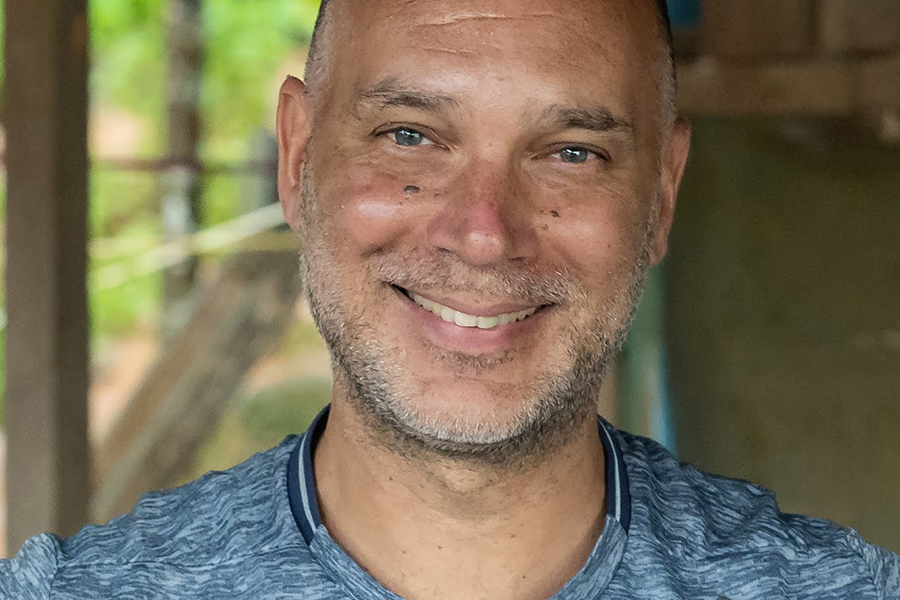
Alexandra Cooley is the co-founder and COO of Greenworks Lending, a private capital provider that funds commercial real estate through Commercial Property Assessed Clean Energy (C-PACE). This financing makes clean energy a smart financial decision for commercial property owners and developers. Greenworks Lending is among the Real Leaders 100 Top Impact Companies of 2020.
The following is a summary of Episode 69 of the Real Leaders Podcast, a conversation with Greenworks Lending co-founder, Alexandra Cooley. Read or listen to the fullconversation below.
Fewer Emissions, More Jobs
Alexandra explains how Greenworks Lending has given commercial real estate the opportunity to finance clean energy installations. However, she elaborates that commercial property owners and developers sign on with personal agendas for energy alternatives. As a result, the opportunity for more cash flow due to saving on energy costs is a big incentive, as well as the potential for new construction and development.
While environmental benefits may not be the initial intention for these investments in clean energy, the environment and the economy inevitably benefit greatly. With Greenworks Lending, more companies get on board with reducing emissions, and consequently generate a need for more clean energy jobs.
“We actually report on our impact every quarter. Nobody’s requiring us to do this. None of our investors require it, we just do it because we think it’s really important for us personally. It’s very motivating to see that we’ve created X more jobs this quarter. It’s also really motivating for the people on our team. We have, to date, created over 2,000 clean energy jobs. So that is really exciting.”
Listen to Episode 69 on Spotify, Anchor, Crowdcast, and Apple Podcasts
Give Away Your Legos
The evolution of Greenworks Lending, from a two-woman startup with her co-founder to a Top Impact Company with over 40 employees, has required Alexandra to adapt her leadership role. She explains how the company has adopted into its vernacular the idea coined by Molly Graham: “Give Away Your Legos.”
“It’s more about leading and managing than doing, right? You have to give things that you’ve built to other people to maybe do a better job at, maybe do a worse job, while you go off and struggle doing something new. And it’s hard, and it’s not natural. Because you go from direct discussion and debate to meeting to influence and managing perceptions. That was very challenging for me. And I think that is probably something that most people in our in our position struggle with.”
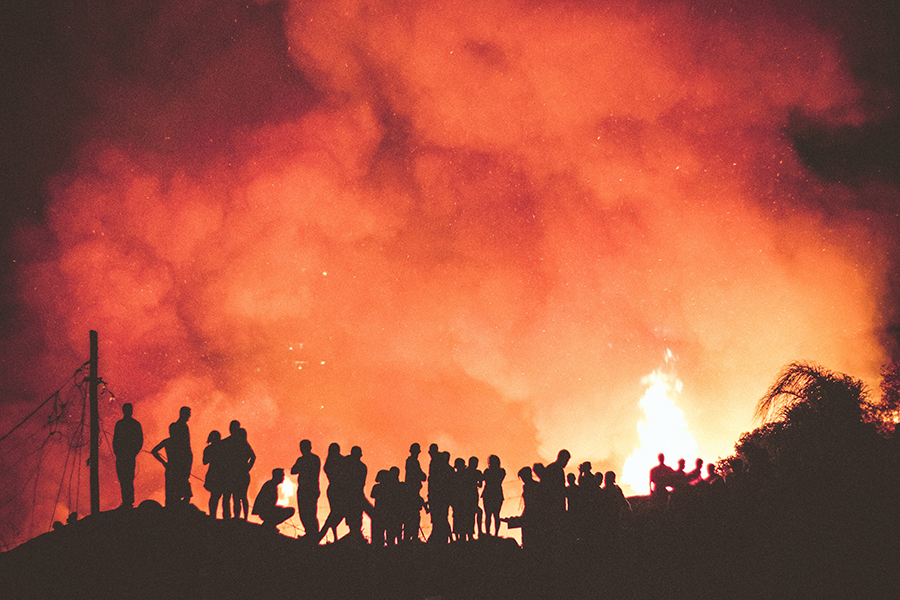
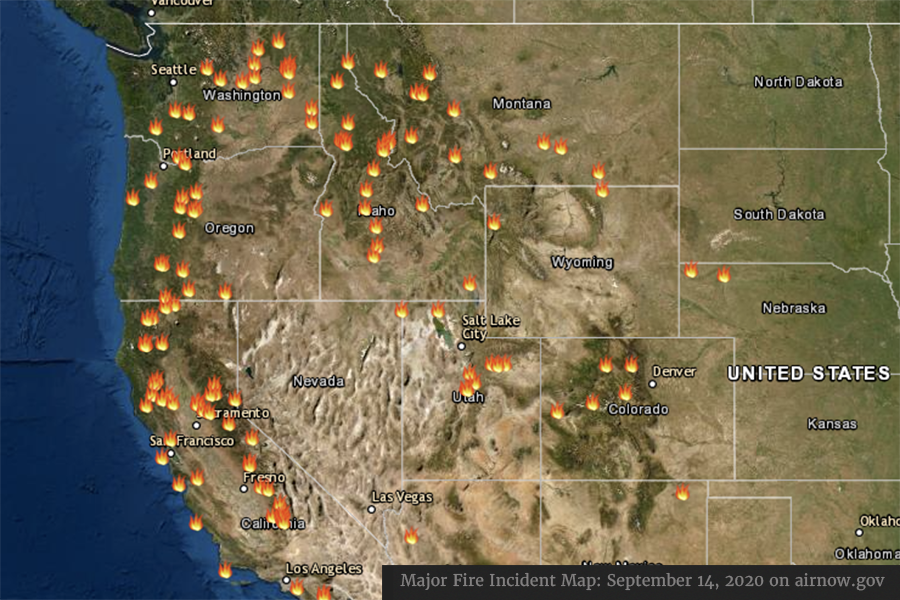
With dry seasons extended and temperatures on the rise, wildfire seasons have become longer and more dangerous than ever.
Fires in the American West this summer, and other parts of the world, have reached air quality levels of unprecedented hazard, breaking records as the worst in the world and forcing entire communities to evacuate. Below is a compilation of wildfire resources to keep you informed of evacuation and safety protocols.
Air Quality
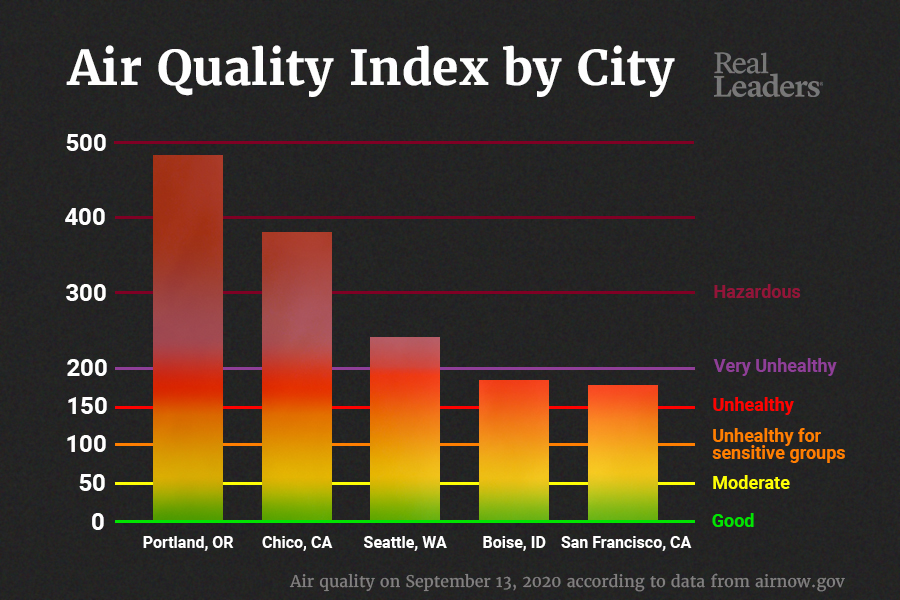
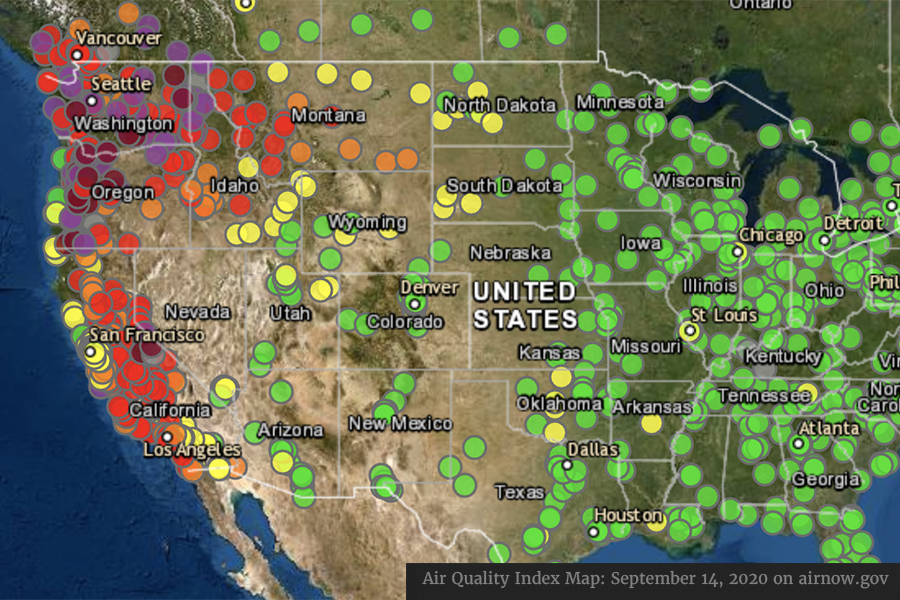
Air Quality is measured through the Air Quality Index (AQI), and accounts for five major air pollutants: ground-level ozone, particle pollution, carbon monoxide, sulfur dioxide and nitrogen dioxide. In the U.S., these measurements range from 0 to 500, least to most harmful. Measurements below 100 are not considered detrimental to one’s health, but measurements above 100 may be harmful to sensitive groups (children, pregnant women, and the elderly, as well as those who smoke or have conditions such as asthma or heart disease). Measurements above 300 are considered hazardous to everyone.
Many cities along the West Coast are currently experiencing unhealthy — and in many cases, hazardous — air conditions. This week, areas in Western Oregon reached air quality levels so hazardous that they surpassed the AQI scale. As a result, the EPA declared “emergency conditions” for anyone exposed to such air for 24 hours or more.
Health Risks
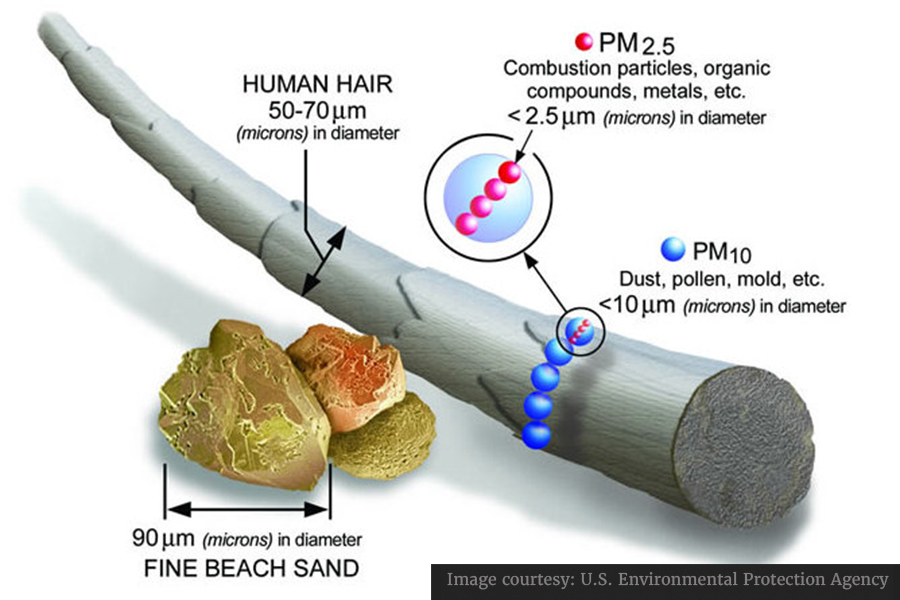
The danger with poor air quality comes with inhaling harmful particulate matter and toxic carcinogens created by wildfire smoke. Four smoke (PM2.5) particles can fit into a single particle of dust. They are so small that the body can’t naturally filter them out, so they easily reach the lungs and enter the bloodstream.
Some common symptoms of this smoke exposure include: irritated eyes, nose, and/or throat, a cough, headaches, sleeplessness, and slight shortness of breath. This exposure is especially harmful to those with pre-existing conditions, and can lead to increased chances of asthma or heart attacks. Contact your doctor or call 911 if you have breathing trouble or chest pain.
While levels above 300 AQI are considered hazardous for anyone exposed, it is not known how exposure to recent off-the-charts hazardous air will affect human health. Therefore, it is necessary to be vigilant about limiting exposure.
Prevention
When it is smoky outside you should reduce time spent outdoors, and avoid outdoor activities that require exertion and heavy breathing. Opt for light exercise indoors and drink plenty of water to stay hydrated.
Keep doors and windows closed. If you have an HVAC system, set your air conditioning to “recirculate” mode to filter the air in your home. If you have central ducted air conditioning, make sure the system setting is switched to “on,” rather than “auto,” to ensure air is being filtered constantly rather than intermittently.
Reduce other sources of indoor smoke. Avoid burning cigarettes, candles or gas, propane, and wood burning stoves and furnaces. Also avoid vacuuming to limit dust in the air — use a damp mop or cloth to clear away dust particles instead.
Protection
Cloth masks and face coverings provide protection from ash, but they will not protect against inhaling minute particulate matter from smoke. N-95 masks may provide protection if worn and fitted properly. However, they are in short supply since they are the verified protection for essential workers to combat Covid-19.
The most effective way to protect yourself from harmful wildfire conditions is to remain indoors and limit your time outdoors as much as possible. Even if the sky looks clear, air quality can be deceptive, because it accounts for particles too small to see. You can monitor your air quality with airnow.gov or through the Forest Service.
If you must drive in your car, keep headlights on at all times — not only to see, but to be seen. Turn on your Air Recirculation button to close vents and keep smoky air out of the car.
Evacuation
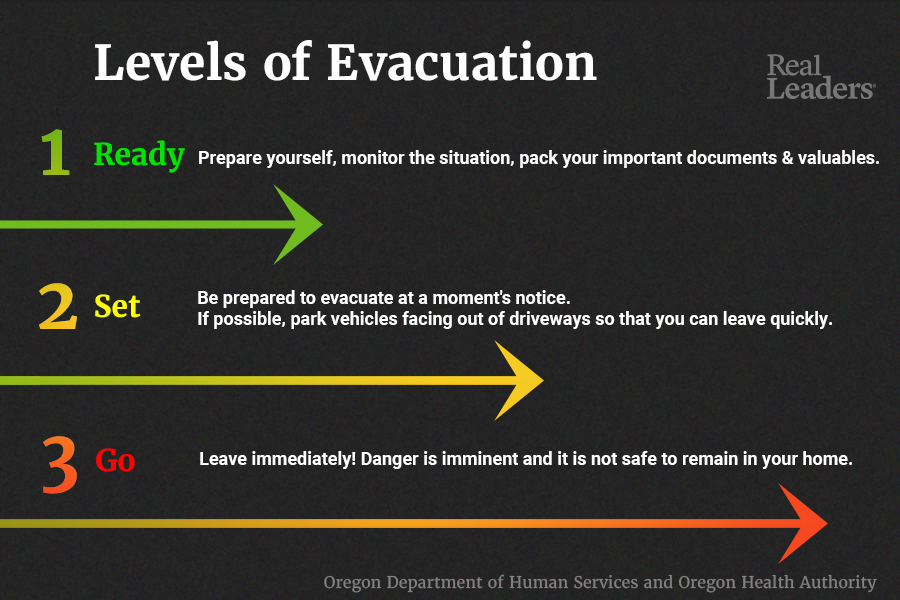
Be Informed
Sign up for Public Alerts or emergency alerts specific to your county. The Emergency Alert System (EAS) and National Oceanic and Atmospheric Administration (NOAA) Weather Radio will also provide emergency alerts, but will not reach you as quickly or reliably as a more localized alert system.
Check your county and state websites. There, you can find specific information on evacuation points, emergency housing, prescription medication discounts, mental health resources, DMV replacement documents, unemployment, etc.
Familiarize yourself with your community’s evacuation routes. Be aware of several ways to leave the area in the event that some roadways are closed due to fire damage. See your Department of Transportation for information on road conditions and closures.
Stay up to date on social media. Many people will post important information and resources, and community members will circulate information specific to your area that you might not find elsewhere.
Be Prepared
Charge electronics such as smartphones, laptops, and flashlights. Turn volume up on phones in order to hear emergency alerts right away.
Compile an emergency kit (if you are not otherwise ordered to evacuate immediately). This should include important documents (birth certificates, passports), irreplaceable items (family photographs, hard drives, etc), and enough resources to last you and your family members two weeks.
For insurance purposes, videotape every corner of your home and talk through every item you own, down to the smallest details (i.e. how many dishes in your cupboard or pairs of jeans in your dresser). Having your house documented will make insurance claims easier if anything is damaged during the fire or stolen while you are away.
Be prepared in the event that your electricity is turned off. Many energy companies will shut off electricity in areas in imminent fire danger. Make sure you are able to open garage doors manually so your vehicle will not be stuck inside the house, and have emergency cash on hand in case ATMs don’t work.
If your area is not ordered to evacuate, stay put and continue to monitor conditions and updates closely. This leaves room on roadways for residents and emergency responders in urgent evacuation zones. You can protect yourself and first responders by evacuating only when you are advised to.
Check on your friends, family, and neighbors, to make sure they are prepared as well.
Continue to follow COVID-19 recommendations. While cloth masks do not prevent inhaling harmful smoke particles, they do still slow the spread of Covid-19 and should still be worn in public places at all times.
Animal Safety
Pets
Make sure all of your pets or livestock are included in your evacuation plan, and have a pet evacuation kit prepared for them as well. Pets are equally susceptible to the harmful effects of wildfire smoke, particularly older animals, or those with preexisting conditions. To protect pets, limit their time outside (shorter bathroom breaks and walks) and keep them in a well-ventilated room. They should have access to plenty of fresh water and their favorite toys, blankets, and treats, so as to limit potential anxiety in a more stressful environment.
Livestock/Large Animals
To protect your large animals in wildfires, limit strenuous work and give them 4 to 6 weeks to recover fully from smoky conditions before resuming strenuous activity. If smoke continues to worsen, stay up-to-date on locations that will accept livestock if you need to evacuate. Contact your local fairgrounds, stockyards, race tracks, and equestrian centers about temporary shelter. Train all livestock to load into trailers in the event that relocation becomes necessary.
If evacuating large animals cannot be accomplished in a safe and timely way, open gates, cut fences, or herd livestock into areas of lower fire risk. Leave enough food and water for 48 to 72 hours (do not rely on automatic watering systems). Remove all halters or harnesses from livestock to prevent anything extraneous from burning into their skin or getting caught while they roam freely. If your animals do not have permanent identification (ear tags, tattoos, electronic microchips, brands, etc.), write your phone number in permanent marker on your their hooves so that anyone who finds them can contact you.
Wildlife
Many wild animals are displaced by the fires, and may start wandering into neighborhoods because they are scared or thirsty. If you have spare buckets or large containers, you can fill them with fresh water and place them outside of your home.
How to Help
Volunteer your time at food banks and emergency shelters.
Donate clothing and household items to organizations like the Red Cross and Salvation Army
Host people in need of emergency housing through Air BnB.
“Many people still do not seem to fully understand (climate change) is impacting our lives today,” says Britain’s Prince Charles.
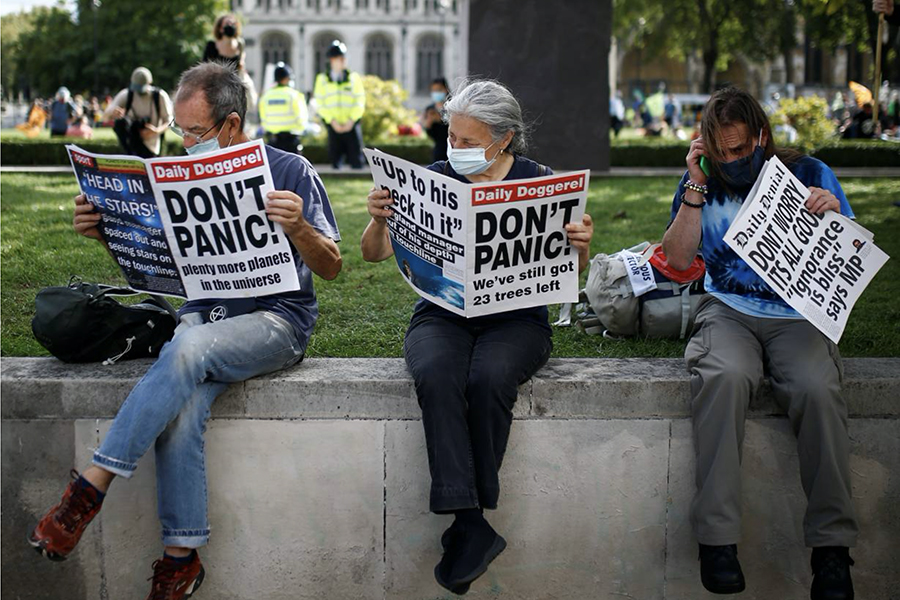
Humans’ collective inability to stem planet-heating emissions – which continue to rise despite pledges to slash them – is largely the result of failures to communicate the risks effectively, government officials and activists said this week.
Even as scientific warnings grow clearer and more urgent, and climate-linked hazards such as more deadly wildfires and destructive storms and droughts affect more people, too few see the rising threats as urgent, they warned.
“Many people still do not seem to fully understand it is impacting our lives today,” Britain’s Prince Charles told an online event run by the Red Cross Red Crescent movement.
“We simply cannot sit back and wait for the climate to change around us and accept these disasters as an inevitability,” said the prince, who is president of the British Red Cross.
While slow progress on addressing the growing climate threat often is blamed on a lack of funding, political will or public acceptance of lifestyle changes, that could be reversed if more people recognised the risks, panelists said.
“We fail in the way we engage with the community. We fail in the way we are able to communicate how deep the crisis is, how it is affecting millions and millions,” said Francesco Rocca, president of the International Federation of Red Cross and Red Crescent Societies.
“This is something we must change,” he added.
The task was particularly difficult because “the climate crisis has become political” in some countries, with scientific evidence used “to divide rather than unite”, he said.
Kumi Naidoo, former secretary-general of Amnesty International, said many people are exposed to a “massive amount of disinformation and lies” about climate risks, and activists had not figured out how to counter that problem.
For most people, “the truth is we are not seeing the urgency – not only government and business but also the large majority of civil society,” he told an online panel Thursday run by Glasgow Caledonian University.
Mary Robinson, Ireland’s first woman president, a climate change activist and chair of The Elders, said she saw growing efforts to join up justice movements – from Black Lives Matter to #MeToo on women’s sexual abuse – as one new route to action.
“A lot of the people affected (by climate threats) are brown or black or indigenous,” she noted.
The COVID-19 crisis also highlighted existing inequalities and risks, and how effective joint human action – in this case to limit the virus’ spread, and to help others – could be.
“That, I’m thinking, will be very important as we tackle climate change,” she said.
YOUTH PRESSURE
Some of the strongest public pressure on governments to act on climate threats has come from young people, through Greta Thunberg’s Fridays for Future and similar movements, as well as protest groups such as Extinction Rebellion, Naidoo said.
They had helped drive wider public discussion and engagement with climate change as an urgent threat, he said, and turned up the heat on politicians with protests that, before the coronavirus crisis began, brought millions to the streets.
Emilotte Nantume, a young Uganda Red Cross Society leader on climate change adaptation, said holding leaders accountable was the most valuable contribution young people – already facing unemployment and other problems – could make on climate action.
“We are not in positions of power to make decisions. We are not policymakers,” she said.
But building national and international movements to monitor and press leaders on climate issues could help shift them from “awareness to engagement”, she added.
In Britain, a citizen’s assembly tasked with advising lawmakers on how to achieve the country’s goal of net-zero emissions by 2050 said on Thursday that educating everyone to genuinely understand climate risks was its single top priority.
Half of the panel, selected to reflect Britain’s demographic diversity, called for compulsory climate change education in schools, and many said they wished others could go through the intensive training in climate issues they had received.
By Laurie Goering @lauriegoering; editing by Megan Rowling and Zoe Tabary.
“Many people still do not seem to fully understand (climate change) is impacting our lives today,” says Britain’s Prince Charles.
Humans’ collective inability to stem planet-heating emissions – which continue to rise despite pledges to slash them – is largely the result of failures to communicate the risks effectively, government officials and activists said this week.
Even as scientific warnings grow clearer and more urgent, and climate-linked hazards such as more deadly wildfires and destructive storms and droughts affect more people, too few see the rising threats as urgent, they warned.
“Many people still do not seem to fully understand it is impacting our lives today,” Britain’s Prince Charles told an online event run by the Red Cross Red Crescent movement.
“We simply cannot sit back and wait for the climate to change around us and accept these disasters as an inevitability,” said the prince, who is president of the British Red Cross.
While slow progress on addressing the growing climate threat often is blamed on a lack of funding, political will or public acceptance of lifestyle changes, that could be reversed if more people recognised the risks, panelists said.
“We fail in the way we engage with the community. We fail in the way we are able to communicate how deep the crisis is, how it is affecting millions and millions,” said Francesco Rocca, president of the International Federation of Red Cross and Red Crescent Societies.
“This is something we must change,” he added.
The task was particularly difficult because “the climate crisis has become political” in some countries, with scientific evidence used “to divide rather than unite”, he said.
Kumi Naidoo, former secretary-general of Amnesty International, said many people are exposed to a “massive amount of disinformation and lies” about climate risks, and activists had not figured out how to counter that problem.
For most people, “the truth is we are not seeing the urgency – not only government and business but also the large majority of civil society,” he told an online panel Thursday run by Glasgow Caledonian University.
Mary Robinson, Ireland’s first woman president, a climate change activist and chair of The Elders, said she saw growing efforts to join up justice movements – from Black Lives Matter to #MeToo on women’s sexual abuse – as one new route to action.
“A lot of the people affected (by climate threats) are brown or black or indigenous,” she noted.
The COVID-19 crisis also highlighted existing inequalities and risks, and how effective joint human action – in this case to limit the virus’ spread, and to help others – could be.
“That, I’m thinking, will be very important as we tackle climate change,” she said.
YOUTH PRESSURE
Some of the strongest public pressure on governments to act on climate threats has come from young people, through Greta Thunberg’s Fridays for Future and similar movements, as well as protest groups such as Extinction Rebellion, Naidoo said.
They had helped drive wider public discussion and engagement with climate change as an urgent threat, he said, and turned up the heat on politicians with protests that, before the coronavirus crisis began, brought millions to the streets.
Emilotte Nantume, a young Uganda Red Cross Society leader on climate change adaptation, said holding leaders accountable was the most valuable contribution young people – already facing unemployment and other problems – could make on climate action.
“We are not in positions of power to make decisions. We are not policymakers,” she said.
But building national and international movements to monitor and press leaders on climate issues could help shift them from “awareness to engagement”, she added.
In Britain, a citizen’s assembly tasked with advising lawmakers on how to achieve the country’s goal of net-zero emissions by 2050 said on Thursday that educating everyone to genuinely understand climate risks was its single top priority.
Half of the panel, selected to reflect Britain’s demographic diversity, called for compulsory climate change education in schools, and many said they wished others could go through the intensive training in climate issues they had received.
By Laurie Goering @lauriegoering; editing by Megan Rowling and Zoe Tabary.
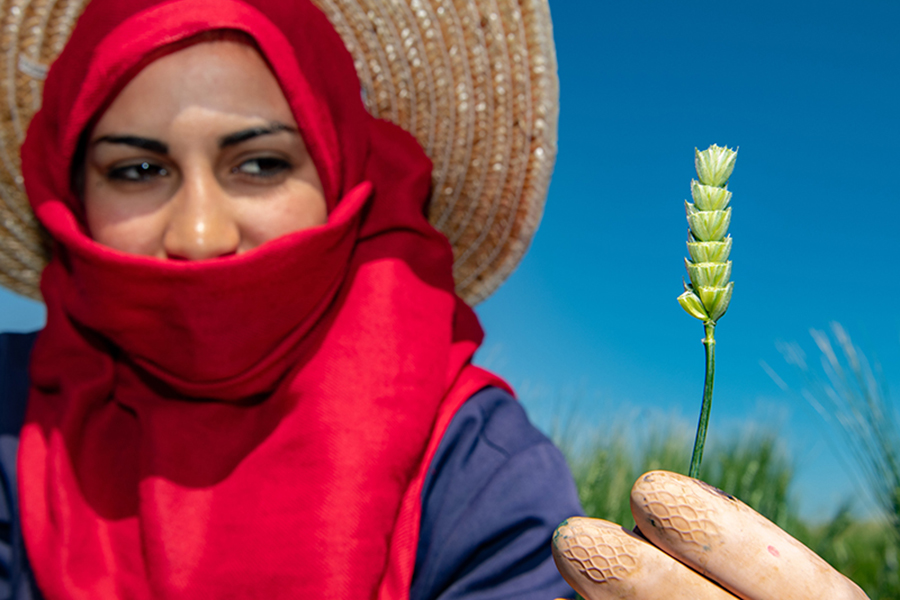
Wild relatives of our domestic crops already cope with harsh conditions and resist disease. Can we use them to help our preferred crops adapt?
Earth is getting hotter. Huge amounts of greenhouse gases are warming the planet and altering the climate. Heat waves are harsher. Droughts are longer. And some diseases and pests are stronger than ever.
All of that is bad news for many of Earth’s inhabitants. But crops are especially vulnerable. We’ve bred them to depend on us, and they can succumb to many threats that are likely to get worse in the next century. All as we need more food to feed a growing population. An international group of researchers set out to test how we can help our crops adapt in the coming decades. Their idea is to use wild crop relatives.
These cousins of domestic crops look like weeds and you have probably walked past them when hiking on mountain trails. You may have even seen them in the cracks of pavement in the cities. They have lived in harsh climates without any human help since the dawn of time. Scientists hope that using crop wild relatives in breeding programs can add resilience to our domestic crops while keeping them delicious.
“Crop wild relatives have been selected by nature over millennia to withstand the very climatic stresses that we are trying to address, and hence present a new hope,” says Filippo Bassi. Bassi is a scientist in Morocco at the International Center for Agricultural Research in the Dry Areas (ICARDA).
But it can be risky to change how breeders work. “Before making the final decision to shift investments from normal breeding to the use of crop wild relatives, it is critical to make sure that there is a real advantage in doing so,” Bassi says. To test this idea, Bassi’s international team of scientists, coming from Africa, Europe, Asia and South America, focused on durum wheat.
The team gathered 60 unique varieties of wheat to expose to a battery of harsh tests. These included fungal diseases, drought and high temperatures. One-third of the wheat lines the team used were developed by combining wild relatives of wheat with strong, commercial varieties.
These wild relative-derived varieties of wheat were robust compared to more conventional varieties. About a third of wild relative varieties were resistant to the fungal disease Septoria, compared to just a tenth of the others. But conventional wheat varieties were more resistant to other diseases, like leaf rust, that have been the focus of past breeding programs.
Where the wild relative wheat varieties really shone was under drought and heat stress. During drought, the wild relative lines had larger grains, a critical adaptation and market trait for this crop. And, when the nutrient nitrogen was in short supply, the wild-derived lines produced a higher yield than the other wheat varieties.
“In the case of temperature, the crop wild relative presented a clear advantage with a yield increase of 42 percent under heat stress,” says Bassi. “Yield losses to heat can be drastic, and the use of crop wild relatives to breed new varieties appears to be a very strategic approach to address this climatic challenge.”
But resilience isn’t the whole story. We depend on crops to make food. And crops are different from their wild cousins in large part because humans have selected crops over many centuries to adapt to their needs, including a preference for making delicious foods. That is why Bassi’s team also looked at the usefulness of the 60 wheat varieties for making pasta. Here, the wild-derived wheat lines were the least suitable for pasta making. “That’s a disappointment,” says Bassi. “But not a deal breaker.”
“This does not prove that the use of crop wild relatives will inevitably result in poor industrial quality,” says Bassi. “But rather that it is important for breeders to be aware of this risk and develop breeding strategies that address this issue.”
Overall, durum wheat’s wild relatives appeared useful. When crossed to elite commercial varieties, they provided increased resistance to heat, drought and some diseases. These are precisely the threats facing not just durum wheat, but most major crops in a warming world. That’s good news for plant breeders — and the public.
“The crop wild relatives showed great promise in terms of climate change adaptation,” says Bassi. “I hope the public will be re-assured that breeders are testing all possible opportunities to prepare agriculture for climate challenges.”
The American Society of Agronomy, Soil Science Society of America,Crop Science Society of America: Collectively, these Societies represent more than 12,000 individual members around the world. The scientists’ memberships build collaborating partnerships in the agronomy, crops, and soils science fields for the advancement of knowledge. This work was supported by the Government of Norway and the Swedish Research Council.
PODCAST PEOPLE: A Summary from the Real Leaders Podcast
“Consumers want products that have a low impact on the planet. They want to feel like they’re part of the solution. So one of our trade lines is, “Be part of the solution.” If you shop at SPUD, we’re saying you’re being part of a solution to a bigger problem.”
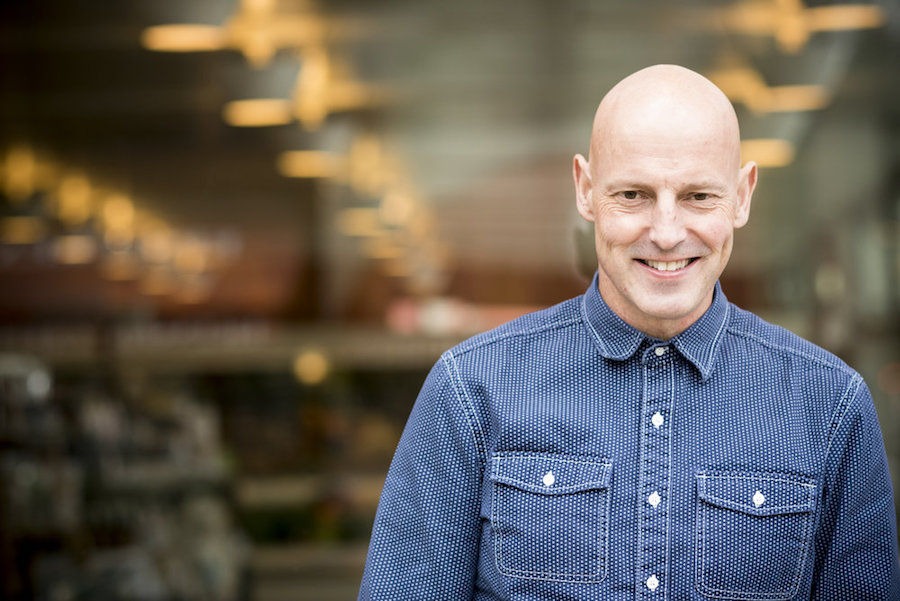
Peter van Stolk is the founder and CEO of SPUD, a sustainable online grocery delivery service operating in Western Canada’s urban centers. SPUD sources the most local products possible, and works with local farmers and vendors to ensure the freshest and highest quality products available. SPUD is named among the Real Leaders 100 Top Impact Companies of 2020.
The following is a summary of Episode 67 of the Real Leaders Podcast, a conversation with SPUD founder and CEO, Peter van Stolk. Read or listen to the full conversation below.
Addressing Food Waste
On a global scale, food waste would be the third largest producer of greenhouse gas emissions behind the US and China. Peter explains that SPUD has avoided the traditional channels of food waste through operating as an online service. SPUD has minimized waste to half a percent. This is because they do not over-order produce, and have no need for displays that inevitably lead to damaged product.
“There’s three functions of food waste, so you can’t solve the problem without looking at the three channels of food. We waste food producing it, we waste food selling it, and we waste food consuming it.”
But food waste is not only an environmental concern, it’s a hugely unprofitable side of the grocery business. Grocery retailers waste 6% of their total sales throwing away profitable goods. Additionally, $400 billion in food is thrown away annually before it even reaches stores. Doug suggests that looking at food waste from a business standpoint would ultimately solve the problem.
“If retailers are throwing away profitable goods, that’s not good business. So let’s make this about good business. If retailers can cut their food waste from 6% to half a percent, that’s more profit. And we live in a capitalist society where profits are good. So let’s make saving the environment profitable.”
Listen to Episode 67 on Spotify, Anchor, Crowdcast, and Apple Podcasts
Circular Sustainability
Doug elaborates that food waste also includes packaging and transportation, additional factors that are often overlooked. SPUD addresses transportation by tracking the food miles for each individual product and giving customers the choice to select how “local” their produce truly is.
SPUD also operates a circular system with their delivery trucks, such that no vehicle returns from a delivery run empty. As a result, trucks pick up produce from nearby suppliers on their way back from deliveries, ensuring backhaul doesn’t account for wasted emissions. Furthermore, SPUD also uses this circular system as a take-back recycling program, to collect plastics from their customers that can’t be recycled in traditional municipal landfills and properly recycle them.
“This is really important. Because if we are going to change the world, and stop the insanity that we’re doing, we can’t make people wrong. We have to make them strong and make them better.”
PODCAST PEOPLE: A Summary from the Real Leaders Podcast
“The flora and fauna of the planet are a natural resource bank account, and that bank account is going bankrupt. So we need to not only protect what’s left, but reinvest in that capital, so that we can live off the interest that it bears, rather than eating away what’s left of the capital, because at the end of the day, we can’t afford to go bankrupt. Because no one’s going to bail us out. So really, it’s all about us. It’s about our future and our survival as a species.”
Fabien Cousteau is a third generation ocean explorer, aquanaut, and environmentalist who is at the forefront of today’s ocean exploration. His latest project, Project Proteus, entails an underwater research center for the betterment of the ocean, the earth, and humanity.
The following is a summary of Episode 116 of the Real Leaders Podcast, a conversation with ocean explorer and aquanaut Fabien Cousteau. Watch, read, or listen to the full conversation below.
Project PROTEUS
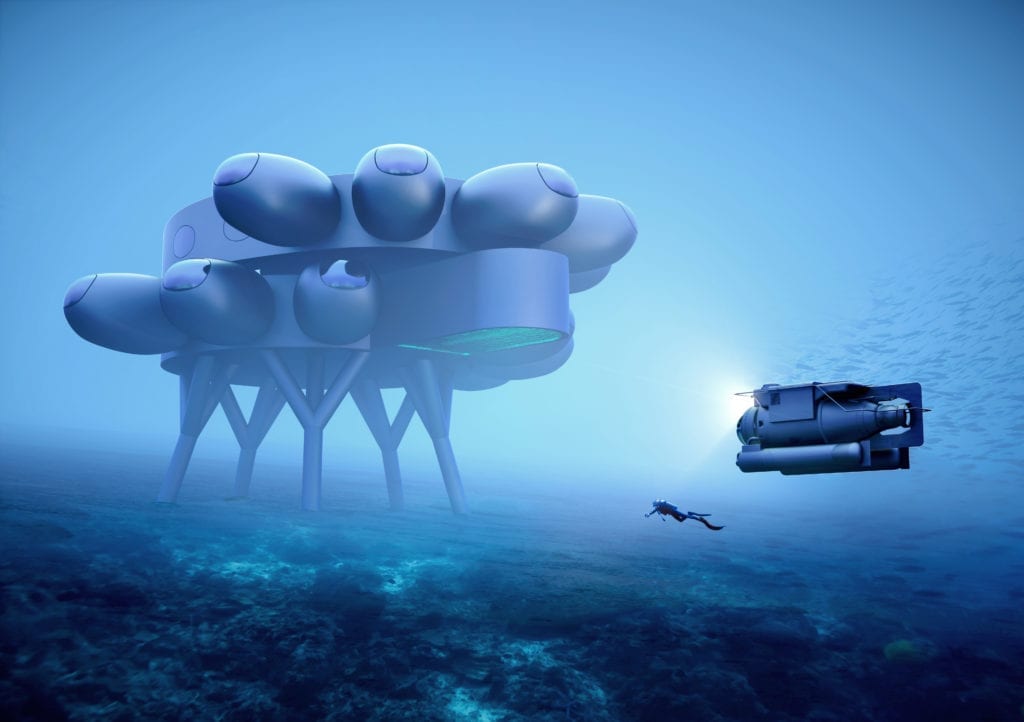
PROTEUS is a project out of the Fabien Cousteau Ocean Learning Center (FCOLC). It will be the world’s most advanced underwater station, a revolutionary research site and habitat located at a depth of 60 feet (3 atmospheres) below the ocean’s surface. It will be the site of research that will address the planet’s most pressing problems.
Fabien Cousteau’s PROTEUS™. Concept designs by Yves Béhar and fuseproject.
The research station will be accessible to hosting academics, private companies, scientists, and NGOs involved in ocean exploration, research and development.
“PROTEUS is the next step in ocean exploration. Imagine building the International Space Station underwater, and being able to have that platform as a common good, and as an Advanced Research Station for bettering humanity, for being able to address things like COVID, to find those next cures for cancer and pain mitigation and of course, pandemics.”
Listen to Episode 116 on Spotify, Anchor, Crowdcast, and Apple Podcasts
Redefining Sustainability
Cousteau proposes three ways to change our language when discussing what sustainability really means:
There’s no such thing as “away”
We need to stop calling it “seafood” and start calling it “sea life”
We the individuals are responsible for making a positive impact with our daily decisions
Considering the Ocean
As a wild frontier, the ocean’s resources aren’t regulated by conservation as easily or effectively as wildlife on land. Ocean life has more often than not been taken for granted.
“We’re on the cusp of a major extinction, of the Sixth Extinction, as it’s called, for the first time ever by one species ourselves. But we’re smart enough to know this, are we wise enough to make the proper decisions?”
The ocean makes up 99% of the world’s living space, but we’ve changed Earth’s landscape such that 95% of the planet’s biomass is now represented by human beings and domesticated animals.
“At the end of the day, ocean is life, no ocean, no life, no healthy ocean, no healthy future. And we are all beholden to the ocean, whether we like the ocean or not, whether we think of the ocean as a vacation spot, or as the essence of every other breath that we take and every glass of water that we drink.”
PODCAST PEOPLE:A Summary from the Real Leaders Podcast
“The end goal of EarthX is to save the world and to save it environmentally, but through education, through calls to action, through recruitment. It was a disadvantage starting this in Dallas 10 years ago, but now it’s a great advantage because we have built a huge education and recruitment without preaching to the choir.”
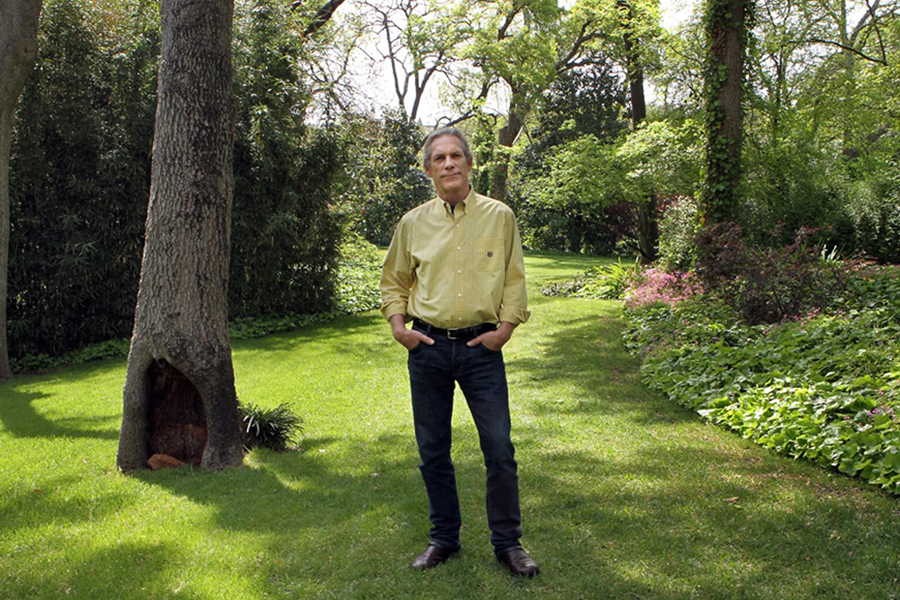
Trammell Crow, Dallas businessman turned environmentalist, knew a different approach was necessary to promote sustainability in Middle America. His solution? EarthX, a pro-business celebration of Earth Day.
The following is a summary of Episode 107 of the Real Leaders Podcast, a discussion of environmental politics with Trammell Crow, founder of EarthX. View, read, or listen to the full conversation below.
The Largest Earth Day Celebration in the World
EarthX emphasizes that business development and sustainability are not mutually exclusive. This middle ground has separated environment from politics, converted many sustainability skeptics, and debunked the “granola” stigma associated with environmentalism. Formerly known as Earth Day Dallas, EarthX has now gone global. Since its debut in 2011, EarthX has attracted over 460,000 participants, making it the largest Earth Day celebration in the world.
Crow explains that EarthX promotes environmental education and awareness for individuals and companies. However, the annual conference also addresses a new responsibility for the environment: it falls not only with big business, but with every individual consumer:
“The economics makes so much sense in many parts of America. If corporations do what’s right for their bottom line, and I mean their triple bottom line, they’ll save the world. Then consumers and you and me and John Q public [need to] realize that it’s not just the corporation’s fault. It’s how we shop and how we consume. [We] take our own responsibility every single day. It’s just two sides of the coin, isn’t it?”
Listen to Episode 107 on Spotify, Anchor, Crowdcast, and Apple Podcasts
Politics have Prevented Environmental Progress
Crow emphasizes that any hesitation towards environmentalism is the result of environmental politics and the nationwide misconception that the environment is a political agenda.
“There are people of all political ilks who are involved in environmentalism, [though] they might not call it that,” Crow states. “And I know down here in Texas great reformer, rancher, hunter, fisher conservationists, but as soon as you start talking climate, they’ll push the chair back and stand up.”
Part of the success of EarthX is its stance that environmentalism is apolitical. Consequently, holding the conference annually in Dallas has also proven instrumental. As a result, environmental politics are transforming into environmental awareness, which now spreads from a new focal point in Middle America.
Crow laughs, “I’ve had grown up white European males come up to me with their Texas accent and say, ‘Trammell, I’ve never been here before, and I have had an epiphany.’ They’ve used the E word. It really, really lets us know we’re doing the right thing.”
PODCAST PEOPLE:A Summary from the Real Leaders Podcast
“Every time I was talking to businesses, they were saying, ‘Oh, we wish we could help, Matt. We wish we could do more.’ I’d always tell companies, ‘You can. Plant trees.’ People don’t realize how important trees are to the environment.”
Matt Hill is the founder and Chief Environmental Evangelist of One Tree Planted, a nonprofit organization that helps global reforestation efforts by making it easier for individuals and businesses to give back to the environment: one dollar plants one tree.
The following is a summary of Episode 106 of the Real Leaders Podcast, a conversation with Matt Hill, founder of One Tree Planted. Watch, read, or listen to the full conversation below.
Why Trees are Important
Trees provide oxygen, but they are directly linked to the state of the environmentin many more ways:
improve air/water/soil quality
provide health/biodiversity
sequester carbon
Planting trees has compounding positive results, which consequently interconnect environmental issues:
“We’re planting a million-and-a-half trees through this corridor in the Pacific Northwest… to cool the water along these streams. And the reason for cooling the water is so that the salmon can come back for spawning, since they’re not coming back for spawning as much as they used to, because the water temperatures are too warm. And by planting these trees it’s cooling it, it’s also cleaning the water. As a result, the salmon will repopulate [to benefit] the resident orca whale’s dependent on these Chinook salmon for their food supply chain.”
Businesses Getting Involved
Recent events have shown how quickly the benefits of a cleaner environment become apparent. As a result, many businesses are capitalizing on this evidence:
“I find a lot of businesses now taking this time to focus on these projects for next year. They’re realizing now. Because before I think people would be skeptical, ‘Well, how do I know this is really gonna work and what’s gonna be a long term results?’ But now in two months, we can all see firsthand, cleaner waterways, cleaner air, just ourselves. So I think companies now are doubling down looking at [environmental] opportunities.”
Listen to Episode 106 on Spotify, Anchor, Crowdcast, and Apple Podcasts
Stories and Transparency Gain Support
While tree-planting is good for the planet, One Tree Planted ensures contributors know exactly how far their planting contributions go:
“We don’t try and position ourselves as “donate to us.” We tell more of the stories, and then I think people or businesses end up wanting to give based on the inspirational story on how this helped these farmers, or helped particular animals that are on the endangered species list.”
All too often, the conversations around climate change erase the voices of the people who are most affected by it. In this series of interviews, we talk to climate activists from throughout the Global South about the fight for climate justice and their visions for a sustainable future.
Do an internet search for “climate activist” and you’ll be presented with several pages featuring the name of one famous Swedish teenager. Greta Thunberg’s achievements are undoubtedly astounding – from kickstarting the global climate strikes, to popularising concepts such as flygskam and even shaking up the stuffy world of the climate conference with her impassioned speeches. But the media’s ongoing focus on this one particular activist’s story is a reflection of wider mainstream climate reporting – that often lacks diversity when it comes to voices, experiences and opinions.
Not only are people in the Global South often among the most vulnerable to rising global temperatures, but they are also activists, educators and changemakers – fighting for a better world, innovating and inspiring others to tackle the issues that we as a planet face.
In this series of interviews with Fridays for Future activists from Latin America, Africa and Asia, we want to do our bit to tackle this imbalance, decolonise the conversation around climate change and lift up the underrepresented voices within the climate movement.
In Interview #2 in this Voices of Climate Justice series, we talk to Iqbal Badruddin, founder of Fridays for Future Pakistan. Pakistan is in a challenging position. The country emits only a tiny portion of the global greenhouse gases, but it is also predicted to be among the hardest hit by extreme weather events, including droughts and floods, in the wake of climate change. And on top of all that, there is very little awareness about climate change in Pakistani society, and about the need to fight it and adapt to its effects. We talked to Iqbal about Fridays for Future Pakistan’s work to raise awareness about the climate crisis, the role of digital and online media in their climate change education projects and the importance of bringing climate change into the school curriculum.
How did you first learn about climate change? Was it through the news, or is it already affecting you directly in Pakistan?
I first learned about climate change when I personally experienced extreme weather events in my country – in particular the floods of 2010 when the country faced huge economic damage. It hit the agriculture sector, which affected food production. It affected the whole country. This made me do research on extreme weather and climate change and now I aim to raise peoples’ awareness of it in my country.
How and when did you get involved in the student strikes? And what was your motivation?
Strikes are the backbone of this movement, but when it comes to Pakistan, doing weekly strikes means mobilising people who want to take action on climate change. But how could we find so many of them? Because according to a BBC report, 65% of the people in Pakistan don’t know what “climate change” means. So, we have demonstrated, but we focus more on raising awareness among the masses. We started striking from late December 2018, starting in different universities in Pakistan. This was mainly because we wanted draw everyone’s attention to the fact we are doing something for the planet that we have in common. The main motivation was that Pakistan is one of the most vulnerable countries to climate change, but we emit less than 1% of the total global greenhouse gases.
What do you see as the role of digital media in your own development as an activist?
Social and digital media was and will remain an important pillar for activism. Whatever we do, we convey our messages through them. Without them nothing positive is possible in an activist’s life. For me, digital media played an important role in shaping me and the campaign for the climate that I lead in Pakistan. Shaping the minds of people in Pakistan can be done through the use of media and we are doing our best to use this platform to reach as many people as possible.
How has the coronavirus affected your protest actions? Are you perhaps taking the protest online and if so, how are you doing it?
The pandemic has affected our physical protests in every respect. The social distancing guidelines have made it harder for us to protest during these times, so, to keep the momentum going we have switched to online protests. I feel that the online protests may not create as much impact as the street protests, but we have to keep putting pressure on the policymakers.
We are posting weekly protest pictures from our social media accounts and also, because FridayForFuture Pakistan focuses more on awareness, we are now also conducting online awareness sessions to educate people about climate change. We’ve also working on developing a virtual 5-day activist training session, which started recently.
What do you think we can learn from the coronavirus crisis and what are some positives you hope will come out of it?
The coronavirus crisis has taught us that we can make big changes in the way we live our lives. This is the same thing that the climate crisis has always demanded. The world has witnessed that anything is possible, all we need is the will to do it. Health is wealth and we need to make sure that whatever we do, it doesn’t harm the coming generations. COVID-19 has taught us that we can live balance our lives and nature and live in harmony with it – and also that we absolutely cannot survive without the natural world.
The Fridays for Future protests have been getting a lot of attention in the media – but that’s not translating into much action on the part of decision-makers. Why do you think that is?
Protests are meant to gain attention from the policymakers and our protests have made a fruitful impact overall but what is missing is climate action. Rather than taking action in advance, we always wait for the crisis to hit us and then we take action. And this is what is happening now. We aim to carry on with our strikes though, and keep bringing attention to the issue so that one day we might be able to make them implement green policies. We know this might take time, but we won’t give up.
What are the key messages behind your particular protest? What does your poster say when you hold it up? And who do you want to see it?
The main slogans on our poster are “Make Earth Great Again” and “Youth Climate Strike”. We want our policymakers and the international community to see our posters and protests so that they know we are concerned about ours and everybody’s future. The main goals of the Global Climate Strikes are to stop policymakers from investing money into environmentally unfriendly industries and also to help countries that are been impacted the most due to climate change. The government should make it compulsory for the schools to teach climate change, meaning that they should introduce a curriculum that is environmentally friendly. Our main message is to raise peoples’ awareness of climate change because here the majority of people are not aware of this crisis, and teaching people about climate change is the first step in fighting it.
What do you hope the Global Strike for Climate can achieve?
Well, the main message behind our protests is to wake the government and the international community up and encourage them to take action on climate change. Pakistan only emits a tiny amount of global greenhouse gases, but we are one of the countries most affected by climate change. We are a developing state and an agrarian economy and the fifth most vulnerable to climate change in the world. We demand, and we need, for people to pay attention.
Is there anything else you’d like our readers to know?
I would like to let the readers know that being a country that is one of the most vulnerable to climate change it is very tough to survive – the economy is another factor that makes a country vulnerable. And we all need to fight this common enemy together. I believe that one day we all will unite like we have come together against the COVID-19 crisis.
This story originally appeared in Reset.org and is republished here as part of Covering Climate Now, a global journalism collaborative strengthening coverage of the climate story, of which Real Leaders is a member. You can visitFridays for Future Pakistan’s website right here where you can find out more about the team and read their blog. Follow them at their official Twitter accountto keep up to date with their (online) strikes and other activities. And connect with Iqbal Badruddin right here. Co-authored by Jan Wisniewski and Marisa Pettit.