An innovative camera and software system helps rangers detect human activity in protected areas.
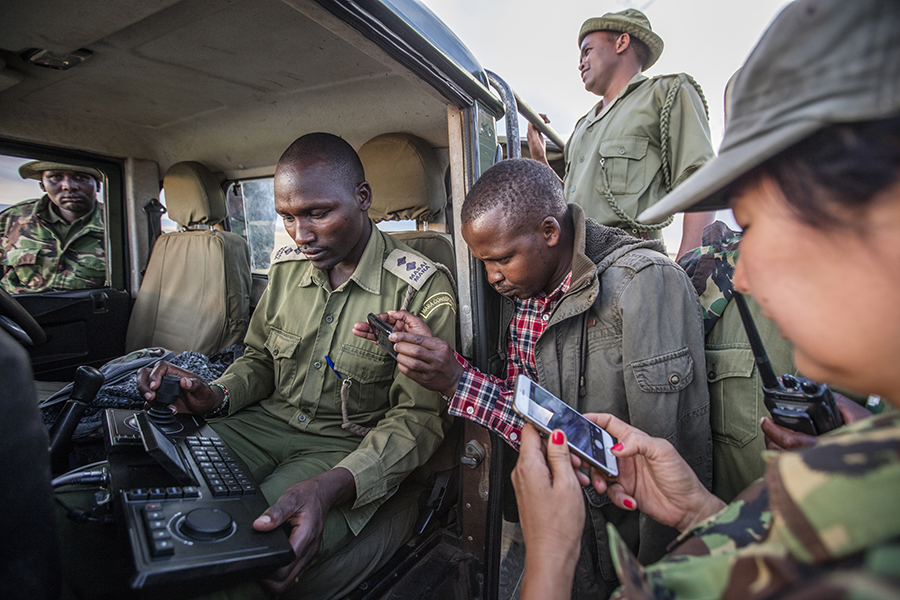
Africa has vast open spaces in which protected species roam. Despite the creation of protected reserves, many unmonitored, porous entry points attract poachers, who enter the park and kill wildlife for their parts. WWF used a grant from Google.org to engineer a remarkable thermal and infrared camera and software system that can identify poachers from afar and alert park rangers of their presence.
The thermal cameras come from the company FLIR and pick up heat emitted by people and animals as they cross their viewpoint. The accompanying software determines whether that heat comes from a human. If a human is identified, rangers on patrol see an alert in real-time via the camera’s software. “This system will peel back the night’s layer to assist the brave rangers in protecting wildlife and helping to keep them safe,” says Colby Loucks, WWF’s director of the Wildlife Crime Technology Project.
The Association of the German Gas Industry has awarded this year’s Innovation Prize in the “Mobility & Transport” category to the pilot test of a passenger bus at Munich airport that runs on liquid methane.
The prize was themed around the slogan “Gas Innovations for the Energy Turnaround” and looked for ideas that contributed to a greener economy. The methane bus was developed in cooperation with the start-up company CM Fluids from Rohrbach. The winners came up with an innovative concept for the traditional passenger bus, and in doing so, offered some fresh ideas for the future of mobility.
As part of the promising pilot project, a passenger bus from the airport’s vehicle fleet, initially powered by diesel, was converted to a climate-friendly drive system using liquid methane. The bus was also equipped with a generator-electric drive. The engine’s energy is also temporarily stored in a buffer battery, which supplies the electric drive axle with electricity. After the successful conversion, the bus will be extraordinarily energy-efficient and also climate-neutral when refueled with biomethane.
Biomethane is a sustainable fuel that is produced by biogas upgraders which remove the CO2. Biomethane is produced from biogas derived from organic matter such as human waste, sewage, food waste, distillery waste or agricultural materials.
The advantages of the CMF drive system are enormous for passenger buses with long operating times or frequent starts and stops, such as those used on airport aprons. In contrast to a conventional electric bus, with a range of 200 miles, this new hybrid can travel up to 500 miles on a single tank of fuel.
For the jury of the German gas industry, chaired by Prof. Dr. Frank Behrendt, head of the Department of Energy Process Engineering and Conversion Technologies for Renewable Energies at the Technical University of Berlin, the joint project makes an important contribution to climate protection: “With the conversion from diesel to biomethane, CM Fluids offers a unique solution that is both economically viable and reduces exhaust emissions to almost zero. Munich Airport is thus becoming a pioneer in climate protection on the apron”.
“Resourceful engineers have developed a showcase project that could serve as a blueprint for many municipal transport companies,” said Jost Lammers, CEO of Munich Airport. “On the one hand, the conversion of existing vehicles is economical and saves expensive new purchases, and on the other hand, regionally produced biomethane from our surrounding area is consumed directly at the airport.”
The vehicle fleet’s gradual conversion to renewable energies fits in perfectly with Munich Airport’s climate strategy. If the concept proves its worth in everyday operations, additional passenger buses will be converted. Munich Airport is implementing a wide range of technological measures to achieve the airport’s CO2-neutral operation by 2030.
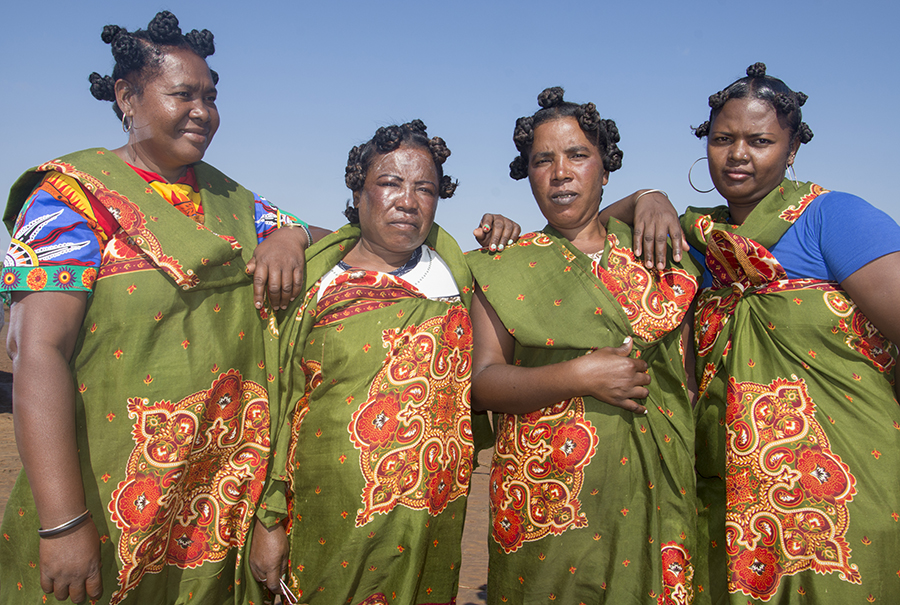
In the small village of Ambakivao, Madagascar, a group of women have stepped up to become their community’s first solar engineers.
These volunteers — dubbed the Solar Grandmothers — are bringing electricity to nearly 200 families in their village. Traditionally, their community used petroleum lamps for lighting homes. Now they have implemented solar lamps for lighting and other household tasks. The use of solar energy reduces pollution and the community’s overall footprint. Remeza, Kingeline, Yollande, and Hanitra (above, left to right) are all part of WWF’s access to sustainable energy programs managed in collaboration with India’s Barefoot College.
The four women joined women from several other countries for six months of training in India in applied solar technology. Most women entering the program leave their country — sometimes even their native regions or villages — for the first time. The village elects a solar committee to run the administrative, social, and financial aspects of the solar program and ensure its economic sustainability.
“Women often lack courage where I’m from, so I want to tell them: Be courageous and be strong,” says Yollande. “Don’t be afraid and take your responsibilities, whatever your burden or load, because it’s better to be in charge and discover new things.”
To a tiger, forests provide trees for shade, rivers for drinking water, and ideal hunting grounds for ambushing prey. One of the best ways to protect forests so that tigers and other wildlife thrive is to buy products with the Forest Stewardship Council™ (FSC) label.
A joint initiative between WWF and FSC aims to make consumers aware of their buying choices. The FSC label means the product is from a responsibly managed forest — one where trees are harvested legally, highly hazardous pesticides are not used, indigenous people’s rights are protected, and more.
In addition to saving wildlife, every part of a tree is used to make products, such as rubber for shoes and bark for corks.
FSC is an international non-profit, multi-stakeholder organization established in 1993 that claims to promote responsible management of the world’s forests. According to the Food and Agriculture Organization of the United Nations, half of the world’s forests have already been altered, degraded, destroyed or converted into other land uses. Much of the remaining forests today suffer from illegal exploitation and otherwise poor management. The organization was established as a response to these concerns over global deforestation.
Monetizing environmental services of biofuel feedstocks could incentivize farmers to take advantage of marginal agricultural lands while also benefiting the landscape.
Transitioning from the use of fossil fuels to biofuels—particularly in the transportation sector, which is a major source of direct greenhouse gas emissions—is one of the key means envisioned to reach emissions reduction targets outlined in the Paris Agreement. Growth rates of biofuel production are lagging, however.
Providing sustainably sourced biomass that supports biofuel production but does not displace food crops or biodiversity conservation is a challenge. To avoid such displacements, farmers often use marginal agricultural lands, but this can come with economic disadvantages. One way to balance the checkbook is to pay farmers for environmental services—that is, for benefits proffered by cultivated landscapes, like increased pollination, carbon sequestration, and flood control, among others. (Ecosystem services refer to the contributions of native landscapes.)
Monetizing environmental services can guide public subsidies for biofuel crops and incentivize agricultural producers to put their marginal lands to work. In a new study, Von Cossel et al.calculated the value of environmental services provided by Miscanthus Andersson, a promising biofuel feedstock, in the agricultural region of Brandenburg, Germany. Native to East Asia, the perennial grass can be used to produce isobutanol, a replacement for ethanol, and it delivers high yields in varied environments. Research has shown that the plant also reduces erosion, improves soil fertility, and protects groundwater; however, it remains underused in the United States and Europe.
The researchers referenced previous work to valorize various environmental services associated with Miscanthus. In total, the authors found that Miscanthus cultivation is annually worth between about $1,400 and $4,900 (€1,200–€4,183) per hectare, 3 times more than the value of the raw material for biofuel. The results showed that Miscanthus annually provides up to $900 (€771) per hectare for flood control and almost $60 (€50) for pollination, for instance.
The authors say that analyses such as this one are critical components in the transition to a bioeconomy. And they suggest that monetizing environmental services can help pave the way for the world to reach established biofuel targets, such as that set by the International Energy Agency, which envisions biofuels with a 10% share in the transportation sector by 2030. (Earth’s Future, 2020)
This story originally appeared in eos.org and is published here as part of Covering Climate Now, a global journalism collaboration strengthening coverage of the climate story, of which Real Leaders is a partner.
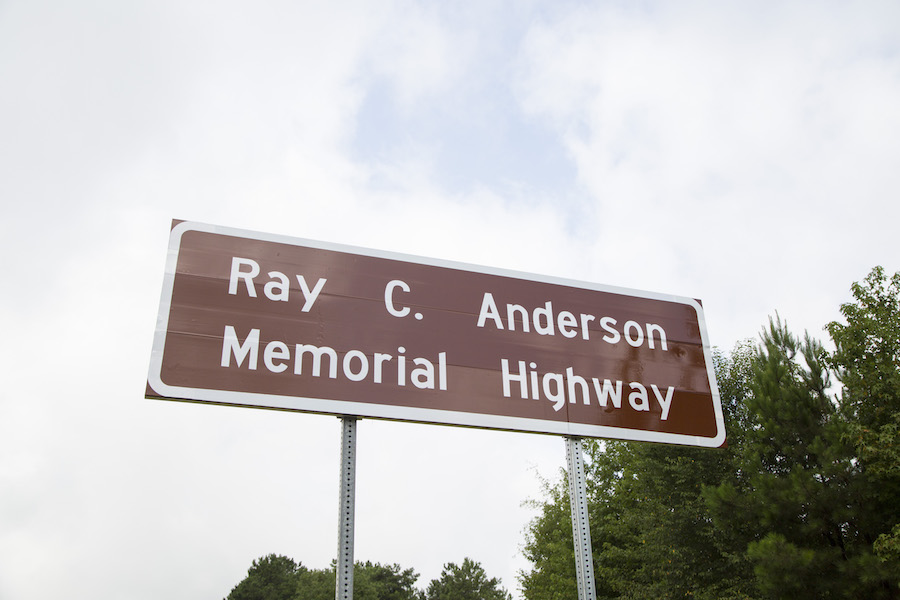
The Ray Highway, an 18-mile stretch of the I-85 in Georgia, is furthering a transportation revolution.
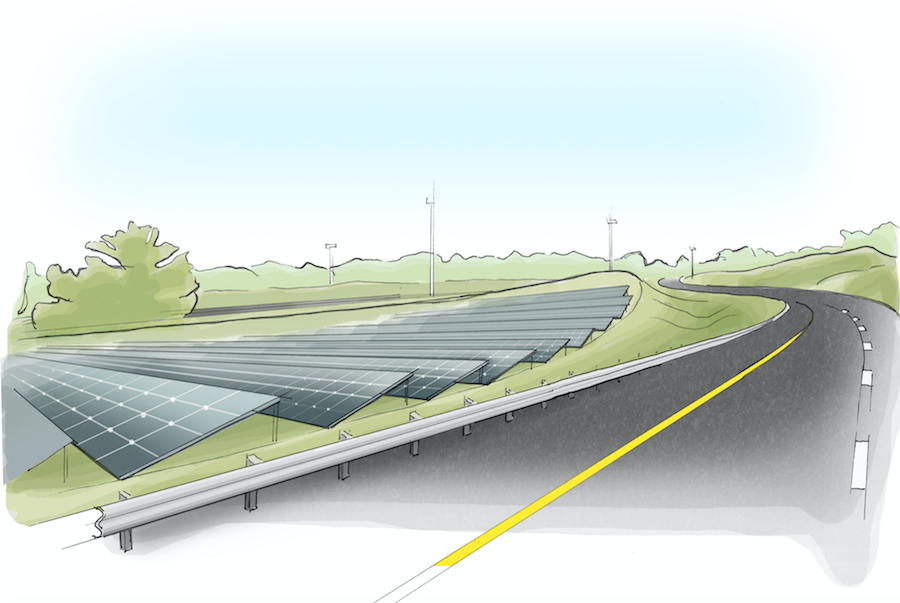
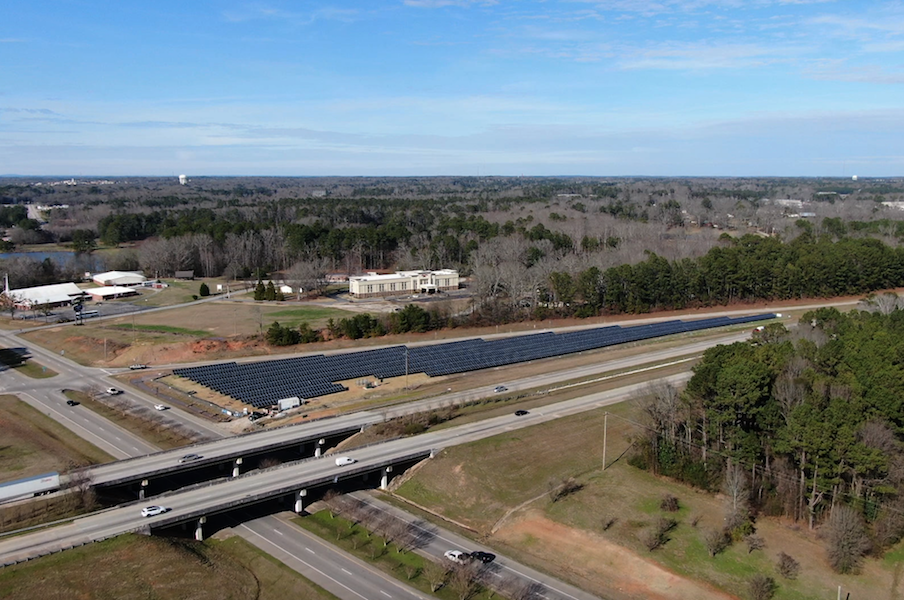
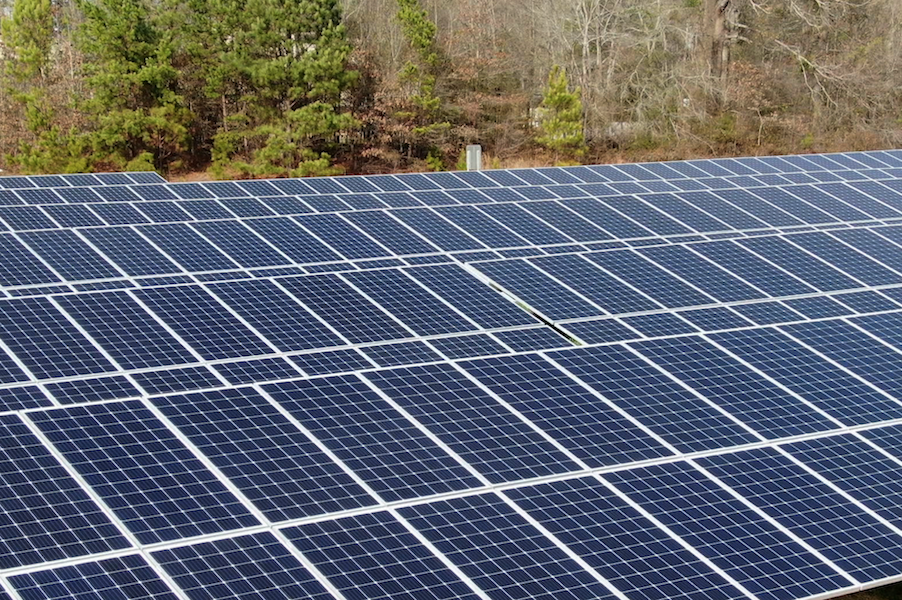
A configuration of 2,600 high efficiency solar panels at Exit 14 are maximizing the potential of right-of-way land with a megawatt of renewable energy.
“Right-of-way” (ROW) areas are roadside lands owned by state departments of transportation (DOTs). They stretch for miles as otherwise unused acreage, making them ideal locations for renewable energy development. Already cleared, currently idle, and easy to access, these areas present a built-in solution for addressing a growing demand for energy infrastructure.
The Georgia ROW solar project is the result of a collaboration between Georgia Power and The Ray, a non-profit living lab and proving ground. Founder and president Harriet Langford named the organization in honor of her father, industrialist and environmentalist Ray C. Anderson. Ray was a trailblazer who had the same goal as the organization — transforming the future of global transportation infrastructure. To further this goal, The Ray is working towards a future of highway transportation with zero deaths, zero waste, and zero carbon.
“As our transportation systems become smarter and electrified, we will need more energy available, closer to the interstate and interstate exits, and more funding to support the infrastructure demands,” Harriet explains. “By enabling renewable energy generation using the idle roadsides, our DOTs can help to fill this gap.”
“The Ray Highway”
Built-In Benefits
The majority of the 48 contiguous U.S. states have more than 200 miles of empty roadside land that could accommodate solar energy development. Altogether this amounts to 127,500 acres across the nation. Such acreage has the potential to generate up to 36 tera-watt hours (TWh) of electricity, and consequently produce 1% of the entire country’s energy demand.
These solar ROWs would not only be an easy way to generate clean electricity, but a huge economic incentive. ROW solar is a $4 billion economic opportunity for State DOTs, which would additionally benefit from reduced energy and roadside maintenance costs, and the creation of new revenue streams. Depending on the state and amount of suitable roadside land, there’s the opportunity for states themselves to generate a value up to $180 million of carbon-free electricity each year.
The Ray Solar Site off the I-85
“No matter how they decide to structure the deal,” says Laura Rogers, Director of Strategic Partnerships at The Ray, “State DOTs win on all fronts by optimizing underutilized land to generate clean renewable energy that benefits their communities, the environment, and their budgets.”
Solar Mapping
That’s why The Ray partnered with the Webber Energy Group at the University of Texas, Austin to create ground-breaking mapping research to bring right-of-way solar to the next level. The Webber Energy Group analyzed the unpaved roadside areas at exits across the U.S. interstate system for their solar energy generation potential. The result is an interactive web-based mapping tool that will help State DOTs and other interested parties assess the potential for interstate solar across the contiguous United States.
“We have found that when stakeholders have unbiased information available to them, they can make energy decisions with a lot more clarity and confidence,” says Michael Webber, Josey Centennial Professor in Energy Resources and Professor of Mechanical Engineering at UT. “That’s our goal with this study: to help people understand the potential for interstate solar so that policymakers, developers, and investors have a clearer view of the opportunity.”
Solar Site Up Close
Pollinator-Friendly Projects
Georgia is the third state to make use of interstate property for renewable energy development, behind Oregon and Massachusetts’ “solar highway” projects. But The Ray’s right-of-way solar is the first to incorporate a holistic approach to the function of this roadside land, optimizing every inch for land regeneration and beautification.
Planted underneath and around each of The Ray’s ROW solar panels are native, pollinator-friendly wildflowers, a more aesthetic and stable ground cover alternative to typical turf grass. These native plants naturally prevent erosion on account of their deep root structures. They also cut back on maintenance and resources, as they are drought resistant and optimized for the local climate. Additionally, this pollinator meadow provides a home for bees and butterflies, which benefits local agriculture in the surrounding area, and is a much more appealing visual for those commuting along the highway.
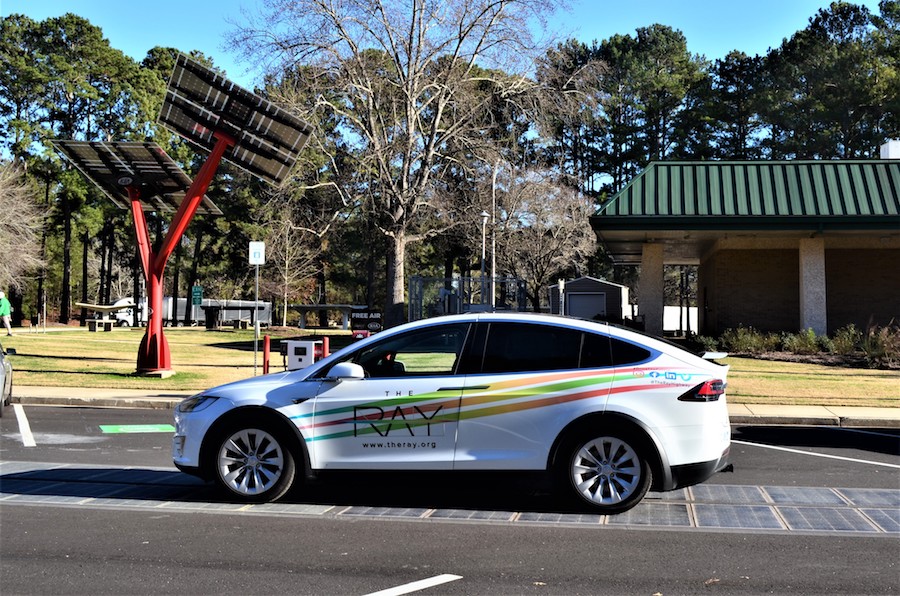
Testing Solar Paving
Further Innovations
The Ray’s solar innovation continues with further research to pursue solar development at highway rest stops and the possibility of solar highway sound barriers. The organization is also partnering with Colas and INES (the French National Institute for Solar Energy) to create solar-paved highways with the first U.S. installation of Wattway (a road pavement embedded with solar cells in a patented frame), which would allow roads themselves to generate clean energy. Each of these initiatives support The Ray’s ultimate mission: to pave the way to a safer and more prosperous future for all.
The observance of the International Day for the Eradication of Poverty can be traced back to 17 October 1987. On that day, over a hundred thousand people gathered at the Trocadéro in Paris, where the Universal Declaration of Human Rights was signed in 1948, to honour the victims of extreme poverty, violence and hunger.
They proclaimed that poverty is a violation of human rights and affirmed the need to come together to ensure that these rights are respected. Since then, people of all backgrounds, beliefs and social origins have gathered every year on October 17 to renew their commitment and show their solidarity with the poor.
However, many poor people are looking for a hand up, not a handout. Here’s one story of an Indian peasant who decided to take action against deforestation, despite being the only person willing to act. His conservation efforts have been recognized internationally and he is now ready to replicate his efforts in similar areas of need. Never underestimate the will, and power, of people with little means.
The Man Who Built a Jungle
In 1979, Jadav Payeng, then 16, joined a forestation project in the Golaghat district of India, in the hope of preventing flooding along a desolate sandbank. The project was abandoned after five years and everyone left, except for Payeng, who continued to plant trees every day.
Thirty-seven years later, Molai forest is now 1,360 acres – larger than Central Park in New York — the result of one man’s labor of love. His forest now houses Bengal tigers, Indian rhinoceros, and over 100 deer and rabbits. It’s also home to monkeys and several varieties of birds. A herd of 100 elephants regularly visits the forest and have given birth to 10 calves in recent years.
“No more global warming if everyone plants a forest,” says the ‘Forest Man of India.’
“In Paris, I asked the Economic Forum for Climate Change why they emphasize the word ‘economy’ so much,” says Payeng. “What value is the economy if there is no oxygen? I asked them to stop breathing for two minutes to realize the importance of oxygen.”
Filmed over four years in twelve countries, The Last Glaciers captures the fragility of the natural world, human impact on our life support systems, and depicts the personal challenges encountered along the way while making this striking film.
Call it global warming, climate change, or the greenhouse effect, they’re all titles for the same troubling story, which for many of us remains as distant as a nightmare. If we’re missing the scientific evidence that our (carbon) footprints on this planet are the cause, then documentary filmmakers Craig Leeson and Malcolm Wood have news to share. Their latest film, The Last Glaciers, proves that the evidence has been around all along.
“We want to eradicate any doubt that climate change is unreal,” Malcolm says, “It’s a political tool, there are a lot of mixed messages out there, but it is unanimous with scientists from around the world that we are in a climate emergency. It’s not about change anymore, it’s a state of emergency.”
The idea for the film started during a winter holiday in the French Alps, where the driest December on record prevented Craig and Malcolm, long-time friends, from their ski touring plans. As the film began to take shape, the story proved beyond measure that it needed to be told when the team witnessed one of the now frequent avalanches in the Alps (the result of warmer temperatures and a destabilized mountain climate). This avalanche took the lives of fellow mountaineers in front of the team, and was their wake-up call that climate change poses a very immediate threat to humanity, not just the environment.
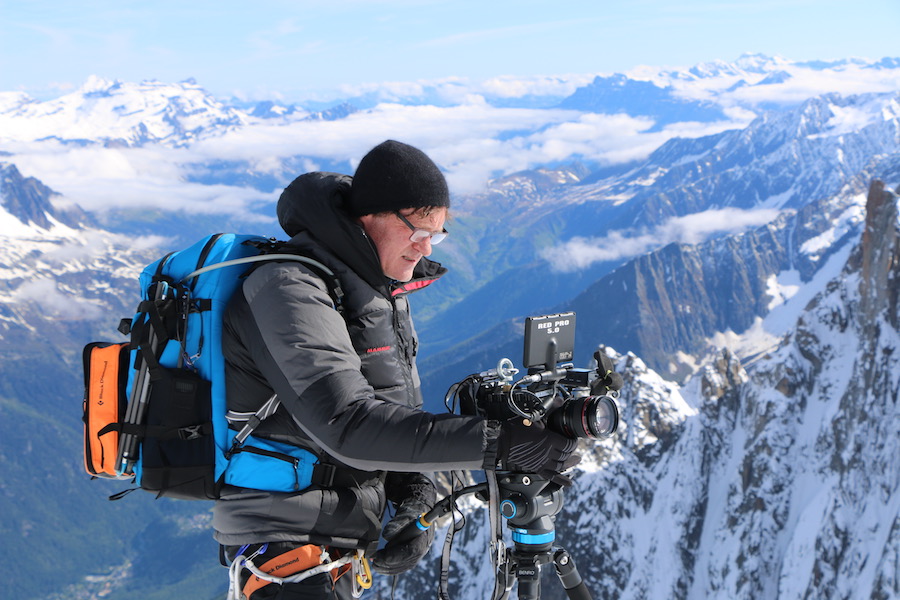
Craig filming on the summit of Mont Blanc
More than an Informational Film
The Last Glaciers isn’t another climate change documentary to scare people into not knowing what to do. “We wanted to engage a new audience, a wider audience,” Malcolm explains, “we wanted them to come on the journey with us, share the adventure. We wanted to experience climate change ourselves, first hand. And the way to do that is to climb a mountain, to go see the glaciers, and get out there and prove our point, ourselves, to our audience while putting ourselves in the field, at risk, and through the elements.”
Malcolm, a well-known adventurer and athlete himself, brought extreme athlete Dave Turner onto the team to join him and Craig on a glacial expedition. The two athletes taught Craig to overcome his fear of heights in order to access glacial ranges with scientists and witness first-hand (as well as capture on camera) the dramatic evidence of climate change causing the world’s glaciers to disappear. Their journey spanned twelve countries over the course of four years, and included mountaineering, para-alpinism, and the first tandem paraglide flight off the 5,800 meter peak of Vallunaraju in Peru.
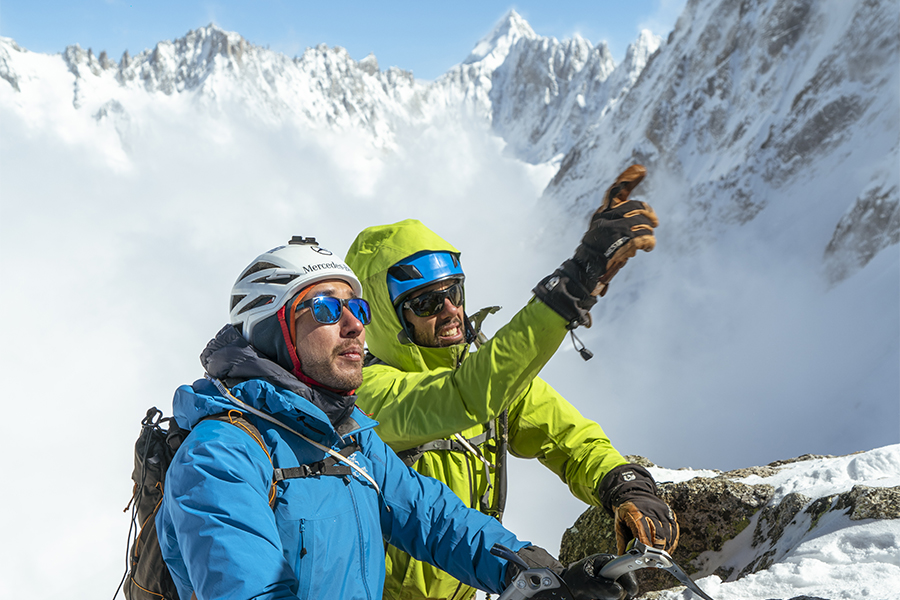
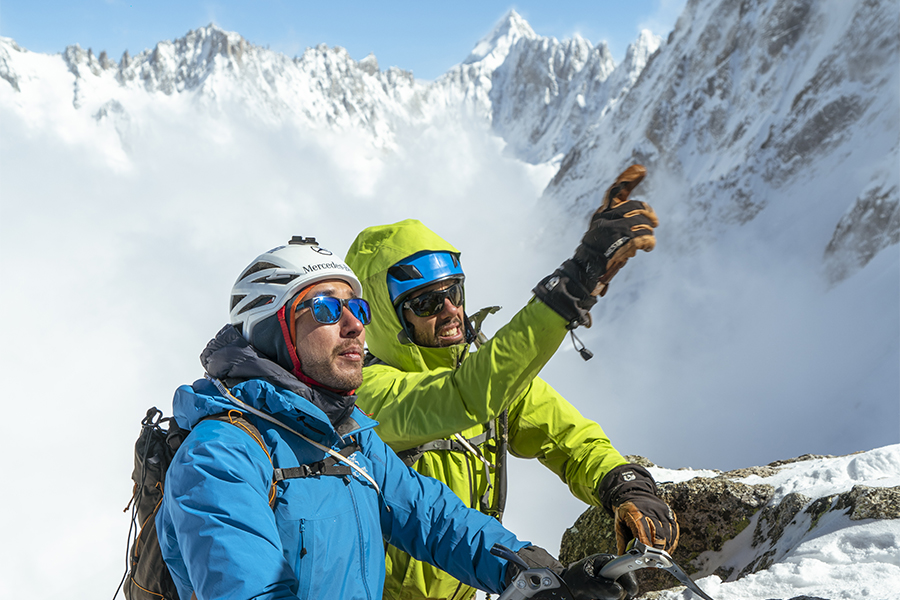
Malcolm and Dave climbing in the Alps
Through chronicling the expedition team’s adventures (and misadventures), The Last Glaciers tells a story using the world’s vanishing glaciers as a representative symbol of a warming climate. The undeniable visual evidence that glaciers are disappearing makes them an easily understood visual tool — they have become the martyrs of climate change.
Despite the film’s dire subject matter, both Craig and Malcolm wanted to ensure that this film wouldn’t be a holier-than-thou message of the apocalypse. The reality revealed comes from a place of sincerity, as the team realizes along the journey in equal parts the urgency of the Earth’s situation and their own complicity in the problem.
“In order to film The Last Glaciers, we’ve had to fly on airlines, we’ve had to drive fossil fuel-driven cars to get to these places, we are as much of the problem as everyone else is,” Craig admits, “Which is why we want to start the debate, so that we can drive technologies, so that we can start to develop systems where we don’t need to rely on these problems… we’re looking for solutions.”
Investigating Every Perspective
To give credence to their solutions, the team had to unpack why climate change is still a matter that many refuse to believe. “I think it’s important when you’re making documentaries that you always show both sides of the argument,” Malcolm says. “What we find is a lot of the deniers are unwilling to give documentary interviews.”
Behind the Scenes
The team consulted a psychologist who specializes in understanding climate change deniers, and whose research has brought him to the conclusion that the people who don’t believe in climate change instead believe in a free market. “To substantiate that belief,” Craig elaborates, “They have to say that they don’t believe in climate change. But as we say, climate change is based on scientific research and fact. So if you choose to say you don’t believe in it, you choose not to understand or to willfully ignore the facts behind the science.”
And the facts are overwhelming. “We’ve found that 98% of scientists globally have research that shows the climate is changing at the hand of man,” Craig continues. “The remaining percent of scientific research papers that have said otherwise have actually been discredited.”
Listen to the entire interview with Craig and Malcom on the Real Leaders Podcast
The Ice Memory Project
To further emphasize that humanity is the cause for more rapid climate change, The Last Glaciers investigates how glaciers house evidence of climate history. This evidence comes from France’s Ice Memory Project, where scientists are drilling ice cores and amassing the first world library of archived glacier ice.
The Last Glaciers team met with Gerome Chapelais, head of the project, to learn about ice core findings. “And what they were finding,” Craig says, “Was that by measuring ice deep down in glaciers all around the world, they’re able to tell how the atmosphere has changed in the past 800,000 years up until the present day, because this ice contains the gases, the atmosphere, that was present at those points in time.”
This preserved glacial record of acts as a timeline of how the earth has evolved, providing a record of events before human records began. The extracted ice cores reveal that there has been a substantial amount of troubling change to the atmosphere since the rise of emissions that began with the Industrial Revolution.
“There’s been this natural oscillation of hot and cold as the earth has wobbled around its elliptical orbit,” Craig explains. “But this natural oscillation has changed since the Industrial Age. And what we’re seeing is four times the amount of methane, twice the amount of carbon dioxide.” This is how scientists know that human intervention is the cause of the drastic climate change we’re seeing now. Craig affirms, “That’s why they understand that climate change is a fact. They’re able to measure it and they’re able to measure it very accurately.”
The Ice Memory Project is operating under urgency because the story ice cores tell of a warming climate is a story that ends with the evidence disappearing. As glaciers melt, the millennia of information archived within the ice melts with them.
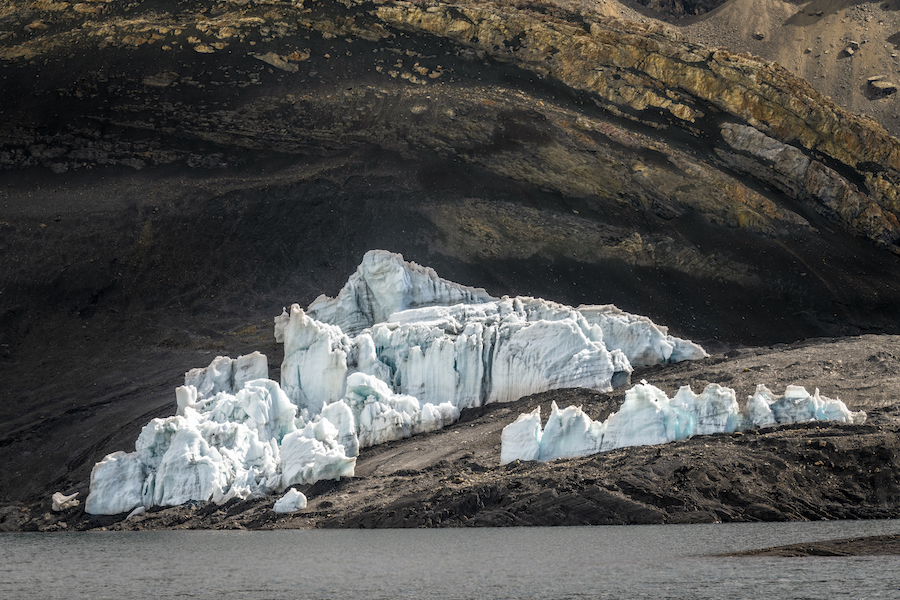
Melted Glaciers
What Scientists are Saying
As for just how fast the glaciers are melting, the Last Glaciers team joined NASA on an airborne research mission over the Antarctic Ice Sheet, the largest ice sheet in the world, and discovered some alarming statistics. John Sontag, head of NASA’s Operation IceBridge, which monitors movement in the South Pole and across the Antarctic, explained to the team how much ice is lost each moment. Craig declared it was such a big figure he couldn’t comprehend the number, “[John] came back to us and said, ‘we’re losing ice the size of the Titanic every ten seconds.’ Now when you think about that kind of mass that’s going, never to be seen again, you start to understand why these guys are getting concerned.”
Scientists have been advertising these kinds of facts as evidence of humanity’s contribution to climate change for decades, ever since a consensus on climate change was reached in the 1980s. But the Last Glaciers team felt that these findings haven’t gained traction; the language of scientific explanations remains difficult for the general public to comprehend.
That’s why The Last Glaciers pares down this research and evidence into a story that we can all understand, taking the facts from highly regarded scientific institutions — from Peru’s INAIGEM to France’s CNRS.The film presents this scientific evidence in a way that is easily digestible, even if it might be hard to swallow.
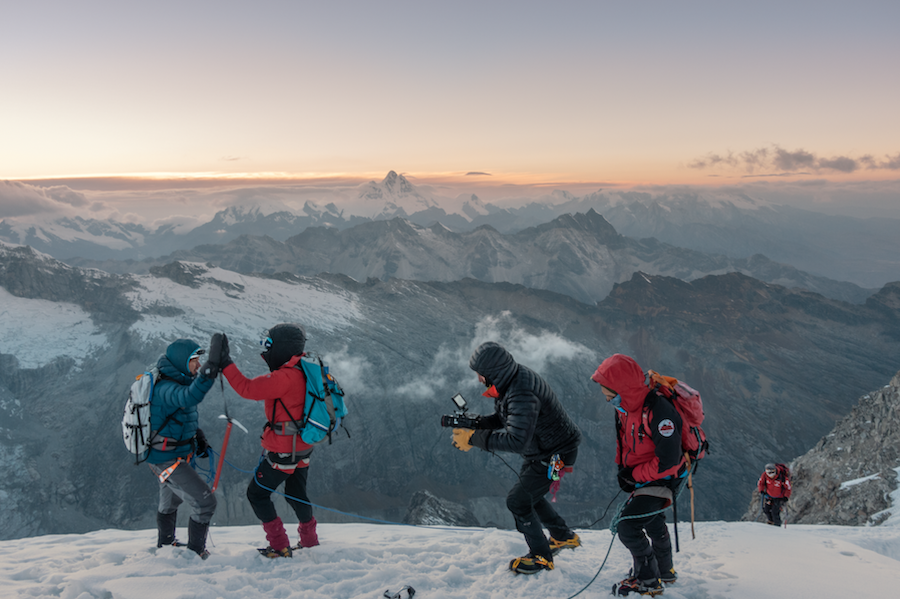
On the summit of Vallunaraju, Peru
“Scientists are very factually based individuals, there’s no emotion when you interview them. They tell you the facts, they tell you the research that presents the facts, they tell you how we got there, and they give an idea of what they think the future will look like.” Craig states. “This is the first documentary where I’ve interviewed scientists where they are getting emotional, where they’re tearing up. You never hear scientists speak with that kind of emotion.”
“These things are happening right now, and they’re happening faster than we can control,” Malcolm says. “I think it’s a scary statistic that almost 50% of the American population still thinks it’s a hoax.”
Our Separation from Reality
The reason half of the country still approaches the subject with a laissez-faire attitude could be because it is currently developing nations that are experiencing the most immediate consequences of glaciers melting. “It’s the poorer countries that are really going to suffer from climate change,” Malcolm states, “There’s going to be more disease, there’s going to be lack of water.”
LDCs like Nepal have already been experiencing this dearth for decades. In Kathmandu, subsistence farmers have been forced to relocate for lack of water because their only source — the glaciers — has melted away. What remains of fresh water is subject to contamination from heavy metals, which have been trapped in ice for millennia and are now exposed to the elements and oxidizing, running into rivers to turn them toxic red.
Nepal subsists at the base of the Himalayas, the highest mountain range in the world, and which harbors the planet’s third largest deposit of ice and snow (surpassed only by Antarctica and the Arctic). Considering the climate continues to warm, Malcolm explains, “If the highest mountain range in the world loses all of its ice, 1.8 billion people will not have fresh water. So almost a third of the world’s population will suffer from the loss of [those] glaciers.”
While the Last Glaciersteam consulted Nepal’s International Centre for Integrated Mountain Development (ICIMOD) to get the facts behind this problem, the film aims to take the audience beyond facts to help us understand the situation. “We want people to be able to experience what we’re experiencing, seeing what it’s like to be someone in a village in Nepal that is forced to give up their house and give up their crops and move because you don’t have water anymore, because those glaciers don’t exist,” Craig states, “And for people to be able to understand, they need to be able to live that.”
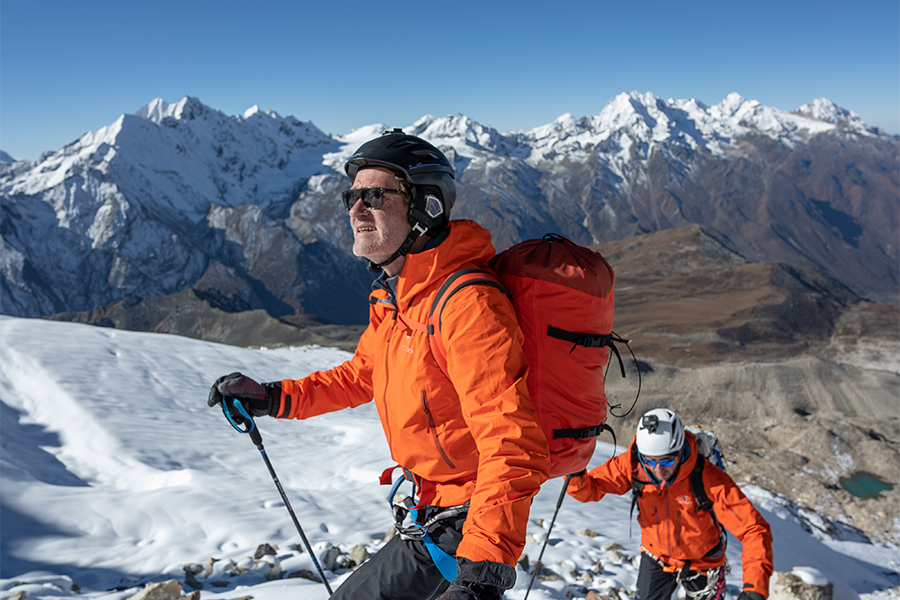
Summit push in Nepal
Evidence of Climate Change Beyond the Ice
Throughout the four year filming journey, however, the Last Glaciers team discovered that across the globe we are all in fact living through the extended extreme consequences of climate change. The team pivoted away from the ice to capture the devastating Australian Bush Fires and the aftermath of super Typhoon Mangkhut in Hong Kong, where both Craig and Malcolm currently reside.
But in the wake of these environmental disasters, the team saw hope in the youth across the globe taking to the streets to protest political negligence towards tackling climate change. Craig determined that including younger perspectives would be important for the film because, “Driving awareness this time around, we need to be driving awareness to the children. The children need to be aware of the situation, and we can already see from the demonstrations, the Greta Thurnburgs, that this is having an effect. And we feel that this is probably one of the quickest ways to get the planet to wake up.”
By 2025, 95% of the American workforce will be millennials. Though governments and corporations seem reluctant to make the policy changes the next generation demands, Craig and Malcolm affirm that such changes are truly in everyone’s best interest. “If you don’t have sustainability development goals within your business infrastructure,” Craig affirms, “You won’t have a business in the future. Because the kids of today who are the clients and consumers of tomorrow do not want to be part of spoiling the planet.”
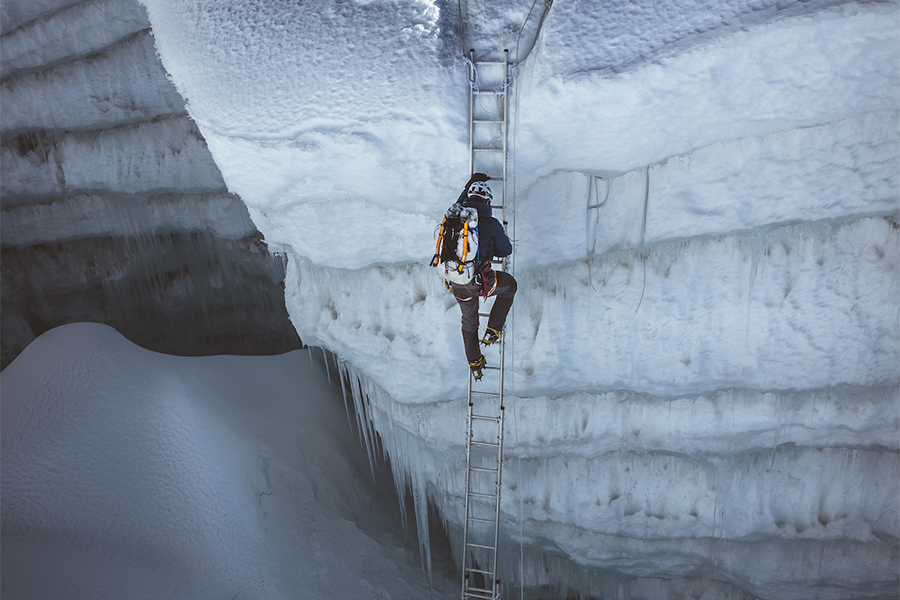
Malcolm climbing a hanging glacier
Optimism for Our Climate’s Future
It’s not yet too late, and that’s the optimistic view on climate change that Craig and Malcolm want to shine through the film. They’ve partnered to create a documentary before — the award-winning A Plastic Ocean, which revealed an equally unsettling truth about the dire state of the world’s waters, but has been instrumental in enacting a great deal of change. Not only is A Plastic Ocean now an educational tool translated into 30 languages and screened in over 60 countries, it has inspired policy change to limit plastic production.
“This is not sugar-coating the problem, but there’s hope,” Malcolm says, “We’re optimistic. We’ve seen a wave of change with single-use plastics, and we hope to inspire young people to do the same about climate change, and driving their politicians to make the necessary changes in their respective countries.”
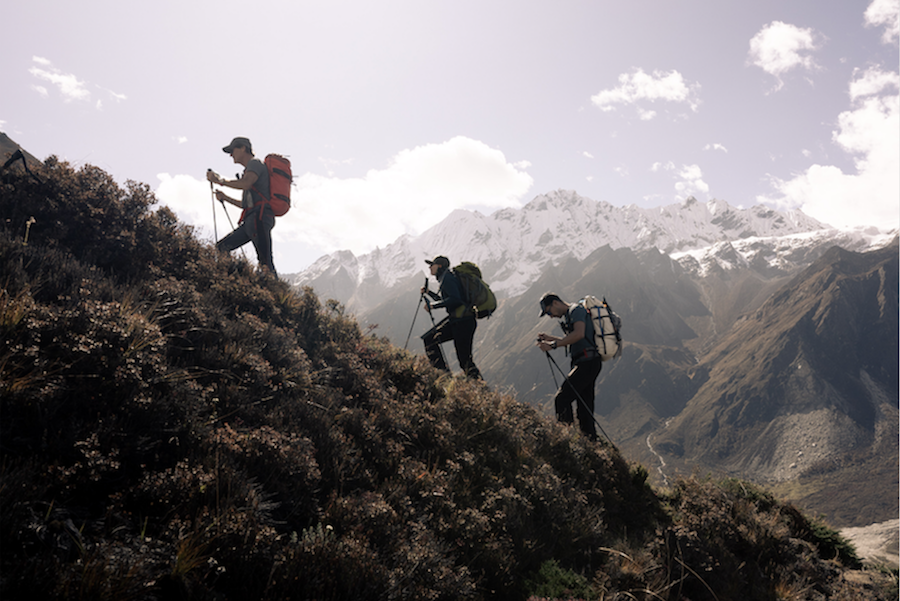
Climbing in Nepal
Craig states, “The solution is to stop burning, stop creating these products that cause the raising of these greenhouse gases. And the best way to do that is to stop chopping down forests, stop burning fossil fuels. These are very easy ways.” We all caught a glimpse this Spring of how effective this could be when the world stopped functioning at normal speed due to the Coronavirus stay-at-home order. Smog and water cleared with less vehicles on roads and waterways, evidence that a worldwide effort to change our impact on the climate is not only possible, but will yield results.
Simply minimizing daily stresses on the planet, however, is only the tip of the iceberg — climate change has feedback loops that will take decades to stop, and the glaciers that have already melted are not coming back. Even if we stopped climate change today, we wouldn’t see a reversal of effects for at least 20 years. Malcolm concludes that this is why we have to clear the path now. “The solution,” he says, “Is driving awareness, getting everyone behind this idea, and insisting on policy change around the world.”
The Last Glaciers is scheduled to release this fall. Find out more here.
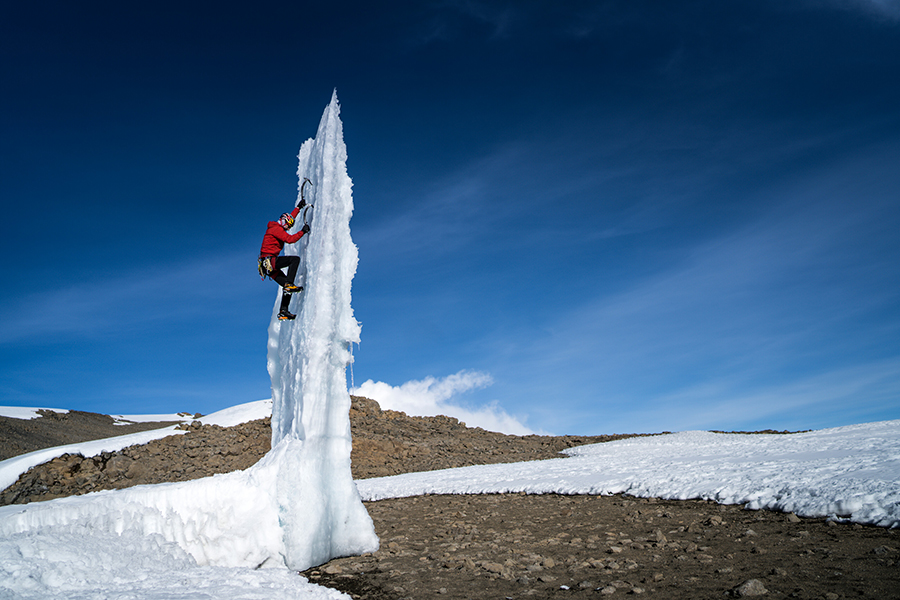
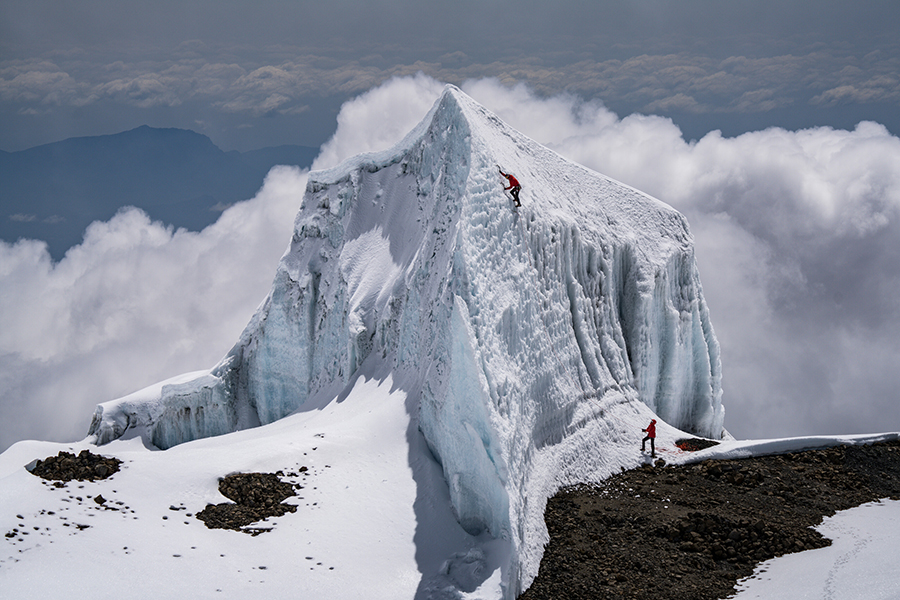
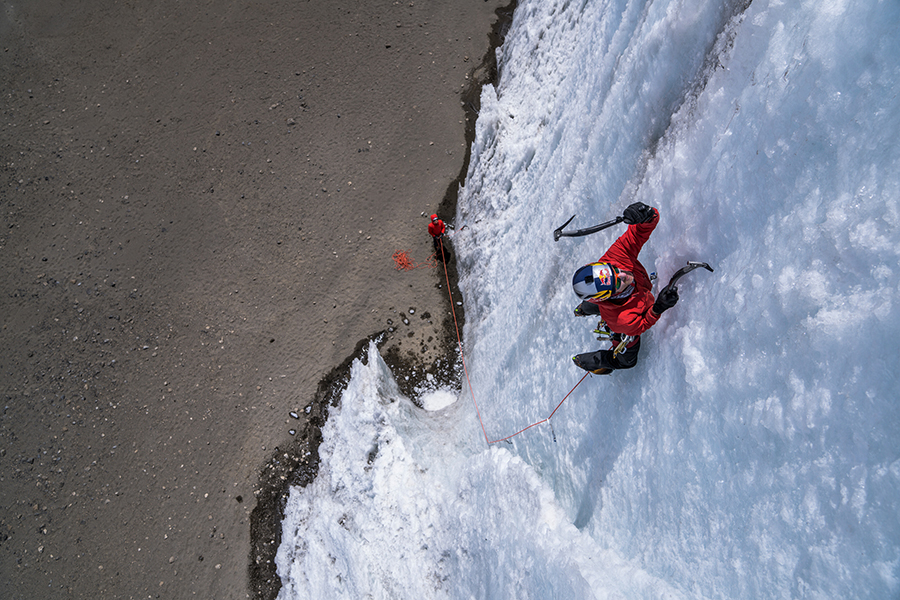
Canadian ice climbing legend Will Gadd revisited the highest point in Africa in February 2020 to make the last ascent of Mount Kilimanjaro in Tanzania before climate change sees the ice glacier melt away forever.
Researchers in 2000 predicted that the ice on the 5,895m high dormant volcano in the Eastern Rift mountains of Africa may disappear by 2020, prompting Gadd’s desire to return this year. In 2014, Gadd, Sarah Hueniken and photographer Christian Pondella first ascended the unique glacier ice features formed by melting factors that are unique to the tropics.
Photo: Christian Pondella/Red Bull Content Pool
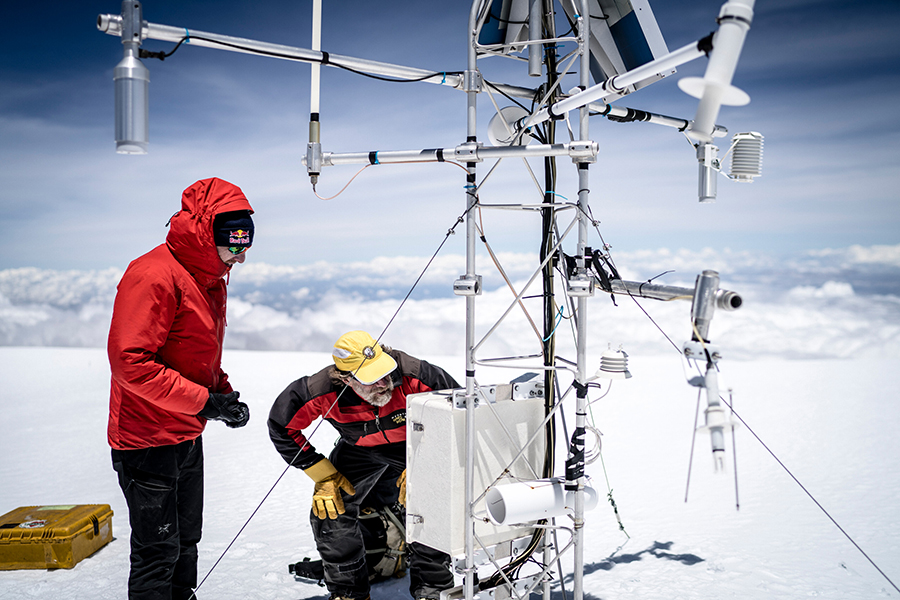
Gadd decided earlier this year to take a trip back to climb some of the mountain glaciers before rising equatorial temperatures see it disappear. For this attempt Douglas Hardy, a researcher at the University of Massachusetts Amherst who has maintained a weather station atop Mount Kilimanjaro since 2000, also joined the group.
Photo: Christian Pondella/Red Bull Content Pool
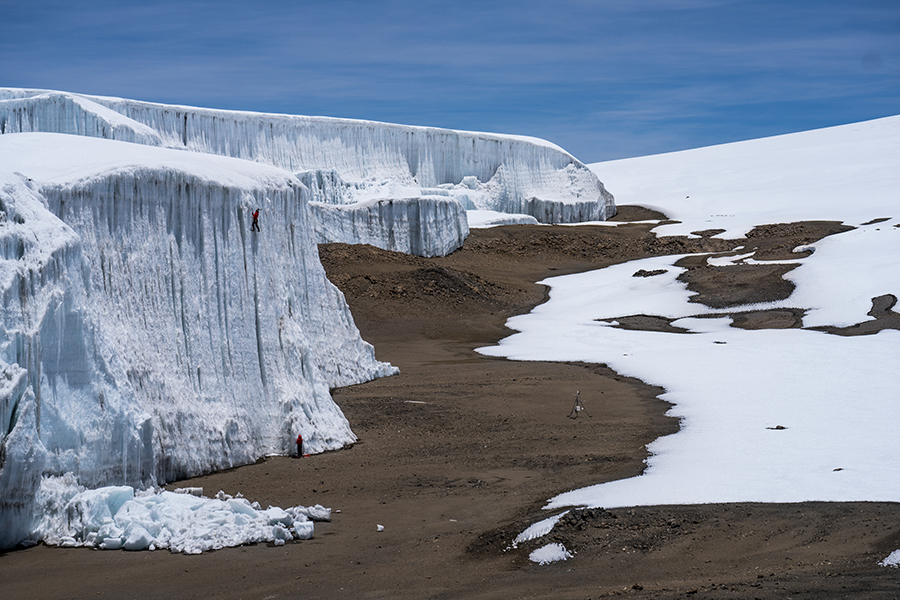
Using Hardy’s pinpoint GPS mapping, the team was able to establish that some of the glacier fins lost nearly 70 percent of their ice mass in the elapsed period between trips, a period of 6 years.
Photo: Christian Pondella/Red Bull Content Pool
Gadd, 53, explained: “The thing about this trip that is most important to me is to show people this change in a way that a graph and a newspaper can’t. We think of climate change as being a relatively slow process, but just six years made a world of difference up there. When you look at the cumulative effects of what we saw, it’s quite fast. I always thought of climate change as a future problem. It’s going to be a lot faster, at times, than we think it is.”
Canadian ice climbing legend Will Gadd revisited the highest point in Africa in February 2020 to make the last ascent of Mount Kilimanjaro in Tanzania before climate change sees the ice glacier melt away forever.
Researchers in 2000 predicted that the ice on the 5,895m high dormant volcano in the Eastern Rift mountains of Africa may disappear by 2020, prompting Gadd’s desire to return this year. In 2014, Gadd, Sarah Hueniken and photographer Christian Pondella first ascended the unique glacier ice features formed by melting factors that are unique to the tropics.
Photo: Christian Pondella/Red Bull Content Pool
Gadd decided earlier this year to take a trip back to climb some of the mountain glaciers before rising equatorial temperatures see it disappear. For this attempt Douglas Hardy, a researcher at the University of Massachusetts Amherst who has maintained a weather station atop Mount Kilimanjaro since 2000, also joined the group.
Photo: Christian Pondella/Red Bull Content Pool
Using Hardy’s pinpoint GPS mapping, the team was able to establish that some of the glacier fins lost nearly 70 percent of their ice mass in the elapsed period between trips, a period of 6 years.
Photo: Christian Pondella/Red Bull Content Pool
Gadd, 53, explained: “The thing about this trip that is most important to me is to show people this change in a way that a graph and a newspaper can’t. We think of climate change as being a relatively slow process, but just six years made a world of difference up there. When you look at the cumulative effects of what we saw, it’s quite fast. I always thought of climate change as a future problem. It’s going to be a lot faster, at times, than we think it is.”