After enduring the hottest decade on record, India aims to keep its homes and workplaces cool without raising energy consumption with one simple change: raising the temperature settings on air conditioners.
The government has mandated a default temperature of 24 degrees Celsius (75 degrees Fahrenheit) instead of the standard 20-21C (68-70F) for units made or sold from the start of this year and wants commercial buildings to keep air conditioning at that level.
The measure could cut national energy consumption by 24% for households and 20% for businesses, according to Gabrielle Dreyfus, co-author of a report published on Friday that called for a switch to more energy-efficient cooling systems.
The United Nations report said that while cooling devices like air conditioners and refrigerators are crucial to human health and the global economy, emissions from the fossil fuels used to power them could worsen climate change.
“Doubling the energy efficiency of the cooling equipment… can save something like 1,600 medium-sized power plants from being built by 2030,” Durwood Zaelke, co-chair of the report’s steering committee, told the Thomson Reuters Foundation.
“That’s a tremendous amount of conventional and climate pollution you can avoid,” said Zaelke, who heads the Institute for Governance & Sustainable Development, a U.S. think tank.
This should be a focus in post-pandemic recovery plans, said the report, which follows recent heatwaves in the United States and Siberia.
As climate change brings ever-hotter days, worldwide demand for cooling appliances is growing – by up to 10 devices every second on top of an estimated 3.6 billion that are currently in use, the report said.
It also said phasing out climate-warming refrigerant gases known as hydrofluorocarbons (HFCs) could help the world avoid up to 0.4C of global warming by 2100.
The difference is substantial in the context of the 2015 Paris Agreement on climate change that aims to limit warming to 1.5C above pre-industrial times to prevent crises such as food and water shortages, rising seas and worsening weather events.
‘ZOMBIE’ APPLIANCES
Better building design could also help by reducing consumption or the need for cooling as well as create jobs, the report said.
For example, a clean white roof that reflects 80% of sunlight would stay about 30 degrees C cooler than a grey roof that reflects only 20% of sunlight and well-designed cities could save 25% of the energy used for heating and cooling.
Another way is to develop national plans to address rising cooling needs but without the corresponding rise in emissions, like India, China and Rwanda have done, Zaelke said.
Others like Ghana have banned “zombie” appliances – cheap, outdated fridges and air conditioners discarded mostly from homes in Europe and then illegally resold that release HFCs.
Globally, more than one billion people lack access to cooling, which puts their health and safety at risk, and a further 2.2 billion are only able to afford cheaper, less energy-efficient cooling, a separate report published on Thursday said.
Mobilising finance for the sector is crucial because while upfront costs might be high, energy efficient technologies often pay for themselves in savings within just a couple of years, said Dreyfus.
“These technologies exist. We just need to put in place the policies and mechanisms to make them more accessible to people.”
Reporting By Thin Lei Win @thinink, Editing by Helen Popper and Claire Cozens.
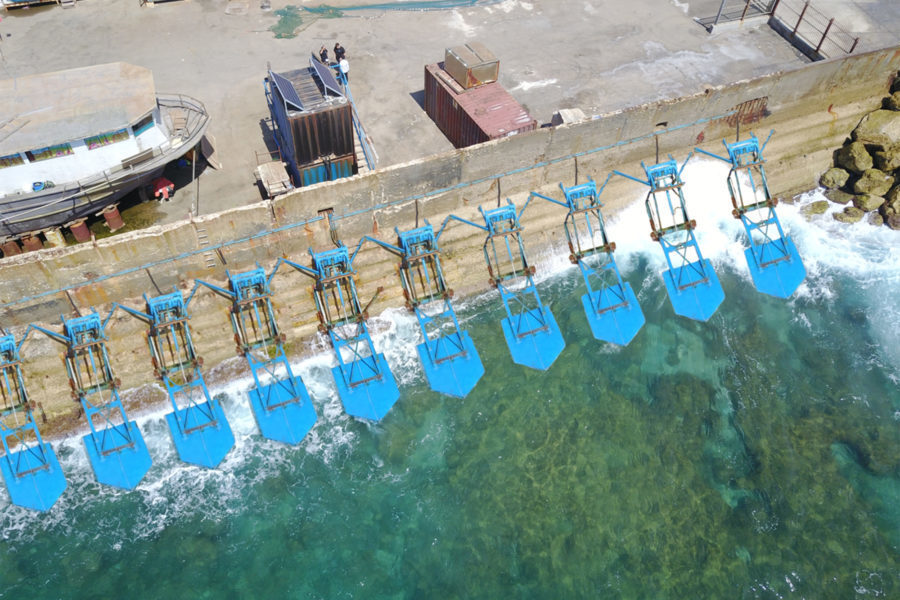
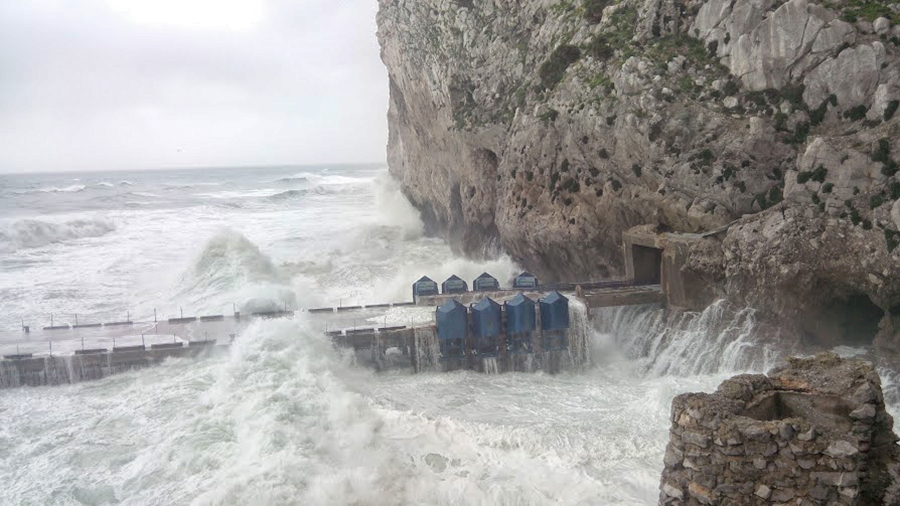
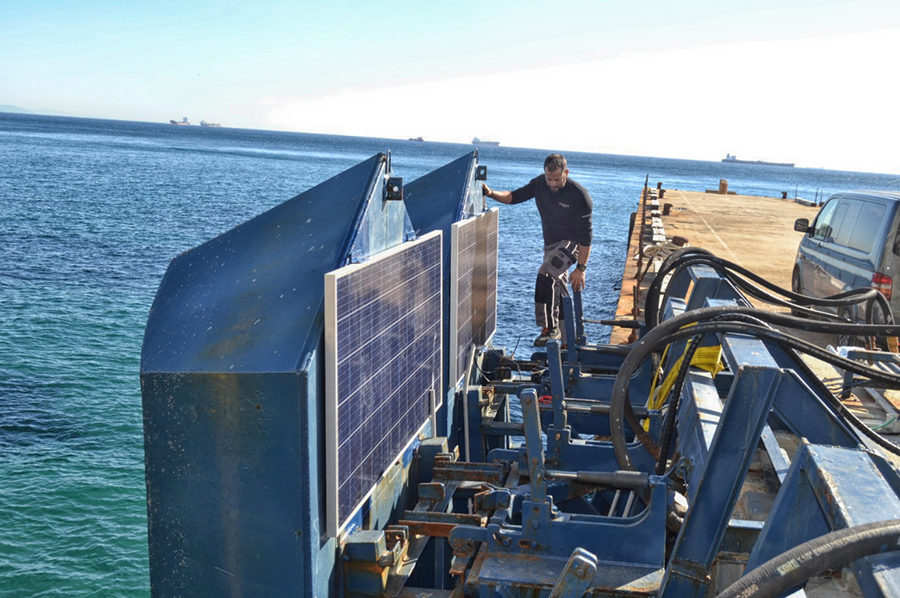
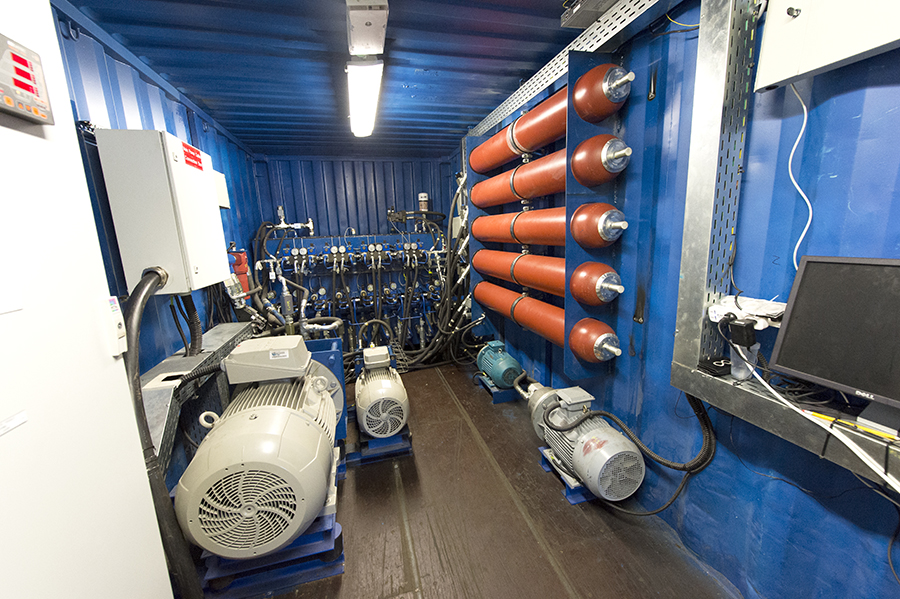
Founded in Tel Aviv, Israel, in 2011, Eco Wave Power is a Swedish company that has developed a patented, cost-efficient technology for turning ocean and sea waves into green electricity. They are the only wave energy company in the world to own and operate a wave energy array, which is connected to the grid in accordance with a Power Purchase Agreement (PPA). CEO Inna Braverman shares her journey:
Some of you know how personal Eco Wave Power is for me. I was born in the Ukraine. Two weeks after I was born, the Chernobyl nuclear reactor exploded, causing the largest nuclear disaster in history. As a result, I suffered from the negative impact of the polluted air and had a respiratory arrest.
Fortunately, my mother, a nurse, gave me mouth to mouth resuscitation, which saved my life. I was a lucky baby, but other children and adults were not as fortunate as I was.
Some of you may also know that the Soviet Union decided to hide the explosion, and by doing so, risked many lives. Sweden was the first country that notified the world of the disaster. I thank them for helping the world with the Chernobyl accident and what they are trying to do now with their determination to promote renewable energy. Both actions are saving many lives!
I hope that Eco Wave Power’s journey will inspire and trigger some clear actions that will spread beyond Sweden and Israel. Among these, the promotion of clean energy, support for innovative ideas, and an easy and clear regulatory framework for renewables, which will lead to a better future for our children.
I don’t yet have any children of my own, I am married to Eco Wave Power and the power stations are my children. I am passionate and committed to doing my absolute best for the success of the company. When I do have my own family, maybe one day we will stand together looking at the power stations, and they might say, “Mommy contributed to changing the world.” Maybe your children will say the same, for you helping to create a better world for them.
Even in our company’s early steps, we have contributed significantly towards creating awareness of this amazing sector. We have contributed to developing the regulatory and legislative frameworks to accept and adopt wave energy and contributed to the wave energy field’s scientific research. EWP made significant steps that will assist future companies in entering into this high potential market. Wave energy alone can produce twice the amount of electricity that the world produces now — it is definitely worth your attention!
Eco Wave Power is pioneering in the wave energy field, and being the first is not easy, but I always say that passion is the greatest renewable energy source.
I was 24 when I established Eco Wave Power, and I had a naive outlook that maybe, just maybe, I could accomplish this without money, without contacts, and probably even without the necessary experience. Today, I am 33 years old and have gained the experience. Now I hope you (the shareholders, my team, and investors) will assist us with our mission, which is more significant than just developing a product. Our mission is changing the world!
The Lindesnes region in Southern Norway is one of the country’s certified sustainable destinations — awarded to places that are working to reduce the negative impact of tourism.
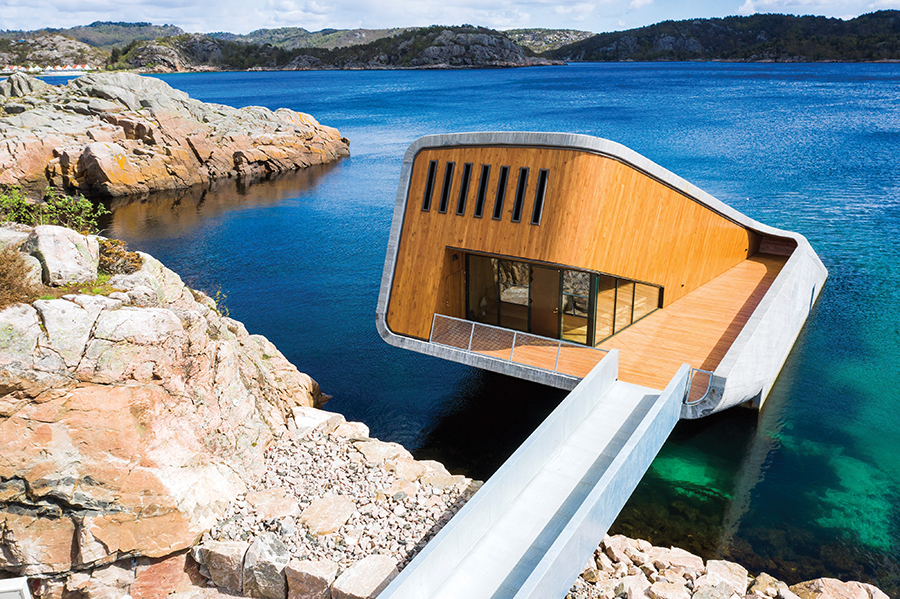
To become certified, a destination must preserve local nature and culture, strengthen social values, demonstrate political commitment, have effective management, and be economically viable. The semi-submerged restaurant Under is 18-feet below the surface of the ocean, exposing you to wonders beneath the sea while dining.
The structure is designed to fully integrate into its marine environment over time, as the roughness of the concrete shell will function as an artificial reef. You’ll need to book early; the restaurant has received more than 10,000 reservations since opening in March 2019.
Over the past few decades, we have lost over 40 percent of our natural coral reefs. Dying coral is a result of warming oceans, which in turn affects weather patterns, causing more powerful tropical storms.
A tropical storm from the Gulf Of Mexico can sometimes reach Kansas, so even Midwest farmers should be concerned about dying coral, thousands of miles away. The World Resources Institute projects that 90 percent of coral reefs will be in danger by 2030, and all of them by 2050. Mexican-based artist Jason deCaires Taylor has created a series of underwater sculpture parks, that are recognized among the top 25 Wonders of the World by National Geographic.
Born in 1974 to an English father and Guyanese mother, Taylor grew up in Europe and Asia, where he spent much of his early childhood exploring the coral reefs of Malaysia. He graduated from the London Institute of Arts in 1998 and went on to become a fully qualified diving instructor and underwater naturalist.
Taylor’s artworks are essentially artificial reefs, formed of carefully manufactured sculptures installed at various locations around the world. Each sculpture is created using non-toxic, pH-neutral marine-grade cement, free from harmful pollutants, that become an integral part of the local ecosystem. The cement is highly durable, with a rough texture that encourages coral larvae to attach and thrive.
In this current, heightened atmosphere of global environmental awareness, Taylor’s art maintains aesthetics (in a traditional sense) but also adds a conceptual dimension — aiming to raise awareness around the health of the environment. The underwater museums allow visitors to broaden their minds and educate themselves on fields outside of their daily lives. Visitors can experience unforgettable images of worlds beyond their own, in a safe and non-destructive manner.
Humanity has faced urgent threats in the past, but never one as all-encompassing and existential as the climate crisis. The conditions of Earth’s atmosphere today haven’t been seen for roughly 3 million years; humans have never lived on a planet like this. Changes are coming faster than most scientists have predicted — and society needs to change even faster to turn the tide. It’s a daunting task.
Faced with this seemingly impossible challenge, Project Drawdown set out to discover the world’s most viable solutions. Our team conducted a ground-breaking, global assessment of practices and technologies that are already in hand, or very nearly so. These 100 solutions range from buildings and cities to ecosystems and food, from electricity to materials to transport; they even include human rights. Some stop greenhouse gas emissions from going up, and others bring carbon back home through the power of photosynthesis. Both are critical.
In the Project Drawdown analysis, we see an incredible mosaic of solutions, with benefits that go beyond stemming emissions to improving health, creating jobs, and shoring up resilience. We also see roles for every individual and institution on the planet. Climate leadership comes in many forms: Households, cities, companies, social movements and national governments. We need many more pioneers stepping up to lead. It’s a magnificent thing to be alive in a moment that matters as much as this one. Here are 10 solutions that can help us rise to meet the challenge.
1. Reducing Food Waste
A third of the food we produce does not make it from farm to fork. That uneaten food squanders a whole host of resources — seeds, water, energy, land, fertilizer, hours of labor and financial capital. It also generates greenhouse gases at every stage — including methane when organic matter lands in the rubbish bin. The food we waste is responsible for roughly 8 percent of global emissions.
In higher-income regions, food is largely wasted by choice. Retailers and consumers reject food based on bumps, bruises, and coloring, or simply order, buy, and serve too much. In places where income is lower and infrastructure is weak, food loss is typically unintended — resulting, for example, from poor storage facilities. Across the board, reducing food waste and loss can improve food security and relieve hunger. Check out: www.ApeelSciences.com
2. A Plant-Rich Diet
If cattle were their own nation, they would be the world’s third-largest producer of heat-trapping emissions. Why? Because cows belch the potent greenhouse gas methane as they digest their food, and because clearing land for grazing or growing feed is a leading cause of deforestation. Shifting to a diet rich in plants is a powerful climate solution, and one we can act on immediately. It could reduce the emissions created from raising livestock — currently 15 percent or more globally.
What’s good for the planet is also good for us. Beyond climate impacts, plant-rich diets also tend to be healthier, leading to lower rates of chronic disease. According to a study from Oxford, business-as-usual food emissions could be reduced by as much as 70 percent through adopting a vegan diet and 63 percent for a vegetarian diet, which includes cheese, milk, and eggs. $1 trillion in annual health-care costs and lost productivity could be saved. Check out: www.wri.org
3. Rooftop Solar
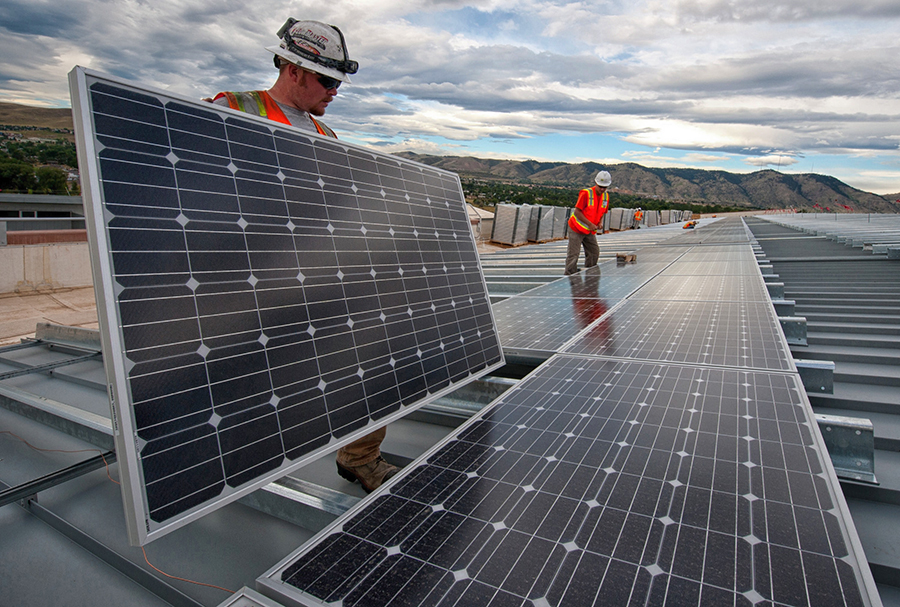
The first rooftop solar array appeared in 1884 in New York City. At that time, solar panels were made of selenium. They worked, but were inefficient. Today, photovoltaic (PV) panels use thin wafers of silicon crystal. As photons strike them, they knock electrons loose and produce an electrical circuit. These subatomic particles are the only moving parts in a solar panel, which requires no fuel and produces clean electricity. Rooftop solar is spreading as the cost of panels falls, driven by incentives to accelerate growth, economies of scale in manufacturing, and advances in PV technology. Rooftop panels can put electricity generation in the hands of households, communities, and businesses, not just big utilities. They can also leapfrog the need for large-scale, centralized power grids, and accelerate access to affordable, renewable electricity — a powerful means of addressing poverty. Check out: www.SolarSister.org
4. Smart Highways
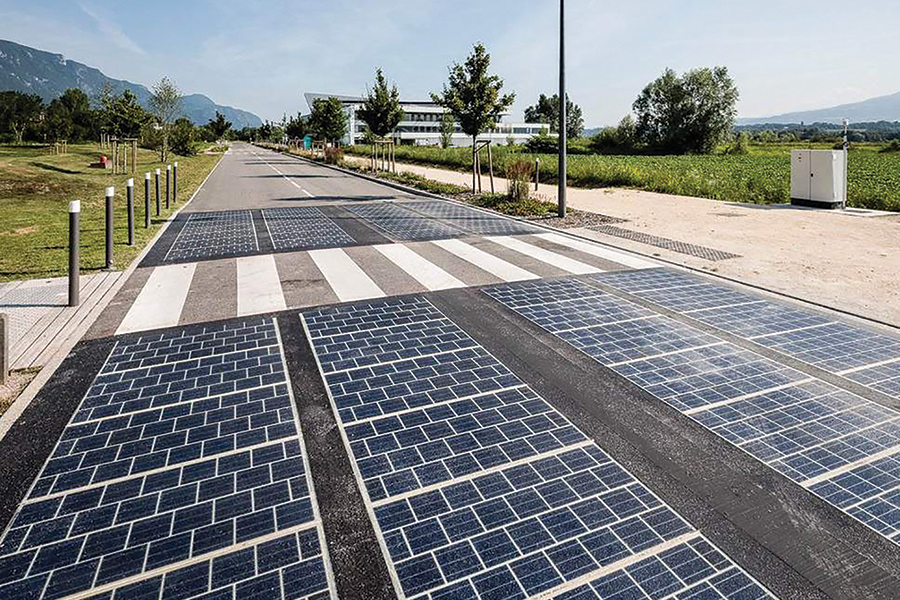
Look at the average highway and “smart” is probably not the word that comes to mind. Asphalt, traffic, pollution, accidents — highways seem to be the epitome of unsustainable. But efforts are underway to change that, leveraging imagination, technology, and design to reduce emissions and improve safety. Highways have seen very little innovation since their inception. As vehicles go electric and autonomous, can highways evolve and become smart, too?
Early answers are emerging on 18 miles of highway southwest of Atlanta, Georgia. A nonprofit, called The Ray, aims to morph this stretch of road into a positive social and environmental force — the world’s first sustainable highway. Electric vehicles can “fuel up” for free at a solar charging station. Lights are powered by a patch of road comprised of PV panels. The Ray is even growing perennial wheat, called Kernza, on the road’s right-of-way, producing food while sequestering carbon. Smart highways are nascent, but look poised to pave the way forward. Check out: www.WattWayByColas.com
5. Electric Vehicles
There are more than 1 billion cars on the road today, a major source of emissions. Shifting cars from “gas to grid” — that is, to electricity as their fuel — can make mobility dramatically more sustainable and reduce harmful air pollution. Of course, where that electricity comes from matters. All electric vehicles (EVs) have an emissions advantage, but those powered by renewables are the real solution, with 95 percent lower emissions than standard cars. Luckily, that is where electricity generation is headed.
While EVs are currently more expensive to purchase, they are cheaper to drive. Their cost will continue to drop in the coming years, as technology improves and production scales. With both charging infrastructure and battery range expanding, EV appeal continues to grow. But cars are not the only electric means of transportation. E-bikes are actually the fastest growing alternative to fuel vehicles in the world. Check out: www.NewFlyer.com
6. Walkable Cities
Walkable cities prioritize two feet over four wheels through careful planning and design. They minimize the need to use a car and make the choice to forego driving desirable, which can reduce greenhouse gas emissions. According to the Urban Land Institute, in more compact places ideal for walking, people drive 20 to 40 percent less. Walkable cities can be created from scratch or retrofitted from sprawl, reintegrating spaces for home, work, and play.
Walkable trips are not simply those with a manageable distance from point A to point B — perhaps a ten- to fifteen-minute journey on foot. They have “walk appeal,” thanks to a density of fellow pedestrians, a mix of land and real estate uses, and key elements, such as safe crossings and wide, shaded, well-lit sidewalks. All the better if spaces are beautiful. Walkability can improve health, stimulate the local economy, and make urban spaces more usable for all. Check out: www.cnu.org
7. Plant More Bamboo
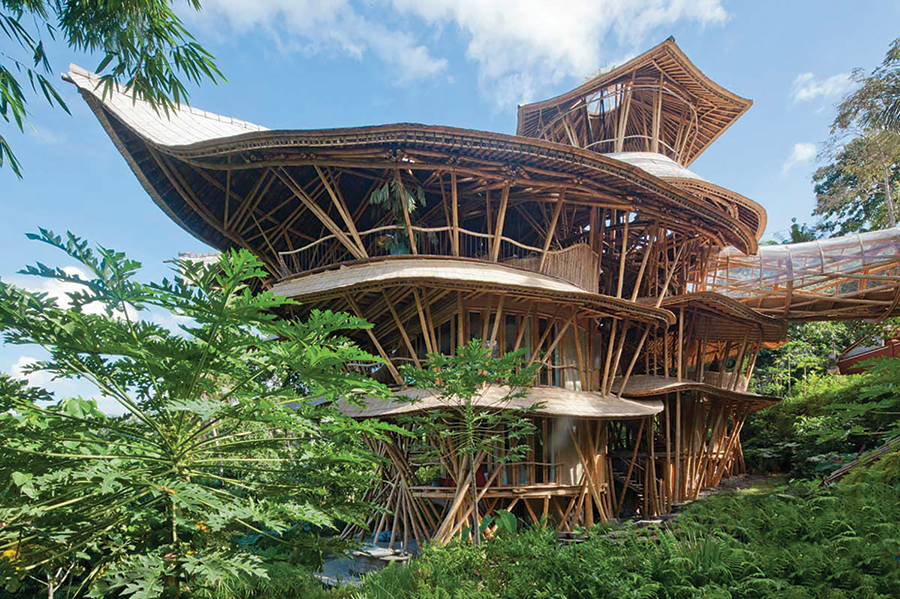
Humans have found more than 1,000 uses for bamboo, including food, paper, furniture, bicycles, boats, baskets, fabric, charcoal, biofuels, animal feed, and almost every aspect of buildings from frame to floor to shingles. Addressing global warming is another way we can put it to use. Through photosynthesis, bamboo rapidly sequesters carbon, taking it out of the air faster than almost any other plant.
Just a grass, bamboo has the compressive strength of concrete and the tensile strength of steel — which means it can be used in place of those high-emissions materials. It reaches its full height in one growing season, at which time it can be harvested for pulp or allowed to grow to maturity over four to eight years. After being cut, bamboo re-sprouts and grows again. What’s more, it can thrive on inhospitable degraded lands, restoring soil and storing carbon. Check out: www.DesignBoom.com
8. Educating Girls
Securing the rights of women and girls can have a positive impact on the atmosphere, comparable to wind turbines, solar panels, or forests. How so? When girls and women have access to high-quality education, as well as reproductive health care, they have more agency and can make different choices for their lives. Those choices often include marrying later and having fewer children.
The decisions individuals make add up. Across the world and over time, they influence how many human beings live on this planet and eat, move, build, produce, consume, and waste — all of which generates emissions. To be sure, those emissions are not generated equally. The affluent produce far more than the poor, and bear greatest responsibility for action. A fundamental right for all, education also shores up resilience and equips girls and women to navigate a climate-changing world. Check out: www.RoomToRead.org
9. Household Recycling
The old adage, “reduce, reuse, recycle,” still holds true. Consumption and waste at the individual level contribute to climate change. The best thing to do is stem them upstream — forgoing a purchase or repairing an item. At the very least, the value locked up in “trash” can be reclaimed. Recycling is one means to do that.
In high-income countries, paper, plastic, glass, and metal comprise more than 50 percent of the household waste stream — all prime candidates for recycling. Recycling can reduce emissions because producing new products from recovered materials often saves energy. Forging recycled aluminum products, for example, uses 95 percent less energy than creating them from virgin materials. Pair recycling with composting, and what households send to the landfill can shrink considerably. Check out: www.RecycleAcrossAmerica.org
10. Build With Wood
With the Industrial Revolution, steel and concrete became the main materials for commercial construction. Wood use declined, relegated to single-family homes and low-rise structures. But that is beginning to change with high-performance “mass timber” technologies, namely glued laminated timber (glulam) and cross-laminated timber (CLT). In cities around the world, they are being used to construct tall buildings that are strong, fire safe, quick to put up, and aesthetically appealing.
Building with wood has a double climate benefit. First, as trees grow, they absorb and sequester carbon. Dry wood is 50 percent carbon, so a building can become a longstanding carbon sink. Second, the process of producing glulam or CLT generates fewer greenhouse gases than manufacturing cement or steel, each roughly 5 percent of global emissions. To be a true climate solution, wood must be sourced through sustainable forestry, and the less transport the better. Check out: www.metsawood.com
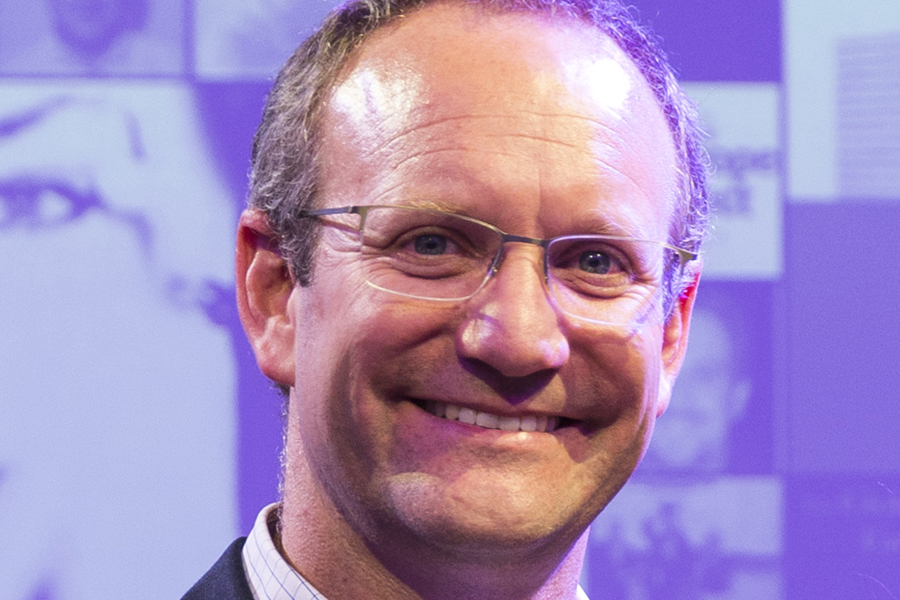
The science behind climate change is clear: If we don’t achieve net zero emissions by 2050, we will not limit the planet to a 1.5 degrees Centigrade temperature change. The level of climate impact will be catastrophic to life as we know it on Earth. This realization is what drives Gonzalo Muñoz (above), co-founder of Sistema B, a 2019 UN COP Climate Champion.
Starting with the 2019 UN Climate Conference, COP25, through this year and into next year’s COP in Glasgow, the private sector’s role in addressing climate change and taking climate action has taken a front seat alongside the duties of the public sector and civil service. According to Muñoz, business leadership must either commit to becoming net-zero by 2050, or even better, 2030, or “be comfortable being a part of the problem.”
Muñoz believes Certified B Corporations, businesses that have been verified for their positive impact on people and the planet, have an imperative to pledge, commit, and take action on their climate impact. He argues that to not do so would be a reason to forfeit their certification in coming years. This direct, science-centered approach is how Muñoz and the UN are working to make meaningful action — before it’s too late. And this passion has helped result in the NetZero2030 commitments by now nearly 1,000 B Corps, meaning that companies are aiming to hit the net-zero goal 20 years before required to do so by the Paris Agreements.
I recently spoke with Muñoz as part of my research on B Corps and stakeholder capitalism. Here’s part of our conversation, where he discussed NetZero 2030, #RaceToZero, and how businesses of all sizes can get involved and take climate action today.
Tell me about the NetZero 2030, how it began, and the commitment of companies such as B Corporations to this goal.
Gonzalo Munoz: It’s important to begin the story before NetZero 2030, because what was instrumental was that Chile took the lead on the UN Climate Change Conference, COP25, after Brazil stepped away. COP rotates through five major areas of the world, and it was time for Latin America to be the host. Chile took the baton, and one of the things that an incoming presidency for COP must decide is naming what is called the High Level Climate Action Champion, a role created in the Paris Agreement, to lead non-party stakeholders.
The role of the High Level Climate Action Champion is to mobilize action among those sectors, and until COP25, all of the previous champions were civil servants. For Chile, it was evident that the role had to be led by somebody coming from the non-state sector, and they named me. For the first time, the High Level Climate Action Champion came from the private sector, which has since been replicated by the U.K. who nominated Nigel Topping from We Mean Business, another private sector individual.
The second action Chile took was to ask the team and me to position science at the center. They wanted us to say, “Okay, we have to follow science, and science has just spoken.” In October 2018, a couple of months before COP24, climate scientists at the APCC (APEC Climate Center) released a report saying that the best option was to aim for a temperature increase of 1.5 degrees centigrade. To achieve this, the world has to be net-zero on carbon emissions by 2050. Meaning that by 2050, we have to emit equal, or lesser, amounts of CO2 that nature is capable of sequestering.
We launched the Climate Ambition Alliance at the Secretary-General Summit in September 2019 for everyone who wanted to follow a NetZero 2050 target. At that time, 66 countries said, “We’re in.” But it’s not just about the countries. We started putting together businesses, investors, sub-national regions, and cities to work together toward NetZero by 2050.
To write the material for 2050, you need some organizations, people, and countries to lead the way and set their targets sooner than 2050. That’s why on September 1 last year, I went to different meetings with B Corps, and said, “Guys, B Corps always lead the way. We have an understanding of how important it is to follow science. We operate on a vision that certain moral duties are higher than local regulation. I think it would be important for the B Corps to step forward and say, ‘If the world needs to be NetZero by 2050, then we, too, will be NetZero by 2030.'”
We had 533 B Corps join this commitment before COP25. It was the most significant number of companies at that time.
This year, we expect all B Corps to commit. Not committing, at least to 2050, is recognizing that you are comfortable being part of the problem. So, we are sending the message this year that every B Corp in the world should at least be committed to becoming net-zero by 2050. Hopefully, we can reach Glasgow with at least half of them being dedicated to this goal.
What practices, tools, and advice exists for companies to get started? How do they do it? How do they get guidance?
When it comes to the business sector, there are six ways to join Race to Zero, and all of them include science-based targets — that’s super important. It’s not just stating that you will do something, be something, or make a commitment. It’s called the Four P’s — you have to: pledge, plan, proceed, and publish.
When it comes to pledging, you have six ways to pledge. If you’re a B Corp, you can join immediately through the NetZero 2030, or even the NetZero 2050, target.
When it comes to big companies, the UN global compact has one entry point created by the Secretary-General Summit in 2019; it’s called the 1.5 Business Pledge. Any business of the world can join whether you are part of the UN Global Compact or not.
If you are a SME and part of a chamber of commerce or connected to a chamber of commerce, the SME Climate Hub would be the best approach.
If you’re a tech company, Amazon has created the Climate Pledge; which now has around 15 companies worldwide. We have the fashion charters for companies related to the fashion industry, through the United Nations. If you’re a company that is part of the B Team, then you can join through there.
All of these entry points are aligned with science-based targets. And we’re expecting to create at least two or three more. For example, we’re working with international wineries for climate action, that creates broader possibilities for the agribusiness sector.
We also are creating a new category for climate action under the United Nations Convention for Climate Change. Hopefully, at the end of the year, we will have the possibility of creating this entry point for sports, such as clubs, associations, and media sports organizations. Then, we’ll try and create another one for schools.
What do you say to businesses affected by the COVID economic downturn that are more focused on getting their businesses back on track, instead of focusing on goals such as climate change, which may still be decades away?
I started small businesses, so I walk in those shoes, too. Despite the hardships, many business owners are declaring a commitment to this cause. When you’re a small company, it’s a lot easier than when you’re a big multinational. Realize that at this point, you’re 30 years ahead when it comes to the Net Zero by 2050 target. Of course, you don’t know how the world will look like 30 years, but things wont change for the better unless we start to commit now.
We need to increase the number of commitments to change the culture. When it comes to small business, this is a massive opportunity. We already have many of the big multinationals declaring they will be net-zero by 2050. Now, they urgently need the SMEs of the world to follow, and say, “I’m with you, count on me.”
It’s not about ESG; it’s about how much a lack of climate risk action will increase your investment’s general risk. We’re seeing more money moving a lot faster toward companies that have this commitment in place. So, even just taking the pledge gives you the possibility of becoming a better choice for financial markets.
Do you have any case studies or examples of projects, companies, or people that inspire you?
We launched the Race to Zero brand formally on June 5, 2020, and recently, we had the Race to Zero Dialogues. We had more than 63 million #RacetoZero instances. How does a brand go from zero to 63 million in less than five months? That’s incredible. It’s not only about the brand itself; it’s everything related to it. From Antonio Gutierrez to Matt Damon, you can see how different personalities of the world are speaking about Race to Zero as a concept, and including it in their speeches. That is a very positive narrative, and hopefully, we can reach Glasgow with impact still at that level.
Europe is launching an ambitious mission to decarbonize many of its urban areas within a decade. But is it realistic?
More people are moving to cities. Some forecasts predict that two thirds of the world’s population will live in urban areas by the middle of the century, and in Europe that figure may be 84%. Recognizing the need to act quickly, the European Union (EU) is launching a mission to reach 100 climate-neutral cities by 2030.
Through its European Green Deal, the 27 EU member states have committed to becoming net carbon neutral by 2050. The idea behind the new mission is for 100 cities to lead the way, becoming experimentation and innovation hubs for the rest of Europe. Support will also be given to additional partner cities, prioritizing places where structural issues make such rapid change difficult.
Details of the plans were published by the mission board in September. Cities will be selected by 2025, though none have been announced so far. Funding will initially come through Horizon Europe, the EU’s €80.9 billion research and innovation program for the years 2021–2027.
Under the plans, selected locations will commit to achieving net zero carbon emissions by 2030, as well as a number of social and economic goals adapted for each city. Ultimately, the question of whether these places become climate neutral will also depend on how city boundaries are defined and how the carbon is counted. For the purposes of the mission, city districts and conglomerations of neighboring cities will be eligible to apply.
The move builds on smaller EU projects, including REMOURBAN (Regeneration Model for Accelerating the Smart Urban Transformation), which delivered energy, mobility, and digital solutions in the cities of Valladolid (Spain), Nottingham (United Kingdom), and Tepebaşı/Eskişehir (Turkey), along with several follower cities. Interventions there included electrification of public transport, smart street lighting, and retrofitting buildings with thermal insulation and smart meters.
But although earlier projects have seen local success, the EU’s new mission is an entirely different proposition. Do urban researchers think it is realistic?
New City Models
James Evans, a human geography researcher at the University of Manchester, believes the EU is right to invest in flagship cities that have track records of successful projects. He is concerned, however, that this conventional approach to innovation doesn’t take into account the complexities of how ideas transfer. “The [approach] works if you are creating a new drug or robot, but doesn’t always work with cities, as giving money to the ‘best’ places and then expecting less-able places to do it without the public subsidy is flawed,” he said.
Evans believes that deep and widespread urban transformation will be very difficult without significant changes in the way municipalities are funded and governed. “New business models also require new city models,” he added.
Researchers say the project will also have to determine how carbon emissions are classified. Some difficulties are highlighted by Joe Blakey, a political geographer at the University of Manchester. “Imagine a cup of Kenyan coffee consumed in an American coffee chain in Manchester city center by a visitor from Beijing. There are a whole host of emissions that can be associated with this cup of coffee—but who gets the blame?”
Blakey said that airports within city boundaries are particularly contentious, as emissions associated with them are usually not included in a city’s carbon footprint.
Nature-Based Solutions
The September mission proposal makes it clear that investment will prioritize solutions that offer cobenefits. One example of this might be a project that reduces a district’s carbon emissions while also creating jobs and improving air quality. In this respect, nature-based solutions are expected to play a key role in the project. European residents can expect more urban forests and green corridors, which absorb carbon, boost biodiversity, and improve conditions for citizens by cooling the urban environment.
“We often think of the ways in which the excess carbon can be neutralized—by planting trees or growing seagrass beds, for example,” said Harriet Bulkeley, project coordinator of the EU’s Nature-Based Urban Innovation (NATURVATION) project. “But nature-based solutions also have a direct role in getting to climate neutral in cities themselves, especially in terms of reducing the reliance on air conditioning for addressing summer heat.”
Bulkeley said that select locations might develop partnerships with rural communities to create solutions with benefits for those areas while at the same time offsetting carbon emissions in cities.
This story originally appeared at EOS.org and is republished here as part of Covering Climate Now, a global journalism collaboration strengthening coverage of the climate, of which Real Leaders is a partner.
Youth climate activists have urged David Attenborough to ‘pass the mic’ rather than jettison Instagram after just six weeks, saying the British naturalist should not abandon his 6 million followers.
Attenborough’s team opened the Instagram account in September to coincide with the cinema release of ‘A Life on Our Planet’ documentary. It attracted 6.1 million followers before the team announced plans to close after its 27 posts garnered the sort of following usually reserved for actors or influencers.
Climate activists said in a statement that the documentary had provoked a “tidal wave” of interest, urging Attenborough to rethink so others benefitted from his fanbase.
“With 6 million engaged followers at your fingertips, it only makes sense to keep the momentum going,” said 27-year-old British-based activist Tori Tsui. The activists – from fifteen countries – said Instagram had alerted a new audience to the perils of a warming planet and that closing the account would be a wasted opportunity in the fight on climate change.
“Activists…have expressed a deep concern over the team’s decision, highlighting it as a missed opportunity for climate education, given it has the power to reach millions of engaged people,” they said.
The youth activists hail from several global organisations, including the Fridays For Future NGO that emerged from Greta Thunberg’s school strike for climate movement.
They urged Attenborough to #PassTheMic to communities on the frontlines of climate change, including Black and indigenous groups, to boost chances for global action.
“The campaign focuses on making sure that youth activists, especially from the Global South are empowered and able to share their stories in their own way,” Mitzi Jonelle Tan, from Youth Advocates for Climate Action Philippines, told the Thomson Reuters Foundation.
A spokeswoman for the documentary producers said the social media account was only ever intended as a series of special Attenborough messages to run over a limited period. “Audiences have followed on the basis that they will see filmed messages from him, and it is therefore not possible for us to hand over the account to anyone,” she said.
She said the account would instead recommend accounts to follow on environmental issues, offering activists a powerful new tool to spread the word.
“This is where social media comes in…going to where the youth can really see our messages and calls, through dance videos on TikTok or pictures on Instagram or witty lines on Twitter,” Tan said.
From the street, you wouldn’t be able to tell a net-zero or passive house from any other recently built home. Even from the inside, the only visible clues are thick walls and deep windowsills. Only if you looked at the utilities bill would you know.
“Net-Zero” and “Passive House” are certification labels for ultra-low energy buildings that use very little energy to heat and cool them.
Although the origins of the passive house date back to the 1970s, its popularity only began to spread in the past decade or so. It is now the world’s most energy-efficient building standard. Globally, passive house construction has exceeded 30,000 and is increasing as people seek cost benefits, ways to protect the climate and contribute to a healthy living environment.
As Canada and other countries around the world look for ways to decrease their dependence on fossil fuels and reduce carbon emissions to tackle climate change, the housing and construction industry has been identified as one area that can have an almost immediate impact.
Buildings account for 13 per cent of energy use in Canada. In a typical house that’s been constructed according to the building code, roughly 60 to 70 per cent of the energy use goes towards heating and cooling.
There really hasn’t been a significant shift in the way houses are built since the 1960s. But technological advances and new materials now allow for high-performance houses to be built with lower carbon emissions through the use of fibre-reinforced concrete, prefabrication, smart-glass and recycled and sustainable materials such as cork flooring and wool insulation.
A passive house can cut energy use by 90 per cent. Its thickly insulated walls, air-tight construction, high-efficiency mechanical systems, compact building shape and orientation capture the heat of the sun when it’s most needed. They are easier to operate, maintain temperatures more efficiently and save up to 90 per cent in heating and cooling energy costs, mostly through the use of an energy recovery ventilator to exchange the interior air with fresh outside air.
A net-zero building produces as much energy as it consumes. It starts with an energy-efficient building envelope (walls, foundation, roof), high-quality windows, and high-efficiency heating and ventilation systems to keep the overall consumption as low as possible. Renewable energy sources like rooftop solar panels provide enough power to operate it. They can store energy or sell it to the grid when they produce more than needed.
Building high-performance, energy-efficient passive homes costs more — about five to 10 per cent more than a similar-sized home built to code, after incentives. And the certification process itself runs about $5,000, but the costs can be recouped through rebates and long-term energy efficiency. For example, the average monthly energy savings on the net-zero home will be significantly greater than the added monthly mortgage payment cost.
Over the past decade, the costs of renewable energy have fallen nearly 69 per cent, a trend powered by strong government schemes around the world. Solar energy production costs have fallen the most of any other energy source since 2010, dropping by nearly 82 per cent.
The high costs of heating oil and electricity — and growing awareness of climate change and carbon emissions — are drawing people to net-zero homes. As the costs of solar photovoltaic systems and heat pumps fall and become more readily available — even IKEA sells solar panels in many countries — highly energy-efficient homes are paying for themselves more quickly.
And you don’t need to live in sunny California to have significant savings. Net-zero homes can be built almost anywhere, even in places with brutal winters.
Air-tight and well-insulated, a net-zero home maintains its temperature by recovering heat from the outgoing air to heat the air coming into the house. This decreases the need for additional heating and cooling, and boosts air quality with a constant supply of fresh incoming air and high-level air filtration.
These sorts of buildings are still a rarity in Canada. According to the Canada Home Builders Association, there are 456 certified net-zero buildings, and Passivehouse Canada reports 67 certified residential, commercial and institutional buildings in the country.
Yet Canada was briefly a world leader in passive design. In 1976, when gas prices doubled virtually overnight, a Saskatchewan Research Council engineer named Harold Orr designed and built a pioneering energy-efficient and solar-powered passive house in Saskatoon. The Saskatchewan Conservation House was so radical that engineers from around the world came to see it. But then cheap gas and oil returned, and energy-efficient homes were forgotten.
Each province has renewable energy programs such as the net metering for residential and commercial customers to reduce or eliminate a building’s energy consumption by selling extra energy back to the electrical grid. British Columbia’s energy efficiency program, EfficiencyBC, provides financial incentives to switch to high-efficiency heating equipment and to make improvements to the building envelope that save energy and reduce greenhouse gas emissions.
Europe has invested heavily in energy-efficient homes through tax credits, grants, subsidies, guaranteed loans, reduced repayment schedules, education and technical assistance. But Canadian provinces and cities could do more.
Although the federal government announced in July that it was investing $2.4 million toward the construction of energy-efficient residential buildings across Canada, only seven certified builders will benefit.
Canada’s residential construction industry must support energy efficiency; architects, builders and contractors are beginning to give a strong look at building with Passive House and Net-Zero technologies and standards. Consumers also play a role; upgrades to existing homes that increase energy efficiency and affordability help move towards net-zero energy.
From the street, you wouldn’t be able to tell a net-zero or passive house from any other recently built home. Even from the inside, the only visible clues are thick walls and deep windowsills. Only if you looked at the utilities bill would you know.
“Net-Zero” and “Passive House” are certification labels for ultra-low energy buildings that use very little energy to heat and cool them.
Although the origins of the passive house date back to the 1970s, its popularity only began to spread in the past decade or so. It is now the world’s most energy-efficient building standard. Globally, passive house construction has exceeded 30,000 and is increasing as people seek cost benefits, ways to protect the climate and contribute to a healthy living environment.
As Canada and other countries around the world look for ways to decrease their dependence on fossil fuels and reduce carbon emissions to tackle climate change, the housing and construction industry has been identified as one area that can have an almost immediate impact.
Buildings account for 13 per cent of energy use in Canada. In a typical house that’s been constructed according to the building code, roughly 60 to 70 per cent of the energy use goes towards heating and cooling.
There really hasn’t been a significant shift in the way houses are built since the 1960s. But technological advances and new materials now allow for high-performance houses to be built with lower carbon emissions through the use of fibre-reinforced concrete, prefabrication, smart-glass and recycled and sustainable materials such as cork flooring and wool insulation.
A passive house can cut energy use by 90 per cent. Its thickly insulated walls, air-tight construction, high-efficiency mechanical systems, compact building shape and orientation capture the heat of the sun when it’s most needed. They are easier to operate, maintain temperatures more efficiently and save up to 90 per cent in heating and cooling energy costs, mostly through the use of an energy recovery ventilator to exchange the interior air with fresh outside air.
A net-zero building produces as much energy as it consumes. It starts with an energy-efficient building envelope (walls, foundation, roof), high-quality windows, and high-efficiency heating and ventilation systems to keep the overall consumption as low as possible. Renewable energy sources like rooftop solar panels provide enough power to operate it. They can store energy or sell it to the grid when they produce more than needed.
Building high-performance, energy-efficient passive homes costs more — about five to 10 per cent more than a similar-sized home built to code, after incentives. And the certification process itself runs about $5,000, but the costs can be recouped through rebates and long-term energy efficiency. For example, the average monthly energy savings on the net-zero home will be significantly greater than the added monthly mortgage payment cost.
Over the past decade, the costs of renewable energy have fallen nearly 69 per cent, a trend powered by strong government schemes around the world. Solar energy production costs have fallen the most of any other energy source since 2010, dropping by nearly 82 per cent.
The high costs of heating oil and electricity — and growing awareness of climate change and carbon emissions — are drawing people to net-zero homes. As the costs of solar photovoltaic systems and heat pumps fall and become more readily available — even IKEA sells solar panels in many countries — highly energy-efficient homes are paying for themselves more quickly.
And you don’t need to live in sunny California to have significant savings. Net-zero homes can be built almost anywhere, even in places with brutal winters.
Air-tight and well-insulated, a net-zero home maintains its temperature by recovering heat from the outgoing air to heat the air coming into the house. This decreases the need for additional heating and cooling, and boosts air quality with a constant supply of fresh incoming air and high-level air filtration.
These sorts of buildings are still a rarity in Canada. According to the Canada Home Builders Association, there are 456 certified net-zero buildings, and Passivehouse Canada reports 67 certified residential, commercial and institutional buildings in the country.
Yet Canada was briefly a world leader in passive design. In 1976, when gas prices doubled virtually overnight, a Saskatchewan Research Council engineer named Harold Orr designed and built a pioneering energy-efficient and solar-powered passive house in Saskatoon. The Saskatchewan Conservation House was so radical that engineers from around the world came to see it. But then cheap gas and oil returned, and energy-efficient homes were forgotten.
Each province has renewable energy programs such as the net metering for residential and commercial customers to reduce or eliminate a building’s energy consumption by selling extra energy back to the electrical grid. British Columbia’s energy efficiency program, EfficiencyBC, provides financial incentives to switch to high-efficiency heating equipment and to make improvements to the building envelope that save energy and reduce greenhouse gas emissions.
Europe has invested heavily in energy-efficient homes through tax credits, grants, subsidies, guaranteed loans, reduced repayment schedules, education and technical assistance. But Canadian provinces and cities could do more.
Although the federal government announced in July that it was investing $2.4 million toward the construction of energy-efficient residential buildings across Canada, only seven certified builders will benefit.
Canada’s residential construction industry must support energy efficiency; architects, builders and contractors are beginning to give a strong look at building with Passive House and Net-Zero technologies and standards. Consumers also play a role; upgrades to existing homes that increase energy efficiency and affordability help move towards net-zero energy.