How Real Leaders Can React to the Unprecedented World Food Crisis

The world’s richest countries met at the G7 summit in Germany in June 2022. Among other pressing issues, food security and climate change were at the top of the agenda.

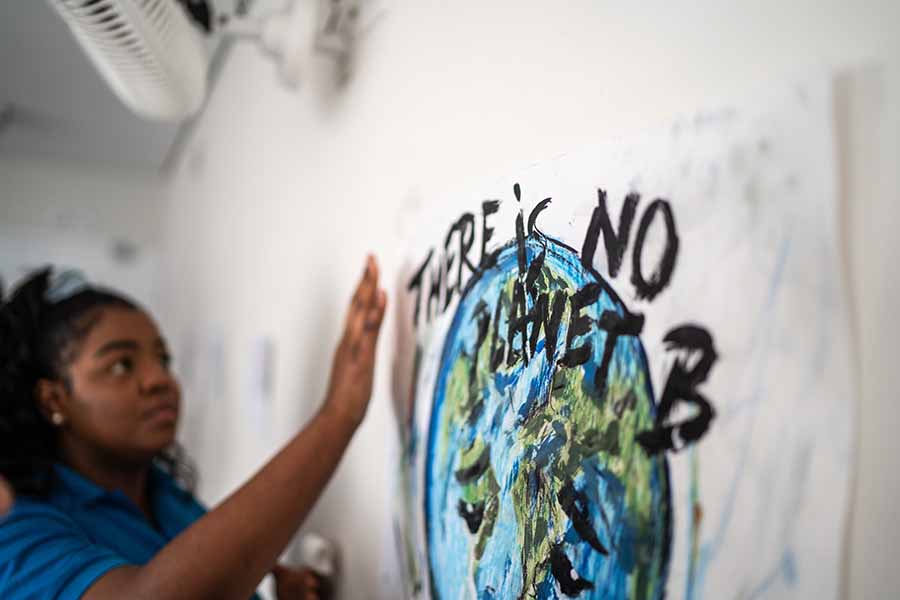
Climate change, and more recently the war in Ukraine, has been adversely affecting global food security, water, and hunger. To understand it better, Gabriela Bucher (pictured above), executive director of Oxfam International, explains how business leaders can help find solutions.

The food crisis we are facing is extremely serious and probably unprecedented. It’s a combination of many crises at the same time. We started with a pandemic, but underlying that is the climate crisis, which is having an impact on food security and extreme hunger. What’s concerning are the numbers of people affected by extreme hunger, even in rich countries. The world’s attention has been very much on the Ukraine conflict, and unfortunately, the hunger crisis has been growing in the last few months. If we don’t act fast, it will reach catastrophic levels.

Long-term planning is something that is missing as an integrated approach globally. We really need multilateral institutions to step up and make sure that our responses are joined up. We know from research and experts what needs to be done and how much investment is needed. What we need is the will and the coordination to make it happen.

A lot of announcements are made, and ideas come up about global food coalitions. But no concrete plans happen, no targets are set, and no funding appears. We know there are possibilities for raising funds through, for example, windfall taxes and wealth taxes. Presently, the vast majority of taxes across the world are income-related or consumption-related. Around 4% of the total tax revenue in the world comes from wealth taxation. This is an untapped source that would allow countries to invest in their own food security.

There are good examples of solidarity that we can see across history, but we need to double up on this in moments of crisis. There can be a tendency to look after our own, but that’s exactly when we need to think differently and realize that we are globally connected. We must understand that actions in one part of the world have impacts on other parts of the world.

193 million people are in famine-like conditions right now and growing. It’s important that we respond with immediate life-saving support, but also think long-term. I hope this urgency will spur business leaders, governments, and citizens to put pressure on the importance of investing in climate and adaptation, so that we have sustainable livelihoods going forward and can ensure that we have enough food for everyone.

Actionable Solutions to Help Feed the World

  • When we talk about food security, a lot of focus is only on one-dimensional food production. But climate change also impacts other dimensions such as access and utilization. Business solutions should be sought here too.
  • With all the environmental pledges made by countries and corporations added together, we would need 1.6 billion hectares of land — six times the size of India — to plant trees. This is clearly a near-impossible task, and lessening levels of consumption through innovative business ideas can be more effective. Explore leaner supply chains, less packaging, or seek scientific breakthroughs that allow you to use less and yield more.
  • There are many strategies, plans, and actions produced by expert groups and organizations on food security, such as the UN Food Systems Summit. Use these reports to spark ideas around new business opportunities and to spot gaps in the market.

How Real Leaders Can React to the Unprecedented World Food Crisis

The world’s richest countries met at the G7 summit in Germany in June 2022. Among other pressing issues, food security and climate change were at the top of the agenda.

Climate change, and more recently the war in Ukraine, has been adversely affecting global food security, water, and hunger. To understand it better, Gabriela Bucher (pictured above), executive director of Oxfam International, explains how business leaders can help find solutions.

The food crisis we are facing is extremely serious and probably unprecedented. It’s a combination of many crises at the same time. We started with a pandemic, but underlying that is the climate crisis, which is having an impact on food security and extreme hunger. What’s concerning are the numbers of people affected by extreme hunger, even in rich countries. The world’s attention has been very much on the Ukraine conflict, and unfortunately, the hunger crisis has been growing in the last few months. If we don’t act fast, it will reach catastrophic levels.

Long-term planning is something that is missing as an integrated approach globally. We really need multilateral institutions to step up and make sure that our responses are joined up. We know from research and experts what needs to be done and how much investment is needed. What we need is the will and the coordination to make it happen.

A lot of announcements are made, and ideas come up about global food coalitions. But no concrete plans happen, no targets are set, and no funding appears. We know there are possibilities for raising funds through, for example, windfall taxes and wealth taxes. Presently, the vast majority of taxes across the world are income-related or consumption-related. Around 4% of the total tax revenue in the world comes from wealth taxation. This is an untapped source that would allow countries to invest in their own food security.

There are good examples of solidarity that we can see across history, but we need to double up on this in moments of crisis. There can be a tendency to look after our own, but that’s exactly when we need to think differently and realize that we are globally connected. We must understand that actions in one part of the world have impacts on other parts of the world.

193 million people are in famine-like conditions right now and growing. It’s important that we respond with immediate life-saving support, but also think long-term. I hope this urgency will spur business leaders, governments, and citizens to put pressure on the importance of investing in climate and adaptation, so that we have sustainable livelihoods going forward and can ensure that we have enough food for everyone.

Actionable Solutions to Help Feed the World

  • When we talk about food security, a lot of focus is only on one-dimensional food production. But climate change also impacts other dimensions such as access and utilization. Business solutions should be sought here too.
  • With all the environmental pledges made by countries and corporations added together, we would need 1.6 billion hectares of land — six times the size of India — to plant trees. This is clearly a near-impossible task, and lessening levels of consumption through innovative business ideas can be more effective. Explore leaner supply chains, less packaging, or seek scientific breakthroughs that allow you to use less and yield more.
  • There are many strategies, plans, and actions produced by expert groups and organizations on food security, such as the UN Food Systems Summit. Use these reports to spark ideas around new business opportunities and to spot gaps in the market.

7 Business Innovations that Will Save the Planet — and Your Bottom Line

Smart Modular and Connected Pallets for Logistics and Transportation 

Switzerland: Matthew Reali, CEO, Ponera Group (above)

Think of Ponera as the “LEGO” of pallets. A smart, modular, and digitally-enabled solution can be assembled to reach any size. Thermoplastics allow for extended life and reusability — more than 10 years and 100 usages. Embedded sensors in the modules allow for unprecedented traceability and transparency in the value chain, resulting in a 90% reduction of transport-related CO2 emissions. “Approximately 92% of the world’s natural resource consumption is not circular,” says Reali. “The industrial packaging industry still works with inefficient and non-sustainable one-time use consumables. Thirty percent of global industrial wood consumption is used for industrial packaging. Our smart modular and digitally-enabled industrial packaging solution enables circular logistics, reduces industrial packaging costs by up to 90%, and reduces wood consumption by 95% and CO2 emissions by 80%. In addition, we provide the foundations for more digitized and transparent logistics networks.”

An Affordable and High-Performance Energy Efficiency Window Retrofit Solution 

United States: Rachel Rosen & Ron Wexler, president, CEO and cofounder, WexEnergy 

WindowSkin panels are attached to the inside window glazing of existing windows and optimize the volume of air trapped in between the existing window and the insulation retrofit. Like the gap between panes in a double-pane window (or the pockets of air in a down comforter), this layer of enclosed air — and its thickness in particular — creates an insular barrier and improves the efficiency of the window, reducing energy loss by 45% on single-pane windows and 22% on double-pane windows. “Focusing on a solution to poor window insulation allows us to engage with others across socioeconomic strata in battling climate change. We can demonstrate that it’s possible to positively impact climate change while improving comfort and quality of life,” says Rosen. “Creating a solution to poor window insulation is good business sense as it addresses a highly relatable problem with an affordable solution that is easy to understand and implement.”

A Vertical Farm Using Automated and Remote Management Software for Better Crop Growth 

United States: Alexander Olesen, CEO, Babylon

Vertical farming is a technology that has been out of reach for many until now. The Cloud Farm is the world’s largest fully distributed vertical farm. It offers remote management of on-site vertical farms and eliminates barriers to entry for businesses looking to grow their own food. The farms provide the most sustainable and nutrient-dense produce on the market. Fifteen square feet produces the equivalent yield annually of 2,000 square feet of conventional farmland, uses 90% less water than conventional farming, and has zero pesticides. “Our goal is to remove the barriers that previously prevented access to vertical hydroponic farming at the community level and, in doing so, enable people to grow fresh, sustainable food,” says Olesen. “This method increases access to nutritious food while drastically reducing the environmental footprint of crop cultivation.”

Artificial Intelligence to Reduce Water Losses in Water Distribution Networks

Spain: Ainhoa Lete, executive president, BuntPlanet

Water scarcity is one of the most critical global challenges we currently face, and BuntBrain software reduces leaks and commercial losses by up to 50%. The product aims to address this global business problem with a scalable and affordable solution for water utilities that can reduce and prevent water loss in water distribution networks. “Climate change expert James P. Bruce observed: ‘If climate change is a shark, water is its teeth,'” says Lete. With the number and frequency of drought and flood events increasing, we have adopted Smart Water Management to help fight climate change. BuntBrain helps water utility companies detect and pre-locate early leaks, saving water, energy, and time.”

Sustainable Paper and Packaging From Waste

United Kingdom: Florence Miremadi-Nafici, CEO, Nafici EcoPulping

Millions of tons of wheat straw and other agricultural wastes are burnt or left to rot, causing millions of tons of carbon emissions globally every year. EcoPulping is an innovative low-carbon process that transforms agricultural wastes (e.g., cereal straw, reed, maize stover, and more) into unbleached paper pulp to produce paper, packaging, or molded products. The pulp produced is an alternative to pulp made from trees. “Millions of tons of agricultural residues are burnt, causing massive carbon emissions globally every year,” says Miremadi-Nafici. “Wheat straw, as an example, is a great source of fibers and a fantastic alternative to felling trees for paper and packaging products.”

A Green Casting Process that Creates Thin Yet Strong Sheets of Iron 

United States: Sarah Jordan, CEO, Skuld

Ductile iron has the optimum combination of strength, density, and cost compared to alternative materials. However, its use has been limited because casting defects occurred in thin sections under 6mm. Using the environmentally friendly lost foam casting process, innovations in foam blowing technology, and a metallurgical alloying process that prevents casting defects, Skuld’s ductile iron can be cast as thin as 1mm. The method uses 27% less energy, 7% less raw materials, can save 70% on cost versus iron or steel parts, and 66% versus aluminum. “The lost foam casting technique is the greenest metal-making process there is,” says Jordan. “With our Thin-Walled Ductile Iron solution, we are in discussions with a major automotive OEM to implement this solution. Their interest is three-fold: environmental impact, new lightweight designs, and cost reductions.”

Photovoltaic Trackers That Follow the Sun

France: Louis Maurice, president, Groupe OKWind

Smart photovoltaic trackers allow professionals and individuals to self-consume their renewable energy production at a more competitive rate than the electricity grid and therefore escape the constant rise in the cost of energy. Like a sunflower, smart photovoltaic trackers follow the sun’s course and produce 70% more power than a fixed photovoltaic installation. In addition, their mobile shadow protects crops and grassland biodiversity from sun irradiation and allows farmers to improve crop yields while producing renewable energy.  “Energy is at the heart of the transition to a green economy,” says Maurice. “Our self-consumption solutions, combining green energy generation and energy management, give everyone the chance to take their energy destiny into their own hands and contribute to creating a better future. Moreover, self-consumption also offers fixed-price energy during exploitation, freeing our customers from price fluctuation.”

7 Business Innovations that Will Save the Planet — and Your Bottom Line

Smart Modular and Connected Pallets for Logistics and Transportation 

Switzerland: Matthew Reali, CEO, Ponera Group (above)

Think of Ponera as the “LEGO” of pallets. A smart, modular, and digitally-enabled solution can be assembled to reach any size. Thermoplastics allow for extended life and reusability — more than 10 years and 100 usages. Embedded sensors in the modules allow for unprecedented traceability and transparency in the value chain, resulting in a 90% reduction of transport-related CO2 emissions. “Approximately 92% of the world’s natural resource consumption is not circular,” says Reali. “The industrial packaging industry still works with inefficient and non-sustainable one-time use consumables. Thirty percent of global industrial wood consumption is used for industrial packaging. Our smart modular and digitally-enabled industrial packaging solution enables circular logistics, reduces industrial packaging costs by up to 90%, and reduces wood consumption by 95% and CO2 emissions by 80%. In addition, we provide the foundations for more digitized and transparent logistics networks.”

An Affordable and High-Performance Energy Efficiency Window Retrofit Solution 

United States: Rachel Rosen & Ron Wexler, president, CEO and cofounder, WexEnergy 

WindowSkin panels are attached to the inside window glazing of existing windows and optimize the volume of air trapped in between the existing window and the insulation retrofit. Like the gap between panes in a double-pane window (or the pockets of air in a down comforter), this layer of enclosed air — and its thickness in particular — creates an insular barrier and improves the efficiency of the window, reducing energy loss by 45% on single-pane windows and 22% on double-pane windows. “Focusing on a solution to poor window insulation allows us to engage with others across socioeconomic strata in battling climate change. We can demonstrate that it’s possible to positively impact climate change while improving comfort and quality of life,” says Rosen. “Creating a solution to poor window insulation is good business sense as it addresses a highly relatable problem with an affordable solution that is easy to understand and implement.”

A Vertical Farm Using Automated and Remote Management Software for Better Crop Growth 

United States: Alexander Olesen, CEO, Babylon

Vertical farming is a technology that has been out of reach for many until now. The Cloud Farm is the world’s largest fully distributed vertical farm. It offers remote management of on-site vertical farms and eliminates barriers to entry for businesses looking to grow their own food. The farms provide the most sustainable and nutrient-dense produce on the market. Fifteen square feet produces the equivalent yield annually of 2,000 square feet of conventional farmland, uses 90% less water than conventional farming, and has zero pesticides. “Our goal is to remove the barriers that previously prevented access to vertical hydroponic farming at the community level and, in doing so, enable people to grow fresh, sustainable food,” says Olesen. “This method increases access to nutritious food while drastically reducing the environmental footprint of crop cultivation.”

Artificial Intelligence to Reduce Water Losses in Water Distribution Networks

Spain: Ainhoa Lete, executive president, BuntPlanet

Water scarcity is one of the most critical global challenges we currently face, and BuntBrain software reduces leaks and commercial losses by up to 50%. The product aims to address this global business problem with a scalable and affordable solution for water utilities that can reduce and prevent water loss in water distribution networks. “Climate change expert James P. Bruce observed: ‘If climate change is a shark, water is its teeth,'” says Lete. With the number and frequency of drought and flood events increasing, we have adopted Smart Water Management to help fight climate change. BuntBrain helps water utility companies detect and pre-locate early leaks, saving water, energy, and time.”

Sustainable Paper and Packaging From Waste

United Kingdom: Florence Miremadi-Nafici, CEO, Nafici EcoPulping

Millions of tons of wheat straw and other agricultural wastes are burnt or left to rot, causing millions of tons of carbon emissions globally every year. EcoPulping is an innovative low-carbon process that transforms agricultural wastes (e.g., cereal straw, reed, maize stover, and more) into unbleached paper pulp to produce paper, packaging, or molded products. The pulp produced is an alternative to pulp made from trees. “Millions of tons of agricultural residues are burnt, causing massive carbon emissions globally every year,” says Miremadi-Nafici. “Wheat straw, as an example, is a great source of fibers and a fantastic alternative to felling trees for paper and packaging products.”

A Green Casting Process that Creates Thin Yet Strong Sheets of Iron 

United States: Sarah Jordan, CEO, Skuld

Ductile iron has the optimum combination of strength, density, and cost compared to alternative materials. However, its use has been limited because casting defects occurred in thin sections under 6mm. Using the environmentally friendly lost foam casting process, innovations in foam blowing technology, and a metallurgical alloying process that prevents casting defects, Skuld’s ductile iron can be cast as thin as 1mm. The method uses 27% less energy, 7% less raw materials, can save 70% on cost versus iron or steel parts, and 66% versus aluminum. “The lost foam casting technique is the greenest metal-making process there is,” says Jordan. “With our Thin-Walled Ductile Iron solution, we are in discussions with a major automotive OEM to implement this solution. Their interest is three-fold: environmental impact, new lightweight designs, and cost reductions.”

Photovoltaic Trackers That Follow the Sun

France: Louis Maurice, president, Groupe OKWind

Smart photovoltaic trackers allow professionals and individuals to self-consume their renewable energy production at a more competitive rate than the electricity grid and therefore escape the constant rise in the cost of energy. Like a sunflower, smart photovoltaic trackers follow the sun’s course and produce 70% more power than a fixed photovoltaic installation. In addition, their mobile shadow protects crops and grassland biodiversity from sun irradiation and allows farmers to improve crop yields while producing renewable energy.  “Energy is at the heart of the transition to a green economy,” says Maurice. “Our self-consumption solutions, combining green energy generation and energy management, give everyone the chance to take their energy destiny into their own hands and contribute to creating a better future. Moreover, self-consumption also offers fixed-price energy during exploitation, freeing our customers from price fluctuation.”

Wolves, Ranchers, Environmentalists, and $5 Million Return Balance to Colorado

For thousands of years, the wolf (Canis lupus) has been an enigma: The Big Bad Wolf of Little Red Riding Hood fairy tale fame, a Wolf in Sheep’s Clothing cliché, and The Wolf of Wall Street all suggest an ancient and modern conflict with this essential apex predator. But there’s nothing to fear; it’s all a myth. Wolves generally avoid humans at all costs because typically, it’s their lives that are lost.

In 2020, Colorado voters passed proposition 114 mandating the return of the gray wolf to the Colorado woods and wilderness. The last Colorado wolf was shot some 80 years ago, in 1942. Since then, the woods have been missing the ancient haunting cry that signaled nature’s balance in the Colorado Rockies, or what the Utes call the Shining Mountains since days immemorial.

Colorado supports the largest elk and deer herds in the continental United States, and the Rocky Mountain West is prime habitat for the North American gray wolff. When healthy wolf populations are present, a trophic cascade results (powerful indirect interactions that can control entire ecosystems), riparian habitats flourish, and biodiversity grows vibrant and strong. This is the effect of apex predators: wolves keep life healthy and thriving by eliminating the old and the weak and keep the herds moving, which allows aspens, willows, and grasses along the rivers to grow and avoid becoming overgrazed.

By making the connection between the environment and the economy, Colorado capitalizes on the $6 million investment made by voting in the wolf’s reintroduction to the wild. In 2016, Ted Turner, through the Turner Endangered Species Fund (TESF), primed the pump with a $1 million investment into the Rocky Mountain Wolf Project, spearheaded by Mike Phillips. The latter also serves as the executive director of TESF and project leader for wolf restoration at Yellowstone National Park in the 1990s.

It took another $5 million raised by a committed group of volunteers over four hard-fought years to get Proposition 114 on the ballot and convince the Colorado electorate to pass the initiative. But pass it did — and only by the slimmest of margins. The conflict between wolves, ranchers, and environmentalists goes back generations. To address this contentious issue since the 2020 passage of 114 and help ensure successful wolf reintroduction by 2023, the Colorado Parks and Wildlife has convened a Technical Working Group and a Stakeholder Advisory Group to encourage collaboration on both sides.

Colorado is an agricultural state comprising 66.3 million acres where about 60% of 7.1 billion in agricultural cash receipts come from livestock production, adding annual economic benefit. But it’s tough to make a living raising livestock, especially cattle. The last thing a rancher wants to worry about after a hard day of doing chores — mending fences, moving water for irrigating fields, planting and harvesting hay, and rounding up cattle, among countless other demands in the daily life of a rancher — is to deal with a pack of wolves taking a cow or a calf. A healthy steer can fetch a few thousand dollars at market.

Colorado also has a thriving outdoor recreation and tourism industry generating $9.6 billion annually and adding 120,000 jobs to the economy. The key is balancing the needs of the state’s ranching and recreation communities, and the reintroduction of the wolf may just be the way to do it. “Thar’s gold in them thar hills” as the saying goes, only this time it runs on four legs. Reintroducing the gray wolf to the Colorado wild creates a bridge between ranchers and conservationists, ecologists and recreationalists, Democrats and Republicans. It increases economic and environmental vibrancy and produces healthy ecosystems — mountains, forests, rivers, and prairies are good for everyone. The wolf’s reintroduction to Colorado is a win-win-win for ranchers, environmentalists, and the majestic wolf itself.

Wolves, Ranchers, Environmentalists, and $5 Million Return Balance to Colorado

For thousands of years, the wolf (Canis lupus) has been an enigma: The Big Bad Wolf of Little Red Riding Hood fairy tale fame, a Wolf in Sheep’s Clothing cliché, and The Wolf of Wall Street all suggest an ancient and modern conflict with this essential apex predator. But there’s nothing to fear; it’s all a myth. Wolves generally avoid humans at all costs because typically, it’s their lives that are lost.

In 2020, Colorado voters passed proposition 114 mandating the return of the gray wolf to the Colorado woods and wilderness. The last Colorado wolf was shot some 80 years ago, in 1942. Since then, the woods have been missing the ancient haunting cry that signaled nature’s balance in the Colorado Rockies, or what the Utes call the Shining Mountains since days immemorial.

Colorado supports the largest elk and deer herds in the continental United States, and the Rocky Mountain West is prime habitat for the North American gray wolff. When healthy wolf populations are present, a trophic cascade results (powerful indirect interactions that can control entire ecosystems), riparian habitats flourish, and biodiversity grows vibrant and strong. This is the effect of apex predators: wolves keep life healthy and thriving by eliminating the old and the weak and keep the herds moving, which allows aspens, willows, and grasses along the rivers to grow and avoid becoming overgrazed.

By making the connection between the environment and the economy, Colorado capitalizes on the $6 million investment made by voting in the wolf’s reintroduction to the wild. In 2016, Ted Turner, through the Turner Endangered Species Fund (TESF), primed the pump with a $1 million investment into the Rocky Mountain Wolf Project, spearheaded by Mike Phillips. The latter also serves as the executive director of TESF and project leader for wolf restoration at Yellowstone National Park in the 1990s.

It took another $5 million raised by a committed group of volunteers over four hard-fought years to get Proposition 114 on the ballot and convince the Colorado electorate to pass the initiative. But pass it did — and only by the slimmest of margins. The conflict between wolves, ranchers, and environmentalists goes back generations. To address this contentious issue since the 2020 passage of 114 and help ensure successful wolf reintroduction by 2023, the Colorado Parks and Wildlife has convened a Technical Working Group and a Stakeholder Advisory Group to encourage collaboration on both sides.

Colorado is an agricultural state comprising 66.3 million acres where about 60% of 7.1 billion in agricultural cash receipts come from livestock production, adding annual economic benefit. But it’s tough to make a living raising livestock, especially cattle. The last thing a rancher wants to worry about after a hard day of doing chores — mending fences, moving water for irrigating fields, planting and harvesting hay, and rounding up cattle, among countless other demands in the daily life of a rancher — is to deal with a pack of wolves taking a cow or a calf. A healthy steer can fetch a few thousand dollars at market.

Colorado also has a thriving outdoor recreation and tourism industry generating $9.6 billion annually and adding 120,000 jobs to the economy. The key is balancing the needs of the state’s ranching and recreation communities, and the reintroduction of the wolf may just be the way to do it. “Thar’s gold in them thar hills” as the saying goes, only this time it runs on four legs. Reintroducing the gray wolf to the Colorado wild creates a bridge between ranchers and conservationists, ecologists and recreationalists, Democrats and Republicans. It increases economic and environmental vibrancy and produces healthy ecosystems — mountains, forests, rivers, and prairies are good for everyone. The wolf’s reintroduction to Colorado is a win-win-win for ranchers, environmentalists, and the majestic wolf itself.

The Climate Spiral and the Power of Sharing Creative Ideas

Effectively communicating climate change is an enormous challenge, especially as there is a need to reach broad audiences across the planet.

In 2016, an animated spiral graphic showing the familiar rise of global temperatures in an unfamiliar way was published on Twitter and subsequently went viral. The original tweet has been viewed more than 3.7 million times, but the reach is substantially larger when considering other media channels. For example, the animation was viewed several million times on various Facebook pages and through many online stories. Prominent people known to have used or shared the graphic include Elon Musk, Bernie Sanders, the artist Banksy, and senior policymakers in the United Kingdom and Australia. It was even shortlisted for a design award and translated into several different languages by the U.S. Department of State for its online web pages.

The most high-profile appearance of the visualization was during the opening ceremony of the 2016 Rio Olympics, which included a section about climate change — probably the most-watched broadcast about the climate ever. The animated climate spiral emphasized how global temperatures have already increased and was viewed by more than a billion people, many of whom may not have been previously exposed to climate science so directly. In addition, the story highlights the power of creativity, social media, open data, sharing of ideas, and collaboration between scientists who never met in person until two years later.

The original idea for creating a spiral graphic came when Jan Fuglestvedt showed Taren Faehn some earlier graphics produced by Ed Hawkins, which had used stacked horizontal lines to represent global temperatures from January to December each year since 1850. Hawkins suggested that connecting December to the following January to create a spiral would show the evolution of temperatures in a more dynamic way. Fuglestvedt thought this was a great idea and sent an email to Hawkins, whom he had never met, including the phrase “this is just a (crazy) thought.” Hawkins found this hard to ignore and further developed the idea and produced the graphic.

Effective communication about how and why our climate is changing is challenging. The primary culprit — carbon dioxide — is invisible, and the worst effects can appear remote in both space and time. As climate researchers, we have access to bewildering amounts of data, but how do we best distill this complex information to make the risks of climate change easily understandable to the public? Susanne C. Moser, a senior research fellow at the Aspen Global Change Institute, has highlighted the important role of the messenger, imagery, emotion, consistent messaging, and keeping the audience’s attention.

In hindsight, many of the design and communication aspects of the spiral resonate with the factors emphasized by Moser. First, the choice to use temperature — a variable that the public is very familiar with — makes it feel instantly relevant and understandable. In addition, the graphic was produced by scientists, who tend to be trusted messengers. Notably, the visualization does not look like a traditional boring scientific graph or require any complex interpretation; it is intuitive and eye-catching. Our impression is that the similarity with a clock — something that is usually regular and predictable but that gradually changes to be irregular — is compelling imagery for communicating the temperature changes.

The animated nature of the graphic is fundamental: It tells a story to the viewer about how temperatures are changing. The animation is not too long, ensuring attention is maintained, and as the temperatures rise substantially, it influences emotions by providing a visual surprise at the end. Many viewers reported watching the animation over and over again for these reasons.

The year counter was placed in the center of the graphic to ensure visibility, and the colors were chosen to aid interpretation and add to the message. The internationally adopted temperature limits are shown in red, which emotionally signifies “danger.” The spiral starts using dark blue and ends with yellow to emphasize that we have not yet reached dangerous levels. Although it may be tempting to use the analogy that temperatures are “spiraling out of control,” as some media stories did, an alternative (and more positive) message is that decision-makers and society can still take control and choose to avoid danger.

But even well-designed and compelling visualizations may not be widely seen or shared. Social media provides a new way of enabling many-to-many communication and is an effective tool for raising the profile of climate science. In particular, Twitter is now actively used by several thousand climate scientists to discuss, engage, collaborate, and communicate, thus raising their profile among peers and the public. Importantly, such online platforms allow a story to be consumed within the social media bubble rather than requiring a journey to another website and provide a relatively easy way of presenting information that can be subsequently amplified by journalists, the media, and highly popular social media accounts.

These factors facilitated the spiral’s spread to over a billion people. In addition, the timing of the publication was favorable, though perhaps fortuitous. It came a few months after the 1.5°C target had been adopted as part of the Paris Agreement and during a significant El Niño event that pushed global temperatures slightly higher in 2016.

We believe that the reason why the spiral went viral is the combination of a creative idea, collaboration, design, timing, and, importantly, openness and possibility for sharing on social media, both within and beyond the research community. This has facilitated the diffusion of the spiral in various forms, and its message is communicated at various forums and to diverse stakeholders. The spiral has stimulated collaborations, and its success has helped inspire other climate scientists to produce a range of visualizations of climatic changes, which have also been widely shared. These are all examples of how unrestricted sharing of data and creative ideas are beneficial. We are delighted that our small contribution has led to a spiraling of creativity, and we encourage others to experiment and continue sharing ideas.

The Climate Spiral and the Power of Sharing Creative Ideas

Effectively communicating climate change is an enormous challenge, especially as there is a need to reach broad audiences across the planet.

In 2016, an animated spiral graphic showing the familiar rise of global temperatures in an unfamiliar way was published on Twitter and subsequently went viral. The original tweet has been viewed more than 3.7 million times, but the reach is substantially larger when considering other media channels. For example, the animation was viewed several million times on various Facebook pages and through many online stories. Prominent people known to have used or shared the graphic include Elon Musk, Bernie Sanders, the artist Banksy, and senior policymakers in the United Kingdom and Australia. It was even shortlisted for a design award and translated into several different languages by the U.S. Department of State for its online web pages.

The most high-profile appearance of the visualization was during the opening ceremony of the 2016 Rio Olympics, which included a section about climate change — probably the most-watched broadcast about the climate ever. The animated climate spiral emphasized how global temperatures have already increased and was viewed by more than a billion people, many of whom may not have been previously exposed to climate science so directly. In addition, the story highlights the power of creativity, social media, open data, sharing of ideas, and collaboration between scientists who never met in person until two years later.

The original idea for creating a spiral graphic came when Jan Fuglestvedt showed Taren Faehn some earlier graphics produced by Ed Hawkins, which had used stacked horizontal lines to represent global temperatures from January to December each year since 1850. Hawkins suggested that connecting December to the following January to create a spiral would show the evolution of temperatures in a more dynamic way. Fuglestvedt thought this was a great idea and sent an email to Hawkins, whom he had never met, including the phrase “this is just a (crazy) thought.” Hawkins found this hard to ignore and further developed the idea and produced the graphic.

Effective communication about how and why our climate is changing is challenging. The primary culprit — carbon dioxide — is invisible, and the worst effects can appear remote in both space and time. As climate researchers, we have access to bewildering amounts of data, but how do we best distill this complex information to make the risks of climate change easily understandable to the public? Susanne C. Moser, a senior research fellow at the Aspen Global Change Institute, has highlighted the important role of the messenger, imagery, emotion, consistent messaging, and keeping the audience’s attention.

In hindsight, many of the design and communication aspects of the spiral resonate with the factors emphasized by Moser. First, the choice to use temperature — a variable that the public is very familiar with — makes it feel instantly relevant and understandable. In addition, the graphic was produced by scientists, who tend to be trusted messengers. Notably, the visualization does not look like a traditional boring scientific graph or require any complex interpretation; it is intuitive and eye-catching. Our impression is that the similarity with a clock — something that is usually regular and predictable but that gradually changes to be irregular — is compelling imagery for communicating the temperature changes.

The animated nature of the graphic is fundamental: It tells a story to the viewer about how temperatures are changing. The animation is not too long, ensuring attention is maintained, and as the temperatures rise substantially, it influences emotions by providing a visual surprise at the end. Many viewers reported watching the animation over and over again for these reasons.

The year counter was placed in the center of the graphic to ensure visibility, and the colors were chosen to aid interpretation and add to the message. The internationally adopted temperature limits are shown in red, which emotionally signifies “danger.” The spiral starts using dark blue and ends with yellow to emphasize that we have not yet reached dangerous levels. Although it may be tempting to use the analogy that temperatures are “spiraling out of control,” as some media stories did, an alternative (and more positive) message is that decision-makers and society can still take control and choose to avoid danger.

But even well-designed and compelling visualizations may not be widely seen or shared. Social media provides a new way of enabling many-to-many communication and is an effective tool for raising the profile of climate science. In particular, Twitter is now actively used by several thousand climate scientists to discuss, engage, collaborate, and communicate, thus raising their profile among peers and the public. Importantly, such online platforms allow a story to be consumed within the social media bubble rather than requiring a journey to another website and provide a relatively easy way of presenting information that can be subsequently amplified by journalists, the media, and highly popular social media accounts.

These factors facilitated the spiral’s spread to over a billion people. In addition, the timing of the publication was favorable, though perhaps fortuitous. It came a few months after the 1.5°C target had been adopted as part of the Paris Agreement and during a significant El Niño event that pushed global temperatures slightly higher in 2016.

We believe that the reason why the spiral went viral is the combination of a creative idea, collaboration, design, timing, and, importantly, openness and possibility for sharing on social media, both within and beyond the research community. This has facilitated the diffusion of the spiral in various forms, and its message is communicated at various forums and to diverse stakeholders. The spiral has stimulated collaborations, and its success has helped inspire other climate scientists to produce a range of visualizations of climatic changes, which have also been widely shared. These are all examples of how unrestricted sharing of data and creative ideas are beneficial. We are delighted that our small contribution has led to a spiraling of creativity, and we encourage others to experiment and continue sharing ideas.

Neighborhood Strategies Inform Boston’s First Urban Forest Plan

The city prioritizes equity and inclusion as it incorporates tree coverage into climate resiliency efforts.

Mattapan, a neighborhood in southwestern Boston, is heating up. Although some areas of the residential neighborhood benefit from the cooling effects of nearby green spaces, others are vulnerable to increasing heat stress, largely because of dark roofs, unshaded parking lots and pavements, and wide streets with limited numbers of trees.

Mattapan is one of five Boston neighborhoods identified as being at particular risk for heat stress. (The other neighborhoods are Chinatown, Dorchester, East Boston, and Roxbury.) The five neighborhoods, all environmental justice communities, are at the focus of Boston’s heat resilience strategies, which include increasing the amount of light-colored surfaces and shade.

A big reason for the risk is the simple fact that there are fewer trees in these neighborhoods. For example, less than 25% of the land in East Boston (excluding Boston Logan International Airport) has adequate tree coverage.

Boston has recognized the importance of healthy tree coverage in addressing heat resilience and other climate change mitigation strategies. In fact, the city has been developing its first urban forest plan—a pathway to maintaining existing trees, planting new ones, and otherwise helping the city deal with the effects of a changing climate. The plan is set to be published in late summer or early fall.

“This plan essentially provides an analysis of the conditions in each neighborhood,” said Neenah Estrella-Luna, the principal of StarLuna Consulting, a social equity researcher, and a consultant on the plan.

Neighborhood Strategies

The plan’s “neighborhood strategies” approach considers the unique ways in which each neighborhood has the ability to address particular issues and identifies the people within that neighborhood who would be able to do something about them. The approach would employ the help of urban forest nonprofits like Dorchester-based Speak for the Trees, whose focus is on increasing the size and health of Boston’s urban forest, particularly in undercanopied areas. In addition, the plan could call upon the help of Lower Roxbury–based Friends of Melnea Cass Boulevard, which stopped a $25.6 million construction project that would have removed 124 mature trees, the Boston Globereported.

This approach was driven entirely by the urban forest plan’s equity council—a part of the larger community advisory board—and composed of individuals from historically excluded and currently marginalized communities across the city. The plan’s consultant team organized a series of focus groups, which sent out a series of surveys to the equity council to establish overarching goals, the best strategic approach, protection regulations, expectations for the level of involvement from stakeholders, and more.

Responses were summarized and consolidated and went through three rounds of refinement, a process that allowed the equity cabinet to participate on its own schedule and its members to interact with one another. “That technique pushed for consensus building, as opposed to just whoever talks the most or the loudest, which often is how decisions get made,” said Amy Whitesides, director of resilience and research at Stoss Landscape Urbanism and a consultant on the urban forest plan.

The neighborhood strategies approach also helped inform the plan’s four goals: equity, community-driven processes, making sure trees are valued and prioritized, and proactive care and preservation of existing trees. The last tenet was especially important, Estrella-Luna explained. Before the drafting of the plan, “there just weren’t sufficient resources devoted to particularly proactive protection of the existing canopy in historically excluded neighborhoods.”

In early spring of this year, the city halted renovation plans for Malcolm X Park, located in Dorchester, after outcry from residents. The plan threatened to remove 54 trees, many of which are more than a century old.

Hunter Jones, manager of the Climate and Health Project within NOAA’s Climate Program Office, noted that Boston’s neighborhood strategies approach is part of a larger trend in the United States. Jones identified air temperature, humidity, and even wind speed as factors contributing to urban heat and air quality issues across the country. “But increasingly,” he said, “there’s interest in looking at intracity differences.”

— Iris Crawford (@IrisMCrawford), Science Writer. This story originally appeared at eos.org and is republished here as part of Covering Climate Now, a global journalism collaboration strengthening coverage of the climate story, of which Real Leaders is a partner.

Neighborhood Strategies Inform Boston’s First Urban Forest Plan

The city prioritizes equity and inclusion as it incorporates tree coverage into climate resiliency efforts.

Mattapan, a neighborhood in southwestern Boston, is heating up. Although some areas of the residential neighborhood benefit from the cooling effects of nearby green spaces, others are vulnerable to increasing heat stress, largely because of dark roofs, unshaded parking lots and pavements, and wide streets with limited numbers of trees.

Mattapan is one of five Boston neighborhoods identified as being at particular risk for heat stress. (The other neighborhoods are Chinatown, Dorchester, East Boston, and Roxbury.) The five neighborhoods, all environmental justice communities, are at the focus of Boston’s heat resilience strategies, which include increasing the amount of light-colored surfaces and shade.

A big reason for the risk is the simple fact that there are fewer trees in these neighborhoods. For example, less than 25% of the land in East Boston (excluding Boston Logan International Airport) has adequate tree coverage.

Boston has recognized the importance of healthy tree coverage in addressing heat resilience and other climate change mitigation strategies. In fact, the city has been developing its first urban forest plan—a pathway to maintaining existing trees, planting new ones, and otherwise helping the city deal with the effects of a changing climate. The plan is set to be published in late summer or early fall.

“This plan essentially provides an analysis of the conditions in each neighborhood,” said Neenah Estrella-Luna, the principal of StarLuna Consulting, a social equity researcher, and a consultant on the plan.

Neighborhood Strategies

The plan’s “neighborhood strategies” approach considers the unique ways in which each neighborhood has the ability to address particular issues and identifies the people within that neighborhood who would be able to do something about them. The approach would employ the help of urban forest nonprofits like Dorchester-based Speak for the Trees, whose focus is on increasing the size and health of Boston’s urban forest, particularly in undercanopied areas. In addition, the plan could call upon the help of Lower Roxbury–based Friends of Melnea Cass Boulevard, which stopped a $25.6 million construction project that would have removed 124 mature trees, the Boston Globereported.

This approach was driven entirely by the urban forest plan’s equity council—a part of the larger community advisory board—and composed of individuals from historically excluded and currently marginalized communities across the city. The plan’s consultant team organized a series of focus groups, which sent out a series of surveys to the equity council to establish overarching goals, the best strategic approach, protection regulations, expectations for the level of involvement from stakeholders, and more.

Responses were summarized and consolidated and went through three rounds of refinement, a process that allowed the equity cabinet to participate on its own schedule and its members to interact with one another. “That technique pushed for consensus building, as opposed to just whoever talks the most or the loudest, which often is how decisions get made,” said Amy Whitesides, director of resilience and research at Stoss Landscape Urbanism and a consultant on the urban forest plan.

The neighborhood strategies approach also helped inform the plan’s four goals: equity, community-driven processes, making sure trees are valued and prioritized, and proactive care and preservation of existing trees. The last tenet was especially important, Estrella-Luna explained. Before the drafting of the plan, “there just weren’t sufficient resources devoted to particularly proactive protection of the existing canopy in historically excluded neighborhoods.”

In early spring of this year, the city halted renovation plans for Malcolm X Park, located in Dorchester, after outcry from residents. The plan threatened to remove 54 trees, many of which are more than a century old.

Hunter Jones, manager of the Climate and Health Project within NOAA’s Climate Program Office, noted that Boston’s neighborhood strategies approach is part of a larger trend in the United States. Jones identified air temperature, humidity, and even wind speed as factors contributing to urban heat and air quality issues across the country. “But increasingly,” he said, “there’s interest in looking at intracity differences.”

— Iris Crawford (@IrisMCrawford), Science Writer. This story originally appeared at eos.org and is republished here as part of Covering Climate Now, a global journalism collaboration strengthening coverage of the climate story, of which Real Leaders is a partner.

0