Actress Shailene Woodley: I Didn’t Plan on Being Arrested

Actress Shailene Woodley was honored last month at the 26th Environmental Media Awards (EMAs), where she used the opportunity to call on people to attend the protests at Standing Rock.

The protests are against a planned pipeline to transfer crude oil to the refineries on the U.S. Gulf Coast. Protesters say the building of the pipeline desecrates sacred Native American land and could contaminate water if the pipe were to rupture. Also honored was Will and Jada Pinkett Smith’s son Jaden.

The 18 year-old was celebrated for creating an alternative to plastic water bottles which is 80 percent recyclable. The awards, which were hosted by Nicole Richie, were created to bring together media and celebrities to create awareness of environmental issues.

The awards came as more than 80 protesters were arrested on after clashing with police near a pipeline construction site in North Dakota, according to the local sheriff’s department, which said pepper spray was used on some demonstrators. The 83 protesters were arrested near the site of the Dakota Access pipeline on numerous charges ranging from assault on a peace officer to rioting and criminal trespass, the Morton County Sheriff’s department said in a statement.

Don’t Even Think About Littering at This Colorado Stadium

Eco-Products and the University of Colorado have teamed up to make Folsom Field one of the nation’s greenest stadiums – on the outside as well as on the inside.

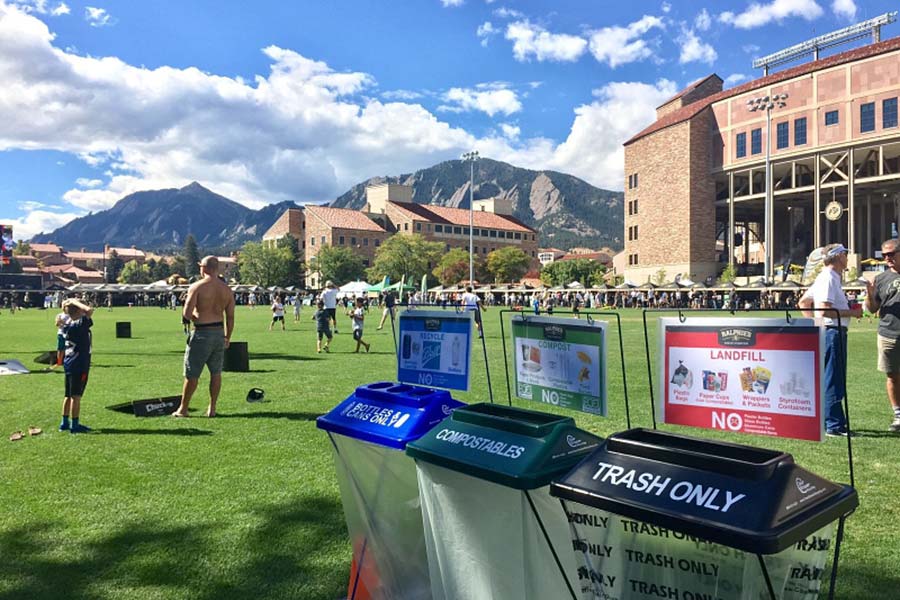
The university has expanded its zero-waste efforts from inside the stadium — where virtually all food and drink packaging is refillable, recyclable or compostable – to outside the stadium at a special tailgating area on Franklin Field.

The grassy area – now called the Aluminum Can Zone Presented by Ball Corporation – is the latest in a recent wave of updates to the fan experience in and around Folsom Field. Special tents available for rent come complete with furniture, a cooler, and specially designed compostable tailgate supplies. The tents are so popular that they’ve long been sold out.

“This is a perfect example of how easy it can be for fan experience and sustainability to coexist,” said Sarah Martinez, Sustainability Maven for Eco-Products. “This is about as green as a tailgating area can get.”

Eco-Products, based in Boulder, Co., already supplies hundreds of thousands of compostable cups, plates, trays, utensils and straws at Folsom Field. Now it is also supplying special plates, cups and utensils – all of which are compostable and all in University of Colorado colors – for the tailgating area as well. 

The partnership simplifies waste disposal for fans. All plates, cups, and utensils can go into the same compostable bins – along with any leftover food.

Fans can walk to the special tailgating area after parking at the stadium’s new solar-powered underground garage. Then, once inside Folsom Field, fans find “Zero Waste Goalies” wearing green shirts and showing which recyclable and compostable bins to put waste into.

“Even at CU, we still see some blank stares when people walk up to the bin stations,” Martinez said. “But we make it as easy for fans, and they’re always happy to learn that their trash is not headed to the landfill.”

Together, the efforts make up Ralphie’s Green Stampede, the NCAA’s first sports sustainability program. Fans now recycle at a 90 percent rate during football games at Folsom Field.

“Fans have good reason to be proud of the University of Colorado’s commitment to the environment,” said Rick George, CU’s Athletic Director. “Ralphie’s Green Stampede has been a huge success, keeping tons of garbage out of area landfills. This new approach to zero-waste tailgating builds on our momentum and represents the next step in our sustainability journey.”

Everyone involved is excited about this success. “But no one is resting on their laurels,” Martinez added. “We want to keep doing more.”


Don’t Even Think About Littering at This Colorado Stadium

Eco-Products and the University of Colorado have teamed up to make Folsom Field one of the nation’s greenest stadiums – on the outside as well as on the inside.

The university has expanded its zero-waste efforts from inside the stadium — where virtually all food and drink packaging is refillable, recyclable or compostable – to outside the stadium at a special tailgating area on Franklin Field.

The grassy area – now called the Aluminum Can Zone Presented by Ball Corporation – is the latest in a recent wave of updates to the fan experience in and around Folsom Field. Special tents available for rent come complete with furniture, a cooler, and specially designed compostable tailgate supplies. The tents are so popular that they’ve long been sold out.

“This is a perfect example of how easy it can be for fan experience and sustainability to coexist,” said Sarah Martinez, Sustainability Maven for Eco-Products. “This is about as green as a tailgating area can get.”

Eco-Products, based in Boulder, Co., already supplies hundreds of thousands of compostable cups, plates, trays, utensils and straws at Folsom Field. Now it is also supplying special plates, cups and utensils – all of which are compostable and all in University of Colorado colors – for the tailgating area as well. 

The partnership simplifies waste disposal for fans. All plates, cups, and utensils can go into the same compostable bins – along with any leftover food.

Fans can walk to the special tailgating area after parking at the stadium’s new solar-powered underground garage. Then, once inside Folsom Field, fans find “Zero Waste Goalies” wearing green shirts and showing which recyclable and compostable bins to put waste into.

“Even at CU, we still see some blank stares when people walk up to the bin stations,” Martinez said. “But we make it as easy for fans, and they’re always happy to learn that their trash is not headed to the landfill.”

Together, the efforts make up Ralphie’s Green Stampede, the NCAA’s first sports sustainability program. Fans now recycle at a 90 percent rate during football games at Folsom Field.

“Fans have good reason to be proud of the University of Colorado’s commitment to the environment,” said Rick George, CU’s Athletic Director. “Ralphie’s Green Stampede has been a huge success, keeping tons of garbage out of area landfills. This new approach to zero-waste tailgating builds on our momentum and represents the next step in our sustainability journey.”

Everyone involved is excited about this success. “But no one is resting on their laurels,” Martinez added. “We want to keep doing more.”


The World’s First Self-Charging Electric Folding Bike is Here

Vello Bike+, the world’s first self-charging electric folding bike which allows users to ride forever without needing to plug it in to a socket for a recharge, is a breakout hit on Kickstarter and trending fast having already raised more than €100,000 on the crowdfunding platform.

The bike is the first self-charging electric folding bike on the market: the battery can be fully recharged while riding meaning riders will never run out of battery power.

The energy with this new system is harvested as before by braking and pedaling downhill, just that it now also converts mechanical energy into electrical energy thanks to the Integrated Kinetic Energy Recovery System (K.E.R.S.). In that way, additional energy is generated to recharge the light integrated lithium-ion battery and released to give the extra boost when riding uphill. The self-charging mode can also be deactivated and set to the highest assistance level providing constant pedal support for at least 35 km (20 miles) at a speed of max. 25 km/hour (15 miles per hour). When the battery is empty, it can be recharged easily by connecting it to the power socket. Through the free app users can set the level of pedal assistance, track their route and even lock their bike remotely.

vello bike

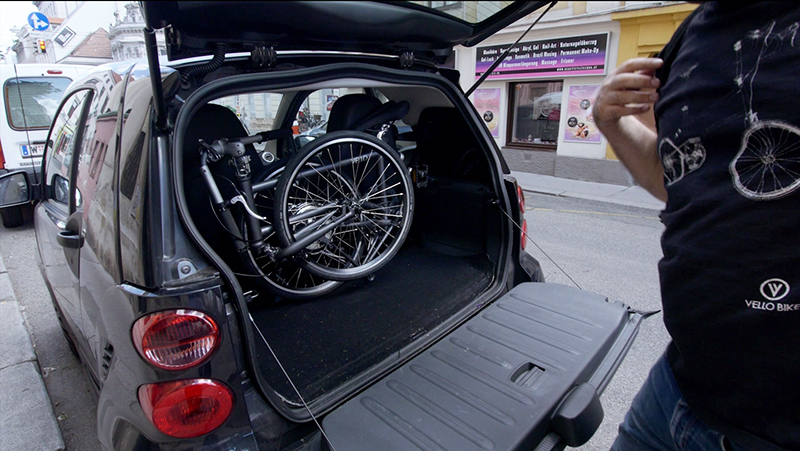
With an ultra portable design, the Vello is also the lightest e-bike on the market (clocking in at less than 12kg/ 26lbs), and capable of folding down to suitcase size for easy transport and carry.

“I wanted to create the best-ever electric folding bike with a groundbreaking new technology. It’s the first self-charging electric folding bike on the market, plus lighter and more compact than any other folding bike on the market. Many of the innovations on the Vello Bike+ have been developed grounds up and can be considered revolutionary in the bike industry,” says co-founder and award-winning designer Valentin Vodev.

“A self-locking magnet allows hands-free folding, which makes it very different from a typical folding bike with complicated hinges to open. They don’t tend to be very user-friendly as the folding process is lengthy and can be frustrating. Riding performance was also essential to us in the development of the Vello Bike+, it feels and rides better than most of the existing folding bikes on the market.”

vello bike

For the Vello Team, the product is more than just a bike but a function on how they view the world. “For us converting ideas into products is a metamorphosis from the common to the unexplored – a discovery through which we can define new functions and forms,” adds Vodev.

Based in Austria, the company is redefining mobility in cities. Since its foundation, the company has grown to become one of the world’s most cutting edge folding bike manufacturers. 

The Vello Bike+ is currently live and available to support on Kickstarter


Clock Starts Ticking to Implement Paris Climate Deal

A new global agreement to tackle climate change will take effect on November 4 after the accord crossed an important threshold for support late on Wednesday.

European nations, Canada, Bolivia and Nepal boosted official backing for the 2015 Paris Agreement to countries representing more than 55 percent of world greenhouse gas emissions, as needed for implementation.

By Thursday, 74 countries or parties to the U.N. climate change convention had formally joined the Paris Agreement, adding up to nearly 60 percent of global emissions, a U.N. website showed.

U.S. President Barack Obama called Wednesday “a historic day in the fight to protect our planet for future generations”.

“If we follow through on the commitments that this Paris agreement embodies, history may well judge it as a turning point for our planet,” he said.

Work will start at U.N. climate talks in Morocco next month to hammer out the rules for putting the accord into practice.

Here is a selection of comments on the agreement’s entry into force from top officials and climate change experts:

John Kerry, U.S. Secretary of State:

“Today it is crystal clear that we have finally woken up. We have learned from the false starts of the past, and we are now – finally – on the path to protecting the future for our children, our grandchildren and generations to come.”

Ban Ki-moon, U.N. Secretary-General:

“Now we must move from words to deeds and put Paris into action. We need all hands on deck – every part of society must be mobilised to reduce emissions and help communities adapt to inevitable climate impacts.”

Patricia Espinosa, executive secretary, U.N. Framework Convention on Climate Change (UNFCCC):

“Entry into force bodes well for the urgent, accelerated implementation of climate action that is now needed to realise a better, more secure world and to support also the realisation of the Sustainable Development Goals.”

Mohamed Adow, senior climate advisor, Christian Aid:

“The speed at which the Paris Agreement has come into force has been remarkable. But we now need to see tangible actions to follow just as quickly. As Hurricane Matthew leaves destruction across the Caribbean, we’re reminded that our climate continues to undergo rapid change and we are continuing to pollute it.”

Wolfgang Jamann, CEO and secretary general, CARE International:

To see the benefits of the Paris Agreement, “we need to keep the momentum, and quickly step up actions to cut emissions by shifting away from fossil fuels to renewable energy.

Governments need to rapidly improve the climate resilience of their most vulnerable and marginalised populations especially women and girls. Otherwise the agreement will be an empty shell, and the consequences will continue to be devastating for millions around the world.”

Heather Coleman, climate change manager, Oxfam America:

“While countries have all pledged to cut their greenhouse gas emissions, the collective commitments made are still not enough to prevent dangerous climate change. Countries need to implement and scale up efforts to reduce greenhouse gas emissions and transition to a clean, resilient economy.

Oxfam estimates that the communities most vulnerable to feeling the effects of climate change are only receiving a fraction of the money that rich countries pledged to adaptation.”

Jennifer Morgan, executive director, Greenpeace International:

“Now that a truly global binding climate agreement is in place, governments should have the confidence to not only meet but also beat their national targets and provide support to the poorest countries.”

Andrew Steer, president and CEO, World Resources Institute:

“With the agreement in full force, countries can shift their focus from commitment to action.

We must create more liveable, low-carbon cities and expand the supply of land and forests for carbon storage. We must slash food loss and waste, a major source of emissions and a travesty for people who lack enough food. And, we must continue to work at all levels – global, national, cities and communities – to build the political will for this transformation.”

May Boeve, executive director, 350.org:

“The entry (into force) of the Paris climate agreement represents a turning point in the fight against climate change: the era of fossil fuels is finally coming to an end. Now the real work begins. The only way to meet the 1.5 or 2°C target (for global temperature rise) is to keep fossil fuels in the ground. The fossil fuel industry’s current ‘drill and burn’ business plan is completely incompatible with this agreement.”

Steve Howard, chief sustainability officer, IKEA Group:

“The Paris agreement represents a turning point for business. The certainty of ever-stronger policies to reduce emissions creates clarity and unlocks opportunities for developing products, services and operations for a low-carbon economy. We are only at the beginning, but the pace at which countries have been ratifying the agreement shows that the policy leadership is there to achieve real change. Now we need to work together for a rapid transition to a future built on clean, renewable energy.”

By Megan Rowling @meganrowling; editing by Katie Nguyen. c Thomson Reuters Foundation, the charitable arm of Thomson Reuters, that covers humanitarian news, women’s rights, trafficking, property rights and climate change. 


Inside Brazil’s Battle to Save the Amazon with Satellites and Strike Forces

When George Porto joined Brazil’s environment agency 13 years ago, the country didn’t have access to satellite data on illegal logging – let alone heat maps tracking deforestation patterns or gun-toting agents dedicated to stopping ecological crimes.

How times have changed.

Today, IBAMA, as the agency is known, has access to four satellite feeds monitoring illegal activities in the Amazon, the world’s biggest rainforest. It also boasts a network of indigenous watchmen in remote regions and a 1,000-strong commando force.

Environmentalists say the agency’s control centre in Brasilia, a collection of low-slung concrete buildings from the 1970s, is one of the world’s most important hubs for protecting rainforests and the land rights of people who depend on them.

“When I joined there was no GPS or satellite images, it wasn’t a strategic way to tackle deforestation,” said Porto, IBAMA’s environmental monitoring coordinator, as he examined maps showing changes in forest cover at the agency’s headquarters.

“Today, the rate (of deforestation) is coming down because of our technology and intelligence gathering,” he told the Thomson Reuters Foundation.

For years, Brazil has sought to balance a desire to lift millions out of poverty by making use of the country’s greatest natural resource — the Amazon’s trees, land and minerals — and the need to protect one of the world’s most biodiverse regions.

Mounting pressure to save the Amazon, known as the “lungs of the planet” for its role sucking climate-changing carbon dioxide out of the atmosphere, prompted former president Luiz Inacio “Lula” da Silva to unveil plans to halt the Amazon’s destruction.

And in the decade following the start of his first term in office in 2003, Brazil reduced its deforestation rate by more than 70 percent, some of the fastest improvement anywhere.

But the rate increased again last year by 24 percent compared to 2013, Brazil’s National Space Research Institute (INPE) said in September, citing the latest satellite images.

Brazil is still losing the equivalent of two football fields of rainforest every minute as illegal loggers and ranchers exploit the Amazon’s unspoiled reaches, according to the National Forest Commission’s former director, Tasso Azevedo.

Satellites used by IBAMA recorded about 100,000 incursions into the forest last year.

In a renewed push against the problem, Brazil has pledged to reduce net new deforestation to zero by 2030, down from more than 6,200 square kilometers (2,394 sq miles) today.

Meeting this goal will require enforcement agencies leveraging new technologies to detect problems, and a sustained push for formal land rights, analysts said.

IBAMA officials are also using a “carrot and stick” strategy to reduce illegal land clearing by both large agribusiness operators and small farmers.

‘IT’S A WAR’

About 90 percent of Brazil’s deforestation is illegal, much of it carried out by organized groups clearing land for agriculture, IBAMA officials said.

Reducing the problem hinges on law enforcement targeting large operators who destroy the forest while providing peasant farmers with alternative livelihoods and title deeds to land, environmental experts say.

To tackle the lucrative criminal enterprise, environment officials are fighting deforestation based on the logic of counter-insurgency.

“It’s a war,” said Luciano Evaristo, IBAMA’s enforcement director, slamming a fist into his office desk.

When satellites detect large-scale forest clearing, Evaristo’s agents, armed with automatic weapons, are deployed to hard-to-reach sites via helicopters.

Before 2002, IBAMA didn’t have its own field operatives. The agency monitored the situation and turned information over to other branches of the security services to conduct raids.

“We decided we needed autonomy from the police, as they have corruption problems,” Evaristo told the Thomson Reuters Foundation. “With the rise of pressure around deforestation, the government put us on the frontline.”

But in an area as vast and remote as the Amazon, it’s logistically impossible for the state to be all-seeing, he said.

Instead of long-term boots on the ground, officials rely on field intelligence from the people who know the region best: indigenous Brazilians.

“The indigenous people are the eyes and ears of IBAMA,” Evaristo said.

Across the Amazon, networks of indigenous people gather information about illegal loggers that satellites can’t access.

They coordinate intelligence gathering in Quyapo or other local languages on radios provided by IBAMA. When unlawful activity is detected, they send GPS coordinates of the location back to Brasilia.

Evaristo can then deploy a team to destroy illicit logging camps and torch their machinery.

In the last year, Evaristo said his team has made more than 4,000 arrests, seizing 91 trucks, 115 chainsaws and the equivalent of 2,000 truckloads of wood.

UNCOLLECTED FINES

It is not only in intelligence gathering that indigenous groups have proven valuable.

Lands formally recognised as belonging to indigenous people have far better forest protection rates than state or private lands. One study by U.S. and Brazilian environmentalists in 2015 showed that more than 98 percent of forests on indigenous lands were intact.

These lands, however, are regularly threatened by “grileros” – a Brazilian term for businessmen fraudulently obtaining or selling properties by bribing local land registry workers, doctoring ownership certificates and other dubious practices.

“In this war, it’s the indigenous people versus the grileros,” said Evaristo, who keeps a loaded pistol in his briefcase beside policy papers prepared for lawmakers.

To combat land theft by powerful agricultural interests, IBAMA began naming and shaming businessmen involved in deforestation in 2008. The publicly available blacklist now has 50,000 names, including 2,000 added last year.

Blacklisted individuals face financial penalties, lose access to bank credit and rural land registries so they cannot buy new territory, making it harder for them to do business, officials said.

IBAMA levied millions of dollars in fines for environmental crimes last year, but expects to collect less than 10 percent of the money due to Brazil’s cumbersome legal system, Evaristo said.

SMALL BUT DANGEROUS

IBAMA officials say enforcement or “the stick” has worked well in reducing illegal cutting down of trees by large agriculture operations that are behind 70 percent of the Brazil’s deforestation.

But small farmers still account for about 30 percent of the deforestation and their share has been growing, said Avecita Chicchon of the San Francisco-based Gordon and Betty Moore Foundation, which has contributed hundreds of millions of dollars to protect the Amazon.

“Poor people are moving into the Amazon for economic reasons and cutting the forest for agriculture,” Chicchon said.

Across Brazil, about five million families have no access to land, according to a 2016 study from Canada’s University of Windsor. Landless farmers have few options to feed themselves other than clearing territory.

Cutting by small farmers is harder to detect on satellite maps, according to IBAMA officials who hope “carrots” including formal land title deeds and access to credit for growers who do not cut down trees will help.

The government has provided formal land title deeds to 20,000 farmers since 2009.

For small farmers who own land, it’s more profitable to work within the law and not deforest new areas in order to access credit and other government supports, officials said.

By distributing land to small farmers while cracking down on large-scale illegal cutting, Brazilian officials say they can reduce net deforestation to zero by 2030.

“Every act of deforestation has an economic purpose behind it,” IBAMA official Jair Schmitt told the Thomson Reuters Foundation. “If you motivate people to follow the law, you can kill the business model.”

By Chris Arsenault. Editing by Katie Nguyen. c Thomson Reuters Foundation, the charitable arm of Thomson Reuters, that covers humanitarian news, women’s rights, trafficking and climate change. 

 

Young American Sailors Call for Action on Marine Pollution

Leading offshore sailors Charlie Enright and Mark Towill are sounding the alarm about the danger posed by marine debris and pollution, after recent research from the Ocean Conservancy estimated a staggering eight million tons of plastic trash is entering the ocean every year.

The duo spent much of last year in the most remote waters of the globe during the 2014-15 Volvo Ocean Race – and observed an eye-opening amount of debris littering the ocean all over the planet.

Enright, 32, led a discussion on the topic in front of representatives from the United Nations, the US State Department and the Swedish Embassy at Volvo Group’s Ocean Summit on Marine Debris in Newport, USA and Gothenburg, Sweden in 2015.

And now Enright and Towill, currently preparing their next round-the-world challenge, are eager to continue their call to action and speak at events throughout the 2017-18 route.

“It’s a passion of ours – and we have the ability to see the problem first hand so we feel like we’re credible witnesses,” said Rhode Islander Enright.

The pair has already signed up sustainability partner 11th Hour Racing, an environmental programme co-founded by the philanthropist Wendy Schmidt and her husband, Eric Schmidt, Google’s executive chairman, via the Schmidt Family Foundation.

“Our collaboration with 11th Hour Racing is unique to our campaign and it’s something we pride ourselves on,” he added.

“We’re actually working on a sustainability report reviewing the last edition. The basis of that will form a sustainability plan for the 2017/18 race and we’ll provide a guide for all of the other teams that take part.”

“Until people acknowledge that there is a problem no-one will really be motivated to create a solution,” suggested Hawaii-born Towill. “We would like to be involved in Summits on ocean pollution at all of the stopovers in the next race.”

In research released in 2015, the Ocean Conservancy explained that the majority of plastic in the ocean ‘comes from developing economies, where the increased use of disposable plastic goods is outpacing waste collection and management’.

“There is a pretty direct correlation from our experience with the amount of debris we saw and population density in some of the countries we were near, and of that some of the emerging markets too,” said Towill. “How that is managed in our lifetime is probably one of the biggest concerns.

“At certain times sailing in the Malacca Strait [which divides the Indonesian island of Sumatra from Malaysia] it felt like there was so much debris that we could have got off the boat and walked on it.”

Enright added: “We feel that being involved in the Volvo Ocean Race experience brings a responsibility to raise awareness about it. Through racing, speaking and volunteer work we want to engage the sailing community and beyond, to ultimately reduce the amount of marine debris and pollution in our oceans.”

Four-time Volvo Ocean Racer and marine biologist Will Oxley, who has spent almost 20 years working on the Great Barrier Reef, admits there is a general lack of education and understanding amongst the general public when it comes to ocean pollution and its consequences.

“Science needs to do a better job when it comes to education and to keep working at it,” he explained. “I would say visual pollution is something people can get their heads around but it’s far more difficult with the pollution that we can’t see.

“Micro-plastics, excess nutrients, freshwater runoff and rising sea surface temperatures are all big issues.”

“Plastic is the biggest ocean pollution concern for me right now, along with the problems of agricultural runoff into the Great Barrier Reef and that is a serious concern where I live,” said Oxley, who was the navigator for Team Alvimedica in the 2014/15 Volvo Ocean Race.

“The amount of plastic pollution seems to be growing exponentially. Just last week I was racing in Pala Bay in Mallorca and I have never seen so much plastic in the Mediterranean before.

“Thankfully we don’t see this in the Great Barrier Reef region yet. The concern of course is all the micro-plastics getting into the food chain.”


The Doctor who Can’t Wait to Save Millions of Lives

Sometimes the world needs to move a little faster, especially when lives are at stake. James Bernstein brushes aside convention and invents a sterile surgery in a suitcase.

Great ideas sometimes start with asking uncomfortable questions. After being told how to treat pneumonia, perform an appendectomy and conduct a physical, Dr. James Bernstein had the audacity to ask “Why?” It was less to do with ignorance and more to do with the urgency he saw around him – the race to treat more than 5 billion people who don’t have access to basic surgery. One day, during his medical studies at Cornell University Medical School (now known as Weill Cornell Medicine), Bernstein overheard a professor – known for his prodigious surgical procedures – replying to a fellow student who had asked why such long waiting periods were required before they could start saving lives. The answer he received: “What’s the hurry?”

“In a world where 5 billion people don’t have access to surgery, it’s a big hurry,” says Bernstein. “I grew up a well-behaved Jewish boy, who went to medical school because that’s what my parents wanted. At medical school you get taught a single idea – that there’s only one way to do things. You’ll hear phrases such as: ‘because this is our way’ or ‘best practice’  – you don’t ask questions; you just do it.”

james_bernstein_02

Bernstein has also performed surgery in India and Peru, where he learned that western medical practices, taught by rote memorization, are not always suitable for different medical environments.

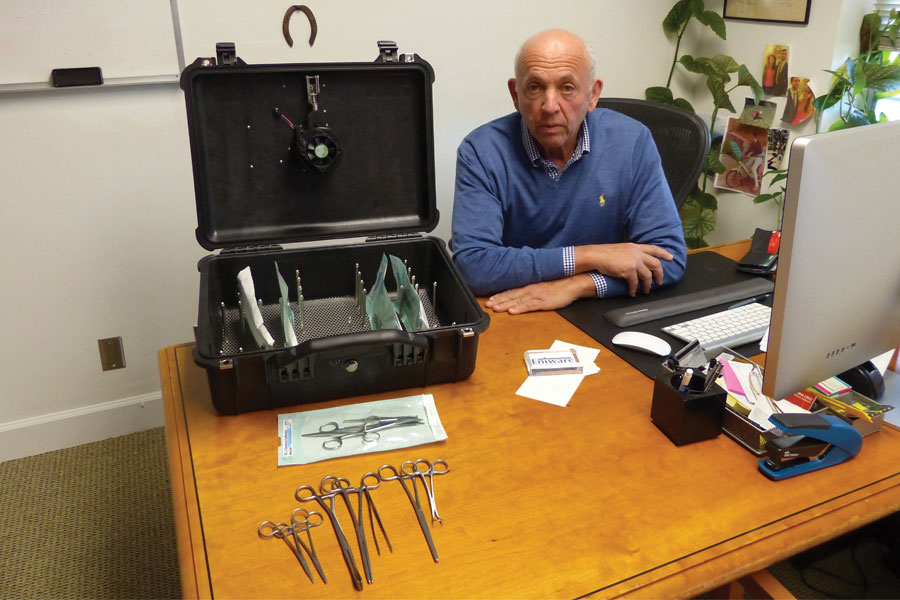
However, Bernstein’s persistence has paid off. He’s  now CEO of Eniware, a company that has just developed the world’s first portable sterilizing kit for surgical instruments. The low-cost, power independent unit is no larger than a carry-on suitcase that you’d take on a short business trip and is estimated to cost USD2,000 when commercially available. Each consumable pack, that uses nitrogen dioxide to sterilize the contents of the suitcase and a scrubber to absorb the gas after sterilization is complete, is estimated to costs a mere USD15 – an affordable alternative for rural hospitals in Africa or Asia that lack electricity or sophisticated infrastructure.

“Salk told me that after curing polio he was asked, ‘Why don’t you cure diabetes?”

A common trait among many successful entrepreneurs is their respect and admiration for someone else – whose work has led to groundbreaking innovation. In Bernstein’s case, this inspiration came in the form of Dr. Jonas Salk, who discovered the cure for polio. Salk had complained to Bernstein that the press were never happy with his achievements. “Salk told me that after curing polio he was asked, ‘Why don’t you cure diabetes? Why don’t you cure heart disease? Why don’t you cure cancer?’ He had achieved something huge, that affected billions of people, yet everyone still expected more of him,” recalls Bernstein. “He was depressed by this, but the lesson I learned by working with him was that I should think big too, and also try and affect billions of lives.”

While still at medical school, Bernstein made the “terrible blunder” of going to India, where he performed 50 surgeries, including an open heart surgery at 12,000 feet above sea level, without a heart/lung machine. “You’re not supposed to do that, but I did,” says Bernstein. “It became very clear to me that the best practices of western medicine do not translate well to most parts of the world. It made me realize that we sometimes need alternate ways of doing things.”

james_bernstein_03

The choice of business partner is critical in any successful business, and Bernstein teamed up with Huma Malik, a Pakistan-born project manager and conflict resolution expert. She’s also a skydiver and certified rescue scuba diver – someone Bernstein can trust to handle any situation when transforming the world of surgery in tough environments.

Essential surgery is considered appendectomies, C-sections and repairs to hernias and lacerations. Medical schools involved in global health are finally focusing on this neglected stepchild of surgery, that account for 30 percent  of deaths around the world – from procedures gone wrong or lack of sterile instruments. The population in sub-Saharan Africa alone will increase by another one billion people. It’s a big problem, that sometimes requires stories to drive home the reality.

A young, healthy mother in Afghanistan has just given birth via C-section to a beautiful baby girl. However, the instruments weren’t sterile and nine  days later she’s dead. In Tanzania, three women give birth naturally – no C-section, no sterile instruments or essential surgery. They now sit with holes between their bladder, rectum and vaginal canal, with tubes going into plastic buckets for the rest of their lives. “It’s called obstetric fistula,” says Bernstein “Very few people have heard of it, yet there are three million women living like this right now. Shocking, tragic and all totally preventable by surgical C-section.” While the lack of C-sections can be blamed on a shortage of surgeons, lack of technology is also to blame. Amazingly, in 1880, Louis Pasteur had already demonstrated that boiling water does not sterilize instruments – it doesn’t kill spores. Yet, in Africa today, boiling water is still used, pre-1880 style.

As with most disruptive technologies, Bernstein initially faced an uphill battle against established medical procedures. He spent much time and money convincing investors that nitrogen dioxide could be a sterilizer.

“Bill Gates once pointed out that innovation doesn’t come from big companies. They don’t get involved with little companies like us because we’re different. We think about the future, not only about today,” he says.

He’s quick to remind us that each of the one billion new people expected in Sub-Saharan Africa represents a birth – in places with no electricity. “It’s been hard raising the USD3.5 million needed to develop our cordless sterilizer,” says Bernstein,“especially when you hear of juicing machines that have raised USD120 million.” Despite the low cost of Eniware’s sterilizer kit, the team is convinced that the shared value enterprise they’ve put in place between investors and end-users will pay handsome dividends to those who’ve backed them. A potential market of 5 billion people is not an insignificant number. “We initially didn’t get any help from the big companies, but they’re all interested now. We stuck our necks out and came out with the disruptive technology that would change surgery in the developing world.”

In Africa last year Bernstein presented a demo model to a nurse in a rural hospital. “She looked at it, and said, ‘Go away, leave now.’ I thought I’d violated some local custom,” he recalls “But she looked at me and said, ‘Dr Bernstein, we need this sterilizer so badly we can’t have you standing here talking any longer. Go away and don’t come back until you bring us one.”


Inventing the Future of Flight

In silence, and without using a drop of fuel, two visionary pilots embark on the world’s first circumnavigation using only the power of the sun

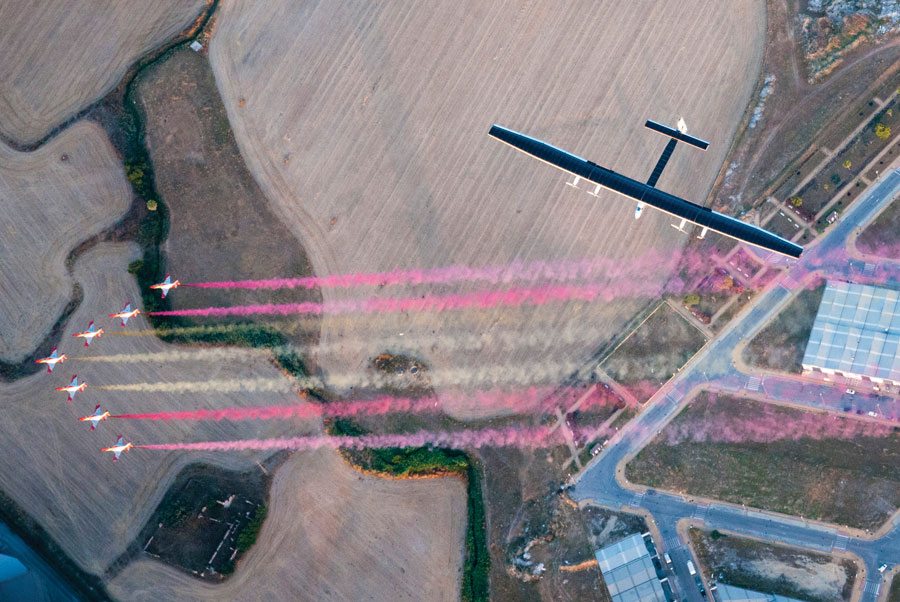
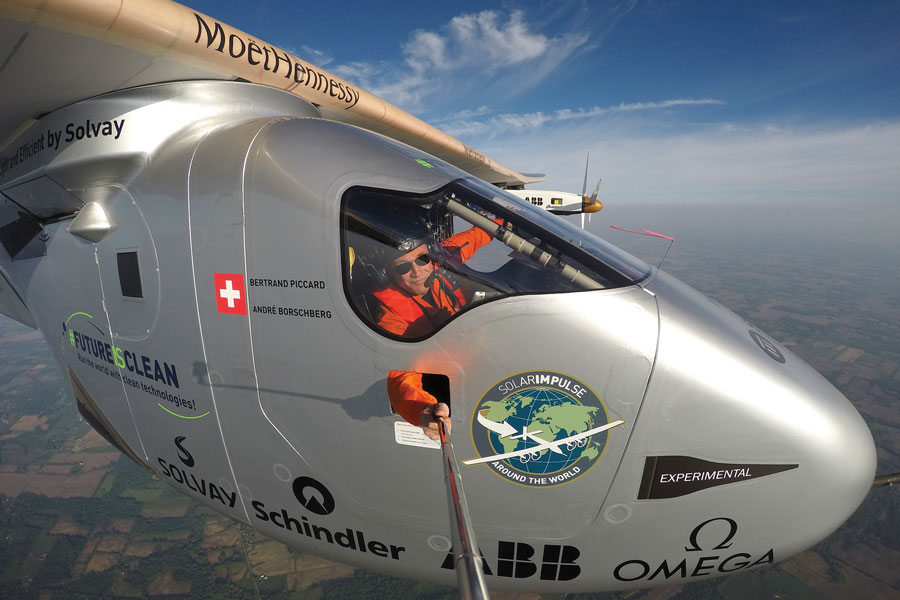
It was the Wright brothers all over again. On 3 December 2009 at Dübendorf Airfield in Switzerland, 106 years after the first powered flight by Orville and Wilbur Wright on a beach at Kitty Hawk, North Carolina, USA, a group of aviation fanatics flew the world’s first solar powered airplane. The skeletal-looking prototype, named Solar Impulse, gently rose into the air and flew 40 inches above the ground for a distance of 0.2 miles, landing to wild cheers from the assembled team.

flight_07

With today’s aircraft reaching heights of 85,000 feet and speeds of over 2,000 miles per hour, you may ask: why the big deal? After all, that first flight back in 1903 managed to fly 10 feet above the ground.

I had a dream of a solar aircraft capable of flying day and night without fuel – and promoting renewable energy.

For a start, Solar Impulse doesn’t use a drop of fuel. And like most prototypes the innovative technology’s potential uses and future applications are hugely exciting. Bertrand Piccard, president of Solar Impulse, had a vision of reinventing flight – or “inventing the future,” as he likes to call it.

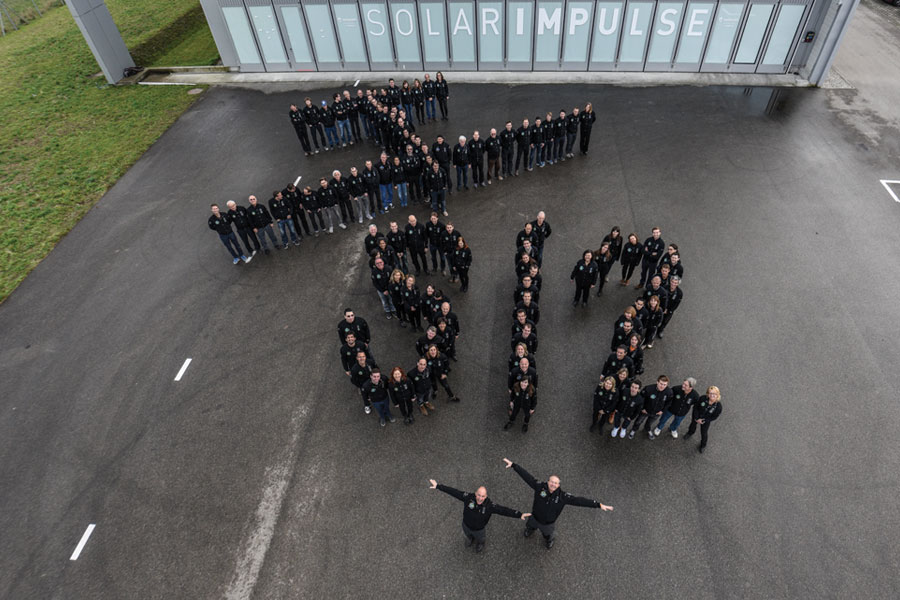
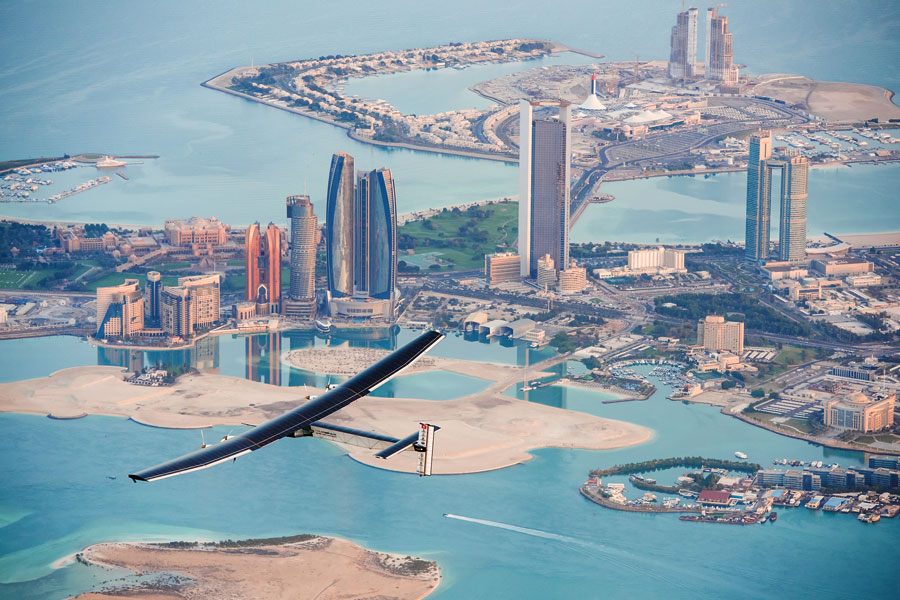
“I had a dream of a solar aircraft capable of flying day and night without fuel – and promoting renewable energy,” he explains. After six years of intense research, he proved the technology existed with the first “flea hop” across the Swiss airfield, but to demonstrate this may indeed be our future, he needed something bolder. Along with co-founder Andre Borschberg, Piccard dreamed up an audacious plan – the first around-the-world flight powered by the sun. This was achieved on 26 July 2016, when the Si2 landed in Abu Dhabi in the United Arab Emirates, after a total of 23 days flight.

flight_06

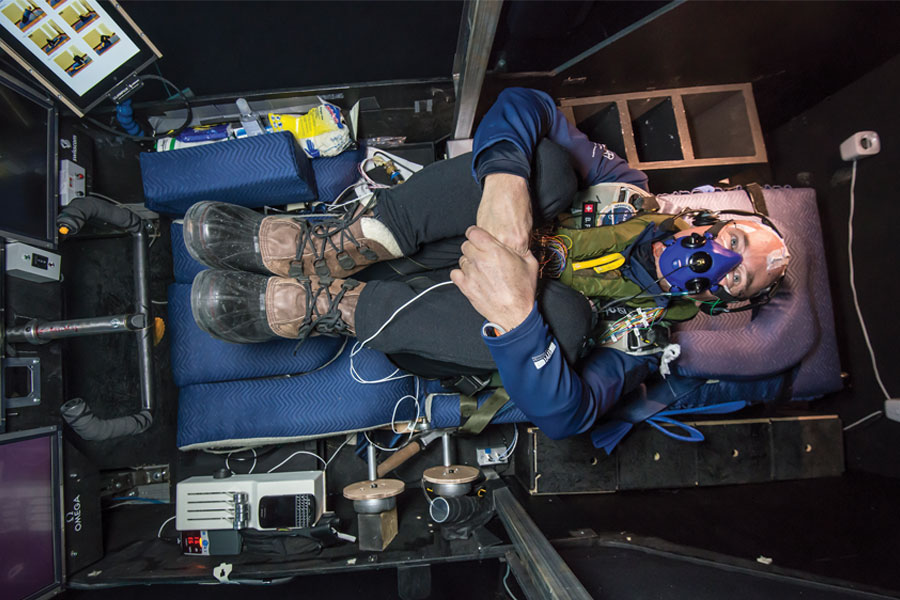
The 22,000-mile journey was broken up into 17 stages, to allow for the technical limitations of the new technology and the physical limits of the pilots. No sleep was permitted while the plane was flying over populated areas, but over oceans sleep was in the form of short naps of up to 20 minutes, 12 times a day.

The Swiss pioneers were acutely aware of the historical significance of their journey, and the ironic symbolism along the way. On the Hawaii to North America leg – a journey similar to the one flown by  1930s American aviator Amelia Earhart, the pair drew a parallel between Earhart’s airplane that carried 500 gallons of gasoline, and theirs that carried none. Across the main wing of their plane, 17,248 solar cells powered four lithium batteries, which in turn powered four motors and propellers, allowing Si2 to fly through the night until dawn.

flight_02

The idea of traditionally-powered mobility has just been turned on its head. “Just imagine your energy reserves increasing during flight!” says Borschberg. It’s almost incomprehensible that a journey would gain fuel, rather than consume it.

Solar Impulse’s goal is to demonstrate that clean technologies, such as the ones used on the Solar Impulse airplane, have the potential to change lives, societies and future markets in an unprecedented way. They have shown that solutions actually do exist, now, to run the world on clean technologies.“If an airplane can fly day and night without fuel, everybody could use these same technologies on the ground to halve our world’s energy consumption,” says Piccard.

“This will save natural resources and improve our quality of life. Our hope is to motivate everyone to reduce their dependence on fossil fuels in their daily lives and thus encourage concrete actions for sustainability.”

Piccard is promoting the use of new, modern and clean technologies as an opportunity for change and wants to influence the energy decisions taken within political, economic and social systems. His message conveys a visionary approach: solving climate change is not an expensive problem, but rather a unique opportunity for profit and job creation. “Climate change, and in particular carbon dioxide emissions, are mainly caused by inefficient energy sources,” he says. “If those outdated technologies were to be replaced with modern technologies, the energy consumption of the world, and therefore the C02 emissions, could be halved. We’ve shown that solving climate change is a profitable opportunity, not an expensive problem.”

Climate change, and in particular carbon dioxide emissions, are mainly caused by inefficient energy sources.

Key to the success of this project has been the different, yet complimentary, personalities of the two adventurers. Piccard is a medical doctor, explorer and lecturer;  Borschberg is an engineer. What they have in common is a love for innovation and the future health of our planet.

flight_05

“This is not only a first in the history of aviation,” states Piccard. “It’s also a first in the history of energy. I’m sure that within 10 years we’ll see electric airplanes transporting 50 passengers on short- to medium-haul flights.” Piccard’s grandfather, Auguste, was the first man to see the curvature of the Earth from the stratosphere, in a hot air balloon. It gave him a new perspective on life: “The question now is not so much whether humans can go even further afield and populate other planets, but rather how to organize things so that life on Earth becomes more worthy of living,” his grandfather said in 1931.

Ultimately, people need inspired success stories to change their ways. Piccard and Borschberg have put dreams and emotions back at the heart of scientific adventure.

“Ordinary people, who get excited about great adventures, are ready to join the dreams of pioneers and explorers,” says Borschberg.


Hollywood Rolls Out the Green Carpet

The next time you see a celebrity pulling up at an event in a hybrid car, there’s a good chance Debbie Levin is behind it. The CEO of the Environmental Media Association is continuing a novel social marketing strategy, begun in the late 1980s.

By weaving environmental messages into films and using celebrities for positive role modeling, the Environmental Media Association (EMA) has influenced how the public is educated on environmental issues. They assist creative teams, collaborate with environmental groups, encourage the use of hybrid cars and work closely with environmentally responsible corporations. The power of Hollywood is harnessed every year at the annual EMA Awards, which recognizes writers, producers, directors and actors who have included an environmental message in their entertainment work. CEO Debbie Levin has also created the Green Seal Award to recognize environmentally responsible production efforts. She gave us a glimpse of the influential work they do behind the cameras.

How did an organization using celebrities for good come about?

EMA was started 24 years ago by legendary television producer Norman Lear, now 94 years old, along with his wife Lyn, Alan Horn, and Alan’s wife Cindy. Horn also founded Castle Rock Entertainment, after which he went on to run Warner Brothers and then Disney. Before Lear, story lines were very benign and were just funny for the sake of being funny. He took it to a different level. Our mission has always been to use the entertainment industry to get environmental messages into film scripts and use the industry to educate and motivate people.

It seems Norman Lear was ahead of his time, before the topic had even become so popular.

In 1989 people were just starting to take notice of environmental issues and they realized that bringing children into this world meant they needed to think more about the future for the benefit of their kids and grandchildren. Both Lyn and Cindy also happened to be pregnant at the time, and this fact must have added to the couples’ decision to take action. Most other environmental organizations were working quietly, internally, on research or legislation, but nobody was really noticing. Nothing could get the message out on a scale like the entertainment industry could, and that is where the idea originated. What began as an organization that worked with scriptwriters has evolved into using celebrities to communicate through Twitter, Instagram and YouTube. These messages are seen globally, instantly, and can be shared.

Can the EMA Awards be compared to a “Green Oscars?”

What we do is honor television shows, feature films and writers for incorporating environmental issues into their content. We honored Matt Damon a few years ago for his work with Water.org, the organization that he cofounded, and we also honored author and environmentalist Bill McKibben for the work he has done over the last 30 years. Working closely with corporations is also important. We’ve been working with Toyota and Lexus and have a very successful relationship with them. This relationship started during my second year at EMA when we assisted them in launching the Prius. We were the ones who got all the celebrities to buy the Prius, and got them to make it sexy, giving consumers the idea that the car was a cool choice.

From left: EMA supporters Gwyneth Paltrow, Cameron Diaz, Jeff Skoll and Debbie Levin.

From left: EMA supporters Gwyneth Paltrow, Cameron Diaz, Jeff Skoll and Debbie Levin.

It sounds like a type of movie product placement, that instead, happens outside the movie?

It’s product placement in the sense that we’ll make sure that celebrities arrive at all the award shows in hybrids, and we’ll make sure they’re photographed in Beverly Hills, for instance. We really want people to stop using their big limos, the Hummers and big gas-guzzling cars and promote these energy-saving cars. We really work on making the brands of our partners the desirable choice, and because of our success we continue to have an incredible relationship with these companies.

How do you keep EMA sustainable? Where do you get your funding, is it mainly through sponsorship with corporations?

A lot of it is through sponsorship. We have been with Brita and Greenworks for six years and Tiffany & Co. for 16 years. I started a corporate advisory board, to tie them into our work more. I really nurture the corporate relationships. I realized early on that keeping these relationships is vital to our organization, so I’ve made them feel part of the family. Ultimately, it’s not just about companies giving us money once a year; we have structured various revenue streams, including the awards, to ensure we’re sustainable.

How easy is it for you to attract celebrities and actors into the work that EMA is doing. Is it getting easier?

It is actually getting easier, because if you’re an actor, why wouldn’t you want to have a healthy, wonderful, sustainable message out there. Some of our Young Hollywood Board members include Rosario Dawson, Nicole Richie, Emily VanCamp, Malin Akerman, Lance Bass, Adam Levine, Olivia Wilde and Amy Smart. With social media, celebrities are looking for good things that will give them something great to talk to their fans about. It’s not such a hard sell anymore, if you want to rally people around issues such as clean water and better fuel. It’s a way of explaining things to the public in a welcoming and attractive manner. Jeff Skoll has been brilliant in presenting social causes in action, thriller-type films.

Are you finding film writers more willing to change their scripts?

Definitely, as long as you’re specific with writers. If you simply say you’d like them to talk about climate change, they’ll look at you and glaze over, it’s too big a concept. If you tell them they can write a story about a character who is trying to get GMO labelled in their state, or a playground situated on toxic soil, then their eyes light up. You need to give specific examples. At our awards two years ago, four of the seven category winners had fracking story lines, which has never happened before.

Have you ever confronted any big movie production companies over their values?

We actually have some networks, like Fox News Channel, that are constantly challenging our message. Despite being very conservative, one of our board members, actress Daryl Hannah (pictured at top), is on air with them regularly. They like her for some reason and love to argue with her, but she has fun doing it. We have free speech and if they want to put forward an opinion, I think it’s also ok for us to criticize.

Most executives in Hollywood are leaning more towards environmental issues at the moment. They can’t push their personal opinions too much because they’re representatives of corporations, and it is not up to them to do that, but they are becoming more supportive.

I guess the tipping point for change will come about when people see there is money to be made in this?

There’s a lot of money to be made in this, and Toyota is proof of it. Brita and Greenworks are also creating great sustainable products, and the more we support those products the more they’ll keep manufacturing the right kind of products for a better future. Celebrities are highly visible and can make their voices heard to motivate fans. Lance Bass promotes things constantly to his million-plus followers. I consider him our secret weapon.


0