The Food Chain Revolution That Will Change The Way People Shop

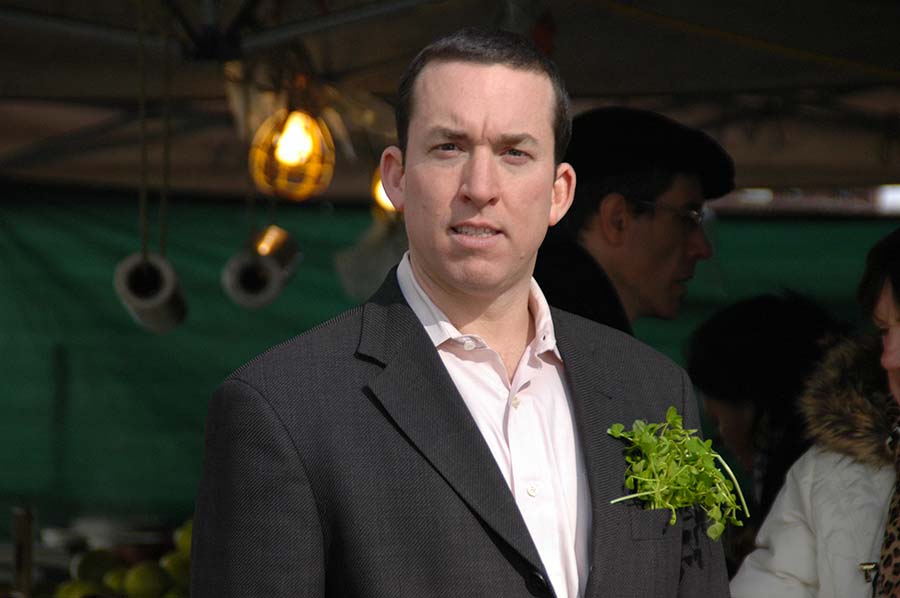
What happens when a successful software company CEO decides he’s going to trade in his tie for a trowel and build greenhouses in order to improve the environmental impact of the food supply chain? 

“My wife suggested the existence of our three kids and sizable mortgage was a good reason not to do it,” says Paul Lightfoot, laughing at the memory. “A few of my mates said, ‘No. You’re not doing that.’ In the end, my wife was a good sport and let me go for it, and my mates… they meant well, but they were wrong.” 

How wrong? Today Paul is the CEO of BrightFarms which designs, finances, builds and operates hydroponic greenhouse farms at grocery retailers. Having partnered with multiple, major supermarkets chains, BrightFarms is revolutionizing the food supply chain sector by eliminating time, distance and costs not to mention giving consumers healthy choices, supporting farmers and providing Paul with a meaningful way to live. 

Trigger Happy

“If I was looking for a specific trigger for how all this started, I would have to say that it was insight into a business model I had from a friend who broke open the rooftop solar industry by signing long-term, fixed price contracts with buildings,” Paul explains. “That idea stayed in my head for years. When I met Ted Caplow, the founder of what was then called BrightFarms Systems LLC, and heard he was building small scale, educational urban greenhouse farms, I thought the model could be applied to what he was doing.”  

With this in mind, early one Sunday morning Paul drafted up a plan for Ted that showed how he could use a long-term, fixed price contract model to supply grocery stores with produce from his greenhouses. Ted agreed the design was solid, but he wasn’t an entrepreneur; he wasn’t the man for the job. But you know who was? Paul. As so it was, Paul defied his friends advice and with his wife’s (diffident) blessing, got his hands dirty.  

Supply and Demand

While specialty food stores and companies like Whole Foods have already won their niche (expensive food for rich people), BrightFarms is focused on the supermarkets that sell food to the rest of America, which simply put, want fresh, delicious food they can trust and that they can trust will make them healthy.” 

 

“In order to change the food supply chain, we are going where we have the chance to do something truly innovative,” says Paul. “In the past, all supermarkets really cared about were price, appearance and shelf life; there was never any thought given to taste or nutrition or impact on the environment. These are huge factors now; taste is correlated to freshness and that gives local a huge boost. Our greenhouses grow year-round local produce that prioritizes the farmers, the food quality, our health and our environment.”  

What else is positively affected is the supermarket’s bottom line. By growing at, or near retailers, BrightFarms eliminates the heavy costs of shipping and fuel consumption. Additionally, fresher food = longer shelf lives = less shrinkage = higher gross margins. Add to that equation a long-term, fixed-price contract that protects the retailer from volatile prices, rising oil costs and inconsistent supplies and the operation is a recipe for success. 

Farmer, Meet Framework

While the term ‘local’ can no longer be tossed aside as an ephemeral idea – you can’t shake a wok near a chef who doesn’t eschew a farm-to-table ethos – challenges abound for the practical application of combining the farming spirit with the business acumen.  

“It’s been a challenge to cross-pollinate the business of industry and growers,” admits Paul. “I thought when I started that I would hire the best growers in the world and be off to the races, but I recognized they aren’t business people. We’re trying to get growers to use their knowledge and skills within a framework of planning and data-centricity. I think we’re doing well but it’s still not as good as I would like it to be.” 

 

Another challenge was convincing supermarkets to alter their time-honed way of thinking.  

“It was surprising that it was so difficult,” admits Paul. “We came in and explained, ‘the next time a soil virus wipes out romaine in Yuma, Arizona and all of your competitors have stock-outs, you’re not going to.’ We had to help them understand how our products would help them stand out from their competitors, improve customer loyalty and attract new customers because local was such a big demand.” 

Good Words Work

Paul’s proclivity for spreading the good word is evidenced in his TED talk, “A Produce Supply Chain Revolution,” (which has been viewed more than 50,000 times), as well as his busy schedule delivering speeches at conferences such as Agriculture 2.0, Food Industry Sustainability Summit, Harvard Business School PAPSAC, Cornell Entrepreneurship Conference, Green Tech Monster and Greentopia.  

In 2014, “Fast Company” named Paul to its list of ‘1000 Most Creative People in Business,’ but what really affected him, was the recognition YPO bestowed on him in 2011 as winner of the CSR Award for Environmental Sustainable Business Practices. 

“At that time, I was still raising capital for BrightFarms and so in a lot of ways, the award gave me early credibility,” says Paul. “… maybe even earlier than I deserved.” 

By Deborah Stoll

 

The Liquid Energy Machine That Could Power our Future

“I am quite a passionate person,” admits Scott McGregor (above) when discussing the global ramifications for his large scale energy storage technology redT energy storage, “but I try to keep that under wraps.” 

This might sound like a curious disposition for someone at the head of ushering in what promises to be nothing short of an industrial revolution; why not crow about it, shout the amazingness from the rooftops for all to hear? Because as CEO and Founder of redT, Scott understands that having a business-first paradigm for something that also does good, means success will allow him to make a difference in the world, whereas turning that paradigm on its head might mean things not necessarily fostering the same result.  

“The fact that redT’s technology is fully recyclable and is as green as can be, is not how I market the company,” explains Scott. “Half of our customers aren’t concerned about the environmental ramifications, they’re buying it because it’s going to make and save them money; the other half will be attached to the renewables aspect. Either way, it’s a win-win for all.” 

So what exactly is redT?

‘Simply’ put, it’s a machine that stores energy in liquid form that never runs out and never degrades. 

So it’s a battery?

No. Scott tries to ban the use of the term ‘battery’ and here is why: consider, if you will your cellphone battery – the more you use it, the faster it breaks down, right? In order to create something that circumvented this, Scott spent the past 15 years perfecting the first machine of its kind in the entire energy infrastructure sector that doesn’t wear out by using a resource based on vanadium redox flow battery technology. 


What is that?

It’s super technical, but for our purposes, the liquid is 70% water with its main active component vanadium, which is the 23rd most available resource in the world. It’s a mineral. And there is plenty of it.

“It’s a long journey bringing an energy product to market,” says Scott with the smile of someone for whom the time to set his baby free has finally arrived. “We launched our proprietary energy storage technology in 2012 but decided not to sell it into the market yet; instead, we worked with Jabil – the world’s biggest manufacturer before bringing it to market in November 2016 at the cheapest price.” 

A Gateway Technology

While redT is not a consumer device, it contains all the properties of having a substantial effect on sustainable energy overall. Renewable generation, i.e. solar and wind, can only go so far without storage. In countries like the United States, Australia and Japan, grids have become too busy to plug into and with no way to store energy, it disappears, unused, into the ether. Imagine if that energy could be stored for times when the sun isn’t shining and the wind isn’t blowing … we could then truly harness the power of our natural elements. 

“Energy has been around for hundreds of years,” says Scott. “We have never been able to properly store it; we’ve produced it and then just burned through more and sent it on down the line. Until now.” 

Off the Grid and Out of Government

And if you think the effects of on-grid countries are going to be substantial, the implications for off-grid places like Africa and the Caribbean, will be nothing short of revolutionary. 

“There are 700 million people in Africa without regular power,” says Scott. “This technology will have an impact not just on climate change, but on the industrialization of all of those people. A lot of money has gone into building solar in Africa, putting batteries next to the grids, but two years later those batteries are dead and have to be replaced. These villages don’t have the money to buy more and even if they did, those new batteries are only going to last a few more years and need to be replaced again.” 

Many countries have recognized that granting money to Africa in terms of aid is an unsustainable and politically unstable way to develop the country, they are now looking at investing in infrastructure; and that means energy.  

“Developing Africa as a market is a perfect way to deploy finance while allowing the country to develop itself,” says Scott. “Governments can invest using debt, too – by providing loans to build solar and storage on mini-grids, they can earn money on the provision of that power.”  

Additionally, redT has the potential to eliminate government where implementing renewables are concerned. 

“Government has been instrumental to kicking off the renewables sector,” says Scott, “but we’re reaching a tipping point where it’s becoming less relevant. Solar is so cheap that it no longer requires subsidies. We’re seeing people buying solar and storage and saying ‘so long’ to the grid. We are going to need competition regulation to control the possibility of abnormal profits, but beyond that, the sector will no longer need to rely on (inefficient) government policies.”  

Parity People

Named one of “Financial Times” top 50 LGBT business leaders, Scott’s low-key demeanor belies his dedication to eradicating intolerance in some of the harshest parts of the world. 

“I have been out most of my career with no fuss,” says Scott. “I’ve run businesses in Malaysia and Africa where I work and where homosexuality is illegal and it’s important to be a role model. The reach you have as a CEO to demonstrate the normalcy of whatever diversity group you’re from is imperative.” 

As a married man (Scott and his husband have been together for 13 years) with one child and another on the way, Scott’s personal life, philanthropic activities and business acumen, all fall under the Australia phrase he references, ‘quiet achiever’.  

“I am not sure if parity will happen in my lifetime, I think it will go forwards and backwards; we need to be realistic,” says Scott. “If redT works, it will be successful. I try to embrace it like a tough Australian … but the ‘tree-hugging’ aspect is why I wake in the morning. I think if you take a disciplined, aggressive approach to doing good, you can have a massive impact.” 

By Deborah Stoll


Scientists Gather For Urgent Meeting On Significant Arctic Changes

The scale of the change that is happening in the Arctic is so significant that it’s sending out a warning cry but the rest of the world isn’t listening.

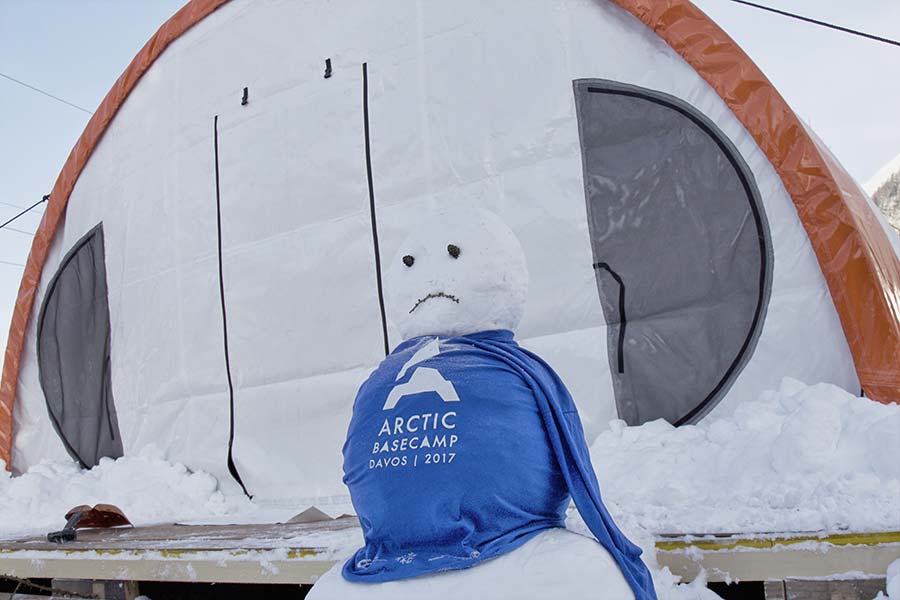
While politicians and business leaders walked briskly between meetings to try and stay out of the freezing cold at the World Economic Forum in Davos, Switzerland this year, a group of scientists set up an Arctic base camp at the event and spent most of their time outdoors. The group where trying to highlight the rapid melting of Arctic ice, and convince world leaders that the freezing extremes of our planet are crucial to a healthy world. Here’s what they had to say:

Professor Gail Whiteman, Rubin Chair in Sustainability. Lancaster University:

“We’re setting up the arctic basecamp in Davos because scientists are so worried about the changes that are happening in the arctic and the global risks associated with those. What happens in the arctic doesn’t stay there and it posts global risks throughout the world The scale of the change that is happening in the arctic is so significant that it’s sending out a warning cry but the rest of the world isn’t listening.

We want to set up a direct line of communication between arctic scientists and world leaders. I’m going to be sleeping in that tent over there. There’s going to be ten of us, it’s going to be cold and we’re all scientists here to bring our message of global change.”

Director of WSL, Professor ETH, Konrad Steff en, Swiss Federal Institute for Forest, Snow & Landscape Research WSL:

“Last year this glacier receded 70 metres and is moving up hill. What you see is a retreating of the glaciers, the retreating of the ice sheets and that is happening in the arctic as well as the rest of the world and if this continues then most of the glaciers won’t be here by the year 2100.

The glaciers worldwide are the biggest contributor to the global sea-level rise right now. There is a 1mm per year global sea level rise. I think it is time we start talking about the arctic basecamp and the fast changing arctic because we have seen it. But now it is so urgent, 2016 was the warmest year on record.”

Dr Jeremy Wilkinson – Sea Ice Physicist, British Antarctic Survey:

“Arctic basecamp is here because climate change is happening right now, the science is totally compelling. We’re here at Davos to bring our message of Arctic change. The Arctic Basecamp is here because climate change is real. Scientists have been studying the Arctic for years and can conclusively confirm that Arctic change is happening now and we need to bring that evidence of Arctic change to the wider community.”


US Law Firm Employs Anti-mafia Laws to Sue Forest Activists

A Canadian forestry giant is using legislation most often deployed against the mafia to sue Greenpeace over allegations about the firm’s environmental record in the latest legal battle between campaigners and resource companies.

Launched by Montreal-based Resolute Forest Products the case will reverberate beyond the United States as it impacts how defamation and free speech rules are interpreted and how activist groups can be treated during prosecution.

A judge in the U.S. state of Georgia is weighing a motion by Greenpeace to dismiss the case and a decision on whether it can proceed is expected soon, lawyers for both sides said.

Resolute is seeking $300 million from Greenpeace International, Greenpeace U.S. and other branches of the environmental organization, along with Stand.earth, another North American activist group, Greenpeace said in a statement.

“This case is a big deal,” Ted Hamilton, a legal researcher with the Climate Defense Project, a U.S.-based advocacy group told the Thomson Reuters Foundation.

It’s one of the few sentiments upon which both sides agree in litigation launched under the Racketeer Influenced and Corrupt Organizations Act, normally reserved for illegal syndicates.

‘FOREST DESTROYER’

Michael Bowe, an attorney from Kasowitz, Benson, Torres & Friedman LLP representing Resolute, said Greenpeace leveraged false and defamatory claims against the company’s operations in Canada’s Boreal forest in order to solicit donations.

In its campaign materials, Greenpeace called Resolute a “forest destroyer” whose activities hurt indigenous people in Canada, threaten wildlife and contribute to climate change – claims rejected by the company’s lawyers.

“We are being slandered, donors are being misled and no legitimate environmental cause is being advanced,” Bowe told the Thomson Reuters Foundation.

Resolute says it has planted more than one billion trees in Canada’s Boreal forest and is responsible for virtually no permanent lost woodland acreage.

“The company cares about the Boreal forest a lot more than Greenpeace,” said Bowe.

CORPORATE PARTNERSHIPS

Attorneys for Greenpeace International stand behind the group’s “forest destroyer” statements, accusing the Resolute of trying to intimidate critics and trample free speech.

“This case … is about the right of advocacy groups to offer criticisms (of companies) without the threat of crippling lawsuits,” Greenpeace attorney Jasper Teulings told the Thomson Reuters Foundation.

If the company believes that statements by Greenpeace such as the “forest destroyer” moniker are inaccurate they should sue under defamation laws, rather than legislation designed to take down the mafia, Teulings said.

“Our work on forests focuses on exposing and documenting unsustainable industry practices, in an effort to get corporations to adopt better methods that protect crucial forest habitats,” said Teulings.

Other large companies, including Asia Pulp & Paper, Kimberley-Clark and McDonalds have worked with Greenpeace to improve their sustainability practices following criticism without resorting to Resolute’s “bully tactics”, he said.

Resolute said Greenpeace is not the victim in the case as the campaign group has offices in 41 countries, a 2014 budget of more than $330 million, and owns multi-million dollar yachts.

Greenpeace was able to raise these funds by spreading misinformation about Resolute and other firms, the company said, in a claim strongly denied by the environmental group.

By Chris Arsenault, Editing by Belinda Goldsmith. c Thomson Reuters Foundation.


Seven Earth-size Planets Discovered Where Life is Possible

Astronomers have found a nearby solar system with seven Earth-sized planets, three of which circle their parent star at the right distance for liquid surface water, bolstering the prospect of discovering extraterrestrial life.

The star, known as TRAPPIST-1, is a small, dim celestial body in the constellation Aquarius. It is located about 40 light years away from Earth, close by astronomical standards, but about 44 million years away at the average cruising speed of a commercial passenger jet.

Researchers said the proximity of the system, combined with the proportionally large size of its planets compared to the small star, make it a good target for follow-up studies. They hope to scan the planets’ atmospheres for possible chemical fingerprints of life.

“The discovery gives us a hint that finding a second Earth is not just a matter of if, but when,” NASA chief scientist Thomas Zurbuchen said at a news conference.

The discovery, published in an issue of the journal Nature, builds on previous research showing three planets circling TRAPPIST-1. They are among more than 3,500 planets discovered beyond the solar system, or exoplanets.

“This is the first time that so many Earth-sized planets are found around the same star,” lead researcher Michael Gillon, with the University of Liege in Belgium, told reporters.

Researchers have focused on finding Earth-sized rocky planets with the right temperatures so that water, if any exists, would be liquid, a condition believed to be necessary for life.

“I think that we’ve made a crucial step towards finding if there is life out there,” University of Cambridge astronomer Amaury Triaud said on a conference call with media.

The diameter of TRAPPIST-1 is about 8 percent of the sun’s size. That makes its Earth-sized planets appear large as they parade past.

From the vantage point of telescopes on Earth, the planets’ motions regularly block out bits of the star’s light. Scientists determined the system’s architecture by studying these dips.

“The data is really clear and unambiguous,” Triaud wrote in an email to Reuters.

Because TRAPPIST-1 is so small and cool, its so-called “habitable zone” is very close to the star. Three planets are properly positioned for liquid water, Gillon said.

“They form a very compact system,” Gillon told reporters. “They could have some liquid water and maybe life.”

Even if the planets do not have life now, it could evolve. TRAPPIST-1 is at least 500 million years old, but has an estimated lifespan of 10 trillion years. The sun, by comparison, is about halfway through its estimated 10-billion-year life.

In a few billion years, when the sun has run out of fuel and the solar system has ceased to exist, TRAPPIST-1 will still be an infant star, astronomer Ignas Snellen, with the Netherlands’ Leiden Observatory, wrote in a related essay in Nature.

“It burns hydrogen so slowly that it will live for another 10 trillion years,” he wrote, “which is arguably enough time for life to evolve.”

By Irene Klotz; Editing by Letitia Stein and Tom Brown


DiCaprio: Climate Action is Biggest Economic Opportunity for US

Tackling climate change is the “biggest economic opportunity” in the history of the United States, no matter who holds political office, said Hollywood star and environmental activist Leonardo DiCaprio.

“There are a few, very prominent people that still deny the overwhelming conclusions of the world’s scientists that climate change is largely human-caused and needs immediate urgent attention,” he told a U.N. awards ceremony recently.

But “the truth” about climate change has spread like “wildfire”, he added.

DiCaprio’s comments, as he received a prize for his work as a global citizen, did not refer to U.S. President-elect Donald Trump by name but were a thinly-veiled reference to his views and climate-sceptic cabinet members with oil industry ties.

Earlier this month, 42-year-old DiCaprio and the head of his foundation met with Trump and his team, reportedly arguing that support for renewable energy could create millions of jobs.

Trump has suggested climate change is a hoax and raised the possibility of withdrawing U.S. support for a new global accord to reduce greenhouse gas emissions which most scientists believe are driving up sea-levels and more droughts and violent storms.

“In less than 100 years of our pollution-based prosperity, we humans have put our entire existence in jeopardy,” warned DiCaprio, who released his own documentary “Before the Flood” on the impacts of global warming two months ago.

DiCaprio, who won an Oscar this year for playing a fur trapper battling nature’s elements in “The Revenant”, said his documentary is the most viewed “in history … (showing) just how much the world cares about the issue of climate change”.

But he said the battle to address it is far from over, calling on the world to implement the Paris Agreement on climate change, which came into effect in November, and to “go further”.

‘ENVIRONMENTAL AWAKENING’

People everywhere are acting to curb the damage to humans, nature and wildlife from a warming planet, DiCaprio said – from putting a price on carbon emissions, to buying cleaner cars, eating less meat, and businesses vowing to be carbon-neutral.

“To those who may be discouraged by nay-sayers, let me remind you, the environmental awakening is all over the world and the progress we have made so far … has always been because of people, not governments,” DiCaprio told the United Nations Correspondents Association event in downtown New York.

DiCaprio, who has worked closely with outgoing U.N. Secretary-General Ban Ki-moon on climate action, congratulated the U.N. chief for “elevating the significance of climate change to one of fundamental global sustainability and peace”.

Without Ban Ki-moon’s persistence, the world would never have made so much progress on climate change, culminating in the Paris Agreement sealed in December 2015, DiCaprio said.

Earlier on Friday, Ban Ki-moon said acting on climate change meant “jobs, growth, cleaner air and better health”, adding that leaders of top companies, governors and mayors understand this.

The Paris Agreement is “a precious achievement that we must support and nurture”, he told his final press conference at the United Nations. “There is no ning back,” he added.


Amazon Forest Guardians: Now it’s War

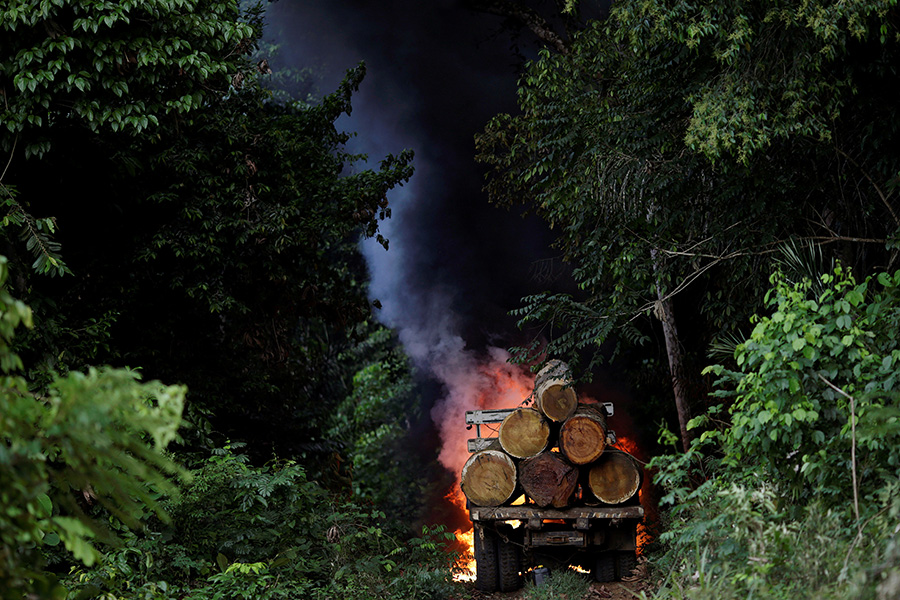
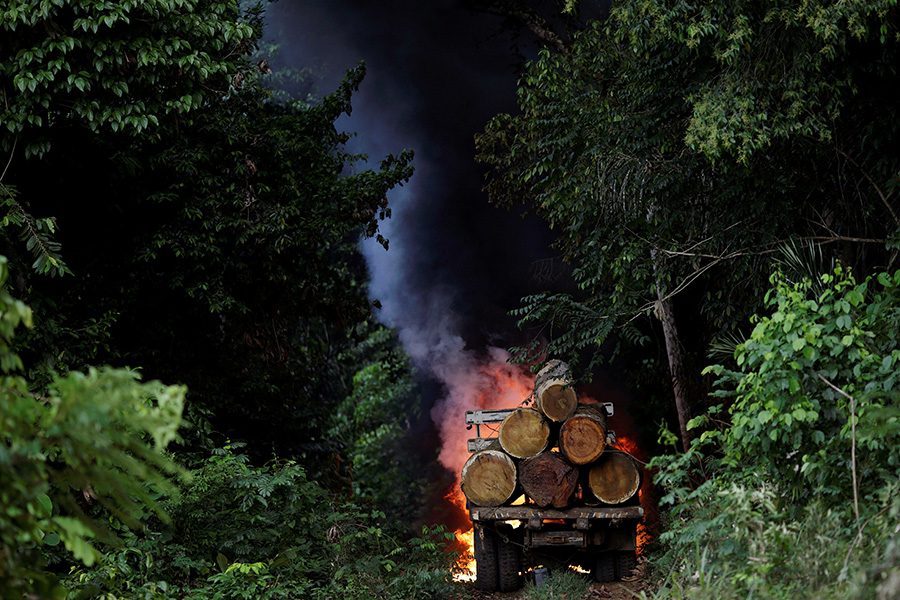
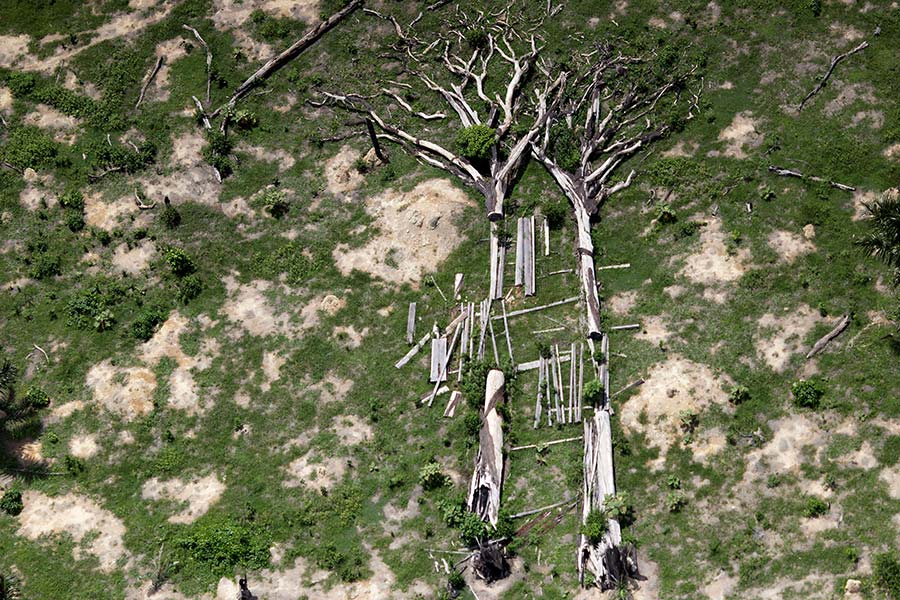
The rainforest shook with the sound of exploding tires and groaning steel as flames tore through a truck carrying giant tree trunks illegally sawn from the Amazon.

An agent of Brazil’s environment police had, moments earlier, ordered the driver from his cab at gun point. In a scuffed blue cap and muddied jeans, the 25-year-old fought back tears as he learned his truck would be set alight right there.

He walked away rather than watch it burn.

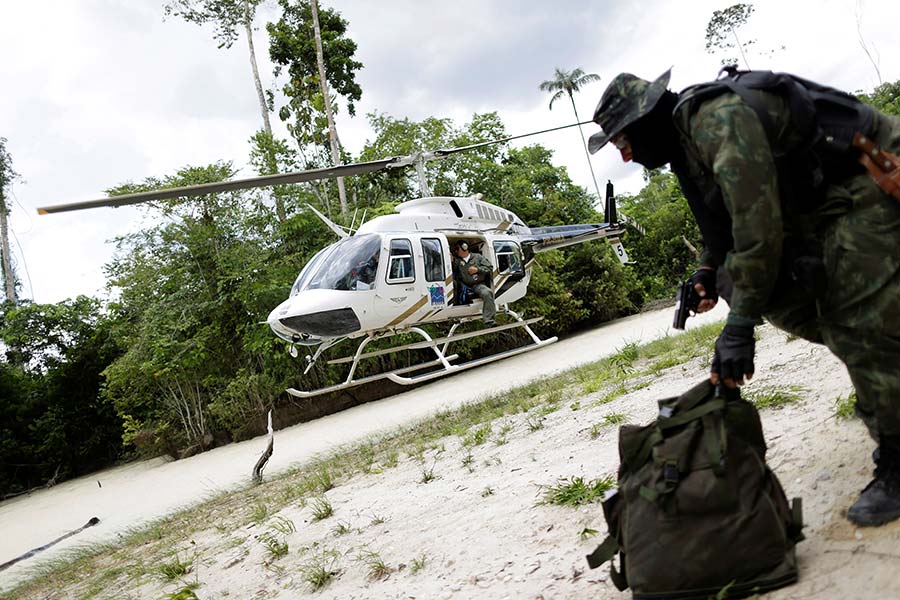
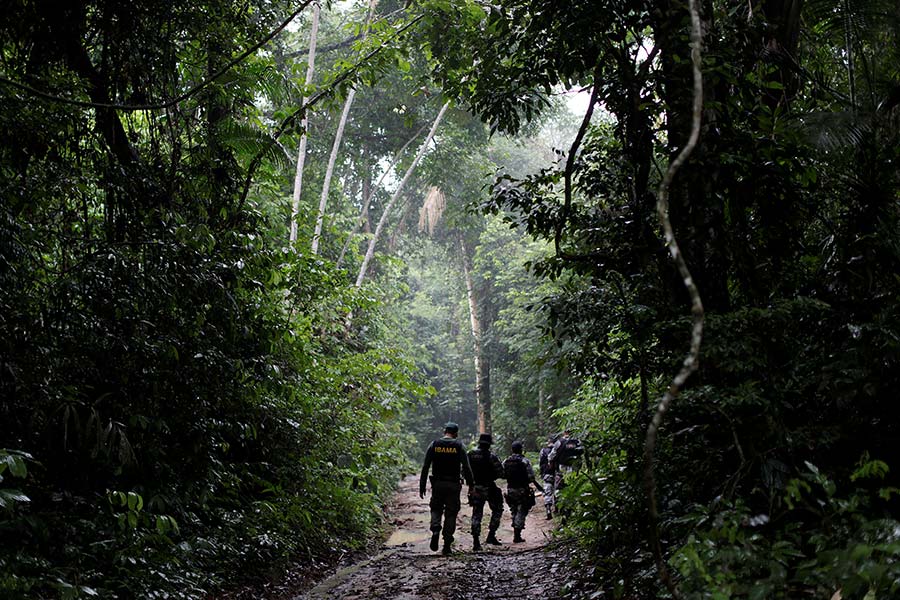
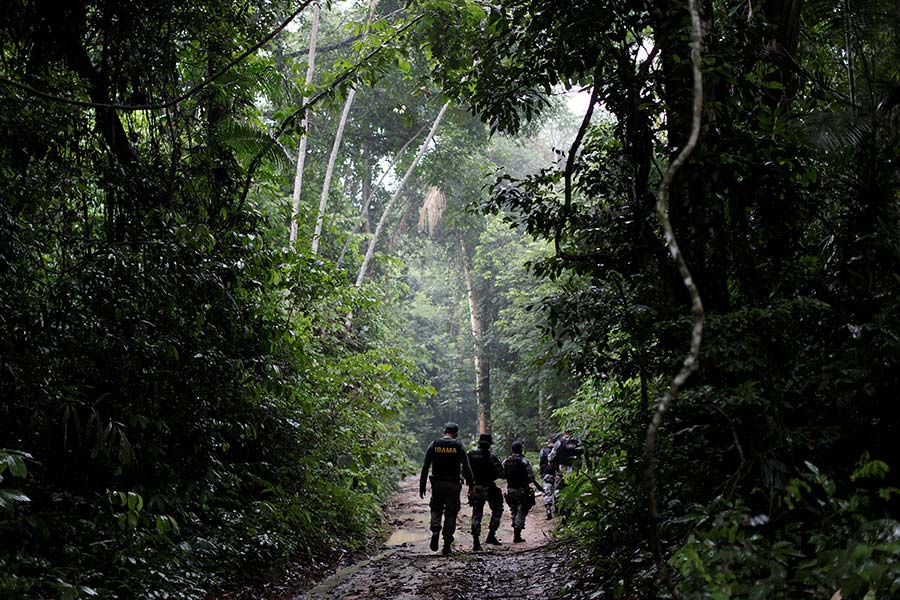
When able to do their job, agents of the Brazilian Institute for the Environment and Renewable Natural Resources, or Ibama, are decisive, punishing illegal loggers on the spot. But this seizure was the only success in four days of operations this month near the town of Novo Progresso in Brazil’s vast northern state of Para.

Hampered by poor radios with a maximum range of just 2 km (1.3 miles) and pick-up trucks easily recognised by those who cut down the forest, the exhausted Ibama agents were too often chasing shadows.

“The loggers are better equipped than we are,” said Uiratan Barroso, Ibama’s head of law enforcement in the state capital, Santarem. “Until we have the money to rent marked cars and buy proper radios we won’t be able to work.”

Nearly twice the size of India, the Amazon absorbs an estimated 2 billion tonnes of carbon dioxide per year, making its preservation vital in the fight to halt global warming.

Ibama, responsible for preserving Brazil’s 65 percent share of the world’s largest rainforest, is one of the most important groups in that fight. But after years of surprising success, the rate of deforestation is on the rise again.

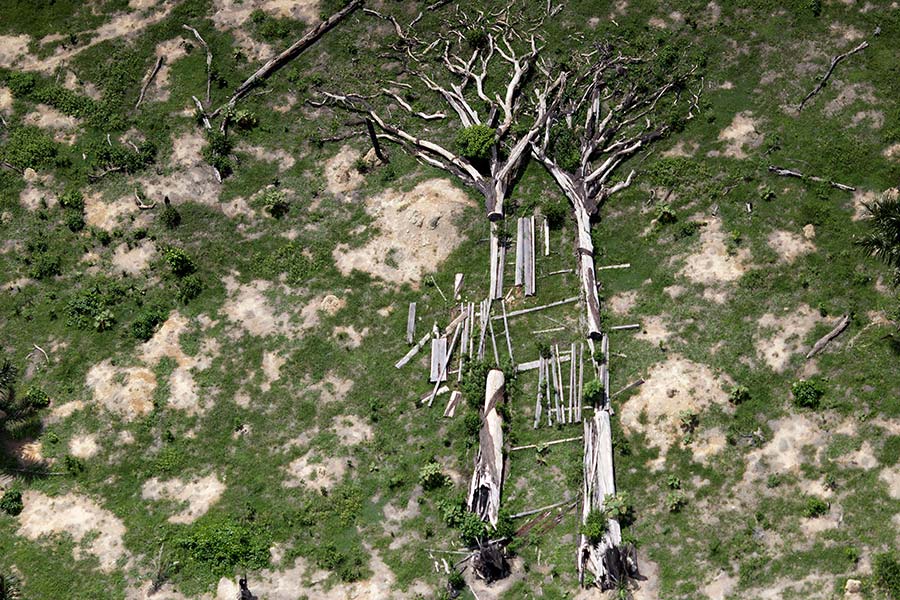
Over the past four years it has risen 35 percent, as Ibama suffered from a lack of funding amid Brazil’s worst recession in decades. Last year, rainforest five times the size of Los Angeles was cut down.

Leaders from nearly 200 different countries met in Morocco this month to move forward on commitments to cut greenhouse gas emissions, amid concerns that U.S. President- elect Donald Trump might cut funding for the deal signed in Paris last year.

Here, in the badlands of rural Para, the challenges to those commitments are all too clear. A 30 percent cut in Ibama’s budget has meant fewer operations this year. Helicopters and jeeps have been idle due to a lack of fuel.

“We haven’t even had enough money to pay for aptitude tests to allow our agents to carry guns,” said Barroso, adding the tests only cost 200 reais ($60).

It is dangerous work. In June, a policeman was shot dead during an Ibama operation in Novo Progresso, a grid of dirt streets whose 25,000 inhabitants rely on illegal mining and logging for survival.

Corruption is also a problem. Three Ibama officials in Santarem were charged last month for taking bribes from logging companies.

“I only trust around half the people I work with,” Barroso said.

Brazil’s environment ministry admits a lack of funds has reduced Ibama’s ability to operate. The situation should be helped by 56 million reais secured from the Fundo Amazonia, a fund principally financed by Norway and Germany.

But officials say a broader strategic change is also needed. “The effectiveness of our current measures and enforcement has reached its limit,” said Everton Lucero, the government’s undersecretary for climate change.

Until four years ago, the approach proved highly effective. Ibama helped to reduce the rate of deforestation by over 80 percent between 2004 and 2012. A mix of satellite imagery and a tough on-the-ground presence made Ibama a highly effective force in the fight against global warming.

Now, there is a sense that Brazil’s target of zero deforestation by 2030 will not simply be achieved with more 4x4s and semiautomatic rifles.

A carrot is needed alongside the stick, officials say. One option being discussed with other ministries, according to Lucero, is to create economic incentives for landowners and communities to preserve their forests. He said details on how this would work were still being finalized.

Persuading towns like Novo Progresso to preserve the rainforest means transforming their culture and economy. It lies on the BR-163 highway that runs north-to-south through the rainforest to join frontier farms with ports in the southeast. Environmental groups estimate 60 percent of Brazil’s Amazonian deforestation happens along this stretch.

Novo Progresso was one of many towns founded during Brazil’s drive deep into the Amazon during the military dictatorship of the 1970s and 1980s.

Then, cutting down the Amazon to construct roads and towns was patriotic, a means of securing Brazil’s borders. Many also got rich in the process.

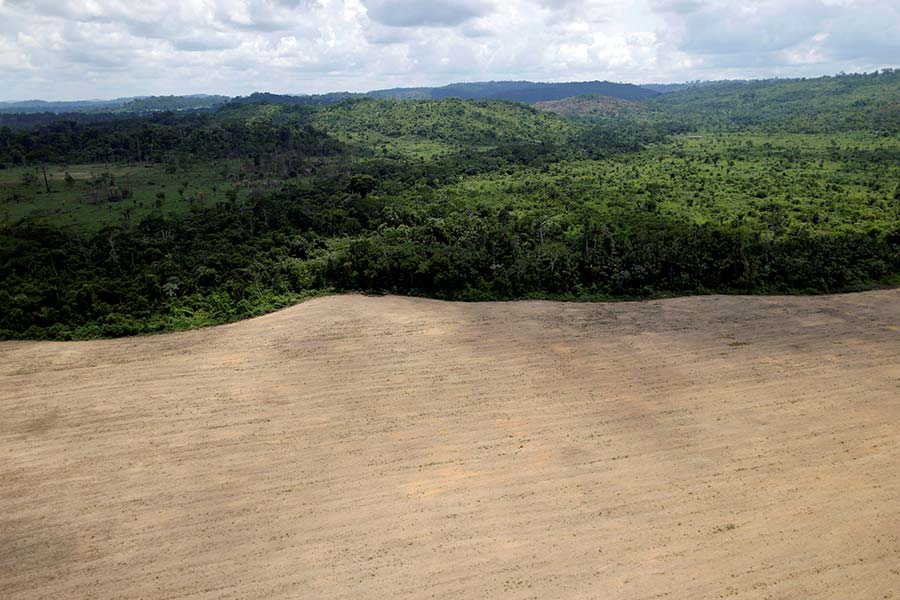
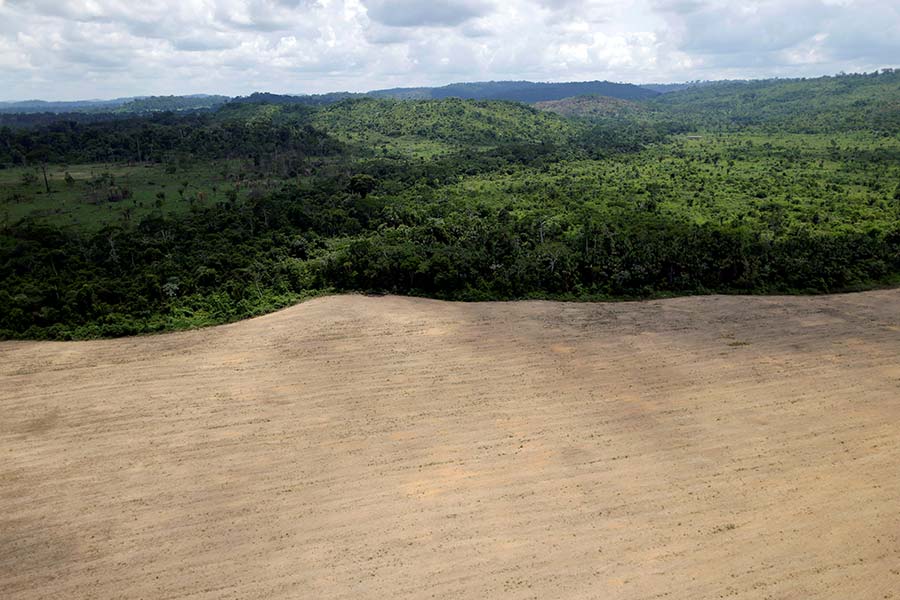
Jose Carlos Rovaris, 62, bought his land near Novo Progresso in 1984, leaving his home in the southern state of Santa Catarina for a new life on the forest frontier. “This was all trees when I arrived,” he said, his belly protruding from a scrubby polo shirt as he moved his arm across the land now planted with soy as far as the eye can see. “I cut it down bit by bit, every year a little more.”

The impact of those pioneers is staggering. In 1933, British explorer Peter Fleming described neighbouring Mato Grosso state as “huge tracts of jungle which no white man has even attempted to enter.” Now, it is Brazil’s largest soy producer. Its transformation from jungle to agricultural heartland helped make Brazil the world’s largest exporter of beef and soy.

With that has come increased power in Congress and environmentalists fear President Michel Temer’s government will bow to pressure to ease environmental licensing laws as it aims to rekindle economic growth. The transition from forest to farmland is a devastating double blow for the environment. Trees absorbing CO2 are commonly replaced with methane polluting cattle.

Ibama operates on the limits of a law its agents regard as too soft.

Burning trucks is the most effective deterrent in their arsenal. They do this if the vehicle is on protected land inhabited by indigenous groups or if the truck cannot be removed because the driver has fled or the vehicle is damaged. But those caught cutting down the rainforest never see the inside of a jail cell unless convicted of a more serious, related crime such as money laundering or violence.

Many in Novo Progresso see no other way to get by. “There is nothing else,” said Elis Pereira, 25, at the Ibama office after his truck was burned. Sleep-deprived and famished after days in the forest waiting for the rain to pass, he said the fine and loss of his truck meant he would be “pushed into crime.”

With no new land legally available and farming so mechanized it requires little labour, Pereira is part of a generation growing up in towns like Novo Progresso with scant job prospects. Unless a sustainable source of employment can be created, deforestation is unlikely to stop.

Pereira’s future looks bleak. He bought the truck that is now charred steel for 60,000 reais just six weeks ago. That money was borrowed from the illegal loggers for whom he worked transporting timber.

“I’ll have to let them know,” he said, eyes vacant with exhaustion and fear. “I hope they understand.”


Amazon Forest Guardians: Now it’s War

The rainforest shook with the sound of exploding tires and groaning steel as flames tore through a truck carrying giant tree trunks illegally sawn from the Amazon.

An agent of Brazil’s environment police had, moments earlier, ordered the driver from his cab at gun point. In a scuffed blue cap and muddied jeans, the 25-year-old fought back tears as he learned his truck would be set alight right there.

He walked away rather than watch it burn.

When able to do their job, agents of the Brazilian Institute for the Environment and Renewable Natural Resources, or Ibama, are decisive, punishing illegal loggers on the spot. But this seizure was the only success in four days of operations this month near the town of Novo Progresso in Brazil’s vast northern state of Para.

Hampered by poor radios with a maximum range of just 2 km (1.3 miles) and pick-up trucks easily recognised by those who cut down the forest, the exhausted Ibama agents were too often chasing shadows.

“The loggers are better equipped than we are,” said Uiratan Barroso, Ibama’s head of law enforcement in the state capital, Santarem. “Until we have the money to rent marked cars and buy proper radios we won’t be able to work.”

Nearly twice the size of India, the Amazon absorbs an estimated 2 billion tonnes of carbon dioxide per year, making its preservation vital in the fight to halt global warming.

Ibama, responsible for preserving Brazil’s 65 percent share of the world’s largest rainforest, is one of the most important groups in that fight. But after years of surprising success, the rate of deforestation is on the rise again.

Over the past four years it has risen 35 percent, as Ibama suffered from a lack of funding amid Brazil’s worst recession in decades. Last year, rainforest five times the size of Los Angeles was cut down.

Leaders from nearly 200 different countries met in Morocco this month to move forward on commitments to cut greenhouse gas emissions, amid concerns that U.S. President- elect Donald Trump might cut funding for the deal signed in Paris last year.

Here, in the badlands of rural Para, the challenges to those commitments are all too clear. A 30 percent cut in Ibama’s budget has meant fewer operations this year. Helicopters and jeeps have been idle due to a lack of fuel.

“We haven’t even had enough money to pay for aptitude tests to allow our agents to carry guns,” said Barroso, adding the tests only cost 200 reais ($60).

It is dangerous work. In June, a policeman was shot dead during an Ibama operation in Novo Progresso, a grid of dirt streets whose 25,000 inhabitants rely on illegal mining and logging for survival.

Corruption is also a problem. Three Ibama officials in Santarem were charged last month for taking bribes from logging companies.

“I only trust around half the people I work with,” Barroso said.

Brazil’s environment ministry admits a lack of funds has reduced Ibama’s ability to operate. The situation should be helped by 56 million reais secured from the Fundo Amazonia, a fund principally financed by Norway and Germany.

But officials say a broader strategic change is also needed. “The effectiveness of our current measures and enforcement has reached its limit,” said Everton Lucero, the government’s undersecretary for climate change.

Until four years ago, the approach proved highly effective. Ibama helped to reduce the rate of deforestation by over 80 percent between 2004 and 2012. A mix of satellite imagery and a tough on-the-ground presence made Ibama a highly effective force in the fight against global warming.

Now, there is a sense that Brazil’s target of zero deforestation by 2030 will not simply be achieved with more 4x4s and semiautomatic rifles.

A carrot is needed alongside the stick, officials say. One option being discussed with other ministries, according to Lucero, is to create economic incentives for landowners and communities to preserve their forests. He said details on how this would work were still being finalized.

Persuading towns like Novo Progresso to preserve the rainforest means transforming their culture and economy. It lies on the BR-163 highway that runs north-to-south through the rainforest to join frontier farms with ports in the southeast. Environmental groups estimate 60 percent of Brazil’s Amazonian deforestation happens along this stretch.

Novo Progresso was one of many towns founded during Brazil’s drive deep into the Amazon during the military dictatorship of the 1970s and 1980s.

Then, cutting down the Amazon to construct roads and towns was patriotic, a means of securing Brazil’s borders. Many also got rich in the process.

Jose Carlos Rovaris, 62, bought his land near Novo Progresso in 1984, leaving his home in the southern state of Santa Catarina for a new life on the forest frontier. “This was all trees when I arrived,” he said, his belly protruding from a scrubby polo shirt as he moved his arm across the land now planted with soy as far as the eye can see. “I cut it down bit by bit, every year a little more.”

The impact of those pioneers is staggering. In 1933, British explorer Peter Fleming described neighbouring Mato Grosso state as “huge tracts of jungle which no white man has even attempted to enter.” Now, it is Brazil’s largest soy producer. Its transformation from jungle to agricultural heartland helped make Brazil the world’s largest exporter of beef and soy.

With that has come increased power in Congress and environmentalists fear President Michel Temer’s government will bow to pressure to ease environmental licensing laws as it aims to rekindle economic growth. The transition from forest to farmland is a devastating double blow for the environment. Trees absorbing CO2 are commonly replaced with methane polluting cattle.

Ibama operates on the limits of a law its agents regard as too soft.

Burning trucks is the most effective deterrent in their arsenal. They do this if the vehicle is on protected land inhabited by indigenous groups or if the truck cannot be removed because the driver has fled or the vehicle is damaged. But those caught cutting down the rainforest never see the inside of a jail cell unless convicted of a more serious, related crime such as money laundering or violence.

Many in Novo Progresso see no other way to get by. “There is nothing else,” said Elis Pereira, 25, at the Ibama office after his truck was burned. Sleep-deprived and famished after days in the forest waiting for the rain to pass, he said the fine and loss of his truck meant he would be “pushed into crime.”

With no new land legally available and farming so mechanized it requires little labour, Pereira is part of a generation growing up in towns like Novo Progresso with scant job prospects. Unless a sustainable source of employment can be created, deforestation is unlikely to stop.

Pereira’s future looks bleak. He bought the truck that is now charred steel for 60,000 reais just six weeks ago. That money was borrowed from the illegal loggers for whom he worked transporting timber.

“I’ll have to let them know,” he said, eyes vacant with exhaustion and fear. “I hope they understand.”


Solar Energy Now Cheaper Than Oil, But Dirty Habits Die Hard

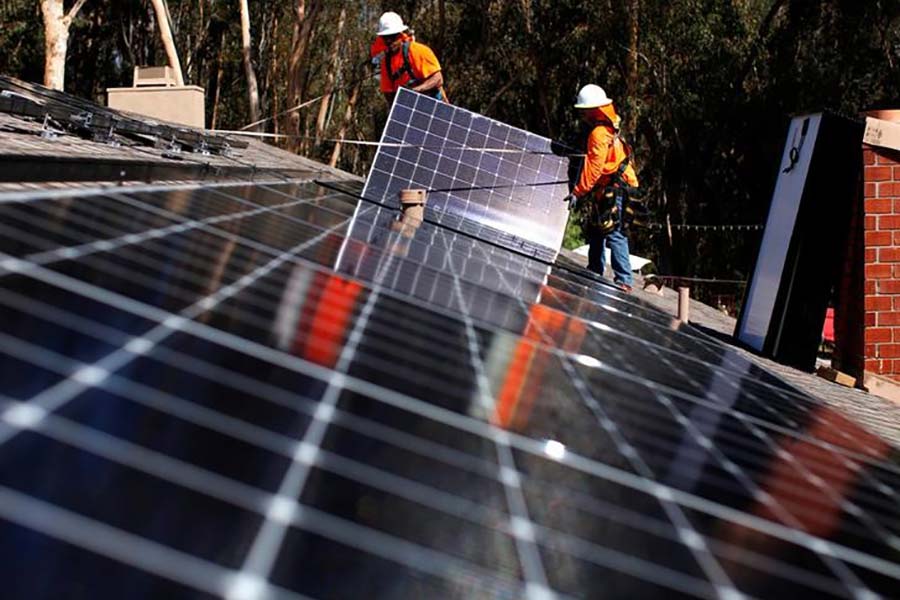
Solar power is becoming so cheap so fast that in Abu Dhabi it’s now less costly to produce a unit of energy from the sun than from oil, leading energy experts said this week.

But that doesn’t mean a global switch to renewable energy will be inevitable or speedy, they told a London conference.

Difficult and sometimes unexpected problems still stand in the way, including pension funds heavily invested in fossil fuels, upfront costs for clean power, political flip-flops in key nations, and the lobbying prowess of old energy companies.

“Fossil fuels won’t just go away by themselves,” warned Patrick Graichen, executive director of Agora Energiewende, a German energy policy group.

In Germany, renewable sources account for about a third of electricity production but backing for coal persists, he told the discussion organised by think tank Chatham House.

“It’s not just about phasing in the new technologies,” he said. “You need a phase-out plan for the cheap incumbent fuels.”

That could include tax breaks and credit to stop fossil fuel companies defaulting on debt if they fail or plants close early.

In Europe, the 16 largest power companies had net negative income for the first time last year, as old fossil fuel plants lost ground to renewables, said Tomas Kåberger, executive chair of Japan’s Renewable Energy Institute and a professor of industrial energy policy in Sweden.

CORPORATE RESISTANCE

Such losses might be expected to drive a faster switch to renewable energy and quicken the demise of old plants, the experts said. But instead, traditional energy companies have lobbied hard for governments to remove support for renewables or even to tax them, and have blocked proposed fossil fuel levies.

“In Europe, the incumbent power companies are fighting for survival using the political influence they have,” Kåberger said. “What we have seen in the last 18 months or so in most developed countries is a priority shift from supporting renewable (energy) to protecting incumbent power companies.”

That’s not the case in countries like China, which is rushing into solar and other renewables, driven by a desire to produce more power without worsening smog, and to make money by becoming a leader in a growing industry.

But Japan will struggle to make the same rapid shift, in part because both its banks and pension funds have major investments in traditional power companies, Kåberger said.

“For Japan it isn’t a technical problem but a financial problem,” he said. “The country doesn’t want big power companies with big debts (owed) to pension funds to go down.”

UPFRONT COSTS

Another problem hampering renewable energy expansion is the high initial cost of solar and other renewable energy sources. With fossil fuel plants, costs are more evenly spread between construction of facilities at the outset and buying fuel over time. With solar energy, 90 percent of the cost comes upfront, which can be hard for countries, companies and people to manage.

That makes the cost of borrowing crucial to whether clean power takes off in a country, Graichen said. Germany can produce solar power more cheaply than sunny Spain “because we have lower interest rates, not because we have more sun”.

Countries that struggle to access finance are more likely to invest in fossil fuel capacity. Pakistan, for instance, desperately needs to generate more electricity to meet growing demand but is planning to get much of that from coal plants – still its cheapest option.

“Poor countries are going to electrify and they don’t want to slow down. If they can do it cleanly, that’s great, but if not they’re still going ahead,” said Laszlo Varro, chief economist for the International Energy Agency.

Telling them not to build coal plants “is not going to be a very fruitful conversation” unless alternatives are available, he said.

Still, there is plenty of good news on clean energy, the experts said. The sums invested in renewables have stagnated in recent years – but that is largely because solar power costs have fallen 90 percent since 2009, requiring much less money to buy the same amount of equipment.

Energy efficiency efforts also are ramping up around the world, Varro said. A move to more efficient appliances, for instance, means more people can buy fridges or air conditioning without driving a steep rise in planet-warming emissions.

Increased efficiency is one reason demand for new energy in many places is now small, even as GDP grows more quickly, Varro said, which is helping the transition to clean power.

One area where that shift is not working so well is in transportation, where cheap oil is encouraging people to buy bigger cars and drive more, he added.

Electric cars are growing in popularity but their success so far is “fragile”, he emphasised.

By Laurie Goering; editing by Megan Rowling. c the Thomson Reuters Foundation, the charitable arm of Thomson Reuters.


Actress Shailene Woodley: I Didn’t Plan on Being Arrested

Actress Shailene Woodley was honored last month at the 26th Environmental Media Awards (EMAs), where she used the opportunity to call on people to attend the protests at Standing Rock.

The protests are against a planned pipeline to transfer crude oil to the refineries on the U.S. Gulf Coast. Protesters say the building of the pipeline desecrates sacred Native American land and could contaminate water if the pipe were to rupture. Also honored was Will and Jada Pinkett Smith’s son Jaden.

The 18 year-old was celebrated for creating an alternative to plastic water bottles which is 80 percent recyclable. The awards, which were hosted by Nicole Richie, were created to bring together media and celebrities to create awareness of environmental issues.

The awards came as more than 80 protesters were arrested on after clashing with police near a pipeline construction site in North Dakota, according to the local sheriff’s department, which said pepper spray was used on some demonstrators. The 83 protesters were arrested near the site of the Dakota Access pipeline on numerous charges ranging from assault on a peace officer to rioting and criminal trespass, the Morton County Sheriff’s department said in a statement.

0