16-year-old Girl Inspires Climate Strikes Across The World

Thousands of students in 105 countries are skipping class today. They’re concerned about something more pressing than good grades and perfect attendance – the future of our planet.

Scandinavian teenager, turned environmental activist, Greta Thunberg, decided to take a stand last year, noting that by the time she is an adult, the state of our planet may be irreparable. Staked out on the front steps of the Swedish Parliament with a handmade sign reading “School Strike for Climate,” her small act of defiance has triggered a global movement to discredit those with political agendas that are harmful to the environment and to shake off the procrastination we’ve seen for decades around global environmental policy. Thunberg wants to inspire politicians to take aggressive action.

She hasn’t gone unnoticed by the powers that be, either. Yesterday she was nominated for the Nobel Peace Prize. If she wins, she’ll join another youth activist, Malala Yousafzai, who won the Nobel Peace Prize in 2014 at age 17 for her struggle in recognizing the right of all children to be educated.  

The United Nations Intergovernmental Panel on Climate Change (IPCC) recently published a report that suggested that no industrial nations will achieve goals of the Paris Accord agreement, that aims to limit the earth’s temperature by 2 degrees celsius. We’re currently on track to reach 3.2 degrees, which scientists say will be warm enough to melt the polar ice sheets, creating an unimaginable shift in our weather. It has the potential to displace over 400 million people by 2050. Acting to avert climate change and the looming threat of greenhouse emissions, thousands of young activists around the world, inspired by Thunberg, are determined to convince world leaders of the dire situation, especially those unwilling to take bold steps before it’s too late.

Her online campaign, #FridaysForFuture, has caused pupils to skip school each week across the world and has gained widespread attention. Her blunt approach to remedying the environmental damage she sees around her has started a movement that seems unstoppable. 

Some politicians claim these youths are squandering their education and say they should instead be in school, pursuing future careers as scientists or engineers – that might one day solve the very problems they are striking against. But the real problem is that we’ve been handing the climate crisis to future generations since greenhouse emissions began. To people like Thunberg, the education we’ve been given thus far has only resulted in procrastination, and a delay in real action that we desperately need.

Inspired by Thunberg spirit, young climate activists across the world are taking a break from school to stand with their young leader. There’s a realization amongst them that there isn’t enough time to wait for graduation, and a qualification that allows them to save the world. Through their protest these young students are calling politicians out on their hypocrisy; if world leaders claim to be so worried about the future of youth, then why aren’t they prioritizing an environmental agenda that will guarantee their future?  


Costa Rica Launches ‘Unprecedented’ Push For Zero Emissions by 2050

To curb climate change, “we can be that example… we have to inspire people,” says President Carlos Alvarado.

Costa Rica’s president has launched an economy-wide plan to decarbonize the country by 2050, saying the Central American nation aims to show other nations what is possible to address climate change.

Costa Rica’s environment minister, Carlos Manuel Rodríguez, said that if the plan is achieved, his grandchildren in 2035 will have the same carbon footprint as his grandparents did in the 1940s – and by 2050 his grandchildren will have none at all.

“Not only are we going to reduce that footprint but we are going to bring many benefits with it”, Rodríguez said.

But Jairo Quirós, an electrical energy researcher at the University of Costa Rica, warned the plan would be challenging, and “should be viewed with some caution”.

Under the roadmap launched Sunday, Costa Rica by 2050 would achieve “zero net emissions”, meaning it would produce no more emissions than it can offset through things such as maintaining and expanding its extensive forests.

Such emission cuts – which many countries are expected to try to achieve in the second half of the century – are key to holding increases in global temperature to well under 2 degrees Celsius (3.6 degrees Fahrenheit), the goal of the 2015 Paris Agreement on climate change.

The Costa Rica plan aims to allow the country to continue growing economically while cutting greenhouse gases. The country’s economy grew at 3 percent last year, according to World Bank data.

Christiana Figueres, the Costa Rican former U.N. climate chief, called the goal “unprecedented” in international politics.

Only the government of the tiny Marshall Islands also has laid out a detailed plan to achieve that goal, but “they still do not have the whole plan articulated sector by sector”, Figueres said in an interview with the Thomson Reuters Foundation.

President Carlos Alvarado noted that while Costa Rica represents only a tiny share of the world’s climate-changing emissions, the experiments tried in the plan could be a model for other nations.

“We can be that example… we have to inspire people,” he said at the plan’s launch, noting the country was “doing what’s right”.

But Quirós, of the University of Costa Rica, warned the plan will take hard work to achieve.

Some goals, he said, such as ensuring all buses and taxis run on electricity by 2050, may be difficult, not least because the changes will be expensive.

“Although one tends to see that (electric bus) prices are falling over time, there is a lot of uncertainty regarding that,” he said.

GREEN TRANSPORT

Transport today creates about 40 percent of Costa Rica’s climate-changing emissions, making it the main source of them, according to the National Meteorological Institute.

To cut transport emissions, the plan aims to modernize public transport, including through the creation of an electric train line.

The new line would connect 15 of the 31 neighborhoods in the San Jose metropolitan area and carry about 250,000 of the area’s 1 million people each day, according to the Costa Rican Institute of Railways.

Construction on the lines is expected to start in 2022, according to the institute.

“A modern and efficient public transport system has a much greater impact on achieving decarbonisation than just electrifying our vehicle fleet,” said Claudia Dobles, the president’s wife and coordinator of the transport chapter of the plan.

Dobles, an architect and urban planner, has been coordinating many of the country’s public transport efficiency initiatives, including the electric train project and a reorganization of bus routes.

Under Costa Rica’s decarbonization plan, the number of cars circulating in urban areas would be cut by half by 2040, the environment minister said.

By 2035, 70 percent of the country’s buses would be electric and 25 percent of its cars, Rodríguez added.

Juan Ignacio Del Valle, director of operations for hydrogen-powered transport company Ad Astra Rocket Company, said the plan still needs work on some issues, such as cargo transport.

Technological innovation will be needed to achieve some of the goals, he said.

Ad Astra has been testing hydrogen fuel cell buses in Costa Rica for about eight years – a fuel switch that is “vaguely” contemplated in the new plan, Del Valle said.

Hydrogen transport will need more research, but it could prove the most efficient option in areas where electric vehicles fall short, including carrying cargo and for other heavy transport, he said.

OIL REVENUE

For Costa Rica, the potential political battles around decarbonizing its economy are less than in many other countries because it does not have a fossil fuel extraction industry, Rodriguez said.

But dependence on oil revenue could still cause roadblocks for the switch. Fuel taxes, vehicle import taxes and driving taxes, for instance, account for about 12 percent of government revenue, the minister said.

To phase out fossil fuels without slashing government income, the government will need to push for “green tax reform” to find new revenue sources, he said – something that could take time, as it would need legislative approval.

Under the decarbonization plan, the country’s state-owned petroleum distributor would change course and begin research on alternative fuels, such as hydrogen and biofuels, and look at helping fossil fuel workers move to clean energy jobs.

The plan also calls for further expanding forests – though at the moment most of the money to pay for that comes from taxes on fossil fuels, Rodríguez admitted.

The country already has one of the region’s strongest reputations for forest protection.

“In the 1960s and 70s, Costa Rica had the highest per capita deforestation rate in the world. We have managed not only to stop deforestation but to double forest coverage” as the economy grew, Rodríguez said.

Forests that covered 25 percent of the country in the 1980s covered more than 50 percent of it by 2013, according to data from the State of the Nation report, assembled by the country’s public universities.

Over that period, the country’s GDP grew from $4 billion in 1983 to $57 billion in 2013.

Costa Rica has already carried out some of the needed decarbonization work, officials said.

Last year, 98 percent of the country’s electricity came from renewable sources, according to the Costa Rican Electricity Institute, the state-owned company in charge of electricity generation and distribution.

Quirós, the University of Costa Rica researcher, said the country’s plan, while “a little utopic” was clearly “a step in the right direction”.

“It’s good to be ambitious,” he said.

Figueres said she believed the the country faced a “hard task” achieving its ambitious aims, but predicted it would “lead to a transformation like no other we’ve seen in decades”.

By Sebastian Rodriguez, editing by Laurie Goering.

Costa Rica Launches ‘Unprecedented’ Push For Zero Emissions by 2050

To curb climate change, “we can be that example… we have to inspire people,” says President Carlos Alvarado.

Costa Rica’s president has launched an economy-wide plan to decarbonize the country by 2050, saying the Central American nation aims to show other nations what is possible to address climate change.

Costa Rica’s environment minister, Carlos Manuel Rodríguez, said that if the plan is achieved, his grandchildren in 2035 will have the same carbon footprint as his grandparents did in the 1940s – and by 2050 his grandchildren will have none at all.

“Not only are we going to reduce that footprint but we are going to bring many benefits with it”, Rodríguez said.

But Jairo Quirós, an electrical energy researcher at the University of Costa Rica, warned the plan would be challenging, and “should be viewed with some caution”.

Under the roadmap launched Sunday, Costa Rica by 2050 would achieve “zero net emissions”, meaning it would produce no more emissions than it can offset through things such as maintaining and expanding its extensive forests.

Such emission cuts – which many countries are expected to try to achieve in the second half of the century – are key to holding increases in global temperature to well under 2 degrees Celsius (3.6 degrees Fahrenheit), the goal of the 2015 Paris Agreement on climate change.

The Costa Rica plan aims to allow the country to continue growing economically while cutting greenhouse gases. The country’s economy grew at 3 percent last year, according to World Bank data.

Christiana Figueres, the Costa Rican former U.N. climate chief, called the goal “unprecedented” in international politics.

Only the government of the tiny Marshall Islands also has laid out a detailed plan to achieve that goal, but “they still do not have the whole plan articulated sector by sector”, Figueres said in an interview with the Thomson Reuters Foundation.

President Carlos Alvarado noted that while Costa Rica represents only a tiny share of the world’s climate-changing emissions, the experiments tried in the plan could be a model for other nations.

“We can be that example… we have to inspire people,” he said at the plan’s launch, noting the country was “doing what’s right”.

But Quirós, of the University of Costa Rica, warned the plan will take hard work to achieve.

Some goals, he said, such as ensuring all buses and taxis run on electricity by 2050, may be difficult, not least because the changes will be expensive.

“Although one tends to see that (electric bus) prices are falling over time, there is a lot of uncertainty regarding that,” he said.

GREEN TRANSPORT

Transport today creates about 40 percent of Costa Rica’s climate-changing emissions, making it the main source of them, according to the National Meteorological Institute.

To cut transport emissions, the plan aims to modernize public transport, including through the creation of an electric train line.

The new line would connect 15 of the 31 neighborhoods in the San Jose metropolitan area and carry about 250,000 of the area’s 1 million people each day, according to the Costa Rican Institute of Railways.

Construction on the lines is expected to start in 2022, according to the institute.

“A modern and efficient public transport system has a much greater impact on achieving decarbonisation than just electrifying our vehicle fleet,” said Claudia Dobles, the president’s wife and coordinator of the transport chapter of the plan.

Dobles, an architect and urban planner, has been coordinating many of the country’s public transport efficiency initiatives, including the electric train project and a reorganization of bus routes.

Under Costa Rica’s decarbonization plan, the number of cars circulating in urban areas would be cut by half by 2040, the environment minister said.

By 2035, 70 percent of the country’s buses would be electric and 25 percent of its cars, Rodríguez added.

Juan Ignacio Del Valle, director of operations for hydrogen-powered transport company Ad Astra Rocket Company, said the plan still needs work on some issues, such as cargo transport.

Technological innovation will be needed to achieve some of the goals, he said.

Ad Astra has been testing hydrogen fuel cell buses in Costa Rica for about eight years – a fuel switch that is “vaguely” contemplated in the new plan, Del Valle said.

Hydrogen transport will need more research, but it could prove the most efficient option in areas where electric vehicles fall short, including carrying cargo and for other heavy transport, he said.

OIL REVENUE

For Costa Rica, the potential political battles around decarbonizing its economy are less than in many other countries because it does not have a fossil fuel extraction industry, Rodriguez said.

But dependence on oil revenue could still cause roadblocks for the switch. Fuel taxes, vehicle import taxes and driving taxes, for instance, account for about 12 percent of government revenue, the minister said.

To phase out fossil fuels without slashing government income, the government will need to push for “green tax reform” to find new revenue sources, he said – something that could take time, as it would need legislative approval.

Under the decarbonization plan, the country’s state-owned petroleum distributor would change course and begin research on alternative fuels, such as hydrogen and biofuels, and look at helping fossil fuel workers move to clean energy jobs.

The plan also calls for further expanding forests – though at the moment most of the money to pay for that comes from taxes on fossil fuels, Rodríguez admitted.

The country already has one of the region’s strongest reputations for forest protection.

“In the 1960s and 70s, Costa Rica had the highest per capita deforestation rate in the world. We have managed not only to stop deforestation but to double forest coverage” as the economy grew, Rodríguez said.

Forests that covered 25 percent of the country in the 1980s covered more than 50 percent of it by 2013, according to data from the State of the Nation report, assembled by the country’s public universities.

Over that period, the country’s GDP grew from $4 billion in 1983 to $57 billion in 2013.

Costa Rica has already carried out some of the needed decarbonization work, officials said.

Last year, 98 percent of the country’s electricity came from renewable sources, according to the Costa Rican Electricity Institute, the state-owned company in charge of electricity generation and distribution.

Quirós, the University of Costa Rica researcher, said the country’s plan, while “a little utopic” was clearly “a step in the right direction”.

“It’s good to be ambitious,” he said.

Figueres said she believed the the country faced a “hard task” achieving its ambitious aims, but predicted it would “lead to a transformation like no other we’ve seen in decades”.

By Sebastian Rodriguez, editing by Laurie Goering.

Diving Belize’s Blue Hole: Logs From a Majestic Pit of Acid

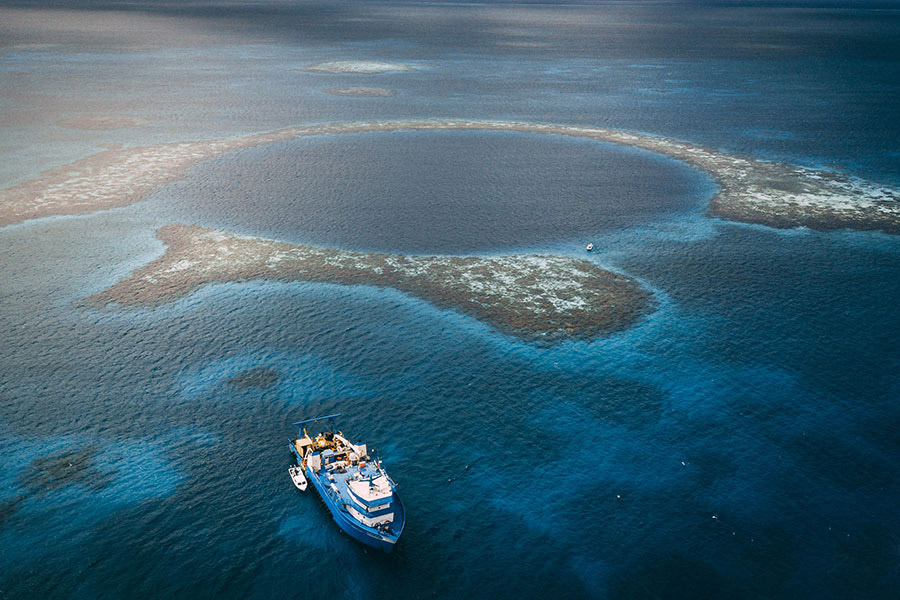
In November of 2018 Aquatica Submarines shipped a three person submarine, Stingray 500, across frosty North America on the back of a truck then over the rolling winter seas of the Gulf of Mexico to Belize aboard the R/V Brooks McCall. Our destination was a site located 7 miles into Lighthouse Reef – a perfect sinkhole in the ocean known as the Great Blue Hole.

We traveled to this UNESCO World Heritage site to explore and document a geologic phenomenon in support of conservation science and to conduct outreach. Our mission was two fold, map the Great Blue Hole using high resolution sonar and take people worldwide on this journey with us on broadcast TV. Everything we collected, from CTD data and dissolved oxygen content, to video footage and experiential data, gives us the fodder we need to tell a story about an unusual place on our planet most people have never seen, until now.

Geology from not-a-geologist

Over the past 14,000 years the polar ice caps, formed during the last glacial maximum, have thawed and raised sea level in steps. These defrosting events are captured in a stone record of an oceanic sinkhole in Belize. The aptly named Great Blue Hole is a collapsed cave, filled with stalactite caverns, and built up from layers of fine limestone and rougher calcium carbonate walls. The stepped rise of sea level can be seen in the form of terraces carved deeply by erosion into the otherwise vertical rock walls. Straight vertical stretches of wall are free of erosion because sea level rose rapidly during a few brief decades between each step. As each melting event took place sea level rose dramatically, as much as 100 feet in 100 years, followed by centuries of stability. Preserved from the disturbance of time, and isolated in the darkness, the hole holds clues to a very natural part of our planet’s life cycle. It’s these terraces and stalactites we set out to map. 

Sight through Sound

Along with us on the Expedition was Mark Atherton, a well respected sonar expert with Kongsberg Mesotech, author of Echoes and Images, and all around great company onboard a ship for 3 weeks. Kongsberg generously loaned us an array of sonar units and accompanying sonar expertise to create the 3D map we set out to complete. We deployed a Dual Axis Sonar (DAS) from our surface support vessel Topside (affectionately referred to as DAS Boat). This unit was used to scan the entire hole in high resolution from the surface. We also mounted a multibeam sonar directly to the front of the submarine and used it for navigation.

With a variety of sonar heads, used sequentially over the course of the Expedition, we’ve been able to create a high resolution, 3 dimensional sonar image of the interior of the Great Blue Hole. Some of the targets we were particularly interested in studying in detail were the stalactite caverns from 130 feet to 160 feet deep, formed back when sea level was 500 feet lower and this was a dry cave. These enormous stalactites have now been entirely encrusted in marine growth.

We also observed a calcium carbonate layer at 290 feet where a great coral reef grew in what was then shallow Caribbean waters. We searched for evidence of stalactites near the bottom around 407 feet and found indications of small stalactite or stalagmite formations. These and faint flowstones have been mostly covered up by centuries of sand pouring into the hole, and will presumably be entirely covered in sand as the hole slowly fills in.

In addition to the sonar map, we deployed a CTD to measure Conductivity, Temperature, and Depth as well as dissolved oxygen. Collected data show that below the hydrogen sulfide layer at 300 feet the bottom is completely anoxic – there’s not a drop of oxygen down there. This is also evidenced by the “conch graveyard,” a stretch of the blue hole where we observed hundreds of dead conch that had presumably fallen in to the hole and been unable to escape the steep walls or survive long without oxygen. It was otherworldly down there and our data is one more way to share this revelation.

Conch Graveyard

As pilots we navigate by sight and sonar because visibility is often limited to the max reach of our lights combined with the turbidity of the water, anywhere between 0-80 feet. We create mental maps of the places we’ve been and use dead reckoning to navigate around our dive site. We sometimes give little areas of our dive sites unique names, so that we can meet up easily or describe how to get somewhere to the next pilot. Kind of like telling your buddy how to find your house in heavy fog, “turn left after the lightning strike tree, then it’s the red mailbox on the right.”

For example, 350 feet below the north entrance of the hole is a place we’ve internally named the Conch Graveyard – it’s a point of reference. Presumably, unsuspecting conchs (or other conch shell inhabitants) have been going just a little too close to the edge and falling into the hole at this entrance by the thousands. We can see each conch with little tracks back up the hill trying to escape, then a slide mark where it slid back down after presumably being asphyxiated in the anoxic environment. So much sand billows down the steep rim of the hole at this location that fallen conch must be getting covered up quickly, so the shear number of visible shells is a pretty good indicator that the conch population is healthy – it’s slightly morbid but describes something positive.

Diving in Acid

Hydrogen sulfide (H2S) is a foul smelling, colorless gas. It is toxic, flammable, and highly corrosive. There’s a thick layer of it around 300 feet deep in the Great Blue Hole we dove straight into. There is no circulation in or out of the hole, and our onboard CTD and dissolved oxygen sensor revealed what we had predicted, the bottom is completely anoxic. There’s not a drop of oxygen below the H2S layer. 

Sulfur reducing and sulfate reducing bacteria living in hypoxic or anoxic environments, like this oceanic sinkhole, use sulfates to oxidize organic matter. Hydrogen sulfide is a waste product of this natural biochemical process. Another possible contributor to the H2S layer’s thickness and density could be the prevalence of sargassum seaweed. This brown algae contains a high concentration of sulfuric compounds and has been prolific across the caribbean in 2016 and 2018. I had the great privilege of diving with the founder of MarAlliance, Rachel Graham. She told me about a shark tracking project in which they found hammerhead sharks regularly visit the hole, along with reef sharks, and they’ll never swim into the H2S layer, they always stay just above it. 

From a mechanical perspective, for the protection of our equipment, we learned that up to 0.5% H2S in solution is acceptable when it comes into contact with carbon steel surfaces, but 1.5% and greater is deleteriously corrosive. Our Stingray 500 is mostly aluminum, which is hardly affected by acidic H2S, however we have some painted steel components, and our partner diving vessel is painted carbon steel. Both subs were monitored rigorously for signs of corrosion and now that the Expedition is over we will maintenance them meticulously.

An Elegant Pair: Science and Experience

The predominant winds across the Great Blue Hole are from the East. Something we had come to know deeply as we waited out 5 high wind and weather days before being able to dive. Our initial descent into the hole was vertically down near the north entrance. We were looking for terraces and calcium carbonate layers, evidence of sea level rise over the past 14,000 years. Slowly we made our way down, expecting to find bottom around 420 feet or so. Unable to see through the hydrogen sulfide (H2S) layer, our altimeter indicated bottom much closer than we were expecting. Our slow descent through the opaque H2S layer brought us down on a berm of sand with a pointed ridgeline running along the edge of the hole. This ridgeline was only 320 feet deep meaning that this 100 foot tall berm forms where sand pours into the hole from the edges. 

Between the rock wall and the berm, a trench runs most of the length of hole. However, on the northeastern edge there is no trench, the entire area is full of sand up to the top of the berm. It seemed odd at the time, piloting around the hole inside the trench and getting squeezed out the top while traversing towards the east then being able to descend back down into it as we passed to the southeast. It wasn’t until the post dive debrief that we arrived at the answer. We’d been watching the ship swing for days, planning for a complex launch procedure to safely deploy the submarines with a heavy easterly blowing. This eastern edge is the most filled in because this is the direction of the most prevalent wind. Wind driven waves push sand, and any unsuspecting conchs (see ‘Conch Graveyard’), into the hole and fill in the trench. Making this connection was like a mental light bulb turning on. It seems like a small detail but it’s a thousand tiny connections between the physics of a place and our experiences in that place that make exploration as valuable today as it’s ever been. 

Mythbuster: DJ’s Are Only About Hype

Alan Walker is a 21-year-old Norwegian DJ who made his big breakthrough with the song “Faded” in 2015, the video of which has already garnered more than 2.1 billion views on YouTube.

In December 2018, he decided to turn his trademark image of hoodie and face mask to good use by launching a particle filter mask with Swedish brand Airinum to highlight the lack of clean air in many major cities.

“I’ve always wanted to use my position to make a difference, and when I met the team at Airinum I started to realize how big of an issue polluted air really is. I felt it was right to stand up for something important – the topic of climate change and the alarming consequences it brings,” says Walker, who has built his whole image around wearing a mask. We take around 20,000 breaths every day. When we breathe poor quality air, it can severely damage our health and contribute to asthma, respiratory diseases, cancer, strokes and even death.

“I once heard a saying: “sometimes what’s simple is what’s best. That’s the definition of ‘Faded.’” – Alan Walker

The simple act of breathing is killing seven million people a year and harming billions more. This alarming fact inspired Fredrik Kempe to co-found Airinum, to produce the Urban Air Mask, a fun and iconic fashion accessory that now has serious, lifesaving work to do.

Landmark Project Helps Peru Coffee Farmers Combat Climate Change

Four coffee co-operatives in Peru will be trained in sustainable farming, learning about the best use of organic fertilizer and robust seeds.

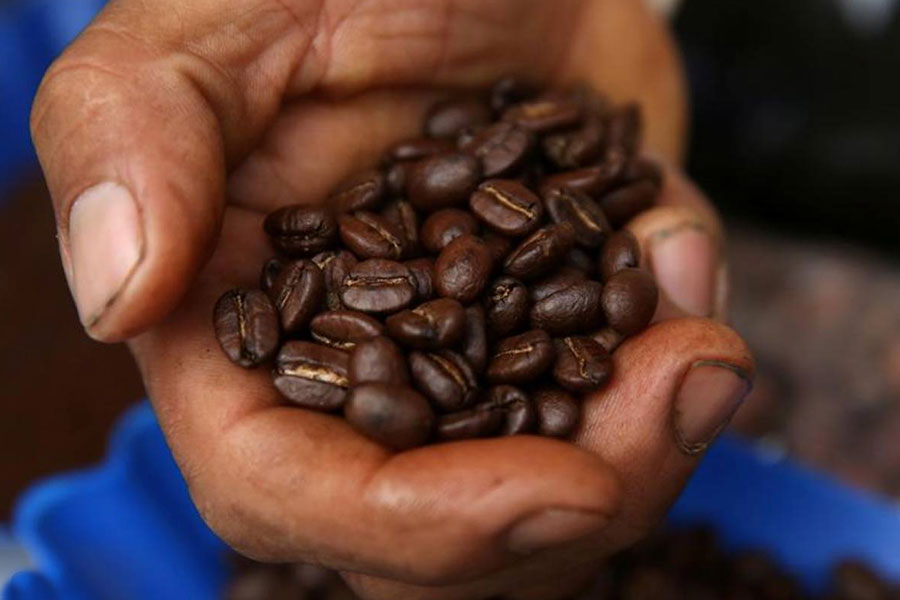
Thousands of coffee farmers in Peru hope to produce higher and more profitable crop yields to better cope with the impact of climate change under a landmark United Nations-backed project.

More than 1.3 billion people live on farmland that is deteriorating and producing less, putting them at risk of worsening hunger, water shortages and poverty, the U.N. says.

Land degradation could displace 135 million people by 2030 unless action is taken to restore their land, says the U.N.

The $12 million Peru project involves 2,400 small coffee farmers and is the first by a public-private investment set up with the U.N., called the Land Degradation Neutrality Fund.

“What we’re trying to do with this fund is to finance the transition to a more sustainable use of land,” said Gautier Queru, head of the Paris-based fund, which is run by investment manager Mirova.

“This translates in producing more and better with less,” he told the Thomson Reuters Foundation.

The project, set to start within weeks, runs for 15 years.

Four coffee co-operatives in northern Peru will be trained in sustainable farming, learning about the best use of organic fertiliser and robust seeds.

“It’s a matter of selecting the seeds that are well adapted to the local conditions, and future conditions, taking into account climate change to make the coffee plantations more resilient and also to ensure good quality coffee is produced to drive prices up for farmers,” Queru said.

The project also focuses on reforestation.

Covering nearly 9,000 hectares of degraded land, trees will be planted in and around plantations, providing shade. It is hoped this may cut carbon dioxide emissions by 1.3 metric tons.

Land degradation drives climate change, with deforestation – which contributes 10 percent of human-caused greenhouse gas emissions – worsening the problem, the U.N. says.

The fund aims to invest $300 million in land management and restoration projects worldwide to meet global goals – known as the Sustainable Development Goals – on land degradation by 2030.

“If you want to meet the sustainable development goals, we can’t only rely on small pilot projects,” Queru said.

“We need this program to scale up.”

Queru said the aim is to expand the pilot project to other coffee cooperatives in Peru and other coffee-producing nations in Latin America, as well as to cocoa and tree nut farmers.

By Anastasia Moloney @anastasiabogota, Editing by Lyndsay Griffiths.


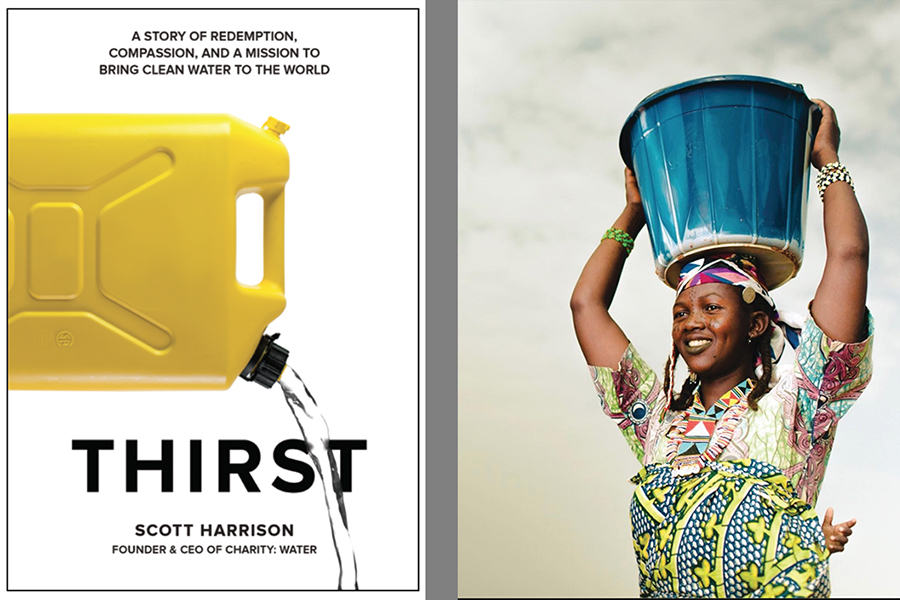
Thirst: A Story of Redemption, Compassion, and a Mission to Bring Clean Water to the World

At 28 years old, Scott Harrison was living large. A top nightclub promoter in New York City, his life was an endless cycle of nightlife, booze, models – repeat.

But 10 years in, desperately unhappy and morally bankrupt, he asked himself, “What would the exact opposite of my life look like?” Walking away from everything, Harrison spent the next 16 months on a hospital ship in West Africa and discovered his true calling. In 2006, with no money and less than no experience, Harrison founded charity: water. In Thirst, Harrison recounts the twists and turns that built charity: water into one of the most trusted and admired nonprofits in the world.

Why is water an issue you care so deeply about?

Dirty water steals time and it kills. In Africa alone, 40 billion hours are wasted each year collecting water. Not only does walking for water keep children out of school and prevent their parents from working to earn money, bad water and a lack of sanitation and hygiene contributes to up to half the disease throughout the developing world. Few people realize that dirty water is responsible for more deaths than all forms of violence, including war. That’s a shocking statistic. It’s particularly frightening for the 663 million people around the world – twice the population of the United States or 1 out of every 10 people alive – that live without access to clean water. I believe more strongly now in the transformative power of clean water than when I first set out to start charity: water. Water is life. It’s that simple. And we’ll continue fighting to see a day where everyone on Earth has access to it.

How do you connect donors in the developed world with a problem they are so far away from? 

People don’t respond well to mind-numbing statistics. When I tell an audience that 663 million people globally lack access to their most basic need for health and life, eyes can glaze over. But when I tell a story of a woman named Aissa who lost 8 children, and show the dirty water she drinks with her family, people can connect. From there, it’s about inspiring people by showing them the ways access to clean water can transform lives. 

What are you most excited about now?

I hope Thirst encourages readers to summon the courage that lies within each of us, to take bold leaps of faith, and find greater passion and purpose in their lives.

www.CharityWater.org

Scott Harrison is the founder and CEO of charity: water, a non-profit that has mobilized over one million donors around the world to fund nearly 30,000 water projects in 26 countries that will serve more than 8.5 million people. He has been recognized on Fortune’s 40 under 40 list, Forbes’ Impact 30 list, and was ranked #10 in Fast Company’s 100 Most Creative People in Business. Currently a World Economic Forum Young Global Leader, he lives in New York City with his wife and two children.  

Pakistan Bets on ‘Tree Tsunami’ to Revive Climate Action

Pakistan is showing fresh interest in tackling climate change under new leader Imran Khan, after a period of favoring coal.

At this month’s U.N. climate talks in Poland, Pakistan promised to move away from coal investment and ensure climate-resilient growth. This was a departure from the previous government’s preference for fossil fuel energy, and in line with the “green political will” of new Prime Minister Imran Khan, according to his climate change advisor Malik Amin Aslam.

At the COP24 negotiations, Pakistan also became one of the first developing countries to commit to reviewing its Nationally Determined Contribution (NDC) to global climate action before the Paris Agreement starts in 2020. Announcing this at the talks, Aslam, head of Pakistan’s delegation, said the revised NDC would include measures the new government had initiated, which will strengthen Pakistan’s efforts to reduce planet-warming emissions.

Its programmes include the “Billion Tree Tsunami Afforestation Project” that was designed by Aslam and first implemented in Khyber Pakhtunkhwa province. Now the federal government under Khan, who took office in August, has launched a nationwide 10 Billion Tree Tsunami project.

Aslam said Pakistan’s willingness to “develop along a different pathway and become an enabler of the new transition economy” was demonstrated by the $120 million it has spent on planting and protecting trees so farIt plans to use a further $1 billion of its domestic resources to expand forests over the next five years.

Aslam said the current government is also committed to capitalising on Pakistan’s large potential for wind, solar and hydropower, as well as utilising nuclear energy. “More than 365 small run-of-the-river hydro projects have been set up in the north,” he said in his speech at COP24. “In the transport sector, with catalytic Green Climate Fund financing, Pakistan has finalised a multi-million-dollar zero emission bus metro system for the city of Karachi operating on cattle waste-generated biogas,” he added.

COAL NO LONGER KING?

Environmentalists had criticised the weak NDC document Pakistan initially submitted under the Paris Agreement. It projected a four-fold increase in emissions by 2030, noting the rise could be reduced but only with international assistance. Hammad Naqi Khan, director general of WWF-Pakistan, said the NDC reflected the desire of the previous government to explore the potential of coal as an energy resource.

Under Khan’s predecessor Nawaz Sharif, the government announced half a dozen coal power plants that are under currently construction. Two – at Sahiwal and Port Qasim with generation capacity of about 1.3 gigawatts each – are now operational, using imported coal.

While the new government cannot undo the coal power plants being built or already up and running, Aslam said the government would continue “strict monitoring” of their environmental impacts. It is also working to revoke a “criminal cap” on the amount of renewable power provinces can feed into the grid (50 megawatts each), which he said was aimed at boosting the use of coal and gas.

“We are in the process of removing this unholy subsidisation of coal and will be definitely focusing on renewables – wind, solar and hydro,” Aslam told the Thomson Reuters Foundation at the climate talks.

WWF’s Naqi Khan welcomed the news from COP24, noting that Pakistan’s previous NDC had lacked an ambitious plan to bring more renewables into the energy mix, as well as a solid commitment to avoid fossil fuel power plants.

A new report released by the Institute for Energy Economics and Financial Analysis this December noted that renewable energy, including wind and solar, is now the cheapest form of new electricity generation in Pakistan.

BACK IN THE GAME

Pakistan may have sent a small delegation to COP24, but the negotiators were able to highlight the country’s vulnerability to climate change and engage more effectively with the global process, observers said. Pakistan was elected Vice President and Rapporteur of the Conference of Parties (COP) to the UNFCCC, giving it a key role in the organisation of the talks in 2019. It also secured seats on five other technical bodies to regulate climate action and financial flows.

Pakistan’s re-engagement with the climate change negotiations comes after several years of being sidelined, said Shafqat Kakakhel, board chair of the Sustainable Development Policy Institute in Islamabad. “It was a Pakistani negotiator, Ambassador Jamsheed Marker, who was responsible for putting the F for Framework into the United Nations Framework Convention on Climate Change, and Pakistan was always known for its principled stance. But since 2012, Pakistan has not been a significant player at these negotiations due to the absence of skilled negotiators,” he told the Thomson Reuters Foundation.

That situation seems to have been reversed with a revitalised delegation led by Aslam, who is also global vice president of the International Union for the Conservation of Nature. According to Aisha Khan, head of Pakistan’s Civil Society Coalition for Climate Change, “Aslam’s understanding of the subject gives him an edge and the ability to represent Pakistan’s case convincingly.”

With Pakistan now forced to cope with worsening floods, droughts, heatwaves and melting glaciers, Aslam said the new government is working on a shift towards climate-resilient agriculture, plus an initiative to utilise the Indus River floodwaters for ecosystem restoration. “I must emphasis that these actions and initiatives go much beyond our NDC and are happening in spite of the expected external financial flows not materialising,” he said in his speech at the climate talks.

In its original NDC, Pakistan said it could lower its projected greenhouse gas emissions by up to 20 percent in 2030 if it received international climate finance of around $40 billion. Now it says it will revise the figures in its NDC once it has calculated all the emissions to be saved from its new green projects. “Pakistan must take action on the ground for the sake of its own people,” Aslam said.

By Rina Saeed Khan

Pakistan Bets on ‘Tree Tsunami’ to Revive Climate Action

Pakistan is showing fresh interest in tackling climate change under new leader Imran Khan, after a period of favoring coal.

At this month’s U.N. climate talks in Poland, Pakistan promised to move away from coal investment and ensure climate-resilient growth. This was a departure from the previous government’s preference for fossil fuel energy, and in line with the “green political will” of new Prime Minister Imran Khan, according to his climate change advisor Malik Amin Aslam.

At the COP24 negotiations, Pakistan also became one of the first developing countries to commit to reviewing its Nationally Determined Contribution (NDC) to global climate action before the Paris Agreement starts in 2020. Announcing this at the talks, Aslam, head of Pakistan’s delegation, said the revised NDC would include measures the new government had initiated, which will strengthen Pakistan’s efforts to reduce planet-warming emissions.

Its programmes include the “Billion Tree Tsunami Afforestation Project” that was designed by Aslam and first implemented in Khyber Pakhtunkhwa province. Now the federal government under Khan, who took office in August, has launched a nationwide 10 Billion Tree Tsunami project.

Aslam said Pakistan’s willingness to “develop along a different pathway and become an enabler of the new transition economy” was demonstrated by the $120 million it has spent on planting and protecting trees so farIt plans to use a further $1 billion of its domestic resources to expand forests over the next five years.

Aslam said the current government is also committed to capitalising on Pakistan’s large potential for wind, solar and hydropower, as well as utilising nuclear energy. “More than 365 small run-of-the-river hydro projects have been set up in the north,” he said in his speech at COP24. “In the transport sector, with catalytic Green Climate Fund financing, Pakistan has finalised a multi-million-dollar zero emission bus metro system for the city of Karachi operating on cattle waste-generated biogas,” he added.

COAL NO LONGER KING?

Environmentalists had criticised the weak NDC document Pakistan initially submitted under the Paris Agreement. It projected a four-fold increase in emissions by 2030, noting the rise could be reduced but only with international assistance. Hammad Naqi Khan, director general of WWF-Pakistan, said the NDC reflected the desire of the previous government to explore the potential of coal as an energy resource.

Under Khan’s predecessor Nawaz Sharif, the government announced half a dozen coal power plants that are under currently construction. Two – at Sahiwal and Port Qasim with generation capacity of about 1.3 gigawatts each – are now operational, using imported coal.

While the new government cannot undo the coal power plants being built or already up and running, Aslam said the government would continue “strict monitoring” of their environmental impacts. It is also working to revoke a “criminal cap” on the amount of renewable power provinces can feed into the grid (50 megawatts each), which he said was aimed at boosting the use of coal and gas.

“We are in the process of removing this unholy subsidisation of coal and will be definitely focusing on renewables – wind, solar and hydro,” Aslam told the Thomson Reuters Foundation at the climate talks.

WWF’s Naqi Khan welcomed the news from COP24, noting that Pakistan’s previous NDC had lacked an ambitious plan to bring more renewables into the energy mix, as well as a solid commitment to avoid fossil fuel power plants.

A new report released by the Institute for Energy Economics and Financial Analysis this December noted that renewable energy, including wind and solar, is now the cheapest form of new electricity generation in Pakistan.

BACK IN THE GAME

Pakistan may have sent a small delegation to COP24, but the negotiators were able to highlight the country’s vulnerability to climate change and engage more effectively with the global process, observers said. Pakistan was elected Vice President and Rapporteur of the Conference of Parties (COP) to the UNFCCC, giving it a key role in the organisation of the talks in 2019. It also secured seats on five other technical bodies to regulate climate action and financial flows.

Pakistan’s re-engagement with the climate change negotiations comes after several years of being sidelined, said Shafqat Kakakhel, board chair of the Sustainable Development Policy Institute in Islamabad. “It was a Pakistani negotiator, Ambassador Jamsheed Marker, who was responsible for putting the F for Framework into the United Nations Framework Convention on Climate Change, and Pakistan was always known for its principled stance. But since 2012, Pakistan has not been a significant player at these negotiations due to the absence of skilled negotiators,” he told the Thomson Reuters Foundation.

That situation seems to have been reversed with a revitalised delegation led by Aslam, who is also global vice president of the International Union for the Conservation of Nature. According to Aisha Khan, head of Pakistan’s Civil Society Coalition for Climate Change, “Aslam’s understanding of the subject gives him an edge and the ability to represent Pakistan’s case convincingly.”

With Pakistan now forced to cope with worsening floods, droughts, heatwaves and melting glaciers, Aslam said the new government is working on a shift towards climate-resilient agriculture, plus an initiative to utilise the Indus River floodwaters for ecosystem restoration. “I must emphasis that these actions and initiatives go much beyond our NDC and are happening in spite of the expected external financial flows not materialising,” he said in his speech at the climate talks.

In its original NDC, Pakistan said it could lower its projected greenhouse gas emissions by up to 20 percent in 2030 if it received international climate finance of around $40 billion. Now it says it will revise the figures in its NDC once it has calculated all the emissions to be saved from its new green projects. “Pakistan must take action on the ground for the sake of its own people,” Aslam said.

By Rina Saeed Khan

Rod Stewart Turns Into a Singing Turtle To Promote Clean Oceans

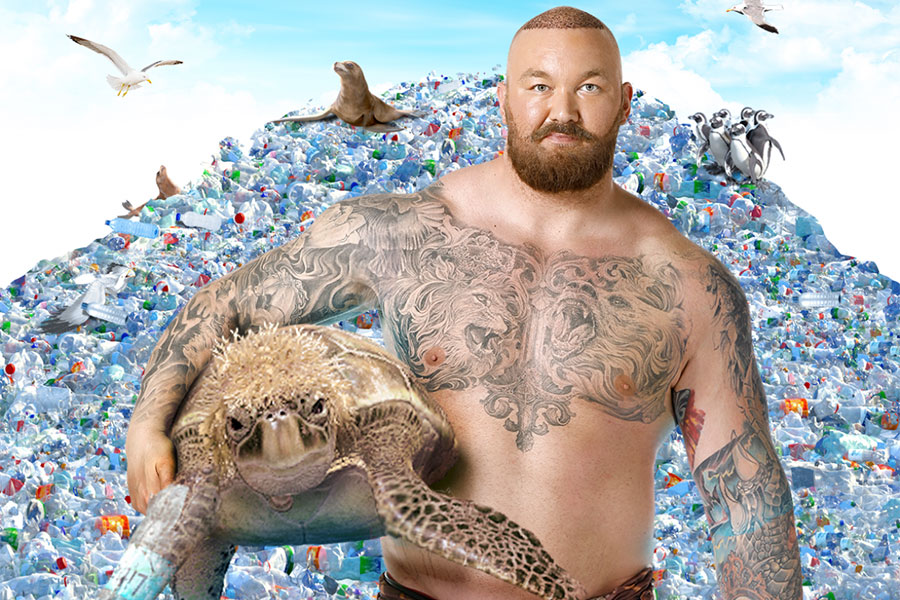
SodaStream International has unveiled a video campaign that focuses on the global damage caused by single-use plastic bottles. The video features a singing sea turtle calling on people to take responsibility and make the simple and meaningful life change of going reusable.

The video acts as a metaphor for the green hills and blue oceans that have, over the years, become littered by plastic waste. The viral campaign garnered 20 million views in its first 48 hours.

“Plastic has become a pandemic threat with its impact upon human health still unknown, but with devastating environmental consequences to our oceans and marine life,” said Daniel Birnbaum. “In this campaign, we wanted to give a voice to marine animals and, together with them, encourage people and corporations to switch from single-use plastic to reusable packaging.”

https://www.youtube.com/watch?v=Tejd7ntLGeE&feature=youtu.be

Lead by Sir Rod Stewart as the sea turtle, recurrent celebrity Thor “The Mountain” Bjornsson, rising talent Sarah Catherine Hook, a choir of people and marine animals injured by plastic parts sing extract from “Ocean of Change”, song written for SodaStream for this campaign.

A tear of sorrow

Tears of hope

An ocean of regret

I never meant to hurt you so

It is not over yet

We can still make this right again

We can still save ourselves

Oceans are the springs of life

They’re crying S.O.S

Now it is the time for a change it’s in our hands Now it is the time for a change it’s in our hands


Will piles of trash and poisoned seas

be our legacy? 

Our kids deserve much more than that

A world – pollution free

We can still make this right again

We can still save ourselves

Oceans are the springs of life

They’re crying S.O.S

Now it is the time for a change it’s in our hands Now it is the time for a change it’s in our hands

“I have a great love for our oceans and marine life and was happy to lend my voice and support to this campaign,” commented Sir Rod Stewart. “If it helps raise awareness and effect simple changes like switching to reusable bottles then I’m honored to be a part of it.” 

The video has been launched in tandem with the website www.FightPlastic.com, where SodaStream encourages consumers to take a stand against single-use plastic.

“While one reusable SodaStream bottle can save thousands of single-use plastic bottles, the world needs to change more than just its drinking habits to combat the global pollution hazard. We should all do our best to shift away from single-use plastic including straws, cups, bags and bottles,” continued Birnbaum. “SodaStream hopes that this campaign will encourage many to make the change. It’s in our hands.”


0