“Teaching People About Climate Change is the First Step in Fighting it.” — Pakistani Activist Iqbal Badruddin

All too often, the conversations around climate change erase the voices of the people who are most affected by it. In this series of interviews, we talk to climate activists from throughout the Global South about the fight for climate justice and their visions for a sustainable future.

Do an internet search for “climate activist” and you’ll be presented with several pages featuring the name of one famous Swedish teenager. Greta Thunberg’s achievements are undoubtedly astounding – from kickstarting the global climate strikes, to popularising concepts such as flygskam and even shaking up the stuffy world of the climate conference with her impassioned speeches. But the media’s ongoing focus on this one particular activist’s story is a reflection of wider mainstream climate reporting – that often lacks diversity when it comes to voices, experiences and opinions.

Not only are people in the Global South often among the most vulnerable to rising global temperatures, but they are also activists, educators and changemakers – fighting for a better world, innovating and inspiring others to tackle the issues that we as a planet face.

In this series of interviews with Fridays for Future activists from Latin America, Africa and Asia, we want to do our bit to tackle this imbalance, decolonise the conversation around climate change and lift up the underrepresented voices within the climate movement.

In Interview #2 in this Voices of Climate Justice series, we talk to Iqbal Badruddin, founder of Fridays for Future Pakistan. Pakistan is in a challenging position. The country emits only a tiny portion of the global greenhouse gases, but it is also predicted to be among the hardest hit by extreme weather events, including droughts and floods, in the wake of climate change. And on top of all that, there is very little awareness about climate change in Pakistani society, and about the need to fight it and adapt to its effects. We talked to Iqbal about Fridays for Future Pakistan’s work to raise awareness about the climate crisis, the role of digital and online media in their climate change education projects and the importance of bringing climate change into the school curriculum.

How did you first learn about climate change? Was it through the news, or is it already affecting you directly in Pakistan?

I first learned about climate change when I personally experienced extreme weather events in my country – in particular the floods of 2010 when the country faced huge economic damage. It hit the agriculture sector, which affected food production. It affected the whole country. This made me do research on extreme weather and climate change and now I aim to raise peoples’ awareness of it in my country.

How and when did you get involved in the student strikes? And what was your motivation?

Strikes are the backbone of this movement, but when it comes to Pakistan, doing weekly strikes means mobilising people who want to take action on climate change. But how could we find so many of them? Because according to a BBC report, 65% of the people in Pakistan don’t know what “climate change” means. So, we have demonstrated, but we focus more on raising awareness among the masses. We started striking from late December 2018, starting in different universities in Pakistan. This was mainly because we wanted draw everyone’s attention to the fact we are doing something for the planet that we have in common. The main motivation was that Pakistan is one of the most vulnerable countries to climate change, but we emit less than 1% of the total global greenhouse gases.

What do you see as the role of digital media in your own development as an activist?


Social and digital media was and will remain an important pillar for activism. Whatever we do, we convey our messages through them. Without them nothing positive is possible in an activist’s life. For me, digital media played an important role in shaping me and the campaign for the climate that I lead in Pakistan. Shaping the minds of people in Pakistan can be done through the use of media and we are doing our best to use this platform to reach as many people as possible.
How has the coronavirus affected your protest actions? Are you perhaps taking the protest online and if so, how are you doing it?

The pandemic has affected our physical protests in every respect. The social distancing guidelines have made it harder for us to protest during these times, so, to keep the momentum going we have switched to online protests. I feel that the online protests may not create as much impact as the street protests, but we have to keep putting pressure on the policymakers.

We are posting weekly protest pictures from our social media accounts and also, because FridayForFuture Pakistan focuses more on awareness, we are now also conducting online awareness sessions to educate people about climate change. We’ve also working on developing a virtual 5-day activist training session, which started recently.

What do you think we can learn from the coronavirus crisis and what are some positives you hope will come out of it?

The coronavirus crisis has taught us that we can make big changes in the way we live our lives. This is the same thing that the climate crisis has always demanded. The world has witnessed that anything is possible, all we need is the will to do it. Health is wealth and we need to make sure that whatever we do, it doesn’t harm the coming generations. COVID-19 has taught us that we can live balance our lives and nature and live in harmony with it – and also that we absolutely cannot survive without the natural world.

The Fridays for Future protests have been getting a lot of attention in the media – but that’s not translating into much action on the part of decision-makers. Why do you think that is?

Protests are meant to gain attention from the policymakers and our protests have made a fruitful impact overall but what is missing is climate action. Rather than taking action in advance, we always wait for the crisis to hit us and then we take action. And this is what is happening now. We aim to carry on with our strikes though, and keep bringing attention to the issue so that one day we might be able to make them implement green policies. We know this might take time, but we won’t give up.

What are the key messages behind your particular protest? What does your poster say when you hold it up? And who do you want to see it?

The main slogans on our poster are “Make Earth Great Again” and “Youth Climate Strike”. We want our policymakers and the international community to see our posters and protests so that they know we are concerned about ours and everybody’s future. The main goals of the Global Climate Strikes are to stop policymakers from investing money into environmentally unfriendly industries and also to help countries that are been impacted the most due to climate change. The government should make it compulsory for the schools to teach climate change, meaning that they should introduce a curriculum that is environmentally friendly. Our main message is to raise peoples’ awareness of climate change because here the majority of people are not aware of this crisis, and teaching people about climate change is the first step in fighting it.

What do you hope the Global Strike for Climate can achieve?

Well, the main message behind our protests is to wake the government and the international community up and encourage them to take action on climate change. Pakistan only emits a tiny amount of global greenhouse gases, but we are one of the countries most affected by climate change. We are a developing state and an agrarian economy and the fifth most vulnerable to climate change in the world. We demand, and we need, for people to pay attention.

Is there anything else you’d like our readers to know?

I would like to let the readers know that being a country that is one of the most vulnerable to climate change it is very tough to survive – the economy is another factor that makes a country vulnerable. And we all need to fight this common enemy together. I believe that one day we all will unite like we have come together against the COVID-19 crisis.

This story originally appeared in Reset.org and is republished here as part of Covering Climate Now, a global journalism collaborative strengthening coverage of the climate story, of which Real Leaders is a member. You can visit Fridays for Future Pakistan’s website right here where you can find out more about the team and read their blog. Follow them at their official Twitter accountto keep up to date with their (online) strikes and other activities. And connect with Iqbal Badruddin right here. Co-authored by Jan Wisniewski and Marisa Pettit.

Will Inhaling the Pollution From 5 Major Cities Change Your Mind?

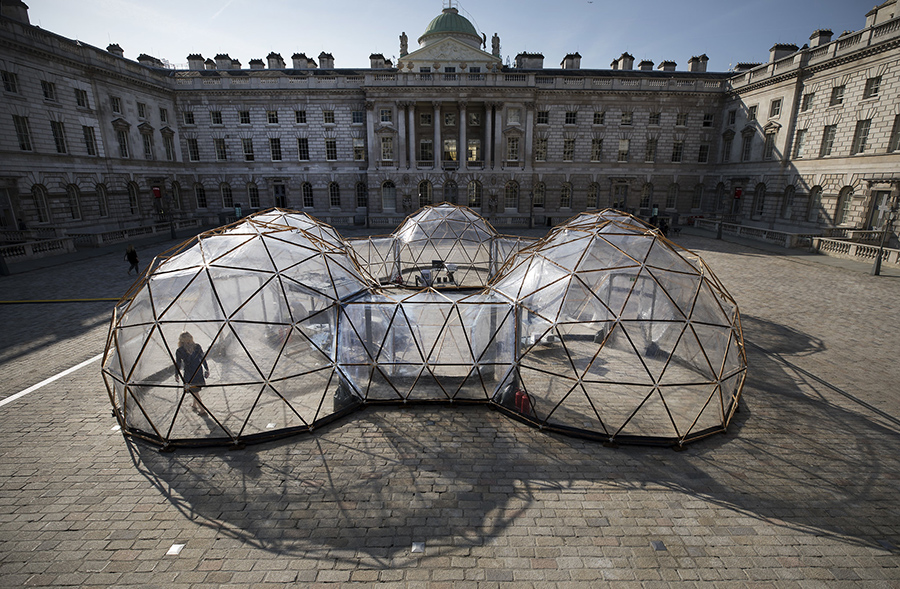
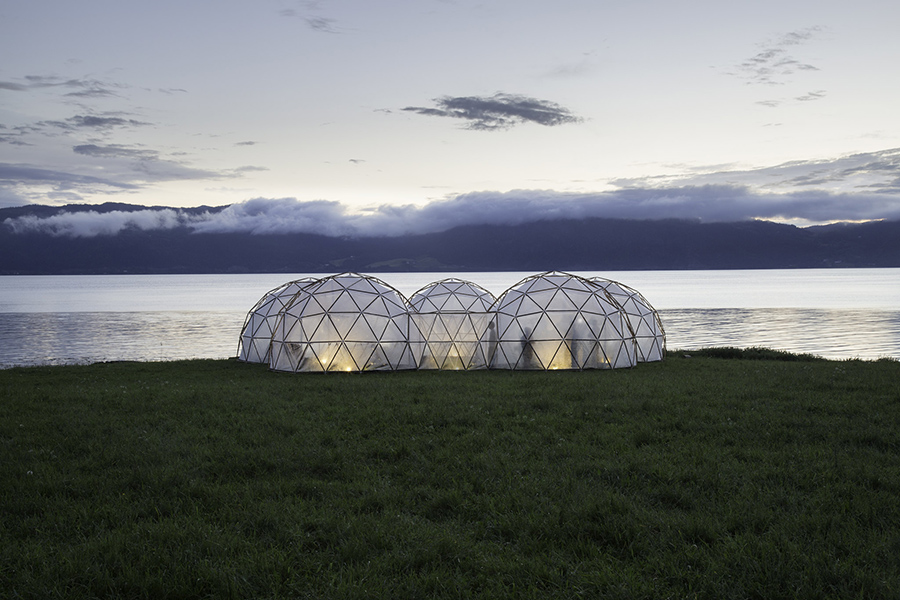
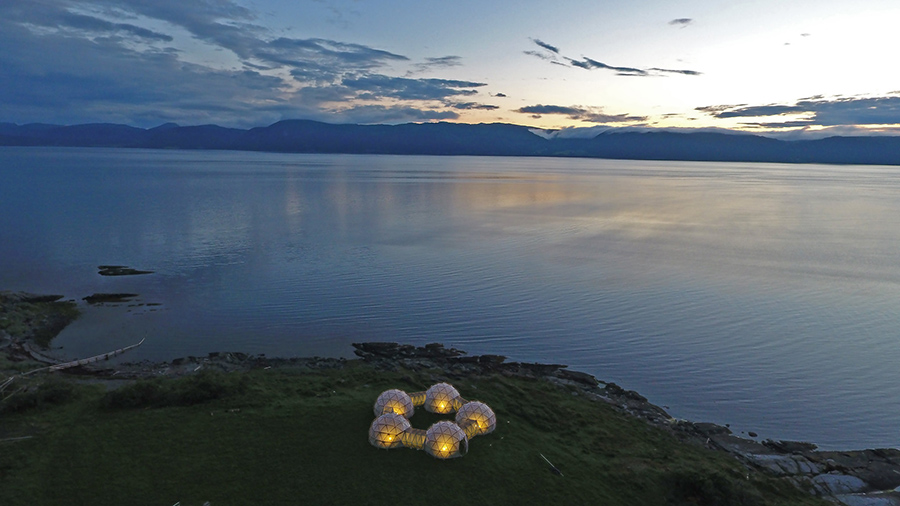
A series of domes containing pollution from cities around the world was placed in the Norwegian city of Trondheim and London earlier this year as part of an investigation by psychologists to ascertain whether art can change people’s perception of climate change.

The idea is the brainchild of British artist Michael Pinsky’s, who created the Pollution Pods installations — a series of five connecting domes that recreates the pollution from London, Beijing, São Paulo, New Delhi and Tautra in Norway. He decided that “smelling is believing,” and set out to give visitors an experience they would never forget.

A visitors walks through the Pollution Pods installation in the courtyard at Somerset House, London. Photo: Peter Macdiarmid

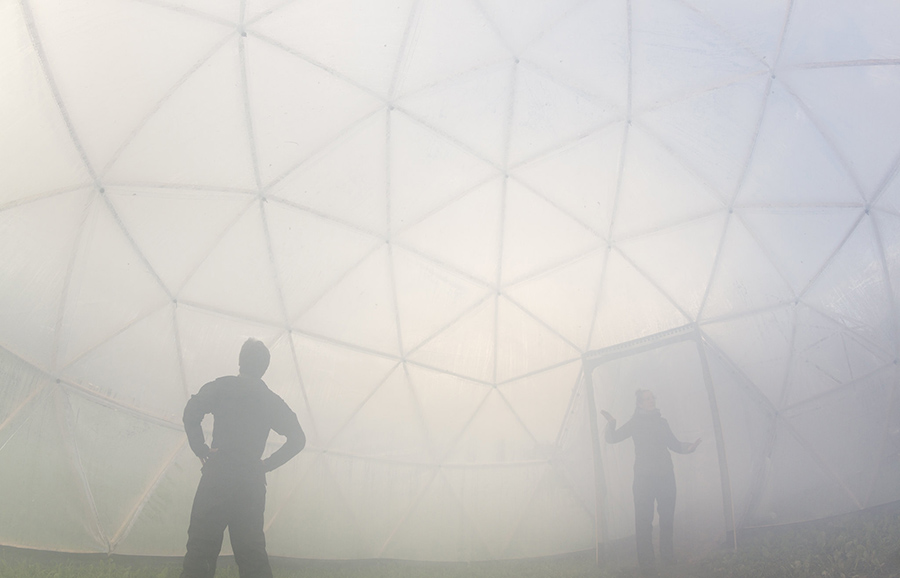
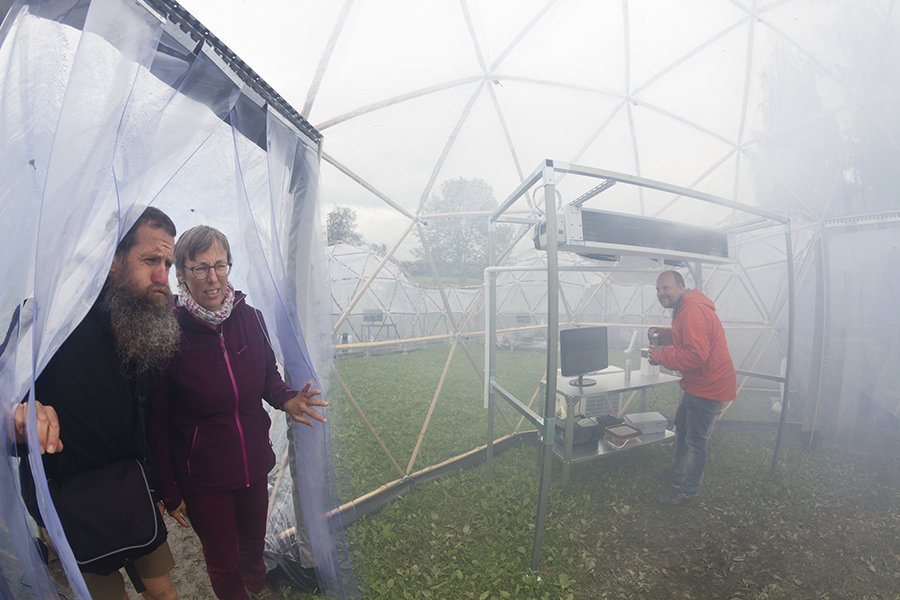
Pinsky filled five interconnected geodesic domes with carefully mixed recipes that emulated ozone, particulate matter, nitrogen dioxide, sulfur dioxide, and carbon monoxide — found in the air in some of the world’s major cities. Entering a first plastic-domed pod, visitors then passed through increasingly polluted cells, from dry and cold locations to hot and humid, giving them a firsthand experience of the air quality of that city.

Visitors stand inside one of the five domes to experience the air quality of a major global city. Photo: Peter Macdiarmid

The UK installation formed a circle in the center of Somerset House courtyard, one of London’s most renowned art centers. Visitors passed through the climatically controlled pods to compare the quality of different polluted global environments. The five Pollution Pods were linked, so that visitors were forced to pass through all of them to exit the installation. This visceral experience encapsulated the sense that the world – and our own impact on it – is interconnected.

The Pollution Pods installation in Norway. Photo: Thor Nielsen / NTNU

The release of toxic gases from domestic and industrial sources increase the rate of global warming and have a direct effect on our health. In the West, in cities such as London, one in five children suffer from asthma, while in developing countries such as Delhi, over half the children have stunted lung development and will never completely recover.

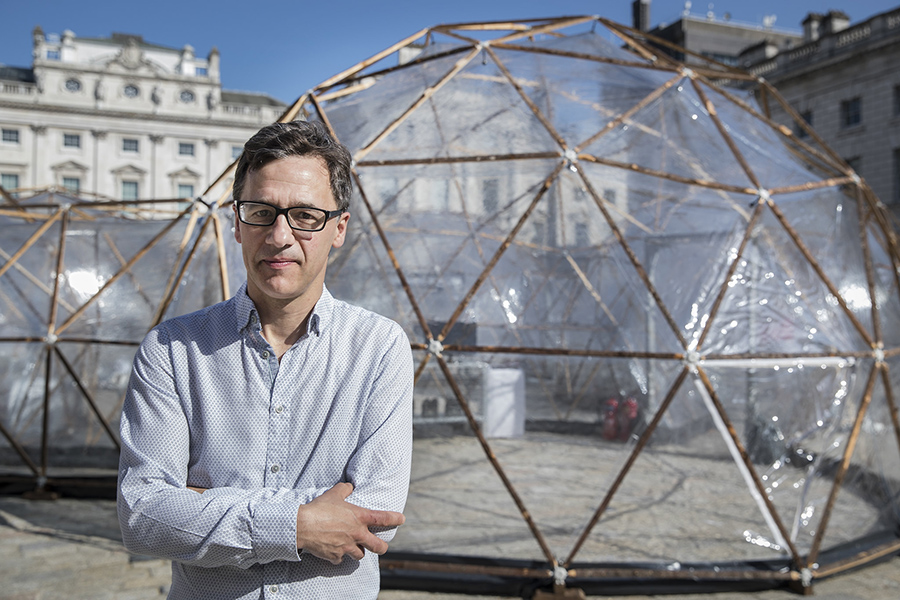
 British artist Michael Pinsky stands in front of his Pollution Pods. Photo: Peter Macdiarmid

Those living in the developed world have environments with relatively clean air, while people in countries such as China and India are being poisoned by airborne toxins created from industries that fulfill orders from the West. The experience of walking through the pollution pods demonstrates that these worlds are interconnected and interdependent. The desire for ever-cheaper goods is reflected in the ill-health of many people in the world and in the ill-health of our planet as a whole. “Within this installation people will be able to feel, taste and smell the toxic environments that are the norm for a huge swathe of the world’s population,” says Pinsky.

The Pollution Pods installation in Norway. Photo: Thor Nielsen / NTNU
Visitors experienced the air quality of 5 major global cities in a matter of minutes. Photo: Thor Nielsen / NTNU

How to Grow Food Out of Thin Air

Agriculture faces considerable challenges: population growth, soil pollution, and heavy use of water reserves. To overcome this, we need to rethink the current yield-based model used by the agricultural sector. Aeroponics may offer a solution.

The agricultural sector today faces the huge challenge of feeding an ever-growing world population. Exposed to pests and weather hazards, outdoor crops face many odds. Using arable land to push for the best possible yields, and using artificial fertilizers and pesticides can be as problematic for the soil as they are for consumers. Agricultural experts also estimate that 70% of drinking water is used to irrigate fields worldwide. In countries such as Switzerland, the cold season stops agricultural activity and it’s necessary to import food from distant countries by truck, ship, or plane for much of the year. Creating a sustainable approach to agriculture is a real challenge.

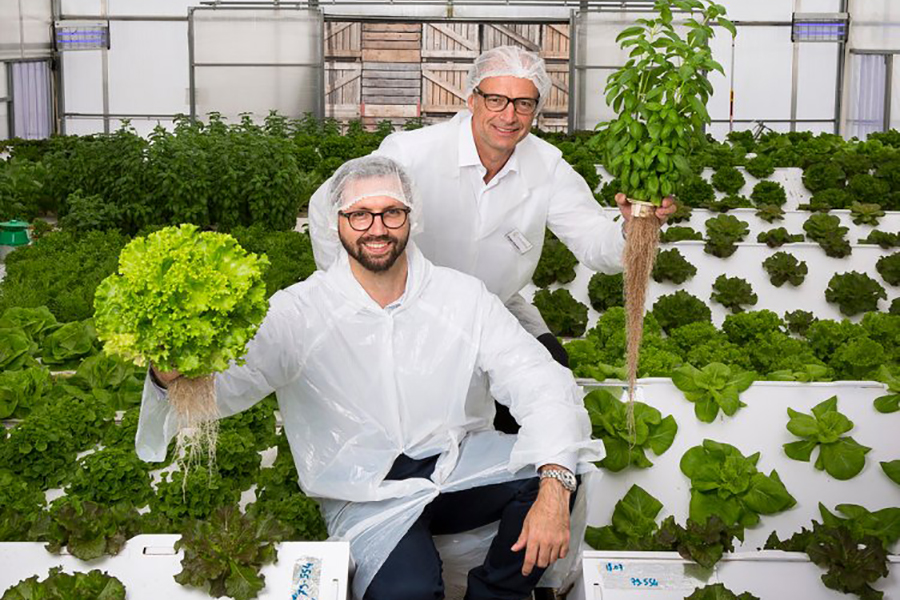
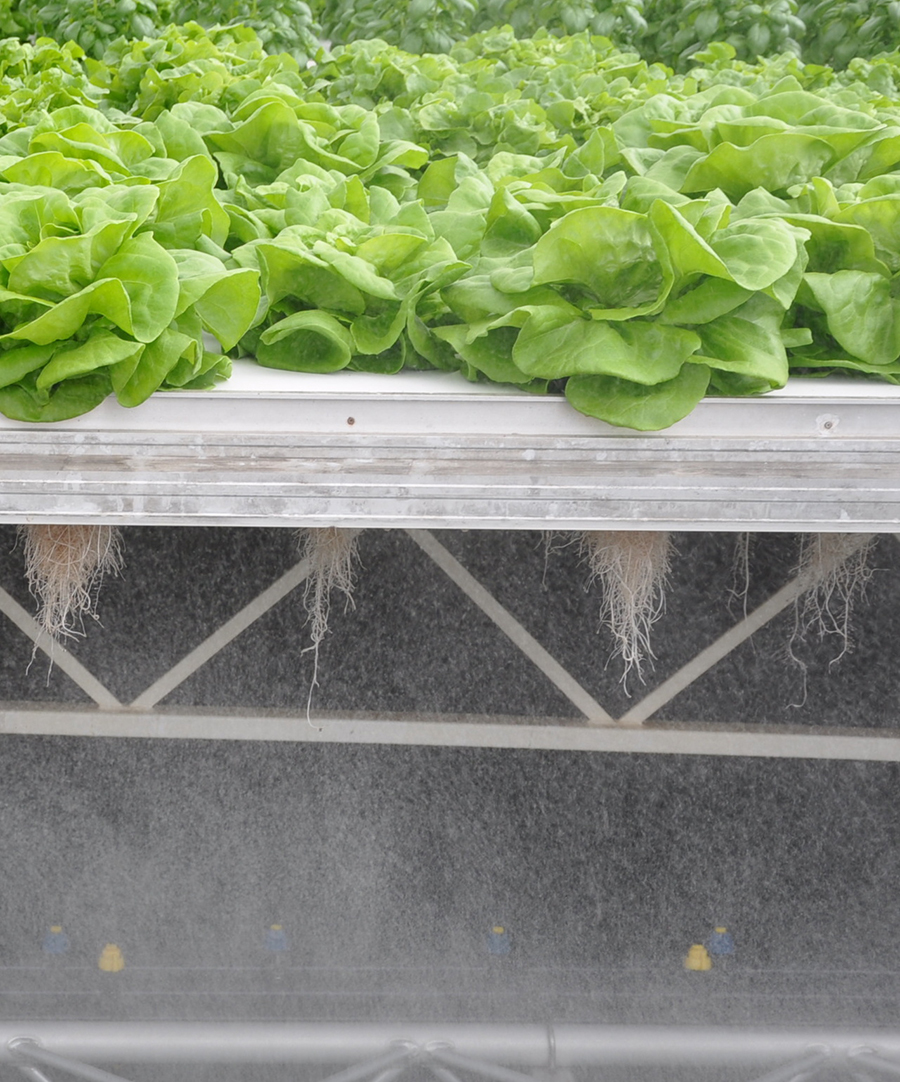
CombaGroup, a company located in the Swiss municipality of Molondin, plans to reinvent agriculture — by growing lettuce and other leafy vegetables locally all year round, but without any fields, pesticides or chemical fertilizers. Their method saves 97% of water compared to traditional outdoor methods. This is thanks to a meticulous application of aeroponics — a technique of growing vegetables above the ground, using supports under which the roots spread freely in the air. A system sprays a mist of water mixed with nutrients directly onto roots and excess water is reused. The plants receive exactly the right amount of nutrients they need to grow, in protected greenhouses that don’t need any artificial fertilizers and pesticides to fight pests. The plants can be grown all year round, and have a lower carbon footprint, resulting in less pollution from imported products during off-season.

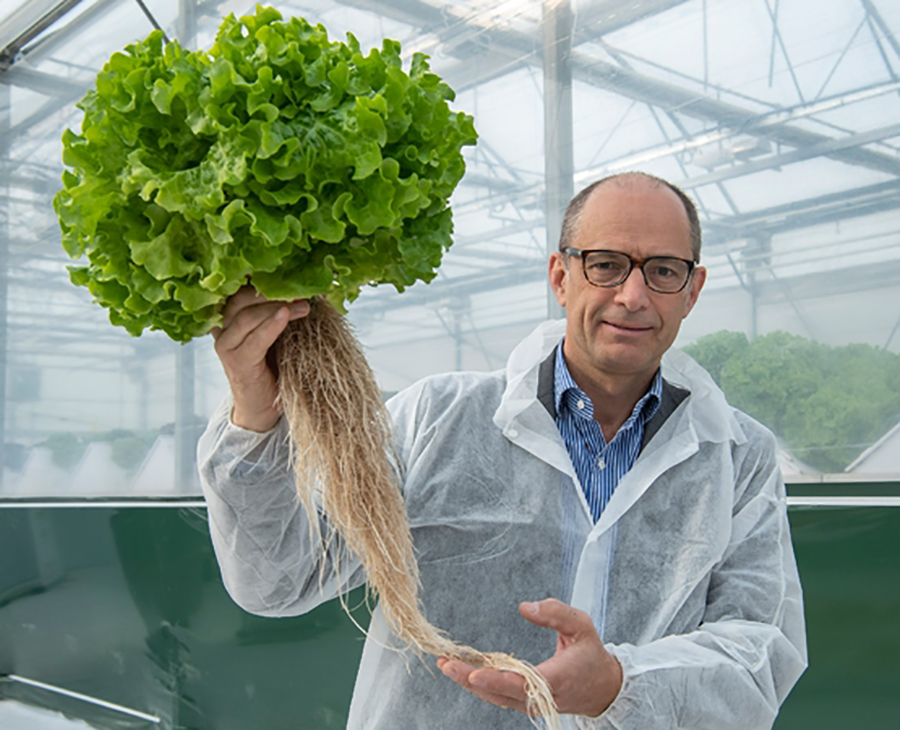
CombaGroup CEO, Serge Gander.

“We currently operate a 250 square meter pilot production facility that can supply the equivalent of around 500 fresh salads per week, says CombaGroup CEO, Serge Gander. This facility has allowed us to test our system on an industrial scale. We have already sold the first systems to France, and we’re in discussions with industries in Sweden, the United Kingdom, Canada, Russia, China, and the Middle East. In fact, any region where weather conditions, lack of water, or soil pollution represent real problems for the agricultural and retail sectors.”

Compared to conventional farming methods, the CombaGroup aeroponics system is impressive in its yield. Based on current production, it will be able to produce 800 tons of lettuce and more than 300 tons of leafy vegetables per hectare per year when deployed on an industrial scale. In a field with soil, current farms can produce around 25 to 30 tons of lettuce per hectare per year. Aeroponics can grow one kilogram of lettuce with only six liters of water, compared to 250 liters in conventional farming.

While these performances are particularly impressive and promising in terms of productivity and yield, they are also remarkable in terms of quality and taste. Naturally grown without being boosted, these vegetables have won over many great chefs at several Swiss gastronomic establishments. During the coronavirus crisis, the company donated part of its output to support these local establishments.

Vegetables are grown with a nutrient-dense mist.

“Without claiming to be able to revolutionize the agri-food sector with a single solution, we are, regardless, wanting to question the foundations of the current paradigm,” continues Gander. “The idea is to innovate, open up the debate, confront new ideas, and propose alternatives as part of a complementary approach to the different types of agriculture and supply chains available today. As an entrepreneur at the crossroads, I believe it’s essential to have a thoughtful and committed approach. Making money is one thing, but to do so while trying to improve the common lot becomes a necessity — especially when considering the environmental issues that face humanity.”

84-Year-Old Ocean Explorer: “The Best Companies Will be Those That Figure Out How Best To Use Our Natural Assets.”

The American marine biologist, explorer, author, and lecturer is one of the planets biggest advocates for the preservation of our oceans. Dr. Sylvia Earle should know the importance of this, as she’s still regularly exploring the depths at age 84.

She has been a National Geographic explorer-in-residence since 1998 and was the first female chief scientist of the U.S. National Oceanic and Atmospheric Administration. She was named by Time Magazine as its first Hero for the Planet in 1998. In this interview with Real Leaders, she explains why the oceans are critical for all life on earth.

84-Year-Old Ocean Explorer: “The Best Companies Will be Those That Figure Out How Best To Use Our Natural Assets.”

The American marine biologist, explorer, author, and lecturer is one of the planets biggest advocates for the preservation of our oceans. Dr. Sylvia Earle should know the importance of this, as she’s still regularly exploring the depths at age 84.

She has been a National Geographic explorer-in-residence since 1998 and was the first female chief scientist of the U.S. National Oceanic and Atmospheric Administration. She was named by Time Magazine as its first Hero for the Planet in 1998. In this interview with Real Leaders, she explains why the oceans are critical for all life on earth.

Why Now Is The Time To Develop A Sustainability Program For Your Company

With the pandemic still working its way through our healthcare, social, and economic systems, many have asked me whether business has come to a screeching halt. As the founder of a growing but still fairly small reforestation nonprofit, I can see why this is a sensible question. The economic pressure is real. 

But the answer might be surprising: businesses are more dedicated than ever to addressing the climate crisis, and now is actually the perfect time for a company to start or develop a sustainability program. 

Now is the Time.

Climate change isn’t taking a break, even if nature has had a reprieve in carbon emissions the past few months. The truth is that this issue is the most important thing our generation, and upcoming generations, need to address. It’s our air and water, food, climate, health, and just about everything else we need to survive on the planet. 

And while understandably some businesses are struggling, others are weathering this storm and have more time on their hands to actually plan for the future, to reflect on what matters to the business and employees, and to implement a solid CSR program they can be proud of. Just starting with the simple act of planting trees is a great first step. 

Think about the next 50 years. 

As we come off of the 50th anniversary of Earth Day recently, it’s important to reflect on how the businesses of today can influence the next 50 years. Humans are responsible for the state of the earth, and businesses are equipped to make a big impact, quickly. Also, from our experience we know corporate sustainability programs help build team morale internally. They give employees a common and positive goal outside of their everyday workflow. Now, probably more than ever, your team is likely looking for something to rally behind – even if they rally remotely.

While committed, forward-thinking businesses continue to prioritize sustainability programs, we need everyone to participate. And you might just find that it’s even good for the bottom line. Most surveys show that upwards of 80% of consumers want sustainable products and packaging. 

And while coronavirus is still in the headlines, consider this: restoring healthy environments can help prevent future disease outbreaks. Climate change, environmental destruction, and encroachment on wildlife habitats are all factors in the potential spread of zoonotic diseases. Trees are an important part of addressing this to not only reduce deforestation but to actively restore the millions of acres of forests that have already been damaged. Governments drag their feet when it comes to real change and nature-based solutions, but you know who’s quick and nimble and actually helps us get trees in the ground? Business partners who are committed to making a positive impact. 

9 Ways to Become a Climate Positive Leader

For most of us, climate change looms large, threatening to overturn every aspect of how we do business. But as a leader, you know that within every challenge lies opportunity — and climate change is no exception.

With an eye towards innovation and partnerships, you can harness this moment and establish your company as a climate-positive leader, moving gracefully through uncharted waters to contribute towards a world you’ll be proud of. 

Conventional thinking won’t do, regardless of your industry. Here’s an example: 

As an environmental nonprofit that plants trees around the world, it’s evident that what One Tree Planted does directly supports a healthier and more sustainable planet. But nonprofits aren’t that different from any other business when it comes to what’s required for leadership and success. If we operated like most other environmental nonprofits, we’d be struggling to fundraise and lamenting global forest loss. Instead, we’re an incubator of ideas that get tested before reaching perfection status. We focus on what’s possible instead of what isn’t. And we foster collaboration that gets trees in the ground much faster than many governments can. 

The problems of today won’t be solved by the same thinking that got us here in the first place, so forget what you or your company have done in the past and forge a new path forward.

Balance the needs of your business with those of the climate. 

So how can you embrace and influence the tide of change instead of being swept away? Simple: adapt your strategy one part of the business at a time. Staff, supply chains, infrastructure, customers, and messaging are all ripe for assessment and a shake-up in favor of making each more sustainable. And if Covid-19 has impacted your business as many have, you may already be in a place of profound evaluation. As you rebuild your business after this disruption, focus on creating new systems with the environment in mind.  

Here are 9 ways to lead for climate:

Connect Sustainably

Work with your electricity suppliers to shift toward more sustainable sources of power and eventually get 100% from renewables. Having a power source that doesn’t pollute will be a great foundation upon which the rest of the business grows.

Collaborate Wisely

When necessary, pool resources with your competitors to develop innovative solutions to industry-wide environmental concerns. In 2018, PepsiCo, Danone, Nestle Waters, and Origin Materials formed the NaturAll Bottle Alliance to speed up the development of sustainable packaging. 

Be Transparent

Set ambitious, measurable goals and share your progress transparently. This will build brand trust and demonstrate to stakeholders that you’re taking climate change seriously. 

Hold Yourself Accountable

Some transitions might be uncomfortable, risky, or costly, but remember why you’re doing this and avoid cutting corners. Ensure that your promises, announcements, decisions, and allocation of resources are all in alignment. 

Stay Committed and Flexible

Don’t try to do it all at once. Stay fluid, build upon each success, and learn from each failure. Allow the momentum to grow organically, carefully monitoring progress, and adjusting as needed. This should be a long-term priority, not a single campaign.

Develop Competency

How much do you know about your company’s impact on the environment? Are you familiar with the UN’s Sustainable Development goals? What about learning lessons from other leaders or businesses who are a step or two ahead? Take the time to understand and equip yourself with the knowledge that will help you make reliable decisions. 

Track Your Progress

Implement quality data-gathering technologies to track and measure your progress so that you can share results with confidence and consistency. That way, you can inspire others to follow suit, but also have the information you’ll need to shift your resources towards the most effective strategies. 

Get Internal Buy-In

Ensure that you’re communicating the mission or new direction clearly to the people who help run your business. The more internal buy-in you have, the more success and unity you’ll see across different teams. And having internal champions will ensure that strategies and great ideas come from every level of management or employees. 

Tell Your Story

Once you’ve got the internal cohesion, you can integrate all of this into your outgoing communications, branding, and PR to show your commitment. And the story here isn’t just that you’re a leader or business that cares about climate change, the story is what you’re doing about it – the impact you’re making, how it helps, and why it matters.

And one last thing, you don’t have to be too serious about all this either. Harnessing our collective power to create the global transformation we need to address climate change should be inspiring and energizing, not stifling and stressful. No matter how challenging it gets, we will figure this out — and things will look much better on the other side. Now is the time.

Why Can’t The Media Visualize Climate Solutions? 

The hunger for images that show new and existing solutions to the climate crisis continues to grow exponentially as our collective awareness deepens.  But relevant and engaging imagery is hard, or even impossible, to source.

As a career photojournalist focused on environmental stories – researching, finding, chasing and shooting climate solutions is a provocation and frustration I have wrestled with personally for over a decade. Since August, I have also been consulting and editing professionally as I head-up the Climate Visuals programme (part of the non-profit Climate Outreach) that researches, advises and curates climate photography. Working with news editors and journalists on a topic that is under-reported at best has helped me better understand why climate solutions imagery is so stubbornly absent from the news stream.

The dominance of negative and even distressing content, which makes for popular and powerful news, can leave audiences with a sense of hopelessness. The stubborn dominance of clickbait and disaster coverage of climate is not a new observation. However, social science has long purported that promoting actionable solutions, particularly coupling them with these emotionally arresting stories of negative impact, helps promote a more effective and lasting positive reaction in readers.

Earlier this year, we hosted a Hackathon in conjunction with Exeter University convening a dozen academics specialising in climate change imagery, as well as industry professionals from both Getty Images and the World Press Photo Foundation. All are leading experts committed to refreshing and collating further evidence into what makes editorial climate photography not just illustrative but also impactful to viewers.

One of the key takeaways:  News and social media using high quality, relevant photography increases viewer engagement, saliency and likely its onwards sharing. However, save for the dwindling clutch of premium news titles, the ability to commission quality, new photography is made unaffordable against established and continuing cuts in publishing ad spend and funding. Lens-based reportage unequivocally requires the camera to travel to its story and has suffered disproportionately. The start of this unconcluded race to the bottom of image pricing was the debut of free online news.

The solar power is providing water purification, refrigerator for food and medicines, a computer for the community, and lights to frighten away the hyenas. Photo credit Morgana Wingard / USAID / CC BY-NC 2.0

Confusingly, over the same period, photography has enjoyed rising cultural importance, becoming a ubiquitous medium and universal communication tool throughout society globally. Every graphical magazine, any branded news layout and every social media author requires and will include the strongest imagery they can afford or source – but not always legitimately. Recent analysis of news illustration suggests that the most popular and effective type of illustration for climate narratives is still traditional, authentic editorial photography.

Photography as a documentary medium cannot easily travel beyond the present as literature, interviews, opinion pieces or statistics on climate change delve into predictions. In order to talk in the future tense, photographers or editors must lean on illustrative or conceptual photography, without the gravity or authenticity to convince viewers. Worse still, news teams are often forced to illustrate climate solutions with the climate causes or impacts that  the solutions are designed to counter. This clash of tone between image and their headline is proven to undermine an article.

When turning a camera backwards on science, wielding the latest digital camera technology is ironically problematic. If a company is innovative and genuine, the positive benefit of granting access to a journalist is undeniable, but a camera’s high resolution mechanical eye risks espionage. If Musk, Bezos or those based in Cupertino were designing a solution to climate change, the first visual results would inevitably be released at a highly choreographed and scripted, share price-boosting stage show. These visuals are the bland, carefully choreographed and airbrushed lifestyle scenes designed to sell us a finished technology ‘solution’ once it is available on the market. Commercial imagery can reek of constructed values and veiled attempts at authenticity that feel contrived. Without real integrity, these images rarely ascend into the journalistic domain, nor buy our long term behavioural trust. The more interesting and believable stories on the details, endeavours and failures of climate solutions and those working to develop them remain hidden in research basements or patent applications. 

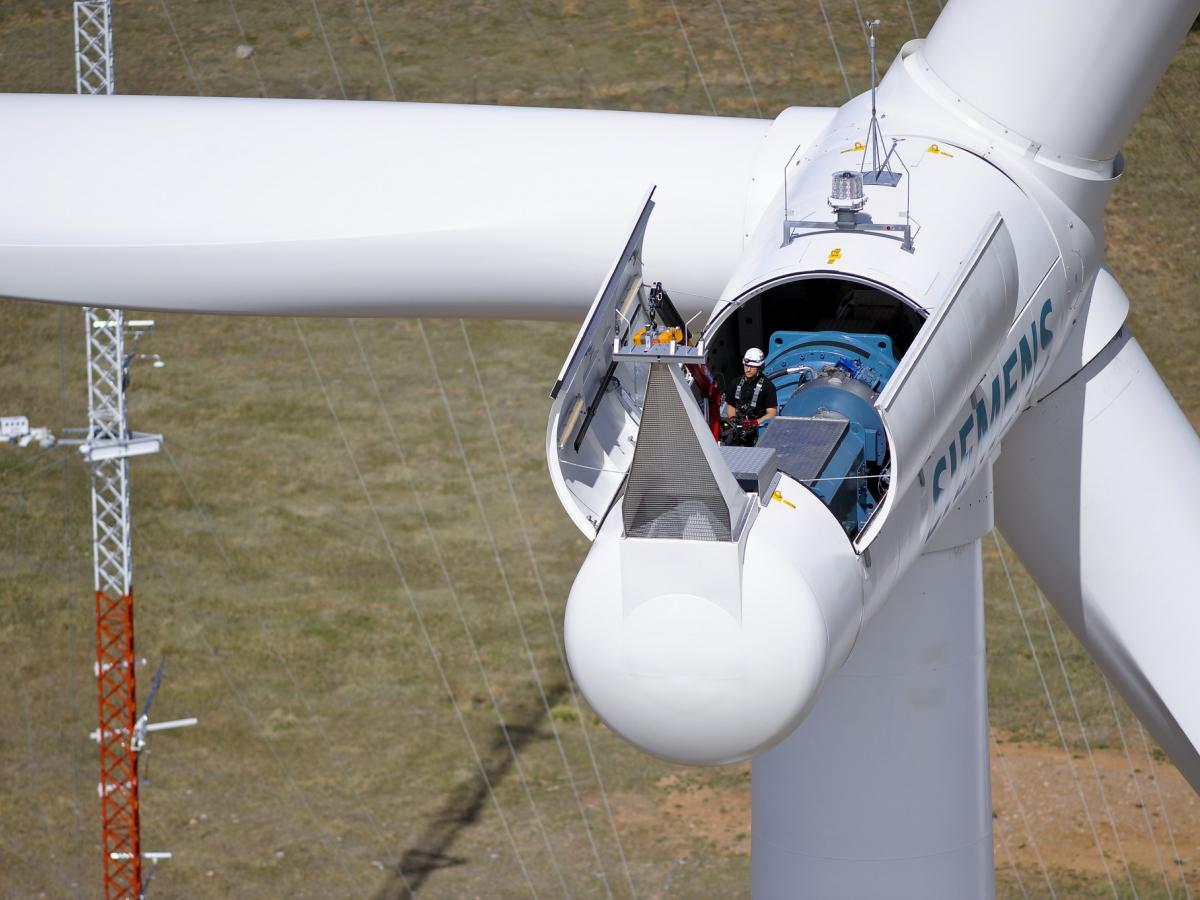
A technician makes adjustments to a wind turbine at the National Wind Technology Center in Boulder, Colorado. 
Technological climate solutions can lack emotion but revealing both the engineering scale, human endeavour and 
dramatic interactions between them will resonate with a broader audience. Photo credit: Dennis Schroeder / NREL / CC BY-NC 2.0

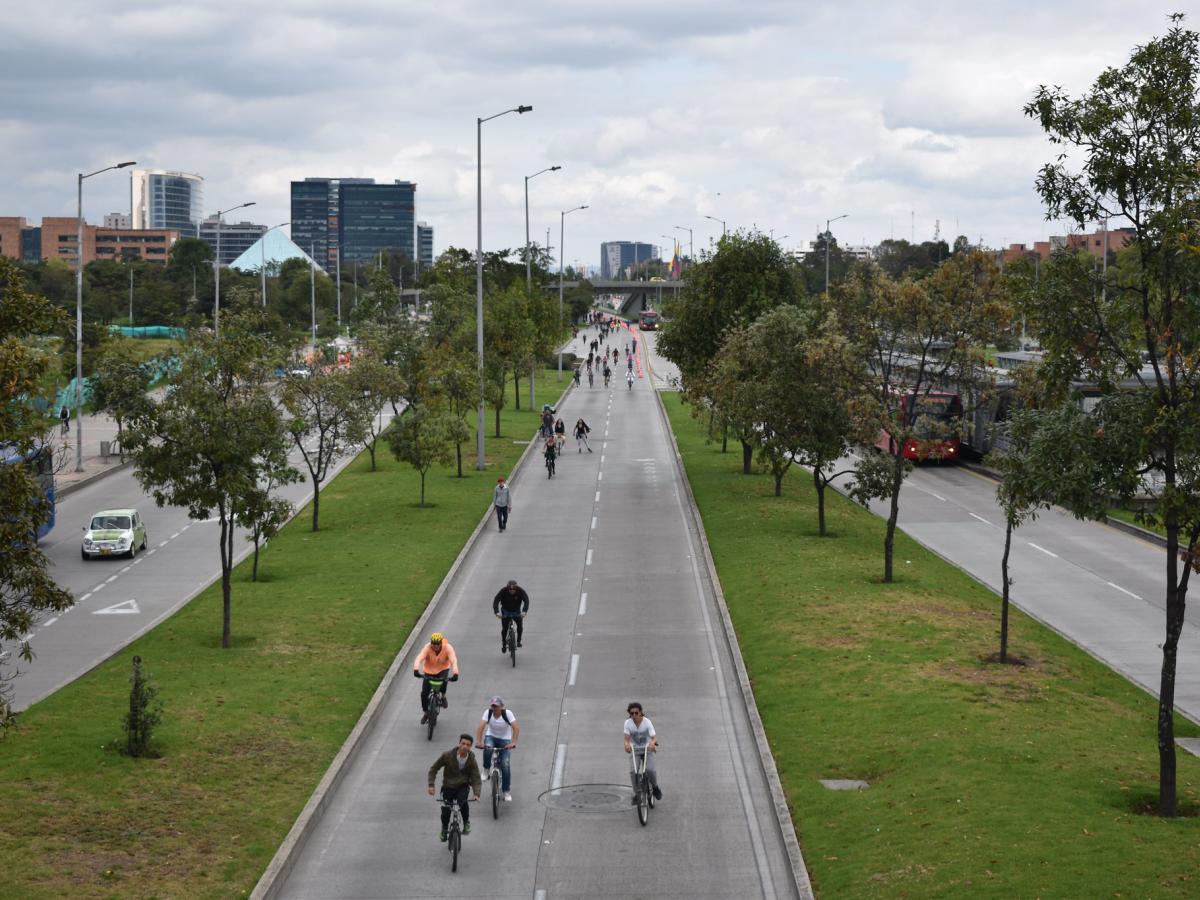
Many accepted and actionable climate solutions rely on personal or societal behaviour change, much of which is reductionist or physically subtle. Photography uniquely documents only a tiny chronological slice of shutter speed selected reality, and so struggles to convey any concept expressed as a change in frequency as opposed to static volume or scale. Part explaining why cyclists have long represented sustainable behaviour, dense gridlocked traffic indicates pollution and all environmentalists eat greens when interviewed over lunch. More natural or forest solution efforts, if implemented correctly, return habitat to its original, arguably undramatic, state.  Photographers and clients alike are seduced by images of tree planting as remedy, the well worn, critical moment when a sapling is placed back into the earth with human hands.


Every Sunday, in Bogota, main roads are closed to vehicles.  Cycling is an obvious, aspirational solution

with multiple climate and societal benefits but should be used to illustrate stories correctly and not over-used as
a lazy metaphor for sustainability at large. Photo credit: Plan Bici / Ashden 

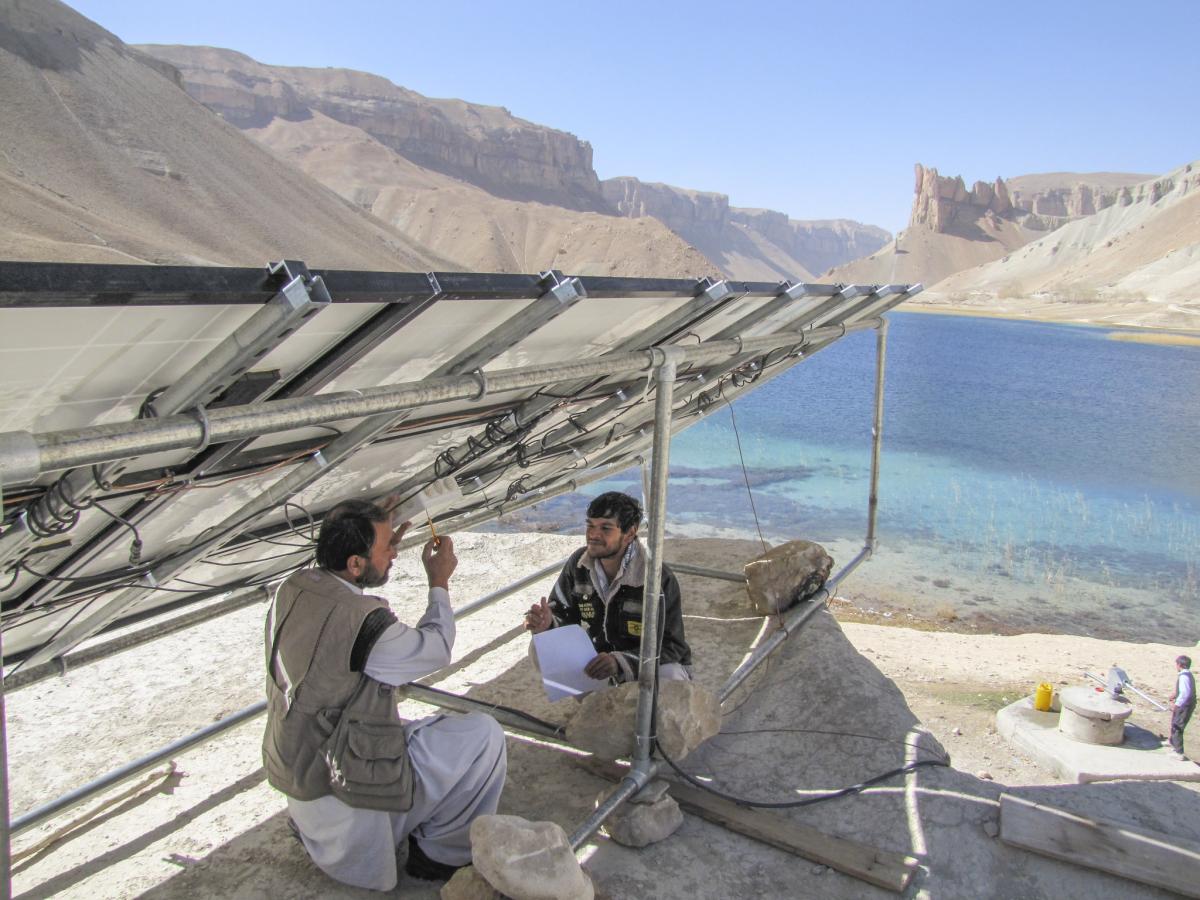
In considering how to push past such clichéd traps, photographers need to remain patient, research more deeply and work in a manner closer to that of the written journalists they are drafted to support. As both transport and time are costly units we have all the more reason to empower local storytellers, ingrained with the values and sensitivities of their subject matter. Yet there are systemic failures of the photography industry to use local, ethnic or gender-balanced voices in reporting real global solutions. The issue is often one of connectivity and trust in the broadest sense. Localised professional news photographers in emerging economies, where many climate solutions are also emerging most organically, are often focussed on local or political reporting. We cannot assume they are free or even be able to work safely near state-controlled news agencies. The battle lines of the free press often track closely to the boundaries of the climate justice nexus.

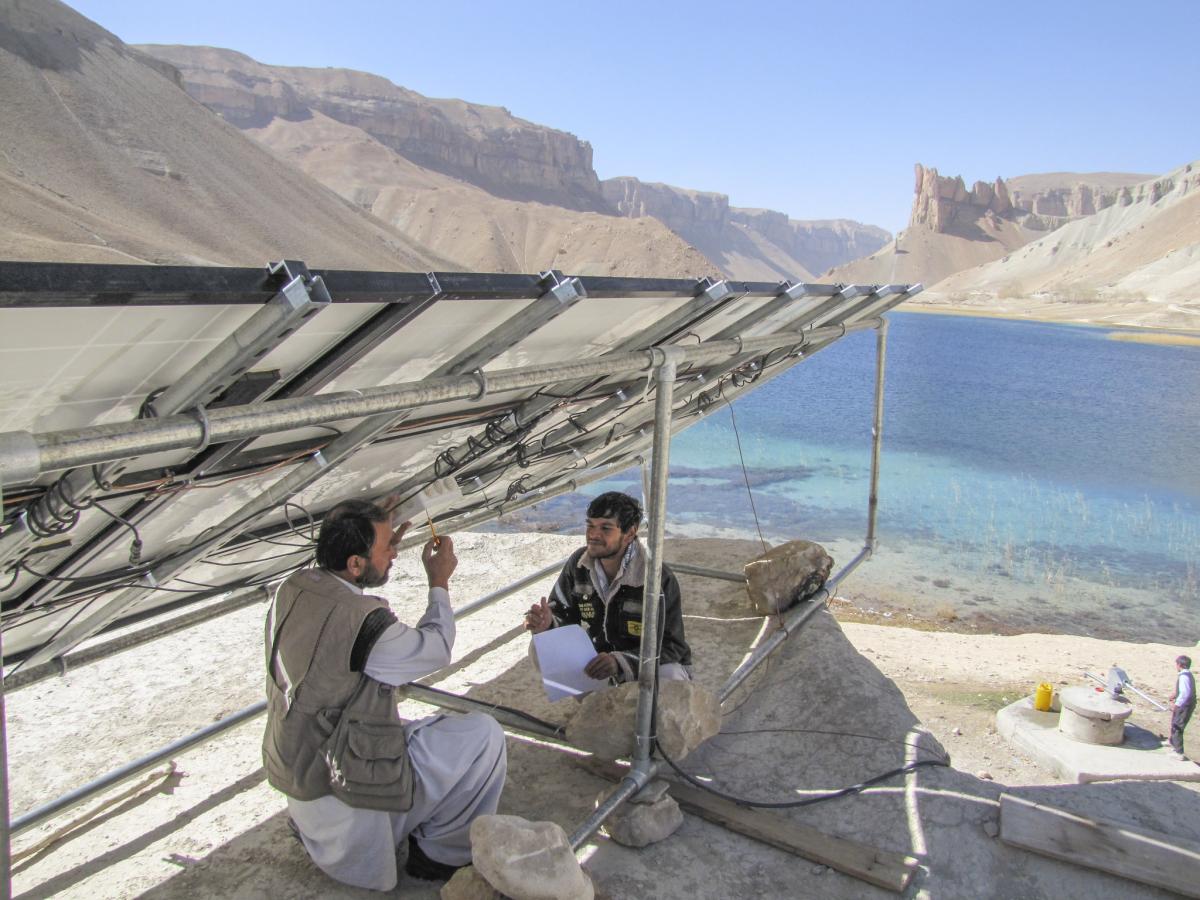
Afghan technicians are finishing installation and testing of the solar array. Local voices and photographers intuned
with the culture and values of their subjects will generate more intimate images with integrity whilst being able to access 
closer and stay longer with a story. Photo credit: Robert Foster / Winrock International / US AID / CC BY-NC 2.0

Citizen reporting and user-generated photography has also grown globally with the proliferation of smartphones. The billions of images and climate stories that are captured, and no doubt proliferate locally on closed peer-to-peer apps, rarely make it into international publications unless they are truly exceptional. The barriers to distribution and verification are complex, and even if a story idea could be framed or connected internationally, the presentation style and resolution of smartphones rarely match the expectations required by professional news agencies. Only the most viral, and therefore most valuable content, is ever verified, with none of that value or story drivers trickling back to the original source in the field.

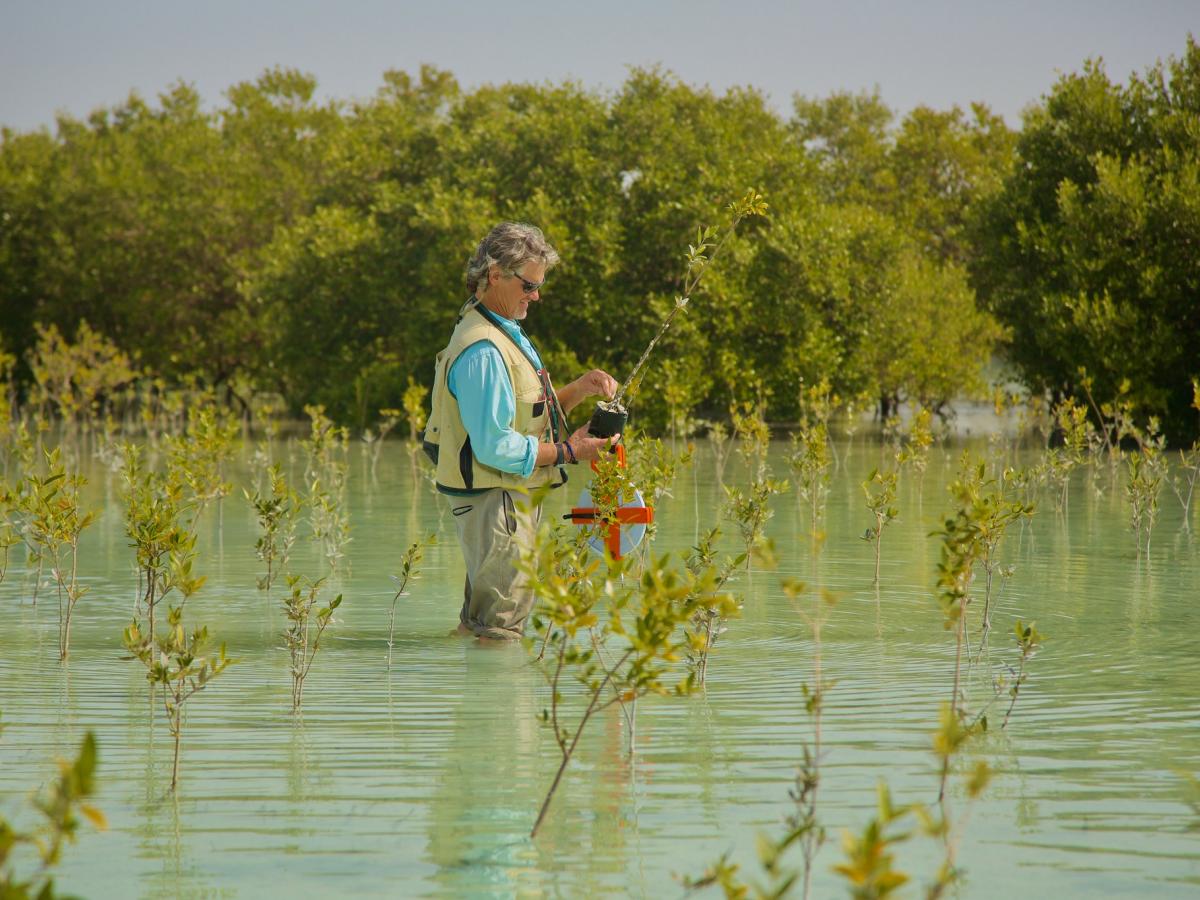
The GEF Blue Forest project`s aim was to improve understanding of the valuable ecosystem services that coastal blue carbon ecosystems provide. Restoring diverse types of habitat, as a climate solution, has a multitude of stages that  depend on work and collaboration between scientists and land-owners, all of which provide multiple opportunities for photography beyond the cliche of planting itself. Photo Credit: Rob Barnes / Blue Forests / CC BY-NC-SA 2.0

It is tempting, in conclusion, to suggest the need for a radical overhaul, a new way of working or a magic bullet funding model to reinvigorate or democratize  photojournalism at large. However, this would be an unrealistic goal given the rapid, unpredictable evolution of news media reporting, and how utterly fragmented, digitized and unmappable the future content creator and agency network is. However, raising resources for targeted geographic and systemic interventions –  for the current state of play – is a unique and urgent cause for optimism. Seizing a chance to build photographic capacity where it is most needed; with climate solutions in frame. These new unseen images and stories, could intrinsically possess a value, quality and uniqueness that cuts through and exploits the broken, unrepresentative visual index, and sees them easily proliferate as intelligent, fresh and inspirational metaphors. Only then can we trace the eloquent and clear theory of change shared by the solutions journalism network, offering empowerment and creating more discerning actors capable of shaping a better society.

By Toby Smith. This story originally appeared in Climate Visuals and is republished here as part of Covering Climate Now, a global journalism collaboration strengthening coverage of the climate story.

Pope Says Nature Will Not Forgive Our Trespasses

Pope Francis made an impassioned plea for protection of the environment on Wednesday’s 50th anniversary of the first Earth Day, saying the coronavirus pandemic had shown that some challenges had to be met with a global response.

Francis praised the environmental movement, saying it was necessary for young people to “take to the streets to teach us what is obvious, that is, that there will be no future for us if we destroy the environment that sustains us”.

The pope, who wrote a major encyclical in 2015 on the defence of nature and the dangers of climate change, dedicated his general audience – broadcast from his library because of the coronavirus lockdown – to the theme.

Recounting a Spanish proverb that God always forgives, man sometimes forgives but nature never forgives, Francis said: “If we have deteriorated the Earth, the response will be very ugly.”

A landmark in the emergence of the environmental movement when it first took place in 1970, this year’s Earth Day has prompted calls from many, including U.N. Secretary-General Antonio Guterres, for governments to pursue “green recovery” in response to coronavirus

Both the pope and Guterres have made environmental protection and climate change signature themes of their offices.

“We see these natural tragedies, which are the Earth’s response to our maltreatment,” Francis said. “I think that if I ask the Lord now what he thinks about this, I don’t think he would say it is a very good thing. It is we who have ruined the work of God.”

Saying the Earth was not an endless deposit of resources to exploit, he said: “We have sinned against the Earth, against our neighbour and, in the end, against the creator.”

Last year, after a synod of bishops from the Amazon region, Francis said he was considering adding a definition of “ecological sins” in the Roman Catholic Church’s Catechism, a compendium of teachings and rules.

Francis, like Guterres, has likened the response to environmental dangers to that of the coronavirus.

“Only together, and looking after the most fragile (members of society) can we win global challenges,” the pope said.

So far, massive economic stimulus packages launched by the United States, China and European governments have focused mainly on staunching the damage to existing industries and staving off the threat of a global depression.

But ministers from Germany, France and other EU members have signalled their support for subsequent interventions to align with climate goals, a theme taken up by climate campaign groups around the world.

The Cure for Climate Change

What if Pascal was right when he said, “All of humanity’s problems stem from man’s inability to sit quietly in a room alone.” If I am honest with myself, I can see that I live mostly in perpetual busyness and distraction. I don’t often pause for long enough to notice what needs improvement in my life. Course correction requires a real pause. We can not change the wheels to the car while still driving it.

Ask yourself, what is your threshold for being alone with yourself? Being witness to the inevitable fear that emerges beyond the boredom. Can we pause long enough to face our problems, those things that we can see so clearly magnified in the conditions of the world?

Many of us say we want to get back to business as usual, but let’s pause for a moment and investigate “business as usual.” A perpetual growth economy that continues to degenerate the life and biodiversity of our planet, “feeding the world” by destroying our soils, powering our grids while exacerbating global warming, expanding digital communications only to expose ourselves to increasing levels of electromagnetic radiation, prescribing a drug for almost everything while very few are genuinely well.  

Business, as usual, has led to the world’s richest 1% having more than twice as much wealth as 6.9 billion people combined while 9 million people die annually of starvation.

As far as I can tell, business as usual will take us into the 6th mass extinction. And although many of us are all racing to solve the world’s problems, something in our approach is off. 

In this time of mandatory quarantine, perhaps we are being given a gift of pause and retrospection that may have only otherwise come to us on our deathbeds. We are all being invited to look at ourselves and ask, is this the way of life I want to pass on to my children? Is this the life that fulfills my heart? 

Is there a possibility of a new normal? 

We have culturally created time to pause (weekends & holidays). Time to be still, connect with ourselves, our loved ones, and give thanks for the bounty of the Earth. Time we can utilize to re-align ourselves to our higher purpose and make course corrections to our lives and see where we may have been missing the mark. Unfortunately, these pauses haven’t been enough for us to change the trajectory we are on.

When we ignore the whispers, the communications get louder until they become a scream. STOP! Is this what we are being told directly and indirectly? 

The reality is that we have become disconnected from ourselves and our ecology. We are part of Nature, and Nature is always self-healing, balancing, and regenerating. Can we see this virus as part of Nature asking us to slow down, and to live with more reciprocity, care, and reverence for our mother earth who gives us everything? 

There is a misconception that our relationship with Nature is inherently destructive.

This is a myth that has been perpetuated for so long that it’s difficult to shift our view. Yet many indigenous cultures have known and lived in a relationship of reciprocity with the living Earth. Seeing themselves as an intricate part of the ecology, living in balance between giving and receiving.

“Action on behalf of life transforms. Because the relationship between self and the world is reciprocal, it is not a question of first getting enlightened or saved and then acting. As we work to heal the Earth, the Earth heals us.” – Robin Kimmerer (Professor of Biology and Indigenous Wisdom Keeper)

Having a symbiotic relationship with the Earth begins with that understanding of connectedness. Not just between people, or more broadly between living organisms, but with the Earth that sustains us all. It’s about going to the literal root of all life — the Earth — and starting there. That holistic approach is best embodied in Regenerative Agriculture. In the simplest of terms, Regenerative Agriculture refers to a method of agriculture that heals and regenerates our land while helping to reverse global warming. The practice sequesters carbon out of the atmosphere and safely stores it in the soil through plants — part of Nature’s naturally balancing technology. 

The current systems that produce our food break our soil systems through the saturation of harmful chemicals and a government system that subsidizes farmers to deliver grain to feed animals that we then slaughter to produce meat. This system is unsustainable, and we’re now at the breaking point. In the past 40 years, we have destroyed ⅓ of the world’s agricultural land, pushing our global civilization towards a desertified planet.   

For us to survive, this system needs to be dismantled and reversed. Regenerative agriculture is the road map, and everyone who subscribes can participate in global restoration. 

Consider the possibility of humans making it their business to regenerate the living systems of the Earth. Time magazine put a price on what it would take to halt climate change through land management and regenerating our soil. Only 300 billion Dollars. This is just 50% of the annual US military budget. 

Some business leaders have already taken on supporting regeneration. Ivon Chenard, Founder of Patagonia, declared at Expo West in 2019 that “if your business is not helping to regenerate the earth, start a new business.” They even changed their mission statement to reflect this commitment. “Patagonia is in business to save our home planet.” One of America’s largest food companies, General Mills, just committed to putting one million acres under regenerative management. My organization, Kiss The Ground, is helping to facilitate the farmers in being trained. 

Destructive acts of Nature tend to be localized — fires in Australia, hurricanes in the Gulf, a tsunami in Indonesia. This localization allows us to carry on with our lives and not see the connectedness in all beings, and in Nature. And that’s what has been so unique about the pandemic – we see the connectedness of the world. And while the pandemic has taken an incredible toll on human life, global warming promises to extract an even more significant toll.  

So the question ultimately becomes: can we act? Can we embrace this great pause and be still enough to listen to our inner voice, the one that will be speaking to us on our last days of life, in regret or gratitude for the choices we made now? Can we begin to see a relationship of reciprocity with mother earth is our only pathway to survival? Human life depends on it.

0