How to Raise a Young Leader

Why are some kids only interested in playing video games while others take action to change the world? Real Leaders asked someone who knows.

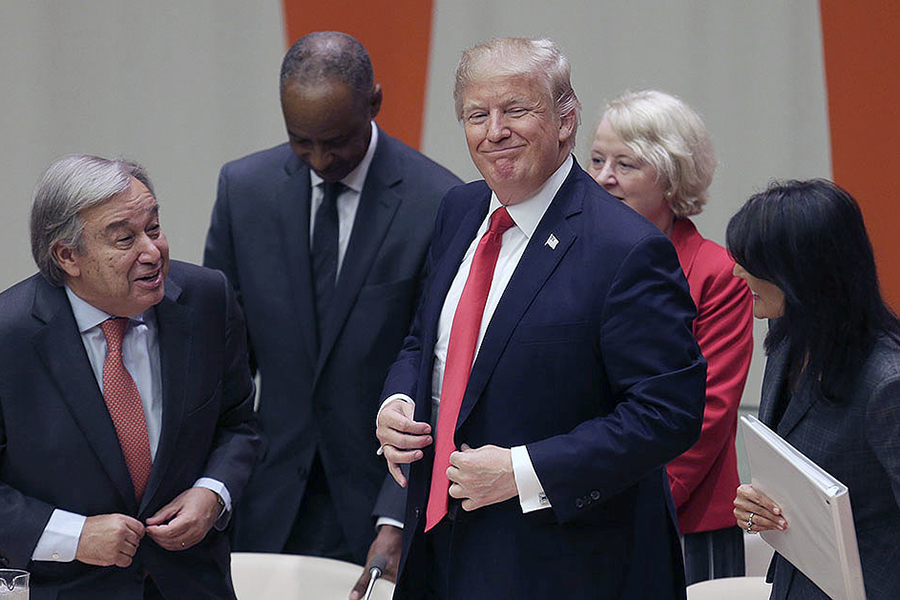
As a 12-year-old, Craig Kielburger (picture above, left) convinced his parents that he needed to fly half-way around the world when he learned that children were being sold into slavery. Upon his return, he and his 14 year-old brother Marc founded Free The Children, now known as WE. Today they are empowering millions of young people to change their communities and the world, packing 16 stadiums each year in celebrity-marqued “WE Day” events.

Craig, how do you instill that level of empathy, skills and motivation in kids?

Both my parents created an awareness around serving others through their example, something that inspired my brother Marc and me to want to serve the children of the world. When we were young, my mother would always acknowledge homeless people by asking their names and how long they’d been living on the streets. She would pull my brother and me into that 30-second conversation, and short as it was, it left a mark on us for the rest of our lives. We only realized later in life that she’d taught us the value of conscious engagement with others, something we can only clearly see now – as young adults ourselves, trying to engage with kids around the world. Of all the lessons parents teach their kids, it’s sometimes the small ones that can have the biggest impact.

Marc and I wrote a book called  “The World Needs Your Kid” on how to raise children who will care and contribute to society. If you walk into any bookstore section on parenting you’ll find endless literature on how to get your child into Ivy League universities, the right school or supercharging your baby’s brain – all achievement focused. But it’s hard to find a book about fostering compassionate and engaged kids. However, study after study has shown that parents most want to instill values like responsibility, caring, loyalty, happiness, and honesty in their kids. They rarely say I want my kid to be Valedictorian or Captain of the football team.

We believe that volunteering and service are crucial parts of any kid’s development and will lead to the values I have just mentioned. This is even borne out by scientific research. The University of Virginia ran a structured volunteer program, and after four years, those that had volunteered ended up with higher grades and made more responsible life choices. These values do not have to be at the expense of traditional family values either. Kids can still succeed academically and in the workplace while gaining valuable insights through community service.

It’s important to clarify the differences between volunteerism and service. Volunteerism might be picking up trash or helping out in a soup kitchen – all important and wonderful things to do – but service learning furthers academics and life skills.


We’ve created an Advance Placement (AP) Service-Learning curriculum. For example, in a service-learning AP Biology class, you might test the water in your community for purity. In Spanish class, you might study with a new immigrant to your country. In computer science, you wouldn’t only code apps, but also engage with students across the country with social apps to solve social problems. We’ve developed  a system whereby completed educational courses with service components built into them count as credits toward your qualifications. Service credits can now reflect on high school transcripts or university registrar office records. It’s a revolutionary moment, and proof that we are shifting learning from memory-based to experiential learning. While still at high school, teenagers can now be involved in a service that creates social impact.

There are many studies that show students learn better through doing. Grades, marks and graduation are important, but equally so is the development of life skills – what some people would call leadership.

Leadership skills include skills such as emotional intelligence, teamwork, critical thinking and grit. These may be seen as “soft skills” but they are incredibly important and best taught through service programs. Real leadership requires group-led action, community engagement and persuasive communication.

In the United States we already have many great service initiatives, such as the Peace Corps, but many require members to be over the age of 18. I believe that the earlier you intervene as a parent the greater the benefits down the line. We need to focus on kids from the ages of 8 to 11. These are critical ages in which to develop a sense of self and there is currently no national program in the United States for developing the idea of service in these early years.

I’ve seen first-hand over the last 20 years how this is possible. In the beginning, our organization (WE)  just focused on international development. Then Oprah got involved and pledged to build 100 schools in our developing communities and gave us coverage on her shows.

Despite the attention and media coverage from influential people, we realized an amazing thing – children were the ones wanting to help the most.

Kids in North America established a sister village with counterparts on the other side of the globe. More than 5,000 young people went on service trips with us and an incredible global education began. WE Schools is now a yearlong service learning program of youth making a difference in their local and global communities. These actions are celebrated at WE Day events which now fills 16  stadiums with 200,000 kids each year and is a reminder of how children should not be seen as problems to be solved, but rather, as problem-solvers themselves.

An incredible thing has started to happen at our WE Day events. CEOs and people from all walks of life are flying with their kids to attend. Parents will discuss leadership with their kids and reinforce the messages from WE Day as part of their family values. Kids used to see charity events as an evening that took their parents away, something they were never invited to attend. Now they create  a family experience together, one focused on service.

Some of our speakers have included Magic Johnson, Richard Branson and Prince Harry, who are all extremely busy people, yet they have taken the time to speak to young people, realizing the importance of inspiring our youngest generation today to find their own solutions to the world’s problems.

Real Leaders: It’s amazing what a couple of determined kids can accomplish!

For more information go to www.We.org
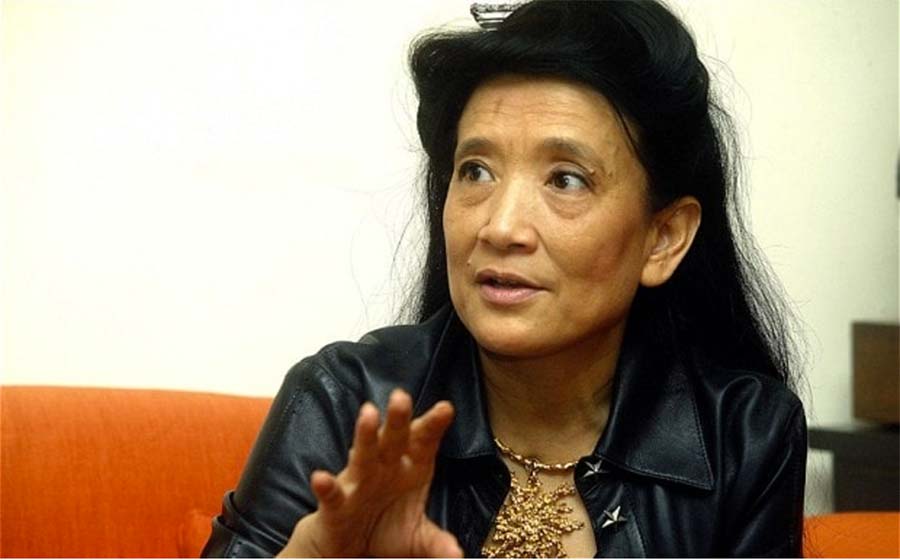
 

Jung Chang: Chinese-born British Writer

Jung Chang is a Chinese-born British writer now living in London, best known for her family autobiography Wild Swans, selling over 10 million copies worldwide but banned in the People’s Republic of China.

Her 832-page biography of Mao Zedong, Mao: The Unknown Story, written with her husband, the Irish historian Jon Halliday, was published in June 2005.

Chang was born 25 March 1952 in Yibin, Sichuan Province, China. Her parents were both Communist Party of China officials, and her father was greatly interested in literature. As a child she quickly developed a love of reading and writing, which included composing poetry. Like many of her peers, Chang chose to become a Red Guard at the age of 14, during the early years of the Cultural Revolution. In Wild Swans she said she was “keen to do so”, “thrilled by my red armband”. In her memoirs, Chang states that she refused to participate in the attacks on her teachers and other Chinese, and she left after a short period as she found the Red Guards too violent.

Chang left China in 1978 to study in Britain on a government scholarship, staying first in London. She later moved to Yorkshire, studying linguistics at the University of York with a scholarship from the university. She received her PhD in linguistics from York in 1982, becoming the first person from the People’s Republic of China to be awarded a PhD from a British university.

The publication of Jung Chang’s second book Wild Swans made her a celebrity. Chang’s unique style, using a personal description of the life of three generations of Chinese women to highlight the many changes that the country went through, proved to be highly successful. Large numbers of sales were generated, and the book’s popularity led to its being sold around the world and translated into nearly 40 languages.

Chang became a popular figure for talks about Communist China; and she has travelled across Britain, Europe, America, and many other places in the world. She returned to the University of York on 14 June 2005, to address the university’s debating union and spoke to an audience of over 300, most of whom were students.


Friedrich Trump, Donald Trump’s Grandfather

A German historian, Roland Paul, has uncovered a local council letter from 1905 informing Donald Trump’s grandfather Friedrich Trump – who had become a United States citizen – that he would not be granted his German citizenship back and that he had eight weeks to leave the country or be deported. He also claimed that Trump had illegally left Germany, failing to notify authorities of his plan to immigrate.

Paul came across the document on Friedrich Trump’s threatened deportation in German state archives and also found several letters from him pleading with authorities to allow him to stay. Paul mused on how this one administrative decision seemed to have changed the course of history.

Donald Trump’s father was born in the US, where he met Trump’s mother, Mary Anne MacLeod, who hailed from Scotland.

In 1885, at age 16,Friedrich Trump emigrated to the United States aboard a steamship and arrived at the Emigrant Landing Depot in New York City on October 19. U.S. immigration records list his name as “Friedrich Trumpf”, last place of residence as “Kallstadt”, country of birth as “Germany”, and his occupation as “farmer”. He moved in with his older sister Katharina – who had emigrated in 1883 – and her husband Fred Schuster. Only a few hours after arriving, he met a German-speaking barber who was looking for an employee and began working the following day. Trump lived with his relatives in the Lower East Side of Manhattan in a neighborhood with many other immigrants.

In May 1904, when he applied in New York for a U.S. passport to travel with his wife and his daughter, he listed his profession as “hotelkeeper”. In Germany, Trump deposited into a bank his life’s savings of 80,000 marks, equivalent to $505,248 in 2016.

Soon after returning, Bavarian authorities determined that Trump had emigrated from Germany to avoid his military-service obligations, and he was labeled a draft dodger. On December 24, 1904 the Department of Interior announced an investigation to expel Trump from the country. Officially, they found that he had violated the Resolution of the Royal Ministry of the Interior number 9916, a 1886 law that punished emigration to North America to avoid military service with the loss of German citizenship. For several months, he unsuccessfully petitioned the government to allow him to stay.
 
He and his family finally returned to New York on June 30, 1905 where Donald Trump’s father, Fred, was born on October 11, 1905, in Queens, New York.
 

Friedrich Trump, Donald Trump’s Grandfather

A German historian, Roland Paul, has uncovered a local council letter from 1905 informing Donald Trump’s grandfather Friedrich Trump – who had become a United States citizen – that he would not be granted his German citizenship back and that he had eight weeks to leave the country or be deported. He also claimed that Trump had illegally left Germany, failing to notify authorities of his plan to immigrate.

Paul came across the document on Friedrich Trump’s threatened deportation in German state archives and also found several letters from him pleading with authorities to allow him to stay. Paul mused on how this one administrative decision seemed to have changed the course of history.

Donald Trump’s father was born in the US, where he met Trump’s mother, Mary Anne MacLeod, who hailed from Scotland.

In 1885, at age 16,Friedrich Trump emigrated to the United States aboard a steamship and arrived at the Emigrant Landing Depot in New York City on October 19. U.S. immigration records list his name as “Friedrich Trumpf”, last place of residence as “Kallstadt”, country of birth as “Germany”, and his occupation as “farmer”. He moved in with his older sister Katharina – who had emigrated in 1883 – and her husband Fred Schuster. Only a few hours after arriving, he met a German-speaking barber who was looking for an employee and began working the following day. Trump lived with his relatives in the Lower East Side of Manhattan in a neighborhood with many other immigrants.

In May 1904, when he applied in New York for a U.S. passport to travel with his wife and his daughter, he listed his profession as “hotelkeeper”. In Germany, Trump deposited into a bank his life’s savings of 80,000 marks, equivalent to $505,248 in 2016.

Soon after returning, Bavarian authorities determined that Trump had emigrated from Germany to avoid his military-service obligations, and he was labeled a draft dodger. On December 24, 1904 the Department of Interior announced an investigation to expel Trump from the country. Officially, they found that he had violated the Resolution of the Royal Ministry of the Interior number 9916, a 1886 law that punished emigration to North America to avoid military service with the loss of German citizenship. For several months, he unsuccessfully petitioned the government to allow him to stay.
 
He and his family finally returned to New York on June 30, 1905 where Donald Trump’s father, Fred, was born on October 11, 1905, in Queens, New York.
 

Adrienne Clarkson, 26th Governor General of Canada

The 26th Governor General of Canada (1999-2005), Adrienne Clarkson is universally acknowledged to have transformed the office during her six years at Rideau Hall and to have left an indelible mark on Canada’s history. 

Clarkson was born in Hong Kong and came to Canada as a refugee in 1942. Her family settled in Ottawa, where she attended public schools until graduating from Lisgar Collegiate Institute in 1956. She obtained both an Honours B.A. and her M.A in English Literature from the University of Toronto’s Trinity College, followed by studies at La Sorbonne. Her work has been recognized with dozens of awards in Canada, the United States, and Europe including 32 honorary doctorates.

Her tenure as Governor General was remarkable for the considerable attention she brought to the courage of Canada’s Armed Forces and increased our vigilance to Canada’s commitment to international peace and security. Her passionate interest in Canada’s North, and in the circumpolar nations as a whole, led her to establish the Governor General’s Northern Medal, awarded annually to an individual who has contributed outstandingly to the understanding and development of the North. In particular, her interest in the Aboriginal peoples was remarkable and has helped push the question of native peoples in Canada to the forefront of national discussion.

National Post Columnist John Fraser once remarked that she “has the ability, unique among public officials, of making Canadians feel good about themselves and their country.” This talent was recognized by the Blood Tribe of Alberta who adopted her as an honorary chief. Clarkson was given the title “Grandmother of Many Nations.”

Upon leaving the office of Governor General in 2005, Madame Clarkson co-founded the Institute for Canadian citizenship (ICC), with her husband, John Ralston Saul. The Institute seeks to accelerate the acculturation of new citizens into Canadian life so they can participate fully and add their important voice to Canada’s pluralistic society.


David Beckham: Work Hard and Have a Passion for What you do

Football star and Unicef ambassador David Beckham has the following advice for young people – work hard, be dedicated, stay grounded and have a passion for what you do.

In an interview at the Discovery Leadership Summit in Johannesburg yesterday, the 41-year-old former England soccer captain said his greatest sporting achievement was leading his national team country and his biggest life achievement is his family – his wife Victoria and his four children – and his involvement with Unicef and its focus on improving the lives of children around the world.

Asked about what has made him successful in sport, business and other aspects of his life, the ex -Manchester United player (who also played for Real Madrid, L A Galaxy, Paris Saint-Germain and A C Milan) placed the emphasis on teamwork.

“The team I have around me has made me successful,” he stressed. “My parents were hard workers. I got my work ethic from them. My dad was very strict – but he guided me and gave me support.”

Passion is at the heart of his soccer success and his later entrance into building brands and international philanthropy.

On managers that he has played under, Beckham said they all wanted to win, “some more than others.” Although he did not view himself as a natural leader, he captained England for six years and found that being captain gave him very different responsibilities to being a player.

So who does he think is the best footballer in the world right now? He did not want to choose between Lionel Messi and Cristiano Ronaldo! He also rates former team-mate Wayne Rooney as a great player.


Try Crowdfunding to Start Your Business

Crowdfunding has become very popular over the past few years. One of the most difficult parts of starting up a business is securing enough finance to get it up and running.

If you’re unable to get a bank loan and have no connection to any investors, it can be extremely difficult to take your awesome idea and make it come to life. Crowdfunding has become an increasingly popular solution to this problem, by allowing start-ups to pitch their idea to a large number of prospective investors at the same time.

The Benefits of Crowdfunding

1. Efficiency – Crowdfunding is useful at the beginning phase of a business, where a pre-existing, online platform gives you the tools to get started, at low (or no) cost. With crowdfunding you are able to share your business story and produce a short motivational video that can entice investors to fund your idea.

2. Building Social Proof – Once investors have funded your idea this provides you with social proof to potential customers that your business/product is worth trying out.

3. Global Investment – By pitching your idea through online crowdfunding you are actively reaching out to investors from across the globe, helping to build greater geographical reach.

4. Media and Marketing Attention – crowdfunding creates exposure to the media who can direct more attention to your business idea and this further creates awareness, helping your idea reach more viewers.

Crowdsourcing is a brilliant way for young entrepreneurs to get their business ideas started. Here are a few crowdfunding companies you can approach if you’re looking to start-up a business; Indiego, Kickstarter, Crowdfunder, CircleUp, MicroVentures, RocketHub, EquityNet and Fundable.

Below is a list of successful, young entrepreneurs who have started their businesses using this beneficial crowdfunding process.


httpss://www.instagram.com/p/5UtxVEKwol/?tagged=crowdfunded


httpss://www.instagram.com/p/BKqmBCojyHQ/?tagged=crowdfunded


httpss://www.instagram.com/p/BHWx0XVDv_d/?tagged=baubax


httpss://www.instagram.com/p/BFu3CCMBddh/


httpss://www.instagram.com/p/BMnmEMJDUlV/


Indra Nooyi, CEO of PepsiCo

Born in Madras, India, the future CEO of PepsiCo grew up conservative and middle-class, studying physics, chemistry, and math. Her determination to study in the U.S. brought her to Yale University’s Graduate School of Management in 1978. 

Despite financial aid from Yale, Nooyi worked nights as a receptionist. She went in for interviews wearing a sari because she “had no money to buy clothes.”

But she persevered and finished her degree, moving on to the Boston Consulting Group before joining PepsiCo in 1994. Since then, she has been a major part of reshaping the Pepsi brand, overseeing major acquisitions like Quaker Oats and Tropicana, and becoming CEO in 2001. 

Nooyi’s strategic redirection of her company has been largely successful. She reclassified Pepsico’s products into three categories: “fun for you” (such as potato chips and regular soda), “better for you” (diet or low-fat versions of snacks and sodas), and “good for you” (items such as oatmeal). Her initiative was backed up with ample funding.

She moved corporate spending away from junk foods and into the healthier alternatives, with the aim of improving the healthiness of even the “fun” offerings. In 2015, Nooyi removed aspartame from Diet Pepsi, furthering the shift towards healthier foods

She has consistently ranked among the World’s 100 Most Powerful Women. In 2014, she was ranked 13 in the list of Forbes World’s 100 most powerful women.


Hamdi Ulukaya: The Turkish Immigrant Who Just Made Americans Richer

Hamdi Ulukaya is an immigrant from Turkey who came to the USA with nothing and within 10 years is running a Yogurt company worth billions. He just gave 10% of the company to his employees – worth 100,000’s of dollars for each employee. He also gave $700m to Syrian refugees.

Ulukaya is the owner, founder, Chairman, and CEO of Chobani, the number one selling strained yogurt brand in the United States. Many consumer might recognize the name, but most don’t know the story of how it began.

In 1994 Ulukaya travelled from his family dairy farm in a small village in Turkey to America. His original goal was to study English and take a few business courses. On the advice of his father, and with his knowledge of dairy, he started a modest feta-cheese factory in 2002. It was met with moderate success until he decided to take a major risk in 2005: the purchase of a large, defunct yogurt factory in upstate New York.

With no prior experience in the yogurt business, he persevered and today has a yogurt empire, Chobani, valued at over $1 billion in annual sales within the first five years. It became the leading yogurt brand in America by 2011 and the popularity of his Greek-style yogurt had the knock-on effect of sparked the rise in Greek yogurt’s market share – from less than 1% in 2007 to more than 50% in 2013.

Ernst & Young named Ulukaya the World Entrepreneur of the Year in 2013 and the success of his yogurt empire has made Ulukaya a billionaire. According to Forbes, his net worth as of 2016 is $1.92 billion.

In April this year, Ulukaya handed his 2,000 full-time employees a surprise: an ownership stake in the company that could makesome of them millionaires. He is giving up to 10 percent of the company to his employees when it goes public or is sold. The number of shares given to each person is based on how long they have worked at Chobani. The average employee payout will be in the region of $150,000 with the earliest employees standing to get a staggering $1 million.

Ulukaya has stated that higher wages for employees leads to greater corporate success. Not only does he promote the position that companies can succeed when they pay their workers more, they also have a moral obligation to do so, stating that, “…for the sake of our communities and our people, we need to give other companies the ability to create a better life for more people.”

In an interview with Ernst and Young Global Chairman and CEO Mark A. Weinberger, Ulukaya took the position that businessmen should promote a sense of purpose in their corporate culture to create a climate of positive change in business and the world. He stated that companies should focus on humanity and not just on their bottom lines. “Business is still the strongest, most effective way to change the world,” he said.


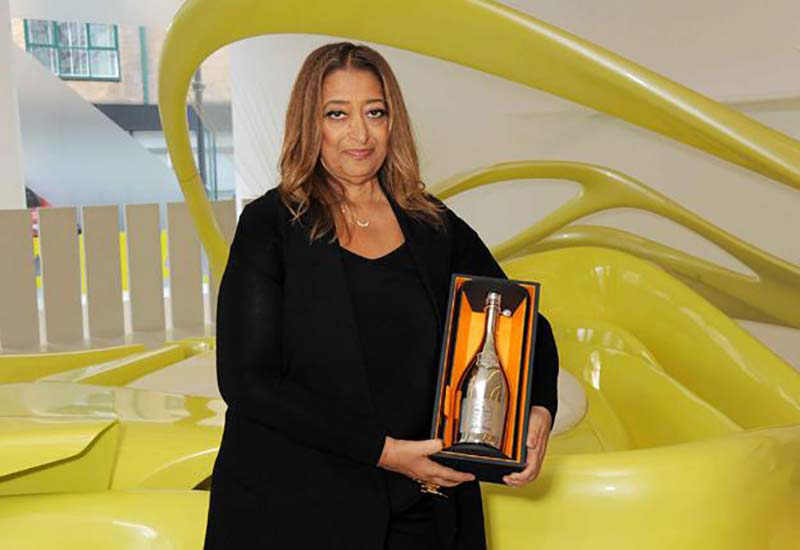
Zaha Mohammad Hadid: From Iraq to Redefining Global Cities

Dame Zaha Mohammad Hadid (31 October 1950 – 31 March 2016) was an Iraqi-born British architect. She was the first woman to receive the Pritzker Architecture Prize, in 2004.

Hadid was born in Baghdad, Iraq. Her father, Muhammad al-Hajj Husayn Hadid, was a wealthy industrialist from Mosul, Iraq. He co-founded the left-liberal al-Ahali group in Iraq in 1932,  and was the co-founder of the National Democratic Party in Iraq. Her mother, Wajiha al-Sabunji, was an artist from Mosul.

Hadid studied mathematics at the American University of Beirut before moving, in 1972, to London to study at the Architectural Association School of Architecture.

She is best known for liberating architectural geometry with the creation of highly expressive, sweeping fluid forms of multiple perspective points and fragmented geometry that evoke the chaos and flux of modern life. A pioneer of parametricism, and an icon of neo-futurism, with a formidable personality, her acclaimed work and ground-breaking forms include the aquatic center for the London 2012 Olympics, the Broad Art Museum in the U.S., and the Guangzhou Opera House in China.


0