GameChangers 500: The World’s Top Purpose-Driven Organizations

Social enterprises, benefit corporations, blended value organizations, conscious capitalism; there are no shortage of buzzwords describing this monumental movement to create a new model of business.

But if you want to build one of these “force-for-good” businesses, is there a model to follow? How do you measure your success or failure? And if you want to work at one of these purpose-driven orgs, how do you find and differentiate the performers from the pretenders?

For the past three years I’ve been on a quest to answer these questions. I had watched one too many friends grow numb in profit-at-all-cost corporations, and couldn’t sit on the sidelines any longer.  Why is it that we spotlight the Fortune 500, a list that benchmarks success based on revenue alone? What if we created a new list that showcased the growing movement of organizations maximizing their positive impact rather than just maximizing their profit?  My “Aha” moment had arrived and the idea to create a GameChangers 500 (GC500) list was birthed—a list that would help emerging graduates find meaningful careers and plug their potential into powering a better world.

Equipped with blind ambition, I gave myself the title of social entrepreneur and then proceeded to spend three full months deliberating between a non-profit, for-profit or hybrid legal structure. It felt like choosing between broccoli, spinach or broccoli-spinach casserole—all of which were overcooked and a week old.  Further, figuring out a unique profit-sharing model took so much time that I nearly went out of business in the process! Where was the playbook of best practices on how to build a business that helps people and the planet thrive?  And how could I possibly create a database of the best “force for good” businesses if the rules of this new game weren’t defined?

Before the performers could be praised, the objectives, rules and point system of this new game needed to be determined.  It was clear that the objective wasn’t to maximize profit but rather to maximize benefit to people and the planet. What wasn’t clear, however, was how to keep score.

After receiving valuable input from experts in the field, we assembled a research team to comb the globe, reviewing thousands of organizations. Our team arrived at nine categories of best practices that these “force for good” businesses followed.

We then turned these nine categories into badges that organizations could earn as symbols of success in this new game. To further simplify the framework, we organized these badges into the following three sections:

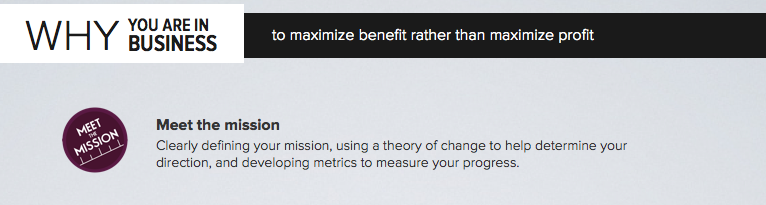
A-new-model-of-business_WHY

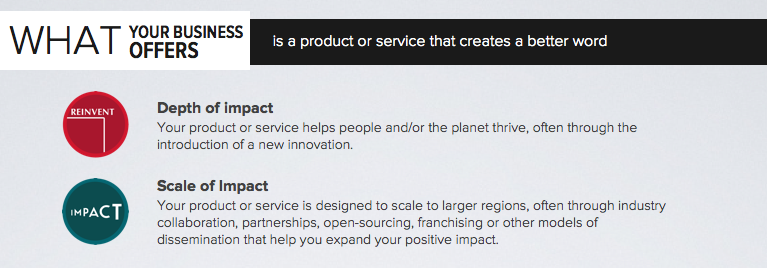
A-new-model-of-business_WHAT

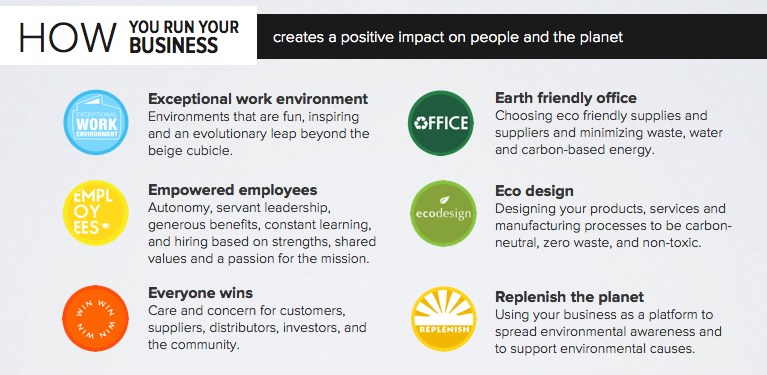
A-new-model-of-business_HOW

The Players: It was clear that this movement could not be defined by existing legal models.  Non-profits, For-profits and new legal breeds were all players, united by a common worldview that business as usual needed to change.  Together they were stretching the traditional paradigm to innovate a new model. Here’s how: Non-profits: There is a clear trend to use a non-profit entity in an enterprising way which moves beyond the limitations of grants and donations by earning income through the sale of a product or service.

These organizations benefit from having a purpose embedded in their ethos, while enjoying the flexibility and scalability of earning revenue. Overcoming the pressure to minimize operational overhead, these non-profits can more easily invest in things like empowering their employees and minimizing their environmental footprint.  As Dan Pallotta says, “Our generation does not want its epitaph to read, ‘We kept charity overhead low.’

We want it to read that we changed the world.” New legal breeds: The birth of new legal entities such as Benefit Corporations in the USA, Community Interest Companies in the UK, and Community Contribution Companies in Canada are paving the way for a new category of organization. Although it will take time for these models to build credibility and scale internationally, the hope is that one day the For-benefit structure will be an equal choice with For-profit and Non-profit. For-profits: Whole Foods, IDEO, Google, and Zappos are great examples of major corporations that have used traditional for-profit structures to scale their growth while implementing many untraditional practices that aren’t profit motivated. For example:

  • Whole Foods created Community Giving Days where 5% of that day’s net sales are given to local non-profits.
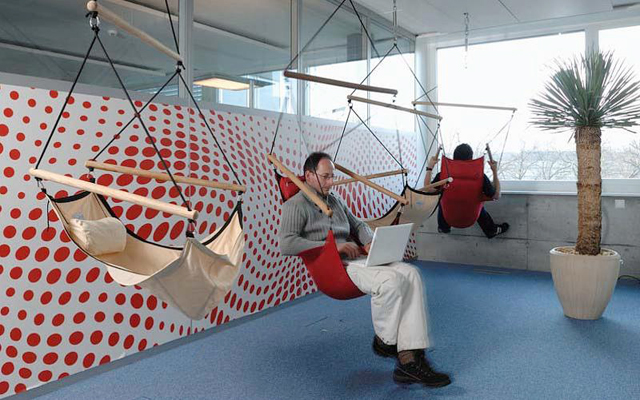
  • Google invested in creating an exceptional work environment with themed work spaces, slides between floors, free gourmet food, and radical amounts of employee autonomy.
  • Zappos innovated ways to “deliver happiness”—their mission—through untraditional benefits like surprising 80% of customers with free overnight shipping.
  • IDEO created IDEO.org to solve poverty related challenges by offering their talented designers to communities who need them the most.

Although they are unlikely to switch to a new legal entity, like a Benefit Corporation, these organizations are clearly part of this movement and are constantly innovating best practices that go beyond making a buck. As doing good continues to prove to be good business, it can be expected that more major corporations will join this “new game”.

Studies show that their ability to retain talent and market share rely on it. Considering the budget some large organizations spend on coffee filters alone is equal to the total revenue produced by many social enterprises, a small shift in this sector equates to an enormous positive impact. Thanks to great progress being made by law makers around the world, and organizations, like B Lab, we can expect this new model of business to continue taking shape.

Until then, we will define organizations by their best practices, not by their legal model and celebrate the GameChangers in business that don’t let rules or outdated paradigms define them. Although it took a lot longer than expected, I’m proud to say that the GameChangers 500 list (GC500) was announced on November 9th 2013 at Harvard’s Igniting Innovation Summit. Joining me in this announcement were executives from three exceptional organizations that qualified for the GC500—Warby Parker (benefit corporation), Life is Good (non-profit/for-profit hybrid) and New Balance (for-profit corporation).

Although each organization represents a different legal structure, they share a commitment to use business to create a better world.  In this presentation they brought the audience on a tour of their best practices across the 9 badge categories. I’m thrilled to showcase the GameChangers with the next generation of leaders, and offer an alternative to the profit-first organizations that have been heavily recruiting on campuses for decades. Game on!

Andrew Hewitt is the creator of the GameChangers 500 list (GC500) that profiles the world’s top purpose-driven organizations using business as force for good. He has been recognized as one of Canada’s top young entrepreneurs, is a bestselling author, and a guest lecturer on Social Entrepreneurship at the United Nations University of Peace.


GE: The World’s Oldest Startup on Effective Marketing

General Electric CMO Beth Comstock (above) believes marketing is about seizing opportunities. That’s why she’s constantly on the lookout for innovation, driving GE’s partnerships in healthcare and clean energy. It’s why today’s GE is utilizing video and social media to tell a global story with a local accent, and why tomorrow’s will see the integration of people and machines in a truly wired world.

“To be an effective marketer, you have to go where things are,” says Beth Comstock. “You have to see what’s happening and be a translator. You have to immerse yourself and not be comfortable sometimes.”

The General Electric CMO is sitting in a sleek conference room in the GE Building high above Manhattan’s Rockefeller Center. When Comstock speaks, though, she conjures up images of rural doctors in China and farmers in Africa. These developing markets and technologies are what Comstock sees when she thinks about the future for GE and marketing in general.

The 52-year-old often describes her job as “connecting the dots”–between GE’s seven segments (Power & Water, Oil & Gas, Energy Management, Aviation, Transportation, Healthcare, Home & Business Solutions), its many markets, and between the company and the outside world.

It’s something Comstock regularly does as head of GE’s sales, marketing, and communications, and in her management of the company’s multi-billion-dollar Ecomagination and Healthymagination initiatives, dedicated to environmental and health care innovation respectively. In her travels and conversations with customers, she constantly scans for patterns. “When you’re in this business, you see a lot of things,” Comstock notes. “Marketers are in a great position to notice if something’s happening in an industry like energy or healthcare.”

What separates the good marketers from the great ones is the ability to translate those observations into insights that can move a business or product. As Comstock and her 5,000 GE marketers set about trendspotting in 2013, her top insight for the new year is that marketing’s mandate will continue to grow. “It’s no longer enough to just be about brand and communications,” she says. “Marketing is now about creating and developing new markets; not just identifying opportunities but also making them happen.”

THE WORLD’S OLDEST START-UP

GE has been cultivating new markets by creating customer innovation centers in places like China. Its Chengdu facility, for instance, brings together local workers, GE marketers, and researchers to collaborate on new initiatives in mobile, affordable healthcare, and green energy. It opened in May and has already developed two new healthcare products (GE isn’t ready to name them) that will launch locally with the potential to roll out to other markets.

Under Comstock, GE has also been importing fresh ideas through competitions, partnerships, and guest talks. She likes to call GE “the world’s oldest start-up,” but admits the 134-year-old company needs partners to accomplish its more ambitious goals, whether it’s developing clean energy sources, or rolling out smart grid technology worldwide.

One recent ally is Los Angeles-based Oblong Industries. Best known for making the multitouch interface featured in Minority Report, Oblong entered one of GE’s Ecomagination open innovation challenges. “They hadn’t worked in the energy space, but we felt they could help us visualize the smart grid,” says Comstock. After funding a proof-of-concept pilot, GE announced an investment and licensing deal with the start-up for smart grid analytics in March.

GE started leveraging its open innovation challenges in 2010 and has now partnered with 15 environmental and health start-ups. The start-ups get commercial and technological support under a group Comstock manages called GE Ventures. Alliances are key because while GE operates a pipeline for internal innovation projects, candidates typically need to show $100 million of revenue potential (over three to five years) to win and maintain support. “Scale matters a lot to us,” says Comstock. “It’s hard to do both speed and scale well. Start-ups have great ideas and work fast while we have access to markets and great technology.”

GE also generates ideas through a global insights network that invites professors and other experts to campus to discuss cutting-edge topics like robotics. “We look for the most disruptive people we can find,” says Comstock. “We don’t want to think too traditionally. We have had to open up a lot more.”

“It’s hard to do both speed and scale well. Start-ups have great ideas and work fast while we have access to markets and great technology.”

CONTENT, CONVERGENCE AND THE DIGITAL FACTORY

Digital technologies are pushing GE in new directions. Comstock estimates she spends 40 percent of her budget on digital marketing. Over the past two years, GE has ramped up its video content in particular, hiring boutique agencies like The Barbarian Group to create short yet captivating clips about GE manufacturing and products.

Some of the videos explore GE systems and factories in artful ways while others thrill with extreme science stunts, such as dropping a robot off a wind turbine. BBDO remains GE’s advertising agency of record but Comstock says GE values small agencies’ willingness to take risks. “The Barbarian Group are great storytellers,” says Comstock. “They can translate stories that might otherwise be boring and technical. You don’t have to be a scientist to love these videos.”

Social technologies have also altered the way GE interacts with its customers. The company is active on Facebook, Google+, Instagram, Pinterest, Tumblr, Twitter and YouTube. GE calls Facebook the “hub” of its social experience. The site is home to more than 30 GE pages as well as its social health and fitness app, HealthyShare. On Google+, GE posts pictures, videos, and quiz questions relating to its industrial products, zeroing in on the service’s digital-savvy audience. On female-focused Pinterest, GE “pins” upbeat, health-related quotes and kitchen appliance photos. YouTube, of course, is GE’s video base with dozens of clips ranging from Barbarian-produced web shows to researcher interviews to TV ads.

Indeed, GE produces so much content across these sites that it calls itself a “digital factory.” For Comstock, this media convergence and blurring of roles is another 2013 trend. “The idea of an ad as a separate entity is fading fast. Brands are content publishers and consumers are, too. The days when we had separate swimlanes are over.”

Considering its size, GE was a surprisingly early adopter of social. Nevertheless, Comstock is wary of fads: “There are concepts out there people grab onto. You have to be careful of chasing the hot thing,” she cautions. When Comstock tries new tools, she tracks engagement metrics to assess whether the technology is relevant and scalable. Instagram is one social tool that passed her test. GE started using the photo-sharing app as an experiment.

Today, nearly 150,000 people “follow” GE’s photos of engines and power modules on the mobile social network. Like their web videos, the pictures let GE connect with technology enthusiasts. “Instagram is a way to go into our factories and get shots you wouldn’t normally see,” explains Comstock. “We’re targeting the inner geek in everyone. Most people want to know why things work.”

BUSINESS IS SOCIAL

Comstock has that inner geek, too. Studying science instilled a lasting interest in global ecosystems. As a Biology major at the College of William and Mary, Comstock once planned to become a doctor and she still views herself as a behaviorist: “I can get very focused on how people are using technology. Is it making lives better or worse? How is technology going to change how people act? That part of biology appeals to me.”

Comstock’s studies will soon extend to machines as GE brings social to inanimate objects. One of the company’s biggest growth strategies–and challenges–in 2013 will revolve around what they are calling the “industrial internet.” Known more broadly as the “Internet of Things,” the industrial internet involves applying digital and social technologies to machines to predict and prevent problems and increase productivity. In the future, GE’s MRI machines, jet engines, and gas turbines will all be wired.

The company plans to integrate content related to the Industrial Internet into existing initiatives like Ecomagination and Healthymagination. That could mean GE-generated news articles, infographics, or data visualizations of industrial internet topics, plus apps and multimedia projects, too. Imagine a YouTube video that shows how remote monitoring of a GE transformer prevents power outage during a storm. The key for Comstock is that “the Industrial Internet involves all of GE and goes beyond GE.”

It also points up another of her 2013 trends: Business is social and social is no longer limited to personal connections. “We’re working aggressively to link machines and people so businesses can be more productive,” Comstock says. “You’re going to see machine data and people interacting in real time.”

For example, GE recently hooked up one of its GEnx engines to Salesforce’sChatter software. The Boeing Dreamliner jet used the social platform to “speak” status updates to Japan Airlines service teams and GE engineers. The innovation should increase fuel efficiency and engine reliability, aiding on-time arrivals.

GE is making a big bet on the Industrial Internet, and will be promoting it to everyday consumers even though its services are geared to corporations, institutions, and agencies. Indeed, the broader marketing push has already begun. Over Thanksgiving, GE rolled out a new ad campaign, Brilliant Machines, to introduce the Industrial Internet to consumers. A traditional TV spot saw famous machines like KITT and the Mars Curiosity rover making a pilgrimage to GE HQ to be hooked up to the Industrial Internet. Online, there were promoted social media posts and a Brilliant Machines Tumblr. The point, says Comstock, “is to be relevant. It’s important for us to tell a story that connects in the consumer marketplace.”

GLOBAL PERSPECTIVE, LOCAL FLAVOR

That story is remarkably consistent worldwide. GE cleaves to a core branding message and framework but permits regional customization. The company’s current corporate storytelling platform, GE Works, highlights GE products while emphasizing their impact. It’s a global initiative, says Comstock, but in Brazil and India, for instance, the company hired local artists to tell GE Works stories in their own style. These print and outdoor ads varied in appearance but still focused on GE’s technology and influence on the world.

During 2013, GE’s marketing became even more global. Besides China and Africa, Comstock is excited by prospects in Indonesia, Latin America, Myanmar, and Peru. Wherever GE goes, Comstock will be there, on the ground and on the hunt for new products and markets. “Sometimes marketers get accused of being too academic,” she admits. “But although a consultant might be able to tell me about something, I prefer to see it myself. Experts can help translate, but being there is essential.”

This article was written by Elizabeth Woyke and originally appeared on thinkwithgoogle.com



Google’s Eight Pillars of Innovation

How does a company like Google continue to grow exponentially while still staying innovative? Susan Wojcicki, Google’s Senior Vice President of Advertising, discusses some of the processes and principles in place to make sure that the company doesn’t get bogged down in the past as it keeps moving forward.

The greatest innovations are the ones we take for granted, like light bulbs, refrigeration and penicillin.

But in a world where the miraculous very quickly becomes common-place, how can a company, especially one as big as Google, maintain a spirit of innovation year after year? Nurturing a culture that allows for innovation is the key. As we’ve grown to over 26,000 employees in more than 60 offices, we’ve worked hard to maintain the unique spirit that characterized Google way back when I joined as employee #16. At that time I was Head of Marketing (a group of one), and over the past decade I’ve been lucky enough to work on a wide range of products. Some were big wins, others weren’t.

Although much has changed through the years, I believe our commitment to innovation and risk has remained constant. What’s different is that, even as we dream up what’s next, we face the classic innovator’s dilemma: should we invest in brand new products, or should we improve existing ones? We believe in doing both, and learning while we do it. Here are eight principles of innovation we’ve picked up along the way to guide us as we go.

1. HAVE A MISSION THAT MATTERS

Work can be more than a job when it stands for something you care about. Google’s mission is to ‘organize the world’s information and make it universally accessible and useful.’ We use this simple statement to guide all of our decisions. When we start work in a new area, it’s often because we see an important issue that hasn’t been solved and we’re confident that technology can make a difference.

For example, Gmail was created to address the need for more web email functionality, great search and more storage. Our mission is one that has the potential to touch many lives, and we make sure that all our employees feel connected to it and empowered to help achieve it. In times of crisis, they have helped by organizing life-saving information and making it readily available. The dedicated Googlers who launched our Person Finder tool (to learn more see Missions that Matter) within two hours of the earthquake and tsunami in Japan this March are a wonderful recent example of that commitment.

2. THINK BIG BUT START SMALL

No matter how ambitious the plan, you have to roll up your sleeves and start somewhere. Google Books, which has brought the content of millions of books online, was an idea that our founder, Larry Page, had for a long time. People thought it was too crazy even to try, but he went ahead and bought a scanner and hooked it up in his office.

He began scanning pages, timed how long it took with a metronome, ran the numbers and realized it would be possible to bring the world’s books online. Today, our Book Search index contains over 10 million books. Similarly, AdSense, which delivers contextual ads to websites, started when one engineer put ads in Gmail. We realized that with more sophisticated technology we could do an even better job by devoting additional resources to this tiny project. Today, AdSense ads reach 80 percent of global internet users – it is the world’s largest ad network – and we have hundreds of thousands of publishers worldwide.

3. STRIVE FOR CONTINUAL INNOVATION, NOT INSTANT PERFECTION

The best part of working on the web? We get do-overs. Lots of them. The first version of AdWords, released in 1999, wasn’t very successful – almost no one clicked on the ads. Not many people remember that because we kept iterating and eventually reached the model we have today. And we’re still improving it; every year we run tens of thousands of search and ads quality experiments, and over the past year we’ve launched over a dozen new formats. Some products we update every day. Our iterative process often teaches us invaluable lessons.

Watching users ‘in the wild’ as they use our products is the best way to find out what works, then we can act on that feedback. It’s much better to learn these things early and be able to respond than to go too far down the wrong path. Iterating has served us well. We weren’t first to Search, but we were able to make progress in the market by working quickly, learning faster and taking our next steps based on data.

4. LOOK FOR IDEAS EVERYWHERE

As the leader of our Ads products, I want to hear ideas from everyone – and that includes our partners, advertisers and all of the people on my team. I also want to be a part of the conversations Googlers are having in the hallways. Several years ago, we took this quite literally and posted an ideas board on a wall at Google’s headquarters in Mountain View. On a Friday night, an engineer went to the board and wrote down the details of a convoluted problem we had with our ads system.

A group of Googlers lacking exciting plans for the evening began re-writing the algorithm within hours and had solved the problem by Tuesday. Some of the best ideas at Google are sparked just like that – when small groups of Googlers take a break on a random afternoon and start talking about things that excite them. The Google Art Project, which brought thousands of museum works online, and successful AdWords features like Automated Rules, are great examples of projects that started out in our ‘microkitchens.’ This is why we make sure Google is stocked with plenty of snacks at all times.

5. SHARE EVERYTHING

Our employees know pretty much everything that’s going on and why decisions are made. Every quarter, we share the entire Board Letter with all 26,000 employees, and we present the same slides presented to the Board of Directors in a company-wide meeting. By sharing everything, you encourage the discussion, exchange and re-interpretation of ideas, which can lead to unexpected and innovative outcomes.

We try to facilitate this by working in small, crowded teams in open cube arrangements, rather than individual offices. When someone has an idea or needs input on a decision, they can just look up and say, ‘Hey…’ to the person sitting next to them. Maybe that cube-mate will have something to contribute as well. The idea for language translation in Google Talk (our Gmail chat client) came out of conversations between the Google Talk and Google Translate teams when they happened to be working near one another.

6. SPARK WITH IMAGINATION, FUEL WITH DATA

In our fast-evolving market, it’s hard for people to know, or even imagine, what they want. That’s why we recruit people who believe the impossible can become a reality. One example is Sebastian Thrun who, along with his team, is building technology for driverless cars to reduce the number of lives lost to roadside accidents each year. These cars, still in development, have logged 140,000 hands-free miles driving down San Francisco’s famously twisty Lombard Street, across the Golden Gate Bridge and up the Pacific Coast Highway without a single accident.

We try to encourage this type of blue-sky thinking through ‘20 percent time’ – a full day a week during which engineers can work on whatever they want. Looking back at our launch calendar over a recent six-month period, we found that many products started life in employees’ 20 percent time. What begins with intuition is fueled by insights. If you’re lucky, these reinforce one another. For a while the number of Google search results displayed on a page was 10 simply because our founders thought that was the best number. We eventually did a test, asking users, ‘Would you like 10, 20 or 30 search results on one page?’ They unanimously said they wanted 30.

But 10 results did far better in actual user tests, because the page loaded faster. It turns out that providing 30 results was 20 percent slower than providing 10, and what users really wanted was speed. That’s the beautiful thing about data – it can either back up your instincts or prove them totally wrong.

7. BE A PLATFORM

There is so much awe-inspiring innovation being driven by people all over the globe. That’s why we believe so strongly in the power of open technologies. They enable anyone, anywhere, to apply their unique skills, perspectives and passions to the creation of new products and features on top of our platforms. This openness helps to move the needle forward for everyone involved.Google Earth, for example, allows developers to build ‘layers’ on top of our maps and share them with the world.

One user created a layer that uses animations of real-time sensor data to illustrate what might happen if sea levels rose from one to 100 meters. Another famous example of open technology is our mobile platform, Android. There are currently over 310 devices on the market built on the Android OS, and close to half a million Android developers outside the company who enjoy the support of Google’s extensive resources. These independent developers are responsible for most of the 200,000 apps in the Android marketplace.

 8. NEVER FAIL TO FAIL

Google is known for YouTube, not Google Video Player. The thing is, people remember your hits more than your misses. It’s okay to fail as long as you learn from your mistakes and correct them fast. Trust me, we’ve failed plenty of times. Knowing that it’s okay to fail can free you up to take risks. And the tech industry is so dynamic that the moment you stop taking risks is the moment you get left behind. Two of the first projects I worked on at Google, AdSense and Google Answers, were both uncharted territory for the company.

While AdSense grew to be a multi-billion-dollar business, Google Answers (which let users post questions and pay an expert for the answer) was retired after four years. We learned a lot in that time, and we were able to apply the knowledge we had gathered to the development of future products. If we’d been afraid to fail, we never would have tried Google Answers or AdSense, and missed an opportunity with each one.

Our growing Google workforce comes to us from all over the world, bringing with them vastly different experiences and backgrounds. A set of strong common principles for a company makes it possible for all its employees to work as one and move forward together. We just need to continue to say ‘yes’ and resist a culture of ‘no’, accept the inevitability of failures, and continue iterating until we get things right. As it says on our homepage, ‘I’m feeling lucky.’ That’s certainly how I feel coming to work every day, and something I never want to take for granted.

This article originally appeared at thinkwithgoogle.com


The Power of the Collective: Co-location & the Social Economy

The socio-political and economic conditions in North America have been undergoing a considerable shift over the last several decades. The end of the post-WWII “golden age” heralded a gradual erosion of the Keynesian welfare state social safety-net and as a result, state funding has been continuously withdrawn from social services.

The reason for this shift is due to the rise of a neo-liberal brand of capitalism that has the ability to create vast amounts of wealth but does not adequately account for the social and environmental externalities that result from ‘business-as-usual’ practices. These externalities can be understood as the destruction of the environment and the systemic social exclusion and poverty that arises due to the inherently dispassionate and detached nature of Neoliberalism – best captured by the sentiment of one of its staunchest supporters, Milton Friedman, “there is one and only one social responsibility of business – to use it resources and engage in activities designed to increase its profits.”

By design, this economic system creates an ongoing need for non-profit organizations to fill the void in social service provision; however this responsibility has been undertaken in an economic environment increasingly characterized by limited fiscal and human resources. Enter the Social Enterprise.

Social enterprises operate at the intersection of the private, public and third sectors. In this space, the social enterprise fulfills a critical role of furthering social and environmental agendas within the confines of the capitalist system. That is to say, they utilize the tenets of capitalism to appeal to society’s consumer culture, but do so as a means of achieving social change.

This is an important distinction – one that has the potential to revolutionize the status quo and create a more socially equitable and environmentally sustainable reality. Having the triple bottom line (social, environmental and profit) as the guiding principle instead of solely profit, allows for a more inclusive system that can appropriately account for (if not eliminate) negative externalities.

My work as an independent researcher has focused on the ways we can adapt and enhance the social economic paradigm to create better business models capable of competing on larger scales, with private sector giants. The most recent article I’ve published on this subject deals with the concept of Co-location as a viable model that can reduce financial and administrative burden of social enterprises while generating social innovation.

Co-location is a popular concept for supply chain integration in the private sector and has incredible potential for social enterprise. The theory is based on the fact that throughout our history, humans have always thrived when working together towards common goals. The power of our collective action has built cities, transformed entire societies and even changed the course of history.

Co-location builds on this fundamental principle of human system interaction and is premised on the notion that sharing space can be an effective way for smaller non-profit or social enterprise organizations to reduce their costs, expand their services and improve their operational efficiency. Co-location also offers an avenue to capture and harness the creative energies of like minded people. Sharing space has been a practice of the third sector for decades, however new social research has uncovered that the benefits of sharing space go far beyond simple economic considerations.

Specifically, sharing space can “break down silos, reduce costs, increase opportunities for collaboration and cooperation, create knowledge and learning networks and spark social innovation”. So while this may not be a new concept, it is certainly one worth looking at again.

The research on co-location over the last two decades has found that the social, political and economic advantages of sharing space are profound. This is particularly important for non-profits or social enterprises that are more often than not: understaffed, underfunded and overworked. At a very mechanistic level, sharing space can reduce the administrative burden on non-profits through cost-sharing for common tools such as advertising, printing, heating and water costs etc.

There are also political advantages to sharing space: the political leverage that can be exacted from having strategic clusters working together on bids or lobbying can be significantly more than a singular organization working towards the same ends. Most importantly, there are tangible synergies that transcend these more technical advantages. The real magic of the shared space concept is predicated on the equation: Physical Space + Community = Social Innovation. The theory of co-location asserts that by sharing space (and costs) with driven, talented and like-minded individuals social innovation can occur at a more rapid and frequent pace.

Being immersed in such a creative environment allows for continuous learning, inspiration and accelerated growth and development. The upcoming Social Enterprise Alliance Summit 14 employs the tenets of co-location at the temporary but macro-cosmic level by bringing together giants in the social economy to help foster an atmosphere of learning by creating opportunities to engage with each other in order to harness the power of our collective action.

Summit 14 provides a platform to explore the potential of this emergent sector to create lasting and meaningful change that will ensure a better future for our children – and to remind us that together, we CAN make a difference.

This post was written by Andi Sharma, MPA, Policy Analist, Government of Manitoba. She will be speaking on this topic at the upcoming Social Enterprise Alliance Summit ’14.


Don’t Work For A Jerk

Work should be a source of joy.

Okay, if that’s too strong, it should at least be a source of well-being. Gallup’s research confirms that work is the second most important factor in promoting our life satisfaction. (The first is the quality of our relationships.) We spend half our waking hours working. It is a source of personal identity, growth, and self-efficacy. That’s all great when our work is good. But when our work is not good, it’s our single greatest source of stress. And new research is confirming what we all know.

If our work is stressful, it’s mostly because our boss is bad. 

Here’s why: Business organizations are designed as power hierarchies. This is because the military is run as a power hierarchy, and modern organizations come from the military gene pool. The family tree of business also runs back to royalty, warlords, and a host of archaic organization models. They people at the top of hierarchies hold life-and-death power (or hire-or-fire power) over everyone. They are also expected to be smarter, better informed, and more capable than their employees. Of course, sometimes they are. Often they are not.

But it’s not competency alone that determines whether a leader creates a great place to work. More often, it is his or her personality, values and worldview. 

The emerging research on leaders of large, modern enterprises is that they tend to be more narcissistic and less empathetic than average. I know, this is not surprising. But let’s take a closer look. Narcissists:

  • Tend to act confident, be well-groomed, self-promoting, and extroverted. They make eye contact, offer inflated compliments, and have high energy.
  • Need and may demand the spotlight, recognition, and admiration.
  • Are self-serving, self-focused, and insistent.
  • Constantly search for better deals, better people, better jobs, better spouses.

And their grand ability is to leverage their influence to dominate a social group. That’s why leadership positions in business, politics, and the media appear to be loaded with narcissists. What’s dangerous about this is that the most dominant traits of a narcissist is fake empathy. That is when a person pretends to care about the sufferings and sacrifices of others, but really doesn’t.

It’s what enables business executives to permanently lay off hardworking, creative successful employees to temporarily raise profits. It is what enables leaders to sell and promote bad food and harmful products, or brazenly pollute and poison the environment. Researches have now administered thousands of personality assessments, and found that people with low empathy scores tend to become lawyers, economists, and investment bankers. (I know, I know, no surprise.) So what’s this got to do with our work? Everything.

IBM published research a couple of years ago revealing the person most employees least enjoy spending time with is their boss. They found that our stress hormone levels skyrocket when we talk to our bosses, due to the massive economic and social power bosses have. If that power is wielded by a narcissist or a low-empathy leader, it’s frankly very scary. The cure is simple. Not easy, but simple. And it has two elements.

First, become great at something.

That way, you have a career instead of a job. We all earn money by creating value. Value in a business is primarily created by saving money or making money. Be clear on what you’re great at and get better. Become an expert in a field you’re passionate about. You do this by reading, going to conferences, writing speaking, doing. Do something for at least 30 minutes each day to learn something new in your field of choice. Give yourself three years to get in the top 25% of your field. In five years, you’ll be in the top 10%. Life is short. Be great at your work so you will always be in demand.

Second, don’t work for a jerk.

Remember, business is a magnet for slick narcissists. So if you are going to work for someone rather than yourself, you must target great companies that push self-promoters away. You will discover these humane places to work through networking, reading local lists of good companies, and asking around.

Sometimes transitions take time. Don’t fret about it. Just don’t settle for being stressed, scared, and exploited. I recently finished teaching a career class to about 60 adults at the University of California at San Diego. What was reinforced to me is that we all have gifts to give. We all have a difference we can make. And if you want to, you can put yourself in the right place at the right place with the right people to work the way you are uniquely designed to.

Never give up your dream. 

Never.

And The Most Promising Green Technologies Of 2014 Are…

Looking back on 2013 it is apparent that we’ve reached a unique place in history where technology and the modern lifestyle are merging. And we seem to have finally reached a point where the technologies we build and choose to integrate into our lives have been developed with environmental impact in mind. In the past, when companies were developing new technology for public consumption, they were concentrated solely on which features were going to attract the most customers.

The environmental impact of a given technology, however great or small, was something that was simply not on the minds of most consumers and did not affect their buying decisions. Last year saw the growth of a mass movement of consumers concerned about the environmental impact their lives. This has obvious implications for technology. For the first time it seems, companies can win customers by being green, and not just that niche group of Priuses buyers. Everyone wants to be green today.

This years promises to be a big one for the technology we use and its impact on the environment. Expect 2014 to be the year of the green gadget, as consumers grow more and more educated about global warming and the impact we humans have on our own environment. We are barely a month into the new year and there are already dozens of promising new technologies and gadgets coming out that will bring us closer to the technologically and environmentally integrated world we desire. Including an honorable mention from 2013, here are a few technologies that could revolutionize the way we live and treat our planet in 2014:

The Tesla Model S

This is the 2013 honorable mention and If you haven’t already heard of the Tesla, you’ve probably been living under a rock for the past few years. The Model S and the earlier Tesla Roadster have been making waves around the world both in design and technological circles for quite some time. The Roadster, while stunning to look at and exhilarating to drive, was little more than a modified Lotus Elise- but one which performed worse in almost every category other than raw speed. The Model S, however, changed the equation.

This luxury sedan was built from the ground up to be an all-electric car for everyday. Its 320-plus kilometer range is sufficient for almost any commute, and the quality of the car and its handling are equal to or better than any contemporary luxury car made by BMW, Mercedes or Lexus. With the Model S, Tesla has done something brilliant: made an electric car that average drivers will want to buy. They had better hurry, though, there surely won’t be enough to go around in 2014.

ISI Technology’s Heatworks Model 1

The Heatworks Model 1 is almost as far as you can get from an electric luxury automobile, but its impact could be just as great. The Model 1 is a water heater, but it is far from ordinary. Its claims to slash electricity bills and save the planet at the same time is every bit as bold as Tesla’s. Conventional water heaters use gas or electric heating elements to heat up a container of water for bathing, washing dishes and the like.

Tankless heaters that have recently appeared on the market pass the water directly over a heating element and on to the faucet. But the temperatures needed to heat the water in tankless heaters – upwards of 1000 C – make the systems inefficient and prone to failure. Heatworks is a tankless heater, but its technology is brand new.

According to Digital Trends, its “direct electric resistance” technology uses two graphite electrodes and the water’s own resistance for heating. However strange that may sound, it is a true revolution in technology. The new heating system, combined with advanced computer controls, is up to 40% more efficient than conventional water heaters, and the whole unit is little bigger than a soccer ball.

The McLaren P1, The Porsche 918 Spyder and the Ferrari LaFerrari

Heading back to the track for the third and final notable environmental technology of 2014, it is worth looking at a few examples of the best that the automotive world has to offer and how, even in the top tier, things are turning green. Is is one thing to make an electric car for the average driver, but it is another thing to make a green car that makes the world’s 10-year-old boys drool. This is exactly what Ferrari, Porsche and McLaren have done this year.

The Ferrari LaFerrari, the Porsche 918 Spyder and the McLaren P1 are not pure electric cars, and they aren’t exactly built for a run to the supermarket, but these hybrids make a statement that most auto enthusiasts have refused to hear for years: Not only can green cars work in the real world, they can be faster than anything you’ve ever seen.

All three cars use advanced hybrid systems that make use of electricity not to extend driving range, but to be the fastest cars in the world. Gone are the days when seeing a lavishly expensive supercar in the street must come with the smell of gasoline fumes and burning rubber.


Is This The World’s Most Affordable House?

Forty percent of all energy demands comes from real estate, so if you can solve that, you will be richly rewarded. After all, the cleanest and cheapest energy is energy saved.

A zero energy house that guarantees no energy bills for 10 years is capturing the attention of communities and may redefine home ownership. “Our mission is to make every home a zero energy home, that’s smart, stronger and affordable for the masses,” says David Goswick Founder and CEO of Houze, a man on a global quest to  build the most energy efficient homes possible. In addition, he’s aiming at a $250,000 price point for his homes, making them affordable to the widest market possible. While his take on the spelling of “house” is attention grabbing, the companies full name, Houze Advanced Building Science, suggests a far more serious mission.

Goswick has even engaged scientist from NASA in the Houston area to create new technologies that change the performance of homes and transform them from energy eaters to energy generators. “Homes are the last American product to embrace the technology revolution,” says Goswick.

“With the greatest technologies the cost reduces and performance improves. With our new construction techniques, the total cost of  home ownership is now less than renting an apartment,” says  Goswick. “In addition, our houses are stronger, safer and more durable.”

In 1983 Goswick started a public relations and marketing firm.  Interests rates were sky-high and the economy had nose-dived. The turbulent times gave Goswick a chance to experiment, and he learned how to steer his company through the most difficult of times. Three years later he noticed his clients were starting to  outperform their competitors and the firm won some marketing  awards.

American General Life Insurance, one of the biggest master plan developers in America, approached them on one of their largest projects with the president of the company asking Goswick what he could do to improve a community in West Houston. Goswick’s innovative thinking and initial success soon saw him representing all their developments across the U.S.

Nothing focuses the mind like a great recession, and the real estate market collapse of 2008 was a major setback for Goswick. The subsequent years of market turmoil caused Goswick to pause and reassess what real estate was all about, and more importantly, what problem could he solve that could become the next big thing. He identified low energy homes, buildings and communities as being the future and realized that if he could accelerate this trend by five or ten years it would be a powerful catalyst for change.

He rethought everything he knew and struggled to come up with an alternative way of building a home. Eventually the idea of Houze was born, the result of Goswick working with some brilliant minds in the real estate, energy and space industries. The “ze” of Houze stands for zero-emmission, and that’s exactly what Goswick

eventually revealed to the world – a house with no energy bills.Houze integrates disruptive technologies into real estate developments and buildings, and has launched a first-of-its-kind, affordable, zero-energy home into the U.S. market. Houze construction costs are about 10% higher than conventional homes, but the energy savings make homeownership cheaper.

“I needed to clarify our product and our mission,” says Goswick. “Our idea was to make every house zero energy and self sufficient. This was a big goal and we decided to start small with an Under-serviced area. We found a suburb called Independence Heights, just outside Houston, that was perfect for this purpose.

Realizing that similar communities to Independence Heights existed across the U.S. inspired Goswick to make his first test area a success. “If we could make it work here, our idea could move anywhere,” says Goswick. “Houze is completely revolutionizing the way homes are built, how they consume and generate energy and the overall total cost of ownership,” says Goswick. “Our approach of combining durable, efficient building materials, innovative energy management systems, advanced energy-saving and storing technologies are fundamentally redefining the American Dream,” he says.

The original homes at Independence Heights involved consultation with the community on suitable architectural styles and even what constitutes good community leadership. To keep the character of the area, some of the Houze buildings look as if they were built 70 years ago. The idea is not to restyle a suburb, but rather to work with it.

Bloomberg TV called Goswick earlier this year and told him they had identified Houze as one of only a handful of companies globally that had the potential to reinvent the home. A home, of course, has hundreds of components and building materials and it was natural that companies related to construction, fittings and finishings would come knocking on the Houze door.

Leaders in the building, technology and energy industries are already showing their support, resulting in an impressive coalition of strategic brands. Some partners include AT&T, Carrier, CHASE, James Hardie, Pella, Murff Turff, and the American Gas Association.

Together they are helping  Houze accelerate the transformation of the residential and commercial building industry, from being one of the largest consumers of energy, to zero energy ones, leaving a near zero carbon footprint on the environment. AT&T has implemented their Digital Life product into Houze homes, a wireless-based home security and automation service that enables users to access, monitor, and effortlessly control devices in their home using a smartphone, tablet or PC.

Natural gas has been identified as a core energy source of the new Houze homes and Goswick is working closely with The American Gas Association, that already pipes gas to 71 million residential and commercial customers. Most people don’t realize that natural gas already meetsalmost one-fourth of the United States’ energy needs.

Goswick is seeking manufactures who will design household appliances that tie into the new technology he has created in his homes. “We’d love to have a line of appliances that work with the way we’re building these homes,” he says. “We’re bringing together every building and technology relationship we’re aware of to create something new.” Building manufacturers and system developers from around the world are approaching Goswick with ideas on how to integrate their products with Houze. Instead of seeing them as competition, Goswick says, “Bring it on!”

“The numbers are staggering when you realize the implications for both energy and financial savings,” says Goswick.

“One of my key strategies is to promote the category of energy sustainability, ratherthan just my business, as this new category promotes national and energy security and helps avoid global conflicts over oil.”

Goswick believes that by becoming a central player in developing new energy alternatives, he will benefit regardless. “We’re the friend of any company that is innovative, wants to reduce their carbon footprint, and delivers energy independence,” says Goswick.

The trademarked Houze Power Cell is the heart of the new homes and produces both on-site electricity and thermal heat from 100 percent natural gas. Unlike traditional renewable energy technologies, which are intermittent, the natural gas power cell provides reliable power 24/7. Roughly the size of a traditional air conditioning unit, the power cell generates more energy than the home requires, using natural gas. This surplus is then stored in back-up batteries and sold back to the electricity grid, providing increased energy security for the homeowner and offsetting the cost of the natural gas.

The Home Energy Rating System (HERS) is used to measure efficiency. Typical American homes have a HERS rating of 130, with the government-backed Energy Star program requiring a rating of 85 to gain accreditation. Houze homes currently have a HERS rating of 44 (the lower, the better), based on the structure alone. With the addition of the power cell and advanced heating and cooling technologies, Houze homes will ultimately achieve a HERS rating of 0.

These construction, energy and technology advancements lead to discounts and incentives from leading mortgage and insurance companies, including reduced mortgage rates and down payment assistance, as well as significant insurance discounts, ranging from 40 to 70 percent. In addition to these third-party incentives, Houze also provides homeowners with a world first – the Zero Energy Warranty, guaranteeing no electricity or gas payments for the first 10 years of home ownership. Building a Houze home cost around 10 percent more than an average home, but the energy savings quickly make up for it.

Presently, where things all began a year ago, at Independence Heights, Houze is busy construction ten new homes, each using a different advanced building system and eight of them using different power sources. “It’s like a laboratory out there at the moment,” says Goswick. “The data here will help consumers make more informed decisions.

Back in 2008, during the housing crisis many people who bought houses had no idea of the hidden energy costs of running a home. By cutting these cost, and even allowing owners to sell power back to the grid, it changes the entire value of their asset.”

Goswicks 20 staff are running, “A living laboratory of advancement,”as he put’s it. Scaling the business through alliances with global partners and local builders will gradually create more demand for Houze homes as people realize the cost effectiveness and savings. Goswick feels that his personal journey in life has been more rewarding than his days as a marketing executive. “It’s the opportunity to apply all I’ve learned over the last 30 years and makea positive impact on lives,” says Goswick. “Improving  national security through energy independence would be a great legacy to leave behind.”


May we be more optimistic!

Two years ago, writing for Khaleej Times, a leading daily in the United Arab Emirates, I was mildly pessimistic yet held out hope for the future in 2012. I was too early! The real fallouts of the big financial crisis had yet to take place — and indeed are still ongoing with the big banks being fined heavily for their misconduct. And the insurrections we called the “Arab Spring” were underway, but as yet seem not to have settled.

So why am I more confident? First, the uprisings: It is true that at present we see issues being fought over from West to Central Africa, round the North African coast and into the Middle East with Syria having, sadly, the largest death toll. Yet even in the latter country there is some easement of the situation — not so much on the ground where killings take place hourly, but at the negotiating tables in many countries.

There is a hint the solution might be as in Lebanon when Hussein Al Husseini brokered a solution in 1989: A plan was laid down by all sides (those internally involved, those supplying proxy aid and the major observers) to stop fighting and to talk. We all hope for Syria! We hope too in the wider Arab world that their deep divisions may be addressed by discussion rather than the tit-for-tat that has continued over centuries.

Can’t people see that such actions do not create solutions? The various “springs” need to acknowledge what Nature intended — it is the time for new growth. Second, the finances: The globe is slowly recovering its economic stability. This will indeed take a long time, as we were once too optimistic: We did not acknowledge the long time-span of the supply chains and their linkages into the money supply.

Crudely summarising — the banks failed, money lending slowed, and firms destocked both physical and human capital. Then customers again demanded products, firms tried to ramp up but found capital illusive so could not produce, and thus demand slumped. Meanwhile, technological inventiveness moved on; some firms invested to gain markets, others found they had to change their machinery to keep up, and also to engage and retrain staff… and all the while this is being played out in a global marketplace wherein each nation exhibits a different business cycle with differing time-frames.

For too long we have succumbed to the business guru who extolled that “lean is mean” and firms had to operate with less stock as it represented unproductive capital. However, once supply chains are broken firms need their stocks (physical and human) to be the elasticity to get them through the difficult times. That was the case: Now firms are rebuilding stocks and rebuilding global supply chains.

Almost everywhere GDP is rising, though not as fast as in the boom days. This boosts customer confidence as well as in the wider service industry and in the minds of the government decision makers. And last, We The People.  That was part of the title of the United Nations document defining the Millennium Goals.

These were a series of eight targets to be reached by 2015 defining how “we the people” would all be better off if we could jointly pursue actions to meet goals like “eradicate poverty for the mass of people living below $1.00 per day”. The 2010 review of progress has found that we have indeed already reached this target and are well on the way to reaching other targets.

The 2015 goals look achievable, and work is underway to set new global growth targets to support our weaker brethren after 2015 passes. One goal in particular to promote gender equality and empower women is of vital importance globally. Another UN study shows that most nations’ birth rates have fallen below their sustainable rate of two children per family.

Although this will not slow down the total global population growth until after 2075 all nations need a larger young population than at present to create a workforce able to support their ever older and longer living population. Thus we all need to see women, who represent 50 per cent of the natural population, well educated and able to do all the tasks that men do. All in all I am now more optimistic than a couple of years ago.

Perhaps it is just that I have “grown up” and look more clearly at the world. Perhaps the world too has “grown up” and is less complacent; working rather more actively towards global solutions rather than the self-interest that was widely practised.


A Revolution in Healthcare – Viewing Patients as Assets, Not Liabilities

Mohammad Al-Ubaydli, founder of Patients Know Best, examines attitudes towards healthcare and argues that prevailing views miss an opportunity to invest in patients. Patients are not the problem, he asserts, they are the solution.

My parents were exiled from Bahrain as prodemocracy activists, so I spent my childhood in many countries. At the age of ten we arrived in the UK as my father started his PhD and continued his academic career. From my parents I learned scholarship, service and stealth.

Scholarship is the great value my family places on education. While I was completing my high school and later studying at college, both my parents were still enrolling in local colleges and studying new degrees. This passion got me studying two fields simultaneously, medicine and computing, and at medical school I spent all of my spare time writing medical software.

Service is a principle my parents taught me: that every problem I face is also faced by many other people, so I should try and generalise the solution so that the community benefits. Education allows finding these solutions, so it is a duty to make them happen to benefit others.

Stealth is about the principles of nonviolent action and civil society. Once you have a solution that empowers the powerless, the powerful will fight it. Stealth is about helping the idea survive the early fragile stage, ideally by convincing those in power to believe it is their idea, and in their interest. I was born with a genetic immune deficiency and this had many effects on me throughout my life. Until my rare condition was diagnosed and treated, at the age of 10, I was ill and away from school for much of each year. I lost most of my hearing.

I learned a lot of things from growing up in this way. I learned about the power of medicine. My wonderful doctors and nurses literally saved my life, and got me well enough that I could work in hospitals, an environment full of infections, even though my illness made me so vulnerable to them.

I also learned that none of this was possible without the patient, or more accurately in my early years, the parents. None of my doctors in the UK could understand how I had managed to survive the early years living in countries with civil war and poor medical care.

The secret was my mother, who kept meticulous records of my problems and made sure I received the right antibiotics and care. (Incidentally, she wanted PKB to be called Parents Know Best.) While in the UK, she taught each specialist what every other specialist had taught her, so that the care they delivered was coordinated and safe. Medicine continues to become more specialised, even for common diseases coordination is key, and that means the patient is key.

And I learned to learn. I was away from school often, and even while in school my deafness meant I could hear little of what was said in class. But with the right technology, I could continue. This started with new books the school was using for students to learn at their own pace, and accelerated with computers.

It frustrates me to see discussions about the digital divide miss the point – computers are a bridge, they are the equaliser for patients with disabilities, allowing us to fill in the gaps at our own pace, when we are given the chance to do so.

All too often public discourse about health care focuses on increased spending and the economic dangers of an ageing population. This view misses the miracle of increasing life spans and decreasing deaths.

Patients Know Best views patients as assets rather than liabilities. All too often public discourse about health care focuses on increased spending and the economic dangers of an ageing population. This view misses the miracle of increasing life spans and decreasing deaths. They also miss the opportunity of investing in the patient: new technology allows self-assessment and self-management. Patients are not the problem, they are the solution.

Not only is this the only scalable solution, it is also a really good one. Patients Know Best is the first company to successfully make this solution work on the ground. A lot is required because health care systems are so complex and because they have been organised around institutions rather than patients. So you have to please all stakeholders in the short term, as well as the long-term.

In other words in the short term, every one of our customers – hospitals, charities, concierge medicine providers, pharmaceutical companies and commissioning groups – either saves money or makes money from putting patients in control. As each increases the scale of their deployments, putting more patients in control, the quantitative financial improvements become structural improvements in providing low cost and high quality health care.

This is why local governments are approaching us about putting all their citizens in control of their records. Being a social enterprise is a key part of the trust that these local governments can place in us. Previous commercial efforts failed because the businesses were either intent on selling patients’ data, or it was not clear how they could prevented from doing so in the future. With such players there could be no trust in sharing data, and if no data are shared high cost low quality health care is the result.

PKB’s software was built with patient-level encryption from day one. Technologically this is extremely difficult, but it meant that we could earily prove that the company could never sell the data, because we could never even access the data. Only the patient and the people the patient chooses could use the data. With the patient in control, trust is possible, sharing happens, costs go down and quality goes up. Every PKB customer is a change maker. Each champion who initiated the purchase has had to convince their colleagues and institution of the value of putting patients in control.

And each did so because they personally wanted to improve health care for their patients. We call their efforts a “noble conspiracy”, as these champions quietly fight for their patients. I always find it interesting to speak to new customers. Great Ormond Street Hospital’s Dr Susan Hill, the first doctor who used PKB had spent five years asking her different suppliers to provide a way to give patients a copy of the medical record to increase safety.

As she spoke to me I could see that she genuinely cared about the safety of the children she was looking after, and frustrated that no one else had helped them. But once she started using the software, she convinced her team to also use it, and then her team convinced clinicians across the UK, continental Europe and the Middle East to also use it.

One of these was Dr Simon Gabe, already a change maker at St Mark’s Hospital, who explained to BBC Radio 4 the importance of putting patients in control. Thalidomide Trust’s management team had spent seven years working with different providers to assemble a system to hold the records of their beneficiaries, 500 patients with a rare medical condition. Once they started working with PKB, they campaigned for patients to be in control, and for local clinicians to work with their patients in this way. Torbay Hospital has been a pioneer in integrated care.

Their IT Director, Gary Hotine, has consistently facilitated patient-centered innovations. He documented the security that meant that Torbay Hospital was the first in the UK to use Skype video for online consultations with patients. We share these stories with all our other customers so that they learn from each other and with each other. Whenever we add a new feature, like providing patients with all their lab results, the local institutions’ response is a series of speedily-articulated but usually incorrect reasons why the innovation cannot be used.

But we help our customers as change makers by telling them who else has already deployed the feature. As soon as an organisation hears that another has already been deployed, opposition melts away, and local adoption begins. We are reaching the critical mass of patients as change makers. So far they have been hobbled by the lack of access to information, unable to understand their health because they are unable to view their health record.

But once enough of them see and understand their records, they will  work together to create citizen services of patients helping each other understand and improve their health. At PKB, we call this a Lutheran revolution, a reformation for health care.

This is why we translate the medical record from its Latin jargon to the local language of the patient. It is why we put the patient in control. It is how patients know best. Patient control is a democratic issue to me. It does have tangible benefits of reducing costs and raising quality just as democratic countries’ economies are wealthier and more efficient. But we pursue democracy for principle not profit: the principle that citizens must be in control.

And so it is with patient control – the reason each PKB employee goes to work every day is to put patients in control. 2013 is already shaping up to be an amazing year for us with customers and deployments in the USA and Netherlands. We told our developers in the beginning that they should build our software for 7 billion people.

We are well on the way to putting every citizen in control of their health care.


Who is Europe’s Top Social Business Mind?

Two months, nine countries and 434 applications: Ben & Jerry’s and Ashoka give more clever cookies the chance to be crowned Europe’s best business minds.

Hand-picked by Ben & Jerry’s and Ashoka from over 430 entries and hailing from nine different countries, Europe’s finest social entrepreneurs will assemble in London next week (Wednesday 12th June) hoping to impress an expert panel that includes Ben & Jerry’s co-founder, Jerry Greenfield and ethical British fashion designer, Helen Storey MBE.

Drawing a 90% increase in applications since 2012, Join Our Core saw a boosted influx of young social pioneers pitching their social business for 10,000 Euros and 6 months of specialist business mentoring from Ashoka.  For Gen-Y, the line which separates “Entrepreneur” from “Social Entrepreneur” is fast fading.

We are a generation of changemakers and innovators. Young people no longer want to adapt to the rigid and repetitive structure of established organisations and companies. Instead, they would prefer to set up their own enterprises, leading a life of value, being creative and actively shape their impact on society. Without doubt, young Europeans will have to take more risks to solve social problems.

As Melinda Gates, wife of Bill, the Microsoft billionaire, says “We believe in taking risks, because that’s how you move things along.” This year,  we’re seeing a rise in the demand for localism, sustainability and resource sharing activated by technology, with trends in sustainability clustering in Finland and Switzerland, community cohesion and integration in The Netherlands and Sweden, youth empowerment and opportunity in the UK, Denmark and Germany, and solutions to tackle mental ill health in the UK and Ireland.

Throughout all of these, there was a resounding pattern of the young helping the young. Young social entrepreneurs are working to cross boundaries: to connect, integrate and share – be it intergenerational tea parties, skill sharing between professionals and students, or teaming up to cook a wholesome meal for your neighbours.

Our youth see the disaffection that prises them apart from opportunity, from elders and from each other, and are innovating to challenge the status quo. Innovations, as expected from a group of tech savvy, global Gen-Yers, are moving online.

With 7 of the 18 social businesses pitching at this year’s final being online platforms, it is clear that technology is being utilized more than ever as a driving force for social good.

“When Ben and I set-up the company in 1978, we believed giving back to the community was as important as making great tasting ice-cream,” commented Jerry Greenfield, co-founder of Ben & Jerry’s. “We’re humbled by the number and standard of entries we’ve seen this year, and can’t wait to meet and hear more from this year’s finalists.” Those pitching in the Join Our Core live final are listed below…

From The Netherlands: Granny’s Finest – Granny’s Finest brings together the fashion sense of young designers with the knitting knowledge of local grannies to create a range of desirable knitwear. This both prevents loneliness and gives young talent a chance to gain work experience and have their designs sold across the Netherlands. Peerby – Peerby enables neighbours to borrow and lend things among each other. This fosters community ties while also reducing waste and saving money. Peerby is the most active borrowing community of its kind: fulfilling a request takes 30 minutes on avearge.

From the UK: MAC-UK – MAC-UK is revolutionising the way mental health services are delivered to young people who offend. Charlie Alcock and her team of psychologists are taking approaches that work out of the clinic and onto the streets to reach young people where and when they need it.

Spice  – Spice supports communities and public services across the UK to use time-based money. By volunteering in their communities individuals earn credits that can be spent across all participating organizations. The Spice network also enables organisations to exchange their resources with other organizations and individuals.

From Ireland: MyMind – MyMind is a self-referral provider of psychological and psychotherapy services. They are building a network of community based mental health services that are accessible and affordable for every person in Ireland. Profits made from fee-paying clients are used to subsidise clients who cannot afford full fees.

CoderDojo – “CoderDojo is an Irish led global movement of computer clubs fostering a generation of skilled open source developers, designers and entrepreneurs. Volunteers give their time and expertise to teach young people with a passion for technology how to code, develop websites, apps,  games and more.

From Sweden: MittLiv – “Mitt Liv (My Life) helps the most driven of immigrant girls in Sweden launch into the labor market. Unlike traditional mentorship models, MittLiv has created symbiotic for-profit programme: partner companies mentor the girls who in turn share their knowledge of immigrant life and markets, e.g. through paid lectures.”

Ung Omsorg – Ung Omsorg (Young Care) is offering a win-win solution to elderly care in Sweden by employing teenagers to organize social activities in care homes. While the elderly enjoy their time with the young people, the teenagers have a meaningful weekend job, learn leadership skills and may be inspired to pursue a career in the care sector.

From Denmark: Hygge Factory – Hygge Factory empowers teenagers in life crises to tell their important stories in a strong voice. The young people come together in talent- and empathy developing projects that turn what is ugly into beauty. The projects always result in a professional and sellable product like a book, a record, or a movie.

Dazin – Dazin provides a clean and cost effective solution for cooking and heating in poor rural communities. Instead of burning forestry and agricultural waste, households can exchange such biomass for fuel pellets that produce just as much energy if used in the stoves provided for free. Surplus pellets are sold at a profit.

From Finland: Sharetribe – Sharetribe is an open source platform that anyone can use to create a community marketplace. The software is hugely versatile, allowing individuals as well as companies to swap, lend or sell their skills and possessions. Market places can be fitted with customized visuals and functions to optimally suit people’s needs.

Green Riders – GreenRiders is a free online and mobile car-ride sharing platform that makes it easy to save money as well as nature. A real-time tracker shows how much CO2 emission was avoided per ride and the app links directly to local public transport for the final part of a journey.

From Germany: ROCK YOUR LIFE! – ROCK YOUR LIFE! is a coaching programme for high school pupils from socio-demographically disadvantaged backgrounds. Each pupil is coached by a university student for two years, receiving further occupational orientation from a network of partner companies. Meanwhile potential future leaders actively start improving social mobility, integration and equal access to education.

EleFunds – Elefunds is an online tool to efficiently aggregate donations for charities by connecting companies, customers and social networks. Online retailers can add Elefunds to their check-out process, allowing customers to round-up their final amount and give the difference to a cause of their choice.

From Austria: New Solar Pump – NSP Solar Pump stations reliably supply drinking water and irrigation in developing countries, supporting the MDG to improve sustainable access to clean water. The pump is maintenance-free, saltwater-resistant, pumps water from more than 100 metres below the ground and can easily replace pre-existing and installed hand or windmill pumps.

NGO Exit – EXIT is dedicated to combating human trafficking from Africa to Europe for the purpose of sexual exploitation. Next to raising awareness in both continents, EXIT provides diverse support to empower victims of trafficking including legal representation, creative therapy, individually tailored training courses and entrepreneurship opportunities.

From Switzerland: Mr Green – Mr Green makes recycling as easy as it gets by picking up all your recyclables in one bag on your doorstep. Mr Green efficiently sorts all waste and by working with recycling companies can recycle more materials than individual households. Subscribers thereby save time as well as the environment.

Veg and the City – VEG and the City re-connects urban populations with what they eat by offering vegetable garden solutions for life in the city. Urban gardeners learn what to grow and how in workshops and can buy all materials in the webshop. Meanwhile companies can hire  „harvest station“ greenhouses that fit 192 plants on just 5.7m2.


0