Trust Is the New Currency. Here’s How to Build It

You’ve heard the cliché: trust is the grease that lubricates business. Without it, transactions become time-consuming and expensive because everything must be negotiated, tested, verified, and, perhaps, litigated. Innovation and nimbleness suffer. Partners and consumers go elsewhere.
The confidence needed to try the next new thing evaporates.

Trust in government, science, NGOs, business, and other major institutions has been eroding for decades. Business stands out as the exception. In Edelman’s 2021 Trust Barometer report, business is the only institution seen by people worldwide as both ethical and competent. What are the implications for business leaders? Does it create an opportunity? An obligation?

The basis of trust is changing. Throughout most of human history, trust required proximity: you learned who to trust by observing the behaviors and hearing the stories of people you knew and encountered. To use lodging as an example: when traveling, you stayed with people you knew or places endorsed by people you knew. Proximity trust became less effective as society industrialized, mobilized, and urbanized. For society to function, trust needed to come from different sources. People needed to learn how to trust food that came from afar, currency based on credit, dependability based on brands, and expertise based in professions. A new source of trust emerged to replace our own eyes and connections: referees, regulators, authorities, experts, watchdogs, and gatekeepers. Trust became an attribute sought, earned, managed, and protected by brands, political parties, media outlets, professions, universities, science, government, and other institutions. To continue the lodging example, we trusted where to stay based on a hotel brand’s reputation.

Institutional trust is eroding for three reasons:

  1. Declining accountability: not all people and institutions get punished for wrongdoing.
  2. End of expertise: eroding confidence in gatekeepers and referees such as scientists, professionals, and other experts.
  3. Echo chambers: segmented media that limits access to some information while reinforcing access to other information.

In Who Can You Trust, Rachel Botsman argues that we are living through a trust transition. A new form of trust — distributed trust — is emerging and it is transforming markets and governance. Trust has turned on its head. Rather than flowing vertically, down to users from experts and brands, it now flows horizontally, from and among other people and, in some cases, from and among programs and bots. The consequences, good and bad, cannot be underestimated. How should you respond?

All three trust models are similar in that they rely on the following three evaluations: Is the actor competent? Is the actor reliable? Is the actor honest? It doesn’t matter if you decide whether to trust a bank, lawyer, neighbor, hotel, or renter; you will evaluate the same three questions. Distributional trust differs from institutional or proximate trust in how these evaluations are conducted and shared.

Distributed trust is supported by digital technology that allows crowdsourcing evaluations from the users — consumers, citizens, lodgers, renters, you, me, everyone. Continuing the lodging example, Airbnb’s trust model relies on transparent evaluations. Renters evaluate lodgers using evaluations posted by other renters and lodgers evaluate renters using evaluations posted by other lodgers. Your evaluation matters in a distributed trust model because it impacts others’ reputation just as their evaluation impacts your reputation. The towels you would leave on the floor of a hotel you hang up in an Airbnb, because the lodger’s evaluation matters to your online reputation and ability to find subsequent lodging opportunities.

How are businesses responding to the changing nature of trust? You will be familiar with the following innovations, but thinking about them through the lens of trust may help you see new opportunities:

  • Branding: Sophisticated monitoring of social media and timely response to critiques and compliments. Good consumer service and highly visible corporate social responsibility.
  • Employee Recruitment and Retention: Co-create, promote, monitor, and report tangible, meaningful, and visible corporate social responsibility mission and metrics. Distribute responsibility for deciding who is an acceptable client and what is an acceptable project.
  • Community Operations and Relations: Provide clear, transparent, accessible metrics about economic, social, and environmental impacts.
  • Investors and Access to Capital: Monitor, report, and manage for indicators such as those developed by the Sustainable Accounting Standards Board.
  • Supply Chains and Other B-to-B Arrangements: Demand, monitor, report, and base decisions on sustainably accounting metrics such as CDP and GRI. Organize and engage in roundtables such as Responsible Soy or Sustainable Beef.
  • Consumers: Meaningful and actionable product certification and labeling.
  • Purchasing Agents: Engage organizations such as the Sustainable Purchasing Leadership Council.

Of course, there is a potential dark side to distributed evaluation. Botsman describes an Orwellian-like trust-scoring system in China called the Social Credit System that rates its citizens’ trustworthiness based on their honesty in government affairs, commercial integrity, societal integrity, and judicial credibility. The system is currently in prototype, and the details are not exact, but it might evaluate everything from bill paying to court appearances to online browsing activity. The resulting “Citizen Score” would help everyone assess your trustworthiness and could be used to determine your eligibility for a mortgage, employment, where your children attend school, or even just your chances of getting a date.

What is next for your organization?
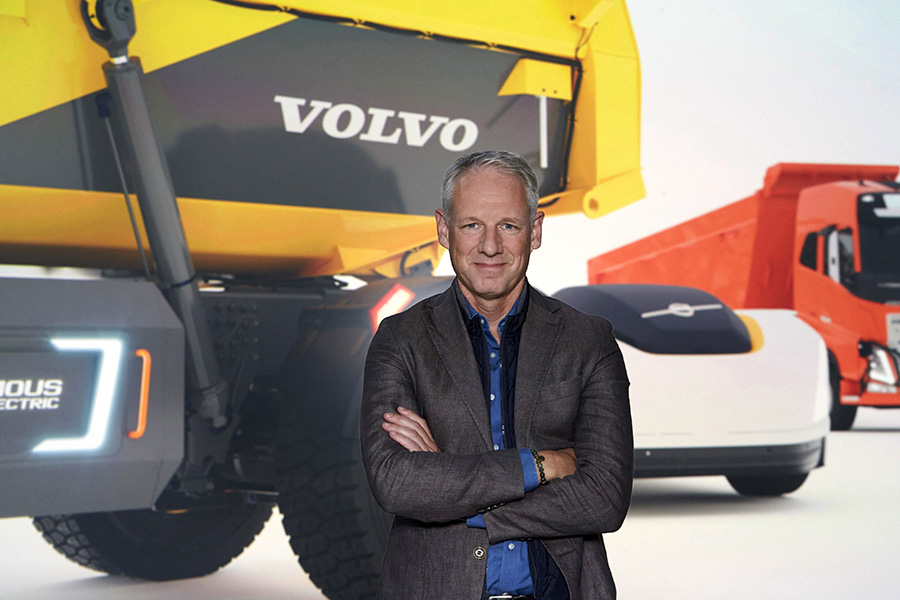
Volvo President: “Self-Driving Vehicles are Beneficial to Society”

As President of Volvo Autonomous Solutions Nils Jaeger has been tasked with making autonomous driving a reality – and reassuring society of its benefits long term. Undaunted, the avid cyclist is no stranger to uphill struggles.

Five years ago, the expectation was that by 2020 the sight of ‘robotaxis’ and driverless trucks would be a common sight on our streets. Their absence today shows that the tech and transport industries have woken up to the fact that creating autonomous vehicles that can safely deal with mixed traffic, cats, dogs and kids – and hundreds of other variables – is a bigger technical challenge than first thought. But even though expectations have been reset to a more reasonable timeframe, the speed of development is still terrific, and the prize for success is access to a multi-billion dollar market.

“For autonomous driving to take off on-highway we need three things to happen,” says Nils Jaeger, President of Volvo Autonomous Solutions. “We need to master the technology – especially of perception systems that allow vehicles to travel at high speeds. Secondly, we need society to trust us when we say this new tech is beneficial, and finally we need legislators to adapt laws to give autonomous vehicles access to the highways. It’s a puzzle and we need all the pieces to fall into place.”

While robotaxis are still on the industry’s wish list, the first on-road application for autonomous driving is likely to be in trucking, especially of the hub-to-hub type found in the US’s interstate highway system. “As the Volvo Group is one of the world’s largest truck manufacturers, we are putting a lot of effort into solving this problem and developing a credible offering,” says Jaeger. “The creation of Volvo Autonomous Solutions is a clear statement of intent that we want to be a leader in this field.”

Based at Volvo’s Camp X innovation hub in Gothenburg, Sweden, the 51-year-old Jaeger took up his role in the newly formed Volvo Autonomous Solutions on January 1st, 2020. Previously spending 17 years of his career in the agricultural equipment sector he is no stranger to automated systems. He witnessed first hand the arrival of autonomous steering systems for tractors and harvesting machines, tech that is now embedded in the sector. 

“I’m absolutely convinced that autonomous solutions are beneficial to society,” he says. “This new industry will provide a lot of value – safety, efficiency, flexibility, sustainability and economic. It is impossible to stop progress – this technology is going to happen – and I firmly believe that it will be a force for good. In fact, if we had been further ahead in our development the impact of Covid-19 would have been less.”

A Volvo autonomous electric hauler.

When challenged on fears of autonomous machines taking human operator jobs, Jaeger says: “There are already shortages of drivers in many markets, and human operators will continue to be in demand for many years to come,” says Jaeger. “Far from being a threat, autonomous vehicles will be complimentary, doing jobs more safely than humans can, such as very long distance highway driving, or removing humans from worksite applications in hazardous areas, such as blast furnaces, unstable demolition sites or underground mines. As with the creation of the car or the computer, this technology will for sure be a creator of many new jobs.”

What about the fear that some people have about driverless vehicles being let loose on highways and work sites? “Fear is never a good advisor, so as an industry we need to come together and address those concerns,” says Jaeger. “Not only must autonomous solutions be safe, we must demonstrate it unequivocally to reassure the public. That’s not just product safety, but also protection against cybercrime interference, which we are also working hard on preventing. The irony here is that one of the biggest benefits of this technology is that it will improve safety and reduce harm. There is already a healthy debate going on, and we need to be better at spelling out that key benefit.”

Autonomous vehicles offer more than a like-for-like switch with human operated machines, but rather whole new business models and customer relationships. ‘Transport as a service’ is a growing trend, and tailoring fleets of machines to suit customers’ individual needs is a key element of Volvo Autonomous Solutions’ remit. “We see ourselves as an integrator of emerging technologies to create solutions, bundling hardware and software, and then if necessary, operating it on behalf of the customer,” says Jaeger.

Autonomous vehicles will be a service to wider society. There remains several mountains to climb before reaching the goal of reliable, productive, sustainable and safe autonomous transport solutions. But Jaeger remains undaunted.

“To ensure that it is understood as beneficial to society we need to master the componentry by proving that it is truly safe. We also need to reassure legislators and promote the many benefits by being good stewards of this technology,” he concludes.

‘In the DNA’: How Social Entrepreneurs Are Getting Creative in a Pandemic

As COVID-19 forces businesses worldwide to reinvent themselves, social entrepreneurs are getting creative to help communities hit hard by the pandemic — from a Ugandan medicine-on-wheels service to upcycled face masks made by vulnerable women in Peru.

While recessions and falling revenue are affecting ethical businesses too, many such companies are proving particularly adept at innovating and finding new opportunities.

“Social innovation is the DNA of social entrepreneurs,” said Vincent Otieno Odhiambo, regional director for Ashoka East Africa, a non-profit working with social enterprises – businesses aiming to do good while making a profit.

“They are accustomed to tackling complex social problems and therefore design innovative solutions that create better conditions of life,” he told the Thomson Reuters Foundation to mark Social Enterprise Day on Thursday.

Started by Social Enterprise UK, the sector’s trade body in Britain, and held annually on the third Thursday of November, the day aims to highlight the sector’s global impact. The campaign has since expanded to other parts of the world.

With the pandemic taking a heavy toll on vulnerable communities around the world, companies with a social focus are even encouraging some traditional businesses to have a rethink.

“We have seen them tackle perennial challenges ranging from access to healthcare and education, remote working, economic resilience all the way to transparency or fighting fake news,” Otieno Odhiambo said.

‘OUTSIDE THE BOX’

In Asia, social enterprises have turned to making face shields and protective suits for doctors, and linking those who have lost their jobs to careers in sustainable fields.

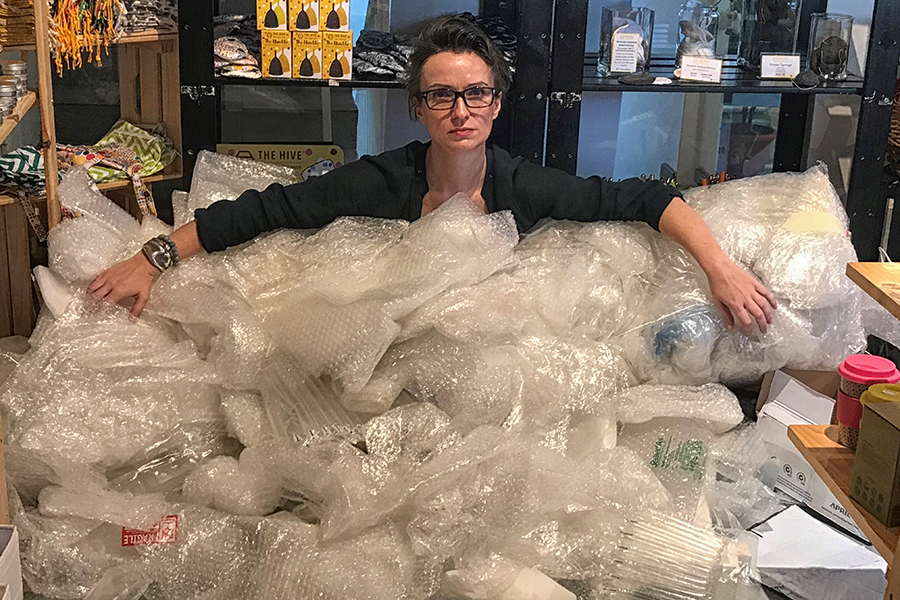
As movement curbs remain in place across many cities, a surge in online deliveries has led to a mountain of plastic waste, prompting Malaysia’s The Hive Bulk Foods to start collecting discarded packaging for reuse.

The social enterprise, a zero-waste chain selling products from refugees and local organic farmers, said items like bubble wrap quickly filled up its warehouse. It donates the packaging to other businesses so it can be used again.

“We realised everyone on the planet was also ordering online and that online packaging was delivered with an insane amount of plastic waste, often more plastic waste than the goods delivered,” said founder Claire Sancelot (pictured above).

“We just want to prove that despite the pandemic we can change the business model and move to a more circular economy.”

In Peru’s capital Lima, Valery Zevallos – who founded an ethical fashion brand called Estrafalario that employs poor women, female prisoners and domestic violence survivors – knew she had to adapt as shopping mall sales plunged during lockdown.

She started a new line of handmade face masks made from recycled materials, working with nearly 40 women. So far, they have sold more than 26,000 masks and donated some to community groups and female inmates.

“We had to think out of the box,” said the 30-year-old designer, adding that the company’s online clothes sales have jumped 400% as customers go to its website to buy the masks.

“It’s a win-win. We sell clothes and they earn,” she said.

In Africa, where the pandemic has strained fragile healthcare systems and made it even harder for people to get to medical centres and pharmacies, Uganda’s Kaaro Health started sending its nurses to treat patients at home.

The company, which offers pre-natal check-ups and child immunisations at its solar-powered container clinics, also put its technicians on motorbikes, mounted with refrigerated clinic kits, to collect medical samples and deliver prescriptions.

Across the border in Kenya, CheckUps Medical, which offers remote diagnostic and pharmacy services, has trained motorbike taxi drivers to identify people in need of medication or teleconsultation in remote areas.

‘BUILDING BACK BETTER’

Like other pandemic-hit businesses, social enterprises have struggled financially this year but their swift response could spur big business into more collaborations and a rethink of dominant business models.

“What COVID-19 has shown us is that the massively complicated international supply chains are really fragile when you have a pandemic,” said Tristan Ace, who leads the British Council’s social enterprise programme in Asia.

“One positive outcome that we have seen is corporates starting to incorporate social enterprise in their local areas more, more than just relying on the global supply chains.”

Yet major industry players and governments will have to take the lead – such as changing procurement practices and encouraging more impact investing – as the solutions offered by social enterprises are often small-scale.

“As economies begin to recover, we need to think about the big levers that will support the delivery of positive impact at scale, which should be led by big businesses and governments,” said Louise Aitken from Ākina, a New Zealand consultancy working with social enterprises and corporates.

“This is beyond building back better, it’s actually about building impact into our recovery,” the chief executive said.

By Beh Lih Yi @behlihyi in Kuala Lumpur, Nita Bhalla in Nairobi and Anastasia Moloney in Bogota; Editing by Helen Popper.

‘First Line of Defense’: COVID-19 Prompts Rethink In Role of Buildings

From office workers to students, Americans facing colder weather and more time inside have a pressing question: How can they keep safe amid a pandemic that scientists say thrives in indoor settings?

The search for answers has prompted a new look at what architects and their buildings can do to help, both now and in the future.

“The built environment is a first line of defense in a pandemic – it makes the difference between whether you get a disease that will kill you or not,” said Rachel Gutter, president of the International WELL Building Institute.

“That’s a real shift in how we think about buildings,” she told the Thomson Reuters Foundation.

Gutter and her colleagues oversee a global set of standards for buildings aimed at promoting the health of their occupants.

Some 4,900 projects in more than 60 countries are currently at some stage in the voluntary WELL certification process.

In September, the institute launched a major update that includes coronavirus-specific changes that it began piloting this summer, the result of work by about 600 public health officials, government officials, designers and more.

Last month, a group of U.S. scientists warned in an open letter published in the medical journal Science that infected aerosols – small droplets and particles – lingering in the air could be a major source of COVID-19 transmission.

The letter called on public health officials to highlight the importance of moving activities outdoors and improving indoor air, along with wearing masks and social distancing.

“COVID-19’s favorite season is winter – like the seasonal flu, this virus loves the cold,” Gutter said.

“Indoor air quality considerations will be of even greater importance in regions of the world that are preparing for winter.”

The changes to the WELL recommendations highlight the need to limit touch as people move through a building, safely disinfect surfaces and more, in particular boosting indoor air quality, Gutter said.

Interest in the coronavirus guidance has been enormous, and implementation has been “lightning fast”, she said, adding that about 350 million square feet (32.5 million square meters) of space has been newly registered with the institute since June.

Other building certification systems have rolled out new guidance, too, including LEED – or Leadership in Energy and Environmental Design – which focuses on environmental impact and has been widely adopted across the globe.

“The pandemic has really shone a spotlight on, ‘What is my indoor air quality like, and why does that matter?'” said Melissa Baker, senior vice president of LEED development at the U.S. Green Building Council, which oversees the system.

“These are the questions that tenants will be asking their landlords now.”

HEALTHIER INDOORS

Months into the pandemic, designers are tracking changes in how people interact with buildings and trying to see how they can help make the indoors healthier, said Rachel Minnery, a senior director with the American Institute of Architects.

“Here we are, almost every building except your home is considered unsafe,” she said.

“What role can the built environment play … so hopefully we’re not in quarantine for the next two years?”

Design tweaks could start with a user’s entry into a building, Minnery noted, through vestibules and queuing areas to facilitate temperature checks or social distancing.

Architects are also incorporating one-way doors and hallways, spreading workstations farther apart, deploying touchless technologies and upgrading air-filtration systems, she added.

The demands are forcing designers to learn about a range of new issues.

“I’m not an epidemiologist – I’m an architect,” said Jenine Kotob, who works just outside Washington with Hord Coplan Macht (HCM), a national firm.

When the pandemic hit, Kotob and her colleagues started participating in emergency workshops with public health experts.

“They defined for us a baseline of understanding, the knowledge base that any architect now needs to be aware of: how infectious diseases are transferred,” she said.

In a survey of real estate experts around the world released by the Washington D.C.-based nonprofit Urban Land Institute in October, 90% of respondents said certification of healthy offices will likely rise in coming years.

EMOTIONAL WELLBEING

The pandemic is also shifting thinking in terms of how buildings can help with the way communities function more broadly, from wellbeing to work.

“The thing that’s different about COVID is we’re focusing not only on physical wellness but also emotional wellbeing,” said Donald Powell, a partner at the BOKA Powell architecture firm based in Texas.

“That’s the hurdle all corporations have to cross before employees will come back to the workplace.”

In response to client queries on how to entice workers back to the office, Powell said he and his colleagues are considering on-site child care and even classrooms, aimed at parents who are home-schooling and want to come back to work.

Schools have been a high-profile point of contention throughout the pandemic, and a growing number in the United States are contemplating how to open back up.

“Without school buildings able to come back online during the pandemic, the longer we stretch it out, the longer we will see repercussions to our society,” said HCM’s Kotob.

She and her colleagues are being asked to repurpose cafeterias, libraries and other large gathering spaces to create multiple smaller classrooms, all while adhering to local regulations and social distancing guidance, she said.

The need for these changes has underscored the chronic underfunding of public schools, Kotob noted.

U.S. elementary facilities face a shortfall of $38 billion a year, according to advocacy group [Re]Build America’s School Infrastructure Coalition.

Pending legislation would provide $5 billion for emergency school repairs as part of a pandemic relief package, which could go toward improving sanitation and upgrading air-filtration systems, for example.

“What we’ve seen in the pandemic is there are specific issues that have gone unaddressed for so long – air quality, overcrowded conditions, access to the outdoors – that can’t be tabled any longer,” said Kotob.

That kind of thinking is prompting broader recognition of the notion of health as a human right and its links with buildings, said Gutter at the International WELL Building Institute.

“Many of us have now been cooped up in our homes for months, so we’re much more tuned in to these impacts on our health,” she said.

“The way we build affordable housing, construct our schools – what would happen if we embraced the notion that these could enhance rather than take away from our health and wellbeing?”

By Carey L. Biron @clbtea, Editing by Jumana Farouky and Zoe Tabary.

Feeling Overloaded with Work? Here’s The Ultimate Time Management Playbook to Get You Breathing Again

An all too common theme within work environments are the mounds of work that people have on their plates at any given time. If this is something you’re experiencing, you’re not alone! It’s a systemic issue that spans industries around the globe. Here are the steps to gain control and become a more effective leader.

In this article, I’ll break down:

  1. The effects of an overflowing plate of work
  2. The desired state that we should aspire toward
  3. The formula that will help you right-size your workload and get closer to your desired state of control.

The adverse effects of an overflowing plate

How did we even get to this point? It usually starts when multiple deliverables are weighted the same in terms of value and urgency, leading to a sense of a lack of control over commitments.

Because it is impossible to complete everything with the same level of urgency, a general feeling of failure sets in; quality is compromised, and speed to completion is reduced.

What does the desired state look like?

We all long for a life where we feel in control, deliver high-quality work, add value to the world around us, and feel fulfilled. The question is: what can we do to lean more into this desired state and regain greater control? 

The 3-step formula to help you right-size your workload

Frequently, employees struggling with work overload also tend to work in environments that overuse meetings and place a high value on tasks. Recognizing that part of the issue could be the environment itself, I’ll share a formula that will stand on its own and one that may also help to advance the DNA of your organization.

Step 1: Prioritization

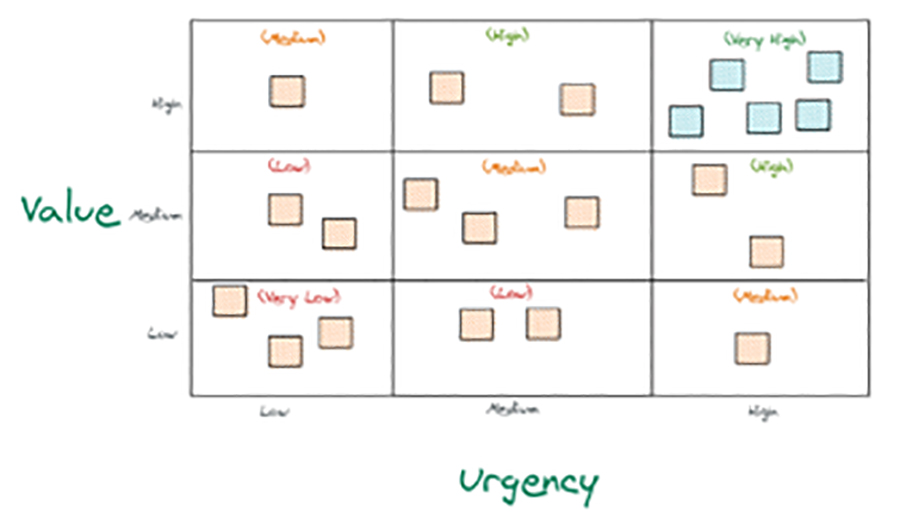
Ruthless prioritization is the first step toward regaining control. One technique that we use is a 3×3 matrix that compares High vs. Medium vs. Low Value against Urgency. Here are the steps to make this work:

  1. Be clear on your definition of value. 
  2. Next, take it a step further and discuss how you would define High vs. Medium vs. Low Value. 

Urgency means: The speed at which the value that you hope to gain will diminish if you do not work on it now. As you can see, it controls bias and motivation.

  1. Repeat steps 1 and 2 for Urgency.
  2. Make an inventory of the work on your plate.
  3. Map each item on your list(s) to the various sections on the matrix. Scrutinize where you rank these work items. Whether you are creating a physical representation of this exercise in your office or using a collaboration tool. Once you plot your work, your matrix may look something like the chart below. 
  4. One recommendation that I always offer clients is to take the necessary steps to eliminate the “low” and “very low” items from their plates. 

(I have colored the “very high” items differently from the rest – this is to make a point that I’ll drive home in the Visualization step).

Step 2: Visualization

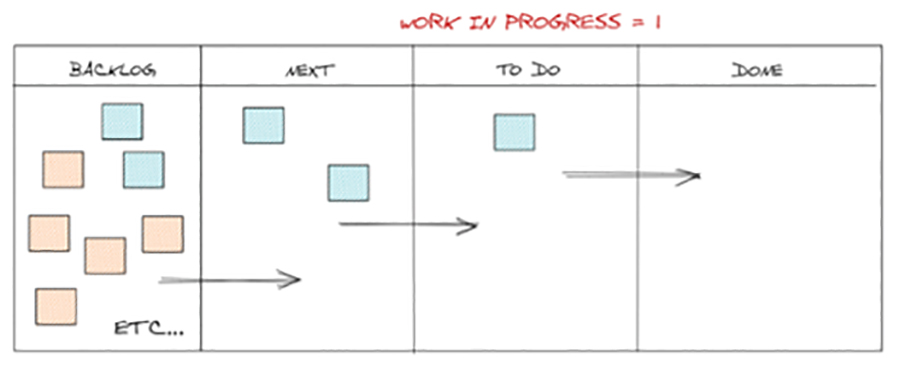
  1. Start by creating a board with four columns and entitle each: Backlog, Next, To Do, and Done. This exercise may be done physically or virtually.
  2. In the Backlog column, add your Very High, High, and Medium work items.
  3. Once everything is in your backlog, move the highest priority items into the “Next” column. (Remember how I color-coded the “very high” items differently from the others? This helps illustrate that these items will be prioritized and worked on first, before anything else.) 
  4. Now here is where the most significant mindset shift happens: Move only ONE of the items from your “Next” column into your “To Do” column. This will be the item that you will focus on immediately. At this point, your board may look like this: 

Reducing your Work in Progress (or WIP) to one feels uncomfortable and counterintuitive, in part because further work decomposition may need to be done. Here’s the reality:

  • Multitasking is not real. 
  • Dividing your time and attention across multiple items results in lower throughput and a higher lead time to completion.
  • The collateral damage to a higher Work In Progress (WIP) is always some combination of poor quality, longer lead times, stakeholder disappointments, etc. 
  • Lowering your WIP wherever possible results in higher throughput, faster lead times, a huge shift in focus, and a gratifying sense of completion.

Step 3: Conservation

To keep this system alive, establish policies, and cadences for yourself. Are there any items that can supersede anything in your existing hierarchy? How often will you review and prioritize your work? How frequently will you replenish your backlog? Getting clear on questions like these will help keep you grounded, focused, in control, and keep your system intact.

Bonus Step 4: Find time to Pause, Reflect, and Celebrate!

Breathe it in and celebrate your hard work with your team. Let me walk you through a couple of widespread scenarios I’ve seen with large, complex, matrixed organizations, and also some smaller, more straightforward businesses.

Common Scenario #1: “Dart Board Prioritization”

I worked with a large technology team charged with building an application to help facilitate the sign-up process for clients.

Our Client’s reality at the time we were asked to support:

  • The build was taking much longer than expected and quickly exceeded the budget.
  • Every feature seemed to be of equal importance, so the team built what they could when they could.
  • The business partners were not appropriately involved in the process.
  • With all the work seeming to be of equal value and a lack of business partner support to represent user needs adequately, the team seemed to defer to a “dartboard” approach to prioritization.

Here’s how we implemented the steps above to help the team regain traction:

To start:

  • We brought the necessary business, technology, and other stakeholders together to create the right blend of talent and perspective needed to move forward in a customer-centered direction.
  • We clearly understood the “why” behind the need to build the application in the first place. What problem were we hoping to solve for the end-user?
  • We collaboratively mapped the application from beginning to end and broke the elements of the map into smaller increments that could be built and delivered independently of each another.

Then:

  • We asked the cross-functional team to collaboratively prioritize the increments of value from the perspective of what they felt the customer needed the most. (Side note: A laser focus on the customer is a great way to help keep bias, self-interest, and ulterior motive at bay, which can adversely affect the creative process and outcome). 
  • We built a physical board, and the increments of value were placed in order of priority in the backlog; we reduced the WIP to the lowest possible number
  • We included a couple of helpful policies and cadences. Examples include: 1) Cross-functional team members were asked to huddle together at least 2x per week. 2) Re-prioritization of work would require the input from the full cross-functional team

The quick wins:

  • Customer-centered prioritization sessions were happening collaboratively with, with both technology business expertise
  • A clear line of sight to which features would be released next, in order of priority
  • A deeper level of understanding across team members. Through technology we gained a clear understanding of end-user needs, and the business had a new appreciation for the technical intricacies involved in building each feature.
  • A clean flow of work and value delivered faster to the customer.

Common Scenario #2: “The ‘Impulsiastic’ Leader”

I worked with an organization whose teams were stretched too thin. Although there were several factors at play, one significant factor was their “Impulsiastic” leader.

Our client’s reality at the time we were asked to support:

“Impulsiastic” is a word that I came up with to describe a leader who is both Impulsive with their asks and enthusiastic about seeing their asks come to fruition. 

At first glance, this may seem to be benign. But look a little closer, and you’ll notice that impulsiastic leaders tend to cause chaos and confusion for the people who report to them. Because they are excited about an idea or a direction, they are quick to add the associated work to their teams’ plates. Because the direction is coming from a leader, teams assume a change in priority, so they shift their attention accordingly. The result: tired, deflated teams who feel like they’re caught in a hamster wheel, moving at a rapid pace with no change in position.

Here were our recommendations to the team:

  • To visually represent all of their work (using an electronic solution for their distributed team). Using the simple format above, they would showcase the work in flight and add the work not yet started to the backlog.
  • Then, invite their leaders to review the board with them in detail. (Note: Teams tend to feel a sense of trepidation at first – but the shared understanding that comes out of this exercise is well worth it.) Introduce leaders to the benefits of reducing the “work in progress.”
  • Either in that same session or a second session, use the prioritization method above to re-establish priority and re-balance the workload.
  • Update the board to reflect the newly aligned-upon prioritization.
  • Establish a daily stand-up and bi-weekly prioritization review cadence and invite your leaders to attend the sessions as often as they can.
  • For the impulsiastic leaders: create the following policies: All “new” ideas or work items will be added to the backlog. These new items will be reviewed during the prioritization sessions. Any business-critical items should be brought to stand-ups for discussion.

President Macron’s Gift to World Leaders: A Watch Made From Trash

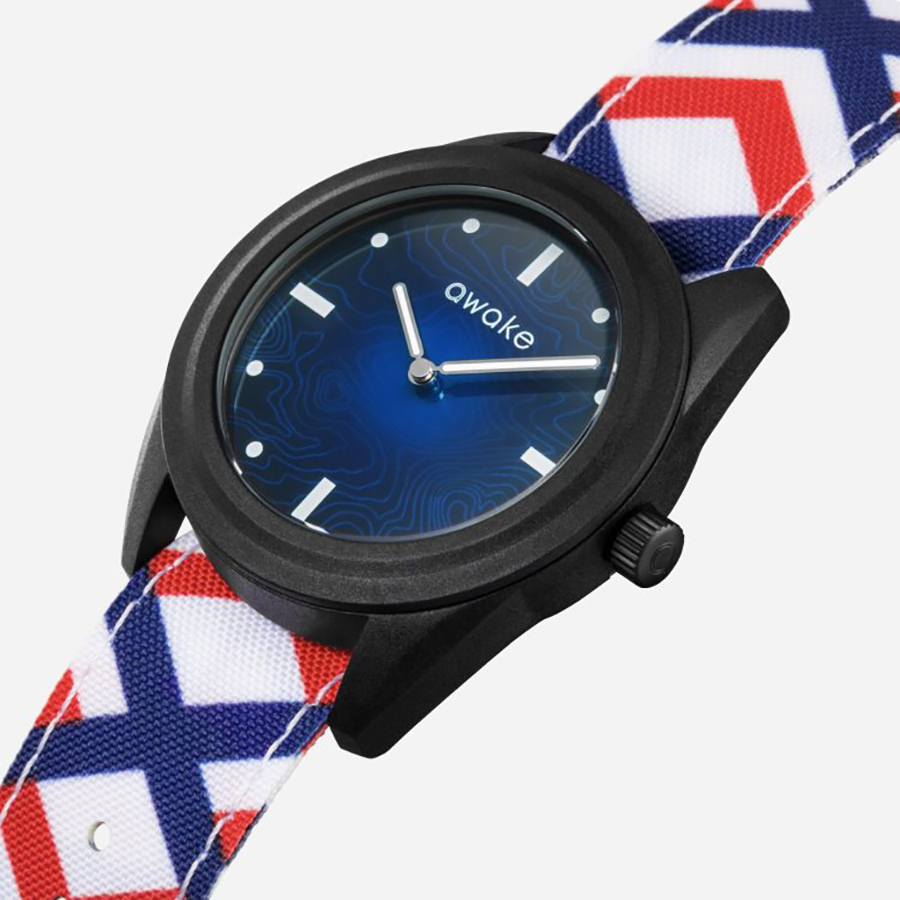
At the G7 summit held in Biarritz, France in 2019, you may have noticed that heads of state received a watch from President Macron. One peculiar twist of this symbolic gesture was that the watch was made from plastic waste and abandoned fishing nets that pollute our oceans.

Making watches from recycled fishing nets and discarded plastic bottles from the sea is no small task. It’s a technical feat that requires new synergies between the recycling and watchmaking industries. Behind this unique product is Lilian Thibault (pictured above) and Frederic Ly, two French watchmakers and design enthusiasts who combined their efforts and skills to raise awareness around the environmental crisis. Their new watch brand is called AWAKE.

“We are aware that we can’t solve the environmental problem alone, especially around plastic pollution in our oceans,” explains Lilian Thibault. “Our idea is to show what’s possible, while making a contribution to solving this problem. A watch is a symbolic object in relationship to time, and therefore represents the urgency of the environmental challenge we must tackle.”

Following their initial idea in 2016, the entrepreneurs launched a crowdfunding campaign on Kickstarter in the summer of 2018. Eight hundred fifty-eight contributors and $307,080 later, AWAKE began production on the first 1,200 watches funded by the crowdfunding campaign. Within a few months, the young brand had sold more than 2,000, with a focus on direct sales via the Internet, and a few stores whose values were consistent with responsible consumption..

“Crowdfunding allowed us to raise seed funding while, at the same time, verify and validate the interest in our new product,” says Thibault. “It was difficult to know in advance whether the general public was ready for such a watch. The crowdfunding campaign also allowed us to highlight the care with which we designed our watches, because people often find it hard to imagine that beautiful and elaborated products can be made from recycling.”

Photovoltaics at the service of watchmaking

The watch cases are made from recycled steel and the wrist bands are made rom plastic waste collected from the oceans of Southeast Asia and Japan. The brand has spread a strong environmental message in Europe, especially because much European waste ends up in these oceans. The globalization of waste is a result of the low cost of plastic production, and is in stark contrast to what should be done: treating and recycling plastic waste locally — in countries that produce the waste.

A photovoltaic sensor built into the watch provides the energy necessary for movement. “Our watch never stops,” explains Thibault. “Three hours of exposure to light is enough to provide the energy for six months of operation. This distinguishes us from conventional models that run on batteries that need to be changed every two years; a system that most manufacturers opt for because of its low cost.”

AWAKE cofounder, Frederic Ly.

Recognized and encouraged by the G7 organizers, the AWAKE team took their recycling philosophy one step further in 2019. In a world first, they produced a watch case made from recycled fishing nets. Abandoned at sea, fishing nets cause the unnatural death of millions of fish while generating pollution. In Biarritz, a maritime region that hosted the G7 summit, the watch was a hit. “The event gave us great visibility”, says Thibault. “Many investors contacted us afterward, but we have remained clear-sighted and loyal to the people who originally supported us during the early crowdfunding. This helps to keep our independence while maintaining the strong ethical dimensions of our brand.”

Artistic future

The team at AWAKE will continue to explore new materials and processes that combine recycling and watchmaking. Beyond the environmental awareness they are raising, it’s also a great way to diversify their watch range. A collaboration with an artist is also in the works.

A new fundraising campaign had raised almost one million euros by the end of 2019 and the brand has proven to be surprisingly resistant to the Covid-19 crisis, as it depends on very few physical points of sale. Thibault and his team have digitized watch sales from the beginning, and recognized that this is the future of buying in an increasingly online customer base. Initial funding was raised online and sales were a natural following-on. “This flexibility allows us to be confident about the future, while remaining faithful to our ethical values,” says Thibault.

Bono’s New Venture Takes Aim at ‘Fuzzy Thinking’ In Impact Investing

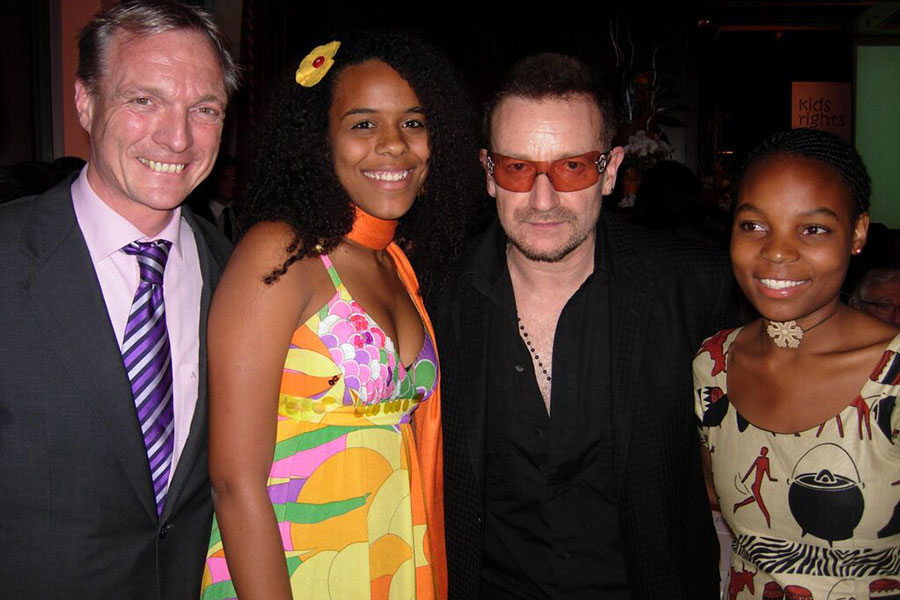
Impact investment funds must stop relying on “fuzzy thinking” about how much good they do, Bono said as he announced a tie-up with U.S. private equity company TPG to measure the social and environmental change they achieve.

Impact investing – which promises social and environmental benefits as well as financial returns – is growing, but the difficulty of measuring how much good it achieves has caused some major investors to be cautious.

A new company, Y Analytics, aims to bridge the gap between researchers and investors “to help decision-makers evaluate impact,” said a statement from the company

“To persuade the biggest institutional investors to commit their funds to tackling some of the world’s most urgent challenges we need to be as confident about the impact returns as we are about the financial returns – fuzzy thinking just won’t cut it,” added Bono. Bono launched his own $2 billion impact fund, Rise, with TPG in 2016.

Data from the Global Impact Investing Network (GIIN), a non-profit organisation that promotes impact investing, shows the number of social investment funds has quadrupled over the past 20 years to 200. GIIN estimates the industry is worth $228 billion, yet there is no standard global definition of what qualifies as an impact investment.

The Organisation for Economic Cooperation and Development has also called for more rigorous standards to prevent “impact washing” – where firms seek to disguise unpopular practices or overstate the impact of their investments.

By Sarah Shearman @Shearmans, Editing by Claire Cozens.

Why Didn’t I Think of That First? 3 Great Business Ideas Promising a Brighter Future

Sometimes the best ideas emerge when you’re faced with a problem. Here are three familiar concepts repurposed to create something new, exciting, and profitable. Look around: What other products have potential to become something new?

01  Urban Farming Inside Shipping Containers

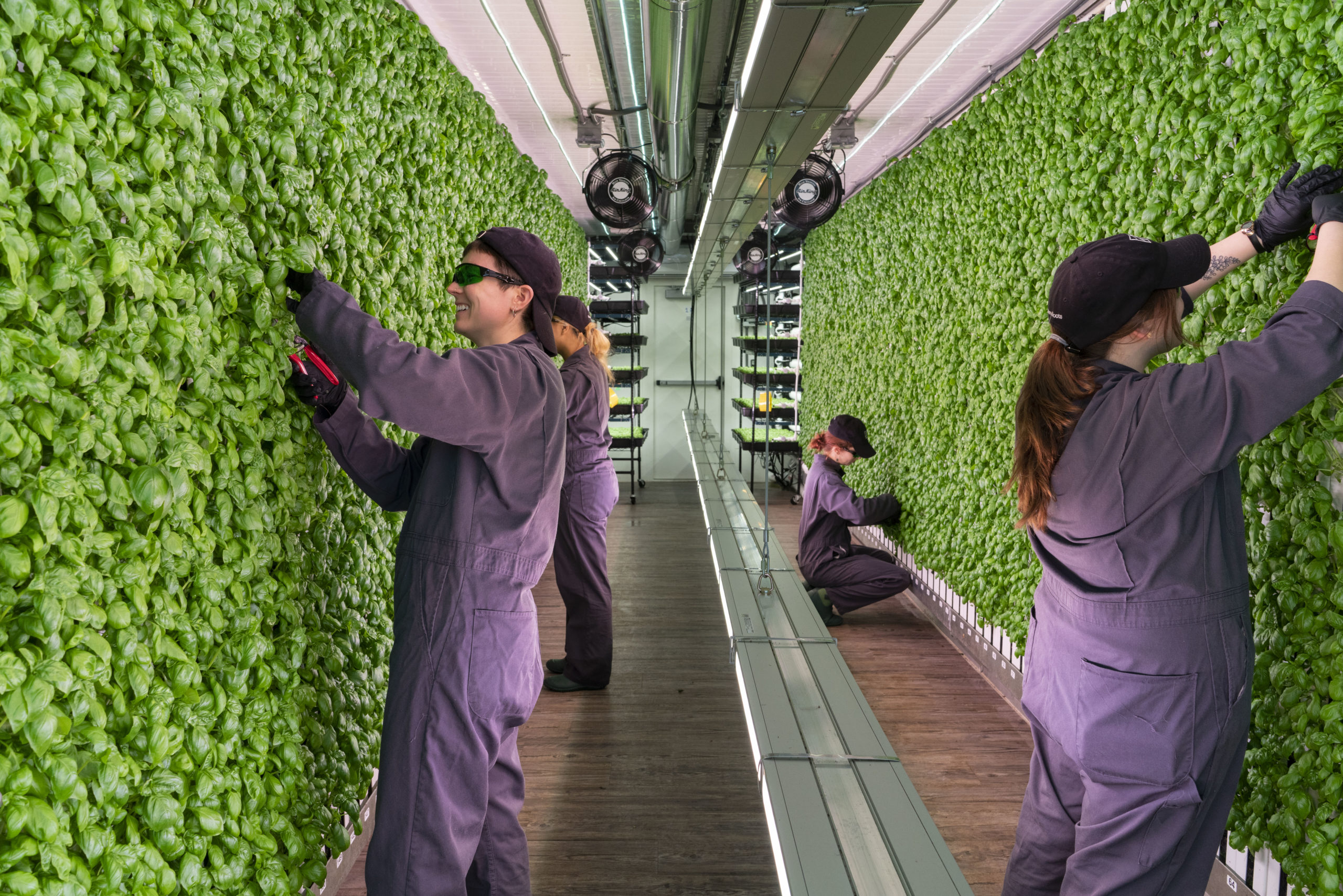
You’re already familiar with the sight of shipping containers on trucks, taking fresh produce to stores. But what if containers grew food instead of merely storing it? Young Brooklyn farmers have started growing nutritious greens in shipping containers, without ever needing to be hauled around. Each farmer at Square Roots grows greens without pesticides, and the hydroponic growing systems use 95 percent less water than traditional farms. As well as growing their food, Square Roots teaches young people how to farm more sustainably.

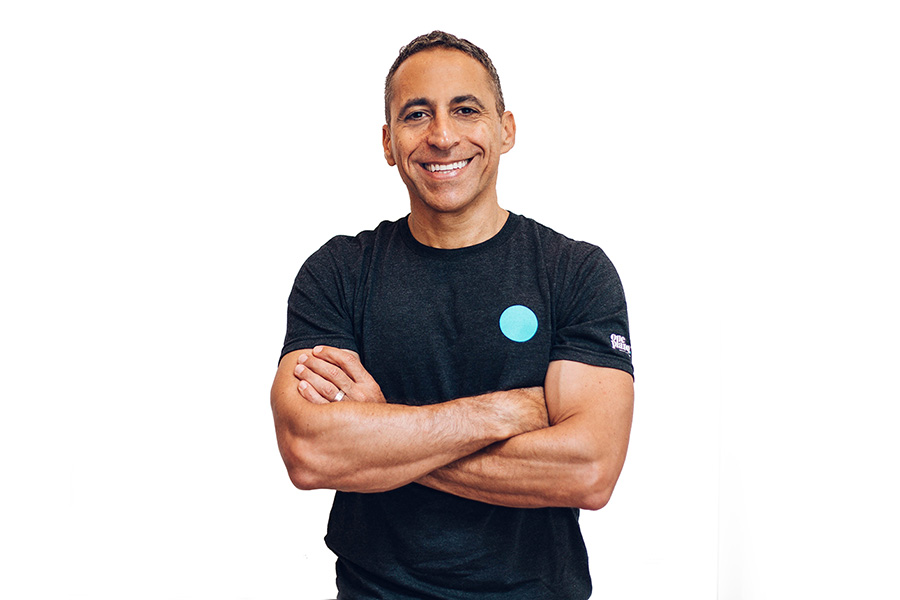
“Younger generations are interested in making sure that we’re all eating healthy food that’s nutritious and grown in sustainable ways,” says Tobias Peggs, CEO of Square Roots. “These cool, high-tech farms enable anyone to come in and learn how to grow food right in the middle of the city.” In many countries, the average age of a farmer is over 50, and by 2050, 68 percent of the world’s population is expected to live in urban areas. Opening up farming to non-traditional young farmers could help meet the food demands of a growing urban population.

02  A Wristband that Tells You What to Eat According to Your DNA

This wristband tells you what food to buy in stores based on your DNA. It scans barcodes and works out which products are best for you and what to avoid. “The whole objective of DNANudge is that we’re not telling people they can’t eat biscuits and should instead eat grapes,” says Professor Christopher Toumazou, CEO and co-founder of DNANudge. “They can eat biscuits, but eat better biscuits — based on your DNA and lifestyle. It uses biology to judge you, then guides you through more choices that result in a healthier lifestyle.” Cofounder, Maria Karvela (below), a biologist, geneticist and leukemia researcher created the world’s first database to map genetic traits to food and drink ingredients.

Toumazou invented the smart band after his son Marcus was diagnosed with a condition causing his kidneys to fail. He became determined to find a way of predicting hidden health risks, so he invented a microchip that can read DNA. His company analyzes DNA from saliva, and the data is stored on a chip embedded in a wristband. The wearer still decides what to eat, but making small swaps each day could have positive long-term health benefits. “I’ve got the gene for hypertension,” says Toumazou. “So, I’ve got to be wary of salt. I now know that there is less salt in salted peanuts than dry roasted peanuts. I love peanuts, so over a year, I could potentially save 4.5 lbs of salt from entering my bloodstream.”

03  The World’s First Two-story 3D Printed Building

Dubai Municipality has completed the first two-story building constructed entirely with a 3D printer. It was built with 50 percent less workforce and 60 percent less construction waste than traditional buildings. The process is also cheaper and quicker than conventional methods. The 3D printer layers fluid according to a plan preset by a computer, which sets into concrete almost instantly. The building was “printed” on location, despite challenging weather conditions, using local materials, and includes curved architecture that is especially hard to print.

The building has already entered the Guinness Book of World Records but is not the only place to have explored the potential of printed structures. In France, Nantes is experimenting with making affordable housing, and a French family is the first to live in a 3D-printed house. Relief agencies are also looking to re-build communities hit by natural disasters. Dubai now aims to construct 25 percent of all future buildings using 3D printing methods.

An Angel Investor’s Guide for New Entrepreneurs

An entrepreneur, first and foremost, is an idea person. They think differently, create opportunities where resources didn’t exist and are willing to take significant risks to pursue a thought to action.

Surprisingly, I have found that an advanced business education degree can get in the way of entrepreneurship. I’ve met people who’ve earned an MBA, that describe how their college classes led them to overanalyze everything and talk themselves out of all of their good ideas. 

In order to be an effective entrepreneur, you need to take risks and get real-world experiences. This requires going beyond any classroom curriculum. Can you imagine any analysis predicting that Starbucks would open a store on every corner, sell coffee for three times the price people were used to paying and, in addition, capture the lion’s share of an existing market, while growing by many multiples? I certainly can’t. 

As I began to navigate the entrepreneurial world, I learned a few tips along the way. Below are a few that I found helpful for anyone interested in becoming an effective entrepreneur: 

Be Optimistic

Starting a business will not be easy. There will be hurdles in fundraising, challenges to hiring, and frustrations around messaging and understanding the marketplace. Throughout the hard times, you must remain optimistic. 

As a founder, you set the tone for the business. Your excitement and general happiness will be infectious to your team. 

Look at problems not as roadblocks, but rather as puzzles that can be solved. In difficult moments, you should be open to learning from others and explore meaningful experiences. Different perspectives will also allow you to see problems in different ways. 

Be Realistic

Optimism and realism need to co-exist. While some ideas are great, not all stand the test of time, will adapt to changes in society or threats from competitors. 

DVDs dominated the at-home entertainment industry in the early 2000s until the streaming options of Netflix, Hulu and Amazon disrupted how we consume movies and television. I also think few people will argue that having music playlists stored on mobile phones has become obsolete today. 

The reality is – you need to know when to stop. 

Recognizing this is just as important as recognizing opportunities.

If you have proven that your idea is dead, just let it go. Sometimes, you need to cut your losses and move on in order to preserve your most valuable asset — your time. 

Often entrepreneurs fail because they make the mistake (sometimes repeatedly) of becoming fixated on pursuing whatever they believe is a good idea without truly analyzing if that idea can make money. 

If your business fails because you didn’t move fast enough and your competition did a better job of building an effective sales force, then address that issue in your next business. In my opinion, failure can be a great teacher if you ask yourself, “Why did I fail?”

If you answer that question, you can prevent yourself from failing again.

Look for a Mentor

Entrepreneurs can find mentors through networking or personal connections. A good start would be to attend industry meetups, local talks and conferences. You must be present to find the right people. 

Even if you cannot connect directly with an entrepreneur you admire, there are still ways to learn from them.

I like Richard Branson. I learn from him from a distance by following his blog, reading his books and reading news about him. He’s a mentor to me, despite the fact I don’t have a personal relationship with him. 

Accelerators and incubators can also be tremendously helpful as you start your first business. To be accepted into an accelerator program, you must first apply in a selective application process. If you’re selected, you will typically be given a small investment and access to a large mentorship network comprised of venture capitalists, startup executives, and experts in the industry. Accelerator programs usually have a set time frame to allow companies to work with these mentors; to plan out their business and avoid potential problems in the future. 

In contrast to accelerators, startup incubators begin with entrepreneurs or companies that are earlier in the process of starting their business and may not operate on a set time frame. Generally, incubator programs require startups to relocate to a specific area to work with other companies in the incubator. Once they are there, a company will receive help with refining their ideas, creating their business plans, working on product-market fit, networking, etc. 

It’s important to find a mentor (or mentors) who will challenge you to go outside of your comfort zone and give you reliable advice. The best type of mentors are those that will tell you the truth, even if you don’t want to hear it, because that’s the only way you can truly grow. Change doesn’t happen when you’re comfortable and if you want to be an effective entrepreneur, you can’t be afraid of that.

Find a Co-Founder You Trust

There is an African proverb that says, “If you want to go fast, go alone; if you want to go far, go with others.” 

Not only can the right co-founder make your life easier, but they will also make your business more fundable, considering venture capitalists prefer to fund companies with two to three founders as opposed to just one.

You need to be proactive when choosing your co-founders, preferably individuals who have different strengths than you. I started my first company, Autoweb, with my brother. He had the software engineering skills to build the product and I had the vision on how to sell it. Our skills were complementary and together we grew a business to a $1.2 billion market cap. 

While diverse backgrounds and skills in your business leadership can make a better impact with developing ideas and strategy, you want to limit the total number of founders to no more than four. Too many founders will reduce your ownership, and potentially make it difficult to build consensus during the early days of the business as you all try to agree on a strategic path and make numerous decisions on a daily basis. 

Create a Service-Oriented Culture

Don’t let greed drive your ambition. Author Simon Sinek writes in The Infinite Game, that businesses and individuals become the best version of themselves when they are inspired by a higher calling — one that embraces service to the community and environment. 

Giving, whether in time or financial support, needs to come from the heart. Get your company involved in service from day one, and nurture a culture that considers social impact. 

Genuine service efforts will infuse your business with a soul and bring you and your team true joy and fulfillment. Above all, it’s necessary to take care of your people. Nothing will be more valuable when it comes to building a successful business than having a reliable team who will stay with you for years to come.

Don’t Compare Yourself to Others

Don’t compare yourself to the handful of entrepreneurs who have become celebrities and whose Tweets make headlines. For every one of these media darling entrepreneurs, there are thousands of quietly struggling entrepreneurs. The road to success is a deeply personal and unique journey. At the same time, success looks different to different people. Stay true to who you are as an individual and as an entrepreneur and set goals that work for your business. 

Persevere

No good story is without conflict. There is little doubt that you’ll eventually run into obstacles both big and small — no matter what stage of business you’re at. You need to prepare yourself to work hard and get excited, to be able to overcome setbacks and roadblocks. Don’t ever allow problems to sideline your motivation. Success against the odds is always satisfying. 

Business is about relationships — not just with customers and your team, but with yourself. All relationships take commitment and time, but the good ones should ultimately prove to be worth pursuing. 

Enjoy the journey

Too often people are impatient. There are entrepreneurs who tirelessly work towards the day they IPO, have huge profits, or an exit. Enjoy the journey. Life is primarily made up of our journeys and not milestones. Our journeys have to be meaningful.  

I always tell my wife that our vacation starts the moment we leave the house and head to the airport. You should enjoy the journey as much as the destination.

Why This Company Doesn’t Want To Know Their Customers.

An unusual concept right? At least that’s what Erik Rind, CEO of ImagineBC’s lawyers thought when they were crafting their Terms of Service policy for his company, a market provider for customer data stored on the blockchain. Erik joined me on Episode 47 of the Real Leaders Podcast to discuss what the future of personal data security looks like. Before we jump to how it works, maybe it’s important to reflect on why data security exists.

Whether you are surfing the internet, exercising with a health monitor, or swiping a credit card, your data (web clicks, blood pressure, expenditures, etc.) is collected, stored, sold, or in some cases confiscated.

My first question for Erik was simple, “In this day and age of surveillance capitalism with companies making money off of my personal data, your personal data, what are some of the ramifications when we allow companies to take that from us?

“I think the ramifications are very significant or we wouldn’t have started ImagineBC in the first place.”

Some argue this is a human rights issue, others are submissive.

“But now it’s like how do you take on a Google or a Facebook? They’re so big, you can’t do it. My opinion is, of course, you can. It’s our data, we have complete control of it. We just need to band together.”

So, how do we band together?

Somewhere, a computer is pumping out continuous “blocks” of information, in order (like a twitter thread), bonded by a “chain” of encryption to other computers or nodes. Transactional data is stored on a public ledger for everyone to see but not edit. Your username, however, is sacred. You are the only one who knows who you are. This raises the one problem with blockchain, we do not know who anyone is.

That’s blockchain.

Our guest joked around mentioning that his lawyers were having a difficult time crafting their terms of service, telling the practitioners, “..look, we don’t even know who our members are and we don’t want to know! They have all control and we create a market for them.”

“What is this going to do for the common media conglomerate or to any businesses that are using these data lakes?”

“We just want you the individual to be the beneficiary. So the Cambridge Analyticas, the Facebooks, they get disintermediated. I don’t need to go to Dunkin Donuts; I don’t need to go to Facebook, to find targeted information on users, because I have that information available to me through an ecosystem like ImagineBC.”

Understand how Blockchain works from expert Jeremy Gardner on Ep.18.

Don’t be overwhelmed, thankfully for us humans, we are not who we were yesterday and that most of our data is always changing. The jury is still out on if blockchain will be adopted by the average consumer but if the stars align, imagine what blockchain could do for the future of data security.

Share this article with a friend who you think would find this story helpful!

0