A Revolution in Healthcare – Viewing Patients as Assets, Not Liabilities

Mohammad Al-Ubaydli, founder of Patients Know Best, examines attitudes towards healthcare and argues that prevailing views miss an opportunity to invest in patients. Patients are not the problem, he asserts, they are the solution.

My parents were exiled from Bahrain as prodemocracy activists, so I spent my childhood in many countries. At the age of ten we arrived in the UK as my father started his PhD and continued his academic career. From my parents I learned scholarship, service and stealth.

Scholarship is the great value my family places on education. While I was completing my high school and later studying at college, both my parents were still enrolling in local colleges and studying new degrees. This passion got me studying two fields simultaneously, medicine and computing, and at medical school I spent all of my spare time writing medical software.

Service is a principle my parents taught me: that every problem I face is also faced by many other people, so I should try and generalise the solution so that the community benefits. Education allows finding these solutions, so it is a duty to make them happen to benefit others.

Stealth is about the principles of nonviolent action and civil society. Once you have a solution that empowers the powerless, the powerful will fight it. Stealth is about helping the idea survive the early fragile stage, ideally by convincing those in power to believe it is their idea, and in their interest. I was born with a genetic immune deficiency and this had many effects on me throughout my life. Until my rare condition was diagnosed and treated, at the age of 10, I was ill and away from school for much of each year. I lost most of my hearing.

I learned a lot of things from growing up in this way. I learned about the power of medicine. My wonderful doctors and nurses literally saved my life, and got me well enough that I could work in hospitals, an environment full of infections, even though my illness made me so vulnerable to them.

I also learned that none of this was possible without the patient, or more accurately in my early years, the parents. None of my doctors in the UK could understand how I had managed to survive the early years living in countries with civil war and poor medical care.

The secret was my mother, who kept meticulous records of my problems and made sure I received the right antibiotics and care. (Incidentally, she wanted PKB to be called Parents Know Best.) While in the UK, she taught each specialist what every other specialist had taught her, so that the care they delivered was coordinated and safe. Medicine continues to become more specialised, even for common diseases coordination is key, and that means the patient is key.

And I learned to learn. I was away from school often, and even while in school my deafness meant I could hear little of what was said in class. But with the right technology, I could continue. This started with new books the school was using for students to learn at their own pace, and accelerated with computers.

It frustrates me to see discussions about the digital divide miss the point – computers are a bridge, they are the equaliser for patients with disabilities, allowing us to fill in the gaps at our own pace, when we are given the chance to do so.

All too often public discourse about health care focuses on increased spending and the economic dangers of an ageing population. This view misses the miracle of increasing life spans and decreasing deaths.

Patients Know Best views patients as assets rather than liabilities. All too often public discourse about health care focuses on increased spending and the economic dangers of an ageing population. This view misses the miracle of increasing life spans and decreasing deaths. They also miss the opportunity of investing in the patient: new technology allows self-assessment and self-management. Patients are not the problem, they are the solution.

Not only is this the only scalable solution, it is also a really good one. Patients Know Best is the first company to successfully make this solution work on the ground. A lot is required because health care systems are so complex and because they have been organised around institutions rather than patients. So you have to please all stakeholders in the short term, as well as the long-term.

In other words in the short term, every one of our customers – hospitals, charities, concierge medicine providers, pharmaceutical companies and commissioning groups – either saves money or makes money from putting patients in control. As each increases the scale of their deployments, putting more patients in control, the quantitative financial improvements become structural improvements in providing low cost and high quality health care.

This is why local governments are approaching us about putting all their citizens in control of their records. Being a social enterprise is a key part of the trust that these local governments can place in us. Previous commercial efforts failed because the businesses were either intent on selling patients’ data, or it was not clear how they could prevented from doing so in the future. With such players there could be no trust in sharing data, and if no data are shared high cost low quality health care is the result.

PKB’s software was built with patient-level encryption from day one. Technologically this is extremely difficult, but it meant that we could earily prove that the company could never sell the data, because we could never even access the data. Only the patient and the people the patient chooses could use the data. With the patient in control, trust is possible, sharing happens, costs go down and quality goes up. Every PKB customer is a change maker. Each champion who initiated the purchase has had to convince their colleagues and institution of the value of putting patients in control.

And each did so because they personally wanted to improve health care for their patients. We call their efforts a “noble conspiracy”, as these champions quietly fight for their patients. I always find it interesting to speak to new customers. Great Ormond Street Hospital’s Dr Susan Hill, the first doctor who used PKB had spent five years asking her different suppliers to provide a way to give patients a copy of the medical record to increase safety.

As she spoke to me I could see that she genuinely cared about the safety of the children she was looking after, and frustrated that no one else had helped them. But once she started using the software, she convinced her team to also use it, and then her team convinced clinicians across the UK, continental Europe and the Middle East to also use it.

One of these was Dr Simon Gabe, already a change maker at St Mark’s Hospital, who explained to BBC Radio 4 the importance of putting patients in control. Thalidomide Trust’s management team had spent seven years working with different providers to assemble a system to hold the records of their beneficiaries, 500 patients with a rare medical condition. Once they started working with PKB, they campaigned for patients to be in control, and for local clinicians to work with their patients in this way. Torbay Hospital has been a pioneer in integrated care.

Their IT Director, Gary Hotine, has consistently facilitated patient-centered innovations. He documented the security that meant that Torbay Hospital was the first in the UK to use Skype video for online consultations with patients. We share these stories with all our other customers so that they learn from each other and with each other. Whenever we add a new feature, like providing patients with all their lab results, the local institutions’ response is a series of speedily-articulated but usually incorrect reasons why the innovation cannot be used.

But we help our customers as change makers by telling them who else has already deployed the feature. As soon as an organisation hears that another has already been deployed, opposition melts away, and local adoption begins. We are reaching the critical mass of patients as change makers. So far they have been hobbled by the lack of access to information, unable to understand their health because they are unable to view their health record.

But once enough of them see and understand their records, they will  work together to create citizen services of patients helping each other understand and improve their health. At PKB, we call this a Lutheran revolution, a reformation for health care.

This is why we translate the medical record from its Latin jargon to the local language of the patient. It is why we put the patient in control. It is how patients know best. Patient control is a democratic issue to me. It does have tangible benefits of reducing costs and raising quality just as democratic countries’ economies are wealthier and more efficient. But we pursue democracy for principle not profit: the principle that citizens must be in control.

And so it is with patient control – the reason each PKB employee goes to work every day is to put patients in control. 2013 is already shaping up to be an amazing year for us with customers and deployments in the USA and Netherlands. We told our developers in the beginning that they should build our software for 7 billion people.

We are well on the way to putting every citizen in control of their health care.
 

Technology and Transparency

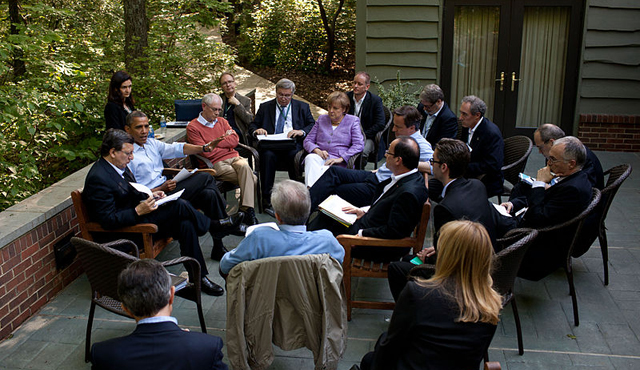
Eric Clayton, an Ashoka Changemaker, examines how transparency and technology can benefit society for the better and ponders on a few examples. At their annual G8 summit meeting, world leaders reacted to the world’s most pressing issues, such as the ongoing tragedy in Syria. At the same time, thoughtful citizens and social innovators were gathering to offer new approaches that could avert these crises all together.

Questions Worth Asking

Taking its cue from the recent G8 summit – and then expanding the invitation list a little – G-everyone  initiative – a collaborative effort of the Bill and Melinda Gates Foundation, the United Nations Development Programme, the United Nations Foundation, Mashable, the 92ndStreet Y, and Ashoka—posed three pertinent questions:

  • How can innovation stimulate your local economy?
  • How can technology make your government more open?
  • How can online communities help build healthier societies?

In the Right Hands…

Most recently, in the United States, we’ve seen what can happen when the second question is inverted. The Obama administration’s involvement in the Prism scheme once again demonstrates how much power technology can give to those who know how to use it – both in developed and developing nations alike. In the hands of the citizen sector, technology can have an equally powerful effect, institutionalizing democratic structures and ensuring increased transparency in governments and corporations. It’s not just about spreading good technologies, its also training individuals that are willing to work for more open governments.

The Media Crunch

Orazio Bellettini’s Grupo FARO (Foundation for the Advance of Reforms and Opportunities) trains local communities in Ecuador how to access and analyze the actions of government. FARO’s work reaches Ecuadoreans at the grassroots level, using various media technologies, and empowers them to hold their government accountable.

Grupo FARO has been able to hold the Ecuadorean government accountable by building a coalition of diverse citizen organizations, and pressuring public officials and ministries to sign transparency agreements. Public officials are incentivized to support transparency in order to help their own political careers because of Orazio’s high profile interaction with the Ecuadorean media.

Once the agreements have been signed, FARO serves as both consultant and watchdog, advising government ministries about how to act transparently, and holding them accountable when they do not. Building a grassroots level of support is essential to the sustainability of the project. With the help of focus groups, information on such topics as budgets and government services can be translated into accessible language and distributed to the public through a network of radio stations.

Grupo FARO’s method highlights both a top-down and bottom-up approach, utilizing media technologies to pressure and bolster support for government transparency across the spectrum of Ecuador’s population.

The Business of Transparency

Knowing when and how to exert influence is just as important as being able to do so. Ben Cokelet’s Project on Organizing, Development, Education, and Research (PODER) works to hold corporations in Mexico accountable through prudent application of open source research and a strategic network of contacts. Using media resources, web-based communities, social media, public records, and other open sources of information, PODER uncovers undisclosed corporate practices that may pose risks to an organization’s reputation.

Yet, rather than waging open war with the information, Cokelet’s team discovered there are better avenues to success. By utilizing the information to pressure key stakeholders in a corporation, change is motivated from the inside. Rather than fleeing Mexico and leaving hundreds of people without work, these corporations reform their practices and maintain operations in the country.

Like Grupo FARO, PODER also aims to empower the citizen sector in a sustainable way. To fight Mexico’s lax financial disclosure standards, Cokelet and his team are developing a “Who’s Who Wiki” to both compile and disseminate information about business elites and their interests, and provide the public with an avenue to share and contribute their own findings.

Open Source Righting

In Israel, Amity Korn found another usage for a wiki-based platform that would expand the citizen sector’s influence. Kol Zchut is an online database of Israeli citizens’ rights and eligibility for entitlements. Drawing on four decades of experience in the computer and hi-tech industry, Korn discovered a lack of transparency in legal and social rights.

In realizing that Israeli citizens simply did not know how to take full advantage of their rights, Korn also realized that a substantial amount of money that should have been going towards welfare and social services was not being claimed by citizens.

In response, Kol Zchut was developed as a transparent system in which communities, ministries, public agencies, citizen organizations, and governments could collaborate to better provide citizens with practical knowledge concerning their rights and benefits. And, because of the wiki technology, multiple groups can contribute tips, know-how, and advice to keep the system constantly up-to-date.

Open Source, Open Government

Interested in learning about more ways to use technology to make governments more transparent? Check out the Google+ Hangouts at +SocialGood and see how some of the other pressing G-Everyone questions have been answered.


Timewise Jobs: Making Part Time Work

Why Karen Mattison refused to be boxed in by inflexible work hours and how she gave thousands of household women their professional, part time careers back.

I grew up in Liverpool. Like many children, I was bought up to believe that ‘anything is possible, as long as you work hard enough for it’. This belief carried me to Oxford, helped me to find a job in the charity sector, where I felt I could make change happen in the world and has always given me strength and purpose.

However, when I had children, this core belief was shaken for the first time. I wanted to work in a CEO level job, as I had done before having kids, on a part time basis. But I couldn’t find such a role, anywhere. Every day, I’d meet other women at the school gates, in the exactly the same situation. They came from all kinds of backgrounds – lawyers, office managers, graphic designers – and we all felt backed into a corner.

Our choices were completely limited: work full time, don’t work at all, or find a flexible job but accept you’ll have to slide five rungs down the career ladder. One day I was struck by a thought – what business wouldn’t want to recruit from such an incredible pool of talent, and on a part time – and thus more affordable basis?

I teamed up with Emma Stewart and carried out research. We found that as many as half a million women in the UK feel ‘barred’ from working, because of the lack of good quality flexible and part time jobs, that are visible.

Changing a Sector

We are seen as radicals in the recruitment industry, because we don’t conform to type. Traditionally, a recruiter would focus on one kind of job, and find candidates that fit exactly that role. We refuse to be about ‘one kind of job’ or ‘one kind of industry’ because our social aim means we want to help as many people as possible, to find work they can fit with other commitments in life. Instead, ‘part time’ is our sector.

And it works – 40,000 people have flocked to our site, precisely because they want a source of good quality part time jobs. By consequence, we have an incredible range of candidates on our books, from all kinds of backgrounds and skill levels – meaning that employers know we are a ‘one stop shop’ where they can experienced candidates in abundance, for a whole variety of jobs. ‘Part time work’ had never been of commercial interest to traditional recruiters.

After all – part time, means part fee. For years, the way in which part time work has been undervalued, has meant that the good quality vacancies that are out there, have been locked away in the office drawer or shoved to the bottom of the pile.

This, in spite of the fact that there is enormous demand from skilled candidates for such jobs – and a reciprocal need from employers for experienced workers, who can work shorter hours. We saw this market failure, and the huge potential latent within it. Part time work needed a better status, and a visible market place where the businesses could find the candidates, and the candidates, the role.

Changemaking

When I first launched Timewise Jobs, I started to get email after email from incredibly senior people, working for some of Britain’s leading employers, to offer congratulations and their support for our idea. It really caught fire. Most would end with ‘I work part time (not that I make a big deal of it). This frustrated me, because for those 10 rungs down the career ladder there were no open role models of people working in part time jobs, which made it look like it ‘couldn’t be done’.

We investigated this further, and discovered that there is a real stigma attached to admitting you work part time. People fear it affects their status in the office, their chances of promotion, and the impression of how committed they are. Contrary to the stigma, further research revealed that 9 in 10 senior part time workers are incredibly successful. As such, we conducted a call for people to ‘role model’ themselves, tell their personal story and make themselves ambassadors for part time.

We have 50 such changemakers now and are looking to build more. To me, a changemaker is someone who won’t take ‘no’ for an answer, and will push on every closed door. A social entrepreneur can’t sleep at night, because they absolutely know they have the solution to something, and they have to do something about it. They don’t just ‘have ideas’ they act on them, obsess about them, and instill belief in others.

Conclusions

Because it affects at least half the population, it’s crucial we solve this, and not just for our generation but for all those to come. The UK workplace is changing, and the tired old world must catch up. At present, the recruitment industry is focused on helping one kind of person to find a job – someone who can work a minimum of 35 hrs/wk, uninterrupted, until retirement. People don’t live their lives like that.

Things happen, change comes to you and you are still the same person, with all the skills and experience that you had before. Why should you be written off from the market, just because you have something else crucial in your life that you need to fit work with? And why should employers be forced to miss out on your talent?

It makes sense – economically, socially and for business – to provide employment opportunities that allow them to work at the maximum of their potential, rather than just a tenth. The support of the Ashoka network has strengthened our business in every way. From opening doors, to spreading the work about what we do, to giving us a likeminded network of social entrepreneurs who we can trade and work with.


Achieving Long Term Exceptional Performance

Authors Michael E. Raynor and Mumtaz Ahmed have set out to understand what truly great, long-term companies have in common versus the once-off, hero-of-the-moment type companies who might only be around for a short time. As business leaders we are constantly being swayed backwards and forwards by the “latest” thoughts and analysis from business experts.

While it’s interesting to read about how these companies came about and the flamboyant characters behind them, how much can the data be trusted in helping to build your company? Raynor and Ahmed, both involved in strategy and innovation at Deloitte, have set out to remove sheer luck and other coincidental criteria to analyze excellence through a cold, hard set of metrics.

Their book, The Three Rules: How Exceptional Companies Think, ignores celebrity infatuation and media hype around innovation, and digs deep into a sea of data from more than 25,000 com­panies spanning forty-five years. Their five-year study began with a sophisticated statistical analysis to identify which companies have truly exceptional performance.

From the initial 344 companies they examined, 27 where eventually put under the spotlight to examine what made these stand-out performers different. These companies are found in the unlikeliest of places and many have never been considered game changers. As they state in the book, “We started our investigation in a sector that, like air, is essential and invisible. America’s trucking companies literally keep the economy moving yet collectively make up what might just be the world’s least glamourous industry.

There has never been a trucking stock-market bubble, never a global crisis precipitated by trucking companies’ risk management practices, barely a whiff of glitz or glamour, not a single save-the-world invention, and no Nobel Prize winners.”

In the early 1980s we were fed international bestsellers such as Tom Peters’ In Search Of Excellence, one of the biggest selling and most widely read business books ever, selling over 3 million copies. Jim Collins followed in the 1990s with the first of four best sellers, Built To Last, Good To Great, How The Mighty Fall and Great By Choice.

While each of these titles became legendary, required reading among aspiring entrepreneurs of the day, they weren’t without controversy. Accusations of skewed data and the premise on which Collins selected companies emerged and questions around what defined “greatness” were levelled at Collins.

While both authors certainly got us thinking at the time and probably inspired many ventures, Raynor and Ahmed have now emerged to re-examine the concept of what makes a remarkable company by focussing firmly on the data. They found that exceptional companies, when faced with difficult decisions, follow three rules:

  1. Better before cheaper. They rarely compete on price.
  2. Revenue before cost. They drive profits through price and volume, not thrift.
  3. There are no other rules. Everything else is up for grabs, and they are willing to change anything to remain true to the first two rules.

Basically, don’t undervalue yourself during tough times, focus on creating value using better services and products before cheaper and stick to rule number 1 and 2 without becoming too distracted. The quest for greatness leads naturally to the study of great companies.

Unfortunately, the study of great companies does not lead to great insights. Moving beyond the entertaining corporate biographies we are fed by the marketing departments and advertising agencies of these companies falls short of the hidden and powerful generalizations that the authors set out to find – that can show who is truly performing over the long term.

“Getting beyond mere storytelling demands that we isolate the effects of a company’s behaviors on its performance from many other significant influencers, such as industry structure, the pace of technological change, unpredictable regulatory regimes, globalization and even dumb luck.” If you’re expecting to be dazzled with cool anecdotes from companies that produce desirable items then this is not the book for you.

Instead, Raynor and Ahmed have focused on “finding signals in the noise” as they put it. They are of the opinion that our intuitions are terrible judges of what constitutes a meaningful difference in performance. A 1 percent return in profits over 3 months sounds more important when it’s scaled up to the same return over 10 years.

The latter feels like a significant difference, yet is this a difference worth exploring, and more importantly, trying to replicate in your business? Raynor and Ahmed divided their findings into three categories, the Miracle Worker, the Long Runner and Average Joe, in a first step to uncovering the behavioral differences that make some companies better than others.

Picking apart typical business strategy plans such as customer focus, smart acquisitions, organic growth and risk-taking, the pair show that neither sound economics nor charismatic leadership are the key drivers in achieving exceptional performance.

The Miracle Workers made choices that were consistent with the three rules mentioned above while the Long Runner’s and Average Joe’s consistently violated them. In a recessionary environment where long-term sustainability has become a crucial objective for many companies it makes sense to remember that role models for exceptional performance are not only found among the cool, fashionable  companies we know so well, but among a broad, holistic field of different sectors that might reveal unlikely leaders.

While Raynor and Ahmed can be overly businesslike and analytical at times, their refreshingly frank views in the book cut through the guru hype of business coaching and deliver hard data that might alter the way you view Fortune 500 companies in the future.


Who is Europe’s Top Social Business Mind?

Two months, nine countries and 434 applications: Ben & Jerry’s and Ashoka give more clever cookies the chance to be crowned Europe’s best business minds.

Hand-picked by Ben & Jerry’s and Ashoka from over 430 entries and hailing from nine different countries, Europe’s finest social entrepreneurs will assemble in London next week (Wednesday 12th June) hoping to impress an expert panel that includes Ben & Jerry’s co-founder, Jerry Greenfield and ethical British fashion designer, Helen Storey MBE.

Drawing a 90% increase in applications since 2012, Join Our Core saw a boosted influx of young social pioneers pitching their social business for 10,000 Euros and 6 months of specialist business mentoring from Ashoka.  For Gen-Y, the line which separates “Entrepreneur” from “Social Entrepreneur” is fast fading.

We are a generation of changemakers and innovators. Young people no longer want to adapt to the rigid and repetitive structure of established organisations and companies. Instead, they would prefer to set up their own enterprises, leading a life of value, being creative and actively shape their impact on society. Without doubt, young Europeans will have to take more risks to solve social problems.

As Melinda Gates, wife of Bill, the Microsoft billionaire, says “We believe in taking risks, because that’s how you move things along.” This year,  we’re seeing a rise in the demand for localism, sustainability and resource sharing activated by technology, with trends in sustainability clustering in Finland and Switzerland, community cohesion and integration in The Netherlands and Sweden, youth empowerment and opportunity in the UK, Denmark and Germany, and solutions to tackle mental ill health in the UK and Ireland.

Throughout all of these, there was a resounding pattern of the young helping the young. Young social entrepreneurs are working to cross boundaries: to connect, integrate and share – be it intergenerational tea parties, skill sharing between professionals and students, or teaming up to cook a wholesome meal for your neighbours.

Our youth see the disaffection that prises them apart from opportunity, from elders and from each other, and are innovating to challenge the status quo. Innovations, as expected from a group of tech savvy, global Gen-Yers, are moving online.

With 7 of the 18 social businesses pitching at this year’s final being online platforms, it is clear that technology is being utilized more than ever as a driving force for social good.

“When Ben and I set-up the company in 1978, we believed giving back to the community was as important as making great tasting ice-cream,” commented Jerry Greenfield, co-founder of Ben & Jerry’s. “We’re humbled by the number and standard of entries we’ve seen this year, and can’t wait to meet and hear more from this year’s finalists.” Those pitching in the Join Our Core live final are listed below…

From The Netherlands: Granny’s Finest – Granny’s Finest brings together the fashion sense of young designers with the knitting knowledge of local grannies to create a range of desirable knitwear. This both prevents loneliness and gives young talent a chance to gain work experience and have their designs sold across the Netherlands. Peerby – Peerby enables neighbours to borrow and lend things among each other. This fosters community ties while also reducing waste and saving money. Peerby is the most active borrowing community of its kind: fulfilling a request takes 30 minutes on avearge.

From the UK: MAC-UK – MAC-UK is revolutionising the way mental health services are delivered to young people who offend. Charlie Alcock and her team of psychologists are taking approaches that work out of the clinic and onto the streets to reach young people where and when they need it.

Spice  – Spice supports communities and public services across the UK to use time-based money. By volunteering in their communities individuals earn credits that can be spent across all participating organizations. The Spice network also enables organisations to exchange their resources with other organizations and individuals.

From Ireland: MyMind – MyMind is a self-referral provider of psychological and psychotherapy services. They are building a network of community based mental health services that are accessible and affordable for every person in Ireland. Profits made from fee-paying clients are used to subsidise clients who cannot afford full fees.

CoderDojo – “CoderDojo is an Irish led global movement of computer clubs fostering a generation of skilled open source developers, designers and entrepreneurs. Volunteers give their time and expertise to teach young people with a passion for technology how to code, develop websites, apps,  games and more.

From Sweden: MittLiv – “Mitt Liv (My Life) helps the most driven of immigrant girls in Sweden launch into the labor market. Unlike traditional mentorship models, MittLiv has created symbiotic for-profit programme: partner companies mentor the girls who in turn share their knowledge of immigrant life and markets, e.g. through paid lectures.”

Ung Omsorg – Ung Omsorg (Young Care) is offering a win-win solution to elderly care in Sweden by employing teenagers to organize social activities in care homes. While the elderly enjoy their time with the young people, the teenagers have a meaningful weekend job, learn leadership skills and may be inspired to pursue a career in the care sector.

From Denmark: Hygge Factory – Hygge Factory empowers teenagers in life crises to tell their important stories in a strong voice. The young people come together in talent- and empathy developing projects that turn what is ugly into beauty. The projects always result in a professional and sellable product like a book, a record, or a movie.

Dazin – Dazin provides a clean and cost effective solution for cooking and heating in poor rural communities. Instead of burning forestry and agricultural waste, households can exchange such biomass for fuel pellets that produce just as much energy if used in the stoves provided for free. Surplus pellets are sold at a profit.

From Finland: Sharetribe – Sharetribe is an open source platform that anyone can use to create a community marketplace. The software is hugely versatile, allowing individuals as well as companies to swap, lend or sell their skills and possessions. Market places can be fitted with customized visuals and functions to optimally suit people’s needs.

Green Riders – GreenRiders is a free online and mobile car-ride sharing platform that makes it easy to save money as well as nature. A real-time tracker shows how much CO2 emission was avoided per ride and the app links directly to local public transport for the final part of a journey.

From Germany: ROCK YOUR LIFE! – ROCK YOUR LIFE! is a coaching programme for high school pupils from socio-demographically disadvantaged backgrounds. Each pupil is coached by a university student for two years, receiving further occupational orientation from a network of partner companies. Meanwhile potential future leaders actively start improving social mobility, integration and equal access to education.

EleFunds – Elefunds is an online tool to efficiently aggregate donations for charities by connecting companies, customers and social networks. Online retailers can add Elefunds to their check-out process, allowing customers to round-up their final amount and give the difference to a cause of their choice.

From Austria: New Solar Pump – NSP Solar Pump stations reliably supply drinking water and irrigation in developing countries, supporting the MDG to improve sustainable access to clean water. The pump is maintenance-free, saltwater-resistant, pumps water from more than 100 metres below the ground and can easily replace pre-existing and installed hand or windmill pumps.

NGO Exit – EXIT is dedicated to combating human trafficking from Africa to Europe for the purpose of sexual exploitation. Next to raising awareness in both continents, EXIT provides diverse support to empower victims of trafficking including legal representation, creative therapy, individually tailored training courses and entrepreneurship opportunities.

From Switzerland: Mr Green – Mr Green makes recycling as easy as it gets by picking up all your recyclables in one bag on your doorstep. Mr Green efficiently sorts all waste and by working with recycling companies can recycle more materials than individual households. Subscribers thereby save time as well as the environment.

Veg and the City – VEG and the City re-connects urban populations with what they eat by offering vegetable garden solutions for life in the city. Urban gardeners learn what to grow and how in workshops and can buy all materials in the webshop. Meanwhile companies can hire  „harvest station“ greenhouses that fit 192 plants on just 5.7m2.


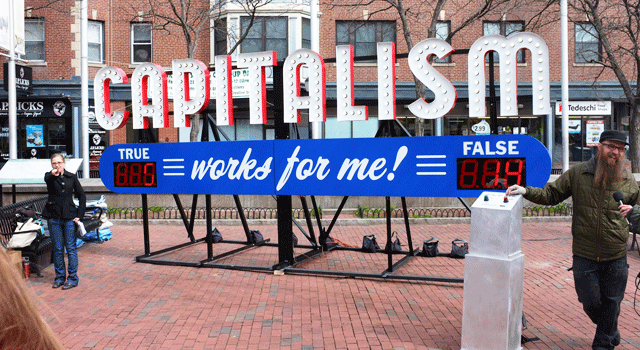
Capitalism Even My Mother Could Love

At age 32, when I announced on a phone call to my mother that I was starting a business, the line seemed to go dead. My mother, whom I love deeply, is not someone you would call business-friendly.

As a retired California social worker and occasional head of her local Democratic Party, she distrusts big business. She isn’t alone. Business in America, according to the book I’m about to review, has an approval rating of around 19 percent, two points above Congress. My father, on the other hand, a retired CPA and mall developer, admires business. When I was still in high school I remember him telling me, “Profit is one of the most beautiful words in the English language.” He regularly complained about anti-business prejudice in the media and academia.

As I was setting off to graduate school in sociology, he told me to enjoy myself, “but don’t believe everything your professors tell you.” My parents divorced when I was six. My mother had hoped I would become a doctor or teacher, as was customary on her side of the family. My father had already abandoned hope that his journalist/consultant/analyst son would ever become an entrepreneur, and so was delightfully surprised when I made the same phone call to him. He called me his “late-blooming son.” As a product of both my parents, I set out in business somewhat conflicted. Serving customers felt natural and good, but to survive in business, would I have to be ruthless? With degrees in biology and sociology, my education was devoid of business courses of any kind. Did I miss out on learning how to be hard-nosed?

‘Give capitalism a chance’

In the early months of Levenger, working out of our townhouse in Boston, Lori and I had plenty of days with no sales, and one day I shall always remember, with just one sizable return – that is, a negative-sales day. Was it too late to become a doctor, I wondered? Yet in our fledgling business I did feel I had finally found my calling. (I discovered this with the help of another book called Minding the Store by Stanley Marcus, who taught me that being a merchant could be a noble thing.) After a dicey first two years of taking no salaries, success came dramatically to our company.

During those early years of success, I would hear business executives speak at charity events about the importance of “giving back” to their communities. I chafed at this. It implied that business was taking and that we business people, like criminals, had a debt to repay. Yet I watched our own business employ people, help them grow in their careers, make our suppliers happy, keep our accountants busy, and give our customers something that, judging by the many heartfelt letters we received, they had been yearning for. How could this be a bad thing?

One day a promising young customer service rep at Levenger who was about to graduate from college came to see me. She told me she was quitting Levenger to work for a nonprofit, because she wanted to do good in the world. I said I was sorry to lose her but understood that people must follow their hearts. I suggested that it was also possible to do good in the world while working for a company. I even gave her some examples. But she wasn’t buying it. As we parted, I said with a smile that I hoped she would “give capitalism a chance.” She laughed, as did I, but she left the company anyway.

From profits to purpose

If the new book Conscious Capitalism: Liberating the Heroic Spirit of Business succeeds in changing the world the way the authors hope, my remark about “giving capitalism a chance” will no longer be a joke. Because future young people graduating from college will just assume capitalism can do good in the world. They won’t think they have to join a nonprofit to follow their hearts. They will understand that a “for-profit” company can just as easily be described as a “for-purpose” company, and that profits are one way, and sometimes the best way, to sustain noble work. At present, though, that future seems far off.

That’s why John Mackey, the co-CEO of Whole Foods Market, and Raj Sisodia, a professor of marketing at Bentley University, wrote this new testament of business. They named it after the movement they helped found, Conscious Capitalism. Its credo begins with this sentence: “We believe that business is good because it creates value, it is ethical because it is based on voluntary exchange, it is noble because it can elevate our existence, and it is heroic because it lifts people out of poverty and creates prosperity.”

Part of the problem, explain the authors, is an image problem. Corporate malfeasance, real and fictional, gets lots of play in the news and movies, while the goodness of business does not. But most of the problem is more invidious. The noble purpose of business has been hijacked. And this hijacking is not the work of cynical professors and journalists, but of business people themselves who willingly share the myopic belief that business is, first, foremost and finally, about profits. The economist Milton Friedman, in his widely cited 1970s essay on social responsibility, claimed that profit was the only social responsibility businesses had. Too many people have interpreted his advice too narrowly, to everyone’s detriment. Mackey and Sisodia convincingly demonstrate that it simply isn’t true.

Businesses that focus first on purpose, and then expand their view widely to benefit all stakeholders—rather than just narrowly serving shareholders—are better businesses, and better by all financial measures. Unfortunately, write the authors, capitalism “developed in a stunted way, missing the more human half of its identity.”

The 70% solution

One of the most serious consequences of this dwarfed manifestation of business is that the average engagement of workers in the United States hovers around 30 percent. Some 7 out of 10 workers just aren’t that into their jobs. Think of the opportunities for everyone if those ratios were reversed. It is the job of business leaders to help engage that lost 70 percent, and to help employees realize that in their hands – and hearts – lies the basis for the positive transformation of societies and communities. The authors of Conscious Capitalism ask us to imagine a business “built on love and care rather than stress and fear,” a business where staff members are able to “craft a purposeful life while earning a living,” and where employees can experience “the joy of service, of enriching the lives of others.” Even if you aren’t a doctor or a teacher.

Conscious Capitalism: from good to great

It’s a different way of thinking about business. Instead of viewing situations as tradeoffs (high wages leads to lower profits), the authors advise that we think in terms of mutual wins: living wages lead to happier staff members, which creates happier customers, which generates higher sales, which results in satisfied shareholders. Conscious Capitalism is a good book. It’s well-researched, well-written and has already received favorable reviews in major publications. But what is exciting is its potential to become a great book – the kind that triggers a fundamental and pervasive change in attitudes. Could Conscious Capitalism do for business what Silent Spring did for the environment? The widespread view of capitalism as some sort of necessary evil is a kind of DDT to human potential. Breaking into an enlightened conception of capitalism could liberate human potential, leading to new levels of innovation and personal fulfillment. But as powerful as Conscious Capitalism can be, it is not an elixir for business success.

The most enlightened capitalists must also go through the hard work of developing an effective corporate strategy – that long and difficult process of examining options and selecting the very few to pursue. Then comes execution, a topic that rightfully has filled volumes of business books and launched the careers of untold numbers of business consultants. Just as essential, in order for Conscious Capitalism to be sustained, it must be embraced by the current generation of young people starting businesses today. Only if they take it up – which they will do in their own ways – does the movement have a chance to change the world. There are promising signs.

Tearing down the Ivy Curtain

More colleges are focusing not only on entrepreneurism, but on social entrepreneurism. Students will do their own mashups to create businesses that feel like nonprofits, and nonprofits that are run like businesses. I’m hopeful that students will tear down the Ivy Curtain that for my generation separated the so-called impractical liberal arts from majors like business and accounting. I’m hopeful that we’ll see more business students with their heads in the clouds, and art-history majors who like accounting. My own sons, college classes of 2010 and 2013, are reading Conscious Capitalism, so we can discuss it as a family. Already they’ve let me know it seems rather obvious to them. And maybe that’s our best hope – that young people setting off in business today will just assume capitalism can do good in the world. “Like, duh, Dad.” I hope so. And I hope when they call my mother to tell them about their businesses, the conversation will be anything but silent. Now to you, dear reader: Does Conscious Capitalism make sense to you? I’d love to hear. Just leave a comment below!


Conscious Capitalism: Liberating the Heroic Spirit of Business

by John Mackey & Raj Sisodia

The shift in management paradigm is as transformational as the shift from the medieval view that the sun revolves around the earth to the view that earth and the other planets revolve around the sun. It is a fundamental transition in world-view. Once you make this shift, everything is different.  

~ From a book review by Steve Denning, Forbes.com

Do you notice anything different about your business over the past decade? How about anything different about business in general? Or about the way you approach business? Given your role as a Real Leader, you may already be aware of the fundamental shift Denning refers to in his review of Conscious Capitalism. This shift reflects rapidly expanding expectations for the role of business in society, and the increasing desire among entrepreneurs and business leaders to make a difference through business.

How do we make sense of this sea change? Where do we find a body of best practices case studies for leading businesses in this new imperative? And where do we connect with peers and role models who share this vision?

Conscious Capitalism is an idea, a movement, an approach to conducting business, and an organization dedicated to advancing all of these. Conscious Capitalism builds on the foundations of capitalism – voluntary exchange, entrepreneurship, competition, freedom to trade and the rule of law.

These are essential to a healthy functioning economy, as are other elements of Conscious Capitalism including trust, compassion, collaboration and value creation. Conscious Capitalism comes to life as it is applied to business. Its four core principles support leaders to create value for all.

These principles are higher purpose, stakeholder orientation, conscious leadership, and conscious culture. While capitalism has proven to be the most successful form of human social cooperation and value creation ever known, there is room for improvement.

Collectively, we recognize some of the unintended consequences of our activity in and through business and our economy (e.g. ecosystem pollution, suppression of the human spirit and ineffective activation of human potential, financial instability, etc.), and realize that there are better, more effective, more productive ways to orient and conduct ourselves in business, to the benefit of all, including financial stakeholders in our businesses.

Conscious Capitalism reflects our inherent drive to improve our individual and collective condition and to elevate humanity.

https://notablemagazine.com/watch-minecraft-earths-mobs-in-the-park/

0