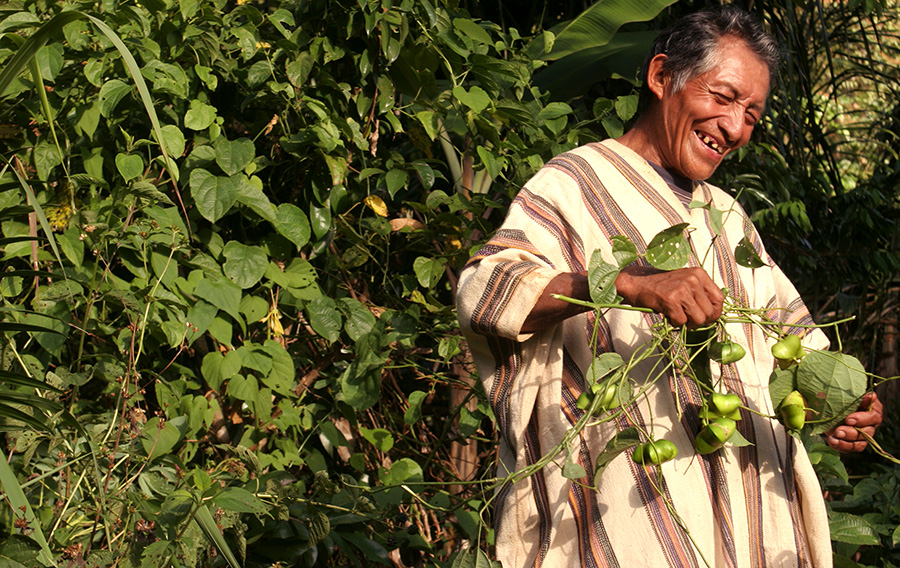
Where The Wild Things Grow

Daniel Joutard (above, left) couldn’t resist the call of the Amazon. He’s now built an innovation cosmetics brand in France, based on the magical properties of plants.

“My company is a combination of magic and science,” says Daniel Joutard, founder of French cosmetics company Aïny Savoirs des Peuples. A business school grounding and consultancy work for large corporations around Europe had always kept Joutard very rational. He knew the world was ruled by reason and science and had always been skeptical of “magical” claims by far flung tribes that plants could heal you. Yet he couldn’t seem to stay away from the remote communities of Ecuador and the Andes region of Latin America, with whom he found a strange attraction.

It started when Joutard became fascinated with native Latin American culture. He’d studied for six months in Mexico and became more interested, so decided to go and work fo three months in Ecuador. “I was so fascinated by the way native people see the world,” he remembers of his first encounters. “When you work with indigenous people you realise they see the world in a very different way, for them everything is magic, everything has a soul: the trees, human beings, stones and rivers. This was very different from my life in France, where we believe firmly in science.

When you see the world in a magical way it becomes more poetical and you have to respect it so much more.” Joutard found himself being drawn in deeper each time he returned and observed how intuitive the locals were when they needed to heal their sick with “magic” plants. “I didn’t believe in it at all, says Joutard, “but when I was sick in the middle of the Amazon, with no medics around, I only had the local communities to rely on, and they cured me. I might not have been very open minded to their medicine, but it worked. They call it ‘magic’ and we call it ‘science’, but it had the same end result and that is how my business began.”
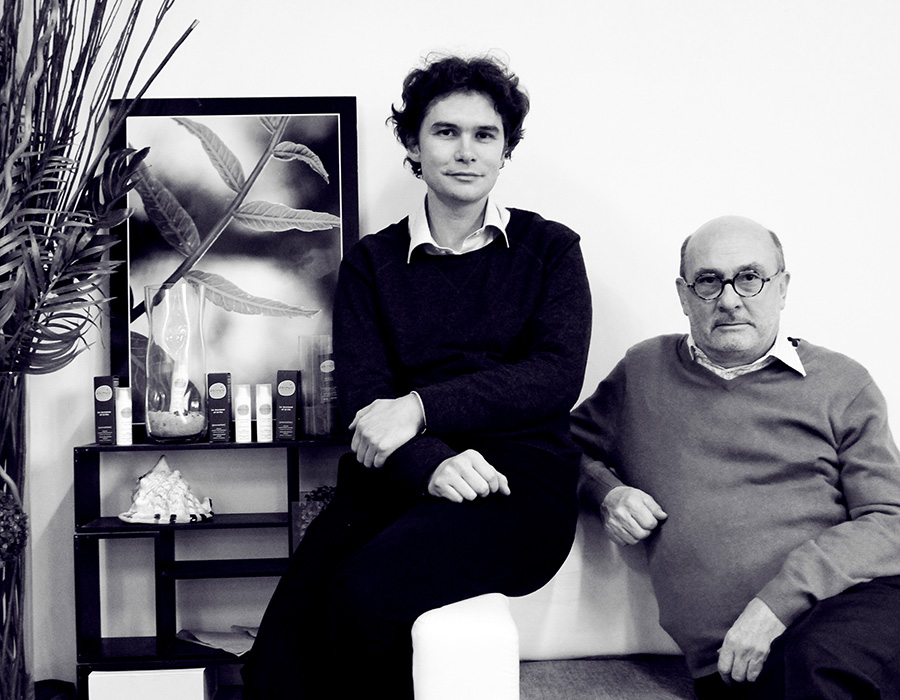
ainy2

Back in France between stints as a microcredit manager in Peru, Joutard decided he wanted to work with sacred plants. He had no idea where to start, but had a breakthrough in 2006 when he contacted Jean Le Joliff, former R&D director at Chanel, who agreed to 30 minutes of his time. The meeting lasted all afternoon with Le Joliff ending up offering his services for free.

They began their research, hired a chemical engineer and created a lab. It took three years to transform the seeds they had sourced from Peru into active cosmetic extracts, and then a while longer to turn it into a unique cream. In 2008 at Beyond Beauty, the most important cosmetics fair in France, they were awarded the jury’s special award and the following year were awarded for best natural and organic brand. By September 2009 the products were on sale.

As with all luxury products that come with a high price tag, the elements of time and highly-skilled craftsmanship are the most coveted ingredients. “Time intensive, the hand of man, limited quantity and quality mean luxury,” says Joutard. The company starts with barks and leaves that are turned into creams in a process that takes over three years. They produce two products a year, nothing else. An Ecuadorian healer that he met years ago has played a starring role in the company.

“She opened the door to understanding what I could not understand before,” says Joutard. “She taught me that listening comes before making any statement.” She has been present at all key moments of Aïny and even gave them the company name. Aïny can have several meanings, but mainly “I help you today, you help me tommorow,” a mainstay of the native communities of the Andes. Luckily, for the companies expansionist views, the name also means “I love you” in Chinese. He was initially told, “You must be mad to start a new cosmetics company in France.”

It’s the most competitive market in the world, with giant local players and foreign players trying to push in to gain the historic legitimacy the country has to offer around cosmetics. Joutard was also warned that he’d need millions of euros to launch a new brand, which he didn’t have. A little known fact in France is the support to be found from national agencies. The support he found for his innovation was decisive during their three years of research and development.

Aïny Savoirs des Peuples are now at a point where they sell their knowledge to other corporations, who are too busy to invest the same time that Joutard has. Mainstream commercial cosmetics companies are usually in a hurry to get their product to market and three years of production is out of the question. “It’s slow work when you work with indigenous people,” explains Joutard. “You mustn’t be in a hurry because they aren’t. If you are in a hurry they don’t work.”

And unlike the world’s largets cosmetics companies Joutard does not believe in putting any patents on the plants they have “discovered.” “We are betting that by creating trustful relationship with communities we will know about something that gives us a strategic advantage, before other companies catch on,” says Joutard.

He also publically publishes certain parts of their innovative research on plants, effectively blocking other cosmetic companies from claiming the ideas are theirs. This has the affect of keeping everybody at the same level, with Joutard’s advantage being that he is quicker at getting the world to know about the next interesting plant. “Ours is a different way of thinking,” says Jotard. “Our industry is based on patents – everybody tries to put patents on plants to create a monoploy, but we do the opposite.” To highlight the scale of the problem: France even has a national commission that fights against biopiracy.

A three year battle recently saw the commission force some French cosmetics companies to give up patents on indigenous plants in Peru. There are many examples of large companies patenting indigenous plants and foods around the world. Much of the pharmaceutical industry depends on a window of opportunity too, protected by patents for 11 years before it becomes public property.

Sometimes the game can get dirty. In 2012 Joutard was handed down four legal orders from the government, having been denounced by a competitor wanting to eliminate them. “Other cosmetic companies don’t like us to say patents are not fair because all their business is based on patents,” says Joutard. “It’s part of our new role as an alternative type of cosmetics company to innovate in terms of science and around social issues too. Perhaps we can try and identify the future of our industry too, which we’re hoping will look like what we’re building now.”

Aïny Savoirs des Peuplesbroke even in 2013 and are finally seeing some cash come in. They have developed a fair trade system with the communities that originally helped them get started, as a way of giving back. “The value of our products is not the plants themselves, says Joutard. “Its knowledge. So we give back 4 percent of our profits to the native organisations that are elected by the communities we work in. They then use the money for the good of their community.”

He has tried to foster entrepreneurship among the native people by treaching them how to create their own cosmetics but it has been tough going. “Its difficult to turn indigenous people into industrial people and entrepeneurs,” he says. This brings up the much-debated dilemna around globalization: many communities have survived just fine without the developed world’s intervention, yet the developing world is also desperate for knowledge and industry that will allow them to enjoy the same benefits of the developed world.

Is the 39 year-old Joutard worried about the future? If he is, his boyish face is certainly not showing it. “I use my own products on my face and it certainly helps,” he says.

Happiness in a Box

A DIY knitting kit that gives you the ultimate luxury – time with yourself.

Most fashion houses spend millions researching upcoming trends to ensure they are first to market with the latest fashion, but sometimes an idea can come from simple observation. On a trip to New York in 2010 María José Marín (above, right) was astounded to see people knitting all around her. And not contemporaries of her grandmother either; young and cool people that were crazy about the idea of producing their own clothing, in their own time.

Marín decided that DIY clothing would be a hit back in her home country, Spain and set out to combine her love of wool with what she saw as a growing trend in fashion. At age 21 and working as a financial auditor at PwC, Marín already had her company name firmly in mind: We Are Knitters. While auditing was profitable, she had longed to do something creative since she was at school. Summer holidays were spent browsing the internet, looking for ideas on how she could start a brand that she was passionate about.“I just wanted to be an entrepeneur,” says Marín. “I liked fashion and knew it was very competitive, and had this love of wool, but didn’t know how to put the two together.

When she saw the knitting trend in New York and started investigating she knew she was finally onto something. Many fast fashion outlets such as Zara or H&M were using synthetic fabrics, but Marín had always been fascinated by noble and natural fibers – cashmere or rare vicuña wool from the Andes. One fashion company in particular stood out for her, Loro Piani, an Italian luxury brand that made garments from the most precious raw materials in the world. They focus on finding the best fleece and promoting the sustainable production of wool, while also helping to preserve endangered species.

The long history and values immediately appealed to Marín. She wanted to become a luxury knitting brand. It wasn’t long before all her attention was on the best wool producing country in the world, Peru. “The production process here is almost an art,” says Marín. “I knew that our raw materials would come from this amazing country.” In the Peruvian Andes, knitting is a way of life, all the women know how to knit and the men raise alpacas, llamas and sheep.

Marín chose Alberto Bravo as her business partner, someone she considers an important part of her success. “Choosing the right partner, who shares the same vision and strategy is crucial to success,” she says. The two had no fashion experience, but plenty of passion, perseverance and energy. “The unknown can no longer be a barrier,” explains Marín. “Anything can be learned these days with our easy access to information.”

In fact, they atribute their naïvity and lack of knitting skills at the start of their venture to their success. Because they understood exactly what a beginner knitter needed, they were able to put themselves into the mindset of their consumers and design a product that appealed to them. The company slogan is “All the happiness in a kit” and the DIY kits sell for up to $176. Inside the box customers get balls of Peruvian wool, knitting needles and a pattern. The We Are Knitters label is included too, which knitters must sew on themselves when complete. The results are far from that jumper made from leftover scraps that grandma gave you for the holidays with a reindeer motif on the front. The kits and patterns are being marketed as a luxury fashion brand with ranges for women, men and children.

A young designer in France contacted Marín and is now designing the knitting patterns for the kits. Attracting renowned designers is now part of the company’s future plans. In Spain, entrepreneurship is generally frowned upon and not culturally accepted as success or even ‘real work.’ Marín’s training as an auditor kept her aligned and focused on a set of principles that she saw as crucial to success. One of them is using suppliers that are in accordance with her values of producing wool and another is the preservation of ancient peruvian culture.

It was hard to manage this from Spain, without a large travel budget, but they found a local Spanish company that was accredited by the Programme for the Endorsement of Forest Certification, ensuring that their wool was already prescreened for sustainability. Even the knitting kits have been designed to be reused. Cool designs on the bags that hold the wool ensure they are kept for other storage by customers.

The business was built almost entirely by researching online fashion companies on the web and Marín and Bravo also found their first material providers online. They received a lot of support and advice from other entrepreneurs online too. “One of the most important things we learnt was not to wait until the product was perfect before launching,” says Marín. With fashion trends getting faster and faster Marín decided that sustainability was the way to go.

They promote the idea that knitting your own garment with luxury material can result in a garment for life, shunning the seasonal, and disposable, nature of mainstream fashion. Without a supply chain structured along the likes of other fashion brands, We Are Knitters easily puts out new patterns and kits as soon as designs are complete, ensuring they are in the marketplace before traditional brick and mortar stores have them on the rails.

“The idea of ‘season’ to us is just a pattern,” says Marín.“Basically, a piece of paper and a new sticker that closes the box – the wool stays the same. It’s really simple for us to adapt and we don’t have to plan a year in advance like the large fashion companies.” The time normally reserved for managing a supply chain is now spent on social networks, blogs and Pinterest looking for trends.

“I read the book by the founder of TOMS Shoes, who said that he didn’t have any customers, only supporters,” says Marín. “And so do we. Our clients are more than customers, they not only buy our kits but come back to the web or social networks to share the results of their knitting project and how much they are enjoying it.”

“We are not selling a product – we are selling an experience,” says Marín.People buy our kits for the experience and to relax. We have realised that our brand is more about the experience; the real luxury of people spending time doing things for themselves.”

The Richest Man In American Medicine Seeks To Forge A ‘Cognitive Revolution’

Dr. Patrick Soon-Shiong is a surgeon, drug developer, entrepreneur and the richest man in American medicine. Since selling the company that makes his breakthrough cancer drug Abraxane in 2010, he has been developing and expanding NantWorks, an LA-based medical technology company with implications far beyond medicine. Kathleen Miles spoke to him about his groundbreaking work.  We’re on the NantWorks campus in Culver City. Can you explain what you are developing here?

I started this concept in 2005. It dawned on me that the world has not prepared itself for the convergence of supercomputing, cloud computing, machine vision and artificial intelligence. What we’re doing here is converging what I think is the next revolution of mankind. We’ve had the industrial revolution, and we’ve had mechanical and energy improvements. I think we’ve now reached a stage of enlightenment where technology will allow mankind to evolve to this era of cognitive power. A cognitive revolution will bring the wisdom of the Internet and what we know as mankind to somebody as they’re interacting with the real world. NantWorks is a company to figure out how we’re going to transform using the convergence of huge technology in how we work, live and play. Imagine if da Vinci – an engineer, an artist – had the supercomputer in his hands, instead of a quill. That’s what NantWorks is about.

Break down the elements of what you call the “ecosystem” of companies under the umbrella of NantWorks.

I needed to enable machines to talk to machines. So we built this operating system that ties to 25,000 medical devices, puts the data in the cloud and self-populates the electronic medical record. I call that the ability to capture the human signal engine – very much like when we send our astronauts up to space and capture their vital signs. If we can capture vital signs and medical records and give that to the doctor for decision support, that’s NantHealth. As we were building that, I realized that the fiber infrastructure doesn’t exist. The data centers don’t exist to address yottabytes of data. Ten thousand patients alone is equivalent to eight times the download of the entire Netflix library. So we needed to build a fiber infrastructure that runs across the country.

soon-shiong2

We now have 12,000 miles of fiber running across the country, in which we have seven data centers that are completely HIPAA-compliant, and that is NantCloud. I then realized that we need to have this information that is completely mobile. I needed to take the mobile device and give it machine vision, let it recognize physical objects and transport information. Then we could have a supercomputer in the hands of a physician. That’s NantMobile, which will also address the consumer and bring sports, entertainment, health and FitBit, all on your mobile device.

But the ability to transmit data fast on this mobile device required a chip that hadn’t been built yet. We needed a chip that can move data not at kilobits but at gigabits — without wiping out the battery life. Nobody could build that chip. So we created a company called NanTronics and created a chip that can move data 2.5 gigabits per second and go in a smartphone.

We just launched it in Barcelona. We’ve also built chips that can make a hearing aid that’s tunable by a smartphone and costs $300 (as opposed to $4,000 now). One phone can treat an entire village. Finally, we realized that it’s not only the genes that are important. There’s a whole world of proteomics and genomics, and the two had never been put together. So we created this company called NantOmics and built a supercomputer that measures the genes and the proteins in 47 seconds so that we can go from gene to protein to drug.

If artificial intelligence is part of this technological revolution that you would like to integrate into our health care system, do you anticipate it will ever fill in for human doctors?

I look upon the human-patient relationship like a priest-parish relationship. I don’t think there will ever or should there ever be the absence of human-human interaction. I don’t call it artificial intelligence – I call it amplified intelligence. We’re coining this term AI3, meaning amplified, actionable and adaptive intelligence. We’re going to enhance the cognitive capabilities of a human being who can’t recall information at the speed and depth that we need to make the right decision.

But this information is in the cloud and can give the doctor actionable information in real time. With actionable, adaptive intelligence, everybody learns from everybody else. Amplified intelligence makes sure we give the right care at the right time, especially when it comes to making life-threatening decisions.

How will the technology you are developing be used to treat cancer and other diseases?

According to a recent World Health Organization report, in 20 years, there will be about 24 million diagnoses of cancer per year. It’s an epidemic. There’s no question that we’re losing the war against cancer. The disease is so complex. It’s like whack-a-mole — you hit something and another thing pops up. And many cancer patients are getting inappropriate care.

How do we change that? The doctor is inundated with a deluge of information, or big data, and cannot address it in real time. So we’ve built a tool that is now adopted by most of the oncologists in the United States that takes thousands of protocols, the patient’s diagnosis, their biomarkers and their history and maps it in real time. As you treat the cancer patient with chemotherapy poisons, you’re affecting the genomic and proteomic profile of the cancer cell itself. We need to find the cell that’s now floating in the blood and do the genomic and proteomic analysis so we can predict early on what drug to give before it gets even worse.

It’s the only chance we have to put ourselves on the path to the cure. So we built a supercomputer that can do the genomic analysis rapidly. Think about the math. There are 10,000 new analyses that we need to do a day. It takes 11 weeks to do one patient’s analysis of the entire human genome. So we built a supercomputer that can do the entire analysis in 47 seconds.

In June, at the American Society of Clinical Oncology, for the first time, we will be presenting the results of the first 5,000 patients’ genome sequencing. We were able to do all theses analyses in less than 69 hours and provide the information of what drug to give to the patient based on their genetic fingerprint. We’ve built this clinical operating system to be completely inter-operable across the entire country as well as England, Canada and China.

Then we can present this complete information exchange to the pharmaceutical company and say, ‘Don’t treat lung cancer as one conglomerate disease, but as a multitude of rare diseases.’ The pharmaceutical industry used to always think that it needed to develop a blockbuster, billion-dollar drug. The problem is the blockbuster model before would help 20 percent of the people – say, with lung cancer. On the other hand, if you took lung cancer and you broke it down into 700 fingerprints of personalized medicine, you could have 90 percent response rate.

You have developed technology that helps the blind see. How does it work?

The technology is to have a camera recognize any physical object in the real world and then impart the knowledge of what the object is so the blind can hear from the camera what it’s looking at. In essence, we’re creating a seeing-eye dog with your mobile device. It’s very difficult to read money. Now you can take a $5 or $10 bill, no matter how it’s wrapped, and the camera will tell you what it is. That was released as LookTel Money Reader. We then released another app called LookTel Recognizer. It will let you recognize physical objects in the real world.

Are there other applications for machine vision?

In a sense, what we’ve done is created the actual browser of the physical world. Now the physical world can be brought to life by recognizing objects and curating information from the Internet. This also enables mobile commerce, including collecting coupons and closing a transaction. That’s in the context of NantMobile, which we’re about to launch in the retail space.

How will your information technology help the poor, particularly in LA’s inner city?

I grew up in South Africa. When I came here, I began to see that there is a medical apartheid in this country. The rich are well cared for, the middle class are sort of well cared for and the poor are just out of luck. A woman in Martin Luther King hospital in South LA called 911 from the hospital floor because no one was taking care of her. She died on that floor, and four hours later, nobody even knew she was dead. So I walked the floors where she was and went to see the doctor. I said, ‘How could this happen?’ They felt there was this inequality of information and care. She was Hispanic-speaking, so maybe it was a language barrier, but there was absence of care and skill sets down there. So they closed the hospital. But that wasn’t the answer.

The answer was to bring care down there. I’m glad to say [LA County Supervisor] Mark Ridley Thomas and myself fought very hard, and the hospital is about to reopen next year. The University of California system is bringing care there. And information technology will make it possible to have information transferred –whether you’re in South Central LA or Beverly Hills – in a patient’s time of need.

Kathleen Miles is Senior Editor of The WorldPost, a partnership of The Huffington Post and Berggruen Institute on Governance. This piece first appeared in Worldpost. logo

Redefining Luxury: From Fire Hose to Handbag

You won’t find any discarded firefighting hose lying around London. It’s all been turned into handbags by Kresse Wesling and her husband Elvis (above). The pair are founders of Elvis & Kresse, a luxury brand that uses “heroic” waste as the main material in their line of bags and accessories.

Kresse has had a love affair with waste ever since she moved from Western Canada to Hong Kong. The shock turned her into an environmentalist. “I spent a lot of my time camping and hiking in unspoilt, natural beauty until I was 17 years old. Then I moved to Hong Kong where I saw the untreated sewerage of seven million people running directly into the sea,” she recalls. “What should have been shark infested waters was barren because sharks couldn’t hunt – they couldn’t smell their prey.”

Not political by nature and not designed for the corporate world, Kresse decided to pour her newfound passion into recycling. She met Elvis on a boat in Hong Kong and they moved in together the next day. “I fell in love with him immediately,” she says, “and it was the same with the fire hose when I discovered it, because it’s a story that you can fall in love with.” The couple moved to London in 2004 and they where they were shocked at how heavily reliant the U.K. was on landfill. “Such a small island with so many people, with no land to spare,” says Kresse. “Yet 100 million tons of waste was being buried every year.” During an environmental management course Kresse discovered the London Fire Brigade’s decommissioned fire hose.

ElvisandKresseAfter a distinguished career fighting fires and saving lives; that could last up to 25 years; the hoses were destined for landfills. London had a whole team dedicated to patching and refurbishing them, but ultimately they were shipped off and buried. “Landfill was an indecent end for such a heroic material,” thought Kresse. She started rescuing them and wondering how they could be put back into service under the guise of fashion. The catalyst came quite by chance. Elvis had inherited an old belt from his father that had developed cracks in the leather. He decided to replace the leather with fire hose and while fixing the old belt buckle to it’s this new sturdy material, Kresse got a call from the team working on merchandise for London’s Live Earth concert.
They were looking for something green for the event and Kresse impulsively offered them 1,000 belts made from fire hose. After experimenting with different ideas, they realized that their products needed to emulate classic luxury items, the iconic accessories that form part of permanent collections of major fashion houses. But their battle had just begun; they couldn’t find a British manufacturer to share their excitement, rarely getting further than a phone call with disinterested factory owners. They had the same response in other European countries too, until they discovered a small, family-run factory in Romania that was willing to help. “They had three vital qualities,” recalls Kresse.

“A gap in their production schedule, a serious pedigree of production for major luxury brands, and they believed (as we did) that the fire hose deserved to be treasured, something of beauty in it’s own right.” The range Elvis & Kresse handbags, wallets and belts soon began looking like the coveted items seen in leading luxury retailers. A meeting with Donna Karon saw the fashion icon agree to stock the items in her New York store, Urban Zen. More materials soon followed, with some of their handbags now lined with reclaimed military-grade parachute silk. Kresse has always had an obsession with waste and likes nothing better than discovering and intercepting something new.

She can be found six days of the month tramping around industrial waste yards in her Wellington boots sourcing new materials. The challenge is the same every time – what can they do to prove value, change perception, and respect these resources. “Fall in love with a problem,” she says. “If you’re fixing something there is a sense of purpose, which can push you through the difficult, early years. Creating something new, that no one else has, can make you unique and in demand. This works for both waste and luxury,” she says.

“We dream of a time without landfill, when everything is recycled or composted. Between now and then we know there are far too many incredible materials that will either languish under ground or suffer the indignity of incineration; when that happens we lose, we lose quality, narrative, and the opportunity to do something great,” says Kresse of the couple’s business vision.

The pair have interceded in a waste supply chain, choosing story laden materials of incredible character, and do everything they can to ensure their second life is as long as possible. They are constantly searching for more materials to grow their range of bags, belts and wallets, and have so far rescued over 200 tons of waste. The business has grown to a point where it now collects and uses all the discarded fire hose in the city of London.

Kresse and Elvis decided from the start that the role of a fire fighter is one of bravery, loyalty and devotion to public service and that the materials they collected from fire departments around London should in some way benefit them too. They donate 50% of their profits to the Fire Fighters Charity (FFC), an organization that has already supported hundreds of thousands of fire and rescue workers with injuries, illness, stress or bereavement.

Kresse found the green movement to be a bit depressing and needing to change. “The guilt has to go,” she says. “We have to sell new ideas and they have to be compelling and more wonderful than the less green, less ethical alternatives.” She also believes in the power of positive marketing and feels there is no reason why the upbeat affirmation of mainstream marketing should not be applied to products like fire hoses made into luxury handbags.

The company now work with about 15 other materials and the goal for each material is the same. They only adopt a material they think they can find a solution for. Glass is ignored as it already has a huge culture of recyling, with the couple chosing to focus on new and exciting materials without a history of recycling. They are currently working on a leather reclamation project, having identified scrap leather as a real problem in the U.K., and have come up with an innovative way to turn it into building blocks. “What I like about the luxury market is that there is an inherent respect for materials, resources, talent and time,” says Kresse. “Luxury really values highly skilled people, and training and has a value about it that makes you buy well and buy once. We could never make anything for the fast fashion industry – it’s waste after all that is killing us.”

It’s a fascinating time for the pair to be involved the environmental sector because so many celebrities endorse luxury goods and at the same time are aware of green and social issues. Luxury goods companies have always relied on narratives to sell their products, but will start sounding increasingly hollow if they are not based on something tangible. “The luxury consumer doesn’t do lip service very well,” says Kresse. “They are really good at seeing through greenwashing and really good at researching a product. If someone is going to spend £300 on a handbag, they’re going to research it and the story has to be authentic. The future of luxury is authenticity, which is actually great for anything social or environmental.”

Kresse’s view on business is based on the pragmatic observation that government’s are just too slow to make a difference to problems that need attention immediately. “Business is faster than government in solving the world’s problems and it’s absolutely vital that if we want change we need to make it happen within the next ten years, otherwise we are absolutely screwed.

Business needs to lead this initiative,” she says. Using discared material to make things is not new, it’s happening everywhere. India, the Phillipines and Mexico are places where people who collect waste aren’t paid for a days work, but rather on the value of what they reclaim. In many places this is unsafe and dangerous but is still essentially what Kresse and Elvis do.

“The bizarre thing is that here in Britain, where we live, we are seen as innovative,” says Kresse, “but in many other countries we would be just part of the general recycling milieu.”

“Ultimately, it’s about how much you love the material and how much time and energy you invest in it. You rarely see a genuine luxury product that isn’t oozing craftsmanship. That has to be there otherwise no one will buy it,” she says. The challenge they now face is how to grow their business without compromising their core principles.

They were recently introduced as ‘the future of luxury’ at a launch party. While many might see their profit-sharing arrangement with a fireman’s charity as strange business practice, Kresse displays the same dismissive attitude as she had towards her early detractors: “Why not share, why not see if more good could be done with the surplus of an already good business. Why not?”


World Cup Soccer & Social Enterprise: A Hybrid Financing Model

The potential of hybrid financing strategies to accelerate the growth of the social business sector was one of the topics at the fourth edition of the Impact Economy Symposium & Retreat in Switzerland on June 13-15, 2014. A group of key influencers, thought leaders, and practitioners from the worlds of investment, business, government, and philanthropy once again convened to explore the most effective solutions, innovations, and opportunities that have surfaced in the promotion of impact. Real Leaders is one of the seven global official media partners of the symposium and, in this exclusive series, Impact Economy’s Dr Maximilian Martin discusses content covered at the conference.

On June 28, the Round of 16 kicks off at the 2014 FIFA World Cup. Football (or soccer, as it is known in the United States) has the amazing ability to engage people around the world. The 2010 World Cup in South Africa was televised across 245 television stations in 204 countries. The forthcoming World Cup in Brazil will reach even more people.

At a time when the military advances of ISIS in Iraq and Syria are bringing to the forefront the issues that divide different parts of national and global populations, fresh ideas on everything ranging from alternative energy to sanitation are needed to drive real progress around the world. Mega events such as the World Cup remind us of our shared humanity and intertwined destinies.

By taking place in an emerging market and including teams from the developing world, the World Cup also draws attention to the realities there, emphasizing that transformational progress is needed on a number of social and environmental issues; the street protests in Brazil against the cost of this year’s World Cup being just one of many reminders.

Achieving a step change in impact requires fresh ideas

Social entrepreneurs are increasingly viewed as a source of the solutions now needed. Less clear has been the kinds of businesses that need to be built in order to live up to the huge expectations; this is to say nothing of the most effective ways to actually finance them. Globalization, long-term demographic trends, changing consumer preferences, and the state of public finances are collectively driving the emergence of an integrated social capital market for the first time in human history.

This so-called impact investing market is targeting both financial return and social impact and contains a fast-growing stock of assets currently valued at USD 46 billion—and social enterprises are uniquely positioned to become the primary recipient of the resulting attention, knowledge, and resources. To make the most of the potentially vast amount of capital that stands to be allocated, however, social entrepreneurs will need to deliver a step change in impact on a number of protracted challenges that conventional approaches have not been able to solve.

Money and talent will be key to making this happen. Amidst increasing chatter about whether impact investing is indeed a golden opportunity to capitalize smart solutions to protracted challenges or just more hype, “Building Impact Businesses through Hybrid Financing: Special Impact Starter Edition,” a new Impact Economy report, looks at the first principles that determine the most compatible forms of financing given the problems to solve, and considers the structures of corresponding business models. Leveraging football for development is among the cases considered.

Social enterprises can use hybrid financing to drive greater impact

A key finding is that successful social enterprises can use hybrid financing to drive greater impact. Grants remain the best way to seed a social enterprise, but they tend to become insufficient in providing the capital required for the venture to scale if it achieves initial success. Moreover, they are expensive to raise, with the combined cost of fundraising often ranging from 22 to 43 percent of the grant, all costs considered.

Hybrid financing models therefore also use non-grant capital to fund social business activities, namely some combination of up to four forms of capital (e.g., grants, debt, equity, and mezzanine or convertible capital), as well as a variety of possible financial instruments such as internal credit enhancement through subordination or reserves, or external credit enhancement via letters of credit.

Time also plays a hugely important role in these structures: hybrid financing can be synchronic (or tiered),combining for example grant and non-grant sources of capital simultaneously to fund the joint expansion of profitable, and the optimization of unprofitable, elements of a social enterprise’s value chain and reduce risk. Or they can be diachronic, with hybrid funding unfolding over time, typically beginning with grant funding and then “graduating”—as the venture achieves critical mass—to equity, debt and mezzanine funding.

Some social entrepreneurs use football as a means for social change

Hybrid financing solutions can also be used to fund solutions delivery when sport is harnessed for achieving positive social impact, and when social entrepreneurs engage in what is called “football-for-development.” Building on the popular passion for football, social entrepreneurs have been reaching young people with an offering of education and training services to reduce socio-economic disparities and overcome gender discrimination.

For example, streetfootballworld, which is the leading global social enterprise in football for development and is covered in the report, focuses on advocacy to legitimize football in general as an instrument for social change; capacity development to help local grassroots organizations to achieve greater impact in their work with young people; network development to strengthen the football-for-development movement as a whole; and partnership development to match funding organizations with actors on the ground who can deliver football-for-development programs.

Jürgen Griesbeck, the organization’s Founder and CEO, is optimistic that hybrid financing strategies offer “important components to transform entire industries. Like subsidies or public research grants in the private sector, donations are highly important to the social sector to fund for the purposes of innovation and to support hard-to-monetize thematic areas.” Hybrid financing strategies “can help to bridge the gap: from the current reach of clients in the social sector to all of those that are not yet served,” said Griesbeck.

Via its partnerships with industry players, streetfootballworld is working on creating leading models that could be scaled, for example by applying the legacy requirements of bid books for FIFA World Cups to social issues. With an estimated latent demand of at least 45 million children and youth who would benefit from the approach, streetfootballworld would have to serve 60 times more clients to meet demand. Unsurprisingly, the organization is actively considering all types of capital, beyond grants, to overcome this scale gap.

It is time to innovate so football’s positive impact can match its footprint

The scale gap is especially interesting when put in relation to the status of the global football industry. There are an estimated 3.5 billion fans around the world (i.e., ahead of cricket with 2.5 billion fans, field hockey with 2 billion fans, and tennis with one billion). FIFA has 209 member associations with over 327,000 clubs and more than 270 million players—roughly 3.75 percent of the global population are actively involved in soccer, whereby 265 million play, and 5 million serve as judges and functionaries. The soccer business is booming. Over recent years, the primary driver of the strong revenue growth of many football clubs has been derived from television broadcasting. Salaries of top end players are exploding.

Leading Spanish football clubs FC Barcelona and Real Madrid pay average salaries of EUR 6 million to their players. In 2014, stars such as FC Barcelona’s Lionel Messi had a market value of EUR 120 million, and Real Madrid’s Cristiano Ronaldo was worth EUR 100 million. The top 30 football clubs each now generate over EUR 100 million annually. Leading club FC Barcelona had 44 million fans, Real Madrid 41 million, and Manchester United 37 million.

Even so, the football industry is at a relatively early stage in terms of high-impact corporate social responsibility (CSR) strategies, lacking the sophistication present in its core business and comparable industries. The good news is that some associations, such as FIFA, are relatively ambitious, and some clubs, such as FC Chelsea, engage in corporate responsibility as part of their brand development. Additional pathways and innovative financing could enhance impact.

As the report illustrates, the example of streetfootballworld shows that cooperation and orchestration are essential to closing the gap between supply and demand. As concepts of branding, merchandising and large-scale commitments expand into a professionalizing social sector, hybrid financing strategies will play a more important role going forward: funders may provide up-front risk capital in return for a share of future expected revenues, and financial engineering will help to monetize future grant commitments from reputable counterparts ahead of actual payment.

Many will start looking forward to the 2018 FIFA World Cup in Russia following the 2014 finals. A step change in impact is possible in a couple of years, provided the combined use of philanthropic and commercial capital is used to build and finance the social enterprises of the future, and help football to develop a positive social impact that is commensurable with its global footprint. Used properly, hybrid financing can provide a head start to build a future that football fans around can look forward to.

Maximilian Martin, Ph.D. is the founder and global managing director of Impact Economy, an impact investment and strategy firm based in Lausanne, Switzerland, and the author of the report “Building Impact Businesses through Hybrid Financing: Special Impact Starter Edition.”

The Most Inspiring Thing to Happen in Business in Years

On June 12th Elon Musk (above) announced that Tesla is applying an ‘open source’ philosophy to their vast patent portfolio and that they will not initiate legal action against anyone using them in good faith. The motivation is simple – the Tesla mission is to accelerate the shift of humanity’s reliance on fossil fuels towards sustainable, renewably powered transportation. They clearly understand that if they tried to hold on tightly to the knowledge and protection of ideas and intellectual property that is enabling this race to gain momentum, they would just be holding the world back from getting to where we all want it to be.

“Tesla Motors was created to accelerate the advent of sustainable transport. If we clear a path to the creation of compelling electric vehicles, but then lay intellectual property landmines behind us to inhibit others, we are acting in a manner contrary to that goal.”

The belief is inspirational – often as an entrepreneur when pitching to analysts or investors, I have found they become obsessed with what is going to ‘protect’ you, what is your ‘unfair advantage..IP..patents…’ etc etc. Mostly fair points, but mostly bullshit. The ‘unfair advantage’ 99% of successful companies have is their people and passion – this is something that analysts and investors find really hard to quantify and therefore often dismiss businesses or opportunities because of it.

As he says in his statement, Elon’s belief in Tesla’s people and engineers is what gives him the brazen confidence to make a move like this, which again puts them head and shoulders above the fray of ‘business as usual’ leaders running most companies. It’s not only becoming increasingly clear that Elon Musk is our generation’s Thomas Edison, but also that he is becoming an emerging icon for business’ role as a driver of wellbeing for people and our planet.

In twenty years nobody is going to remember anything that any of the major automotive manufacturers or CEOs did to get 7 billion people off fossil fuels that pollute the world, hack up our planet and are a root cause of war after war costing billion after billion. They willremember Tesla, Elon Musk and the solitary voice and commitment he has been in the face of all odds to usher in a new age that is slowly but surely on its way. I know which one I’d rather be.

Derek Handley is an Astronaut in Waiting, Virgin Galactic and Founding CEO and Resident Entrepreneur at The B Team. Follow him on Twitter or find him on Linkedin


The Sun Beneath Your Wings: Introducing the Electric Road

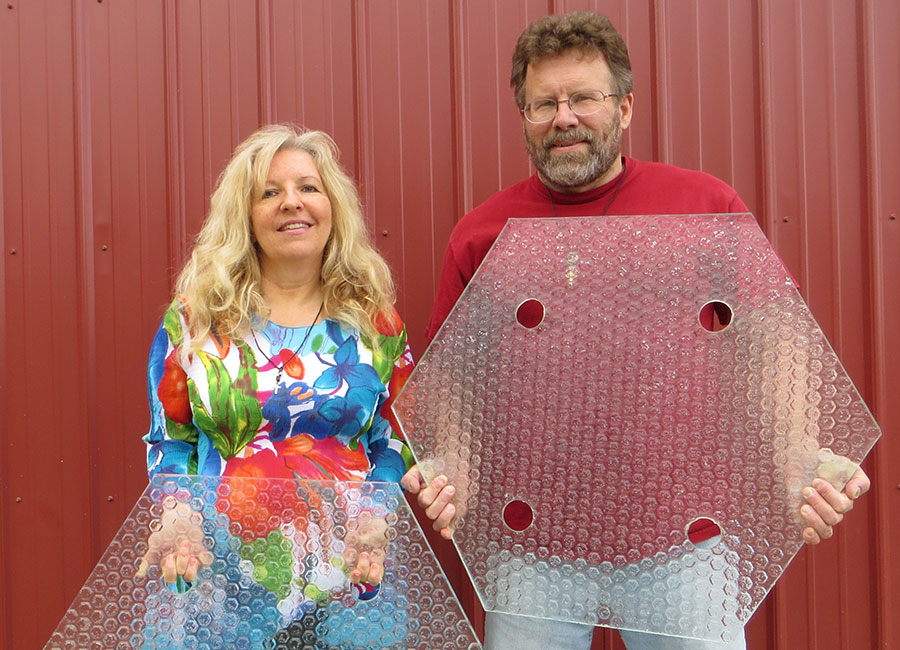
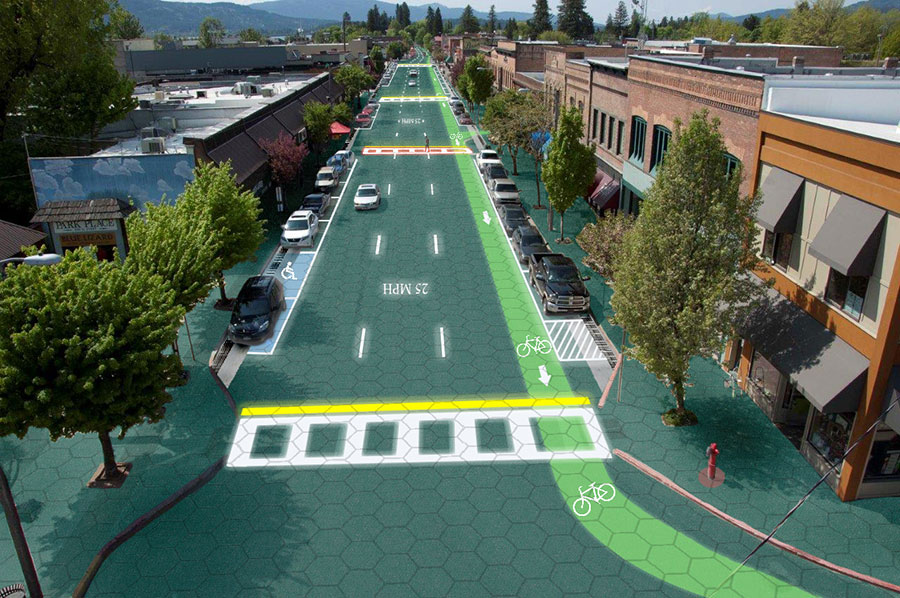
Driving into a parking area with a giant Pepsi logo illuminated beneath you in broad daylight, uninterrupted cell phone coverage while you drive, thanks to “leaky” cables running alongside the road, a highway that generates enough power to charge your electric car, light up road markings at night and feed excess power into a power grid. Welcome to the smart road of the future, made of glass. Scott Brusaw and his wife Julie have been working on the idea of a smart power generating road for 8 years and were thrilled when the US Federal Highway Administration recently expressed an interest in what they were doing and provided them with the funding to move their concept forward.

Their company, Solar Roadways, is now looking at the huge opportunities that exist for roads that pay their way – by creating electricity and reducing maintenance costs with a modular, Lego-like simplicity that could save billions. Like all great ideas, that also happen to be the simplest, the venture is poised to change the way we think and also to inevitably attract a slew of imitators. Brusaw never considered himself an environmentalist, until he watched Al Gore’s An Inconvenient Truth, after whichhe began thinking more deeply about the effects of fossil fuels on the environment.

His wife Julie, a co-founder of Solar Roadways, has always considered him an environmentalist, even though he originally considered environmentalists crazy, with delusional ideas. Ironically, by ignoring the emotive messages and focusing on a solution, he has emerged as a potential giant among conservationists, by cutting greenhouse gases by 75 percent with his invention. Rather than being swayed by emotive arguments around environmental issues that just acknowledged a problem, Brusaw began thinking about how he could help solve the problem.

Sandpoint

The town of Sandpoint, Idaho has enthusiastically embraced the new technology.

An engineer by trade, it was already in Brusaw nature to find solutions. If global warming was such a big problem, he thought, then why were no solutions being put forward? Amazingly, this was only eight years ago in 2006, and Brusaw hadn’t seen many people stepping forward to meet the challenge. After watching An Inconvenient Truth he began reading up on topics such as climate crisis and realized that the reason nobody was doing anything was because the problem was so huge, so global in nature, that no single institution or individual would be able to fix it.

Brusaw and his wife took a long look at the situation and came up with a seemingly crazy idea – one he might have laughed at himself during his “pre-environmental” days – electric roads. Although still one step below the flying cars you might see on The Jetsons, the husband and wife team have now created a blue ocean strategy that has propelled roadways into a unique economic opportunity.


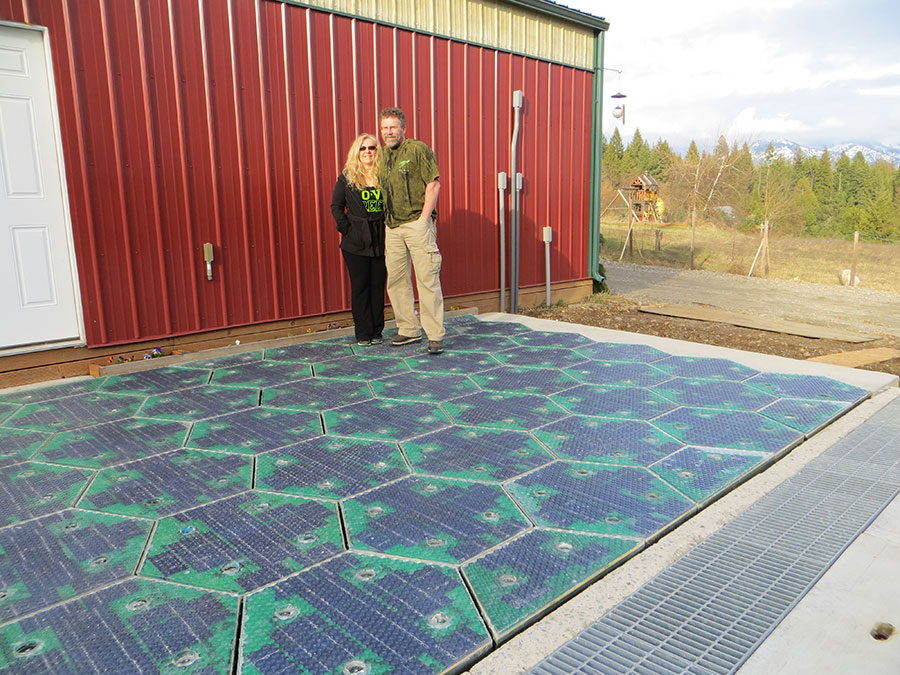
Scott and Julie Brusaw with their modular, glass solar panels.

Scott and Julie Brusaw with their modular, glass solar panels.

Dull, black asphalt, the chosen material for road surfaces since the 1870s suddenly has competition from its greener cousin, glass. The new road crews are no longer blackened workers either, who breathe toxic fossil fumes. “An interesting situation now arises,” says Brusaw. “Who will own these roads? Is it an electric company or a local government body?

The reason no one has attempted this before is because it’s such a daunting task that covers so many different fields of expertise,” he says. “We have electrical engineers, civil engineers, structural engineers and mechanical engineers all working together. They’re all working together for the first time and it’s a colossal undertaking.” The risk of a copycat company stealing their idea is great, but Brusaw wants to develop the product into something so advanced that he creates a comfortable distance between Solar Roadways and any future competitor.

Brusaw’s earlier innovations seem to point to an enquiring mind that marries two different technologies to create something new. Previous projects include a technology system in Southern Italy that centralized the readings of water meters and devices that allowed immobilized hospital patients to control television sets without their hands. Brusaw, who will shortly ascertain how much government and commercial support he will enjoy, is currently costing early prototypes of these industrial-strength solar panels.

While bureaucratic processes are slow and steady and need to consider existing infrastructures and urban planning implications, the public interest from ordinary people has been overwhelming and has captured their imaginations. Solar Roadways’ fund raising campaign on popular crowdfunding website indiegogo.com has already raised over $2 million in just two months, more than double the original goal of $1 million. With the catchy phrase “Solar Freakin’ Roadways,” the couple have acknowledged the coolness factor of an idea that inherently feels right to the 47,000 people who have pledged their support on the website.

“The biggest perception we need to overcome is that a solar road is not the same as an asphalt one,” explains Brusaw. Asphalt roads require a power distribution system and road maintenance such as pothole filling, line painting and snow ploughing. Many of these functions would fall away with solar panels. “It’s not the same as rooftop solar either,” adds Brusaw. For a start, the modular glass panels can withstand traffic from the heaviest trucks, at least 250,000 pounds worth. The Solar Road Panels can be installed on roads, parking lots, driveways, sidewalks, bike paths and playgrounds. “Literally any surface under the sun,” quips Brusaw with a grin.

The idea is for the solar panels to pay for themselves, primarily through the generation of electricity, which can power homes and businesses, all connected via driveways and parking lots. The company sees a future where a nationwide system might produce more, clean, renewable energy than a country uses. Heating elements inside the panels allow them to stay snow and ice-free and LEDs light up at night, creating road markings and signage. Electric Vehicles will be able to charge with energy from the sun (instead of fossil fuels) while in parking lots and driveways.

A future plan, after a roadway system is in place, is mutual induction technology – that will allow for charging while driving.  Revenue will not only be generated through the creation of power. Power companies who have examined early installations of Solar Roadways have been overjoyed to discover a cable corridor that follows the road, built into the ground level, modular system. This means no more falling trees or ice taking out overhead power lines. Power, cable and telecoms companies would be able to lease and manage the cable corridors, turning future roads into giant, managed Scalextric tracks.

Early studies in the UK have shown that solar lights spaced 20 feet apart along high accident routes, decreased accidents by 70%. Solar Roadways envisions the entire road, and all its markings, becoming a bright, clear and safe pathway for cars and pedestrians alike. “Keeping the Northern US roads clear of snow in winter, alone, has untold potential for saving lives,” says Brusaw. The small town of Sandpoint in Idaho has embraced the idea of solar panel roads wholeheartedly and is preparing to become the first showpiece of this new technology.

While global licensing is on the cards, the couple can barely keep up with the initial, local demand in the US, with many companies holding off on using asphalt in their build, hopeful that the Brusaws’ will get their product to market sooner rather than later. “We worry about Climate Change. We keep hearing reports that it’s happening faster than expected and can help by easing and then eliminating our dependence on fossil fuels, says Brusaw.

“We began our project with the goal of helping with environmental issues and then realized our concept could help the world in so many other ways too.” Ultimately, The implementation of these innovative ideas on a grand scale from Team Brusaw has the potential to create thousands of jobs in the US and around the world. Who knows, replacing the world’s roads might even allow us to all manufacture our way out of our ongoing economic crisis. One glass panel at a time.

Bike-Path  

Tim Cook to Apple Investors: Drop Dead

Apple CEO Tim Cook tells Investors Who Care More About Return on Investment than Climate Change: Your Money is No Longer Welcome.

At the annual meeting of Apple shareholders in Cupertino, California, in February this year Apple CEO Tim Cook informed investors that are primarily concerned with making reasonable economic returns that their money is no longer welcome.

The message came in response to the National Center for Public Policy Research’s shareholder resolution asking the tech giant to be transparent about its environmental activism and a question from the National Center about the company’s environmental initiatives.

“Mr. Cook made it very clear to me that if I, or any other investor, was more concerned with return on investment than reducing carbon dioxide emissions, my investment is no longer welcome at Apple,” said Justin Danhof, Esq., director of the National Center’s Free Enterprise Project.

Danhof also asked Apple CEO Tim Cook about the company’s green energy pursuits. Danhof asked whether the company’s environmental investments increased or decreased the company’s bottom line. After initially suggesting that the investments make economic sense, Cook said the company would pursue environmental goals even if there was no economic point at all to the venture. Danhof further asked if the company’s projects would continue to make sense if the federal government stopped heavily subsidizing alternative energy. Cook completely ignored the inquiry and became visibly agitated.

Danhof went on to ask if Cook was willing to amend Apple’s corporate documents to indicate that the company would not pursue environmental initiatives that have some sort of reasonable return on investment – similar to the concession the National Center recently received from General Electric. This question was greeted by boos and hisses from the Al gore contingency in the room.

“Here’s the bottom line: Apple is as obsessed with the theory of so-called climate change as its board member Al Gore is,” said Danhof. “The company’s CEO fervently wants investors who care more about return on investments than reducing CO2 emissions to no longer invest in Apple. Maybe they should take him up on that advice.”

“Although the National Center’s proposal did not receive the required votes to pass, millions of Apple shareholders now know that the company is involved with organizations that don’t appear to have the best interest of Apple’s investors in mind,” said Danhof. “Too often investors look at short-term returns and are unaware of corporate policy decisions that may affect long-term financial prospects. After today’s meeting, investors can be certain that Apple is wasting untold amounts of shareholder money to combat so-called climate change. The only remaining question is: how much?”

The National Center’s shareholder resolution noted that “[s]ome trade associations and business organizations have expanded beyond the promotion of traditional business goals and are lobbying business executives to pursue objectives with primarily social benefits. This may affect Company profitability and shareholder value. The Company’s involvement and acquiescence in these endeavors lacks transparency, and publicly-available information about the Company’s trade association memberships and related activities is minimal. An annual report to shareholders will help protect shareholder value.”

Apple’s full 2014 proxy statement is available here. The National Center’s proposal, “Report on Company Membership and Involvement with Certain Trade Associations and Business Organizations,” appears on page 60.

The National Center filed the resolution, in part, because of Apple’s membership in the Retail Industry Leaders Association (RILA), one of the country’s largest trade associations. In its 2013 “Retail Sustainability Report,” RILA states: “Companies will often develop individual or industry voluntary programs to reduce the need for government regulations. If a retail company minimizes its waste generation, energy and fuel usage, land-use footprint, and other environmental impacts, and strives to improve the labor conditions of the workers across its product supply chains, it will have a competitive advantage when regulations are developed.”

“This shows that rather than fighting increased government regulation, RILA is cooperating with Washington, D.C.’s stranglehold on American business in a misguided effort to stop so-called climate change,” said Danhof. “That is not an appropriate role for a trade association.”

For even more information on RILA, read “The Retail Industry Leaders Association (RILA): A Cartel that Threatens Innovation and Competitiveness,” by National Center Senior Fellow Dr. Bonner Cohen.

“Rather than opting for transparency, Apple opposed the National Center’s resolution,” noted Danhof. “Apple’s actions, from hiring of President Obama’s former head of the Environmental Protection Agency Lisa Jackson, to its investments in supposedly 100 percent renewable data centers, to Cook’s antics at today’s meeting, appear to be geared more towards combating so-called climate change rather than developing new and innovative phones and computers.”

After Danhof presented the proposal, a representative of CalPERS rose to object and stated that climate change should be one of corporate America’s primary concerns, and after she called carbon dioxide emissions a “mortal danger,” Apple board member and former vice president Al Gore turned around and loudly clapped and cheered.

“If Apple wants to follow Al Gore and his chimera of climate change, it does so at its own peril,” said Danhof. “Sustainability and the free market can work in concert, but not if Al Gore is directing corporate behavior.”

“Tim Cook, like every other American, is entitled to his own political views and to be an activist of any legal sort he likes on his own time,” said Amy Ridenour, chairman of the National Center for Public Policy Research. “And if Tim Cook, private citizen, does not care that over 95 percent of all climate models have over-forecast the extent of predicted global warming, and wishes to use those faulty models to lobby for government policies that raise prices, kill jobs and retard economic growth and extended lifespans in the Third World, he has a right to lobby as he likes. But as the CEO of a publicly-held corporation, Tim Cook has a responsibility to, consistent with the law, to make money for his investors. If he’d rather be CEO of the Sierra Club or Greenpeace, he should apply.”

“As in the past, Cook took but a handful of questions from the many shareholders present who were eager to ask a question at the one meeting a year in which shareholder questions are taken,” added Ridenour, “leaving many disappointed. Environmentalism may be a byword at Apple, but transparency surely is not.”

The National Center for Public Policy Research, founded in 1982, is a non-partisan, free-market, independent conservative think-tank. Ninety-four percent of its support comes from individuals, less than four percent from foundations, and less than two percent from corporations. It receives over 350,000 individual contributions a year from over 96,000 active recent contributors.


Twitter Co-Founder: Five Tips for Non-Profits

Giving back is the future of capitalism, according to Biz Stone. That’s why as Twitter’s co-founder, he hired a CSR officer before any sales people, and is now focused on his own foundation.

He also seeks new ways to use technology to help society. Here he offers advice on how non-profits can use technology to put themselves at the center of conversations, spread their message to thousands on a shoestring, and use metrics to bolster their mission.

Non-Profits: Think Like For-Profits

Non-profits should behave as if they are for-profit, but be smarter about it. You might not have a marketing budget, but there are a lot of free things you can do that are hugely impactful.

Listening, for example, is one of the biggest things any organization can do. Don’t plow right in based on a hunch. Search the name of your organization, or what you care about, and start listening and looking for patterns in how people are already engaging. Then get on that boat and figure out how to enhance it.

The most important thing you can do is make it easy for people to engage with your product, or service, or cause. Nowadays, individuals can reachthousands of people, but if even a dozen get the same idea, it quickly becomes contagious, which makes it more likely for that idea to become an action.

For-Profits: Think Like Non-Profits

The future of marketing is storytelling and philanthropy. People are attracted to meaning, so they’ll choose products and services that they feel are more meaningful. As a result, you need to develop a story for your product, or service, or even the people who work at your company.

It’s really smart business to weave doing good into the core of your philosophy. If you get a reputation for doing good by doing well, smarter people will want to work with you.

Content Drives Conversation

A lot of the discussions that happen across social platforms require traditional content of some kind to get started. A three-minute video on YouTube that’s well produced, or a thoughtful article, or an interview with someone important–these are the things that get passed around and discussed. There isn’t usually a spontaneous piece of information that everyone’s discussing that originated on social media. It’s usually something more traditional.

Look at Charity: Water, an organization that is incredibly good at marketing. They create well-produced videos that communicate what they do and visually show the impact donors have. They cut through a lot of the noise by creating an original piece of media that is worth talking about and passing around. Charity: Water is taking advantage of the amount of people looking at videos everyday and leveraging that to create awareness.

Measure Everything

One of the lessons we learned running Twitter is “measure everything to know what to do next.” So in running our personal foundation we wanted to have eyes on exactly what we were doing. The same things that work for a lot of companies also work for non-profits. For example, Donors Choose does a wonderful job of creating a feedback loop between the donor and the people who receive the donations. It’s really compelling: You get third-graders writing incredibly heartfelt thank you notes. When you get them, you can’t wait to donate again. Organizations that are savvy are creating feedback loops to create a higher retention rate of repeat donors.

That’s really, really important. Look at your consumers, treat them as “user accounting:” We get this many people per week, or month, or year, donating. How many of them are repeat donors? How many stop? How many don’t make it to the deal button? What can we do to move them back in? Any fraction of a percent gained now will end up having a massive impact over the course of a year. That’s as true for non-profits as it is for profits.

Don’t Wait

All altruism has compound interest: The earlier you get started, the more impact you have over time. So many people think that you wait until you’re “comfortable” before you start thinking about local and global problems and how you can help, but that’s wrong. In reality, you can do something right now. Young entrepreneurs are creating services that millions of people are freely accessing–you have such an opportunity to affect some sort of new mindset.

By D’Arcy Doran. Original article appeared on ThinkWithGoogle


How to Be an Xceptional Leader

What if launching and leading an xceptional business was simpler than you’ve ever imagined? Not easier. Not less time consuming. Not less gut wrenching, but simpler. Guess what: It is. What if I told you that many successful entrepreneurs didn’t start with a compelling vision or indeed a workable business plan? Guess what: That’s true. What if it was possible to solve a major problem with no industry background? Well: It is.

In my latest book, DO! The Pursuit of Xceptional Execution, I interviewed entrepreneurs from around the world. They are the leaders of some of the most compelling global brands and companies, ranging from one to 3,000 employees, with turnovers from $100,000 to $130 million. I call them the Xceptionalists.

They hail from Buenos Aires, Argentina to Bologna, Italy; from Des Moines, Iowa to Galway, Ireland. They run app companies, consultancies, clinics and sprawling technology corporations. And the secret to their success – xceptional execution. Groundbreaking research conducted by Columbia University’s Amar Bhidé in 2000 titled The Origin and Evolution of New Businesses reinforced the term’s significance, revealing that 88% of “breakthrough companies” were the result of “xceptional execution of an ordinary idea,” according to their owners. Only 12% were the result of new inventions. You don’t have to be Bezos or Branson, Einstein or Jobs.

Your product doesn’t have to be a Bentley, Hublot, or a Stradivarius. And your product or service doesn’t have to be a Dropbox, a Flickr, or a Hulu. You must simply find an ordinary idea, and implement that idea with xceptional execution. How? Honouring the two key pillars:

1. Self awareness

The xceptional leader knows, understands and moves with and through their fears. Their motivation is to make a real difference in people’s lives. They understand and honour the power of their intuition and know that doing nothing/taking timeout is the only way to help them see situations as they truly are. They know that perseverance is the new marketing! No surprise that Stanford Business Advisory Committee cited self awareness in 2007 as the most important attribute a leader should develop.

2. Attention

The Xceptional leader understands that attention is the most powerful drug on the planet and is the focal point of their business strategy. They shower their customers (internal and external) with quality authentic attention. They focus not on building customer relationships but on friendships – customers leave, friends stick around a lot longer. All Ben Milne of www.dwolla.com had was a burning desire to solve an existing problem. His company was paying too much in credit card fees. He knew that if he solved this challenge he would put a lot of money back in people’s pockets, something that would possibly transform lives particularly in the developing world.

The man changing the face of the financial world had no prior background in the industry before he began in 2009. Four years later, Forbes listed Ben as one of the 12 most disruptive names in business for his groundbreaking idea for helping customers process a transaction in a simpler way. Four Argentinian business people wanted to make their country a technology hub during a financial crisis when the peso was devalued, even though they had no business plan, the country had no history in technology, and they had only $5000 in capital.

They knew if successful they could provide valuable employment opportunities in their community. Those four entrepreneurs started www.globant.com – now a global company with 3000 employees and revenues of $129m. Agnes McCourt now 72, created Unislim, Ireland’s biggest slimming organization.

It is now over forty years in existence and continues to grow and evolve even though she admitted in her first class that she hadn’t got a clue about how to lose weight. Her passion to serve this forgotten market was unswerving so much so that not even a death threat could dissuade her from pursuing this path. Being an Xceptionalist is about giving yourself permission to explore the brilliant ideas your mind generates every day and then DO! Be xceptional!

You can purchase DO! The Pursuit of Xceptional Execution here 


0