Yes, There is A Positive Purpose For Anger

“There she goes again.” How often have I heard that? Plenty often. I most often hear it in the workplace. But it is just as frequent in many homes.

It’s a statement that confirms a stereotype of women who are generally touchy, emotional and passive-aggressive because…they are women. Blame it on hormones or any story you choose…the stereotype is that women are simply ‘high maintenance.’

Well, what if that were true? What if survey research and neuroscience converge to generate strong evidence that women’s brains are wired to be more socially and emotionally sensitive, and that most men and women experience women as being both emotionally complicated and indeed, passive-aggressive.

With this kind of research you might feel justified in telling women to “stop whining and just get over it. Assert yourself, be positive, be solution oriented, lift yourself up by your emotional bootstraps and just act like a man. Then you’ll get every opportunity you deserve.”

This kind of thinking is a common logical fallacy that combines attribution error and confirmation bias. Attribution error is mistaking correlation for cause. In this case, it would be to attribute women’s generally higher emotional sensitivity to negative behavior. Once you make that your mental model you will begin to pay attention to any evidence that supports your theory of women. That’s confirmation bias. It’s lethal. Confirmation bias is the cause of nearly all superstition. It works like this.

If I did a rain dance every time there was a dark cloudy sky I would probably notice that it frequently rained after my dance. So instead of attributing the cause of the rain to the moisture-laden clouds I might think I caused the rain by my bodacious dancing. We do this kind of ill-logical thinking all the time because it gives us a false sense of power and control.

Superstitious thinking continues until new evidence creates a more accurate explanation of why it is raining. Our inability to distinguish between correlation and cause is a huge handicap. In the 18th century it was widely believed by expert medical doctors that draining ‘bad’ blood from a patient who was suffering from certain diseases would cure them. When George Washington had a fever he almost died because he was treated by bloodletting. Ironically, the patients who were strong enough to get well in spite of bloodletting were the evidence used by doctors to assert that bloodletting worked. I know, insanity! Medicine had to get a whole new mental model of disease and germ theory before doctors stopped killing their patients.

So spend a minute with me examining why leaders might be contaminated by logical fallacies when they think women act more emotional and more passive aggressive than men. When I’ve asked male leaders, the ones who state these stereotypes, the question “Why do you think women might act that way?” They most often shrug their shoulders and say “they’re women.”

Let’s consider an alternate explanation to both emotional and passive-aggressive behavior and the simply, “it’s a women thing.”

What if the primary reason that people behave in passive-aggressive ways is because of a logical response to feeling vulnerable when they’re in a low-power position?

Okay, now what if you belonged to a class of people who since the dawn of human history…

  • could not own property?
  • were not considered worth educating?
  • could not defend themselves against rape?
  • were expected to have as many children as possible at the risk of their own life?
  • were expected to be the primary care giver of all the children?
  • were prevented from being admitted into professions such as law, architecture and medicine?
  • attended churches, where the religious doctrine asserts, wives should be obedient to their husbands even if their husbands were wrong, and all important decisions should be made by men?

Hmm. And what if today…

  • there are nearly 500 million girls and women who are illiterate largely because they are considered not worth educating?
  • there are 25 million women slaves, and according to UNICEF, 98% of these girls and women slaves are sexually exploited?
  • women in many countries are trapped in cycles of poverty without access to housing, property ownership, inheritance or rights of inheritance?

And what if today in our civilized world…

  • women held only 14.6% of executive leadership roles?
  • women held only 16.9% of corporate board positions?
  • women CEOs made only one third of what male CEOs made?
  • only 2.7% of venture-capital went to women-lead startups?
  • over 80% of women felt held back in their careers because of company policies, a lack opportunity, respect, or inclusion?

What the above list represents is just some of the evidence of systemic disadvantages that women have historically lived under and continue to today.

Psychologists and anthropologists tell us that people who are continually treated unfairly because of who they are rather than what they do are most likely to respond in one of two ways:

  • They either take on the identity of powerlessness that makes it nearly impossible to believe that personal changes in their behavior will lead to improved circumstances.
  • Or they live with a level of simmering frustration that shows up as passive-aggressiveness. (The whole passive resistance movement led by Gandhi in India and Martin Luther King Jr. in the U.S. shows just how productive passive-aggressive strategies can work in systems with asymmetrical power.)

So here is my point. Women would not act passive-aggressively if they didn’t have to. So if they’re acting that way, look in the mirror. Quit blaming them for the behavior you’re causing!

Anger has a bad reputation. We’re told that anger can actually make us sick, cause hypertension and shorten our lives. But there is a particular kind of anger that is sanctioned by spiritual leaders throughout history. It is the righteous anger that drives the energy of positive change in an unfair world.

The only people in the world who believe everybody gets what they deserve are people who have a lot. Frankly, that makes me mad.

It’s time to open our eyes and create a society and organizations that don’t require passive-aggressiveness to survive. That requires a powerful shift in the status quo mindset.  In business organizations it requires a change of policy, structure, and process as well as culture. On the bright side these transformational changes are exactly what enables world-changing success.

But so far not many leaders get it. So I’m going to stay angry. Angry at stereotypes. Angry at unfairness. Angry at ignorance. At least the direction is positive… now if we can only accelerate.
 

Can This Man Save The Rhino With A 3D Printer?


  • Rhino horn is now worth as much as cocaine on the black market.
  • A biotech startup believes synthetic horns made in laboratories offers an ethical alternative, can confuse criminals and tap into a market worth billions.
  • Matthew Markus wants synthetic rhino horn to be seen as a normal product, alongside other synthetically produced foods and medicines.
  • He believes it’s a win-win situation: cultural traditions remain intact, while endangered species are not threatened with extinction.

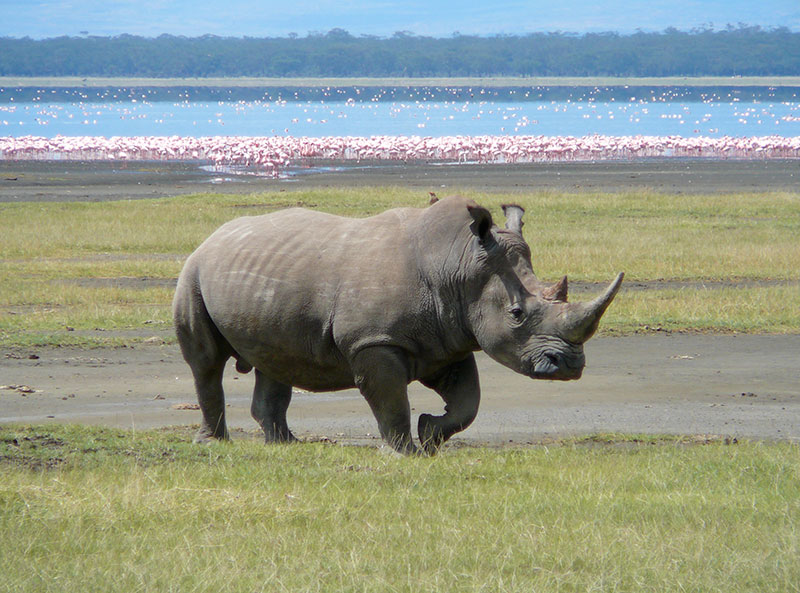
The last male northern white rhino in the entire world stands grazing in an open field in Kenya. Four armed guards stand a few feet away from him, each facing outwards, scouring the horizon for approaching poachers. At sunset the guards hand over to a night shift who peer into the darkness, weapons ready. This is what extinction looks like.

The demand for rhinoceros horn has skyrocketed over the last few years, mostly driven by demand in Asia, where the powdered horn is highly valued for its purported medical properties. Experts have said that rhino horn is becoming more lucrative than drugs. The U.N. Office on Drugs and Crime has put the street value of rhino horn at between $1,110 and $5,550 an ounce. In comparison, gold fetches $1,198 per ounce and cocaine $4,790. A single rhino horn can fetch $100,000 in Asia.

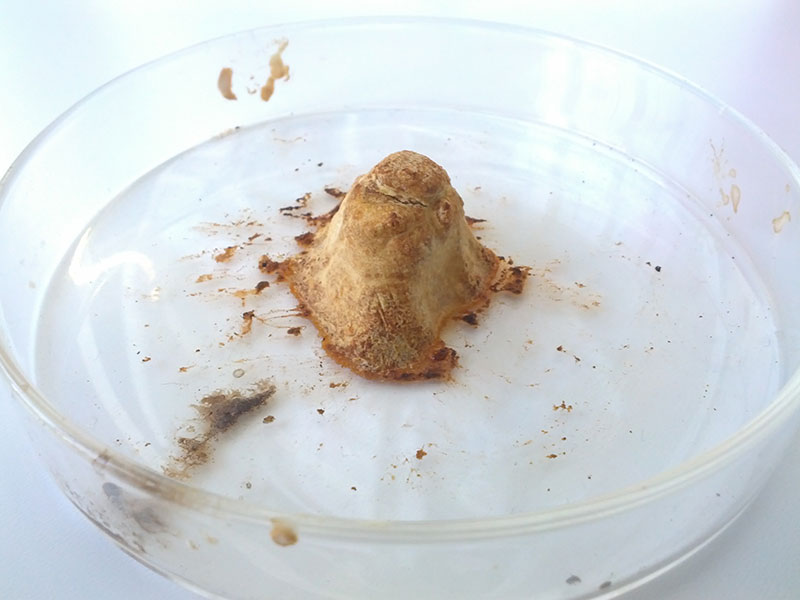
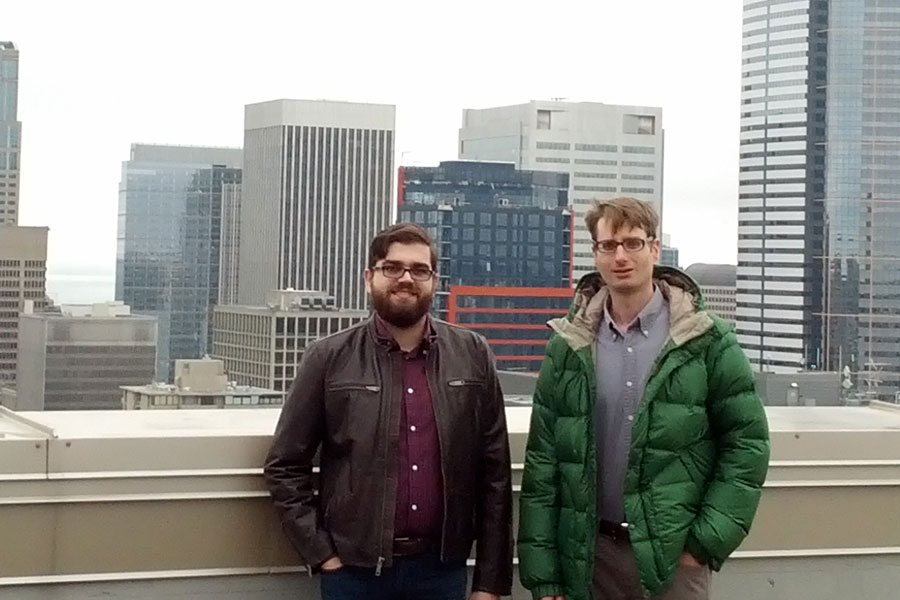
Matthew Markus, Cofounder and CEO of Californian biotech startup Pembient, believes he might have a solution. Instead of joining forces with conservationist he’s decided to produce synthetic rhino horn, with a 3-D printer in a lab, to offer consumers an ethical alternative. Along with business partner George Bonaci (pictured above, left) they have embarked on an innovative journey to save a 50 million year-old animal from disappearing within years.

White_Rhino

While some conservationists view his efforts as fueling demand for a product they’re trying to outlaw, Markus believes that creating a better system for rhino horn delivery is more effective than trying to change traditions and attitudes.

“We’ve been made to believe that either traditions must die or animals must die,” says Markus. “I don’t believe that to be true. Many traditional practices using rhino horn go back thousands of years and if there’s a way of obtaining these materials without the slaughter of animals, then that’s what we should be doing,” he says.

The proceeds of ivory and rhino horn poaching have also been known to fund terror groups such as al-Shabab in Somalia with illegal wildlife trafficking ranking among the world’s top criminal activities – alongside drugs, arms and human trafficking. Pembient might be seen to be saving rhinos, but the wider social problems it’s helping to solve – security and wellbeing –is a less obvious.

Markus points to Silicon Valley factory farming start ups, that develop synthetic manufacturing techniques for food to help feed a rapidly growing planet – brewing milk without a cow or eggs without a chicken. Experiments at the Pembient lab have brought rhino horn to within 80 percent of the real thing. While Markus admits that synthetic rhino horn will not stop poaching entirely, he believes the quality of his product will find a market among connoisseurs and also confuse criminal networks.

rhino-horn-2

As with any great idea, imitators have already begun to appear. Markus is unfazed and knows that to get an innovative idea to market is what really counts. “They say that when you have an idea, a hundred people might have the same idea too. Only twenty-five will take it to the next step and ten might take it a step further. We are still the ones who have taken it the furthest,” he says.

Once the genetic DNA of rhino horn has been replicated it will be easier for Markus to produce other rare products, such as elephant tusk and tiger bone, that will help save other endangered species. His business goal is to capture 10-25 percent of the rhino horn market with his synthetic product – playing within the illicit wildlife trafficking market worth $8-10 billion per year, according to a WWF report by global development company Dalberg.

Markus feels his venture is not about quick opportunism, but more the culmination of a lifetime of ponderous problem solving, linked to an ethical standpoint. “To do something significant in life requires education, observation, lots of thinking and life experience,” he says. “This can take years and you sometimes have to put things aside and let time and the sum of your experiences direct you. You might never experience an ‘aha’ moment in your life – a great idea might only emerge slowly over many years.”

rhino-horn

Leaders and innovators are often people who seek solutions by examining the way existing things are done; and then applying unfamiliar thinking to them that turns them into game-changers. Markus allowed himself to explore ideas that sounded crazy, but led to an amazing new solution that will have untold social impact.

 “The one thing I liked about computer programs, in my former job as a computer scientist, is that they are so easy and inexpensive to copy,” says Markus. “One day I thought, ‘wouldn’t it be cool to copy biological objects?’ The re-emergence of the poaching crisis in 2007 and the availability of affordable technology made me realize that this type of start up might actually create a positive impact.”

 Pembient also wants to create a company that hires the very best people to work on sustainability and conservation problems, instead of more frivolous things.

“I’ve met talented engineers, scientists and businesspeople who spend huge amounts of time optimizing clickthrough rates for their online ads,” says Markus. “I want to create a business that’s attractive to these people, who wake up in the morning and want to rather put a poaching syndicate out of business.”

The High Cost Of Cheap Clothes

  • After a decade in the organic food and beauty industry Marci Zaroff (above) recognized the “missing link” in the supply chain – ethics and sustainability.
  • She coined the term ‘eco-fashion’ and set about pioneering a market for organic and sustainable textiles.
  • Rethinking the fashion supply chain can cut costs, add value to collaborators and offer better-priced garments.
  • She shares her views with Real Leaders on how to keep the fashion industry pure, transparent and authentic.

In your opinion what are some of the obstacles to overcome in the fashion industry?

We have to break stigmas. One of these is the idea that in order to embrace fashion, style, quality, fit, colour and comfort, sustainability must be compromised. These two ideas are not mutually exclusive. People think sustainability costs more, but it depends on how savvy a brand or designer is in navigating a supply chain. A typical garment can change hands 7-10 times within a supply chain and many designers will deal with a factory only, leaving the supply chain to others behind the scenes. For the past 20 years I have gone to the source, starting at the farm gates and cutting out much of the inefficiencies of a typical garment supply chain. This has added value to the products and creates a competitive price.

The fashion industry is the second biggest colluder in the world, alongside coal, for air and water pollution. It represents about 10 percent of the world’s carbon impact and uses three trillion gallons of fresh water every year. Twenty percent of fresh water pollution comes from textile dying and 5 percent of landfills are textile waste.

What are some of the biggest changes and improvements in the industry that you have seen?

The emergence of the organic cotton industry, as an alternative to fibre, is still seen as a niche sector and viewed much like the organic food trend. Studies have shown that 84 percent of American consumers occasionally buy organic food, so I really see organic cotton as the next frontier.

It’s a growing industry that has emerged mainly from collaboration. I was part of a team that developed The Global Organic Textile Standard that saw different organic standards in the U.S. U.K., Japan and Germany come together as one premier global standard for organic textiles. Fashion crosses borders by nature and we’re now able to track material from farm to shelf. If you can’t create sustainability on a financial level, then as much as you want to do good for people and planet, it won’t work.

Who inspired you at a young age?

When I was 15 a friend gave me a book, Living In The Light by Shakti Gawain. It opened my eyes to the fact that there’s more to the world than what we see.

It struck me on a very deep level. I also discovered Aveda, the cosmetic company that uses plant-derived ingredients founded by Horst Rechelbacher. I met him in my teens and he became my mentor for 25 years. He taught me that you can actually align your personal and professional values. My favorite quote is, “Work is love made visible.”

In the very competitive and cutthroat fashion industry, how do you separate your business from some of your competitors?

Staying true to your vision is important. We all create our own reality, because we’re made of energy. Albert Einstein once said, “We can’t solve todays problems with the same consciousness that created those problems.” It’s about trusting our gut, following our heart and adding social purpose to a business.

Believing that I can create something that doesn’t exist while generating authenticity and true leadership has set my brand apart and people aren’t just buying my products, they’re joining my brand and what it stands for. Consumer products are very powerful in effecting positive change, more so than governments.

ecofas hion clothes

In a predominantly female industry such as fashion, do you think more women are gaining the top leadership roles or do you think men still dominate? If so, how do you change this?

We still have a long way to go but progress is being made. I recently attended an award ceremony in New York and saw how empowered women have become. They are joining forces and it’s like 1+1=11. The more that women share success stories and support each other, the more exponential shifts we are going to see. It comes down to mentoring the next generation. A friend of mine is currently producing a movie called Women on Wall Street. In every Wall Street film preceding hers, women are either portrayed as secretaries or wives, yet dynamic and successful women already exist on Wall Street. The more we expose these types of women the more confidence it will give the next generation – showing that gender should never be an obstacle.

How would you describe a real leader?

Someone who has aligned their personal and professional values. As a real leader you need to be both strong and sensitive, empower people and treat others the way you want to be treated – not seeing the top guns and little guys as different human beings – but part of the same family. Embed the same values into your business that you’d find in your home – peace, love and happiness. It will help create an inner connection that makes you aware of our collective consciousness. You should strive to be a role model for others.

What mistakes have you learned from the most?

I don’t see anything as a mistake. I see everything as an opportunity to learn and grow. It’s human nature that until we experience the dark we can’t know the light. There’s no joy without pain. You can’t know what you really want unless you experience first what you don’t want. I achieve more when I build teams, and work with people who are open and communicative. It’s the key to successful relationships, partnerships and businesses. The days of dictatorial and authoritative attitudes are over. It’s about team – the “me” to the “we.”

What are some of the things that you would advise or that you would like to see happen to create a more sustainable world?

We need to create a new normal that doesn’t just consider how things look, but what kinds of materials and manufacturing methods where chosen. Millennials are the first digital generation that can pull back the curtain and ask, “Who made my clothes? Where is it made? What’s in it?”These questions are catalysts for making brands and retailers think about these issues.

After the Rana Plaza collapse in Bangladesh in 2013, where 1,133 garment workers lost their lives, 60 countries demanded that the industry change. Lives were lost for fashion and people were no longer willing to sit back and support a destructive industry. Everybody wears clothing and if you can add value to these products by demonstrating social and environmental accountable, without compromising great style, price and quality you have a win-win situation – doing good, looking good and feeling good.

U.S. Pro Sports Shifting to More Sustainable Game Day Food

Leading professional sports venues that serve all major leagues are now promoting more sustainable food options to fans, according to a new report by the Green Sports Alliance (GSA) and the Natural Resources Defense Council (NRDC). “Champions of Game Day Food” features 20 venues spanning North America that are serving healthier food choices and adopting more sustainable food practices behind the scenes to help advance smarter environmental practices throughout our food system.

“Prioritizing sustainability in sports stadiums and arenas can have ripple effects well beyond the venue gates,” said Gabriel Krenza, NRDC Strategic Food Advisor and report co-author. “By modeling smart food practices, these iconic sports teams are showing real leadership that is influencing their millions of fans as well as the important food providers that supply their concession stands.”

The report highlights a broad set of more sustainable activities across sports venue food practices, including planning menus with seasonal and local fare, sourcing third-party certified sustainable food and beverage, using energy- and water-efficient kitchen equipment, donating unsold food, and diverting waste from landfills through composting. The results include more local, organic, antibiotic-free, vegetarian and vegan menu options; more recyclable and compostable utensils and packaging; and reduced waste by feeding those in need and producing valuable compost, among other enhancements.

“We are seeing the start of a significant cultural and marketplace shift towards environmentally intelligent food at sports venues,” said Dr. Allen Hershkowitz, co-founder and president of the Green Sports Alliance. “Greener food service programs have helped venues improve operational efficiency, feed those in need, and better cater to varied dietary preferences. The game day fan experience is changing for the better as a result.”

Key findings from the 20 professional sports venues featured in the report include:

  • 17 venues provide organic food options.
  • 18 venues source food from local farms.
  • Five venues have on-site gardens.
  • 14 venues serve antibiotic-free meats.
  • 14 venues compost food waste.
  • Seven venues use compostable serviceware.

Report highlights include:

  • St. Louis Rams100 percent antibiotic-free, humanely raised, and grass-fed beef hot dogs and burgers are served at Edward Jones Dome to Rams fans.
  • Florida Marlins:Approximately 10,000 pounds of unused prepared food at Marlins Park is donated to local senior homes annually to feed those in need.
  • New York Yankees:278 compost bins at Yankees Stadium help fans compost ballpark-wide, advancing the Yankees’ zero waste goals.
  • Dallas CowboysAT&T Stadium sources its USDA-certified organic produce from nearby Paul Quinn College’s student-run farm.
  • Seattle Mariners100 percent of all beef and pork served at Safeco Field is raised without antibiotics or hormones.
  • San Francisco Giants: AT&T Park features vegetarian and vegan meal options in every concession area, earning the ballpark first place in PETA’s 2014 Vegetarian Friendly MLB Stadium Rankings.
  • Philadelphia 76ers/Flyers:Nearly 100 percent of serviceware at Wells Fargo Center is compostable.
  • Sonoma Raceway, Host of NASCAR:The raceway was the first North American racetrack to plant a two-acre organic garden onsite and uses a herd of nearly 3,500 milking sheep to mow the raceway lawns without any industrial equipment.
  • Tampa Bay Lightning:125 hydroponic garden towers grow one acre of organic food onsite at Amalie Arena to feed Lightning players and fans.
  • San Francisco 49ers:30 percent of all Levi’s Stadium produce is USDA-certified organic and more than 20 percent of the menu is vegetarian.
  • San Diego Padres:100 percent of used cooking oil at Petco Park is recycled and donated as biodiesel to support local public transportation and school buses.

The social and environmental benefits of these practices are wide-ranging, including improving water quality, reducing chemical use, protecting soil health, and cutting carbon pollution. Additionally, 40 percent of the food in the U.S. is wasted, while one in six Americans do not know where they will acquire their next meal. Sports teams’ efforts to cut waste and donate unsold food are helping to tackle this critical problem.

“Changing the menus at sports venues, which collectively serve hundreds of millions of people each year, offers an influential platform that can educate consumers and the marketplace about healthier food and stronger food systems,” said report co-author Alice Henly, Director of Programs at the Green Sports Alliance and Resource Specialist at NRDC. “There is a growing trend towards more efficient and environmentally intelligent practices across the supply chain of game day food. The powerful examples in this report provide successful models that all food providers should emulate.”


To read the report, go to: www.nrdc.org/greenbusiness/guides/sports/game-day-food.asp

Mexican Peasant Design Takes Its Place Among The Elite

  • Artisanal fashion brand Carmen Rion resists mass-produced garments while celebrating Mexico’s rich cultural heritage.
  • The designer has been a socially aware entrepreneur for over 20 years, working with native communities to bring traditional fabrics to contemporary fashion.
  • Rion was the first designer to feature the women who make her garments as models in fashion shows and also includes them in the design process.
  • She helps communities renovate their culture and identity, while the garments are recognized in the fashion capitals of Paris and London.

Many fashion designers will spot an indigenous design on their travels and become inspired. It’s usually captured on a mobile phone or hurriedly scribbled in a notebook, before being whisked away from the source and reproduced in a design studio on the other side of the world. The designer gets accolades for originality and creativity while some peasant women is none-the-wiser about her designs featuring on the fashion catwalks of Paris.

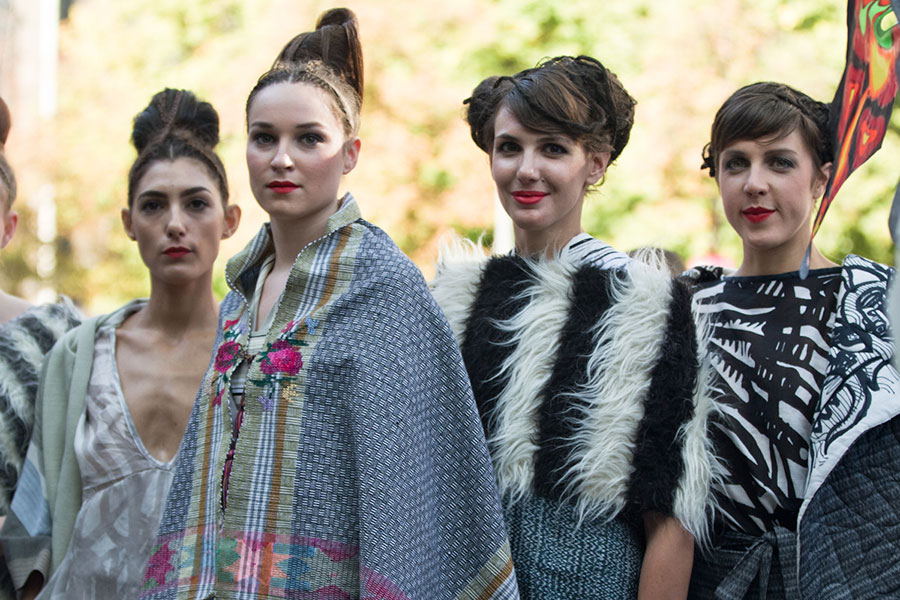
Carmen Rion (pictured in gray dress above) is a Mexican designer who experienced firsthand as a young fashion student the plagiarism that is rife within the fashion industry. She spent her first working years copying designs from around the world for Mexican fashion manufacturers. “They didn’t have the dignity to work with their own local designers,” she says. “Most of them are now broke.” She points to the rich heritage of British textiles as a positive example of how a culture can celebrate local talent, and reap the economic rewards that come with it.

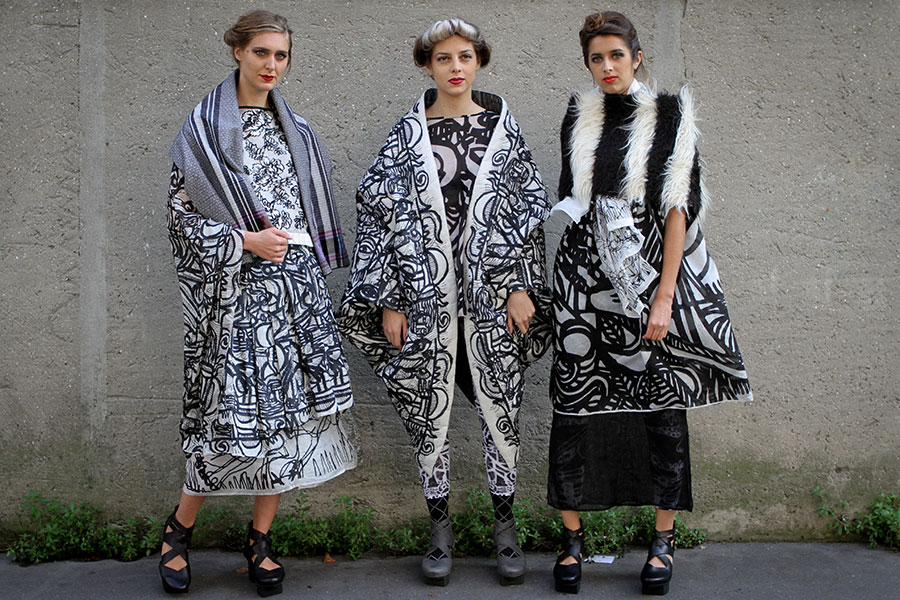
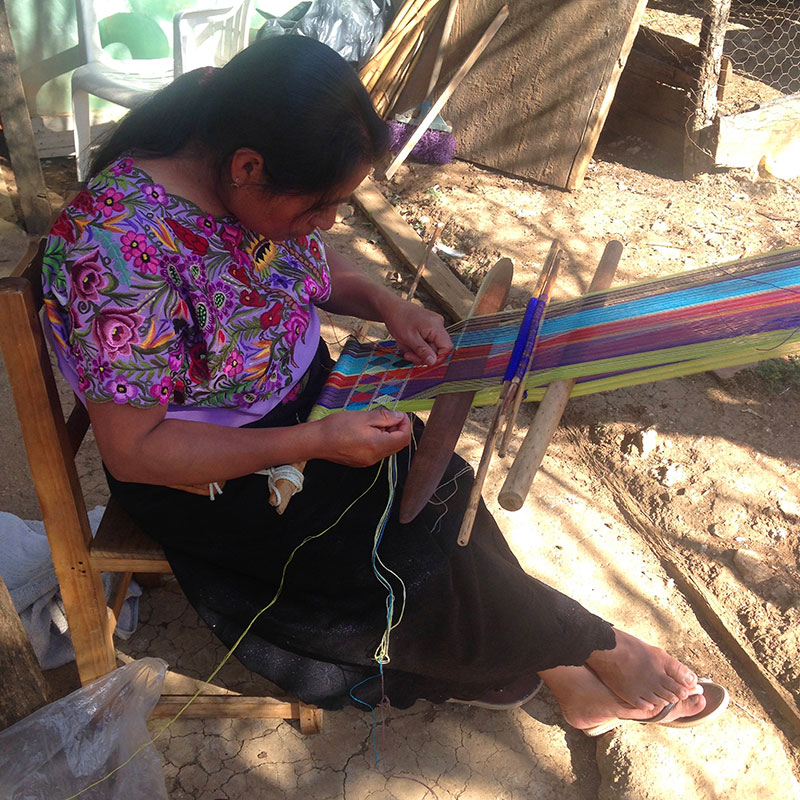
Rion has worked with indigenous artisans, mostly women, from the southern state of Chiapas in a number of her collections and happily acknowledges them, even to the point of being the first to include them on the catwalks of her fashion shows. “To them, weaving and embroidering is like praying. It’s a tradition for them to weave the stories of their lives, alone every afternoon,” says Rion. “We make beautiful luxury products together that allow them to work from home, mind their children and make a decent wage.”

carmen-rion-1 design

The rebozo, a colorful scarf that is synonymous with Mexico, is one of the fashion items Rion has reinvented with these women. The rebozo became synonymous with rebels during the 1910 Mexican Revolution and the generously sized folds were even used to smuggle weapons. First introduced by Spanish colonizers as a shawl in the 1500s, the rebozo has been ‘reclaimed’ by Mexican designers, like Rion, and are now sent out into the world as symbols of national pride.

However, the fashion world is not one big party, as many might believe, and Rion has not endeared herself to some of the major fashion weeks in Europe, many of whom don’t invite her anymore. “I don’t follow their rules. My way is different. I follow what is instinctively right for my label and the people I work with,” she says. “We’re not big enough to be a fashion leader like Chanel, but we’re our own small leader within sustainable fashion.” She sounds like many visionaries who face rejection and are sidelined before they become the next big thing.

carmen-rion-2 design

“When ethical fashion first became popular, around 10 years ago, the clothes were badly designed and fabrics were unpleasant,” she recalls. “They were made from natural fibers and were organic, but they weren’t nice. It was all beige and hippy,” she says. Instead, Rion has tried to make her ethical clothing comfortable, trendy and sexy. “Fashion is full of crap,” says Rion. “I’m not comfortable with the pressure of the ‘trend.’ I’m sincere, clear-headed and spontaneous – the opposite of what you usually find in the fashion world, especially here in Mexico.”

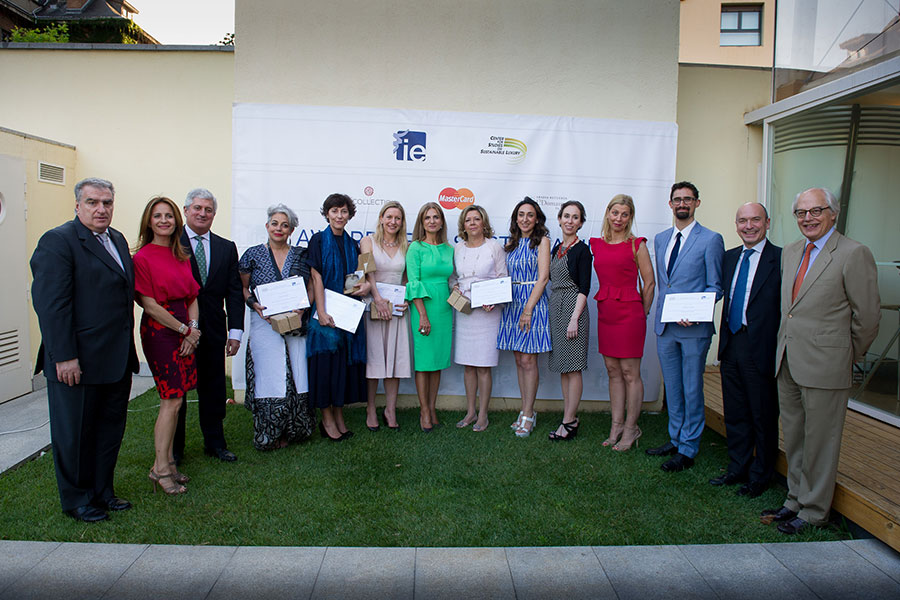
She’s hoping the Sustainable Luxury Award she has just received from the IE Business School in Madrid will change the way people see her work. The award recognizes luxury brands around the world that have built sustainability into their core practices.

carmen-rion-3 design

Fashion from Mexico is new and exciting and Rion is leading (dare I say it) a trend that is using the culture of indigenous tribes in a way that’s not been seen before. Western takes on Mexican design are seen as kitsch, with local fashionistas preferring to mix local designs with big name brands such as Louis Vuitton or Hermes. It’s an exciting mix that has instilled pride among Mexicans, who are not afraid of combining their artisanal cultural heritage with high-end luxury brands. “With no formal fashion structures we are free to do what we want,” says Rion.

carmen-rion-4 design

Yet, could ethical fashion be just another trend, something that disappears within a few years? Rion seems to think this might be the case for some brands, but not hers. “This is a way of life for me,” she says. “It’s a way of designing, thinking and making; part of who I am. Many big brands project an ethical fashion image to sell more clothes, they don’t really care about sustainability.” Before Rion can be labeled a sour outcast of the fashion world, she explains her hopes for the industry, which is surprisingly upbeat. “If Chanel can make sustainable fashion that would be great,” she says. “The problem with most sustainable fashion is that it’s boring. I want to make fashion trendy, sexy and nice – and sustainable. ” Rion is not prepared to sacrifice her principles for fast, mass-produced garments that might easily make her more money.

After years of fashion studies Rion has learned more about fine garment stitching from artisanal craft women in the Chiapas communities than her studies could ever have taught her. The women work with her to develop ideas, and in addition to getting a fair-trade wage, they benefit from preserving traditional techniques.

“I’m not interested in creating a huge studio that churns out hundreds of copies,” she says. Instead, she takes thread, fabric and a few ideas to the rural women, who take their own time in creating items of unique beauty. “They’re certainly not maquila’s,” says Rion – referring to the Mexican name for assembly line workers who each do a simple, repetitive task in a factory. “Everyone’s involved in their own creation,” says Rion. “No one sews on a pocket all day.”

Carmen Rion is a recent winner of an IE Award for Sustainability (Premium and Luxury Sectors) www.ie.edu/ieluxuryawards

ie-awards

5 Brain-Based Tips for Negotiating with a Bully

I am constantly training women how to win in the workplace. I also work with many soft power male leaders who need to influence hard power leaders. And when I work on culture change projects I often work with low-power leaders (director-level–where all the work gets done) who need to influence high power (C-level) leaders. So I have a lot of experience helping people get what they want when they don’t have power to insist on it.

Win-Win is a powerful negotiating paradigm especially when no deal is a viable option.

Win-Win is a powerful negotiating paradigm especially when no deal is a viable option. I focused on training Win-Win for the many years I was with Stephen Covey. After all its habit number five. Win-Win works marvelously in many circumstances, especially when goals are similar and values are shared. However, there are many instances in which the people you are negotiating with have no interest in your best interests or even their own…what then?

Researcher Heidi Halvorson (No One Understands You and What to Do About It) shows that as people move up in organizations their emotional intelligence begins to wither.

First, we should all be aware that we live in a world filled with asymmetrical power. Researcher Heidi Halvorson (No One Understands You and What to Do About It) shows that as people move up in organizations their emotional intelligence begins to wither. When you don’t have much power you have to use Win-Win strategies to convince people to do things that will help you succeed. After all, you can’t simply insist that others do what you want. But as you grow in power you can begin to order people to do things to help you succeed. When you get powerful enough you don’t have to go for win-win. You can become an institutionally empowered bully. You can just go for “I win.”

So what can we do when we have low-power and we find ourselves having to negotiate with a high-powered individual that doesn’t seem to know how to spell win-win let alone face inconvenient truths or make courageous choices?

I call it SMART Power Negotiating. It’s based on what we’ve learned about our brains and biology.

1. Take control of the place you negotiate. It’s much better to negotiate in a neutral room away from a powerful person’s office where their trappings of success and symbols of power permeate the atmosphere. If you have to negotiate in an office setting, do it in the conference room. If you are negotiating business to business, meet at your offices, or choose a neutral spot like a restaurant. Some of the best negotiating I’ve ever done has been on long walks. There are some very specific reasons walking negotiations work well. First, you’re not staring into the eyes of the person with whom you’re trying to achieve agreement. This makes their facial expressions of disagreement or resistance invisible to you. This helps you maintain your confidence. Second, after about seven minutes, walking in a matched cadence tends to synchronize brain waves. This promotes more empathy and mutual understanding. (I highly recommend walking and talking with teenagers if you’re trying to influence their decisions or behavior.)

Some of the best negotiating I’ve ever done has been on long walks.

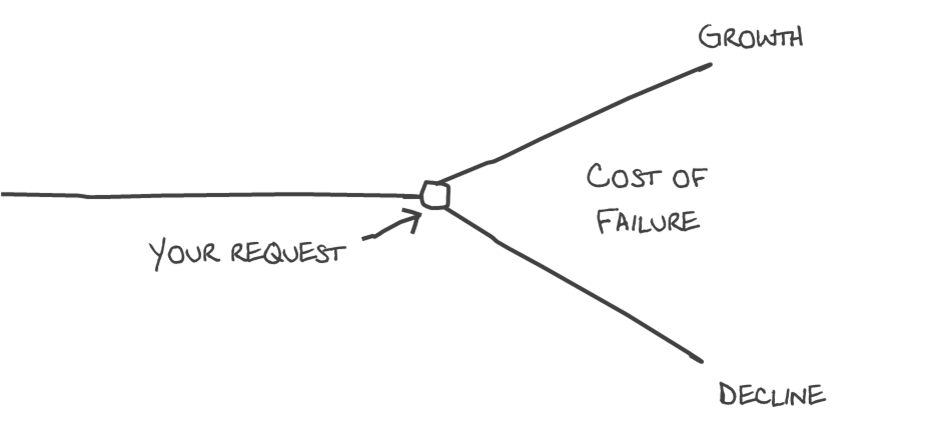
2. Make your WHY compelling. When powerful people don’t want to do WHAT you want them to do your best strategy is to amplify WHY they should go along. Gandhi negotiated India’s independence by dramatizing the moral imperative that triggered England’s higher conscience. Low power leaders who take control of the WHY bring about virtually all social change. A moral WHY works very effectively on social issues but not very effectively in business settings. In business you take control of the WHY by making a clear and graphic business case argument. One of the best graphics to use is a Y resting on its side. decision treeThis graphic allows you to focus a leader’s attention on the reality that they are at a crossroads. The correct decision will lead to an upward path towards greater growth and profitability. The wrong decision will lead to a steep and steady decline. The gap between the upward path and the downward path is the cost of not making the decision you’re advocating. You will need evidence and data to back up your graphic. But the visual depiction of the consequences of not making the right decision is what will stand out in the optic nerves in the heads of your leaders. Our brains are dominated by our optic nerves system which enables us to visualize. This triggers fear-of-loss emotions which are necessary to make hard decisions.

7ed2db41-8d4d-47de-9038-d12ac541fcad Negotiating
3. Be confident. William Ury the co-founder of the Harvard Negotiation Projectnoticed that people who have already decided they could live with a no-deal option negotiated in a much more emotionally powerful way than people who felt they had to make a deal no matter what. He called this knowing your ‘Best Alternative to a Negotiated Agreement’ or BATNA. What he discovered is that when negotiators had accepted their BATNA they had the mind of a Samurai. This is a state-of-mind that results in getting the deal they wanted more often. Samurai are trained to “die before they go into battle.” This simply means they accept the possibility that fighting for their noble cause might lead to their death, and that was okay. This enabled them to fight with more skill, bravery and confidence than if they approach their battles fearfully. You can attain a similar, confident mindset by pre-accepting consequences of not being able to make a deal. Always remember that there are many times when getting “half a loaf” is worse than getting no bread. I have often seen projects approved without the resources or funding that makes their success possible. It is better to walk away than make a bad deal.

You can attain a similar, confident mindset by pre-accepting consequences of not being able to make a deal.

4. Give first. Recent university research confirms that you are more likely to have your way with powerful people if you use persuasive phrasing. This means that you tell the powerful person what they get first before you make a request for what you get. This is very simple and you can try it out now. “I’ll work Saturday if you give me my bonus.” Is more effective than “If you give me my bonus, I will work Saturday.” Another might be “I’ll paint the dresser now if I can go to the football game later” which works better than “If I can go to the football game later, I will paint the dresser now.” Psychologists believe that giving the person you’re negotiating with what they want first makes them less defensive and more agreeable. It ‘feels’ like they are giving up less to get what they want.

Psychologists believe that giving the person you’re negotiating with what they want first makes them less defensive and more agreeable.

5. Take charge of the time of day you negotiate. If you have a complicated problem that requires a lot of creative problem-solving, risk-taking or thinking out-of-the-box, make sure you schedule negotiating sessions mid-morning. Ideally sometime between 9 am and 11 am. Complex resolutions take a lot of mental energy. When groups are asked to multiply compound numbers like 96 x 74 at 10 am about 40% will voluntarily turn their phone into a calculator or reach for a pen to do a hand computation. If you asked a similar group to do that multiplication at 3 pm about 15% of people will work on the problem. The rest of the group will wait for someone else to do it. The difference is that we have more mental energy in the morning and are usually not hungry for lunch until 11:30 am or so. Researchers confirm that tired, hungry people do not want to change the status quo so don’t negotiate difficult issues when people are not at their energetic best.

Researchers confirm that tired, hungry people do not want to change the status quo so don’t negotiate difficult issues when people are not at their energetic best.

In summary SMART Power Negotiating enables you to negotiate with anyone no matter how powerful they are. That’s a condition of life and something that all of us need to become better at if we have any hope of creating a better world.

What’s Love Got To Do With Biz?

Love isn’t a word that you often hear in business conversations, yet studies show it plays a significant role in determining the performance and wellbeing of employees and customers. So it shouldn’t be such a surprise that DreamChange has a Love Summit business conference, which debuted this past Saturday, June 13th.

Research tells us that the more love people feel at work, the more engaged and productive they are. The longitudinal study by Harvard, the University of Pennsylvania and George Mason University, “What’s Love Got to Do With It?: The Influence of a Culture of Companionate Love in the Long-term Care Setting”, exhibits the importance of emotional culture in the workplace.

“Employees who felt they worked in a loving, caring culture reported higher levels of satisfaction and teamwork. They showed up to work more often. Our research also demonstrated that this type of culture related directly to client outcomes, including improved patient mood, quality of life, satisfaction, and fewer trips to the ER,” states Harvard Business Review in the 2014 article, Employees Who Feel Love Perform Better

If you’re wondering what a loving business looks like, imagine a workplace where employees genuinely care for one another and show it. This can be demonstrated in a variety of circumstances, whether it is a boss who makes sure their employees receive good benefits, the way employees communicate with one another and their customers, or a workplace where every person is made to feel like they really matter.

While the practicality of love as a positive force in business may initially sound taboo, consider successful companies such as Whole Foods Market, PepsiCo and Zappos, all of which have implemented loving philosophies into their business management. “We are more than a team though…we are a family. We watch out for each other, care for each other and go above and beyond for each other”, says Zappos.

It makes sense that Zappos would link family and business since family relationships are generally the most loving, but also because family businesses account for at least 2/3 of enterprises in the world. While we might typically think of family companies as mom and pop businesses, statistics show that they make up a large range of enterprises in all different industries. In fact, many of the largest corporations in the world are family owned.

Imagine what the world would look like if family companies such as WalMart and the Koch Industries exhibited the meant-to-be qualities of family – loving, caring and compassionate – in all of their operations. Evidence shows that creating a culture of companionate love in the workplace leads to happier employees, greater customer satisfaction and higher profits, and that the investment of love in business is a rewarding undertaking. By supporting this venture, corporations like WalMart and the Koch Industries could serve as the very antidote to many of the problems we face today, such as a suffering global economy, climate change and social inequality.

Family businesses aren’t just the backbone of the American economy; they also govern the majority of market economies around the world. Given that families run most businesses and family relationships are supposed to be the most compassionate relationships, the concept of love in the workplace, once again, should not be so surprising. The time has come to embrace love and business – together – as one of the most viable forces for creating thriving enterprises while cultivating a more sustainable, just and peaceful world.

How HR Will Save You Money and Save the World

Is it possible that the HR department can have more impact on sustainability than the Sustainability department? Every employee at BASF’s Livonia Plant in Livonia, Michigan is a player in the company’s sustainability efforts. During evaluations, plant workers—from middle managers down to factory floor workers—must set sustainability goals for their job and be able to articulate what sustainability means to them.

Why are chemists and administrators being asked to define sustainability goals for their work? A better question would be: Why isn’t that standard practice in every company.

Over the past two years, I embedded myself in nine companies—all of them sustainability leaders, but none of them common sustainability media darlings—to find out what worked, what didn’t, and what needs to happen next to take sustainability to the tipping point.

I found that commitments to sustainability were strong, but many companies struggled to take their programs to the next level. I also found ample evidence that the future of sustainability rests not with the sustainability/CSR department, but in the most unlikely of places: Human Resources.

We’ve made a lot of progress in the last 10 years, but sustainability is in danger of stalling out. The next stage in the evolution of sustainability is to reach every employee—not just in the C-suite, but at each level of operations. That’s because sustainability lives and dies in the day-to-day decisions made, not just by CEOs, but by everyday employees—middle managers, customer service reps, factory workers, and others.

Sustainability “happens” when a middle manager makes decisions and takes actions in ways that reflect not just the ways of financial profit and loss but of sustainability gain and harm. It happens when a unit leader encourages a team to vet social impact and ethics questions in a team meeting at the same time that they’re vetting options for growing the bottom line. It happens at those everyday levels.

Even the best laid sustainability efforts will fail if employees at all levels aren’t playing a part. If only half the people in your company are involved in sustainability, your goals will only ever be half-fulfilled.

Let’s Shift the Center of Gravity

In the vast majority of companies today, sustainability and CSR programs are managed out of a dedicated function. Those departments have brought us a very long way. But they too often operate in a silo, and they simply can’t reach everyone, everywhere, on their own.

This was borne out in a BSR survey last year, which found that sustainability offices connected to supply chains, the C-suite, and PR departments, but very little to other parts of the company. The center of gravity, so to speak, is set in departments and functions that few employees ever interact with or affect.

We need a shift in the center of gravity; from a siloed department that has little involvement with employees at large to the single department that touches every employee: HR.

Sustainability is intrinsically tied to the types of people you recruit, how you onboard them, how you steer “culture” internally, how you keep accountability, and what professional development programs, incentives and raises you provide. All those things put HR in the perfect position to steward a shift toward total employee involvement in sustainability.

Through my research, I found that one of the biggest stumbling blocks for sustainability efforts is with middle managers. They are the most likely to be trapped between different types of signals and incentives. They’re also the ones who make the daily business decisions that determine what gets done versus what simply gets talked about—and therefore are in a position to make or break sustainability.

But who can blame them for being stuck? In the face of competing signals, employees are likely to revert to old, internalized signals about business—making every decision exclusively or primarily according to finances. That’s basic psychology. The key is to introduce new factors more aggressively and reinforce them universally—from every meeting to every performance review.

To address the problem and reach those middle managers, HR will need to play a central role. We’re redefining how people see their jobs and we’re rejiggering the system of goals and rewards in a way that sustainability departments simply cannot do alone.

Two Critical Roles for HR Managers

Let’s get back to BASF. Far from an anomaly, their Livonia Plant is actually the result of a company-wide policy, making every employee part of the company’s sustainability strategy. BASF found that without engagement with the middle and lower rungs of the corporate ladder, sustainability efforts were lagging and critical problems—especially those observed on the front lines—weren’t being addressed.

So they did two essential things: They required every employee to establish sustainability goals for themselves and be able to articulate them; and they integrated those goals into annual evaluations.

Sustainability strategies can be awfully big and confusing things. For everyday employees they can be nearly impossible to decipher. Requiring that each employee sets their own goals within the company strategy and can define sustainability for themselves makes those big strategies real. More importantly, they give you the opportunity to evaluate the effectiveness and the results of what each employee is actually doing on the ground.

Because if sustainability isn’t part of employee evaluations, then it won’t happen. That might sound pessimistic, but any business leader knows that if you want something done, you’ll need an accountability mechanism.

Many companies might balk at the suggestion that every employee should have a sustainability goal for themselves. Factory workers and middle managers, they might say, are not essential to achieving sustainability. But the truth is, it’s the day in, day out activities of those middle and lower level employees that make or break sustainability. I’ve documented many proven, replicable programs and approaches that can help engage those critical employees in my book, “Building a Culture for Sustainability.”

Sustainability can start out as grand goals, but it lives and dies by the millions of little actions made by everyday employees. It’s time for us to use that to our advantage.

Now Women CAN Win

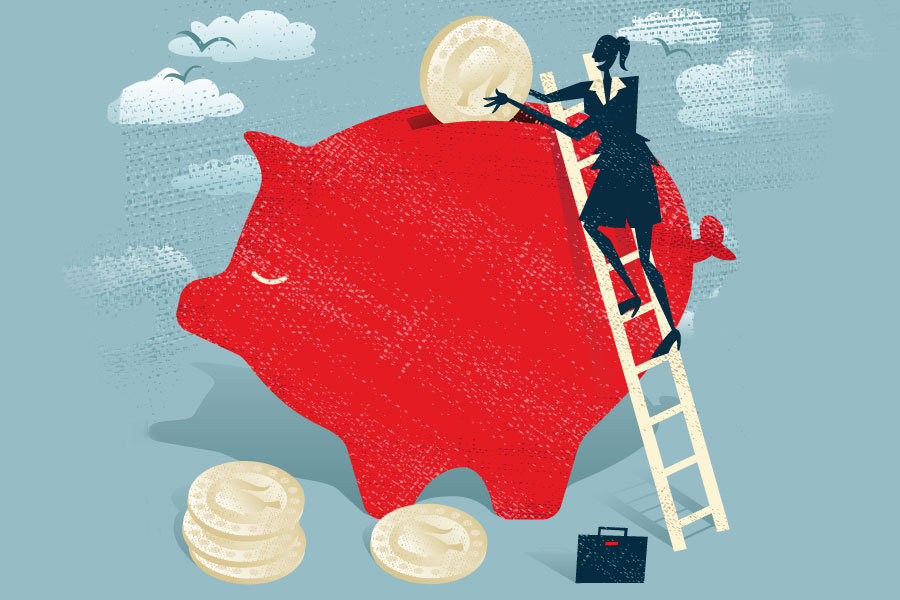
Fund Athena… that’s the name of a new venture aimed at getting tens of millions of investment dollars in the hands of women business leaders with great ideas. It’s about time. For the most part women-lead businesses have been starved for capital. Only 2.7% of venture capital is invested in women-led or owned businesses. Yet, according to Dow Jones research, women entrepreneurs are twice as likely to be successful as men. With the failure rate of venture capital backed business now being an amazingly awful 75% it makes you wonder why the smart guys with all the money are investing in other guys who only sound smart but act dumb.

Only 2.7% of venture capital is invested in women-led or owned businesses.

You can get the full story of Fund Athena on their website. But the short story is that it’s a crowdsourcing investor site where everyday people can invest savings or 401(k) retirement funds in small companies with big growth prospects, owned and run by women. This is not Kickstarter… you don’t make donations… you make an investment in a business you believe in, with the expectation that the value of your investment will grow. This is a big deal. It took a change in the investment laws that made it possible for all of us to be venture capitalists.

So here’s why I am excited about Fund Athena.

The research on women-owned businesses indicates that most of them stay small. That’s a problem. We need them to grow. We need them to make a difference.

Sexist thinking has generated a story that women are only interested in small lifestyle businesses built around their work-life balance needs. While that’s an interesting theory there’s not a shred of evidence to support it. Interviews with male venture capitalists reveal that they are mentally handicapped by their unconscious bias that successful entrepreneurs should primarily be aggressive, competitive and decisive, which they think are key success factors. Actually, these attributes have a very low correlation with business success. In fact, leadership factor analysis points to evidence that competitive aggression and decisiveness tends to generate high-risk, impulsive decision-making, stubbornness, excessive optimism, and arrogance. Furthermore, research reveals that male entrepreneurs are much more likely to demand excessive start-up salaries and much more apt to buy Ferrari’s than more modestly-minded women.

Nearly all micro-finance institutions make loans primarily to women.

Perhaps some of the most informative evidence to support the business value of female ownership comes from the micro loan world. These are tiny loans… usually less than $200… given to impoverished women in developing nations to start home businesses. Nearly all micro-finance institutions make loans primarily to women. That’s because they have found that men are much higher risk. Frequently, loans made to men are spent on drinking, gambling or prostitutes, which virtually never happen with female borrowers. Loan losses to women typically run only 2%. That means over 98% of loans to women are paid back. Now, with gender-based brain research we may suspect there is neurological reason why.

Women’s neuro-pathways to brain centers that focus on social responsibility, connection, and long-term consequences are far more active than most male brains.

Women’s neuro-pathways to brain centers that focus on social responsibility, connection, and long-term consequences are far more active than most male brains. Studies of women’s entrepreneurship show a higher level of stick-to-it-tive-ness and business model flexibility than male entrepreneurs. Men seem to link their egos to their business plans and focus on “being right” rather than being effective. Women are more apt to change their business strategy, and shift how their business makes money faster than males.

If you think I’m going overboard in my praise of women in business just consider this. A Dow Jones study of 20,194 venture-capital backed start-ups discovered that successful startups had twice the number of females in leadership then failed startups. Yet women have a far harder time borrowing money or raising capital than men do.

There are several university research studies in which identical business loan applications with a male named applicant and a female named applicant have been submitted to the same financial institution. And guess what? Applications with male names are typically approved significantly more often. Don’t you think it’s time for this nonsense to end? I know my daughters sure do. (For up-to-date research on gender discrimination for business financing see this Princeton University link.)

I’m sure it doesn’t surprise you to learn that the co-founder of Fund Athena is an African-American woman serial entrepreneur named Kim Folsom. Over the course of her young life she has brought five separate businesses out of the ground using venture capital. She knows how finance works and she knows the extra difficulties women face in being taken seriously to start and grow significant businesses.

What particularly excites me about this new source of investment capital for women is that maybe they will finally have the chance to change the “game of business” into the serious work of harnessing business to create sustainable abundance.

When I worked with Stephen Covey we spent years helping companies craft lofty mission statements. After about a decade it became clear these mission statements weren’t worth brass plaques they were etched on. For obvious reasons business leaders became hypnotized by Jack Welch’s ridiculous commandment that the purpose of business was to create shareholder value. A glorified greed and short-term financial engineering to improve stock prices at the cost of virtually everything else.

After corporate mission statements failed to inspire leaders I got involved in the quality movement which evolved into Six Sigma, which should have brought about the synthesis of productivity and sustainability but disappointed me by mostly becoming a tool for layoffs. I then turned to Corporate Social Responsibility as a framework to help companies rethink their strategy to focus on creating prosperity through innovations that improve the future for everyone. Unfortunately this kind of thinking takes courage, imagination and a time horizon greater than the next fiscal quarter. The recession killed CSR… it seemed no one could afford to be responsible.

When executives ask me why I am so driven to promote women in leadership I look at them with wonder. The world we have today is the best that 10,000 years of hard power (male-based) leadership can produce. Sure, we have made technological progress but are we now not regressing? Do sky high stock prices and inventions like Twitter compensate for crazy wars, a degraded environment, dysfunctional education, a decaying infrastructure, bulging jails, downward economic mobility and a money-driven congress lead you to believe that the future for our children will be better? Is the status quo really the best we can do?

Do sky high stock prices and inventions like Twitter compensate for crazy wars, a degraded environment, dysfunctional education, a decaying infrastructure, bulging jails, downward economic mobility and a money-driven congress lead you to believe that the future for our children will be better? Is the status quo really the best we can do?

As for me, after 35 years of witnessing the downward spiral of moral inspiration in business leadership I am convinced the problems we face today of leadership arrogance, employee exhaustion and corporate stupidity cannot be solved from the inside.

We need a parallel economy. A better, smarter capitalism. One that’s based on a different set of principles than unlimited self-interest and negative innovation. I believe that the leaders of the new, true economy will be mostly women who are working well with SMART Power men in highly effective teams.

Before now, I was very concerned that women would be disadvantaged and limited by a lack of capital. But with innovations like Fund Athena it dawned on me that the people who will fund the revolution are you and me. This is just the beginning.

And I find that pretty damn exciting!

(Disclaimer: I am not an owner, nor a consultant to Fund Athena, nor does their management necessarily share my views of the limitations of male-based leadership.)

Ideas For Saving The Planet. From Those Who’ve Floated Above It.

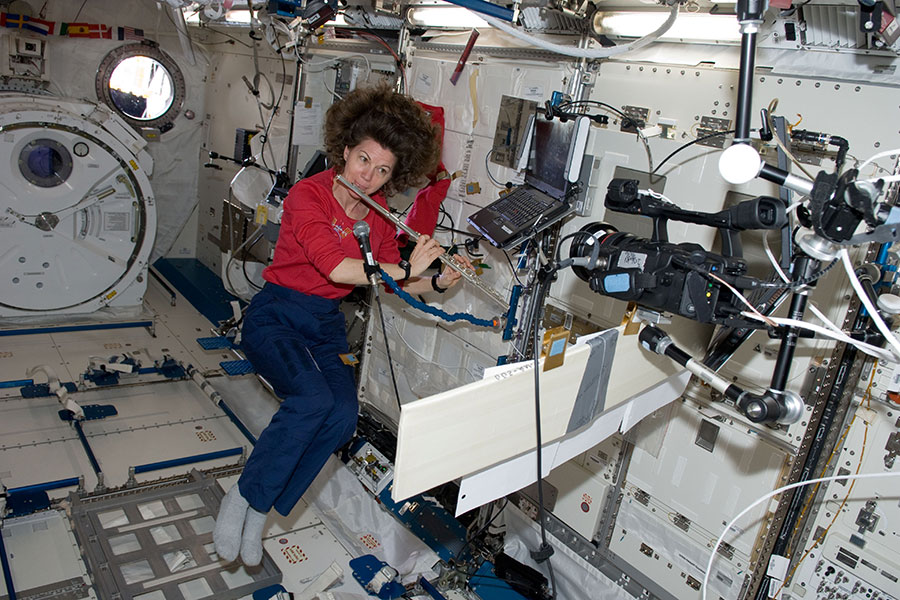
Cady Coleman is one of a handful of people to have experienced weightlessness in the depths of our oceans and also in space. She spent 11 days underwater in 2003 onboard the Aquarius Reef Base off Key Largo, the only undersea lab at the time dedicated to the preservation of marine ecosystems.

More recently, she’s been floating around the International Space Station, the largest artificial body in orbit, doing experiments around biology, physics, astronomy and meteorology. While many people consider the exorbitant costs of space travel and research a wasteful expense in the face of so many problems and poverty here on earth, Coleman believes that you should dream big in order to unlock innovation and drive social change. Her work is not as glamorous as one of the sci-fi movies you might have seen, but the results might well contribute to a more stable and healthier planet one day.

Many businesses have a five-year plan, but how many consider a 100-year plan? These are the timelines many researchers consider when looking at the future of life on our planet, including astronauts, who have a unique view of our world. The “big picture” is much broader than the spectacular views seen while orbiting earth at 400 miles above the ground. Coleman recalls listening to Sally Ride, the first and youngest American still, to be sent into in space at age 32. Ride spoke to women students at MIT after returning from her mission and Coleman remembers thinking, “I want that job.” In a pre-flight interview with NASA in 2010, Coleman states: “Meeting Sally Ride was significant because I’d seen a lot of astronauts on TV and in pictures; none of them looked like me. It was a bunch of guys that seemed a lot older and they didn’t have much hair, and it just didn’t really make me think, ‘that could be me.’

Then I met somebody like Sally Ride and I think, ‘maybe that could be me.’” Coleman was a Second Lieutenant in the U.S. Air Force and entered active duty as a research chemist in 1988, receiving a doctorate in polymer science and engineering. It’s about as far away from Top Gun as you can get, but she was still destined to go much higher than any fighter jet had every taken her. She reached the rank of colonel and in 1992 she was selected to join the NASA Astronaut Corps., eventually ending up on the International Space Station for a final mission in May 2011.

There’s been some fun along the way too. Coleman reported the sighting of a UFO on an early flight in 1995 and has played the penny whistle in space as part of a live concert link-up with Jethro Tull during a concert in Russia. Coleman’s first space flight saw her orbit the earth 256 times, travelling over 6 million miles, and logging a total of 15 days in space. Countries from around the world came together 15 years ago to build the International Space Station, an orbital outpost that has a full crew of six astronauts at any given time. It’s been called the most complex machine man has ever built. The research they do when they remove gravity from the equation always has an odd and unique outcome.

This is science that will have a huge impact down the road. “Up in space we are really far away and yet we are also close enough to make a difference,” says Coleman. “People often think that the things we do up there have only do with space, but we collect a lot of data. Something like osteoporosis – losing bone – happens to us 10 times faster in space than it does to a 70-year-old woman on earth with osteoporosis. The results from this research come back down to earth and are added to research on preventative measures.”

Coleman has some bad news for those who think a pill might be the cure for this affliction. “Exercise. We all need to exercise for the rest of our lives!” Experiments on combustion in space have also helped scientists understand how we might have cleaner factories and how pollution is formed and observations on how blood is pumped around the body in zero gravity offer valuable insights into curing heart disease. Ordinary citizens might look at the space race as a desperate attempt to win hearts and minds in an inter-continental, political posturing exercise, and they might be right, but life-changing experiments are part of it too. A firsthand, creator-like view of where we live in the universe can be both insightful and unsettling at the same time.

A colleague of Coleman, Reid Wiseman, who returned to earth from the International Space Station in November 2014, had this to say: “There are no words to describe the first glimpse you have as a human being when you look back at the planet. When I first looked out my spacecraft window I saw that thin, thin, impossibly thin, blue atmosphere that covers our earth – which allows every living creature to survive.

Once you’ve spent months up there you realize how incredibly dynamic our earth is, a beautiful living organism.” “It really is a special view,” says Coleman. “It’s very hard to comprehend that it’s only one place and that we are all from earth. Exploration is part of the human spirit and it’s our job to explore beyond what we know.”

It’s impossible not to ponder where the next frontier in space will be or what important thing might be discovered to advance life on earth. Many NASA astronauts are of the opinion that space exploration must keep going, whether it’s to the moon, an asteroid, Mars or sending unmanned robotic missions to Saturn and Jupiter.Catherine_Coleman_2009

While politics clouds the day on earth there is a surprising level of collaboration onboard the space station. “There are 50 countries at any given time doing experiments up there – how did we get this to happen? Says Coleman. The astronauts are firstly operators, but also great friends. Sometimes an American, a German and a Russian will come together to get a job done. “We need to bring up our children to celebrate the differences among us,” says Coleman. “Differences, that when integrated in a team, will allow us to succeed in large global endeavors – ones that will allow a kid one day to think it’s normal to mention that their mom lives on a space station.”

“We go up there knowing we might fail, that we will make mistakes,” says Coleman. “It’s the possibilities that drive us and we really do need this for our future. From space earth looks as if it might be a place we can all safely live. It’s important to have this viewing platform from which we can look down with understanding and compassion and remind us that life is hard in many places. As people of this earth we have some massive problems to solve together.”

Coleman is convinced that we’ll leave our solar system one day. “It’ll be a combination of robots and humans,” she says. “I would personally like robots to go and figure it all out first, before we send humans. However, we need people to see something to believe what’s possible,” she stresses. “If you see a rocket launch firsthand something amazing happens inside and you know that space exploration is a really, really big deal. People don’t get to actually see the evidence of this. When they do, they get excited.”

“It’s important for humanity to see that we’re going places as a planet. We have to keep people inspired with real visions,” says Coleman. Many people have questioned the wisdom of having a space program and you can argue what our priorities in space should be, but increasingly there is an argument for  needing to do this. Since the dawn of time we have always wanted to know what was out there, pushed by belief systems, religion and pure inquisitiveness.

There is now an added urgency: that of a degraded and fragile environmental system and dwindling natural resources. While it’s highly unlikely we’ll all be moving to a new planet anytime soon, understanding the universe around us could lead to innovation and breakthrough research that allows us to develop new technology to keep this planet and its inhabitants alive and thriving for generations to come.

The world’s great researchers are becoming less territorial and more inclusive in how they work. In an ideal world there should be no difference in whether we search inside your brains for solutions or outside our atmosphere.


0