Ever Been Told, “Don’t Act Like a Tourist”? Here’s Why

With nearly 200 countries in the world and countless communities, why do we all end up visiting the same tourist-infested places?

At 28, when she started her travel company, Elvira Museri was already a habitual traveller. Despite the thrill of seeing new places in countries they’d never seen before, she and her husband started feeling as if they were in a giant tourist trap.

The couple visited the same places that everybody else had visited, and took their travel advice from the same websites and guidebooks as all the other travelers they met. Meeting locals and seeing inside their homes was out of the question, made more difficult by the foreigner clothes they wore and backpacks slung over their shoulders, which marked them as strangers. Tour guides sometimes helped with introductions but it got Museri thinking about how best to meet local families and share a meal with them.
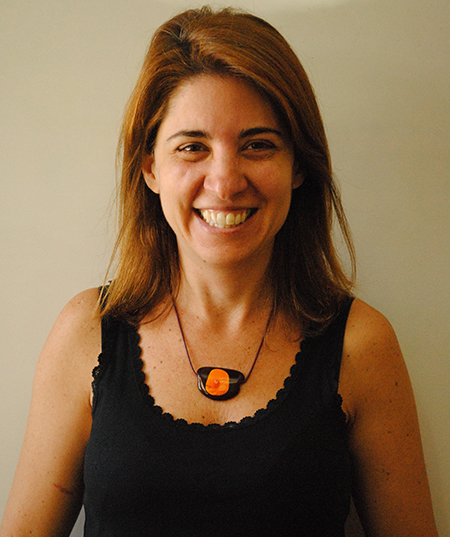
Realizing that the same phenomena happened in her home country, Argentina, Museri (pictured above) started researching responsible tourism and within three months of returning from yet another familiar-looking  trip she formulated a plan. Museri now runs Andara Travel from an office in Buenos Aires, helping hundreds of people discover a deeper and more responsible travel experience every year.

Her career started in social work and political science and she completed a stint in the charity sector for seven years before starting Andara Travel. “I wanted to give people an opportunity to meet local people and get to talk to them,” she says. It works equally as well in big cities as it does in rural villages. In fact, Museri decided to start her business in central Buenos Aires in one of the city’s most famous streets, Caminito; the very idea she was hoping to avoid.

“The street personifies Argentina to many tourists,” says Museri.  “It’s only 100 meters long and there’s nothing really to see in my opinion, so we started exploring the neighborhood behind this street,” she says. They discovered a wealth of social and art programs that they added to their new travel itinerary. Andara Travel now offers visits to indigenous Guarani communities in the Iguazú rain forest, where they learn about jungle resources, medicinal plants and belief systems, while those looking for something more active can take private tango lessons at real milongas (tango ball rooms) in Buenos Aires. A visit to the Mandoza winelands won’t have you sipping Chardonnay in an easy chair either, you’ll find yourself learning about wine culture first-hand – by picking the grapes.

Museri has found a unique way of combining her social work with tourism that is now seeing growth of between 200-400 percent a year. Even more remarkable is that she began Andara Travel at the age of 28.

Aligning herself with the World Wildlife Fund and being the founder of the Argentinian Responsible Travel Association has certainly helped to foster trust with her clients and to align her business with broader, internationally recognized values around conservation and sustainability.

People began to notice from the start. Lonely Planet listed them after only one year in business, helped in part by the fact that nothing like Andara Travel had ever existed before.  

Museri typically sends her clients a draft proposal for discussion on their trip. There’s no set package tour conveniently bundled by self-serving holiday resorts in Museri’s world. She sometimes refines up to five versions of a trip until she finds one that fits the client’s expectations. Many approach Andara Travel with no idea of where they want to go.

Museri doesn’t sit in an office all year round either, choosing to make at least two trips a year to new destinations or existing one’s on the itinerary that they want to check on again. Keeping tabs on their supply chain of operators, destinations and guides is particularly important in her remodeled tourism company. “We had real problems when we started,” she says. “Because we couldn’t find anyone with the same values as us. The customers weren’t happy and we weren’t happy either,” recalls Museri.
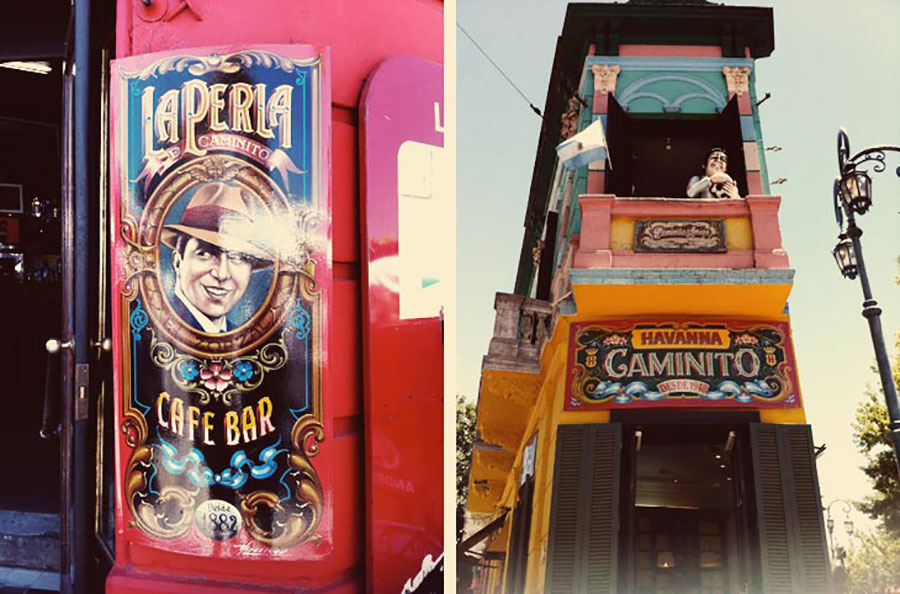
caminito

Now with an established reputation as a trusted tour operator she invites all her new partners to join the Argentinian Responsible Travel Association, inspiring them to get more involved in sustainable tourism. “In many instances they’ve already been practicing sustainable tourism, yet just didn’t know it yet, and the amazing benefits it can bring to their business,” says Museri.

Not fazed by the rise of online holiday and travel websites, Museri is of the opinion that much value can be found in a curated vacation that delivers the best local experience, while saving up to 40 hours of research. “What’s the big deal about just selling hotels?” she says. “Delivering an experience is a far more rewarding pastime for us.”

In an age of cheap air travel, that allows people to see the world, discover cultures and learn about the rest of humanity, an obvious dilemma arises: carbon footprint.  “That’s why we call ourselves ‘responsible travel’ and not ‘sustainable travel’,” says Museri. “If we were sustainable, we shouldn’t accept any traveler to Argentina arriving from more than 800 miles away. Obviously we can’t do that, it’s not realistic.”
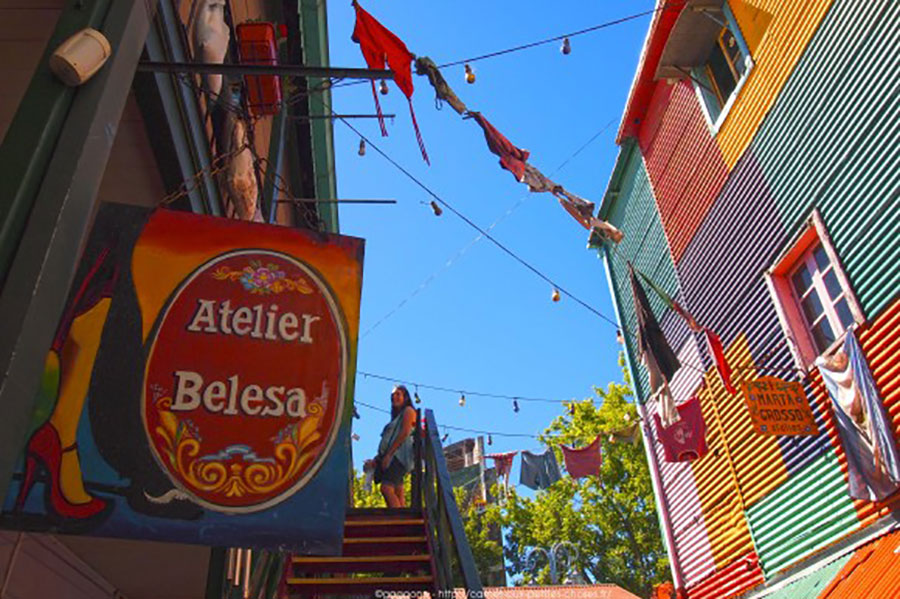
buenos aires

Ninety-five percent of Andara’s travelers come from the U.S., Australia, Europe, Canada and New Zealand, making long trips to get to Buenos Aires. “We explain to our clients that they should make the best choices available at their destinations to lessen any further environmental impact,” says Museri.

“Hotels will ask you to refrain from changing your towels and bed sheets in your room, which is okay, but they also do this for commercial reasons. In addition, a hotel should have some type of water recycling and garbage separation. My biggest enemies are the amenities. I can’t believe that hotels still give you shampoo in little plastic bottles, it’s incredible.”  Museri suggests refillable containers and biodegradable products instead. She also discourages frantic hopping around, trying to spend two days at each destination and flying from place to place.

Every time Museri feels the need to re-charge her batteries and re-confirm she’s on the right track she visits the NGOs she began with. She sees the heads of these charities, struggling in terrible situations. “They get up and continue every day and for me that’s a big part of my inspiration.”

“To share finances and knowledge with your team might seem counter-intuitive to running a business, but I’ve partnered with some of my team members and consider this the best type of leadership,” she explains. A former employee is now a 15 percent shareholder of Andara Travel and has helped boost the company growth. The team of eight now makes monthly payments to dozens of charities that form part of their tourism network. At the outset Andara sent only two travelers a month to these charities. They now receive between 50 to 100 travelers, and are making a decent income from it.

“The team is so much wider than what we have in our office,” says Muresi.
 

Having A Heart Attack? There’s A Drone For That

Globalegrow, a global, cross-border online clothing retailer, has invested in research that will build a safe, fast and cost effective drone delivery system, in a move they hope will  improve the customer shopping experience.

In a recent report, drone delivery is likely to disrupt traditional package delivery, and expected to bring major change to the world of e-commerce within the next five years. To answer this future challenge, Chinese retailer Globalegrow intends to invest $150,000 in the coming year in a drone delivery research project. Their major motivation is to help with faster, safer and more economical logistics.

Many companies are presently looking at how drones can deliver their products – from pizza, electronic goods, clothing and even heart defibrillators to those who’ve just had a heart attack on a golf course.

It’s expected that the price consumers will pay for drone delivery will be much lower than traditional road deliveries. By how much, we don’t know, but as we’ve seen in the past, when technology is introduced to a service or product, prices usually start to fall steeply.

Drones typically use electric motors, so they will also be more environmentally friendly, resulting in fewer trucks on the road.

Globalegrow reckons that delivery times for their clothing will drop by 25% if their research project works out. A major challenge they face is around international logistics. Drone delivery, in combination with international warehouse management, will require a customized approach that will re-write rules on how things are delivered. Customs, flight paths and security are all things to be taken seriously.

For a start, Globalegrow has focused on safety, testing in different environments, tracking, flight range, battery life and regulatory support for the first phase of their research. Once the project “takes off” the company will also need to look at their ability to handle large volumes.

Delivery companies have never needed roboticists and aeronautical engineers before, but Globalegrow intends hiring these experts to ensure a great end-product and user experience. The aim of the research is to create a self-flying drone that is loaded with sensors that would help track the package, guide touchdown and enable a tether cable to retract and detach the goods. Added safety measures include a way to alert nearby pedestrians that something might be landing on your head.


The Luxury Watch Made From AK47s

Peter Thum, the man behind watch brand Fonderie 47 has a talent for supporting social causes he feels are important and a skill for applying his business acumen to them. His unique take on business has resulted in the creation of a watch made from recycled parts of universal symbol of conflict, the AK47 assault rifle.

While most will assume this type of idea results in a cheap gimmick, consider the price tag that accompanies each watch – $350,000.

Realizing that high-end quality was needed to raise capital for his social venture, Thum approached two master jewelers, Philip Crangi and James de Givenchy, to design the precision timepiece and ensure that it met the tastes of the most discerning watch aficionados. For every watch sold, Thum arranges the destruction of 1,000 AK47s in Africa.

“Our resolve began several years ago when we learned firsthand about the devastating impact that assault rifles have in Africa,” says Thum. “These military weapons – mostly old, cheap and illicit ­– threaten not only lives but the potential for social and economic development. We decided to create something compelling and substantial to change what people believed was possible.” In Africa, assault rifles cost around 70% less than anywhere else in the world.

While prices have risen elsewhere since 1990, they have actually fallen in Africa. By reducing the supply of older, cheaper weapons, they aim to reduce the overall supply. While they can never hope to stop the import of weapons, the cost of replacing weapons from outside Africa is several times higher and Thum hopes this simple economic fact will help decrease supply within some conflict zones. Fonderie 47 turns over the related amount of funding from the sale of its jewelry to the Nobel Prize winning NGO Mines Advisory Group, who in turn carries out the technical oversight and physical destruction of the weapons in conjunction with the governments of Burundi and the Democratic republic of Congo.

Thum’s journey began in 2001 while working for McKinsey in Africa. He saw firsthand the devastation caused by the lack of clean water –illness and death from waterborne diseases. He had the idea to found a water company, Ethos Water, as a way to finance water-related projects in Africa. It resulted in a win-win situation that was eventually acquired by Starbucks, following which Thum served three years as Vice President of the company and Director of the Starbucks Foundation.

Ethos water went on to generate more than $6.2 million for water programs around the world, helping 420,000 people get access to safe water, sanitation and hygiene education. Another issue that bothered Thum during his time in Africa was the widespread presence of small arms in strife-ridden areas, particularly the notorious AK47 assault rifle.

“Here was a problem that really prevented any donated development dollars from having any impact,” says Thum. “So I thought, ‘let’s destroy these guns and convert them into something inspiring that makes people interested in the problem, while tackling the issue at the same time.” And so Fonderie 47 was born, and as with Thum’s water project, which made money through water, to improve water conditions, he decided to use the steel of the AK47 to make jewelry.

However, unlike the water project, the aim is to raise money to eliminate the source material, not support it. The project has already helped collect and destroy more than 34,000 weapons throughout the war zones of Africa, especially the Congo. Fonderie 47 creates jewelry, watches and accessories, using steel from AK47s, crafting them into unique pieces, each becoming part of a themed collection. For example, a pair of cufflinks from the Crucible Collection will set you back $11,000 and destroy 30 assault rifles. A necklace of Fonderie 47 steel, diamonds, rose gold and platinum from the Phoenix Collection will cost you $240,000 and destroy 800 assault rifles in Africa. New York designer James de Givenchy has created the Phoenix Collection, with an objet d’art as its centerpiece – an egg crafted from AK47 steel and conflict free diamonds.

Each piece bears the serial number of the weapon used to create it. Not knowing much about watch production did not stop Thum either. He sought out Vallée-de-Joux-based watchmaker David Candaux and designer Adrian Glessing and together they came up with a vision: a watch with all the features a serious collector would aspire towards, including an in-house movement and a case made from pink or white gold.

Their masterpiece, the Inversion Principle was born, a 42mm case housing a manually wound timepiece and three-dimensional dial. The jumping hours at 12 o’clock and retrograde minutes on the lower half of the dial suggest the kind of motion produced when loading a rifle.

Thum did not want the watch to resemble a wearable AK47. After all, the original idea for the watch was to, ironically, eliminate the very object after which the watch was modeled. The design team have rather built in subtle design features that hint at its job beyond a timekeeper. “We wanted to take something industrial and mass-produced and crude and transform it into something that is rare and refined and that comes from the finest tradition of technical and creative work,” says Thum.

The frame on the dial could be read as a gun sight and through the transparent case at the back of the watch a piece of blackened gun metal caps the ratchet wheel. Thum hopes that the lucky few who own the limited edition Inversion Principle watch will be among only a handful of people, who when asked for the time, will be able to answer with conviction: “It’s time for change.”


Richard Branson Celebrates 66 Years of Innovation

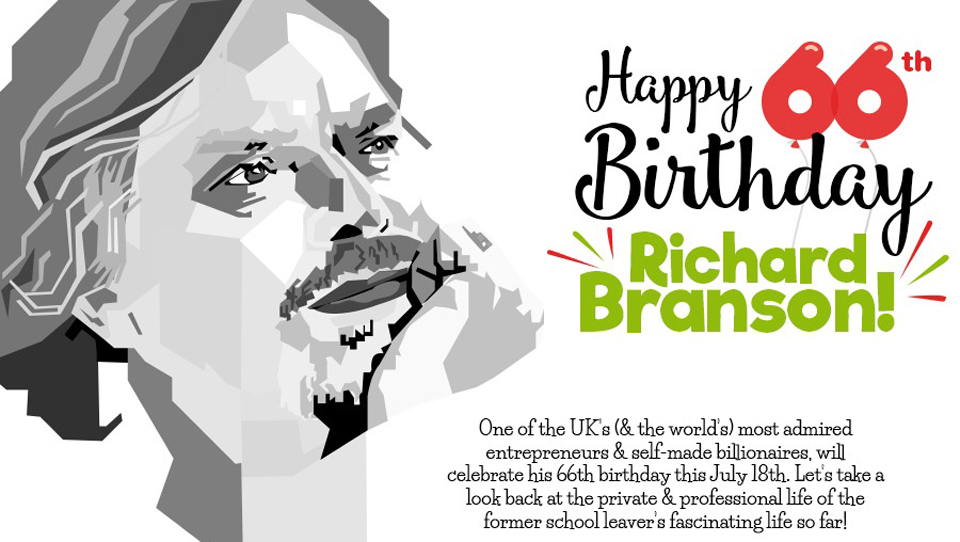
Richard Branson celebrates his birthday on 18 July. He is one of the entrepreneurs that we really admire, starting out in the world of media at age 16, by launching a student newspaper. He has since added numerous media companies to The Virgin Group which he founded, along with many other travel and hospitality companies. These include Virgin Media, Virgin Radio and V2 Records.

In the infographic below we examine some the highlights of his entrepreneur career.

Happy-66th-Birthday-Richard-Branson!-infographic

Frame Your TV

The one Word at the Centre of a Meaningful Workplace

“If you don’t have it, all the technical, fiscal, communications and strategic expertise in the world won’t help you. But those who do have it – and work ceaselessly to strengthen it – find that everything else falls into place throughout their organisation.”

So says former Fortune 500 senior executive Bob Whipple. Now CEO of Leadergrow, Inc. and a longtime consultant, trainer, and author in the area of leadership, Whipple bases his entire approach around one word, one principle that holds people together in a “framework of positive purpose”: trust.

A different kind of “trust fund”

There are many exec-ed programmes on leading with meaning, and countless behaviors that constitute great leadership, but Whipple maintains that everything centres around trust. He describes trust as a bank account – we will make deposits and withdrawals over time, but the key is to keep a positive account balance and to keep it as high as possible. As he puts it, “We make small, incremental deposits in our account – by treating others with respect and giving them autonomy, admitting our mistakes, acting with integrity, living our values.”

While we rarely have the chance to make a large deposit in our “trust fund”, withdrawals can happen suddenly and on a large scale. How many times have we said or heard the phrase: “After this, I’ll never trust that person again”? Trust is fragile. This is why it’s critical to build up a strong reserve so the balance doesn’t drop to zero when the inevitable misstep or unpopular decision comes along.

Eliminating fear in the workplace

What’s the most important thing you can do to foster a sense of meaning and trust among people in your organisation? Eliminate fear, says Whipple. “Create an environment where people feel safe and confident to sincerely express a difference of opinion without fear of negative repercussions. Instead of ignoring or penalizing staff when they share honest yet critical perspectives, great leaders reinforce candour.” He urges managers and executives to listen to their teams respectfully, consider criticisms thoughtfully and share their considered response with everyone involved.

To create a fear-free professional atmosphere, Whipple adds that leaders need to be balanced, not only in the way they process critical opinions, but also in the way they hold others accountable. “We need to rethink the word ‘accountability’,” he states. “For many leaders, ‘holding others accountable’ has a strong, negative, punitive connotation.” Whipple doesn’t deny there should be consequences for poor performance – but, “we should be holding others accountable for their successes as well, taking time to call out and celebrate excellence.”

Setting the right tone in a new leadership role

Finally, Whipple has a few words of guidance for executives transitioning into a new leadership role in their current organisation or with a new company. “I often see new leaders try to impose their influence very quickly and forcefully. They believe being a strong leader means making a mark and getting noticed right away.” They make the mistake of referring often to past successes or the “better” approaches they’ve used previously. But this approach makes people feel like they’re not being listened to – and gives them the feeling that all the hard work they’ve been doing was wrongheaded or wasted.

Instead of starting a new leadership role by trying to impose “your right answer”, Whipple recommends keeping a low profile in the early days and absorbing like a sponge everything you see and hear. Only then, building on a foundation of intelligent listening, will leaders be able to start building the trust and candid communication so vital to a positive and meaningful work environment.

Laura Montgomery is a higher-education expert who blogs for The Economist Careers Network.


Making Cities Smarter With Connected Cars

We live in an age of new mobility, where the landscape of our digital life is expanding and evolving at unprecedented speed.

Wireless connectivity has spread from computers and smartphones to cars, homes and cities, and it’s simplifying and improving our way of living.

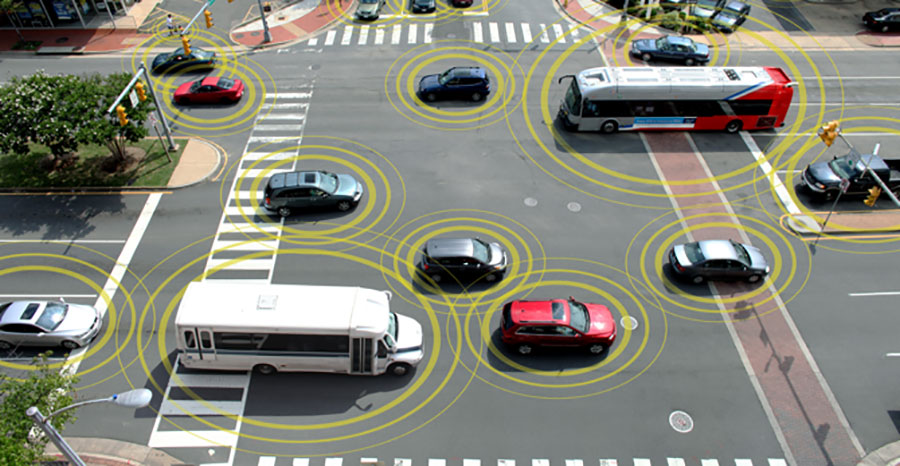
The rise of “smart” objects and machines powered by machine-to-machine (M2M) technology has been a huge catalyst for the Internet of Things – a web of connected objects and devices that communicate with one another to make life easier. The automotive industry is leading the way forward with more than 23 million connected cars on the road today and projections for 152 million by 2020.

Connected cars enhance our lives with rich services, including advanced 3D navigation, automatic emergency calling when accidents occur and always-on mobile WiFi. They can automatically exchange information with other smart objects, such as traffic lights, to help reduce road congestion and improve navigation. They can also direct drivers to the nearest open parking spot and turn on the heat and stereo system before arriving home.

The possibilities are exciting and limited only by our ability to securely manage wireless service plans for the long life of vehicles and smart city solutions.


Executives Becoming Better Leaders Through Mindfulness

Think of qualities and behaviours popularly used to describe effective, authentic leaders: focus, observation, objectivity, balanced decision-making. These are precisely the characteristics cultivated through mindfulness meditation.

And today, even the most profit-driven companies and c-suiters are turning to mindfulness techniques to help them manage stress, control their attention, and make better decisions in the workplace. You’ll also find more and more executive training courses on leadership and management starting to incorporate mindfulness training. What is this trend all about?

Yes we can
Google made headlines a couple years ago when it started offering a ragingly successful seven-week class to employees called “Search Inside Yourself”. CEOs like Salesforce’s Marc Benioff and LinkedIn’s Jeff Weiner have also touted the bottom-line benefits of meditation. Meanwhile, at Nike, General Mills, Target and Aetna you’ll now find in-house classes that teach employees how doing “nothing” can help them achieve more. And business schools around the world have gotten on board as well, offering one to five-day workshops and seminars with titles like Micro Actions: Mindful Communication for Powerful Impact”, Mindful Leadership”, and Leading Authentically with Mindfulness”.

It’s a trend that executive coach Eden Abrahams of Clear Path Executive Coaching has observed in her work, as well. “Everyone is stretched, stressed, and managing tremendous amounts of information through technology. We have only so much cognitive horsepower—so, it’s hard to be creative and visionary when you’re constantly being bombarded with inbound stimuli.” Executives are turning to mindfulness meditation to improve their capacity for things like:

  • Staying focused for long periods of time with less stress
  • Listening carefully to others’ perspectives – especially when they conflict with their own
  • Reaching decisions based on rational thought processes rather than emotional reactions
  • Aligning thoughts and actions with what is most important in their lives

The ROI of being in the moment
What’s more, the positive effects of mindfulness are more than just subjective experiences. “There’s an ever increasing body of research and evidence proving that reducing stress and anxiety and just learning to be present in the moment can have a positive impact on productivity,” says Abrahams. For example, in a 2014 study, researchers at INSEAD and Wharton concluded that as little as 15 minutes of meditation can help managers make more profitable decisions by helping to overcome the “sunk cost bias” – the cognitive tendency to continue an undertaking once an investment has been made in order to recover or validate “sunk” costs.

Until you find time for a mindfulness seminar or even a full retreat, you might check out these tips for incorporating “micro meditations” throughout the day to see how it impacts your business behaviour.
Laura Montgomery is an independent higher-education consultant.


Immigrants Find A Path to Your Heart: Through Your Stomach

Is it Greek? Is it Filipino? Is it Brazilian? Is it Middle Eastern? Is it Senegalese? Visit Mazi Mas restaurant in London and you’d be forgiven for being just a little confused over the style of food being served.

That’s because entrepreneur Nikandre Kopke has decided that female immigrants from around the world deserve a chance at taking control of their lives – all within the same kitchen. And what an incredible gift from the immigrant to their new neighbors – a way to connect their worlds over a delicious meal.

Kopke’s journey to empowering women and establishing one of the world’s most unusual restaurants is personal. She was inspired by her Greek godmother, an immigrant to the U.S., who for 20 years dreamt what many other migrant women dream of – opening a food business of their own. She wanted to open a bakery yet was held back by a typically patriarchal husband who didn’t think women should run their own business. Destined to stay home, cook and take care of the children, she never got the chance to realize her dream. As a result of family circumstance, Kopke was sent to live with her as a little girl and became her protégé, learning all the amazing culinary talents that had never left the house. “She was never able to become an independent businesswoman in her own right, yet she would have been amazing at it,” says Kopke.

When Kopke moved from the U.S. to London, it was a story she saw everywhere. She volunteered to work in kitchens and migrant centers and met a lot of women who had incredible talent because they’d spent their lives in kitchens at home, with no outlet for their skills.  “I thought what an amazing opportunity this was,” recalls Kopke. “It seemed very simple for me to give these women an opportunity, a platform to capitalize on skills they already had. It also cemented the legacy of my godmother, one of the most important people in the world to me.”

Kopke is no stranger to multi-culturalism. She was raised in New York by a German father and a Greek mother and now lives in London. It gave her a familiarity and strength in identifying with women from other cultures and helped her realize that, essentially, all women shared a similar burden – cast into a role by virtue of being a woman.

Kopke is quick to point out that she despises any suggestion of charity in her work. “The idea of charity goes against everything I’m trying to do,” she says. “These women are agents of change because so often women are cast as vulnerable victims, as victims of their circumstances, rather than people with incredible economic potential. They have huge potential to be their own boss, it’s just that they’ve never been given an opportunity to capitalize on it.”  

“I have no interest in contributing to this narrative of victimhood, which is so common when speaking about migrant and refugee women. Mazi Mas will never be a charity, because these women are not charity cases. They are aspiring food entrepreneurs.”

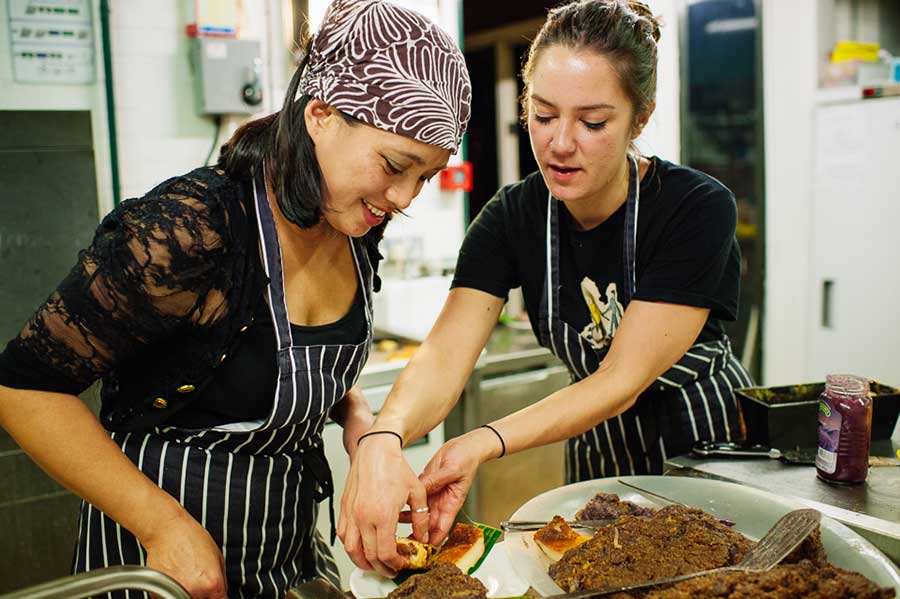
Mazi Mas has turned the tables on brick-and-mortar stores too. The women do brief, short-term cooking residencies in underused kitchens around London that have been lying dormant, such as a kitchen at a theater. They are pioneering the art of the pop-up restaurant and recycling dormant commercial space into hives of economic activity while offering guests delicious cuisine in an otherwise underserved environment.

Yet, behind dishes such as marinated fish and kare-kare oxtail in peanut sauce lies a deep philosophy on empowering men and women through gender awareness.

mazi mas kitchen

“Some of the most amazing initiatives to come out of gender equality have been the campaigns led by men to educate other men on gender issues,” says Kopke. “Change in the terminology we use has been telling. It used to be women’s rights, now it’s gender equality, gender inequality and gender issues that are spoken of. This is symbolic as it recognizes these issues not only affect women, but men as well.”

Kopke is clear that she is retraining people and giving them a platform to use their skills, but funders hear the words “social enterprise restaurant” and stop listening; not that this business model is untried.

Waterhouse Restaurant in London provides skills and training to young people from the surrounding area and was voted runner-up for Best Ethical Restaurant in 2013. Jamie Oliver’s Fifteen Restaurant is probably the most famous example – empowering young, unemployed youth in Cornwall to become the chefs of the future.

Having skilled people at Mazi Mas, who aren’t being retrained and aren’t being encouraged to follow a celebrity chef’s vision (but rather their own) can have its drawbacks. A celebrity chef with massive, existing marketing behind them does have its advantages.

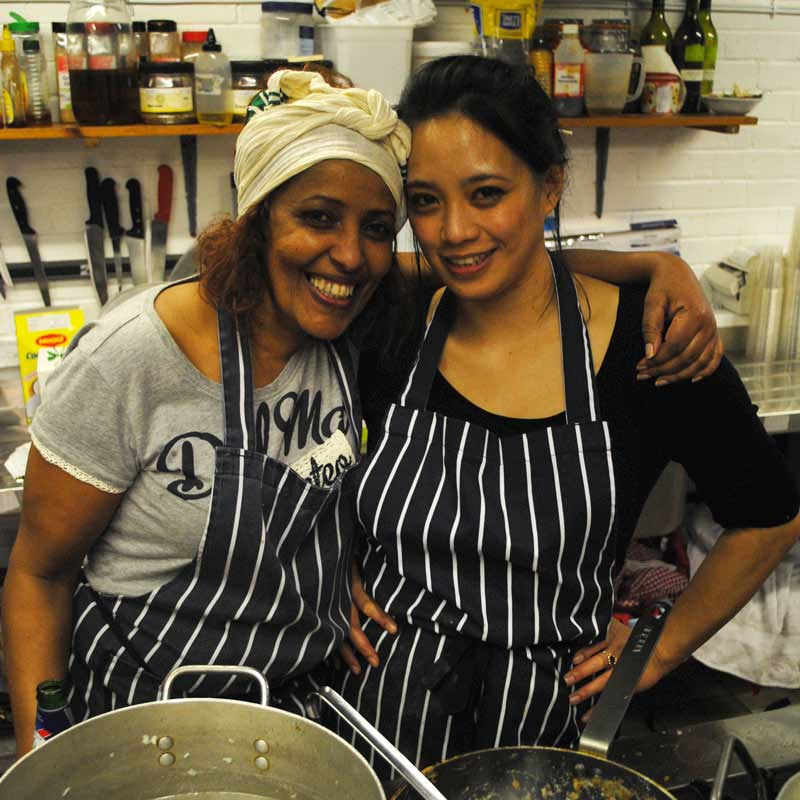
Six women from the Philippines, Brazil, Senegal, Ethiopia, Iran and Peru make up the current batch of Mazi Mas chefs, with another 10 busy with the application process. Their individual cooking experience ranges from 10 to 30 years. The restaurant takes inspiration from small family-run restaurants in Greece where Kopke lived as a child and the international variety comes from the diverse experiences of women from around the world.

One night customers are treated to Filipino cooking and the next night Senegalese. “It’s about educating people a little,” says Kopke. “In the U.K., it’s very unusual to have a menu that changes every day, but it should be normal. An ever-changing menu does run the risk of more food waste, but I’m working with women from low-income countries who understand the value of sustainability by not wasting anything. I don’t have to teach them this as it’s already there,” explains Kopke.

Kopke cites New York-based organization Hot Bread Kitchen as an inspiration that also employs migrant women to produce mostly baked goods. “If they can make a mainstream, commercial success of it then so can I,” she says. “The difference is that I want to make my people visible, not cloister women away in an assembly line out of sight. These are women who have spent their lives being invisible.”

Mazi Mas has a sister organization in Sydney and Kopke is developing plans with people in Italy. The business can scale easily and be replicated anywhere in the world, depending on local labor laws. In the U.K., asylum seekers don’t have the right to work but in Australia they do.

The investment Kopke’s godmother made in her is finally paying dividends and influencing the lives of women from around the world. She never could have imagined that her goddaughter would find the strength one day to break a generations-old cycle of gender bias. “She’s really amazing,” says Kopke. “But with the classic humility many women of her era have, she says ‘Agh, it has nothing to do with me, it only has to do with you.’”


Why Social Entrepreneurs Are Taking The Lead

Improving the world and the bottom line simultaneously has never been more on-trend. Social entrepreneurship, the concept of applying business techniques and market mechanisms to solve social problems, such as poverty, violent crime or environmental threats, has been around for decades. 

The practice received a significant public boost, however, in 2003 when a group of NGO heads was invited to the first-ever social entrepreneurs sessionat the World Economic Forum in Davos. Since then the idea has been embraced globally by businesses, governments and non-profits alike. 

The result is a new breed of socially-conscious business models and a rising demand for organisational leaders who can steer innovation along such lines.

A Multi-Purpose Model 

In practice, social entrepreneurship is a flexible methodology that’s applied differently depending on the type of organisation, but the goal is the same – to help an organisation excel at its core mission. “Non-profits want to know how to move away from a charity-based model and toward more sustainable sources of funding that leverage their activities to generate revenue,” says Hans Wahl, Co-Director of the INSEAD Social Entrepreneurship Program (ISEP), an executive education course offered in Fontainebleau, France and Singapore. Integrating business ideas facilitates this. One such example is DC Central Kitchen, a non-profit in Washington, DC that provides free meals to homeless shelters and produces income by operating a catering service.

For-profit companies have discovered that integrating socially responsible practices into their business operations has benefits well beyond positive public relations. According to Sarah Soule, Faculty Director of Stanford’s Executive Program in Social Entrepreneurship (EPSE): “Corporations see that some of the best business opportunities come from solving real problems, hence their exploration into new markets and developing countries where opportunities to grow are expansive yet at the same time meaningful.” Coca-Cola, for instance, sponsors business training programmes for women in Brazil, many of whom operate kiosks, a main sales source for Coke products. It’s a win for the women, who acquire the means for success, and a gain for Coke, as it helps the company maintain a strong supply chain in a growing market. 

In addition, for-profits increasingly rely on their social commitments to attract prospective employees who are drawn to organisations that support good causes. “Smart for-profit firms recognise that to win the war for millennial talent, they must deliver on this dimension,” adds Soule. Wahl agrees: “People want to work for more than just a paycheck.”

Even some governments are integrating “business for good” ideas into their planning in an attempt to be more effective. Among ISEP’s recent alumni is the head of an economic development agency in Denmark.

Leading It Socially

The many success stories of social entrepreneurship in action show it can drive innovation in nearly any organisation. Interest in executive education courses for leaders of socially-driven organisations is high. Both Stanford and INSEAD claim the number of applicants to their 6-day programmes grows steadily. The majority of participants are executives in non-profits who’ve been tasked with scaling up the business by rethinking revenue streams or launching a new social arm. Also filling seats are top managers of companies that want to broaden their corporate social responsibility activities. It’s a similar mix at Hertie School’s Social Innovation and Social Entrepreneurship seminars. Harvard Business School offers separate education programs to leaders of non-profits and for-profits.

Nurturing the Next Social Entrepreneur

Learning to innovate like a social entrepreneur requires a shift in strategic thinking, especially for leaders in well-established organisations. Executive education programmes come at this training from different angles. Stanford’s EPSE cohorts participate in a full day design thinking bootcamp, where they learn the techniques of empathizing with customers, defining problems and developing rapid prototypes in order to create new social initiatives. At ISEP, students work through challenging case studies around themes like the difficulties of scaling or negotiating tradeoffs between being responsible to local stakeholders and answering to company shareholders.

Important Takeaways

The opportunity for participants to make connections is an important component of social entrepreneurship courses. Many find that they can adapt the innovations they learn about from peers for their own organizations. Stanford ensures that its EPSE alumni are well connected on social media, and invites many back to campus to network with current programme participants. Wahl stresses that ISEP is much more than an executive education programme: “It’s an entire community around social entrepreneurship.” ISEP’s true strength lies not just in the participants’ diverse backgrounds but in the networking that continues long after a course ends, he says. 

Leaders across all types of organisations are now charged with broadening social agendas. A non-profit must learn to operate like a business in order to realise its vision, and a company needs to innovate models that benefit both society and its business activities. Adopting a social entrepreneur mindset will soon be a must for all leaders.
Kate Rodriguez is a former senior career search researcher and government analyst who covers career development and higher education marketing for The Economist Careers Network.


0