Bentley Debuts First Electric Luxury Car

Bentley Motors has unveiled the future of electric luxury with the EXP 12 Speed 6e at the 2017 Geneva International Motor Show. The concept showcases Bentley’s approach to a zero-emission, electric future as well as the seamless integration of state-of-the-art on board technology in a truly luxurious, authentic way.

All-electric Bentley vehicles in the future will offer performance levels expected from the luxury brand – an immediate, effortless surge of torque and grand touring range as well as new high performance technology such as rapid inductive charging and state-of-the-art on board concierge-style services for an effortless ownership experience.

Bentley’s vision is for customers to benefit from high-speed inductive charging to minimise inconvenience on the move, and provide a range sufficient for grand touring requirements. An electric Bentley would, for example, be able to drive between London and Paris or Milan and Monaco on a single charge and the on board experience will be enhanced for both driver and passenger thanks to the integration of state-of-the-art technology.

Handmade, cut-glass sections on the steering wheel contain the controls for media, communications, navigation and car set-up, as well as an instant performance boost via two dedicated buttons at the top of the cut-away wheel design. The passenger, meanwhile, has their own control panel on the front fascia with access to social media, email and entertainment.

The car’s intelligent infotainment system includes a personal, digital concierge – a virtual butler with the ability to connect to real-world services. This digital companion will, for example, be able to book a table at a favorite restaurant or look up flights for a business trip – all via voice command.

Bentley will utilise the EXP 12 Speed 6e concept to garner public opinion and feedback to help shape its future electric vehicle strategy.


Red Bull Launches Social Entrepreneur Program in US

While Red Bull may not be a brand people immediately associate with social impact, the Red Bull Amaphiko project has started to change all that. And Baltimore’s emergence as a leading social impact city in the U.S. is a big part of the story.

Red Bull Amaphiko, a global program that supports social entrepreneurs, is coming to the U.S. for the first time starting March 1. “Amaphiko” translates to “wings” in the South African language of Zulu, the program’s origin country – and aims to bring together and uplift individuals from around the U.S. who are using their talent and energy to tackle social issues in their community.

“We often say, the people who are closest to the challenges in their community, are often closest to the solutions, and the Red Bull Amaphiko Academy was built around that belief,” says Michelle Geiss, co-founder and executive director of Impact Hub Baltimore, a community partner to Red Bull Amaphiko.

Red Bull Amaphiko’s primary platform is the Red Bull Amaphiko Academy. The Academy begins with a 10-day residency program that brings together hand selected social entrepreneurs to connect and collaborate with some of the world’s leading innovators, entrepreneurs and storytellers. The 10-day residency is followed by an 18-month individually tailored development program that further helps the social entrepreneurs bring their ideas to life.

Baltimore was selected as the host city because it continues its emergence as a leading social impact hub in the U.S. In just the past few years, Charm City has been the home to the Social Innovation Lab at John Hopkins University, the Front Lines of Innovation event in summer 2016 and Light City’s Social Innovation Conference.

“Your business can only survive and thrive if it is built on a solid foundation. That foundation is not a business plan, it’s you. It’s the individual who defines themselves, who is bold enough to call themselves a social entrepreneur,” said Thato Kgatlhanye, a graduate of the 2014 Red Bull Amaphiko Academy in South Africa and recipient of the ELLE International Impact 2 Award and the prestigious Anzisha Prize, the premier award for African entrepreneurs aged 15-22 who have developed businesses that positively impact their community. Thato’s company, Rethaka manufactures school bags from recycled plastic, which harnesses wearable solar technology during the day to provide a light source for a child to study at night.


The Red Bull Amaphiko Academy will begin in Baltimore, MD this August. Applications for participation are open from March 1, 2017 and close on April 30, 2017. For more information and to register, visit: www.amaphiko.redbull.com/en/academy/us-2017


Disrupting The Disruptors: The End of The Sharing Economy?

Singapore, a keen early adopter of the sharing economy, has fired a warning shot across the bow of Airbnb and Uber with tighter rules that could shake up their business models and growth ambitions in Asia.

The rules, some say, are a sign that even governments sympathetic to companies that allow citizens to rent out their expertise or property have a hard time striking the right balance between encouraging disruptive technologies and keeping them in line.

“I know a lot of people will give back their keys, that’s for sure,” said Lionel Ong, 33, an Uber driver, who wants to look for a less demanding part time job.

As its traditional manufacturing industry has hollowed out in the past decade or so, the affluent city-state has been quick to embrace opportunities in the digital economy, hosting the Asian headquarters of Airbnb and Uber, inviting its executives to conferences and investing in Uber’s regional rival Grab through a unit of its investment arm for Temasek. 

It’s too early to say what impact the new rules would have on Uber and Airbnb, but they highlight increasing scrutiny by regulators globally and growth challenges facing these new economy businesses.

April Rinne, an expert on the sharing economy who has advised companies and governments, including Singapore, says the city state’s case mirrors other early adopter countries like Denmark, where legislators are mulling laws which would require taxis to have seat sensors, video surveillance and taxi meters. 

“It’s a watershed that should also sound warning bells,” Rinne said.

Singapore’s new rules, passed this month, will be implemented in stages from the second half of this year. They allow officials to suspend a ride-sharing company for up to a month after three or more instances of their drivers getting caught without a proper licence or insurance. The drivers themselves face fines and jail.

In the case of Airbnb,  officials will have the right to force their way into homes to check whether residents were renting them out illegally, adding teeth to a rarely enforced law which bans the renting out of private property for less than six months.   

 HIGH GROWTH MARKET, HURDLES

The sharing economy business is billed for explosive growth, estimated by PricewaterhouseCoopers to reach $335 billion by 2025, from around $15 billion in 2016.

So there’s a lot at stake for companies. And the worry, says Adrian Lee, who runs a car-sharing service called Tribecar in Singapore, is that other markets might ape the city state’s stance.

“I’m afraid other legislators may take a leaf from our play book without allowing these services to get to critical mass.” 

Singapore had been one of the few bright spots in Asia for Uber, which has been facing legal scrutiny in many markets across the region. Uber has suspended its service in Taiwan and has withdrawn from China after selling its business there. And in South Korea and Japan, authorities have limited its operations.

Jean Chia, a Singapore-based academic who studies the sharing economy, says since short-term renters “were previously operating in a grey area”, the tighter regulations raise some immediate questions around the business model of Airbnb.

Airbnb’s director of public policy in Asia Pacific, Mike Orgill, echoed those concerns, saying there are “thousands of people earning supplemental income … so the lack of clarity is of concern for hosts.”  

Drivers of Uber and Grab said a requirement for all drivers to obtain a vocational licence would force out a lot of part-time drivers, while the threat of fines and even jail would deter others.

There is no comparable measure in “the more than 450 cities we operate in,” Uber’s Singapore general manager Warren Tseng said of the rule change, warning it would affect tens of thousands of drivers and “hundreds of thousands of commuters.”

Uber’s strong regional rival Grab, which is planning to invest $700 million in Indonesia, one of Asia’s biggest markets, is more sanguine about the new laws.

Grab’s country head Kell Jay Lim said though the company expects some drop-off after the regulations kick in, the rules showed that Singapore was now absorbing the sharing economy into the mainstream.

“It’s a stamp of approval of what we’re trying to do.” 

By Jeremy Wagstaff; Editing by Shri Navaratnam

 

India’s Solar Farm Overtakes California’s as World’s Largest

India has overtaken California and now has the largest solar farm in one location in the world. It was built in a record eight months, despite monsoons and floods.

The vast 2,500 acre site in Tamil Nadu is the size of nearly 60 Taj Mahals, while the area of the solar panels alone could hold 476 football pitches. And, during the construction, just the storage area was the equivalent of 6 Sydney Opera Houses.

The southern Indian solar farm can generate 648 megawatts of clean, green electricity. By 2022, India aims to power 60 million homes by the sun. This will help propel India as a world leader in renewable energy generation.

Vneet Jaain, CEO of Adani Power, says, “Before us, the largest solar power plant at a single location was in California in the U.S. That was 550 MW and was completed in around three years. We wanted to set up a solar plant of 648 MW in a single location in less than a year.”

The enormous solar farm took just eight months to build by 8,500 people in Kamuthi, Ramanathpuram, in the southern state of Tamil Nadu – a staggeringly short amount of time, given the sheer scale of the project and the massive floods and monsoon in the region at the time of construction.

The plant comprises of 380,000 foundations, 2,500,000 solar modules, 27,000 metric tonnes of structure, 576 inverters, 154 transformers and 6,000 km of cables (that’s almost the equivalent distance of India to Australia). The overall cost of the mega-structure was approximately U.S. $679 million.

Chairman of the Adani Group – the company who owns the solar farm – Guatam Adani says, “We have a deep commitment to nation-building. We plan to produce 11,000 MW of solar energy in the next five years, putting India on the global map of renewable energy.”

The huge number of solar panels is cleaned daily by a robotic system, itself charged by its own solar panel. The solar farm is part of the Indian government’s ambitious targets to reduce carbon emissions by 33-35% and to produce 40% of its power by non-fossil fuels by 2030.


Trump Presidency Pushing Business to Become Less Global, More Local

Business leaders in Davos, traditionally the high priests of globalization, are talking up the benefits of local production this week to shield themselves from criticism from incoming U.S. President Donald Trump.

Elected on a jobs-focused “America First” platform, Trump has taken to Twitter to rebuke major companies like General Motors, Lockheed Martin and United Technologies, either for making goods in Mexico or for the price of their products.

At this week’s World Economic Forum (WEF), a gathering of business and political elites in the Swiss Alps synonymous with free markets, company bosses said they were now preparing to adjust to the Trump era.

“The basic message is to be more national, don’t just be global,” Richard Edelman, CEO of communications marketing firm Edelman, told Reuters. “Let’s try and pre-empt that tweet by having a long-term discussion about the supply chain.”

General Motors on Tuesday highlighted moves it said would add nearly 2,000 U.S. manufacturing jobs, including a decision to shift some production of axles to an American factory, rather than have them supplied from Mexico. The automaker said it wanted to “build where we sell”.

“There is no doubt we need to adapt,” Carlos Ghosn, chief executive of Renault-Nissan, told Reuters. “All carmakers have to revise their strategy as a function of what is coming.”

At the same time, companies are reviewing potential mergers and rethinking job cuts, fearing the stigma of being labelled “anti-American”.

What companies have yet to spell out is the economic cost of such shifts or the extent of localisation that will be needed to keep the peace with the new White House administration.

TAX REFORM

Adding to the incentive to increase U.S. manufacturing is the promise of lower corporate taxes under the Trump administration.

“It could mean increased investment in the U.S.,” Novartis CEO Joe Jimenez told Reuters.

Vishal Sikka, chief executive of Infosys, which provides IT services to large companies including banks, said his company expected more business from helping companies localise.

“The irony is that when more walls show up it is a good opportunity for services companies to help do business across those walls,” he said.

The move to go local in response to Trump looks set to fuel a trend already evident in some industries, including food and fashion, which are trying to tap into consumer demand for homegrown materials and production.

Other businesses are also thinking locally to mitigate currency risks in certain markets. Food companies in Britain, for example, which have seen their costs soar after sterling plummeted in the wake of the Brexit vote, have started moving towards local suppliers where possible to keep costs down.

In some cases, technological advances are helping by making it easier for companies to shorten their supply lines.

“With 3D printing, for example, some of the supply chain will reshore and come back to the local economies,” said Frans van Houten, CEO of Dutch healthcare technology group Philips. “I think we will see supply chains becoming more regional.”

Such tech-fuelled localisation may be a competitive advantage for multinational companies in a world of increasing geopolitical uncertainty, but it brings fresh challenges for developing economies which could lose out as jobs return to richer countries like the United States.

Martin Sorrell, chief executive of WPP, the world’s largest advertising agency, said U.S. growth could come at the cost of nations elsewhere.

“The issue on Trump is what you win on the U.S. swings, you may lose on the international roundabouts,” he said.

By Elizabeth Piper; Writing by Carmel Crimmins; Editing by Pravin Char


Mindful Investors Founder: My Journey to Becoming an Impact Investor


An interview with Stuart Rudick, founder of Mindfull Investors.
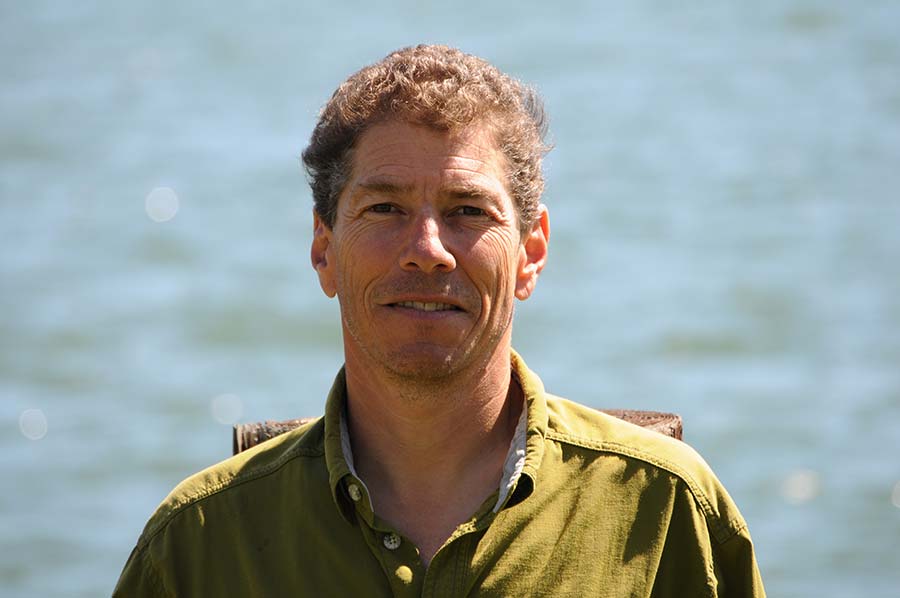
While Stuart Rudick (pictured below) has been an impact investor for about 25 years, the term “impact investing” was only coined less than a decade ago. The practice of investing for social and environmental return, as well as financial return, has evolved through various iterations, and Rudick has been one if its pioneering leaders.  

The interview below offers an overview of how one investor (Rudick) evolved from a traditional, finance-only focus to an impact investor focused on social entrepreneurs that provide health-focused solutions to pressing issues.


How did you begin engaging in impact investing? What were the first steps you took?

In 1980, I moved to San Francisco and was hired by a local brokerage company which provided me the flexibility to focus my investments in areas of my personal interest and passion.

While a partner at Bear Stearns in the mid-1980s, I funded private companies focused on building businesses with positive social impact. Examples are the first environmental magazine (Buzzworm), agriculture technologies that reduce water and pesticide use (Esselborn Farms) and the first venture fund focused on investing in environmental technology solutions (Global Environment Fund).

Can you describe the types of impact investing in which you’ve engaged?

Over the past decade, I’ve focused on healthy living companies with a sustainable focus. I am grateful to have an investment in Seventh Generation, the true pioneer of sustainability and positive impact personal-care and cleaning products. I am also very excited about my investment in Organic Girl, the fastest growing organic salad and produce brand in the United States  Some of the newer companies we  are invested in include Juicero, Atheer, The Next Thing Co, FloWater, Soma, Urban Remedy and Interaxon/ Muse. 

What are some of the things that you wish you had known when you first began?

The key to a successful business and successful investing is the management team that’s leading a company. The main reason companies fail in achieving their vision and potential is due to the failings of senior management.

What differences do you see between a traditional investment process and an impact investment process?

Ultimately, you’re investing in the founders and their team, whether it’s a conventional or a social impact investment. This is the determinant of success. The due diligence process, understanding the competitive landscape, and getting to know management is fundamental to making any investment. Evaluating an impact investment also requires taking into consideration how any socially rewarding efforts may impact an investor’s internal rate of return.

How do you respond to the concerns of those who feel approaches to social impact investing are too risky or unproven?

Risk is commensurate with reward, whether it is in social impact or a traditional investing arena. As an early, pioneer investor, I have developed an expertise and generated above-market returns over the past three decades. I exercise discipline by investing solely in industries and companies in which I have personal passion and expertise.

Have you had to accept below-market rate financial returns as you’ve pursued impact?

To the contrary, I believe companies that are based on sustainability and positive impact have the opportunity to generate a premium value and return on their products and business. In recent years, we have seen brands founded on positive social impact realize premium valuations when they are acquired or experience liquidity events.

What do you feel is the key development still to come in order for impact investing to reach its potential?

The key issue for impact investing is attracting additional capital. Capital is needed to fund growth opportunities that will demonstrate investment success and continue to attract new investment capital. 

If you could give an investor who is new to the impact investing field three points of advice, what would they be?

Invest in the management team. Invest in the management team. Invest in the management team. And I would have two other key recommendations:

  • Take an active, ongoing role in the investment as a board member or advisor to the company.
  • Diversify your investment in a portfolio of companies and consider investing in a professional social impact fund.

What are some of the more promising areas for impact investing that you see developing in the future?

New enabling technologies that focus on innovations for health, the environment and a sustainable lifestyle are my primary focus right now, as this aligns with my values and interests.  I’m looking at an investment pipeline of bold new startups that are creating solutions that will make our world a better place.

Stuart Rudick is the founder and general partner of Mindfull Investors, L.P., a hybrid public and private market hedge fund. Jed Emerson is Chief Impact Strategist for ImpactAssets, and senior advisor to two families executing “total portfolio” impact investment strategies.

Business Can’t Solve The World’s Problems. But Capitalism Can

Business and capitalism get conflated — in our media, in our language and in our thinking. They are not the same thing. One is a sector, the other a methodology.

By inextricably linking the two, we confine the practice of real, turbo-charged capitalism to business, and we dangerously limit the capacity of non-business organizations to innovate, fund and bring to scale the kind of breakthrough ideas that will begin to solve the huge social problems we face today.

To be sure, business can change the world. That is one of the things it does, consistently. Innovations such as the assembly line, the car itself, the distribution of electricity and gasoline, and now the iPad, Google and so on have by many measures made the world a better place. Indeed, as Carl Schramm writes in his provocative essay, “All Entrepreneurship Is Social,” the fashionable new term “social business” in some ways “diminishes the contributions of regular entrepreneurs…people who… create thousands of jobs, improve the quality of goods and services available to consumers, and ultimately raise standards of living.”

He uses the refrigerated box car and its achievements in reducing food-borne illness and saving millions of lives in the process to make his point. Business will move the great masses of humanity forward with advancements in pharmaceuticals, materials, process and technology — but it will almost always leave 10 percent behind. It will almost always leave unaddressed humanity’s most disadvantaged and unlucky. Even social business will not address those issues for which markets cannot be developed. I serve on the board of a center for the developmentally disabled. More than anything, its clients need love. How do you monetize that?

This is where philanthropy comes in. Philanthropy is the market for love. The word itself derives from the Greek for “love of humanity.” Philanthropy and, specifically, the charities that benefit from it and that are chartered to solve social problems can address those people and issues that business leaves behind. But they can do so effectively only if we allow them to use the tools of capitalism — tools that the sector has thus far been denied, nearly wholesale.

We have two rulebooks — one for charity and one for the rest of the economic world. We blame capitalism for creating huge inequities in our society, and then we refuse to allow the “nonprofit” sector to use the tools of capitalism to rectify them. This nonprofit rulebook discriminates against charities in at least five different areas: compensation, marketing, risk taking, time horizons and capital itself. We allow people to make a fortune doing any number of things that will harm the poor but crucify anyone who wants to make money helping them.

This sends the top talent coming out of the nation’s best business schools directly into the for-profit sector and gives our youth the mutually exclusive choice between making a difference and making money. This we call ethics. We let Apple Inc. and The Coca-Cola Co. plaster our billboards and television sets with advertising, but we are appalled at the notion of important causes “wasting” money on paid advertising.

So the voices of our great causes are all but silenced, and consumer products get lopsided access to our attention, 24/7. This we do in the name of frugality. Amazon Inc. was permitted to forgo investor returns for six years to build market dominance. But if a charity embarks on a long-term plan with no return for the needy for six years, we are outraged.

This we call caring. We aren’t upset when The Walt Disney Co. makes a USD200 million movie that flops, but if a USD1 million charity walk doesn’t make a 75 percent profit to the cause in year one, we want the attorney general to investigate. So charities are petrified of exploring new revenue-generating methods and can’t develop the powerful learning curves that the for-profit sector can. This we call prudence. We let for-profit companies raise massive capital in the stock market by offering investment returns, but we forbid the payment of a financial return (“profit”) in charity. The result? The for-profit sector monopolizes the capital markets, while charities are left to beg for donations. This we call philanthropy.

Combine those five things and you have just put the humanitarian sector at an extreme disadvantage to the for-profit sector. Yet we still expect it to solve the world’s problems. Our social problems are gigantic in scale. We need gigantic responses to them. And if we freed the humanitarian sector to use the tools of capitalism, we could bring private ingenuity to bear on those problems, and we wouldn’t have to depend on the government to fill the gaps.

Where would all the money come from? From us! If we were to give the humanitarian sector the right capital, talent, time, and ability to innovate, it could build the kind of demand for philanthropy that, say, Apple builds for music on iTunes (which, by the way, stimulates the same reward centers in the brain as giving). Then we’d be on our way to the kind of scale we need.


U.S. Turns From Pain Drug, Producer Eyes Global Market

According to a recent in-depth report by the LA Times, the painkilling drug OxyContin has seen sales fall in the U.S. by 40% since 2010. The owners, the Sackler family, are now pursuing a new strategy: global domination.

The authors of this global marketing intrigue, Harriet Ryan, Lisa Girion and Scott Glover, claim to have uncovered a global strategy by OxyContin manufacturer, Purdue Pharma, to market the drug to Latin America, Asia, the Middle East and Africa after top health officials had begun discouraging primary care doctors from prescribing painkillers for chronic pain due to a fear of addiction that may lead to harder, illegal drugs such as heroin.

With billions of lost revenue from falling sales a network of companies owned by the Sacklers, going by the name of Mundipharma, has begun using some of the same controversial marketing practices that made OxyContin a huge seller in the U.S. and are running training seminars in Brazil and China to urge doctors to overcome their “Opiophobia” and start prescribing painkillers.

Given the opioid epidemic currently facing the U.S. it would be wise for countries less equipped to deal with large-scale addiction issues to examine carefully the consequences.

U.S. Surgeon General Vivek H. Murthy said he would advise his peers abroad “to be very careful” with opioid medications and to learn from American “missteps.”

Former U.S. Food and Drug Administration commissioner David A. Kessler has called the failure to recognize the dangers of painkillers one of the biggest mistakes in modern medicine. Speaking of Mundipharma’s push into foreign markets, he said, “It’s right out of the playbook of Big Tobacco. As the United States takes steps to limit sales here, the company goes abroad.”

The LA Times story states that Purdue was acquired in 1952 by the Sackler family and that OxyContin has generated nearly $35 billion in revenue over the last two decades, making the Sacklers one of the nation’s wealthiest families.

Despite cheap morphine, at a cost of 15 cents a day, being a safe alternative to managing the world’s pain problems, it’s not very profitable. OxyContin charges hundreds of dollars a bottle for a month’s supply. 

More than 20 countries now have OxyContin operations and five Latin American countries are lined up with plans to launch. The link between pain management, opioid addiction and illicit drugs should be better understood in the context of the marketing objectives of multi-national corporations before another U.S. opioid epidemic is unleashed on unsuspecting countries.

Read the full LA Times story here.


New DNA Test Can Detect Slavery in Your T-shirt

Shoppers lured by a bargain-priced T-shirt but concerned about whether the item is free of slave labour could soon have the answer – from DNA forensic technology.

James Hayward, chief executive of U.S.-based Applied DNA Sciences Inc. that develops DNA-based technology to prevent counterfeiting and ensure authenticity, said his researchers have been working in the cotton industry for up to nine years. He said this was prompted by rising concerns about the global cotton industry, that provides income for more than 250 million people, using child and slave labour in harvesting the crop and the during the production process to make clothes.


0