Leading Brands Caught in a Deep Division of Values

Amazon, Google and Dove rank high in 2017 national report on brands that demonstrate world value and purpose beyond profit.

The 2017 World Value Index report, by mission-driven creative company enso has unveiled people’s perceptions of 150 leading brands and their perceived value to the communities and audiences they serve. 

The report’s findings are based on a survey of a nationally representative sample of 3,000 people, across 19 audience demographics and psychographics. Of the survey questions, trust, personal values, cultural and political influences were considered while polling people’s perceptions of all brands. Key findings in this year’s World Value Index include:

  • Age, gender, income, political leanings and global outlook appeared to highly influence brand mission perception and support: for example, Marlboro ranks last among the general population, but ranks higher among Boomers and Traditionalists.
  • Nonprofits were more resonant with people than the year before: New additions to World Value Index’s top 10 list for 2017 were primarily nonprofits, while Goodwill and Girl Scouts of the USA claimed the top two spots, beating Amazon, Google and Microsoft.
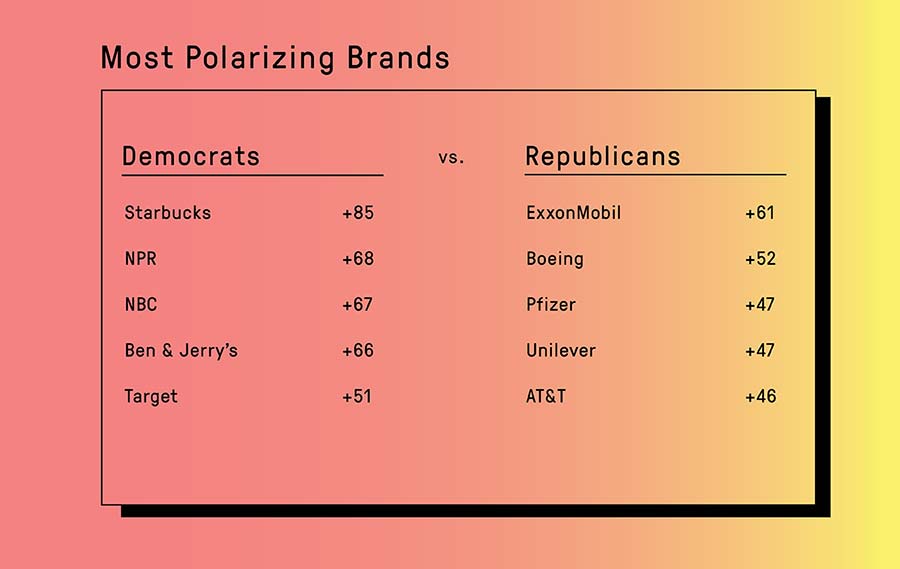
  • Starbucks is the most politically polarizing brand: while it ranks #75 with the general population, Republicans rank them as #103 and Democrats rank them as #18.
  • Twitter, Uber and Starbucks are brands poised to reach and activate millennials who are active on social media and like to take concrete action on issues important to them.
  • Nearly 80 per cent of people believe in businesses’ ability to make a positive impact, but only 41 per cent trust business leaders to do what is right.

“In an era when measuring companies by shareholder value is not good enough — for employees, customers or communities — the World Value Index measures the value of brands to everyday people. Against a backdrop of low trust in business leaders, we’re seeing forward-looking, purpose-oriented brands rise to the top, and some historic brands fall, particularly with younger people,” said Sebastian Buck, enso’s co-founder and strategic lead.

The list of top-10 organizations whose mission and purpose are perceived as creating the most world value included nonprofits (Goodwill), brands traditionally associated with social impact and purpose (Dove), as well as brands providing practical value to people through their products and services (Amazon, Google). Below are the top-10 ranking brands:

1.     Goodwill

2.     Girl Scouts of the USA

3.     Amazon

4.     Save the Children

5.     Google

6.     World Wildlife Fund

7.     YMCA

8.     Microsoft

9.     Dove

10.  Subway

This past year has been perhaps one of the most politically divisive in history. An unexpected victory in the presidential election and inflamed tensions between both parties and those who don’t associate with one. Increasing levels of participation in marches and protests, and the ascent of social media echo chambers.

In an age when presidential policies and complex social conversations are aired in 140 characters or less, and when narratives morph in real-time to keep up with changing public opinion, it’s no surprise that brands, such as Starbucks and ExxonMobil, are getting caught up in the deep division of values and visions of the future. And these brands, as vessels of their values, can fall divisively on one side of the political spectrum or the other.
 

Some highlights of the survey include:

  • Nearly 80% of people believe in business’ ability to make a positive impact, but only 41% trust business leaders to do what’s right.
  • So who does trust business leaders? People who earn more than $100k and have at least a college education, and those who identify as Republicans.
  • Democrats and people who earn less than $50K are sour on the overall direction of the country, but they are optimistic about their own families’ economic prospects.
  • Meanwhile, Millennials are embracing activism. An impressive 4 out of 10 have taken a concrete action IRL, like marching in a protest, within the last year.
  • But activism is somewhat of a luxury; those who actively support causes with the goal of creating change in the world tend to have higher incomes and education levels.
  • Speaking of change, people who believe that experiencing other cultures is important are much more likely to feel they have the ability to affect the world around them than those who do not.
  • Starbucks is the most politically polarizing brand. NPR is second.
  • Everyone ranks Marlboro at or near the bottom of the list except for Baby Boomers, tech skeptics, and those who don’t find experiencing other cultures important.
  • Procter & Gamble seems to have a Millennial problem.
  • Brands skewing towards high earners with a college degree: Patagonia, Khan Academy, Chobani, Starbucks.
  • Brands skewing towards those earning under $50K: Barbie, Yahoo, NBC, Always.

www.enso.co

 

Bitcoin Soars to All-time High of USD$2,400

Digital currency bitcoin hit a fresh record high recently, surging above $2,400, as demand for crypto-assets soared with the creation of new tokens to raise funding for start-ups using blockchain technology.

Blockchain, the underlying technology behind bitcoin, is a financial ledger maintained by a network of computers that can track the movement of any asset without the need for a central regulator.

Bitcoin hit a record of $2,409 on the BitStamp platform and was last up 4.3 percent at $2,363. So far this year, the price of bitcoin has more than doubled.

A key reason for bitcoin’s dominance in the nefarious online underworld, say technologists and cyber crime experts, is its size – the total value of all bitcoins in circulation is more than twice that of the nearest of hundreds of rivals.

Also, a big part of bitcoin’s recent surge is the increase in demand for other digital currencies being sold in so-called “initial coin offerings”, or ICOs. Under ICOs, blockchain start-ups sell their tokens directly to the public to raise capital without any regulatory oversight.

“Bitcoin up 100 percent in under 2 months. Shanghai down almost 10 percent same timeframe, compared to most global stocks up. Probably not a coincidence!”, Jeffrey Gundlach, chief executive at DoubleLine Capital tweeted on Tuesday.

Strong demand for bitcoins in Japan has also fuelled the rise of the virtual currency that can be moved like money around the world quickly and anonymously without the need for a central authority.

By Sruthi Shankar. Editing by Martina D’Couto.


Volvo: We Must Change to Reflect New Consumer Demands

Volvo Cars, the premium car maker, is updating its business model to a changing world and believes the car industry as a whole needs do to the same, its president and chief executive Håkan Samuelsson has announced.

The announcement was made at the bi-annual meeting of the UN Global Compact Nordic Network in Gothenburg and represents one of the biggest gatherings of Nordic corporate sustainability experts under the auspices of the United Nations. Over 190 delegates from 100 companies and organizations met at Volvo Cars headquarters to discuss how business can support the UN Sustainable Development Goals (SDGs). Volvo Cars is a founding member of the UN Global Compact, the world’s largest corporate sustainability initiative of which Real Leaders is also a signatory.

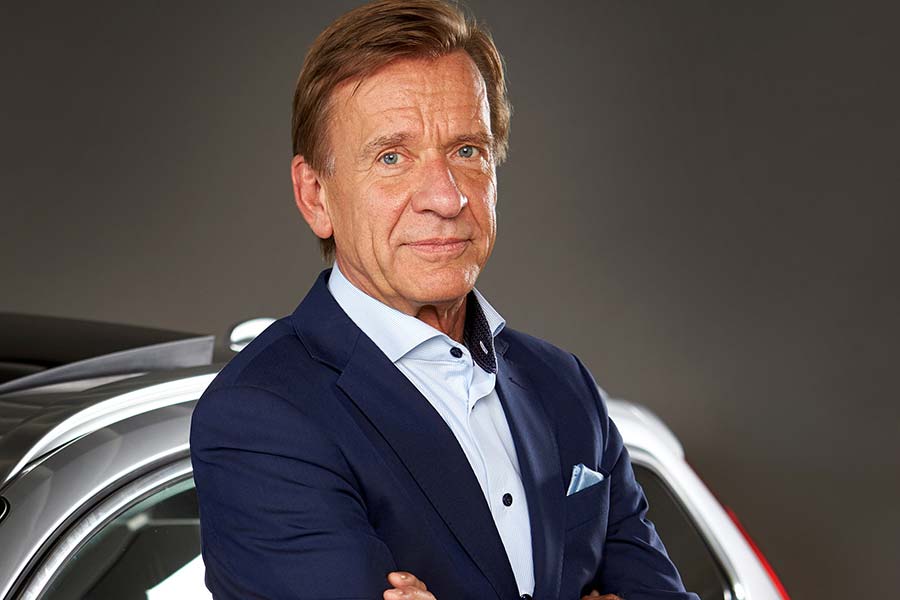
In his opening speech Samuelsson (pictured above) told the gathered delegates that customer expectations and demands are changing and that the car industry will have to change with them. Sustainability is no longer a simple box-ticking exercise, but business-critical as well as a significant business opportunity for those companies that get it right.

“Our customers want safer, more sustainable and convenient cars,” says Samuelsson. “We can meet that demand, be a force for change and grow our business at the same time. I am confident that our next generation of fully autonomous, electrified and connected vehicles will help make the cities of the future cleaner, safer and smarter.”


As an example, he underlined the importance of Volvo’s electrification strategy. “We recognize the limitations of the internal combustion engine and the appetite for change in society. That is why we have such an ambitious target when it comes to electrification. Our commitments will not only help protect the environment and make people’s lives better and safer. They also make perfect business sense.”

Volvo Cars is adapting to this new reality by making sustainable business an integral part of its corporate strategy. As part of its sustainability program, the company has identified nine commitments directly supporting the SDGs that were agreed by all UN member states in 2015.

The automaker believes these commitments will contribute to its sustainable profitability and growth. For example, it has committed to having up to 1 million electrified Volvos on the road by 2025, and aims to have climate-neutral manufacturing operations that same year. It has also stated the most ambitious safety vision in the industry: by 2020, no one should be killed or seriously injured in a new Volvo.

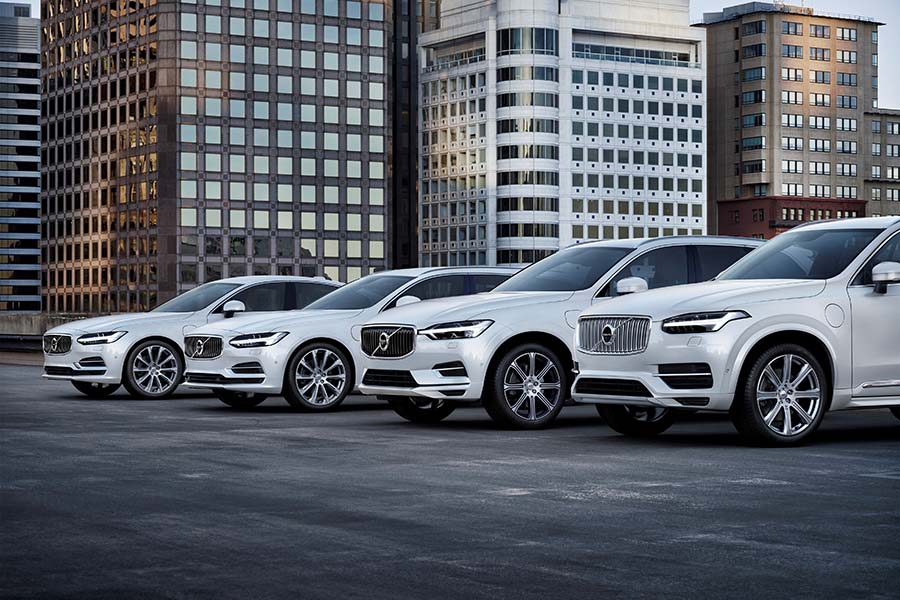
The company has so far made good progress in reaching these targets: for example, CO2 emissions from its European manufacturing plants have fallen by 70% between 2004 and 2016. It currently offers six plug-in hybrids in its range and plans to make every new model available as an electrified vehicle. New world-leading passive and active safety systems have significantly reduced the risk for traffic accidents and serious injuries for Volvo drivers.

Volvo Cars knows it cannot make progress by itself, so the company is focusing on both private and public partnerships within the sustainable development arena. It cooperates closely with safety organizations and public bodies to share its knowledge and advance traffic safety, it works with both public and private partners in the Drive Me autonomous drive experiment and it joined hands with Stora Enso and the Belgian government to realise a 40% reduction in CO2 emissions at its manufacturing plant in Ghent.

The other commitments within Volvo’s sustainability framework include ensuring no fatalities or serious injuries involving any of its employees or contractors, an aim to be a leader in customer well-being by offering better filters and materials, and promoting a diverse and inclusive company culture.

This week, along with Volvo, Nike, Unilever, Deutsche Bank, Nokia, Nestle and more than 9,000 companies in 170 countries, Real Leaders renewed its commitment to the United Nations Global Compact. As a signatory to this global initiative Real Leaders believes that responsible business practice, combined with collaboration and innovation, can bring about powerful change in markets and society. We have shown that principles and profits go hand in hand, and that thousands of other companies think this way too. You can read our public declaration on the UN Global Compact website here.


Tesla’s New Solar Roof Can Make Money From The Sun

Elon Musk has just put your old, unemployed roof to work – by creating one that converts the suns rays into energy that will power your home. If you’re lucky, you may even earn some money from it.

Innovative electric car manufacturer Tesla has announced the U.S. rollout of its glass, solar roof tiles, with worldwide orders expected to be fulfilled next year. Solar panels on roofs are nothing new, but instead of fixing a standalone (and let’s face it, ugly) panel to your beautiful slate or clay tiled roof, you can now turn your whole roof into one big solar panel. And the results are stunning – both visually and financially.

According to Tesla, their mission is to “accelerate the world’s transition to a sustainable energy future by creating products that are so compelling, there is no alternative.” Solar energy has always been part of their master plan, and like their groundbreaking electric cars, have recognized the need for a roof that is simultaneously affordable, durable, beautiful and integrated with battery storage.

Solar Roof complements a home’s architecture while turning sunlight into electricity. With an integrated Tesla Powerwall unit, energy collected during the day is stored and made available anytime, effectively turning a home into a personal utility. Solar energy can be generated, stored and used day and night, providing uninterrupted power even if the grid goes down.

And here’s what should convince you if saving natural resources seems too much of an effort: Solar Roof is more affordable than conventional roofs because in most cases, it ultimately pays for itself by reducing or eliminating a home’s electricity bill.

Consumer Reports estimates that a Solar Roof for an average size U.S. home would need to cost less than $24.50 per square foot to be cost-competitive with a regular roof. The cost of Solar Roof is less. The typical homeowner can expect to pay $21.85 per square foot for Solar Roof, and benefit from a beautiful new roof that also increases the value of their home.


As an example of total cost, the out-of-pocket cost of a Solar Roof for a typical home in Maryland will be around $52,000, but after considering a 30% federal tax credit (in the U.S. only) and the value of energy it generates, the roof will actually pay for itself and earn you about $8,000 over 30 years, according to Tesla.

Solar Roof uses two types of tiles – solar and non-solar. Looking at the roof from street level, the tiles look the same and homeowners can select how many solar tiles they need based on their home’s electricity consumption. For example, households that charge an electric vehicle every day may want more solar tiles on their roof.


In doing research on the roofing industry, it became clear to Tesla that roofing costs vary widely, and that buying a roof is often a worse experience than buying a car through a dealership. Initial contracts tend to be overly optimistic, and later customers face hidden costs that were never mentioned up front. In the spirit of transparency Tesla has created a Solar Roof calculator that lets homeowners estimate the upfront price of a new roof, as well as the value of the energy it can generate for their home. The calculator is based on factors like roof size, the average local price of electricity, and how much sunlight a neighborhood receives throughout the year.

Made with tempered glass, Solar Roof tiles are more than three times stronger than standard roofing tiles, yet half the weight. They do not degrade over time like asphalt or concrete and the glass itself will come with a warranty for the lifetime of the house, or infinity, whichever comes first. Oh, and they’ll also cart away your unemployed, lazy roof that’s been hanging over your head for years.


Microsoft Announces Games to Prepare For Jobs of Tomorrow

This week Microsoft shared its aspirations and products to help students prepare for the jobs of tomorrow, that includes the online phenomenon and virtual construction game Minecraft.

CEO Satya Nadella and Terry Myerson, executive vice president of Windows and Devices, have announced a new Windows experience – Windows 10 S, Microsoft Teams for a collaborative classroom, Code Builder for Minecraft: Education Edition, a partnership with Pearson to use 3D and mixed reality experiences for immersive learning and a range of new Windows 10 S PCs, including Surface Laptop. 

According to some researchers, the human mind is a plug-and-play device itself; not built for being used alone. Our brains are hard-wired to be used in networks and games allow that. The rise of online games, where people compete with others around the world, allows us to build a collective intelligence. Many people are more intelligent when they form part of a collective.

Working with partners, including Acer, ASUS, Dell, Fujitsu, HP, Samsung and Toshiba, Microsoft will offer new Windows 10 PCs with features including Windows Ink and touch. Windows 10 S will be available for free for schools on any compatible Windows device along with Office 365 for Education, which is also free for students and will be available around the world in time for the 2017 school year.


Play is usually associated with non-academic pastimes, yet online games and exciting interactive digital products can become architects for engagement. Microsoft Teams is a digital hub for the classroom where students come to collaborate and learn. Together with OneNote Class Notebooks, a new assignment and quiz experiences, teachers can easily distribute content, grade work, personalize learning, and easily communicate with students, parents and staff.   

Teams also enables teachers to bring in rich and engaging content from the web, guest speakers, and 3rd party partners such as Kahoots directly into their classroom environment. And most importantly, Teams helps students develop the communication and collaboration skills they’ll need to be successful in the future.

Microsoft is broadening Minecraft’s appeal in the classroom with Code Builder for Minecraft: Education Edition. This new feature allows students to learn coding basics by connecting to popular learn-to-code platforms such as Tynker, ScratchX, and a new open source platform from Microsoft called MakeCode. 

School books may still be around for a while, but some experts think they promote a “single dimension” approach to learning. Online and digital games promote persistence, risk taking, collaboration and problem-solving – all good lessons for budding entrepreneurs and those heading into the (increasingly digital) jobs of tomorrow. While games alone are not the only solution, they certainly have a role to play in developing a well-rounded education and a critical approach to problem-solving.  Many games are actually hard; something an adult may only discover when they secretly peek at the games their kids have been playing.

A one-year free trial of Minecraft: Education Edition and the Code Builder extension are available for Windows 10 and Windows 10 S for schools around the world in the Microsoft Store for Education. 


Food Grown in Sahara Desert with Sea Water

With scorching summer temperatures and little rainfall, the barren scrublands around the port of Aqaba in Jordan, one of the world’s most arid countries, might seem ill suited to cultivating cucumbers.

Yet a Norwegian company is planning to set up a solar-powered, 20 hectare (50 acre) facility that promises to grow a variety of vegetables without wasting a drop of fresh water.

“We take what we have enough of – sunlight, carbon dioxide, seawater and desert – to produce what we need more of – food water and energy,” said Joakim Hauge, chief executive of the Sahara Forest Project (SFP).

Harnessing abundant resources to generate scarce ones will be key to feeding a growing global population, set to reach 9 billion by 2050, without damaging the environment or accelerating climate change, he said.

Food production must rise by about 60 percent by 2050 to generate enough for everyone to eat, according to the United Nation’s Food and Agriculture Organisation (FAO).

Agriculture already accounts for 70 percent of global fresh water use, while the food sector is responsible for more than 20 percent of planet-warming emissions and 30 percent of world energy consumption.

“We can no longer make solutions that come at the expense of other sectors,” said Hauge. “There is a need for a more integrated approach”.

The Aqaba complex, set to open in the summer, evaporates salt water piped from the nearby Red Sea to cool greenhouses, creating conditions for crops to grow all year round.

Sea water is also desalinated to generate salt and fresh water for irrigation, while vapour from greenhouses is used to humidify surrounding patches of parched land so plants can grow.

AGRICULTURE OF TOMORROW?

SFP said a pilot project in the Gulf state of Qatar generated cucumber yields comparable to those of European farms. Plans are underway to expand operations to Tunisia.

But FAO experts said high costs involved limited the potential of such projects to ramp up food production on a global scale.

“You need a lot of energy and a lot of money so…the question may arise whether the same resources could be put to better use,” said FAO natural resources officer Alessandro Flammini.

To be financially viable, production must focus on high-value crops, like cucumbers and tomatoes, which poor countries might find cheaper to import, said Flammini, who analysed the Qatar pilot for a 2014 FAO report.

“It’s an interesting concept for fulfilling local needs and especially in terms of food independence and to meet the demand of a niche market,” he said.

The initial phase of the Aqaba complex had a $3.7 million budget and received financial support from Norway, the European Union and other investors, according to SFP.

Hauge said besides producing food, the complex, which will include a laboratory and research facilities, would produce side benefits by greening arid areas and creating jobs.

“We believe that this is part of the agriculture of tomorrow,” the biologist-turned-entrepreneur told the Thomson Reuters Foundation by phone.

FROM AUSTRALIA TO SOMALIA

Several other companies are employing similar technologies in other arid corners of the world.

In 2016, UK-based agribusiness Sundrop Farms Holding Ltd opened a vast greenhouse for tomato farming in the Australian outback near Port Augusta, 300 km (190 miles) north of Adelaide.

The facility runs on energy mostly produced by a 115 metre solar tower that draws sunlight from 23,000 mirrors surrounding it.

“Traditional agriculture is wasteful in terms of water and fossil fuels. In addition, unprotected crops are at the mercy of the elements, causing gaps in supply, quality issues and price spikes,” Sundrop’s CEO Philipp Saumweber said in an email.

The company has signed a 10-year contract to supply Australian supermarket chain Coles with truss tomatoes and received investments of about $100 million from private equity firm KKR & Co, according to a 2014 statement.

“While the capital expenditure required to build our farms is slightly more expensive due to its cutting-edge nature, we reap the benefits of this initial investment in the long run through savings of fossil inputs,” said Saumweber.

Around seven thousand miles away, in sunbaked and drought-hit Somaliland, another British-based venture, Seawater Greenhouse, is setting up a pilot facility aimed at making high-tech greenhouse production more affordable.

“We have eliminated using fans,” said British inventor Charlie Paton, a former business partner of Saumweber, who pioneered the use of solar energy and salt water for irrigation in the 1990s.

“We designed (the greenhouse) to be cool by exploiting the prevailing wind. So it’s a wind-cooled greenhouse,” he said in a phone interview.

The one-hectare complex, which received funding from the British government, cost about $100,000, he said, adding he expected it to produce around 30 tonnes of tomatoes a year and 16 litres of drinking water a day for irrigation and livestock.

Paton said he hoped the greenhouse, which employs mostly local staff, would serve as a hub for expansion across the Horn of Africa.

“The region gets a lot of humanitarian aid and that’s arguably detrimental because if you give free food to people you put farmers out of business,” he said.

“It has more chances of success if people can make money out of it.”

By Umberto Bacchi, Editing by Ros Russell. c Thomson Reuters Foundation.


Manufacturing Redefined: 6 Trends Changing the Industry Forever

Let’s be honest — sometimes manufacturing gets a bad rap. The industry can be seen as a behemoth — stuck in the past and slow to innovate, the victim of outsourcing and the purveyor of consumerism. Thankfully, in 2017 these stereotypes couldn’t be further from the truth.

Global organizations like GE and Caterpillar are investing in new technologies and innovation methods. Startups like Local Motors and Carbon are creating their own breakthroughs from the ground up. And organizations like the US Council on Competitiveness are working to keep these innovators moving forward. The future of manufacturing is bright.

That’s why we’ve put together this list of top trends to watch in 2017. If you want to learn more about the technologies fueling these trends, meet the people leading the charge, and connect with fellow leaders, join us at Exponential Manufacturing May 17–19 in Boston.

  1. Innovation Is Outpacing Policy

People around the world are talking a lot about recent and impending policy changes. How will these changes impact innovation in the coming years? And how will policy keep pace?

AI and robots will continue automating factories. Self-driving trucks and ships will automate the transportation of materials and finished products. Even biotech is offering new ways to make things. These and other emerging technologies will impact how we live, work, and trade. The workforce will shrink, efficiencies will improve, entire sub-industries (shipping, for example) could be upended by unexpected technologies—and all this will happen faster than expected.

Can society keep the pace? How do we regulate innovation without suffocating progress? How do we adopt an open-minded yet ethical approach to new opportunities? Looking ahead and planning for the future now is how organizations and policymakers will move toward the best scenarios and avoid the worst ones.

  1. The Cutting Edge Won’t Be Cutting Edge for Long

If you’re reading Singularity Hub, you’re aware of some amazing advances happening across research fields and industries. The deep analytical powers of machine learning are transforming raw data into useful insights; some robots can now safely interact with people and more nimbly navigate messy work environments; 3D printers are giving form to digital designs; and biotechnology is beginning to transform living creatures, such as engineered bacteria, into microscopic chemical-producing factories.

While these are incredible innovations in research labs—and more arrive every day—one could argue the greatest challenge will be successfully timing and creatively implementing the latest breakthroughs into companies and business strategies. Those who recognize which technologies will serve their organization best, lead a culture of change, and navigate rough political waters, will come out on top.

  1. Data-Driven Decision-Making Gets More Intelligent

Data has always played a critical role in manufacturing. The entire industry, from sourcing to production runs to sales forecasting, has relied on data for decades. However, the amount of data is growing exponentially larger by the day. Thanks to cheap, connected, and increasingly ubiquitous sensors (the Internet of Things), companies are able to monitor more than ever before — things like machinery, deliveries, even employees.

Companies need to leverage the latest in artificial intelligence to make the most of these incredibly large and powerful data sets. For those who do adopt new tools, smart decision-making will become clearer, easier and faster.

  1. Accelerated Design and Real-World Market Testing

Historically, the product creation process is notoriously long. Market research, focus groups, R&D, short runs, testing, sourcing, long runs…the list goes on. What if you could make a part that’s exactly like the finished product, in a series of one? What if you could design, build, test, and iterate in real life, before ramping up large-scale production?

You can, and in fact, GE is.

GE’s FirstBuild program is a state-of-the-art, community-sourced lab that lies outside their main campus and is used for the rapid prototyping of new ideas. If a product proves its worth in a sample market, the design is transferred to the main campus for full production.

These are the changes that technologies like additive manufacturing and materials science are bringing to product design. When a giant like GE creates a spinoff group to act like a startup, it becomes obvious that power is being democratized, innovation times are being slashed, and long-held competitive advantages are evaporating.

  1. Automation of Production and Democratization of Making

Similar to design, new technologies are drastically cutting the time and cost required to get products to market. However, there are larger shifts happening in the overall production process as well. Robots are becoming more nimble, more versatile and smarter. Computer-guided fabrication—both additive and subtractive—is getting faster, cheaper, and more precise. Factories are becoming more efficient, while raw material waste is decreasing. All of this increases competition, making success without these technologies nearly impossible.

On the other end of the spectrum, the spread of additive manufacturing, the boom of the maker movement, and a drastic reduction in small machinery cost is allowing individuals to build mini factories in their own homes. What was once only possible in the world’s largest factories is now doable in your neighbor’s garage. And while some may discount the innovative potential of the non-professionals, consider the incredible amount of human capital unlocked by this change.

  1. Reimagining the Global Supply Chain

One of the most difficult sectors of manufacturing is the supply chain, from sourcing raw materials around the world, to delivering finished goods on time. Supply chain managers are responsible for coordinating with hundreds, if not thousands, of partners and service providers to make sure products are delivered on time, on budget and in good condition.

While it may not be the sexiest piece of the puzzle, it’s certainly a critical one — and it’s ripe for improvement. Self-driving trucks and ships, AI-powered planning software, and localized manufacturing facilities are all converging to reshape the very nature of supply chains.

So, we’ve highlighted six trends currently impacting the global manufacturing landscape. What does it mean, though? How do we stay ahead of these shifts? How do we know which technologies will stick and which will end up as the Betamax of the year?

Some of these questions are yet unanswerable, while some gain more clarity each day. What we do know is that this is just the beginning. As technologies converge, they will continue creating ever stronger advances, thus compounding the rate of improvement.

Manufacturing leaders should incorporate ongoing, future-oriented education as part of their annual development to stay up-to-date on new breakthroughs, learn where the industry is headed, and discover how to bring these competitive advantages into their own organizations.

Ready to start your education? Join Singularity University for Exponential Manufacturing, an event that will lead 600+ manufacturing executives, entrepreneurs and investors through an intensive 3-day program to look into these questions, connect with like-minded leaders, and prepare for success in the year to come. Prices increase April 1st. Apply here and save up to 15% with code SU17RL.

This article was sourced with permission from SingularityHub.

httpss://www.youtube.com/watch?v=51XX-PUnP9s&feature=youtu.be

How to Build Powerful Organizations

Powerful organizations drive sustainable growth – healthy growth that lasts. But how does an organization become powerful, and what does power really mean?

We love to list and rank the powerful. My friend Stefan Swanepoel just released a list of the 200 most powerful people in U.S. real estate. Other lists include the world’s most powerful people, the world’s most powerful brands, and the world’s most powerful countries.

But you won’t find many lists or ranking criteria for powerful companies or organizations. Instead, companies measure other attributes, like the world’s largest companies and the world’s most admired companies.

There are three reasons why rankers have stayed away from attempting to list and rank truly powerful organizations.

First, there is confusion around the definition of power. Too often the word power is used as a synonym for authority or the ability to control a market. In fact, powerful entities are more accurately defined by the exceptional and ever-increasing levels of ability, influence, and energy that enable that authority or (perceived) control.

Second, power is often confused with the prerequisites for power created by management’s ability to build effective, integrated strategies in six areas – customer, competition, financial capital, cost, community, and climate. Each strategy must include specific plans and measurable objectives. While critical to establish a powerful organization, successful strategies in each of these areas simply create the conditions for true power.

Finally and most critically, the core of an organization’s power is solely found in its people, and their ability, influence, and energy. As Jim Collins offered in his book Good To Great, “First who, then what.”

The ability to assess or measure the human capital in any organization continues to be the limiting factor in ranking powerful organizations in the world.

Here’s how organizations can get started:

Measure and improve employee engagement; ensure diversity and gender-balanced leadership; consistently assess, improve, and expand employee “hard and soft” skillsets; add new skillsets when necessary; align team members around a values-based vision for the future; and build a change-adaptive culture to meet accelerating changes in market needs tied to management’s strategic decisions.

Those organizations that come closest to these targets are the most powerful organizations.

There is no limit on organizational power because there is no limit on the power of human capital.

Building powerful organizations is what I do.


Real Leaders Helps Set Guinness World Record

Real Leaders recently became part of record-breaking history when a new Guinness World Record title was set for the most people using virtual reality displays at a conference in Vancouver, British Columbia, Canada.

Mark Van Ness, founder of Real Leaders was in the audience of 1,867 members of The Young President’s Organization (YPO) at the organizations flagship annual event, the YPO EDGE, when it was announced that a new world record was to be set. Mobileye, the leading supplier of software that enables Advanced Driver Assist Systems (ADAS) surprised the gathering of business leaders with a virtual reality experience of riding in a driverless car.

An adjudicator from Guinness World Records was on hand to present Mobileye with a certificate of the Guinness World Records title and share it with the YPO members who were a part of this historic achievement.

Mobileye launched in 1999 with the belief that vision-safety technology will make our roads safer, reduce traffic congestion and save lives. With 27 automaker partners, including some of the world’s largest, Mobileye’s technology has rapidly evolved to support the three pillars of autonomous driving – sensing, mapping and driving policy.

Each year, YPO global chief executives and business leaders gather on a different continent for the YPO EDGE to shape the future of global industries. The 2017 EDGE in Vancouver was designed to spark idea exchange, introduce disruption, and infuse innovation into companies and communities around the world. 


Building an Anti-poverty Hub of Hope

“Very often, a lack of jobs and money is not the cause of poverty, but a symptom,” said President Lyndon Johnson in 1965, one year after declaring a war on poverty.

“The cause may lie deeper, in our failure to give our fellow citizens a fair chance to develop their own capacities, in a lack of education and training, in a lack of medical care and housing, in a lack of decent communities in which to live and bring up their children.”  

Unfortunately, this sentiment is as relevant today as it was 51 years ago. But on the South Side of Columbus, Ohio, USA, Chairwoman of the Board of Donatos Pizza, Jane Grote Abell, has created a national model to confront Johnson’s prescient remarks.  

It’s Elementary

The South Side is Jane’s old neighborhood, she grew up here on Thurman Avenue right behind her family’s first pizza restaurant. Once a robust, hard-working middle class community, it is now a place where one in four houses are boarded up, unemployment is at 22.5 percent and 40 percent of the kids move schools every year when their families lose their home.  

“These are really great people who have fallen on hard times,” says Jane, who in response, has founded Reeb Avenue Center with her friend, fellow activist and South Side family business owner Tanny Crane. The idea was a direct reaction to (then) Mayor Coleman’s asking Jane’s dad, Jim Grote – a quiet philanthropist for whom giving back is an inherent part of his narrative – to help champion a revitalization of the neighborhood. Jim knew it was something that would interest his daughter and Jane knew her friend Tanny would want to get involved and together with local community leader John Edgar they formed something of a philanthropic think tank. 

But it wasn’t until a 67,000 square foot, 110 year-old building that was once an elementary school lying fallow for five years fell into the mayor’s hands that the idea of creating a national model of a holistic, non-profit, community social-services center really started.  

“We looked at the situation as one would look at any business strategy,” explains Jane. “The very first thing we did was go door to door to the 2,700 families in the neighborhood to ask what they needed. As is often the case with even the most well-meaning people, what’s needed by a community isn’t necessarily aligned with what someone from the outside thinks is needed. What came out of it were five things: education, jobs, safety, health and affordable housing.” 

So Jane and Tanny put together a 20 person team including members of the neighborhood city commission, city council and private donors to start filling these buckets of change with palpable action.

A team was put into place to focus on housing and safety and blueprints for a free health clinic were drawn up. But when Mayor Coleman acquired an old elementary building, Jane and Tanny knew this was their opportunity to complete the circle, using the former educational institution to fulfill the education and jobs quotient.  

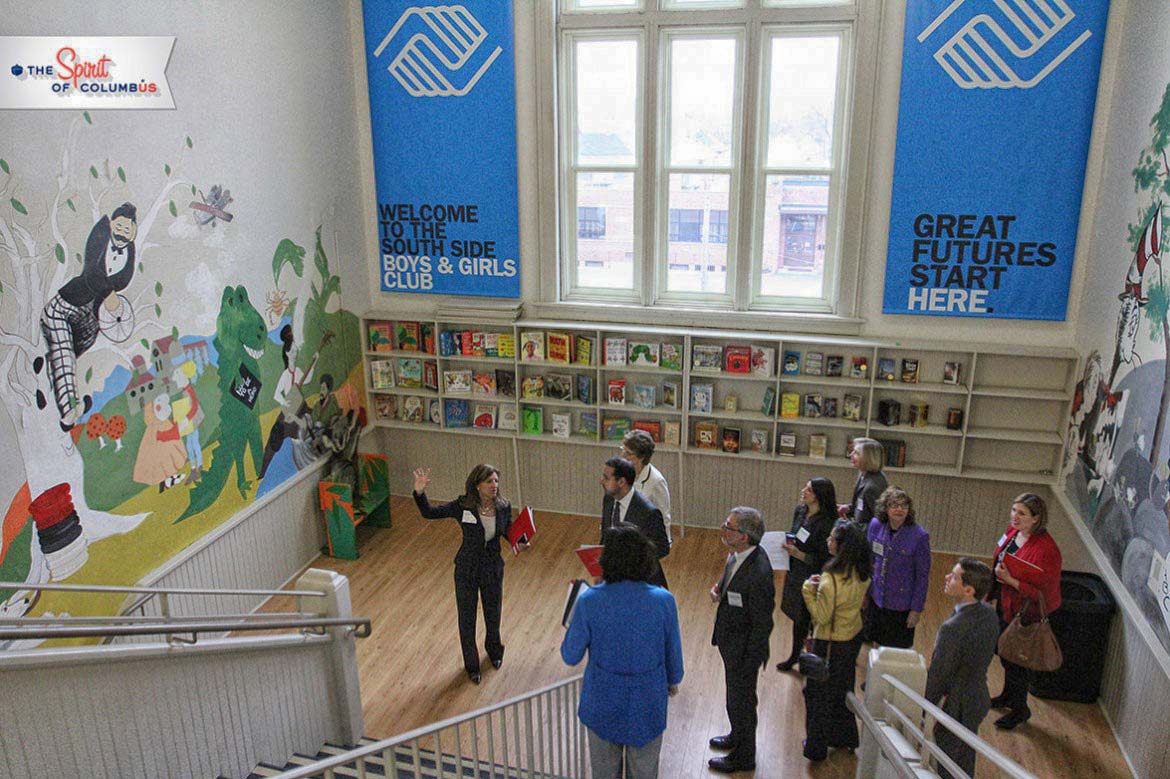
After USD12.5 million in renovations, including a near USD2 million donation from the Grote family, the Reeb Avenue Center opened in 2014 and houses 14 different non-profits, all focused on either helping people find jobs or education, with intentional pathways between tenants to serve the holistic needs of every visitor. In spring of 2016, members of the Obama administration paid a visit to Reeb and reported, “The good people in Columbus are leading the nation on the important work of giving all young children and their families- the high-quality early learning experiences they need to grow, learn, and thrive.” 


A Peek Inside Reeb

A bird’s view of the robust and visionary activity inside Reeb looks a little something like this:  

  • The Boys and Girls Club of Columbus provides youth development programming, which is particularly relevant given that 25 percent of youth ages 6-18 are not in school, are not high school graduates and are not employed.
  • Alvis, DigitalWorks and other partners offer job training, GED (general education diploma) classes and adult education, all of which increases employability.
  • South Side Learning & Development Center meets the early learning needs of infants through
  • pre-kindergarten, with rooms for second shift care, meeting the critical needs of working families and employers.
  • Mid-Ohio Foodbank and Community Development for All People collaborate on a food program that includes South Side Roots Café, a food market and kitchen operations for the building. The pay-what-you-can café offers the option to earn meal points by volunteering in the building, paying it forward or paying the subsidized prices.
  • St. Stephen’s Community House’s Family-to-Family program provides support to families suffering from abuse and neglect. 
     

“I think my biggest ‘ah-ha’ moment was seeing these non-profits excited about working together,” says Jane. “It is no secret that in the non-profit world, everyone, no matter their mission, is fighting for the same dollar. The beautiful symmetry of a place like Reeb is that it eliminates the competition by creating a space where everyone works together to support the community.”  

Co-creating a sustainable community has also allowed non-profits savings on their P&Ls – instead of having to invest in bus passes to get people from their GED training downtown to get food and then across town for drug and alcohol counseling, all they have to do is walk across the hall. Additionally, these non-profits are now mission driven outside of their silos; being in such close proximity to each other has opened their eyes to the ways in which they can work together to make a real difference. When you are able to offer someone the next piece of the puzzle to help them succeed in life, right then and there, the chances for success grow exponentially, impacting individual lives, entire families and whole communities.  

How Do We Really Talk About Ending Poverty?

“We won’t know the full scope of Reeb’s success until the next generation or the one after that, but we hope that our model – that of a collaborative society where non-profits work together – can inspire others to do the same,” says Jane. “While we also hope that we no longer have to have homeless shelters and food banks, for the time being, there are plenty of empty school buildings out there.” 

By Deborah Stoll


0