The London Business School to Train Leaders How to do Good

One of the world’s top business schools in London said on Wednesday that it will set up an institute to tackle challenges facing poor countries – the first of its kind to do so.

The London Business School said the founders of the Lonely Planet travel guides had donated 10 million pounds ($14 million) to create the Wheeler Institute of Business and Development.

“We can and should harness the power of business for a bigger purpose,” Francois Ortalo-Magne, the London Business School’s dean, said in a statement.

If you like this, subscribe here for more stories that Inspire The Future.

“We can train this generation differently, so that they emerge as more inclusive, more courageous leaders for good.”

The post-graduate school, which is consistently ranked in the global top 10, said business research and innovation could solve social issues ranging from healthcare delivery to poverty alleviation and gender equality.

Entrepreneurs using businesses to help tackle social problems are emerging across the globe – improving communities, breaking the cycle of re-offending, solving education issues and reducing isolation amongst elderly.

“Our focus is on tackling the huge problems in developing countries but with the knowledge that comes from having a business lens,” the Wheeler Institute’s executive director Raji Jagadeesan told the Thomson Reuters Foundation.

“Those applied solutions can really make a difference.”

Jagadeesan said the founding of the institute had been driven by demand from students and employers.

“Employers are worried about how to retain talent because the generation they are trying to recruit want their employers to be doing good in the world,” she said.

Tony Wheeler graduated from the London Business School in 1972 and his wife, Maureen, was awarded an honorary fellowship.

The couple started the Lonely Planet travel guides in 1973 after driving a minivan through Asia’s hippie backpacker trail from London to Australia.

After selling the Lonely Planet enterprise for $133 million in 2007, the couple set up the Planet Wheeler Foundation, which funds more than 50 projects in Africa and Asia.

“Maureen and I have been passionate supporters of international development efforts for many years and firmly believe that business and entrepreneurship has a central role to play in this journey,” Tony Wheeler said.

The London Business School, founded in 1964, has more than 40,000 alumni from some 150 countries, including Britain’s Brexit minister David Davis and Maria Kiwanuka, senior advisor to Uganda’s President Yoweri Museveni.

In addition to teaching students, the institute will work on ways to turn research into action that creates change in developing countries.

By Lee Mannion @leemannion. Editing by Katy Migiro.

If you like this, subscribe here for more stories that Inspire The Future.

Dunkin’ Donuts to Eliminate Foam Cups Worldwide

As part of its commitment to serve both people and the planet responsibly, Dunkin’ Donuts, the popular retailer of hot, brewed coffee, has decided to eliminate all polystyrene foam cups in its global supply chain beginning in spring 2018, with a targeted completion date of 2020.

In U.S. restaurants, Dunkin’ Donuts will replace the foam cup with a new, double-walled paper cup. The majority of Dunkin’ Donuts’ international markets are currently using paper cups, and the brand will work with its franchisees to eliminate foam cups from the remaining international markets by the 2020 goal.

If you like this, subscribe here for more stories that Inspire The Future.

The move complements Dunkin’ Donuts’ earlier commitments in the U.S. to have 80% of fiber-based consumer-facing packaging certified to the Sustainable Forestry Initiative Standard by the end of this year; eliminate artificial dyes from its menu; build new, more energy-efficient restaurants; and partner with the Rainforest Alliance to source certified coffee.

The new, double-walled paper cup is already in use at Dunkin’ Donuts’ next generation concept store, which opened in mid-January in the company’s birthplace of Quincy, Mass. It will be introduced at all Dunkin’ Donuts restaurants in New York City and California in spring 2018, and will be phased in across the U.S. as supplier manufacturing capabilities ramp up.

The double-walled paper cup is made with paperboard certified to the Sustainable Forestry Initiative Standard and will feature the current re-closable lid that Dunkin’ customers are familiar with. With heat retention properties equal to the company’s foam cup, the new double-walled paper cup will keep beverages hot while keeping hands cool, without the need for a sleeve.

According to Karen Raskopf, Chief Communications and Sustainability Officer, Dunkin’ Brands, “With more than 9,000 Dunkin’ Donuts restaurants in the U.S. alone, our decision to eliminate foam cups is significant for both our brand and our industry. We have a responsibility to improve our packaging, making it better for the planet while still meeting the needs of our guests. Transitioning away from foam has been a critical goal for Dunkin’ Donuts U.S., and with the double-walled cup, we will be able to offer a replacement that meets the needs and expectations of both our customers and the communities we serve.”

In 2011, Dunkin’ Donuts announced that its number one sustainability goal was to find an environmentally friendlier coffee cup. Over the past several years, the brand has worked extensively to find a suitable replacement for the foam cup that met criteria for performance, environmental impact and cost. Dunkin’ Donuts’ transition to paper cups will remove nearly 1 billion foam cups from the waste stream annually.

If you like this, subscribe here for more stories that Inspire The Future.

The Internet Crosses 4 Billion-User Mark

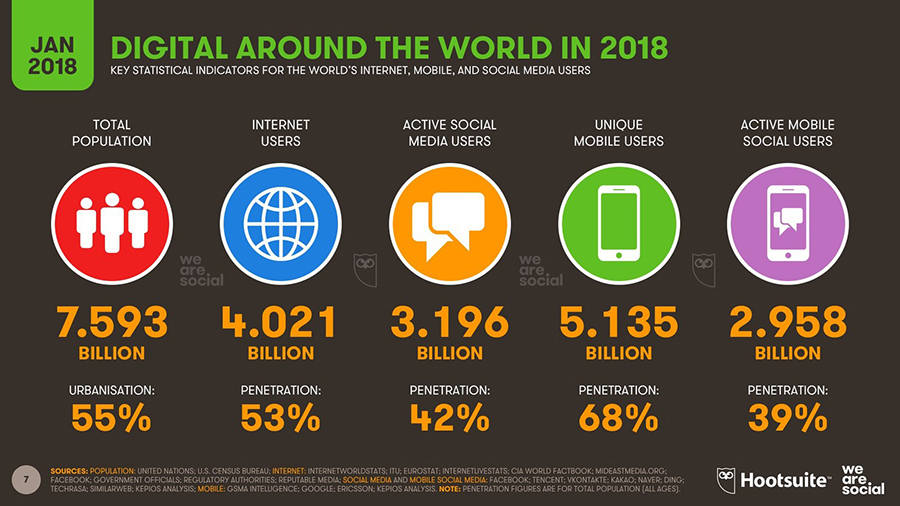
Social media management platform Hootsuite, and socially-led creative agency We Are Social, have released “Digital in 2018,” a report of social media and digital trends around the world.

Representing 239 countries and territories, the seventh annual report finds the number of Internet users in the world has now surpassed the 4 billion mark, putting more than half the global population online. Of that, social media brings nearly 3.2 billion active users online to connect with each other, consume media, interact with brands, and more.

Key findings include:

  • Internet user numbers increased 7 percent in the last 12 months to hit 4.021 billion, or 53 percent of the world’s population
  • Global social media usage has increased by 13 percent in the last 12 months, reaching 3.196 billion users
  • Mobile social media usage has increased by 14 percent year over year to 2.958 billion users, with 93 percent of social media users accessing social from mobile
  • Internet users are projected to spend a combined total of 1 billion years online in 2018, of which 325 million years will be spent on social media

In the past year, 16 million people started using social media platforms in the US – an increase of 7 percent. Now, more than 70 percent of Americans use social media and spend two hours a day on social platforms. Overall, Americans spend 6.5 hours a day using the Internet, 60 percent more time than they spend watching television.


The report also found that global growth of the Internet is propelling ecommerce forward, with 1.77 billion Internet users purchasing consumer goods online in 2017, an increase of 8 percent compared to a year ago. Collectively, consumers spent a total of USD $1.474 trillion on ecommerce platforms in the past 12 months, 16 percent more than in 2016.

“With four billion people now online, connectivity is already a way of life for most of us, says Simon Kemp of We Are Social. “However, as Internet companies strive to serve the next billion users, we’ll see important changes in digital over the coming months. Audio-visual content will take priority over text – especially in social media and messaging apps – while voice commands and cameras will replace keyboards as our primary means of input. Social relationships and online communities will evolve to accommodate these new ways for people to interact with each other. This will result in rich new experiences for all of us, but businesses need to start preparing for these changes today.”

If you like this, subscribe here for more stories that Inspire The Future.

Apple, Microsoft and Bank of America Among Greenest Buyers

The number of companies forging ahead with an industry-leading approach to tackling emissions in the supply chain has doubled in a year, according to new research by CDP, the non-profit global environmental disclosure platform, with analysis provided by McKinsey & Company.

CDP has awarded 58 companies – out of a total of +3,300 – a place on its second annual Supplier Engagement leader board, double the 29 identified in 2017. These leaders – which include Bank of America, BT Group, Nestlé, Panasonic, Rolls Royce, Société Générale, Tokyo Gas Co. and Unilever – are recognized for their work with suppliers to reduce emissions and lower environmental risks in the supply chain.

If you like this, subscribe here for more stories that Inspire The Future.

The leaders are announced as more companies than ever before are looking at water security in their supply chains – leading to a 15% rise in suppliers disclosing water data to their customers through CDP in 2017 – and organizations including Klabin, L’Oréal and McDonald’s are among the first to work with CDP to tackle deforestation in their supply chains.   

Examples of leadership among the 58 companies include:

  • Ajinomoto: the Japanese food, chemicals and pharmaceuticals corporation worked with a key supplier to become the only company worldwide to sell drinks in 100% recycled heat-resistant PET bottles, reducing the use of virgin plastics from fossil fuels by around 2,000 tonnes a year.
  • Kellogg Company: the global food company operates its Origins™ program across 21 countries, supporting around 294,000 farmers to become more sustainable and build resilience to the impacts of climate change.
  • Sky: in partnership with a key supplier, the European entertainment and telecommunications company is pioneering a circular economy model for its new set-top box, using sustainable product design to create a closed loop system with zero waste to landfill. 

Closing the Gap: Scaling up sustainable supply chain practices, CDP’s Global Supply Chain Report 2018, is based on climate, water and deforestation-related data collected from 4,872 supplying companies across global supply chains at the request of 99 of the world’s largest purchasing organizations. Wielding a combined purchasing power in excess of US$3 trillion, these organizations include Accenture, BT Group, Cisco, KMPG UK and Philips Lighting.

Last week’s discussions at Davos concerning international trade – which is projected to grow fourfold by 2050, from a baseline year of 2010 – and the World Economic Forum’s recently published Global Risks Report 2018 – which confirmed environmental risks as the most significant facing humanity – has all highlighted the importance of addressing supply chains when tackling environmental challenges. This is especially significant because greenhouse gas emissions located in the supply chain are on average four times higher than those arising from direct operations.

“Delivering on the ambitions of the Paris Agreement will require businesses to play a key role to reduce emissions, manage water resources and limit deforestation within their operations and their supply chains,” commented Patricia Espinosa, Executive Secretary, United Nations Framework Convention on Climate Change, who has written the foreword in the report.

“I am pleased to see that an ever-increasing number of companies reporting to CDP are integrating sustainability-thinking into their business models and applaud the members of the CDP supply chain program for being pioneers in this regard. I encourage businesses to work with suppliers to raise ambition across their supply chain.”

The report – which includes commentary from The Carbon Trust – reveals that this leadership is paying dividends, as awareness of climate change-related risks and opportunities is increasing down the supply chain. Over three quarters (76%) of suppliers responding to CDP have identified some inherent climate change risks to their business and more than half (52%) report that they have integrated climate change into their business strategy.

In addition to a global analysis, the report looked more closely into eight major economies* to compare how well-prepared suppliers are to mitigate environmental risk. It found that suppliers in some countries are taking a clear lead, while others are lagging behind:

  • France: Reflecting the national momentum signalled at the recent One Planet Summit in Paris, supplying companies in France are the most likely to have climate change integrated into their business (80%), while 74% report board-level responsibility for climate change
  • Japan: Despite the government’s historic focus on energy security over climate change, Japanese companies have the highest rates of disclosure – 87% of suppliers responded to the CDP climate change questionnaire – and are the most likely to set emissions reduction targets (77%).
  • United States: The US administration might be withdrawing from the Paris Agreement, but American corporates are saying ‘We are Still In’ and stepping up on climate: 33% of organizations on the Supplier Engagement leader board are US, making it the best-represented nation, ahead of the UK at 15%.
  • Brazil: Abundant in national resources, but plagued by economic and political instability, Brazil has the lowest level of target setting (just 21% of respondents have set emissions reduction targets and a mere 8% have set renewable energy targets) and only 6% of supplying companies are engaging with their own suppliers on climate change.
  • China: While it has above-average disclosure rates for Scope 1 and 2 emissions – awareness of which will likely be bolstered by the recently announced national emissions trading system – only 15% of Chinese respondents are engaging with their own suppliers on the issue.

CDP is an international non-profit that drives companies and governments to reduce their greenhouse gas emissions, safeguard water resources and protect forests.

If you like this, subscribe here for more stories that Inspire The Future.

NASA Technologies Are Creating A Better World

The 2018 edition of NASA’s annual Spinoff publication features 49 technologies the agency helped create that are used in almost every facet of modern life. These include innovations that help find disaster survivors trapped under rubble, purify air and surfaces to stop the spread of germs, and test new materials for everything from airplanes to athletic shoes.

“NASA’s work represents an investment in the future, not just for air and space travel, but for the nation,” said Stephen Jurczyk, associate administrator of the Space Technology Mission Directorate in Washington.

If you like this, subscribe here for more stories that Inspire The Future.

“At the same time that NASA’s space exploration missions are inspiring young people to become scientists and engineers, the agency’s work in support of those missions is creating jobs for them across many industrial sectors. Commercial technology spun off from NASA research and technology programs, and missions creates new companies, grows the economy, saves money, keeps us safer, and even saves lives.”

In Spinoff 2018, you’ll learn how:

  • Ultra-sensitive radar technology used to detect gravity fluctuations was repurposed to identify the vital signs of disaster survivors trapped under rubble;
  • A technique developed to preserve plants in a spacecraft led to devices that eliminate bacteria, viruses, molds and volatile organic compounds from air, surfaces and even laundry;
  • One company’s work on high-speed stereo photogrammetry for space shuttle analysis now enables low-cost, highly-accurate materials testing to improve designs for everything from running shoes to jetliners.

Other highlights include: artificial intelligence that helps drones avoid collisions and could one day enable self-driving cars; a business jet that is both the fastest and the most efficient in its class; and a computer program that, 50 years after its creation, is still used to design cars, buildings and much more.

“NASA technologies dating as far back as the Apollo missions still are improving our quality of life,” says Daniel Lockney, NASA’s Technology Transfer Program executive. “Meanwhile, innovations made in support of upcoming missions, such as the Orion capsule and the James Webb Space Telescope, are already finding commercial applications. The benefits of the space program continue to accumulate every year.”

The book also features a Spinoffs of Tomorrow section that highlights 20 NASA technologies ripe for commercial application and available for licensing. These include an algae photobioreactor that cleans wastewater while producing biofuels, a revolutionary all-in-one gear and bearing, and the combined technologies of the highly dexterous humanoid robot Robonaut 2.

Spinoff is a part of the agency’s Technology Transfer Program, which is charged with finding the widest possible applications for NASA technology through partnerships and licensing agreements with industry, ensuring that NASA’s investments in its missions and research find additional applications that benefit the nation and the world.

Find the Spinoff 2018 publication here

If you like this, subscribe here for more stories that Inspire The Future.

U.S. Tests Nuclear Power System to Sustain Astronauts on Mars

Initial tests in Nevada on a compact nuclear power system designed to sustain a long-duration NASA human mission on the inhospitable surface of Mars have been successful and a full-power run is scheduled for March, officials have announced.

National Aeronautics and Space Administration and U.S. Department of Energy officials, at a Las Vegas news conference, detailed the development of the nuclear fission system under NASA’s Kilopower project.

Months-long testing began in November at the energy department’s Nevada National Security Site, with an eye toward providing energy for future astronaut and robotic missions in space and on the surface of Mars, the moon or other solar system destinations.

If you like this, subscribe here for more stories that Inspire The Future.

A key hurdle for any long-term colony on the surface of a planet or moon, as opposed to NASA’s six short lunar surface visits from 1969 to 1972, is possessing a power source strong enough to sustain a base but small and light enough to allow for transport through space.

“Mars is a very difficult environment for power systems, with less sunlight than Earth or the moon, very cold nighttime temperatures, very interesting dust storms that can last weeks and months that engulf the entire planet,” said Steve Jurczyk, associate administrator of NASA’s Space Technology Mission Directorate.

“So Kilopower’s compact size and robustness allows us to deliver multiple units on a single lander to the surface that provides tens of kilowatts of power,” Jurczyk added.

Testing on components of the system, dubbed KRUSTY, has been “greatly successful — the models have predicted very well what has happened, and operations have gone smoothly,” said Dave Poston, chief reactor designer at the Los Alamos National Laboratory.

Officials said a full-power test will be conducted near the middle or end of March, a bit later than originally planned.

NASA’s prototype power system uses a uranium-235 reactor core roughly the size of a paper towel roll.

President Donald Trump in December signed a directive intended to pave the way for a return to the moon, with an eye toward an eventual Mars mission.

Lee Mason, NASA’s principal technologist for power and energy storage, said Mars has been the project’s main focus, noting that a human mission likely would require 40 to 50 kilowatts of power.

The technology could power habitats and life-support systems, enable astronauts to mine resources, recharge rovers and run processing equipment to transform resources such as ice on the planet into oxygen, water and fuel. It could also potentially augment electrically powered spacecraft propulsion systems on missions to the outer planets.

By Will Dunham; Editing by Tom Brown.

If you like this, subscribe here for more stories that Inspire The Future.

Could Wall Street Finally Become Conscious?

Last week, BlackRock CEO Laurence Fink issued a letter to CEOs titled “A Sense of Purpose.” It was heralded by The New York Times DealBook columnist Andrew Ross Sorkin as what “could be a watershed moment on Wall Street, one that raises all sorts of questions about the very nature of capitalism.”

This watershed moment couldn’t have come at a more symbolic time.

This week marks the fifth anniversary of Harvard Business Review’s publishing of Conscious Capitalism: Liberating the Heroic Spirit of Business.  Written by Whole Foods Market co-founder and CEO, John Mackey, and F.W. Olin distinguished professor of Global Business at Babson College, Raj Sisodia, Conscious Capitalism was the catalyst to accelerate a nascent movement aimed at proving business as a force for good.

If you like this, subscribe here for more stories that Inspire The Future.

At the time of the book’s publishing, the concept of Conscious Capitalism wasn’t new. Grameen Bank co-founder Muhammad Yunnus coined the term “socially conscious capitalist enterprise” during a 1995 interview with The Atlantic about expanding the benefits of capitalism to those who needed it the most through a novel approach to microcredit and microfinance in developing nations.

Mackey had also laid out the rationale for businesses being purpose-driven and oriented toward all stakeholders during a 2005 debate with Nobel laureate economist Milton Friedman. Mackey argued against Friedman’s stance that “there is one and only one social responsibility of business—to use its resources and engage in activities designed to increase its profits…” with his opinion that “”the enlightened corporation should try to create value for all of its constituencies.”

Mr. Fink’s central point is encouraging as it echoes what Conscious Capitalism has long held: “Without a sense of purpose, no company, either public or private, can achieve its full potential. It will ultimately lose the license to operate from key stakeholders.”

The first tenet of Conscious Capitalism is Higher Purpose. Profit is not an end in itself. Profit is a means to achieve something greater, a value or ideal that the business turns into reality. For example, at Studio Movie Grill, “We exist to open hearts and minds, one story at a time.” While at Greyston Bakery, they fulfill the purpose of “Changing Lives, One Job at a Time” with their Open Hiring™ model. Look at successful companies that have one way or another been advocates of a more conscious practice of capitalism (Starbucks, REI, Patagonia, Southwest Airlines, The Container Store, just to name a few), and you’ll see purpose at their core.

The second tenet of Conscious Capitalism is Stakeholder Orientation. While shareholders, as the owners of a company, are important, they are not the only ones who depend upon a company. Those companies that only pay attention to shareholders to the detriment of other stakeholder groups, do so at the risk of all stakeholders, including shareholders, who are themselves becoming more and more conscious about the impact of their investments.

It is a shame, but necessary, for Mr. Fink to write, “To prosper over time, every company must not only deliver financial performance, but also show how it makes a positive contribution to society.” Too often, there is a difference between financial performance and contribution to society. It is not that financial performance is bad. Profits are good, they are the red blood cells of a company, which ensure its survival. But when they are separated from the concept of value-creation, they lose meaning.  Operating on the principles of Higher Purpose and Stakeholder Orientation unifies these concepts.

Along with an understanding of the higher purpose of business comes the need to embrace the greater role of business as a leader in society. Businesses are not just vehicles for monetary returns. Businesses are value centers and key drivers of future success for all people. Mr. Fink writes, “We also see many governments failing to prepare for the future, on issues ranging from retirement and infrastructure to automation and worker retraining. As a result, society increasingly is turning to the private sector and asking that companies respond to broader societal challenges.”  This is a call for business leaders to be a driving voice of reason, ethics, and optimism in the world.

While Mr. Fink does not specifically call his recommendations “Conscious Capitalism,” it is worth applauding his call from the Conscious Capitalist perspective. Though some may hold firmly to the idea that the sole purpose of business is to maximizes profit, we agree with Mr. Fink’s opinion that, in 2018, things are different. There is a growing tidal force of business leaders adopting a more conscious approach to their work. It is encouraging to see capital doing the same.

If you like this, subscribe here for more stories that Inspire The Future.

Housing The Homeless: Cardboard Tents Sprout in Brussels

When a homeless friend told Xavier Van der Stappen that rough sleepers cherish large cardboard boxes because they offer not only shelter but also a place to hide from the shame of living on the street, he decided to act.

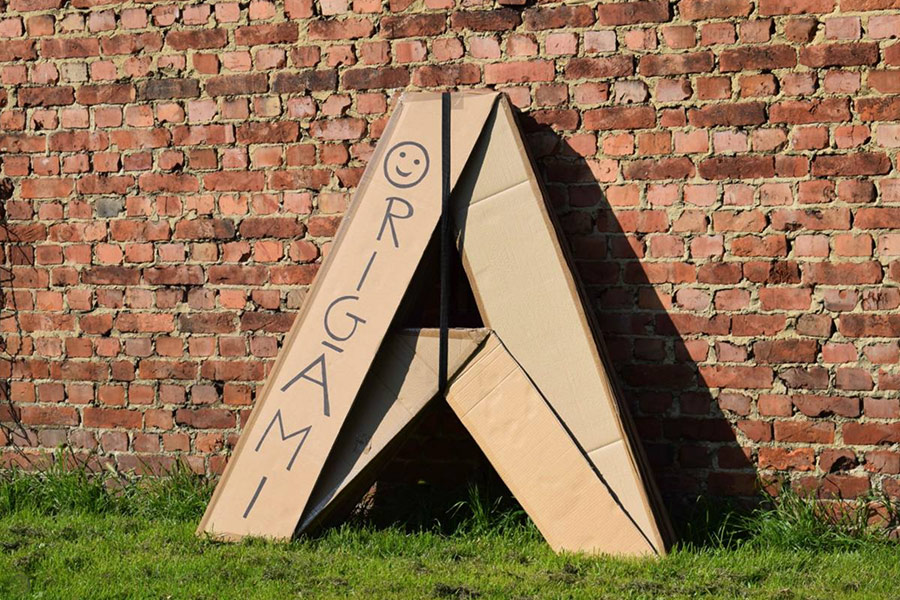
Using cardboard donated by a local factory, Van der Stappen worked with designers to produce 20 portable cardboard tents, which homeless people are using on the streets of the Belgian capital during the cold winter.

“There are homeless people everywhere. When I saw them, it made me remember refugee camps in Africa,” said Van der Stappen, the man behind the ORIG-AMI project.

If you like this, subscribe here for more stories that Inspire The Future.

“It is a shame that in the 21st century there are still people living in streets in a very rich country like Belgium.”

The region around Belgium’s capital city had more than 4,000 homeless people last March, according to La Strada, a public body which tracks the numbers of homeless.

Canvas tents are banned on the streets of Brussels, as camping is forbidden in the city, and cartons are usually disposed of by city cleaning services.

Van der Stappen said the tents were needed as many hostels were full and strict rules stopped some people using them.

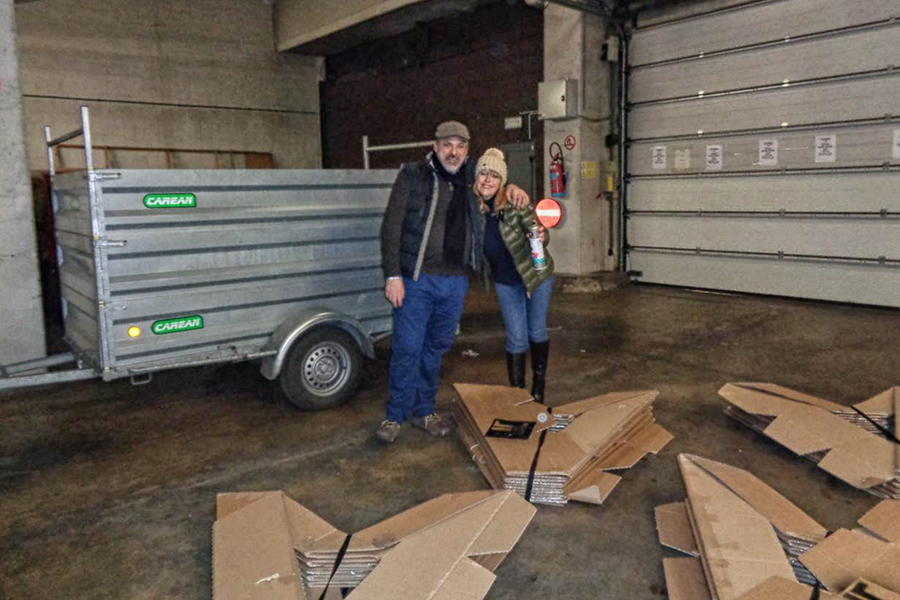
Xavier Van der Stappen and Annie Oger get ready to distribute ORIG-AMI cardboard tents. Photo: Annie Oger/Cultures and Communications Association

“They cannot go with a dog or as a couple; they cannot drink,” he told the Thomson Reuters Foundation.

“Alcohol is a problem, but for them also a solution because if they drink they forget about everything. So it’s a way to escape their problems.”

The factory that donated the cardboard recommended Van der Stappen use a local prison service to make the tents. The irony of the situation appealed to him.

“For me, it was kind of a symbol,” he said. “The prisoners have a bed and food. The people in the street are free, but they are still in the street.”

Feedback from users of the origami-style tents will inform an improved design and rollout of 100 more shelters over the rest of the winter, he said.

Van der Stappen paid for the first 20 tents himself. He thinks they could be hired out at summer festivals to fund the provision of more shelters next winter.

He is keen to stress, however, that he sees the cardboard tents as a temporary solution to homelessness.

“I’m not the person who is trying to solve it. I just try to find a solution for today, not for tomorrow,” he said.

By Lee Mannion @leemannion. Editing by Katy Migiro. 

If you like this, subscribe here for more stories that Inspire The Future.

5 Celebrities Running Businesses That Give Back

Popularity and awareness of social enterprises – businesses that trade to address social problems – has flourished in recent years. From A-list actors to celebrity chefs, here are five famous faces running businesses with a mission to do good:

HUGH JACKMAN

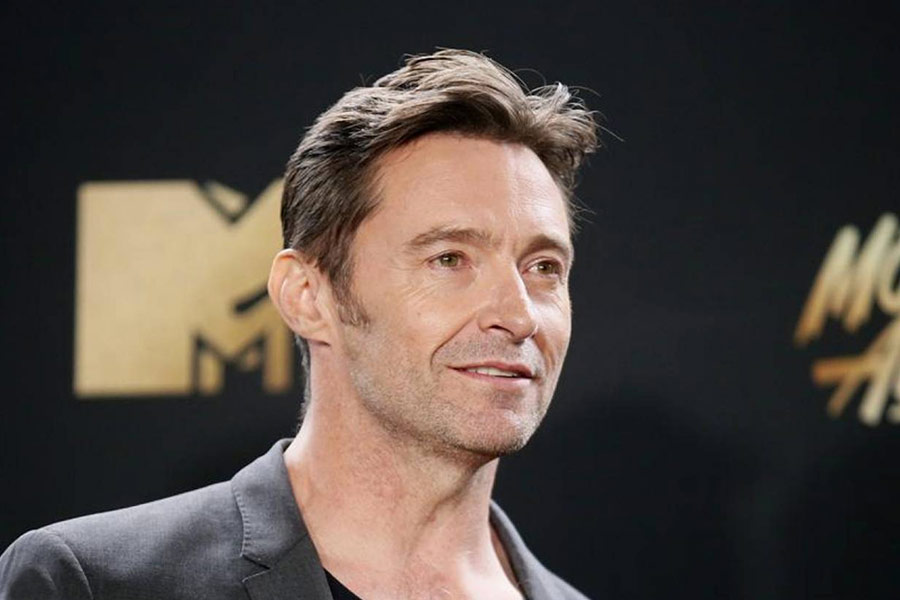
Famous for playing character Wolverine in the “X-Men” series of films, Australian actor High Jackman first stuck his tungsten talons into social enterprise in 2011 after a trip to Ethiopia.

On the trip Jackman helped out local coffee farmer Dukale for a day and saw coffee traded, sparking an interest in fair trade which ensures growers get a fair price for their crop.

Laughing Man coffee was founded in 2011 to trade directly with growers, with a Laughing Man coffee shop opening in New York’s Manhattan.

Next came a tie-up with Keurig, a popular coffee machine in the United States with Laughing Man pods now available. Keurig then introduced Jackman to Kroger, a major U.S. supermarket chain, according to CBS News.

Laughing Man coffee is now available in 1,800 stores across the United States. All the profits go towards education, community development and new business development projects in the developing world, according to the Laughing Man website.

If you like this, subscribe here for more stories that Inspire The Future.

ROSARIO DAWSON

U.S. actress Rosario Dawson, star of “Men in Black II” and “Sin City”, launched her social enterprise Studio 189 with best friend Abrima Erwiah in 2013 after travelling in Africa, according go the project’s website.

Studio 189 sells clothes that challenge the idea of cheap, mass produced, fast fashion with the garments handmade in Ghana with a focus on African patterns and fabrics while paying a decent wage to the people who create them.

Studio 189 is a part of the United Nations Ethical Fashion Initiative which aims to build a responsible fashion industry where workers earn a living wage in good conditions while also protecting the environment.

PHARRELL WILLIAMS

The Grammy award-winning U.S. producer and performer Pharrell Williams has been creative director of social enterprise Bionic since 2010. Bionic takes plastic, shreds it, heats it and spins it into two types of yarn used to make everything from jeans to the roof linings and car seat covers.

To date Bionic said by email that it has recycled nine million bottles by making the material. This number will grow as Bionic has partnered with the charity Waterkeeper’s Alliance to use plastic found in the sea and washing up on the coast.

The United Nations has warned that if current pollution rates continue, there will be more plastic in the sea than fish by 2050.

MICHAEL SHEEN

It was at Social Saturday, an annual event that encourages people to spend money on goods and services that have a positive social impact, that Welsh actor Michael Sheen declared his interest in social enterprise.

Donning a Social Saturday T-shirt in 2016, the actor, famous for his roles in the “Twilight Saga” and Oscar nominated film “Frost/Nixon”, said he wanted to understand how social enterprise might be useful to his home country.

In April 2017 it was announced that he would become a patron of industry body Social Enterprise UK. At an awards event in November he told the Thomson Reuters Foundation he would launch his own social enterprise in 2018.

“Social enterprise is one of those tools for communities that want to create their own opportunities, like where I come from in the South Wales valleys,” Sheen said.

He plans to start a “community hub” in Port Talbot to help people start community-owned businesses and services, as threats to the steel industry have put traditional jobs at risk.

JAMIE OLIVER

British celebrity chef Jamie Oliver started his restaurant Fifteen in London in 2002 when he was just 26. It was named after the number of disadvantaged young people Oliver attempted to train as chefs there.

The first group were all unemployed; some were truants who’d left school without qualifications, others had anger management issues. To date, a third of all candidates have had a brush with the law, Matthew Thomson, Fifteen’s managing director, told the Thomson Reuters Foundation.

New chefs have three months training in professional cookery at college which is followed by 11 months of work in a Jamie Oliver restaurant. The last month involves work experience elsewhere, which can lead to a job.

Further Fifteen restaurants were opened in Amsterdam and in Cornwall in southwest England. Over 500 chefs have been trained, with 80 percent of them still working in kitchens.

By Lee Mannion @leemannion; Editing by Ros Russell. 

If you like this, subscribe here for more stories that Inspire The Future.

Conscious Capitalism: A Way to Greater Action And Dignity

We are living in a time of great paradox. To paraphrase Charles Dickens, “These are the best of times; these are the worst of times.”

At one level, things look great economically. President Trump has been touting the fact that the stock market is at an all-time high, and we have nearly full employment, with the unemployment rate just above 4%. But dig below the surface, and signs of distress are everywhere. In fact, you could say that we have an epidemic of silent suffering in this country. The majority of working people—even those with full-time jobs—live lives of quiet desperation, perpetually skirting the edge of disaster. But most people are stoic and heroic as they uncomplainingly deal with their tremendous challenges.

If you like this, subscribe here for more stories that Inspire The Future.

Here are some sobering facts. According to the National Bureau of Economic Research, 50% of Americans would not be able to raise $2000 within 30 days, if faced with a crisis of some kind. They cannot turn to friends, family or their employer for help. Another stunning fact: 60% of American households are technically insolvent and going deeper into debt every year. That means that they have a negative net worth; their liabilities exceed their assets. They are bankrupt without having declared bankruptcy. Forget about planning for retirement; how will they get through next year or survive a bump up in our historically low interest rates?

We live in a time of significantly reduced physical violence, but escalating psychological suffering. Some 40 million Americans suffer from debilitating anxiety. There has been a 24% rise in suicide rates over the past 15 years. Nearly 100 Americans die every day just from opioid overdose, adding to the half million who have died in the last 15 years.

Where did we go wrong? After all, the US is often cited as the wealthiest country in the history of the world. That bounty has been the direct result of our full-bodied embrace of capitalism. We are the only country ever founded on a set of shared ideas, all of which revolved around freedom and dignity for ordinary human beings. Capitalism—free markets and free people—has propelled humanity over the past 200 years to rise to unprecedented heights of material and technological achievement. Per capita incomes have increased 1,500% in real terms, after being flat for millennia.

The percentage of people living in extreme poverty (now defined as $1.90 a day) has fallen from 90% to 9% since 1800. Life expectancy has more than doubled. Literacy has gone from 12% to 88%. So there is much to appreciate and much to be thankful for when it comes to capitalism. It is a system that is capable of promoting flourishing for ordinary human beings, not just for business owners. It is an extraordinary tool for social advancement and collective action. It may be the most powerful idea we human beings have ever had.

But it is not working for most employees nearly as well as it needs to anymore. An estimated 88% of Americans work for companies that they believe do not care about them as human beings. Heart attacks are at least 20% higher on Monday mornings. Our work has become a great source of stress and distress for most of us and is the most significant driver of chronic diseases and our spiraling healthcare costs. Employee engagement, according to Gallup is just 30% in the United States, which happens to be among the highest in the world. Globally, only 13% of employees are engaged in their work.

As James Baldwin once said, “Not everything that is faced can be changed. But nothing can be changed until it is faced.” Here is the reality that we need to face: the way we work is not working anymore. Work is central and fundamental to the human existence. We can derive meaning from it and leave a lasting legacy through it. But for the vast majority of us, work is something to be endured, with untold amounts of unnecessary and unaccounted for suffering–all for measly rewards.

A significant turning point in how we practice capitalism came in the early 1970s when the mantra of shareholder value maximization became central to business. This further “normalized” the treatment of people as mere functions and objects, as costs that need to be minimized, as liabilities instead of assets. The natural extension of this came in the 1980s, when companies for the first time started using mass layoffs, not as a last resort to ensure the survival of the business, but as a way to fix the numbers and bump up the stock price.

The sad irony is that shareholder primacy has coincided with an era in which companies are steadily making poorer returns on their invested capital. The data show a long-term and steady decline since the early 1970s to the present; economy-wide return on assets has fallen from approximately 4% in 1965 to just over 1% in 2015. In other words, the idea of maximizing shareholder returns is failing even on its own terms. This is the paradox of profits, analogous to the mystery of happiness: the more you pursue it directly, the less you are likely to realize it. Instead, we need to focus on the things that lead to happiness and which result in profitability. These all revolve around caring about people.

If you like this, subscribe here for more stories that Inspire The Future.

So why does this harmful and dangerous mindset persist? Why does it remain unquestioned dogma in boardrooms and business schools? Many bad ideas do catch on, especially if they enable some people to make a lot of money. As Upton Sinclair wrote, “It is difficult to get a man to understand something when his salary depends on not understanding it.”
The story gets darker still. Even as returns have become worse, executive compensation has exploded. As Roger Martin writes in his book Fixing the Game, “In the decade from 1980 to 1990, CEO compensation per dollar of net earnings produced doubled. From 1990 to 2000 it quadrupled.” That is an eightfold increase from 1980 to 2000.

What was happening with ordinary workers as executive compensation skyrocketed? From 1978 to 2013, worker pay increased 10%, while CEO pay increased 937%.
So returns are declining as executives obsess over profit maximization. They try to squeeze our profits from the business by squeezing their employees and suppliers while externalizing many burdens on to society and future generations. Almost all those profits are then delivered directly to shareholders. From 2003 to 2012, 54% of profits have gone to share buybacks. This is a way of propping up the stock price without actually improving performance, as the number of shares outstanding decreases and thus earnings-per-share increases.

This directly benefits existing shareholders, but even more so, it benefits executives with large amounts of stock and stock options. Those stock options can be worth nothing if the share price doesn’t meet a specific target but can be worth millions if the share price exceeds the target price by even a small amount.

In addition to the 54% of profits going to share buybacks, another 37% goes to paying dividends. That’s 91% of profits directly benefiting shareholders. That leaves a scant 9% of profits available for reinvestment in the future of the business or for its people. How is this acceptable? It appears that the institution of capitalism has been hijacked and made to operate in a way that disproportionately rewards some while failing to treat others with dignity, care and respect. This is the stuff from which revolutions spring. It should worry us greatly. As Peter Georgescu, Chairman Emeritus of Young & Rubicam writes in his new book Capitalists Arise!, “For the past four decades, capitalism has been slowly committing suicide… The rules of the game have become cancerous. They’re killing us.”

To quote James Baldwin again, “it is not permissible that the authors of devastation should also be innocent. It is the innocence which constitutes the crime.” Business leaders have a lot to answer for.

Just before the Great Depression, US President Calvin Coolidge said, “The business of America is business.” In many ways, this statement was accurate; after all, this country was founded on the entrepreneurial energy of free individuals. But it begs the question, “What is the business of business?” Alford P. Sloan, the legendary Chairman of General Motors from 1937 to 1956, said, “The business of business is business.” Similar words were echoed by the economist Milton Friedman in 1970. The implication is clear: business need only be concerned with pursuing its own purpose of maximizing profits. But a more expansive and humanistic view was offered by Herb Kelleher, the extraordinary leader who built Southwest Airlines into the most successful airline in history. He said, “The business of business is people—yesterday, today and tomorrow.”

Kelleher points to a fundamental and foundational truth that most in the world of business have lost sight of. Ultimately, all human activity needs to be about human and planetary flourishing, today and forever more. All other aspects of business, including profits, are a means to that end. This is what we need to recommit ourselves to. Human beings need to be at the center of all human activity. We are not to use them, abuse them or exploit them for personal gain. We are to serve them.

Our long-running abuse of capitalism does not come without a price and a huge flashing warning sign. Approximately 40% of Americans now prefer socialism to capitalism. According to Gallup, 55% of Americans below the age of 30 “have a positive view of socialism.” Another study found that 51% of Americans under 30 do not support capitalism. This should scare the living daylights out of us.

Jonathan Haidt frames the choice between capitalism and socialism as one between dynamism and decency. Socialism promises but has never actually delivered fundamental decency. It is rooted in a romantic vision of meeting our basic needs with egalitarianism and fairness. As we well know from the bitter history of the last century, the socialist dream led to stagnation and untold suffering for billions of people. On the other hand, capitalism promises and largely delivers on the idea of dynamism. It has fostered extraordinary amounts of innovation, and alongside it, creative destruction, as new products and ideas continually replace ones rendered obsolete.

For too long, humanity has been offered a binary choice between one or the other: dynamism or decency. This was the defining debate of the 20th century. But this is a false choice that we should not have to make. It is like choosing between breathing in and breathing out; we need both. We must have dynamism; without it, we will not survive. In the next century, we will have to reinvent the way in which we meet almost all of our needs, and we will have to do that for close to 10 billion people. Without dynamism, we will inevitably perish. But this dynamism needs to be accompanied with real decency, where human beings are enabled to live lives not only of material well-being but also of emotional and spiritual well-being through their work.

This is the great promise and potential of Conscious Capitalism: greater dynamism than traditional capitalism, along with genuine decency for human beings. Conscious companies are more innovative, more creative and far far more engaging as places to work. These companies create many kinds of wealth and well-being for all of the stakeholders: financial, intellectual, social, emotional, spiritual, cultural, physical and ecological. They do so without generating any adverse side effects, or the so-called externalities that traditional businesses inevitably create. This way of being exists, therefore we know it’s possible. We know how to do this, we know why we must do this, and we know that we need to make this transition now. It is later than we realize.

Doctors who treat their patients with faulty or obsolete medical knowledge get sued for medical malpractice. Leaders who do not embrace a humanistic, people-centered approach to business are likewise guilty of malpractice and need to be held accountable for that. Doing business the old way is a failure of imagination and a reflection of grotesquely misplaced priorities.

If you like this, subscribe here for more stories that Inspire The Future.

 

0