With Big Business Touting Ethics, How do Small Social Brands Survive?

Whether it is U.S. denim brand Levi’s campaigning against gun violence or British supermarket Iceland drawing attention to the environmental impact of palm oil production, big businesses want to show they care about people and the planet, not just profits.

But this growing trend has made it harder for social enterprises – which are organisations set up specifically to tackle social and environmental problems through commercial means – to stand out.

“There’s a lot of confusion about what is wrong or right and a spectrum of business as a force for good,” John Steel, chief executive of Cafedirect, a London-based coffee social enterprise told the Thomson Reuters Foundation.

“There are businesses that are set up to make profit and have ownership structures to enrich the few but are talking about sustainability – for citizens of the world it is very hard to work out what is really going on,” he said.

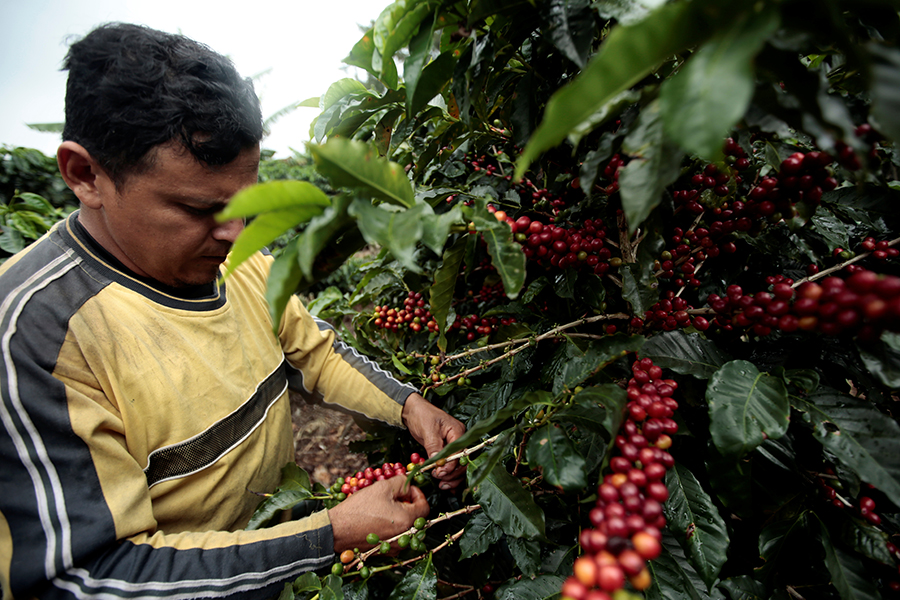
Cafedirect launched 28 years ago with the mission to improve the lives of small coffee farmers and a few years later became one of the first companies to launch as Fairtrade, an ethical certification scheme aimed at paying farmers a fair wage.

“It was seen as being completely different – in those days it was out there ahead of the pack,” Steel said.

This resulted in “crazy” growth, said Steel, with double-digit sales improvement in the early 2000s.

The industry followed suit – with big coffee brands like Starbucks in Europe, and supermarkets such as Britain’s Waitrose and Sainsbury’s launching some Fairtrade coffees in the 2000s, as well – a shift that was bittersweet for Cafedirect.

“It’s great from the point of view that people are agreeing to pay a minimum price for coffee and a premium to help improve farmers lives, but it also means it’s less of a clean, clear blue sky environment for you as a competitor,” he said.

As a result of the competition, Cafedirect spent several years struggling in the red before finally coming back to a profit in 2018.

Steel, who joined the company in 2012, attributes this turnaround, in large part, to a rebrand, which communicated the coffee company’s ethical credentials even more prominently.

Cafedirect has made several other changes to the business, including buying a tea company and moving into coffee roasting, but with the price of coffee dropping globally, it will remain a tough climate for the social enterprise to compete.

CONSCIOUS CONSUMERS

The number of socially conscious consumers is growing and therefore it has become more important for big businesses to attract them, too, according to a study by consultancy firm Accenture.

“Companies that stand for something bigger than just what they sell and demonstrate genuine commitment to their purpose typically deliver higher levels of commercial success,” said Rachel Barton, managing director at Accenture Strategy

Almost two thirds of consumers say a company’s values have an impact on what products they consider buying, the 2018 study showed.

Based on a survey of 30,000 people, the study also found six in 10 consumers want companies to take a stand on the social, cultural, environmental and political issues consumers care about.

“People have fundamentally different expectations of the role companies play in society now, compared to 10, 20 years ago,” said Becky Willan, managing director of Given, a London-based marketing agency that specialises in purpose-led brands.

But it is not just consumers driving this change – social enterprises and charities have been “beavering away” for decades, to make social impact commercially viable, said Sophi Tranchell, group chief executive of British social enterprise Divine Chocolate.

“We haven’t got to where we got to from a consumer perspective by magic,” she said.

Like Cafedirect, Divine Chocolate, which is 44-percent owned by its cocoa farmers, also found it hard to compete when competitors like chocolate giant Cadbury’s shifted to Fairtrade, also in the 2000s. However, she welcomed the move.

“We celebrated when the big companies came in to do Fairtrade because … we wanted to challenge the industry to do better,” she said.

Standing out from competitors remains “very difficult and a big challenge,” but the brand’s focus on quality and telling the stories of its farmers has helped, said Tranchell.

To keep their competitive edge, social enterprises will need to innovate with new products, services and ways of doing business that cannot be replicated by big companies, which are generally slower to act if they have shareholders, said Willan.

“This isn’t just a marketing exercise on the part of big businesses – they are investing, making long term commitments, they are changing their practices, they are talking about it,” she said.

“But social enterprises can be more agile, disruptive and more ambitious about the change they can create,” she said.

By Sarah Shearman @Shearmans. Editing by Jason Fields

Bono’s New Venture Takes Aim at ‘Fuzzy Thinking’ In Impact Investing

Impact investment funds must stop relying on “fuzzy thinking” about how much good they do, Bono said as he announced a tie-up with U.S. private equity company TPG to measure the social and environmental change they achieve.

Impact investing – which promises social and environmental benefits as well as financial returns – is growing, but the difficulty of measuring how much good it achieves has caused some major investors to be cautious.

A new company, Y Analytics, aims to bridge the gap between researchers and investors “to help decision-makers evaluate impact,” said a statement from the company

“To persuade the biggest institutional investors to commit their funds to tackling some of the world’s most urgent challenges we need to be as confident about the impact returns as we are about the financial returns – fuzzy thinking just won’t cut it,” added Bono. Bono launched his own $2 billion impact fund, Rise, with TPG in 2016.

Data from the Global Impact Investing Network (GIIN), a non-profit organisation that promotes impact investing, shows the number of social investment funds has quadrupled over the past 20 years to 200. GIIN estimates the industry is worth $228 billion, yet there is no standard global definition of what qualifies as an impact investment.

The Organisation for Economic Cooperation and Development has also called for more rigorous standards to prevent “impact washing” – where firms seek to disguise unpopular practices or overstate the impact of their investments.

By Sarah Shearman @Shearmans, Editing by Claire Cozens.

Let’s Not Get Back to Normal!

After decades of economic growth, advancement in technologies, unmatched prosperity, playing and praying, and having fun, a whole lot of fun, it seems as if the entire Earth is now standing still. Nothing is what it used to be. And we are caged, scared like animals in captivity. 

After so many days of bad news, from so much pain to so many sick to so many dead to so much stress and so much anxiety, many are shouting with desperation: when will we go back to normal?

Normal?

50% of the world’s children experience violence every year, and every 5 minutes, somewhere in the world, a child is killed by that violence.  

Is that normal?

More than 700 million people still live in extreme poverty, including one in every five children with 22% more women than men.  

Is that normal?

3.1 million children die each year from malnutrition while each year, 1/3 of all food produced – equivalent to 1.3 billion tons worth around $1 trillion – ends up rotting in the bins of consumers and retailers.  

Is that normal?

More than five million children still die before their fifth birthday each year. 

Is that normal?

More than 80% of wastewater resulting from human activities is discharged into rivers or seas without any pollution removal.  

Is that normal?

Seven hundred eighty-five million people remain without essential drinking water services, and 2 out of 5 people worldwide do not have a basic handwashing facility with soap and water at home.  

Is that normal?

One out of four urban residents lives in slum-like conditions

Is that normal?

We have the luxury of being quarantined at home, relying on agricultural workers to provide us with food, while two-thirds of impoverished workers worldwide are those agricultural workers we rely on. 

Is that normal?

By 2050, the equivalent of almost three planets could be required to provide the natural resources needed to sustain current lifestyles.  

Is that normal?

Nine out of 10 urban residents breathe polluted air.  

Is that normal?

One million plant and animal species are at risk of extinction; that’s 22% of all animals. 

Is that normal? 

Lacking social connections is as damaging to health as smoking 15 cigarettes a day. Yet, more than 40% of seniors regularly experience loneliness. These are our aging parents and grandparents. 

Is that normal?

At the current rate of progress, it will take 108 years to close the gender gap.

Is that normal? 

Today, 20 million people are refugees, over 41 million people have been internally displaced, and at least 4 million people are stateless.  

Is that normal?

31% of all prisoners are held in detention without sentencing.  

Is that normal?

Four hundred fifty million people around the world live with mental illnesses. And one in every 13 people globally suffers from anxiety, especially children between 13 and 18 years old.

Is that normal? 

Globally, around one million people die by suicide each year. It’s estimated that for every suicide, there are 25 attempts.  

Is that normal? 

Families are less connected than ever, with an average of 7 hours spent staring at a screen.  

Is that normal?

Businesses have 87% of their employees disengaged, and 19% actively disengaged undermining the company they work for. 

Is that normal?

Our social relationships are transactional and superficial. 

Is that normal?

Our connection with nature, the nature that provides us with air to breathe, water to drink, and food to eat is broken. 

Is that normal?

Please! Let’s not go back to normal. 

In a study published in 2017, pet Labrador and Golden retrievers were stressed just by walking into a room with an odor of a person who was stressed from watching a horror movie. It is suggested that because of stress felt from humans; dogs are having shorter life spans and more skin disorders. 

Imagine the diseases with which we have been contaminating the Earth, as with our every step of arrogance, anger, hatred, stress, anxiety, regrets, and tension we exhibit.

In the jungle of life, we have been directionless, either running away from fears or running after infinite desires. 

Mother Nature has been gently asking us to correct our course, but we are too busy to pause and listen. 

Well, now she’s had enough. 

Stop! Go to your room. You’re grounded. 

Can you hear a frustrated but caring parent say these words?

Let’s use this time to pause and reflect on what went wrong, and to find our guiding stars toward our existential purposes, our Purposehoods. 

Let’s find our way out of the jungle, and head back to the land of potentiality where we are meant to flourish.

Where happiness, success, and fulfillment are in the air. 

Where we can grow with ease.  

Where we live shared Purposehoods with our families, businesses, communities, and nature. 

Where we continue to evolve and expand exponentially, but in the right direction, toward a better future for all. 

Please, let’s not go back to normal!

Let’s create a new normal where we live in harmony with nature and all its beautiful creatures. 

Together, let’s create a movement to help every person discover and live their life’s purpose. 

Let’s unleash the potentiality of every human. 

Let’s connect in groups and communities around shared Purposehoods. 

Let’s aim to reach at least one billion people in the next 15 years. 

Together, we can do it. 

We can move with life to a better state of being with ease and gratitude 

as we Pause, Breathe, and Smile. 

May you all grow with ease. 

Join the movement on Purposehood.org

How Globalization Has Altered Your Relationship With Food

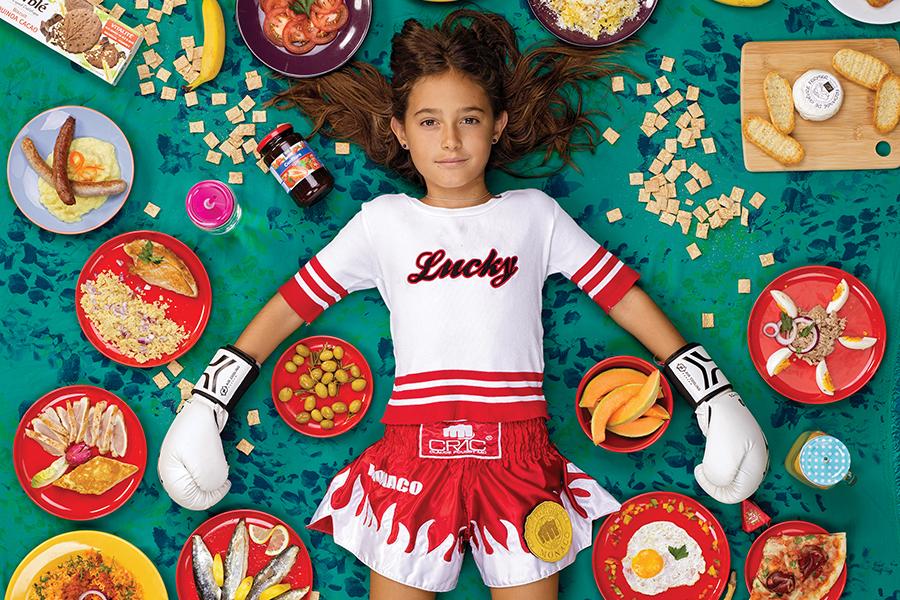
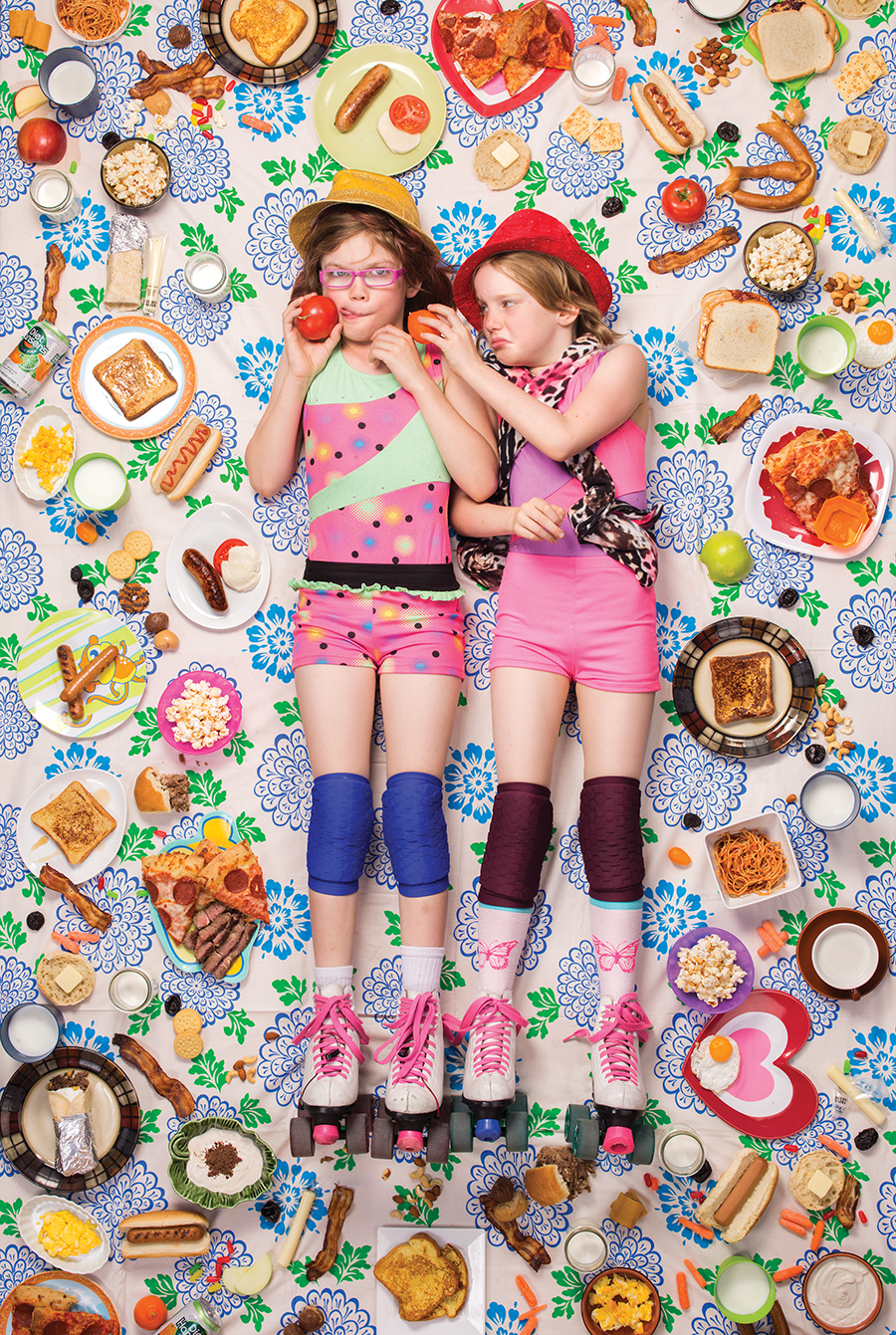
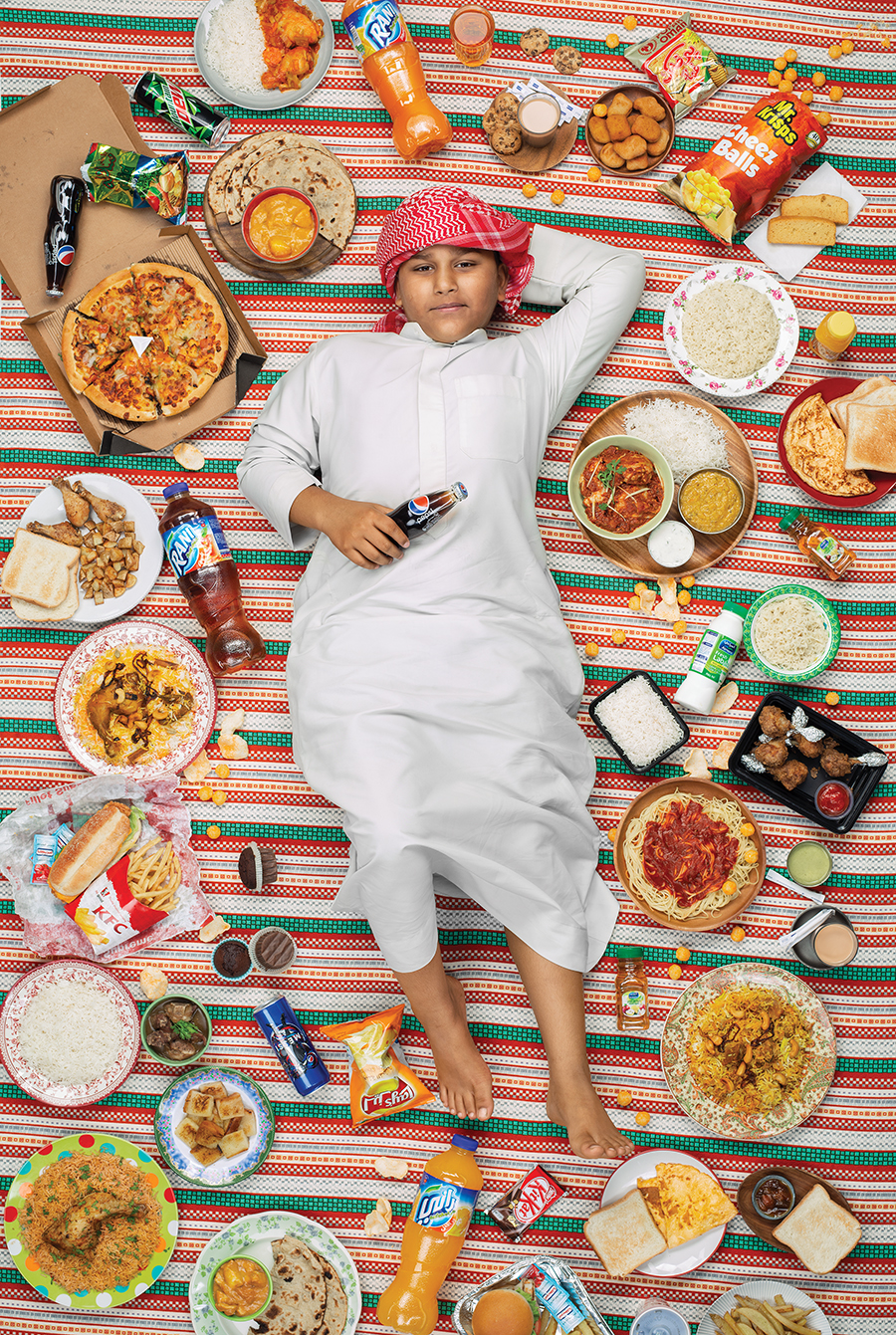
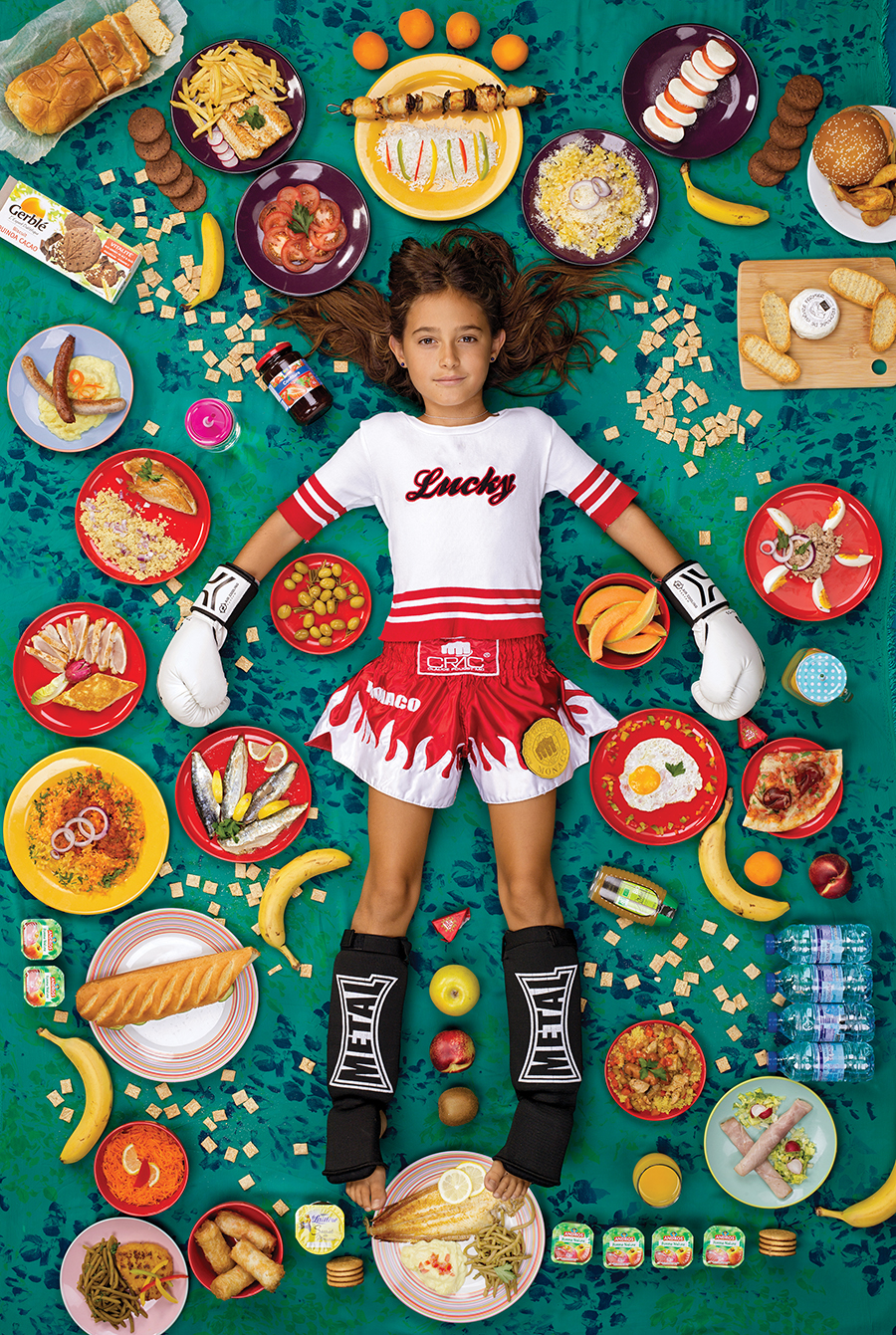
Photographer Gregg Segal approaches his work with the sensibility of a sociologist — using the medium to explore culture — our identity, memory, behavior, roles, beliefs, and values. His latest project examines food and nutrition.

In an 8 x 8 aluminum hut on a construction site outside Mumbai, Anchal Sahni sits down to dinner with her family: homemade aloo bhindo (okra and potatoes simmered in curry) and chapati (flatbread) with a side of lentils. Anchal has a healthier diet than many middle-class kids in India, who can afford to eat out. In Mumbai, a medium-size Domino’s pizza runs $13 – about three times what Anchal’s father earns a day.

Sensing a sea change in Western attitudes about diet and the effects of junk food, fast food companies have begun investing heavily in foreign markets where public awareness isn’t as keen – and Big Macs aren’t junk – they’re a status symbol.

In 2015, Cambridge University conducted an exhaustive study, identifying countries with the healthiest diets in the world. Nine of the top 10 countries are in Africa, where vegetables, fruit, nuts, legumes, grains are staples and meals are homemade. This is in stark contrast to the U.S., where nearly 60 percent of the calories we consume come from ultra-processed foods and only one percent come from vegetables.

As globalization alters our relationship to food, I’m making my way around the world, working on a project called Daily Bread, and asking kids to keep a journal of everything they eat in a week. Once the week is up, I make a portrait of the child with the food arranged around them. I’m focusing on kids because eating habits, which form when we’re young, last a lifetime and often pave the way to chronic health problems like diabetes, heart disease, and colon cancer.

Despite growing awareness here in the U.S. about the harm of eating processed foods, awareness hasn’t yet led to widespread change. Obesity rates are still soaring. Forty years ago, 1 out of 40 kids was obese. Today, 10 in 40 are. Since corn syrup came along, the incidence of diabetes has tripled. For the first time in many generations, life expectancy in America is declining, and the main culprit is empty calories.

I’ve been encouraged to find regions and communities where slow food will never be displaced by junk food, where home-cooked meals are the bedrock of family and culture, where love and pride are sensed in the aromas of broths, stews, and curries. When the hand that stirs the pot is mom or dad, grandma or grandma, kids are healthier. The deeper goal of Daily Bread is to be a catalyst for change and link to a growing, grassroots community that is moving the needle on diet. www.GreggSegal.com

How Science Is Making Your Stockpiled Food Last Longer

The global COVID-19 pandemic has shaken almost every corner of society. From a sinking stock market and rising unemployment to the broken healthcare system and governmental failures, the impact has been widespread. One industry that has been immune to the effects of the pandemic is agriculture. IRI and Nielsen numbers for the week ending March 14-15 saw fresh produce sales continuing to soar. The reason is simple: even in a crisis – people need to eat.

But just because the agriculture industry is continuing apace amid the crisis, it’s still an industry with its share of problems, and the biggest of those problems, by far, is waste.

Globally, agriculture is a $3 trillion industry – but about 33%, or $1 trillion of that, goes to waste – enough to feed every hungry person on the planet. Here in the U.S., we waste over 25 billion pounds of post-harvest fruits and vegetables annually (around $30 billion in value). And upsetting as that number may be, it gets more depressing when you consider that 37 million Americans, including 6 million children, live without enough to eat.

And it’s not just the food that’s wasted. When we throw away 25 billion pounds of produce, we’re also wasting the water and labor necessary to grow that food (not to mention the harmful CO2 emissions we’re adding into the atmosphere to ship it). In other words, the repercussions of our waste ripple backward through the supply chain. Insult to injury, as they say.

To reduce these harmful impacts on our environment, while still feeding our growing population, we need to find solutions that maximize efficiency. But creating efficiencies around fresh produce, a product that, by its nature, has a limited shelf life, is no easy feat.

A young startup in Chicago, Hazel Technologies, may have cracked the code, and their secret sauce is basic chemistry. Founded in 2015, the company’s USDA-supported solution involves small packaging sachets (about the size of a sugar packet), which are dropped into boxes of produce during shipping and extend the shelf-life of produce up to three times by slowing the aging process and preventing decay. This added shelf-life means less produce wasted for growers (and bigger profits). For the everyday consumer, it means fresher, longer-lasting produce. Everybody wins.

“Hazel’s goal is to bring transformative change the food supply chain not only here in the U.S., but all over the world,” says Aidan Mouat, CEO of Hazel Technologies. “Food waste is a global problem, and there’s no reason our solution can’t work at that level, too.”

Hazel’s sachets work by inhibiting ethylene, a hormone molecule that fruit naturally emits, triggering the aging process. A quarter gram of the material inside a Hazel packet can protect 50 pounds of produce. The chemicals are proprietary, and the sachet time releases them to help preserve the product. Each fruit has a different package based on its ethylene sensitivity, and some fruits require different products entirely. Berries need antimicrobials, for instance, but don’t have a problem with ethylene.

Controlling ethylene isn’t new to the food industry. Some storage facilities use machinery to filter ethylene out of the air. Other companies have created ethylene inhibiting coatings that are applied to the skin of fruits and vegetables.

“Adding complex machinery to filter the air or applying coatings to produce is not only expensive but can be operationally problematic,” explains Mouat. “It requires new training for employees. It inevitably requires repairs at some point. By comparison, our solution requires zero training and no added investment – we’re built for the food supply chain as it currently exists.”

Better still, Hazel’s solution is entirely atmospheric, does not touch the product, and leaves no residue. This is far more appealing to consumers compared to a coating they have to wash and, on some level, eat. 

Hazel is currently being used in 12 countries and has more than 100 customers, including some of the world’s biggest produce companies. California-based Mission Produce, the world’s largest producer of Hass avocados, and Oppy, the largest produce distributor in Canada, are both using Hazel’s technology to extend the quality and freshness of their products.

The technology is projected to be used with 3.2 billion pounds of fresh produce in 2020, preventing more than 270 million pounds of food going to waste. A $13 million funding injection, led by S2G Ventures and Chuck Templeton, founder of OpenTable, will allow Hazel to scale its business even further in the months and years ahead.

Mouat is developing new solutions for different types of food, including packaged chicken, beef, and fish, and is also exploring new markets, including products that consumers can use at home and that retailers can use on store shelves (U.S. supermarkets lose around $15 billion in wasted produce each year).

Later this month, the world will observe the 50th Anniversary of Earth Day. The annual event, established to demonstrate support for environmental protection, includes activities in more than 193 countries and Hazel hopes that their food waste solution will offer a practical solution for creating a healthier world.

4 Scenarios for Navigating a Post-Coronavirus World

CEOs and other senior leaders are grappling with a strategy conundrum created by the coronavirus crisis: how to make high-stakes decisions with long-lasting impact when uncertainty is so extreme that accurately predicting the future is impossible. To help navigate this challenge, we defined four possible scenarios in this article and shared a scenario planning process that enables leaders to explore a broad range of potential futures quickly, identify no-regrets moves, and design robust future-proof strategies — all while aligning leadership teams on a shared context for decision making.

Clarity from Complexity

Scenario planning brings clarity to the unprecedented complexity we are currently experiencing. It aligns teams around a shared context and enables swift action. What follows are emerging insights from our scenario planning so far, as well as an update on how the likelihood and direction of each possible scenario is unfolding. Let’s begin with three core findings:

1) All four scenarios are plausible, relevant, and worthy of consideration. The scenarios pose conditions that businesses may be forced to contend with in the future. While we are currently living in the chaotic and unpredictable world of Fits and Starts, each of the other three scenarios could come true by the end of the year. Below, we explore the four scenarios and the evidence for each of their emergence in more depth.

2) Implicit “bets” on a single future are widespread. At the start of the process, many teams conclude that their strategies are best suited for a single scenario, despite recognizing that the likelihood of that future occurring is low. That is, they are preparing for a set of conditions that they know won’t come true. This has served as a great motivator to quickly identify which activities to start, stop, and continue based on the changing conditions.

3) Every company has no-regrets moves they can make immediately. After identifying winning strategies for each scenario, teams have quickly aligned around a set of robust choices across all of the scenarios. In most cases, these moves are closely aligned with purpose and can be made without significant up-front investment.

Teams have reported that using the toolkit has brought them a sense of agency, hope, and possibility because it’s allowed them to position their company for a post-coronavirus world proactively. We’ve been impressed with the quality of solutions being developed in a relatively short period.

The Evolving Scenarios

The scenarios initially drafted on March 20, 2020, center around two uncertainties: how well the public health crisis is managed and the economic impact of coronavirus. While these remain the most critical uncertainties, their second and third-order impacts – including public responses, business innovation, and political implications – are beginning to visibly shape our current reality.

1. Gradual Recovery

Gradual Recovery is no longer the “official” future. In other words, it is not the scenario most companies are expecting. That said, despite record stock market drops, unemployment spikes, and prolonged social distancing, we believe this scenario is still plausible. Recent rebounds in the stock market, state-by-state death-count model revisions from the Institute for Health Metrics and Evaluation at the University of Washington, and a set of best-case conditions coming to fruition, all suggest that a Gradual Recovery still has potential.

For the Gradual Recovery scenario to be plausible, you’d need to believe the economic free-fall will quickly spring back as soon as the pandemic fades. That could happen if social distancing works, hospitals are not over-run, ventilators are produced, drugs are created, and government financial stimulation is effective. This scenario would also require that society “re-opens” before a vaccine is ready. No company should bet exclusively on this scenario, but discounting it entirely could reduce the strategic option set available when the recovery occurs.

2. Fits and Starts

Fits and Starts represent the scenario we are in right now. It’s nicely described in this New York Times opinion piece, that talks about “Balkanized normality” and living life at half-capacity. The scenario envisions a geographic and temporal patchwork of spread, containment, and economic recovery. The uneven impact of this scenario also applies to class (white-collar workers suffer less than frontline workers), age (older people suffer less than youth), and industry (retail, travel, and restaurants suffer more than financial services, pharma, and tech). The second and third-order impact of this balkanization could have a lasting impact around the globe, which was divisive even before the pandemic.

The Fits and Starts scenario envisions a world in which the societal conversation continues to revolve around what data to trust, which curves are flattening, and what the best strategies are for containment. Bridgewater Associates founder and hedge fund manager Ray Dalio does an excellent job of describing this lack of trust in data, which makes short and long-term decision making, planning, and investment challenging.

3. The Perfect Storm

In the Perfect Storm scenario, the public health crisis persists, and we experience an unprecedented, prolonged, worldwide shutdown. The impact is more significant for developing nations, who are already under stress. This could raise substantial national security concerns, a topic rarely discussed right now in mainstream circles.

The dreaded Perfect Storm fills newspaper headlines and causes fear among many. Many wise commentators believe it’s coming. In his annual shareholder letter, which typically offers more optimism and hope, JP Morgan Chase CEO, Jamie Dimon warns of a “bad recession,” combined with “financial stress similar to the global financial crisis of 2008.”

Dalio suggests a similar doomsday, saying, “I believe that the health, economic, and market impact of the coronavirus will be much greater than most people are now conveying.” He goes on to say the impacts of a pandemic might be “so bad that conveying them accurately could provoke panic.”

In a recent Guardian article, the World Trade Organization warns that continued tensions between countries like the United States and China could shrink global trade by 32%, in line with drops seen during the Great Depression.

Imagine nationalism rather than a global collaboration driving policy. Beyond finger-pointing and name-calling, this scenario envisions walls stopping the flow of supplies, medicine, and solutions. A Perfect Storm scenario points to the reality that, even once the virus is contained, we’ll face unprecedented joblessness and bankruptcies, with recovery lasting years.

4. The Great Correction

The Great Correction imagines some big winners (and losers) from the crisis and the various ways we are responding. The pandemic will result in a rise of telemedicine, an increased appreciation for science, even more power yielded to technology companies, and widespread acceptance of telecommuting.

The Great Correction also sees a global awakening, giving way to more collaborative, responsible, and balanced societies. Explore some of the “inevitable” shifts in Politico’s essay, and Tim Lebrecht’s the Great Reset, where he describes a recent virtual gathering of 450 leaders where 80 percent responded “yes” to the question, “Will humankind seize the pandemic crisis to make the world a better place?”

To imagine the fullest instantiation of this scenario, read Charles Eisenstein’s essay, which begins with a provocative question that defines the Great Correction. “For years, normality has been stretched nearly to its breaking point, a rope pulled tighter and tighter, waiting for a nip of the black swan’s beak to snap it in two. Now that the rope has snapped, do we tie its ends back together, or shall we undo its dangling braids still further, to see what we might weave from them?”

In essence, could the coronavirus accelerate our path away from a set of broken work habits that are bad for individuals, the environment, and the sustainability of the world? While most businesses we’re working with aren’t putting all of their eggs in this scenario basket, they are considering the lasting effect of the compassion, collaboration, and agility we see today.

How could business models and priorities fundamentally shift? An entertainment company wonders whether the compelling narratives that sell movies will be different; a healthcare provider wonders whether disease prevention requiring widespread compliance will be easier. Workers wonder whether workaholism can be replaced with essentialism?

Thriving in the Pandemic

We don’t get to choose what the future will be, and we almost certainly can’t make accurate predictions at this point. But our experience guiding leaders through this process demonstrates that having a plan for each of these scenarios ensures a high level of preparedness.

If you’ve rehearsed the future, as real-world events unfold, you’ll be better prepared to understand and take advantage of them while effectively working together on opportunities no one else can see.

6 Creative Business Solutions In the Fight Against COVID-19

Dancers, designers and students are creating protective masks to donate to the frontline during shortages. Artists are selling their work to help feed nurses. Entrepreneurs are launching relief funds and distributing free meals to those who are most vulnerable. Here are 6 companies that have stepped up to the fight.

Creating Personal Protective Equipment

In response to the shortage of personal protective equipment, FIU’s College of Communication, Architecture & The Arts mobilized its 3D printing facilities to produce a minimum of 1,000 face shields. The first batch of face shields, made from non-toxic polylactic acid, was delivered to Baptist Health last week. 

Millions of N95 masks and PPE are also being produced by FIGS, a leading retail company with offices in Miami and Los Angeles. In 2013, FIGS entered the untouched, archaic industry of producing medical scrubs and reinvented them to create stylish, functional apparel for healthcare professionals. They’re donating $100,000 to the Frontline Responders Fund plus 30,000 sets of scrubs to hospitals impacted most by COVID-19. 

Third Way Volunteers movement, founded by Dr. Alisson Thompson almost 20 years ago, has always been on the frontlines of providing medical, recovery relief. Thanks to volunteers’ efforts, they have already sent out 260,000 N95 masks to hospitals, fire rescue departments, police.

Creating Partnerships to Combat Hunger

Every day Food Rescue US Miami volunteer team, led by Ellen Bowen, distributes meals to hungry, unemployed, and food-insecure populations. During the pandemic, Food Rescue has partnered with many local restaurants to feed doctors, nurses, and other healthcare staff who are on the front lines of this fight.

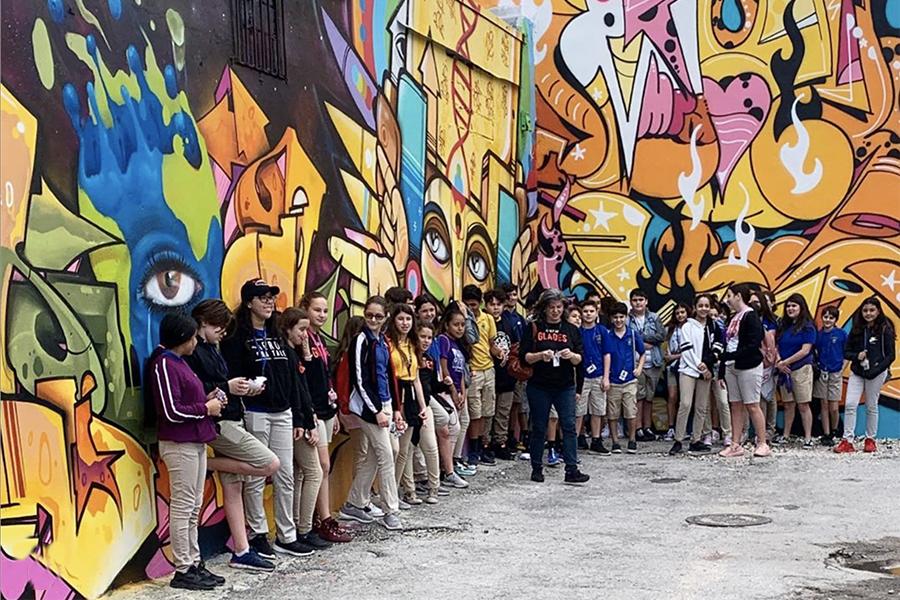
Museum of Graffiti (pictured above) and famed Miami artist @aholsniffsglue have teamed up to sell 100 limited edition posters for $40 each and send 100% of the proceeds to Feeding South Florida. With over 46,000 school closings in the US due to the outbreak, many children are at risk of going hungry. Over 14.7 million public school students depend on the School Breakfast Program, and over 30 million depend on the National School Lunch Program as their sources of nutrition. Most of us are fortunate enough to not have to worry about our next meal. Many others are not. 

Creating Virtual Education and At-Home Play

Caribu, a Miami-based education platform, helps families do more than video chat with their children when they’re not able to get together in-person; it allows loved ones to read, draw and play games with younger family members for meaningful connection. During the pandemic, they’re giving 60 days of free access to their platform, with support from AT&T. The video-calling app with integrated books and activities has over 200,000 downloads and users in more than 150 countries. 

“Caribu was created to make families feel like they’re together when circumstances won’t allow it,” says founder Max Tuchman. “This is a challenging time for all of us. So, whether it’s reading a bedtime story with a grandparent who’s a thousand miles away — or one who can’t leave their home just down the street — the contribution from AT&T lets us keep those important connections alive.”

Impact Edition covers the changemakers who create a positive impact in South Florida and beyond either through their business practices, products or community engagement.

Keeping Your Team Engaged and Connected to Company Culture While Working Remotely

Editors Note: Real Leaders is making its archive of magazines freely available to all visitors to our website as part of our contribution to the Covid-19 pandemic. We believe you’ll emerge stronger and wiser when this crisis passes, and we hope our stories will keep you entertained and inspired while we sit out this challenging time. Sign up here and you’ll be instantly redirected to our archive.

The world has never seen anything quite like the current measures taken to help stem the coronavirus pandemic. Employees who are sick or have been exposed to the virus are self-quarantined.

Out of an abundance of caution, some businesses have chosen to have all or the majority of their teams work remotely. For some workers, the arrangements may morph from a transient response to a more permanent one.

The relatively new digital era enables teams to work in different geographic locations, sometimes spread across the world. This flexibility and agility have never been more critical. While dispersed teams offer an efficient way to operate in a world primed for greater agility and idea diversity, it also challenges the organizational structure. It creates competing demands on time, resources, and loyalties. 

The geographical divide transforms team interactions. They are more fluid, complex, and often hinge on technology that impedes as often as enables communications. (We’ve all experienced one of those conference calls.) Members come together for specific tasks and projects, and a member from one team could sit in multiple micro-teams. All this complexity has a ripple effect on managing culture. 

The Cultural Aspects of Remote Teams

Communication can be an ongoing issue, as well as employee management. What gets addressed far less is how to include remote workers and remote teams in company culture. 

What does company culture look like when it comes to remote teams? If you think of company culture only as the perks that are offered to employees, the well-outfitted office environment, or team-building outings, it can be challenging to apply to workers in remote locations. However, this is a narrow understanding of culture. Less about perks, corporate culture includes how people in a team or organization think and act in order to deliver on results. Culture is how the business executes the strategic vision. It’s up to leaders how intentional they are in managing this added layer of complexity. 

Aligning Team Cultures With Company Culture

The first step in aligning the team and corporate cultures is to bring all managers under the umbrella of the organization’s key results: the critical outcomes for the business. Allegiance to the organization should take precedence over loyalty to the team. All managers, especially managers of remote teams, should understand the company’s “umbrella” culture and work to bring his or her team’s culture in alignment with it. Every meeting, conference call, and digital interaction presents an opportunity to create or reinforce culture, for better or worse.

Improving Inclusion Among Remote Employees

Being physically separated from the company’s headquarters, or even their immediate team members creates a working environment in which remote employees more or less put their heads down and complete their assigned tasks without much regard for how their actions affect what the company as a whole is trying to accomplish.

It takes an exceptional level of intentionality to improve inclusion among remote teams. The easiest way to be consistent and intentional about something is to implement a system to help with cultural inclusion. A team’s regularly scheduled meeting or conference call is a great place to start. Managers can start each meeting by reminding participants of the company’s stated goals or tell a quick story about how the team’s work is impacting the key results. 

As we illustrate in The Results Pyramid model, experiences—both positive and negative—form beliefs; beliefs lead to actions, which produce results. If you are a remote employee who is required to be on a conference call every week, but it is your experience that you are never asked directly, by name, for your feedback or thoughts, you’ll develop a belief that your opinion is not valued. The resulting action you take—given that no one seems to care if you’re engaged or not—may be to start checking your email or social media accounts during the call. You may still do your job—completing daily tasks and turning in projects on time—but you won’t feel like an integral part of the team or the company. 

Conversely, if you are given a specific role in meetings and expected to be actively involved, you know your participation is valued. You will come to meetings more prepared and ready to engage. 

The time immediately following a meeting is another chance to promote inclusion among remote workers. The simple act of asking for feedback after a meeting creates a forum for improvement that makes meetings among remote teams more productive. It also provides another way for the main office to increase engagement among their remote sites. 

Using Connectivity Tools to Promote Organizational Culture

Using digital tools to regularly remind team members of what they are trying to achieve, communicate progress, give and receive feedback, collaborate to solve specific problems, and celebrate wins keeps what’s most important at the forefront of employees’ minds. It puts their focus squarely on the key results, rather than just on their task list or a specific part of a project. As a side benefit, employees who are engaged and feel heard and valued are more likely to stick around, helping an organization retain talent and reduce turnover expenses. 

Allow Remote Employees to Opt-out of Company Culture at Your Own Risk

If your company is to thrive with the use of remote employees, alignment with the company culture is a crucial aspect of success. Teams should never be considered too big, too temporary, or too far away to be exempt from cultural alignment. As a team grows or a project gets more complicated, the cultural aspect becomes more important. 

The key to getting the cultural aspect right is putting systems and tools in place that are easy to implement and scalable as teams evolve or a project grows. Culture produces results. Allowing remote employees to opt-out of the company culture or giving managers of remote teams a “pass” is not an option. More tips and strategies at www.partnersinleadership.com.

How to Reinvent Yourself: The Story of a Reformed Capitalist

Guy Spier started his finance career with the right pedigree, from Oxford University to Harvard Business School. But when he took a job at an ethically challenged Wall Street firm (a number of its top leaders later pleaded guilty to fraud charges), he was ashamed. Spier didn’t participate in the malfeasance, but he felt embarrassed and tainted by the association: How could he have chosen so poorly? “It was just a horrible place. 

Literally, I left it off my resume; I tried not to talk about it,” he recalls.

But in his book The Education of a Value Investor: My Transformative Quest for Wealth, Wisdom, and Enlightenment, Spier — now a prominent investment manager — shares the hard-fought lessons he learned. Too often, memoirs are whitewashed to put forward the impression that success was inevitable, but Spier wanted to tell the full story. 

“I really wanted readers to know the failures,” he says. “When I wrote that first chapter, I was like, ‘Am I really going to write this?’ It’s slightly scary… telling people what it’s really like and trying to help people see that they can have terrible mistakes, they can have terrible misdirections, they can have utter greed and envy, and it’s okay, because the rest of us do as well. That doesn’t make them bad. It’s okay to embrace those emotions and to sublimate them into something better.”

Spier reinvented himself nearly two and a half decades ago when he formed the Aquamarine Fund, which he still manages. In many ways, writing the book capped his reinvention. “In that first chapter, I got the courage to say, ‘Folks, I’m a different person now, and I’m going to tell my story. I’ve got to tell you about who I was.’ You know that you’ve fully transformed yourself when you can confidently tell the narrative of how you were without it being painful.” Here are the lessons Spier learned in reinventing himself and building a business to be proud of.

1. Learn from the best. Spier recalls his darkest days, sitting in his office at the disgraced company and feeling disillusioned with Wall Street’s underbelly. “Take any person, put them in the wrong environment, and they can get off to some pretty bad things,” he says. “Warren Buffett has said that he would not like to get into debt because he doesn’t want to discover what behavior he’s capable of. Just having that biography of Warren Buffett to read pulled me back from that culture. It’s an environment that’s just saying, ‘Look, we’ll have you around for a year or two and if you’re willing to do some of our dirty work, we’ll keep you around and maybe you’ll make some money.’ 

The dirty work is never asked for, but it’s all about misrepresenting crappy investments to an unsuspecting person.” In reading about Buffett’s more honorable approach, Spier found inspiration. “In some ways, he was my savior… I was modeling him based on the books and biographies I’d read.”

2. Associate with the right people. Even better than reading about your heroes, however, is meeting them — something Spier had the opportunity to do in 2007 when he went in with his friend Mohnish Pabrai to buy lunch with Warren Buffett at a charity auction, for the princely sum of $650,100. Was it worth it? Spier says absolutely. 

“What I never understood before that was the impact of just meeting somebody once. When you actually sit in somebody’s presence, you have so much more of an ability to model how they would act,” he says. “You get this resonance and sense of what it’s like to be in the person’s presence, what emotionally makes them tick.” In general, says Spier, it’s critical to “spend time with people who are better than you from whom you can learn. Powerful things can happen if you do that.”

3. Be honest with yourself and others. Part of Spier’s goal in telling his story so honestly is to live up to Buffett’s example. Buffett doesn’t put profit before all else; what’s far more important is being an honest and decent businessman. 

“I think that he showed me a way,” says Spier. “I was transformed. I learned to see myself and my role as a capitalist,as somebody who’s trying to harness for myself and for society the power of greed and the power of the will to acquire something that makes the world a better place. That’s the version of capitalism we want.”

Through modeling himself on Warren Buffett — first through articles and books he’d read, and later by meeting Buffett in person — Spier developed the vision and direction to reinvent himself. By asking what Buffett would do in any given situation, Spier gave himself a north star to follow and built a career worthy of his hero.

Using Influencers For Good To Build Your Brand

Editors Note: Real Leaders is making its archive of magazines freely available to all visitors to our website as part of our contribution to the Covid-19 pandemic. We believe you’ll emerge stronger and wiser when this crisis passes, and we hope our stories will keep you entertained and inspired while we sit out this challenging time. Sign up here and you’ll be instantly redirected to our archive.

Influencer marketing is big business, and it’s only getting bigger. The booming market is expected to reach $15 billion by 2022 (up from $8 billion in 2019). From retail to tourism, healthcare to automotive, entertainment to food & beverages – almost every consumer-facing industry is carving out bigger and bigger portions of their marketing budget to find the right spokespeople to champion their brand, product, or service.

And after all, it makes sense. People have grown weary of a world saturated in advertising. Instead of looking around, our faces are now buried in our phones, glancing at Instagram, checking Facebook, or scrolling through Twitter. In fact, U.S. adults now spend an average of 6 hours per day with digital media.  

It was this realization – seeing people obsess over their phone and their Facebook page – that inspired serial entrepreneurs Joe Gagliese (above, right) and Mat Micheli (above, left) to start Viral Nation back in 2014. At the time, the longtime business partners worked as talent managers and agents for some childhood friends who played in the National Hockey League. Recognizing the almost limitless business opportunities for celebrities online, Gagliese and Micheli seized the opportunity and began securing deals for their clients. But just as important, they saw that the online world was starting to produce its own celebrities. “We’d come across these high school kids on platforms like Vine and YouTube, with millions of followers, making wildly original and exceptionally creative content – but they had no representation! It was like the wild west,” explained Micheli. Quickly, Gagliese and Micheli began signing these talented content creators to Viral Nation. Today, the Toronto-based agency has a network of over 100,000 influencers from all around the world.

“Some people see influencer marketing as a fad, but they couldn’t be more wrong,” said Gagliese. “Look at Kylie Jenner, a celebrity influencer, who just became the world’s youngest billionaire. Or look at “Ninja,” a gamer, who has more social media engagement than any professional athlete on the planet! More than Ronaldo. More than LeBron. Let me be crystal clear: this is no fad.”

Further, it’s not just the mega-celebrities who are driving the industry. There’s also plenty of room and opportunity for smaller influencers (often referred to as “micro” influencers or “nano” influencers) – from Mom bloggers to local foodies, comedians, sports fans, travelers, and more. These influencers carry their unique value because their engagement levels tend to be very high, their following is very loyal, their content is very authentic, and they often command a specific geographical area. So, for instance, if a brand wants to open a new store in Charlotte, North Carolina, there is likely a particular group of Charlotte-specific influencers who would be vital to that mission.

Another industry misconception, according to Micheli, is that influencer marketing is just shallow product placement. “This one bugs me because it not only devalues 

the massive amount of effort and work influencers do in creating their content, but it also misses the power and impact that these influencers have.” Micheli points to some of the work Viral Nation has done with a Chinese company, Baidu, and their Facemoji app where content creators made Facemojis in support of PRIDE, encouraging young people to be confident and secure with their sexuality, and accepting of others. These Facemoji posts received millions of impressions and loads of engagement – and from all around the world. “Is there a part of the influencer marketing world where some celebrity holds up a bottle of shampoo, and smiles for the camera? Certainly,” added Micheli. “And there’s nothing wrong with that. But like with Baidu and the Facemoji PRIDE campaign, it can also accomplish something deeper.”  

In terms of making significant impacts, influencer and social marketing have also begun to seep into the world of politics. In the current U.S. campaign for the Democratic nomination, candidate Elizabeth Warren has taken over 100,000 “selfies” with fans and supporters, and the Bernie Sanders campaign created a #MyBernieStory hashtag that drew thousands of responses and quickly soared to the top of Twitter’s trending list. “Most politicians get it, because they’re essentially influencers themselves, trying to build their number of followers, and create engagement,” explained Gagliese. “Congresswoman Alexandria Ocasio-Cortez is a perfect example of a young politician who has built up a massive amount of influence in a short period by creating content for Instagram, Twitter, and other social channels. Influencer marketing has a huge future in politics because it’s something young people understand, and it’s a way to get people engaged and involved.” Gagliese points to the Obama campaign in 2008 and the Bernie Sanders campaign as two more examples, “Both of those campaigns were heavily driven by influencer marketing strategies, and by young people, especially.” To meet growing demand, Viral Nation plans to launch a political wing of its agency business, sometime in 2020.

Working with brands such as Crayola, Energizer, Twitch, Ubisoft, Tencent, and Match, Viral Nation has managed to scale its business a remarkable 300%-400% year over year, with no outside investment, a testament to both their hard work and the industry demand. But as leaders in their field, Gagliese, and Micheli both want more than profit, they also want purpose. And in that regard, both have been more than a little influential.