3 Unusual Investment Strategies that Are Off the Map

These three investment strategies turn traditional thinking on its head and show how huge value can be generated by incentivizing lifestyle choices and trading assets that go beyond hard cash.

Invest in Time

In Switzerland, investing in your future has just taken on a new meaning. People are saving up time so they can spend it later. The Swiss government has launched a “time bank” to help provide care for older people. Here’s how it works. Younger people volunteer to care for older people and “deposit” the time they spend volunteering into their social security accounts. When the volunteers are older and need assistance themselves, they can spend the time they’ve saved up on younger volunteer caregivers.

A similar scheme is being launched in Beijing. Volunteers earn 1 “coin” for every hour they spend caring for an older person and can either redeem these when they turn 60 or donate them to older relatives or friends. Saving 10,000 coins (the equivalent of 416 full days) earns you a spot in a state-run care home. Around the world, populations are getting older; today, one in ten people are over 65. By 2050, one in six people will be over 65. This means we’ll need more caregivers for older people. Time banks could be one way to help pay for them. Would you save time now to spend in the future? 
Subsidize Your Healthcare by Saving a Forest

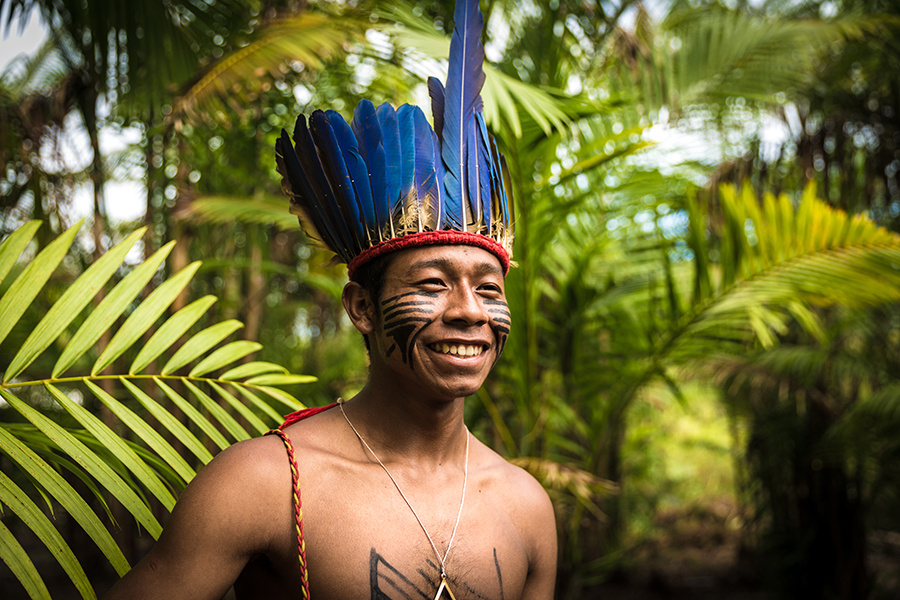
In Borneo, Brazil, and Madagascar, people are getting cheap healthcare in return for saving forests. The innovative scheme is saving lives and cutting deforestation by 70%. So how does it work? US-based organization Health in Harmony listens to communities through a process called “radical listening.” They discovered that local people in Borneo wanted to protect their forest, but when a family member fell sick, logging was a quick source of cash to pay bills. They decided to provide affordable healthcare, with payment accepted as seedlings, manure, handicrafts, or even labor. If locals reduce logging, treatments become even more affordable.

A range of organizations that have adopted this approach also offers training in conservation and organic farming. Since 2007, the number of households logging illegally has fallen by 90%, prevented $65 million worth of carbon from being released, and allowed 20,000 hectares of forest to regrow. The benefits haven’t stopped with forest conservation: Infant mortality has fallen by 67%, while TB, malaria, and other tropical diseases have also declined. Health in Harmony works alongside 135,000 indigenous, traditional, and rainforest peoples to protect more than 8.8 million hectares of valuable rainforests. Rainforests are an especially crucial habitat, containing 80% of the world’s documented species. What’s your business solution for protecting forests? 
Become a Very Remote Worker

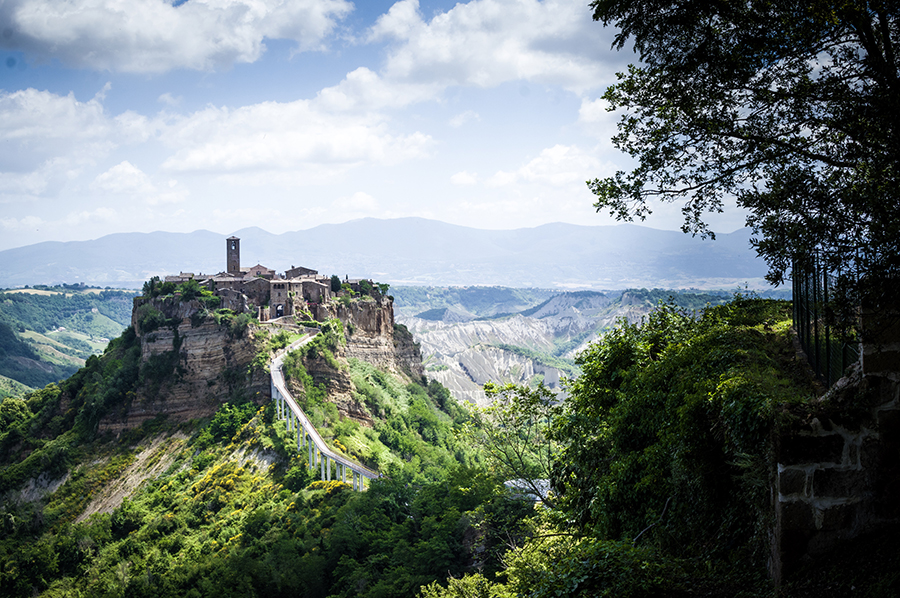
Portugal, Ireland, and Australia will pay workers to move to the countryside in a bid to revitalize rural communities and boost local economies. Tempting young, talented people away from cities reduces infrastructure stress on cities and revitalizes rural towns. Portugal offers up to $4,800 to workers from the EU to relocate to the countryside.That’s enough to cover the annual rent of a small village house. In return, they must agree to stay for at least one year. Ireland will introduce a similar scheme, converting 400 disused rural cinemas and town halls into coworking spaces with high-speed broadband.

New South Wales in Australia hopes to attract businesses to rural areas by reimbursing firms up to $7,000 per employee to help cover relocation costs. In Italy, young refugees have breathed life back into several rural communities. They have been welcomed into towns and villages in Sicily after an exodus of local, young workers had left most houses empty, with an aging population living in the remainder. The global movement of people from rural to urban is accelerating, with 55% of the world’s population living in cities. By 2050, that could rise to 70%. Would you move to the countryside to help subsidize a new or existing business?

3 Mind-Blowing Innovations that Could Power the World

The future is arriving sooner than you think. These three emerging technologies could change the way we live and travel and help us avert a climate disaster by reducing our reliance on fossil fuels.

1. Roads that Charge Electric Cars as They Drive

Holcim, a global company that creates sustainable building materials, has partnered with the German startup Magment to create a magnetizable concrete technology for road surfaces that enables electric vehicles to recharge wirelessly while in motion. Known as inductive charging, this breakthrough concrete-based solution reduces the need for charging stations while saving time — recharging stops will become a thing of the past. This breakthrough has been made possible by a unique concrete with high magnetic permeability. Collaboration is a hallmark of how Holcim operates and is key to creating breakthrough technologies. “Partnering with startups worldwide, we are constantly pushing the boundaries of innovation to lead the way in sustainability,” says Edelio Bermejo, head of the Holcim Global Innovation Center. As part of its open innovation ecosystem, led by the Innovation Center, the company works with more than 120 innovative startups worldwide, pioneering new technologies to accelerate our world’s transition to net zero. Other applications under development include the electrification of industrial floors to recharge robots and forklifts as they work. So how would you boost productivity with such an invention?

2. Making 100% Carbon-Neutral Jet Fuel from Sunlight and Air

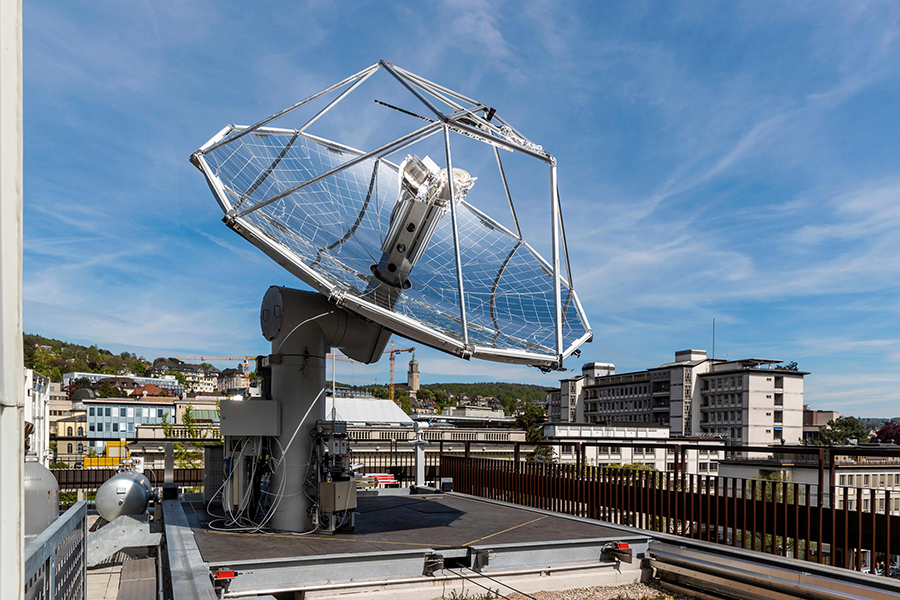
Renewable, carbon-neutral kerosene is being developed by researchers at ETH Zürich, a public research university in the Zürich, Switzerland, founded by the Swiss Federal Government in 1854 with a mission to educate engineers and scientists. The process captures CO2 and water from the air, and these substances are split using concentrated solar energy. This produces a mixture of hydrogen and carbon monoxide called syngas, which can then be processed into kerosene — the main ingredient in jet fuel. When burned, this fuel emits only the CO2 extracted from the air in the first place. The researchers at ETH Zürich have built a mini “solar refinery” on the roof of their university and say that their technology is now ready for industrial application. The manufacturing process would be ideal for desert regions where solar energy is plentiful and many poverty-stricken nations are found. There will also be no competition with agriculture for land. Might you be a jet fuel producer of the future?

3. The Ocean as a Renewable Energy Source

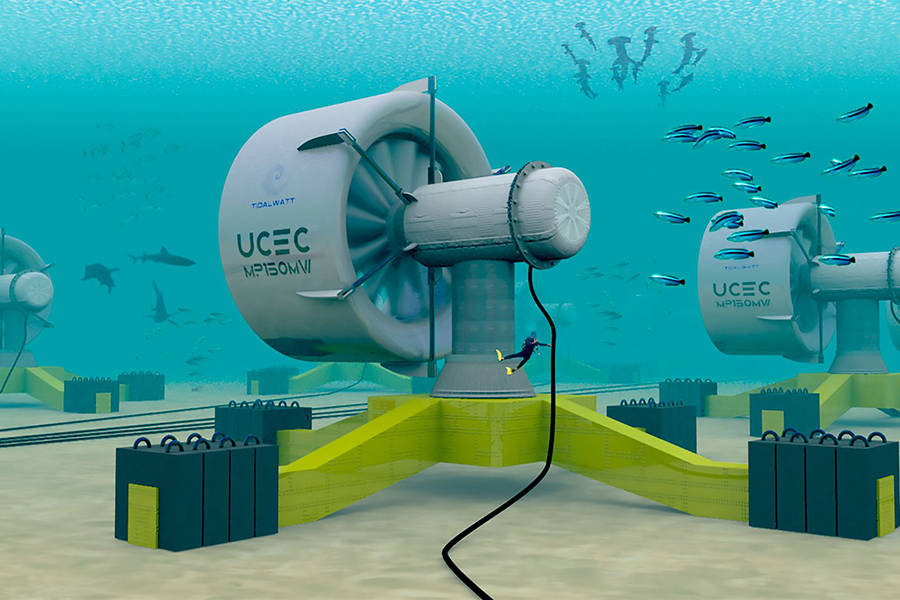
Brazilian company TidalWatt has created a new generation of underwater turbines that makes free energy from the movement of the ocean — an impressive 60 times more powerful than a wind turbine. These giant, submerged, and ecologically safe power plants are positioned in previously neglected regions and take advantage of powerful ocean currents — instead of tidal flows that typically move water back and forth in a less forceful way. Natural energy generation doesn’t stop and flows continuously, 24 hours a day. In addition to being utterly harmless to marine life, the massive underwater structures make trawling unfeasible and create ecological sanctuaries, favoring the emergence of artificial reefs. “The world’s oceans are a vast source of renewable energy that is always more predictable than wind and solar energy,” says TidalWatt founder Mauricio Otaviano de Queiroz. “I regard the ocean as an immense gold mine, the wealth of which is much more important for the good of humankind than valuable metal. It’s time we stopped despising this ocean wealth because the technology to exploit it cleanly, responsibly, and efficiently is now here.”

Easy Peasy Orange Squeezy

Krill Design in Milan, Italy, has created a 3D-printed lamp made from Sicilian orange peels.

At the end of its life, you can add it to your compost and put it back to work helping new plants to thrive. The lamp is called Ohmie, and the manufacturing process involves drying and grinding up orange peels, then mixing them with a vegetable-based polymer. This gives the lamps an orange-like texture and scent that helps keep rooms smelling fresh. One lamp uses the peels of 23 oranges, all sourced from a single family farm in Sicily.

“Ohmie is special because it merges technology, design, and sustainability all in one single object,” says Krill Design cofounder and R&D director Yack H. Di Maio. “We don’t just want to make a change in design. We want to make this change beautiful and meaningful. The lamp is a revolutionary and innovative product that marks a clear step toward a future where reclaimed materials are the norm, and the line between design and eco-design is erased,” he explains.

Krill Design also takes the scraps leftover from squeezing orange juice to make trays, drinks, coolers, and sachet holders for restaurants. More than 1.3 billion tons of food is thrown away globally each year, and circular design, such as the Ohmie lamp, is one way to help tackle this problem. What useful item could you make out of food waste?

Why Didn’t I Think of That First? 3 Great Business Ideas Promising a Brighter Future

Sometimes the best ideas emerge when you’re faced with a problem. Here are three familiar concepts repurposed to create something new, exciting, and profitable. Look around: What other products have potential to become something new?

01  Urban Farming Inside Shipping Containers

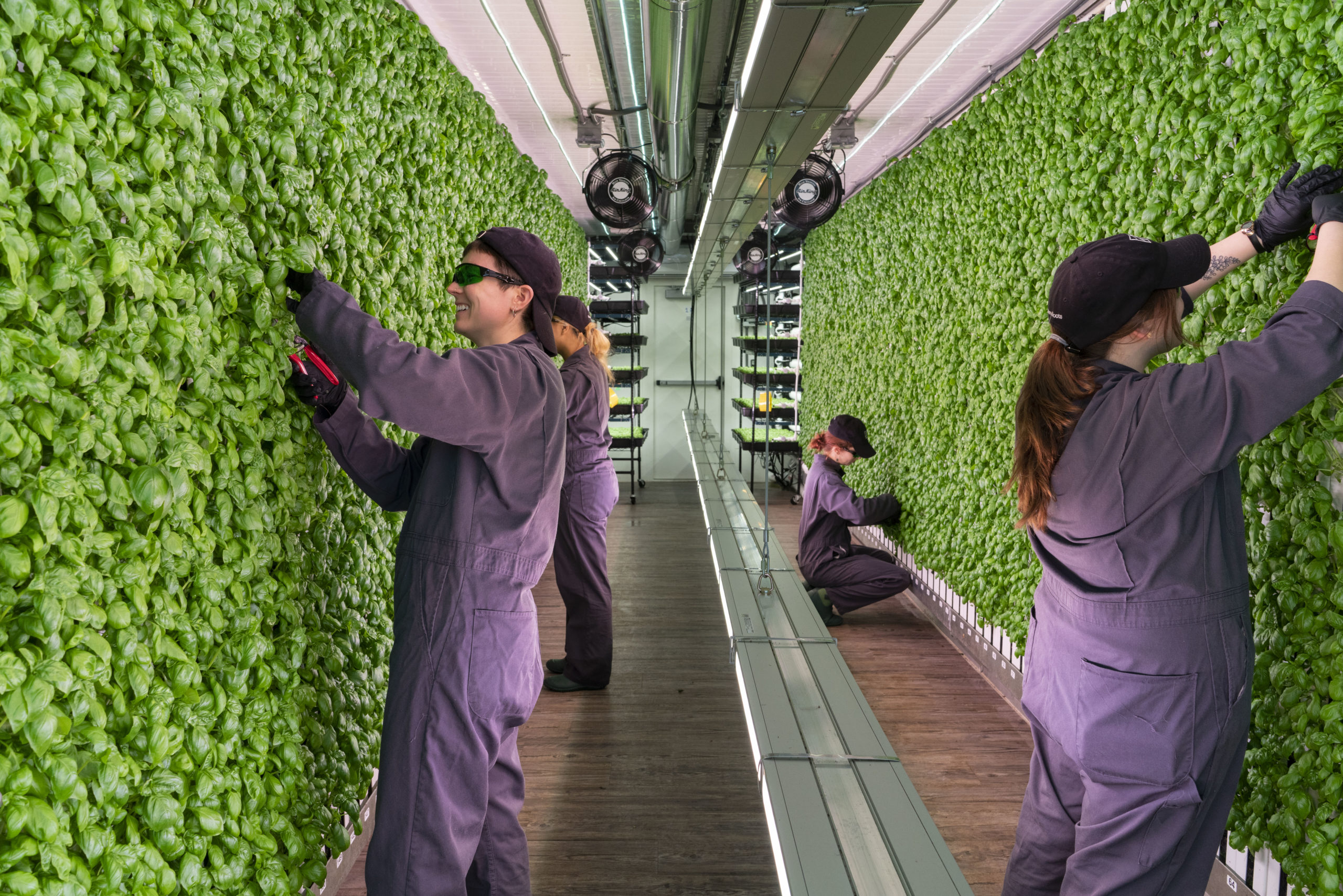
You’re already familiar with the sight of shipping containers on trucks, taking fresh produce to stores. But what if containers grew food instead of merely storing it? Young Brooklyn farmers have started growing nutritious greens in shipping containers, without ever needing to be hauled around. Each farmer at Square Roots grows greens without pesticides, and the hydroponic growing systems use 95 percent less water than traditional farms. As well as growing their food, Square Roots teaches young people how to farm more sustainably.

“Younger generations are interested in making sure that we’re all eating healthy food that’s nutritious and grown in sustainable ways,” says Tobias Peggs, CEO of Square Roots. “These cool, high-tech farms enable anyone to come in and learn how to grow food right in the middle of the city.” In many countries, the average age of a farmer is over 50, and by 2050, 68 percent of the world’s population is expected to live in urban areas. Opening up farming to non-traditional young farmers could help meet the food demands of a growing urban population.

02  A Wristband that Tells You What to Eat According to Your DNA

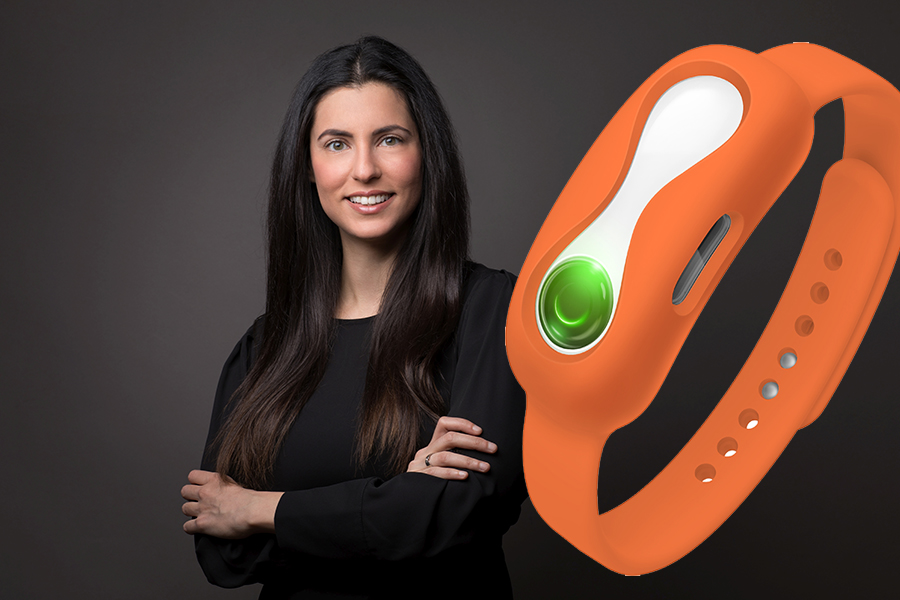
This wristband tells you what food to buy in stores based on your DNA. It scans barcodes and works out which products are best for you and what to avoid. “The whole objective of DNANudge is that we’re not telling people they can’t eat biscuits and should instead eat grapes,” says Professor Christopher Toumazou, CEO and co-founder of DNANudge. “They can eat biscuits, but eat better biscuits — based on your DNA and lifestyle. It uses biology to judge you, then guides you through more choices that result in a healthier lifestyle.” Cofounder, Maria Karvela (below), a biologist, geneticist and leukemia researcher created the world’s first database to map genetic traits to food and drink ingredients.

Toumazou invented the smart band after his son Marcus was diagnosed with a condition causing his kidneys to fail. He became determined to find a way of predicting hidden health risks, so he invented a microchip that can read DNA. His company analyzes DNA from saliva, and the data is stored on a chip embedded in a wristband. The wearer still decides what to eat, but making small swaps each day could have positive long-term health benefits. “I’ve got the gene for hypertension,” says Toumazou. “So, I’ve got to be wary of salt. I now know that there is less salt in salted peanuts than dry roasted peanuts. I love peanuts, so over a year, I could potentially save 4.5 lbs of salt from entering my bloodstream.”

03  The World’s First Two-story 3D Printed Building

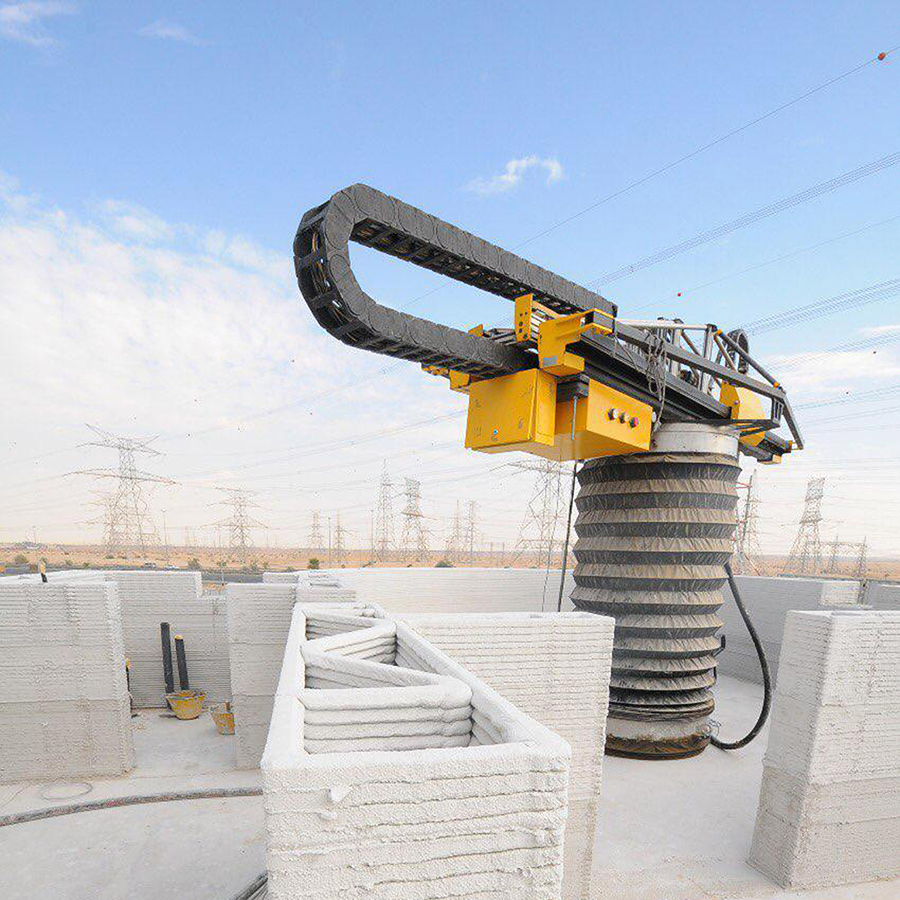
Dubai Municipality has completed the first two-story building constructed entirely with a 3D printer. It was built with 50 percent less workforce and 60 percent less construction waste than traditional buildings. The process is also cheaper and quicker than conventional methods. The 3D printer layers fluid according to a plan preset by a computer, which sets into concrete almost instantly. The building was “printed” on location, despite challenging weather conditions, using local materials, and includes curved architecture that is especially hard to print.

The building has already entered the Guinness Book of World Records but is not the only place to have explored the potential of printed structures. In France, Nantes is experimenting with making affordable housing, and a French family is the first to live in a 3D-printed house. Relief agencies are also looking to re-build communities hit by natural disasters. Dubai now aims to construct 25 percent of all future buildings using 3D printing methods.

Why Didn’t I Think of That First? 3 Great Business Ideas Promising a Brighter Future

Sometimes the best ideas emerge when you’re faced with a problem. Here are three familiar concepts repurposed to create something new, exciting, and profitable. Look around: What other products have potential to become something new?

01  Urban Farming Inside Shipping Containers

You’re already familiar with the sight of shipping containers on trucks, taking fresh produce to stores. But what if containers grew food instead of merely storing it? Young Brooklyn farmers have started growing nutritious greens in shipping containers, without ever needing to be hauled around. Each farmer at Square Roots grows greens without pesticides, and the hydroponic growing systems use 95 percent less water than traditional farms. As well as growing their food, Square Roots teaches young people how to farm more sustainably.

“Younger generations are interested in making sure that we’re all eating healthy food that’s nutritious and grown in sustainable ways,” says Tobias Peggs, CEO of Square Roots. “These cool, high-tech farms enable anyone to come in and learn how to grow food right in the middle of the city.” In many countries, the average age of a farmer is over 50, and by 2050, 68 percent of the world’s population is expected to live in urban areas. Opening up farming to non-traditional young farmers could help meet the food demands of a growing urban population.

02  A Wristband that Tells You What to Eat According to Your DNA

This wristband tells you what food to buy in stores based on your DNA. It scans barcodes and works out which products are best for you and what to avoid. “The whole objective of DNANudge is that we’re not telling people they can’t eat biscuits and should instead eat grapes,” says Professor Christopher Toumazou, CEO and co-founder of DNANudge. “They can eat biscuits, but eat better biscuits — based on your DNA and lifestyle. It uses biology to judge you, then guides you through more choices that result in a healthier lifestyle.” Cofounder, Maria Karvela (below), a biologist, geneticist and leukemia researcher created the world’s first database to map genetic traits to food and drink ingredients.

Toumazou invented the smart band after his son Marcus was diagnosed with a condition causing his kidneys to fail. He became determined to find a way of predicting hidden health risks, so he invented a microchip that can read DNA. His company analyzes DNA from saliva, and the data is stored on a chip embedded in a wristband. The wearer still decides what to eat, but making small swaps each day could have positive long-term health benefits. “I’ve got the gene for hypertension,” says Toumazou. “So, I’ve got to be wary of salt. I now know that there is less salt in salted peanuts than dry roasted peanuts. I love peanuts, so over a year, I could potentially save 4.5 lbs of salt from entering my bloodstream.”

03  The World’s First Two-story 3D Printed Building

Dubai Municipality has completed the first two-story building constructed entirely with a 3D printer. It was built with 50 percent less workforce and 60 percent less construction waste than traditional buildings. The process is also cheaper and quicker than conventional methods. The 3D printer layers fluid according to a plan preset by a computer, which sets into concrete almost instantly. The building was “printed” on location, despite challenging weather conditions, using local materials, and includes curved architecture that is especially hard to print.

The building has already entered the Guinness Book of World Records but is not the only place to have explored the potential of printed structures. In France, Nantes is experimenting with making affordable housing, and a French family is the first to live in a 3D-printed house. Relief agencies are also looking to re-build communities hit by natural disasters. Dubai now aims to construct 25 percent of all future buildings using 3D printing methods.