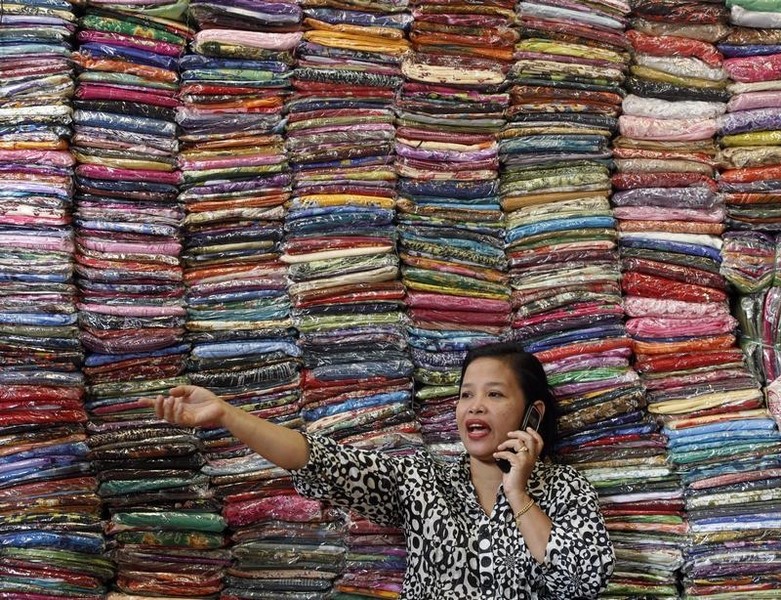
From Duped Maids to Rice Farmers, Asian Women Lead the way in Businesses to aid Society

At all the peace talks Joji Felicitas Pantoja attended in the conflict-troubled Philippines island of Mindanao, coffee was served to put people at ease. But Pantoja soon realised talking about peace wasn’t enough in communities unable to address basic needs like food and health, sparking an idea to use coffee as a vehicle for change.

Setting up “Coffee for Peace”, Pantoja worked with Mindanao farmers to revitalise an industry long abandoned for cash crops like rubber and bananas – and her farmers’ earnings tripled.

“Peace is not just the absence of war … if we don’t address the economic aspect, it’s not complete,” Pantoja, 56, a self-described peacebuilder, said by Skype from Mindanao.

Across Asia women like Pantoja are re-examining society’s problems through a business lens, playing a more leading role than women in other regions in harnessing the power of markets to tackle poverty and social ills, according to the first experts’ poll on the best countries for social entrepreneurs.

The Thomson Reuters Foundation survey of the world’s 45 biggest economies found the Philippines was the country where women fared best when taking into account representation in leadership roles in social enterprises and the gender pay gap.

In fact five other spots among the top 10 ranking in the poll of nearly 900 experts in social enterprise were in Asia – Malaysia, China, Hong Kong, Indonesia and Thailand.

Russia, Norway, and Canada rounded out the top 10, while Brazil came last and the United States fared badly in the perception poll due to concerns women are paid less than men.

Women interviewed across Asia described a fairer playing field and higher drive to put compassion over valuation as the reason women are doing so well as social entrepreneurs.

COMMUNITY FOCUS

Overall the online poll, conducted between June 9 and July 15 in partnership with Deutsche Bank, the Global Social Entrepreneurship Network (GSEN) and UnLtd, foundations for social entrepreneurs, found 68 percent of experts said women are well represented in leadership in social enterprises.

A study by Deloitte in 2015 showed that women hold only 12 percent of the world’s board seats while data from the Inter-Parliamentary Union shows women account for about 23 percent of all national parliamentarians.

However only 48 percent of experts said women in social enterprises were paid the same as men, with the United States particularly concerned on this issue.

“Whereas men want to be like Mark Zuckerberg, women want to do well for the community,” said Peetachai “Neil” Dejkraisak, who founded a rice social enterprise called Siam Organic with a female business school classmate.

“They are more compassionate and want a meaningful life … Social entrepreneurs are inherently driven by improving people’s lives, lifting people out of poverty. Women social entrepreneurs are better at doing this than their male counterparts.”

Neil and Pornthida “Palmmy” Wongphatharakul began work on Siam Organic as business school students, not setting out with the aim of building a business seeking to improve society.

“The social impact was tied into the business model – the better the business, the more impact for the farmer,” said Palmmy.

With Thai rice farmers earning about $12 per month per acre, they decided to home in on the U.S. market and innovations – mainly the organic purple “Jasberry” rice, high in antioxidants – to boost farmers’ earnings and win health-conscious customers.

The company now works with 1,000 farmers and sold about 100 tonnes of its specialty rice in 2015 to Thai and U.S. buyers – and its farmers earn an average of $180 per month per acre.

“My objective has always been whatever you do, you always have to help the farmers you promised to help. When a decision comes along, you put the farmers first,” said Palmmy, 31.

DUPED MAID TAKES LEADERSHIP ROLE

Indonesian former domestic worker Heni Sri Sundani never imagined she would become a social entrepreneur, using education to empower children and families in Indonesian villages.

From an impoverished farming family, in 2005 she went to Hong Kong as a maid to support her family but discovered her recruiter kept half her salary, inspiring her to use any spare time to study for a degree in entrepreneurial management.

She returned home six years later with a degree and started offering free classes to children through her Smart Farmer Kids in Action movement, teaching science and also modern farming.

As the movement grew to include over 1,000 students in eight villages, she began charging a small fee to help cover running costs but most parents, who are farmers, could not afford it.

So she created another community programme to help the farmers sell their products online and introduced eco-tourism, boosting their incomes so they could pay for schooling.

“We hope these children stay and empower others in the villages to become educated farmers. We don’t want them to go to big cities to become exploited labourers or end up becoming human trafficking victims,” said 29-year-old Sundani.

“People I met were amazed what a woman like me can do. More women started to join me because a woman is not just a housewife,” she said, adding she raised money via crowdfunding.

Malaysian Mastura Rashid realised it was not enough to give free food to the poor when she was a volunteer handing out meals to homeless people in Kuala Lumpur as this was not sustainable.

So she started working with urban families who earn under $250 a month last year, selling their home-cooked traditional coconut rice and spicy shrimp paste dish “nasi lemak” to office towers and petrol kiosks under “The Nasi Lemak Project”.

“We want to help the poor by giving them direct access to the market. Malaysians love to eat, there is no other better product than nasi lemak,” Mastura, 26, said.

Mastura said Malaysia’s emerging social entrepreneur scene is competitive but a level playing field for women like her, unlike traditional businesses where women face discrimination.

Her project has received grants from two government-linked agencies set up to encourage innovation and startups.

“I don’t see gender bias in social entrepreneurship – in politics or marriages, perhaps yes. There is no discrimination towards me as a woman social entrepreneur,” Mastura added.

(For the full results of the 2016 poll on the best countries for social entrepreneurs go to poll2016.trust.org)

By Alisa Tang @alisatang in Bangkok, and Beh Lih Yi @behlihyi in Jakarta. Editing by Belinda Goldsmith. c Thomson Reuters Foundation, the charitable arm of Thomson Reuters, that covers humanitarian news, women’s rights, corruption and climate change. 
 

Eat Your Food Packaging, Don’t bin it – Scientists

Scientists are developing an edible form of packaging which they hope will preserve food more effectively and more sustainably than plastic film, helping to cut both food and plastic waste.

The packaging film is made of a milk protein called casein, scientists from the U.S. Department of Agriculture said at a meeting of the American Chemical Society.

The milk-based packaging does not currently have much taste, but flavors could be added to it, as could vitamins, probiotics and other nutrients to make it nutritious, they said.

The film looks similar to plastic wrapping, but is up to 500 times better at protecting food from oxygen, as well as being biodegradable and sustainable, the researchers said at the meeting in Pennsylvania, which runs until Thursday.

“The protein-based films are powerful oxygen blockers that help prevent food spoilage. When used in packaging, they could prevent food waste during distribution along the food chain,” research leader Peggy Tomasula said in a statement on Sunday.

Between 30 and 40 percent of food produced around the world is never eaten because it spoils at some time after harvest or during transport, or gets thrown away by shops and consumers.

Yet almost 800 million people worldwide go to bed hungry every night, according to U.N. figures.

Halving food waste by 2030 was included as a target in global development goals adopted by world leaders in 2015.

The U.S. scientists also want to reduce the amount of plastic that is thrown away.

“We are currently testing applications such as single-serve, edible food wrappers. For instance, individually wrapped cheese sticks use a large proportion of plastic – we would like to fix that,” said Laetitia Bonnaillie, co-leader of the study.

Single-serve pouches of cheese would still have to be encased in a larger plastic or cardboard container for sale on store shelves to prevent them from getting wet or dirty.

Edible packaging made of starch is already on the market, but it is relatively porous and does not block oxygen from reaching the food as effectively.

Bonnaillie said she hopes the milk protein packaging will be on store shelves within three years.

By Alex Whiting, Editing by Jo Griffin.

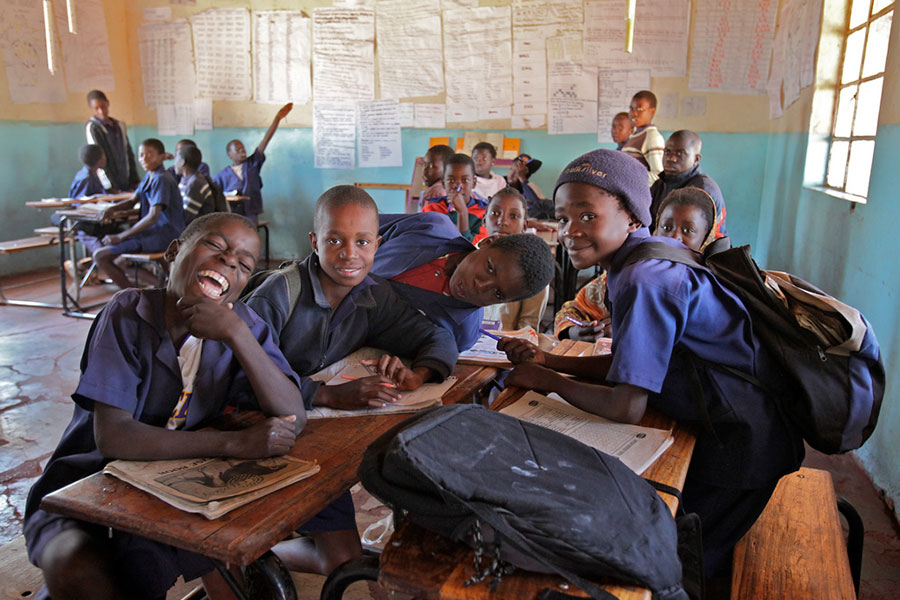
UN Secondary Education Goals Will be Missed by 50 Years

The world is set to miss by more than half a century a deadline for ensuring all children receive secondary education, the United Nations has said, adding that 40 percent of pupils are being taught in a language that is not their mother tongue.

World leaders agreed last year that by 2030 all girls and boys should be able to complete free quality primary and secondary education, but chronic under-funding is holding back progress, a U.N. report said.

“This report should set off alarm bells around the world and lead to a historic scale-up of actions to achieve (this goal),” economist Jeffrey Sachs said in a foreword.

The deadline on universal education was agreed as part of the Sustainable Development Goals (SDGs) – an ambitious plan to end poverty, hunger, advance equality and protect the environment.

“The gaps in educational attainment between rich and poor, within and between countries, are simply appalling,” said Sachs, a special U.N. adviser on the SDGs.

On current trends, universal primary education will be achieved in 2042, universal lower secondary education in 2059 and upper secondary in 2084, according to U.N. educational body UNESCO.

It said aid to education needs to increase six-fold to achieve the goal of quality universal education by 2030.

UNESCO said education was key to every aspect of sustainable development including increased prosperity, better agriculture and health, less violence and greater gender equality.

Achieving universal upper secondary education by 2030 in low income countries could lift 60 million people out of poverty by 2050, the report said.

Educating mothers to lower secondary education in sub-Saharan Africa by 2030 could also prevent 3.5 million child deaths between 2050-60.

CONFLICT

The report said conflict was one of the greatest obstacles to progress in education, keeping over 36 million children out of school.

It also pointed out that poverty and unemployment resulting from a lack of education could fuel conflict.

The UNESCO report warned that the type of education children are receiving is not equipping them for the challenges ahead.

It called for more emphasis on teaching children about environmental concerns, climate change and how to think collectively so that they can become global citizens.

“A fundamental change is needed in the way we think about education’s role in global development, because it has a catalytic impact on the well-being of individuals and the future of our planet,” said UNESCO Director-General Irina Bokova.

“Now, more than ever, education has a responsibility to be in gear with 21st century challenges and aspirations …”

Sachs called for a Global Fund for Education modelled on the Global Fund to Fight AIDS, Tuberculosis and Malaria which he said had helped drive dramatic improvements in health interventions and funding.

Around 263 million children are currently out of school globally, according to the report, and almost 30 percent of children from the poorest households in low income countries have never been to school.

Critics of the educational goal believe that pushing for universal upper secondary completion distracts from ensuring at least nine years of basic education for all.

By Emma Batha. Editing by Ros Russell. c Thomson Reuters Foundation, the charitable arm of Thomson Reuters, which covers humanitarian news, women’s rights, trafficking, corruption and climate change.


Refugee Girls, Hoping for More Than Survival, Need Education – Malala

Nobel laureate Malala Yousafzai has called on world leaders to provide education to girls in refugee camps to avoid them being forced into early marriage or child labour.

Yousafzai’s statement comes a week before U.S. President Barack Obama hosts the first U.N. summit on refugees in New York where he is expected to urge leaders to do more to help refugees in countries like Lebanon, Turkey, Jordan and Kenya.

“Why do world leaders waste our time with this pageant of sympathy while they are unwilling to do the one thing that will change the future for millions of children?” Yousafzai said in a statement ahead of the Sept. 20 summit.

She said refugee girls were wondering how long they can stay out of school before they are forced into early marriages or child labour.

“They’re hoping for more than survival” she said. “And they have the potential to help rebuild safe, peaceful, prosperous countries, but they can’t do this without education.”

Fighting in Syria, Afghanistan, Burundi and South Sudan has contributed to a record number of people who were uprooted last year, according to the U.N. refugee agency, which estimates there are 21.3 million refugees worldwide, half of them children.

Almost 80 percent of all refugee adolescents are out of school, with girls making up the majority of those excluded from education, according to a report issued by the Malala Fund, which campaigns and fundraises for educational causes.

It also blamed donor countries for failing to provide adequate funding for secondary education, and failing to deliver on funding pledges made earlier this year.

The report also criticised wealthy donor countries for diverting resources away from host countries in developing regions, such as Turkey and Lebanon, to meet their own domestic refugee costs.

The report concluded by urging donors to commit to providing $2.9 billion by September 2019 to the Education Cannot Wait Fund, a new body to raise finance for the education of refugee children.

Yousafzai, 19, rose to international fame after surviving a 2012 assassination attempt by the Taliban in Pakistan’s Swat valley to continue her fight for girls’ rights.

A regular speaker on the global stage, Yousafzai visited refugee camps in Rwanda and Kenya in July to highlight the plight of refugee girls from Burundi and Somalia.

In 2014, Yousafzai became the youngest-ever Nobel Prize winner for her work promoting girls’ education in Pakistan.

By Tom Gardner. Editing by Katie Nguyen. c Thomson Reuters Foundation, the charitable arm of Thomson Reuters, that covers humanitarian news, women’s rights, trafficking, property rights and climate change.


Fears for Social Entrepreneurs in Britain as Brexit Looms Large

Britain’s role as a pioneering country for social entrepreneurs could suffer as it prepares to leave the European Union after decades of the government actively promoting business leaders seeking to do good, experts said.

A Thomson Reuters Foundation poll of experts in the world’s 45 biggest economies ranked Britain third after the United States and Canada as having the best environment for entrepreneurs using businesses to help tackle social problems.

From The Big Issue newspaper sold by homeless people and ecotourism attraction the Eden Project to Divine Chocolate, a company co-owned by cocoa farmers in Ghana, Britain’s social enterprise sector has grown rapidly in 20 years.

Britain launched a social enterprise strategy in 2002, the first social impact bond in 2010, introduced social investment tax relief and brought in a law in 2013 calling for all public sector commissioning to factor in social value.

But economic uncertainty after Britain’s decision to leave the EU poses significant financial and operating challenges for the sector, said Peter Holbrook, chief executive of Social Enterprise UK, a membership organisation for social enterprises.

“While there is no blueprint to know what will happen after Brexit we can expect there will be less government support, financially and in terms of policy, because there will be some economic contraction,” Holbrook said.

The Thomson Reuters Foundation poll, carried out in partnership with Deutsche Bank, the Global Social Entrepreneurship Network (GSEN) and UnLtd, foundations for social entrepreneurs, found Britain came seventh when experts were asked if government policy supports social entrepreneurs.

South Korea, Singapore topped the list with France tied with Chile in third place followed by Canada and the United States.

In Britain government records identify about 70,000 social enterprises – loosely defined as ventures combining business with social purpose – employing nearly one million people.

But leaving the EU could bring new challenges such as delays on public sector contracts – a source of income for larger social enterprises – and social businesses may find it harder to borrow money amid financial uncertainty, Holbrook said.

MOMENTUM SLOWING?

In Britain, as elsewhere in the world, public funds have come under increasing pressure from shrinking economic growth, making governments more aware of the potential of social enterprises to promote a more equitable and sustainable society.

Nigel Kershaw, executive chairman of the Big Issue Group, said the sector had grown since the 1990s out of co-operatives and community enterprises wanting to use business to create social change.

Growing demand from the government to buy services from charities has also boosted the sector, Kershaw said, a factor he said he expects to continue despite Britain’s EU exit.

The poll found that selling to government was one of the main challenges faced by the growing sector.

The Big Issue, one of Britain’s best-known social enterprises, was formed in 1991 as a business solution to a social crisis and inspired street papers in more than 120 countries.

“It’s about finding sustainable business solutions that are making a difference to people’s lives throughout the U.K. in a time when we need a more innovative way of doing business,” Kershaw said.

GOVERNMENT ALLY

But despite Britain’s leadership on social entrepreneurship, experts in the Thomson Reuters Foundation poll ranked Britain only 27th when asked if social entrepreneurship was gaining momentum, while Canada and the United States ranked top.

Experts said the sector could be impacted if the new government of Theresa May does not provide the same level of support enjoyed by social entrepreneurs in the past two decades.

A decision to move responsibility for the sector from the Cabinet Office – a department at the heart of government – to the Department of Culture, Media and Sport set alarms bells off.

“There is a danger that the needs of social enterprises, social investors and mutuals will be sidelined,” Holbrook said.

Britain’s model of government support for social enterprise has caught the attention of other governments, aware of the power of using business to help social problems, experts said.

In Malaysia – which came 9th in the overall ranking and 10th when it came to government support – Prime Minister Najib Razak last year allocated 20 million ringgit ($5 million) to boost the number of social enterprises to 1,000 by 2018 from around 100.

As part of the plan it set up the Malaysian Global Innovation and Creativity Centre (MaGIC) which provides training in setting up a business, how to access funding and networking opportunities, along with competitions and outreach.

“It’s been a tremendous help to get this type of government support,” said Su Seau Yeen, founder of Simply Cookies, a social enterprise based in Kuala Lumpur that trains single mothers to bake in a kitchen where they can bring along their children.

By contrast Australia ranked 36th on government support with experts saying the sector needed coordinated government support.

“It’s a hot-button issue right now and there is a strong sense that there’s not a lot of government support,” said Jo Barraket, a professor and director of the Centre for Social Impact at Swinburne University of Technology in Melbourne.

($1 = 0.7769 pounds);($1 = 4.0050 ringgit)

(For the full results of the 2016 poll on the best countries for social entrepreneurs go to poll2016.trust.org)

By Astrid Zweynert. Additional reporting by Pauline Askin in Sydney; Editing by Belinda Goldsmith. Thomson Reuters Foundation is the charitable arm of Thomson Reuters, which covers humanitarian news, women’s rights, trafficking, property rights and climate change.