Cape Town Looks to Apartheid’s Legacy to Curb Climate Change

The outgoing mayor of Cape Town, known for averting a near catastrophic water shortage, said she hopes to leave office on the heels of another victory in the fight against climate change – slashing greenhouse emissions from transportation.

Patricia de Lille said South Africa’s second-largest city could reduce its greenhouse gas footprint by building homes for low-income residents on land left undeveloped as a legacy from apartheid.

It is a unique solution tied to the country’s cruel history.

If you like this, subscribe here for more stories that Inspire The Future.

The parcels of land were used to buffet the white-minority from members of the majority black population who were oppressed and segregated under the system of apartheid, which was imposed by white-governments from 1948 until the early 1990s.

“It’s valuable land, close to transport,” she told the Thomson Reuters Foundation on the sidelines of a climate change summit in San Francisco on Wednesday.

Under her plan, de Lille said, erecting low-cost housing on five city-owned plots will allow people to live closer to their jobs in the city center, thereby cutting car transportation and reducing carbon dioxide emissions.

“We’re using those pieces of land that belong to the city to bring about transport-oriented development,” she said, adding that transportation accounts for about 70 percent of carbon emissions in Cape Town.

“To reduce carbon emissions, you have to deal with the spatial planning of your city,” said de Lille.

Her plan was adopted by Cape Town’s government in 2016, but has not yet been put into action.

De Lille, a former anti-apartheid militant who quit as mayor of Cape Town last month after a bitter dispute within her political party, said it “must be implemented.”

“If it does not happen, I will be the first person to protest and I will mobilize the masses,” she said.

“This is an opportunity for me to drive integration of the city, by bringing people of color closer to the city.”

De Lille, whose resignation is effective Oct. 31, has been a mayor of Cape Town since 2011, and has a large support base among her fellow mixed-race residents of the city.

Under her tenure, the port city, a tourist hub with a population of about 4 million, avoided a feared “Day Zero” when its taps would have run dry due to severe drought after three years of low rainfall.

De Lille was speaking at the Global Climate Action Summit, a three day event that has drawn about 4,500 delegates from city and regional governments from around the world.

By Sebastien Malo @sebastienmalo, Editing by Jared Ferrie

If you like this, subscribe here for more stories that Inspire The Future.

Pope Francis Ditches Charity in Favor of Impact Investing

Catholic investment funds are increasingly investing in projects in emerging economies and earning a return while also doing good.

After decades of giving to charity, a growing number of Catholics are starting to put their philanthropic billions into profitable investments instead – a new aid model, backed by Pope Francis, that experts say could help end poverty.

If you like this, subscribe here for more stories that Inspire The Future.

Catholic investment funds, which manage capital from hundreds of faith-based organisations, are increasingly investing in projects in emerging economies and earning a return while also doing good, experts say.

“Although it’s easy to raise money for humanitarian emergencies, it’s getting more difficult to raise money in long-term development, particularly in countries that now have middle income status,” said Nicholas Colloff of Argidius Foundation.

“There’s definitely an increased level of interest for Catholic based organisations … in impact investing,” said the head of the Swiss foundation, which is directed by Catholic teachings about social justice and giving dignity to the poor.

Impact investing – which seeks to make a profit while also generating social and environmental benefits – is growing in popularity among investors who want to support development goals such as clean energy, education and healthcare.

Some $228 billion was managed in impact investments worldwide in 2017, double that of 2016, amid growing interest from millennials and pension funds, according to the Global Impact Investing Network (GIIN), which promotes the sector.

COMMON GOOD

Charismatic Argentine Pope Francis, who has championed the poor since he took the helm of the 1.3 billion-strong church in 2013, is a key driver of the new investment trend.

At the first of three conferences hosted by the Vatican on impact investing in 2014, he said it was important that ethics play its part in finance, and that markets should serve the interests of people and the common good of humanity.

“This call from the top to encourage us as institutions to look at new ways (to use finance) was really helpful,” said Matthew Zieger, the first national director of impact investing with Catholic Charities USA.

“The Pope has said it quite well – the economy needs to be centred around the human person and there’s a lot of ways to do that better, both as institutions and as individuals.”

Zieger said impact investing to fund affordable housing and job creation was growing at his network, which represents more than 160 Catholic agencies worth about $50 million.

Another organisation spearheading the new mission is Catholic Relief Services (CRS), the church’s U.S.-based humanitarian agency and joint host of the Vatican conferences to explore how the faithful can harness capital to help the poor.

CRS has lent $1 million to banks in El Salvador that lend on to city authorities and cooperatives to spend improving and expanding their erratic, poorly maintained water services.

It aims to give 300,000 people reliable water access in the next three years while also earning “single digit returns” from the loans, said John Simon of Total Impact Capital, which is managing the investment on behalf of CRS.

“There hasn’t been a late payment yet,” he said.

Other big Catholic institutions, such as Ascension Health, the largest non profit health system in the United States, and Georgetown University are also impact investing, according to Amit Bouri, chief executive of GIIN.

Bouri said he had noticed a shift at the Vatican conferences he attended from educating the faithful about the potential of impact investing towards allocating capital to projects.

“There were many more institutional investors present and a much more finance driven discussion, which I think will set the stage for much more impact investment activity amongst Catholic institutions,” he said.

By Lee Mannion @leemannion; Editing by Katy Migiro

If you like this, subscribe here for more stories that Inspire The Future.

Want to Save The Planet? Move to Wales

In rural Wales, a pioneering and collective housing eco-venture is underway.

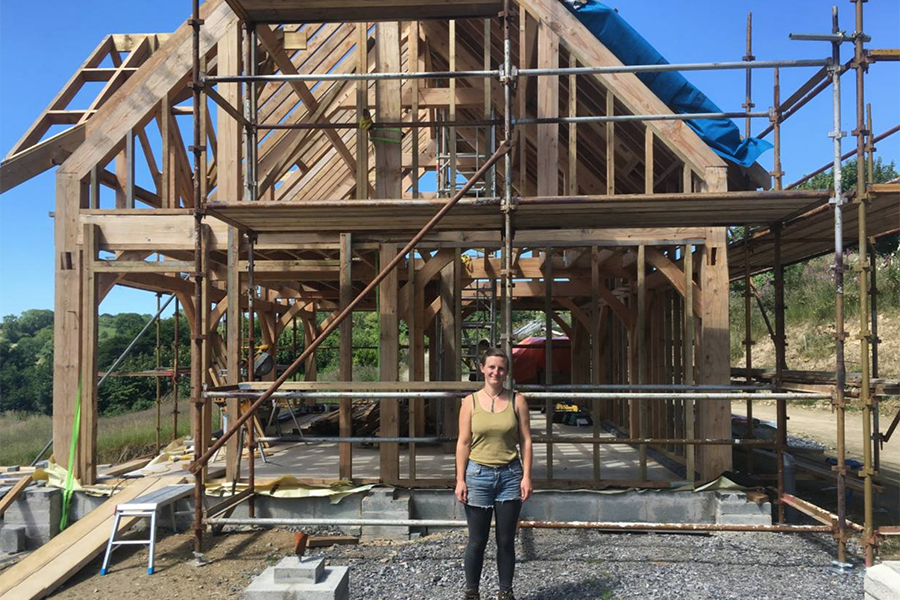
Fighting climate change is much more than a day job for Chris Vernon and Erica Thompson. It is their entire way of life.

They are part of a groundbreaking Welsh government scheme under which people get to circumvent tight planning rules so long as they build an eco-home in the countryside and go back to working the land on which it sits.

The ‘One Planet Development Policy‘ was adopted by the Welsh government in 2011 and so far, 32 households have signed up.

The aim is ambitious: in a small country where people on average use three times their fair share of the world’s resources, Wales wants its One Planet people to use only the resources they are due. Which means a simpler smallholding life, spending and travelling less, growing and making more.

If you like this, subscribe here for more stories that Inspire The Future.

A spokesman for the Welsh government said the scheme was an important niche initiative, rather than a model to scale up.

“It is intended to provide an opportunity for those wishing to live a highly sustainable lifestyle, project a light touch on the environment, and who will be largely self-sufficient in terms of income, food and energy,” said Matthew Morris, a communications officer with the Welsh government.

“Numbers of such developments are likely to remain small.”

The scheme has mostly attracted digital-era smallholders with a stubborn determination to return to a subsistence lifestyle in the rolling hills and valleys of rural Wales. And not to ruin the planet with a consumerist, throwaway lifestyle.

“We’ve known for 20 or 30 years now what we need to do to address the problem of climate change,” Vernon said from his half-built home.

“We don’t need more data. Whilst I was sitting in my office working on the computer I got the feeling I could be doing something that demonstrates how we can address the problems.”

Vernon and his partner Thompson know more about “the problems” than most. She holds a PhD in climate science, he has one in glaciology and is a climate modeller at Britain’s national weather service, the Met office.

They decided it was time for action, not academia.

Eight months pregnant and elbow-deep in local clay plaster, Thompson said their home had to be zero carbon in construction and use to win government go-ahead.

It sits deep in bucolic Pembrokeshire, a lush, coastal county in the southwest of Wales that pioneered the green approach before it was adopted countrywide.

Just up the road lies the Lammas community, a pioneering and collective eco-venture where nine smallholdings nestle in the landscape around a central community hub.

HEATWAVE

The Intergovernmental Panel on Climate Change, the leading international group that assesses climate change, estimates that global temperatures could rise 3.4 degrees Celsius by the end of the century.

Amid a European heatwave running from North Africa up to the Arctic Circle, the Welsh initiative is taking root on the Western fringe of the continent in a bid to redress some of the damage.

The policy also aims to address a myriad of problems beyond rising temperatures, from soil degradation to rural de-population, a housing crisis to wasteful global supply chains.

It offers people with little money, but plenty of determination, a way out of the rat race and back to the land.

With property prices out of reach for many rural workers and tight regulations restricting new builds, the scheme is the only way for many locals to own a home and work nearby, said another One Planet home builder, Cathryn Wyatt.

Dairy farmer Brian Boman sums up the difficulties faced by locals seeking to live and work in the area.

“We have two sons both in their 30s, both involved in the business. We have more than enough room here, to build something on the farm for the pair of them, but of course planning is a huge issue,” he told the Thomson Reuters Foundation.

Housing figures across Wales tell the same story.

In the 1980s, it would have taken a typical 20-something household about three years to save for an average deposit, according to the Resolution Trust think tank.

The research shows it would now take 19 years.

Like many of her fellow One Planet builders, Jacqui Banks wanted to jettison her old life and be true to her principles.

“It’s a lot of work, in the early years, but what we’re building is hopefully a resilient system that is going to help us have a positive impact on the world,” she told the Thomson Reuters Foundation.

“Living in the city I found it extremely difficult – the consumerist lifestyle and the waste involved.”

THE GOOD LIFE

To get permission to build a One Planet Development, three requirements must first be satisfied.

First is the overall ecological footprint.

As Vernon explained, each household must only use their global fair share of land: “If you take the entire global resource … you divide it by the population of the planet, you get a number: 1.88 hectares, it’s a fairly arbitrary number, but that’s the number that is your fair share.”

Each applicant must also show that within five years, 65 percent of their basic needs are covered by their patch of land, including food, water, energy and waste.

Hence the hodge podge of greenhouses and polytunnels that dot the land, often cobbled together from reclaimed materials and designed to make the most of a grass incline, woodland shelter or power-generating stream.

Applicants must also come up with a zero-carbon house design using locally-sourced and sustainable materials.

The result: a magical landscape dotted with “hobbit houses” straight out of JRR Tolkien’s “Lord of the Rings”, with mesmerising wooden beams, grass roofs and hemp walls.

Thirdly, everyone must set up a rural business to pay the sort of bills – internet, clothes, council tax – that cannot be met with a subsistence-only lifestyle.

Enterprises range from fruit wine to bees, an exotic tree nursery to sculpture – anything that brings in a small income.

By Max Baring, Editing by Lyndsay Griffiths.

If you like this, subscribe here for more stories that Inspire The Future.

Britain to Help Ethical Firms Win More Government Contracts

Britain has announced plans to give more business to firms that have a positive social impact, as it seeks to cement its status as a global leader in the growing sector, but experts said the strategy did not go far enough.

The government said it wanted to work more closely with charities and social enterprises – businesses that seek to do good as well as make a profit – to create a fairer society.

If you like this, subscribe here for more stories that Inspire The Future.

“This strategy is intended to help government strengthen the organisations, large and small, which hold our society together,” said the first plan of action focusing on civil society in 15 years.

“Together we can build a country that works for everyone.”

Social services, from health to transport, are increasingly being outsourced to private companies to save money and boost innovation, with a third of government spending going to external suppliers, government data shows.

The government said it will help social enterprises win more public sector contracts by boosting a landmark 2012 law, which encourages officials to consider the social and environmental impact of contracts they award, not just choosing the low bid.

“We are determined to ensure that public spending is used to generate social value in addition to the goods and services it purchases,” the strategy said, adding that businesses should benefit society, not just their shareholders.

Britain is seen as a global leader in the innovative social enterprise sector, with about 70,000 businesses employing nearly 1 million people last year, according to Social Enterprise UK.

But social enterprises only win about 10 percent of public sector contracts, says membership body Social Enterprise UK.

The new strategy comes amid years of budget cuts, which have strained social services, and questions over the rising use of private companies to deliver them, following the collapse of one major provider, the construction giant Carillion.

Social enterprise experts welcomed plans to boost the 2012 Social Value Act so that central government must ‘account for’ – in other words, report on – the social impact of procurements, rather than just ‘consider’ it.

But this should also be extended to local government, Andrew O’Brien, a director Social Enterprise UK, told the Thomson Reuters Foundation.

He also expressed cautious optimism about plans to create a regular forum for social enterprises to meet with government, saying it could make it easier to learn about initiatives to help the sector.

“We want this to be something that has real substance to it. We don’t this to just be a talking shop,” he said.

By Lee Mannion

If you like this, subscribe here for more stories that Inspire The Future.

Fight California Fires With Ancient Knowledge, Researchers Say

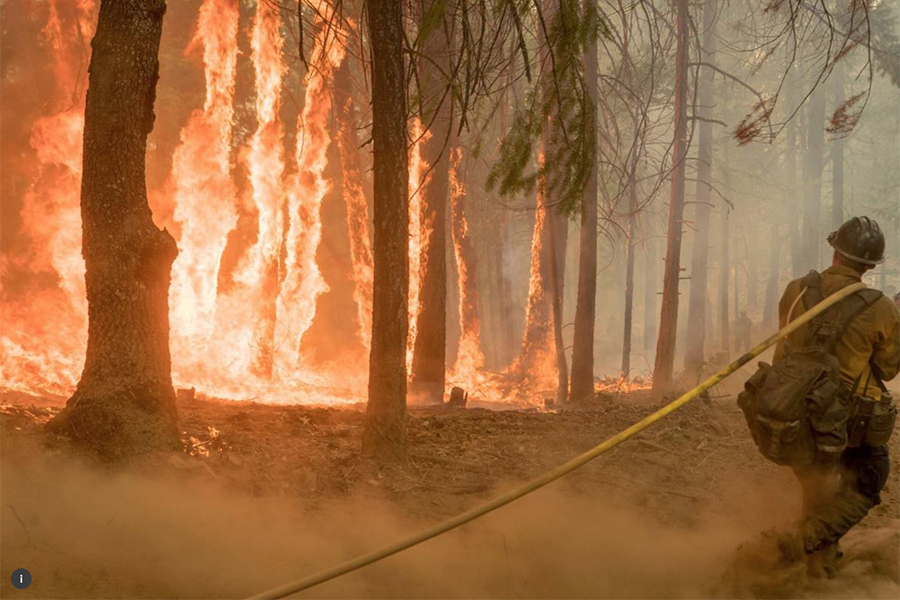
Countries at risk of catastrophic wildfires should adopt ancient practices used by indigenous people, researchers have said, after scores of deadly blazes engulfed parts of the northern hemisphere.

Wildfires have menaced villages and forests from Greece to the United States this summer, killing hundreds and displacing tens of thousands of people.

Fire services should collaborate with indigenous communities that have practised techniques for thousands of years to maintain their land and prevent large blazes, said a report by the Prisma Foundation, an El Salvador-based research group.

If you like this, subscribe here for more stories that Inspire The Future.

“The best firefighting equipment in the world cannot stop the most devastating wildfires. An effective weapon to prevent uncontrolled wildfire is knowledge,” the report said.

Indigenous people, who manage nearly 900 million hectares of land worldwide, hold “highly sophisticated” knowledge of fire management, the report noted.

Indigenous groups around the world deliberately light small fires throughout the year, which reduces the amount of fuel, preventing wildfires from spreading rapidly.

“Small controlled burns can reduce the impact and threat of catastrophic wildfires,” lead researcher Andrew Davis told the Thomson Reuters Foundation.

In the Brazilian savannah, the number of dry season fires decreased by 57 percent after fire services started collaborating with indigenous tribes, according to the Prisma Foundation.

The U.S. Forest Service formed a partnership with the Yurok tribe in northern California last year, after a fast-moving wildfire killed 43 people.

The Yurok use controlled burns to protect settlements from larger fires, and exposure to heat also makes their crops more resistant to drought, said Frank Lake, a Native American ecologist.

“Fire is medicine. This ancient lesson has an application to our modern conditions and situations,” he said by phone from New Orleans.

Fire now consumes more than half the annual budget of the U.S. Forest Service, which is in charge of managing national forests and grasslands, and it could exceed 67 percent by 2025, according to a 2015 report by the U.S. Department of Agriculture

In 1995, firefighting accounted for 16 percent of the Forest Service’s yearly budget, and that allocation rose to more than 50 percent in 2015, said the report.

Despite the extra resources for firefighting, California has suffered its most destructive fire season in history this summer, according to the Prisma Foundation report.

“Fire agencies are really struggling and looking for new strategies to address the wildfires,” Lake said. The need for new strategies will become more urgent as climate change is likely to bring an increase in wildfires, experts say.

The number of high-risk fire days will increase from 20 to 50 percent globally by 2050, according to a report published last year in the journal Nature Ecology & Evolution.

By Isabelle Gerretsen, Editing by Jared Ferrie

If you like this, subscribe here for more stories that Inspire The Future.


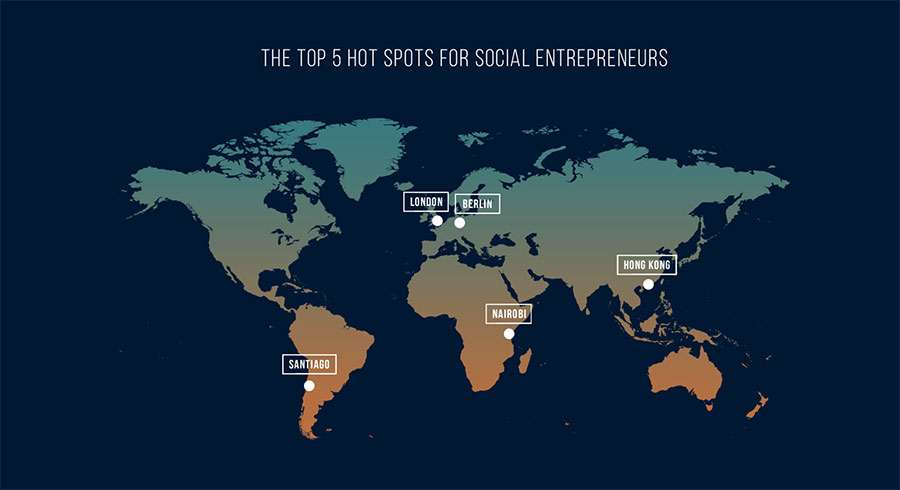
The Top 5 Hot Spots For Social Entrepreneurs

From pioneering programs in slum housing to mobile phone banking, Santiago and Nairobi are emerging hot spots for business leaders seeking to drive social change, according to a poll of experts on the best countries for social entrepreneurs.

Berlin, London and Hong Kong were named as major hot spots for social entrepreneurs in the Thomson Reuters Foundation poll of nearly 900 experts in the 45 biggest economies.

If you like this, subscribe here for more stories that Inspire The Future.

But, more surprisingly, the capitals of Chile and Kenya were also pinpointed as two of the five most exciting places for business leaders wanting to have a social impact.
Stephanie Koczela, co-founder of Nairobi-based Penda Health, a for-profit medical clinic group, said in richer countries, like the United States, people often ignored or dismissed social issues and enterprises but poorer nations saw the impact.

“In Nairobi, they want to learn more and help to drive change… Communities here are invested in social enterprises because they understand that they are striving to make the city a better place,” Koczela told the Thomson Reuters Foundation.

East Africa is one of the global centres of impact investing – the fledgling market in investing for social good – according to a report by the Global Impact Investing Network (GIIN).

This followed a major success in innovation by Kenya’s biggest communications operator, Safaricom, which pioneered a mobile money service called M-Pesa in 2007 that allows Kenyans to pay bills or receive funds on the simplest of mobile phones, giving people a new way of accessing banking.

M-Pesa, which swept across the country and has been mimicked across Africa, ignited interest from foreign investors in Kenya as an emerging hub of tech and innovation, entrepreneurs say.

“Kenyans are receptive to new ideas, those which want to make a difference. Nairobi is a good city to test innovations,” said Kenyan social entrepreneur Fredrick Ouko, the founder of Riziki Source, a mobile phone app for disabled job seekers.

With English as its main language and rising numbers of socially-minded university graduates, Nairobi has established itself as a hub for social entrepreneurs.

But, like in many other countries, there is no formal recognition for the sector, depriving it of potential investment and incentives like tax breaks, experts said.

Access to finance remains the major challenge, according to Ashoka, a global network of social enterprises.

“Attracting capital and funding is especially difficult for social entrepreneurs in Nairobi, because investors tend to turn to regular businesses for quicker and bigger returns,” said Peris Wakesho, Ashoka’s regional director for East Africa.

In Chile, social entrepreneurs also found it hard to access investment but did receive support from the government which has fuelled the recent, fast-growing trend in social enterprises in and outside Santiago, experts say.

Chile’s leading social entrepreneurs say access to government funding, the role of universities, a pool of well-educated Chileans, media interest and good internet connection have all helped make Santiago a hotbed for social entrepreneurs.

They said TECHO, a Santiago-based non-profit organisation that tackles poverty and housing in slums, played a key role in raising awareness about doing social good after its 1997 set-up.

TECHO, with a large network of young volunteers and now one of the largest non-governmental organisations (NGOs) in Latin America, has served as a platform to launch future leading social entrepreneurs and enterprises.

The Thomson Reuters Foundation poll, conducted in partnership with Deutsche Bank, the Global Social Entrepreneurship Network (GSEN) and UnLtd, the foundations for social entrepreneurs, found Chile came fifth in the ranking of nations where conditions favour social entrepreneurs.

The poll found Chile was the joint third best with France, behind only South Korea and Singapore, for the country where government policy supports social entrepreneurs.

“I’m amazed a lot by how Chile has developed in the last six to 10 years. Just five years ago, most people didn’t understand the concept of social entrepreneurship,” said Maria Jose Montero, head of Chile’s first Impact Investment Fund which raises funds for non-profit and for-profit social enterprises.

Santiago hosts the annual International Festival of Social Innovation, now in its fourth year.

Government programmes offer selected local and foreign entrepreneurs, mainly in the tech business, some equity-free funding, co-working office spaces and mentoring opportunities.

Sebastian Salinas, a Chilean social entrepreneur who co-founded Balloon Chile to support and train local entrepreneurs in rural areas to develop their businesses, said government support had been important for the growth of the sector.

“You can raise money through central and local government funds and each region in Chile has its own competitions and sources of funding for social entrepreneurship,” said Salinas.

By Anastasia Moloney and Kieran Guilbert.

If you like this, subscribe here for more stories that Inspire The Future.


Should Your Workplace Ban Meat?

If everyone became vegetarian by 2050, food-related emissions would drop by about 60 percent.

Office-sharing company WeWork, which operates in 22 countries, is going meat-free and will ban its 6,000 staff from expensing meals containing meat in a bid to “leave a better world for future generations”.

If you like this, subscribe here for more stories that Inspire The Future.

Environmentalists say livestock farming is a major contributor to global warming. Here are some facts:

– Livestock accounts for more than 14 percent of planet warming emissions, mainly from animal burping, manure and feed production.

– Production of animal-based foods accounts for two-thirds of agricultural greenhouse gas emissions and three-quarters of agricultural land use, while only contributing 37 percent of the global protein supply.

– If cattle were a nation, they would rank third behind China and the United States among the world’s largest greenhouse gas emitters.

– The livestock industry is responsible for more greenhouse gas emissions than the world’s biggest oil companies.

– The combined emissions of the top 20 meat and dairy companies exceed the emissions of entire countries such as Germany or the United Kingdom.

– A quarter of the world’s landmass, excluding Antarctica, is used for pasture.

– Cattle release methane, nitrous oxide and carbon dioxide. Methane, which traps far more heat than carbon dioxide, is released mainly through belching.

– Scientists are looking at how to make livestock less gassy by breeding animals that burp less or adjusting their diets – including feeding them seaweed.

– If the 2 billion biggest consumers of meat in the world shifted towards plant-based foods, it could save an area twice the size of India, making it easier to feed a growing world population without cutting down more forests.

– It takes 25kg of grain to produce 1kg of beef and roughly 15,000 litres of water.

– Per gramme of protein, producing beef takes 20 times as much land, and emits 20 times as many greenhouse gases, as producing beans.

– Producing chicken takes three times as much land, and emits three times as many greenhouse gases, as producing beans, per gramme of protein.

– Americans eat about 10 billion burgers each year. Replacing 30 percent of the beef with mushrooms would have the same impact as taking 2.3 million cars off the road.

– If everyone became vegetarian by 2050, food-related emissions would drop by about 60 percent. If they went vegan, the decline would be around 70 percent.

Sources: World Resources Institute, Institute for Agriculture and Trade Policy, Food and Agriculture Organization, Oxford Martin Programme on the Future of Food

By Emma Batha, Editing by Claire Cozens. 

If you like this, subscribe here for more stories that Inspire The Future.

The 10 Most Dangerous Countries For Women

Seven years ago a Thomson Reuters Foundation experts’ survey found the five most dangerous countries for women were Afghanistan, Democratic Republic of Congo, Pakistan, India, and Somalia. This year we set out to see if the situation had changed.

We wanted to find out whether more was being done to address the overall risks faced by women, and specifically regarding healthcare, access to economic resources, customary practices, sexual violence, non-sexual violence and human trafficking. We expanded our poll to the 10 most dangerous countries with some surprising results.

(adsbygoogle = window.adsbygoogle || []).push({});

World leaders vowed three years ago to eliminate all forms of violence and discrimination against women and girls by 2030, allowing them to live freely and safely to participate equally in political, economic and public life. But despite this pledge it is estimated that one in three women globally experience physical or sexual violence during their lifetime.

Child marriage is still rife, with almost 750 million women and girls married before their 18th birthday, resulting in teen pregnancies that can put their health at risk and limiting schooling and opportunities. Here are the results of the survey, listing the top 10 most dangerous countries for women. Number 10 may surprise you.

1. India

India was named as the most dangerous country for women after coming fourth in the same survey seven years ago. The world’s second most populous nation, with 1.3 billion people, ranked as the most dangerous on three of the topic questions – the risk of sexual violence and harassment against women, the danger women face from cultural, tribal and traditional practices, and the country where women are most in danger of human trafficking including forced labour, sex slavery and domestic servitude.

Violence against women in India has caused national and international outrage and protests since the 2012 gang-rape and murder of a student on a bus in New Delhi. As India’s rape epidemic gets worse by the year, critics have pointed fingers at Prime Minister Narendra Modi’s government for not doing enough to protect women.

2. Afghanistan

Afghanistan was ranked as the second most dangerous country for women after topping the poll in 2011. Nearly 17 years after the overthrow of the Taliban, many women still face dire situations daily despite Western donors pumping billions of dollars into the country. Afghanistan ranked as the most dangerous country for women on three of the topic questions – the most dangerous in terms of non-sexual violence such as conflict-related violence and domestic abuse, the worst access to healthcare, and a lack of access to economic resources and discrimination over jobs and land.

Afghanistan was listed as 171 out of 188 countries in the United Nations Development Programme’s 2015 global Gender Inequality Index. The United Nations has accused the Afghan state of allowing widespread gender brutality to go unpunished by failing to prosecute criminal violence against women who are often confined to the home and seen as subordinate to men.

3. Syria

Syria was named as the third most dangerous country for women after seven years of civil war which has decimated services across the country and killed about 510,000 people. Some 5.5 million Syrians are living as refugees in nearby countries and another 6.1 million of the 18 million population are still in Syria but forced to flee their homes.

Respondents ranked Syria as the second most dangerous country for women in terms of access to healthcare and regards non-sexual violence which includes conflict-related violence as well as domestic abuse. Syria was a joint third with the United States with regards to the risks women faced of sexual violence and harassment and named seventh worst for lack of access to economic resources.

4. Somalia

Somalia was ranked as the fourth most dangerous country for women after coming fifth in the 2011 poll. The impoverished country located in the Horn of Africa has been mired in conflict since 1991 with the government struggling to assert control over poor, rural areas under the Islamist militant group al Shabaab. The United Nations has estimated about 6.2 million people in Somalia – half the population – need emergency aid, such as food, water and shelter, due to the conflict and unprecedented drought.

The poll ranked Somalia as the third most dangerous country for women in terms of access to healthcare and for putting them at risk of harmful cultural and traditional practices. Somali was named as fifth worst country in terms of women having access to economic resources, tied ninth when it came to non-sexual violence such as conflict-related violence, and tied 10th on sexual violence.

(adsbygoogle = window.adsbygoogle || []).push({});

5. Saudi Arabia

The conservative kingdom was named the second worst country in terms of economic access and discrimination which includes job discrimination, discriminatory property rights, and an inability to make a livelihood. It came fifth in terms of the risks women face from cultural, religious and traditional practices, and seventh regarding non-sexual violence including domestic abuse.

Saudi Arabia has made headlines in recent years for moves to boost female participation in the workforce from the current 19 percent and for lifting a decades-long ban on women driving. But customary gender segregation in most workplaces still limits the way in which women can be employed and a guardianship law by which women need permission from a male relative to travel abroad, marry and other activities remains in place. Saudi Arabia has come under international fire in recent months for the arrest and jailing of some women’s rights activists.

6. Pakistan

Pakistan was named as the fourth worst nation when it came to economic resources and discrimination in the workplace and regarding land, and also regarding the risks women faced from cultural, religious and traditional practice including so-called “honour” killings. Pakistan ranked fifth when it came to non-sexual violence including domestic abuse, and joint seventh regarding sexual violence and harassment.

World Bank data shows almost one in three married Pakistani women report facing physical violence from their husbands although informal estimates are much higher. Rights groups say hundreds of women and girls are killed in Pakistan each year by family members angered at perceived damage to their “honor”, which may involve eloping, fraternizing with men or any infringement of conservative values regarding women.

7. Democratic Republic of Congo

The United Nations has warned that millions of people face hellish living conditions in DRC after years of factional bloodshed and lawlessness. About 4.3 million people have been displaced amid endemic violence, including machete attacks and gang rape, with NGOs saying this year that women and children were being exposed to the “worst sexual abuse ever”.

The vast Central African country ranked as the second most dangerous country for women as regards sexual violence. It ranked between seventh and ninth in four other questions including non-sexual violence, access to healthcare, economic resources and cultural and traditional threats.

8. Yemen

Yemen ranked poorly on access to healthcare, economic resources, the risk of cultural and traditional practices and non-sexual violence.

Saudi Arabia and regional arch-foe Iran are locked in a three-year-old proxy war in Yemen that has killed more than 10,000 people, displaced three million and pushed the impoverished country to the verge of starvation. Yemen is still reeling from the world’s most urgent humanitarian crisis where 22 million people needed vital assistance.

9. Nigeria

Nigeria was ranked as the ninth most dangerous country for women with human rights groups accusing the country’s military of torture, rape and killing civilians during its nine-year fight against Islamist insurgency Boko Haram. The conflict has killed more than 30,000 people and spawned one of the world’s worst humanitarian crises.

Africa’s most populous country was named as the sixth worst nation regards the risks women face from cultural and traditional practices and tied 10th when respondents were asked about the risks of sexual violence. But Nigeria was named as the fourth most dangerous country along with Russia when it came to human trafficking. Studies have shown that tens of thousands of Nigerian women have been trafficking into Europe for sexual exploitation.

(adsbygoogle = window.adsbygoogle || []).push({});

10. USA

The United States ranked as the 10th most dangerous country for women, the only Western nation to appear in the top 10. The United States shot up in the rankings after tying joint third with Syria when respondents were asked which was the most dangerous country for women in terms of sexual violence including rape, sexual harassment, coercion into sex and the lack of access to justice in rape cases. It was ranked sixth for non-sexual violence.

The survey was taken after the #MeToo campaign against sexual harassment went viral in October last year as Hollywood movie mogul Harvey Weinstein was accused of sexual misconduct by more than 70 women, some dating back decades. Hundreds of women have since publicly accused powerful men in business, government and entertainment of sexual misconduct and thousands have joined the #MeToo social media movement to share stories of sexual harassment or abuse.

If you like this, subscribe here for more stories that Inspire The Future.

In Hunt For Clean Jet Fuel, South Africa Swaps Tobacco for Weeds

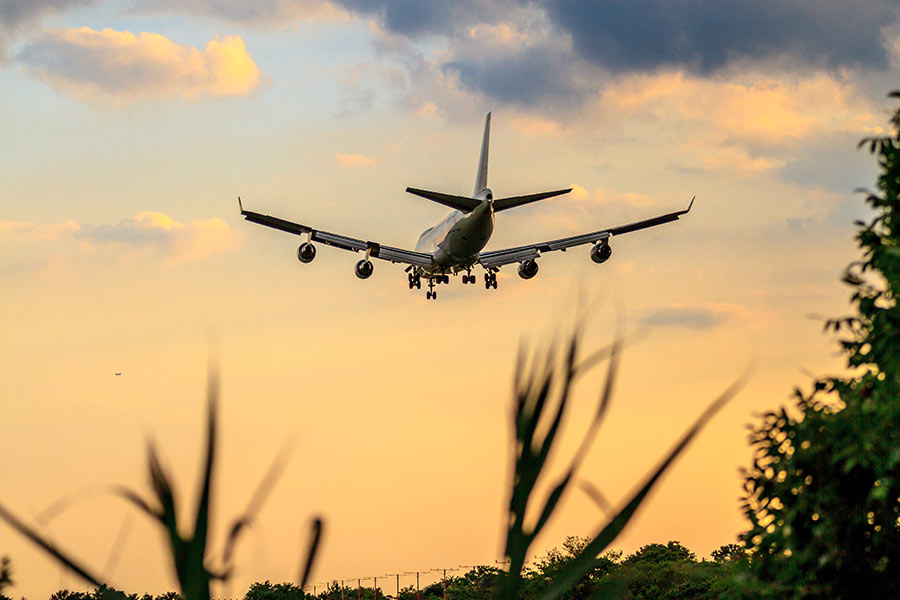
When a South African Airways Boeing 737 took off from O.R. Tambo International Airport in Johannesburg two years ago, headed for Cape Town, it was powered by an unusual fuel: tobacco.

South Africa hasn’t yet repeated the jet biofuel feat, but in an effort to cut its climate-changing emissions and promote greener power the country’s researchers are looking for innovative ways to manufacture green aviation fuel at larger scale.

If you like this, subscribe here for more stories that Inspire The Future.

A new “Waste to Wing” project aims to one day produce a significant share of the country’s aviation fuel from waste plants, including invasive species.

“South Africa produces a large amount of agricultural waste, as well as waste from plantation forestry and waste biomass from alien vegetation clearing programmes,” said Tjasa Bole-Rentel, an energy economics and policy specialist for the World Wide Fund for Nature (WWF), one of the groups involved in the biofuel push.

So far the effort is a small “proof of concept” project, likely to produce just enough jet biofuel for one more flight, she said.

But if the technology works, production could be scaled up significantly – perhaps to as much as 15 percent of the aviation fuel used at Johannesburg’s international airport, she said.

Finding clean fuel for planes, ships and other forms of transport hard to plug into a clean energy grid remains one of the biggest challenges for reducing climate changing emissions.

But as airlines face increasing pressure to become more sustainable, countries around the world are trying to find solutions, from hydrogen powered barges to, in South Africa’s case, planes that could fly on weeds.

Scaling up jet biofuel – and making it cost effective – hasn’t been easy, however.

TOO EXPENSIVE?

Farmers in South Africa’s Limpopo province today continue growing solaris, a nicotine-free tobacco that produces large amounts of oil and that was used as a feedstock for the country’s first tobacco-powered flight.

But “there is no local refining capacity available and the sheer scale of farming needed to make the economies of scale work at this moment in time” is difficult, Merel Laroy, a spokesman for SkyNRG, a Netherlands-based alternative jet fuel supplier, told the Thomson Reuters Foundation.

One of the lessons learned, she said, is that making the biofuel locally is key.

“When there’s no local production capacity, the feedstock must be shipped out of the country and shipped back after refining. This makes the sustainable aviation fuel much more expensive,” she said.

The Waste to Wing project, with $1.4 million in funding from the European Union’s SWITCH Africa Green Programme, aims to solve that problem and cut costs and protect agricultural production and forests by using waste to create fuel.

The effort, a partnership by South African social enterprise Fetola, WWF, and SkyNRG, aims to create a clean jet fuel supply in South Africa, a country with a long history of developing and using alternative fuels.

As part of the project, 25 small businesses will collect and supply the plant matter needed to make the biofuel – an effort to create jobs in a country with one of the world’s biggest unemployment rates.

Amanda Dinan, Fetola’s project manager, said the businesses could use invasive plants, collected in environmental restoration projects and currently simply stored or abandoned, as the raw material for jet fuel.

Such stores of dried plants today can present a wildfire risk in a country suffering drought, so are often purposely burned to avoid that risk, she said.

But the waste could provide jobs “in its harvesting, collection, pre-treatment and transport,” Dinan told the Thomson Reuters Foundation.

She and Bole-Rentel said no biomass will be produced for being converted to fuel.

“As the name suggests, the Waste to Wing project will focus on waste biomass”, including leftovers from food and livestock feed production, paper making and furniture production, Bole-Rentel said.

At the moment, most of the agricultural waste produced in the country is burned, she said.

In some areas, harvested invasive plants already are being used to produce charcoal or fibrous products such as coffins, but most of the waste is unused, she said, and only that unused supply will be diverted to the jet fuel project.

PLENTIFUL SUPPLY

Bole-Rentel said the project was designed to stand up to worsening drought linked to climate change in southern Africa, and ensure food-producing land isn’t used to make fuel instead.

South Africa still has large swathes of invasive plants to clear, and the weeds are spreading faster than they can be cut back, Dinan said, which means the jet fuel project could both aid that effort and is unlikely to run out of stock to make fuel.

Sampson Mamphweli, director of the Centre for Renewable and Sustainable Energy Studies at Stellenbosch University, agreed the country has plenty of organic waste.

“Whether they use organic waste, or they plant the biomass for energy, whichever way the project is worth investigating,” he said.

One huge challenge with such projects is the cost of transporting plant waste, so material would need to be sourced as close as possible to where jet biofuel is produced, Mamphweli said.

And “the cost of the actual biomass material is also a big factor,” he said. Often, a once useless and free material becomes valuable when there is a use for it, he said.

Bole-Rentel said it was too soon to get any real picture of how much of South Africa’s aviation fuel needs might be met by the waste-to-fuel project.

But “our previous research into biomass availability suggests that, technically, there could be enough biomass to meet 100 percent of our aviation fuel demand,” she said.

But under current technology the biofuel would need to be blended with conventional jet fuel, meaning the waste technology could supply at best half of the country’s needs, she said.

By Munyaradzi Makoni, editing by Laurie Goering

If you like this, subscribe here for more stories that Inspire The Future.

The Barcelona Restaurant That Tells Refugee Tales

Tucked away in a mediaeval Spanish square, an unconventional restaurant is training refugees and telling their stories, hoping to change the lives of migrants and how people see them.

Espai Mescladis is both a restaurant and culinary school – and part publishing house.

It trains migrants from as far afield as Venezuela, Senegal and Pakistan to cook and cater so they have a better shot at finding jobs and integrating in Catalan life. The interns also get help with asylum paperwork, and customers get insight into what it is to be new, penniless and scared in a strange land.

If you like this, subscribe here for more stories that Inspire The Future.

The social enterprise was founded in 2005 by Argentine entrepreneur Martin Habiague, whose interest was sparked by volunteering with a humanitarian organisation in Belgium.

“Immigration has always interested me. I’m a migrant here and my family were immigrants to Argentina from Europe, going back generations,” he said in an interview.

With mistrust of migrants on the rise in many Western societies, Habiague said it was important to stress the positives of incomers who “bring richness to a culture”.

He founded Mescladis in his 30s after leaving consultancy and said he chose a restaurant because food unites people.

“Working in a restaurant is all about action, not words, and so it’s easy to bring people together,” he told the Thomson Reuters Foundation. “Also, everybody loves food.”

Each year, about 80 students join the culinary course – known as “Cooking Opportunities” – during which time they intern in the restaurant and at other eateries in the Catalan capital.

NOT WELCOME

More than 1.8 million migrants have entered Europe since 2014. Greece and Italy receive the most asylum claims, with Spain only receiving a small share of all claims..

However there is public support in Spain for admitting more migrants, especially in the wealthy region of Catalonia.

Just this month, the Spanish government agreed to take in hundreds of refugees and migrants aboard the Aquarius rescue ship, which had been rejected by Italy and Malta.

Barcelona’s City Council said this week that the Catalan capital would accept 100 of the 629 people on board.

For incomers who seek asylum in Spain, applications can drag on for seven years, during which many resort to casual labour or illegal activities like street selling to make ends meet.

It is challenging for newcomers to fend for themselves without any work, Habiague said. “I was shocked at the treatment of migrants in Europe when I first arrived here.”

POET’S CORNER

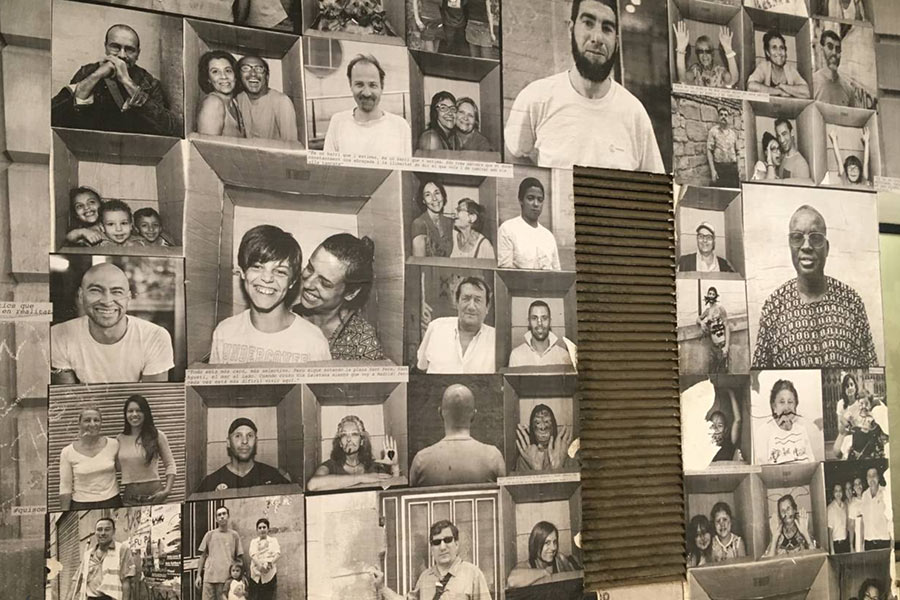
Tucked in the corner of a neglected square, Mescladis is bustling and offbeat. Its walls are hung with photos of those who have passed through its doors, its shelves laden with quirky objects from around the world.

The cavernous building – it was the birthplace in 1860 of revered Spanish poet Joan Maragall – was long abandoned before Habiague turned it into a restaurant.

Now it employs 14 former alumni of the school, as well as a constant flow of interns from the course.

Senegalese-born Soly Malamine, who is manager of the restaurant, completed the cookery course in 2010, after arriving in Spain by boat six years earlier.

The 33-year-old left home because he couldn’t find work and disliked the level of corruption. First he tried construction work in southern Spain before moving north to Barcelona.

“It was very hard finding work when I first arrived here. I was almost a year without work – and I didn’t have papers which made it more complicated,” he told the Thomson Reuters Foundation.

The international charity Caritas helped him find Mescladis.

“I was like ‘wow’ because it was the only place I could find to work where they didn’t ask me who I was, where I was from or anything,” he said.

Now he enjoys helping others facing the same sort of problems, and showing it is possible to overcome them.

“I like working here, for the human side. At the end of the day, you don’t feel like it’s a job, you feel like it’s a family,” he said.

The team routinely sits and eats together – an important ritual for immigrants excluded from much social life, he said.

ONCE UPON A TIME

As well as breaking down barriers through food, Habiague is keen to tell the stories of the people of Mescladis, aiming to humanise his staff through initiatives such as photography exhibitions and comic books.

A graphic novel, called “A Present for Kushbu”, tells the stories of nine asylum seekers on their often perilous journeys to Barcelona. Kushbu, after whom the book is named, works at Mescladis, as do some of the book’s other characters.

Mescladis is also launching a craft beer this month, which Habiague hopes will broaden the work opportunities for its alumni, in production, marketing and distribution.

By Sophie Davies, Editing by Lyndsay Griffiths. 

If you like this, subscribe here for more stories that Inspire The Future.

0