Movies With a Message Make Impact Beyond Oscars Glitz

Three Academy Awards nominations were produced and financed by Participant Media, a pioneer among a group of companies aiming to advance social missions through movies.

The movie “Green Book” explores racial inequality, “Roma” reveals the emotional toll placed on domestic workers, and “RBG” chronicles the fight for women’s rights.

The messages in these three Academy Awards movies are no accident. All were produced and financed by Participant Media, a pioneer among a group of companies aiming to advance social missions through movies.

Participant was founded in 2004 by billionaire and former eBay President Jeff Skoll. The company’s credits range from Al Gore’s climate-change documentary “An Inconvenient Truth” and Steven Spielberg’s historical drama “Lincoln” to “Spotlight”, a best picture winner about journalists who exposed a cover-up of abuse by Catholic priests.

“We often gravitate toward stories of ordinary people doing extraordinary things, becoming leaders for change in their own and others’ lives,” Participant Media Chief Executive David Linde said by email.

“Roma” is a prime example, Linde said. The black-and-white drama, which was distributed by Netflix Inc, revolves around Cleo, an indigenous Mexican housekeeper who displays courage in the face of serious challenges.

It competed at the 2019 Oscars for best picture against “Green Book” (the winner), a Participant movie released by Comcast Corp’s Universal Pictures about a black pianist on a 1962 concert tour of the segregated U.S. South.

“RBG,” about U.S. Supreme Court Justice Ruth Bader Ginsburg, was a nominee for best documentary – feature.

Participant’s movies are paired with off-screen activism. For “Roma,” the company joined the National Domestic Workers Alliance to push for labor protections and supported the launch of an app that provides benefits to house cleaners such as paid time off.

COMPELLING, SUCCESSFUL

Scott Budnick, who quit his career producing comedies such as “The Hangover” to advocate for prison reform, is also working to spark change through compelling and commercially successful entertainment.

His new company, One Community, is aiming to raise $10 million to mount a year-long campaign around the January 2020 release of the film “Just Mercy,” a biographical drama starring Michael B. Jordan as a lawyer fighting to free a man wrongly convicted of murder.

The campaign is expected to kick off within the next two months and will be designed to prompt changes on issues such as the death penalty and juvenile sentencing, Budnick said in an interview.

One Community, which is co-financing “Just Mercy” with AT&T Inc’s Warner Bros., “is the branch between philanthropy and politics to the entertainment community,” he said.

While many philanthropists and politicians want to tackle problems such as poverty or homelessness, “they are never aligned with a major studio that may be spending $20, $40 or $60 million to sell that issue to the public,” Budnick said.

“We’re here to be that aligner,” he said.

A co-producer of “Just Mercy” is Macro, a company committed to developing TV shows and movies that represent a broad range of stories featuring people of color. Past films include the critically acclaimed dramas “Fences” and “Mudbound.”

Macro was founded by former talent agent Charles King and is funded by organizations that support the company’s mission, including the Ford Foundation that invested $5 million.

“Affecting which stories are told, by whom, and from what perspective, is an extremely powerful way to change the discourse in this country,” said Cara Mertes, director of a Ford Foundation initiative called JustFilms. “For us, this is social justice impact.”

Budnick’s One Community is funded by a variety of investors, including Endeavor Content and Philadelphia 76ers co-owner Michael Rubin.

It is set up as a “double bottom line” company to generate profits and social change, Budnick said. Executives are working with social scientists to develop metrics to gauge success.

That framework is not for every investor, Budnick said.

If someone is looking for a return of 10 times their investment, “they could go to Twitter, Uber, Instagram,” Budnick said. “This is not that. This is a company modeled to make money, and it’s modeled to make impact.”

By Lisa Richwine. Editing by Paul Tait.
Costa Rica Launches ‘Unprecedented’ Push For Zero Emissions by 2050

To curb climate change, “we can be that example… we have to inspire people,” says President Carlos Alvarado.

Costa Rica’s president has launched an economy-wide plan to decarbonize the country by 2050, saying the Central American nation aims to show other nations what is possible to address climate change.

Costa Rica’s environment minister, Carlos Manuel Rodríguez, said that if the plan is achieved, his grandchildren in 2035 will have the same carbon footprint as his grandparents did in the 1940s – and by 2050 his grandchildren will have none at all.

“Not only are we going to reduce that footprint but we are going to bring many benefits with it”, Rodríguez said.

But Jairo Quirós, an electrical energy researcher at the University of Costa Rica, warned the plan would be challenging, and “should be viewed with some caution”.

Under the roadmap launched Sunday, Costa Rica by 2050 would achieve “zero net emissions”, meaning it would produce no more emissions than it can offset through things such as maintaining and expanding its extensive forests.

Such emission cuts – which many countries are expected to try to achieve in the second half of the century – are key to holding increases in global temperature to well under 2 degrees Celsius (3.6 degrees Fahrenheit), the goal of the 2015 Paris Agreement on climate change.

The Costa Rica plan aims to allow the country to continue growing economically while cutting greenhouse gases. The country’s economy grew at 3 percent last year, according to World Bank data.

Christiana Figueres, the Costa Rican former U.N. climate chief, called the goal “unprecedented” in international politics.

Only the government of the tiny Marshall Islands also has laid out a detailed plan to achieve that goal, but “they still do not have the whole plan articulated sector by sector”, Figueres said in an interview with the Thomson Reuters Foundation.

President Carlos Alvarado noted that while Costa Rica represents only a tiny share of the world’s climate-changing emissions, the experiments tried in the plan could be a model for other nations.

“We can be that example… we have to inspire people,” he said at the plan’s launch, noting the country was “doing what’s right”.

But Quirós, of the University of Costa Rica, warned the plan will take hard work to achieve.

Some goals, he said, such as ensuring all buses and taxis run on electricity by 2050, may be difficult, not least because the changes will be expensive.

“Although one tends to see that (electric bus) prices are falling over time, there is a lot of uncertainty regarding that,” he said.

GREEN TRANSPORT

Transport today creates about 40 percent of Costa Rica’s climate-changing emissions, making it the main source of them, according to the National Meteorological Institute.

To cut transport emissions, the plan aims to modernize public transport, including through the creation of an electric train line.

The new line would connect 15 of the 31 neighborhoods in the San Jose metropolitan area and carry about 250,000 of the area’s 1 million people each day, according to the Costa Rican Institute of Railways.

Construction on the lines is expected to start in 2022, according to the institute.

“A modern and efficient public transport system has a much greater impact on achieving decarbonisation than just electrifying our vehicle fleet,” said Claudia Dobles, the president’s wife and coordinator of the transport chapter of the plan.

Dobles, an architect and urban planner, has been coordinating many of the country’s public transport efficiency initiatives, including the electric train project and a reorganization of bus routes.

Under Costa Rica’s decarbonization plan, the number of cars circulating in urban areas would be cut by half by 2040, the environment minister said.

By 2035, 70 percent of the country’s buses would be electric and 25 percent of its cars, Rodríguez added.

Juan Ignacio Del Valle, director of operations for hydrogen-powered transport company Ad Astra Rocket Company, said the plan still needs work on some issues, such as cargo transport.

Technological innovation will be needed to achieve some of the goals, he said.

Ad Astra has been testing hydrogen fuel cell buses in Costa Rica for about eight years – a fuel switch that is “vaguely” contemplated in the new plan, Del Valle said.

Hydrogen transport will need more research, but it could prove the most efficient option in areas where electric vehicles fall short, including carrying cargo and for other heavy transport, he said.

OIL REVENUE

For Costa Rica, the potential political battles around decarbonizing its economy are less than in many other countries because it does not have a fossil fuel extraction industry, Rodriguez said.

But dependence on oil revenue could still cause roadblocks for the switch. Fuel taxes, vehicle import taxes and driving taxes, for instance, account for about 12 percent of government revenue, the minister said.

To phase out fossil fuels without slashing government income, the government will need to push for “green tax reform” to find new revenue sources, he said – something that could take time, as it would need legislative approval.

Under the decarbonization plan, the country’s state-owned petroleum distributor would change course and begin research on alternative fuels, such as hydrogen and biofuels, and look at helping fossil fuel workers move to clean energy jobs.

The plan also calls for further expanding forests – though at the moment most of the money to pay for that comes from taxes on fossil fuels, Rodríguez admitted.

The country already has one of the region’s strongest reputations for forest protection.

“In the 1960s and 70s, Costa Rica had the highest per capita deforestation rate in the world. We have managed not only to stop deforestation but to double forest coverage” as the economy grew, Rodríguez said.

Forests that covered 25 percent of the country in the 1980s covered more than 50 percent of it by 2013, according to data from the State of the Nation report, assembled by the country’s public universities.

Over that period, the country’s GDP grew from $4 billion in 1983 to $57 billion in 2013.

Costa Rica has already carried out some of the needed decarbonization work, officials said.

Last year, 98 percent of the country’s electricity came from renewable sources, according to the Costa Rican Electricity Institute, the state-owned company in charge of electricity generation and distribution.

Quirós, the University of Costa Rica researcher, said the country’s plan, while “a little utopic” was clearly “a step in the right direction”.

“It’s good to be ambitious,” he said.

Figueres said she believed the the country faced a “hard task” achieving its ambitious aims, but predicted it would “lead to a transformation like no other we’ve seen in decades”.

By Sebastian Rodriguez, editing by Laurie Goering.

Landmark Project Helps Peru Coffee Farmers Combat Climate Change

Four coffee co-operatives in Peru will be trained in sustainable farming, learning about the best use of organic fertilizer and robust seeds.

Thousands of coffee farmers in Peru hope to produce higher and more profitable crop yields to better cope with the impact of climate change under a landmark United Nations-backed project.

More than 1.3 billion people live on farmland that is deteriorating and producing less, putting them at risk of worsening hunger, water shortages and poverty, the U.N. says.

Land degradation could displace 135 million people by 2030 unless action is taken to restore their land, says the U.N.

The $12 million Peru project involves 2,400 small coffee farmers and is the first by a public-private investment set up with the U.N., called the Land Degradation Neutrality Fund.

“What we’re trying to do with this fund is to finance the transition to a more sustainable use of land,” said Gautier Queru, head of the Paris-based fund, which is run by investment manager Mirova.

“This translates in producing more and better with less,” he told the Thomson Reuters Foundation.

The project, set to start within weeks, runs for 15 years.

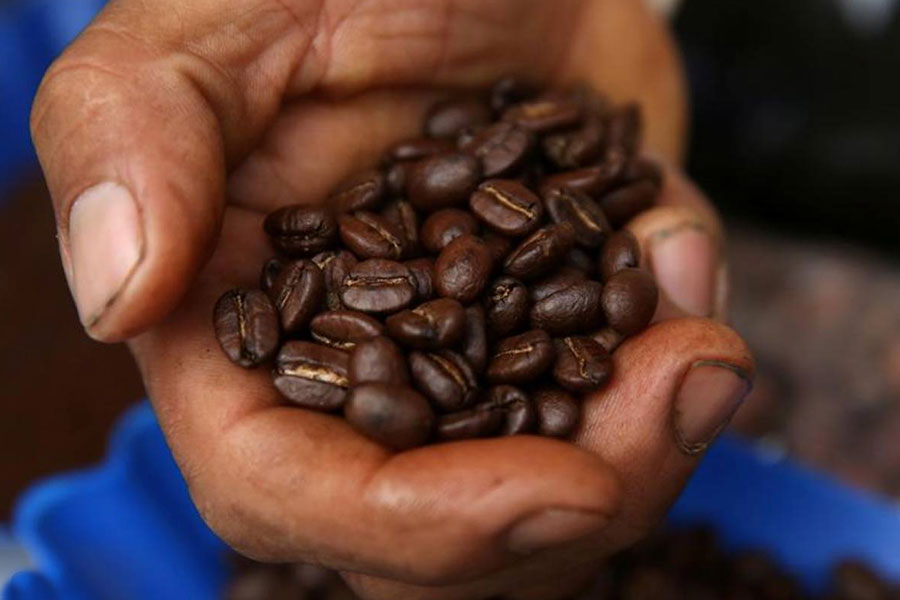
Four coffee co-operatives in northern Peru will be trained in sustainable farming, learning about the best use of organic fertiliser and robust seeds.

“It’s a matter of selecting the seeds that are well adapted to the local conditions, and future conditions, taking into account climate change to make the coffee plantations more resilient and also to ensure good quality coffee is produced to drive prices up for farmers,” Queru said.

The project also focuses on reforestation.

Covering nearly 9,000 hectares of degraded land, trees will be planted in and around plantations, providing shade. It is hoped this may cut carbon dioxide emissions by 1.3 metric tons.

Land degradation drives climate change, with deforestation – which contributes 10 percent of human-caused greenhouse gas emissions – worsening the problem, the U.N. says.

The fund aims to invest $300 million in land management and restoration projects worldwide to meet global goals – known as the Sustainable Development Goals – on land degradation by 2030.

“If you want to meet the sustainable development goals, we can’t only rely on small pilot projects,” Queru said.

“We need this program to scale up.”

Queru said the aim is to expand the pilot project to other coffee cooperatives in Peru and other coffee-producing nations in Latin America, as well as to cocoa and tree nut farmers.

By Anastasia Moloney @anastasiabogota, Editing by Lyndsay Griffiths.


UK Intelligence Agency’s New Mission – Train Girls in Cyber Skills

Britain’s national intelligence agency has unveiled plans to train about 600 teenage girls in cyber-skills this year in a bid to get more women into the male-dominated field.

The Government Communications Headquarters (GCHQ) said it would chose girls aged 12 and 13 to take part in four-day courses in coding, cryptography, logic, and protecting networks following a nationwide competition this month.

A spokesman from GCHQ said the aim was to encourage more young people – particularly girls – to work in cyber security with figures showing only 11 percent of the global cyber workforce is female.

“We are looking to address this imbalance … ensuring the inquisitive instincts of young people to find out how things work are maintained is hugely important,” said NCSC Deputy Director Chris Ensor in a statement.

The initiative was welcomed by the technology industry and viewed as timely with UK government figures showing that in 2017 about 43 percent of businesses and 19 percent of charities reported a cyber security breach over the course of a year.

Girls’ early exposure to images of male James Bonds and teenage boys coding in their bedrooms reinforced stereotypes about who fitted in the tech sector.

Without role models, girls do not consider entering the field which has tried to address the lack of women by training staff in unconscious bias, highlighting female role models on social media, and deleting gender from CVs.

Last year, defence secretary Gavin Williamson announced that women could fight in frontline infantry, the Royal Marines and specialty units previously closed to them.

By Kate Ryan; Editing by Belinda Goldsmith


Meghan Markle to Help Vulnerable British Women

A British charity transforming the lives of some of the country’s most vulnerable women has said that Meghan Markle would help them “reach for the stars” as it announced she had become a patron.

Smart Works, which provides high quality interview clothes and interview training to long-term unemployed women, described Markle as a “natural coach”.

The former actress, who became the Duchess of Sussex when she married Britain’s Prince Harry last year, is already widely recognised as a champion of women’s equality and empowerment.

Smart Works founder Juliet Hughes-Hallett said Markle would motivate more women to come to its centres and “get the job that will transform their lives”.

“The duchess’s patronage will inspire the women we serve and help them reach for the stars,” she said.

The charity, which operates in six cities, helps women referred from prisons, care homes, homeless shelters, mental health charities and job centres. A third of the women have been turned down from over 50 jobs.

The duchess, who has visited the charity several times in the last year, dropped in on its London headquarters on Thursday where she joined a discussion with volunteers and met some of the women they help.

“Her empathy and insight were obvious. The duchess is a natural coach and our clients were inspired and helped by her,” Hughes-Hallett said in a statement.

Markle, who starred in television legal drama Suits, helped pick outfits for two women who had just secured jobs and needed a basic wardrobe to see them through to their first paypacket.

The duchess, a self-declared feminist who has previously campaigned for the United Nations on gender equality, promised last year that women’s rights would be a focus of her charity work as she joined Britain’s royal family.

The duchess will also become patron of The National Theatre, The Association of Commonwealth Universities – two roles previously held by the queen – and patron of the Mayhew animal charity.

By Emma Batha @emmabatha; Editing by Claire Cozens.

From Coffee to Funerals, Ethical Firms Boom in The UK

From coffee beans helping poor farmers to affordable funeral services, British businesses that have a social impact have ballooned across a range of sectors, according to the top industry body as it unveiled the winners of its annual awards.

The number of social enterprises in Britain has jumped to 100,000 from 70,000 last year, according to Social Enterprise UK (SEUK).

The sector now employs two million people and contributes 60 billion pounds ($77 billion) to the world’s fifth largest economy – 150 percent higher than the previous estimate of 24 billion pounds.

“The trend is diversity. It demonstrates the strength of the sector in multiple markets in terms of being a serious part of the economy,” said Charlie Wigglesworth, the deputy chief executive of SEUK, in an interview.

“It’s not just one or two verticals where we’re doing well -it’s lots of areas and in lots of different ways,” he said as the group unveiled its annual awards recognising British social enterprises in 14 categories.

Cafedirect won the leading industry award for its resilience and impact as a business that has worked since 1991 to improve the lives of small coffee farmers.

“Part of the reason for Cafedirect winning is that it’s one of the best known brands in the sector, and lots of people who don’t know much about social enterprises buy Cafedirect products,” he told the Thomson Reuters Foundation.

“It’s not only about rewarding bright, young people and ideas, but those who have been around a bit longer and have had to tough it out.”

Other winners included Caledonia Cremation, a funeral company that keeps costs down to prevent families falling into poverty or debt; Community Dental Services which treats marginalised groups in the country; and NOW Group, which helps people with autism gain access to jobs.

Britain has the world’s largest social enterprise sector, according to the UK government, which supports entrepreneurs seeking to provide sustainable help to vulnerable people by making a profit, instead of relying on grants like charities.

Earlier this year a survey by accounting firm Deloitte of more than 11,000 businesses and HR leaders found 86 percent of millennials think business success should be measured in terms of more than just financial performance.

By Lin Taylor @linnytayls, Editing by Belinda Goldsmith 

Tech Startup Gives Workers The Tools to Report Supply Chain Slavery

Giving staff the tools to report workplace abuses, including forced labour, should improve data for brands that are striving to ensure their products are slavery-free, a tech startup said.

From texts and calls to messaging apps and social media, technology could encourage workers to share issues anonymously.

That would give companies a better understanding of the risk of slavery in their global supply chains, said Antoine Heuty, chief executive of Ulula, a software and analytics platform.

“Our platform can help build trust and enable workers to connect with companies in real-time, anywhere, any time and in any language,” Heuty told the Thomson Reuters Foundation.

With modern slavery increasingly making global headlines, companies are under growing pressure from governments and consumers to disclose what actions they are taking to ensure their operations and products are not tainted by forced labour.

“By combining workers’ responses with other data, we can help companies in the fight against slavery, by understanding their employees,” said Heuty, whose social enterprise is one of a rising number of businesses seeking to tackle societal issues.

While major companies from sportswear giant Adidas to budget fashion chain Primark have set up whistleblower hotlines for workers in recent years, Ulula aims to go further, Heuty said.

The platform will merge feedback from workers with other data, such as satellite imagery of palm oil plantations and building regulations for garment factories, to give companies real-time insight into risks in their supply chains, he said.

Ulula also hopes its software could in the future be used to build industry benchmarks, allowing companies and suppliers to compare working conditions and regulations against their peers.

“We want to motivate a race to the top,” Heuty said.

While technology can play an important role in protecting vulnerable workers and preventing abuses, it should not be seen as a “silver bullet”, said the Ethical Trading Initiative (ETI).

“Some software platforms may well improve traceability and transparency, and be a useful mechanism to flag risk,” said Cindy Berman, head of modern slavery strategy at ETI, a group of trade unions, firms and charities promoting workers’ rights.

“But resolving workplace grievances or rights violations cannot lie with technology.”

About 25 million people globally were estimated to be trapped in forced labour in 2016, according to the International Labour Organization (ILO) and rights group Walk Free Foundation.

By Kieran Guilbert, Editing by Robert Carmichael


10 Findings on The Biggest Transport Challenges Facing Women

Safety is the biggest concern for women using public and private transport in five of the world’s biggest commuter cities, according to a global poll as improving city access for women becomes a major focus globally.

Here are 10 results of the poll of 1,000 women that was conducted in LondonNew York, Cairo, Mexico City and Tokyo between Aug 13-24 by the Thomson Reuters Foundation:

1. Security was the top concern cited by 52 percent of women.

2. Time spent traveling was the second concern, cited by 33 percent.

3. Women in Mexico City were most worried about safety with nearly three in four fearing sexual harassment, abuse and violence.

4. Cairo’s transport system was seen by women as the second most dangerous after Mexico City.

5. Women in Tokyo felt most confident about their safety and also were most in favour of single-sex carriages.

6. Time spent traveling was the top concern for women in New York with many saying this has swayed decisions over jobs.

7. Women in London were most worried about cost with nearly three in four saying public transport was expensive.

8. Women in London were most confident that other passengers would come to their help if they were being abused.

9. Women in Tokyo were most confident other travellers would give up a seat for a pregnant or elderly women without being asked.

10. More than half of women – 56 percent – said emergence of ride-hailing apps had improved their ability to get around.

Editing by Ellen Wulfhorst.

Rich Nations Must Eat Less Meat to Tackle Climate Change

The average person in Britain eats more than three times the government’s recommended 70 grams of red or processed meat each day.

Rich countries should encourage consumers to eat less meat and help farmers become more environmentally-friendly, campaigners said on Tuesday as pressure mounts to limit global warming.

If you like this, subscribe here for more stories that Inspire The Future.

Livestock – largely cattle raised for beef and milk – are responsible for about 14.5 percent of global greenhouse gas emissions, the U.N. Food and Agriculture Organization says.

“If we want earth’s temperature rise to stay below 2 degrees, especially below 1.5 degrees … then we need to tackle this overconsumption of animal products,” said Nusa Urbancic, campaign director of Changing Markets Foundation, a lobby group.

The world risks sweltering heatwaves, extreme rainfall and shrinking harvests unless unprecedented efforts are made to keep the Earth’s temperature rise to 1.5 Celsius (2.7 degrees Fahrenheit), the United Nations said last week.

Meat consumption is more than double the recommended levels for healthy diets in the United States and much of Europe, Changing Markets Foundation and Washington-based Mighty Earth said in a report calling for reform of the food industry.

Cutting animal products from the diet would be a “relatively easy and cheap way” to reduce greenhouse gas emissions and free up land for conservation and storing carbon, they said.

For example, the average person in Britain eats more than three times the government’s recommended 70 grams of red or processed meat each day, the report said.

While more people are becoming vegan and vegetarian – particularly the young – governments continue to subsidise intensive meat and dairy farming methods that exacerbate climate change, it said.

“In Europe and the U.S., a lot of public money is spent on farming subsidies but very little of it goes to environmental measures,” Urbancic told the Thomson Reuters Foundation, calling for more support for organic farming.

There is a “shocking absence” of government policies to encourage consumers to eat less meat and to promote low-carbon alternative foods, unlike in the energy and transport sectors where reforms are receiving support, they said.

One country encouraging environmentally-friendly agriculture is Wales, where the government gives financial support to farms improving water management, maintaining biodiversity and combating climate change.

Tony Davies, a Welsh farmer benefitting from the scheme, has reduced his flock by two-thirds – to 600 animals – since 2005, which has reduced his overheads and boosted profits.

“The wildlife on the farm has increased as we have kept less stock,” he said by phone from Henfron Farm.

“More trees have had a chance to regenerate and we are storing higher levels of carbon.”

By Thin Lei Win @thinink, Editing by Katy Migiro

If you like this, subscribe here for more stories that Inspire The Future.

Oxford University Boosts Businesses That Put People Before Profit

The world-leading British university is seeking to maximize the impact of its academic research on the world.

After decades of incubating science and engineering companies, Oxford University announced on Tuesday it is branching out to support businesses that put people before profit, seeking to maximise the impact of its academic research on the world.

If you like this, subscribe here for more stories that Inspire The Future.

The world-leading British university is launching a program to support social enterprises, which aim to benefit society or the environment as well as turning a profit, through its Oxford University Innovation (OUI) arm.

“The university wants to make sure the research it produces has the biggest impact possible that it can make on the world at large,” said Mark Mann, innovation lead for humanities and social sciences at the OUI.

Britain is seen as a world leader in the social enterprise sector, with 100,000 companies employing 2 million workers – as many people as its creative industries – according to membership body Social Enterprise UK (SEUK).

The university said there were 25 new businesses in the pipeline. One runs an online game that teaches healthcare workers how to reduce child mortality rates in Africa and will launch before Christmas.

Many leading global universities play a key role in incubating businesses that emerge from their research, usually in the fields of science, engineering and medicine.

Previous companies incubated at OUI include Natural Motion, which evolved from computer simulations developed in Oxford’s zoology department. It worked on the best-selling video game Grand Theft Auto, and was sold for $527 million in 2014.

OUI has already supported Greater Change, which raises money for homeless people in the English city by scanning QR codes on smartphones, allowing them to raise deposits for secure accommodation.

Founder Alex McCallion said OUI helped organize media coverage, produced the business plan and provided the university’s crowdfunding platform, which enabled them to raise 35,000 pounds in funding.

“OUI is able to put it out to all the Oxford networks, the Oxford Angels (investors) network, the alumni network, which brought in a whole lot of funding we wouldn’t have been able to get through a traditional platform,” said McCallion.

By Lee Mannion @leemannion, Editing by Claire Cozens.

If you like this, subscribe here for more stories that Inspire The Future.

0