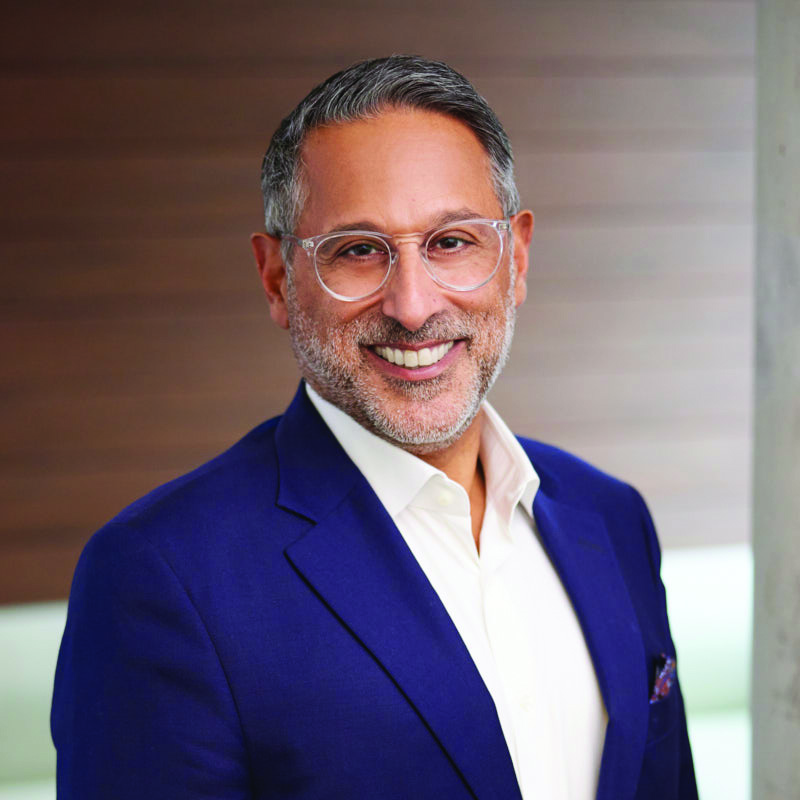
The AZEK Company is an industry-leading designer and manufacturer of beautiful, low-maintenance, and environmentally sustainable outdoor living products. Recognized as a leader in innovation, quality, aesthetics, and sustainability, its products are made from up to 85% recycled material, providing a long-lasting, eco-friendly, and stylish solution to consumers. Here, The AZEK Company President and CEO Jesse Singh shares his knowledge and experience with Real Leaders.
Real Leaders: How do you thrive in the impact space?
Jesse Singh: We thrive by staying true to our core purpose, which is to revolutionize outdoor living. Our decisions are centered on creating long-lasting products that reduce environmental impact, while enhancing the beauty, functionality, and resilience of outdoor living spaces. By transforming waste into opportunity, we use up to 85% recycled waste and scrap materials to manufacture products across our portfolio, which enhances our commitment to sustainability and circularity.
RL: What milestones have you achieved this year?
Singh: This year we set a new industry standard by becoming the first to earn an Ignition Resistant designation from California’s state fire marshal. Our products offer top-rated fire resistance and are made with an increasing amount of recycled waste and scrap material.
RL: What is the biggest challenge you’ve overcome?
Singh: Historical biases around synthetic materials still exist in the built environment. As we continue to expand and engage the market in a broader way, we are increasingly optimistic about the long-term opportunity for growth and material conversion away from wood and toward our types of materials. Our success is evidenced by a 10-year track record of delivering double-digit compound annual growth in net sales. This positions us to capitalize on the growing demand for sustainable materials.
RL: What is your best strategy for finding investors?
Singh: Communicate your vision clearly and demonstrate tangible results. Building strong relationships and maintaining transparency helps attract the right investors. Getting your story out there — whether at conferences, trade shows, virtual webcasts, or in-person meetings — creates valuable opportunities to engage with new potential investors.
RL: What is your long-term, mission-oriented dream?
Singh: Our long-term dream is to lead the building products industry toward a fully circular economy, where waste is eliminated and most of our materials come from recycled or renewable sources. We aim to inspire a broader shift across industries toward sustainable practices that positively impact both people and the planet.
RL: What is your best advice for fellow impact CEOs?
Singh: Stay focused on your big ambition while creating a maniacal focus on execution. Hold fast to your mission and values, especially when challenges arise; authenticity resonates with customers, employees, and investors. Prioritize delivering real, measurable impact and embrace innovation. Do not be afraid to take calculated risks. Building a strong, purpose-driven team is also crucial; surround yourself with passionate, experienced individuals who share your vision and are committed to delivering results and making an impact.
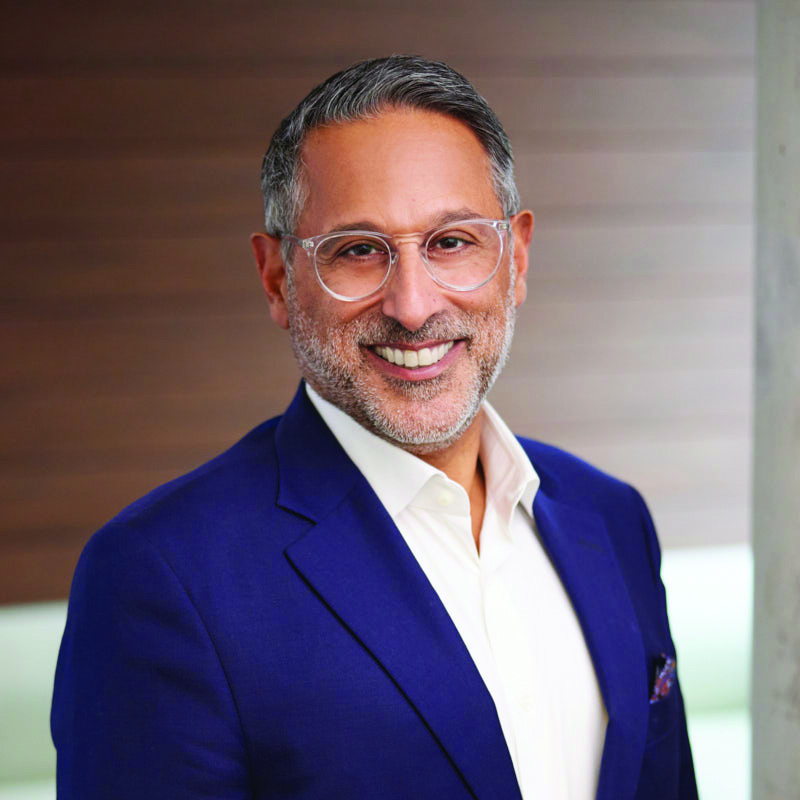
The AZEK Company is an industry-leading designer and manufacturer of beautiful, low-maintenance, and environmentally sustainable outdoor living products. Recognized as a leader in innovation, quality, aesthetics, and sustainability, its products are made from up to 85% recycled material, providing a long-lasting, eco-friendly, and stylish solution to consumers. Here, The AZEK Company President and CEO Jesse Singh shares his knowledge and experience with Real Leaders.
Real Leaders: How do you thrive in the impact space?
Jesse Singh: We thrive by staying true to our core purpose, which is to revolutionize outdoor living. Our decisions are centered on creating long-lasting products that reduce environmental impact, while enhancing the beauty, functionality, and resilience of outdoor living spaces. By transforming waste into opportunity, we use up to 85% recycled waste and scrap materials to manufacture products across our portfolio, which enhances our commitment to sustainability and circularity.
RL: What milestones have you achieved this year?
Singh: This year we set a new industry standard by becoming the first to earn an Ignition Resistant designation from California’s state fire marshal. Our products offer top-rated fire resistance and are made with an increasing amount of recycled waste and scrap material.
RL: What is the biggest challenge you’ve overcome?
Singh: Historical biases around synthetic materials still exist in the built environment. As we continue to expand and engage the market in a broader way, we are increasingly optimistic about the long-term opportunity for growth and material conversion away from wood and toward our types of materials. Our success is evidenced by a 10-year track record of delivering double-digit compound annual growth in net sales. This positions us to capitalize on the growing demand for sustainable materials.
RL: What is your best strategy for finding investors?
Singh: Communicate your vision clearly and demonstrate tangible results. Building strong relationships and maintaining transparency helps attract the right investors. Getting your story out there — whether at conferences, trade shows, virtual webcasts, or in-person meetings — creates valuable opportunities to engage with new potential investors.
RL: What is your long-term, mission-oriented dream?
Singh: Our long-term dream is to lead the building products industry toward a fully circular economy, where waste is eliminated and most of our materials come from recycled or renewable sources. We aim to inspire a broader shift across industries toward sustainable practices that positively impact both people and the planet.
RL: What is your best advice for fellow impact CEOs?
Singh: Stay focused on your big ambition while creating a maniacal focus on execution. Hold fast to your mission and values, especially when challenges arise; authenticity resonates with customers, employees, and investors. Prioritize delivering real, measurable impact and embrace innovation. Do not be afraid to take calculated risks. Building a strong, purpose-driven team is also crucial; surround yourself with passionate, experienced individuals who share your vision and are committed to delivering results and making an impact.
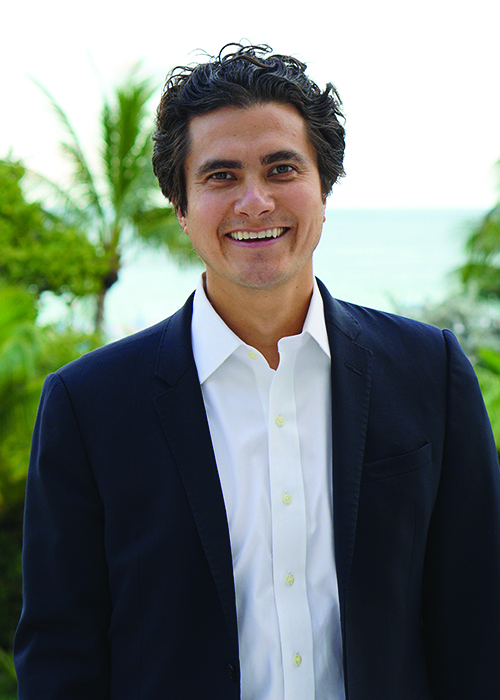
Cymbiotika is a wellness company that revolutionizes health through advanced supplements that support optimal vitality and well-being. With a focus on holistic wellness, Cymbiotika is leading a movement toward improved quality of life by offering science-backed solutions for enhancing internal health. Here, Cymbiotika Founder and CEO Shahab Elmi shares his knowledge and experience with Real Leaders.
Real Leaders: How do you thrive in the impact space?
Shahab Elmi: As a rapidly growing company Cymbiotika integrates cutting-edge supplements and holistic wellness practices to enhance the well-being of its community. Cymbiotika is a movement dedicated to improving lives and making a meaningful impact in the wellness industry.
RL: What milestones have you achieved this year?
Elmi: Cymbiotika launched six innovative products and achieved a significant retail expansion in The Vitamin Shoppe and Sprouts. Cymbiotika was recognized by Inc. Magazine as No. 31 on the Pacific Region’s Fastest-Growing Private Companies list and secured a spot on the Inc. 5000 list of America’s Fastest-Growing Private Companies.
RL: What is the biggest challenge you’ve overcome?
Elmi: Cymbiotika’s greatest challenge has been navigating the significant demands and product shortages that have heavily impacted its cash flow. The company’s rapid, triple-digit growth year over year has created overwhelming demand. As a result, the company has completed a first round of external funding to sustain its growth.
RL: What is your best strategy for finding investors?
Elmi: Thanks to the company’s viral success, high-profile celebrities and athletes have become advocates for the products, which has naturally attracted inbound investor interest. Building and nurturing these relationships has been key to Cymbiotika’s growth.
RL: What is your long-term, mission-oriented dream?
Elmi: Cymbiotika’s dream is to help as many people as possible live longer, healthier lives. Central to this mission is creation of a powerful hub for learning, empowering individuals with the tools they need to make informed decisions about their health.
RL: What is your best advice for fellow impact CEOs?
Elmi: Instead of running from failure, embrace it. It’s an integral part of the journey to success. Confidence in your mantra and purpose is crucial; it’s what will guide you through tough times. Embrace those challenges — remember, resilience is what builds champions.
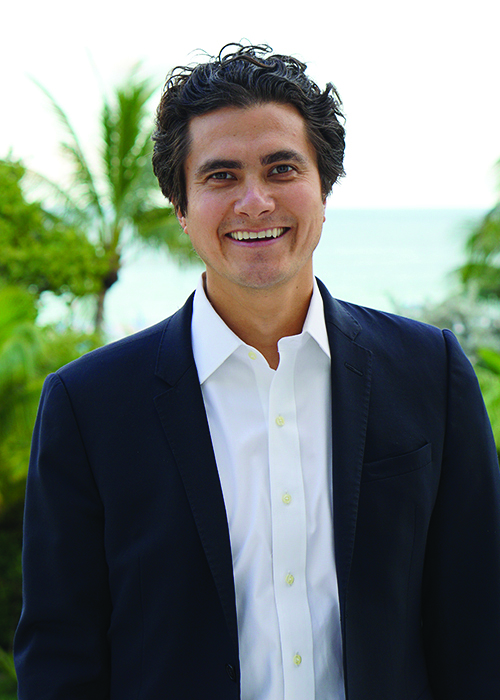
Cymbiotika is a wellness company that revolutionizes health through advanced supplements that support optimal vitality and well-being. With a focus on holistic wellness, Cymbiotika is leading a movement toward improved quality of life by offering science-backed solutions for enhancing internal health. Here, Cymbiotika Founder and CEO Shahab Elmi shares his knowledge and experience with Real Leaders.
Real Leaders: How do you thrive in the impact space?
Shahab Elmi: As a rapidly growing company Cymbiotika integrates cutting-edge supplements and holistic wellness practices to enhance the well-being of its community. Cymbiotika is a movement dedicated to improving lives and making a meaningful impact in the wellness industry.
RL: What milestones have you achieved this year?
Elmi: Cymbiotika launched six innovative products and achieved a significant retail expansion in The Vitamin Shoppe and Sprouts. Cymbiotika was recognized by Inc. Magazine as No. 31 on the Pacific Region’s Fastest-Growing Private Companies list and secured a spot on the Inc. 5000 list of America’s Fastest-Growing Private Companies.
RL: What is the biggest challenge you’ve overcome?
Elmi: Cymbiotika’s greatest challenge has been navigating the significant demands and product shortages that have heavily impacted its cash flow. The company’s rapid, triple-digit growth year over year has created overwhelming demand. As a result, the company has completed a first round of external funding to sustain its growth.
RL: What is your best strategy for finding investors?
Elmi: Thanks to the company’s viral success, high-profile celebrities and athletes have become advocates for the products, which has naturally attracted inbound investor interest. Building and nurturing these relationships has been key to Cymbiotika’s growth.
RL: What is your long-term, mission-oriented dream?
Elmi: Cymbiotika’s dream is to help as many people as possible live longer, healthier lives. Central to this mission is creation of a powerful hub for learning, empowering individuals with the tools they need to make informed decisions about their health.
RL: What is your best advice for fellow impact CEOs?
Elmi: Instead of running from failure, embrace it. It’s an integral part of the journey to success. Confidence in your mantra and purpose is crucial; it’s what will guide you through tough times. Embrace those challenges — remember, resilience is what builds champions.
Crusoe Energy Systems is a vertically integrated AI infrastructure company dedicated to sustainably powering computing. Here, Crusoe CEO and Co-Founder Chase Lochmiller shares his knowledge and experience with Real Leaders.
Real Leaders: How do you thrive in the impact space?
Chase Lochmiller: To minimize the environmental impacts of computing-led innovation, Crusoe takes an energy-first approach to providing a sustainable and cost-effective AI cloud platform. Since our inception in 2018, we’ve dedicated ourselves to driving change in advanced computing by utilizing wasted, stranded, and clean energy sources to sustainably power our data centers and AI-focused cloud computing infrastructure. Crusoe leverages cutting-edge technology to catalyze human progress across the globe while mitigating the ecological consequences typically associated with large-scale data processing.
RL: What milestones have you achieved this year?
Lochmiller: Crusoe avoided over 680,000 metric tons of greenhouse gas emissions by scaling Digital Flare Mitigation® (DFM) technology in the U.S. We expanded to 33 sites across six states, including 12 new deployments. Our company prevented over 5.4 billion cubic feet of natural gas from being flared and avoided over 8,500 metric tons of methane emissions. We generated over 635,000 megawatt-hours of electricity by harnessing stranded energy. We expanded internationally through a partnership with Unblock Computing. Lastly, Crusoe licensed our technology to enable a reduction in flaring by over 85 million cubic feet across two sites in Argentina.
RL: What is your best strategy for finding investors?
Lochmiller: None of this would be possible without the lasting commitment and dedication of our employees, investors, energy partners, cloud customers, and other key stakeholders — many of whom have been with us from the beginning. We cannot begin to express our appreciation enough for the many people working tirelessly to bring our mission to life. The key is finding the right people, partners, employees, and stakeholders who not only believe in our mission but can help us grow and succeed.
RL: What is your long-term, mission-oriented dream?
Lochmiller: Crusoe is working to transform the system of computing infrastructure — from the energy that powers it, to the data centers that serve it, to our purpose-built AI computing stack that supports the work of innovators using our technology. Through our vertically integrated approach, we are reimagining how large-scale AI computing should operate from the ground up. Our mission is to align the future of computing with the future of the climate, and that drives us day in and day out.
RL: What is your best advice for fellow impact CEOs?
Lochmiller: We are deeply grateful for the opportunity to continue to shape and scale the computing industry as we strive to always do more and do better, and that is the advice we would pass on: Strive to always do more and do better.
Crusoe Energy Systems is a vertically integrated AI infrastructure company dedicated to sustainably powering computing. Here, Crusoe CEO and Co-Founder Chase Lochmiller shares his knowledge and experience with Real Leaders.
Real Leaders: How do you thrive in the impact space?
Chase Lochmiller: To minimize the environmental impacts of computing-led innovation, Crusoe takes an energy-first approach to providing a sustainable and cost-effective AI cloud platform. Since our inception in 2018, we’ve dedicated ourselves to driving change in advanced computing by utilizing wasted, stranded, and clean energy sources to sustainably power our data centers and AI-focused cloud computing infrastructure. Crusoe leverages cutting-edge technology to catalyze human progress across the globe while mitigating the ecological consequences typically associated with large-scale data processing.
RL: What milestones have you achieved this year?
Lochmiller: Crusoe avoided over 680,000 metric tons of greenhouse gas emissions by scaling Digital Flare Mitigation® (DFM) technology in the U.S. We expanded to 33 sites across six states, including 12 new deployments. Our company prevented over 5.4 billion cubic feet of natural gas from being flared and avoided over 8,500 metric tons of methane emissions. We generated over 635,000 megawatt-hours of electricity by harnessing stranded energy. We expanded internationally through a partnership with Unblock Computing. Lastly, Crusoe licensed our technology to enable a reduction in flaring by over 85 million cubic feet across two sites in Argentina.
RL: What is your best strategy for finding investors?
Lochmiller: None of this would be possible without the lasting commitment and dedication of our employees, investors, energy partners, cloud customers, and other key stakeholders — many of whom have been with us from the beginning. We cannot begin to express our appreciation enough for the many people working tirelessly to bring our mission to life. The key is finding the right people, partners, employees, and stakeholders who not only believe in our mission but can help us grow and succeed.
RL: What is your long-term, mission-oriented dream?
Lochmiller: Crusoe is working to transform the system of computing infrastructure — from the energy that powers it, to the data centers that serve it, to our purpose-built AI computing stack that supports the work of innovators using our technology. Through our vertically integrated approach, we are reimagining how large-scale AI computing should operate from the ground up. Our mission is to align the future of computing with the future of the climate, and that drives us day in and day out.
RL: What is your best advice for fellow impact CEOs?
Lochmiller: We are deeply grateful for the opportunity to continue to shape and scale the computing industry as we strive to always do more and do better, and that is the advice we would pass on: Strive to always do more and do better.
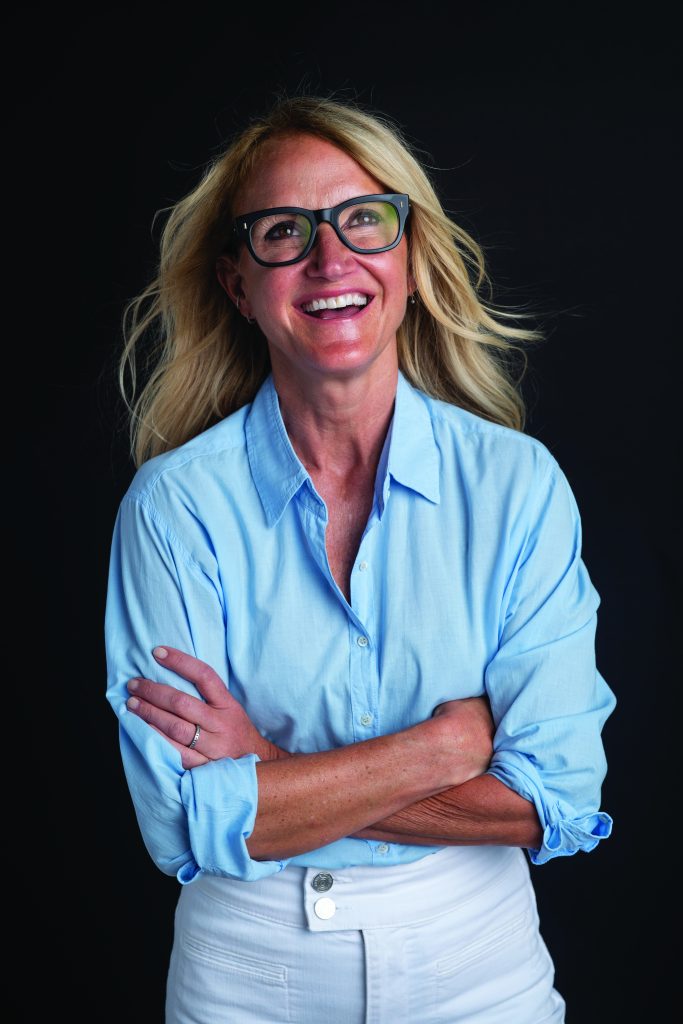
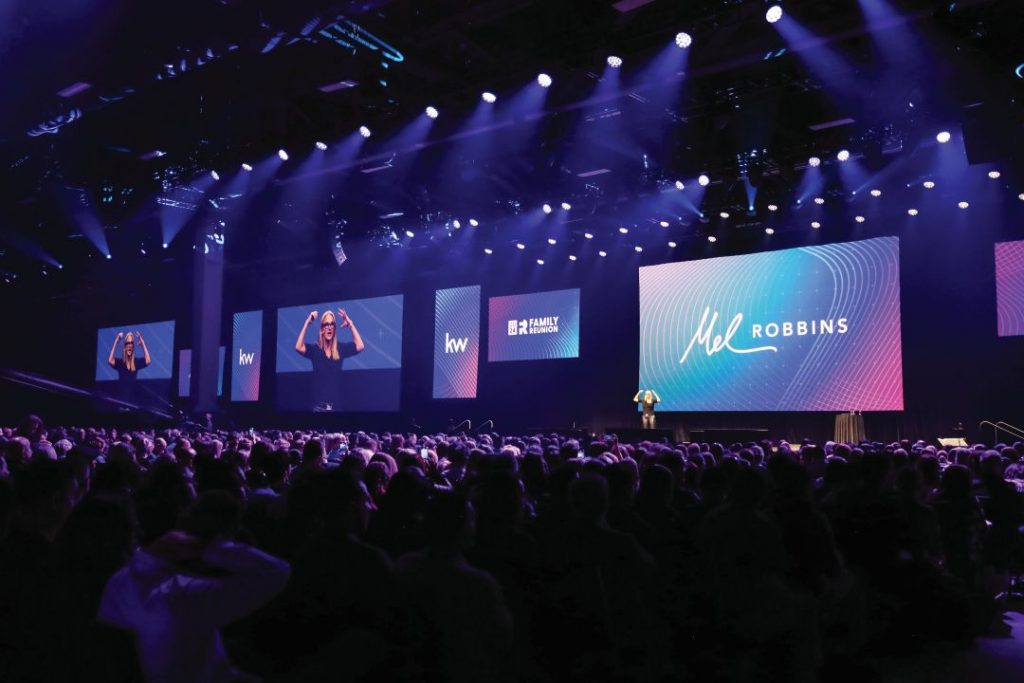
After 15 years of Army-crawling in the dirt, as she puts it, she recently erupted on the scene as one of the more followed and sought-after experts in mindset, behavior change, and life improvement; and her media company, 143 Studios, has worked with some of the biggest companies on earth.
Photo Credit: Mel Robbin’s Team
In this exclusive interview with Real Leaders, Robbins unpacks insights from her new book and its wildly popular, research-backed The Let Them Theory. Plus, she gives a crash course on ChatGPT for business, explains why you need to get on TikTok Shop now, and gets real about her gravest mistakes as CEO.
Real Leaders: How do the ideas in The Let Them Theory apply to business founders and CEOs?
Mel Robbins: The Let Them Theory is a simple mindset tool that shows you in any moment in your business and your life what’s in your control and what’s not — and lets you take the power back and lead. It is particularly important in business because when you get yourself obsessed with the things about your business or your team that you can’t control, it’s going to stress you out. The more you’re stressed, the more you bring that tight, micromanaging, narrow-focused energy to your team and business, the worse your team is going to do, and the worse your business is going to do.
Let them is a recognition that this issue that’s bothering me is not where my power is. Therefore I’m going to recognize that and say, “Let them.” The thing that your team did, the nasty review that the customer left online, the deal that you didn’t win, the interest rates that you can’t control — already happened. The power is not in getting upset about what’s going on in the markets or about how hard it is to hire talented people. Your power is in your response, and that’s the second part of the theory.
After you say, “Let them,” you’re going to say, “Let me — let me remind myself at all times that I have three things I can control: what I think about this, what I do, and what I don’t do.” One of the major mistakes that I’ve made as a CEO is I often feel the need to do something and react out of panic, fear, or anger. All that does — because leaders bring the weather — is it spreads more panic, fear, and anger through your organization and team.
The third thing you can control — and this is where it changes you as a leader and trickles down into your organization — is the let me part. It’s also about let me manage my response to my feelings about this thing. Let me show up as a CEO instead of showing up like an 8-year-old inside a big body who’s constantly reacting to things and sending shock waves through an organization that needs something different from me.
Listen to the full interview with Mel Robbins only on the Real Leaders Podcast.
RL: What inspired you to create a bonus chapter on leadership?
Robbins: There are two big topics that require and deserve more attention and detail: One of them is parenting, and the other is how to use The Let Them Theory at work. As a CEO I can’t just let my team do whatever the hell they want. I can’t just let things play out. I have to lead. So I wanted to lean more into those two specific applications of The Let Them Theory.
“Leading With Let Them” is a guide to remind you what you know to be true and give you some principles to use The Let Them Theory to be more effective. It’s about using the science of influence instead of trying to manage top-down. It’s about activating the motivation, skills, and interest of people who work for you to rise up. You’re doing it through people rather than feeling like you have to be the one directing everything. It’s a very different management approach.
Let’s talk about operations. Operations are people. A company is nothing without its people. I know everybody is extraordinarily nervous and excited about AI, but people are also concerned about AI and how we’re going to use it. At the end of the day, it’s still all about the people. Are the people who work for you excited to work for you? There’s a simple way you can tell. Ask yourself when you pull into work in the morning, do you think the people who work for you are excited to walk into the building? Are they excited when your name shows up on an email? Do you think people are generally open to what you have to say, or they roll their eyes at you because you’re a nightmare?
The Let Them Theory forces you to understand that you will get better results when you empower and influence people, not when you micromanage them. One of the hardest aspects of using The Let Them Theory, at least for me, is making sure I’m the one: Let me be focused on outcomes, and let me be clear about my expectations and what it means to deliver these outcomes for success. Nine times out of 10 if something is not going well in a business, if you use The Let Them Theory and let them know what the outcomes are, let them know what success looks like, let them have the resources they need to get what you have asked done, and then let me get out of the way and focus on how to nudge people along and lift them up inside a very clear container — that’s the winning formula.
The biggest mistake I’ve made is not being clear in my communication. If there’s a breakdown, it’s almost always about a lack of process, clarity, or skill set in a particular seat. It’s almost never about somebody’s desire to succeed.
If you take time to make this shift and you’re willing to go, “It’s on me. Let me lead the way, define the way, and then get out of the way and go into a supporting role,” it’s pretty incredible how things change.
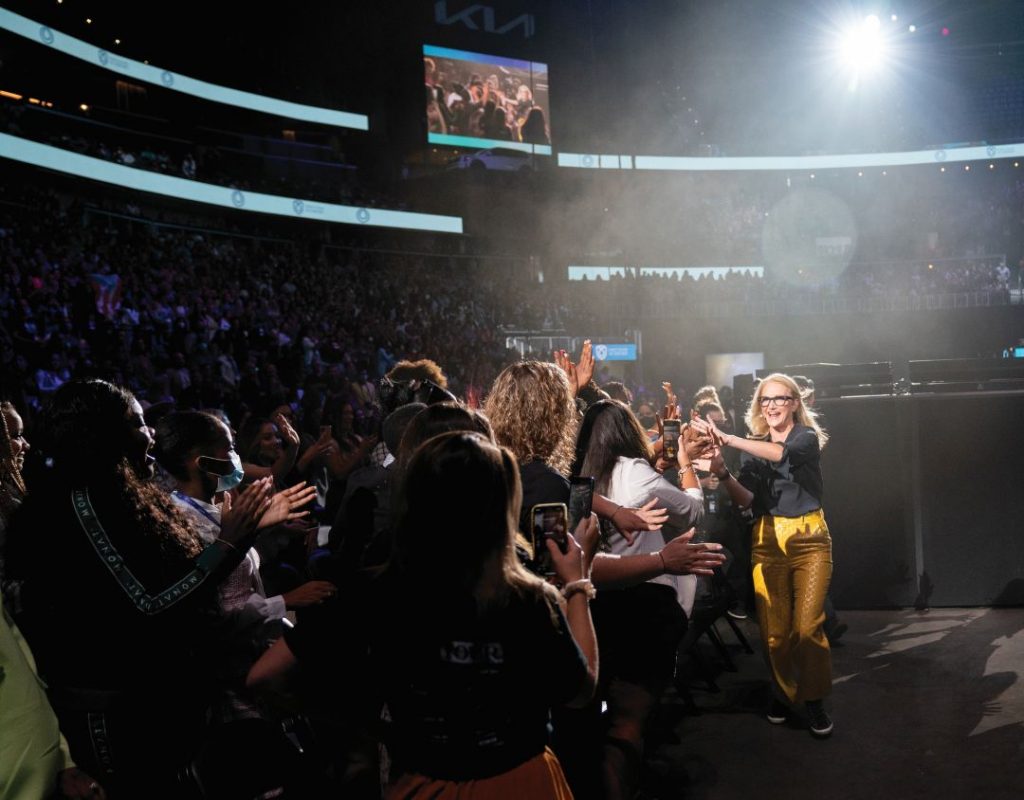
PhotoCredit: Jenny Sherman
RL: Where have you landed on leadership for yourself?
Robbins: It would be way easier if I were just the CEO. It is very challenging to be the person creating the content and the face of the brand and the company behind the microphone and in front of the camera — and do a good job as CEO.
I think about my business like we’re on a bus, and I’m driving the bus, and we’re going in a certain direction, and I’m the person as the CEO and the face of the business who defines the direction we head in, but I have to understand what seat in the bus I’m actually sitting in because I shouldn’t be driving it — that’s the COO. I should look at the GPS because I’m defining strategy. One of the most important things about leadership is understanding what is the best seat on the bus for you to sit in. (Jim Collins’ book Good to Great lays out the metaphor about having the right people in the right seats on the bus, aka the correct employees in the correct roles.)
As a leader, I have to recognize the things I do well, and if I’m not the best person to do some other job in this company, I need to get out of that seat and get somebody in it who can.
A major, major breakthrough for me was to understand that being a great leader requires self-awareness. The first step of self-awareness is that you manage your emotions and you are not bringing rain clouds and storms and dysregulation to your team because you’re stressed and fearful. The second step is self-awareness of your unique genius. It takes founders too long to replace themselves. The reason why is you don’t actually think about what is your unique genius — that only you can do in this company — and that’s the seat you should be in. Once you define the vision, what the outcomes should be, and what success looks like — and you have an organization where everybody knows the one thing that matters most today for their seat — things run very smoothly. The hardest person to get out of the way when it comes to an organization is yourself.
You’ve Reached the End of the Free Article.
To access the full article, tips from today’s most inspiring leaders, and practical leadership lessons, please consider subscribing Real Leaders magazine below.
After 15 years of Army-crawling in the dirt, as she puts it, she recently erupted on the scene as one of the more followed and sought-after experts in mindset, behavior change, and life improvement; and her media company, 143 Studios, has worked with some of the biggest companies on earth.
Photo Credit: Mel Robbin’s Team
In this exclusive interview with Real Leaders, Robbins unpacks insights from her new book and its wildly popular, research-backed The Let Them Theory. Plus, she gives a crash course on ChatGPT for business, explains why you need to get on TikTok Shop now, and gets real about her gravest mistakes as CEO.
Real Leaders: How do the ideas in The Let Them Theory apply to business founders and CEOs?
Mel Robbins: The Let Them Theory is a simple mindset tool that shows you in any moment in your business and your life what’s in your control and what’s not — and lets you take the power back and lead. It is particularly important in business because when you get yourself obsessed with the things about your business or your team that you can’t control, it’s going to stress you out. The more you’re stressed, the more you bring that tight, micromanaging, narrow-focused energy to your team and business, the worse your team is going to do, and the worse your business is going to do.
Let them is a recognition that this issue that’s bothering me is not where my power is. Therefore I’m going to recognize that and say, “Let them.” The thing that your team did, the nasty review that the customer left online, the deal that you didn’t win, the interest rates that you can’t control — already happened. The power is not in getting upset about what’s going on in the markets or about how hard it is to hire talented people. Your power is in your response, and that’s the second part of the theory.
After you say, “Let them,” you’re going to say, “Let me — let me remind myself at all times that I have three things I can control: what I think about this, what I do, and what I don’t do.” One of the major mistakes that I’ve made as a CEO is I often feel the need to do something and react out of panic, fear, or anger. All that does — because leaders bring the weather — is it spreads more panic, fear, and anger through your organization and team.
The third thing you can control — and this is where it changes you as a leader and trickles down into your organization — is the let me part. It’s also about let me manage my response to my feelings about this thing. Let me show up as a CEO instead of showing up like an 8-year-old inside a big body who’s constantly reacting to things and sending shock waves through an organization that needs something different from me.
Listen to the full interview with Mel Robbins only on the Real Leaders Podcast.
RL: What inspired you to create a bonus chapter on leadership?
Robbins: There are two big topics that require and deserve more attention and detail: One of them is parenting, and the other is how to use The Let Them Theory at work. As a CEO I can’t just let my team do whatever the hell they want. I can’t just let things play out. I have to lead. So I wanted to lean more into those two specific applications of The Let Them Theory.
“Leading With Let Them” is a guide to remind you what you know to be true and give you some principles to use The Let Them Theory to be more effective. It’s about using the science of influence instead of trying to manage top-down. It’s about activating the motivation, skills, and interest of people who work for you to rise up. You’re doing it through people rather than feeling like you have to be the one directing everything. It’s a very different management approach.
Let’s talk about operations. Operations are people. A company is nothing without its people. I know everybody is extraordinarily nervous and excited about AI, but people are also concerned about AI and how we’re going to use it. At the end of the day, it’s still all about the people. Are the people who work for you excited to work for you? There’s a simple way you can tell. Ask yourself when you pull into work in the morning, do you think the people who work for you are excited to walk into the building? Are they excited when your name shows up on an email? Do you think people are generally open to what you have to say, or they roll their eyes at you because you’re a nightmare?
The Let Them Theory forces you to understand that you will get better results when you empower and influence people, not when you micromanage them. One of the hardest aspects of using The Let Them Theory, at least for me, is making sure I’m the one: Let me be focused on outcomes, and let me be clear about my expectations and what it means to deliver these outcomes for success. Nine times out of 10 if something is not going well in a business, if you use The Let Them Theory and let them know what the outcomes are, let them know what success looks like, let them have the resources they need to get what you have asked done, and then let me get out of the way and focus on how to nudge people along and lift them up inside a very clear container — that’s the winning formula.
The biggest mistake I’ve made is not being clear in my communication. If there’s a breakdown, it’s almost always about a lack of process, clarity, or skill set in a particular seat. It’s almost never about somebody’s desire to succeed.
If you take time to make this shift and you’re willing to go, “It’s on me. Let me lead the way, define the way, and then get out of the way and go into a supporting role,” it’s pretty incredible how things change.
PhotoCredit: Jenny Sherman
RL: Where have you landed on leadership for yourself?
Robbins: It would be way easier if I were just the CEO. It is very challenging to be the person creating the content and the face of the brand and the company behind the microphone and in front of the camera — and do a good job as CEO.
I think about my business like we’re on a bus, and I’m driving the bus, and we’re going in a certain direction, and I’m the person as the CEO and the face of the business who defines the direction we head in, but I have to understand what seat in the bus I’m actually sitting in because I shouldn’t be driving it — that’s the COO. I should look at the GPS because I’m defining strategy. One of the most important things about leadership is understanding what is the best seat on the bus for you to sit in. (Jim Collins’ book Good to Great lays out the metaphor about having the right people in the right seats on the bus, aka the correct employees in the correct roles.)
As a leader, I have to recognize the things I do well, and if I’m not the best person to do some other job in this company, I need to get out of that seat and get somebody in it who can.
A major, major breakthrough for me was to understand that being a great leader requires self-awareness. The first step of self-awareness is that you manage your emotions and you are not bringing rain clouds and storms and dysregulation to your team because you’re stressed and fearful. The second step is self-awareness of your unique genius. It takes founders too long to replace themselves. The reason why is you don’t actually think about what is your unique genius — that only you can do in this company — and that’s the seat you should be in. Once you define the vision, what the outcomes should be, and what success looks like — and you have an organization where everybody knows the one thing that matters most today for their seat — things run very smoothly. The hardest person to get out of the way when it comes to an organization is yourself.
You’ve Reached the End of the Free Article.
To access the full article, tips from today’s most inspiring leaders, and practical leadership lessons, please consider subscribing Real Leaders magazine below.
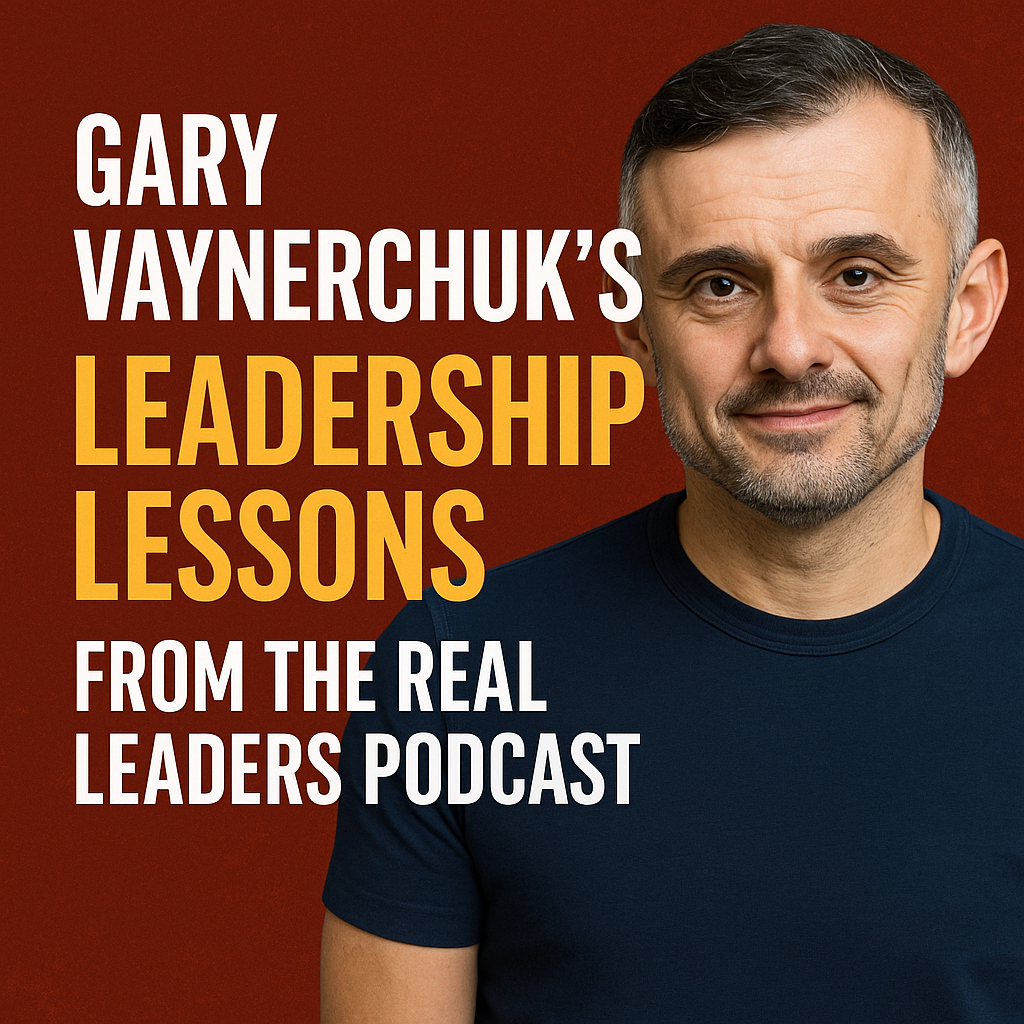
Gary Vee to Real Leaders: “We’re All Playing the Same Game Now”
What if you had the same shot at going viral as Gary Vaynerchuk—today? According to Gary, you do.
In a candid conversation with Real Leaders, Gary Vee pulls back the curtain on what actually works in leadership, branding, and business growth today. It’s not hype. It’s not smoke and mirrors. It’s creative merit. And for the first time in history, that matters more than followers, legacy, or budget.
Listen or watch the exclusive interview with Gary Vaynerchuk.
Here’s what he had to say:
1. The New Branding Era: Merit Wins
Forget waiting for permission. Gary made it clear: today’s content economy is built on “interest media,” not follower counts. You could be on your fourth LinkedIn post, and if it hits, it’ll outperform his.
“We are now in the era of interest media… You have six followers. It’s your fourth day. But if your stuff is better than mine? It gets more views. That’s never existed before.”
Translation? Stop overthinking. Start creating.
2. Impact Without the Ego
Gary didn’t shy away from talking about doing business with meaning. He emphasized that how you make money matters more than how much—and not for PR reasons, but for personal peace.
“Between 40 and 90, the dollars don’t bring happiness. If you want to be joyful, align your business with your values.”
The impact space, he said, has matured. Snake-oil altruism is fading. And thoughtful entrepreneurship is finally mainstream.
3. Live Shopping is the Next Big Wave
Gary lit up when asked about live shopping. If you sell anything—product, service, even SaaS—his message was clear: get in now.
“Stop reading this article and spend 25 hours researching live social shopping. I’m not kidding. This is big.”
From TikTok Shop to Whatnot, the platforms are in place. The attention is there. And if Amazon misplays this? It could dethrone them.
4. Day Trading Attention
Gary coined the phrase “day trading attention” to describe the speed and skill required in today’s marketing. The old model—set it and forget it—is dead.
“Don’t get romantic about how you got here. Be obsessed with where it’s going.”
His advice? Watch where attention shifts. Move fast. And experiment often.
5. Choosing Between Your Personal Brand or Company Brand?
One of the most common questions CEOs ask: Should I post from my own account or my company’s?
Gary’s answer? Both.
“Humans over-index humans. But if you’re doing both, you can push traffic between them. And collab posts make that easier than ever.”
If you’re overwhelmed, he adds, just start somewhere. The algorithm doesn’t care how famous you are—it cares how relevant you are.
Closing Words: Real Leadership Starts With You
If you’re waiting for permission to lead online—you’ve already lost. But if you’re willing to hit “publish,” you’ve never had a better shot.
“It’s not about how you got here. It’s about what you do now.”
Whether you’re building your brand, growing your business, or leading with purpose, Gary Vee’s insights are a must-hear for today’s impact-driven CEOs. To dive deeper, listen to the full conversation on the Real Leaders Podcast.
Gary Vee to Real Leaders: “We’re All Playing the Same Game Now”
What if you had the same shot at going viral as Gary Vaynerchuk—today? According to Gary, you do.
In a candid conversation with Real Leaders, Gary Vee pulls back the curtain on what actually works in leadership, branding, and business growth today. It’s not hype. It’s not smoke and mirrors. It’s creative merit. And for the first time in history, that matters more than followers, legacy, or budget.
Listen or watch the exclusive interview with Gary Vaynerchuk.
Here’s what he had to say:
1. The New Branding Era: Merit Wins
Forget waiting for permission. Gary made it clear: today’s content economy is built on “interest media,” not follower counts. You could be on your fourth LinkedIn post, and if it hits, it’ll outperform his.
“We are now in the era of interest media… You have six followers. It’s your fourth day. But if your stuff is better than mine? It gets more views. That’s never existed before.”
Translation? Stop overthinking. Start creating.
2. Impact Without the Ego
Gary didn’t shy away from talking about doing business with meaning. He emphasized that how you make money matters more than how much—and not for PR reasons, but for personal peace.
“Between 40 and 90, the dollars don’t bring happiness. If you want to be joyful, align your business with your values.”
The impact space, he said, has matured. Snake-oil altruism is fading. And thoughtful entrepreneurship is finally mainstream.
3. Live Shopping is the Next Big Wave
Gary lit up when asked about live shopping. If you sell anything—product, service, even SaaS—his message was clear: get in now.
“Stop reading this article and spend 25 hours researching live social shopping. I’m not kidding. This is big.”
From TikTok Shop to Whatnot, the platforms are in place. The attention is there. And if Amazon misplays this? It could dethrone them.
4. Day Trading Attention
Gary coined the phrase “day trading attention” to describe the speed and skill required in today’s marketing. The old model—set it and forget it—is dead.
“Don’t get romantic about how you got here. Be obsessed with where it’s going.”
His advice? Watch where attention shifts. Move fast. And experiment often.
5. Choosing Between Your Personal Brand or Company Brand?
One of the most common questions CEOs ask: Should I post from my own account or my company’s?
Gary’s answer? Both.
“Humans over-index humans. But if you’re doing both, you can push traffic between them. And collab posts make that easier than ever.”
If you’re overwhelmed, he adds, just start somewhere. The algorithm doesn’t care how famous you are—it cares how relevant you are.
Closing Words: Real Leadership Starts With You
If you’re waiting for permission to lead online—you’ve already lost. But if you’re willing to hit “publish,” you’ve never had a better shot.
“It’s not about how you got here. It’s about what you do now.”
Whether you’re building your brand, growing your business, or leading with purpose, Gary Vee’s insights are a must-hear for today’s impact-driven CEOs. To dive deeper, listen to the full conversation on the Real Leaders Podcast.