Beyond Sustainability: The Regenerative Business

In recent years, US manufacturers have taken major steps to make their supply chains more sustainable in an effort to fight climate change. 

Earlier this year, GM appointed its first chief sustainability officer Dane Parker to drive the carmaker and the nation towards an all-electric, zero-emissions future (GM plans to produce 20 new all-electric vehicles by 2023). By adopting the circular economy principles aimed at zero-waste, SC Johnson has already made 94% of its plastic packaging recyclable, reusable, or compostable. And Levi Strauss is shaking up the apparel sector, a top contributor to global warming, by committing to reduce its greenhouse gas emissions within its own facilities by 90% by 2025.

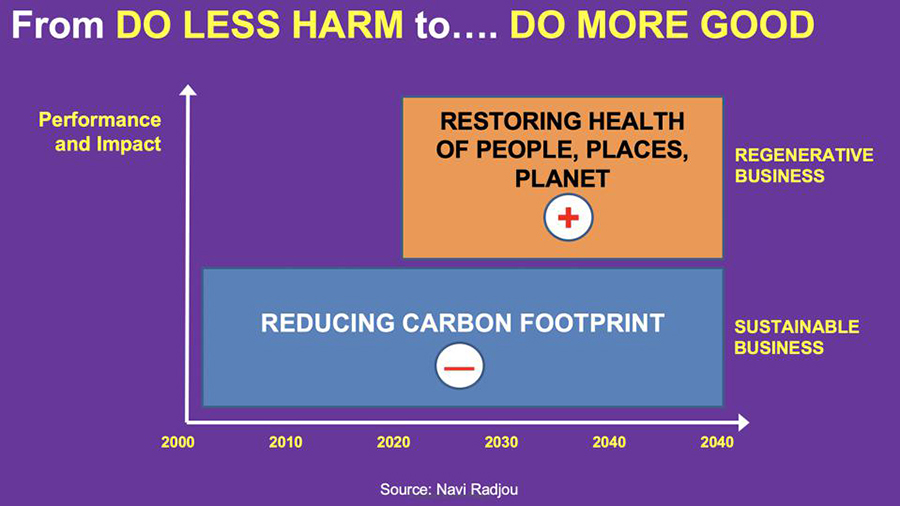
All these noble sustainability strategies—reducing waste and emissions and switching to renewable energy—aim to “do more with less”, that is create more economic value by polluting less and using fewer natural resources. But this “do less harm” (to the environment) posture is not enough, for three reasons:

First, climate change is worsening, and resources are getting scarcer. This year, Earth Overshoot Day—the point in the year when humanity’s natural resources consumption exceeds the planet’s ability to regenerate—was on August 22, earlier than ever. 

Second, Covid-19 is making racial and socio-economic disparities in America even worse. As a result, values-conscious employees and consumers want US businesses to take a stand against racism and all forms of inequality and positively contribute to society.

Third, US consumers wants companies to go well beyond sustainability and “do more good” to the planet. According to a study by ReGenFriends nearly 80% US consumers prefer “regenerative” brands to “sustainable” brands (they find the term “sustainable” too passive).

What is regeneration? We can learn it from Nature. In her stirring TED talk ‘How trees talk to each other’, Suzanne Simard, a forest ecology professor at University of British Columbia, shows how Nature is generous—a virtue you don’t associate with the cut-throat corporate world. Forest trees magnanimously share information and nutrients with each other using a deep network of soil fungi. 

What if companies reinvented their supply chains and business practices so they function altruistically like a forest? Then they will operate as regenerative businesses that give back 10x and even 100x more to society and the planet than what they take from it.

Whereas a sustainable firm seeks merely to reduce its ecological footprint, a regenerative company boldly seeks to increase its socio-ecological handprint—as Harvard professor Greg Norris puts it—by restoring the health of individuals, communities and the planet (see graphic below). In doing so, regenerative businesses can achieve greater financial performance and impact than their sustainability-focused peers.  
Excitingly, pioneering US manufacturers like Danone North America, General Mills, Interface, and Patagonia are leading the regenerative revolution in America and worldwide. 

As part of its Climate Take Back mission, whose goal is to reverse global warming, Interface, the world’s leading modular carpet manufacturer, piloted in Australia a “Factory as a Forest” project. In principle, such a virtuous plant would provide freely to its surroundings many positive ecosystem services—such as clean air and energy, potable water, carbon sequestration, and nutrient cycling—that the local ecosystem it replaces would have provided. Drawing on insights learned from this pilot project, Interface partnered with Biomimicry 3.8 to implement design interventions to make its US factory outside Atlanta, Georgia function more like a high-performing ecosystem. 

Interface is making all its products regenerative too. By 2018, it has made all its products carbon neutral. Now, it’s raising the bar much higher. Earlier this week, Interface launched the world’s first carbon-negative carpet tiles, which sequester more carbon than they create from “cradle to gate”—from raw material extraction through manufacturing—without offsets.

Some vanguard US manufacturers want to regenerate not only the planet, but also the individuals and communities suffering from the Covid-19 and the recession. In doing so, these visionary firms are trailblazing triple regeneration, an integrated strategy to restore, renew, and grow people, places, and the planet (3Ps) in a cohesive and synergistic way.

The food giant Danone is leading triple regeneration with its “One Planet. One Health” initiative. Danone North America is enabling its US farming suppliers to adopt regenerative agriculture, a science-based approach that uses science-based techniques and natural methods like crop rotation to enrich the soil, preserve biodiversity, and enhance animal welfare. By adopting these practices, financially-challenged US farmers can “do better with less”: they can boost yields—hence their revenues—and the long-term value of their land while minimizing emissions and use of toxic fertilizers and precious irrigation water. Regenerative agriculture can revitalize vulnerable US rural communities and reverse climate change by sequestering carbon in the ground. US consumers benefit too as they get to eat nutrients-rich food produced by high-vitality soil. 

The industrial sector account for 22% of greenhouse gas emissions in the US. To reverse climate change—a clear and present threat to their long-term survival—US manufacturers must radically reinvent their core business models and end-to-end supply chains. They need to go beyond sustainability and boldly think and act as net-positive regenerative businesses that can do better with less

By regenerating people, places, and the planet—just like Interface and Danone North America are doing—US manufacturers could enhance the well-being of millions of people and revitalize thousands of communities. By co-building a carbon-negative regenerative economy, US manufacturers can potentially unlock $26 trillion in financial value and produce over 65 million new green jobs globally by 2030.
CEOs: Forget V-Shaped Recovery. Y-Shaped Reinvention is Better

CEOs worry about the shape of recovery in 2021: V, U, W, or L? The V-shaped recovery, while most desirable, is out of question according to the Fed and OECD

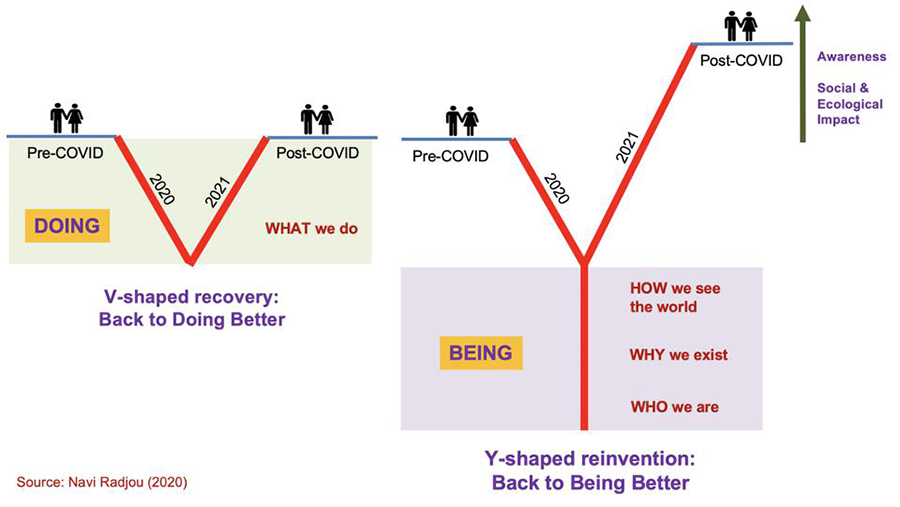
Rather than passively dream about a V-shaped recovery of the whole economy (which is beyond their control) CEOs must proactively lead a Y-shaped transformation of their organization. Such a conscious and deep reinvention will enable their business to achieve sustainable success in the post Covid-19 world. 

95% of companies today operate in survival mode. They are investing all their energy to “pivot”, that is they are tactically adapting their traditional business model to pursue new market opportunities in the Covid-19 world. These firms are unconsciously focused on getting back to “Doing Better”, by changing WHAT they do.

But 5% of businesses, led by visionary CEOs, are leveraging this crisis to evolve into “Being Better” by deeply examining and consciously reinventing their core selves, namely: 

– HOW they see the world—their perspective 

– WHY they exist—their purpose

– WHO they are—their core values and identity

conscious Y-shaped reinvention expands an organization’s awareness and enables a bigger social and ecological impact as the graphic below explains.

Let me show you how three vanguard companies that make physical products undertook this conscious Y-shaped reinvention in 2020 by audaciously redefining their core identity, purpose, and perspective. 

WHO: Siemens reinvents itself as a business-to-society firm

Joe Kaeser, CEO of the industrial giant Siemens, is reinventing the business-to-business (B2B) firm as a business-to-society (B2S) company. As a B2S firm, Siemens will leverage all of its assets, expertise and partnerships to generate positive social impact in each of the 200 countries in which it operates. For example, in the US, Siemens vies to make a positive impact in six areas that matter: strengthening the US economy, creating jobs and developing skills, driving innovation, sustaining the environment, enhancing quality of life, and securing America’s future.

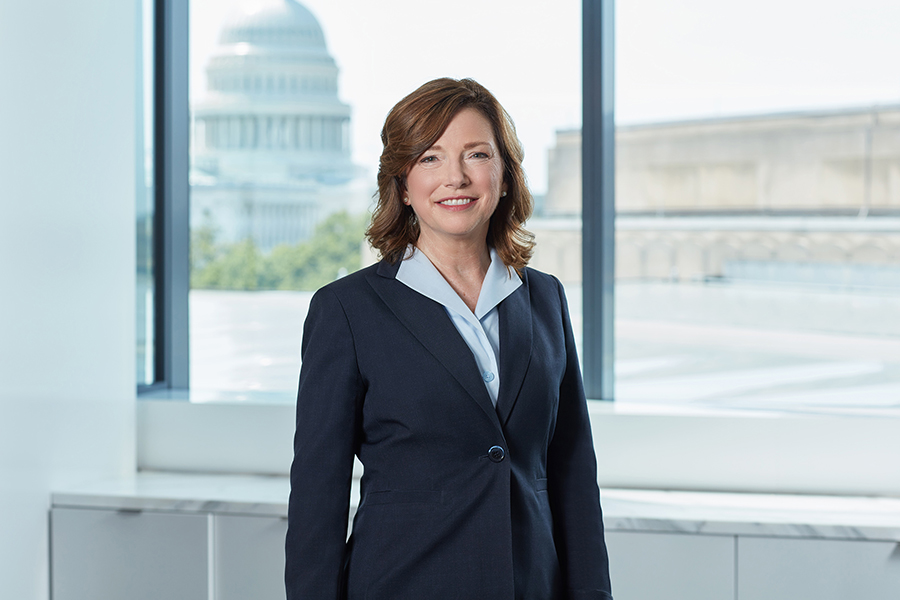
Barbara Humpton, CEO of Siemens USA, (pictured at top) told me how, during the Covid-19 crisis, the B2S culture enabled the 50,000 Siemens employees in the US to transform their initial fear and helplessness into positive energy to co-create solutions to fight Covid-19. In early April, as the lockdown was imposed across the US, Humpton exhorted her 50,000 employees: “Don’t focus too much on yourself and your own anxiety. Channel your emotions into resolving pressing local needs in your cities. Let’s examine our existing portfolio of assets and skills and use them to help others.”

The employees heeded Humpton’s call. For instance, Siemens engineers in many US cities used the Siemens 3D printer in their homes to produce hundreds of face masks that they offered to local hospitals. And Siemens teamed up with Medtronic MDT +1.1%, a world leader in medical technology, to co-develop a “digital twin” of a ventilator and made it available as open source on the Internet so that anyone in the world could use it to make their own ventilators to help local Covid-19 patients.

Humpton believes the current crisis will consolidate Siemens’ reinvention and societal commitment as a “business-to-society” company. “We will foster a true ownership culture that drives entrepreneurial spirit, bottom-up initiatives, empowerment and engagement of all employees — all in the service of society,” notes Humpton enthusiastically.

WHY: Danone embraces “triple regeneration” as its purpose

Pioneering firms like Patagonia, General Mills GIS +0.2%, and Interface are taking sustainability to a higher level by embracing the notion of regeneration. Whereas sustainable firms seek to “do less harm” to the planet by reducing their carbon footprint, regenerative businesses vie to “do more good” by consciously widening and deepening their positive impact on society and the environment. According to a ReGenFriends study, nearly 80% of US consumers want brands to go beyond sustainability and commit to regeneration (these consumers find the term sustainable too passive).

The food giant Danone is going one step even further. With its “One Planet. One Health” agenda, Danone is pioneering what I call “triple regeneration”, a holistic approach to restoring, renewing, and growing people, places, and the planet (3Ps) simultaneously in a synergistic way.

For example, in North America, Danone is supporting its farming suppliers’ transition to regenerative agriculture, a science-based approach based on natural methods like crop rotation that enriches the soil, increases biodiversity, boosts yield, and drastically curbs the use of chemical fertilizers, pesticides, and water. Regenerative agriculture reverses climate change by sequestering carbon in the soil. High-vitality soil also produces nutrient-rich foods, which enhances Danone’s consumers’ health. Hence, everybody wins: The struggling farmer communities get to lower their costs, boost their income, and increase the long-term quality and value of their land; the ailing planetary biosphere is revitalized, and the consumers get better nourishment.

In 2018, Danone’s North American had become the world’s largest B Corp certified company, meaning it is legally committed to balancing the fiduciary interests of shareholders with a positive impact on people, communities and the planet. Danone aims to certify its entire global organization as a B Corp by 2025.

On June 26, 2020, Danone shareholders voted unanimously to make it the first listed company in France to adopt the “Entreprise à Mission” (company with a mission) legal framework. This framework allows a for-profit company to embed specific social and environmental goals within its articles of association, allocate resources to them, and set up a new governance model to oversee their progress. Through its mission to bring health through food to as many people as possible, Danone is formally committed to co-create and share sustainable value for all stakeholders while regenerating people, places, and the planet.

As Emmanuel Faber, CEO of Danone, notes: “We celebrated our 100th anniversary last year and the sequel needs to be written. The risk is that we fall asleep. We need to reinvent a model for a living enterprise, an economy that serves people, an agriculture that renews the planet’s resources.”

HOW: Eileen Fisher envisions a conscious apparel industry…and wants to lead it

The clothing industry—led by fast fashion—is the second largest polluter in the world. Over the past two decades, the volume of clothes thrown out by Americans has doubled from 7 million to 14 million tons. 

Recognizing that fast fashion is killing the planet, the women’s clothing brand Eileen Fisher is pioneering “slow fashion” by introducing fewer but more durable clothes each year. A staunch environmental advocate, Eileen Fisher envisions the rise of a “conscious apparel industry” that it wants to build and lead. A certified B Corp, the brand is a quadruple bottom line company that values the environment, human rights, employee well-being and financial interests as part of conducting business. 

Way back in 1997, Eileen Fisher set up its Department of Social Consciousness (a world first!) that generates awareness and supports women through social initiatives that enhance their well-being and push for gender and radical diversity and pay parity. A staunch advocate of human rights, Eileen Fisher has fostered better working conditions for its subcontractors in emerging nations, paying them wages above the industry average and giving them access to social benefits that improve their livelihood. 

Since 2015, aiming to become one of the world’s most sustainable clothing companies, Eileen Fisher has stepped up efforts to sustainably source organic and regenerative fibers and is phasing out chemical dyes. To fight climate change and save resources, it has dramatically reduced the use of water and energy in production and curbed emissions in transportation. 

Eileen Fisher incentivizes its clients to bring back their old clothes which are then “upcycled” into beautiful new products using the talent of young designers. It has collected 1.4 million garments since launching its take-back program in 2009.

Rather than rest on its laurels, in 2020, Eileen Fisher decided to set the bar even higher on sustainability. With its Horizon 2030 vision, it aspires to become a regenerative business that has a significantly positive impact on people, places, and the planet. For instance, through its Supporting Women in Environmental Justice grants, it wants to empower women to become climate leaders in their communities. It will support regenerative farming—like Danone does—and build transparent supply chains that deliver full traceability. And it intends to get more partners to switch to renewable energy and reduce greenhouse gas emissions in the production and shipping of its garments by 25% by 2025, against a 2017 baseline.

Rather than mindlessly react to the crisis or tactically adapt their business activities, wise leaders at visionary firms like Siemens, Danone, and Eileen Fisher are consciously and deeply reinventing their organization’s core being. By boldly redefining who they are, why they exist, and how they perceive and impact the world, these vanguard firms are positioning themselves for durable success in the post-Covid-19 world. CEOs must learn from these pioneers and lead a Y-shaped transformation without delay.