

Unlocking the Wealth of Gold — by Keeping it in the Ground

Can blockchain help save the environment? Phil Rickard thinks so.

Rickard is the founder and CEO of Nature’s Vault, a Canadian company that has developed a blockchain-based investment platform to accelerate the funding of impact investments to combat climate change and ecosystem damage. 

The firm’s initial focus is on deploying a “Legacy Token” to tackle the environmental impacts of gold mining. But Rickard believes that the same technology and vision can be a solution for other natural resources projects to mitigate climate change, water issues, and other environmental challenges.

The Legacy Token launched last quarter will monetize the preservation of in-ground gold deposits at a mine in the Thunder Bay area of Ontario, Canada. The token finances the preservation of gold in the ground, thus avoiding the environmental impact of physical mining. Rickard says it is the world’s “first zero-carbon gold preservation linked investment.”

Keeping gold in the ground represents a unique and needed opportunity for the industry. 

“The simple reality is that 50 percent of gold mined — all with negative environmental impact—is collecting dust in bank vaults. Leaving it in the ground is nature’s vault,” says Rickard. “It’s time for the industry to evolve, and blockchain technology enables us to hasten that evolution by monetizing the store of value of gold without destroying the environment.”

A Personal Evolution

The genesis of Nature’s Vault reflects a personal evolution for Rickard. A philosophy-major-turned-entrepreneur born in Calgary, Alberta, Rickard spent his formative years in Indonesia and has also lived in Boston and Singapore. 

Rickard credits his eclectic career in Fintech, artificial intelligence (AI), and traditional hard rock mining for giving him a unique perspective on how to integrate blockchain and tokenization into natural resources. But it was a conversation with his teenage daughter that, in part, spurred the launch of Nature’s Vault. 

“I was investing in coal mining at the time, and my daughter said to me, ‘Can I tell my friends you’re a banker? It’s a bit embarrassing that you’re in the coal mining industry,'” he recalls. “I laughed it off at the time, but when your children are uncomfortable with your career, it makes you rethink your priorities.”

From there, Rickard visited the Lihir open-pit gold mine in Papua New Guinea — one of the largest in the world and a remarkable feat of engineering — but also a significant scar on the earth. “Seeing that made me think: Is there a way to realize the value in minerals like gold without digging them up?”    
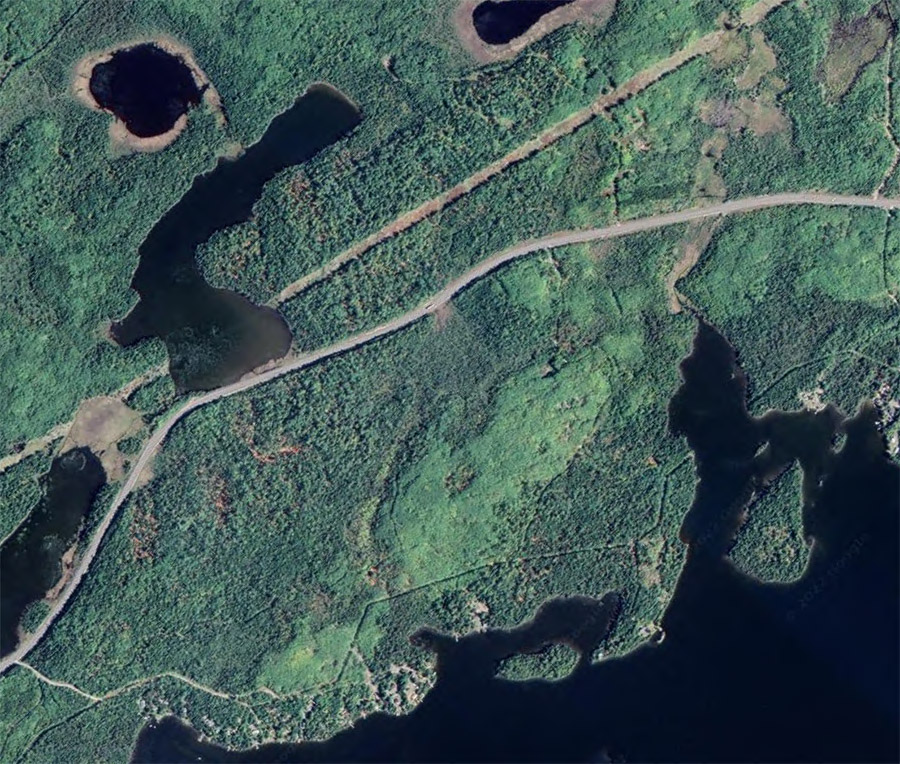
Pistol Lake Mine, Ariel.

Here’s how the Nature’s Vault blockchain-based platform aims to tokenize the planet’s natural resources and unlock the value of gold assets at the Pistol Lake mine in Canada.

  • Nature’s Vault acquired the rights to an estimated 150,000 ounces of gold in the Pistol Lake mine. The mineral resource estimate was produced by an independent 43-101 Technical Report, the standard geological disclosure rule in Canada. Nature’s Vault has created “Legacy Tokens” representing an allocation of these unmined gold deposits. Each token equals 0.01 grams of gold.
  • Nature’s Vault will only tokenize up to 80% of the gold, ensuring that it never allocates more gold than is present in its deposits.
  • The initial Legacy Token offering to investors will launch in Q3 on a Tier 1 digital asset exchange and has already kicked off an oversubscribed private sale round.  
  • With a goal to achieve a net-zero future, Nature’s Vault is also exploring ways for token holders to earn carbon credits from avoided mining.

A Golden Climate Opportunity

The global mining industry is ripe for the disruption that Nature’s Vault suggests. According to McKinsey, mining is currently responsible for 4% to 7% of greenhouse gas (GHG) emissions. In addition, S&P Global estimates that mining one ounce of gold causes the emission of up to 800kg of greenhouse gases. While the industry is actively working to adapt to lower emissions, it’s also racing to scale up the production of clean-energy metals essential to the transition to a low-carbon future. Caught between these somewhat conflicting priorities, miners must rapidly find new ways to reduce their overall carbon footprint.     

Tokenizing ESG

Looking to the future, Rickard sees multiple scenarios for the Nature’s Vault platform. With a recent seed funding round, the firm’s focus is firmly on executing the Legacy Tokens. On the horizon, he believes tokens could be leveraged to enable ESG investors to buy and invest in a range of projects to address environmental and social equity challenges — from reforestation projects in Indonesia to carbon offsets earned from avoiding gold mining. 

“We are bringing our breakthrough approach to tokenizing ESG projects to help mitigate climate change in a transparent manner via distributed ledger technology and a platform that can be replicated and scaled up for future growth.”

4 Ways to Think About the Future in a Post-Pandemic World

For more than a century, think tanks have played an important role in society, serving as sources of expertise for policymakers, places to explore new ideas, and critical catalysts for bringing creative solutions to action.

But as the coronavirus pandemic ripples through society, trust in institutions weakens, and the country’s demographics shift, the traditional think tank model is being stress-tested. “The COVID-19 crisis presents significant challenges to a sector already struggling with funding shortages, credibility, and relevance,” notes On Think Tanks.

Joe Waters thinks an alternative to these Washington, D.C.-based institutions can bring a fresh perspective and new voices to society’s critical issues locally and globally. In 2018, Waters co-founded the nonprofit ideas lab Capita to build a better think tank focused on the cultural and social transformations affecting young children, and to foster new ideas to ensure a future where children and their families flourish.

From his perch in a small town in the Blue Ridge mountains, Waters works from what Pope Francis calls “the peripheries.” By looking from the edge rather than from the center, “we bring a different perspective to the issues,” says Waters. It’s a perspective that enables Capita to combine unusual concepts and convene unlikely collaborators to generate new models, frameworks, and ideas.

Here are four ways Capita is building the think tank of the future for a post-pandemic world:

Think Outside the Beltway

Waters, based in Blowing Rock, North Carolina, is far enough from Washington, DC, to be independent of the “group think” that often permeates the nation’s capital. That’s a critical perspective to have as Waters and his team develop new ways to envision a better future for children and families.

“The Trump victory in 2016 surprised a lot of the political class, and that is because there is such a wide gulf between D.C. and the average American citizen,” says Waters. “It’s critical and positive to have think tanks outside of the bubble.”

Digital-first

The pandemic is forcing more organizations to decentralize operations, reduce face-to-face networking, and embrace technology. For Capita, being digitally native was a founding principle. Waters recognized that the form and function of the think tank work had to adapt to a new 21st Century landscape. The pandemic only reinforces this imperative.

“Digital first means using technology to make research and content accessible to all voices, crowdsourcing ideas and democratizing the intellectual property an organization generates, Waters says. “We don’t want policy papers to sit on the shelves. We want them out with our audiences to help us shape future research.”

A ‘Gig Economy’ Think Tank

What are the implications of rapid change for the future of children and young families in the U.S.? For Waters and his team, questions like this informed an approach that is nimble and fluid. Rather than staff up, Capita finds experts and contracts with them.

For example, Elliot Haspel, early childhood and K-12 education policy expert, frequently teams up with Capita on research and policy development. Capita also partners with larger institutions, including the Bank Street College of Education and Knowledgeworks, to provide insights into how today’s trends will impact young people and their families in the future and explores how emerging issues might alter childhood experience everywhere.

“Our approach applies the model of the sharing economy to think tanks,” says Waters. “It’s an efficient approach built around shared networks and resources that makes sense in a pandemic – and beyond.”

Intersectional Problem Solving

Waters believes that “intersectional innovation” – a concept explained in Frans Johansson’s The Medici Effect: Breakthrough Insights at the Intersection of Ideas, Concepts, and Cultures – is critical to understanding how to innovate more powerfully to achieve better outcomes for young children and their families.

Johansson argues that transformative innovations emerge from the intersection of different disciplines and cultures. This intersection is what made the Renaissance in Florence – funded mainly by the Medici family – such a prolific period of innovation. Capita uses a similar model to create opportunities to combine unusual concepts and convene unlikely collaborators to generate new models, frameworks, and ideas.

Together, these four principles keep Capita tightly focused on its north star – the significant trends impacting young children. “We live in an age of acceleration, liquidity, and fragmentation,” Waters says. “Our interest is not simply how children and families can flourish today but figuring out ways to help the children who won’t be born for another decade and beyond flourish.”