

The Immigrant Entrepreneur Determined to Help Travelers Feel Safe Again

Purchasing travel insurance, once a painfully slow, paper- and fax-based process, is now a seamless online purchase. But it wasn’t always so simple, that is, until a determined Silicon Valley engineer, in the U.S. on an H-1B visa, decided it was time to revolutionize the market.  

On June 22nd, President Trump issued a proclamation barring many categories of foreign workers and curbing immigration visas through the end of the year. The temporary ban included the H-1B type of visa for high-skilled workers that many U.S. tech companies employ. Not surprisingly, Silicon Valley shuddered. Leaders like Apple Inc. Chief Executive Tim Cook, Tesla Inc. CEO Elon Musk and Sundar Pichai, boss of Google-parent Alphabet Inc., all roundly condemned the move. After all, attracting skills from abroad has been the primary force that has propelled America into a global technology leader, creating plenty of opportunities abroad and hundreds of thousands of jobs, and massive amounts of wealth, here at home.   

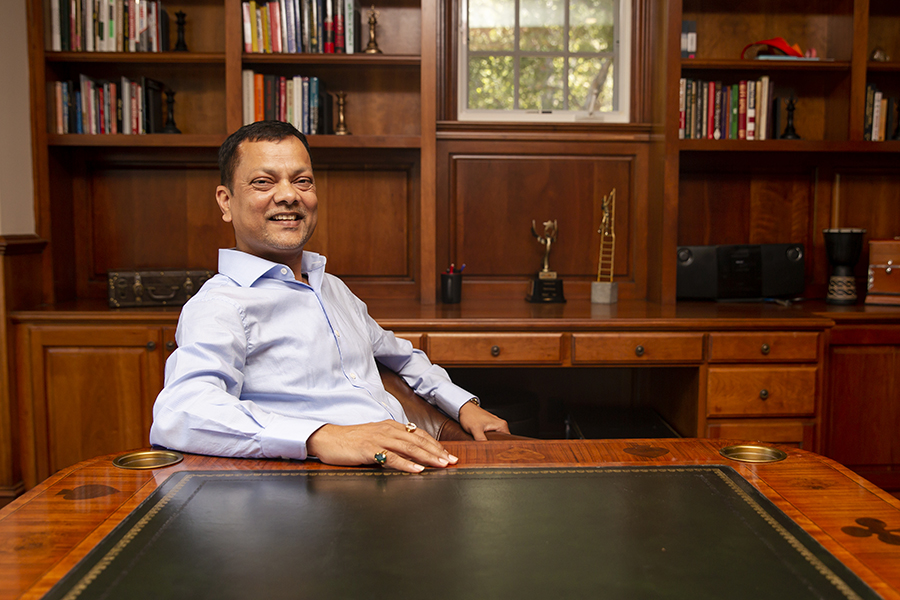
One of those skilled foreign workers, who personifies the American dream is Rajeev Shrivastava, who came to the U.S. from India in the late 1990s. After earning a master’s degree in computers from the National Institute of Technology Raipur. After working as an engineer at Cisco Systems Inc. for several years, Shrivastava decided to spread his wings and become an entrepreneur.

In the early 2000s, the popularity of travel insurance increased vastly as global travel grew, and growing numbers of visitors to the U.S. became aware of costly medical expenses in a country without universal healthcare coverage. This was most acute among the well-paid foreign workers in Silicon Valley, who often had their families and parents visit — with an increased need for medical coverage. Here, Shrivastava saw a great opportunity.

“Because the importance of travel insurance was never conveyed to travelers, they were unaware of the risks,” explains Shrivastava. “Hard lessons were learned after many suffered a serious injury or illness and got hit with a five-figure medical bill.” Rajeev knew that if people were aware of the risks in traveling to the U.S. without coverage, they would purchase travel insurance. It led him to start his own company, VisitorsCoverage.

In creating a platform for travel insurance, Shrivastava knew that the entire process had to be simplified and that educating customers was vital. He wanted the policy document to be three pages instead of 30 and wanted customers to choose between customized travel insurance products.

Leveraging his computer and technology background, Rajeev developed patents for the online search, comparison, and purchase of travel insurance — long before the term ‘insurtech’ was even part of the corporate world’s lexicon. To date, Shrivastava’s company is the only travel insurance reseller to hold registered patents for the online purchase process.

He also took advantage of video and animation to create a knowledge center that explained travel insurance through voice and visuals that were cross-cultural and entertaining. In addition, they built a vendor-neutral travel insurance review website, VisitorsInsuranceReviews.com, which gained widespread popularity among foreign workers.

Thanks to Shrivastava’s patented technologies, he found a niche with the Asian markets and quickly became the largest seller of visitors’ insurance for travelers coming to America. But he still wasn’t satisfied. The travel medical plans he sold had been designed years prior and offered the same benefits, regardless of the traveler’s varied needs.

More customization was necessary in 2017 when changes to U.S. immigration policy created more headaches for travelers visiting the U.S. Shrivastava was the first to introduce border entry protection, that covered the expense of returning home should entry be denied.

Sometimes, Shrivastava has even innovated ahead of trends. An example was his creation of SafeCruise in early 2019, a customized travel insurance policy that addressed the unique needs of cruise travelers, including missed port departures, hurricane coverage, and emergency evacuation for virus outbreaks (now a prescient coverage clause) along with other medical emergencies.

Like other industries, the travel insurance industry has been hard-hit by a wave of travel cancellations from the coronavirus pandemic. It might take one, maybe two, years for global travel to return to the levels it saw before the pandemic shook the world. But even here, Shrivastava sees opportunity.

“The pandemic crisis is an incredible moment for the travel insurance industry to rethink the legacy models and burdensome regulation that the industry is indebted to. This is our chance to elevate travel insurance and create flexibility in underwriting that will be critical to ensuring travelers are safe in a post-COVID world.”
How Science Is Making Your Stockpiled Food Last Longer

The global COVID-19 pandemic has shaken almost every corner of society. From a sinking stock market and rising unemployment to the broken healthcare system and governmental failures, the impact has been widespread. One industry that has been immune to the effects of the pandemic is agriculture. IRI and Nielsen numbers for the week ending March 14-15 saw fresh produce sales continuing to soar. The reason is simple: even in a crisis – people need to eat.

But just because the agriculture industry is continuing apace amid the crisis, it’s still an industry with its share of problems, and the biggest of those problems, by far, is waste.

Globally, agriculture is a $3 trillion industry – but about 33%, or $1 trillion of that, goes to waste – enough to feed every hungry person on the planet. Here in the U.S., we waste over 25 billion pounds of post-harvest fruits and vegetables annually (around $30 billion in value). And upsetting as that number may be, it gets more depressing when you consider that 37 million Americans, including 6 million children, live without enough to eat.

And it’s not just the food that’s wasted. When we throw away 25 billion pounds of produce, we’re also wasting the water and labor necessary to grow that food (not to mention the harmful CO2 emissions we’re adding into the atmosphere to ship it). In other words, the repercussions of our waste ripple backward through the supply chain. Insult to injury, as they say.

To reduce these harmful impacts on our environment, while still feeding our growing population, we need to find solutions that maximize efficiency. But creating efficiencies around fresh produce, a product that, by its nature, has a limited shelf life, is no easy feat.

A young startup in Chicago, Hazel Technologies, may have cracked the code, and their secret sauce is basic chemistry. Founded in 2015, the company’s USDA-supported solution involves small packaging sachets (about the size of a sugar packet), which are dropped into boxes of produce during shipping and extend the shelf-life of produce up to three times by slowing the aging process and preventing decay. This added shelf-life means less produce wasted for growers (and bigger profits). For the everyday consumer, it means fresher, longer-lasting produce. Everybody wins.

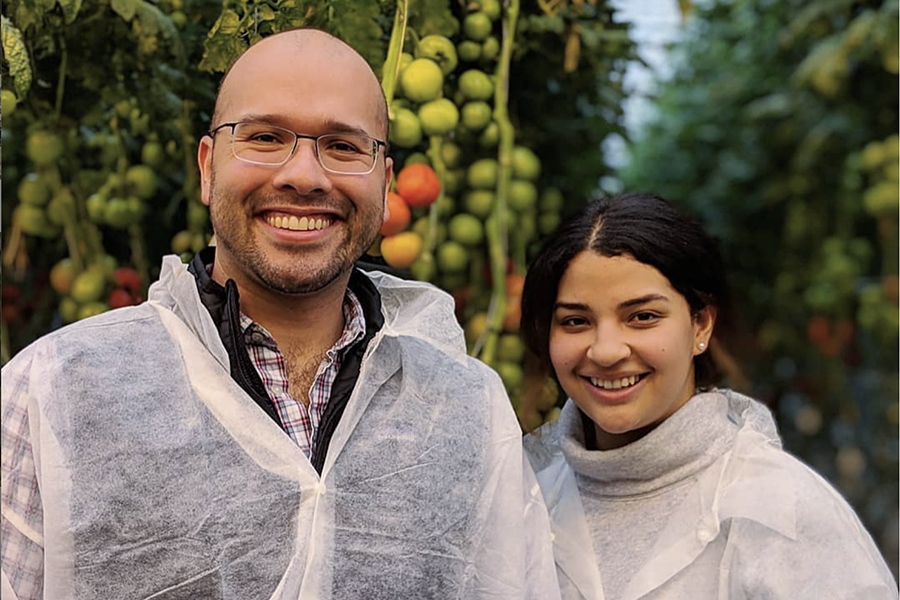
“Hazel’s goal is to bring transformative change the food supply chain not only here in the U.S., but all over the world,” says Aidan Mouat, CEO of Hazel Technologies. “Food waste is a global problem, and there’s no reason our solution can’t work at that level, too.”

Hazel’s sachets work by inhibiting ethylene, a hormone molecule that fruit naturally emits, triggering the aging process. A quarter gram of the material inside a Hazel packet can protect 50 pounds of produce. The chemicals are proprietary, and the sachet time releases them to help preserve the product. Each fruit has a different package based on its ethylene sensitivity, and some fruits require different products entirely. Berries need antimicrobials, for instance, but don’t have a problem with ethylene.

Controlling ethylene isn’t new to the food industry. Some storage facilities use machinery to filter ethylene out of the air. Other companies have created ethylene inhibiting coatings that are applied to the skin of fruits and vegetables.

“Adding complex machinery to filter the air or applying coatings to produce is not only expensive but can be operationally problematic,” explains Mouat. “It requires new training for employees. It inevitably requires repairs at some point. By comparison, our solution requires zero training and no added investment – we’re built for the food supply chain as it currently exists.”

Better still, Hazel’s solution is entirely atmospheric, does not touch the product, and leaves no residue. This is far more appealing to consumers compared to a coating they have to wash and, on some level, eat. 

Hazel is currently being used in 12 countries and has more than 100 customers, including some of the world’s biggest produce companies. California-based Mission Produce, the world’s largest producer of Hass avocados, and Oppy, the largest produce distributor in Canada, are both using Hazel’s technology to extend the quality and freshness of their products.

The technology is projected to be used with 3.2 billion pounds of fresh produce in 2020, preventing more than 270 million pounds of food going to waste. A $13 million funding injection, led by S2G Ventures and Chuck Templeton, founder of OpenTable, will allow Hazel to scale its business even further in the months and years ahead.

Mouat is developing new solutions for different types of food, including packaged chicken, beef, and fish, and is also exploring new markets, including products that consumers can use at home and that retailers can use on store shelves (U.S. supermarkets lose around $15 billion in wasted produce each year).

Later this month, the world will observe the 50th Anniversary of Earth Day. The annual event, established to demonstrate support for environmental protection, includes activities in more than 193 countries and Hazel hopes that their food waste solution will offer a practical solution for creating a healthier world.

Using Influencers For Good To Build Your Brand

Editors Note: Real Leaders is making its archive of magazines freely available to all visitors to our website as part of our contribution to the Covid-19 pandemic. We believe you’ll emerge stronger and wiser when this crisis passes, and we hope our stories will keep you entertained and inspired while we sit out this challenging time. Sign up here and you’ll be instantly redirected to our archive.

Influencer marketing is big business, and it’s only getting bigger. The booming market is expected to reach $15 billion by 2022 (up from $8 billion in 2019). From retail to tourism, healthcare to automotive, entertainment to food & beverages – almost every consumer-facing industry is carving out bigger and bigger portions of their marketing budget to find the right spokespeople to champion their brand, product, or service.

And after all, it makes sense. People have grown weary of a world saturated in advertising. Instead of looking around, our faces are now buried in our phones, glancing at Instagram, checking Facebook, or scrolling through Twitter. In fact, U.S. adults now spend an average of 6 hours per day with digital media.  

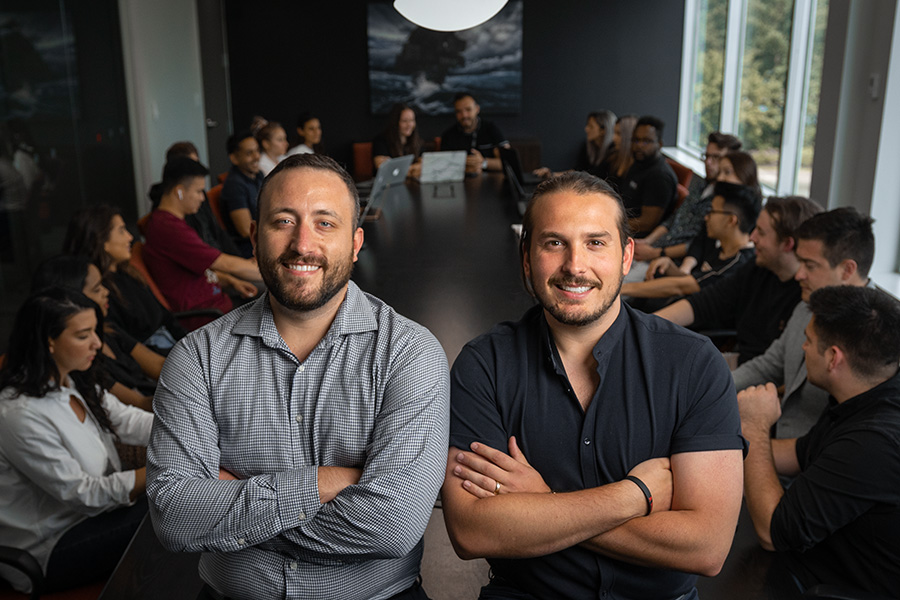
It was this realization – seeing people obsess over their phone and their Facebook page – that inspired serial entrepreneurs Joe Gagliese (above, right) and Mat Micheli (above, left) to start Viral Nation back in 2014. At the time, the longtime business partners worked as talent managers and agents for some childhood friends who played in the National Hockey League. Recognizing the almost limitless business opportunities for celebrities online, Gagliese and Micheli seized the opportunity and began securing deals for their clients. But just as important, they saw that the online world was starting to produce its own celebrities. “We’d come across these high school kids on platforms like Vine and YouTube, with millions of followers, making wildly original and exceptionally creative content – but they had no representation! It was like the wild west,” explained Micheli. Quickly, Gagliese and Micheli began signing these talented content creators to Viral Nation. Today, the Toronto-based agency has a network of over 100,000 influencers from all around the world.

“Some people see influencer marketing as a fad, but they couldn’t be more wrong,” said Gagliese. “Look at Kylie Jenner, a celebrity influencer, who just became the world’s youngest billionaire. Or look at “Ninja,” a gamer, who has more social media engagement than any professional athlete on the planet! More than Ronaldo. More than LeBron. Let me be crystal clear: this is no fad.”

Further, it’s not just the mega-celebrities who are driving the industry. There’s also plenty of room and opportunity for smaller influencers (often referred to as “micro” influencers or “nano” influencers) – from Mom bloggers to local foodies, comedians, sports fans, travelers, and more. These influencers carry their unique value because their engagement levels tend to be very high, their following is very loyal, their content is very authentic, and they often command a specific geographical area. So, for instance, if a brand wants to open a new store in Charlotte, North Carolina, there is likely a particular group of Charlotte-specific influencers who would be vital to that mission.

Another industry misconception, according to Micheli, is that influencer marketing is just shallow product placement. “This one bugs me because it not only devalues 

the massive amount of effort and work influencers do in creating their content, but it also misses the power and impact that these influencers have.” Micheli points to some of the work Viral Nation has done with a Chinese company, Baidu, and their Facemoji app where content creators made Facemojis in support of PRIDE, encouraging young people to be confident and secure with their sexuality, and accepting of others. These Facemoji posts received millions of impressions and loads of engagement – and from all around the world. “Is there a part of the influencer marketing world where some celebrity holds up a bottle of shampoo, and smiles for the camera? Certainly,” added Micheli. “And there’s nothing wrong with that. But like with Baidu and the Facemoji PRIDE campaign, it can also accomplish something deeper.”  

In terms of making significant impacts, influencer and social marketing have also begun to seep into the world of politics. In the current U.S. campaign for the Democratic nomination, candidate Elizabeth Warren has taken over 100,000 “selfies” with fans and supporters, and the Bernie Sanders campaign created a #MyBernieStory hashtag that drew thousands of responses and quickly soared to the top of Twitter’s trending list. “Most politicians get it, because they’re essentially influencers themselves, trying to build their number of followers, and create engagement,” explained Gagliese. “Congresswoman Alexandria Ocasio-Cortez is a perfect example of a young politician who has built up a massive amount of influence in a short period by creating content for Instagram, Twitter, and other social channels. Influencer marketing has a huge future in politics because it’s something young people understand, and it’s a way to get people engaged and involved.” Gagliese points to the Obama campaign in 2008 and the Bernie Sanders campaign as two more examples, “Both of those campaigns were heavily driven by influencer marketing strategies, and by young people, especially.” To meet growing demand, Viral Nation plans to launch a political wing of its agency business, sometime in 2020.

Working with brands such as Crayola, Energizer, Twitch, Ubisoft, Tencent, and Match, Viral Nation has managed to scale its business a remarkable 300%-400% year over year, with no outside investment, a testament to both their hard work and the industry demand. But as leaders in their field, Gagliese, and Micheli both want more than profit, they also want purpose. And in that regard, both have been more than a little influential.