4 Ways to Shift Toward a Caring Economy

COVID has proven to be a great lens, showing us the importance of healthcare, education, the importance of care work, and the urgent need to transform our economic values and current systems.                  

The caring economy is an economic system that promotes the wellness and development of people regardless of sex, class, race, or ability while respecting and taking responsibility for the planet. In essence, the goals of a caring economy align with most democratic constitutions — so do we still search for these values and the superior results they bring? 

Is it normal that in today’s world:

In the past few decades, we have seen a massive increase in deforestation, CO2 production, chemical pollution, and biodiversity destruction. Is this normal? Also, why has conventional economics been so slow to offer compelling solutions to these issues?

Since its theoretical beginnings, capitalism (and even socialism and communism) consider “care work“ — for the young, the elderly, the sick — unnecessary for a “productive” economy, and therefore even today, these at-risk groups are not valued. They continue to effectively be invisible to our culture and the economic metrics of countries and society’s. Consider today’s broad spectrum of politico-economic systems, and ask yourself: do these different systems provide authentic wellness and care for citizens and the environment? The COVID-19 pandemic has accelerated our understanding of a harsh reality — that we need to shift to a new economic system that respects all people’s work, and the planet.

So, how did the caring economy begin? The anthropologist Margaret Mead once gave a clear example, when she spoke of a person surviving a broken femur bone thanks to the care of others. Civilization began with the protection and care of individuals. Mead asserted that the act of caring was the first building block of human civilization. 
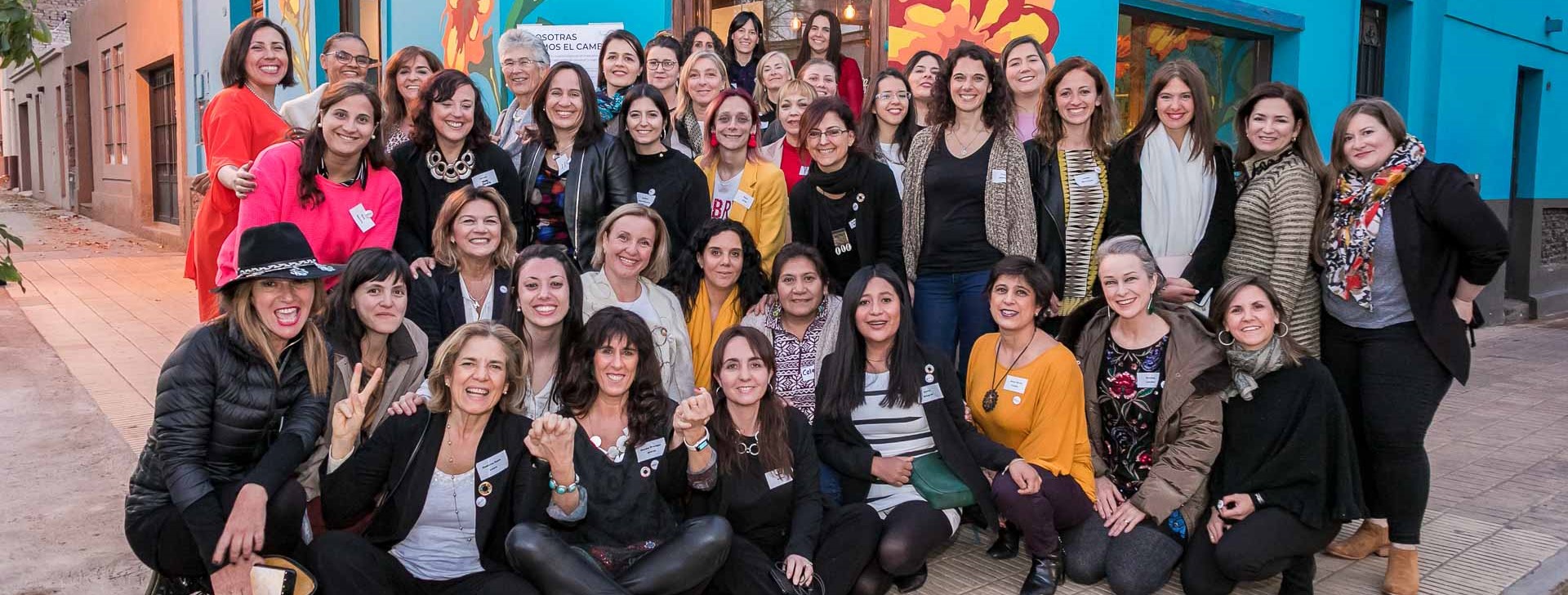
Women 4 Solutions is a global network of women entrepreneurs who promote inclusive, regenerative and triple impact businesses. 

Inspired by four decades of research and activism by Dr. Riane Eisler, Founder and President of The Center for Partnership Studies, we should see the critical pillars of the caring economy as such:

1. To Value and Make Visible Caring for the Environment

As late as 2009, leaders worldwide couldn’t find a way to fight climate change, and the Copenhagen Climate Summit turned out to be an absolute failure. Fast forward six years, and we have finally seen some progress. At the 2015 Paris Climate Summit, many nations, for the first time in our civilization’s history, agreed to pursue collective climate action as the only way to deal with this issue.

Today COVID-19 has shown us that when a public health crisis arises, governments can take quick, sweeping action. So, why have governments worldwide still not taken any real action against climate change? The global pandemic has also shown us that companies that were more environmentally and socially responsible — the ones that cared for their employees and environment — did relatively better. Seeing this accelerated transformation gives us hope — from traditional business values with purely profit-oriented goals, to more sustainable ones that consider all stakeholders. 

2. To Value and Make Visible “Care Work”

COVID showed us the importance of healthcare workers, 75% of whom are women. Their pay does not match the dedication and risks they take. In addition, research shows that American women do seven additional years of free care work compared to their male counterparts. 

The work of care is invaluable to a functioning society and a necessity that capitalist, socialist, and communist countries take for granted. Many studies show that the Status of Women Predicts the Quality of Life of everybody around them. However, in today’s world, If women are discriminated against in the workplace and their home, and if women do most of the care work for free in their families and work for underpaid wages in the market, a nation’s overall quality of life is negatively affected. Have you considered that our massive economic inequalities exist because currently, we fail to value this care work fully?              

3. To Invest in the development of early childhood education: our most important asset

COVID has shown us that all humans, more than ever before, need to collaborate, be resilient, and flexible. To bring those skills to work and home, research shows that the quality of care and education received in the early years of childhood is important . A plethora of other research shows that early childhood experiences directly impact our brain development. Therefore, this will determine later, as adults, how these children will think, feel, act, and even vote. At an early age, children learn what is “normal,” moral, and even inevitable. What is worrisome is that in some cultures, children learn that “one kind of human is more valued than another.” This explains why preserving a rigidly male-dominated, “traditional” family is a priority for authoritarian regimes and religious fundamentalists. Children in these conditions learn another daunting lesson: that to fit into a dominating or hierarchical system they shouldn’t question orders (authority), no matter how unjust. This is one reason why totalitarian regimes survive — because there is tolerance for violence and fear.                                    

4. To Pursue Transparency and Metrics on the Caring Economy: changing our measures of economic health

We measure what we want to grow and improve. The most widely recognized measure of economic health is GDP, created more than one hundred years ago. Mass production and technology have changed since then, and the metrics used to measure success need to adapt to our new reality — one that reflects an authentic measure of the quality of life. One of failures of GDP is that it considers “productive” many activities that do harm, and even take lives: cigarette sales or fast food, as just two examples.

Another example of the failure of GDP metrics is that it doesn’t subtract “externalities,” for example, the cost of natural disasters caused by climate change or a company’s disregard of nature (which might appear as a positive on their balance sheets).

Not only does GDP regard some negatives as positives, but it also fails to include as productive the care work found in households. This, despite studies that show that if it were included, it would represent between 20% – 50% of GDP. Riane Eisler’s Social Wealth Economic Indicators is an excellent alternative for evaluating a nation’s prosperity authentically.

However, none of the suggestions above, that could add to GDP metrics, are taken into consideration by conventional economists and governments. It’s also not taught in schools and universities, so it’s up to likeminded people such as myself and colleagues at Women 4 Solutions to create awareness and action.

COVID has created more gaps between the have-and have-nots worldwide, in addition to some severe environmental problems. Let’s take a look at our current reality: it takes just one infected person to unleash chaos and country-wide shutdowns — the “butterfly effect” of mathematical chaos theory: “that something as small as the flutter of a butterfly’s wing can ultimately cause a typhoon halfway around the world,” becomes a reality. 

COVID reinforces the idea that our planet has become a “village,” and technology is still rapidly scaling our interconnected world. It’s now clear that climate action can only be accomplished if all nations collaborate with global goals.

Thus, we have clear proof that we cannot act in isolation any longer. We need a sense of urgency to transform our economic values and systems into something that all humans have had in common from the beginning: caring for each other! 

Learn more about the Caring Economy and do something every day to take care of our planet and people!                   
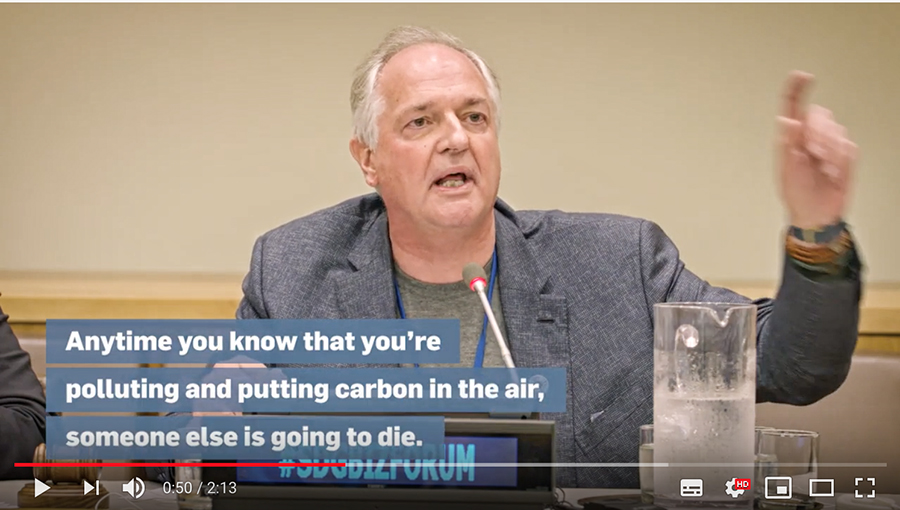
A Better Way to Lead: Paul Polman’s Lessons For Our Future

When Paul Polman resigned as CEO of British-Dutch consumer goods company Unilever last year, he left behind a decade of innovation and a global company with more than 400 brands, housed in a $140 billion company. He also left behind inspiration for our future, a visionary roadmap for consumers and CEOs alike.

His long-term strategy and courage in the face of early shareholder pressure — combined with a genuinely global worldview — has inspired Unilever’s 170,000 employees to seek authentic purpose in their work. If you’ve ever washed with Dove soap, enjoyed a cup of Lipton tea, eaten a tub of Ben & Jerry’s ice cream, or styled your hair with Toni&Guy, you can be confident that Polman’s foresight  was behind it. It’s tough being a visionary — especially when your ideas are so far ahead that no one recognizes what you’re building.

“It’s the best of times, it’s the worst of times,” says Polman, quoting Charles Dickens. “When Dickens wrote The Tale of Two Cities, ‘it was the spring of hope and the winter of despair,’ and I think this is where we find ourselves today.”

 On one side, people are living longer and healthier lives, more have access to formal education, and more individuals than ever before have been lifted from poverty. And while some leaders scoffed at the United Nations Millennium Development Goals set in 2000 under Kofi Annan, which had a goal of cutting global poverty in half, miraculously, this was achieved by the target date of 2015.

 And yet, while progress is being made, it’s not all roses, says Polman, who thinks the system is still flawed and these victories may be short-lived. “We’ve seen enormous levels of over-consumption and private and government debt across world markets,” he says. “Frankly, we’re leaving too many people behind. When you do this, the system starts to rebel against itself.” He cites the yellow vest protests on the streets of France as a manifestation of what many people are feeling across the world right now.

 There’s something appealing about a business leader who adopts the attitude of a world leader, someone who has the wisdom to see the interconnectivity between a bottle of shampoo and rioting on the street (waterless hair products ultimately result in less stress on an economic system). Under Polman, Unilever is one such company, recognizing early on that the challenges of running a business in a chaotic world are precisely where the economic growth is found. 

Polman will be staying on at Unilever until early July to support the handover to his successor Alan Jope. With the spotlight now off Polman as one of the world’s most powerful CEOs, he’s adamant there is still much to do. “I have no intention of retiring, nor would I recommend it,” he explains. “I will certainly keep working to help solve pressing world challenges. Indeed, now that I am no longer running a company, I can dedicate even more time to this agenda. We cannot stop until we truly leave no one behind.” For example, he serves as chair of the International Chamber of Commerce (ICC), chair of the B Team, and vice chair of the United Nations Global Compact.  

“CEOs are increasingly focused on the next quarter, driven by the pressures of the financial markets,” he continues. “Or in the case of governments, the next election cycle. This is an opportunity for all of us in the private sector to step up.”

With more than 45 million companies associated with the ICC, Polman made a smart move by recognizing the tremendous opportunity for Unilever to become a thought leader among the world’s corporations, while helping to develop a new social contract that would focus on climate change and inequality. Luckily, when he arrived at Unilever, he already found a company with the right value system in place and a desire to be a force for good. 

 He recalls that most of our current global governance dates back to Bretton Woods in 1944. The issues we face today are vastly different from 74 years ago, when 90 percent of the world was found in Western Europe and the United States. Topics such as climate change, cybersecurity, and financial market regulations are now global issues, but without the modern mechanisms to deal with them.

 “Let’s face it, it’s not easy being a CEO today. The average life of a publicly traded company in the U.S. has dropped from 67 years to 17 during my lifetime,” says the 62-year-old Polman. “The average tenure of a CEO has dropped to just four and a half years. It’s the result of companies not knowing how to deal with the new world order they see around them. However, business is here to serve society, and if businesses can’t explain what benefits they bring, then why should society keep us around?”

 At first, skeptical analysts were doubtful about Polman’s outlook — that business was first and foremost about developing solutions for the world’s citizens. Unilever’s stock fell by 27 percent in 2008 when he stepped into the role of CEO, partly due to the financial crisis; but he was vindicated by the time he left — delivering a 290 percent total shareholder return and 19 percent return on invested capital over the last ten years. Polman points out that consumers today have deep insight into the products they purchase and will reward companies that behave responsibly. Increasingly, they will punish companies that don’t. “The SDG agenda is actually one of the best and most attractive business plans around,” says Polman. 

A passionate supporter of the Sustainable Development Goals (SDGs), Polman helped create The Commission of Business and Sustainable Development, which launched at the 2016 World Economic Forum in Davos. Its first report, that same year, convincingly illustrated the benefits to business of pursuing the Global Goals. It found that sustainable business models could open up at least $12 trillion of economic opportunities and create up to 380 million jobs by 2030 globally.

Balance this against the fact that the cost of not acting is becoming higher than the price of acting. For example, according to Polman, climate change is costing the planet more than $5.3 trillion a year and rising at a staggering rate. “This is probably the biggest intergenerational crime we’ve ever committed,” he says. “The visible results are the drowning of little island-states and 8 million people per year being sent to a premature death from air pollution. Consider that creating action around the SDGs will cost less than $5.3 trillion.”

 “The world is also spending 10 to 12 percent of its global GDP (roughly $12 trillion) on conflict prevention and war,” says Polman. “Governments are willing to spend up to three times more on dealing with the consequences of our war-like nature, rather than looking at what it might cost to avoid these conflicts in the first place.” What gives Polman hope is that while governments act according to ideology, financial markets understand the risks related to climate change and will probably act accordingly. There’s nothing like the threat of lost income to inspire action.

Unilever’s goal of reaching 1 billion people and improving their health and well-being is underway, with much of the success attributed to a baked-in sense of purpose within its brands.  “The better these brands are connected to real needs or issues in society, the better they perform,” Polman points out. An example is Dove, which has a goal of reaching 60 million adolescent girls and addressing women’s self-esteem. LifeBuoy wants to reach 1 billion people and teach them the importance of handwashing to prevent 4 million child deaths from infectious diseases. Domestos has a goal to build 25 million toilets globally.

 “There is no business strategy in runaway climate change, growing inequality, and extreme poverty,” says Polman. “We’ve already shown that we can address basic issues, yet collectively, we’re not doing it. At the end of the day, it boils down to willpower. It boils down to leadership.”

 Part of his leadership team is his wife Kim, who runs a foundation called Reboot the Future. Dedicated to nurturing a new breed of leader, she is helping people put purpose and responsibility at the heart of their actions. In the coaching of leaders and the raising of their three sons, she abides by her Golden Rule: “Treat others and the planet as you would wish to be treated.” The couple have become guiding lights on how a compassionate approach to business, politics, and the environment can transform our planet.

 “We’re short of leaders and trees in the world right now,” says Polman with a laugh. “We need to create more heroic leaders, ones who are more purpose-driven with a high level of awareness of what’s going on in the world and an ability to engage. We need leaders who understand the true meaning of what a partnership is, and put others’ interests ahead of their own. In doing so, they will become financially better-off, too. All the changes we’ve ever seen in society have come about through the initiatives of courageous individuals.”

 Opportunity naturally gravitates toward those who have the courage to act, and Polman’s parting words were reserved for the audience of Real Leaders, where he stressed a duty to future generations. “I want to remind many of you that you belong to 2 percent of the world population when it comes to income, education and lifestyle. Therefore, it’s your duty to put yourself in the service of the other 98 percent.”   


A Better Way to Lead: Paul Polman’s Lessons For Our Future

When Paul Polman resigned as CEO of British-Dutch consumer goods company Unilever last year, he left behind a decade of innovation and a global company with more than 400 brands, housed in a $140 billion company. He also left behind inspiration for our future, a visionary roadmap for consumers and CEOs alike.

His long-term strategy and courage in the face of early shareholder pressure — combined with a genuinely global worldview — has inspired Unilever’s 170,000 employees to seek authentic purpose in their work. If you’ve ever washed with Dove soap, enjoyed a cup of Lipton tea, eaten a tub of Ben & Jerry’s ice cream, or styled your hair with Toni&Guy, you can be confident that Polman’s foresight  was behind it. It’s tough being a visionary — especially when your ideas are so far ahead that no one recognizes what you’re building.

“It’s the best of times, it’s the worst of times,” says Polman, quoting Charles Dickens. “When Dickens wrote The Tale of Two Cities, ‘it was the spring of hope and the winter of despair,’ and I think this is where we find ourselves today.”

 On one side, people are living longer and healthier lives, more have access to formal education, and more individuals than ever before have been lifted from poverty. And while some leaders scoffed at the United Nations Millennium Development Goals set in 2000 under Kofi Annan, which had a goal of cutting global poverty in half, miraculously, this was achieved by the target date of 2015.

 And yet, while progress is being made, it’s not all roses, says Polman, who thinks the system is still flawed and these victories may be short-lived. “We’ve seen enormous levels of over-consumption and private and government debt across world markets,” he says. “Frankly, we’re leaving too many people behind. When you do this, the system starts to rebel against itself.” He cites the yellow vest protests on the streets of France as a manifestation of what many people are feeling across the world right now.

 There’s something appealing about a business leader who adopts the attitude of a world leader, someone who has the wisdom to see the interconnectivity between a bottle of shampoo and rioting on the street (waterless hair products ultimately result in less stress on an economic system). Under Polman, Unilever is one such company, recognizing early on that the challenges of running a business in a chaotic world are precisely where the economic growth is found. 

Polman will be staying on at Unilever until early July to support the handover to his successor Alan Jope. With the spotlight now off Polman as one of the world’s most powerful CEOs, he’s adamant there is still much to do. “I have no intention of retiring, nor would I recommend it,” he explains. “I will certainly keep working to help solve pressing world challenges. Indeed, now that I am no longer running a company, I can dedicate even more time to this agenda. We cannot stop until we truly leave no one behind.” For example, he serves as chair of the International Chamber of Commerce (ICC), chair of the B Team, and vice chair of the United Nations Global Compact.  

“CEOs are increasingly focused on the next quarter, driven by the pressures of the financial markets,” he continues. “Or in the case of governments, the next election cycle. This is an opportunity for all of us in the private sector to step up.”

With more than 45 million companies associated with the ICC, Polman made a smart move by recognizing the tremendous opportunity for Unilever to become a thought leader among the world’s corporations, while helping to develop a new social contract that would focus on climate change and inequality. Luckily, when he arrived at Unilever, he already found a company with the right value system in place and a desire to be a force for good. 

 He recalls that most of our current global governance dates back to Bretton Woods in 1944. The issues we face today are vastly different from 74 years ago, when 90 percent of the world was found in Western Europe and the United States. Topics such as climate change, cybersecurity, and financial market regulations are now global issues, but without the modern mechanisms to deal with them.

 “Let’s face it, it’s not easy being a CEO today. The average life of a publicly traded company in the U.S. has dropped from 67 years to 17 during my lifetime,” says the 62-year-old Polman. “The average tenure of a CEO has dropped to just four and a half years. It’s the result of companies not knowing how to deal with the new world order they see around them. However, business is here to serve society, and if businesses can’t explain what benefits they bring, then why should society keep us around?”

 At first, skeptical analysts were doubtful about Polman’s outlook — that business was first and foremost about developing solutions for the world’s citizens. Unilever’s stock fell by 27 percent in 2008 when he stepped into the role of CEO, partly due to the financial crisis; but he was vindicated by the time he left — delivering a 290 percent total shareholder return and 19 percent return on invested capital over the last ten years. Polman points out that consumers today have deep insight into the products they purchase and will reward companies that behave responsibly. Increasingly, they will punish companies that don’t. “The SDG agenda is actually one of the best and most attractive business plans around,” says Polman. 

A passionate supporter of the Sustainable Development Goals (SDGs), Polman helped create The Commission of Business and Sustainable Development, which launched at the 2016 World Economic Forum in Davos. Its first report, that same year, convincingly illustrated the benefits to business of pursuing the Global Goals. It found that sustainable business models could open up at least $12 trillion of economic opportunities and create up to 380 million jobs by 2030 globally.

Balance this against the fact that the cost of not acting is becoming higher than the price of acting. For example, according to Polman, climate change is costing the planet more than $5.3 trillion a year and rising at a staggering rate. “This is probably the biggest intergenerational crime we’ve ever committed,” he says. “The visible results are the drowning of little island-states and 8 million people per year being sent to a premature death from air pollution. Consider that creating action around the SDGs will cost less than $5.3 trillion.”

 “The world is also spending 10 to 12 percent of its global GDP (roughly $12 trillion) on conflict prevention and war,” says Polman. “Governments are willing to spend up to three times more on dealing with the consequences of our war-like nature, rather than looking at what it might cost to avoid these conflicts in the first place.” What gives Polman hope is that while governments act according to ideology, financial markets understand the risks related to climate change and will probably act accordingly. There’s nothing like the threat of lost income to inspire action.

Unilever’s goal of reaching 1 billion people and improving their health and well-being is underway, with much of the success attributed to a baked-in sense of purpose within its brands.  “The better these brands are connected to real needs or issues in society, the better they perform,” Polman points out. An example is Dove, which has a goal of reaching 60 million adolescent girls and addressing women’s self-esteem. LifeBuoy wants to reach 1 billion people and teach them the importance of handwashing to prevent 4 million child deaths from infectious diseases. Domestos has a goal to build 25 million toilets globally.

 “There is no business strategy in runaway climate change, growing inequality, and extreme poverty,” says Polman. “We’ve already shown that we can address basic issues, yet collectively, we’re not doing it. At the end of the day, it boils down to willpower. It boils down to leadership.”

 Part of his leadership team is his wife Kim, who runs a foundation called Reboot the Future. Dedicated to nurturing a new breed of leader, she is helping people put purpose and responsibility at the heart of their actions. In the coaching of leaders and the raising of their three sons, she abides by her Golden Rule: “Treat others and the planet as you would wish to be treated.” The couple have become guiding lights on how a compassionate approach to business, politics, and the environment can transform our planet.

 “We’re short of leaders and trees in the world right now,” says Polman with a laugh. “We need to create more heroic leaders, ones who are more purpose-driven with a high level of awareness of what’s going on in the world and an ability to engage. We need leaders who understand the true meaning of what a partnership is, and put others’ interests ahead of their own. In doing so, they will become financially better-off, too. All the changes we’ve ever seen in society have come about through the initiatives of courageous individuals.”

 Opportunity naturally gravitates toward those who have the courage to act, and Polman’s parting words were reserved for the audience of Real Leaders, where he stressed a duty to future generations. “I want to remind many of you that you belong to 2 percent of the world population when it comes to income, education and lifestyle. Therefore, it’s your duty to put yourself in the service of the other 98 percent.”   


The 5-Minute Social Business Guide

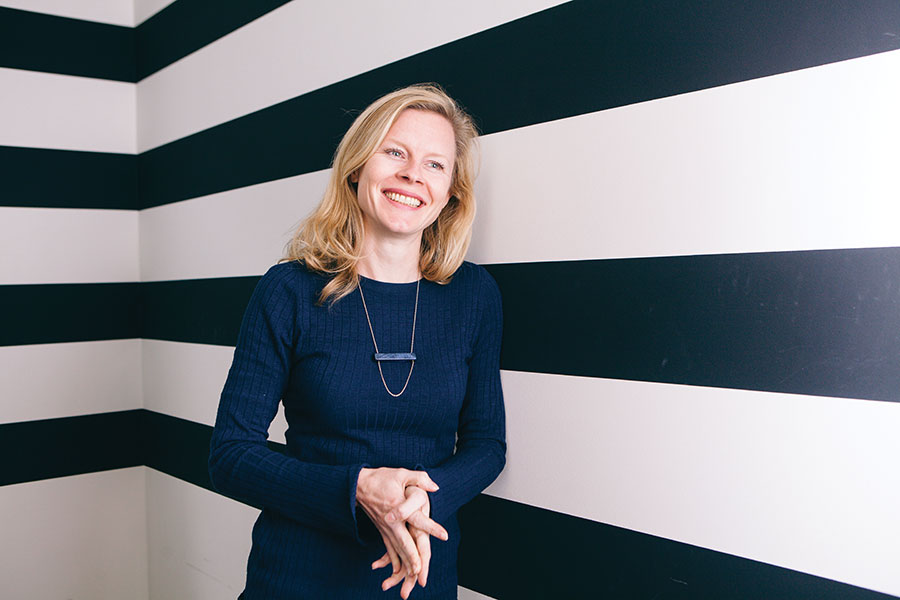
Saskia Bruysten, CEO and Founder of Yunus Social Business (above) speaks to entrepreneur Laura Koch about social business.

What exactly is a social business?

It’s a business that considers social problems as part of its business plan. It also aims to generate profit. I co-founded Yunus Social Business in 2011 with Muhammad Yunus and Sophie Eisenmann after seeing the success of a social business model in Bangladesh. I wanted to help spread this idea around the world. We’re different than traditional NGOs because we turn donations into investments within our social businesses, that we reinvest over and over again, multiplying the impact each time. Our Philanthropic Venture Fund grows businesses that provide employment, education, healthcare, clean water and clean energy to over three million people in East Africa, Latin America & India.

Operating like a business is crucial. We use typical venture capital strategies such as incubators and accelerator methodologies to identify social challenges and then seek local partners and entrepreneurs. This idea was unique when we started and our challenge was to keep adapting to find the right approach. You should be prepared to face different circumstances in diverse countries.

How do you operate? 

We give long-term loans to social businesses in Uganda, Kenya, Brazil, Colombia and India. We’ve invested in over 50 social companies that strive to be financially self-sustainable and contribute to solving social challenges. These companies have a clear mission to address one (or several) challenges described in the 17 Sustainable Development Goals (SDGs). For example, in Uganda where nine million people don’t have access to clean drinking water, we saw results within five years from Impact Water, a business we invested in to provide clean water to over 1,200 schools and 800,000 students. The business was so successful it expanded into Kenya. Because they touch on eight of the 17 SDGs, they also deliver much more than just profit.

What’s the idea behind the local partner model?

There’s no better way to support local business than by teaming up with local business leaders as your partners. They already have strong local networks and deep insights into the countries in which they operate. We identify social challenges with these partners and then try and solve them.


How did your idea come about?

A speech by Muhammad Yunus at the London School of Economics inspired me. I was a management consultant at the time but decided I would instead devote my life to social business instead. Our first social business project in Bangladesh was with Danone in 2007. We tried to match the company’s strengths with the social problems we saw around us and developed a simple solution: a joint venture to produce affordable and nutritious yogurt to fight malnutrition in kids. This small project went on to influence Danone’s vision as a business for good and later the creation of Danone Communities, a social business investment fund.


Saskia’s Tips For Becoming a Social Business

  1. Read Prof. Yunus’ book: “A World of Three Zeros: The New Economics of Zero Poverty, Zero Unemployment, and Zero Net Carbon Emissions.”

  2. Become a donor to our local funds, help local entrepreneurs in India, Africa and Latin America build their own social businesses. 

  3. Join us for a partner visit to see first-hand how our social businesses create positive social impact in one of our regions.

  4. Become an advocate for social business in your country or create a local Yunus Social Business chapter.

  5. Start a social business yourself.


Where did this lead?

After Danone, we were approached by many companies wanting to develop something similar. Our consultancy arm helps large corporations solve a local, social challenge with their business. We help corporates create their social businesses and bring social entrepreneurs together with large companies to foster innovation. Dramatic changes are evident in the global economy and business is not just about making money anymore. It’s about providing value to society: a move beyond shareholder value to stakeholder value.

What about established companies? Can they also create social impact?

Most companies don’t know how to begin, but we suggest starting with a small venture. We all learn by doing, and associating your brand with a pilot project could be the start of something big. This adds a dose of “social business magic” into a company: employee engagement rises, customer loyalty increases and relationships with the community improves. We found that innovation is the number one reason corporate leaders find social business interesting. Look at your business from the perspective of society – do you think in a customer-centric or product-centric way?

What gets you out of bed each day?

I believe in the power of business to solve the greatest problems facing humanity. I see this in the work I do and it keeps me motivated. Corporations are key players in our economic system, playing a decisive role in shaping our world and its social and environmental conditions.

www.yunussb.com


0