The world’s richest countries met at the G7 summit in Germany in June 2022. Among other pressing issues, food security and climate change were at the top of the agenda.
Climate change, and more recently the war in Ukraine, has been adversely affecting global food security, water, and hunger. To understand it better, Gabriela Bucher (pictured above), executive director of Oxfam International, explains how business leaders can help find solutions.
The food crisis we are facing is extremely serious and probably unprecedented. It’s a combination of many crises at the same time. We started with a pandemic, but underlying that is the climate crisis, which is having an impact on food security and extreme hunger. What’s concerning are the numbers of people affected by extreme hunger, even in rich countries. The world’s attention has been very much on the Ukraine conflict, and unfortunately, the hunger crisis has been growing in the last few months. If we don’t act fast, it will reach catastrophic levels.
Long-term planning is something that is missing as an integrated approach globally. We really need multilateral institutions to step up and make sure that our responses are joined up. We know from research and experts what needs to be done and how much investment is needed. What we need is the will and the coordination to make it happen.
A lot of announcements are made, and ideas come up about global food coalitions. But no concrete plans happen, no targets are set, and no funding appears. We know there are possibilities for raising funds through, for example, windfall taxes and wealth taxes. Presently, the vast majority of taxes across the world are income-related or consumption-related. Around 4% of the total tax revenue in the world comes from wealth taxation. This is an untapped source that would allow countries to invest in their own food security.
There are good examples of solidarity that we can see across history, but we need to double up on this in moments of crisis. There can be a tendency to look after our own, but that’s exactly when we need to think differently and realize that we are globally connected. We must understand that actions in one part of the world have impacts on other parts of the world.
193 million people are in famine-like conditions right now and growing. It’s important that we respond with immediate life-saving support, but also think long-term. I hope this urgency will spur business leaders, governments, and citizens to put pressure on the importance of investing in climate and adaptation, so that we have sustainable livelihoods going forward and can ensure that we have enough food for everyone.
Actionable Solutions to Help Feed the World
When we talk about food security, a lot of focus is only on one-dimensional food production. But climate change also impacts other dimensions such as access and utilization. Business solutions should be sought here too.
With all the environmental pledges made by countries and corporations added together, we would need 1.6 billion hectares of land — six times the size of India — to plant trees. This is clearly a near-impossible task, and lessening levels of consumption through innovative business ideas can be more effective. Explore leaner supply chains, less packaging, or seek scientific breakthroughs that allow you to use less and yield more.
There are many strategies, plans, and actions produced by expert groups and organizations on food security, such as the UN Food Systems Summit. Use these reports to spark ideas around new business opportunities and to spot gaps in the market.
The city prioritizes equity and inclusion as it incorporates tree coverage into climate resiliency efforts.
Mattapan, a neighborhood in southwestern Boston, is heating up. Although some areas of the residential neighborhood benefit from the cooling effects of nearby green spaces, others are vulnerable to increasing heat stress, largely because of dark roofs, unshaded parking lots and pavements, and wide streets with limited numbers of trees.
Mattapan is one of five Boston neighborhoods identified as being at particular risk for heat stress. (The other neighborhoods are Chinatown, Dorchester, East Boston, and Roxbury.) The five neighborhoods, all environmental justice communities, are at the focus of Boston’s heat resilience strategies, which include increasing the amount of light-colored surfaces and shade.
A big reason for the risk is the simple fact that there are fewer trees in these neighborhoods. For example, less than 25% of the land in East Boston (excluding Boston Logan International Airport) has adequate tree coverage.
Boston has recognized the importance of healthy tree coverage in addressing heat resilience and other climate change mitigation strategies. In fact, the city has been developing its first urban forest plan—a pathway to maintaining existing trees, planting new ones, and otherwise helping the city deal with the effects of a changing climate. The plan is set to be published in late summer or early fall.
“This plan essentially provides an analysis of the conditions in each neighborhood,” said Neenah Estrella-Luna, the principal of StarLuna Consulting, a social equity researcher, and a consultant on the plan.
Neighborhood Strategies
The plan’s “neighborhood strategies” approach considers the unique ways in which each neighborhood has the ability to address particular issues and identifies the people within that neighborhood who would be able to do something about them. The approach would employ the help of urban forest nonprofits like Dorchester-based Speak for the Trees, whose focus is on increasing the size and health of Boston’s urban forest, particularly in undercanopied areas. In addition, the plan could call upon the help of Lower Roxbury–based Friends of Melnea Cass Boulevard, which stopped a $25.6 million construction project that would have removed 124 mature trees, the Boston Globereported.
This approach was driven entirely by the urban forest plan’s equity council—a part of the larger community advisory board—and composed of individuals from historically excluded and currently marginalized communities across the city. The plan’s consultant team organized a series of focus groups, which sent out a series of surveys to the equity council to establish overarching goals, the best strategic approach, protection regulations, expectations for the level of involvement from stakeholders, and more.
Responses were summarized and consolidated and went through three rounds of refinement, a process that allowed the equity cabinet to participate on its own schedule and its members to interact with one another. “That technique pushed for consensus building, as opposed to just whoever talks the most or the loudest, which often is how decisions get made,” said Amy Whitesides, director of resilience and research at Stoss Landscape Urbanism and a consultant on the urban forest plan.
The neighborhood strategies approach also helped inform the plan’s four goals: equity, community-driven processes, making sure trees are valued and prioritized, and proactive care and preservation of existing trees. The last tenet was especially important, Estrella-Luna explained. Before the drafting of the plan, “there just weren’t sufficient resources devoted to particularly proactive protection of the existing canopy in historically excluded neighborhoods.”
In early spring of this year, the city halted renovation plans for Malcolm X Park, located in Dorchester, after outcry from residents. The plan threatened to remove 54 trees, many of which are more than a century old.
Hunter Jones, manager of the Climate and Health Project within NOAA’s Climate Program Office, noted that Boston’s neighborhood strategies approach is part of a larger trend in the United States. Jones identified air temperature, humidity, and even wind speed as factors contributing to urban heat and air quality issues across the country. “But increasingly,” he said, “there’s interest in looking at intracity differences.”
— Iris Crawford (@IrisMCrawford), Science Writer. This story originally appeared at eos.org and is republished here as part of Covering Climate Now, a global journalism collaboration strengthening coverage of the climate story, of which Real Leaders is a partner.
Saving endangered species sometimes means knowing where they used to live — before scientists started studying them. For that, we need historical ecologists.
One of the most fascinating challenges of endangered species management is the concept of shifting baselines — the idea that how much worse a problem has gotten, and what your recovery goal should be, depends on when you start measuring the problem.
In many cases we need scientific data on the population and distribution of endangered species from before anyone started collecting scientific data.
So what do we do?
Solving this challenge has required the creation of an entirely new field called historical ecology, which looks at human interactions with the environment over long periods of time using historical research methods.
“Historical ecology sits at the intersection of a number of disciplines, including archaeology, history, anthropology and paleoecology,” says Ruth Thurstan of the University of Exeter, a leader in the field. “It is particularly useful for understanding the scale of changes that occurred before we started to scientifically monitor ecosystems.”
Take fish populations, for example. The impacts of fishing have occurred over hundreds of years, but we’ve only been monitoring some of these populations for decades. By using historical ecology, says Thurstan, “We find that deeper historical perspectives show a far greater magnitude of ecosystem change compared to the modern scientific evidence alone.”
Shark History
The same techniques can be helpful in trying to understand the historical range of a now-endangered species. Just knowing where a species lives now doesn’t tell you where it used to live — or will likely need to live again as its numbers recover.
One example of this challenge can be found in a new study that uses historical ecology methods to understand the historical range of the critically endangered angel shark.
Study co-authors Jan Geert Hiddink, a professor of marine biology at Bangor University, and Alec Moore, a postdoctoral researcher at Bangor University, found a copy of the 1686 natural history book “De Historia Piscium” filled with detailed handwritten notes made by Lewis Morris, a Welsh Customs officer who died in 1765. They also found several other documents from Morris’s career that contain detailed descriptions of angel sharks found along coastal Wales.
“We found several records of angel sharks in 275-year-old notes documenting shingle reefs in Wales,” says Hiddink. “The locations where these sharks were recorded coincide with the areas in Wales where they are still present now, showing that these reefs are core habitat for angel sharks.”
Without these tools we’d know only that the sharks use this habitat now. Knowing that they’ve used this habitat in centuries past, as well, makes it much more critical to protect the reefs — and we’d never have known without historical ecology approaches.
“Detecting changes in the distribution and abundance of rare species is difficult, especially for marine species, but it’s essential for identifying where management actions are required,” says Hiddink. “These unique observations highlight the value that historical material has for conservation.”
Looking Back
To uncover the information, Hiddink and Moore tapped skills not commonly used by ecologists. “There was a long process that involved reading a lot of work outside of modern scientific literature, as well as talking with people who had local expertise and sources, including historians and archivists,” says Moore.
We may have a lot more sophisticated tools for scientific inquiry today, but historical ecology shows that we shouldn’t discount the past, either.
“This paper shows that people have made thoughtful observations of marine species, and that these sources remain very relevant today,” says Loren McClenachan, the Canada Research Chair in Ocean History in Sustainability at the University of Victoria.
McClenachan wasn’t involved in the angel shark study but has used historical ecology in her own research for years, including a 2009 analysisof how the size of fish in the Florida Keys are shrinking and the species composition of communities is changing.
To determine that, she used a clever source of data: photographs taken by charter-fishing captains from 1956 to 2007, which show the daily catch from their fishing boats.
Thurstan called this paper one of her favorite examples of historical ecology work, because it “uses sources that most natural scientists wouldn’t traditionally consider scientific data, but captures peoples’ attention immediately,” she says.
These research techniques are useful beyond the marine environment, too.
Similar methods have helped to identify the pre-exploitation range of wolvesin Europe and have been used to help demonstrate the impact of climate change on seasons.
For those willing to delve into historical datasets, there are countless interesting and relevant questions these tools can answer. But we also need to preserve the information, which includes a long-term investment in data management, researchers say.
Historical ecology can’t tell us everything we need to know to save a species, but it can jog our memory.
“Historical records can point us to locations that might be important for helping threatened species to recover, even if we’ve forgotten about them,” says Moore.
Because we’ve been changing ecosystems since long before scientists began recording those changes, “ecological observations alone can’t capture the full magnitude of change,” says McClenachan. But “history can tell us where to focus efforts for conservation and management, and to help set appropriate recovery targets.”
With the magnitude of the biodiversity crisis we face, that information is a welcome addition.
David Shiffman is a marine biologist specializing in the ecology and conservation of sharks. He received his Ph.D. in environmental science and policy from the University of Miami. Follow him on Twitter, where he’s always happy to answer any questions anyone has about sharks. This story originally appeared in The Revelator and is republished here as part of Covering Climate Now, a global journalism collaboration strengthening coverage of the climate story.
A new guide published in May is helping companies make smarter decisions about purchasing tropical forest credits, a strategy for offsetting greenhouse gas emissions, slowing deforestation and mitigating climate change.
The Tropical Forest Credit Integrity (TFCI) guide provides support for companies seeking to purchase high-quality carbon credits, which will bring them closer to decarbonizing their operations and ultimately to limiting global warming to 1.5° Celsius (2.7° Fahrenheit).
“Living ecosystems are critical carbon stocks and if we lose them, they cannot be recovered in the timeframe needed to tackle climate change,” said Angela Churie Kallhauge, head of impact at the Environmental Defense Fund, the organization that co-authored the report. “We know companies want to invest in tropical forest protection and have the resources to do it — but it can be hard for them to navigate the large, complex carbon credit marketplace.”
The other report authors include some of the world’s largest conservation organizations, including Conservation International, The Nature Conservancy, the Wildlife Conservation Society, World Resources Institute, WWF, IPAM Amazônia, and Coordinator of Indigenous Organizations of the Amazon Basin (COICA).
The project was funded by the Bezos Earth Fund, Amazon.com founder Jeff Bezos’s $10 billion initiative to support researchers, activists and NGOs in the fight against climate change.
Carbon credits allow companies, usually in industrialized countries, to offset their carbon emissions by paying for forest conservation, usually in less-industrialized countries. Generally, one credit is worth 1 metric ton in greenhouse gas emissions.
The voluntary carbon credit market has been growing rapidly in recent years, having reached $1 billion in value in 2021, with a future market value predicted to reach around $30 billion.
But the market has received criticism from some conservationists because it allows companies to continue to emit greenhouse gases, and has even been called a “license” to pollute. But the credits also buy time for companies trying to find other ways of transitioning away from excess carbon emissions in the long term.
As long as credits are being created, purchased and traded, there should be a strong set of recommendations available for companies seeking best practices, the new guide says.
“In the face of the urgency to conserve tropical forests and the rapidly increasing demand for tropical forest carbon emissions reductions and removals credits,” it says, “we agree that guidance for companies choosing to make such purchases is urgently needed.”
Major recommendations
The guide urges companies to purchase tropical forest carbon credits not to replace other emissions reduction strategies, but rather to complement them. That means companies should be taking other ambitious steps to decarbonize their operations beyond purchasing carbon credits, the guide says.
The creation of carbon credits, it says, should also prioritize the rights of Indigenous and local communities — as well as of women and other underserved groups — especially when it comes to access to land, water and practices involving traditional knowledge. The best way to do this is to treat these groups as partners or shareholders, not just beneficiaries, the guide says.
Companies should take “a genuinely collaborative and intercultural approach that values diverse cultural practices and ensures full and effective participation on equal terms throughout the process … and with special emphasis on the equitable distribution of benefits,” the guide says.
Another way to make sure this happens is by creating a culture of transparency. Companies should publicly report their use of carbon credits and specify in which country the credit activity is taking place. They should also be clear about how and if the credits count toward a host country’s “nationally determined contributions,” a core component of the Paris Agreement that measures each country’s total contributions to emissions reductions.
“It’s essential that companies are transparent about their investments and credits, how they’re counting them and how they’re claiming them,” Lloyd Gamble, WWF’s senior director of forests and climate, told Mongabay.
It’s possible, for example, to purchase “removal credits” that are created through tree-planting efforts, which have been shown to be less effective carbon sinks than conserving old-growth forests. Instead, companies should make sure they’re purchasing high-quality credits that contribute to real-world reductions of deforestation in tropical forests, the guide says.
But perhaps the most important recommendation, Gamble said, involves the transition to what are known as “jurisdiction-scale programs,” in which credits are granted at state or province level — or even national level — and not project by project. If companies can rapidly transition to those kinds of purchases, the guide says, forest protections can be established on a scale of millions of hectares as opposed to thousands, allowing for carbon credits to contribute to conservation efforts at a much larger scale.
“It’s important that [companies’] accounting and planning is such that they’re supporting transformational activity, transformational change,” Gamble said, “not just little green islands of national parks or localized activities that may have short-term effects.”
This story originally appeared in Monga Bay and is republished here as part of Covering Climate Now, a global journalism collaboration strengthening coverage of the climate story.
With less than 10 years left to avert climate catastrophe, campaigners Kumi Naidoo and Luisa Neubauer say activists need to ramp up civil disobedience.
Kumi Naidoo is the former head of Greenpeace. Luisa Neubauer is one of the founders of Germany’s Friday for Future climate school strike movement. But Naidoo and Neubauer’s entry into activism couldn’t have been more different.
Now in his late 50s, Naidoo joined the anti-apartheid movement as a 15-year-old in Durban, which got him expelled, arrested and ultimately exiled from South Africa. Neubauer is from the wealthy German city of Hamburg. For young people like her from the “Merkel generation,” it was all about getting a good education and career, she says.
Speaking in a Zoom call from Germany and South Africa, Neubauer and Naidoo acknowledge the contrast but also what unites them. Both experienced a lightbulb moment of realization that they would dedicate themselves to activism early in their lives. But they also said they’d recently come to realize they had to change their approach to activism due to the severity of the climate crisis.
Quoting Albert Einstein, who famously said “the definition of insanity is doing the same thing over and over again, expecting to get different results,” Naidoo believes it would be “arrogant” for activism not to take that sentiment into account.
An end to ‘handshake activism’
With deadly floods in South Africa, extreme heatwaves hitting India, Pakistan and now the US, the effects of fossil fuels heating the planet is here. Neubauer says the time for “handshake activism” is long over.
It’s the kind of activism that looks good on paper, and it’s where the geography student says she started out.
“It is something that you might be very dedicated to, but you’re also very keen to meet an important minister, to shake their hand and take a photo, and prove that you’ve actually done something,” she explains.
Naidoo, who also headed human rights organization Amnesty International, nods in agreement at Neubauer’s description of “handshake activism,” adding that his generation of activists mistook access for influence.
Being granted access, he says “allowed some government official or minister or CEO of a big company to tick off a box saying civil society consulted.”
Do climate activists need to be more radical?
Members of the global environment movement Extinction Rebellion have blocked roads and glued themselves to buildings and planes. And last year in Germany, young activists, calling themselves the “last generation,” took part in a hunger strike in front of the parliament building.
Given what is at stake for humanity, some have suggested that such radicals acts are needed. Others argue that attacking fossil fuel infrastructure could be justified for the greater good.
Naidoo says he understands the “deep frustration, anger, and disappointment” but that “violence only serves those in power’s interests,” as it gives leaders an excuse to crack down on legitimate protest.
“I got involved in a context of where there was a lot of struggles, a lot of death, a lot of sadness. But we came out of it with love, with the reconciliation, with a sense of justice, and that’s what I’ve tried to carry in all my activism,” Naidoo says, speaking of his anti-apartheid activism.
Still, both Neubauer and Naidoo see peaceful, civil disobedience as “justified.”
Oppression and repression: A shrinking space for climate activism?
Both activists say they have noticed a backlash against civil disobedience and even climate protests, ranging from mild to severe repression.
In this context, Neubauer mentions German Chancellor Olaf Scholz’s recent comments about black-clad climate activists who repeatedly interrupted him during a talk.
“I have to say honestly, these antics, staged at various events but always by the same black-clad people, remind me of an era that is, thank God, long past,” said Scholz.
Some thought the center-left SPD leader was comparing the activists to Nazis, with the chancellery calling that “absurd,” although there was no clarification of what Scholz meant.
At the same time countries such as Australia, France and the UK have cracked down on civil disobedience like blockades of roads or ports. And in Iran and Kenya, environmental defenders have been subjected to arbitrary arrests.
“Activism can operate even under the most vicious, repressive conditions,” says Naidoo, who saw “terrible repression” in apartheid South Africa in the 70s and 80s, and whose best friend was murdered by the regime. “It just means we have to be braver; we have to be smarter; we have to be more strategic.”
But, he adds, that it is becoming increasingly risky for climate activists, who are sometimes paying with their lives.
UK-based NGO Global Witness reported that in 2020, 227 land and environmental activists were murdered — the worst figure on record.
Where to next with climate activism?
Given the dangers climate activists face coupled with the speed at which the world needs to cut itself off from fossil fuels, both Naidoo and Neubauer see a need for creativity and inclusion.
But what does that look like?
One tactic is to follow the money and put pressure on banks and insurance companies to stop backing oil and gas majors. That could take the form of lobbying, boycott, and protests.
International environmental group 350.org‘s divestment campaign with which Naidoo is involved, has already seen success when it comes to institutions and funds moving their money out of fossil fuel and into green energy. But that needs to be ramped up, say the activists.
The movement needs to expand to include people from different backgrounds, who can contribute according to their resources and abilities. That includes intergenerational activism.
Neubauer explains that she became interested in environmental issues in the first place because of childhood conversations with her grandmother with whom she is now writing a book.
Climate change is not an environmental issue, it is about much more, including livelihoods, human rights, poverty and justice, says Naidoo. This needs to be communicated in imaginative ways on a larger scale, through dance, song and even gaming.
But to make change, people must also remain hopeful, he added.
“We’ve got to get people to imagine that it is within our grasp to turn this thing around,” says Naidoo. “This moment of history that we find ourselves in, is one where we have to say that pessimism is a luxury we simply cannot afford.”
Neil King from Deutsche Welle and Bill McKibben from The Nation conducted this interview on the future of climate activism to mark DW’s teaming up with Covering Climate Now, a global journalism collaboration of more than 500 news outlets, committed to more urgent and informed coverage of climate change. If you’d like to hear more of what Kumi Naidoo and Luisa Neubauer have to say, check out the ‘On the Green Fence’ Podcast.
Jennifer Collins is multimedia environment reporter and editor for Deutsche Welle, Germany’s international broadcaster. An award-winning journalist, she’s reported on everything from water scarcity to the damage caused by war to Afghanistan’s environment — a reporting trip that was funded by the European Journalism Centre.
This story from Deutsche Welle is published here as part of the global media collaboration Covering Climate Now.
Millions of tons of spent solar panels, wind turbine blades and lithium-ion batteries could be wasted in landfills — or put back to use for the clean energy transition.
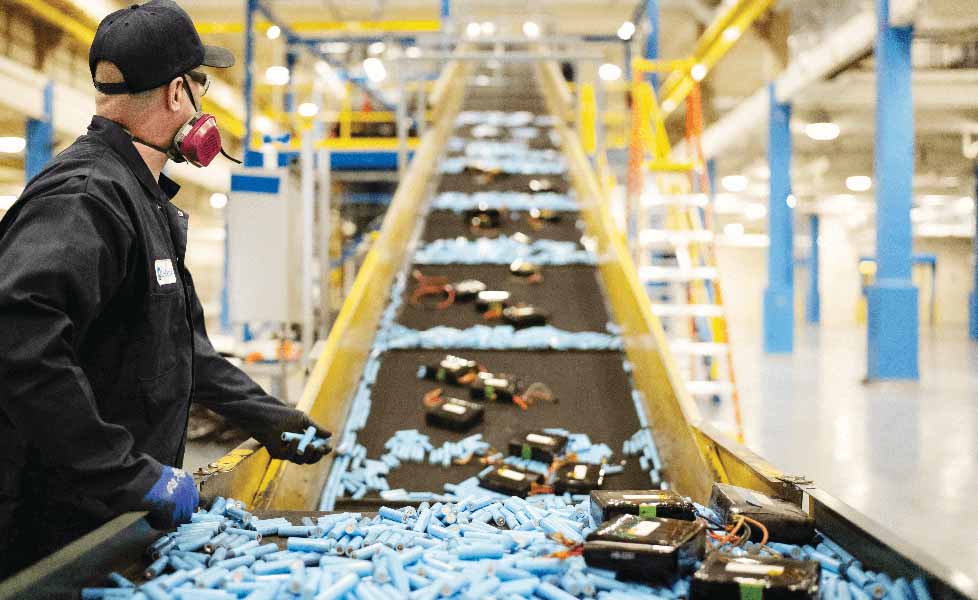
In the past decade, solar panels, wind turbines and lithium-ion batteries have boomed in production volume and plummeted in price. That’s enabled many countries to accelerate the transition to lower-carbon electricity. It’s also helped electric vehicles become more mainstream, an important step in the push to decarbonize transportation.
To keep global warming from reaching catastrophic levels, production of these clean energy technologies will need to be scaled up by orders of magnitude in the coming decade.
Making all of this happen should be the first priority of anyone who cares about the fate of life on earth. But there’s another pressing priority that can’t be overlooked: A lot of the equipment that will make this crucial transition possible — and the valuable materials used to make it — could end up in landfills.
If it’s not reused and recycled, this waste could wreak havoc on ecosystems and communities. It could also mean missing out on an accessible source of critical raw materials like lithium and cobalt, which are costly to mine and often produced in environmentally and socially harmful ways.
Today, the volume of panels, turbine blades and batteries nearing the end of their lives is relatively low. But that’s changing fast. Now is the time to ramp up recycling capacity so that it matches the growth of clean technologies that will occur over the next few decades.
By 2030, the U.S. is expected to be decommissioning about 1 million metric tons of solar panels per year, said Maria Curry-Nkansah, head of the U.S. National Renewable Energy Laboratory’s circular-economy strategic initiative for advanced energy materials technology — and across the globe, the figure will be about 8 million metric tons a year. The numbers only grow from there. The worldwide total of PV waste could increase nearly tenfold by 2050, to 78million metric tons, according to the International Energy Agency.
Likewise, the roughly 600,000 metric tons of lithium-ion battery waste expected from the first generation of EVs by 2025 is set to grow to 11 million metric tons worldwide by 2030, according to the World Economic Forum. And the volume of wind turbine blades reaching end of life could hit 12 billion metric tons by 2050, according to a 2020 study in the Journal of Sustainable Metallurgy.
So what can we do today to avoid generating these gargantuan volumes of waste in the future? Experts say the only solution is an aggressive and coordinated effort to set government regulations and establish private-sector investments that enable the recycling of clean energy technologies at massive scale.
It’s important to point out that there’s a categorical difference between the raw materials of the clean energy economy and those of the fossil-fueled economy. Renewable energy and energy-storage systems don’t burn an irreplaceable resource and cause irreparable harm to the climate and environment in the process. Instead, they capture inexhaustible sources of energy — sunlight and wind.
But to be considered truly sustainable, these industries need to restructure themselves in ways that allow their products to be recycled at the end of their lives. That’s going to require government mandates to limit their wanton disposal, along with effective regulatory structures to incentivize the private sector to invest in businesses and infrastructure to collect, transport, disassemble, refine, reuse and remanufacture their components.
It’s also going to demand a lot of innovation, from new technologies for breaking down and reconstituting the components of solar panels, turbine blades and lithium-ion battery cells, to novel approaches to designing products that make their recycling simpler and safer at the end of their lives.
The underlying challenge of raw materials
To meet the skyrocketing U.S. and global demand for these clean energy technologies, supplies of key materials must expand dramatically. The International Energy Agency (IEA) forecasts a quadrupling of total mineral demand for clean energy technologies by 2040 under its Sustainable Development Scenario (SDS), the pathway it prescribes for keeping global temperature rise well under 2 degrees Celsius. The projected demand trajectory for minerals used to make EVs and batteries is particularly dramatic — a greater than thirtyfold increase from today to 2040, with lithium demand growing more than fortyfold in the same timeframe.
Recycling and reuse won’t come anywhere close to eliminating the need for mining and processing ever-larger amounts of these core materials. But they can certainly make a dent.
Take the example of batteries: By 2040, “recycled quantities of copper, lithium, nickel and cobalt from spent batteries could reduce combined primary supply requirements for these minerals by around 10%,” according to an IEAreport on clean energy minerals.
“In the next 10 to 15 years, recycling is a huge component of [sourcing] the materials we’re going to need for this clean energy transition,” said Megan O’Connor, CEO of Beverly, Massachusetts–based battery and minerals recycling startup Nth Cycle. “But even if we recycle 100 percent of the lithium-ion batteries we’re making” by 2030, “that only gets us approximately 10 percent of the cobalt we’re going to need.” This underscores the fact that recycling will be most effective in tandem with new technologies that reduce or eliminate the need for various metals.
Mining, refining and transporting raw materials used in clean energy technologies is costly and energy-intensive. It can also be environmentally harmful and subject to unpredictable interruptions in supply. For example, about 70 percent of the world’s cobalt comes from the Democratic Republic of Congo, where it’s mined in ways that harm the environment and have led to human-rights violations. Last year’s White House supply-chain report states that China refines 60 percent of the world’s lithium and 80 percent of the world’s cobalt, which “presents a critical vulnerability to the future of the domestic U.S. auto industry.”
Recycling could dramatically reduce those costs and vulnerabilities. For example, this chart from the ReCell Center, a battery recycling consortium led by the U.S. Department of Energy, indicates that a ton of battery-grade lithium could be extracted from 750 tons of lithium brine, 250 tons of lithium ore, or just 28 tons of recycled lithium-ion batteries. The metrics are even better for recycled versus mined and refined cobalt, a key ingredient of today’s most energy-dense lithium-ion batteries.
And the more sophisticated methods of recycling batteries that are beginning to emerge offer the potential to dramatically decrease energy use, water use and emissions of toxic byproducts like sulfur dioxide, according to ReCell.
But a lot needs to happen for these more sophisticated recycling methods to flourish, said Garvin Heath, a senior environmental scientist and member of the resources and sustainability group at NREL’s Strategic Energy Analysis Center. The fundamental barrier right now, “especially in the U.S., is that without a government mandate to recycle, there are no economies of scale yet, and costs are high,” he said.
“We’ve done some cost modeling of PV recycling systems, and indeed, they don’t return the value greater than the cost,” he said. “Anecdotally, we’ve heard those costs range from $15 to $30 per module after delivery to the recycling center.” That amounts to roughly one-tenth the cost of a new solar module.
That’s much higher than the cost to dump the materials in a landfill, Heath said. The secret to making recycling a cost-effective proposition thus lies not only in reducing the costs and increasing the value of recycling but also in increasing the costs of discarding end-of-life clean energy technologies in landfills — or outlawing it altogether.
The role of regulations
So far, the European Union has taken the global lead in implementing recycling regulations, especially for solar panels and lithium-ion batteries.
For nearly a decade, EU member states have been required to recycle 85 percent of the materials used in solar panels under the EU’s Waste Electrical and Electronic Equipment Directive. The costs of this work are covered by upfront fees on panels entering the European Union, and country-by-country regulations govern how that recycling is managed. The first recycling plant dedicated to PV recycling was opened in France in 2018 by water and waste management conglomerate Veolia, and several more are now being planned.
Solar panel recycling initiatives in the European Union aren’t yet capturing the full recyclable value of solar panels, however, said Saloni Sachdeva Michael, a solar PV recycling policy expert and German Chancellor Research Fellow with the Alexander von Humboldt Foundation. That’s because the EU’s regulations are based on collecting and recycling a certain percentage of solar panels based on their weight, which allows recyclers to meet the targets by recycling just the glass and aluminum — the heaviest parts of every panel.
That leaves out the recovery of the critical materials including silicon, copper and silver that are contained in the electricity-generating parts of the panels, she said. “There are a number of pilots going on in Europe” to extract these materials economically, “but as far as I know there is no commercially scalable process.”
Even so, Europe is still far ahead of the United States, which lacks any federal-level policy or mandate around solar panel recycling. In fact, only 15 states in the U.S. have bans on landfill disposal of electronic consumer devices that could include solar panels, according to a 2021 NREL study.
As for state-level solar recycling policies, only Washington state has passed a law to require solar manufacturers to cover the costs of recovering and recycling solar panels, and implementation of that law has been delayed for years. U.S. solar leader California has recently taken the less aggressive but still useful step of categorizing solar panels as “universal waste,” which could make collection and recycling less costly and complex than for items categorized as hazardous waste. New York state is exploring a similar change.
Lithium-ion battery recycling policies are also far more advanced in the EU than in the U.S., NREL’s Heath said. In Europe, the EU has a litany of requirements for the reuse and recycling of battery materials, as well as requiring manufacturers to design batteries to be more easily recycled and mandating that new batteries include a minimum amount of recycled content. By 2027, battery and vehicle manufacturers will need to provide easily accessible information on the quantities and sources of cobalt, lithium, nickel and lead in every battery sold.
Adding to an existing framework of regulations, these new mandates are spurring significant investments in battery recycling in Europe. Umicore, the Belgium-based global minerals and materials processing company, launched the world’s first industrial-scale lithium-ion battery recycling facility in 2011. It now recovers copper, cobalt and nickel in volumes of 7,000 metric tons per year, and has expanded into lithium recovery as well, a company spokesperson said in an email. Umicore has inked battery recycling agreements with automakers Audi, BMW, Volkswagen and Tesla in Europe.
The U.S., by contrast, doesn’t even have consistent state-by-state regulations for the collection and disposal of batteries used in consumer electronics, let alone EV batteries. No federal or state laws require the recycling of EV batteries or assign responsibility for funding that recycling, Heath said. California is the furthest ahead in developing such regulations; it has an advisory group that recommended policies on EV battery recycling to the state legislature earlier this year. North Carolina and New Jersey have also created similar commissions.
At the federal level, a bill that would set up a similar task force to develop regulatory pathways for battery recycling has so far failed to advance in Congress. The infrastructure law passed by Congress in 2021 contained several billion dollars in R&D grants for battery recycling and materials processing, but it lacks funding for scaling up recycling.
This slow progress could put U.S. automakers and battery manufacturers at risk of being disadvantaged in markets like the EU that set strict recyclability and recycled-content mandates on products being sold within their borders, said Emily Burlinghaus, a German Chancellor Fellow based at the Institute for Advanced Sustainability Studies. “The EU is the second-largest market for EV sales,” she said.
In the absence of a U.S. tracking and compliance mandate for sustainable battery manufacturing, the Global Battery Alliance, a group of more than 100 institutions including U.S. automakers and miners like Tesla, Rivian, and Controlled Thermal Resources, is stepping in to develop a “battery passport” program that could fill in the gaps, Burlinghaus pointed out.
If U.S.-based recyclers are ever to gain a global competitive standing, regulatory support will be vital. Today, most electronics recycling is done outside the U.S., much of it in environmentally hazardous ways. China, which dominates the world’s primary lithium-ion battery materials industry, also hosts the majority of the world’s nascent lithium-ion battery recycling capacity.
“There are lots of critical pieces of the supply chain — not just mining, not just refining — that have gone to China,” Nth Cycle’s O’Connor noted. “Now we’re trying to claw it back.”
The economics of recycling clean energy technologies
Regulations are essential to spur the growth of the complex chain of businesses needed to drive down recycling costs, said Thea Soule, chief commercial officer at Ecobat. A global recycler of lead-acid car batteries, Ecobat is now applying what it has learned in its main line of business to the task of recycling lithium-ion batteries.
“When we think about the economies around recycling [lead-acid] batteries, the ability for technology to catch up with the inherent value of that metal was crucial to create this positive feedback loop” of scale and profitability, Soule said.
About 99 percent of all lead-acid batteries are recycled in the U.S. today, she said. That’s the result of decades of public policy and private-sector investment working together. Most states prohibit the disposal of lead-acid batteries in landfills, and many require auto dealers or manufacturers to retrieve and recycle them. Most lead-acid batteries share the same simple roster of materials and form factors, allowing simple disassembly, often in automated facilities.
Those processes are tightly regulated by the U.S. Environmental Protection Agency to mitigate risks to workers and the environment. And the lead that comes out the other end is of high quality, allowing it to be sold for a tidy profit.
But lithium-ion batteries are a far different prospect. They include a multitude of different chemistries that are under continuous development and come in different form factors, from consumer electronics and power tools to EVs and stationary storage applications. The U.S. lacks any common regulations or standards for how lithium-ion batteries can be diverted to recyclers in volumes needed to reach profitable scale.
What’s more, lithium-ion batteries can overheat, catch fire and explode if improperly handled, earning them a “hazardous materials” designation from the EPA. Developing standards to manage the collection, transportation and secondary-market creation for end-of-life EV batteries “is a big piece of the challenge,” Curry-Nkansah said.
The uncertainty, risk and complexity of managing this type of waste make it hard for any single company to confidently invest in the lithium-ion recycling chain. To date, the U.S. recycling rate for lithium-ion batteries of all categories is less than 20 percent, Soule said.
“That statistic is a lot different in Europe because of the regulations around recycling and end of life,” which “encourage a nascent market to become efficient and allow the technology to catch up,” she said.
The U.S. landscape is starting to change on this front, though, driven by the Biden administration’s efforts to secure domestic battery manufacturing and supply chains and a growing recognition from U.S. automakers of the importance of building recyclability into their plans.
Li-Cycle, a startup that went public via special-purpose acquisition company merger last year, has a deal with Ultium Cells, the battery joint venture of General Motors and LG Chem, and is planning a recycling facility near Ultium’s Ohio battery plant. It’s also working with mining giant Glencore, which invested $200 million in Li-Cycle last month.
Redwood Materials, the battery recycling startup founded by Tesla co-founder JB Straubel that raised more than $700 million from investors, is planning to invest more than $1 billion in facilities to produce battery anodes and cathodes from recycled and “sustainably mined” materials. It has a partnership with Ford and is working with Ford and Volvo to fund the free collection of spent EV batteries in California. (Read more about Li-Cycle, Redwood and other companies recycling lithium-ion batteries.)
Both of these startups are promising their technologies can recover, on average, more than 95 percent of the valuable constituent materials of lithium-ion batteries. But they haven’t yet revealed data on the costs of their recycling processes or sourcing batteries.
A recent analysis from Benchmark Mineral Intelligence, a leading global metals analysis firm, identified what it called the “multiple threats” that might prevent lithium-ion battery recycling from reaching scale and profitability in the U.S. They include low collection rates from customers, a highly heterogeneous range of battery chemistries and formats to deal with, and a varied and uncertain value for the metals that can be recovered from the process.
“This variability around what is a lithium-ion battery makes it difficult for you to value and perform the operation of recycling, because your extraction techniques can vary widely,” Ecobat’s Soule said.
Can these processes of collection, transport, disassembly and core recycling produce end materials at a price the market can bear? It’s a highly complex calculation. The Department of Energy’s Argonne National Laboratory has developed a tool to model battery recycling costs and environmental impacts dubbed EverBatt. It can put some hard figures to the task of assessing the cost-effectiveness of various recycling approaches at different scales and stages of process improvement, as well as under a variety of pricing scenarios for different metals and chemicals.
In an ironic twist, some efforts to lower upfront costs and environmental impacts of the raw materials used in clean energy technologies may also reduce their recycling value. Lithium-ion battery makers are working on designs that use less cobalt and more lower-cost metals like zinc or iron, for example — a step that could significantly reduce the costs and harms stemming from cobalt mining, but also remove one of the highest-value metals from the list of those that can be recovered by recyclers.
From recycling to a circular economy?
Finding ways to recycle solar panels, lithium-ion batteries and other clean-energy products as they’re made today is a pressing issue. But just as important is redesigning products on the front end so that their end-of-life recyclability is as simple and cost-effective as possible.
“We need a well-considered approach that includes applying circular-economy principles for resource management and supply-chain resiliency,” Curry-Nkansah said. NREL’s research on the circular economy for clean energy materials is aimed at developing new materials with lower costs and lower environmental impacts and extending their useful lives. It also promotes the concepts of “remanufacture” and “reuse” — disassembling and putting back together products and their individual components without breaking them down to their constituent elements, as recycling does.
NREL’s circular-economy work also includes research into how to make products that use fewer and different materials in ways that reduce total carbon and waste emissions, as well as how to more efficiently manage their decommissioning, collection and transport to lower the costs of returning them to the supply chain.
In terms of batteries, NREL has been focusing much of its research on “direct recycling,” Curry-Nkasah said — a term for a process that leaves battery cathodes intact instead of shredding them so they can be reused in new batteries. This can allow for the reuse of a broader array of battery component materials, including cathodes for battery chemistries such as lithium iron phosphate that are cheaper to produce but worth less to recyclers.
The EU’s battery regulations take circularity into account with their emphasis on designing lithium-ion EV batteries that can both use recycled content and be more easily recycled at end of life. Umicore, BMW and Swedish lithium-ion battery manufacturer Northvolt are working on a “closed life-cycle loop” battery facility aimed at putting these principles into practice.
A number of researchers and companies are exploring how to design solar panels made of more durable and less toxic materials in configurations that allow for easier disassembly or simpler reuse or recycling options. Manufacturers of wind turbines are undergoing similar efforts with composite fiberglass blades, which are difficult and costly to disassemble or recycle today.
To make all of this happen, manufacturers of solar panels, wind turbine blades and lithium-ion batteries will need compelling reasons to prioritize these potentially costly design and materials decisions. That will require public policies that discourage private-sector parties from ignoring these factors in a quest to lower costs and compete for market share, and encourage them to work together on designing products that offer financial as well as environmental rewards.
The ultimate goal is to create a true “circular economy” for these devices, Heath said. “We have to [recycle] — eventually products get to end of life.” But given the massive growth in clean energy technologies and the resulting demand for raw materials, “recycling should be the last choice, basically.”
Solarcycle is proud to support Canary’s Recycling Renewables series. Solarcycle offers solar asset owners a low-cost, eco-friendly, comprehensive process for retiring solar systems. We pull out valuable metals such as silver, silicon and aluminum and have the technology to recycle 95% of panels currently in use. Follow Solarcycle on LinkedIn as we ramp up to meet this pivotally important challenge at giga-factory scale.
This story originally appeared at Canary Media and is republished here as part of Covering Climate Now, a global journalism collaboration strengthening coverage of the climate story, of which Real Leaders is a member.
Seven new environmental books offer practical advice, lessons from successful conservation projects and inspiration in troubled times.
These are the times that try our souls — and our Facebook feeds.
So if you’re tired of the horrors unfolding hour after hour on social media and TV news, stop doomscrolling and point your eyes somewhere more useful: seven new environmental books that offer vital lessons on saving the planet and the creatures that live here.
Some of these books — all of which have come out since the beginning of the year — provide practical advice for people working in specific conservation areas. Others offer experience that we can put to good use in multiple avenues. All offer inspiration at a time when that’s all too fleeting — and important to hold on to. John R. Platt, editor of The Revelator — a news and ideas initiative of the Center for Biological Diversity — shares his top picks.
The Intersectional Environmentalist: How to Dismantle Systems of Oppression to Protect People + Planet
by Leah Thomas
The Revelator’s take: If you’ve ever heard the term “intersectional environmentalism,” you have Thomas to thank. The writer-activist focuses on the relationship between social justice and the environment, and she has a lot to say and learn from in this vital new book.
From the publisher: “From the activist who coined the term comes a primer on intersectional environmentalism for the next generation of activists looking to create meaningful, inclusive and sustainable change. Thomas shows how not only are Black, Indigenous and people of color unequally and unfairly impacted by environmental injustices, but she argues that the fight for the planet lies in tandem to the fight for civil rights; and in fact, that one cannot exist without the other. An essential read, this book addresses the most pressing issues that the people and our planet face, examines and dismantles privilege and looks to the future as the voice of a movement that will define a generation.”
Ever Green: Saving Big Forests to Save the Planet
by John W. Reid and Thomas E Lovejoy
The Revelator’s take: Lovejoy, a groundbreaking biologist, died late last year, but his ideas and influence live on. They’re also more important than ever, with deforestation increasing both in rate and climate impact.
From the publisher: “Megaforests serve an essential role in decarbonizing the atmosphere — the boreal alone holds 1.8 trillion metric tons of carbon in its deep soils and peat layers, 190 years’ worth of global emissions at 2019 levels — and saving them is the most immediate and affordable large-scale solution to our planet’s most formidable ongoing crisis. Reid and Lovejoy offer practical solutions to address the biggest challenges these forests face, from vastly expanding protected areas, to supporting Indigenous forest stewards to planning smarter road networks.”
Effective Conservation: Parks, Rewilding and Local Development
by Ignacio Jiménez
The Revelator’s take: This book speaks to a specific type of reader — the people directly working on conserving parks — but shouldn’t that be all of us, anyway?
From the publisher: “Jiménez offers a pragmatic approach to conservation that puts the focus on working with people — neighbors, governments, politicians, businesses, media — to ensure they have a long-term stake in protecting and restoring parks and wildlife. This highly readable manual, newly translated into English after successful Spanish and Portuguese editions, provides a groundbreaking and time-proven formula for successful conservation projects around the world that bring together parks, people and nature.”
Endangered Maize: Industrial Agriculture and the Crisis of Extinction
by Helen Anne Curry
The Revelator’s take: As we’ve written, agricultural crops face increasing pressure from climate change, pathogens and other threats, and the wild varieties of these common foods may provide the answer to avoiding mass hunger.
From the publisher: “Through the contours of efforts to preserve diversity in one of the world’s most important crops, Curry reveals how those who sought to protect native, traditional, and heritage crops forged their methods around the expectation that social, political, and economic transformations would eliminate diverse communities and cultures. In this fascinating study of how cultural narratives shape science, Curry argues for new understandings of endangerment and alternative strategies to protect and preserve crop diversity.”
Was It Worth It? A Wilderness Warrior’s Long Trail Home
by Doug Peacock
The Revelator’s take: I’ve been dipping in and out of this beautifully produced book ever since I received a review copy a few months ago. At 80 Peacock has a lot to say as he looks back in a way that helps us look forward.
From the publisher: “In a collection of gripping stories of adventure, bestselling author Doug Peacock — loner, iconoclast, environmentalist and contemporary of Edward Abbey — reflects on a life lived in the wild, considering the question many ask in their twilight years: Was It Worth It?”
Ecoart in Action: Activities, Case Studies and Provocations for Classrooms and Communities
edited by Amara Geffen, Ann Rosenthal, Chris Fremantle and Aviva Rahmani
The Revelator’s take: Here’s another way to stop doomscrolling by breaking out your pens, markers and paint (or graphics software if you’re digitally inclined) and getting ready to make a difference.
From the publisher: “How do we educate those who feel an urgency to address our environmental and social challenges? What ethical concerns do art-makers face who are committed to a deep green agenda? How can we refocus education to emphasize integrative thinking and inspire hope? What role might art play in actualizing environmental resilience? Compiled from 67 members of the Ecoart Network, a group of more than 200 internationally established practitioners, Ecoart in Action stands as a field guide that offers practical solutions to critical environmental challenges.”
The Bald Eagle: The Improbable Journey of America’s Bird
by Jack E. Davis
The Revelator’s take: The new book by the Pulitzer Prize-winning author of The Gulf: The Making of an American Sea feels especially timely, with several new bird extinctions announced last year and the need to counter those losses with tales of conservation success.
From the publisher: “Filled with spectacular stories of Founding Fathers, rapacious hunters, heroic bird rescuers, and the lives of bald eagles themselves — monogamous creatures, considered among the animal world’s finest parents — The Bald Eagle is a much-awaited cultural and natural history that demonstrates how this bird’s wondrous journey may provide inspiration today, as we grapple with environmental peril on a larger scale.”
John R. Platt is the editor of The Revelator. An award-winning environmental journalist, his work has appeared in Scientific American, Audubon, Motherboard, and numerous other magazines and publications.
This story originally appeared in The Revelator and is republished here as part of Covering Climate Now, a global journalism collaboration strengthening coverage of the climate story.
Just four years after launching a pilot plant in Canada, Li-Cycle has raised US$500 million from high profile investors to build out EV battery recycling plants and hubs across the U.S.
There’s no shortage of evidence that the electric vehicle market hit some kind of inflection point in the last year or so. But for Ajay Kochhar, the CEO and co-founder of Li-Cycle, the telling detail was buyer response to General Motors’ very first e-Silverado. The initial production run sold out in 12 minutes on the day it went up for sale in early January – and this is for a pickup that won’t roll off the assembly line until 2024. “Consumers,” as he says, “are speaking.”
And Kochhar is listening. Just four years after launching a small pilot plant in Kingston, Ontario, Li-Cycle has emerged as a formidable player in the nascent EV-battery recycling industry. Now publicly traded (LICY: NYSE), the company quickly raised more than US$500 million from investors. Last year, it secured another US$150 million in strategic infusions from global battery-maker LG Energy Solution, a partner in a newly announced $4.9-billion EV-battery plant in Windsor, Ontario, and Koch Strategic Platforms to build three large facilities in Alabama, Arizona and upstate New York. (While the oil and gas empire run by the Koch family has lobbied heavily against climate action, Koch companies have been investing in a number of renewable sector start-ups of late.)
With early-stage backing from Carnelian Energy Capital, a Houston venture fund, last spring the company also inked a deal with Ultium, the sprawling EV-battery joint venture established by GM and LG Chem, to set up a processing facility within a huge new Ohio battery-plant complex. The value of its planned capital investments is now almost half a billion dollars. As Li-Cycle has told investors, it expects to be recovering battery-grade materials from the equivalent of 60,000 tonnes of lithium-ion batteries annually by 2023.
Investors aren’t the only ones paying attention. In its national blueprint for lithium batteries for 2021 to 2030, the U.S. government puts a heavy strategic emphasis on recycling lithium-ion EV batteries, citing research showing that batteries that use recycled materials can cut costs by 40%, water consumption in the production process by 77% and energy use by 82%.
Not surprisingly, Li-Cycle’s sector is rapidly becoming a very crowded space, attracting China’s battery giant CATL (which currently claims to recycle enough lithium for 200,000 EVs per year), as well as huge investments by multinationals like Nissan, BASF and Tesla, via Redwood Materials, a battery-recycling company founded by a Tesla co-founder. All this activity is being driven in part by the relative scarcity of both lithium and cobalt, another ingredient of lithium-ion batteries, as well as the car industry’s efforts to achieve carbon reduction targets. Meeting those targets pivots on transitioning to electric power but also on contending with the pollution and emissions associated with mountains of used batteries. “It’s a make-or-break moment for the OEMs [original equipment manufacturers],” says Kochhar. “They’re looking at recycling as a way to reach net-zero and have a domestic supply source instead of going to the ends of the earth.”
Lithium, a metal found in abundance in Chile, Australia and China, has long been recognized for its ability to pack a lot of energy into relatively small volumes – hence its widespread use in consumer electronics. When Elon Musk began building EVs, he reckoned he could use lithium-ion batteries to power his vehicles, with modules consisting of stacks of the sorts of batteries used in laptops. Since the original Tesla debuted in 2006, demand for lithium has been climbing a steep growth curve. “In 2019 the installed capacity of lithium-ion batteries in the world exceeded 700 [gigawatt hours],” noted a 2021 life-cycle-analysis report prepared by Circular Energy Storage, a U.K. consultancy. “Of this 51% was installed in light or heavy duty electric vehicles. The same number in 2015 was 19% and in 2010 it was less than 1%.” Commodity prices for clean energy minerals have also soared, setting off something of a geopolitical sprint to secure access to both lithium and cobalt, the lion’s share of which is found in mines in the Republic of Congo. China has been busy snapping up global lithium resources (it recently acquired a Canadian lithium mine).
New mines often face heavy opposition (environmental protests in Serbia earlier this year over a proposed Rio Tinto lithium mine led to cancellation of the project). With surging EV demand over the next decade, the major challenge, according to a 2021 paper in Nature, will be scaling up the mining and production of lithium, which is itself an energy intensive process. And a bit further out, the accumulation of out-of-service batteries could begin to look like yet another geyser of post-consumer waste.
In short, the theoretical case for recycling seems obvious and important, not just for environmental reasons but to mitigate the geopolitical conflicts associated with lithium and cobalt mining.
However, EV battery recycling is a complicated proposition, for both electrochemical and logistical reasons. “This was a constant question for us,” says Kochhar, a chemical engineer who led a lithium study for a cleantech consulting arm of Hatch, the engineering giant, before co-founding Li-Cycle. “People would ask, what would happen with the used batteries?”
Unlike conventional car batteries, used EV batteries are not a uniform size, often weigh hundreds of kilograms and, in many cases, are integrated into a vehicle’s chassis or power train. While an EV battery may last more than a decade, the spent version still contains plenty of energy, enough to inflict serious harm on handlers. The first order of business for recyclers, therefore, is to drain the residual power, which can be done in various ways, including submerging them in an electrolyte, as Li-Cycle does. Recyclers then need to remove the plastic casing and reprocess the battery’s exposed innards, including the metals they’re made of: lithium, cobalt, nickel and other elements.
There are various techniques: exposing this material to extremely high heat or, as Li-Cycle does, “shredding” it into what’s known as a “black mass” – a confection of metallic crumbs that can be separated into its component metals and used as feedstock to make new batteries. But before any of this can occur, recycling firms need to secure supplies of used EV batteries. Although that process may be more straightforward than has been the case with consumer electronics, which often don’t end up in a recycling stream at all.
Li-Cycle’s secret sauce, which appears to have attracted investor attention, has more to do with the logistics of recycling heavy car batteries than with the electrochemical processes involved. The company opted to parse the whole process into what it calls a “spoke and hub” model. Some of the company’s plants – the “spokes” – will collect, drain and mechanically shred spent batteries, with the valuable residue – the black mass – shipped to a large centralized metallurgical facility in Rochester, New York, where that material is separated back into its component metals. These will then be sold back to the battery manufacturers or carmakers.
“This is reverse logistics,” Kochhar explains. “You don’t want to be transporting these massive batteries cross-country. It’s going to cost a lot, won’t be safe, and our customers like LG and GM – they won’t do that, right? That’s where our spoke comes in.”
This approach, he adds, has been designed to minimize emissions – a lot less shipping, no burning, and reclaiming the scrap generated by the shredding process. The company’s strategy is to construct 20 spoke plants and four hub facilities worldwide over the next three years. Li-Cycle also claims that its process generates 25 to 30% less life-cycle carbon than other battery recycling techniques.
For all of Li-Cycle’s bullishness about its future, there are still many tough questions hovering over this piece of the EV revolution. Among them: will recycling provide enough lithium and cobalt to meet future demand, or whether reprocessing aging EV batteries is better for the planet than other uses for the residual power in these objects, such as stationary energy-storage applications like back-up power instead of diesel generators.
Finally, we need to ask what role public policy plays in this story. The European Union will phase in tough recycling requirements by 2030. The Biden administration, as part of its lithium battery blueprint, calls for incentives to achieve 90% recycling for consumer electronics, EVs and grid storage batteries by 2030, as well as federal requirements to ensure that recycled metals are in fact used to make new ones. (Clean Energy Canada, a Simon Fraser University think tank, has called for a similar policy framework for an EV-battery supply chain that, to date, does not exist).
Kochhar, for his part, wants Li-Cycle to be driven by market forces and not subsidies. Which is fair enough, but it’s difficult to argue that public policy shouldn’t play some role in ensuring that these heavy, chemically volatile objects stay out of landfills – the final destination of countless numbers of smartphone batteries.
“How do you get those materials back from consumers?” he says. “That’s a big challenge.”
This story originally appeared in Corporate Knights and is republished here as part of Covering Climate Now, a global journalism collaboration strengthening coverage of the climate story.
This story title is not a rude or hysterical question. It’s not an alarmist plea for protection against a theoretical future threat. It’s a now question.
‘It is a grave error to imagine that the world is not preparing for the disrupted planet of the future. It’s just that it’s not preparing by taking mitigatory measures or by reducing emissions: instead, it is preparing for a new geopolitical struggle for dominance.’ — Amitav Ghosh, ‘The Nutmeg’s Curse’ 2021.
In the early 1980s, US playwright Larry Kramer penned an article he furiously titled “What are you doing to save my fucking life?” Kramer was writing on behalf of gay men like himself who were dying of Acquired Immune Deficiency Syndrome (Aids) in growing numbers. Kramer’s ire was primarily directed at the US government, clinical researchers and the big pharmaceutical companies that manufacture medicines.
But it was also aimed at other Aids activists who Kramer condemned for being quiescent and captured.
Anger can be life-saving energy and it took the unfiltered anger of activists like Kramer, who died in 2020, to bring into being organisations like Act-Up (the Aids Coalition to Unleash Power) and catalyse a political movement around Aids. As the epidemic spread, so did activist organisations and, over the next 15 years, Aids activism spread to developing countries, inspiring activists and organisations including the Treatment Action Campaign (TAC), which I helped found in faraway South Africa in 1998.
With hindsight, we can see how targeted anger helped shatter the inertia and complacency around HIV/Aids; it shattered a status quo that would otherwise have allowed queers and poor black people to die, if they would only have stayed quiet about it. By 2022 savvy activism has contributed to saving 50 million lives by compelling the development of political will by governments and the United Nations. Activism also put Big Pharma under sufficient pressure to make their drugs affordable to poor people in developing countries, forcing the funding and rollout of antiretroviral treatment programmes even to the most discarded populations.
Today, in the face of the climate catastrophe, people in developing countries and people of colour in rich countries, those who bear the brunt of inequality (as we have seen during the Covid-19 pandemic), might well be demanding the same answer about global heating. Let’s say it again:
“What are you doing to save our fucking lives?”
This is not a rude or hysterical question. It’s not an alarmist plea for protection against a theoretical future threat.
It’s a now question.
In 2018 alone, according to the Internal Displacement Monitoring Centre (IDMC), 17.2 million people in 144 countries were internally displaced due to natural disasters. In the decade between 2008 and 2018, says the IDMC, climate change forced the migration of 265 million people.
‘Climate refugees’, to put it impolitely.
By 2021 it was calculated that climate change was already causing five million excess deaths a year. The vast majority of these deaths occur in developing countries, where poor people continue to die prematurely of the things they usually die of: except there’s a new determinant in town — climate change.
And, as the latest (April 2022) IPCC report shows, inaction means it’s only going to get worse. And worse.
But because these excess deaths are out of sight, and rarely attributed to climate change, they are kept out of the media and so mostly out of mind of the world’s elites. Western governments and the multilateral institutions of the UN that they have captured have yet to develop a conscience over the untold harm their carbon emissions are causing.
And on the side of the poor, there isn’t enough anger yet. So there isn’t enough action.
Political will to confront the climate crisis
In his 2021 book How to Spend a Trillion Dollars: The 10 Global Problems we can actually fix, Rowan Hooper states the obvious. He provides evidence to show there is no technical or economic barrier to a just energy transition: “The barrier is political, at every level.”
I say obvious because after 20 years of law-abiding activism, and in the face of incontrovertible science, by now it should be clear that, just as with the Aids epidemic, political will to seriously confront the climate crisis will not develop spontaneously from above. It will come only after a fight that will have to be driven by a historically unprecedented mobilisation of citizen activists from below.
Tragically though, at this moment the climate movement feels a bit stuck. There’s lots of outrage and theatre, but not enough movement-building. Why?
Throughout history, civil society has been a weather vane for emerging issues. This is because it is always closer to ground zero than governments. It senses issues before they become “ISSUES”; it uses activism to force them on to the agenda of the media and later government.
However, activism too is usually coloured by class and privilege. To be successful in changing the world it too has to go through its own evolution, and whether it does (or not) determines its impact.
In this sense, climate and environmental activism are no different from Aids activism.
Its modern incarnation began in the 1960s. Starting in the North (long before it was felt as an issue in developing countries) it was catalysed by exposés like Rachel Carson’s Silent Spring, and the first (largely overlooked) warnings from scientists about the dangers of global heating.
By the early 2000s, a revolution was under way. For example, in his book Blessed Unrest, environmentalist Paul Hawken claimed that by 2007 there were one to two million organisations across the globe working on environmental justice: optimistically, he called this “the largest social movement in history” claiming that it was “restoring Grace, Justice and Beauty to the world.”
But Hawken’s predictions underestimated the challenges. Environmental movements remained marginalised, stigmatised and (in parts of the world) persecuted until, in the past decade, a new radicalism erupted through campaigns like the Extinction Rebellion and youth movements like #FridaysForFuture inspired by Greta Thunberg.
At every stage, activists have sought to inject urgency, boldness and imagination into official processes and there’s no doubt they have had an impact. Incrementally, their influence has been felt in multilateral fora like the Earth Summit in Rio in 1992, leading to the UN Framework Convention on Climate Change, and later the Paris Agreement struck in 2015.
But it wasn’t enough. That is why, just like the Aids movement before it, the climate justice movement is now having to face up to its demons.
When the Aids movement began in the mid-1980s it too was located in developed countries among middle-class people who found it outrageous to contemplate dying in their twenties and thirties. Their campaigns were inspiring but Aids activism only acquired its political and moral power when it became a representative global movement.
That took more than a decade.
The same is happening with the climate crisis. Even though people in the global South are bearing the brunt of climate death and disruption, and are the least protected against future cyclones and storms (literally), in my part of the world activists are still having to fight for basic political freedoms, as well as for socioeconomic rights such as access to sufficient food, clean water, healthcare and basic education.
To the Global South the climate crisis is often hard to distinguish from the other depredations of authoritarianism, capitalism and corruption that are causing mass hunger, disease, violence and other miseries.
Organisations such as the Amadiba Crisis Committee, based in rural villages in a part of the Eastern Cape, who are fighting to stop the mining of ecologically sensitive areas are valorised as Davids in a fight against multinational Goliaths.
Yet the climate justice movement still only numbers several thousand people and has not taken root in trade unions, faith-based organisations or poor communities — even though these are the people most at risk.
The trillion-dollar question is how climate activism in SA and internationally, goes to scale and unleashes its power.
2020s or bust: Scaling up and building power
Up to now, climate activists have worked from the same activist toolbox as the Aids movement; using protest, civil disobedience and litigation; mobilising the media; shaming politicians and fossil-fuel tsars; building alliances with scientists and sympathetic governments from countries that have recognised their vulnerability, like Small Island States.
But despite these commendable efforts, it’s not enough.
The too-little-too-slowly responses to climate activism have exposed the extent to which Western governments in particular will promote the form but deny the fruits of participatory democracy. This exposes the extent to which Big Fossil Fuels have captured and corrupted politicians of all persuasions.
In the face of Aids activist pressure, Big Pharma eventually had to drop prices and profits on essential antiretroviral drugs. But Big Fossil Fuel is proving a more difficult foe than Big Pharma.
If the aim of advocacy is to shift policy and practice, then climate activists are fast discovering that there is some practice beyond their reach. Witness, for example, the gulf between US President Biden’s convenient rhetoric on climate change and his timid practice.
Even in a relatively new constitutional democracy like SA’s, where Big Fossil is less well embedded in political structures, and where there exist enormous opportunities for creating jobs and new economic pathways through renewable energy, the violence of inaction goes on.
Here Big Fossil is propped up by a faction in the governing ANC that is still committed to mining coal and other fossil fuels. At its worst, it has resorted to murder. At its mildest, it has tried to cloud issues by accusing environmental activists of having an “imperialist agenda” and representing “colonialism of a special type”.
This would be laughable if it wasn’t catastrophic because, in this standoff, civil society does not have the luxury of much time to refine its strategy and ‘theory of change’. In developed and developing countries alike, climate change is now triggering a vicious spiral that is a threat to even the attenuated democratic freedoms we have now.
What do I mean?
In July 2019 Phillip Alston, then the UN Special Rapporteur on Extreme Poverty and Human Rights, issued a report to the UN Human Rights Council on Poverty and Climate Change that joined the dots between climate catastrophe, human rights and the future of democracy.
Eschewing the use of expletives a la Kramer, Alston warned of states responding to climate change “by augmenting government powers and circumscribing some rights”; he predicted “immense and unprecedented challenges to governance”; and that “growing inequality and of even greater levels of deprivation among some groups will likely stimulate nationalist, xenophobic, racist and other responses”.
In parts of the world Alston’s hypothesis is already being borne out and — should we need further persuasion — Covid-19 has been a salutary lesson of how, in this age of anxiety and anger, governments respond to crises by limiting, not deepening, democratic rights.
These are reasons why I believe we are at a watershed moment for climate activism.
Temporarily knocked back by Covid-19 lockdowns and restrictions, civil society now needs to use democracy to its full potential. But side by side with this it will have to build its political power. It will have to reach and convince tens of millions, not tens of thousands. While keeping focus it will have to ally with class struggles for social justice and equality. It will have to move from mobilising fear to mobilising hope, popularising and persuading people of feasible alternatives and forcing political will.
It will be a struggle for and over power. This means that much like generations of freedom fighters against racism in South Africa and elsewhere, climate activists may have to take risks with their own freedom or risk losing both the possibility of climate justice and the bigger battle for democracy.
The stakes could not be higher.
Mark Heywood is a social justice activist and the editor of Maverick Citizen. He was a co-founder of the Treatment Action Campaign (TAC) and several other civil society organisations.
This story originally appeared in Daily Maverick and is republished here as part of Covering Climate Now, a global journalism collaboration strengthening coverage of the climate story.
In the last few weeks, the war in Ukraine has stolen most of the world’s media attention. So much so that climate advocates complain that news of the war now overshadows the much more important UN climate report, released on Monday the 28th of February which got very little media attention.
But it would be wrong to disconnect those two issues as they’re very much connected.
Media outlets must understand and must start to report how these two issues are very much interlinked.
Linking the war in Ukraine and the climate crisis
First, as I have previously argued; conflicts and wars do nothing but slow down and halt action on climate change. In the shadow of the old USSR, the economy of Ukraine has been hugely reliant on fossil fuels. But a reason for Putin’s invasion is that the country is moving further away from Russia and closer towards the European Union (EU) and western values.
This means they have in recent years started to take action on climate change with several new low-carbon projects alongside its 15 nuclear reactors, and, of course, the official line in the country is that the climate crisis is a clear and present danger.
Ukraine has in the wake of the invasion demanded immediate membership of the EU, with many member states keen on speeding up the process. Were this to happen, they would need to sign on to the EU’s ambitious agenda to tackle climate change. And perhaps most important; recognize that what is fuelling the climate crisis is also fuelling and funding the war in Ukraine: fossil fuels.
The topic of weaning ourselves off Russian oil and gas in the wake of the invasion has become front and centre in newsrooms around the world. But, unfortunately, news outlets are not linking this to the climate crisis.
Many climate advocates would undoubtedly welcome the sidelining of the Russian oil and gas industry, but they would rightly argue that fossil fuels are not only fuelling this war but also the prime cause of the climate crisis. News outlets should lead a campaign not only to speed up efforts to ease our reliance on fossil fuels to deal both with the current war in Ukraine and to take action on climate change.
By Anders Lorenzen. This story originally appeared in A Greener Life, a Greener World and is republished here as part of Covering Climate Now, a global journalism collaboration strengthening coverage of the climate story.