How to Unleash Capital Market Power for Positive Impact

Here’s a bit of a thought experiment. Austria has an organ donation rate of 90 percent, meaning 90 percent of its citizens donate their organs at time of death, while Germany sees less than 15 percent.

Why such a large disparity among neighboring countries? A 2012 study from Stanford University has the answer—the former makes organ donation the default option, while citizens of the latter must “opt-in.”

The findings can be applied to any number of policies to help guide positive social outcomes, and one in particular comes to mind; environmental, social and governance investing (ESG).

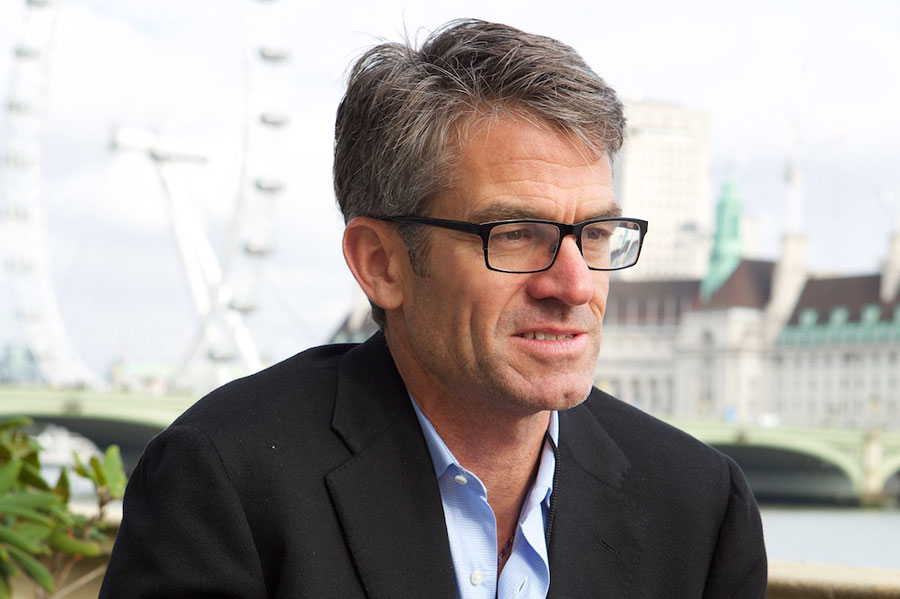
“If we can take that same model and apply it to ESG investing, what would it look like in the capital markets?” Matthew Weatherley-White (pictured above) rhetorically asks. “How could that potentially change our perception of the challenges embedded in ESG investing?”

Weatherley-White is managing director of The CAPROCK Group, a firm that provides family-office wealth management and outsourced chief investment officer services. He says issues like natural resource efficiency, climate risk and the potential cost of carbon are on everyone’s mind, yet the amount of capital currently allocated to ESG and impact investing is relatively small.

An opt-out model would make the process easier and “a lot less threatening.” And even though direct ESG market penetration is small, many assets mangers might not self-identify as impact investors even though they incorporate its precepts, something Weatherley-White refers to as “ESG creep.”

Which is important, because ESG and impact investing can unleash capital markets for positive impact, he argues, calling it “the most powerful optimization vehicle on the planet.”

Corralling Capitalism

When attempting to “corral such a force” to realize the benefits of impact investing, Weatherly-White points to three critical areas:

  1. Models of effectiveness: ESG asset managers have strong investment performance. When enough “gravitational pull” occurs around a successful impact strategy, it shifts the capital market’s perspective about the strategy.
  2. Regulation: Rather than laws to enforce the application of impact or ESG, regulation means internalizing cost structures that traditionally have been externalized. “An example might be coal,” says Weatherly-White. “We know burning coal leads to increased health costs in communities immediately downwind—and increased environmental costs. Those are known costs, and they’re borne by taxpayers, so they are externalized to the cost of the commodity. Internalizing those costs” can change investment prospects.
  3. Paradigm shift: More Austria and less Germany, meaning the aforementioned opt-out model as the new standard. When combined with more education to combat the widespread (and incorrect) notion that investors must sacrifice return to realize a positive social or environmental impact, these changes will significantly increase ESG adoption. “While one might intentionally accept concessionary returns in order to build a new market, or test a pre-scale service delivery model, one does not need to sacrifice performance in pursuit of impact,” he explains.

Incremental and Total Impact

As a longtime champion of ESG and impact investing, Weatherly-White also recognizes that impact investing is not absolute. Initially, a percentage of assets can be allocated that corresponds with investor comfort. This often leads to interesting revelations, and the behavioral choices that naturally follow.

“At some point, investors realize they’re trying to solve problems with one part of the portfolio that the rest of their portfolio is creating,” he notes. “What we’ve seen is that once investors start down the ESG path, they often continue in that direction, and move toward a complete allocation.”

While some investors are 100% impact investors from the start, performance drives others to increase their allocation. “Once they see returns generated in a responsible way, they ask themselves why they wouldn’t want to do more of it, and it becomes a really different conversation.”

Beyond investment return, investors want to know if they are truly making an impact. This second piece, benchmarking social and environmental impact, is more difficult to measure. Weatherley-White turned to tech for a solution, creating an impact reporting platform called Impact Portfolio Assessment and Reporting (iPAR).

“We require that our impact managers use it in tracking their Impact Reporting and Investment Standards (IRIS) metrics, which include the number of tons of carbon not generated, or solar power used, or whatever it might be.”

Just Do It

For successful entrepreneurs, executives and investors looking to enter the impact investing space, Weatherly-White says opportunities are growing rapidly in a variety of sectors.

“From a personal perspective, the best advice I would give is just get started,” he says. “There is no performance sacrifice required. Take a step, and there’s lots of places to get started. It’s not intimidating once you’ve taken the first step.”

For those looking to run their business in a sustainable manner, he suggests the B Lab Impact Assessment, an online tool to help business owners measure their organizations’ social and environmental impact.

“It gives a window into best practices in sustainable business management,” says Weatherly-White. “You don’t have to get all the questions right immediately, but pick a few things you can improve on over the next year and steadily work toward incorporating them.”
 

Two Critical Ingredients For Successful Impact Investing

“How do we build bridges between talent and opportunity?”

It’s a question rhetorically asked and answered by impact investor Ron Cordes, founder of financial powerhouse AssetMark Investment Services, and central to his “second act” career mission, one with the ultimate goal of leveraging capital markets to help solve large-scale societal and environmental challenges.

 “I had some real trepidation about striking out and reinventing myself, but I was pretty good at building investment capacity over 25 years, and it was very transportable to this new role,” he explains. “I could apply all of those skills, context and experience in ways that could significantly move the needle on issue areas important to me.”

Those skill sets, which led to overwhelming success with AssetMark before its sale in 2006, are finding their equal when transferred to impact investing, as well the numerous foundations, grants and—yes—businesses of which he and his wife Marty are a part of. They’re building the aforementioned bridge of which he speaks.

With investments in 50 countries located in every part of the globe, Cordes has made trips to the world’s poorest, including Kenya, Rwanda and Uganda, as well as (closer to home) Haiti, in order to make responsible investments using capital market fundamentals that aim for solid financial returns. It’s a win-win for all involved, and far more sustainable than charitable-based strategies of the past.

It’s also something that’s gaining more and more interest from high-net-worth investors and entrepreneurs, giving a new and exciting spin to the concept of “leaving a legacy.” They’re leveraging the aforementioned entrepreneurial skills that have taken years, often decades, to develop in order to do well by doing good.

“What’s important is that it’s not so much about reinventing yourself as it is re-pivoting from one place to another,” he says. “For me, that re-pivot was in the investment world, and impact investing became a natural vehicle for me. You might not appreciate how many of your skills can be applied when addressing and ultimately solving whatever problems you’re passionate about.”

One critical ingredient to impact investing success—humility—isn’t endemic to high-net-worth entrepreneurs, especially type-A personalities used to shouldering heavy burdens and leading large organizations.

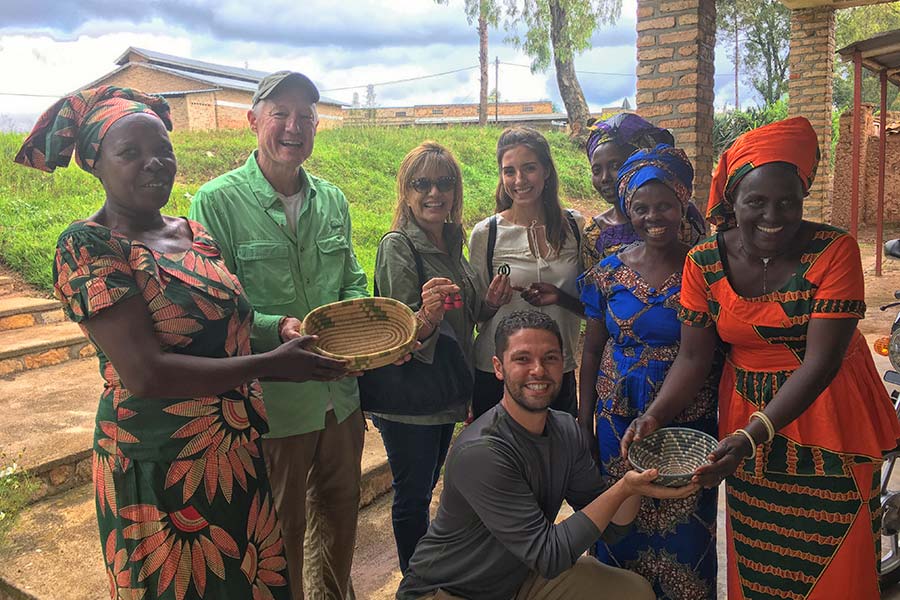
The Cordes Foundation team – Ron, Marty, Steph and Eric – visit a co-op of women artisans in Rwanda. They partner with All Across Africa to make handmade baskets that are sold through Pro Flowers and Costco.

Recognizing it, Cordes developed the following equation: Humility plus Empathy equals Impact, or H+E=I. It’s something he learned firsthand during a trip to Africa in 2007.

“On the first day, we had our clipboards and were looking at some of the projects and feeling like we knew all the answers,” he recalls. “We were there, we had the resources, and we had experience. By the second day we realized that not only did we not know the answers, but we were actually struggling to ask the right questions.”

It led to a heavy dose of the second ingredient—empathy—and “acting as a resource for the people that we serve, as opposed to a savior. They’re capable of being architects of their own solutions; they just need some help and resources from us.”

It involved traveling to countries like  El Salvador, the Philippines and Nicaragua to speak with and (more importantly) listen to the people they serve.

“We would literally ask where we could find the most economically disadvantaged populations, and then figure out what they believe they need. What are the solutions they’re looking for, and how can we help them be architects of those solutions?”

This combination, humility and empathy, resulted in far greater success than any seen to that point. Rather than colonial, patronizing Americans that offered a pat on the head and a condescending “poor you” attitude, Cordes and his group “removed the Superman capes to become true partners in economic development and investment.”

Which is all well and good, but how is that success measured?

“Impact’s measurement is a field unto itself,” he concedes, but one that “has come a long way over the last 10 years.”

While noting it’s “imprecise and still has a long way to go” it can involve the number of jobs created, the level of those jobs, the amount of capital flowing to local entrepreneurs and how it’s utilized.  

“Sometimes the impact is not necessarily quantifiable,” he concludes. “The best way to experience it is to actually get out and meet the people that you’re trying to impact to determine for yourself, through conversations within in their communities, if what you’re doing is working.”


Does Impact Investing Make Sense for High-Net-Worth Portfolios?

It’s far from just talk. Ron Cordes spent the first actions of his career creating “the best business in the world.” In his second, he felt compelled to build the best businesses “for” the world. But it’s not as if the two are mutually exclusive.

The disruptive lessons learned from building financial powerhouse AssetMark Investment Services can indeed be applied to impact investing. It’s fueling a non-traditional investing strategy that’s far more effective and sustainable than conventional models of the past, the steps of which can be emulated by other high-net-worth investors.

It began with the sale of the Assetmark in 2006, which Cordes founded with two partners and today claims roughly $30 billion in assets under management. It was one of the first companies to provide financial advisors with a platform to charge fees, rather than commissions, on the products and services they offer.

Like many high-net-worth couples, the liquidity event gave Cordes and his wife Marty the opportunity to create a traditional family foundation. They soon discovered, however, the rapid pace of innovation in the impact investing space and, in keeping with their disruptive roots, quickly adapted.

“If you asked me ten years ago what we’d be doing today, we would be conventional philanthropists, giving money away toward a mission area that included global poverty, women and girls and economic development,” he says.

While he’s quick to note it’s something they do from a mission and grants perspective, what’s happened with the other 95 percent of the portfolio is far much more interesting and impactful. It not only enjoys a positive social and environmental return on investment (ROI) but a financial one as well.

“When I first got into this in 2006, I didn’t appreciate that there were all these folks using capital markets in business models as tools to solve enormous societal and environmental problems,” Cordes explains. “As I started to help these CEOs build their businesses, I realized that many provided compelling investment opportunities.”

The issue was a lack of an “investment ecosystem,” and no real way for investors commit. While meeting with the foundation’s board, Cordes and Marty noted a few microfinance investments they’d recently made.

The Cordes family – Ron, Marty and Steph – visit Hands for Hope primary school in Kampala, Uganda. The visit fell on Marty’s birthday so the students surprised her by singing happy birthday.

“We said, ‘let’s make a commitment over the next 12 months to allocate 20 percent of our portfolio to impact investing.’ We didn’t even call it impact investing because the term hadn’t yet been defined. We called it social enterprise investing because we figured we were investing in social enterprises.”

Over the course of the following year, and with the help of MBA students at college programs they supported, a range of opportunities was identified to help alleviate global poverty, mainly through microfinance and small business investments. By September of 2008 they were feeling pretty good, that is, until “the bottom fell out in the global financial markets.”

Obviously concerned with the economic downturn’s effect on the portfolio, Cordes informed the board that they might “take some arrows on this thing,” but to nonetheless commit to impact investing so that others may learn how it’s done.

Despite the brave front, “I was more than somewhat concerned, having seen the rest of our portfolio mark-to-market, with what was going to happen with the 20 percent we had in impact investing,” he adds.

Thankfully, the angst and anxiety were all for naught, and at the year’s end Cordes saw the impact portion of the portfolio was not only “not the worst-performing, but as a group, among the best.”

The investments’ non-correlation with more traditional debt and equity asset classes acted as a firewall of sorts when global markets were aflame, disproving the oft-repeated critique that investors must sacrifice return to invest their conscience.

“Every other asset class or category we had in the portfolio was completely correlated, but now I found this non-correlated asset class. As an investor, it piqued my interest and was the impetus that led to a deeper look at impact investing.”

That impetus also led to the founding of ImpactAssets, a firm capitalizing on impact investing’s momentum and demand. Citing a study from the Calvert Foundation, Cordes notes that 48 percent of high-net-worth investors either interested or very interested in impact investing, with another 40 percent somewhat concerned.

“I remember the math because I’ve used it so often—almost nine out of 10 have some level of interest,” he concludes. “Yet, virtually nobody was doing anything in the space. When I researched why, I found that 1) there was a lack of ecosystem as mentioned above or infrastructure, particularly among the financial advisors and intermediaries who help people invest, as well as, 2) a lack of a cohesive voice and, 3) a lack of investment products. ImpactAssets is an opportunity, in my second life, to address all three.”


0